Tag: anaemia

  • Almost 50% of pregnant women in Tema have been diagnosed with anaemia

    Almost 50% of pregnant women in Tema have been diagnosed with anaemia

    Records from health facilities in Tema Metropolis for the first six months of the year reveal a concerning statistic: over 49 percent of pregnant women were found to be suffering from anemia by their 36th week of pregnancy.

    Among these, 4.05 percent were classified as having severe anemia. Additionally, 37.55 percent of women were identified as anemic at their initial antenatal visit.

    Samuel Atuahene Antwi, the Tema Metropolitan Nutritionist in an interview said, “Anaemia at 36 weeks of pregnancy increased by 84 per cent in 2024, as compared to 2023.”

    Mr Antwi revealed that Tema Manhean recorded the highest increase of 31.3 percent in anaemia at 36 weeks from 23.16 to 72.4 per cent respectively for the 2023 and 2024 first halves.

    He said 1,804 pregnant women received nutrition counselling and “only 30 percent of ANC attendants had their BMI checked to monitor their nutritional status.”

    He stated that the high number of anaemic expectant mothers could be attributed to their intake of inadequate iron-rich foods, for which household food insecurity due to economic hardship could also be the cause.

    However, a few of them who might have certain nutritious foods available did not take it because of some traditional and spiritual beliefs concerning those foods, he said.

    Mr Antwi urged pregnant women to take adequate iron-rich foods such as red meat, liver, shrimp, fish, eggs, milk, and dark green leafy vegetables.

    These should be consumed alongside oranges, pineapples, and other vitamin C-rich fruits to help absorb the iron.

    Almost 50% of pregnant women in Tema have been diagnosed with anaemia.
  • GSS reveals 49% of children aged 6–59 months anaemic 

    GSS reveals 49% of children aged 6–59 months anaemic 

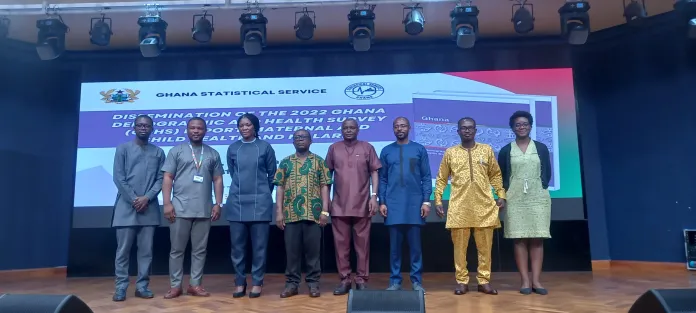
    The recently released 2022 Ghana Demographic and Health Survey (GDHS) report sheds light on the progress and challenges in maternal and child health, revealing a significant decline in anemia among children aged 6 to 59 months. According to the report by the Ghana Statistical Services, 49 percent of children in this age group are anemic, marking a notable improvement from the 66 percent recorded in 2014.

    Among the affected children, 28 percent exhibit mild anemia, 20 percent moderate anemia, and 1 percent severe anemia. Notably, anemia prevalence is higher among younger children within the specified age range. Regionally, the Northern Region reports the highest prevalence at 69 percent.

    Anemia, characterized by low levels of hemoglobin, can result from various factors such as iron deficiency, nutritional deficiencies, malaria, and genetic conditions. Its implications include impaired cognitive development, long-term health problems, and increased mortality in severe cases.

    The report also addresses maternal anemia, revealing that 41 percent of women are affected, with 23 percent experiencing mild anemia, 17 percent moderate, and 1 percent severe. Pregnant women face a higher prevalence, reaching 51 percent, compared to non-pregnant women at 40 percent.

    Beyond anemia, the GDHS report delves into the nutrition status of children under the age of 5. Stunting affects 18 percent, wasting (indicating acute malnutrition) affects 6 percent, underweight impacts 12 percent, and 2 percent are classified as overweight. Stunting is more prevalent in rural areas (20 percent) than urban areas (15 percent), with the Northern and North East Regions reporting the highest rates.

    Exclusive breastfeeding practices are highlighted, showing that 53 percent of children aged 6 to 59 months are exclusively breastfed. The report emphasizes the need for policy interventions to enhance breastfeeding practices.

    The survey also touches on antenatal and delivery care for maternal health. Approximately 98 percent of women aged 15 to 49 received antenatal care from skilled providers for their most recent live birth or stillbirth. A significant 86 percent of live births occurred in health facilities, with 88 percent being assisted by skilled providers.

    The comprehensive report provides valuable insights into the state of maternal and child health in Ghana, highlighting both progress and areas requiring targeted interventions.

  • Lab-grown blood given to people in world-first clinical trial

    Blood that has been grown in a laboratory has been put into people in a world-first clinical trial, UK researchers say.

    Tiny amounts – equivalent to a couple of spoonfuls – are being tested to see how it performs inside the body.

    The bulk of blood transfusions will always rely on people regularly rolling up their sleeve to donate.

    But the ultimate goal is to manufacture vital, but ultra-rare, blood groups that are hard to get hold of.

    These are necessary for people who depend on regular blood transfusions for conditions such as sickle cell anaemia.

    If the blood is not a precise match then the body starts to reject it and the treatment fails. This level of tissue-matching goes beyond the well-known A, B, AB and O blood groups.

    Prof Ashley Toye, from the University of Bristol, said some groups were “really, really rare” and there “might only be 10 people in the country” able to donate.

    At the moment, there are only three units of the “Bombay” blood group – first identified in India – in stock across the whole of the UK.

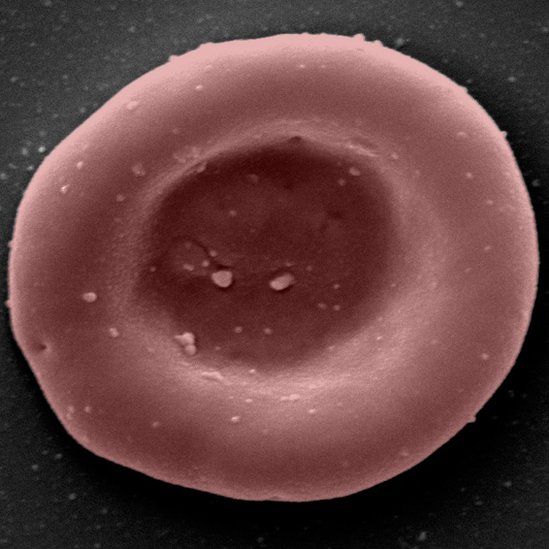
    A lab-grown red blood cell
    Image source, NHSBT
    Image caption,
    A laboratory-grown red blood cell, which carriers oxygen and carbon dioxide around the body

    So how is the blood grown?

    The research project combines teams in Bristol, Cambridge, London and at NHS Blood and Transplant. It focuses on the red blood cells that carry oxygen from the lungs to the rest of the body.

    • They start with a normal donation of a pint of blood (around 470ml)
    • Magnetic beads are used to fish out flexible stem cells that are capable of becoming a red blood cell
    • These stem cells are encouraged to grow in large numbers in the labs
    • And are then guided to become red blood cells

    The process takes about three weeks and an initial pool of around half a million stem cells results in 50 billion red blood cells.

    These are filtered down to get around 15 billion red blood cells that are at the right stage of development to transplant.

    “We want to make as much blood as possible in the future, so the vision in my head is a room full of machines producing it continually from a normal blood donation,” Prof Toye told me.

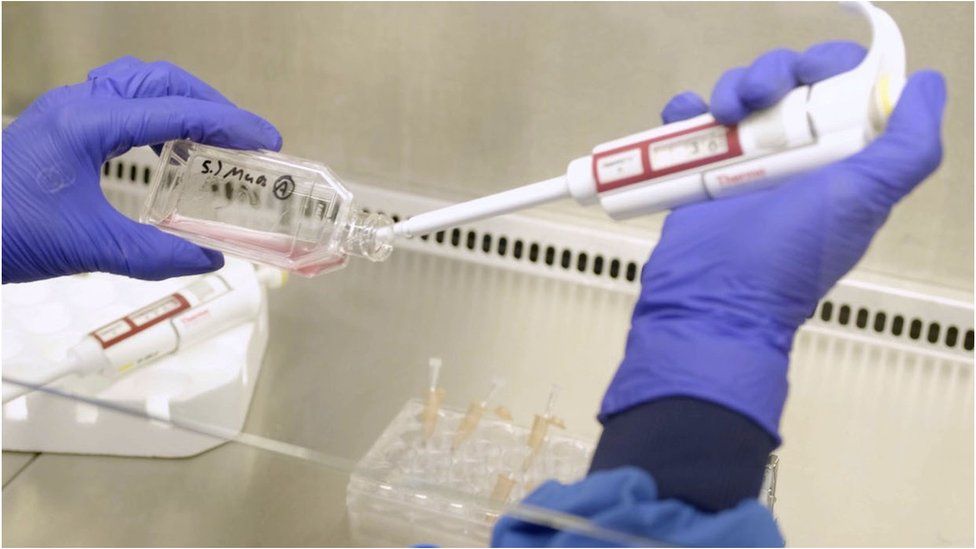
    Lab grown bloodImage source, NHSBT

    The first two people have taken part in the trial, which aims to test the blood in at least 10 healthy volunteers. They will get two donations of 5-10mls at least four months apart – one of normal blood and one of lab-grown blood.

    The blood has been tagged with a radioactive substance, often used in medical procedures, so scientists can see how long it lasts in the body.

    It is hoped the lab-grown blood will be more potent than normal.

    Red blood cells normally last for around 120 days before they need to be replaced. A typical blood donation contains a mix of young and old red blood cells, whereas the lab-grown blood is all freshly made so should last the full 120 days. The researchers suspect this could allow both smaller and less frequent donations in the future.

    However, there are considerable financial and technological challenges.

    The average blood donation costs the NHS around £130. Growing blood will cost vastly more, although the team will not say how much.

    Another challenge is the harvested stem cells eventually exhaust themselves, which limits the amount of blood that be grown. It will take more research to produce the volumes that would be needed clinically.

    Dr Farrukh Shah, the medical director of transfusion at NHS Blood and Transplant, said: “This world-leading research lays the groundwork for the manufacture of red blood cells that can safely be used to transfuse people with disorders like sickle cell.

    “The potential for this work to benefit hard to transfuse patients is very significant.”

    Source: BBC

  • Still births, anaemia among pregnant women on the rise

    The Kwahu Afram Plains District Health Directorate of the Ghana Health Service has expressed concerns over the high prevalence of anaemia among pregnant women at 36 weeks of gestation, and increasing stillbirths.

    Almost all health facilities in the district continue to record increasing cases of anaemia among pregnant women in their third trimester.

    Health facilities in Ekye Amanfrom and Forifori for instance recorded 79.4% and 64.1% anaemia cases among pregnant women at 36 weeks of gestation respectively.

    Anaemia is a blood condition that develops when you do not have enough red blood cells. Red blood cells contain haemoglobin, a protein that carries oxygen around the body of the pregnant woman and to the baby.

    The condition has been linked to premature birth, low birth weight and an increasing trend of stillbirth in the district.

    According to the Kwahu Afram Plains South District Health Director Mr. Richard Essien, the directorate is deploying strategies including establishment of pregnancy schools in health facilities for education on proper dieting during pregnancy to reduce iron deficiency.

    Kwahu Afram Plains South District with a population of 74,000, continues to struggle for access to quality healthcare due to lack of District Hospital.

    Currently, there are 36 health facilities including 29 CHPs and 6 health centres as well as one private facility in the district. Most of the facilities are however in a deplorable state.

    Inadequate critical staff also continue to inhibit quality healthcare.

    The ratio of Physician assistants to population in the district is 1:8,222 from 1:16,257 in 2020. Nurse to population ratio in 2021 has been reduced to 1:350 from 1:950 in 2020. Whilst midwife to women in Fertility Age(WIFA) population ratio is 1:658 from 1:1,428 in 2020.

    Kwahu Afram Plains South District Health Director Mr. Richard Essien, there is inadequate medical logistics, vehicles and motorbikes to work in the hard to reach communities in the district.

    “Afram Plains South is one of the deprived communities in Ghana . Deprived in the sense that we occupy a very large landmark size of about 16 % of the region’s landmass and for that matter with scattered population and island communities. It has been very challenging the kind of terrain we work in, you need strong manpower, you need committed staff and most importantly strong motorbikes to undertake these activities. But these have been challenges,” the Health director said.

    He continued “we have weak motorbikes, only 44% of our motorbikes are within 5 years and these are even few. Not every facility in the district has a motorbike in other to move the services to other communities. Another biggest challenge is the infrastructure. Though the assembly is constructing some CHPs compound two under construction we still have a good number in a bad state. Some of the facilities require major renovation, some in temporal structures, single rooms and the rest and also we have some of our facilities without electricity and network.”

    Due to inadequate staff, the district health Directorate has been engaging the services of volunteers in the communities to augment staff strength in the district.

    These volunteers were rewarded for their selfless services during a recent Annual Performance Review meeting of the district.

    The District Chief Executive for Kwahu Afram Plains South District, Evans Kyei Ntiri, said government is investing heavily to improve the infrastructural deficit including road and health facilities in the district.

    Source: starrfm.com.gh

  • Keta records high anaemia cases

    For every ten visitors to health facilities in the Keta Municipality, six are anaemic, according to Madam Perfect Titiati, Keta Municipal Health Director.

    She said it was unbelievable that though the people lived between the Sea and a lagoon, the District had for some time been recording 60 per cent anaemia cases.

    Madam Titiati made this known at a town hall meeting held at the local Assembly hall to engender discussions on results from Community Score Card interface meetings held for fisher folks between March and May 2019.

    Iron Folic Acid supplement reduces anaemia in girls

    The community engagements formed part of a four-year European Union-funded project named ‘Far Ban Bo’ meaning,- ‘protecting the fishing livelihoods’.

    It is being implemented jointly by a consortium consisting of Care International, Friends of the Nation and Oxfam.

    She blamed the situation on a number of factors including lack of adequate fish consumption and said it was disappointing that Keta and its adjoining towns and villages situated between the sea and the lagoon could not afford to have adequate fish in their meals.

    The Health Director said eating enough fish, which contained iron, zinc, vitamin D and B2 with other nutrients could address the dietary deficiency, one of the causes of anaemia.

    Mama Wui III, Queen of Keta, called on the people to pay special attention to their diets to ensure to keep health, saying, that should not cost them much because plants and fishes filled with nutrients were locally available.

    We will develop pharmaceutical manufacturing sub sector Akufo-Addo

    Torgbui Lambert Yaovi Gadah, Chief fisherman, Abutiakope in an interview with Ghana News Agency on the situation said, “Some of us fishermen are tempted to sell almost all our catch to the women because we need the money to take care of a lot of things and so we’re sometimes left with something little to take home for the family.

    I want to also say that the anaemia cases may not be as a result of lack of enough fish in our diet but the ‘light soup’ that we prepare with less ingredients in addition to our inability to eat fruits.”

    Madam Joyceline Akos Kpordugbe, a fishmonger at Woe, said shrimps and lobsters were expensive and hard to come by at landing sites at the beach and the lagoon in recent times, with many preferring to send them to markets in Ho, Accra and neighbouring Lome in Togo to stay in business than eat.

    Source: www.ghananewsagency.org