Tag: anti-corruption

  • Anti-corruption evaluation plan to be launched Dec 21

    Anti-corruption evaluation plan to be launched Dec 21

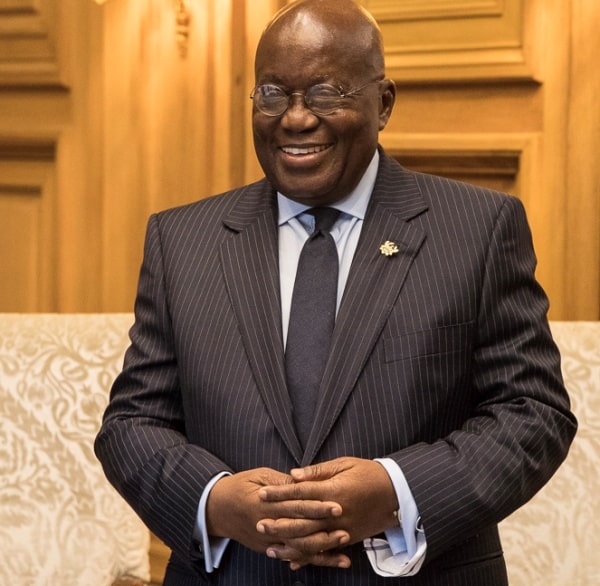
    On Thursday, December 21, President Akufo-Addo will inaugurate the assessment of Ghana’s inaugural National Anti-Corruption Action Plan (NACAP) at the Jubilee House.

    NACAP serves as Ghana’s comprehensive framework for advancing anti-corruption initiatives and fostering national development. The plan comprises strategic action items formulated and endorsed through nationwide consultations involving various stakeholders.

    This development comes on the heels of the successful execution of NACAP, aligning with Ghana’s commitments under the United Nations Convention Against Corruption (UNCAC), the 1992 Constitution, and the President’s steadfast dedication to combating corruption.

    According to a press release from the Ministry of Information’s Public Relations Unit, having executed the plan, the subsequent phase involves evaluating the strides made in the battle against corruption under NACAP.

    The efficacy of NACAP lies in its integration, as the action plans seamlessly become part of the National Development Planning, thereby incorporating them into the routine annual activities of public institutions, including ministries, departments, and agencies (MDAs).

    The formulation of NACAP involved a collaborative effort of experts and anti-corruption practitioners organized into a working group.

    Representatives from institutions such as the Commission on Human Rights and Administrative Justice, Office of the President, Internal Audit Agency, Parliament of Ghana, Judicial Service of Ghana, Office of the Attorney General and Ministry of Justice, National Development Planning Commission, and the Public Services Commission played integral roles.

    Other contributors to the formulation included the Ministry of Finance, Africa Peer Review Mechanism, Economic and Organised Crime Office, Ghana Integrity Initiative, Ghana Anti-Corruption Coalition, Ghana Centre for Democratic Development, the Justice and Human Rights Institute, African Parliamentarians Network Against Corruption, and Development Partners.

    The event will be broadcast live on the state broadcaster and other private media platforms at 10 am.

  • Akufo-Addo to introduce action plan, evaluation of Ghana’s anti-corruption system

    Akufo-Addo to introduce action plan, evaluation of Ghana’s anti-corruption system

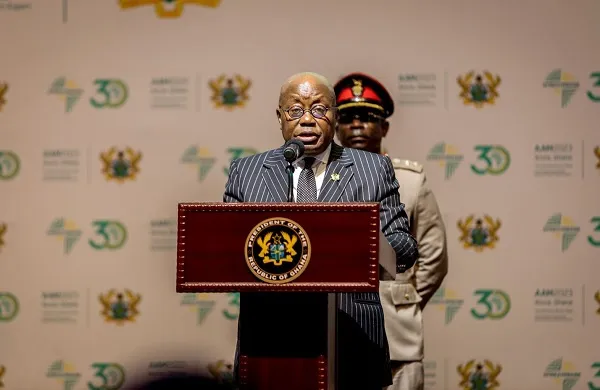
    On Thursday, December 21, President Nana Akufo-Addo is set to launch the assessment of Ghana’s inaugural National Anti-Corruption Action Plan (NACAP) at the Jubilee House in Accra.

    The NACAP serves as Ghana’s comprehensive strategy to combat corruption and foster national development, featuring strategic action plans derived from nationwide consultations with stakeholders.

    This initiative aligns with Ghana’s commitment to fulfill obligations under the United Nations Convention Against Corruption (UNCAC), the 1992 Constitution, and the President’s dedication to anti-corruption efforts.

    Notably, the NACAP stands out for its integration into National Development Planning, making its action plans an intrinsic component of the regular activities of Public Institutions, including Ministries, Departments, and Agencies (MDAs).

    As the country nears the end of several years of successful NACAP implementation, it becomes imperative to evaluate the progress in the fight against corruption.

    The formulation of NACAP was facilitated by a group of experts and anti-corruption practitioners constituted into a working group, comprising representatives from the following institutions and organisations: Commission on Human Rights and Administrative Justice (CHRAJ), Office of the President, Internal Audit Agency (IAA), Parliament of Ghana, Judicial Service of Ghana, Office of the Attorney General and Ministry of Justice, National Development Planning Commission, Public Services Commission, Ministry of Finance, Africa Peer Review Mechanism (APRM), Economic and Organized Crime Office, Ghana Integrity Initiative, Ghana Anti-Corruption Coalition, Ghana Centre for Democratic Development, The Justice and Human Rights Institute, African Parliamentarians Network Against Corruption, and Development Partners.

  • Dr Kpodar proposes leveraging Artificial Intelligence as an anti-corruption measure

    Dr Kpodar proposes leveraging Artificial Intelligence as an anti-corruption measure

    Dr Chris Kpodar, Global Artificial Intelligence Specialist, is advocating for the utilisation of artificial intelligence as a powerful anti-corruption tool by reengineering systems to address vulnerabilities that were previously susceptible to bribery and corruption.

    “As a nation, we must adopt Artificial Intelligence as a mechanism to build transparency, integrity, and trustworthiness, which are necessary to fight corruption,” he said.

    Dr Kpodar, who served as Consultant for Africa and the Middle East, was speaking at a forum organised by the Ghana News Agency in Tema and advised governments and companies on investment in these technologies.

    He explained that without effective public scrutiny, the risk of money being lost to corruption and misappropriation was vast.

    He said Artificial Intelligence was the modernisation of all traditional, experienced, and tested methods of investigation that could not be influenced by the machine applied.

    Dr Kpodar, who is also the Executive Director at Solomon Investment Ghana Limited, stressed that even though corruption remained the biggest challenge to society, Artificial Intelligence was the key to solving the problem.

    Dr Kpodar emphasised that the ability of Artificial Intelligence applications to work would radically reduce or eliminate manual operations, which formed fertile grounds for corrupt practice.

    “Artificial Intelligence has the capacity to reveal or even predict corruption or fraud that was previously nearly or completely impossible to detect. If the government wants to be credible in every sector, they must invest in Artificial Intelligence for an everlasting solution to corruption,” Dr Kpodar stated.

    Dr Kpodar, however, commended the government for initiating the digitization system, saying digitisation was a prerequisite for Artificial Intelligence deployment as an anti-corruption weapon.

  • Fact-Check: Has Akufo-Addo done better in funding anti-corruption institutions than others?

    Fact-Check: Has Akufo-Addo done better in funding anti-corruption institutions than others?

    The Ghana Anti-Corruption Coalition (GACC) leadership visited President Akufo-Addo at Jubilee House on August 19, 2021.

    It’s easy to assume what could be the main topic of discusion, corruption. The President is quite knowledgeable about the topic, which helped him win in 2016 in part. His campaign was based mostly on accusations of mismanagement and corruption against the previous John Mahama administration.

    However, many Ghanaians believe that, after six years in office, President Akufo-Addo’s high rhetoric on combating corruption, including assertions that he had adopted Investigative Journalist Anas Aremeyaw Anas’s approach, was nothing more than empty platitudes. Even more concerning, many individuals believe that corruption has gotten worse under his administration, according to Transparency International’s corruption perception index.

    Since taking office as president, Akufo-Addo has been observed to be lowering his vociferous rhetoric on the issue of corruption. Fact-Check The Fourth Estate, a sister investigative journalism source in Ghana, discovered that during the president’s two consecutive State of the Nation Addresses (in January 2021 and March 2021) he avoided mentioning corruption. In reality, Akufo-Addo avoided using any words related to corruption or graft in a combined speech from the two speeches that was approximately 13,000 words long. It was the first time a president had done that in 13 years.

    The argument that President Akufo-Addo has funded accountability or anti-corruption agencies more than any other government will undoubtedly come up whenever he decides to discuss corruption.

    He reiterated that when he spoke to the GACC’s leadership on the Jubilee House floor.

    “I don’t think that any government has mobilised resources to give the opportunity for anti-corruption agencies of the state to function as efficiently as this government has done. It is a matter of record,” Akufo-Addo said.

    This assertion has been Akufo-Addo’s defense against criticism that he made greater promises in the battle against corruption but delivered worse results for more than six years. After a year in office, he first stated this at the 2018 State of the Nation Addresses (SONA):

    “I believe it bears repeating here that, thanks to these boring figures, for the first time in a long while, we have been able to provide better budgetary support to the constitutionally-mandated institutions that hold government accountable, i.e. Auditor-General, Parliament, Judiciary, Ministry of Justice, Commission on Human Rights and Administrative Justice (CHRAJ), the Economic and Organised Crime Office (EOCO), and the Police,” he said

    In both the 2019 and 2020 SONAs, President Akufo-Addo reiterated the assertion. He said that in 2021, his government had more than doubled the funding expenditures to anti-corruption organizations.

    “That is why, within two years of being in office, we more than doubled funding for accountability institutions of state, like CHRAJ, EOCO, the Judiciary and the Auditor General,” Akufo-Addo said.

  • Malawi court reinstates sacked anti-corruption chief

    Malawi court reinstates sacked anti-corruption chief

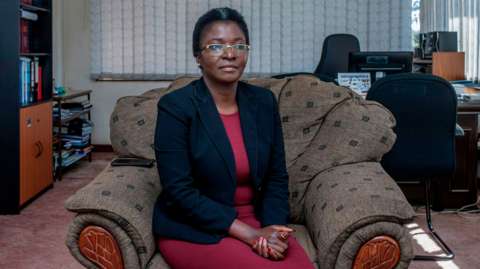
    A high court in Malawi has lifted the government’s suspension of the head of the Anti-Corruption Bureau (ACB) Martha Chizuma, paving the way for her to return to work.

    Ms Chizuma’s suspension was last week announced by the secretary to the president and the cabinet, Colleen Zamba.

    The suspension was linked to a lawsuit against her following a leaked audio in which she allegedly made remarks suggesting that a number of senior government officials and some judicial officers were hindering the fight against corruption.

    One official who felt hurt by the suggestion sued Ms Chizuma and she was interdicted on the basis of the lawsuit.

    Her suspension was widely condemned by civil society organisations, the opposition and the country’s umbrella body for lawyers – the Lawyers Association of Malawi.

    The lawyers’ association issued a statement saying the only person who could legally hire or fire the head of the anti-corruption body was the president.

    President Lazarus Chakwera is on record as saying he will not sack Ms Chizuma – describing the recording and the circulation of the audio as “corruption fighting back”.

    The Malawi Law Society applied for a judicial review which the court granted late on Monday.

    Source: BBC

  • Dismissed anti-corruption chief restored

    Dismissed anti-corruption chief restored

    A high court in Malawi has overturned the government’s decision to suspend Martha Chizuma, the director of the Anti-Corruption Bureau (ACB), allowing her to resume her job.

    Ms Chizuma’s suspension was last week announced by the secretary to the president and the cabinet, Colleen Zamba.

    The suspension was linked to a lawsuit against her following a leaked audio in which she allegedly made remarks suggesting that a number of senior government officials and some judicial officers were hindering the fight against corruption.

    One official who felt hurt by the suggestion sued Ms Chizuma and she was interdicted on the basis of the lawsuit.

    Her suspension was widely condemned by civil society organisations, the opposition and the country’s umbrella body for lawyers – the Lawyers Association of Malawi.

    The lawyers’ association issued a statement saying the only person who could legally hire or fire the head of the anti-corruption body was the president.

    President Lazarus Chakwera is on record as saying he will not sack Ms Chizuma – describing the recording and the circulation of the audio as “corruption fighting back”.

    The Malawi Law Society applied for a judicial review which the court granted late on Monday.

    Source: BBC

  • Ramaphosa appoints anti-corruption advisory team

    President Cyril Ramaphosa has appointed nine people to form an anti-corruption advisory council to help in the fight against corruption.

    The National Anti-Corruption Advisory Council has been tasked with preventing a recurrence of state capture in South Africa.

    The team will help with the effective implementation of the anti-corruption strategy by the government, civil society and the private sector.

    The panel will also guide the president on the government’s response to implementing the recommendations of the Zondo Commission report.

    President Ramaphosa has until 22 October to report to parliament on how his administration will implement the report’s findings.

    Source: BBC

  • ARAP national stakeholder institutions receive equipment

    The Accountability, Rule of Law and Anti-corruption Programme (ARAP), an EU-funded programme, implemented by the Spanish public foundation FIIAPP have presented electronic and multimedia equipment to four national stakeholder institutions.

    The institutions are the Attorney General Office, the Ghana Police Service, the Economic and Organized Crime Organisation (EOCO) and the Environmental Protection Agency (EPA).

    A statement issued in Accra by the EU ad copied to the Ghana News Agency said the intervention aimed to support the Attorney General Office with 10 printers, 15 routers, 22 Desktop computers and 22 Dock Station for the Solicitor General and the Directorate of Public Prosecutions (DPP).

    It said Solicitor General (SG) would roll out the Solicitor General Platform (a digital platform created under the ARAP Programme), whose main function would be to administer and manage all civil case dockets that the SG office to be received from the Attorney General Office.

    The statement said the DPP would use and develop the digital register Docket System created under the programme.

    The main function of the electronic case docket the system is to administer and manage all criminal case dockets that the DPP receives from other investigative agencies such as Ghana Police and the EOCO.

    It said the equipment for the Ghana Police Service consisted of 20 desktops computers, 20 Dock Station, 13 printers and 2 routers that would support the Police Professional Standards Bureau (PPSB) and the GPS Legal Unit Department.

    The statement said the PPSB would use it for its Petition Management System (PMS) that was designed to incorporate digitally the work processes, books, registries and forms used by personnel of the Police Professional Standards Bureau in the course of their duties.

    “Consequently, the system ensures the immediate availability of relevant system-generated reports on the status of PPSB activities and therefore allows adequate monitoring by relevant PPSB stakeholders,” it added.

    It said explained that the GPS Legal Unit would use it to support the implementation of the evidence declassification process digitally.

    It said EOCO received two Laptops, two Dock Station, a printer and three Smartphones to strengthen its Communication Unit, while the Environmental Protection Agency received two Sound Level Meters to support its complaints system, specifically that of noise pollution.

    “The donated devices will help to strengthen the work of the above-mentioned institutions in Ghana, and enable them to ensure the continuity of their activities, “it added.

    It said the ARAP remained a proud partner of these national stakeholder institutions to double up their efforts to ensure effective rule of law, accountable institutions and healthy state-society relations.

    Source: GNA

  • Nigerian police ‘arrest dozens’ of anti-corruption protesters

    At least 60 people have been arrested at an anti-government protest in Nigeria’s capital Abuja, according to protest organisers Revolution Now.

    The police have not said what their alleged offences are.

    The nationwide protests marked a year since the first demonstrations by the movement.

    The former presidential candidate and founder of the news site Sahara Reporters Omoyele Sowore started the Revolution Now movement last year.

    He called for a revolution saying last year’s election, in which President Muhammadu Buhari won a second term, was not credible.

    He has since been charged with treason, money laundering and “cyberstalking” for allegedly sharing false and insulting information about President Buhari. He denies all the charges.

    He was held in detention for 130 days before eventually being released on bail and is currently awaiting trial.

    Source: bbc.com

  • Akufo-Addo speaks on anti-corruption fight today

    President Nana Addo Dankwa Akufo-Addo will today address the country on major strides the government is making in the fight against corruption.

    He will do so at the annual conference of the Ghana Bar Association (GBA), slated for the Western Regional capital, Takoradi, the Minister of Information, Mr Kojo Oppong Nkrumah, has announced.

    Nadowli-Kaleo NCCE reaches out over 2,500 citizens with anti-corruption message

    The President has long given the assurance that he is committed to protecting the public purse and curbing the propensity for corruption in the country.

    In 2016, President Akufo-Addo campaigned on a platform of ensuring that the national exercise to curb corruption was bolstered, especially with his personal record of incorruptibility and his commitment to strengthen the institutions responsible for aiding the anti-corruption fight.

    Since assuming office

    The Information Minister, who announced this at a news briefing in Techiman in the Bono East Regionon Sunday, September 8, said since assuming office, President Akufo-Addo had taken a number of measures aimed at fulfilling his commitment to fight corruption.

    He said in recent months he had also taken action against persons perceived to be involved in acts associated with corruption.

    Incorporate anti-corruption studies in schools New Year School

    “At the annual bar conference in Takoradi on Monday, a platform where practitioners in law and justice will gather, the President will account for how he has handled the anti-corruption agenda and spell out outstanding steps in ensuring that his outstanding commitments to the subject see fruition,” he said.

    Mr Nkrumah said the government expected that all stakeholders would continue their commitment to the anti-corruption fight and assist in strengthening state institutions that lead the charge.

    “The government also expects that the anti-corruption fight will focus on verifiable facts, rather than conjecture and suspicion, paving the way for tangible, verifiable action,” the minister, who is also the Member of Parliament for Ofoase-Ayirebi, added.

    Background

    The government pushed for the passage of the Office of the Special Prosecutor (OSP) Act, 2017 (Act 959).

    The OSP is a specialised agency set up to investigate specific cases of alleged or suspected corruption and corruption-related offences involving public officers and politically exposed persons in the performance of their functions.

    It is also expected to investigate such cases against private sector players.

    It has the power to prosecute such persons on the authority of the Attorney General.

    The country has also adopted the National Anti-Corruption Action Plan (NACAP), which was postulated by civil society and embraced by the government.

    Source: Graphic.com.gh