On Wednesday, May 8, 2024, Ghana’s Supreme Court will commence hearings on a case with significant implications. This case could jeopardize Ghana’s $20 billion debt restructuring efforts while also challenging the World Bank’s stance on LGBTQ rights support.
The court will consider a request to nullify legislation that criminalizes LGBTQ identification. Additionally, it penalizes individuals—including family members, colleagues, and educators—who fail to report LGBTQ individuals to the authorities, potentially resulting in imprisonment.
Should the court dismiss the appeal, the World Bank will confront a difficult decision. It must weigh whether to uphold its support for Ghana’s poverty alleviation initiatives or prioritize the defense of liberal principles.
Ondiro Oganga of Bloomberg News delves into the potential social and economic ramifications of enacting this legislation with Joumanna Bercetche on Horizons Middle East & Africa.
Previously, we reported on Uganda’s Constitutional Court’s decision to uphold a controversial anti-gay law enacted in May of the previous year.
Following this development, the BBC interviewed a member of one of the groups that contested the law, asserting that it violated fundamental rights guaranteed by Uganda’s constitution.
Nicholas Opiyo, a lawyer, expressed his perspective: “The court has ruled today that discrimination against LGBTQ individuals is lawful. Today’s ruling essentially permits the exclusion of the LGBTQ community from engaging in the affairs of their nation, solely based on public sentiment and purported cultural values.”
Steven Kabuye, an activist who fled Uganda after experiencing a stabbing incident believed to be a homophobic attack, also denounced the court’s decision.
Speaking from his new residence in Toronto, Canada, he said, “My heart goes out to those still in Uganda. They must prioritize their safety and remain discreet. Those who have not managed to escape are truly at risk.”
Previously, we reported on Uganda’s Constitutional Court’s decision to uphold a controversial anti-gay law enacted in May of the previous year.
Following this development, the BBC interviewed a member of one of the groups that contested the law, asserting that it violated fundamental rights guaranteed by Uganda’s constitution.
Nicholas Opiyo, a lawyer, expressed his perspective: “The court has ruled today that discrimination against LGBTQ individuals is lawful. Today’s ruling essentially permits the exclusion of the LGBTQ community from engaging in the affairs of their nation, solely based on public sentiment and purported cultural values.”
Steven Kabuye, an activist who fled Uganda after experiencing a stabbing incident believed to be a homophobic attack, also denounced the court’s decision.
Speaking from his new residence in Toronto, Canada, he said, “My heart goes out to those still in Uganda. They must prioritize their safety and remain discreet. Those who have not managed to escape are truly at risk.”
It was really bad for me. It was very embarrassing.
Bernard Bousset talks about the things that happened and how they made a big impact on his life. He speaks clearly, but it’s clear to see that he is still very upset about it, even after all these years.
In 1964, a man he stayed with took his watch and some money while he was sleeping. After filing a theft report, the police accused Mr. Bousset of having sex with a minor. This was based on a law from Vichy France that discriminated, having different ages for gay and straight sex.
Mr Bousset, who is 82 years old now, was given a big fine. However, what was even worse was how the media reported about the conviction, which made it known to everyone around him. He remembers that the outcomes were very bad. Back then, people did not think positively about homosexuality. My family stopped talking to me. I felt very embarrassed.
“If you are gay, you might get fired and lose your place to live. ” “You had no freedom to do anything. ”
Mr Bousset is one of around 10,000 people, mostly gay men, who were found guilty of breaking laws meant to punish homosexuals between 1942 and 1982.
On Wednesday, the French Senate will talk about a law to say sorry to people who were hurt by unfair anti-gay laws.
If the bill is approved, it will give money to people who were hurt by two unfair laws. During the Vichy era, the law said 21-year-olds could have sex with people of the same gender, while 13-year-olds could have sex with people of the opposite gender. After the Nazis left in 1945, the new government kept the law.
A law passed in 1960 made it illegal to be gay, along with alcoholism, drug use, and prostitution. Antoine Idier, an associate professor at a political sciences university, says that judges had a lot of freedom to go after gay people using laws that punish public indecency.
MrIdier says that people who were affected by the unfair laws often had their lives destroyed. People might have to pay money or go to jail for a few months. When they came out, many people were shunned by society. Some people lost their jobs or had to leave their homes and move to a new city. He also mentioned that sometimes people even commit suicide.
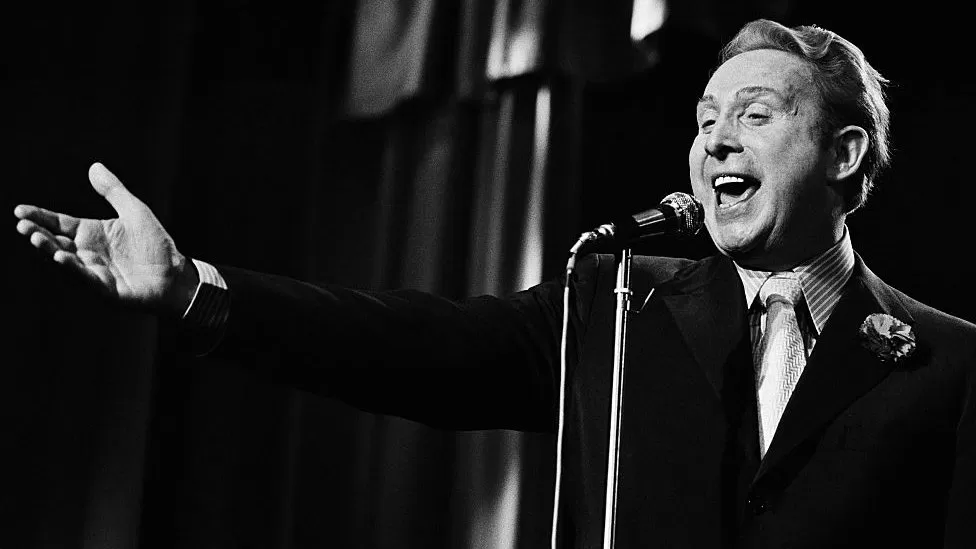
Charles Trenet, the singer of La Mer and Douce France, was accused of trying to get young men to do something wrong in 1963. He was found guilty and spent 28 days in prison. Although the charges were eventually dismissed, the well-known case made Mr. Trenet’s homosexuality public, which he had kept private.
Hussein Bourgi, a politician from the Socialist party, said it’s time to help the people who were hurt by a law that caused a lot of problems for them and their families.
If the new law is approved, it would make France do the same thing as other European countries. They have said sorry to the people who were hurt by laws against gay people.
In 2017, the UK passed a law called the “Turing Law” which pardoned gay men who were convicted under unfair laws. In the same year, Germany said sorry to the people hurt by laws that targeted gay people during the time of the Nazis. This continued even after the war ended.
“According to Régis Schlagdenhauffen, an assistant professor at EHESS, France is behind other countries in addressing this issue of persecution of gay people. ” “But it needs to acknowledge the unfairness while some people who were hurt are still alive. ”
“He says France will be better because of this. ”
The law might not be approved. At first, some senators weren’t sure about the idea of giving €10,000 to living victims. Even if the Senate agrees to it, it still has to be approved by the National Assembly to become a law.
Mr Idier thinks the bill is not good enough as it is. He says the law should also consider people who were found guilty before 1942. The laws at that time did not specifically aim at homosexuals, but judges had the power to use them against gay people.
Mr Bousset thinks the bill is good, but he feels like France should have tried to deal with its past sooner.
“It won’t make the pain I went through, and that many gay people still experience, go away,” he said. “It’s hard to believe, but even now, I feel embarrassed when I’m around straight people. ”
I always had this strong belief that I couldn’t get rid of. “It’s inside me. “
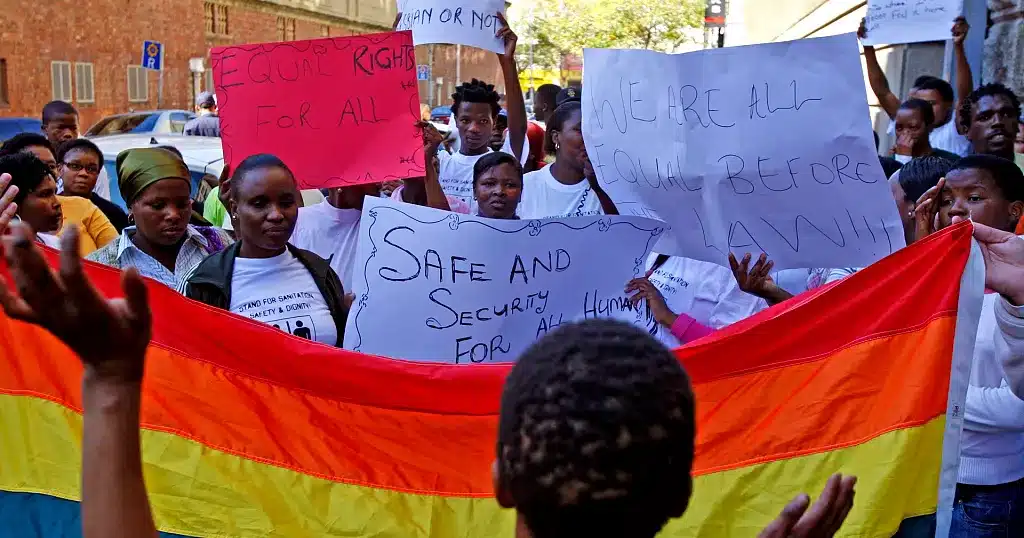
On Friday, protesters marched through Cape Town, South Africa, to voice their opposition to the harsh anti-gay law that took effect in Uganda last week.
The proposed law, known as the Anti-Homosexuality Bill 2023, is ready to be sent to Ugandan President Yoweri Museveni, who is facing calls from the United Nations and the United States to reject it.
“Colonisation was enough, apartheid was enough, we can’t deal with this. Human beings need to be free from brainwashing strategies. They need to be free from unjust laws. So we are saying asSouth Africans stop the anti-homosexual bill”, said Author and activist, Siza Nobuhle, who participated in the march.
Human rights activist from ONG Safe Places International, Nyasha Masi Zhakata, added:
“What is happening right now in Uganda is whereby we have our people imprisoned in their own houses because of their sexuality. It angers me, it gets me so angry, it gets me so frustrated”, she shouted.
According to activists, if president Museveni gives his assent, anyone who engages in same-sex activity could face life imprisonment while repeat offenders could be sentenced to death.
Demonstrators marched in South Africa’s Cape Town this Friday against Uganda’s draconian anti-gay law put in place last week.
The proposed law, known as the Anti-Homosexuality Bill 2023, is ready to be sent to Ugandan President Yoweri Museveni, who is facing calls from the United Nations and the United States to reject it.
“Colonisation was enough, apartheid was enough, we can’t deal with this. Human beings need to be free from brainwashing strategies. They need to be free from unjust laws. So we are saying as South Africans stop the anti-homosexual bill”, said Author and activist, Siza Nobuhle, who participated in the march.
Human rights activist from ONG Safe Places International, Nyasha Masi Zhakata, added:
“What is happening right now in Uganda is whereby we have our people imprisoned in their own houses because of their sexuality. It angers me, it gets me so angry, it gets me so frustrated”, she shouted.
According to activists, if president Museveni gives his assent, anyone who engages in same-sex activity could face life imprisonment while repeat offenders could be sentenced to death.