Antonio Guterres said that even though Hamas attacked Israel on 7 October, this doesn’t excuse Israel from breaking humanitarian laws itself.
He says that the people in Gaza are being pushed around and can’t find the things they need to stay alive. “But in Gaza, there’s no safe place,” he says.
Guterres says that families in Gaza have lost everything and are sleeping on hard floors. He also says that there isn’t enough food and many people are hungry.
He thinks that he strongly disapproves of Hamas’ attacks on 7 October and wants the Israeli hostages taken by Hamas to be released right away.
“He says that even though Hamas has been very violent, it is not right to punish all the Palestinian people for it. “
Tag: Antonio Guterres
-
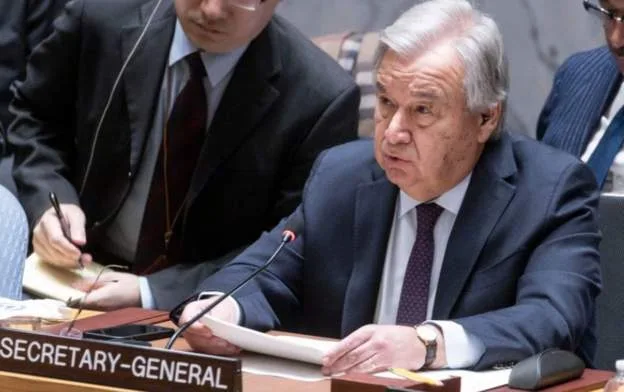
Palestinians collective punishment cannot be justified by Hamas attacks – Guterres
-
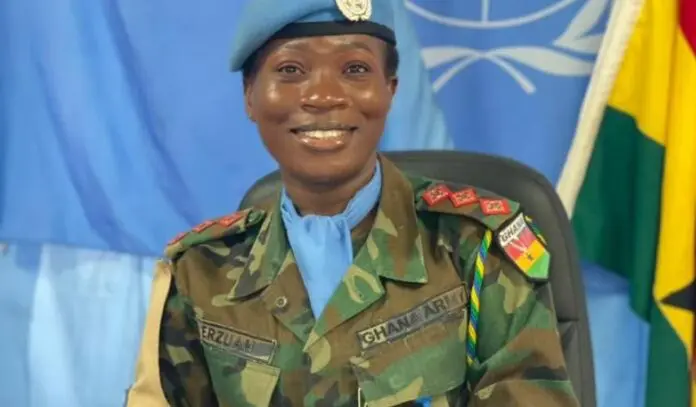
Ghanaian peacekeeper crowned UN’s Military Gender Advocate for 2023
A Ghanaian peacekeeper, Captain Cecilia Erzuah, has been named as the United Nation’s (UN) Military Gender Advocate for the year 2023.
Captain Erzuah, who has been serving the United Nations Interim Security Force in Abyei (UNISFA) since March, 2022, will receive the award from the UN Secretary General Antonio Guterres.
It will be at a ceremony to mark International Day of UN Peacekeepers on Thursday, May 25.
“Resolution 1325 reminds us that our women peacekeepers are not only supporting global peace and security,” said Secretary-General António Guterres.
“They are leading the way. By every measure, Captain Cecilia Erzuah of Ghana is one of those leaders.
“On every front, Captain Erzuah’s work has set the standard for ensuring that the needs and concerns of women are reflected across our peacekeeping operations.”
On her part, Captain Erzuah expressed gratitude to the authorities for being selected to receive the prize which she called “an award for all of us,” referring to her platoon members.
Capt. Erzuah is said to have made sure that her 22-strong platoon, composed equally of men and women, conducted regular patrols and outreach to local leaders as well as women’s and youth groups, to better understand and address community concerns and needs.
Together with civilian UN colleagues, she also hosted discussions on domestic violence, gender equality and childcare.
Those conversations are said to have resulted in an increase in the number of women enlisted in Community Protection Committees, which were initially male dominated.
According to reports, the engagement with community members led to improved early warning about threats of violence against civilians and broader security issues.
The monthly market walks she initiated with her battalion is said to have contributed to build strong and enduring relationships between traders, local residents and the UN.
In January 2023, following a spike in community violence in Majbong, a village in southeast Abyei, Captain Erzuah’s platoon stepped up its presence, regularly checking on the plight of displaced people in the volatile area and enabling the Mission to provide necessary support.
Community members, who had sought sanctuary from the fighting in the surrounding bush, gradually began returning to their homes in the village and women reported feeling much safer.
A traditional chief in Majbong, Deng Paul Mankuol, is quoted as saying: “The mixed patrols are (…) boosting the confidence of members of the community to go about daily activities safely.”
Captain Erzuah is the first Ghanaian peacekeeper, and the first recipient from a contingent or a unit, to receive this prestigious award.
The 32-year-old joined the Ghana Armed Forces in 2016.
One year later, she was posted to the Directorate of Military Records as a Records Officer.
She served for the first time under the UN flag with the United Nations Interim Force in Lebanon (UNIFIL) as a Records Officer from July 2019 to August 2020.
In March 2022, she was deployed to the United Nations Interim Security Force in Abyei (UNISFA) as Commander of the Ghanaian Engagement Platoon.
Ghana is currently the largest contributor of women military peacekeepers to the United Nations with 375 now deployed.
-
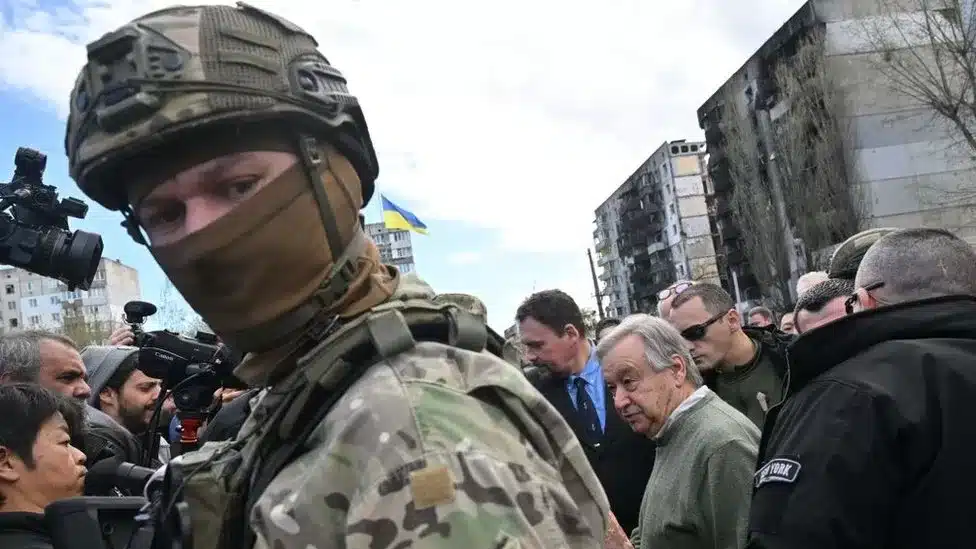
US spied on UN chief, thinks he is too lenient with Russia – Classified documents
Revelations from recent findings in classified documents that were released online, the US believes that the UN Secretary General is overly accommodating to Russian interests.
The records imply that Washington has been paying close attention to Antonio Guterres.In several documents, Mr Guterres and his deputy are mentioned in private communications.
It is the most recent from a leak of top-secret papers, whose cause US officials are trying to determine.
The documents contain candid observations from Mr Guterres about the war in Ukraine and a number of African leaders.
One leaked document focuses on the Black Sea grain deal, brokered by the UN and Turkey in July following fears of a global food crisis.
It suggests that Mr Guterres was so keen to preserve the deal that he was willing to accommodate Russia’s interests.
“Guterres emphasised his efforts to improve Russia’s ability to export,” the document says, “even if that involves sanctioned Russian entities or individuals.”
His actions in February, according to the assessment, were “undermining broader efforts to hold Moscow accountable for its actions in Ukraine.”
UN officials bristled at the suggestion that the world’s top diplomat was being soft on Moscow.
Saying he wouldn’t comment on leaked documents, one senior official said the UN was “driven by the need to mitigate the impact of the war on the world’s poorest.”
“That means doing what we can to drive down the price of food,” he added, “and to ensure that fertiliser is accessible to those countries that need it the most.”
Russia has frequently complained that its own exports of grain and fertiliser are being adversely affected by international sanctions, and has threatened at least twice to suspend co-operation with the grain deal unless its concerns are addressed.
Russian grain and fertilizer are not subject to international sanctions, but Russia says it has experienced difficulties with securing shipping and insurance.
UN officials are clearly unhappy with America’s interpretation of Mr Guterres’ efforts. And they say that Mr Guterres has made his opposition to Russia’s war very clear.
Another document from mid-February describes a frank conversation between Mr Guterres and his deputy, Amina Mohammed.
In it, Mr Guterres expresses “dismay” at a call from the European Commission President, Ursula von der Leyen, for Europe to produce more weapons and ammunition as a result of the war in Ukraine.
The two also talk about a recent summit of African leaders. Amina Mohammed says that Kenya’s president, William Ruto, is “ruthless” and that she “doesn’t trust him.”
It’s well known that America is among a number of nations which routinely spy on the UN – but when the products of that espionage come to light, it’s highly embarrassing and, for the world’s leading diplomat, potentially damaging.
There were few clues as to who leaked the files until Wednesday, when the Washington Post reported it was a gun enthusiast in his 20s who worked on a military base.
It said he shared the classified information to a small group of men and boys who share a “love of guns, military gear and God” on Discord – a social media platform popular with gamers.
The BBC has been unable to verify the report, which was based on interviews with two members of the chat group.
The screenshots of the documents themselves, which have since been shared on several Discord discussion channels, have been verified by the BBC.
Discord said on Wednesday that it was co-operating with law enforcement in its investigation into the leak.
US national security spokesperson John Kirby told the BBC that the US government was scrambling to get to the bottom of the leaks.
“This was a series of dangerous leaks. We don’t know who’s responsible, we don’t know why. And we are assessing the national security implications, and right now there is also a criminal investigation,” he said on Wednesday.
“We want to get to the bottom of this, we want to find out who did this and why.”
Washington was “reaching out actively” to allies to answer questions they have about the leaks, so they know “how seriously we are taking this”, he added.
Mr Kirby said that while the authenticity of some of the documents had yet to be established, they “certainly appear to have come from various source of intelligence across the government”.
-
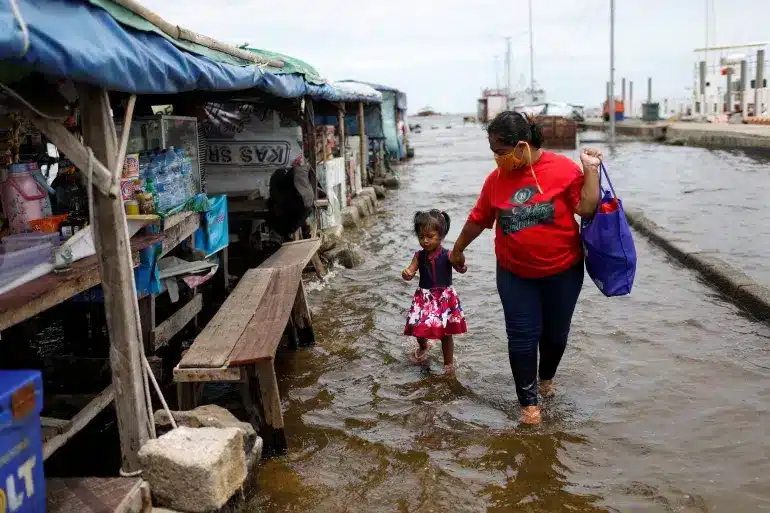
Rising seas: ‘Death sentence’ for some countries – UN
The UN secretary general has issued a dire warning that rising sea levels could cause entire nations and low-lying communities to disappear.
In light of recent data showing that sea levels have risen quickly since 1900, United Nations Secretary-General Antonio Guterres has issued a warning about the threat that rising sea levels pose to hundreds of millions of people who live in low-lying coastal areas and small island states.
In a forceful speech to the first UN Security Council discussion on the effects of rising sea levels on international peace and security, Guterres stated that not only were large cities like Bangkok, Buenos Aires, Jakarta, Lagos, London, Los Angeles, Mumbai, Maputo, New York, and Shanghai threatened, but so were nations like Bangladesh, China, India, and the Netherlands.
“The danger is especially acute for nearly 900 million people who live in coastal zones at low elevations — that’s one out of 10 people on Earth,” he told the council on Tuesday.
Climate change is heating the planet and melting glaciers and ice sheets, which, according to NASA, has resulted in Antarctica shedding some 150 billion metric tonnes of ice each year on average, Guterres said. Greenland’s ice cap is shrinking even faster and losing 270 billion metric tonnes per year.
“The global ocean has warmed faster over the past century than at any time in the past 11,000 years,” the UN chief said.
“Our world is hurtling past the 1.5-degree warming limit that a liveable future requires and, with present policies, is careening towards 2.8 degrees – a death sentence for vulnerable countries,” he said.
Developing countries, in particular, must have the resources to adapt to a rapidly changing world and that means ensuring the $100bn climate finance commitment to developing countries is delivered, Guterres said.
The UN chief offered examples of the effects of a warming planet and rising sea levels on communities and countries stretching from the Pacific to the Himalayan river basins.
Ice melting in the Himalayas has already worsened flooding in Pakistan, he said. But as the Himalayan glaciers recede in the coming decades, the mighty Indus, Ganges and Brahmaputra rivers will shrink. Hundreds of millions of people living in the river basins of the Himalayas will suffer the effects of both rising sea levels and the intrusion of saltwater, Guterres said.
“We see similar threats in the Mekong Delta and beyond. The consequences of all of this are unthinkable. Low-lying communities and entire countries could disappear forever,” he said.
“We would witness a mass exodus of entire populations on a biblical scale.”
With rising sea levels creating new arenas for conflict as competition for freshwater sources and land intensifies, the secretary general said the climate crisis needs to be addressed at its root cause: reducing emissions to limit warming. Understanding the link between insecurity and a changed climate also requires developing early-warning systems for natural disasters, and legal and human rights provisions are also needed, particularly to address the displacement of people and loss of territories.
“People’s human rights do not disappear because their homes do,” Guterres said.
The meeting of the Security Council heard speakers from some 75 countries all voicing concern about the effect of rising seas, the Associated Press reported.
Speaking on behalf of the Alliance of Small Island States, Samoa’s UN ambassador, Fatumanava-o-Upolu III Pa’olelei Luteru, said alliance members were among the lowest to emit the greenhouse gases that had caused global warming and climate change.
“Yet, we face some of the most severe consequences of rising sea levels,” Lutero said, according to AP.
“To expect small island states to shoulder the burden of sea level rise, without assistance from the international community will be the pinnacle of inequities,” he said.
Ambassador Amatlain Kabua of the Marshall Islands said many of the tools needed to address climate change and rising seas were already known.
“What is needed most is the political will to start the job, supported by a UN special representative,” to spur global action, she said.