Tag: António Guterres

  • Australian Indigenous leaders say ‘need to be’ at climate table

    First nations representatives say the scale of the climate crisis requires ‘unprecedented collaboration’.

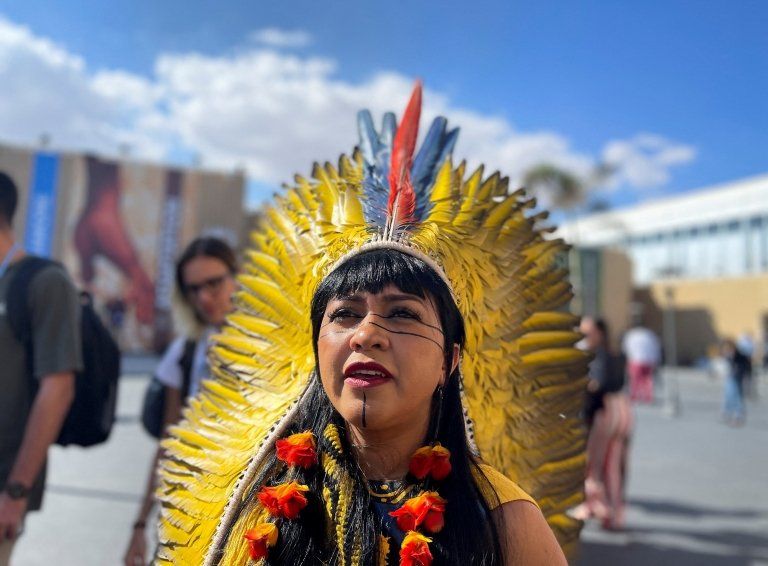
    Indigenous Australians have called for a greater say in the global climate change response at this year’s United Nations Climate Change Conference in Egypt.

    Commonly referred to as COP27, the conference has urged member states to take action on past climate change commitments with UN Secretary-General Antonio Guterres warning the world is “on a highway to climate hell”.

    Indigenous leaders told Al Jazeera that they, too, need to have a prominent role in the process.

    “Having us at the decision-making table is critical,” Jamie Lowe, CEO of Australia’s National Native Title Council, told Al Jazeera.

    “We are at an unprecedented moment on Earth and we need unprecedented collaboration to work through solutions together.”

    While stakeholders such as Indigenous groups have been given an opportunity to present at COP27, any final agreements and negotiations are restricted to UN member states.

    Lowe – who is from the Gunditjmara and Djab Wurrung peoples – told Al Jazeera that this separation of decision-making powers constituted a “disconnect”.

    “Decision makers go off into another room and make the decisions about our peoples’ future,” he said.

    “We need to be at the decision-making table and making calls on what happens in regard to the globe and climate change.”

    Drought, fire, floods

    As parts of eastern Australia succumb to widespread flooding, two years after catastrophic bushfires burned communities to the ground and killed millions of native animals, Indigenous Australians are concerned their voice continues to be ignored despite the rapid rate of climate change.

    Indigenous people successfully managed the land with which they have a unique spiritual and cultural relationship for more than 60,000 years. But 200 years after the British colonised Australia the environment has been devastated.

    Nearly half of Australia’s bushland has been cleared, and Australia has the highest rate of mammal species extinction of any continent, with 500 species at risk of disappearing forever.

    Les Schultz, from the Ngadju and Mirning peoples, is the chair and founder of Ngadju Conservation Aboriginal Corporation.

    Also in attendance at COP27, he agreed with Lowe that Indigenous peoples need to be at the decision-making table in the fight against climate change.

    “We [Indigenous peoples] look after 80 percent of the world’s biodiversity – we should be at the table,” he said.

    Schultz helped establish one of the first Indigenous ranger programmes in Australia, which draws on traditional land management practices to reduce catastrophic bushfires, such as “cool burning”, a preventive fire burning technique.

    “The Indigenous rangers are continuing thousands of years of practice so we have that knowledge base,” he told Al Jazeera.

    “Indigenous rangers are extremely successful in Australia. There are a lot of benefits to the Australian Indigenous ranger program that could be copied across the globe in response to climate change.”

    Along with the protection of biodiversity, Schultz said it was vital that Indigenous cultural heritage was protected.

    In 2020, mining giant Rio Tinto destroyed the sacred Juukan Gorge cave which contained evidence of 46,000 years of Indigenous inhabitancy dating back to before the last Ice Age.

    “We are also seeing a lot of cultural sites being desecrated,” said Schultz. “With ranger programmes in place a lot of that could be prevented.”

    Australia's climate minister Christopher Bowen making a speech at COP27 against a bright blue backdrop showing the UN climate talks logo
    Chris Bowen, Australia’s minister of climate change and energy told COP27 the country was back as a ‘constructive, positive and willing climate collaborator’ [Peter Dejong/AP Photo]

    Joshua Gorringe, the general manager of Mithaka Aboriginal Corporation, was also in Egypt and agreed with Schultz.

    “Something the world has really got to consider is a lot of these First Nations peoples have been on the land and worked with the land,” he said.

    “Yet a lot of Western agriculture works against the land. With better land practices we will get back to a more sustainable future.”

    Gorringe, from the Mithaka peoples, said that Indigenous cultural practices were inherently centred on caring for the environment, which he referred to as “country”.

    “Part of the culture is caring for the country and the way we managed that was that we worked with the country not against it,” he said.

    “A lot of our ceremonies are connected to the way the land works with us, not against us. A lot of these practices really need to start being listened to.”

    Priceless environment

    Gorringe told Al Jazeera that his attendance at COP27 was to highlight the impact not only of mining, but also hydraulic fracturing – or “fracking” – on his traditional lands.

    Fracking – a process which uses small explosions to break up shale rock formations to extract gas and oil – has been criticised for its potentially devastating environmental and health effects.

    While a ban on fracking was recently reintroduced in the United Kingdom by new Prime Minister Rishi Sunak, energy company Origin was recently given permission to frack the delicate riverine region of Gorringe’s traditional homelands.

    “In the world that we are in now where we are talking rising sea levels and climate damage surely the dollar is not worth as much as what the environment is,” he said.

    “We successfully managed the country for 60,000 plus years and in just 200 years all that management practice has gone out the window because governments and other people thought they could manage it better. And the world is paying the consequences now.”

    Australia’s efforts in tackling climate change are ranked 55 out of 63 countries, according to the global Climate Change Performance Index, up four places from last year when the country came last.

    Not only is Australia’s 2030 emissions reduction target one of the weakest, it has also yet to start phasing out coal and gas production. Australia is currently the fifth-largest producer and the second-largest exporter of coal in the world.

    In 2017, former Prime Minister Scott Morrison – then treasurer – even brandished a lump of coal in parliament in support of the coal industry, including the establishment of the giant Adani coal mine.

    However, the government of Anthony Albanese, which was elected in May, has committed to addressing climate change, with the prime minister declaring shortly after his election victory that Australia had an opportunity to become “a renewable energy superpower”.

    “Australia is back as a constructive, positive and willing climate collaborator,” climate change minister Chris Bowen told COP27, although he was later criticised for refusing to join a pledge to end public support for fossil fuel projects overseas.

    Back home in Australia, the government is touting its recent “Rewiring the Nation” project, which includes a 1.5 billion Australian dollar ($1bn) pledge to fast-track renewable wind power in the state of Victoria.

    While supportive of such initiatives, First Nations Clean Energy Network spokesperson Ruby Heard told Al Jazeera that in the race to combat climate change, Indigenous peoples should not continue to be overlooked as they had been in the past.

    “It is a rapid transition, and it needs to be a rapid transition for our environment. But we have to take the time to do this part right,” Heard said.

    “We are trying to avoid some of the mistakes and some of the problems that we’ve seen in the mining industry where our communities haven’t been given a fair go and they haven’t shared in benefits.”

    Shifting mindset

    Australia’s vast land mass may be attractive to green energy companies wishing to develop banks of solar and wind power, and mine renewable energy resources for batteries and solar panels.

    However, Heard – from the Jaru peoples – said that it was vital to develop business partnerships with Indigenous peoples and retain respect for sacred cultural sites.

    Protesters rallying against Rio Tinto, and carrying a sign saying '48,000 years continuous history destroyed'
    There was outrage over miner Rio Tinto’s destruction of ancient rock shelters in the Juukan Gorge [File: Richard Wainwright/EPA]

    “We really want to see co-ownership of projects,” she told Al Jazeera.

    “We want our people to not just receive royalties for projects on their land but be more active participants in these projects and have a financial stake in them and have some ownership over them as well.

    “We want to see our First Nations people have the option to say no if they don’t want a project on their lands or at least to be able to redirect the project away from significant sacred sites.”

    Still, Heard is confident that green energy companies will be more respectful of Indigenous peoples than fossil fuel mining conglomerates.

    “With renewable energy comes a slightly different mindset. It does tend to be a lot more socially and community focused,” she said.

    “We are feeling really hopeful about resetting those relationships and taking this in a different direction – a better direction.”

    Source: Aljazeera.com 
  • COP27 negotiators still seeking deal on final day

    The two-week COP27 climate summit in Egypt is entering its final day as delegates continue to grapple with a number of sticking points.

    These include what level of scrutiny countries should face for delivering on climate targets, and funding for developing countries most affected by climate impacts.

    UN Secretary General António Guterres said that a “blame game” was a recipe for mutually assured destruction.

    He said trust between rich and poorer countries had broken down, and he urged them to agree on what he called an “ambitious and credible” deal.

    Failure to resolve outstanding issues could see negotiators working into the weekend.


    Source: BBC

  • COP27:Joe Biden issues a rallying cry to world leaders on climate change

     US President Joe Biden says, it is the duty and responsibility of every nation to act on climate change.

    Mr. Biden spoke in Egypt following the president’s better-than-expected midterm election results in the United States.

    He claimed that the United States is a global climate leader because it has passed comprehensive climate legislation.

    The two-week meeting is attended by approximately 35,000 people in Sharm el-Sheikh.

    “The climate crisis is about human security, economic security, environmental security, national security and the very life of the planet,” said Mr Biden.

    He echoed UK Prime Minister Rishi Sunak’s comments on Monday that Russia’s war in Ukraine is a reason to act faster on climate.

    Noting that the past eight years have been the warmest on record, he described the impacts of climate change on Africa nations, including a four-year drought in the Horn of Africa.

    Mr Biden promised to tighten US rules on methane emissions from oil and gas companies. Methane is the most potent greenhouse gas and significantly contributes to the warming of Earth’s atmosphere.

    “Today, thanks to the actions we have taken, I can stand here as president of the United States of America and say with confidence the US will meet our emissions targets by 2030,” he said.

    He also pledged more money for poorer nations suffering from climate disasters, including drought and flooding. But the sums remain far short of what the US, along with other developed nations, have promised.

    “Joe Biden comes to COP27 and makes new promises but his old promises have not even been fulfilled. I’d rather have one apple in my hand than the promise of five that never come,” said Mohamed Adow, Power Shift Africa director.

    “The inconvenient truth is that the United States is grossly underperforming on its international climate finance commitments,” said president of World Resources Institute Ani Dasgupta.

    Activists, NGOs, politicians and negotiators from around the world are at COP27
    IMAGE SOURCE,REUTERS Image caption, Activists, NGOs, politicians and negotiators from around the world are at COP27

    In August the US passed legislation to tackle climate change that experts have called “radical” and “historic”. The Inflation Reduction Act could reduce US greenhouse gas emissions by 40% by 2030.

    Mr Biden’s Democrat party feared that it would lose crucial seats in the mid-term elections on Tuesday, which could have weakened their climate agenda. But it performed better than expected.

    “While control of Congress is still being determined, one thing is certain: the massive climate-friendly investments in the Inflation Reduction Act are here to stay,” says Dan Lashof, director of World Resources Institute United States.

    Mr Biden also held talks with Egyptian President Abdul Fattah al-Sisi amid heightened concern over the fate of jailed British-Egyptian pro-democracy activist Alaa Abdel Fattah.

    There’s been no independent confirmation about Mr Abdel Fattah’s condition since he is said to have received “medical intervention” on Thursday, days after he began refusing water as part of a long hunger strike.

    It is the sixth day of the COP summit, which is focussed on implementing ambitious promises made at COP26 in Glasgow last year.

    Vulnerable nations have called on richer countries to pay for the irreversible damage climate change wrecks on their homes.

    “We will not give up… the alternative consigns us to a watery grave,” Bahamas Prime Minister Philip Davis said on Tuesday, urging nations to “get real”.

    They say developed nations owe this money because they became rich off decades of using fossil fuels.

    By contrast many less developed countries, particularly the small island nations most at risk, have contributed virtually nothing to total emissions.

    Richer nations have historically avoided the question of compensation or reparations, but the issue – referred to as “loss and damage” – was put on the COP agenda this year for the first time since the summits began 30 years ago.

    Human rights groups are highlighting the plight of an estimated 60,000 political prisoners in Egypt.

    In a reminder of the danger the world faces, UN Secretary General Antonio Guterres told the summit “we are on a highway to climate hell with our foot on the accelerator”.

    On Friday a report warned that emissions of carbon dioxide (CO2) are rising so quickly that there is a 50% chance the world will soon cross the crucial temperature threshold of 1.5C.

  • Past eight years eight hottest on record, UN report warns

    The UN’s weather and climate body outlines ‘chronicle of climate chaos’ as COP27 talks get under way in Egypt.

    The past eight years are on track to be the hottest ever recorded, a United Nations report has found, as UN chief Antonio Guterres warned that the planet was sending “a distress signal”.

    The UN’s weather and climate body released its annual state of the global climate report on Sunday with another warning that the target to limit temperature increases to 1.5C (2.7F) was “barely within reach”.

    The acceleration of heat waves, glacier melts and torrential rains has led to a rise in natural disasters, the World Meteorological Organization said as the UN’s COP27 climate summit opened in the Red Sea resort town of Sharm el-Sheikh, Egypt.

    “As COP27 gets under way, our planet is sending a distress signal,” said Guterres, who described the report as “a chronicle of climate chaos”.

    Representatives from nearly 200 states gathered in Egypt will discuss how to keep the rise in temperatures to 1.5C, as recommended by the Intergovernmental Panel on Climate Change (IPCC), a goal some scientists say is now unattainable.

    Earth has warmed more than 1.1C since the late 19th century with roughly half of that increase occurring in the past 30 years, the report showed.

    This year is on track to be the fifth or sixth warmest ever recorded despite the impact since 2020 of La Nina, a periodic and naturally occurring phenomenon in the Pacific that cools the atmosphere.

    “All the climatic indications are negative,” World Meteorological Organization head Petteri Taalas told Al Jazeera from Sharm el-Sheikh. “We have broken records in main greenhouse gas concentrations, carbon dioxide, methane and nitrous oxide [levels].”

    “I think the combination of the facts that we are bringing to the table and the fact that we have started seeing impacts of climate change worldwide … are wake-up calls, and that’s why we have this climate conference,” he said.

    Surface water in the ocean hit record high temperatures in 2021 after warming especially fast during the past 20 years. Surface water is responsible for soaking up more than 90 percent of accumulated heat from human carbon emissions.

    Marine heat waves were also on the rise, adversely affecting coral reefs and the half-billion people who depend on them for food and their livelihoods.

    The report warned that more than 50 percent of the ocean surface experienced at least one marine heatwave in 2022.

    Sea level rise has also doubled in the past 30 years as ice sheets and glaciers melted at a fast pace. The phenomenon threatens tens of millions of people living in low-lying coastal areas.

    “The messages in this report could barely be bleaker,” said Mike Meredith, science leader at the British Antarctic Survey.

    In March and April, a heatwave in South Asia was followed by floods in Pakistan, which left a third of the country underwater. At least 1,700 people died, and eight million were displaced.

    In East Africa, rainfall has been below average in four consecutive wet seasons, the longest in 40 years, with 2022 set to deepen the drought.

    China saw the longest and most intense heatwave on record and the second-driest summer. Similarly in Europe, repeated bouts of high temperatures caused many deaths.

    ‘Loss and damage’ talks

    The UN warning was made as delegates at the summit agreed to hold discussions on compensation by rich nations to poorer ones most likely to be affected by climate change.

    “This creates for the first time an institutionally stable space on the formal agenda of COP and the Paris Agreement to discuss the pressing issue of funding arrangements needed to deal with existing gaps, responding to loss and damage,” COP27 President Sameh Shoukry told the opening session.

    Poorer nations least responsible for climate-warming emissions but most vulnerable to its impacts are suffering the most and are, therefore, asking for what has also been called “climate reparations”.

    This item, added to the agenda in Egypt on Sunday, is expected to cause tension. At COP26 last year in Glasgow, high-income nations blocked a proposal for a loss and damage financing body and instead supported three years of funding discussions.

    The loss and damage discussions now on the agenda at COP27 will not involve liability or binding compensation but they are intended to lead to a conclusive decision “no later than 2024”, Shoukry said.

    “The inclusion of this agenda reflects a sense of solidarity for the victims of climate disasters,” he said.

    Source: Aljazeera.com 


  • Commonwealth head: ‘115 people dying every day as a result of climate change’

    Baroness Scotland, Secretary General of the Commonwealth, has told Sky News that “armageddon” is beckoning and 115 people are dying each day from the effects of climate change.

    She told Sky News that if we do not act, “we will not have a planet worth living on”.

    She said: “Just look at what’s happened in the last few months to countries like Bangladesh – 60% of the country under water.

    “Antonio Guterres (UN secretary general) talked about it as ‘monsoons on steroids’.

    “This was Armageddon. More than $40bn of damage. And you’ve got thousands of people affected and millions of people who are going to be now put in a position of real devastation and hunger.”

    Baroness Scotland went on: “All of us, all of humanity, has to be focused on this.

    “And if we have to drive everybody else to do that, which they must do, then we will.

    “But those of us who understand it have to speak out. We have to be able to say to everybody, this is everybody’s business and you can’t run away from it, because if you do, our whole humanity is at risk. This is about saving the planet.

    “We’ve got 115 people dying every single day as a result of climate change.

    “That is our reality.”

  • Guterres calls for ‘sustained political commitment’ for a healthier world

    To accomplish this, “wealthier countries and international financial institutions need to support developing countries to make these crucial investments”, said UN Secretary-General António Guterres.

    In an address to the opening of the World Health Summit in Berlin, via a video message, he began by noting how poorly prepared most of the world is, for crises. The annual gathering is being hosted by the presidents of Germany, France and Senegal, alongside WHO Director General Tedros Adhanom Ghebreyesus.

    Women’s burden

    “Women have been among the hardest hit. They are shouldering an increased burden of care, in families and as frontline workers”, he said. But at the same time, many women has lost income due to job loss, and inadequate safety nets.

    He said COVID and now the food, energy and financial shocks spinning out from Russia’s invasion of Ukraine, are threatening the 17 Sustainable Development Goals, and poverty reduction efforts.

    To advance the SDGs, “we must recalibrate multilateralism and strengthen global cooperation”, he added.

    Failing the developing world

    Too little is being invested in health and well-being and the “unbalanced global financial system is failing the developing world”, he declared.

    “This must change. All people need inclusive, impartial and equitable access to health services, to deliver universal health coverage”, including neglected mental healthcare services.

    Combined, good health is the foundation, for peaceful and stable societies, he said.

    Paradigm shift away from ‘sick care’: Tedros

    In his remarks at the opening ceremony, WHO chief Tedros said to fulfill the theme of “taking global health to a new level” in the year ahead, this translated into three key priorities.

    First, the new pandemic accord being negotiated by countries, and for countries, was key, so the world can truly come together as one in the face of further pandemics on a par with COVID-19.

    “It will not give WHO any powers to do anything without the express permission of sovereign nation States”, he reassured.

    Second, a new “global architecture” is needed “that is coherent and inclusive.” The fractured COVID response made it clear that new and better tools are needed to shore it all up.

    Thirdly, a new global approach must be taken which prioritises promoting health and preventing disease, not just treating the sick. Too many health systems “do not deliver healthcare, they deliver sick care”, he said.

    Healthcare needs to be no longer just about one ministry or sector, but “of the whole of government, and the whole of society.”

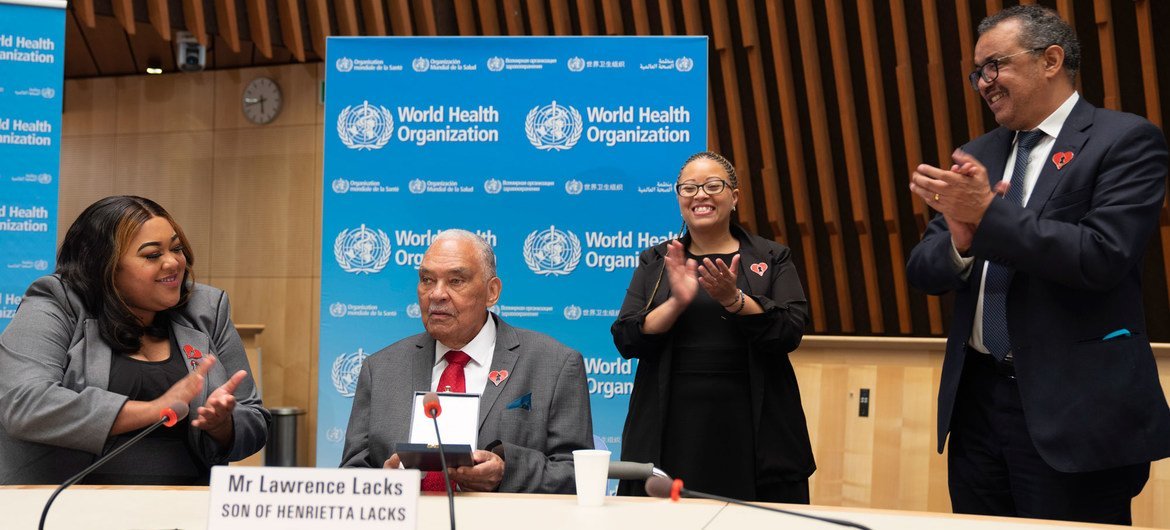
    Dr. Tedros Adhanom Ghebreyesus welcomes the family of Henrietta Lacks for a special dialogue at WHO headquarters in Geneva.

    Dr. Tedros Adhanom Ghebreyesus welcomes the family of Henrietta Lacks for a special dialogue at WHO headquarters in Geneva.

    Lacks family in new Goodwill Ambassador role

    In another development on Sunday, WHO chief Tedros announced the appointment of the Lacks family, as WHO Goodwill Ambassadors for Cervical Cancer Elimination.

    Henrietta Lacks, an impoverished African-American woman, died in 1951 from the disease, but left behind an extraordinary legacy through the unique properties of her cancer cells, which became the first “immortal” cell line, able to replicate outside the human body, providing countless medical breakthroughs since then.

    The so-called HeLa cells were taken from her without her knowledge or consent: “Much like the injustice of Henrietta Lacks’ story, women all over the world from racial and minority ethnic groups, face disproportionately higher risks from cervical cancer”, said Tedros.

    Cervical cancer elimination

    “WHO’s goal is to eliminate cervical cancer, which means the innovations created”, with her cells, “must be made available equitably to all women and girls. We look forward to working with the Lacks family to raise awareness on cervical cancer and advance racial equity in health and science.”

    Speaking at a ceremony during the World Health Summit, Alfred Lacks Carter Jr. said the family was accepting the honour to serve as Goodwill Ambassadors, “in the spirit of my mother, Deborah Lacks, who lost her mother, Henrietta, to cervical cancer, and worked to make certain the world recognizes her impact.”

    Source: news.un.org

  • The United Nations considering sanctions against gang leader ‘Barbecue’ in Haiti

    UN Security Council resolution drafted by the United States and Mexico names ‘Barbecue’ as one of Haiti’s most powerful gang bosses.

    According to a draught resolution obtained by various news outlets, the United Nations Security Council is considering imposing asset freezes, travel bans, and arms embargoes on anybody who threatens Haiti’s peace, security, or stability.

    The first person to be sanctioned would be Jimmy Cherizier, who goes by the nickname “Barbecue” and is described in the United States and Mexico-drafted resolution as one of Haiti’s most influential gang leaders.

    “Cherizier and his G9 gang confederation are actively blocking the free movement of fuel from the Varreux fuel terminal,” the text says. “His actions have directly contributed to the economic paralysis and humanitarian crisis in Haiti.”

    Gangs last month blocked the entrance to Varreux to protest against a government announcement of a cut in fuel subsidies. Fuel supplies dried up and Haitians also face a shortage of drinking water amid a deadly outbreak of cholera.

    “One of the challenges in effectively dealing with insecurity is the nexus between the gangs and some of the elites in Haiti and outside of Haiti who is supporting them and directing them for their own purposes,” US Secretary of State Antony Blinken said in Washington on Thursday.

    “So we’ve been working together at the United Nations … to impose sanctions on those who are actually taking actions that support violence and support gangs,” he said at a joint news conference with visiting Mexican officials.

    UN Secretary-General Antonio Guterres has proposed that one or several countries send “a rapid action force” to help Haiti’s police remove a threat posed by armed gangs, according to a letter to the Security Council, seen by Reuters news agency on Sunday.

    In July, the council threatened targeted sanctions against criminal gangs and human rights abusers in Haiti and called on countries to stop the flow of guns to the Caribbean country.

    The US State Department this week announced visa sanctions against those who support Haitian gangs, responding to the humanitarian crisis created by the gang blockade.

    US Assistant Secretary of State Brian Nichols, who is leading a delegation of officials to the Caribbean nations, said in an interview with a local television station that Barbecue and the G9 gangs are directly contributing to the deaths of Haitians.


    “Yesterday, the United States designated 11 individuals for visa sanctions,” Nichols said, adding that he could not name the individuals per US policy.

    He said 1.2 million people in Haiti are at risk for cholera. Health experts say the gang blockade is making it more difficult to control the outbreak, which was announced this month.

    The 15-member Security Council could vote as early as Monday on the draft sanctions resolution, diplomats said. To be adopted a resolution needs nine votes in favour and no vetoes by Russia, China, the US, France, or Britain.

    China has been pushing for the Security Council to impose an arms embargo on criminal gangs in Haiti.

    A UN mission in Haiti works with the government to strengthen political stability and good governance, rights protection, and justice reform and to help with organising free and fair elections.

    UN peacekeepers were deployed to Haiti in 2004 after a rebellion led to the removal and exile of then-President Jean-Bertrand Aristide. Peacekeeping troops left in 2017 and were replaced by UN police, who left in 2019.


  • Burkina Faso coup: Gunshots in capital and roads blocked

    Burkina Faso military leader Paul-Henri Damiba, who was overthrown a day ago, is planning a counter-coup, Burkina Faso’s self-declared leader Col Ibrahim Traoré has disclosed.

    He has also accused the French army of harbouring Lt Col Paul-Henri Damiba at one of their bases – which French diplomats have denied.

    Gunshots have been heard in Burkina Faso‘s capital city Ouagadougou and helicopters are circling overhead.

    Witnesses say troops have blocked main roads around the city and shops that had opened earlier are now shut.

    Friday’s apparent takeover had been announced on national TV and was the second time this year that the country’s army had seized power.

    On both occasions the coup leaders said they had to step in because national security was so dire.

    Burkina Faso controls as little as 60% of its territory, experts say, and Islamist violence is worsening. Since 2020 more than a million people have been displaced in the country due to the violence.

    The African Union has demanded the return of constitutional order by July 2023 at the latest, agreeing with the regional group ECOWAS that the ousting of leader Lt Col Damiba was “unconstitutional”.

    ECOWAS earlier said it was “inappropriate” for army rebels to seize power when the country was working towards civilian rule.

    The latest international criticism has come from the UN, whose chief António Guterres says he “strongly condemns” the coup.

    For the second time in under 24 hours the coup leaders have issued a statement on national TV, signed by their leader Col Ibrahim Traoré.

    This time they claimed Lt Damiba was planning a counter-attack because of their own willingness to work with new partners in their fight against the Islamists. The statement did not name these potential new partners, but rights groups say troops in neighbouring Mali have been working closely with Russian mercenaries from the Wagner group – although both nations deny this.

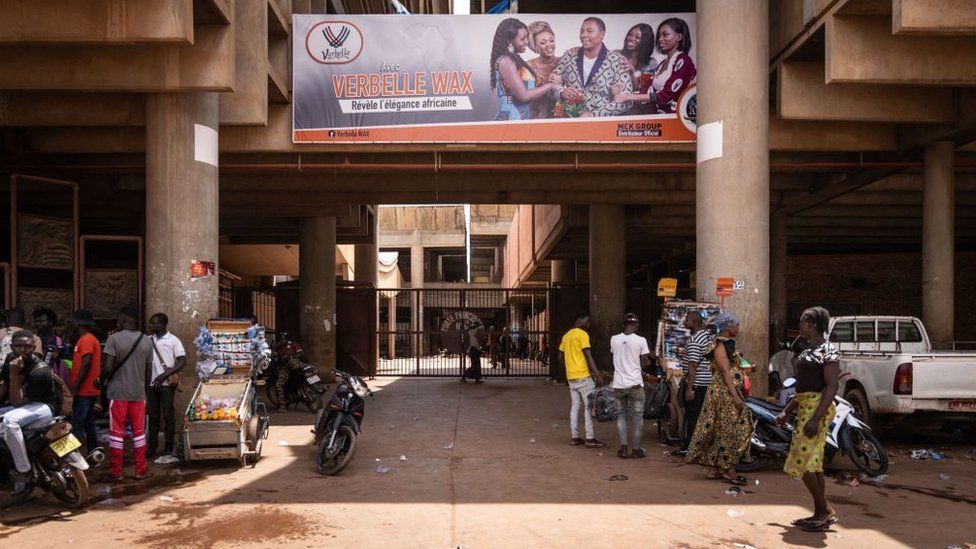
    The gates to Ouagadougou's main market on 1 October 2022.
    IMAGE SOURCE,AFP, Image caption, The gates to Ouagadougou’s main market have been shut and many roads are blocked off.

    On Friday evening flanked by rebel soldiers in fatigues and black facemasks, an officer had read an announcement on national TV stating that they were kicking out Lt Damiba, dissolving the government and suspending the constitution.

    That statement was also read on behalf of an army captain called Col Traoré, who said Lt Col Damiba’s inability to deal with an Islamist insurgency was to blame.

    “Our people have suffered enough, and are still suffering”, he said.

    Little is known about Col Traoré, the 34-year-old soldier who led an anti-jihadist unit in the north called Cobra.

    His statement effectively declared himself the interim leader of Burkina Faso. But in Friday’s announcement came the promise that the “driving forces of the nation” would in time be brought together to appoint a new civilian or military president and a new “transitional charter”.

    Lt Col Damiba’s junta overthrew an elected government in January citing a failure to halt Islamist attacks, and he himself told citizens “we have more than what it takes to win this war.”

    But his administration has also not been able to quell the jihadist violence. Analysts told the BBC recently that Islamist insurgents were encroaching on territory, and military leaders had failed in their attempts to bring the military under a single unit of command.

    On Monday, 11 soldiers were killed when they were escorting a convoy of civilian vehicles in Djibo in the north of the country.

    The African Union has urged the military to “immediately and totally refrain from any acts of violence or threats to the civilian population, civil liberties, human rights”.

    The Economic Community of West African States (Ecowas) earlier condemned the move too, stating it “reaffirms its unreserved opposition to any taking or maintaining of the power by unconstitutional means”.

    The United States said it was “deeply concerned” by events in Burkina Faso and encouraged its citizens to limit movements in the country. France issued a similar warning to its more than 4,000 citizens living in the capital city Ouagadougou.

    “We call for a return to calm and restraint by all actors,” a US State Department spokesperson said.

    In January, Lt Col Damiba ousted President Roch Kaboré, saying that he had failed to deal with growing militant Islamist violence.

    But many citizens do not feel any safer and there have been protests in different parts of the country this week.

    On Friday afternoon, some protesters took to the capital’s streets calling for the removal of Lt Col Damiba.

    The Islamist insurgency broke out in Burkina Faso in 2015, leaving thousands dead and forcing an estimated two million people from their homes.

    The country has experienced eight successful coups since independence in 1960.

    Source: BBC

  • UN boss seeks ‘urgent report’ after South Sudan sex abuse allegations

    Antonio Guterres, the United Nations secretary-general, has requested an “urgent report” detailing the actions taken by UN staff to ensure accountability after an investigation by The New Humanitarian and Al Jazeera revealed that sexual abuse allegations against aid workers at a UN-run camp in South Sudan have largely gone unchecked over the years.

    The Protection of Civilians (PoC) site in Malakal opened its doors in late 2013 to offer refuge to people fleeing South Sudan’s ruinous civil war. Accounts of sexual abuse committed by aid workers first emerged in 2015, but the scale of the problem has since grown despite a UN-led task force charged with tackling it, according to aid workers, camp residents and victims interviewed by The New Humanitarian and Al Jazeera. Reporters also analysed several UN and NGO documents.

    “The Secretary-General is appalled by these allegations of sexual exploitation and abuse which causes irreparable harm to victims and their families,” Guterres’s spokesperson said in a statement to The New Humanitarian and Al Jazeera after the publication of the report on Thursday.

    The statement added that the UN chief “has asked for an urgent report on the immediate actions being taken by the UN Country team to address sexual exploitation and abuse across our operations in South Sudan and ensure accountability”.

    The revelations suggest a litany of systemic failures and missed opportunities by the aid sector and a deep betrayal for vulnerable women and girls at the camp, which now hosts some 37,000 people.

    Aid workers with organisations such as the International Organization of Migration, Doctors Without Borders (Medecins Sans Frontieres, or MSF), the World Food Programme and World Vision were among the alleged perpetrators, with allegations including rape and sexual abuse of minors, as well as pressuring women and girls to have sex for gifts, and other examples of exploitation.

    “The people sexually exploiting and abusing women in [protection sites] are the very people meant to serve and protect them; their entire lives depend on services from these same aid workers,” said Aluel Atem, a South Sudanese development economist and feminist activist who has written about gender-based violence in the country.

    The allegations tally with those of other camp residents – testimonies that were detailed in a UN Population Fund report sent to humanitarian agencies on October 5, 2020, and shared with The New Humanitarian and Al Jazeera. In the report, residents said sexual exploitation was experienced “on a daily basis”, mostly perpetrated by humanitarian workers; UN and NGO workers were renting houses in the camp to have sex with women, and UN peacekeepers were paying bribes to gain access to women.

    Sara Beysolow Nyanti, deputy head of South Sudan’s UN peacekeeping mission – in a March 2022 letter sent to aid organisations working in the camp – expressed “greatest alarm” at “increased incidents of sexual abuse and exploitation”.

    “I request a review of your internal arrangements to further enhance sensitisation of aid personnel on these international commitments and raise awareness on PSEA (prevention of sexual exploitation and abuse), policies, standards, and code of conduct on PSEA,” she wrote in the letter, which was not made public before the investigation by The New Humanitarian and Al Jazeera.

    Guterres’s statement said Nyanti, who assumed her position in January, has been “upfront in addressing these allegations and concerns since her appointment”.

    Source: Aljzeera

  • Impose tax on fossil fuel firms ‘feasting’ on windfall profits – UN chief urges rich countries

    Although the UN’s chief cannot direct its members to implement windfall taxes, his remarks do send an “important signal”.
    All wealthy nations are being urged to impose a windfall tax on fossil fuel companies by the head of the United Nations.

    The industry is “feasting on hundreds of billions of dollars in subsidies and windfall profits while household budgets shrink and our planet burns”, Antonio Guterres told world leaders in New York.


    Money raised should be used to help people struggling with rising food and energy bills, as well as to compensate countries suffering the most severe effects of climate change, the secretary-general told the United Nations General Assembly, which is expected to be dominated by discussions of Russia’s invasion of Ukraine.


    In spite of demanding “polluters must pay”, Mr Guterres cannot mandate action from developed countries, many of which are grappling with extreme weather, high food and energy prices, and the Ukraine war.


    But Antony Froggatt, from international affairs, think tank Chatham House, said the statement “is an important signal” and highlights the “unequal nature of the current crisis, with some countries, companies, and citizens benefiting hugely”.


    But Mr Guterres has previously urged an end to funding for more oil and gas exploration and production, “which has not stopped these taking place”, Mr Froggatt added.


    The European Union plans to raise about €140bn (£121bn) by imposing windfall taxes on energy companies’ “abnormally high profits”, a move that could put pressure on Prime Minister Liz Truss


  • Mikhail Gorbachev: Mourners line up to pay homage to the final Soviet leader

     The last Soviet leader, Mikhail Gorbachev, to peacefully end the Cold War, is being remembered by mourners in Moscow.

    There is somber music playing within the House of Unions’ Columned Hall. On the balcony, a sizable Gorbachev image in black and white is displayed.

    In an open casket, the former president is surrounded by a guard of honor.

    As they pass by, the people lay flowers. There is a sea of red carnations.

    It was here that Gorbachev’s predecessors, Soviet leaders like Lenin, Stalin, and Brezhnev, lay in state, too.

    Many Russians blame Mikhail Gorbachev for launching reforms that caused economic chaos and for letting the Soviet Union fall apart.

    But in the streets around the Hall of Unions, long lines of Muscovites – young and old – are queuing up to pay their respects.

    Liberal politician Grigory Yavlinsky is there and he says: “These people came to Gorbachev to say ‘Thank you Mr Gorbachev. You gave us a chance, but we lost this chance.”

    One man who is not here is Vladimir Putin. The Kremlin’s official explanation: No space in his schedule. However, this is widely seen as a snub.

    Mr Putin once called the dissolution of the USSR the “greatest geopolitical catastrophe of the century”.

    Mr Gorbachev took power in 1985, introducing bold reforms and opening the USSR to the world.

    But he was unable to prevent the collapse of the union in 1991, and many Russians blame him for the years of turmoil that ensued.

    Outside Russia, he was widely respected, with the UN Secretary-General António Guterres saying he had “changed the course of history”, and US President Joe Biden calling him a “rare leader”.

    But Saturday’s ceremony is not a state funeral – a sign that the current Kremlin leadership has little interest in honouring Mr Gorbachev’s legacy.

    It was well known that Mr Putin and Mr Gorbachev had a strained relationship – their last meeting was reportedly in 2006.

    Mourners attend a memorial service for Mikhail Gorbachev, the last leader of the Soviet Union, at the Columned Hall of the House of Unions in Moscow, Russia September 3, 2022.IMAGE SOURCE,REUTERS
    Image caption,

    Former Soviet leaders who died lay in state in the same imposing Columned Hall of the House of Unions

    Most recently, Mr Gorbachev was said to have been unhappy with Russia’s invasion of Ukraine, even though he had supported the annexation of Ukraine’s Crimea peninsula in 2014.

    The hospital in Moscow where Mr Gorbachev died on Tuesday said in a short statement that he had been suffering from a long and serious illness. It did not reveal the cause of death.

    In recent years, his health had been in decline and he had been in and out of the hospital. In June, international media reported that he had been admitted after suffering from a kidney ailment.

    He is seen in the West as an architect of reform who created the conditions for the end of the Cold War in 1991 – a time of deep tensions between the Soviet Union and Western nations, including the US and Britain.

    He was awarded the Nobel Peace Prize in 1990 “for the leading role he played in the radical changes in East-West relations”.

    But in the new Russia that emerged after 1991, he was on the fringes of politics, focusing on educational and humanitarian projects.

    Gorbachev made one ill-fated attempt to return to political life in 1996, receiving just 0.5% of the vote in presidential elections.

    Reagan and Mikhail GorbachevIMAGE SOURCE, GETTY IMAGES
    Image caption,

    Ronald Reagan and Mikhail Gorbachev signed the Intermediate-Range Nuclear Forces Treaty in 1987
  • Pakistan floods are a monsoon on steroids, warns UN chief

    Pakistan is facing “a monsoon on steroids”, the UN’s secretary general has warned, after floods submerged a third of the country.

    Antonio Guterres urged the world to come to Pakistan’s aid as he launched a $160m appeal to help the tens of millions affected in the disaster.

    He blamed “the relentless impact of epochal levels of rain and flooding”.

    At least 1,136 people have been killed since June and roads, crops, homes and bridges washed away across the country.

    This year’s record monsoon is comparable to the devastating floods of 2010 – the deadliest in Pakistan’s history – which left more than 2,000 people dead.

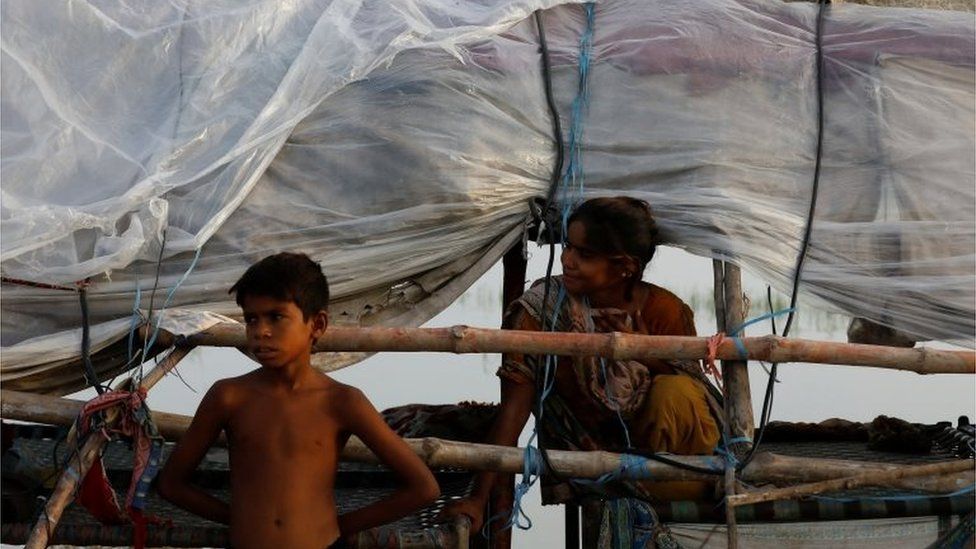
    Flood victims at their makeshift family tent in Mehar, Pakistan August 29, 2022.
    Image source, Reuters Image caption, Makeshift relief camps have sprung up all over Pakistan to cope with the many displaced

    In a video message, Mr Guterres called South Asia a “climate crisis hot spot” where people were 15 times more likely to die from climate impacts.

    “Let’s stop sleepwalking towards the destruction of our planet by climate change. Today, it’s Pakistan. Tomorrow, it could be your country.”

    He said the UN appeal aimed to provide 5.2 million people with food, water, sanitation, emergency education and health support.

    Officials estimate that more than 33 million Pakistanis – one in seven people – have been affected by the flooding.

    Sadia, a student in Quetta, the capital of Balochistan province, said she felt helpless as her family were cut off in their home village of Jhal Magsi, about eight hours away.

    “You can’t find a single home that is safe now,” she told the BBC’s Outside Source programme. “They are under the sky with no help.

    “Right now, we are in need of first aid relief like tents, some shelter and some basic food, they can’t cook anything. And they need clean water to drink.”

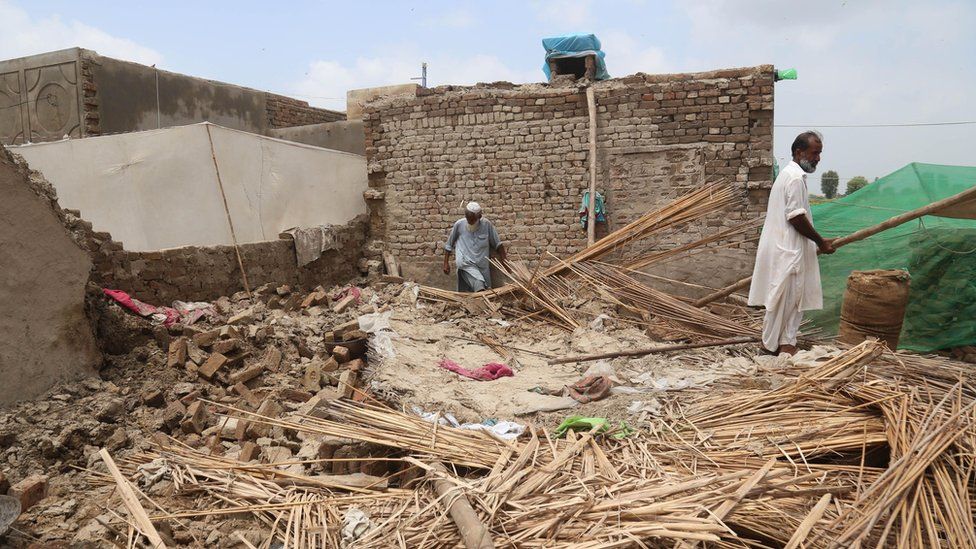
    People check the damage to their houses in the aftermath of floods in Sanghar District, Sindh province, Pakistan, 29 August 2022.
    Image source, EPA Image caption, Clearing up in Sindh – countless properties have been damaged or destroyed

    On Monday, Pakistan’s climate change minister Sherry Rehman described the situation as a “climate-induced humanitarian disaster of epic proportions”.

    Pakistan produces less than 1% of global greenhouse gas emissions but ranks consistently in the top 10 countries most vulnerable to the effects of climate change.

    Many factors contribute to flooding, but a warming atmosphere caused by climate change makes extreme rainfall more likely.

    The world has already warmed by about 1.2C since the industrial era began and temperatures will keep rising unless governments around the world make steep cuts to emissions.

    Pakistan’s planning minister says estimates suggest the floods have caused at least $10bn (£8.5bn) of damage, and many people face serious food shortages. The country was already suffering from an economic crisis.

    Vaste swathes of rich agricultural land have been devastated in this year’s monsoon, damaging food supplies and sending prices soaring.

    “Things are so expensive because of this flood that we can’t buy anything,” Zahida Bibi, a shopper at a market in Lahore, told AFP news agency.

    The flood situation is most severe in provinces such as Sindh and Balochistan, but mountainous regions in Khyber Pakhtunkhwa have also been badly hit.

    Thousands of people have been ordered to evacuate villages cut off in northern Swat Valley, where bridges and roads have been swept away – but even with the help of helicopters, authorities are still struggling to reach those trapped.

    “Village after village has been wiped out. Millions of houses have been destroyed,” Prime Minister Shehbaz Sharif said on Sunday after flying over the area in a helicopter.

    Aid is starting to arrive after Pakistan launched its own appeal for help. The United Arab Emirates and Turkey have delivered tents and medicines, while the US and Britain have pledged their support.

    Earlier on Monday, the International Monetary Fund said it had approved a $1.2bn loan for the country.

    Source: BBC

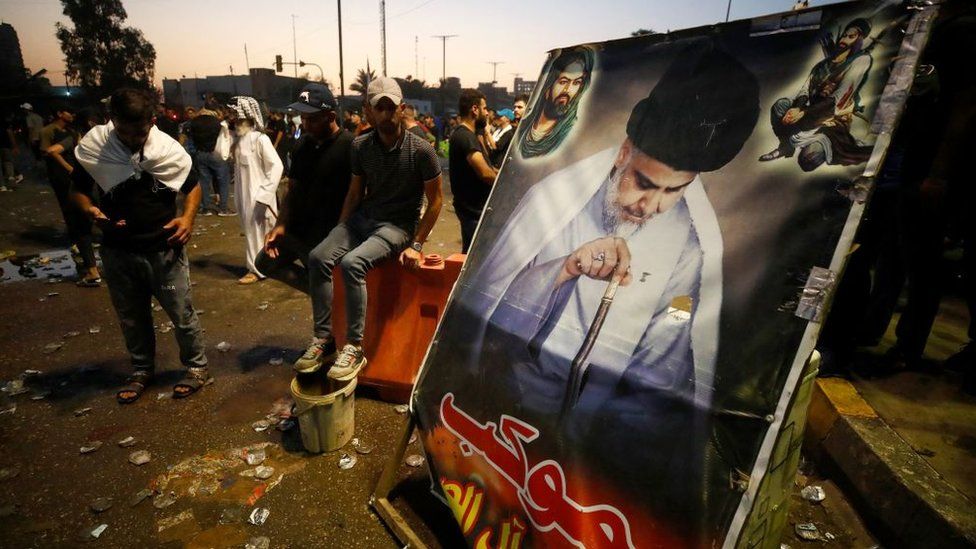
  • Moqtada al-Sadr: At least 15 dead amid fighting in Iraqi capital

    At least 15 people have been killed in clashes between Iraqi security forces and supporters of a powerful Shia cleric in the capital, Baghdad.

    Officials say dozens more were injured after protesters loyal to Moqtada al-Sadr stormed the presidential palace.

    The violence began after Mr Sadr announced his retirement from politics.

    His bloc won most seats in parliament last October, but he has refused to negotiate with Iran-backed Shia groups to form a government.

    There has been a year of political instability as a result.

    Street fighting erupted overnight, as fighters exchanged gunfire and tracer rounds illuminated the night sky in some of the worst violence to hit the Iraqi capital in recent years.

    Much of the fighting has been concentrated around the city’s Green Zone, an area that houses government buildings and foreign embassies. Dutch embassy staff were forced to move to the German mission due to the clashes.

    Security officials said some of the violence was between the Peace Brigades, a militia loyal to Mr Sadr, and members of the Iraqi military. Videos shared on social media appeared to show some fighters using heavy weaponry, including rocket-propelled grenades (RPGs).

    Iran has closed its borders with Iraq amidst the fighting, and Kuwait has urged its citizens to leave the country immediately.

    Medics said 15 supporters of Mr Sadr had been shot dead and about 350 other protesters injured, according to AFP news agency.

    A spokesperson for UN Secretary General Antonio Guterres said he was alarmed by events and called for “immediate steps to de-escalate the situation”.

    And Mustafa al-Kadhimi, Iraq’s caretaker prime minister – and Sadr ally – has declared a nationwide curfew after unrest in several other cities.

    He has suspended cabinet meetings and has pleaded with the influential cleric to intervene and stop the violence.

    For now, Mr Sadr has announced a hunger strike until the violence and use of weapons by all sides stopped.

    Supporters of Moqtada al-Sadr protesting in Baghdad
    Image caption, The unrest continued throughout the night. Image source, Getty Images

    In his statement on Monday, Mr Sadr said: “I had decided not to interfere in political affairs, but I now announce my final retirement and the closure of all [Sadrist] institutions.” Some religious sites linked to his movement will remain open.

    Mr Sadr, 48, has been a dominant figure in Iraqi public and political life for the past two decades. His Mehdi Army emerged as one of the most powerful militias which fought US and allied Iraqi government forces in the aftermath of the invasion which toppled former ruler Saddam Hussein.

    He later rebranded it as the Peace Brigades, and it remains one of the biggest militias which now form part of the Iraqi armed forces.

    Mr Sadr, one of Iraq’s most recognisable figures with his black turban, dark eyes and heavy set build, had championed ordinary Iraqis hit by high unemployment, continual power cuts and corruption.

    He is one of a few figures who could quickly mobilise hundreds of thousands of supporters on to the streets, and draw them down again. Hundreds have been camped outside parliament since storming it twice in July and August in protest at the deadlock.

    Once an Iranian ally, Mr Sadr has distanced himself from Iraq’s Shia neighbour and repositioned himself as a nationalist wanting to end US and Iranian influence over Iraq’s internal affairs.

    Source: BBC

  • One blunder can lead to a nuclear catastrophe-UN chief warns

    The Secretary-General warned the world had been “lucky” to avoid global nuclear war

    The world is one misstep from devastating nuclear war and in peril not seen since the Cold War, the UN Secretary General has warned.

    “We have been extraordinarily lucky so far,” Antonio Guterres said.

    Amid rising global tensions, “humanity is just one misunderstanding, one miscalculation away from nuclear annihilation”, he added.

    His remarks came at the opening of a conference for countries signed up to the nuclear Non-Proliferation Treaty.

    The 1968 deal was introduced after the Cuban missile crisis, an event often portrayed as the closest the world ever came to nuclear war. The treaty was designed to stop the spread of nuclear weapons to more countries and to pursue the ultimate goal of complete nuclear disarmament.

    Almost every nation on Earth is signed up to the NPT, including the five biggest nuclear powers. But among the handful of states never to sign are four known or suspected to have nuclear weapons: India, Israel, North Korea, and Pakistan.

    Secretary General Guterres said the “luck” the world had enjoyed so far in avoiding a nuclear catastrophe may not last – and urged the world to renew a push towards eliminating all such weapons.

    “Luck is not a strategy. Nor is it a shield from geopolitical tensions boiling over into nuclear conflict,” he said.

    And he warned that those international tensions were “reaching new highs” – pointing specifically to the invasion of Ukraine, tensions on the Korean peninsula and in the Middle East as examples.

    Russia was widely accused of escalating tensions when days after his invasion of Ukraine in February, President Vladimir Putin put Russia’s substantial nuclear forces on high alert.

    He also threatened anyone standing in Russia’s way with consequences “you have never seen in your history”. Russia’s nuclear strategy includes the use of nuclear weapons if the state’s existence is under threat.

    On Monday, Mr. Putin wrote to the same non-proliferation conference Mr. Guterres opened, declaring that “there can be no winners in a nuclear war and it should never be unleashed”.

    But Russia still found itself criticized at the NPT conference.

    US Secretary of State Antony Blinken condemned what he called Russia’s sabre-rattling – and pointed out that Ukraine had handed over its Soviet-era nuclear weapons in 1994, after receiving assurances of its future security from Russia and others.

    “What message does this send to any country around the world that may think that it needs to have nuclear weapons – to protect, to defend, to deter aggression against its sovereignty and independence?” he asked. “The worst possible message”.

    Today, some 13,000 nuclear weapons are thought to remain in service in the arsenals of the nine nuclear-armed states – far lower than the estimated 60,000 stockpiled during the peak of the mid-1980s.

    Source: bbc.com

  • UN calls for end to ‘tsunami of hate’ around virus

    UN Secretary-General Antonio Guterres has called for an “all-out effort” to end rising racism linked to the Coronavirus pandemic.

    “The pandemic continues to unleash a tsunami of hate and xenophobia, scapegoating and scaremongering,” Guterres said on Friday.

    “Anti-foreigner sentiment has surged online and in the streets. Anti-Semitic conspiracy theories have spread and COVID-19-related anti-Muslim attacks have occurred.”

    Additionally, “journalists, whistleblowers, health professionals, aid workers and human rights defenders are being targeted simply for doing their jobs,” he said.

    He appealed for “an all-out effort to end hate speech globally,” and called on “the media, especially social media companies, to do much more to flag and… remove racist, misogynist and other harmful content.”

    Source: bbc.com

  • Coronavirus pandemic will cause global famines of ‘biblical proportions’ – UN warns

    The world is facing multiple famines of “biblical proportions” in just a matter of months, the UN has said, warning that the coronavirus pandemic will push an additional 130 million people to the brink of starvation.

    Famines could take hold in “about three dozen countries” in a worst-case scenario, the executive director of the World Food Programme (WFP) said in a stark address on Tuesday. Ten of those countries already have more than 1 million people on the verge of starvation, he said.

    He cited conflict, an economic recession, a decline in aid and a collapse in oil prices as factors likely to lead to vast food shortages, and urged swift action to avert disaster.

    “While dealing with a COVID-19 pandemic, we are also on the brink of a hunger pandemic,” David Beasley told the UN’s security council. “There is also a real danger that more people could potentially die from the economic impact of COVID-19 than from the virus itself.”

    The WFP had already warned that 2020 would be a devastating year for numerous countries ravaged by poverty or war, with 135 million people facing crisis levels of hunger or worse. Their updated projections nearly double that number.

    When added to the 821 million people already chronically hungry, that scenario would push more than 1 billion people into dire situations.
    The agency identified 55 countries most at risk of being plunged into famine in its annual report on food crises, released this week, warning that their fragile healthcare systems will be unable to cope with the impact of the virus.

    “These countries may face an excruciating trade-off between saving lives or livelihoods or, in a worst-case scenario, saving people from the coronavirus to have them die from hunger,” the report said.

    Ten countries were singled out as particularly at-risk, after housing the worst food crises last year; Yemen, the Democratic Republic of the Congo, Afghanistan, Venezuela, Ethiopia, South Sudan, Sudan, Syria, Nigeria and Haiti.

    Most of those countries have so far been spared the worst of the coronavirus pandemic, with the epicenter moving from China to Europe to North America, but the state of their healthcare institutions means even relatively small outbreaks could be devastating. To date, more than 2.5 million cases of the coronavirus have been confirmed globally.

    Source: cnn.com

  • UN chief warns that coronavirus poses a risk to human rights

    U.N. Secretary-General Antonio Guterres said Thursday that the coronavirus pandemic is “a human crisis that is fast becoming a human rights crisis.”

    The U.N. chief said in a video message that there is discrimination in the delivery of public services to tackle COVID-19 and there are “structural inequalities that impede access to them.”

    Guterres said the pandemic has also seen “disproportionate effects on certain communities, the rise of hate speech, the targeting of vulnerable groups, and the risks of heavy-handed security responses undermining the health response.”

    He warned that with “rising ethno-nationalism, populism, authoritarianism and a push back against human rights in some countries, the crisis can provide a pretext to adopt repressive measures for purposes unrelated to the pandemic.”

    In February, Guterres issued a call to action to countries, businesses and people to help renew and revive human rights across the globe, laying out a seven-point plan amid concerns about climate change, conflict and repression.

    “As I said then, human rights cannot be an afterthought in times of crisis — and we now face the biggest international crisis in generations,” he said.

    The secretary-general said he was releasing a report Thursday on how human rights must guide the response to the virus and recovery from the pandemic. Neither he nor the report name any countries or parties responsible for human rights violations.

    Guterres said governments must be “transparent, responsive and accountable,” and stressed that press freedom, civil society organizations, the private sector and “civic space” are essential.

    The report said governments also need to take action to mitigate the worst impacts of COVID-19 on jobs, livelihoods, access to basic services and family life.

    Guterres said any emergency measures — including states of emergency — must be “legal, proportionate, necessary and non-discriminatory, have a specific focus and duration, and take the least intrusive approach possible to protect public health.”

    “Emergency powers may be needed but broad executive powers, swiftly granted with minimal oversight, carry risks,” the report warned. “Heavy-handed security responses undermine the health response and can exacerbate existing threats to peace and security or create new ones.”

    The report said the best response is proportionate to the immediate threat and protects human rights.

    “The message is clear: People, and their rights, must be front and center,” Guterres said.

    Source: France24