Solomon Obeng, better known as DJ Loft, has made a historic mark in Ghanaian music by becoming the first local DJ to be featured on Apple Music’s celebrated Africa Now Mix series.
DJ Loft expressed his surprise and gratitude, stating, “When I received the DM from the Apple Music Executive, I was honestly shocked. I never expected it, and I feel incredibly honoured to be selected as the first Ghanaian DJ in this series. I’ve been doing mixes for years now, and to see how far I’ve come with it, it’s a dream come true.”
While DJ Loft was given a pre-curated playlist for the Africa Now Mix, he elevated it into a breathtaking work of art. His skillful blending and creative reimagining turned the mix into something extraordinary, showcasing his immense talent.
DJ Loft now joins the ranks of renowned African DJs such as DJ Spinall, TXC, DJ Zinhle, Oskido, DJames, and DJ Consequence, proudly representing Ghana on this global stage.
Having spent over a decade refining his craft, DJ Loft has captivated audiences both in Ghana and worldwide with his electrifying mixes. His “Cups and Bass” mixes, in collaboration with MC/Hypeman Kojo Manuel, have become popular across borders.
Three years ago, his international appearance on the Ebro Show further cemented his status as a rising star on the global music scene.
The champion of Ghana’s Sharks Quiz Season 3 and a recent graduate of Academic City University College, Faith Sobe Cyril, has landed a Software Engineer role at Apple in London, UK.
Cyril, who earned first-class honors from Academic City College, has a history of academic excellence that has consistently set him apart.
His achievements are well-known to those who saw him recognized as the top student in the Sharks Quiz during his time at Legon Presbyterian Boys Secondary School.
As reported by Business Ghana, Cyril has been selected for Apple’s prestigious Evolve program, a demanding two-year rotational scheme designed to provide participants with hands-on experience across various departments within the company.
Throughout the program, he will collaborate with three different teams, contributing to innovative projects and building diverse expertise.
Having achieved straight A’s in his final national high school exams in Ghana in 2020, Cyril shared his excitement about this opportunity and his determination to make a significant impact at Apple.
“I am excited to be joining Apple and eager to learn from experienced engineers while making a meaningful impact on people’s lives across the globe,” he told Business Ghana.
Cyril also reflected on the demanding application process that led to this opportunity, acknowledging the challenges he faced and the perseverance required to succeed.
“I began by submitting my application through Apple’s careers website. The selection process was rigorous, starting with an essay round, followed by a technical interview, and then three consecutive panel interviews—two technical and one behavioral. A successful behavioral interview ultimately led to the offer,” he explained.
“My time at Academic City equipped me with the ability to juggle various academic and non-academic commitments, preparing me well for the challenges of the Evolve program,” Cyril said.
He expressed gratitude for the education he received at Academic City, attributing his current success to the skills and knowledge gained during his studies.
“Apple provides a dynamic atmosphere with challenging projects and ample opportunities for growth, which will enable me to develop the skills needed to achieve my long-term career goals,” he said.
As Cyril embarks on his software engineering journey, he remains committed to growth, emphasizing that Apple provides the perfect environment for his development.
Cyril’s accomplishments serve as a powerful example for aspiring young students in Ghana, motivating them to achieve excellence through hard work and academic dedication.
A 23-year-old Zimbabwean man, Emmanuel Chingwaru, has been charged with murder and appeared in Magistrates’ Court.
The fatal incident occurred on July 15, 2024, following a dispute over an apple.
The confrontation reportedly began when Chingwaru forcibly took the apple from the victim, which had been given to him by a relative.
The victim wanted the apple back, leading to a violent altercation.
According to reports, Mr Chingwaru assaulted the victim multiple times, targeting his head, nose, and mouth, and using his own head in the attack.
He then stabbed the victim behind his left ear.
The victim, Mwasura, died from his injuries shortly after being taken to a District Hospital.
Mr Chingwaru fled the scene but was captured two days later.
Chingwaru had his first court appearance at the Chegutu Magistrate’s Court and has been remanded in custody until August 2, 2024, as further legal proceedings are awaited.
The National Prosecution Authority of Zimbabwe has called on the public to resolve disputes peacefully and avoid resorting to violence.
Apple stopped app developers from telling iPhone and iPad users about cheaper music subscriptions that they can get outside of the app. This was said by the European Commission, who are in charge of making sure there is fair competition between companies in the European Union.
That is against the law according to EU rules about competition. Apple behaved this way for almost ten years, which meant many people paid much more money for music streaming subscriptions, according to the commission.
Five years ago, Swedish streaming service Spotify complained about something, and now the company has been ordered to pay a 1. 8 billion euro fine after a long investigation.
The EU is working to make Big Tech companies follow the rules. They fined Google a lot of money and are also accusing Meta of messing with online ads. The commission is also looking into whether Apple’s mobile payments service is breaking antitrust laws.
Apple responded strongly to the commission and Spotify, saying it will challenge the fine.
The company said that the decision was made even though the Commission didn’t find any real evidence that consumers were being hurt. The decision also doesn’t consider the fact that the market is doing well, has lots of competition, and is growing quickly.
Spotify is expected to gain from the decision. They have a large share of the music streaming market in Europe and have been in talks with the commission many times over the years. They do not pay Apple for using its App Store.
“Surprisingly, the decision made today only makes a successful European company even stronger in the digital music market,” Apple said.
The committee’s investigation first focused on two things. Apple makes app developers use its own payment system, which charges a 30% fee on all subscription sales.
However, the EU changed their focus and are now looking at how Apple stops app creators from informing their users about cheaper ways to pay for subscriptions without using an app.
The investigation discovered that Apple stopped streaming services from telling users about the cost of subscription offers outside of their apps. This also included not allowing links in their apps for users to pay for other subscriptions or sending emails to inform users about different pricing options.
The fine comes at the same time as new EU rules aimed at stopping big tech companies from controlling online markets are about to start.
The Digital Markets Act starts on Thursday and gives rules to big companies like Apple, Meta, Google, and ByteDance. They could get big fines if they don’t follow the rules.
The DMA’s rules are meant to stop big tech companies from doing the same things that Apple is being investigated for. Apple has said it will follow the rules in Europe by letting iPhone users use different app stores and allowing developers to use other payment methods.
The commission is also looking into whether Apple’s mobile payments service is unfair to other companies. Apple has said it will let other companies use its tap-and-go mobile payment system to try to solve the problem.
This means that if developers don’t follow Apple’s rules or don’t want to pay fees, they can’t reach the millions of people who use Apple products.
The UK will not make the changes right now. But they are working on a new law that might make Apple follow the same rules.
Epic, the company that makes Fortnite, took their popular game off the App Store because they didn’t agree with the store’s rules. You can’t find it on the App Store since 2020, but you can still play it on the internet.
In theory, this change could allow iPhone users in Europe to download the Fortnite app from a different app store.
The change happens as the EU’s Digital Markets Act starts working. The new law is meant to make sure big companies that control things like search engines and app stores play fair and don’t give unfair advantages to smaller businesses.
Apple also said it will let people in the EU choose a different web browser instead of using Safari when they first open it.
However, it said that even though it was making strict rules for new apps and stores, it thought that this might make it easier for customers to be at risk of getting viruses, scams, and fraud from apps from other places.
“Today, we are making changes to follow the rules of the Digital Markets Act in the European Union. This will help keep EU users safe from privacy and security risks that come with this regulation,” Apple stated.
The big US tech company sells expensive products and says they provide extra security.
Android apps can now be found in more different stores. However, malware is more common on Android devices than on Apple ones.
The new EU rules and UK proposals both aim to keep markets open and fair so that many companies can do well and compete with each other.
It was mentioned that as batteries got older, they didn’t work as well, which made the phones last longer.
However, Apple was accused of slowing down the performance of some iPhones without informing its customers. This caused a lot of anger, so Apple offered a discounted battery replacement to solve the problem.
It caused the US to take legal action. At first, they thought people might get $25 each, but now it looks like they might get about $100 each.
Apple tried to stop a big lawsuit in the UK last November, but they did not win.
Justin Gutmann brought a case in June 2022 that involves about 24 million people who use iPhones.
Apple said the lawsuit is not true and they would never do anything to purposely make their products stop working or give a bad experience to customers just to make them buy new products.
Unlike the US agreement, which only covered iPhone 6 and 7, the UK lawsuit also includes people who had iPhone 8, 8 Plus and X and is asking for money for them.
Apple has experienced a decline in sales, despite robust demand for its iPhones and services, including the streaming platform Apple TV+.
The technology company reported a 1% decrease in revenues, amounting to $89.5 billion (£73.3 billion), for the three months ending on September 30, in comparison to the corresponding period of the previous year.
Sales of its Mac computers and iPads faced challenges following a surge in interest post-lockdown. This marks the fourth consecutive quarter where Apple has observed a decline in year-on-year sales.
In an investor update, Apple announced a record-breaking profit of $23 billion, driven by a new high in iPhone sales during the three-month period. The company also reported substantial earnings from services such as iCloud and Apple Music, generating $22.3 billion, which represented a 16% increase compared to the previous year.
However, Apple expressed concerns about potential supply chain disruptions that could impact the delivery of its new iPhone 15 Pro and Pro Max devices.
Apple chief executive Tim Cook said it was “working hard to manufacture more”.
“We do believe that later this quarter, we’ll reach a supply-demand balance,” he said.
Mr Cook said he felt the firm had its “strongest line-up of products ever” heading into the key Christmas trading period.
The most recent update indicates that certain Apple products have been struggling to maintain customer interest in recent times. For instance, sales of its Mac computers decreased to $7.6 billion for the quarter, down from $11.6 billion the previous year.
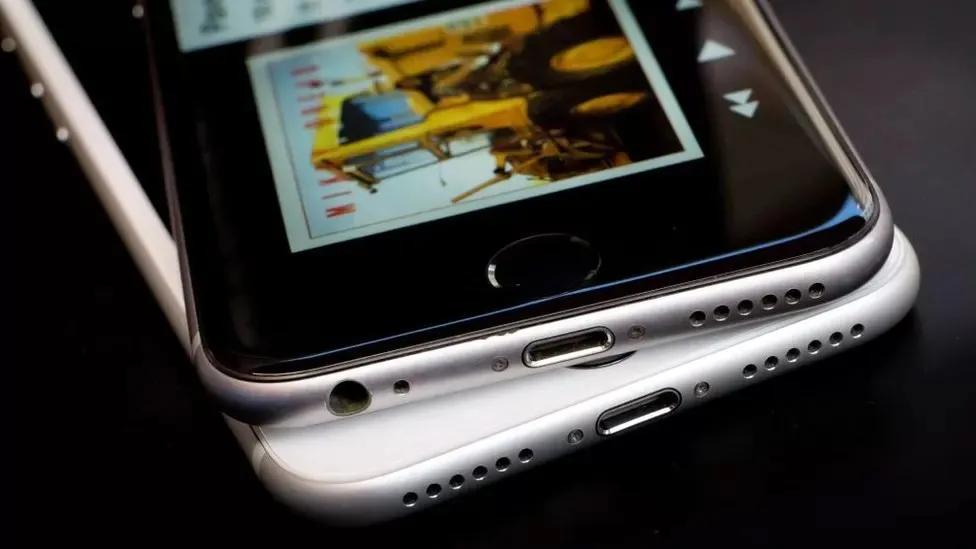
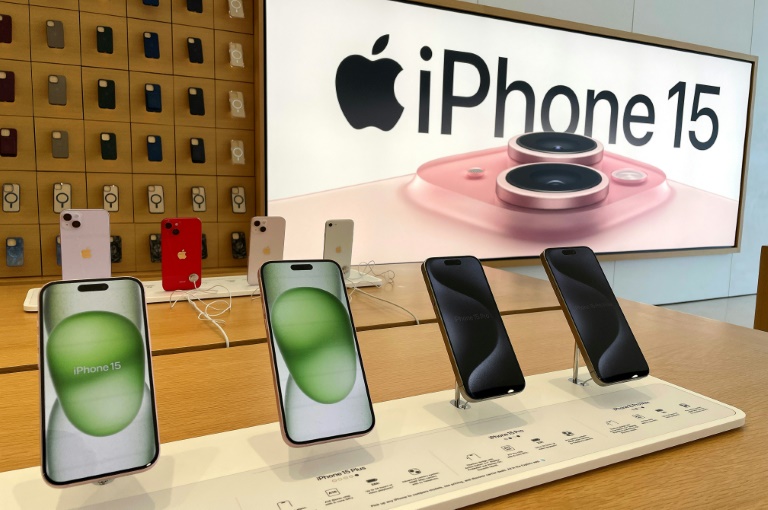
Apple unveiled its latest iPhone lineup in September during a highly anticipated event. During this event, it was announced that the iPhone 15 would no longer feature the company’s proprietary lightning charging port, a change that was enforced by the European Union. Instead, it now uses a USB-C cable, which is considered a “universally-accepted standard.”
Challenges have also arisen in other areas, including economic uncertainty affecting consumers in the Chinese market. Apple reported a 2.5% drop in sales in China, although CEO Tim Cook noted that, after accounting for foreign exchange rates, their business in China had grown year on year.
Cook made a surprise visit to China last month, where he met with gamers in Chengdu. This marked his second visit to China this year, which is a significant market for Apple. The company’s operations in China have been affected by COVID-19 restrictions and ongoing tensions between the US and China.
In March, Cook expressed that Apple had a “symbiotic” relationship with China, emphasizing its role as a key manufacturing base.
According to Mysk, a couple of people who make iPhone apps and study cybersecurity, when people downloaded the new iOS 17 software for their iPhones, some features called Significant Locations and iPhone Analytics turned on again, even if people had turned them off before.
They said the update will enable the sensitive location options again.
They said on social media that if you turn off important places and add your location to your iPhone analytics before updating to iOS 17, iOS 17 will turn those options back on. They shared a screenshot along with the post. The Significant Locations feature on the iPhone keeps track of the places you go to often and stores them for you.
Apple uses this information to give you updates about your pictures, past events, locations, and schedule apps. It uses this information to give you better services, like telling you the best route for avoiding traffic.
If you don’t want Apple to track where you go, you can turn off Significant Locations.
The post said that although important places are stored on your iPhone, they can be misused because they save detailed information about the places you go to often.
However, iPhone Analytics helps Apple gather information on how you use your iPhone.
This information can help make Apple products and services better. However, it can also be used to gather personal details about you, like where you’ve been and the apps you’ve used.
We don’t know why the problem happened, but Apple is investigating and will probably fix it soon.
Apple is set to release a software update for its iPhone 12 in France due to concerns about radiation levels, according to the country’s digital minister, Jean-Noel Barrot.
Sales of the iPhone 12 were temporarily halted in France after regulators detected elevated electromagnetic radiation levels. Apple was instructed to address the issue.
The upcoming update will be specifically for iPhone users in France, as the company stated that the concern was related to a unique testing protocol in the country. Apple emphasized that the radiation findings did not pose a safety risk.
This development raises questions about Apple’s plans for the iPhone 12 in other countries, as the device was released just three years ago.
Mr. Barrot mentioned that the French radio frequency regulator (ANFR) would assess the new update for compliance before permitting the iPhone 12 to resume sales in France.
The World Health Organization has previously stated that there is no evidence to suggest that exposure to low-level electromagnetic fields from mobile phones is harmful to humans.
In a statement sent to AFP news agency, Apple said the radiation finding in France was “related to a specific testing protocol used by French regulators and not a safety concern”.
It said the iPhone 12 complied with emissions rules worldwide, but it would “issue a software update for users in France to accommodate the protocol used by French regulators”.
The ANFR previously told Apple that if it could not resolve the issue via a software update, it would have to recall every iPhone 12 sold in the country.
The regulator found iPhone 12’s Specific Absorption Rate (SAR) to be above what is legally allowed in France.
The iPhone 12 smartphone was first released in September 2020 and it is still sold worldwide.
Apple recently stated to BBC News that it was challenging the ANFR’s review. The company maintained that it had provided the regulator with lab results from both its own tests and third-party assessments, demonstrating compliance with all relevant regulations.
However, Mr. Barrot imposed a two-week deadline on Apple and expressed concerns that France’s findings might have a cascading impact as they are shared with regulators across the European Union (EU). Regulatory authorities in Belgium, the Netherlands, and Germany have also initiated investigations into the matter.
Germany’s BNetzA network agency informed the BBC that the French inquiry could lead to measures applicable to all EU member states. In contrast, no actions have been announced by the UK and the US following the French ban.
Apple’s stock has gone down for two consecutive days due to news that Chinese government employees are not allowed to use iPhones.
The value of the company’s stocks in the stock market has decreased by more than 6%, which is almost $200 billion or £160 billion, in the last two days.
China is the third-biggest market for the technology giant. It made up 18% of the total money the company earned last year.
Most of Apple’s products are made in China by its largest supplier Foxconn.
The Wall Street Journal recently said that officials working for the Chinese government have been told not to bring iPhones to work or use them for their job.
The next day, Bloomberg News said that the ban may also apply to employees working at businesses owned by the government or supported by the government.
According to sources, officials were told not to use iPhones by their bosses recently. Other devices from foreign brands also had limitations placed on them.
Some agencies had already banned iPhones, according to the paper. But now, it seems like more agencies have decided to ban them as well.
It is unclear how well the instructions were shared with Chinese officials.
The reports were shared before the iPhone 15 is released on September 12th.
On Chinese social media, some individuals claiming to work for government-owned companies said they were instructed to stop using Apple devices before September ends. Someone made a joke that they were poor and could not afford to buy a new phone. They wondered what they should use for work.
China is a very important country for Apple, and they make iPhones there. But now Apple is also making more iPhones in India.
The Chinese government has not made an official statement in reply to the reports.
Apple did not quickly reply to the BBC’s request for a comment.
Knock-on effect means that when one thing happens, it can cause other things to happen as a result.
Apple is the most valuable company in the world, worth about $2. 8 trillion on the stock market.
In addition to Apple’s stock dropping, the stocks of some companies that supply Apple were also affected.
Qualcomm, the largest provider of smartphone chips, went down by over 7% on Thursday, while SK Hynix, a company from South Korea, saw its shares decrease by around 4% on Friday.
Tensions between the United States and China about technology have been increasing steadily, with both sides putting limitations.
This year, the countries Washington, Japan, and the Netherlands made it harder for China to get certain chip technology.
China responded by limiting the amount of two important materials used in the semiconductor industry that they would export.
Beijing is getting ready to create a new investment fund worth $40 billion to help strengthen its chip manufacturing industry.
Last week, when the US Commerce Secretary Gina Raimondo was in Beijing, the Chinese tech company Huawei surprised everyone by revealing its new Mate 60 Pro smartphone.
On Friday, the company started selling the Pro+ version of the phone in advance.
The company TechInsights from Canada said that the phone has a new processor called 5G Kirin 9000s. This processor was made specifically for Huawei by China’s biggest chip-making company called SMIC.
TechInsights analyst Dan Hutcheson said that it shows how much China’s semiconductor industry has improved in terms of technology.
Investment firm Jefferies stated in a research note that this is a significant technological advancement for China.
This week, a US congressman named Mike Gallagher, who is in charge of a group in the House of Representatives that deals with China, asked the Commerce Department to put more limits on sending products to Huawei and SMIC. Security update means making changes or improvements to protect a computer system or network from threats or attacks.
On Thursday, Apple came out with an urgent software update for many older and newer devices.
This was because they found a security problem that unknown hackers were taking advantage of.
The update was released because some experts found that hackers were breaking into Apple devices using a new and unknown method.
Apple also discovered a similar vulnerability on its own, so it quickly released updates to improve security for its customers.
This is the 15th time this year that Apple has had to release big security updates.
Apple’s shares have experienced a second consecutive day of decline following reports of a ban on Chinese government employees using iPhones.
The technology giant’s stock market valuation has dipped by over 6%, equating to nearly $200 billion (£160 billion), in the past 48 hours.
China holds a significant position as Apple’s third-largest market, contributing to 18% of its total revenue in the previous year. Furthermore, a substantial portion of Apple’s product manufacturing takes place in China, primarily through its principal supplier, Foxconn.
On Wednesday, The Wall Street Journal (WSJ) disclosed that Beijing had issued directives instructing central government agency officials to refrain from bringing iPhones into the workplace or utilizing them for work-related purposes. Subsequently, Bloomberg News reported the possibility of extending this ban to employees of state-owned enterprises and government-affiliated organizations.
According to insider sources cited by WSJ, these instructions, which also encompassed restrictions on other foreign-branded devices, were communicated by superiors to officials in recent weeks. While iPhones were already prohibited in some government agencies, these reports suggest a broader implementation of the ban. The extent to which these directives have been disseminated throughout the Chinese bureaucracy remains unclear.
These developments coincide with the imminent launch of the iPhone 15, scheduled for September 12. While China remains one of Apple’s most significant markets and a hub for iPhone production, recent efforts have seen Apple increasing its manufacturing presence in India.
As of now, there has been no official statement from the Chinese government regarding these reports.
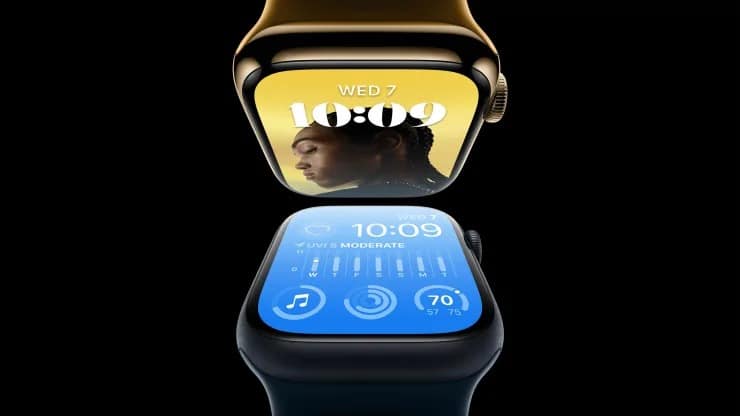
Apple is reportedly testing 3D printers to manufacture stainless steel chassis for its upcoming smartwatches, starting with the Apple Watch 9.
The initial tests are reportedly being conducted for the forthcoming Apple Watch 9, and if successful, Apple plans to incorporate this technology into its manufacturing process for various other products in the future.
Currently, Apple Watch chassis are manufactured by cutting metal slabs into the required shape.
Implementing 3D printing would not only reduce production time but also minimize material usage.
Apple also aims to apply this 3D printing technique to the next version of the titanium-encased Apple Watch Ultra, slated for release next year.
However, mass-producing 3D-printed aluminum enclosures, as used in Apple’s Mac and iPad lineup, remains a challenge. In the long term, Apple intends to utilize both recycled aluminum and steel for its enclosures, aligning with its 2017 goal, which was reaffirmed in 2022.
Apple has already adopted recycled aluminum in many of its products, with 59% of aluminum used in 2021 originating from recycled sources, and some products using 100% recycled aluminum for their enclosures.
At a US auction, the value of iPhones defied the usual trend of depreciating immediately after purchase.
A rare first edition, unopened 4GB model was sold for an astonishing $190,372.80 (£145,416).
These particular models were produced in limited quantities, making them highly sought after by iPhone collectors who consider them the “Holy Grail” of iPhone memorabilia.
Conducted by LCG Auctions, the lot garnered significant attention with a total of 28 bids, resulting in a sale that reached nearly 400 times the original price.
The final amount includes administrative costs in addition to the hammer price paid by the buyer, known as the “buyer’s premium.” It’s important to note that the buyer’s premium is retained by the auction house and does not go to the seller.
LCG Auctions described the first edition iPhone as a “popular high-end” and a “red-hot collectable,” highlighting the fact that two other factory-sealed, first edition iPhones had achieved record-breaking values in the past year.
The website described the model as an “exceedingly rare, factory sealed, first-release 4GB model in exceptional condition. Virtually flawless along the surface and edges, the factory seal is clean with correct seam details and tightness”.
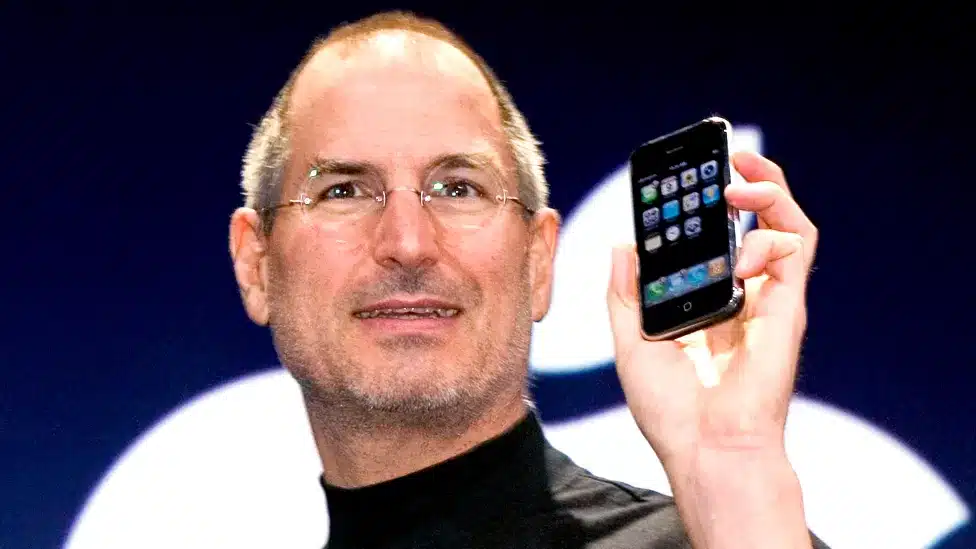
he auction for the first edition, unopened 4GB model of the iPhone surpassed all expectations, fetching a staggering $190,372.80 (£145,416). Originally priced at $599 (£457) upon its release in 2007, the 4GB model was discontinued after just two months due to slow sales.
While the 8GB model, offering double the storage space, became the preferred choice for most consumers at a slightly higher price, the rarity of the 4GB model has made it highly sought-after by Apple enthusiasts and collectors.
This auction is part of a trend where unique Apple memorabilia and artifacts related to Steve Jobs’ life and career garner significant attention. Previous items sold include a poem he wrote in a high school yearbook, college photos, and a business card from 1978.
Steve Jobs, the co-founder of Apple, passed away in 2011 at the age of 56 after battling pancreatic cancer. His contributions to the world of technology and innovation are widely recognized, with products such as the iMac, iPod, iPhone, and iPad revolutionizing various industries and improving the lives of people worldwide.
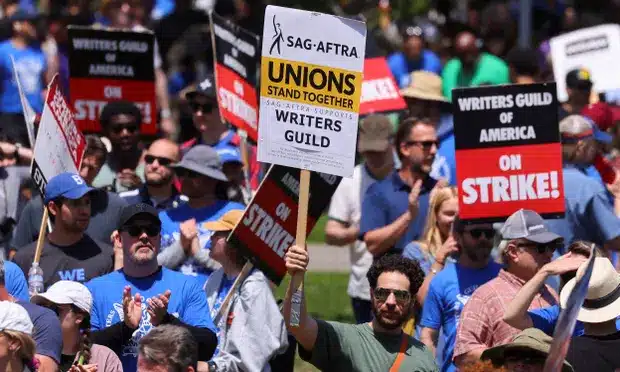
The expiration of a midnight negotiation deadline without reaching an agreement, has prompted the union representing Hollywood actors, the Screen Actors Guild – American Federation of Television and Radio Artists (SAG-AFTRA), to consider strike action.
This development raises the potential for the first simultaneous strike by Hollywood writers and actors in over 60 years.
In an official statement, SAG-AFTRA announced that its negotiating committee, representing 160,000 actors, has unanimously voted to recommend a strike. The final decision will be made by the national board on Thursday morning.
It said: “After more than four weeks of bargaining, the Alliance of Motion Picture and Television Producers (AMPTP) – the entity that represents major studios and streamers, including Amazon, Apple, Disney, NBCUniversal, Netflix, Paramount, Sony and Warner Bros. Discovery – remains unwilling to offer a fair deal on the key issues that are essential to Sag-Aftra members.”
The Sag-Aftra president, Fran Drescher, said: “The companies have refused to meaningfully engage on some topics and on others completely stonewalled us. Until they do negotiate in good faith, we cannot begin to reach a deal. We have no choice but to move forward in unity, and on behalf of our membership, with a strike recommendation to our national board. The board will discuss the issue this morning and will make its decision.”
Prior to commencing negotiations with studios earlier this year, both the actors’ and writers’ unions conducted membership votes that resulted in overwhelming support to authorize a potential strike over the deep frustrations felt by Hollywood’s creative workforce regarding diminishing shares of studio profits, growing job instability, and anxieties about potential displacement by emerging artificial intelligence technologies.
The anticipated strike by both writers and actors is set to have an immediate impact on publicity efforts for several high-profile films this summer.
As a result, adjustments have already been made, such as moving up the premiere time for Oppenheimer in London to accommodate the cast’s attendance regardless of the strike’s outcome.
While movies like Barbie and Mission: Impossible – Dead Reckoning Part One have already held their world premieres, their stars will be restricted from further promotional events.
Reports suggest that the strike could potentially lead to a delay in the Emmy awards until late autumn or even the following year. The industry is bracing for these disruptions.
Despite the strike, Disney has announced that the premiere of Haunted Mansion will proceed as planned on July 15 at Disneyland, although the film’s actors, including LaKeith Stanfield, Tiffany Haddish, and Jamie Lee Curtis, will not be present.
The San Diego Comic-Con, scheduled to begin on July 20, will also be affected by the strike.
Leading Hollywood actors had already expressed their willingness to strike before the vote took place.
In late June, a letter signed by A-listers such as Meryl Streep and Jennifer Lawrence urged union leaders not to settle for a subpar deal, recognizing the historical significance of the contract negotiation.
The simultaneous strike of writers and actors is expected to create significant disruptions throughout the industry, affecting various other industry workers and having broader economic implications for the Los Angeles region.
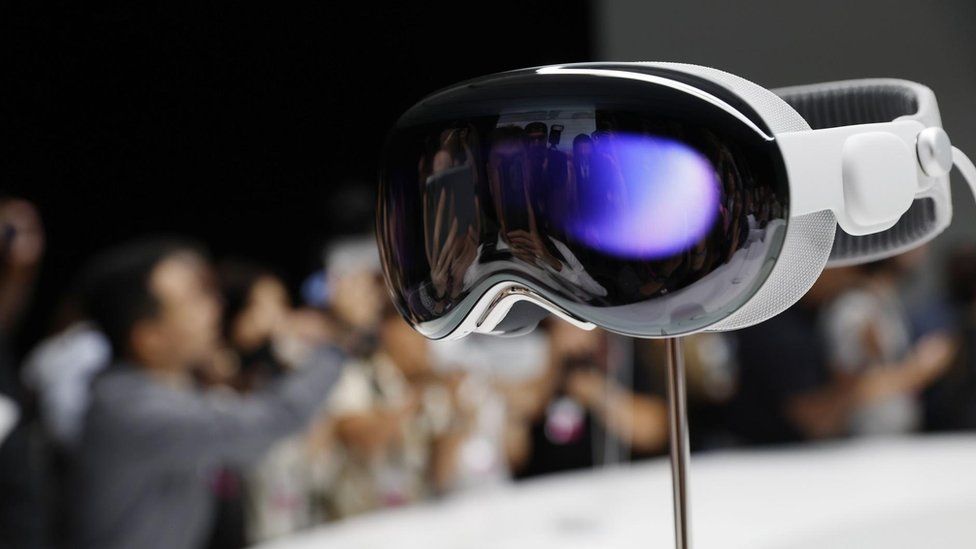
In a landmark hardware launch, Apple has revealed its long-awaited augmented reality headset, the Apple Vision Pro, marking the tech giant’s first major hardware release in nearly a decade.
During the announcement, Apple CEO Tim Cook described the innovative headset as a seamless integration of the real and virtual worlds.
Alongside the headset, Apple also introduced its latest iPhone operating system and unveiled updates for the MacBook Air.
The Apple Vision Pro, which will be available in the United States early next year, boasts a two-hour battery life and comes with a price tag of $3,499 (£2,849).
It is worth noting that this cost significantly exceeds that of currently available virtual reality headsets, such as Meta’s Quest, which retails for $449.
During the presentation, Apple provided limited details regarding generative artificial intelligence, a trending technology widely discussed in Silicon Valley.
The announcement caused a slight dip in the company’s share price, although the event took place at Apple Park, the company’s headquarters located in Cupertino, California.
The era of spatial computing is here. Where digital content blends seamlessly with your physical space. So you can do the things you love in ways never before possible. This is Apple Vision Pro.
Apple Vision Pro looks different to similar headsets on the market – and is more reminiscent of a pair of ski goggles than a virtual reality headset.
Apple used the phrase “augmented reality” to describe what the new device does.
Augmented reality, also known as mixed reality, superimposes virtual objects in the world around us – enabling us to mix reality with virtual reality by looking through a screen.
Users can access apps, watch movies, and write documents in a virtual world. But so far, there is little evidence of a big market for this kind of wearable tech.
Hartley Charlton, senior editor of MacRumors, was unsure how much the headset would appeal to the general public.
“It won’t appeal to mainstream consumers at first on account of its extremely high price point and immediate shortcomings as a first-generation device,” he said, “such as its separate wired battery pack.”
But he said Apple has a track record of “overcoming scepticism” about new devices, and has historically encouraged people to “part with their cash to add a new gadget to their repertoire”.
Image caption,Journalists and developers at Monday’s conference saw a glimpse of the headset
In his sales pitch, Mr Cook said the headset allows users to “see, hear and interact with digital content just like it’s in your physical space”.
It is controlled by using a combination of your hands, eyes and voice – such as tapping your fingers together to select, and flicking them to scroll.
The announcement comes a week after Meta and Lenovo announced new iterations of their pre-existing virtual-reality headsets, that do not superimpose objects onto a view of the real world.
Meta has also invested heavily in mixed reality – but right now the sector is struggling.
Apple’s last major hardware release was for the Apple Watch device in 2015.
Thomas Husson, of Forrester Research, told BBC News it may take time for Apple’s new headset to take off.
“The overall AR/VR space has been a bit overhyped over the past few years with the metaverse and that kind of experience,” he said. “That’s the reason why I think it will take a bit more time.
“Having said that, if I told you 10-15 years ago that people would be ready to pay almost $2,000 for a mobile phone, I don’t think many people would have said they would be willing to pay that.”
iOS 17
Aside from the Vision Pro announcement, Apple also unveiled iOS17, the latest version of its iPhone operating system.
Updates include “contact posters” – a picture or image of yourself that will appear on a person’s phone when you call them – and “live voicemail” – which provides a real-time transcription of an answerphone message being left to you.
This transcription will also apply to audio messages left using Apple Messages.
And Apple has introduced a system called Check-In – which will automatically tell a friend or family member when you’ve arrived home.
If your journey is substantially delayed, it has the power to tell others that you have not made it home safely yet.
The new operating system will be available in Autumn 2023.
Apple claims to have reached a multi-billion dollar agreement with chipmaker Broadcom to utilize additional components made in the US.
Under the multi-year agreement, the two US companies will develop components for 5G devices that will be designed and manufactured in America.
Apple says the deal is part of a plan it announced in 2021 to invest $430bn (£346bn) in the US economy.
The move comes as a trade row centred on the technology industry intensifies between Washington and Beijing.
The long-running dispute has seen the US impose a series of measures against China’s chip making industry and invest billions of dollars to boost America’s semiconductor sector.
In recent months, US tech giantshave come under increased scrutiny from both Democrat and Republican lawmakers over their reliance on Chinese manufacturers and components.
Apple has been gradually diversifying its supply chains, with more of its devices now made in countries like India and Vietnam.
Last year, it said that it will buy semiconductors from a factory being built in the US state of Arizona by Taiwanese chipmaking giant TSMC.
In 2022, Apple also announced plans to make the iPhone 14 in India, a significant milestone in the company’s strategy to diversify manufacturing outside of China.
The move expanded the company’s Indian manufacturing operations – it has been making iPhones in the southern state of Tamil Nadu since 2017.
Last month, Apple launched its first Indian retail stores – in the financial hub Mumbai and the country’s capital Delhi.
Under the latest deal, which expands the iPhone maker’s existing relationship with Broadcom, components for Apple devices will be designed and built in Colorado and other parts of the US.
“We’re thrilled to make commitments that harness the ingenuity, creativity, and innovative spirit of American manufacturing,” Apple’s chief executive Tim Cook said in a statement.
Tensions between the US and China have escalated in recent months.
Earlier this week, China said products made by US memory chip giant Micron Technology were a national security risk, in Beijing’s first major move against a US chip maker.
The country’s cyberspace regulator announced on Sunday that America’s biggest maker of memory chips poses “serious network security risks”.
Due to the slowing economy and consumers delaying purchases of computers and iPads due to increased pricing, Apple sales have continued to decline.
The internet giant reported that revenue fell by 3% to $94.8 billion (£75.4 billion) in the first three months of the year from the same time in 2022.
That was the company’s second consecutive quarter of declining sales.
The demand for iPhones kept steady, though, and the company gained new clients abroad, so the reduction was not as terrible as anticipated.
Tim Cook, the CEO of Apple, spoke with analysts and highlighted the company’s expansion in India, where it is investing extensively and where he visited last month to inaugurate the first two of its official stores there.
“Overall I couldn’t be more delighted and excited by the enthusiasm I’m seeing for the brand there,” he said.
Apple is one of the most valuable companies in the world and its sales are closely watched as a sign of retail strength.
The company said it was facing a “challenging macroeconomic environment”, echoing comments by other companies which have warned that customers, hit by the rising cost of living and economic uncertainty, are pulling back.
Apple had warned investors that sales in the January-March period could fall by as much as 5% year-on-year.
But the results were buoyed by a 1.5% year-on-year increase in iPhone sales, which hit $51.3bn – a record for the quarter. The company said that was lifted by strong demand in south Asia and Latin America.
In India, where the firm’s overall sales grew by double digits, Mr Cook said he saw big growth opportunities as the country’s middle class expands, saying the country was at a “tipping point”.
Apple’s services unit, which includes Apple Music, Apple News and Apple Pay, saw sales rise 5% year-on-year to more than $20bn.
In Europe, where many other firms have reported weakness, sales gained more than 2%.
However, sales sank more than 7% in the Americas, its biggest market.
Profits also fell more than 3% year-on-year, to roughly $24.2bn. But that was better than expected, as supply chain problems receded.
Apple’s report follows a series of updates from other tech giants, including Facebook-owner Meta and Alphabet, parent company of Google, which had also been better than expected.
Due to information security concerns, the Kremlin has advised some Russian officials to give up their Apple iPhones by the end of March, according to the Russian business magazine Kommersant.
The Russian daily, which cited sources present at the discussion, reported that the command occurred during a seminar in the Moscow region earlier this month.
According to the publication, employees were instructed to swap their iPhones for smartphones running different operating systems, such as Android, its Chinese counterparts, or Aurora, an operating system created by the Russian business Open Mobile Platform.
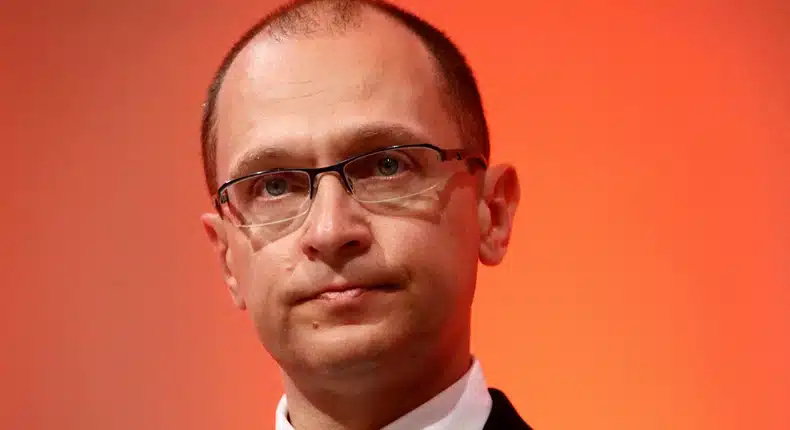
Sergei Kiriyenko, first deputy head of Russia’s presidential administration, reportedly told the officials they had to replace their iPhones by April 1.
The reported instruction comes amid undergoing campaign preparations for the upcoming 2024 Russian presidential election. Apple had previously banned imports to Russia, shortly after the country invaded Ukraine last year.
Last year, Apple stopped product sales to Russia a week after the country invaded Ukraine. But a few months later, reports surfaced that people in Russia were still purchasing the new iPhone 14 through legalized parallel imports programs. A few months after the war began, Russia had reportedly legalized these import programs — systems that allowed sellers to ship products into the country without the trademark owner’s permission.
Apple did not immediately respond to a request for comment.
Although those within the Russian presidential administration were reportedly told to get rid of their Apple iPhones, it’s unclear whether all Russian government officials were advised to do so.
The Embassy of the Russian Federation in the US did not immediately respond to a request for comment ahead of publication. However, Kremlin press secretary Dmitry Peskov told reporters that “smartphones should not be used for official business,” Reuters reported.
“Any smartphone has a fairly transparent mechanism, no matter what operating system it has – Android or iOS,” he said, according to Reuters. “Naturally, they are not used for official purposes.”
A look at which nations and industries have the most economic influence may be gained from the list of the most profitable corporations in the world.
All ten of the most profitable corporations have their headquarters in the two economies with the greatest global markets, the United States and China.
The fact that financial services companies make up the majority of the list is also significant, while energy and technology industries also perform well.
This list only include companies that are directly or via ADRs listed on U.S. or Canadian exchanges. For instance, Saudi Aramco, the nation’s state-owned oil firm, debuted on the Saudi Stock Exchange in December 2019.
It would have been among the world’s 10 most profitable companies, and would have even topped the list in previous years.
Notably, the three most profitable companies in the world are technology firms. As opposed to prior years, all technology firms in the top 10 are from the U.S. The technology sector is comprised of companies that manufacture computers and electronics, develop software, and provide services relating to information technology, such as cloud computing and e-commerce.
Four out of the five financial companies on the list are based in China, most of them receiving major financial support from China’s central government. The financial sector is comprised of banks, investment companies, insurance companies, and real estate firms. These companies offer a range of financial services, including deposits, loans, investment and wealth management, insurance, and brokerage services.
These are the 10 most profitable companies by 12-month trailing (TTM) net income. Some companies outside the U.S. report profits semi-annually instead of quarterly, so the 12-month trailing data may be older than it is for companies that report quarterly. Data is courtesy of YCharts.com.2 All figures are as of January 11, 2023.
1 Apple Inc. (AAPL)
Net Income (TTM): $99.8 billion
Revenue (TTM): $394.33 billion
Market Cap: $2.08 trillion
1-Year Trailing Total Return: -23.64%
Exchange: NASDAQ
Apple designs and manufactures mobile communication and media devices, personal computers, and portable digital music players.
The company also sells a range of related software, services, accessories, networking solutions, music and video streaming, as well as third-party digital content and applications. Apple is best known for its series of iPhones, iPads, and Mac personal computers.
2 Microsoft Corp. (MSFT)
Net Income (TTM): $69.79 billion
Revenue (TTM): $203.08 billion
Market Cap: $1.71 trillion
1-Year Trailing Total Return: -26.49%
Exchange: NASDAQ
Microsoft develops, licenses, and supports a range of software products, services, and devices. The company’s products include operating systems, server applications, business applications, software development tools, video games, and more.
The company also manufactures personal computers, tablets, gaming and entertainment consoles, phones, other intelligent devices, and related accessories. Microsoft also offers cloud-based solutions, its fastest-growing business, through its Azure cloud-computing platform.
3 Alphabet Inc. (GOOGL)
Net Income (TTM): $66.99 billion
Revenue (TTM): $282.11 billion
Market Cap: $1.14 trillion
1-Year Trailing Total Return: -36.24%
Exchange: NASDAQ
Alphabet is a holding company and the parent of Google Inc., its primary business. Google offers a range of Internet products, including Search, Ads, Commerce, Maps, YouTube, Google Cloud, Android, Chrome, and Google Play.
It engages in advertising, sale of digital content, applications, cloud computing services, and sale of hardware products. Alphabet also offers smart-home products through Nest and is developing autonomous-driving technology through its Waymo project.
4 Industrial And Commercial Bank Of China Ltd. (IDCBY)
Net Income (TTM): $55.34 billion
Revenue (TTM): $143.32 billion
Market Cap: $188.72 billion
1-Year Trailing Total Return: -3.28%
Exchange: OTC
Industrial and Commercial Bank of China provides commercial banking and financial services.
Those services include corporate and personal loans, trade financing, deposit-taking, corporate and personal wealth management, and custodial services.
The company also engages in investment activities for its own account or on behalf of customers, including money market transactions, investment securities, foreign exchange transactions, and the holding of derivative positions.
5 ExxonMobil Corp (XOM)
Net Income (TTM): $51.86 billion
Revenue (TTM): $386.82 billion
Market Cap: $453.38 billion
1-Year Trailing Total Return: 67.12%
Exchange: New York Stock Exchange
The world’s largest refiner of petroleum products, ExxonMobil is headquartered in Irving, Texas.
The company distributes fuel, lubricants, and chemicals around the world under its four brands: Esso, Exxon, Mobil, and ExxonMobil.
The company’s upstream oil and gas production division includes various production chains including deep water, unconventional, heavy oil, and liquefied natural gas chains.
6 China Construction Bank Corp. (CICHY)
Net Income (TTM): $48.49 billion
Revenue (TTM): $126.78 billion
Market Cap: $159.38 billion
1-Year Trailing Total Return: -6.31%
Exchange: OTC
China Construction Bank provides a wide range of financial services to corporate and individual customers, including corporate and personal loans, deposit-taking, wealth management, trade financing, financial consulting and advisory services, and remittance services.
The bank also engages in investment activities such as inter-bank money market transactions, investments in debt securities, equities, as well as trading of derivatives and foreign currency.
7 Shell PLC (SHEL)
Net Income (TTM): $43.36 billion
Revenue (TTM): $365.29 billion
Market Cap: $204.03 billion
1-Year Trailing Total Return: 27.58%
Exchange: New York Stock Exchange
Shell is an international energy company that operates refining and petrochemical complexes around the world.
The company’s primary line of business is the exploration, production, processing, transportation, and marketing of oil and gas. Headquartered in London, England, the company’s product line also includes lubricants and petrochemical products used in plastics, coatings, or detergents.
8 Agricultural Bank of China Ltd. (ACGBY)
Net Income (TTM): $38.45 billion
Revenue (TTM): $113.04 billion
Market Cap: $122.94 billion
1-Year Trailing Total Return: 6.58%
Exchange: OTC
Agricultural Bank of China provides provides international commercial banking and financial services.
It offers financial products and services to individuals, corporations, government agencies, and financial institutions. The bank also engages in money market or repurchases transactions, debt instrument investments, and holding of derivative positions.
9 JPMorgan Chase & Co. (JPM)
Net Income (TTM): $37.07 billion
Revenue (TTM): $123.42 billion
Market Cap: $406.54 billion
1-Year Trailing Total Return: -14.41%
Exchange: New York Stock Exchange
JPMorgan is a global financial holding company that provides banking and financial services.
The bank is involved in a broad range of businesses such as corporate lending, investment banking, market-making, prime brokerage, and treasury and securities products and services to corporations, investors, financial institutions, and government and municipal entities. It also offers consumer banking and asset management services.
10 Bank Of China Ltd. (BACHY)
Net Income (TTM): $34.54 billion
Revenue (TTM): $94.13 billion
Market Cap: $108.92 billion
1-Year Trailing Total Return: 6.02%
Exchange: OTC
Bank of China provides a broad range of banking and financial services to individuals, corporations, government authorities, and financial institutions.
Its services include savings, deposits, lending, mortgages, credit and debit cards, trade-related products, and credit facilities. The bank also offers insurance, underwriting, stock brokerage, investment research, and asset management services.
It was worse than anticipated and represented the biggest decline since 2019.
The update came as numerous businesses issued warnings about a sudden slowdown in the economy, particularly in the tech sector, which experienced a boom during the pandemic.
Apple boss Tim Cook said the firm was navigating a “challenging environment”.
He blamed the sales decline on supply shortages due to Covid-19 disruption in China – where its phones are manufactured – and a strong dollar, as well as wider economic weakness stemming from rising prices, the war in Ukraine and lingering effects from the pandemic.
“As the world continues to face unprecedented circumstances … we know Apple is not immune to it,” he said on a conference call with investors.
Apple said the sales declines occurred throughout the world and hit most of its products.
Sales of its popular iPhones were down more than 8%, and sales of Mac computers dropped 29%.
The declines hit the firm’s profits, which fell 13% to $30bn (£24bn).
Paolo Pescatore, an analyst at PP Foresight, said the firm, like many electronics makers, is struggling to make the case that users should upgrade given “what is perceived to be incremental improvements on previous models.”
“More so when everyone is tightening their belts,” he added.
Globally the number of smartphones shipped sank 12% last year, according to market analysis firm Canalys.
Apple executives said they expected their services business, which includes Apple Pay and Apple News, to continue to drive growth, noting that there are now more than 2 billion active Apple devices around the world.
“When we look at the behaviour of our installed base, we think it’s very promising,” said chief financial officer Luca Maestri, while warning investors that the firm was expecting sales to continue to decline in the months ahead.
Other big tech companies also said they were feeling pressure in updates to investors.
Amazon, which has been struggling to re-ignite its e-commerce business, said sales at its online stores dropped 2% in the final three months of 2022, compared with a year earlier.
Overall, Amazon’s sales in the three month period rose 9% to $149.2bn (£121bn), lifted by stronger growth in its cloud computing business.
But its profits dropped sharply, falling to near zero from $14.3bn (£11bn) a year ago, a change that chief financial officer Brian Olsavsky warned investors was likely to continue in coming months.
Apple chief executive Tim Cook will see his annual pay package slashed by more than 40% this year.
The technology giant says Mr Cook requested the cut after criticism from shareholders.
Apple’s compensation committee awarded him a total “target compensation” of $49m (£45.1m) for 2023.
Last year the iPhone maker’s shares fell sharply in the face of supply chain issues and a global economic slowdown.
“The Compensation Committee balanced shareholder feedback, Apple’s exceptional performance, and a recommendation from Mr Cook to adjust his compensation in light of the feedback received,” Apple said in a filing with a US financial watchdog.
The move will see Mr Cook’s annual basic salary unchanged at $3m, as well as a bonus of up to $6m.
The biggest difference to his pay package is how he will be awarded shares in the firm.
In 2022 the company granted him $75m of shares, half of which were based on how well Apple performed on the stock market.
For this year his stock award target has been cut to $40m, with three quarters of that dependant on share performance.
The target for Mr Cook’s compensation for 2022 was $84m, although his actual total pay for last year was $99.4m. That figure included $630,600 in personal security costs and $712,500 for his use of a private jet.
Last year Apple shareholders were urged by a leading investor advisory group to vote against Mr Cook’s pay package.
In a letter to investors, Institutional Shareholder Services (ISS) said there are “significant concerns” over the “design and magnitude” of the package.
The ISS said Mr Cook’s pay was 1,447 times more than the wage of an average Apple employee.
Mr Cook became Apple’s chief executive in August 2011, just weeks before the death of co-founder Steve Jobs.
Under Mr Cook’s leadership Apple became the first company to reach a stock market valuation of $3tn before falling to about $2.1tn during a tumultuous year for the technology industry.
Covid lockdowns at factories in China, supply chain delays and a global economic slowdown have helped push down Apple’s share price by more than 20% over the last year.
The 62-year-old’s personal wealth stands at around $1.7bn, according to Forbes magazine. Mr Cook has pledged to give away his entire fortune during his lifetime.
Apple‘s market capitalization fell below $2 trillion in trading Tuesday, the first time since early 2021 and one year to the day after the company became the first publicly traded company valued at $3 trillion.
Apple (AAPL) shares fell nearly 4% on Tuesday after a report raised concerns about consumer demand for its products.
According to Nikkei, Apple (AAPL) recently informed several suppliers that it would be producing fewer parts for some of its most popular devices in the first quarter, including AirPods, the Apple Watch, and MacBooks.
Apple did not respond immediately to a request for comment.
Ahead of the all-important holiday shopping period, Apple saidit was experiencing “strong demand” for the iPhone 14 Pro and iPhone 14 Pro Max models, but it expected lower shipments than anticipated due to COVID-related disruptions at a supplier in China. (Those operations are now said to be running at nearly full capacity.)
While Apple’s market value has fallen considerably, other big tech companies have suffered steeper percentage declines. Shares of Amazon and Facebook-parent Meta are down by about 50% and 63%, respectively, over the past year. Apple, by comparison, is down by about 31% over the same period.
Ad Feedback
Still, Apple now joinsAmazon in an exclusive club no one wants to be part of: companies that have lost $1 trillion in market value.
When Apple’s manufacturing hub in Zhengzhou, China, temporarily shut down in November, it was clear Apple needed to rethink its supply chain.
The shutdown, which could reportedly result in a shortage of 6 million iPhone 14 Pro and Pro Max units, means wait times are now stretching past the holiday season. On Saturday, the WSJ reported that Apple was accelerating the expansion of its manufacturing base outside of China.
But any shift out of China won’t be quick, with over 35% of factories supplying Apple currently located in China. Some estimates say it will take until the end of the decade to move 10% of Apple’s iPhone manufacturing out of the country. Moreover, what would happen to Apple’s generous hardware margins as it attempts to leave China is unclear.
Breaking up is hard to do
While Apple sources its chips from several factories in India, Vietnam, and China, the largest supplier is the Chinese Foxconn factory that shut down after protests over China’s “zero Covid” policy.
Apple began making plans to move more of its production outside of China in May this year after experiencing one bout of supply chain delays following shutdowns due to the zero-Covid policy and protests surrounding it.
Wedbush analyst Dan Ives said in an analyst note that zero Covid policy is the last straw for the company.
“The reality is that Apple is extremely limited in their options for the holiday season and are at the mercy of China’s zero-Covid policy,” Ives said. “Now it’s the painful waiting game to see what ramped production looks like over the next week for Apple to ease some iPhone shortages that are building globally.”
But any move will take time. Ives and Wedbush estimated it would take until 2025 or 2026 for 50% of Apple’s iPhone production to move to India and Vietnam if Apple moved “aggressively.”
In a September report, Bloomberg Intelligence was even more pessimistic, saying it would take eight years, or until 2030, to move 10% of Apple’s production capacity out of China in a best-case scenario, or 20% if Apple moved more aggressively. Bloomberg Intelligence estimates that 98% of iPhones are assembled in China, thanks to the supply chain Apple has built over the past 20 years.
Based on Insider’s analysis of Apple’s fiscal year 2021 Supplier List, which catalogs the 191 suppliers in 744 locations, Apple has 262 suppliers in mainland China, comprising 35.2% of all listed suppliers. (In addition, it has 71 in Taiwan, and US-China tensions could also hamper Taiwanese production.)
Apple’s list only includes supplier locations and does not specify manufacturing capacity.
Currently, there are 28 Apple suppliers in Vietnam, or 3.8% of total listed by Apple. India has just 11, or 1.5%. According to the Wall Street Journal, Apple wants to bring its iPhone production to 40% to 45% in India and increase manufacturing of Airpods, laptops, and Apple Watches from Vietnam.
However, both countries need more reliable infrastructure, per the WSJ. Vietnam’s population is considerably smaller than China, and Apple faces challenges navigating India’s bureaucracy.
Onshoring iPhone production?There is another alternative: The US, which has 84 locations supplying Apple already.
On Tuesday, TSMC announced it’s investing $40 billion to open two chip fabrication plants in Arizona that could eventually produce 600,000 advanced chips per year. Tim Cook tweeted that the factory “marks a new era of advanced manufacturing in the U.S. — and we are proud to become the site’s largest customer.”
Bloomberg reported TSMC will start making 4-nanometer chips in its planned Arizona plant at the urging of companies like Apple. TSMC also said it wants to make more advanced 3-nanometer chips in a second planned factory.
However, TSMC’s 4-nanometer chip plant won’t begin production until 2024, and its 3-nanometer chip plant won’t open until 2026. Even once opened, ramping up production in a new plant takes several years as the factory works out its kinks and slowly builds up its workforce. And TSMC estimates chips made in the US would cost 50% more than those made in Taiwan.
If Apple wants to rely less on China, it can do it. The world’s most valuable company is a sharp and savvy supply chain operator. Before Tim Cook took over at Apple, he spent a decade managing its logistics — including shutting down Apple-owned factories and replacing them with contractors that make up Apple’s modern supply chain.
Shifting away from China would require Apple to sacrifice time and money on a long-term project involving hundreds of moving parts. Last quarter, Apple maintained 43% gross margins, one of the reasons its stock has stayed relatively more resilient than its Big Tech peers. Swapping out the largest part of its supply chain would inevitably introduce inefficiencies that would shrink those margins.
Apple is also big enough to take the hit — it just needs to wait things out. The question is, would investors?
Next on Business Insider
Scientists tested 12 bottled waters they bought in Pretoria. Three were toxic.
Elon Muskhas stated that he and Apple CEO Tim Cook have “resolved the misunderstanding” regarding Twitter’s possible removal from the app store.
On Monday, Mr Musk accused Apple of threatening to remove the platform from its app store and announced that the company had halted the majority of its advertising on the site.
However, the Twitter CEO stated on Wednesday, “Tim was clear that Apple never considered doing so.”
He did not specify whether Apple’s advertising was discussed during the meeting.
The meeting between the two tech titans comes as many businesses have stopped spending on Twitter due to concerns about Mr Musk’s content moderation plans for the site – a major setback for the company, which relies on such spending for the majority of its revenue.
Entering a feud on Monday, Mr Musk accused Apple of “censorship” and criticised its policies, including the charge it levies on purchases made on its app store.
“Apple has mostly stopped advertising on Twitter. Do they hate free speech in America?” he said.
But he later told his followers he was meeting with Mr Cook at Apple’s headquarters, adding: “Good conversation. Among other things, we resolved the misunderstanding about Twitter potentially being removed from the App Store. Tim was clear that Apple never considered doing so.”
News of the meeting with Apple came after Mr Musk was told he faced “huge work ahead” to bring Twitter into compliance with new European Union rules on disinformation or face a possible ban.
EU commissioner Thierry Breton made the comments in a meeting with Mr Musk on Wednesday, saying the social media site would have to address issues such as content moderation, disinformation and targeted adverts.
Approved by the EU earlier this year, the Digital Services Actis seen as the biggest overhaul of rules governing online activity in decades, imposing new obligations on companies to prevent abuse of their platforms.
Major companies are expected to be in compliance with the law some time next year.
If firms are found to be violation, they face fines of up to 6% of global turnover – or a ban in the case of repeated serious breaches.
In a statement after the meeting, Mr Breton said he welcomed Mr Musk’s assurances that he would get Twitter ready to comply.
“Let’s also be clear that there is still huge work ahead, as Twitter will have to implement transparent user policies, significantly reinforce content moderation and protect freedom of speech, tackle disinformation with resolve, and limit targeted advertising,” he said.
“All of this requires sufficient AI [Artificial Intelligence] and human resources, both in volumes and skills. I look forward to progress in all these areas and we will come to assess Twitter’s readiness on site.”
The EU plans to conduct a “stress test” in 2023 ahead of a wider audit, his office said.
Since his $44bn takeover of Twitter last month, Mr Musk has fired thousands of staff, reinstated formerly banned users such as Donald Trump and stopped enforcing other policies, such as rules aimed at stopping misleading information on coronavirus.
The moves have alarmed some civil rights groups, who have accused the billionaire of taking steps that will increase hate speech, misinformation and abuse.
In a blog post on Wednesday, Twitter said none of its policies had changed, but that it was experimenting in an effort to improve the platform more quickly and would rely more on steps to limit the spread of material that violate its rules – offering “freedom of speech but not freedom of reach”.
“Our trust & safety team continues its diligent work to keep the platform safe from hateful conduct, abusive behavior, and any violation of Twitter’s rules,” the company added.
“The team remains strong and well-resourced, and automated detectionplays an increasingly important role in eliminating abuse,” it said.
In a series of tweets on Monday, Elon Musk said that Apple Inc (AAPL.O) had threatened to ban Twitter Inc from its app store without providing any explanation.
He also claimed that the iPhone manufacturer had ceased running advertisements on the social networking site.
The wealthy CEO of Twitter and Tesla claimed Apple was putting pressure on Twitter regarding requirements for content control.
Apple has not confirmed the action, but it would not be out of the ordinary given that it regularly enforces its policies and has already deleted apps like Parler and Gab.
Apple reinstated Parler in 2021 after the app updated its content and moderation procedures, the companies said at the time. Parler is a favorite among American conservatives.
“Apple has mostly stopped advertising on Twitter. Do they hate free speech in America?,” Musk, who took Twitter private for $44 billion last month, said in a tweet.
He later tagged Apple Chief Executive Officer, Tim Cook’s Twitter account in another tweet, asking “what’s going on here?”
Apple did not immediately respond to requests for comment.
“It wasn’t clear to me how far up the Apple food chain that idea went internally and without knowing that, it isn’t clear how seriously to take any of this,” said Randal Picker, a professor at the University of Chicago Law School.
According to ad measurement company Pathmatics, the most valuable company in the world spent less on Twitter advertisements between Nov. 10 and Nov. 16 than it did in the week before Musk signed the Twitter transaction, when it spent $220,800 between Oct. 16 and Oct. 22.
According to the Washington Post, which cited an internal Twitter document, Apple was the biggest advertiser on Twitter in the first quarter of 2022, spending $48 million and contributing to more than 4% of overall revenue during that time.
Twitter did not immediately respond to a Reuters request for comment on the report.
The up to 30% commission Apple charges software developers for in-app purchases was one of the complaints Musk listed on Twitter. Musk posted a meme implying he was prepared to “go to war” with Apple rather than pay the commission.
Companies like Epic Games, the developer of “Fortnite,” have criticized and sued the fee, and it has garnered the attention of regulators throughout the world.
Musk’s efforts to increase Twitter’s subscription fees, in part to offset advertisers’ flight due to concerns over content moderation, may be hindered by the commission.
Since the acquisition, businesses ranging from General Mills Inc (GIS.N) to luxury carmaker Audi of America have discontinued or suspended their Twitter advertising, and Musk claimed earlier this month that the company had experienced a “massive” decline in revenue.
About 90% of Twitter’s revenue comes from ad sales.
The self-described “absolutist” of free expression, whose business has restored multiple Twitter accounts, including that of former US President Donald Trump, has accused activist groups of exerting pressure on advertising.
Ben Bajarin, the director of consumer technology at the research firm Creative Strategies, suggested that Musk might be interpreting Apple’s app review procedure too broadly.
According to what he heard, it is a two-way interaction. “App approval from Apple is not flawless by any means and a continually frustrating process for developers,” he said.
Elon Musk has said Apple has halted most of its advertising on Twitter and accused the company of threatening to remove the platform from its app store.
The feud comes as many companies have halted spending on Twitter amid concerns about Mr Musk’s content moderation plans for the site.
Apple has not responded to requests for comment from the BBC.
Mr Musk has said Twitter has seen a “massive” drop in revenue, blaming activists for pressuring advertisers.
In a series of Tweets on Monday, he accused Apple of “censorship” and criticised its policies, including the charge it levies on purchases made on its app store.
“Apple has mostly stopped advertising on Twitter. Do they hate free speech in America?” he said.
He appealed directly to Apple’s CEO – asking: “What’s going on here @tim_cook?”
The owner of the social media platform also claimed Apple had threatened to withhold Twitter from its app store, but did not say why.
Mr Musk, who purchased Twitter for $44bn last month, is under pressure as some companies halt spending.
He has said he hopes to make money by turning Twitter verification into a paid subscription service, but currently the vast majority of the site’s revenue comes from advertising.
The Washington Post reported Apple was the top advertiser on Twitter, spending $48m on ads on the social network in the first quarter of 2022.
Companies including Cheerios maker General Mills and Volkswagen are among the firms that have halted their spending in recent weeks.
Media Matters, a watchdog site, reported last week that half of Twitter’s top advertisers had pulled their advertising on Twitter after concerns about the direction of Twitter.
Apple’s media agency Omnicom recommended the Silicon Valley giant pause advertising on the platform out of concern for Apple’s “brand safety”, according to US tech site The Verge.
Elon Musk squares up to Apple
Elon Musk has worked out who really holds the power over social media companies.
The billionaire famously doesn’t like being told what to do. And yet Apple holds all the cards when it comes to Twitter.
Firstly, as others have found out, only Apple decides who’s allowed on the App Store. If Apple wanted to, it could stop Twitter from being downloaded on iPhones around the world – which would be a devastating blow for Twitter.
Not only that but Apple can also charge what it likes for the privilege of being on the App Store. For companies like Twitter, it can charge anywhere from 15-30% for in-app purchases.
That charge has been challenged in the US courts by Fortnite producer Epic Games. In 2021, the company sued over Apple’s commission for access to their “walled garden”, as the App Store is referred to in the case.
Lastly, Apple has the power to stop advertising on Twitter – an important source of revenue for the company.
Mr Musk isn’t the first to flag this power imbalance. Meta has for years complained about the dominance Apple holds over its Instagram and Facebook apps.
But in Mr Musk, Apple now has another powerful and very rich adversary.
In picking a fight with Apple, Mr Musk is wading into a wider debate over the clout that Apple wields over online activity via its app store, which is the way that iPhone owners download games and other apps.
As it stands, Apple could take up to 30% of the money from the monthly fee Twitter plans to charge some users.
On Twitter, Mr Musk posted a meme saying “pay 30%. Go To War” with an arrow pointing to the latter.
All companies listed in the app store have to abide by Apple’s rules and pay its fees, or face removal or suspension.
Last year Apple suspended social media platform Parler from the store, saying it didn’t do enough to remove hate speech.
Apple later restored Parler after the company updated its policies.
The 40-year-old got a straight-to-series order, per Deadline, for an Apple TV+ comedy that’ll see him starring and executive producing. He’ll also co-direct with longtime partner in crime Evan Goldberg, and co-write with Goldberg as well as Veep alums Peter Huyck and Alex Gregory. The latter two are the showrunners.
The outlet reports the project is “about a legacy Hollywood movie studio trying to survive in a world where it is increasingly difficult for art and commerce to live together,” which brings to mind—at least tangentially—showbiz-adjacent films of Rogen’s like The Disaster Artist, Zack and Miri Make a Porno, and The Interview.
Variety notes Apple TV+ nabbed the new show in “a competitive situation with multiple bidders,” and that Rogen was previously announced to be starring in the platform’s Platonic with his Neighbors co-lead Rose Byrne.
Seth Rogen has recently acted or lent his voice to shows and limited series including Pam & Tommy, Curb Your Enthusiasm, and Big Mouth. He’s also appeared in projects produced by his and Goldberg’s Point Grey Pictures company such as The Boys and Invincible. This fall’s buzzy The Fabelmans from Steven Spielberg will mark Rogen’s first movie role in more than two years, following An American Pickle in mid-2020. He’s also been cast in Dumb Money—about the GameStop short squeeze that wrought financial mayhem on Wall Street—with Pete Davidson, Sebastian Stan, and Paul Dano.
And then, of course, there’s the recently revealed series continuation of 2016’s raunchy Sausage Party, coming in 2024.
“Film used to be the superior art form to television, and we humbly reached the pinnacle of what can be achieved with film in our remarkable opus, Sausage Party. But now that film is completely dead and TV is the forever-king of entertainment,” Rogen and Evan Goldberg cheekily stated, “we’ve decided to continue the epic adventures of our culinary crew in the soon-to-be-legendary televised masterpiece Sausage Party: Foodtopia.
It’s got all the heart, double the puns, and triple the food-on-food sex. In other words, it’s exactly what the world needs right now.”
A former Apple employee has admitted to defrauding the company of millions of dollars, the U.S. Attorney’s Office for the Northern District of California announced this week.
Dhirendra Prasad, 52, pleaded guilty on Tuesday in connection with what prosecutors described as “multiple schemes” involving Apple. While Prasad began working for Apple in 2008, he’s believed to have started defrauding the company in 2011, ultimately leading to a loss for the tech giant of more than $17 million through various means.
The individual’s duties while employed at Apple included buying parts and services from vendors. While carrying out these duties, Prasad is said to have stolen parts and inflated invoices, as well as had Apple pay for things that were never actually received by the company.
A Department of Justice press release gives a few examples of Prasad’s schemes, including fraudulent invoice proceedings involving previously charged vendor owners.
Prasad, whose initial charging was revealed in March of this year, has now pleaded guilty to conspiracy to commit mail fraud and wire fraud and to conspiracy to defraud the United States. The former charge carries a potential maximum sentence of as much as 20 years behind bars, while the latter carries a possible maximum sentence of five years. Sentencing is set for next March.
Apple, meanwhile, was in headlines last month in connection with the selling of an unopened first-generation iPhone at auction. As previously reported, the historic device sold for just under $40,000 at LCG Auctions.
In September, Apple rolled out its latest iPhone as part of its Far Out event in Cupertino. For a full breakdown of what all was unveiled during the special event, revisit this link.
Deadline reports Apple will produce a documentary centered around Golden State Warriors star Steph Curry.
Underrated was acquired by Apple Original Films from A24 through its first-look deal with Curry’s multimedia company Unanimous Media. Wakanda Forever director Ryan Coogler will also serve as a producer under his Proximity Media banner. Peter Nicks (Homeroom) has been tapped to direct.
The documentary will look back at Steph’s standout performance during the 2008 NCAA Tournament with Davidson College and lead up to his fourth NBA title win last season, along with his first NBA Finals MVP trophy. Underrated will highlight how “his record-shattering and game-changing playing style turned him from an overlooked prospect to an NBA legend.”
Among his other notable achievements, Stephen Curry surpassed Ray Allen to break the NBA’s all-time record for three-pointers made in a game against the New York Knicks at Madison Square Garden in December.
Rolling Stone reported last month that Curry was close to signing a lifetime deal with Under Armour worth “potentially more than $1 billion.”
He also graduated from Davidson last month, fulfilling a promise he made to his mother Sonya and head coach Bob McKillop over a decade ago.
Steph received a Bachelor of Arts degree in Sociology.
The Apple blue versus Android green messaging war isn’t about color. It is about membership and identity. All powerful brands rely on symbolic meaning drawing on universal and cultural archetypes that reflect social values. Some rule through success (Mercedes) or celebrate the hard-fought victories of warriors and heroes (Nike).
Apple is no different. They have built their brand as much on the symbolic meaning of their products as on the technology. The genius here is not the color of the messages but that Apple’s brand story shows at every turn and continually reminds us that they are different and special and, by extension, so are their customers. And like a not-so-secret handshake, when you text a friend, and it’s blue, they can tell you’re special too.
Source: Kaspars Grinvalds/Canvas Pro
Drawing a Line in the Sand
Apple has been a master of using symbols, like color, to establish emotional connections with consumers and reinforce its brand story. Order a new Apple product, and the high-quality packaging tells you something important and special is in the box.
Starting with the iconic “1984” commercial, Apple has been drawing lines in the sand between them and everyone else. Apple doesn’t sell products. They sell the most human of things: membership in a community built on creativity and freedom–where authenticity and self-expression are empowered and celebrated. They humanized technology.
Whether intentional or not, Apple’s design decisions turned Apple computers into friends, from the Happy Mac icon to user-centric design. They were happy when you turned them on. Using them made sense to regular people thanks to the graphical user interface and the mouse. They were easy to use. They made you feel good.
When something is easy to use, we feel smarter. We get more done. We feel more productive. We are happier. Positive emotions have all kinds of benefits psychologically and physiologically for the user and the brand. Positive emotions shift the brand-consumer connection from one of utility to one that becomes integrated with identity, self-efficacy, and self-esteem.
Brand Archetypes and Belonging
Apple reinforces its archetype through voice, color, and values, not product attributes. Things like screen resolution are what our rational brains use to “rationalize” our decision to let our emotions loose and buy a new iPhone. Apple is an outlaw–breaking the bonds of social convention through originality, creativity, and nonconformity.
If it is clear what Apple’s brand is, it is also clear what it is not. It is not PCs. It doesn’t matter what company is the biggest competitor because whoever they are, they are not Apple. They are not part of the in-crowd–a group that’s so superior they don’t even have to be mean about it. They just need to remind people who’s “in” and who’s not.
Think about it. We don’t ask what kind of computer you use; we ask if you are a Mac person or a PC person with all the stereotypes that difference implies. Product affiliations become part of one’s social identity.
Why Blue and Green?
Apple could have used plenty of super-ugly colors (ochre comes to mind) or with worse contrast (red). However, the point is that the color identifies a non-Mac IOS, not that it’s ugly.
Android green is the same color intensity as Apple blue. Blue is more pleasing to read as it fights less with text, but that’s not the point. Message color has become a social categorization tool used to recognize and classify others. Apple’s strategy is not just to be distinct from all “those other guys” but to provide an elevated psychological experience that is subjectively “better” and exclusive.
Green (even lime green) has mostly positive connotations in color psychology. Green is associated with things like money, nature, prosperity, health, and “go.” In most contexts, green is a positive restful, and approachable color. For example, people are more likely to be happier and spend more time shopping in green stores.
However, Blue may have hidden benefits. It is mentally soothing, creating positive emotions that can increase creativity. Also, the text lacks physical cues, so a calmer person may be less likely to overreact when the meaning of a text is unclear, late, or short. But that’s just speculation.
The point is that the important thing about Apple blue and Android green is that they are different. It marks you as “in” or “out.” Biologically and psychologically, people instinctively want to be “in.” There are probably people reveling in their greenness in protest to Apple’s blue. However, social media is full of the blue-green debate, aided by Google’s #getthemessage attempt to shame Apple to change.
Good luck with that. Apple must be very pleased with all the people who don’t want friends with green messages. Talk about social influence.
Will Smith said a few words about his Apple film Emancipation following its first screening at the Congressional Black Caucus Foundation’s 51st Annual Legislative Conference, hosted by the NAACP, on Saturday.
“Throughout my career, I’ve turned down many films that were set in slavery,” Smith said, according to The Hollywood Reporter. “I never wanted to show us like that. And then this picture came along. And this is not a film about slavery. This is a film about freedom. This is a film about resilience. This is a film about faith.”
The comments mark Smith’s first time addressing an audience since he infamously slapped Chris Rock at the most recent Oscars.
“This is a film about the heart of a man—what could be called the first viral image,” Smith continued. “Cameras had just been created, and the image of whipped Peter went around the world. It was a rallying cry against slavery, and this was a story that exploded and blossomed in my heart that I wanted to be able to deliver to you in a way that only Antoine Fuqua could deliver.”
Directed by Antoine Fuqua (Training Day, The Equalizer), Emancipation tells the true story of Peter, who escaped a plantation in Louisiana and survived the elements in pursuit of his family. Smith’s reference to the “first viral image” is in regards to the photograph taken of Peter’s brutally whipped back during a medical examination after he joined the Union Army.
While Smith’s public image has been largely tarnished, reactions to the film were largely positive.
THR suspects the shining response to the screening of Emancipation could mean that Apple intends on releasing the film soon, despite the complications that arose following the incident at the Oscars. Check out some of the more glowing first reactions below.
Variety reported in May that Emancipation would be shelved until “sometime in 2023” following the Oscars slap, which led to the actor receiving a 10-year ban from the Academy.
The company makes most of its phones in China but has shifted some production outside the country as tensions rise between Washington and Beijing.
China’s ‘zero-Covid’ policies, that have triggered widespread lockdowns, have also caused major disruptions for businesses during the pandemic.
The technology giant unveiled its latest iPhone earlier this month.
“The new iPhone 14 line-up introduces groundbreaking new technologies and important safety capabilities. We’re excited to be manufacturing iPhone 14 in India,” Apple said in a statement.
Taiwan-based Foxconn, which manufactures the majority of Apple’s phones, has had an operation in the southern Indian state of Tamil Nadu since 2017, where it makes older versions of the handsets.
But now, Apple is betting big to make in India its newest product – the iPhone 14.
By betting on India, Apple is also looking to increase its footprint in the country. As of last year, its market share was about 4% there.
The US giant has been struggling to compete with the much cheaper South Korean and Chinese smartphones that continue to dominate the Indian smartphone market.
But manufacturing in India does not mean the phones will be cheaper in the country because of high import duties on components and other taxes.
So while Indians might be looking at the ‘Made in India’ tag on their iPhone they will still have to pay a hefty sum to own it.
The announcement that iPhone production has increased in India is a win for prime minister Narendra Modi’s administration.
His government launched its flagship “Make in India” campaign eight years ago as it aimed to boost the country’s manufacturing and exports.
Apple’s announcement marks its latest move towards diversifying supply chains to avoid disruptions as tensions rise between China and the US over Taiwan and trade.
Earlier this month, analysts at investment bank JP Morgan said that they expect Apple to move around 5% of iPhone production to India this year.
The report also predicted that a quarter of all iPhone production will be in the South Asian nation by 2025.
Last year, Apple supplier Foxconn invested $1.5bn (£1.4bn) in Vietnam, according to the South East Asian country’s government.
Vietnamese state media reported last month that the company had signed a $300m agreement to expand its facility in the north of the country to increase production.
You’ve surely heard the expression about one bad apple spoiling the whole bunch. While it’s a metaphor for someone whose behavior makes a whole group look bad, it might also literally refer to the actual fruits and vegetables in your fridge. When you find one rotten grape in a pack or moldy bell pepper in your crisper drawer, is the produce touching these items still safe to eat? Or should you throw everything away?
“While one rotten apple can spoil the bunch, it takes time to do so,” said Matt Regusci, director of growth and public relations at ASI, a company that provides food safety inspections, certifications and consulting. “There’s no need to dump the whole vegetable drawer because of one rotten piece of fruit or veggie—just throw out the produce touching the rotten item.”
It’s also likely safe to eat produce that has touched a moldy item, as long as you wash it first and eat it quickly, he added. But there are many factors to consider. Here’s what you should know about how spoiled produce can affect nearby items and how to decide whether it’s still OK to eat.
Can rotten or moldy produce contaminate other items?
There are hundreds of thousands of species of molds, which are microscopic fungi that live on plant and animal matter, according to the U.S. Department of Agriculture. Mold commonly spreads by releasing spores into the air, said Vanessa Coffman, director of the Alliance to Stop Foodborne Illness. It can also spread via water or insects.
So, mold can easily migrate from one piece of fruit or vegetable to another that’s touching it, said Tamika Sims, senior director of food technology communications at the International Food Information Council.
“It’s best to first throw away the moldy produce and inspect the produce touching it for mold,” she said. “If you see mold, feel mushy skin or see discoloration, this produce must also be discarded.”
And, “clean out and wipe down your fridge regularly,” especially if you’ve had moldy items, Coffman added.
Some molds are OK to eat, like in blue cheeses, Coffman said. Others can cause severe disease. A few molds can produce mycotoxins, which are toxins that make you sick, but most U.S. consumers aren’t usually exposed to these kinds of molds, she added.
Moldy foods may also have bacterial growth. It’s this bacteria, not the mold itself, that usually causes foodborne illness, Coffman said.
Should you throw away fruits and vegetables that have touched a rotten item?
Food waste is a huge problem in the U.S. The average household wastes 32% of the food it purchases, costing consumers $240 billion a year, according to research published in the American Journal of Agricultural Economics.
So, it’s not always necessary to throw away everything in your crisper or an entire package of strawberries just because you spot one moldy piece of produce, Coffman said.
It can take a few days to a couple of weeks for fruits and vegetables to grow mold in the refrigerator or pantry, according to the Ultimate Mold Guide.
Rok Stritof / EyeEm via Getty Images. These moldy strawberries may be beyond saving.
But if you do see a moldy item, inspect neighboring fruits and vegetables for signs of mold (green or white fuzz) or spoilage (mushy texture or discoloration), Sims said.
“Evolution has given humans amazing instincts to tell if food is safe to eat,” using sight, touch and smell, Regusci said. “First, does it look good? No mold or cracks. Does it smell good? Not funky, unless you have purposely fermented or pickled it. Does it feel right? Not super mushy. Then it should taste right.”
Is it safe to eat produce that’s had a moldy neighbor?
Don’t see mold growing on a fruit or vegetable that’s been hanging out with a moldy item? You can usually wash the produce and eat it later. The USDA recommends washing produce under running tap water and avoiding using soap or detergent.
“The likelihood of getting ill from one of the fresh items that have been touching a rotten one in the U.S. is low, especially if you are a person without underlying health conditions,” Coffman said. People with mold allergies or compromised immune systems could be at risk for illness, though.
The USDA mostly recommends throwing away foods that display mold but suggests that some foods can still be eaten if you remove the mold. For example, on firm fruits and vegetables with low moisture content, like cabbage, bell peppers and carrots, you can cut off at least an inch around and below a small mold spot. Just avoid touching the moldy spot with your knife so you don’t cross-contaminate the produce.
However, soft produce with high moisture content, like tomatoes, peaches and cucumbers, should be thrown away if they show mold.
Coffman said mold on the surface can mean the “mold has also rooted deeply below.” If the food is contaminated with a mycotoxin-producing mold, the toxins spread throughout the item.
Never sniff moldy items, as you could inhale the mold spores, which could cause respiratory illness. People can also get sick from skin contact with moldy foods, Coffman said.
Keep in mind, too, that just because the food looks OK or you’ve removed the moldy bits, it could be unsafe to eat. Pathogens, like e.coli, listeria and salmonella, aren’t visible to the naked eye.
“There isn’t much you can do when inspecting produce at the grocery store to tell if it’s harboring something that might make you sick,” Coffman said. “What you can do is wash your produce, cook it when possible and keep an eye out for recalls and public health notices.”
She also suggested keeping raw meats and other foods from cooked foods, washing your hands frequently while cooking and handling food, and placing a kitchen thermometer in the refrigerator to ensure it’s set at or below 40 degrees Fahrenheit to keep molds and bacteria from growing.
“If you do end up accidentally eating something moldy and have an allergic reaction, seek medical help,” Coffman said. “Symptoms can include a sudden onset of shortness of breath, nausea, fever or diarrhea.”
Apple is launching its newest iPhone model today, September 7, 2022.
The company will unveil its lineup of iPhone 14s, as well as at least a couple new Apple Watches during a livestreamed showcase.
Apple is likely to announce at least two updated models of its Apple Watch.
The standard model Watch 8 should be a modest design upgrade from the Series 7, but the big change might come in the form of the rumored “rugged†Apple Watch release.
Such a device could feature a beefier, more durable design with enhanced weather resistance and a shatterproof screen.
It is expected that some software announcements, and maybe even some other hardware accessories and tidbits will be made.
It has been the norm that the Apple announces its latest models every September.
Apple has been doing these September events consistently for a decade now, ever since it launched the iPhone 5 in 2012.
The upward adjustments exclude auto-renewable subscriptions.
“In Ghana, these increases also consider a new value-added tax of 12.5% and additional levies of 6%,†the company said in a statement.
This comes in the wake of a worsening economic crisis being faced in the country as complaints of the high cost of living remain rife.
In the August 19 release, Apple Inc explained that proceeds will be adjusted accordingly and will be calculated based on the tax-exclusive price.
Furthermore, “Exhibit B of the Paid Applications Agreement has been updated to indicate that Apple collects and remits applicable taxes in Ghana.â€
Other relevant information contained in the communique;
Once these changes go into effect, the Pricing and Availability section of My Apps will be updated. You can change the price of your apps and in-app purchases (including auto-renewable subscriptions) at any time in App Store Connect. If you offer subscriptions, you can choose to preserve prices for existing subscribers.
Even the world’s most valuable tech company isn’t immune to the more challenging global economic climate.
Apple (AAPL) on Thursday reported its profits declined by nearly 11% in the three months ending in June from the same period a year ago as the company works through an economic downturn and supply chain disruptions in China due to the country’s zero-Covid policy.
The iPhone giant reported revenue of $83 billion, up 2% from the same period in the prior year. Although it was the highest revenue figure the company has posted during its fiscal third quarter, it marked a significant slowdown in growth from its 36% year-over-year revenue increase in the year prior.
Sales in Greater China, once one of the company’s most promising regions, dipped by about 1% during the quarter.
Still, Apple exceeded Wall Street’s expectations for both its sales and profits. Shares of Apple rose nearly 4% in after-hours trading Thursday following the results.
The company says its installed base of active devices hit all-time highs in each product category during the quarter. Quarterly sales from Apple’s services, a crucial element of the company’s strategy for future growth, grew 12% to $19.6 billion, slightly below the $19.7 billion analysts had expected.
The company now has more than 860 million paid subscriptions across its various services, an increase of 160 million since last year, Apple CFO Luca Maestri said on a conference call with analysts Thursday.
“Our June quarter results continued to demonstrate our ability to manage our business effectively despite the challenging operating environment,” Maestri said in a statement with the results.
Apple’s results come as a number of tech companies have struggled to maintain strong growth in the face of rising inflation and interest rates, fears of a looming recession and the fallout from the ongoing war in Ukraine.
The company declined to share revenue guidance for the current quarter because of the economic uncertainty. However, Maestri said Apple expects its year-over-year revenue growth to accelerate in the September quarter compared to the June quarter, assuming that the macroeconomic situation and Covid-related impacts on its business do not worsen. He added that supply constraints are also expected to be lower than they were in the June quarter.
Maestri also noted the company’s efforts to make it easier for customers to purchase its products, including expanding installment plan payment and trade-in programs around the world.
In response to the economic uncertainty, CEO Tim Cook said Apple itself plans to “continue to hire people and invest in certain areas” but would be “more deliberate” in doing so.
Apple has been hit with a lawsuit in the US over Apple Pay.
The tech giant is being accused of using its market power in the mobile phone industry to fend off competition from other payment card issuers.
The class-action complaint was filed in a federal court in California by Affinity Credit Union, an Iowa-based chartered credit union.
Apple did not immediately respond to the BBC’s request for comment.
According to the complaint, Apple “coerces” consumers who use its smartphones, smart watches and tablets into using its own wallet for contactless payments, unlike makers of Android-based devices that let consumers choose wallets, such as Google Pay and Samsung Pay.
The complaint alleges that Apple prevents consumers from using competing mobile wallets capable of offering competing tap and pay solutions.
Iowa’s Affinity Credit Union said Apple’s anti-competitive conduct forced the more than 4,000 banks and credit unions that use Apple Pay to pay at least $1 billion in excess fees annually for the privilege.
It also said Apple’s conduct minimised the incentive for the California-based company to make Apple Pay work better and make it more resistant to security breaches.
“Apple’s conduct harms not only issuers, but also consumers and competition as a whole,” Affinity Credit Union said.
“If Apple faced competition, it could not sustain these substantial fees.”
The lawsuit seeks unspecified damages, and a halt to Apple’s alleged anti-competitive conduct.
Other legal battles
Apple already faces a possible heavy fine after European Union regulators on 2 May said it had abused its dominance in iOS devices and mobile wallets, by refusing to give payment rivals access to its technology.
According to the complaint, Apple charges issuers a 0.15% fee on credit transactions and a flat 0.5 cent fee on debit transactions using Apple Pay, while Android-based rivals charge nothing.
The plaintiff is represented by the law firms Hagens Berman Sobol Shapiro and Sperling and Slater.
Last August, they helped obtain a $100 million settlement for smaller iOS developers which claimed Apple overcharged them on commissions.
In discussing the European Union’s probe of Apple’s mobile payment policies in May, the bloc’s digital chief Margrethe Vestager said Apple claimed it couldn’t provide access to NFC for security reasons.
In Europe, most payments in shops made with a mobile phone rely on a wireless technology called ‘Near Field Communication’ – NFC.
This functionality enables communication between a customer’s mobile phone and the shop’s payments terminal – allowing ‘tap and go’.
“Our investigation to date did not reveal any evidence that would point to such a higher security risk,” Vestager said on the EU’s website.
“On the contrary, evidence on our file indicates that Apple’s conduct cannot be justified by security concerns.”
Apple is planning a buy now pay later (BNPL) service as part of its new operating system, iOS 16.
Apple Pay Later will allow users in the US to spread the cost of a purchase into four payments over six weeks, without paying interest or fees.
It forms part of a range of new iPhone features, including the ability to edit iMessages and a feature intended to help people in abusive relationships.
The features were unveiled at WWDC, the firm’s annual developers’ conference.
BNPL services – which are currently unregulated in the UK – have been criticised for the way they are used by low-income groups.
Panorama reported in December 2021 that an estimated 15 million adults of all ages in the UK are actively using BNPL, with the main operators offering the service in the UK being Klarna, Clearpay, Laybuy and PayPal.
Concerns have been raised over whether people are relying on it too much, afterCitizens Advice found in March that one in 12 people are using BNPL services to cover essentials such as food and toiletries.
Citizens Advice also said young people, people in debt, and people claiming Universal Credit, were at least twice as likely to have used BNPL for these basic costs than other groups.
The BBC has approached Apple for comment on whether it intends to bring its BNPL service to the UK.
New iOS 16 features
The new version of iOS 16, due to be released in the Autumn, will bring a range of additional features to the iPhone.
The iPhone lock screen will have a significant shake-up, with users now able to do more than simply change the background image.
It will become possible to change how the clock locks, and introduce widgets for showing information on weather, the user’s activity rings and more, as is currently possible on Apple Watch.
This will also introduce the ability to choose between different lock screens with different functionalities – for example, a lock screen for exercising which has activity monitors.
Other significant announcements include the ability to edit and “unsend” iMessages that were sent using Apple’s Messages app, and the introduction of a feature Apple calls Safety Check.
It says Safety Check is intended to “protect individuals in abusive relationships”, by giving users the ability to view and quickly remove all the permissions given to someone else on their phone.
That includes removing other peoples’ access to passwords, as well as Find My Phone.
Apple said this also included a “emergency reset”, that allowed people to sign out of iCloud on all devices, and only allowed one device to send and receive messages.
Apple has been praised online for this feature, with one person saying it is “going to help so many people“, and the director of Cybersecurity at the Electronic Frontier Foundation calling it a “good thing for survivors of intimate partner abuse”.
Apple shares rose Thursday, pushing the company’s market value above US$2 trillion at the market close for the first time ever.
The iPhone maker’s stock briefly hit the US$2 trillion mark Wednesday before dipping back slightly below that lofty level. Apple (AAPL) has surged 60% this year and is at an all-time high.
The stock, currently trading around US$473 a share, is about to become more affordable for average investors to purchase, too.
Apple’s stock will split four-for-one at the end of the month, which will cut the price of a single share to about US$118.
The value of Apple remains the same since the company will simply have more shares trading at a lower price.
Tesla (TSLA) also recently announced a stock split — a move that could attract more millennial and Gen Z investors.
Apple reached the US$2 trillion mark just over two years after passing the $1 trillion level.
It took just five months for the stock to more than double after sinking in March. Apple, like many other tech stocks, has roared back to life in that time — even as the economy fell into recession.
It’s not the first company in the world to be valued that high. Saudi Aramco topped that mark in December when it went public, but plunging oil prices have hurt the company’s stock.
Apple passed Saudi Aramco earlier this month after reporting strong earnings.
Two other US tech giants — Amazon (AMZN) and Microsoft (MSFT) — are moving closer to the US$2 trillion-mark, too.
Both are valued at above US$1.6 trillion. Google owner Alphabet (GOOGL) is also worth more than US$1 trillion.
Apple’s success has also vaulted CEO Tim Cook into the ranks of billionaires — one of the few CEOs to reach that level without having started the company he leads.
The market has brushed aside concerns that lawmakers have about the clout of Apple and other large tech giants — as well as worries about how some of President Trump’s immigration policies will hurt Apple and other major tech companies.
Investors are in love with Apple due to surging sales for subscription services like Apple Music, iCloud, Apple TV+ and Apple Arcade.
There is also growing excitement about the impending launch of the iPhone 12, which is expected to have 5G connectivity.
Apple — and other top techs for that matter — are also holding up much better than many other companies during the global recession that has been brought about by the COVID-19 pandemic.
Apple chief executive Tim Cook has moved into the billionaire club as the tech firm’s share price continues to soar.
Apple’s market value has been on the rise following strong results and the upbeat outlook for tech giants.
Mr Cook owns 847,969 shares directly and took home more than $125m (£96m) last year as part of his pay package.
Last week, Facebook founder Mark Zuckerberg saw his personal wealth hit $100bn (£76bn).
Technology companies including Apple, Facebook and Amazon have seen their profits grow during the coronavirus pandemic as more people went online.
Silicon-Valley based Apple is now closing in on the milestone of being the first company to be valued at $2tn. Two years ago it become the first company to be valued at $1tn.
Mr Cook took over from Apple founder Steve Jobs nine years ago. His billionaire status is based on the shares he owns and the compensation he has been paid at Apple, and calculated by the Bloomberg Billionaires Index.
In 2015, he said he planned to give most of his fortune away and has already donated million of dollars worth of Apple shares.
Facebook’s Zuckerberg has made a similar pledge to give away the majority of his shares.
Mr Zuckerberg, along with Amazon’s Jeff Bezos and Tesla’s Elon Musk, accrued their wealth from the huge stakes in the companies they founded.
In comparison, Mr Cook’s stake in Apple is miniscule at about 0.02%.
Based on US federal and state taxes for California, Mr Cook would face a tax rate of just over 50%, as a top-bracket earner. Watches and music
While Apple has not revealed any new products as groundbreaking as its iPhone, the company has still thrived since Mr Cook took over the reins.
He has overseen the development of devices such as the iPhone X and Apple Watch, along with new services like Apple Music.
The Crop Research Institute (CRI) of the Council for Scientific and Industrial Research (CSIR) has finally confirmed there is an apple tree in Ghana.
According to the scientist, the apple tree is located at Atimatim Taaboum in the Ashanti region.
A report filed by JoyNews revealed that in 2016, the apple tree was grown by a Ghanaian who lives in Belgium in his private residence, who conducted a trial for the growth of the tree in the country.
After two years of planting it, the tree has few fruits and many branches after 10 seedlings were planted for trial.
Apple tree at Atimatim Taaboum in the Ashanti region. Source: UGC
Source: Original
Confirming the truth of the tree, a Plant physiologist and Principal Research Scientist at CSIR-CRI, Professor Beloved Mensah Dzomeku said there is nothing doubtful about the tree, as various tests have been conducted to prove its veracity.
Prof. Dzomeku says he has studied apple trees in Germany and that, “Indeed, it is an apple.â€
According to Professor Dzomeku transverse and longitudinal sections through the immature fruits revealed all the features of Apple.
Professor Dzomeku concludes apples can grow well in Ghana. But this can only be done with scientific support.
YEN.com.gh earlier reported that a plant looking like an apple tree was reportedly planted just five years ago at Wiamoase in the Ashanti Region has produced fruits bountifully as a recent trending video has shown.
The video was sighted by YEN.com.gh on Twitter as a gentleman who was clearly stunned by the discovery spoke at length about the tree and urged various stakeholders to come and have a look.
News about the tree has been interesting to most people due to the fact that real apple tree is known and believed to only do well in parts of the world with cold temperatures and high humidity.
An apple tree that was reportedly planted just five years ago at Wiamoase in the Ashanti Region has produced fruits bountifully as a recent trending video has shown. The video was sighted by YEN.com.gh on Twitter as a gentleman who was clearly stunned by the discovery spoke at length about the tree and urged various stakeholders to come and have a look.
News about the tree has been interesting to most people due to the fact that the apple tree is known and believed to only do well in parts of the world with cold temperatures and high humidity. READ ALSO: 39-year-old nurse painfully narrates how husband dumped her, their kids after she went blind See video below:
Growing up, we were told this tree can only survive outside Ghana but thanks be to God this Apple tree is producing it’s first fruit after five years it was cultivated in WIAMOASE – ASHANTI.
It is feasible, you can grow Apple in Ghana 🇬ðŸ‡ðŸ‡¬ðŸ‡ðŸ‡¬ðŸ‡ðŸ‡¬ðŸ‡ no need for import.
— Kingdom of Asante (@Ashanti_Kingdom) May 17, 2020
Yet, just after five years of being planted in a very dry environment as seen in the video, the tree has grown so comfortably and yielded countless fruits as though it was in its favourable conditions.
Unfortunately, reports have indicated that the person who planted the tree passed on shortly after it germinated and never got to see it grow.
As sad as that may sound, it appears to also give an important life lesson to plant good seeds anywhere one goes in life as they could bear fruits bountifully for all, even in the most adverse circumstances.
Many social media users have been reacting to the story. HangingFyah strongly opines that the fruits should be preserved as natural as possible.
Sadly! The young lady who planted the Apple seed died just after the seed started growing, the Apple tree is yielding fruits now for all to see.
This is called Legacy! This is the fruit of her labour ðŸ™
— Kingdom of Asante (@Ashanti_Kingdom) May 17, 2020
According to Glory days, there has always been a kind of apple in Ghana.
The young girl who planted the Apple tree which has gone viral on social media after it started bearing fruits died some five years ago, family sources have told Starr News.
Nana Ama Asantewaa, according to reports, planted the seed despite the popular perception that the fruit is an exotic breed and does not grow in Ghana.
Her parents who are farmers nonetheless allowed her to grow the seed and nature it in their home at Wiamoase in the Ashanti region. Along the line, she fell ill and passed while her plant still grew.
Today, the plant is grown and bearing fruits and has sparked conversations in Ghana.
Nana Osei Bonsu who first posted a picture of the Apple Tree with the hanging fruits told Starr News the late Asantewaa was concerned about the welfare of her parents.
“She died five years ago. A few years after planting the seed she fell ill. She was concerned about how the family was going to live because they are poor so the family believes this is her own way of helping them,†he told Francis Abban Monday.
Osei Bonsu added Agric extension officers are heading to the area to study the nuances around the fruit and if it could be grown in other areas of the country.
Growing up, we were told this tree can only survive outside Ghana but thanks be to God this Apple tree is producing it’s first fruit after five years it was cultivated in WIAMOASE – ASHANTI.
It is feasible, you can grow Apple in Ghana 🇬ðŸ‡ðŸ‡¬ðŸ‡ðŸ‡¬ðŸ‡ðŸ‡¬ðŸ‡ no need for import.
Apple Inc (AAPL.O) shipped roughly 2.5 million iPhones in China in March, a slight rebound after one of its worst months in the country ever, according to government data published on Friday.
Smartphone companies are hoping for a strong recovery in demand in China, where the deadly coronavirus is subsiding, just as it spreads overseas and looks set to trigger a global recession.
Mobile phone shipments in China in March totalled 21 million units, according to data from the China Academy of Information and Communications Technology (CAICT), a government think tank.
That was a more than three-fold increase from February, yet still down roughly 20% compared with March 2019.
Chinese retailers largely resumed operations by early March, with brick-and-mortar outlets re-opening and e-commerce logistics getting back in gear after the virus and tough containment measures brought much of the economy to a standstill in the first two months.
Apple shipped roughly 500,000 phones in China in February, according to the CAICT.
Many smartphone makers are now hoping that sales in China can cushion declines in overseas markets in coming months.
In its quarterly earnings call, the then-CFO of Xiaomi Corp (1810.HK) said that the Chinese market had recovered to roughly 80% of its normal levels.
The company later wrote a letter to the government of India, one of its largest markets, requesting that it consider smartphones an essential commodity and therefore exempt from shipping restrictions.
Earlier this month several Chinese online retailers slashed prices on iPhone 11 models. Apple has let third-party sellers in China offer discounts in the past in order to spur demand.
The company announces its quarterly earnings results on April 30.
Apple and Google are jointly developing technology to alert people if they have recently come into contact with others found to be infected with coronavirus.
They hope to initially help third-party contact-tracing apps run efficiently.
But ultimately, they aim to do away with the need to download dedicated apps, to encourage the practice.
The two companies believe their approach – designed to keep users, whose participation would be voluntary, anonymous – addresses privacy concerns.
Their contact-tracing method would work by using a smartphone’s Bluetooth signals to determine to whom the owner had recently been in proximity for long enough to have established contagion a risk.
If one of those people later tested positive for the Covid-19 virus, a warning would be sent to the original handset owner.
No GPS location data or personal information would be recorded.
“Privacy, transparency and consent are of utmost importance in this effort and we look forward to building this functionality in consultation with interested stakeholders,” Apple and Google said in a joint statement.
“We will openly publish information about our work for others to analyse.”
President Trump said his administration needed time to consider the development.
“It’s very interesting, but a lot of people worry about it in terms of a person’s freedom,” he said during a White House press conference.
“We’re going to take… a very strong long at it, and we’ll let you know pretty soon.”
The European Union’s Data Protection Supervisor sounded more positive, saying: “The initiative will require further assessment, however, after a quick look it seems to tick the right boxes as regards user choice, data protection by design and pan-European interoperability.”
But others have noted that the success of the venture may depend on getting enough people tested.
Apple is the developer of iOS. Google is the company behind Android. The two operating systems power the vast majority of smartphones in use.
Some countries – including Singapore, Israel, South Korea and Poland – are already using people’s handsets to issue coronavirus contagion alerts.
Other health authorities – including the UK, France and Germany – are working on initiatives of their own. And some municipal governments in the US are reportedly about to adopt a third-party app.
The two technology giants aim to bring coherence to all this by allowing existing third-party apps to be retrofitted to include their solution.
This would make the apps interoperable, so contact tracing would continue to work as people travelled overseas and came into contact with people using a different tool.
Apple and Google have been working on the effort for about two weeks but have not externally revealed their plans until Friday.
If successful, the scheme could help countries relax lockdowns and border restrictions.
Phone-based matches
The companies aim to release a software building-block – known as an API (application programming interface) – by mid-May.
This would allow others’ apps to run on the same basis.
Records of the digital IDs involved would be stored on remote computer servers but the companies say these could not be used to unmask a specific individual’s true identity.
Furthermore, the contact-matching process would take place on the phones rather than centrally.
This would make it possible for someone to be told they should go into quarantine, without anyone else being notified.
Apple has said it will soon be producing one million face shields a week for medical workers battling the coronavirus pandemic.
The tech giant had already sourced 20 million surgical masks from around the world to help address a global shortage, chief executive Tim Cook said in a video posted to Twitter on Sunday.
But the company had also designed its own transparent protective face shield and begun mass production at its factories in the US and China, he added.
“We plan to ship over one million by the end of this week,” said Cook.
Initial distribution would be focused on the US but the company hoped to “quickly expand distribution” to other countries, he said.
Apple joins several global firms that have modified their production lines to meet demand for protective gear, including Italian luxury brand Prada.
US President Donald Trump last month issued a federal order forcing auto giant General Motors to manufacture ventilators after a shortage of the hospital equipment, which is crucial for treating critical COVID-19 cases.
Apple has said it will soon be producing one million face shields a week for medical workers battling the coronavirus pandemic.
The tech giant had already sourced 20 million surgical masks from around the world to help address a global shortage, chief executive Tim Cook said in a video posted to Twitter on Sunday.
But the company had also designed its own transparent protective face shield and begun mass production at its factories in the US and China, he added.
“We plan to ship over one million by the end of this week,” said Cook.
Initial distribution would be focused on the US but the company hoped to “quickly expand distribution” to other countries, he said.
Apple joins several global firms that have modified their production lines to meet demand for protective gear, including Italian luxury brand Prada.
US President Donald Trump last month issued a federal order forcing auto giant General Motors to manufacture ventilators after a shortage of the hospital equipment, which is crucial for treating critical COVID-19 cases.