Tag: archaeologists

  • 500,000-year-old wooden structure discovered in Zambia

    500,000-year-old wooden structure discovered in Zambia

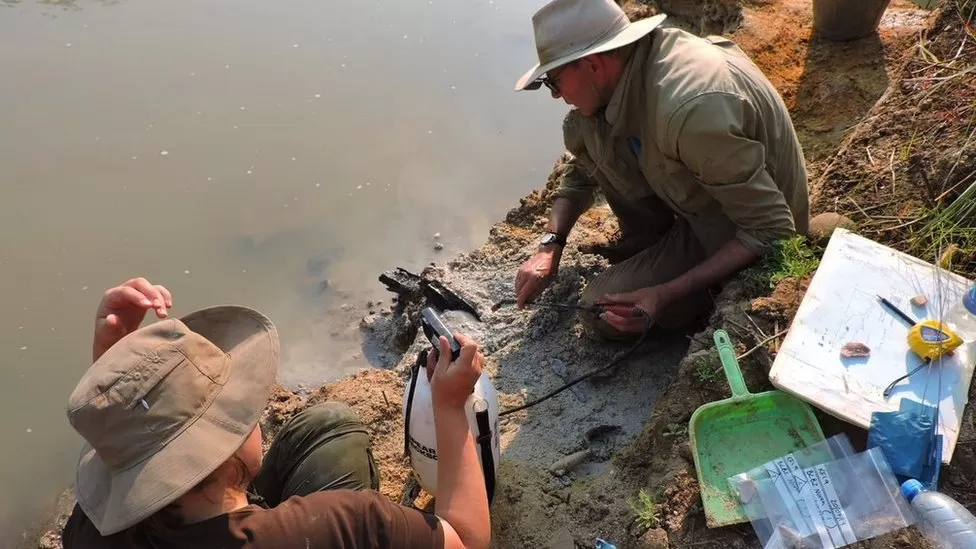
    Archaeologists have learned new things about how ancient humans lived after finding old wooden logs near a river in Zambia.

    The research, which is in a scientific journal called Nature, shows that ancient humans built possible homes.

    “This discovery has made me reconsider my understanding of our ancient predecessors,” said Professor Larry Barham, an archaeologist.

    The scientist from the University of Liverpool is in charge of the Deep Roots of Humanity research project. This project involves digging up and studying old pieces of wood.
    The finding may change the idea that people who lived long ago had basic, wandering lifestyles.

    “They created a big new thing out of wood,” said Prof Barham.

    They used their smarts, creativity and abilities to make something they hadn’t seen before, something that had never been made before

    The scientists found really old wooden tools like sticks used for digging. However, what made them most enthusiastic were two pieces of wood discovered at a 90-degree angle to each other.

    “One piece of wood is on top of the other, and both pieces of wood have cut-out sections,” explained Prof Geoff Duller, an archaeologist from the University of Aberystwyth.

    You can easily see that those cuts were made by stones.

    “It helps the two logs to come together and form solid objects. ”

    Creating

    More study showed that the logs were approximately 476,000 years old.

    A person named Perrice Nkombwe, who is part of a team at the Livingstone Museum in Zambia, was very surprised to learn that woodworking has been a long-standing tradition.

    “I suddenly realized that we had found something very special. ”

    Until now, we only had proof that humans used wood to make fire and create tools like sticks for digging and spears.

    Luminescence dating is a method used to figure out the age of objects by measuring the light they give off when stimulated.

    One of the first wooden objects found was a spear that is 400,000 years old. It was discovered in the sand in a place called Clacton-on-Sea in Essex in 1911.

    If we don’t keep wood in certain conditions, it will just decay and disappear.

    But in the winding edges of the river above the Kalambo Falls, near the border of Zambia and Tanzania, it was full of water and preserved for thousands of years.

    The team found out how old the layers of earth were by using luminescence dating.


    Small pieces of rock collect natural radioactivity from the surroundings as time goes on. This is similar to how batteries are charged, according to Professor Duller.

    And the grains can release and measure radioactivity by heating them up and analyzing the light they emit.

    Scientists made models to demonstrate how logs that are positioned on top of each other could have been utilized.

    The logs are different sizes, with the smaller one being about 1. 5 meters (5 feet) long. This indicates that the person who connected them was constructing something big and strong.

    The team believes that it was probably not a hut or a permanent home, but possibly used as a part of a platform for a shelter.

    Professor Duller suggested that it could be a place to sit by the river and go fishing.

    “But it’s difficult to determine what kind of complete arrangement it could have been. ”

    The practice of working with wood

    Prof Duller said that there is a possibility that there were humans called Homo sapiens during that time, but we just haven’t found their fossils yet.

    But there might be a different type of human-like beings called Homo erectus or Homo naledi. During that time in southern Africa, there were multiple types of primates similar to humans.

    The wooden objects were brought to the UK to be studied and kept safe. They are being stored in containers that recreate the conditions that kept them well-preserved for the past 500,000 years. They will come back to Zambia soon to be shown.

    Ms Nkombwe said that with this new discovery, we are hoping to add more items to our collection. We also plan to use these findings to better understand and explain the woodworking tradition in Zambia.

    She said that if we keep working at the Kalambo Falls site, we can learn more about how people in the past made things out of wood, how skilled they were, and how they lived in their surroundings.
  • Treasures from antiquity found in 3,000-year-old tomb

    Archaeologists in northern Peru have found a tomb that hasn’t been touched for 3,000 years.

    The person buried in the grave was given the name “Priest of Pacopampa” by archaeologists because it was discovered in the highland region called Pacopampa.

    Scientists carefully excavated through layers of ash and black earth to find his bones. They also found two seals and other valuable items that were given as offerings.
    According to Peru’s culture ministry, the seals showed that ancient people of high social rank used special body paint for rituals.

    Yuji Seki, the leader of the project, told Reuters that the tomb is very big, about 2 meters in diameter and 1 meter deep. He also said that the position of the body inside the tomb is strange, as the person is lying face down with one half of their body stretched out and their feet crossed.

    “I believe he was a prominent figure during his era,” he said.
    MrSeki said that the discovery is very important because the priest was among the first to start managing the temples in the northern Andes of the country.

    The Pacopampa site is located 2,500m above the sea level. It has nine big ceremonial buildings made of carved and shiny stone.

    They are believed to be around 700 to 600 years old.

    The excavation is a project where archaeologists from Japan’s National Museum of Ethnology and Peru’s National University of San Marcos are working together.

  • Stunning historic bronze sword discovered in Germany

    Stunning historic bronze sword discovered in Germany

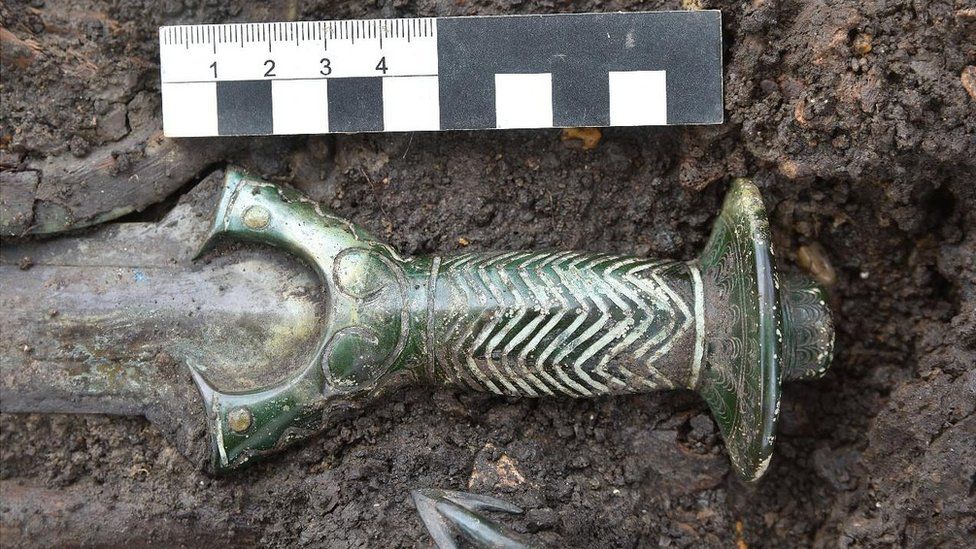
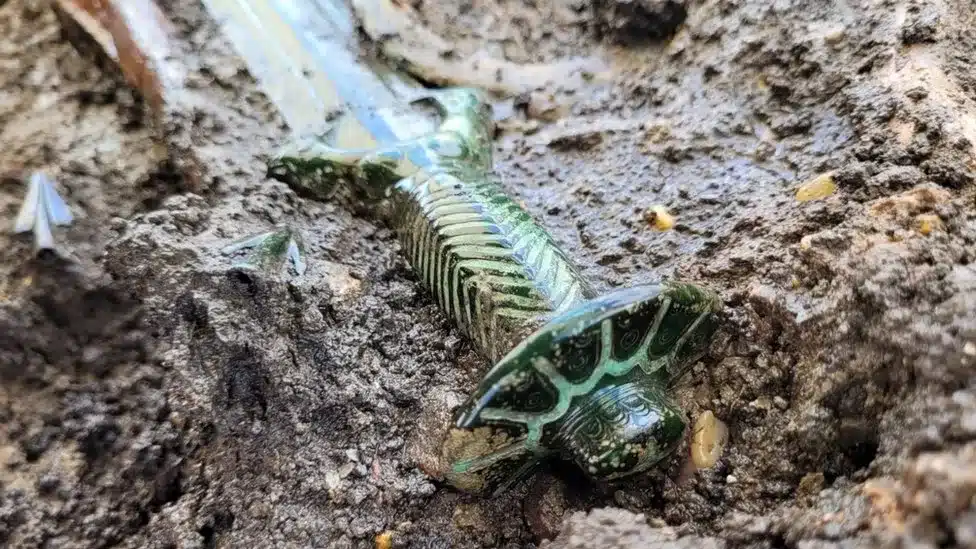
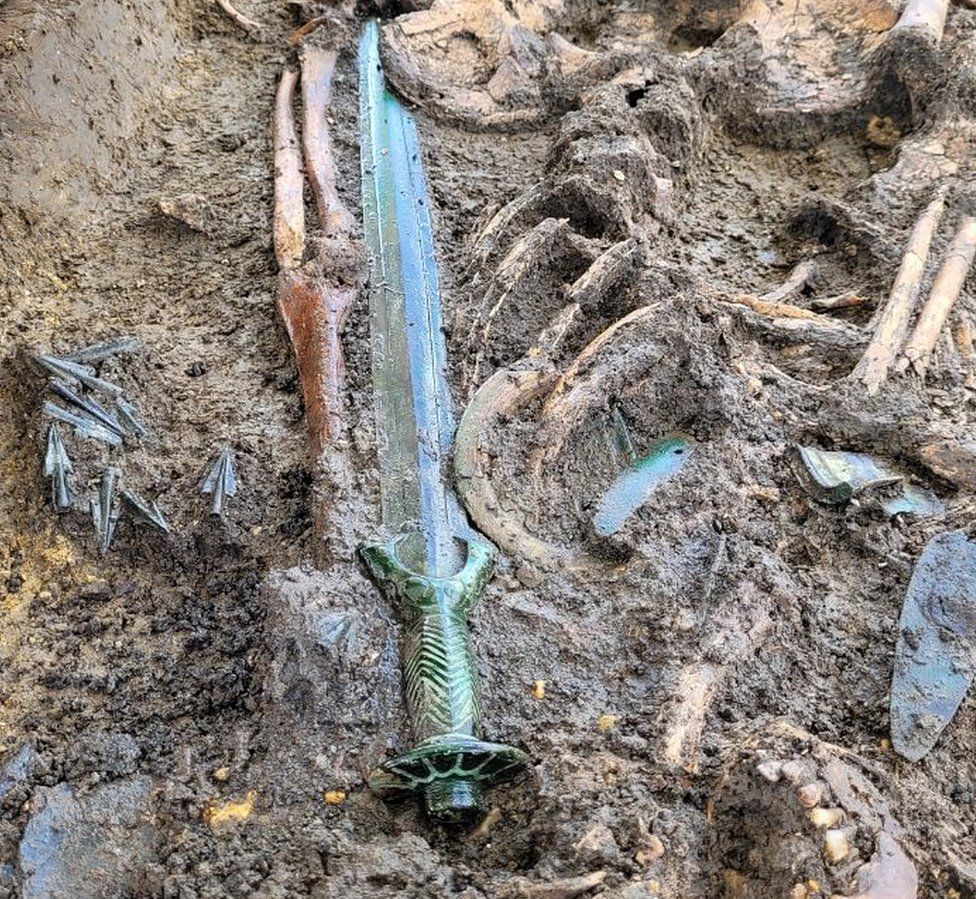
    German scientists are ecstatic to have discovered an incredibly well-preserved Bronze Age sword that is more than 3,000 years old.

    The octagonal-hilted bronze sword was discovered in a burial in the southern town of Nördlingen. It’s believed to date back to the late 14th century BC.

    According to the State Office for Monument Protection (BLfD) of Bavaria, its condition is so good that “it almost still shines.”

    The cemetery also has other bronze objects and the remains of a man, wife, and boy.

    The archaeologists are not sure whether the three were related, and the rarity of the find raises questions about the sword’s origin.

    The BLfD says manufacturing such a sword was complicated, as the hilt was cast on to the blade. The Nördlingen sword does not appear to have been used in anger, but it is believed to have been a real weapon, not just ornamental.

    Nördlingen bronze sword (from BLfD website)
    Nördlingen bronze sword (from BLfD website)

    More on this story

  • Egyptian sarcophagus found in ancient mummification factories

    Egyptian sarcophagus found in ancient mummification factories

    In ancient mummification factories and tombs found close to the capital Cairo, a stunningly well-preserved Egyptian sarcophagus has been found.

    The beautiful blue, yellow, and maroon-patterned coffin was discovered in the Pharaonic necropolis of Saqqara, a section of Memphis, the former capital of Egypt and a Unesco World Heritage site.

    In addition to the sarcophagus, archaeologists discovered clay pots, stone beds, and ceremonial containers in addition to natron salt, one of the primary materials needed for mummification.

    Unveiling the spectacular find, Mostafa Waziri, secretary-general of the Supreme Council of Antiquities, said the workshops had been used to mummify humans and sacred animals. 

    They are believed to date back to the 30th Pharaonic Dynasty (380BCE to 343BCE) and Ptolemaic period (305BCE to 30BCE).

    The tombs found nearby date back much further. One belongs to Ne Hesut Ba of the Old Kingdom’s fifth dynasty, 4,400 years ago, and the other to Men Kheber of the late kingdom’s 18th dynasty, 3,400 years ago. Both men were priests.

    Inscriptions of cultivation, hunting and other daily activities were found on the walls of Ne Hesut Ba’s tomb, while ‘scenes showing the deceased in different positions’ were engraved in Men Kheber’s tomb, officials said.

    In January, archaeologists found 4,300-year-old statues of Egyptian priests, officials and servants in Saqqara, while last year the necropolis revealed a ‘dream discovery’ in the sarcophagus of Ptah-em-wia, treasurer for King Ramses II – also known as Ramses the Great.

    Egypt’s government has heavily promoted new archaeological finds to international media and diplomats in recent years. It hopes that such discoveries will help attract more tourists to the country to revive an industry that has suffered since the 2011 Arab Spring, and been further impacted by the Covid-19 pandemic and Ukraine war.