Tag: Asante Kingdom

  • Returned royal artefacts from Asante kingdom displayed for public viewing

    Returned royal artefacts from Asante kingdom displayed for public viewing


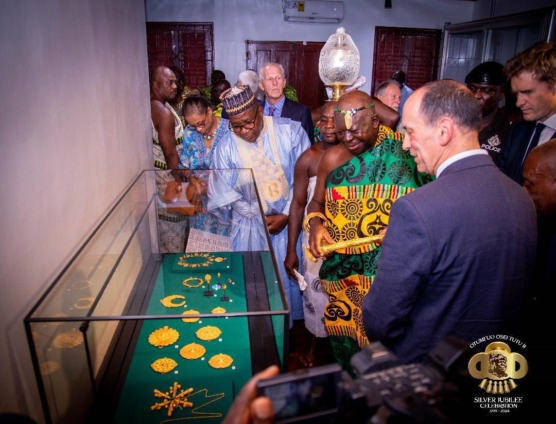
    After 150 years since the British seizure, looted royal artifacts from the Asante kingdom are now showcased for public viewing at the Manhyia Museum in Kumasi.

    Among these artifacts are significant items such as the Mpomponsuo, a ceremonial cap adorned with gold ornaments, a sword of state, three cast gold soul-washers’ badges, and a gold peace pipe, all taken during the Anlo-Asante conflicts, notably the infamous Sagrenti War of 1874.

    Additionally, the collection encompasses seven sections of sheet-gold ornament, one silver straining spoon, one pair of silver anklets, and one section of sheet-gold ornament.

    A gold lute-harp, bestowed upon British diplomat Thomas Edward Bowdich by Asantehene Osei Bonsu during an 1817 trade treaty, was also repatriated.

    Fifteen of these artifacts were repatriated by the British Museum (BM), while the Victoria and Albert Museum (V&A) returned 17.

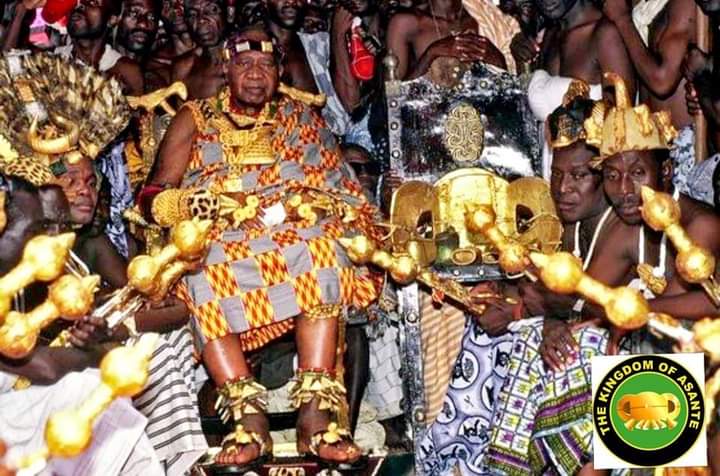
    Addressing the repatriation of these looted artifacts, Otumfuo Osei Tutu II emphasized that the return of these items symbolizes the restoration of the Asante heritage.

    “The items that came back are virtually the soul of the people of Asante. Not all of them have returned. But what we have here embodies the soul of Asante. Today is a day for Asantes and for the Black African continent. The spirit that we bore and share is back with us,”he said.

    Established under the auspices of Otumfuo Opoku Ware II, the Manhyia Museum originally served as the inaugural palace constructed by the British for Asantehene Nana Prempeh I back in 1925.

    This structure was erected to supplant the royal palace razed during the Yaa Asantewaa War in 1900.

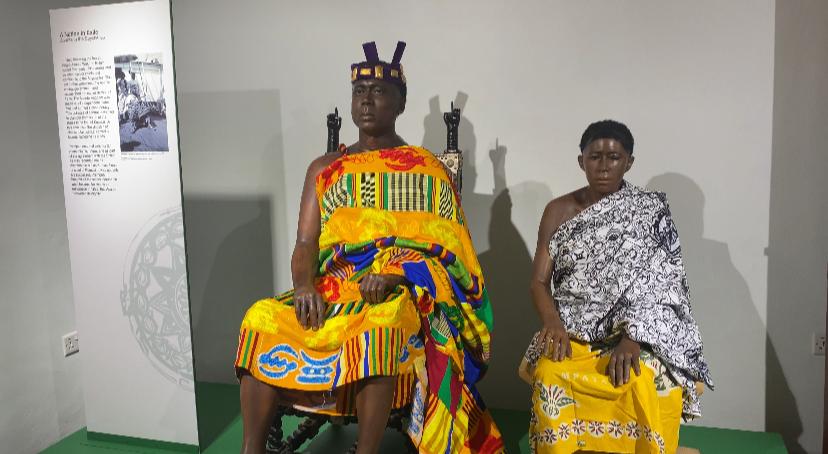
    Having been closed for three weeks, the museum now welcomes the public to explore photographic exhibits, regal displays, lifelike representations of Asantehenes and Asantehemaas from the 20th and 21st centuries, and the historical narratives chronicling the Asante kingdom, including its interactions with the British.

    Director of the Victoria and Albert Museum in the UK, Dr Tristam Hunt is upbeat about the potency of cultural exchanges.

    “We acknowledge the very painful history surrounding the acquisition of these objects. A history tainted by the scars of imperial conflict and colonialism. These treasures have borne witness to triumph and trials of the great kingdom and their return to Kumasi is testament to the power of cultural exchange and reconciliation,”he said.

    African nations, Ghana among them, have consistently urged for the repatriation of looted artifacts, with some successfully reclaiming ownership of significant historical pieces in recent times.

    Chief negotiator Ivor Agyemang-Duah disclosed that negotiations continue for the return of hundreds of looted artifacts currently housed in various museums worldwide.
    “We’re talking to some individual art collectors and institutions in South Africa, and also a couple of three leading museums and galleries in the UK. We have begun negotiations. I’ll be travelling to meet them for the first formal negotiations,” he revealed.

    The artifacts will be loaned for an initial period of three years, with the possibility of renewal for an additional three years.

    This return aligns with the silver jubilee celebration of Asantehene Otumfuo Osei Tutu II, marking twenty-five years since his enthronement to the Golden Stool.
  • PHOTOS: A list of the 7 artefacts returned to the Asante Kingdom 

    PHOTOS: A list of the 7 artefacts returned to the Asante Kingdom 

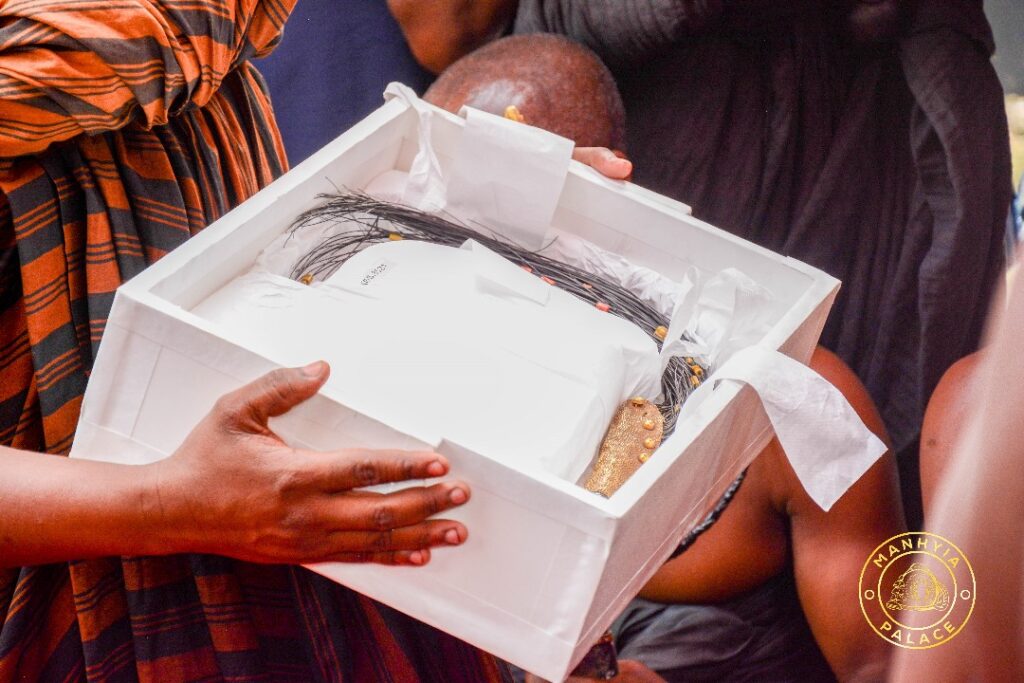
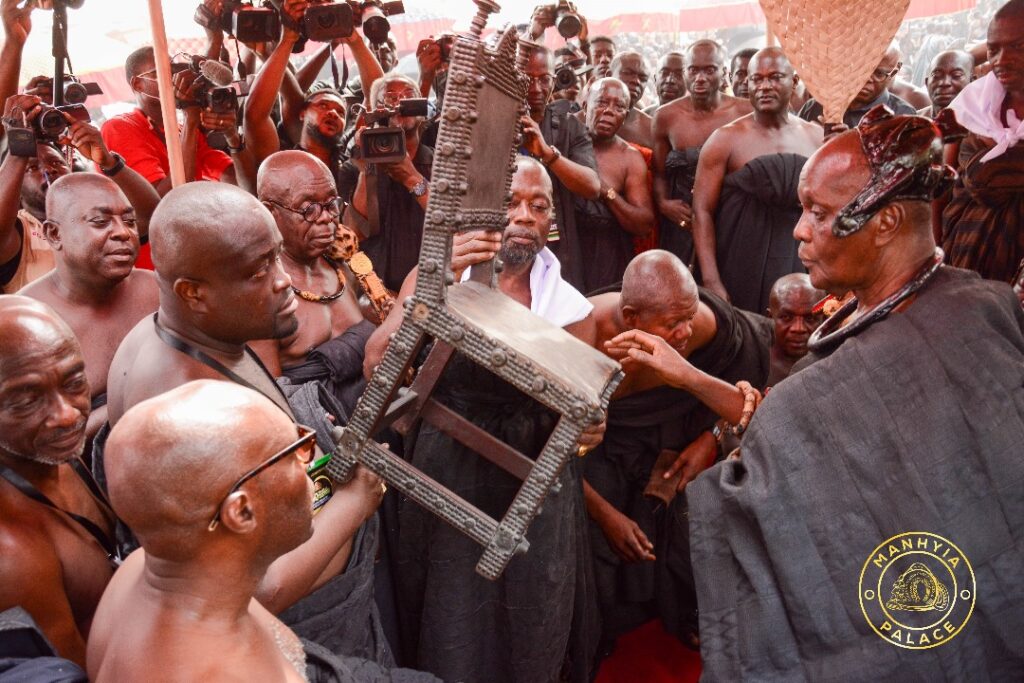
    The Fowler Museum in Los Angeles on the occasion of the 150th anniversary of the Sagrenti War has permanently returned seven significant artefacts, once belonging to the Asante kingdom.

    Recognizing the historical importance of this repatriation, TIGpost has undertaken the responsibility to provide a detailed account of each of these revered items.

    The items, looted during the 19th century from British-colonized Ghana, found a home at the Fowler Museum at the University of California, Los Angeles, in the 1960s, until their return on Thursday 8th February 2024.

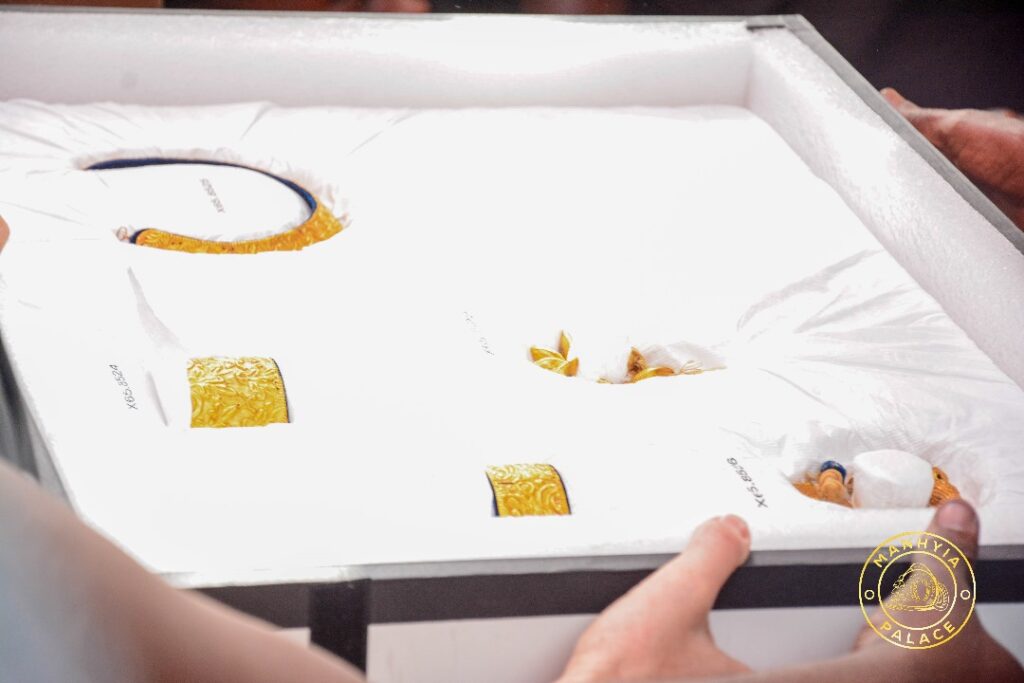
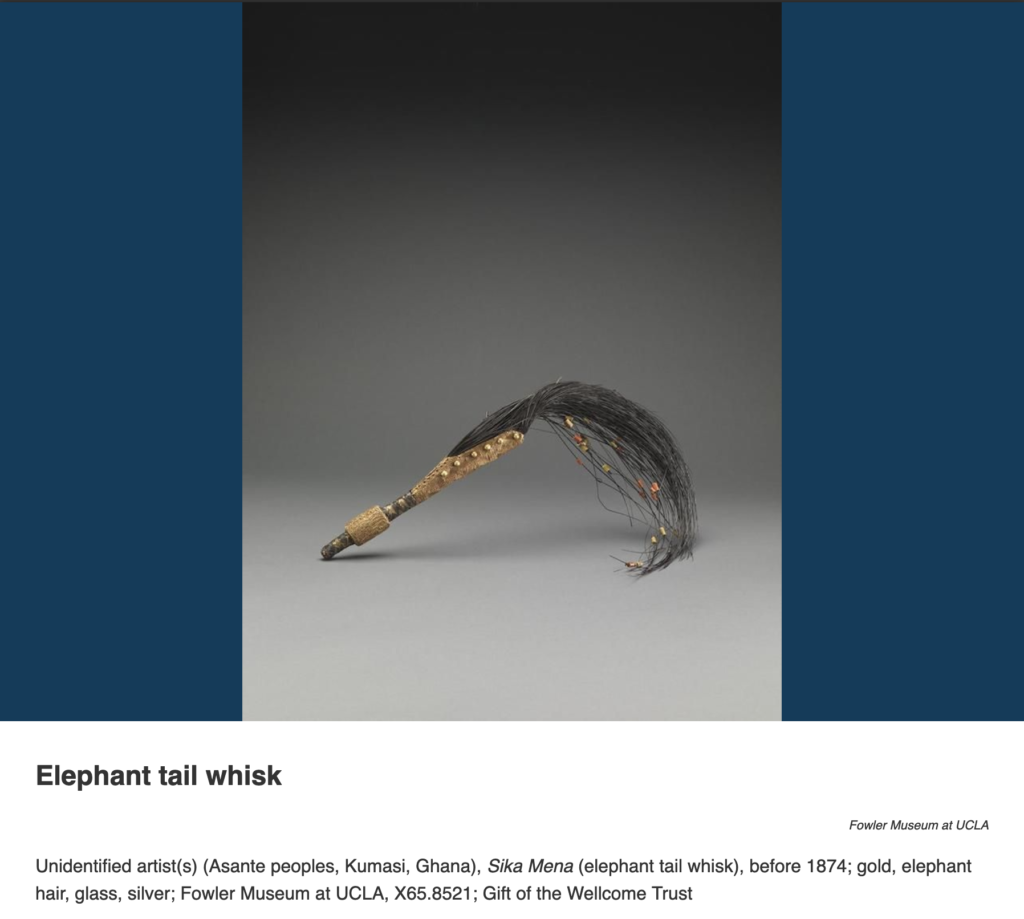
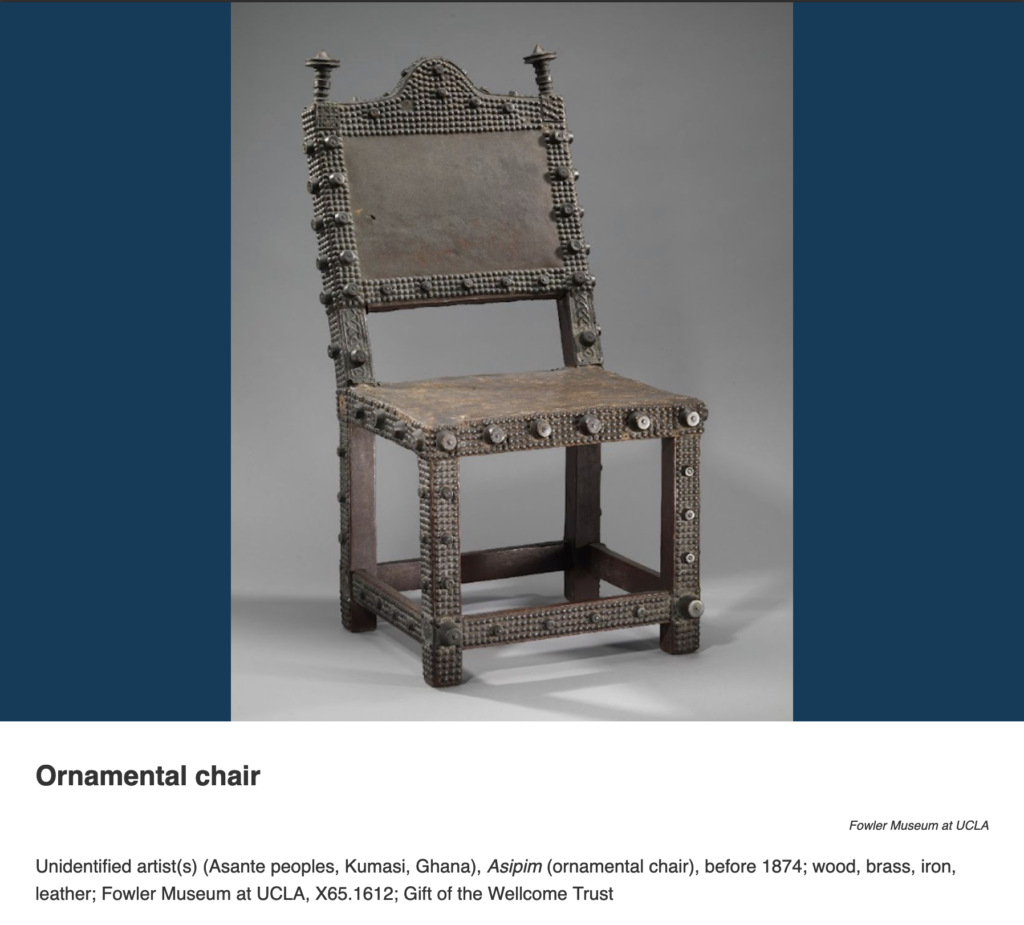
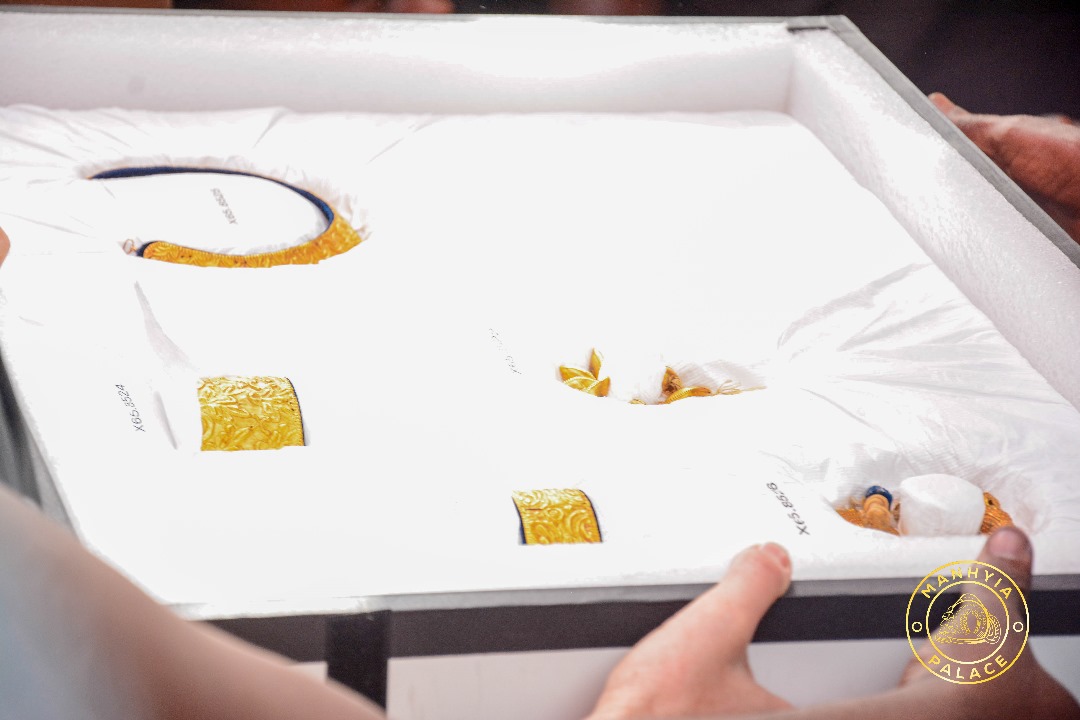
    Among the repatriated artefacts are an elephant tail whisk, an ornamental chair crafted from wood, leather, and iron, gold stool ornaments, a gold necklace, and bracelets.

    View below images of the returned artefacts:

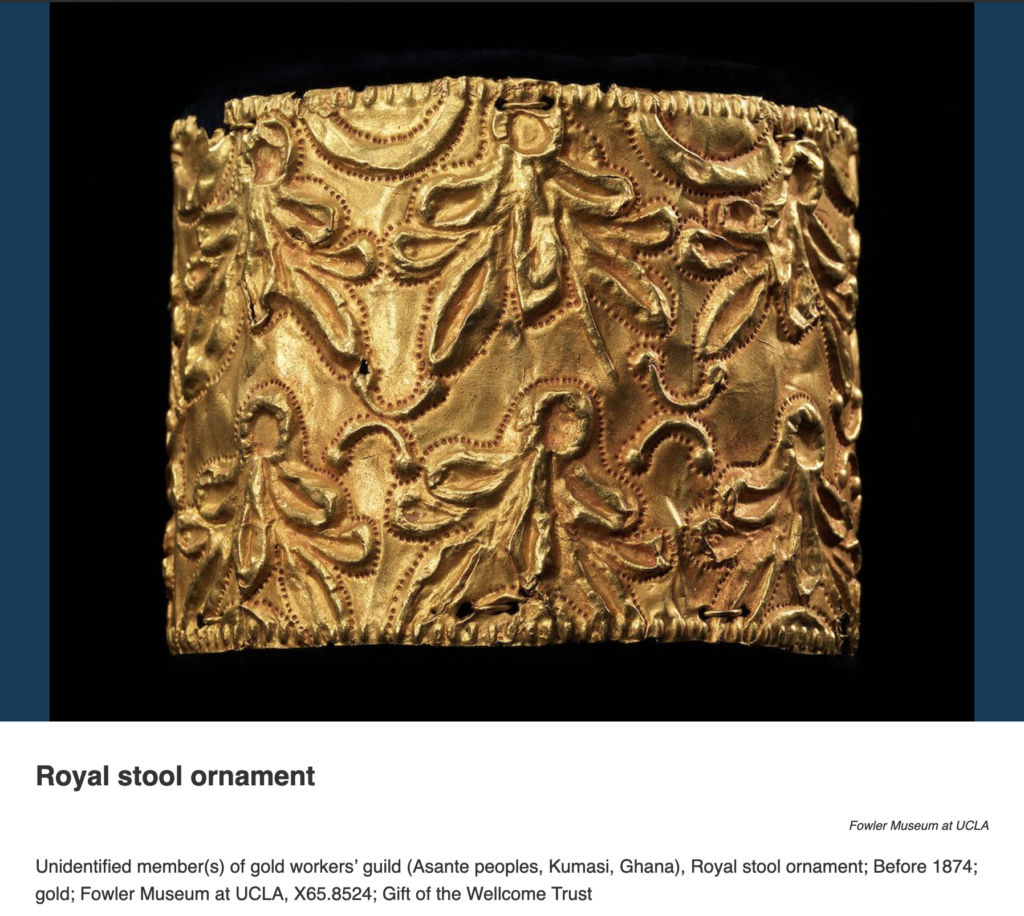
    1. Royal Stool Ornaments (2):

    Among the repatriated treasures are two royal stool ornaments, intricately crafted and symbolizing the regality and authority of the Asante ruler. These pieces hold historical significance, having been part of the Asante kingdom’s heritage before being looted during the Sagrenti War.

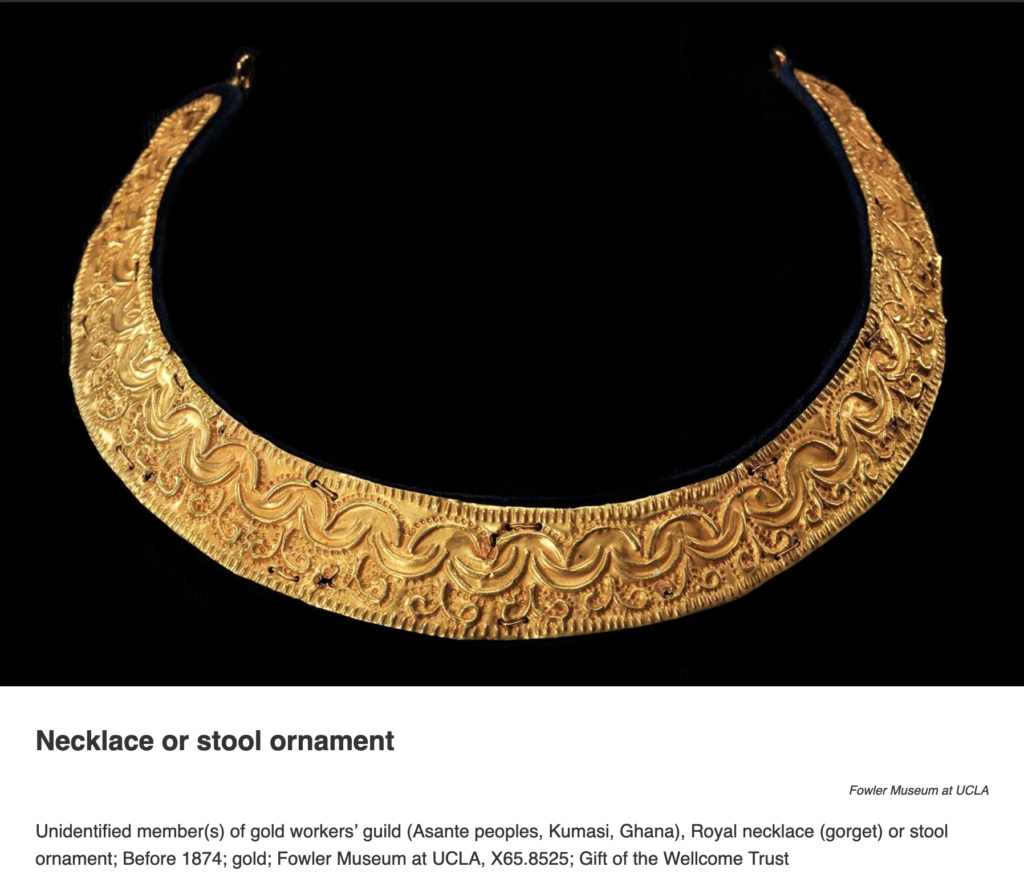
    2. Royal Necklace:

    A royal necklace, adorned with cultural motifs, is one of the returned artefacts. Such necklaces were traditionally worn by royalty and symbolized not only wealth but also the esteemed position of the wearer within the Asante society.

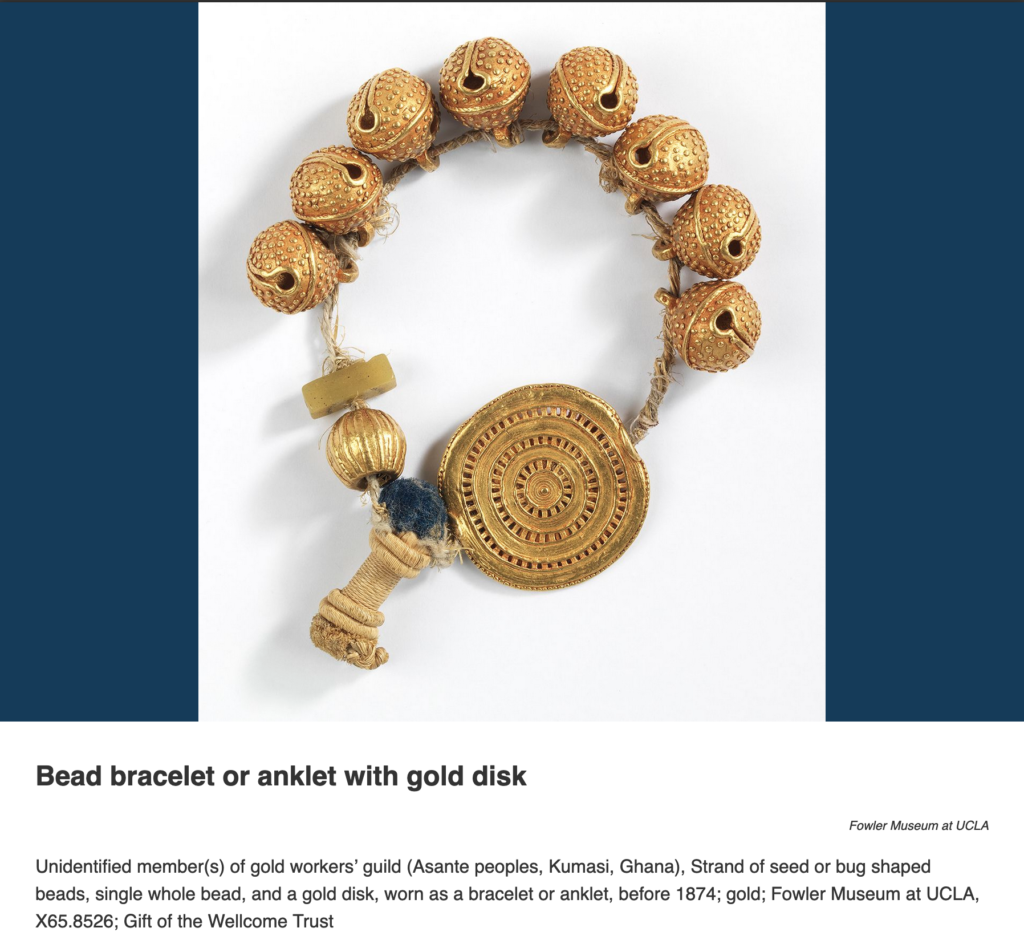
    3. Bead Bracelet or Anklet with Gold Disk:

    This intricately designed bracelet or anklet, featuring a gold disk, showcases the craftsmanship and attention to detail characteristic of Asante art. Such adornments were often worn for ceremonial and symbolic purposes.

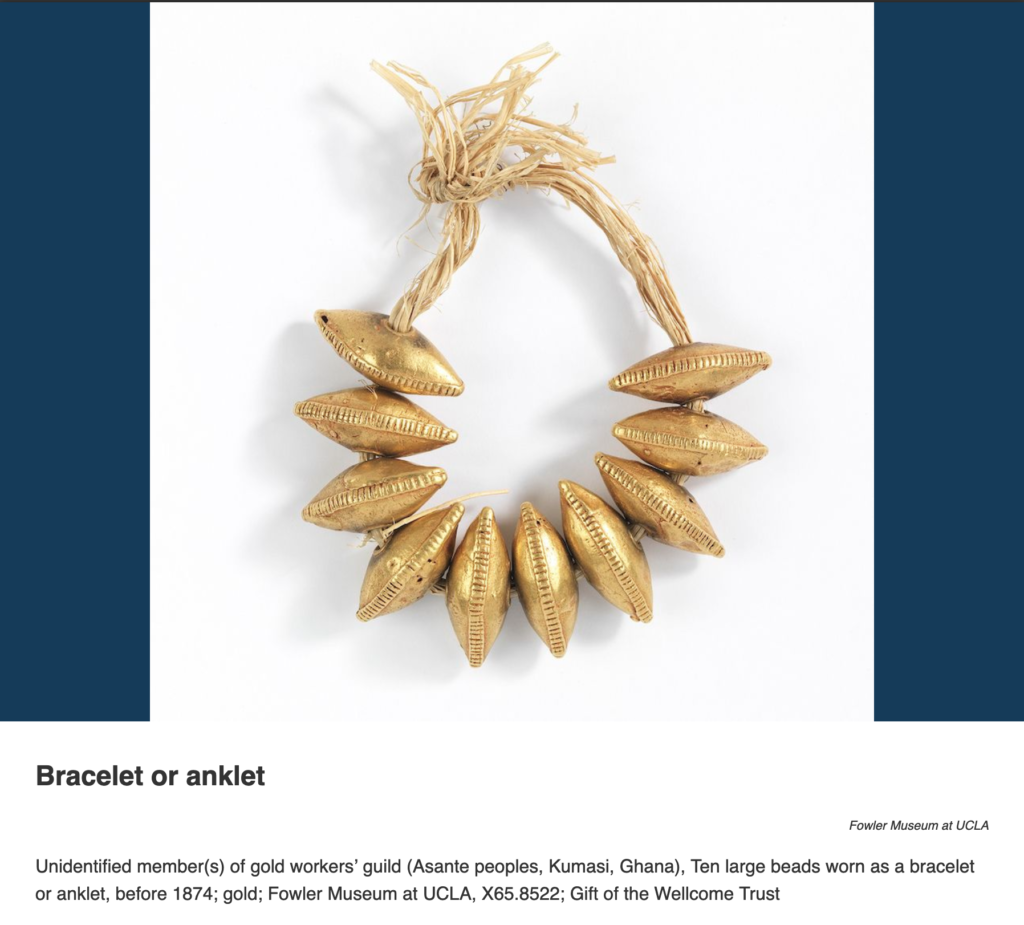
    4. Bracelet or Anklet:

    Another piece among the returned artefacts is a bracelet or anklet, embodying the cultural richness and aesthetic preferences of the Asante people. These items were not merely accessories but held deep cultural significance.

    5. Elaborate Elephant Tail Whisk:

    The collection includes an elaborate elephant tail whisk, a ceremonial item used in traditional Asante rituals. Such whisks were emblematic of authority.

    6. Ornamental Carved Chair:

    An ornamental chair, intricately carved and studded with brass and iron embellishments, is part of the repatriated artefacts. This chair is a testament to the skilful craftsmanship that made Asante art renowned worldwide.

    As Independent Ghana, we celebrate the return of these artefacts, recognizing the importance of preserving and showcasing the rich cultural heritage of the Asante kingdom. The homecoming of these treasures marks not only a restoration of historical items but also a reaffirmation of cultural identity and pride.

  • I can’t disrespect Otumfuo, allegations against me are false – Wontumi 

    The Ashanti Regional Chairman of the New Patriotic Party (NPP), Bernard Antwi Boasiako, popularly known as Chairman Wontumi, has vehemently denied allegations of making derogatory remarks about the Asantehene, Otumfuo Osei Tutu II, and the Asante Kingdom.

    Chairman Wontumi emphasized his profound respect for Otumfuo Osei Tutu II, asserting that he would never use abusive language towards the revered king or challenge his authority.

    In an interview with Wontumi radio, the businessman urged Ghanaians to dismiss all accusations against him, highlighting that everyone in Asanteman can testify to his respectful demeanor.

    He further declared his commitment to taking every necessary step to clear his name from all the allegations made against him.

    “All people in Asanteman will attest to the fact that I am a respectful being. Even those who dislike me will affirm that. I have a lot of respect for the Asantehene and the Asante Kingdom and will never do anything to tarnish its reputation. All these allegations are not true; they are pure lies. I cannot engage in such behavior. Anyone who wishes to lie can do so, but eventually, the truth will be exposed. I, Wontumi, will do everything possible to exonerate myself. Thank you for your audience,” he stated.

    Chairman Wontumi is currently facing accusations of making disrespectful comments about the Asantehene.

    Allegedly, Nana Kwaku Duah, Chief of Kokoso, and Manhyia South NPP Constituency Chairman Ofori Attah, also known as Tom-Tom, officially filed a complaint with the Kumasi Traditional Council.

    In response to the complaint, the council summoned Bernard Antwi Boasiako on January 22, urging him to appear on Monday, January 29, to address questions related to the reported derogatory remarks made during the vetting of parliamentary aspirants in Manhyia South.

    The NPP General Secretary conveyed that Chairman Wontumi is currently unwell and requested a two-week grace period for his appearance.

    This request has caused discontent among council members, who insist on Chairman Wontumi’s appearance, even suggesting that he appears in a wheelchair if necessary.

  • Video: Otumfuo Opoku Ware II’s enstoolment in 1970

    Video: Otumfuo Opoku Ware II’s enstoolment in 1970

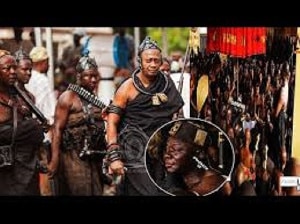
    Otumfuo Opoku Ware II, whose full name was Nana Opoku Ware II, was enstooled as the 15th Asantehene (King) of the Ashanti Kingdom in 1970.

    The enstoolment marked his official ascension to the throne as the traditional leader and custodian of the Ashanti culture and people.

    Opoku Ware II succeeded his uncle, Sir Osei Agyeman Prempeh II, who had reigned as the Asantehene prior to him. The enstoolment ceremony was a significant event in the history of the Ashanti Kingdom, as it signified the continuation of leadership and the preservation of cultural traditions.

    Per reports, among those present were Dr. Kofi Busia, the then Prime Minister of Ghana, and Brigadier Akwasi Afrifa, the then Chairman of the Presidential Commission.

    The enstoolment process is a traditional ceremony deeply rooted in Ashanti culture and involves various rituals, symbols, and protocols. It includes the presentation of royal regalia, the pouring of libations, and the participation of various dignitaries, chiefs, and representatives of the Ashanti people.

    During his reign, Otumfuo Opoku Ware II played an important role in maintaining the cultural heritage of the Ashanti people while also working towards modernization and development.

    His leadership was marked by efforts to unite the Ashanti Kingdom and to promote education, infrastructure, and economic growth within the region.

    Otumfuo Opoku Ware II’s reign lasted until his passing in 1999, and his legacy continues to influence the Ashanti Kingdom and its people to this day.

  • How Komfo Anokye got the name ‘Gee’

    How Komfo Anokye got the name ‘Gee’

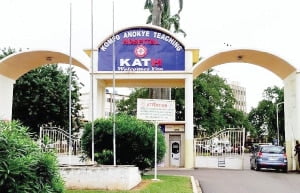
    Officially known as the Komfo Anokye Teaching Hospital (KATH), it serves as the top medical facility in the Ashanti Region and is perhaps the second largest medical facility in the entire nation.

    The name of the hospital which was built in 1954, as it suggests is in honor of Komfo Anokye, the great priest who per history was instrumental in the rise of the Asante Kingdom.

    But whereas official documents and people outside Kumasi know the hospital as Komfo Anokye, the locals prefer to call it Gee.

    For most people in Kumasi, the name Gee rings a bell easier and faster than Komfo Anokye Teaching Hospital.

    The use of Gee as the alternative and perhaps more popular name for the hospital has triggered the inquisitiveness of many people who have been longing to know about the history behind it.

    GhanaWeb thus spoke to a site guide at the Komfo Anokye Hospital who detailed the story behind the use of ‘Gee’ as the moniker for the Ashanti Region’s premier hospital.

    “The word Gee is not the official name of the hospital. It is the name of one of the contractors who built the hospital. The name of the firm was Gee, Walker & Slater Ltd. Compared to Walker and Slater, Gee was more easy to pronounce so he was more known to the indigenes. That’s how come the name of the hospital is called Gee.”

    According to ghanasonline.com, the hospital was initially called Kumasi Central Hospital before being changed to Komfo Anokye Hospital.

    The report adds that “Samuel Gee, after the construction of the hospital, attempted to pull out the Komfo Anokye sword, at times using heavy-duty machinery, but failed.”

  • Otumfuo descends on Bantamanhene; warms him to stop disgracing Bantama stool

    Otumfuo descends on Bantamanhene; warms him to stop disgracing Bantama stool

    The Asantehene, Otumfuo Osei Tutu II, has descended heavily on Nana Baffour Owusu, one of his sub-chiefs who is in charge of Bantama.

    Otumfuo expressed worry about the activities of Bantamahene, which he said disgraces him as the overlord of the Asante Kingdom and the traditional stool that Baffour Owusu Amankwatia VI occupies.

    Bantamahene appeared on February 20, 2023, before Otumfuo Osei Tutu II and the Kumasi Traditional Council (KTC) over double sales of land to one Mr. Amponsah and a church, creating confusion between the two.

    After resolving the land dispute between Bantamahene and the parties involved, Otumfuo directed Bantamhene to release all documents on the land to one Mr. Amponsah, whom he first sold the land to, and again directed him to return the money he took from the church within 14 days, as he promised before the traditional council.

    Otumfuo further instructed Bantamahene to ensure that by 10 a.m. on February 21, 2023, all documentation on the land should be released to Mr. Amponsah.

    Otumfuo, who did not mince words with Bantamahene, said, “Baffour, with the stature of the stool you occupy, if such cases come before me, it means you are disgracing me. This is not the first and second time, Baffour, be careful. If you don’t repent you will supervise your own destoolment; tomorrow I will not forget to dismiss you. Bantamahene don’t deserve this prosecution. You are lowering the stature of the Bantama stool.”

    “Baffour, what are you looking for in this world, how much debt do you owe for this too much rush for money, why ? Because of your father, you are making things very difficult for me,” Otumfuo stressed in anger.

    Otumfuo further stated that “this is the same way your elder brother came to disturb me until his demise; you are also repeating the same. You are making me regret something. This is not how your father managed things when he became the Bantamahene. Your father was never petitioned before the Kumasi Traditional Council but why always you? So I gave you the inheritance because I knew you would walk in the path of your father. Now look at what you are doing. As we are speaking, there’s another pending charge against you now: on land, you used my name and sold it out.”

    Otumfuo stated that Bantamahene doesn’t know the value of the Bantama stool he occupies.

    “The stool you sit on as Bantamahene you don’t understand the meaning and the value. If you don’t take care, the stool will sack you. You lose your reputation any time you appear before the traditional council for such wrongdoing.”

    Source: Ghanaweb

  • Abla Pokou: The 1700s Asante female royal who sacrificed her son to save her people

    She was a courageous, outspoken member of the royal family in Asanteman in the 1700s until her outspoken nature got her ousted from her people in the territory which later became known as Gold Coast and subsequently Ghana.

    While little is known about her heroism in Ghana, the people of what is now known as Cote d’Ivoire celebrate and honour the memory of Abla Pokou, also because she was a daring woman.

    Narrating the story of how Abla Pokou came to settle in Cote d’Ivoire and became the mother of the Baoule kingdom, Francis Tagro explained that she had a dispute over a succession during her time in the territory that is today known as Ghana but this escalated into a bitter rivalry, forcing her to flee the land to the neighbouring country.

    Speaking in a BBC documentary, the curator stated that this conflict happened under the reign of the Asantehene, Osei Tutu I.

    “All the Akan people living in Cote d’Ivoire are originally Asante. There was a conflict over the succession at the time of King Osei Tutu I, in what is today Ghana. During that migration, it was the last wave that was the most important, the one that led to the Baoule kingdom, and had at its head the Queen Abla Pokou,” he narrated.

    Continuing the narration, Francis Tagro said that Abla Pokou and her people got to a very trying point in their journey that required an unusual sacrifice to a river god.

    He explained that after several attempts, the royal had to succumb and give up her son as the perfect sacrifice – a move that saved them from damnation.

    “She left with her family and during the migration, they came to a river, the Komoe River but the Akans were not strong enough swimmers. So, they asked the river god to advise them on how best to cross the river. A priest in her entourage told her that the spirit of the river was demanding a sacrifice. It had to be something valuable.

    “So, they all removed their bracelets, finery, rings, every possession they had with them and offered them to the river, but the spirit refused these and insisted on them giving something that was even more valuable to them.

    “The priest told them that the river demanded that Abla Pokou sacrifice the baby son she was carrying. Once they reached the other side, the people who had been in pursuit of them stopped chasing them when they saw the river and were unable to cross it. The queen them said to her people, ‘The child is dead,’ informing them that she had sacrificed her child to gain their safe passage,” he said.

    Francis Tagro further explained that while this is a sad story, it has since informed the line of succession for the Baoule kingdom of Cote d’Ivoire, which was eventually set up by Abla Pokou.

    “It is really sad, that is why in the Asante Kingdom in Cote d’Ivoire, the method of choosing a successor in the royal family is matrilineal because it was the mother, Abla Pokou, who gave her son so that her people could be saved. Queen Abla Pokou is a charismatic character for the Akan people. She is highly revered. She epitomizes energy and determination,” he added.

    In further details shared by dw.com, Abla Pokou was the niece of King Osei Tutu and was born at the beginning of the 18th century.

    She is said to have fled the country after the death of her uncle with some loyal people to Dakon, her second brother.

    According to a curator at the Museum of Civilisation in Cote d’Ivoire, Tagro Gnoleba Francis, the story of this brave Asante queen, Abla Pokou, is one that is etched in the history of the people so much so that even after many centuries, her singular sacrifice of her son is still upheld.

    Source: Ghanaweb