British lawyers may go to courts in Rwanda as part of an agreement that allows the UK government to send asylum seekers to Rwanda.
It would try to solve the problems that the Supreme Court raised when it said the Rwanda plan was not allowed last month.
More information will be given on Tuesday. Home Secretary James Cleverly will go to Rwanda to sign the agreement.
It will be followed by a new law to stop the plan from being blocked in the courts again.
At the same time, the government is going to announce its plans to lower the number of people who can legally move to the country. This is because new data shows that there were a lot of people who moved to the country last year.
Starting in April 2022, some people who are seeking asylum will be sent to Rwanda to apply there.
After the Supreme Court ruling last month, government officials are hurrying to bring back the policy before spring, when they want the first flights to start.
People who are not given permission to stay in Rwanda as refugees can try to stay there for other reasons, or they can ask for protection in another safe country.
The highest court in the UK said no to the policy because it was not certain that the courts in Rwanda would follow a law called non-refoulment.
A country can’t send asylum seekers back to their home if it’s not safe for them.
After deciding, the government said it would ask for a formal agreement with Rwanda. It thought this would give better legal promises than the current deal they have.
A new agreement is almost finalized. It may involve British lawyers working in Rwandan courts to help with the Supreme Court’s worries, according to the media.
The Sunday Times said that the agreement would give Rwanda an extra £15m to hire more people to make its asylum processing system better and bigger.
The UK government has given £140m to Rwanda for the program. The first flight was supposed to happen in June 2022, but it was cancelled because of legal problems.
The Rwanda policy was made because many more people were coming to the UK illegally in small boats.
Legal migration
The government will also announce later how they plan to decrease the number of people coming to the country legally.
Backbenchers are asking ministers to do something because official numbers showed that last year 745,000 more people migrated than was thought.
Ministers are thinking about getting rid of the list of jobs where foreign workers can be hired for less pay than usual.
Immigration Minister Robert Jenrick has said it may be a good idea to limit the number of people who can come to the UK with migrants.
Tag: asylum
-
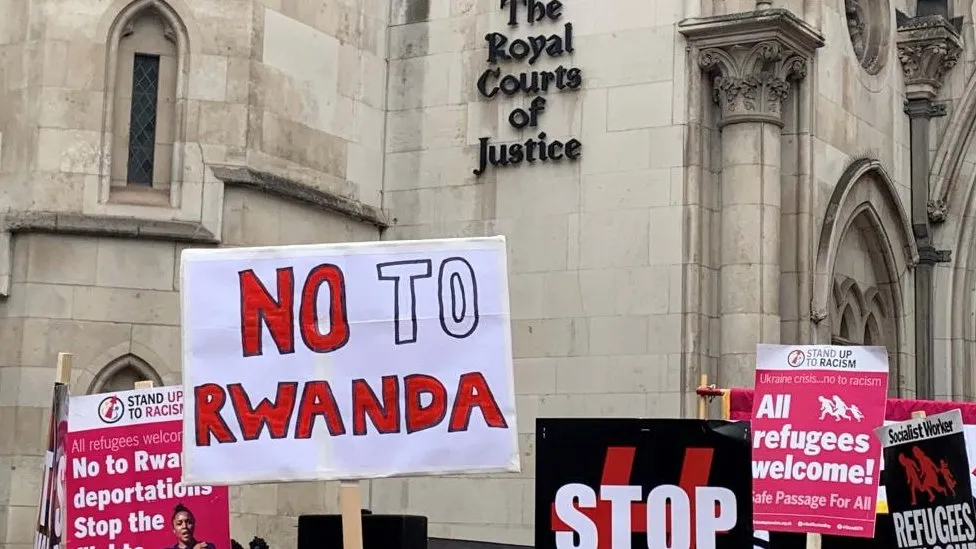
Asylum plan: UK solicitors could be stationed in Rwanda
-

2022 saw record number of asylum petitions to Ireland
Every year, the analysis of migration numbers shows that more people moved to Ireland in 2022 compared to previous years.
The country had many people asking for protection, and lots of people coming to work and study.
More people are taken into the asylum when Ukrainian people are added.
People from Ukraine who are seeking asylum are counted separately because the rules for their asylum are different right now.
The ESRI report uses information from the government.
In 2022, 13,651 people from other countries asked for international protection in Ukraine. This is a big increase of 186% from 2019, when there were fewer travel restrictions because of the pandemic.
The main countries where most applicants came from were Georgia, Algeria, and Somalia. They made up 45% of all applicants.
Before, the ESRI said that the increase in asylum applications was probably because pandemic travel restrictions ended, countries were unstable, people came to the UK instead, and people’s connections to others made them apply for asylum.
People from Ukraine who have had to leave their homes and go to another country because of a difficult situation.Ukrainian refugees
Between March and December 2022, almost 68,000 people from Ukraine came to Ireland under the EU’s Temporary Protection Directive.
By December 2022, 87% of people who were allowed to stay in the country temporarily were still living there.
The sudden and unexpected increase put a lot of pressure on the resources of the Irish government. They had to take special actions like putting people in tents and using public buildings for temporary housing.In 2022, almost 40,000 people got permission to work, and most of these permits went to people in the IT sector.
The numbers also show that a lot of work permits were given to people from outside the EU or UK, which was the highest ever.
In 2022, almost 40,000 permits were given out, which is more than twice as many as in 2019, when there were a lot less.
This shows that more types of jobs can now be given work permits in Ireland because there are not many people without jobs.
India had the most people getting permits (15,695, 39%) followed by Brazil (4,304, 11%) and the Philippines (2,203, 6%).
In 2022, the IT sector got the most employment permits (10,382), and health and social work came in second (9,791).
Keire Murphy, who helped write the report, said that migration in Ireland is getting back to normal after travel restrictions, and the number of people coming to Ireland is the same as before or even higher.
She said: “The report shows important changes in 2022 and the challenges that came with them. ”Housing crisis
The population of the Republic of Ireland grew by almost 98,000 people from April 2022 to April 2023.
That was the largest increase since 2008 and was mostly caused by people moving to the country.
Ireland’s government was already having a hard time finding enough homes for people before more people started moving to the country.
Conservative protesters are having protests at places where asylum seekers live. They are trying to get more people to support them for the elections next year. -
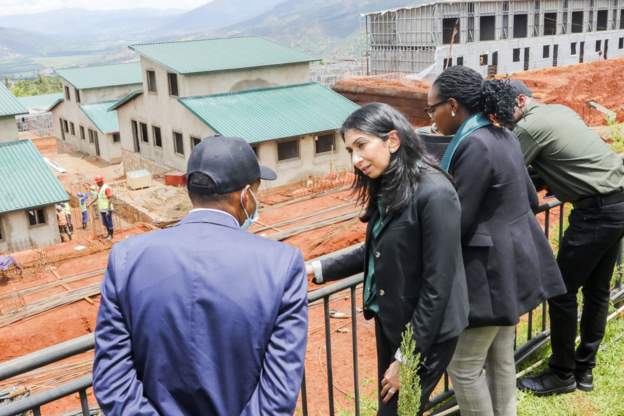
UN furious over asylum plan by Rwanda
The UN human rights office has said that it remains “extremely apprehensive about the ramifications” of the UK government’s plans to send certain migrants to Rwanda if they enter the country unlawfully.
The UK home secretary, Suella Braverman, has said that foreigners can feel safe in Rwanda.
She said on Sunday that she believed the Rwanda policy would have “a significant deterrent effect” so that people would stop making the journey across the Channel to the UK.
But the UN human rights office said assessments done by the UN refugee agency showed that the asylum system in Rwanda was “not robust enough”.
“There are also concerns about respect for the right to freedom of assembly and freedom of expression in Rwanda. Those concerns do remain today,” spokesperson Ravina Shamdasani told the BBC’s Newsday programme.
“We have a lot of evidence of how these plans [off-shore asylum facilities] go wrong,” she added.
-
Channel crossings: Dozens of Albanian child migrants go missing
Almost 20% of unaccompanied child migrants from Albania taken in by Kent County Council this year have disappeared, the BBC has found.
The local authority took in 197 Albanian children up to 31 October, 39 of whom have gone missing.
Ecpat UK, which campaigns to protect children from exploitation, said the figures were very concerning.
The council said it had worked closely with the Home Office and police to safeguard vulnerable children.
The figures were obtained by the BBC via a Freedom of Information request.
The council said 197 Albanian children processed at the Home Office’s Kent Intake Unit came into its care between 1 January and 31 October.
It added that, as of 7 November, 39 were recorded as missing. However, it said some of those children would have since turned 18.
Government figures collated by the BBC show 44,122 people have crossed on small boats so far this year, compared with 28,461 who arrived in 2021.
This contributed to overcrowding at the Manston processing centre in Kent, which at one point was holding more than double its capacity, at about 4,000 people.
The rising number of diphtheria cases among asylum seekers who have recently arrived in the UK has also been a concern.
Meanwhile, a government plan to send some asylum seekers to Rwanda is currently on hold as it faces a legal challenge in the court.
Analysis: BBC reporter Simon Jones
For a local authority which is taking on the role of a child’s guardian, just one young person going missing is one too many.
For Kent County Council, to not know the whereabouts of 39 of the Albanian children it was tasked with caring for must be extremely worrying.
The council says candidly that it can be very difficult to prevent some children from going missing.
It’s trying to identify proactively those who might be at risk of exploitation, and, when missing children are found, it will carry out a debrief to see if lessons can be learned.
It has certainly felt under pressure in recent years over the number of asylum-seeking children it has been required to take on, at times refusing to accept any more, saying services were at breaking point.
Now, more unaccompanied children are being dispersed around the country. But the challenge of protecting those children from potential harm remains very real.
More than 12,000 migrants from Albania have reached the UK by boat so far this year – an increase of almost 4,000% compared with 2021.
The issue has been highlighted by Immigration Minister Robert Jenrick, who said that on some small boats 80% of those on board were from Albania.
Laura Durán, head of policy, advocacy and research for Ecpat UK said this was a “really high” number of missing children.
She said: “We’re really concerned they are at risk of exploitation or have effectively been trafficked.
“They could be facing labour exploitation in different industries such as construction or car washes; they could be criminally exploited in drug distribution or in cannabis farms, or they could be sexually exploited.”
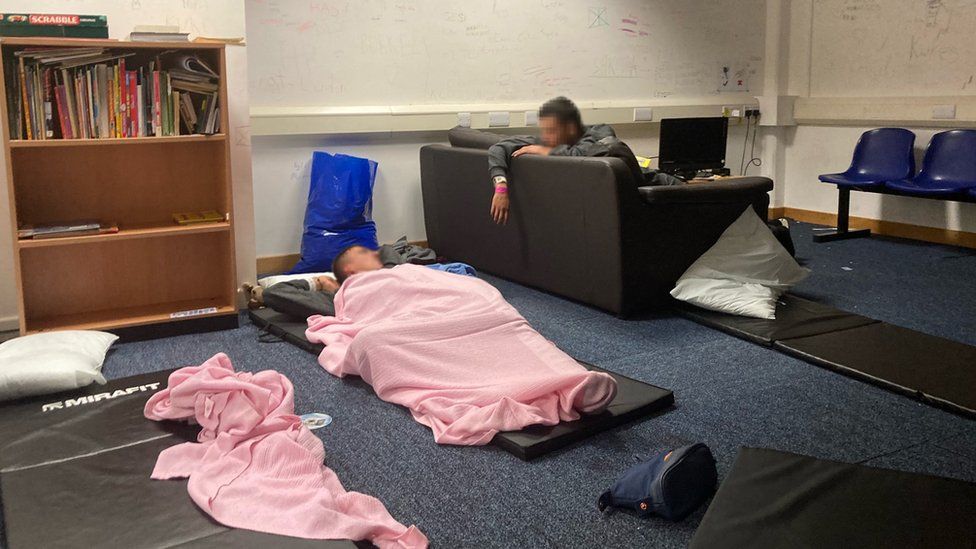
Image caption,
Migrants rest at an unnamed Home Office facility in Kent
In a statement, Kent County Council said it had seen a “significant increase” in the number of unaccompanied Albanian children referred to its services.
It said: “Whilst all unaccompanied asylum-seeking children are vulnerable to exploitation… research and experience evidences that some nationalities are particularly vulnerable and can go missing from local authority care very quickly.
“Kent County Council has used both established safeguarding protocols, including the National Referral Mechanism, and initiated multi-agency strategies to minimise the risks for these children as much as possible.
“The council continues to take a proactive role in safeguarding all unaccompanied asylum-seeking children in its care.”
-
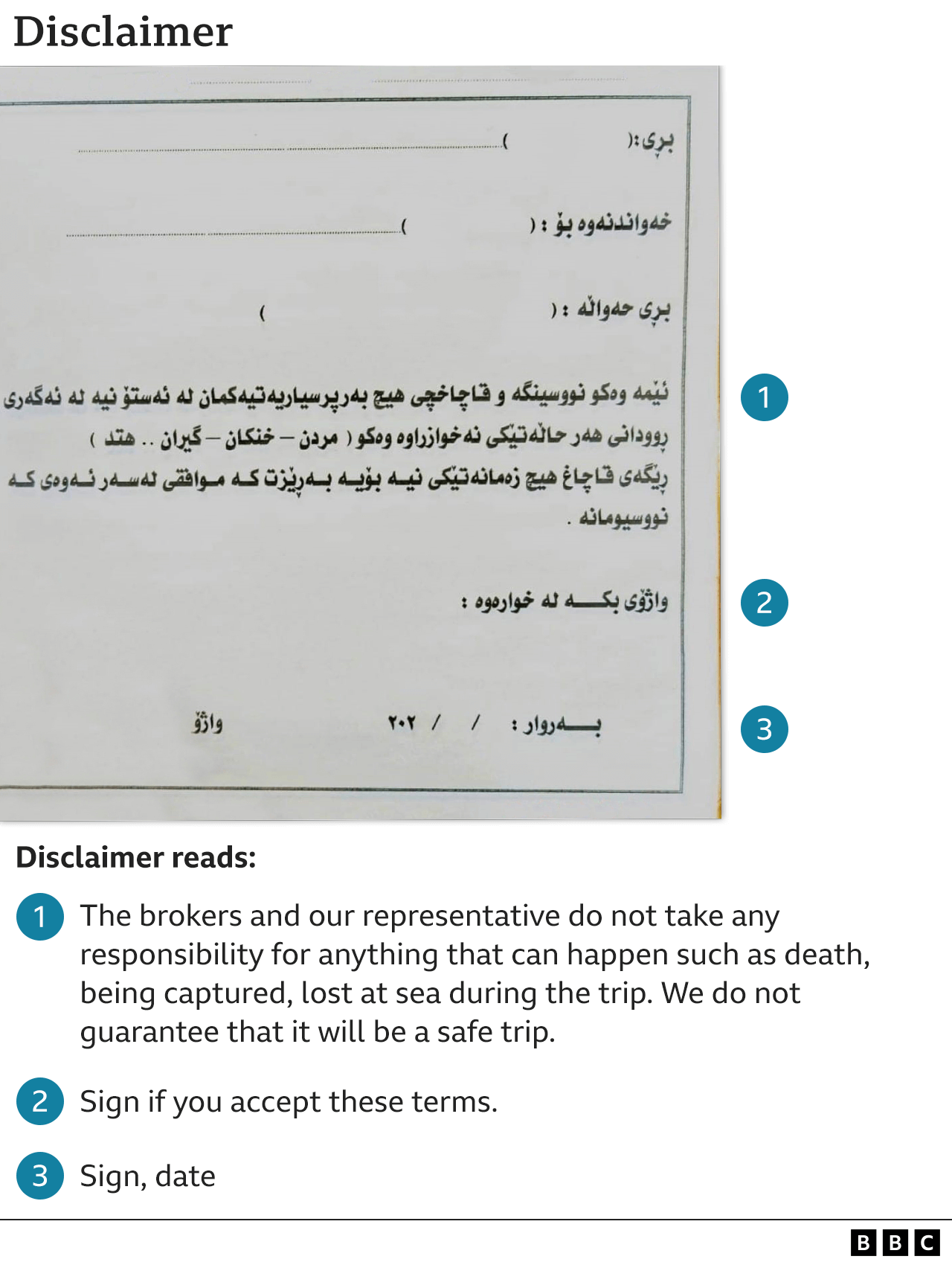
People smuggler: Clients sign a waiver
A people smuggler says that his clients are unaffected by the UK government’s proposal to send asylum seekers to Rwanda. He is met by Jane Corbin at his Turkish headquarters.
The night is falling as I make my way up the creaking stairs of a safe house in an anonymous alleyway in Istanbul, Turkey. I’m here to meet a kingpin in the people-smuggling trade – it has taken months to arrange, working through a trusted intermediary. It is the culmination of a BBC Panorama investigation into how thousands of migrants end up on the beaches of southern England claiming asylum.
The people smuggler is from the Middle East – young and softly spoken, smartly dressed in black. He has agreed to tell me about his business if we do not reveal his identity. His bodyguards discreetly keep watch outside the house.
I challenge him that smuggling people is illegal: “I know this is not legal,” he says, “but for me, it’s about humanity – that’s worth more than the law. We help people, we treat them well, we respect women – we don’t disrespect or hurt anyone.”
Nearly 2,000 people died in the Mediterranean Sea last year.
In April, the UK government signed a £120m deal with Rwanda to send some migrants, mostly single men, to Africa to have their asylum claims processed.
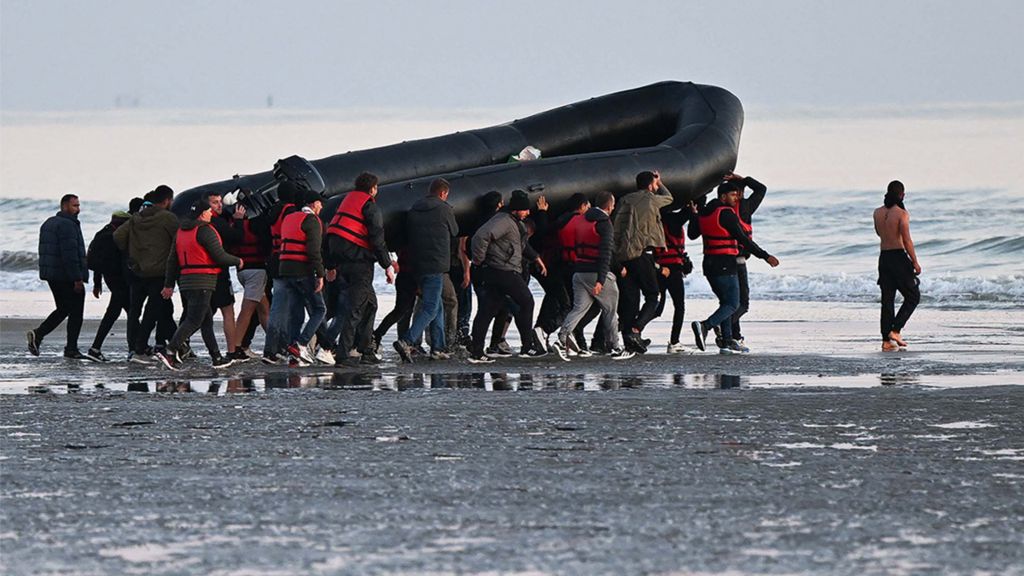
IMAGE SOURCE, GETTY IMAGES Image caption, More than 30,000 migrants have crossed the English Channel already this year The government said the aim was to smash the business model of the people smugglers and stop record numbers of people making the dangerous English Channel crossing.
Already this year, more than 30,000 people have made the crossing in small boats, about as many as the whole of last year.
The people smuggler sends hundreds of migrants to the UK. He readily admits his trade is very profitable and says he runs it like a businessman.
“It doesn’t matter if it’s a whole family or an individual – each person pays the same price,” he says. “A trip to Britain will cost $17,000 [about £15,000] in total.”
So how can he justify putting people’s lives at risk in dangerous sea crossings in flimsy boats?
“Accidents can happen. We try and scare people to dissuade them,” he claims. “I say to them, ‘This road is dangerous and not worth it. You could die. And I tell his mum and his dad too.’”
He shows us a form – a disclaimer he says he gets customers to sign, acknowledging the risks.
Istanbul is the gateway between Asia, the Middle East, Africa, and Europe – and this black market trade is booming here.
Marketing is competitive. On social media, smugglers offer different rates depending on the destination.
There are fake passports and British driving licenses for sale. Even sample questions from British Home Office officials to prepare migrants for a grilling.
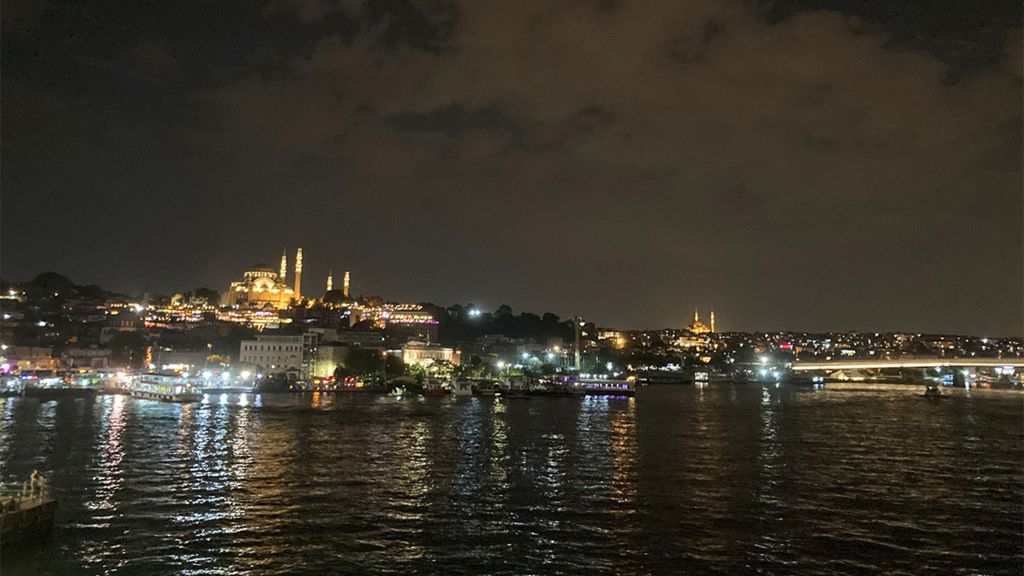
Image caption, At night, migrants are taken in vans from Istanbul to the mountains, where they walk down to the Mediterranean The people smuggler collects his clients in safe houses in this sprawling city, which is home to about five million refugees. They are packed into small rooms, where they can wait months while their passage is arranged. His gang brings them food and water from local supermarkets.
“We put them in a house and wait for everything to be prepared. And when it’s ready we take their phones so the cops can’t find out about us,” the people smuggler explains.
Then the migrants are taken in a van at night from Istanbul to the mountains. They walk in groups of six or ten, down to the Mediterranean, to one of the people smuggler’s boats.
They are bound for Greece or Italy.
