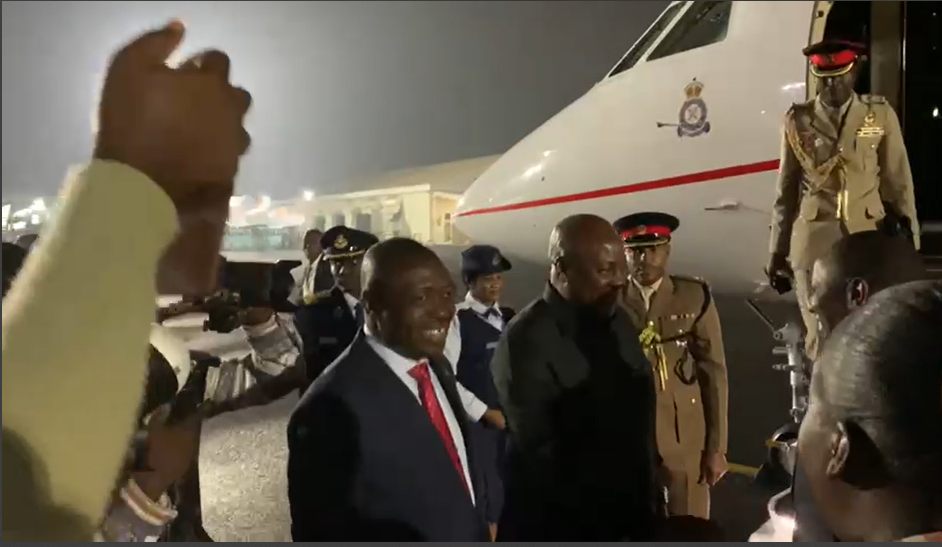
Ghana’s President, John Dramani Mahama, has arrived in Nairobi, Kenya, to join other African leaders at a High-Level Retreat on African Union (AU) Institutional Reforms.
The retreat, hosted by Kenya’s President and African Union Champion, William Ruto, will run from January 27 to 28. It will focus on evaluating the progress of AU reforms and exploring strategies for the organization’s sustainable growth and impact.
Discussions will center on Sustainable Financing, a comprehensive review of the AU’s structure, and improving its operational framework to address Africa’s emerging priorities effectively.
President Mahama, bringing his extensive leadership experience, is expected to contribute valuable perspectives during the discussions. He will also use the platform to emphasize Ghana’s unwavering commitment to the AU’s mission and vision.
The event highlights the collective dedication of African leaders to transform the AU into a more robust institution capable of driving the continent’s development agenda.
The African Union and US want people to respect Somalia’s boundaries and land, after Ethiopia made a deal with Somaliland for access to the sea.
Somalia is upset about the deal and says it’s aggressive and is against their rights. They plan to fight it in court.
Somaliland broke away from Somalia in 1991, but other countries don’t officially accept it as a separate country.
Spokesperson Matthew Miller from the US Department of State said that the United States respects Somalia’s land and borders.
The leader of the African Union asked for Somalia and Ethiopia’s unity, territorial integrity, and full sovereignty to be respected.
The US and AU want the people involved to talk and solve the problem peacefully. They are worried that the deal could make things worse in the Horn of Africa.
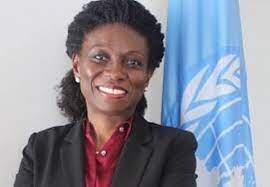
On December 8, United Nations Secretary-General António Guterres announced the appointment of Anita Kiki Gbeho from Ghana as the new Deputy Special Representative in the United Nations Mission in South Sudan (UNMISS) and Resident Coordinator in South Sudan.
Ms. Gbeho will also take on the role of Humanitarian Coordinator. She succeeds Sara Beysolow Nyanti of Liberia, and the Secretary-General expressed gratitude for Ms. Nyanti’s dedication and service.
With over 25 years of experience in strategic planning, coordination, and management in political, development, and humanitarian affairs, Ms. Gbeho has worked in various conflict and post-conflict settings, including Angola, Cambodia, Iraq, Namibia, Somalia, and Sudan.
Since 2021, she has served as the Deputy Special Representative of the Secretary-General-Political in the United Nations Assistance Mission in Somalia, supporting Somalia in achieving its peace and state-building goals.
From 2018 to 2020, Ms. Gbeho served as the Deputy Joint Special Representative of the United Nations-African Union Hybrid Operation in Darfur, where she played a leading role in developing and implementing the Mission’s transition strategy.
In the period between 2015 and 2018, she held the position of Resident Coordinator and Resident Representative with the United Nations Development Programme in Namibia.
Additionally, Ms. Gbeho has served as the Chief of Section in the Office for the Coordination of Humanitarian Affairs (OCHA) in New York and as the Head of Office for OCHA in Somalia and Southern Sudan. She holds a master’s degree in international relations from the University of Ghana, Legon, Ghana.
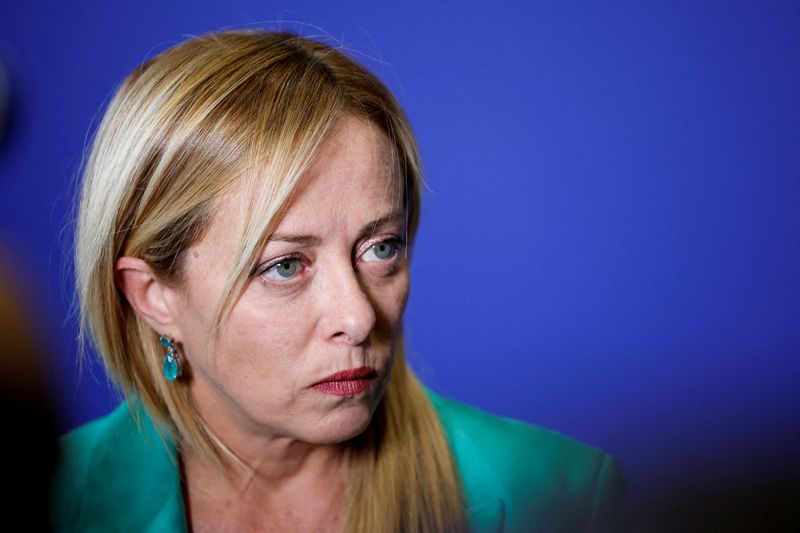
Base on Reuters news agency report, the Italian Prime Minister, Giorgia Meloni, has announced that a diplomatic adviser quit their position because of a prank call mishap.
Ms Meloni’s office recently acknowledged that she had a conversation with a Russian comedian who pretended to be a senior official from the African Union.
Ms Meloni fell for the prank and said that many people around the world were tired of the war in Ukraine. She also said that Italy didn’t get much help from European countries when it comes to handling migration.
The phone conversation happened in September.
Ms Meloni said that her assistant left the job on Friday. She said, “The situation was not handled well, and we are all sorry. Ambassador (Francesco) Talo accepted responsibility for it. “
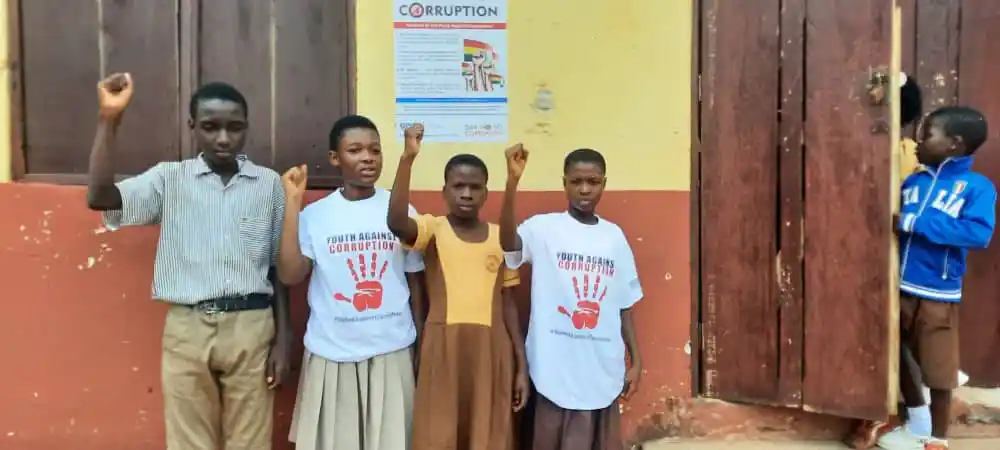
Ghana Anti-Corruption Coalition (GACC) has extended its anti-corruption campaign to selected basic schools as part of the activities to commemorate the 2023 Africa Union (AU) Anti-Corruption Day.
The campaign aims to raise awareness among students about the negative impact of corruption and their role in combating this societal issue.
The AU Anti-Corruption Day, observed on July 11 across the continent, provides an opportunity to assess progress made in anti-corruption efforts, identify areas for improvement, and explore new strategies.
This year’s theme focuses on celebrating the 20th anniversary of the adoption of the African Union Convention on Preventing and Combating Corruption, highlighting achievements and challenges.
GACC, through its Local Accountability Network (LANet), engaged pupils from various basic schools in 31 districts across 14 regions of Ghana. In the Ashanti Region, for instance, GACC organized an interactive session at Santasi M/A Basic School.
During these engagements, the students were educated on the importance of actively opposing corruption as responsible citizens.
The discussions revolved around identifying corrupt practices and encouraging the children to reject corruption in all circumstances. They were encouraged to embrace values such as honesty, lawfulness, patriotism, discipline, and the protection of their integrity both at home and within the school environment.
In a speech delivered on behalf of Mrs. Beauty Emefa Narteh, the Executive Secretary of GACC, it was highlighted that Ghana has demonstrated its commitment to combating corruption. The country has signed and ratified the African Union Convention on Preventing and Combating Corruption (AUCPCC), joining a group of 48 nations that have subscribed to this important covenant.
Furthermore, Ghana has developed the National Anti-Corruption Action Plan (NACAP) as a comprehensive framework to guide and enhance anti-corruption efforts within the country. NACAP serves as a roadmap, outlining strategies and actions aimed at preventing and addressing corruption in various sectors of society.
“What remains, however, is the domestication of the key aspects of the convention, including criminalising illicit enrichment, diversion of state property as well as conflict of interest,” she stated.
He called on the Executive and Parliament to work towards passing the Conduct of Public Officers Bill into law to enhance the fight against corruption in Ghana.
Corruption, according to her, remained a reality in Ghana and called on Ghanaians to revisit our cultural values that prohibited corrupt conducts.
Madam Aba Oppong, a Representative of LANet, underscored the need for the youth to be targeted in the fight against corruption to ensure sustainability in the campaign.
She said the greatest corruption against children was early sexual encounter which was mostly perpetrated by adults who were supposed to protect such children and advocated stiffer punishment for culprits.
That is the way to go as a country to reduce the increasing rate of teenage pregnancy, school dropouts and general child delinquency, she opined.
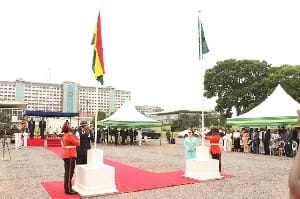
On Thursday, May 25, 2023, the Ministry of Foreign Affairs and Regional Integration organized a flag-raising ceremony and a food market to honor the 60th anniversary of African Union (AU) Day.
The ceremony was held at the Forecourt of the State House under the theme “Accelerated Implementation of the African Continental Free Trade Area(AfCFTA)”.
The Minister for Foreign Affairs and Regional Integration, Shirley Ayorkor Botchwey, in a statement read on her behalf by the Deputy Minister for Foreign Affairs Regional Integration, Hon. Thomas Mbomba, stated that the theme for the 60th anniversary of the African Union was critical towards harnessing the opportunities under AfCFTA for Africa’s sustainable development, now and in the future.
Shirley Ayorkor Botchwey called on member states of the African Union to work together for the implementation of the African Continental Free Trade Area (AfCFTA) and added that AfCFTA is the largest free trade area in the world which is a reason for all African countries to commit to the promotion of intra-African Trade and economic integration.
Ms Ayorkor Botchwey further noted that accelerating the implementation of AfCFTA has the potential to stimulate economic growth and development across Africa by removing barriers to Trade, such as tariffs, quotas and dumping, which culminates in increasing Trade within Africa through the creation of a larger single markets, boosting economies of scale and attracting direct foreign investment.
The Minister further urged member states to work together towards accelerating the implementation of the AfCFTA protocols as it has the potential to shape the economic future of the continent, strengthen its position in the global market, uplift the lives of its peoples and accelerate the sustainable growth and development of the continent.
The Secretary-General of the African Continental Free Trade Area (AfCFTA) Secretariat, Wamkele Mene, reaffirmed the strong commitment of the AfCFTA Secretariat to work with all the AU member states and partners to effectively execute its mandate to help achieve the goals and aspirations of the AfCFTA towards an integrated, prosperous and peaceful Africa. H.E. Mene urged member states to get involved in the actualisation of the aspirations of the African Continental Free Trade Agreement for the benefit of all Africans.
For her part, the Ambassador of Morocco to Ghana and Dean of the African Group of the Diplomatic Corps, Imane Quaadil, noted that considerable progress had been made since the inception of the AU. She reiterated the commitment of the African Group to take active part in all future initiatives aimed at achieving Africa’s prosperity and the well-being of the continent.
The flag-raising ceremony was followed by a food bazaar featuring different cuisines from across the African continent for participants to savour.
The ceremony was attended by members of the Diplomatic Corps, officials from the Ghana Armed Forces, Ministries, Departments and Agencies, the media, and students.
The African Union (AU) reiterated its plea for a truce on Thursday, April 27 and urged Sudan’s neighbors and the world community to assist those fleeing the country’s deadly violence.
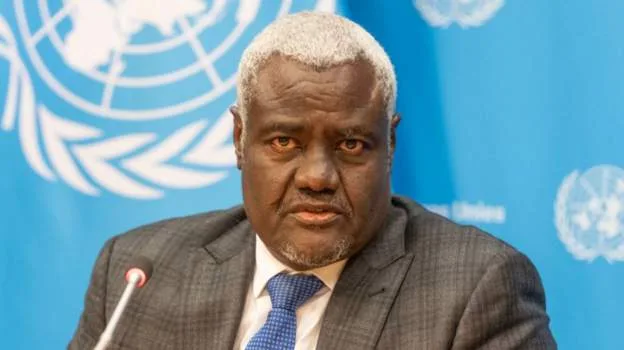
AU Commission Chairperson Moussa Faki Mahamat “continues to follow with growing concern the plight of civilians caught in the deadly conflict in Sudan,” his office said in a statement.
“The chairperson renews the call on Sudan’s neighboring countries, relevant regional and global agencies to facilitate the transit and safety of civilians crossing their borders unhindered,” the same source said.
Mr. Faki reiterated his call on the Sudanese army and the Rapid Support Forces (RSF) paramilitaries to “immediately agree on a permanent ceasefire to facilitate the delivery of humanitarian assistance to Sudanese in need.
Multiple attempts at a truce since the fighting began on April 15 have all failed.
A few hours before the expiry of a three-day ceasefire at midnight (22:00 GMT), which has hardly been respected, the army announced on Thursday evening that it would “extend the ceasefire for another 72 hours”, “following an initiative by Saudi Arabia and the United States”.
The paramilitaries have not yet commented on this announcement.
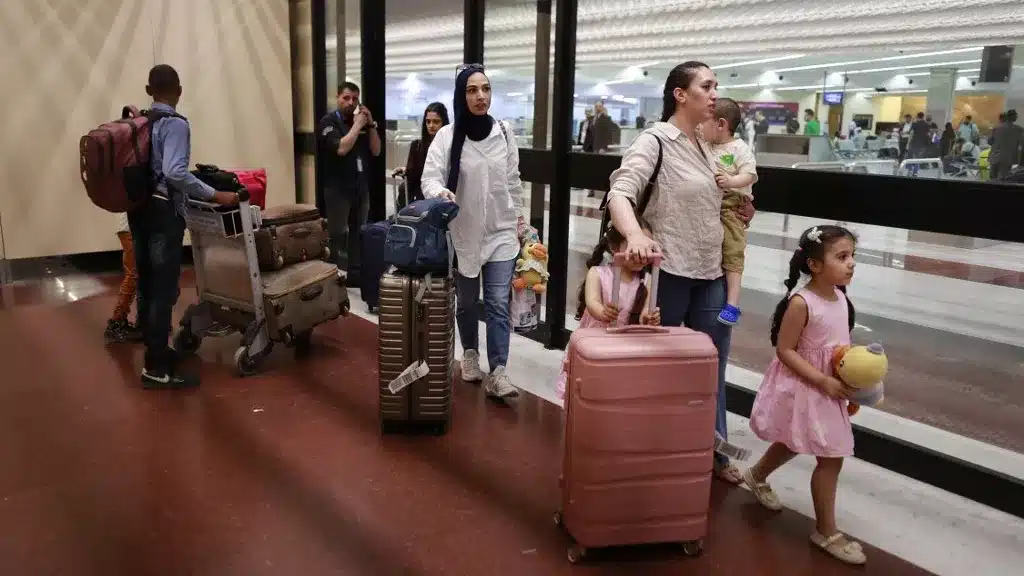
The fighting has caused a massive exodus in this country of 45 million people, one of the poorest in the world.
Tens of thousands of people have already arrived in neighbouring countries: Chad in the west, Ethiopia in the east, South Sudan and the Central African Republic in the south and Egypt in the north.
As part of its most recent effort to bring peace back to the nation, the African Union is organizing a meeting for national reconciliation in Libya.
At the conclusion of a two-day summit in Addis Abeba, the statement was made by Moussa Faki Mahamat, chair of the AU commission.
He stated that the AU was collaborating with all parties to choose a time and location for the summit.
Recent reports from the UN claimed that the two Libyan governments had reached an agreement on a plan to remove foreign troops and mercenaries from the nation.
Yet, they have been unable to produce a departure schedule. The African Union in 2011 lifted its suspension of Libya’s membership.
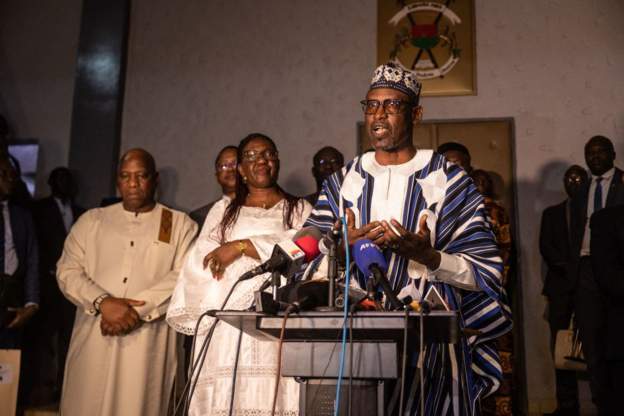
The foreign ministers of Mali, Guinea and Burkina Faso are in Ethiopia’s capital, Addis Ababa, ahead of an African Union summit to lobby to be let back into the organisation.
All three countries were suspended from the African Union and the regional grouping Ecowas following military coups.
Mali’s foreign ministry said the suspensions were hindering the desire of all three Sahel countries to make the transition back to civilian rule.
The ministers will not be able to participate in the summit but say they have met foreign ministers from the hosts Ethiopia and the Comoros Islands who currently hold the presidency of the AU.
The two organisations have also asked the military junta to refrain from acts of violence and comply with a laid down process agreed with transition authorities to return the country to constitutional order by July 1, 2024.
This was contained in separate statements issued by ECOWAS Chairman, Guinea-Bissau’s President, Umaro Sissoco Embalo, and AU Commission Chairperson, Moussa Faki Maham, at the weekend.
In the country’s second coup in a year, Burkina Faso military leader, Paul-Henri Damiba, was on Friday deposed as army Captain, Ibrahim Traore, took charge, dissolving the transitional government and suspending the constitution.
Traore said on Friday evening that the new group of officers removed Damiba due to his inability to deal with a worsening armed uprising in the country for which he initially toppled the civilian government.
“ECOWAS finds this new coup a major setback at a time when progress had been made, particularly through diplomacy and efforts undertaken to ensure an orderly return to constitutional order by 1st July 2024”, the ECOWAS statement said.
While reaffirming its “unreserved condemnation” of any seizure or retention of power by unconstitutional means, it demanded the scrupulous respect of the timetable already agreed upon with the Transition Authorities for a rapid return to constitutional order.
“ECOWAS hereby warns any institution, force or group of persons who, by their actions, may hinder the planned return to constitutional order or contribute to undermining the peace and stability of Burkina Faso and the Region.
“The ECOWAS Commission remains seized with developments in the country”, the statement said.
The AU statement extended the AU Chair’s support for ECOWAS and expressed his deep concern about the resurgence of unconstitutional changes of the government in Burkina Faso and elsewhere on the African Continent.
It said the support was in conformity with the Lomé Declaration of Year 2000, the African Charter on Democracy, Elections and Governance and the Accra Declaration on Unconstitutional Changes of Government.
The Chairperson called upon the military to immediately and totally refrain from any acts of violence or threats to the civilian population, civil liberties, human rights, and ensure strict compliance with electoral deadlines for the restoration of Constitutional order by 1 July 2024, at the latest.
“The Chairperson reaffirms the continued support of the African Union to the people of Burkina Faso to ensure peace, stability and development of the country,” the AU statement said.
The Economic Community of West African States (ECOWAS) has commended Ghana for the conduct of a peaceful election on Monday, December 7.
A joint statement issued by ECOWAS, African Union and the United Nations Office for West Africa and the Sahel (UNOWAS) also urged political stakeholders and citizens to exercise patience and remain calm even as the Electoral Commission was yet to announce the final official results.
The statement also urged the two leading political parties; NPP and NDC, to respect the spirit and letter of the Peace Pact they signed on December 4 and ensure that the peace of the country was preserved.
“Furthermore, we appeal to political parties and their followers to refrain from any conduct that may undermine the successful conclusion of the electoral process. We also call on state institutions to continue to carry out their responsibilities with professionalism and transparency,†it added.
The Deputy Chair Person of the African Union Commission, Thomas Kwesi Quartey, has admitted that the continent of Africa has in years past not been able to integrate effectively particularly in the areas of commerce and economics as a result of deliberate partitioning and division of the African continent by the Europeans who created the modern African nations.
He said this is why the continental body of the African Union had struggle to use the over half-century period gone by to disentangle the continent politically and is now focusing on trading among itself through formation of the Continental Free Trade Area.
“All that the African Union has been trying to do and with the arrival of the Continental Free Trade Area was in significant part to disentangle the knots we were tied in, bring ourselves closer together, and trade with each other.â€
Speaking to Eye on Port, the Deputy Chair of the African Union said the continent had initially focused on political integration of its people, but the most opportune time has now presented itself for economic integration. “It was not until the liberation of South Africa that the whole continent was said to be politically liberated; and the issue now is what to do with this independence through liberation, because liberation is nothing if you cannot improve your economic lot.
“Intra Africa Trade is 10%. Whenever there is an increase in Intra Africa Trade by even 2%, GDP rises by a factor of 10. So it is important for us as Africans to move freely within our continent to trade within ourselves and create a larger economic space, which will attract investment.â€
He said the coming into being of the African Continental Free Trade Area is only a first step to many targets set by the continent to liberate itself and develop together.
“And the more the Free Trade Area begins to yield benefits, the more people will warm-up to it. We have to see more and more of the continental interest and less of the international interest.â€
H.E. Kwesi Quartey admitted that one of the major challenges to integrating the continent has been member-countries focusing on their national interests far beyond those of the region.
“One also has to be realistic that sovereign nations can only be persuaded and not compelled.â€
He said it has been difficult to push or force sovereign nations to comply with protocols or treaties and policies, but added that AfCFTA has been received with renewed enthusiasm by member-countries.
“I think that the Continental Free Trade Area was received with a certain amount of enthusiasm that has been above average.â€
He commended efforts by member-countries and institutions for the commitment demonstrated thus far.
The chairman of the African Union Commission, Moussa Faki Mahamat, has urged President Ibrahim Boubacar Keïta and opposition groups to work together to end the political crisis in the West African country.
Opposition groups are calling for President Keïta to resign because of escalating jihadist and inter-communal violence in the country.
The president had pledged to form a new government with opposition members.
The African Union chief, in a statement, praised the “peaceful character” of the protests and encouraged both government and opposition to “avoid the use of violence in any form”.
The African Union (AU) has started an ambitious initiative to increase testing for Coronavirus across the continent.
The aim is to take the total number of tests done up to 10 million over the next two to three months.
To date, more than 160,000 cases have been confirmed in Africa with 4,600 deaths.
But experts fear many cases could be going undetected because of low testing rates, which are some of the lowest globally.
The Africa Centres for Disease Control and Prevention says about 2.4 million tests have been conducted so far.
But they now want to reach three times as many people again in the coming weeks, meaning almost 1% of people in Africa would have been tested.
That would give a clearer picture of the pandemic in Africa.
Testing was hampered, in part, by a global shortage of diagnostic kits.
But a new continental pool by the AU will now give each African country equal access to the supplies.
The plan also includes training 100,000 front-line healthcare workers and deploying about a million others to communities to help trace contacts of patients.
African Union (AU) to take steps to offer direct financial support to its member States as the continent battles the spread of the novel COVID-19.
Mr Foley, made the call when he delivered via Zoom, the second lecture of the 14-week long “Law and Ethics Web Series”, on the theme, “Regional Governance in Africa in the Wake of Covid-19 and Prospects for the Future”.
The online seminar is organized jointly by the African Centre on Law and Ethics (ACLE) and the African Centre of International Criminal Justice (ACICJ), both based at the Ghana Institute of Management and Public Administration (GIMPA) Faculty of Law.
He said “so far we have seen every wonderful intervention on paper in the continental strategy, but we need to back it up with money.
If the AU reforms are talking about sustainability in financing and funding, then it is important that we save every little penny that we are making from not moving around into that fund (the solidarity fund). I think the example of ECOWAS of direct provision of services and support to countries should be emulated by the African Union and other Regional Economic Communities”
The Law Lecturer and Human Rights Advocate in his presentation called on other Regional Economic Communities (RECs) on the continent to follow the example of the Economic Community of West African States (ECOWAS)in the provision of support for their member states in the fight to stop the spread of the Covid-19 pandemic in Africa.
“We haven’t heard much from the other Regional Economic Communities such as SADC (Southern African Development Community), COMESA (Common Market for Eastern and Southern Africa), and of course the Arab Maghreb Union (AMU) in North Africa. We would want to see that they emulate the example of ECOWAS” Mr. Foley posited.
The on-going online Law and Ethics Web Series began on Wednesday the 6th of May this year.
Various speakers have been lined up for the exercise by the organizers. The series is being coordinated by Dr. Kwaku Agyeman-Budu, a Lecturer and Head of Law Center at the GIMPA Faculty of Law.
The African Union Mission in Somalia (AMISOM) has honoured 32 police officers for their contribution restoration of peace and security in Somalia.
The officers from Ghana, Nigeria, Uganda, and Zambia completed one year of service in Somalia under AMISOM are due to return to their home countries at the end of February.
The AMISOM Police Commissioner, Assistant Inspector General of Police (AIGP) Augustine Magnus Kailie, on Saturday decorated the officers at a medal parade held in Mogadishu.
AIGP Kailie commended them for contributing to the stabilisation of Somalia and enabling the AMISOM police component to fulfill its mandate to train, mentor, and advise the Somali Police Force (SPF).
He said that through their period of deployment, the police officers had contributed to international peace efforts and directly impacted on the lives of the Somali people.
“In the future, some of the Somali police officers you trained and mentored will go on missions elsewhere and be the best peacekeepers because they have learnt from you,†said Kailie told the departing officers.
He then advised them to utilise the knowledge gained their time of service in AMISOM for personal development and career growth.
The AMISOM Police Chief of Staff, Deputy Commissioner of Police (DCP) Rex Dundun said the 32 officers had performed exceptionally in the different units of deployment.
“We had distinguished officers, who can hold their own at the highest level of policing internationally. Some of the departing officers were responsible for coordinating and commanding a whole state, and they performed well,†noted Dundun.
Assistant Commissioner of Police (ACP) Akaninyene Unaam from Nigeria, the highest-ranking of the officers, thanked the Somali people for their cooperation.
“The Somali people have been wonderful. Different people, different cultures, different environments, and traditions, but I must say they are very receptive, welcoming, and generous,†said ACP Unaam.
Inspector of Police (IP) Mildred Ntono, from Uganda, said that she felt privileged to have served under AMISOM. “I feel I have played a part in the peacebuilding of Somalia,†she said.
Deputy Superintendent of Police (DSP), Busari Tajudeen from Nigeria, said the year of service under AMISOM was also an opportunity to learn.
“I am returning home, not the way I came. I have also seen a visible transformation in the Somali Police Force,†remarked Tajudeen.
Delegates attending the annual African Union (AU) summit in Ethiopia’s capital, Addis Ababa, are being screened for coronavirus.
Health officials have been stationed at the entry points of the main auditorium to check temperatures of people coming in.
The three-day meeting which began on Sunday brings together heads of governments, business people, activists, and other high-profile guests.
Several countries in Africa have reported suspected cases of the virus, but so far all tests have come back negative.
The deadly, virus which broke out in China’s Wuhan city, has so far killed 908 people in China and more than 40,000 people have been infected worldwide.
The BBC’s Emmanuel Igunza in Addis Ababa has sent us these pictures of delegates being screened at the AU meeting: