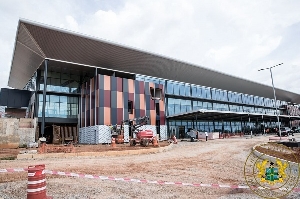
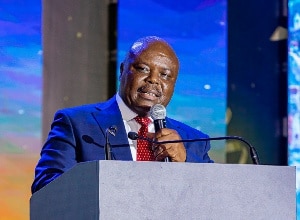
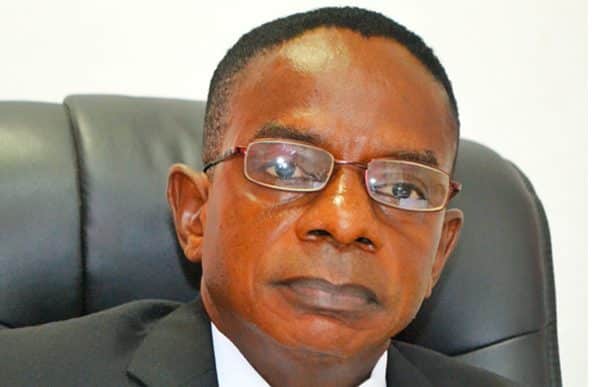
aGhana’s Auditor General has suggested involving the private sector in certain operations of five unprofitable regional airports to optimize returns on these investments.
“Furthermore, the Commercial Service Department of the Ghana Airports Company Limited (GACL) should identify potential concessionaires to occupy idle spaces to generate more revenue through rent and royalties,” the Auditor General suggested in the recently published 2023 report.
This suggestion comes after a comprehensive audit of the activities of five regional airports in Ghana, highlighting their lack of financial sustainability.
The Kumasi Airport, now renamed Prempeh I International Airport in the Ashanti Region, along with Tamale Airport, Wa Airport, Sunyani Airport, and Ho Airport, were all assessed as commercially unsustainable by the Auditor General.
“We conducted an analysis on the operations of five regional airports in terms of their commercial viability and noted that all five regional airports were not commercially viable,” the report stated.
TheAuditor-General has transferred GH¢9.5 million, obtained from disallowed expenditures highlighted in various reports, into the Consolidated Fund.
This brings the total amount transferred to the Consolidated Fund to GH¢19.5 million during the 2023 fiscal year from the special account, known as the ‘Auditor-General’s Recoveries Account,’ established at the Bank of Ghana (BoG) in June 2022. As of the end of December 2023, the account had accumulated over GH19.7 million.
The funds recovered are associated with expenditure disallowances related to unearned salaries and other financial recoveries reported to Parliament through various Auditors-General’s reports.
Protecting public purse
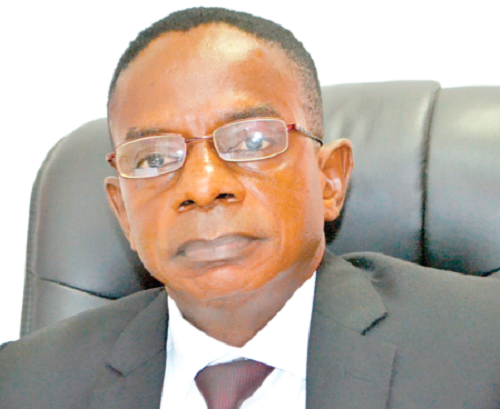
The Auditor-General, Johnson Akuamoah Asiedu, revealed to Graphic Online/Daily Graphic in Accra last Wednesday that the dedicated account was established with the specific goal of safeguarding public funds. It serves to monitor the real-time progress of recoveries made through expenditure disallowances.
“The Auditor-General’s Recoveries Account was opened at the Bank of Ghana in June 2022, mainly to receive unearned salaries and allowances recovered,” he said.
Mr Asiedu said that until June 2022, the Auditor-General’s recommendations for recoveries of unearned salaries had always been directed into the Controller and Accountant-General’s Suspense Account (CAGSA). However, he said the CAGSA could not provide real-time information on those recoveries, making efforts of enforce the rules on surcharging and disallowances appear to be yielding fewer positive results.
“It is in the light of this that the Auditor-General’s Recoveries Account was opened to track and report on recoveries made in implementing audit recommendations with regard to unearned salaries and allowances,” Mr Asiedu said.
Article 187(7)(b) of the 1992 Constitution provided that in the performance of its functions, the Auditor-General might disallow any item of expenditure which was contrary to law and surcharge the amount of any expenditure disallowed upon the person responsible for incurring or authorising the expenditure.
Disallowance of expenditure normally leads to the Auditor-General recommending recovery from individuals, public officers and institutions that committed infractions.
It was through the same process of disallowing expenditure contrary to law that the service recovered over GH¢2.2 billion between 2017 and 2020.
Timely reports
Mr. Asiedu mentioned that the Auditor-General’s Office had fulfilled the constitutional requirement by submitting 22 audit reports to Parliament in 2023. He highlighted that the effective measures implemented at the Audit Service under the current administration have consistently yielded positive outcomes.
This has facilitated the Auditor-General’s ability to submit audited reports to Parliament within the constitutional deadline for three consecutive years. As a result, 18 audit reports were presented in 2021, 15 reports in 2022, and 22 reports in 2023, underscoring the significance of timely production of audited reports.
Appreciation
TheAuditor-General expressed appreciation to the government and the Minister of Finance for the timely release of funds to the Audit Service to facilitate the discharge of its constitutional mandate.
“I also thank the staff of the Audit Service for their diligent and dedicated work.
“The Audit Service will continue to promote good governance, transparency, accountability and probity in the country’s public financial management system,” Mr Asiedu added.
The Minority in Parliament has urged the government to establish an office for the Auditor General in every Metropolitan, Municipal, and District Assembly (MMDA) nationwide, as part of the ongoing anti-corruption efforts.
The Caucus disclosed that the Auditor General currently operates in 63 district assemblies, with 30 of those offices being rented spaces.
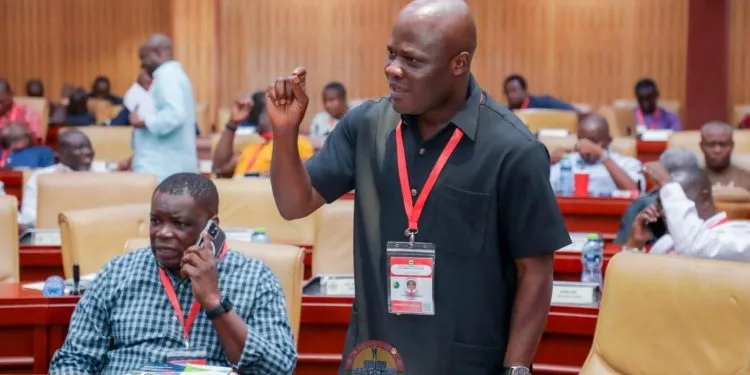
During discussions on the approval of a GH¢633 million budget for the Audit Service in 2024, First Deputy Minority Whip Ahmed Ibrahim stressed the need to bolster the Audit Service’s activities to combat corruption effectively.
Ibrahim highlighted the proposal to have an Auditor General’s office in each district, asserting that such a presence would serve as a significant deterrent to corrupt practices.
He urged District Chief Executives and assembly members to provide suitable office accommodations for the Auditor General, emphasizing the potential of this widespread presence to discourage corruption.
“We must make sure that we assist the Auditor General to have his presence in all the 261 assemblies and the District Chief Executive and the assembly members must provide office accommodation for the Auditor General because his presence there can scare people from being corrupt.”
“We must not be interested in building anti-corruption institutions only in Accra. We need their presence in every district; other than that, we will keep on thinking that we are fighting corruption, and before we realise, corruption would have fought us.”
The Auditor General in its 2022 report has cited the Ministry Of Justice & Attorney General’s Department Judicial Service for ineligible payment of housing allowance.
In its report Of The Auditor-General On The Public Accounts Of Ghana – Ministries, Departments And Other Agencies For The Year Ended 31 December 2022 noted that a tune of GH¢1,054,232.47 was paid to some 32 judges.
These 32 Judges and Magistrates of the Judiciary were paid 20% rent allowance totalling GH¢1,054,232.47 even though they were allocated with fully furnished Government accommodation during the period under review.
During its investigations, the Auditor General discovered that out of the total allowance granted, a total of GH¢133,000.00 had been recovered leaving a difference of GH¢921,232.47 outstanding.
The Auditor-General has therefore recommended that the Judicial Secretary should ensure the recovery of the outstanding amount of GH¢921,232.47 from the Judges and Magistrates involved.
The 2022 Auditor General report, contains details which indicate that two account officers working at the Greater Accra Regional Department of Urban Roads have been implicated in a fraudulent scheme, allegedly misappropriating an amount of GHS1.9 million between January 2020 and March 2022.
The individuals involved in the embezzlement case include a former Greater Accra Regional Accountants Officer and another individual who held a position as an account staff within the department.
The Regional Accountant is under suspicion for allegedly embezzling around 1.6 million cedis through fraudulent withdrawals on their own.
Furthermore, both officers were implicated in separate incidents where they collected a combined revenue of over three hundred thousand cedis, but they failed to provide proper records of the amounts collected.
The Auditor General discovered these revelations by conducting a thorough examination of the public accounts of Ministries, Departments, and Agencies.
Based on these findings, the Auditor General has strongly advised the Acting Regional Director of the Department to promptly recover the misappropriated funds from the two staff members involved.
The 2022 Auditor-General’s report on the Public Accounts of Ghana revealed that approximately ¢1.412 billion were recorded as financial irregularities in that year.
This figure represents an increase of ¢332 million compared to the ¢1.080 billion reported in 2021.
The financial irregularities encompass various categories, including Tax Irregularities (¢1.247 billion), Cash Irregularities (¢57.471 million), Indebtedness/Loans/Advances (¢89,744 million), Payroll Irregularities (¢14.254 million), Stores/Procurement Irregularities (¢321,950), Rent Irregularities (¢2.142 million), and Contract Irregularities (¢556,333).
Tax Irregularities
Tax irregularities accounted for a significant portion of the total financial infractions, amounting to ¢1.247 billion, which constituted 88.3% of the reported cases.
This figure included a sum of ¢327.63 million owed by 18 Oil Marketing Companies (OMCs) that defaulted in paying their rescheduled debt between January 2022 and December 2022.
Additionally, ¢361,677 million was found to be owed by 2,557 registered VAT traders during the assessment period.
The report attributed these irregularities mainly to the Ghana Revenue Authority’s failure to take appropriate measures and sanctions against defaulters among the OMCs and registered VAT traders.
In response to these findings, the Auditor-General advised the Commissioner General of the Ghana Revenue Authority (GRA) to enhance the monitoring and supervision of staff to address these issues effectively.
Cash Irregularities
The sum of ¢57.471 million accounted for 4.1% of the total irregularities and constituted the total cash irregularities during the period. These irregularities were observed across various MDAs and were attributed to several factors, including unapproved disbursements, unpresented payment vouchers, unaccounted revenue, unsupported payment vouchers, funds not credited to the bank, non-lodgement of public funds, embezzlement of funds, and unretired imprest.
In light of the absence of payment vouchers and supporting documents, the Auditor-General recommended that the Chief Executive Officer and the Director of Finance be held responsible for repaying the money.
Indebtedness/Loans/Advances
Total Indebtedness/Loans/Advances amounting to ¢89.744 million represented 6.4% of the total irregularities.
A significant amount of these irregularities was ¢1.763 million owed by 72 farmers who received farm equipment on credit basis under the Ministry of Food and Agriculture’s Brazilian More Food Programme. 24.
The report recommended that the Chief Director ensure that the Head of Tractor Accounts recovers the outstanding amount of ¢1.763 million from the beneficiaries.
Payroll Irregularities
An amount of ¢14.254 million was recorded as payroll irregularities during the reviewed period.
Within the total payroll irregularities, ¢1.922 million represented unearned salaries paid to 95 unidentified individuals from an institution under the Ministry of Health.
In response to these findings, the Auditor General recommended that the Regional Health Director and the Medical Director promptly initiate the recovery process for the full amount.
The audit covered the period from January 2022 to December 2022.
The audit objectives included reviewing the internal control and internal audit functions to assess the risks associated with the management and utilization of public resources. It also aimed to determine the presence of fairness and integrity in administrative decision-making and interactions with stakeholders.
The 2022 Auditor-General‘s (AG) report has revealed irregularities totaling more than GH¢15.1 billion in the operations of public boards, corporations, and statutory institutions.
This amount marks a decrease of GH¢2.4 billion (13.86%) from the previous year’s figure of GH¢17.48 billion.
It is noteworthy that the irregularities for the last year were composed of over GH¢15 billion that can be recovered (recoverable amount) and an administrative infraction of GH¢47.28 million.
The recoverable amount constitutes 99.69% of the total, while the administrative portion accounts for 0.31%, representing an amount that cannot be recovered due to procurement and other irregularities.
The Auditor-General emphasizes the strict implementation of its recommendations to ensure financial discipline in managing public resources.
The irregularities primarily occurred in areas such as outstanding debts, loans, amounts recoverable, cash, payroll, procurement, tax, stores, and contracts.
Over the period from 2018 to 2022, irregularities have been a recurrent issue in public boards and corporations, amounting to more than GH¢53.87 billion.
The numbers gradually increased from GH¢3 billion in 2018 to GH¢17.5 billion in 2021, but it decreased to GH¢15.1 billion in 2022.
The report highlights that most irregularity categories decreased in 2022 compared to 2021, even though 113 institutions were audited last year, slightly more than the 101 institutions audited in 2021.
The administrative irregularities mainly comprised procurement irregularities and other procedural infractions and lapses in public financial management.
However, it is important to note that these administrative irregularities did not lead to a loss of funds.
The recoverable amount consisted of inter-governmental agency debts, other overdue receivables, locked up investments, unpaid taxes, unretired impress and advances, and loans given to employees of various institutions, as stated in the report.
On the other hand, the administrative irregularities represented infractions arising from procurement, overdue payables, and the payment of penalties due to delayed payments to suppliers.
These irregularities include inter-governmental agencies’ debts, trade debtors, staff debtors, outstanding loans, and cash locked up in non-performing investments.
For instance, the report highlighted that Ghana National Gas Limited Company is owed $741.93 million, with $515.20 million owed by the Bui Power Authority, $215.78 million by the Ghana National Petroleum Corporation (GNPC), and GH¢1.40 million by the Northern Electricity Distribution Company (NEDCo).
The irregularities were, in part, attributed to the absence of effective debt collection policies, the lack of credit controls for debt recovery, and management’s indifferent approach to loan recovery, according to the Auditor-General’s report.
Furthermore, improper maintenance of records on debtors, the absence of debtors’ aging analyses, undocumented loan agreements specifying terms and conditions, failure to ensure loan repayments, and non-compliance with rules and regulations by management were identified as contributing factors to the irregularities.
Recommendation
“We recommended that management of public boards, corporations, and other statutory institutions should strictly adhere to rules and regulations with regard to debts management,” the report stressed.
“They should also put in place proper policies for the management of loans and other receivables as well as ensuring that loans and debts are repaid on due dates to avoid or minimise the occurrence of bad debts,” the report further stated.
The 2021 Auditor General‘s Report highlighted the Forestry Commission’s substantial loss of GH¢51 million in expenses related to goods and services, including the costs of uniforms and equipment for the Youth in Afforestation Programme.
During a hearing before the Public Accounts Committee of Parliament on July 19, 2023, the Commission’s CEO, John Allotey, confirmed the accuracy of the report.
The report also revealed that the youth engaged in afforestation activities were owed allowances for over a year, with the last payment made in May 2022. Allotey assured the committee of diligent efforts to settle the outstanding balance owed to the youth, contingent on timely finances released by the Ministry of Finance.
Furthermore, the Auditor General’s Report pointed out that several companies engaged with the Forestry Commission owe a total debt of GH¢6.1 million. Allotey disclosed that GH¢3.2 million had been recovered from these companies, with the Land Commission being specifically mentioned.
Additionally, the Lands Commission was cited in the report for its failure to obtain title deeds from the Social Security and National Insurance Trust (SSNIT) for a residential property worth GHS¢2 million, which it acquired from SSNIT. In response, the Deputy Executive Secretary of the Lands Commission, Jones Ofori-Boadu, assured the committee that the documentation process was well underway and would be completed within the next three months.
These revelations have raised concerns about financial management and accountability within the Forestry Commission, prompting the Public Accounts Committee of Parliament to continue its scrutiny to ensure transparency and address the identified financial challenges.
The Chairperson of the Public Accounts Committee, James Klutse Avedzi, has sternly warned Minister of Education Yaw Adutwum for his nonappearance before the committee to discuss the Ministry’s report from the Auditor General.
Avedzi stressed that non-compliance would result in the committee exercising its powers against the Minister. The warning came after Adutwum’s absence during the committee meeting on July 6.
During the hearing, Avedzi urged the Minister to respect the authority of the committee and fulfill his appearance. He emphasized the significance of the committee and called for the Minister’s cooperation.
Avedzi assured that the committee would propose an alternative date for the Minister’s attendance.
However, he warned that failing to attend on the rescheduled date would prompt the committee to exercise its powers, as specified in Article 103 of the constitution.
“Mr Minister, if you are listening to us, kindly give some respect to this committee, we will try our best to give you another date but if that day you fail to come, well the powers that we have as a committee under article 103 of the constitution, we will exercise it.”
Former Auditor General, Dnaiel Yao Domelevo has stated that the failure of some law enforcement mechanisms in Ghana can be attributed to the possibility of criminals financing the ambitions of some leaders.
Speaking in an interview on TV3, the former Auditor General said some leaders are unable to enforce laws as per their mandate due to them being influenced and controlled by financiers.
“These are people who know that if a right-thinking and upright party leadership is in place they may not have room to operate.
“Because illegal mining should not be allowed, there are some types of trades that should not be allowed, so, the best thing for them to do is to invest in who becomes the head of the country. That is the reason why at times it beats, you and I our minds, why some laws cannot be enforced,” Daniel Domelevo shared.
He, therefore, called on theElectoral Commission to sit up and ensure that the criminals are not elected into leadership positions.
“It is because we don’t know who pays the piper and you know the one who pays the piper is the one who calls the tune. So, that is how dangerous it is and the earlier the Electoral Commission wakes up, the better it is for us. Otherwise, we may have criminals, people who we will like to run away from rather will getting leadership in place.
“The leaders themselves may not be criminals but immediately they are funded by these (people) they are within their control,” the former Auditor General indicated.
There have calls for Ghana’s laws to be reviewed for stiff political funding regulations. This follows growing public concerns about the sources of funding for political parties who remain exposed to external influence after winning power due the weakness in existing funding laws.
He backed up his assertion by stating that internal auditors serve as watchdogs for organizations, therefore they must carry out their tasks impartially.
Since most accountants lie, he added, “you need to call a spade a spade.” He also advised internal auditors to be courageous and alert management to any misconduct they discover while performing their job.
Read the full story originally published on May 6, 2018 by Ghanaian Times.
The Auditor-General, Yaw Daniel Domelevo, has urged internal auditors to take bold decisions and expose infractions to save the country from financial malpractices.
He explained that internal auditors are the watchdogs of any institution and are expected to discharge their professional duties effectively and efficiently, any breach or compromise would completely jeopardise the fortunes of that organisation.
Mr Domelevo said at the 50th-anniversary lecture of the Internal Audit Directorate of the University of Ghana on the theme: “Celebrating excellence, shaping the future through internal audit”.
He was speaking on the topic, “Public Financial Management: Improving Internal Audit Agency”.
According to the Auditor-General, it is not every chief executive that understands their job; it, therefore, behoves the internal auditor to prevent wastage in the system by discharging their duty without fear or favour.
“You need to call a spade a spade because most accountants do not tell the truth, that was why as internal auditors you need to be bold and tell management about any malfeasance in the course of the discharge of your professional duties”, he added.
Mr Domelevo indicated that the anti-corruption crusade embarked upon by the President cannot be won if agencies and departments mandated to prevent corrupt practices do not function effectively adding that “the President does not have the magic wand to do it alone.”
He urged the internal auditors not to be afraid when they come face to face with infractions, “expose them so that we can have a better Ghana so that internal auditors who go on retirement will live in peace instead of frequently being hauled before the courts to answer questions on mistakes made in the past.
“The profession is a noble one that can bring the needed change to transform the country that is why I am appealing to managers to work closely with their internal auditors to enable them get first-hand information on rots occurring in their organisations”, he added.
Mr Domelevo stated that it was not the duty of his outfit to settle matters on malfeasance at the workplaces because when the 30 days grace period to respond to the observations expire, his duty is to take you to court to demand the financial cost of your action in addition to the principal to ensure that the principal is not lost.”
The Director-General, Internal Audit Agency, Mr Ransford Agyei speaking on the topic, “Governance, Management and Resourcing Internal Audit urged organisations to provide adequate logistics to the internal auditor to enable them function effectively and independently.
He urged the auditors to provide unbiased reports to enable management achieve its objectives while ensuring that they exhibit the highest level of discipline to enable the organisation achieve its objectives.
Good corporate governance, he explained involves the application of the appropriate code of ethics in order to draw the attention of management to infractions towards ensuring fiscal discipline in the running of the organisation.
In its report, the A-G said the state spent US$607,419.02 out of US$4,049,460.12 for the purchase of 26 ambulances but the vehicles were never delivered.
Also, it said staff of the Information Ministry were paid an unapproved amount of GH¢151,500 as COVID-19 insurance.
Furthermore, $81 million worth of vaccines were not delivered.
RE- AUDIT OF THE GOVERNMENT OF GHANA COVID-19 EXPENDITURE FOR THE PERIOD MARCH 2020 TO JUNE 2022
The Ministry of Finance takes note of the Auditor General’s report on the government of Ghana’s Covid-19 expenditure for the period March 2020 to June 2022, issued on 30th December 2022.
2. The Ministry wishes to commend the Auditor General on the publication of the Special Audit Report of the Government of Ghana Covid-19 expenditure which was commissioned by the Minister for Finance on 14th July 2022 and the timely release of the Audit report.
3. The Ministry wishes to provide the following background and clarifications to some aspects of the report, with the objective of enhancing public appreciation of the issues raised in the report:
a. The audit report confirms total resources mobilized for the Covid-19 response over the period March 2020 to June 2022 at GH¢21,844,189,185.24.
b. As indicated on page 7, paragraph 18 of the report, the funds mobilized were to address the following two key interventions:
i. finance direct Covid-19 intervention expenditures; and
ii. support the funding gap in the budget which was occasioned by the Covid-19 pandemic and its effects on revenue mobilization.
c. Hence, as reported on page 11, paragraph 31 of the report, the 53.8% and 46.2% spent on direct Covid-19 interventions and for general budget support respectively were consistent with the mandate approved by Parliament.
d. The Ministry of Finance coordinated the mobilization and disbursement of funds for the Covid-19 responses by the Government in accordance with the Public Financial Management Act, to ensure the timely release of funds to save lives, livelihoods, and property.
4. The Ministry welcomes the Auditor General’s report and wishes to assure the public that, steps are being taken to address all issues. The following interventions are currently being pursued by the Ministry:
a. Meetings are being organised to engage with the implementing Agencies to evaluate actions taken to implement the audit recommendations in the audit report.
b. Preparation of an Emergency Expenditure Management Guideline. This guideline will provide the government with administrative protocols in times of emergency such as the Covid-19 pandemic to ensure compliance with relevant PFM regulations whiles providing timely responses.
5. The Ministry of Finance will continue to apply its best efforts to enforce and enhance expenditure management and accountability to ensure proper utilization of tax revenue to the full benefit of citizens using established budgetary and accountability systems in Government.
He asserts that in order to reduce violations, Board members, management, chairpersons, and heads of the Specified Entities must familiarize themselves with and put into practice the recommendations made in the Auditor-report. General’s
Joseph Cudjoe made a few brief statements during the State Interest and Governance Authority’s presentation of the 2021 Infractions Audit Joint Report, where he urged high levels of commitment from the Specified Entities and other stakeholders.
“One framework that has come up in our discussions is to make recommendations to the Minister of Finance to use withholder methods for budget releases as a punitive measure for non-compliance in this regard. It is non-financial in nature and it is easy to withhold Specified Entities with these sanctions,” the minister added.
Joseph Cudjoe added that he believes the move would come in handy to tackle the issue of non-compliance which has long been endemic among Specified Entities.
The Ministry of Health has responded to the Auditor-General’s latest report on the government’s COVID-19 expenditure.
In the report, the Auditor General noted that the Ministry of Health on behalf of the Government of Ghana paid an amount of $120,192,379.80 to UNICEF/VAT for the supply of vaccines, “However, 5,109,600.00 doses of vaccines valued at $38,322,000.00 were supplied to the National Cold Room leaving a difference of US$81,870,379.00 with UNICEF/AVAT.
The Auditor-General thus recommended to the Chief Director of the Health Ministry to renegotiate and recover the outstanding balance.
This, according to the Auditor General must be done immediately to ensure the amount is recovered to the state.
While acknowledging the delay in receiving the vaccines, the Ministry of Health in a statement, explained that government was yet to take hold of the products because of unexpected hesitancy, cold chain storage challenges, spontaneous donations, as well as manufacturer’s storage difficulties.
“Due to the unexpected hesitancy, cold chain storage challenges, spontaneous donations, as well as manufacturer’s storage difficulties, the Ministry in June 2022, was compelled to agree on a delivery schedule for the remaining 11,052 million doses to be delivered from June to December 2022. According to the schedule, 1.6 million doses were to be delivered from June to December 2022 to complete the allocation. However, this process was delayed because of the aforementioned challenges.”
The Ministry in the statement however assured that efforts are in place to review the contract.
“Currently, the Ministry requested and has received the June allocation which was delivered in January 2023. In the meantime, the Ministry continues to work with the AVAT for a possible review of the contract and would want to assure the public of our commitment to work in the supreme interest of the public.”
The Auditor General’s special report on Ghana’s COVID-19 expenditure has revealed that the Ministry of Health paid over GH¢10 million in insurance premiums to cover 10,000 frontline health workers and allied health professionals without a life insurance policy document.
The report which spans between March 2020 and June 2022 scrutinizes how monies received from the various institution including the World Bank, AFDB, EU and the contingency fund summing up to the tune of 21.8 billion were utilized.
“General principles of insurance require that when an employer or organisation purchases Group Life Insurance Policy to cover employees in case of death, accident, temporary/permanent disability and critical illness, the employer or organisation may keep the master agreement, but the identified employees should receive Certificate of Coverage which could be used by the beneficiary or next of kin to apply for the claims when the need arises.
Additionally, the National Insurance Commission Guidelines on Life Insurance Products require that as a standard, all Life Insurance Policy documents must have the name of the person(s) insured by the policy and the name of the policy owner, the amount of insurance coverage (face amount and sum assured) provided by the policy and the effective date of the policy.
We observed that the Ministry paid GH¢10,309,919.94 as premium for Special Life Insurance Cover for 10,000 Health Workers and Allied Health Professionals working on the COVID-19 pandemic without any Life Insurance Policy document detailing the beneficiaries, their location, next of kin in case of death, nature of the benefit and the term of the coverage.” a portion of the report read.
This development according to A-G meant that workers could not have triggered any processes to get compensation if the insurance companies had defaulted in taking care of them in the instance where they had been infected by the virus.
“Health Workers and Allied Health Professionals working on the COVID-19 pandemic who have not signed any insurance policy document will find it difficult to access any benefit under this blanket premium payment arrangement. In the event of default by the insurance companies in payment of benefit, the employees will not have the legal capacity to seek legal redress in Court” the report added.
Other Infraction by the Ministry of Health cited in the report include;
Payment of an amount of US$81,870,379.80 to UNICEF/AVAT for the supply of 16,025,650 vaccines that have still not been delivered.
“In the heat of the COVID-19 pandemic, the Government of Ghana through the Ministry of Health entered into an agreement with The United Nations Children’s Fund (UNICEF) for the procurement of COVID-19 vaccines and related supplies based on second additional credit financing of US$200,000,000.00 by the World Bank (Credit 6923-GH). Page 3 of the signed agreement stated that the Government intends to apply a portion of the proceeds of the financing, up to an amount of US$147,483,170.16 (the “total funding ceiling”) to eligible payments under this Agreement. We noted that the Ministry of Health on behalf of Government of Ghana paid an amount of US$120,192,379.80 to UNICEF/AVAT for the supply of 16,025,650 vaccines under the agreement. However, 5,109,600.00 doses of vaccines valued at US$38,322,000.00 were supplied to the National Cold Room, resulting in an outstanding amount of US$81,870,379.80 with UNICEF/AVAT” page 73 & 74 of the report captured.
The report also cited the Health Ministry for increasing the cost of five contracts with total contract sum of GH¢24,256,500.00 by GH¢4,017,000.00 through variation orders without approval of the Central Tender Review Committee and also entering into four contracts for the supply of PPEs at a cost of GH¢9,280,300.00 through single-source procurement without the approval of the Board of the Public Procurement.
Additionally, the Ministry also on 15 December 2021 entered a contract signed for the supply of 26 Toyota Hiace Deluxe Ambulances valued at US$4,049,460.12 out of which US$607,419.02 was paid on 2 September 2022 to be delivered by 15 January 2022. The ambulances remain undelivered.
The Ministry of Health is also cited for entering into a 25-year Finance Lease Agreement with QHC Project Limited at a total lease value of GH¢15,265,000.00 in April 2020 for uncompleted buildings in Adaklu in the Volta Region which was to be used as an isolation centre during the peak of the COVID-19 pandemic without recourse to the Minister of Finance and financial assessment by the Debt Management Unit. The facilities were not used for the intended purpose and is therefore being remodelling at an additional cost of GH¢20,382,247.70 out of which GH¢13,726,079.86 had been paid.
Again, medical equipment valued at US$110,088.00 and GH¢27,895.00 were issued to a private hospital by name Christleads & Specialist Hospital belonging to Dr. C. K. Amenuveve in Madina which did not serve as a COVID-19 isolation centre or did not receive any COVID-19 patient.
Also, Medical equipment valued at US$247,404.79, procured and received at the Temporary Central Medical Stores and subsequently issued to some specific health facilities between January 2021 and June 2022 are yet to be received by the health facilities.
One Isolation centre, the report reveals that three treatment, isolation and holding centre completed at a total cost of GH¢29,173,259.90 was yet to be put to use while seven isolation and treatment centres being constructed at a cost of GH¢158,072,331.23 had not been completed at the time of the audit, 30 months after the construction had commenced in April, 2020.
Meanwhile a Contractor for the design, construction and equipment of Nalerigu treatment and holding centre in North East Region awarded on 11 May 2020, at a cost of GH¢15,000,000.00 abandoned site three months after starting work after an advance mobilisation of GH¢4,500,000.00, constituting 30 percent of the contract had been paid from GoG sources.
Economist Prof. Godfred Bokpin has explained how election-related expenses in 2020 is also to blame for current economic woes the country is facing.
He holds that government took advantage of COVID-19 funds to overspend. hence ballooning the fiscal deficit of Ghana in 2020.
He was responding to issues around the Auditor-General’s report on how COVID funds were expended by government.
In citing some reasons for the damning audit revelations, Prof Bokpin said: “Lack of value for money, COVID vaccines that have been paid for that were not delivered and some COVID related inflows that were rather channelled into general budget support and the rest of them.
“Why was that so, because COVID also happened in the year of elections, so government was abusing public finance in the name of COVID-19,” he stressed.
According to him, government “took advantage of the COVID and overspent and our fiscal deficit… in fact Ghana’s fiscal deficit was the highest in the sub-region.” He explained that whiles neighbours were hovering around sub 8%, Ghana in 2020 did more than 15% of GDP.
“So, the current crisis we have here, you can also trace it to the election-related excesses of 2020 that government blamed on COVID,” he stressed.
Auditor-General’s report on COVID-19 spending
The Auditor-General released a report on government’s expenditure during the COVID-19 pandemic covering the period between March 2020 to June 2022.
The special audit report has been prepared under Section 16 of the Audit Service Act, 2000 (Act 584) for submission to Parliament.
It detailed the various expenditure made by Ministries, Departments, and Agencies during the aforementioned period.
The report noted that records on COVID-19 funds at the Ministry of Finance, Controller and Accountant-General and Ministry of Health indicated that, the Ministry of Finance mobilised a total amount of GH¢19,112,318,205.12 in 2020 to mitigate the impact of the COVID-19 pandemic.
The records showed that an amount of GH¢1,978,551,137.46 was mobilised in 2021 and GH¢753,319,842.66 (up to June 2022) to finance the Coronavirus Alleviation Programme and the implementation of the Ghana COVID-19 Emergency Preparedness and Response Plan.
In all, a total amount of GH¢21,844,189,185.24 was mobilised to mitigate the impact of COVID-19 pandemic in Ghana.
A total of GH 605,962 was unaccounted for at the peak of the pandemic, according to the Auditor General‘s audit on Covid-19 expenditures.
Breaking it down, the Audit Service noted that government contrary to the public financial management regulation distributed GH¢451,800.00 directly to the Paramount Chiefs of the Traditional Councils.
This, according to the report, was to help Ghana’s fight against the pandemic.
The report reveals that GH¢154,161.97 of the funds transferred was misapplied.
“The Registrars of Ashanti and Central Regional Houses of Chiefs explained that the amounts were disbursed to the Paramount Chiefs upon directives from the Presidents of the Houses.
“The Registrar, Brong Ahafo said he was not at post during the period, whilst the other five Registrars could not assign reasons for the lapse,” parts of the report read.
It is in view of this, that the Auditor-General concluded that the unaccounted funds were misappropriated or misapplied.
The Audit Service further recommended that the Chief Director should ensure the Registrars of the eight Houses of Chiefs recover the total amount of GH¢605,961.97 from Chiefs failing which the Chief Director should pay the amount into the Auditor General’s Recoveries account.”
17 Oil Marketing Companies (OMCs) failed to pay duties and taxes on 219,995,530 liters of petroleum products hauled for the period of January 2020 to December 2021, amounting to GH249,800,802.28.
The difference from the Integrated Customs Management System was detected in the Auditor General’s report on the audit of ministries, departments, and agencies (ICUMS).
28 Oil OMCs with rescheduled obligations totaling GH402,049,571.70 failed to pay them.
The law provides that a taxpayer may apply in writing to the Commissioner-General for an extension of time to pay tax under the tax law.
“A taxpayer may re-apply to the Commissioner–General before the end of the extension period but an extension of time to pay tax shall not exceed 12 months in aggregate. Where an extension is granted, and the taxpayer is permitted to pay by instalments and the taxpayer defaults in paying any of the instalments, the whole balance of the tax outstanding becomes payable immediately.”
The Auditor General in its report recommended that the Commissioner-General of the Ghana Revenue Authority should use legal means to recover the outstanding amount of GH¢402,049,571.70 from the OMCs involved.
Recover amount
It also directed the Commissioner, GRA Customs Division, to fully recover the amount of GH¢249,800,802.28 from the 17 OMCs without further delay.
On domestic tax revenue, the report revealed that 6,856 companies, business entities and individuals owed GH¢111,652,263.00 in corporate and individual income taxes from 2019 to 2021.
Also, Pay As You Earn (PAYE) totalling GH¢32,071,516.00, deducted on behalf of 3,121 employees, including 346 directors was not remitted to the Commissioner General for the 2019, 2020 and 2021 years of assessment, the report said.
“Our audit showed that 811 companies who filed their tax returns for 2019, 2020 and 2021 years of assessment failed to withhold taxes on goods and services procured amounting to GH¢43,471,511.50,” it added.
Retrieval of monies
Media reports, however, indicate that the Revenue Assurance, Compliance and Enforcement (RACE) of the Ministry of Finance has retrieved GH¢24.2 million as tax under recovery from some OMCs and a commercial bank.
This follows validation of tax payments for the lifting of refined petroleum products.
According to the Ministry, the RACE team concluded the first phase of engagements with 99 out of 117 OMCs to validate tax payments for the lifting of refined petroleum products.
The engagements involved GRA, the National Petroleum Authority, the Association of Oil Marketing Companies and some commercial banks.
Under the RACE initiative, the government has established a tax liability of GH¢62 million against a commercial bank out of which ¢14.3 million has been recovered. Furthermore, about ¢9.9 million has been recovered from some OMCs.
Vice-President of IMANI Africa, Bright Simons has described the 2021 Auditor-General’s report as empty and valueless.
Mr. Simons noted that the yearly Auditor-General’sreport is not detailed to effectively audit some of the government’s flagship programmes.
He said the auditor general’s reports in some instances are full of errors with no outright coverage of most essential aspects of the country’s economy.
He argued that for a national auditor report, auditing should revolve around what is causing the nation to be on its knees.
According to him, “a lot of people then make agitations when we have the Auditor General’s reports but the Auditor General’s reports are very hollow.”
“It has nothing in it, a lot of the issues that we really face in Ghana those of us that really work on them day by day, they do not get reported. I have given you few examples, look at one village, one dam when was the last time we had a serious analysis of the spending on one village, one dam in the auditor general’s report, look at one district one factory, look at the electoral registration, the EC, an organization that claims to have thrown away over 2000 laptops, nobody has done an asset audit to find out where that equipment went.
“The auditor general’s reports are not detailed as we think it is, sometimes there are errors and lack of quality and outright coverage…in a national auditor report, you go for materiality, what are the things that make difference to Ghana’s bottom lines,” he said during a speech at the 2022 Baah-Wiredu Memorial lecture on Thursday.
Mr. Simmonsfurther explained that the majority of the country’s spending does not pass through the central accounting system known as the Ghana Integrated Financial Management System (GIFMIS).
This, he noted has caused the country’s accounting system to be in disarray as a lot of the country’s money is not under control.
“A lot of the money is not passing through the central accounting system. In fact, it is quite frightening because when you look at the totals about 80% of the money is not passing through GIFMIS, it is kind of crazy but those are the numbers that the auditors find. These all discrepancies,” he added.
The 2022 Baah-Wiredu Memorial lecture was organised by the Ghana Institute of Public Policy Option in partnership with The Multimedia Group.
It took place at the Kofi Annan India ICT Centre under the theme: “Buying for the Public Good from the Public Purse. Redeeming Ghana’s Fiscal Sanity in the Asylum of Public Financial Reforms.”
According to the Auditor-General, GH2.2 billion of the GH4 billion in disallowances found in various governmental agencies have been recovered.
Tax abnormalities accounted for GH1.6 billion of the entire amount recovered, followed by indebtedness (loans and advances) at GH420.31 million and cash irregularities at GH131.07 million.
Contracts, payrolls, rent, and stores/procurement were used to recover the remaining funds, totaling GH13.60 million.
According to sources on graphiconlin.com, the money was recovered after the Audit Service investigated expenditure irregularities at pre-university institutions, technical universities, public boards, ministries, departments, and agencies as well as the District Assemblies Common Fund.
After holding a closed-door meeting with the Coalition of Civil Society Organizations (CSOs) in his office in Accra on Friday, Auditor-General Johnson Akuamoah Asiedu stated that a task force was established in May 2022 to follow up and ensure that all expenditures made in violation of the law and disallowed between 2017 and 2020 are recovered.
He asserts that disallowed expenditures typically “lead to the Auditor-General proposing recovery against persons, public authorities, and institutions that committed violations.”
He claimed that this was distinct from surcharges, which required a different process and frequently ended up in court.
Asiedu is quoted by graphiconline.com as saying, “An example is found under paragraph five of the Special Audit Report of the Auditor-General on Disallowance and Surcharge as of November 30, 2018, and issued on December 19, 2018. The service recovered GH67.32 million from public officers, people, and institutions who committed financial infractions while discharging their duties.
Speaking to GhanaWeb on the sidelines of the Coalition’s protest against the Auditor-General on Monday, Lawyer Ayenini said the A-G’s refusal to issue surcharge and disallowance since 2019 is in clear disobedience of the Supreme Court’s orders in OccupyGhana vs Attorney General.
“It is very clear on the face of Article 2 of the 1992 Constitution. If the Supreme Court gives an order, and Occupy Ghana got this judgement with consequential orders, the orders were mandatory that the Auditor General should issue disallowances and surcharges, right? Now, what does Article 2 of the Constitution say? It says that if the Supreme Court gives an order and you disobey that order, you have committed what is known as high crime,” he told George Ayisi, host of #SayItLoud on GhanaWeb TV.
Outlining the gravity of the Auditor General’s actions, Samson Ayenini, who is a private legal practitioner, said a refusal to obey an order of the Supreme Court attracts serious consequences.
“What are the consequences of a high crime if you are found guilty? If you are the president, it is a basis for you to be removed from office. If you are vice president, it is a basis for you to be removed from office. But if you are none of those, the constitution, which is the supreme law, says if you are found guilty, you will suffer a penalty not exceeding ten years of jail. And then you will not have the opportunity to be able to stand for elections or be appointed to an office in this country for ten years. So it’s that serious. It’s not just the question of contempt,” he said.
The protest on Monday, September 5, 2022, was against the Auditor General’s failure to surcharge and disallow various financial irregularities captured in his annual reports since 2019.
“This Auditor General, at the time he was acting, had issued a number of reports, and the president said he has done something that was unprecedented that even Domelevo didn’t do. Why? Has he been appointed to issue just reports? You keep regurgitation to us that this has been missing, this is misused, this is stolen, and that is the end of it?” Lawyer Ayenini speaking about the cause of the protest stated.
The private legal practitioner emphasised that the financial irregularities reported by the A-G’s office for 2021 alone amounted to about GHC17 billion, above what Ghana currently seeks from an IMF programme.
“I just gave the example to you; we are going to the IMF for GHC16 billion. This is GHC17 billion; we should just collect the money. Look at the conditionalities that come with going to the IMF,” he told GhanaWeb’s George Ayisi during the protest.
A total of GH283,778,072 22 worth of contract irregularities have been found by the Auditor General.
The Auditor-Department General’s stated in its report from 2021 that “they primarily pertain to the payment for construction projects not performed” at various public boards, corporations, and other statutory organizations.
According to the report, “an amount of US$36,890,553.79 (GH221,568,355) paid by the Social Security and National Insurance Trust (SSNIT) to a contractor in excess of work accomplished on a project is included in the irregularities total of GH283,778,072″.
He also said managements of government institutions must “ensure that funds are available in order to engender the speedy completion of earmarked projects and ensure that payments are made for work doneâ€.
The Citizens Coalition, which includes attorney Akoto Ampaw, protested the Auditor General’s failure to deny and surcharge for the various financial violations found in its reports since 2019.
“The protest is in respect of a matter which is of very major national importance. That is to ensure that those who misuse public funds are made accountable and the Auditor General as we know under the constitution has the duty to disallow any such expenditure and surcharge the persons responsible for such unlawful expenditure.
“In its reports, the Auditor General has repeatedly identified persons in the public service that have misused public funds and indicated that they ought to be surcharged. And yet, to date, the Auditor General has not rallied the spine to take that decisive action that the constitution imposes on him.
“So in this era, where we have a crisis of revenue, people who misuse public funds ought to be dealt with without any hesitation, and we are here to make sure that the Auditor General complies with his constitutional obligation and to ensure that public funds are safe.
“This would be part of the message to all public officials who have control of public funds that if they misuse public funds, they will be made to account for it,” he told GhanaWeb’s George Ayisi during the protest.
Prior to 2017, OccupyGhana, a Civil Society Organization (CSO), conducted a national campaign against corruption and poor governance, organizing a number of protests across the country.
OccupyGhana in 2017 secured a Supreme Court ruling which charged the Auditor General to issue surcharges and disallowance for the various infractions on the government’s accounts.
However, since the inception of the current administration, OccupyGhana has been accused of taking a backseat in putting pressure on the government and state institutions. The group has been accused of being in bed with the current government.
But according to lawyer Ampaw, the Citizens Coalition, by its structure, is insulated from political associations. He, however, underscored that Occupy Ghana continues to play a significant role in the advocacy terrain, including pushing for the Auditor General to exercise his powers.
“You know that for us, Citizens Coalition, one of our important membership conditions is that you will not be a member or an active participant in any party-political organisation. So that helps to insulate us from the kind of problems that may have occurred in the past.
“But it isn’t really true that OccupyGhana is not doing anything. OccupyGhana has been pushing this matter with the Auditor General. So it may not be on the streets, but it is still defending rights and ensuring that so-called duty bearers comply with their obligations to the public,” he said.
Other prominent members of the Coalition who joined Monday’s protest include lawyer Samson Ayenini, lawyer Martin Kpebu, Kofi Asare of Africa Education Watch, Nana Ama Agyemang Asante, Edem Senanu and Akwasi Pumpuni and Kofi Bentil.
The Auditor General, however, asked management to monitor the feasibility studies which are yet to take place as well as determine the recoverability of the amount.
According to the Adaklu MP, the management and board of the Ghana Infrastructure Investment Fund and the board were reckless in making payments before even feasibility studies were conducted and thus must be made to answer questions.
“It appears to me that the board and management of Ghana Infrastructure Investment Fund have become very reckless in the decision they make in utilizing meagre resources that we put into that Fund. Especially, at a time when we are finding it difficult to feed our children at school and recruit the right frontline health care workers to be at our health facilities. Amidst the general excruciating hardship in the country they have the ability to throw away in my view 2 million dollars,†the lawmaker reiterated.
The demonstrators have picketed at the Auditor General’s department to make their demands known.
Wielding placards with inscriptions such as “Hold public officials accountable”, “We are bleeding”, “Protect Wona Money” among others, the demonstrators are calling on the AG to act fast.
The lead members of the group, Dr. Kojo Asante of the Centre for Democratic Development and Edem Senanu, who is Chairman of advocates for Christ Ghana told journalists that if the AG is able to able to recover the monies lost as reported in his report from 2019, 2020 and 2021, Ghana will have no need to go to the IMF for a financial bailout.
The Auditor-General says 27 Ministries Department and Agencies (MDA) and 218 Metropolitan Municipal District Assemblies (MMDA) have exceeded their approved budget by GHS10.5 billion for the year 2021.
The overrun expenses of the 245 public entities were made on goods and services, other expenditure, compensation of employees, capital expenditures, social benefits and subsidy.
This, according to the Auditor General, contravenes the Appropriation Act, 2021 (Act 1069) which sets budget limits within which MDAs and MMDAs are required to keep their expenditure to prevent overrun of their appropriation and the revised budget, if any.
In its annual audit report on the Public Accounts of Ghana for the year ended December 31, 2021, the Auditor General indicated that MDAs exceeded their budget by GHS10.32 billion while MMDA exceeded by GHS191.8 million.
It has therefore advised the Controller and Accountant General (CAG) to regularly monitor the actual expenditure of covered entities against their approved budget to check potential overruns.
“The recurring budget overruns do not ensure effective and efficient budgetary control,†the report highlighted.
According to the report, the management of CAG in its response stated that the failure of all covered entities to be fully integrated and deploy the Ghana Integrated Financial Management Information System (GIFMIS) meant that the Department of CAG collates and validates financial data processed outside the GIFMIS.
It further noted that it does not strictly enforce ex-anti budgetary control for direct formalisation of all expenditures processed outside the GIFMIS due to ensuring all actual expenditure reported by the individual covered entities are fully accounted for in the national account.
As such, expenditure processed outside the GIFMIS are directly journalised on the GIFMIS system for inclusion in the accounts, management explained.
“To the extent that, these expenditures did not have the original budget on the GIFMIS, the effect could be the overrun being reported by audit, where actual expenditure is captured on the GIFMIS ex-post via journal without the corresponding budget.
“Also, this could be attributed to actual expenditure incurred by the covered entity from cash balances brought forward from previous period in respect of the funds i.e., IGF, Donor Funds and Statutory Funds without their original budget.†the report read.
It noted that the delay in recovery of the debt was contrary to Regulation 46 of the Public Financial Management Regulations, 2019 (L.I. 2378), which noted that a Principal Spending Officer shall ensure that non-tax revenue was efficiently collected and immediately lodged in gross within 24 hours in the designated Consolidated Fund Transit bank accounts
Between April 2020 and May 2020, it was revealed that revenue cheques totalling GH¢50,820.06 presented to Access Bank, which were returned had remained outstanding while 195 used General Counterfoil Receipts (GCRs) from the various revenue collection centres across the country were not submitted for examination.
“We recommend that the Head of the Directorate should ensure that the Regional Officers provide the GCRs for our inspection failing, which the Regional Officers will be held liable for the amounts collected with the GCRs.
“The Heads of the Directorate and Accounts should immediately liaise with the nine collection centres involved and ensure that the returns for the used GCRs are submitted for review†the report stated.
This contrasts No. 171 of the Ghana Police Service Instructions, 2018, which requires expired commitment warrants of short sentence prisoners to be endorsed by station officers and forwarded to the Director General of Prisons for the warrants to be sent back to the Courts that issued them.
The Auditor General in the report, therefore, recommended a liaison between the Director-General of Prisons and the Ghana Police Service to work on the renewal of expired warrants or expedite action on such cases for final judgement.
As of June 2021, prisons in Ghana are reported to have been overcrowded by 3,247 inmates with the authorised prison population being 9,945.
Assistant Superintendent of Prisons (ASP) Stephen Okai Aboagye, a Senior Officer attached to the legal unit of the Ghana Prison Service, said overcrowding in prisons of, which expired warrants were major contributors, had made it difficult to reform and segregate inmates “based on risk assessment.â€
That, he said had led to contamination of inmates and high rate of recidivism.
“We have a total prison population of 13,192. And out of this number, we have a total convict population of 11,638 and that represents 88.22 per cent. We have a total remand population of 1,554, representing 11.78 per cent,†he said at a Roundtable Discussion organised by the Ghana Centre for Democratic Development (CDD-Ghana) on the need for non-custodial sentencing.
The Auditor-General has asked the Head of the Plant Protection and Regulatory Services Directorate to recover an outstanding debt of GHC1,350,252 from the Cocoa Marketing Company.
The amount was owed the Directorate between February 2019 and December 2020 for the risk-based inspection and phytosanitary certification of cocoa beans in the Western, Greater Accra and Ashanti regions.
The Auditor General made the recommendation in its 2021 Report on the Public Accountsof Ministries, Departments and Other Agencies (MDAs) for the year ended 31 December 2021
It noted that the delay in recovery of the debt was contrary to Regulation 46 of the Public Financial Management Regulations, 2019 (L.I. 2378), which noted that a Principal Spending Officer shall ensure that non-tax revenue was efficiently collected and immediately lodged in gross within 24 hours in the designated Consolidated Fund Transit bank accounts
Between April 2020 and May 2020, it was revealed that revenue cheques totalling GHC50,820.06 presented to Access Bank, which were returned had remained outstanding while 195 used General Counterfoil Receipts (GCRs) from the various revenue collection centres across the country were not submitted for examination.
The report also highlighted that used GCRs at nine collection points used in collecting a total of GHC1,244,334.00 were not included in the returns submitted to the PPRSD.
“We recommend that the Head of the Directorate should ensure that the Regional Officers provide the GCRs for our inspection failing, which the Regional Officers will be held liable for the amounts collected with the GCRs.
“The Heads of the Directorate and Accounts should immediately liaise with the nine collection centres involved and ensure that the returns for the used GCRs are submitted for review†the report stated.
BOST, the report said, eventually awarded the contract to Enginmac Co. Ltd at a cost of GH¢178,252.52.
“We noted that three (3) Companies, Unity Enginmac Co. Precious Engineering and Dass-B Electricals bided for the award of contract for the installation of LED bulbs and streetlights for BOST of which Enginmac Co was recommended by the evaluation team for the award of the contract to the tune of GH¢178,252.52.
“We noted further that, Unity Enginmac Co. Ltd and the two other alternative tenderers namely Precious Engineering and Dass-B Electricals who participated in the procurement were all owned by one person.
“We recommended that the contractor be invited to explain the ownership of the companies and tender documents submitted and admonish the evaluation team to do proper due diligence in the selection process as this lapse was identified in the previous year audit and cautioned,” page 16 of the report read.
The Auditor-General noted that “BOST continues to pay avoidable judgment debts in the forms of cost and interest amounting to GH¢9,169,884.48 and US$3,057,096.00 to three contractors for breach of contract and undue delays in the payment of legitimate contract sums.
“We recommended that should Management apply appropriate sanctions on all officers whose negligence have occasioned the loss. Additionally, we urged Management to heed to all contract terms and indulge in negotiations rather than lawsuit in resolving disagreements.”
The amount was owed the Directorate between February 2019 and December 2020 for the risk-based inspection and phytosanitary certification of cocoa beans in the Western, Greater Accra and Ashanti regions.
The Auditor General made the recommendation in its 2021 Report on the Public Accounts of Ministries, Departments and Other Agencies (MDAs) for the year ended 31 December 2021
It noted that the delay in recovery of the debt was contrary to Regulation 46 of the Public Financial Management Regulations, 2019 (L.I. 2378), which noted that a Principal Spending Officer shall ensure that non-tax revenue was efficiently collected and immediately lodged in gross within 24 hours in the designated Consolidated Fund Transit bank accounts
Between April 2020 and May 2020, it was revealed that revenue cheques totalling GH¢50,820.06 presented to Access Bank, which were returned had remained outstanding while 195 used General Counterfoil Receipts (GCRs) from the various revenue collection centres across the country were not submitted for examination.
The report also highlighted that used GCRs at nine collection points used in collecting a total of GH¢1,244,334.00 were not included in the returns submitted to the PPRSD.
“We recommend that the Head of the Directorate should ensure that the Regional Officers provide the GCRs for our inspection failing, which the Regional Officers will be held liable for the amounts collected with the GCRs.
“The Heads of the Directorate and Accounts should immediately liaise with the nine collection centres involved and ensure that the returns for the used GCRs are submitted for review†the report stated.
The donations, according to the 2021 Auditor General’s (A-G) report, were made to aid the effort to combat the COVID-19 epidemic.
The A-G has, however, noted that the Nkroful District Health Administration’s accountant failed to account for the funds that came from contributors, including the area’s Member of Parliament, Armah Kofi Buah.
According to the A-G, this contravenes Regulation 78 of the Public Financial Management Regulations, 2019 (L.I. 2378).
“We noted that cash donations totalling GH¢65,000.00 from Hon. Emmanuel Armah Kofi Buah and four others could not be accounted for by the Accountant,” the report stated.
The report recommended that the head of the District Health Administration and the accountant be made to pay for the missing money in the absence of documents to support its disbursement.
“In the absence of relevant supporting COVID-19 documents to acquit disbursement, we recommended that the Heads of the Institution and Accounts should pay.”
The research stated that the second-placed Free SHS program, SHS/TVET, cost the tax payer around 100,000,000 more than COVID-19 Activity & Vaccine, which cost the taxpayer GH1,557,846,913.38.
There were 26 line items in total that went into the reported amount, among others, a total of GH¢142,762,500 on the Ghana National Cathedral project and other expenses on Zongo Development Fund, Teachers and Nurses allowances.
The report on government spending contained in the 2021 Auditor-General’s report submitted to the Speaker of Parliament, has been generating a lot of reactions.
According to the Service, the report was prepared under Section 11 of the Audit Service Act, 2000 (Act 584) for presentation to Parliament in accordance with Section 20 of the Act.
The Auditor General has advised the Ministry of Health to take into account a liability insurance policy for all medical institutions and practitioners against accusations of medical negligence.
The report said, the hospital performed an operation that involved removing a patient’s womb without getting her permission.
“We noted that there was a lack of due care in the processes before undertaking a surgery involving the removal of the womb of a patient without her consent or the consent of a relative leading to her death. We further noted because of the negligence, a judgement debt of GH¢290,030.00 was paid by the Hospital,†the report stated.
The payment per details of the report was made in two parts with GH¢50,000.00 being paid to one Fred Atiso while the remaining GH¢240,000.00 was paid to the Judicial Service.
The A-G, therefore, recommended that “the Ministry of Health should consider a medical liability insurance policy for all medical practitioners and facilities against medical negligence claims for practitioners and Hospitals to cure the payment of judgement debts by the facilities.â€
The report by the Auditor General among other things highlighted various infractions on public accounts of the government of Ghana involving Ministries, Departments and other Agencies (MDAs) for the year in review.
At the Lawra Municipal Hospital, the report stated that “drugs worth GH¢16,189.88 received from the Pharmacy store could not be accounted for by way of records to show quantities received, issues made to patients as well as the balance.â€
Other incidents uncovered in the report involving other health facilities include double payment of salary and allowances, revenue unaccounted for as well as missing store items.
The Auditor-General has revealed that the National Communications Authority (NCA) violated the Public Financial Management Act/Regulations requirements when it carried out some activities and services for various Telecommunication companies to enable them to operate within the Telecommunications space.
The NCA accrued a sum of GH¢11,033,925.50 for activities such as licenses for Numbering, 1% Annual Regulatory Fees, Microwave and other services.
This was revealed in the Auditor-General’s report on Ministries, Departments and other agencies for 2021.
To prevent a recurrence, the Auditor-General recommended to Management “to increase supervision and tighten controls in revenue management/accounting to avert the likelihood of the above anomaly repeating itself.”
Again, the report revealed that the NCA unlawfully granted vehicle loans to 20 employees to the tune of GH¢920,610.37, after sampling 20 Vehicle Loan Agreements.
This contravenes the Public Financial Management legislation requirements.Â
“We entreated Management to regularise the anomaly forthwith in order to minimise the risk of loss of public funds and further advised Management to provide explicit timelines for compliance with loan terms and conditions; we also urged Management to incorporate paragraphs 5.3.16 (e & f) of the NCA Human Resource Policy Manual into the standard loan agreement to forestall a repeat of the above,” the report added.
The audit of Ministries, Departmentsand Agencies showed that lapses in the management of public finances led to losses of GH¢1,080,913,824 in 2021.
The irregularities represent either losses that had been incurred by the State through impropriety or lack of probity in the actions and decisions of public officers.
The report noted that savings could have been made if public officials and institutions had duly observed the public financial management framework put in place to guide their conduct.
“We will investigate these matters further and, where appropriate, disallow any items of expenditure that were contrary to law and surcharge responsible officials accordingly,†the Auditor General noted in the report.
Tax irregularities formed 91.5 percent of the total financial infractions reported.
These included GH¢402,804,572 due from 28 Oil Marketing Companies (OMCs) who defaulted in paying their rescheduled debt between January 2021 to December 2021.
“These irregularities could be attributed mainly to failure on the part of the Ghana Revenue Authority to pursue the OMCs by applying the relevant measures and sanctions against defaulters,†the report noted.
The report recommends that the Commissioner General, GRA, should strengthen its monitoring and supervision of its staff.
“He should also take steps to improve efficiency in their tax collections and follow up on overdue taxes while applying sanctions as prescribed by the tax laws.â€
The Auditor Generalhas identified at least 19 former and present judges of the Superior Courtsfor purchasing vehicles in violation of Public Financial Management Regulations, 2019 (Regulation 158). (L.I. 2378).
According to this rule, the Principal Spending Officer of a covered entity must have the Minister’s prior written consent before transferring, exchanging, selling, donating, providing a contribution in kind, putting a vehicle into trust, or doing any other type of vehicle disposal.
Any sale, lease, or other activity referred to in Sub-regulation 1 that is made without the Minister’s express consent is void, according to Regulation 158.
“In the absence of approval from the Minister for Finance, we recommended that the auction should be nullified, and the vehicles recovered,†the report stated.
The Auditor-General has revealed that 21 officials of the Electoral Commission (EC) failed to declare their assets.
According to the Auditor-General, 21 Electoral Commission (EC)officials failed to register their assets.
In its 2020 report, the Auditor-General also found that the officials had neglected to submit reports on their own background checks by the police.
All employees were required to provide the following information, among others, in a standard form: “Date of Birth certified by an original birth certificate or affidavit, hometown, whether convicted of criminal offense and number of children.”
However, none of the 21 officials’ files contained personal information such passport photos, asset and liability declarations, police background check reports, or personal data.
The Auditor-General in its 2020 report also found that the Electoral Commission did not have a register to capture its assets across the country.
The Auditor-General has drawn the attention of the Management of the Commission to the findings.
“In accordance with Article 9 (2) of the Agreement, Non-provision of these personal records on the personal files amounted to concealment of facts and intentionally refusing to provide them and could lead to the risk of termination of employment.â€
The Auditor-General also directed the Commission to get an Asset Register to capture all of its assets dotted across the country.
Contrary to sections of the National Pensions Act that stipulate that “Management did not make regular contributions on behalf of the Contract workers to SSNIT during the period under review†i.e., July 2019 to December 2020, the report revealed
“Management’s refusal to perform its obligation under the National Pensions Act accounted for this anomaly. Continued default of statutory payments would attract penalties which would affect the cash flow of the Authority. Legal actions can also be taken against the Authority by the affected employees.â€
The Auditor has therefore directed that the management with immediate effect settle all outstanding SSNIT payments of all affected staff.
It also stated that measures should be put in place to ensure that monthly payments of statutory deductions are paid within 14 days of the ensuing month to avoid penalties.
However, in response, “Management responded that they are investigating this issue and will ensure appropriate payments are done to SSNIT in favour of the affected staff immediately,†the report said.
The report on Public Accounts Public Boards, Corporations, and other statutory institutions is for the period ended 31 December 2021.
The report claims that the irregularities “represent either losses incurred by the State through impropriety or lack of probity in the actions and decisions of public officers or, on the other hand, the savings that could have been made, if public officials and Institutions had duly observed the public financial management framework put in place to guide their conduct and also safeguard national assets and resources.”
Findings of the report
The report revealed that, of the GH¢1,080,913,824 lost it irregularities in 2021, GHC 989,026,225 which translates to some 91.5% of the total losses was attributed to tax irregularities, an increase from the GH¢694,386,436 recorded for tax irregularities in 2020.
This figure is mainly attributed to some GH¢402,804572 due from 28 Oil Marketing Companies (OMCs) who defaulted in paying to GRA their rescheduled debt
between January 2021 to December 2021 and a further GH¢249,800,802.00 in Outstanding duties and taxes on Oil lifted that 17 OMCs between January 2021 and December 2021, did not pay on 29,995,530 litres of oil they lifted to the Ghana Revenue Authority, Customs Division.
Additionally, total contract irregularities of GH¢1,559,424 was reported with GH¢1,188,816.00 of the figure being interest paid on delayed payments for contract certificates raised. This figure would be the a rather significant drop in the GH¢171,364,190 worth of contract irregularities uncovered in 2020.
Also, a total amount of GH¢45,763,607 which represented 4.23 percent of the total irregularities was lost to cash irregularities.
These cash irregularities range from infractions such as unapproved disbursements, unpresented payment vouchers, unaccounted revenue, unsupported payment vouchers, funds to bank not credited, non-lodgement of public funds, misapplication of funds and unretired imprest.
The remaining irregularities are; Payroll irregularities amounting to GH¢5,583,498.00 which included some unearned salaries totalling GH¢1,501,740.00 paid to 146 officers of 47 Institutions under Ministry of Health, rent irregularity of GH¢7,710,925.00 which included GH¢600,013.00 due from government workers from 13 Health Institutions who defaulted in the payment of rent and US$993,600.00 due government from 48 occupants of the United Nations Development Programme (UNDP) flats, Total Indebtedness/Loans/Advances due the state amounting to GH¢30,758,576 represented 2.8 per cent of the total irregularities and Stores and procurement irregularities noted during the period amounting to GH¢511,569.00.
OccupyGhana has threatened the Auditor-General with court action if he fails to respond to them on issues on disallowances and surcharges.
According to the group, they have written a series of letters requesting the Auditor-General to furnish them with actions taken “for illegal use of government funds in your 2019 and 2020 Audit reports†but failed to reply to them.
“On 3 February 2022, we wrote to you, in the exercise of our right to information under article 21 of the Constitution, to provide us with information on whether or not you have issued the required disallowances and surcharges. You have ignored that as well.
“If you have issued the disallowances and surcharges demanded, and have not informed us of the action by replying to our earlier letters please do so for the sake of good process and order,†OccupyGhana stated in its letter dated June 6, 2022, addressed to the Auditor General.
The group continued “If, however, you have failed to action our demand to issue the disallowance and surcharges and further failed to provide the information we requested, be informed that we shall commence legal proceedings against you, including filing a petition to the Right To Information (RTI) Commission.â€
The Auditor-General has discovered chemicals and fertilisers valued at GH¢23.9 million (GH¢23,957,525.07) expired at Ghana Cocoa Board (COCOBOD).
During the 396th meeting of the Board of Directors held on Tuesday, October 30 and November 2, 2018, the board approved that the debt should be written off.
The Auditor-General raised issues about the approval to write the debt off because management could not provide evidence of Parliamentary approval for the write-off of the value or loss from the books of account.
Section 53 of the Public Financial Management Act, 2016, (Act 921) states that the minister shall seek the approval of Parliament to write off a loss of or a deficiency in public funds or public resources.
The Auditor-General explained that failure to seek parliamentary approval could lead to unlawful write-offs from the books of the board.
These are contained in the report of the Auditor-General on the Public Accounts of Ghana: Public Boards, Corporations and Other Statutory Institutions for the period ended December 31, 2020.
The report, dated May 31, 2021, was signed by Johnson Akuamoah Asiedu, acting Auditor-General.
The Auditor-General, therefore, urged management to seek retrospective parliamentary approval for the write-off.
The report said in the event of failure to secure parliamentary approval, the value shall be recovered from the Board of Directors in accordance with Section 18(b) of the Audit Service Act, 2000, Act 584.
The Auditor-General also urged management to ensure that they seek parliamentary approval for all write-offs in the future.
“Management of COCOBOD will bring to the attention of the Board of Directors and liaise with the Ministry of Food and Agriculture for onward submission to the Parliament of Ghana for retrospective approval,†the management promised.
The Auditor-General has in its 2019 audit issued directives to some tertiary institution to recover in excess of GH¢ 327,800 spent on training some lecturers who refused to return to the schools after their training.
The Auditor-General is on the heels of persons as he has identified their betrayal of trust as an irregularity committed by the Ghana Institute of Management and Public Administration (GIMPA), Sunyani Technical University, Ho Technical University and the Cape Coast Technical University.
The report which mentioned the names of the beneficiaries and the amount spent on each person added that the Vice-Chancellors of the Universities will have to pay the debt if the beneficiaries fail to honour it.
In the case of GIMPA, the Auditor-General said, “the GH¢327,800.24 spent on Mr. Dominic Npoanlari Dagbanja should be recovered from him or his guarantors in the event that the Institute cannot recover it from him; also, members of staff who have completed their courses of study must report to the Institute to serve their bond period or pay the amount expended on them with interest,†the report said.
At the Takoradi Technical University, three lectures were found to have been paid monies they did not deserve.
“Two employees of the University, Kusi Ankrah Bonsu (Lecturer) and Foster Adade (Lecturer) who vacated post after their study leave with pay had expired were paid a total amount of GH₵ 63,555.60 from March 2019 to December 2019. We also noted that Mr. Anthony Boateng Addai, a former employee of the University who became separated by way of Study Leave without pay was paid one month salary of GH₵ 1,010.00 after his separation, bringing unearned salary payments to GH₵ 64,565.60,†the report indicated.
The Auditor-General also identified some irregularities in the financial report of the Sunyani Technical Universities.
“In reviewing personal files of the sponsored staffs, we noted that the University sponsored Dr Eric Nsiah Gyabaah, a Lecturer at the Accountancy Department to pursue a PhD programme in Business Administration at the Argosy University, Dallas for the period September 1, 2011, to 30 June 2017. We, however, noted that the officer only served the University for two out of the required six years after completing his studies and subsequently vacated post in July 2019.â€
“In another development, Mr Adade Foster, a Lecturer with Department of Accountancy was granted study leave with pay from 18/2/2015- 18/2/2019 to pursue PhD in Business Administration (Accounting Option) at the Cyprus International University, North Cyprus for fours (4) years. He requested an extension of study leave on 9/September/2019 for one year till December 2020 after returning to work from September 2017 to April 2018. Management did not approve his extension request. He, therefore, vacated post on 18/2/2019.â€
“Moreover, Mr Kusi Ankrah Bonsu, a Lecturer with Department of Electrical/Electronic Engineering was granted study leave with pay from September/2016-July/2019 to pursue a three (3) years PhD in Information and Communication Engineering at the Nanjing University of Post and Telecommunication, China. He, however, did not return to serve his bond after the programme.â€
“According to the bond agreement, the officers were to serve the University for a period of six and five years respectively after completing the courses or refund all expenses plus interest incurred on their studies. The officers are, therefore, indebted to the University to the tune of GH¢431,328.56 in respect of salaries paid to them throughout the programmes,†excerpts of the report read.
The acting Auditor-General says over GH¢3 billion has been identified as the overall financial impact of irregularities in public finances.
According to John Akuamoah Asiedu, the acting Auditor-General, the authorities found culpable will be charged accordingly after further investigations.
The 2019 report, according to Accra-based Joy FM, revealed that at the Collection Office of the Ghana Revenue Authority at the Kotoka International Airport, “exemptions from the payment of duty and tax totalling GH¢6.2 million was granted on imported goods without parliamentary approvalâ€.
The report further claimed: “The Electoral Commission was given exemptions of up to GH¢1.4 million on goods imported. The Ministry of Health was also granted exemptions to a tune of GH¢2.4 million…Amandi Energy Limited was given GH¢1.8 million. Authentic International was also given GH¢104, 000, the Ministry of Local Government was given GH¢17,000 and the Ghana Health Service was given over GH¢338,000 exemptions.â€
The Auditor-General has advised Sector Commanders to certify/guarantee that parliamentary approval letters which gave authority for the exemptions amounting to GH¢7.1 million are provided for inspection.
Daniel Yaw Domelevo, the Auditor-General, is currently on forced leave, and hence the general public will be following this matter closely.
The acting Auditor-General, Mr Johnson Akuamoah Asiedu has revealed that over GH¢3 billion has been identified as the overall financial impact of irregularities in the course of an audit.
According to Mr Johnson Akuamoah Asiedu, several investigations would be carried out to probe further into the matter and where appropriate, disallow items of expenditure that are contrary to law.
He indicated that authorities found culpable would be charged accordingly.
The 2019 auditors report revealed that “exemptions from the payment of duty and tax totalling GH¢6.2 million was granted on imported goods without parliamentary approvalâ€.
This was recorded at the collection office of the Kotoka International Airport (KIA).
Statements from the report also stated: “The Electoral Commission was given exemptions of up to GH¢1.4 million on goods imported. The Ministry of Health was also granted exemptions with a tune of GH¢2.4 million.
“Amandi Energy Limited was given GH¢1.8 million. Authentic International was also given GH¢104, 000, the Ministry of Local Government was given GH¢17,000 and the Ghana Health Service was given over GH¢338,000 exemptionsâ€.
The Auditor-General has urged Sector Commanders to ensure that Parliamentary approval letters which gave authority for the exemptions amounting to GH¢7.1 million are provided for inspection.
However, in the absence of that, the exempted amounts would be recovered from the entities involved.
The Auditor-General, Daniel Yao Domelevo has described as illegal attempts by the Audit Service to engage the services of a private accounting firm to audit the foreign travels of management at the office of the Auditor General.
The Audit Service Board had requested the Auditor-General and the Deputy Auditors-General to submit reports to the Board in 14 days of return after travelling outside for official duties, but the officials had failed to do so.
Subsequently, the Board appointed K&A Accounting Services to audit the foreign travels of the Management Staff from 2017 to 2020 and issue reports to the Board in accordance with the attached terms of reference, reports on foreign travels from 2017-2020 for the Auditor-General and the six Deputy Auditors-General.
But in a response to the Board, Auditor-General said the appointment of the accounting firm is a violation of Articles 187(15) of the constitution which provided that “the accounts of the office of the Auditor-General shall be audited and reported upon by an auditor appointed by parliament.
The Auditor-General also said the mandate of the Audit Service Board is circumscribed by Article 189 of the constitution that is the board in consultation with public service commission (a) appoints staff other than the Auditor-General, (b) determines the terms and conditions of service of the staff, and (c) by constitutional instrument, makes regulations for the effective and efficient administration of the Audit Service.
Other reasons
Advancing more arguments why the audit is not grounded in law, the Auditor-General also clarified that:
Article 189 of the Constitution does not mandate the Audit Service Board to commission audits consequently, the accounting firm so appointed lacks the mandate to audit, review or examine documents and /or records relating to the accounts of the Office of the Auditor-General.
The appointment is inconsistent with, and violates several legislations including Section 16 of the Audit Service Act 2000, Regulation 6 of the Audit Service Regulations 2011, Section 25(3) of the Public Financial Management Act 2016, and Sections 14, 15,16, 21, 66(3) among others of the Public Procurement Act 2003 (as amended); and the payment of audit fees and any related expenses resulting from this appointment may not be a lawful charge against public funds.
Already, K&A Accounting Services has acknowledged receipt of your letter from the Audit Board and has expressed its acceptance of the offer to carry on with the audit.
But Mr. Domelevo says he has “no difficulty if auditors are appointed (at any time) in accordance with the constitution to audit the accounts of the Office of the Auditor-General.â€
“It is of utmost importance that we obey the laws of this country and I will ensure compliance at all timesâ€, he added.
The Minority National Democratic Congress (NDC) Caucus in Parliament on Monday asked the Acting Auditor General, to as a matter of urgency, submit to Parliament the Audited Accounts of the Government for the 2019 Financial Year
He should also publish the Reports as demanded by the 1992 Ghanaian Constitution.
“The Minority is particularly concerned that these delays may be deliberate for the primary purpose of avoiding further embarrassment to the Government,†the Minority said at a press conference at the Parliament House, in Accra, and asked if the “delays are not intended to cover up malfeasance on the part of Government because this year is an election year.â€
Led by the Minority Leader and MP for Tamale South, Mr Haruna Iddrisu, the NDC Caucus in Parliament, re-grouped from recess to organize the presser, at which it drew the attention of the Government to the constitutional requirement of the Auditor -General and the Audit Service to audit and submit to Parliament Reports on the Audited Accounts of Ghana for the preceding year within six months after the end of a preceding year.
Mr Iddrisu quoted Article 187 (5) of the 1992 Ghanaian Constitution, which said: “The Auditor-General shall within six months after the end of the immediately preceding year to which the accounts mentioned in clause (2) of this article relates, submit his report to Parliament and shall, in that report, draw the attention to any irregularities in the accounts audited and to any other matter which in his opinion ought to be brought to the notice of Parliament.â€
He further referred to Section 20 of the Audit Service Act, 200 (Act 586) which provides that:†The Auditor-General shall, within six months after the end of the immediately preceding financial year to which each of the accounts mentioned in this Part relates, submit his report to Parliament and shall, in the report, draw attention to any irregularities in the accounts audited and to any other matter which in his opinion ought to be brought to the notice of Parliament.â€
Mr Iddrisu, however, observed that “notwithstanding the imperative of the above provisions of the Constitution and Act 586, the Auditor-General has failed to submit and publish his Reports, three (3) months to the end of the financial year.â€
“We are therefore calling on the Acting Auditor-General to as a matter of the urgency submit to Parliament, his Reports for the 2019 financial year,†the NDC Caucus urged.
The Minority recalled that the previous Auditor-General, who was asked by President Nana Akufo-Addo to proceed on leave had complied with the constitutional provisions in respect of being up-to-date with his Reports to Parliament, stating for instance that the Reports of the Auditor General for the 2018 Financial Year were submitted within the statutory time limit.
The NDC Minority called on President Nana Akufo-Addo to direct the Acting Auditor General to urgently submit to Parliament for consideration and Report just as he directed the Auditor-General to proceed on leave.
“Accountability, transparency and good governance oblige us all to ensure that the Auditor General complies with the tenets and dictates of the constitution and laws of Ghana,†the Minority Leader said.
Asset declaration has been a useful tool in the fight against corruption identified among public officials.
In Ghana, all information on asset declaration is only made known to the Attorney General, however, the majority leader in parliament, Osei Kyei-Mensah Bonsu believes that asset declaration which is kept at the “safekeeping of the Auditor General†should be made public to efficiently tackle corruption.
Speaking on the floor of Parliament, he called for an amendment of Article 286 of the Constitution and Public Office Holders (Declaration of Assets and Disqualification) Act,1998 (Act 550).
“We need to amend the Constitution, we must, because we will not be doing any good to ourselves if we only glorify the fact that we make declaration which will be known to us (parliament) and the Auditor General who will not be under any compulsion to bring it out,†said Mr. Osei Kyei-Mensah-Bonsu.
A person who holds a public office in Ghana is expected to submit to the Auditor-General, a written declaration of all properties or assets before taking office with a second declaration at the end of every four years (end of term in office).
But according to the majority leader, vice presidents, members of parliament, and other public officials holders right from 1992, have not heeded to this provision.
“As ministers and public servants, we must ensure that we comply and when we have complied, then we can move beyond our offices to urge other public office holders to also conform,” he charged.
About 435 Civil Society Organisations (CSOs) have launched a campaign to put pressure on the Presidency to rescind a decision to compel the Auditor General Daniel Domelevo to proceed on leave.
The Coalition of CSOs believe the President’s directive to the Auditor General, who is reputed as an anti-graft campaigner, flouts the spirit and letter of the 1992 Constitution.
Mr Domelevo has been compelled in a letter from the Presidency to take his accumulated 167 days leave, spanning some three years of continues service.
Although the action has been justified by the Presidency as appropriate and grounded in the Public Service law, same has been criticised by some legal experts.
Critics say the proceed-on-leave directive is inappropriate because the nature of the law that creates the Auditor General’s office is similar to those that create the office of the CHRAJ Commissioner and the Chief Justice.
Addressing a press conference in Accra on Tuesday, Executive Director of the CDD, Dr Kojo Asante, urged the public to support the #Bringbackdomelevo campaign to achieve the needed impact.
Speaking on behalf of the Coalition of about 500 CSOs, Dr Asante said at the press conference that it is a big disappointment for Mr Domelevo to be asked to proceed on leave because it undermines the national anti-corruption campaign.
“The action (of the president weakens Ghana’s quest for democratic governance,” he said.
Dr Asante said the public anger that greeted the President’s directive should send message to him that Mr Domelevo must be returned to office.
The Auditor-General (A-G) has submitted a report on the Management of Petroleum Funds for 1st January 2018 to 31 December 2018 to Parliament.
A statement signed by Mrs Ama Awoe-Bosumafi Assistant Director of Public Relations Unit on behalf of the Director General, and copied to the Ghana News Agency, in Accra, said the audit was carried out in accordance with Article 187(2) of the Constitution of Ghana, Section 16 of the Audit Service Act 2()00, (Act 584), and Section 45 of the Petroleum Revenue Management Act 2011, (Act 815).
“The A-G used methodologies that are in line with internationally accepted standards to conduct the audit,†it said . “The A-G hereby notifies the public that in line with Section 23 of Act 584, a copy of the report is available at for free downloadâ€.