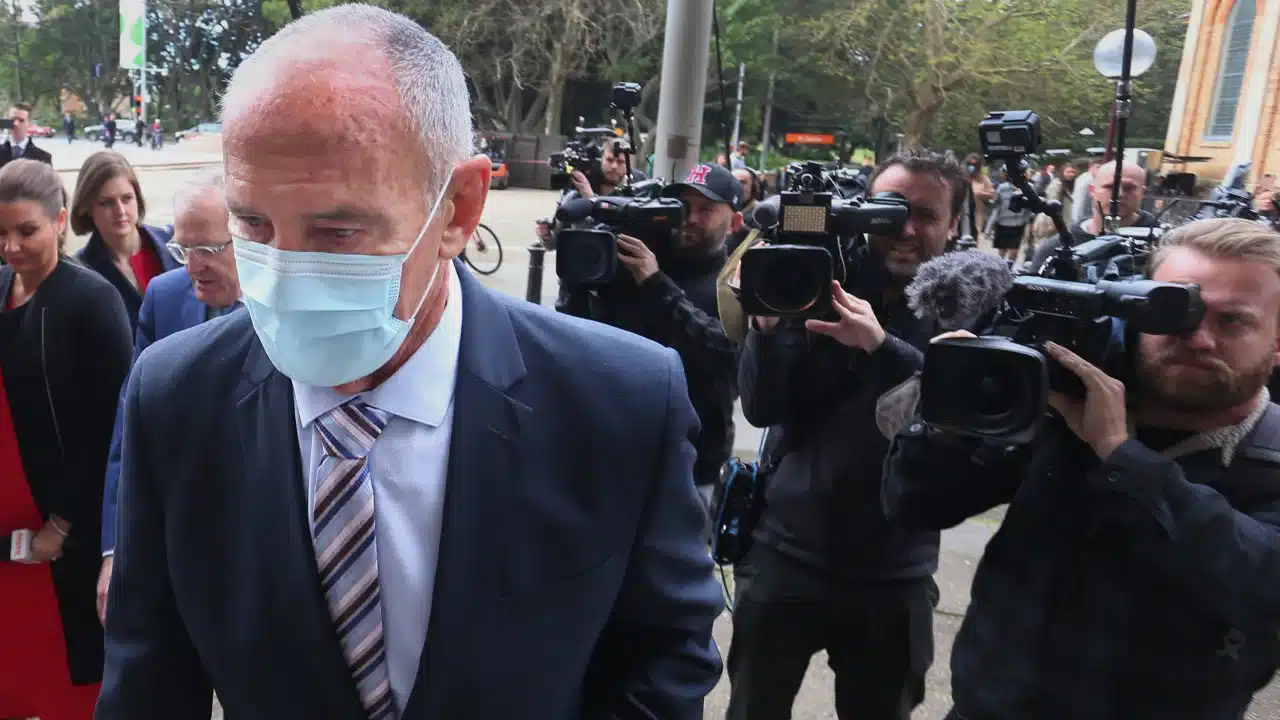
A physical education instructor from Australia who killed his wife to start a new relationship with a teen pupil was found guilty of sexual assault.
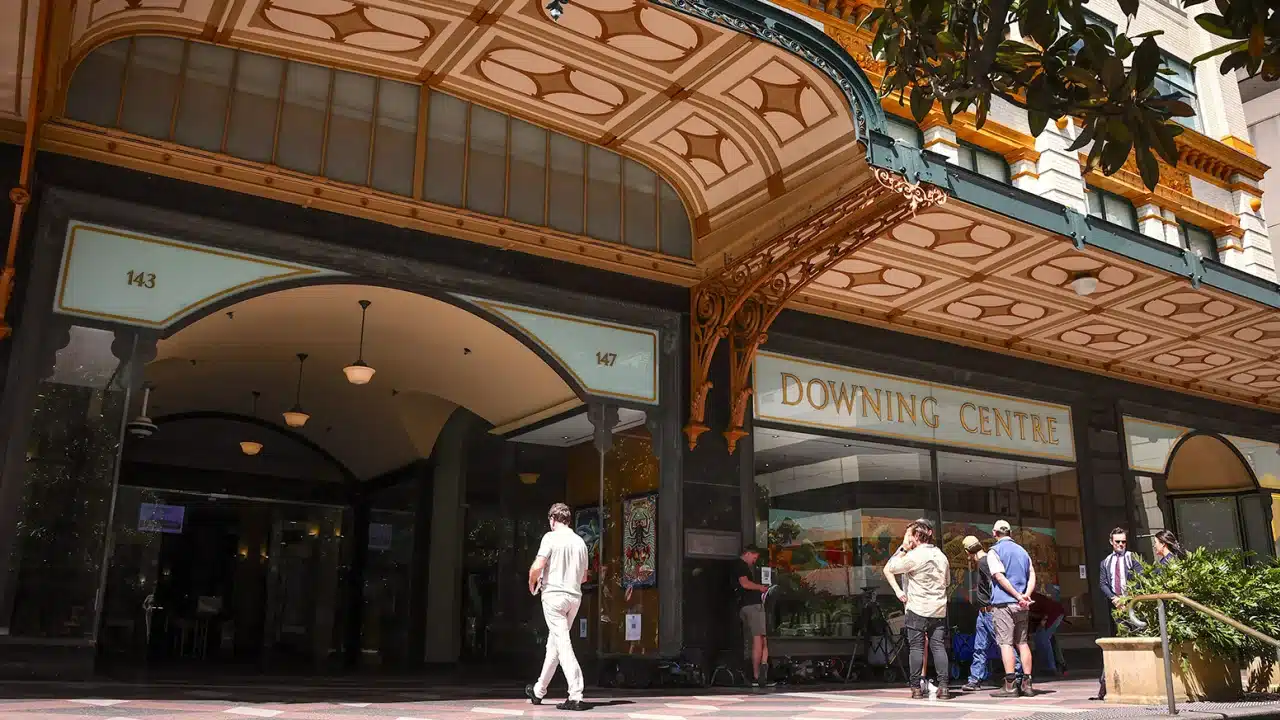
On Wednesday, Chris Dawson was found guilty by Sydney Downing Centre District Court Judge Sarah Huggett of “carnal knowledge upon a girl above the age of 10 and under the age of 17.”
After killing his wife Lynette in 1982, Dawson started a new life with the same student who is now charged. He then wed the pupil, with whom he had a child, but they later got divorced.
Dawson was found guilty last year of murdering his first wife Lynette in a conviction that ended one of Australia’s longest-running cold cases.
He had long denied the murder, claiming Lynette had left him and their two young children before disappearing.
The student, who can be identified only as AB, alleged Dawson had sexually abused her in 1980, when she was a 16-year-old pupil in one of his classes at Cromer High School in Sydney.
Dawson, who appeared in court via video link from Sydney’s Long Bay jail, had denied that, claiming he began the relationship with AB when she was 17 and no longer his student.
Judge Huggett sided with AB, finding that Dawson had groomed the teenager while she was still his pupil.
AB said she began babysitting for Dawson when she was 16, often staying the night at Dawson’s house.
“He asked me to marry him when I was 16, many, many times, I always felt obligated,” AB had alleged.
Judge Huggett said she accepted the evidence that Dawson had proposed to AB at least once in 1980, when AB was 16.
The judge established there was “powerful evidence” within a 17th birthday card sent by Dawson to AB in early 1981, in which “the accused, a mature man, as opposed to an immature teenager, was confident in the existence of a reciprocal and permanent relationship. And that was because a sexual relationship had commenced” in 1980.
Dawson dedicated the card to “the most beautiful girl in the world” and wrote “knowing we will share all the birthdays to follow.”
The body of Dawson’s wife has never been found. He is not eligible for parole as long as the body remains missing.
AB had testified against Dawson in the murder trial, which saw Dawson jailed for 24 years. The judge in that case found allegations that Dawson had sexually abused his 16-year-old student in 1980 were “truthful and reliable” and that Dawson’s obsession with the teenager was enough to motivate him to kill Lynette.
Dawson responded to Wednesday’s verdict by swearing repeatedly.
He will be sentenced on the “carnal knowledge” charge on September 15.
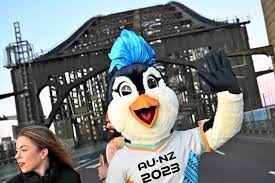
A senior FIFA official informed AFP on Tuesday that Australia, the co-hosts of the upcoming Women’s World Cup, will kick off their first match in front of a capacity crowd.
Dave Beeche, the CEO of the Women’s World Cup, confirmed that the Matildas’ opening game against Ireland on July 20 has already sold out at Sydney’s Stadium Australia, with the stadium’s capacity reaching around 80,000 spectators.
“There is currently nothing available,” he said.
Beeche also expects a capacity crowd the same day in Auckland where tournament co-hosts New Zealand — the “Football Ferns” – open their campaign against Norway.
“It’s going to be a massive day for women’s football,” he said of the double-header either side of the Tasman Sea.
With less than 25 days until kick off, the tournament boss says only a “few thousand” tickets are left for New Zealand’s opening game at Eden Park, where capacity will be just under 40,000.
“Yes, definitely” Beeche replied when asked whether the Auckland stadium would be sold out for the opener, despite fears about the tournament’s low ticket sales in New Zealand.
Football’s governing body FIFA has said around 1.1 million tickets have been sold for the 64 matches in Australia and New Zealand.
FIFA’s head of women’s football Sarai Bareman has voiced concern about low World Cup ticket sales in New Zealand, where the co-hosts are struggling for form.
The Football Ferns approach the tournament on a 10-match winless streak with one chance left to get a morale-boosting win in a final home friendly against Vietnam on July 10th.
Beeche said 270,000 tickets had so far been sold in New Zealand and 830,000 in Australia.
Those unequal numbers reflect the population sizes of Australia, where 26 million people live, and New Zealand, which is home to five million, he insisted.
“When you look at the Matildas being a high-ranked team and the Football Ferns’ run of form, New Zealand is doing pretty well,” he said.
Newly released video depicts the anxious moments leading up to the savage ‘vigilante’ killing of an eight-year-old father in Australia due to unfounded suspicions that he had mistreated girls.
Jana Hooper, Bradley Lyons’ wife, assisted so-called “paedophile hunters” corner him in their home before the gang abducted and tortured him in an effort to coerce a confession in December 2018.
According to testimony given in court, Mr. Lyons was pummelling, doused in Deep Heat, scalded with hot water from a kettle, and held over a chainsaw until he drank some water.
After refusing to admit to the accusations – which were baseless – shot dead and buried in a shallow grave in a bushland.
When he was found, both his feet, several bones from his hands and a neck bone were missing – but the gang’s meth abuse made it impossible to piece together their recollections of how this came to be, according to Daily Mail Australia.
Reports suggest the rumours stemmed from Hooper and a tenant of Mr Lyons, Nick Stefani, who rented a bungalow at the rear of their house in Lakes Entrance, Victoria.
Stefani was part of a group of at least six men who started a club to target paedophiles, calling themselves the Australian Freedom Fighters Group.
Hooper, who shared three children with Mr Lyons, is said to have told the gang’s ringleader, 57-year-old Albert Thorn, that she believed her husband had abused two of her daughters from a previous relationship.
She said he was the father of her 16-year-old daughter’s baby and had also impregnated her 14-year-old daughter, but a court heard both claims were lies, Daily Mail Australia added.
The gang started organising the attack after Stefani started believing Mr Lyons was a paedophile, ABC News reported.
He set about circulating the ‘flimsy claims’, which led to Thorn and two other ‘Australian Freedom Fighters’, Alec Harvey and Rikki Smith, orchestrating the attack.
CCTV taken from a neighbour’s security camera shows Mr Lyons following his wife into their home, where he was beaten with a metal pole by the group and had a shotgun thrust into his mouth – before being bundled into Thorn’s car.
The victim was taken to Thorn’s mother’s property, where he was thrown inside a shed, tied to a massage table and tortured into the early hours of the following day.
He was then put in the boot again and driven to the remote wilderness near Double Bridges, where Thorn shot him in the knee and head with a shotgun before ordering Smith and another accomplice Jordan Bottom, to bury him.
Thorn then told his eight-year-old daughter he had killed a man who was ‘rude to children’ and warned her ‘not to tell a single soul’ – but she bravely helped convict him by giving police a detailed statement.
Thorn was found guilty earlier this month of murder, kidnapping, false imprisonment and intentionally injuring someone. He will be sentenced at a later hearing.
His co-conspirators were either not charged with murder or found not guilty of the crime after claiming they did not realise he planned to kill Mr Lyons.
Stefani received a 10-year sentence for intentionally causing injury, kidnapping, false imprisonment and common law assault. Harvey, who disposed of the gun, got eight-and-a-half years.
Hooper was jailed last year for seven-and-a-half years for her role.
Smith, 26, and Bottom, 25, were found guilty of assault and unlawful imprisonment earlier this month and will be sentenced at a later hearing.
Days after Hong Kong‘s local government filed an order to ban the song, a well-known song from the city’s democracy campaign has started to vanish from several major music streaming services, even in some foreign countries.
Demonstrators sang variants of “Glory to Hong Kong” throughout the massive rallies that raged around the city for months on end that year, and it eventually became the unofficial song of the city’s now-crumbling democracy protests.
The ballad’s lyrics make reference to the term “liberate Hong Kong, revolution of our times,” which the government and courts declared to have secessionist and subversive implications and was previously banned in 2020.
Multiple versions of the song posted by “ThomasDGX & HongKongers,” known to be the original composer of the orchestral anthem, were no longer available on Spotify, Apple Music, YouTube and Google to users within the city on Wednesday.
Multiple versions and covers of the song have been recorded by other artists.
The titles of those covers can still be seen on Spotify in other parts of the world, including the United States, South Korea and Australia.
But when CNN reporters in those countries tried to play the songs they were listed as “unavailable.”
Spotify told CNN that the song was removed by the distributor and not by the platform.
Users in the US cannot purchase the song on Apple Music either, although it also still yields search results on the platform.
The song can no longer be found on Apple Music and KKBOX in Taiwan, however multiple versions of it are still available on YouTube.
CNN has reached out to YouTube, Apple Music, KKBOX, and Alphabet – the parent company of Google – for comment.
By Monday, several new uploads of the song reappeared on YouTube, and the tune could be found again on Spotify and Apple Music – even within Hong Kong.
A Facebook account tied to the original composers said they have re-uploaded the soundtrack on several music platforms as a “2023 Edition,” after initially saying last week that they were “dealing with some technical issues unrelated to the streaming services.”
“(We) stand firm against any attempts to suppress freedom of thought and speech,” the latest post on Monday said, adding that the composers back listeners’ “refusal to lose their freedom to choose music.”
CNN has reached out to the Hong Kong government for comment following the reappearance of the tracks.
Following its 1997 handover to China, Hong Kong was promised key freedoms and autonomy to run its own affairs. As a result it flourished as a bastion for free speech and creative expression within authoritarian China.
But a crackdown on dissent in the aftermath of the democracy protests has since transformed the city, especially after a sweeping national security law was imposed by Beijing in 2020.
Protest leaders have been arrested or driven into exile, while the government persists on scrubbing references to the social unrest and calls for democracy in the city. New laws have also been passed to increase censorship of films to “safeguard national security.”
Music is now coming under closer scrutiny.
Hong Kong’s government filed a court injunction on June 5 seeking to ban the broadcast or distribution of the protest song after it was mistakenly played at several international sporting events.
Speaking to reporters on Tuesday, city leader John Lee – a former police chief – said authorities were taking action because “Glory to Hong Kong” was “not compatible with the national interest.”
Under the injunction filed by the Department of Justice, the song’s “melody or lyrics or in combination” would be banned to avoid “inciting others to commit secession.”
It further seeks to restrain anyone from “broadcasting, performing, printing, publishing, selling, offering for sale, distributing, disseminating, displaying or reproducing (the song) in any way.”
The writ also listed 32 YouTube videos of the song, including instrumental and sign language versions.
The government’s bid to outlaw the song was heard in the High Court on Monday, but the judge has postponed a decision on the interim injunction to July 21, public broadcaster RTHK reported.
The head of Amnesty International’s China team, Sarah Brooks, described the government’s move to outlaw the song as “absurd.”
“The Hong Kong government must end its increasingly fervent crackdown on freedom of expression. A song is not a threat to national security, and national security may not be used as an excuse to deny people the right to express different political views,” Brooks said.
The semi-autonomous city does not have its own anthem. It uses the Chinese national anthem “March of the Volunteers” at events and in schools ever since it returned to Chinese sovereignty in 1997, while during the years under British rule, the city sang “God Save The Queen.”
The use of “Glory to Hong Kong” at international sporting events infuriated officials who previously criticized Google for listing the song in search results for the city’s anthem, something Google said was decided by its algorithm which returns results based on a host of criteria including popularity and relevance.
Playing the song in public in Hong Kong is now fraught with legal risk. Last year, a man who played the tune on a harmonica during a vigil for Britain’s late Queen Elizabeth II was arrested by police on suspicion of sedition.
Eight years in Australia for a British couple who will be expelled for being too old.
After failing to obtain permanent residency as a result of visa modifications, Glenn Tunnicliff, 57, and his wife Sheena, 50, are required to depart within seven weeks.
With their two children Tamzin and Molly, who are now 21 and 18, as well as their Jack Russell Roxy, they relocated from East Sussex to Perth.
Despite each family member securing jobs, Glenn and Sheena been told to leave by August 4 because the age limit to gaining permanent residency (PR) – the pathway to citizenship – is 45 years.
‘We don’t want to go back to the UK, we’ve made a life here,’ Sheena told 9News.
‘Now we are over that magic figure of 45 there is no route to PR for us. Australia classes us as too old [but] we are the ones with the experience and training.’
The family are on Glenn’s work visa because his plastering skills are in high demand across Australia.
The company that sponsors him is about to close which means the family can’t get a permanent visa.
Sheena said the couple have spent $80,000 (£63,200) on visas over the years while not always getting the best advice from agents.
The only member of the family who can stay is Tamzin because she is a nurse, but Molly is learning Australian sign language and won’t qualify for a student visa because her course is not eligible.
The family fear Roxy the dog will be left behind to fend for herself due to her age.
Lawyer Joanne Kinslor explained the reasoning behind PR in Australia and said: ‘The age limit in place for the vast majority of skilled migrants arises from a policy concern that the working lives and economic contributions of older skilled migrants are likely to be smaller than that of younger migrants.’
But this was criticised by migration agent Mateja Rautner who said: ‘The Australian government is actively promoting Australia as the destination for skilled migrants and we are amid global competition for talent and yet we are limiting the options for skilled words over 45.’
Home affairs minister Clare O’Neil said Australia’s migration system is ‘broken’ and in need of a fundamental overhaul and a ‘radical simplification’.
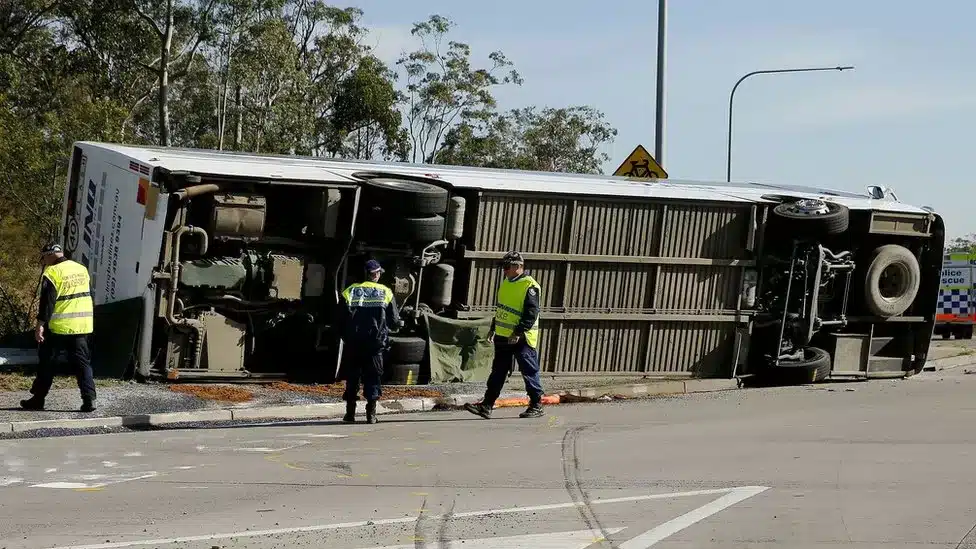
A tragic incident occurred in the renowned Hunter Valley wine region of Australia, where a wedding bus crash claimed the lives of at least 10 individuals, with an additional 25 individuals currently receiving medical treatment in hospitals.
The passengers, who had attended a wedding ceremony at a local winery, were on their way back when the unfortunate accident transpired, causing the bus to overturn.
Law enforcement authorities have taken action by pressing charges against the 58-year-old bus driver, accusing them of 10 counts of dangerous driving leading to fatalities. Authorities are still in the process of positively identifying the deceased victims.
Fortunately, the newly-wedded couple was not aboard the ill-fated bus during the incident.
Police commissioner Karen Webb said the site of the crash is “still an active crime scene”. “We’ve got forensics officers processing the crime scene, we’ve got crash investigation unit officers, we’ve got rescue officers [on scene],” she added.
Tragedy struck at approximately 23:30 local time [13:30 GMT] as heavy fog engulfed the area, resulting in a devastating accident. According to the police, the incident occurred when the wedding bus attempted to negotiate a turn at a roundabout off a highway in Hunter Valley. The bus rolled over due to the circumstances, causing significant damage. Authorities have successfully managed to upright the vehicle.
Acting Assistant Commissioner Tracy Chapman of the NSW Police revealed that the passengers were en route to Singleton, presumably heading towards their accommodations. Among the survivors, two individuals required emergency airlifts from the crash site. Reports from local media suggest that one of the survivors remains in critical condition, underscoring the severity of the incident.
Australian Prime Minister Anthony Albanese said it is “so cruel, so sad and so unfair” for a “joyous day in a beautiful place like that to end with such terrible loss of life”.
“People hire a bus for weddings in order to keep their guests safe, and that just adds to the unimaginable nature of this tragedy,” he said at a press conference in Canberra.
Mr Albanese said some of the injured passengers are at John Hunter Hospital, but many have been flown to Sydney.
NSW Premier Chris Minns said the loss of so many lives was “nothing short of heartbreaking”, adding: “For this horrific crash to have occurred on a day that should have been filled with love and happiness only adds to the heartbreak.”
“For a day of joy to end in such devastating loss is cruel indeed. Our thoughts are also with those who have been injured,” he said.
Hunter Valley in New South Wales is known for its vineyards and native bushland, making it a popular spot for wine lovers and group outings or celebrations.
A guest at the wedding said the day had been a “fairy tale” until news of the accident broke.
“We all started panicking,” he told 7 News.
Police said they are still working to identify the crash victims and contact their next of kin.
“Family and friends of a person who may have been on board the bus are urged to contact Cessnock Police Station,” they said in a statement.
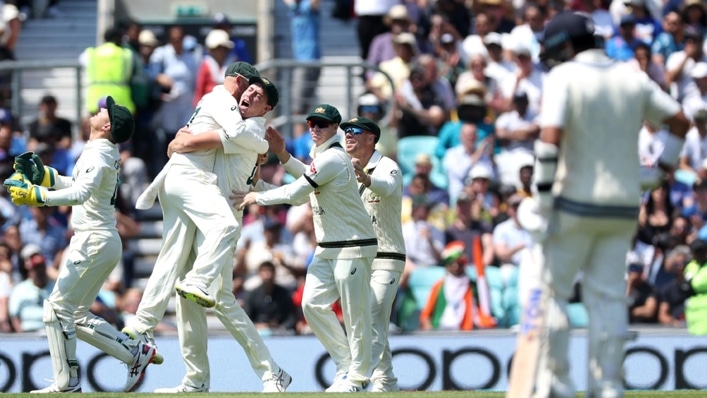
Australia maintained their commanding position on day three of the World Test Championship final against India, despite some missed catches and a few lapses in footwork.
The team’s performance at the Oval was not flawless, as they let three opportunities slip through their hands in the morning session.
Additionally, captain Pat Cummins had a wicket disallowed due to overstepping for the second time in the match.
However, these shortcomings did not affect their overall dominance in the game. Cameron Green redeemed himself for an earlier drop by making a remarkable catch at gully, contributing to India’s dismissal for 296.
Australia battled through a tough new-ball spell after bowling India out 👊
David Warner fell cheaply as the Australians moved to 23 for one at tea in their second innings, leaving Rohit Sharma’s side 196 behind and facing a mountainous task.
Without a fine 89 from Ajinkya Rahane and a battling 51 from a battered and bruised Shardul Thakur, they would be even further adrift.
ustralia enjoyed a dream start when Scott Boland scattered Srikar Bharat’s stumps with the second ball of the day, leaving India 317 behind with just four wickets in hand.
Remarkably, and despite a relentless attacking effort from the Baggy Green bowlers, that was the only wicket to fall before lunch.
Boland came close to striking again in the opening over, snaring a thick edge from Thakur which soared high towards Usman Khawaja in the cordon. It was a tough chance and one that squirmed free from the fielder’s fingertips.
Thakur needed plenty of steel to stick around, requiring lengthy treatment after being hit three times by Cummins in a single over – wearing blows on the forearm, wrist and glove.
Having softened him up, the seamer should have got his rewards when Thakur sprayed a chance to gully but this time Green’s handiwork let him down.
With Thakur in a state of almost permanent danger, Rahane gave the vocal Indian crowd something to cheer when he hooked Cummins over fine-leg for six to bring up his half-century.
He passed 5,000 Test runs soon after, the 13th Indian to do so, but he also required a stroke of fortune to reach the break.
On 72 he aimed a flowing drive at Cummins, sending a head-high catch to first slip. Wicketkeeper Alex Carey appeared to offer a minor distraction to Warner, but he will still be kicking himself after seeing the ball pop out and land safe.
A handful of boundaries took the partnership into three figures as India began to have some fun, while Australia’s annoyance only increased when Cummins saw his lbw against Thakur overturned by the no-ball call. It was a case of history repeating for Cummins, who had also lost a wicket to over-stepping on day two when Rahane was on 17.
Australia needed a pick-me-up and Green provided it in style at the start of the afternoon session, showing razor sharp reactions and athleticism to take a jaw-dropping catch that ended Rahane’s stay on 89. Cummins was the beneficiary and he made sure to cash in when he cleaned up Umesh Yadav for five.
Thakur reached 51 before being undone by Nathan Lyon and Mitchell Starc finished things up by bouncing out Mohammed Shami.
India’s fans, whipped up by Virat Kohli, created a hostile atmosphere at the change of innings and Warner lasted just eight balls before nicking off to Mohammed Siraj.
Marnus Labuschagne was woken from a nap on the balcony to dash out at number three, and became the latest batter to take a nasty-looking blow to the hand when Siraj got one to lift aggressively at him.
The Australian government has issued a warning that pills marketed as “Big Penis USA” may be seriously harmful to health.
Consumers were advised by the Therapeutic Goods Administration (TGA) to cease taking the medications right away.
It was discovered that the product contains the chemical sildenafil after testing it with replicas of Australia tablets, USA Black Gold tablets, and Germany Niubian tablets.
The tablets include the unauthorised chemical sildenafil, according to the government regulating body.
‘Sildenafil may interact with nitrates found in some prescription drugs and may lower blood pressure to dangerous levels.
‘People with diabetes, high blood pressure, high cholesterol or heart disease are often prescribed nitrates.
‘Sildenafil taken in combination with other medications can cause serious side effects.’
The tablets were found to contain the substance sildenafil (Picture: TGA)
Sildenafil, which is more commonly known under the brand name Viagra, is commonly used to give men erections but requires a prescription in Australia.
This is to ensure the medication does not interact with other things the person is taking, and cause them health problems.
The TGA warned the supply of Big Penis USA pills containing undisclosed sildenafil is illegal.
Anyone taking the tablets is warned to stop immediately and take any remaining pills to their local pharmacy for safe disposal.
Those experiencing side effects after taking it are advised to see their doctor.
It was revealed in February supplies of Viagra will no longer be shipped to Russia due to its war with Ukraine.
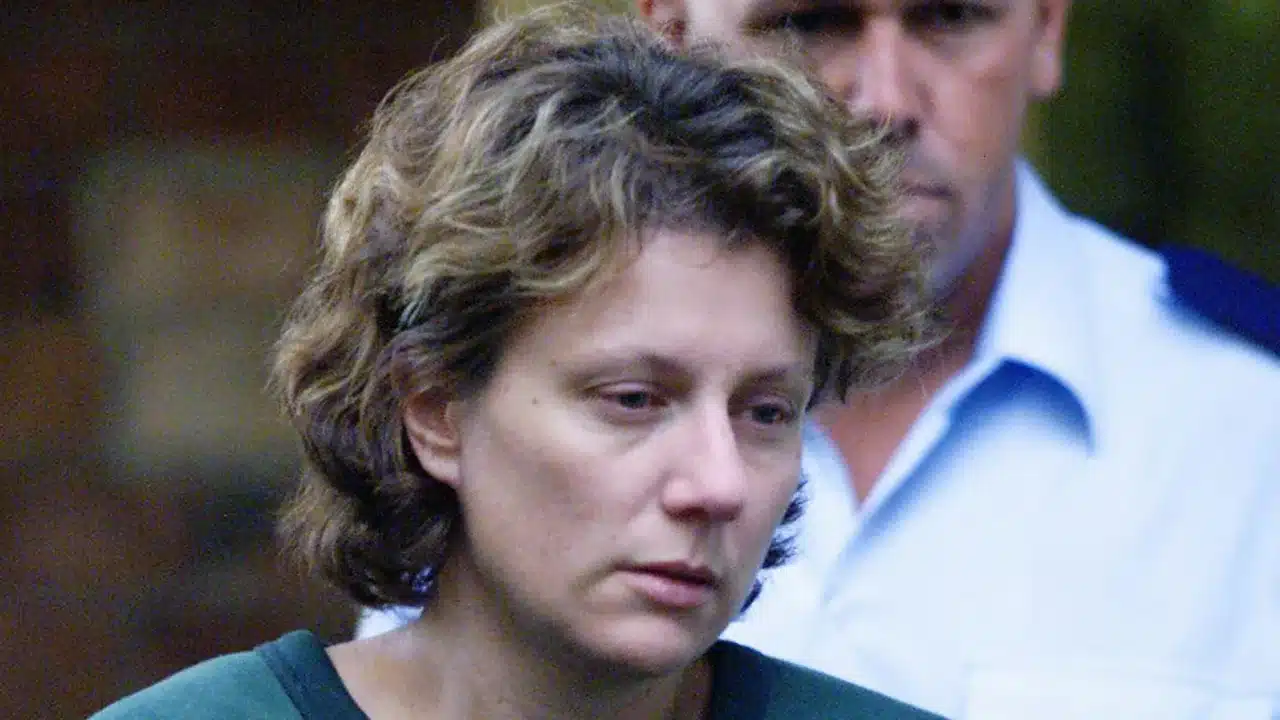
The person in charge of law in New South Wales, named Michael Daley, let Kathleen Folbigg go free. An investigation showed that it wasn’t clear if she was really responsible for the deaths of four people.
Daley said on Monday that he talked to the governor and suggested to set a woman free from jail without any conditions. The governor agreed, and the woman will be released from Clarence Correctional Center on the same day.
“This has been a terrible ordeal for everyone concerned and I hope that our actions today can put some closure on this 20-year-old matter,” said Daley, who added that he had informed Craig Folbigg, the babies’ father, of his decision. “It will be a tough day for him,” he said.
Kathleen Folbigg was jailed in 2003 on three counts of murder and one of manslaughter following the deaths of her four babies over a decade from 1989. In each case, she was the person who found their bodies, though there was no physical evidence that she had caused their deaths.
Instead, the jury relied on the prosecution’s argument that the chances of four babies from one family dying from natural causes before the age of 2 were so infinitesimally low as to be compared to pigs flying.
They also noted the contents of her diary, which contained passages that in isolation at the time were interpreted as confessions of guilt.
As recently as 2019, an inquiry into her convictions found there was no reasonable doubt she had committed the crimes. But another inquiry began last year after new scientific evidence emerged that provided a genetic explanation for the children’s deaths.
In her closing submissions, Sophie Callan, the lead counsel assisting the inquiry, said that “on the whole of the body of evidence before this inquiry there is a reasonable doubt as to Ms Folbigg’s guilt.”
She also told the inquiry that in its closing submissions, the NSW director of public prosecutions had indicated she was also “open to the Inquiry to conclude there is reasonable doubt as to Ms Folbigg’s guilt.”
Folbigg was just 20 years old when she married Craig Folbigg,who she’d met in her hometown of Newcastle on the northern New South Wales coast.
Within a year she fell pregnant with Caleb, who was born in February, 1989 and lived only 19 days. The next year, the Folbiggs had another son, Patrick, who died at eight months. Two years later, Sarah died at 10 months. Then in 1999, the couple’s fourth and longest lived child, Laura, died at 18 months.
The police investigation into the deaths of all four children began the day Laura died, but it was more than two years before Folbigg was arrested and charged. By then, the couple’s marriage had fallen apart, and Craig was cooperating with police to build a case against her.
He handed police her diaries, which prosecutors argued contained the deepest thoughts of a mother tortured by guilt for her role in her children’s deaths.
Examination of the babies’ remains failed to find any physical evidence they’d been suffocated, but without another plausible reason to explain their deaths, suspicion focused on Kathleen, their primary carer.
In 2003, as he sentenced Folbigg to 40 years in prison, Judge Graham Barr recalled her troubled past. Folbigg’s father had killed her mother when she was just 18 months old, and she had spent many of her formative years in foster care.
According to court documents, Barr said Folbigg’s prospects of rehabilitation were “negligible.”
“She will always be a danger if given the responsibility of caring for a child,” he said. “That must never happen.”
That initial conviction ruling now stands in stark contrast to the latest inquiry, which looks set to paint a far different picture of Folbigg as a loving mother who was devastated and confused by the successive deaths of her babies.
As he ordered her release Monday, Daley distributed a memorandum of the findings by retired judge Tom Bathurst, who said after reviewing the evidence he was “unable to accept … the proposition that Ms Folbigg was anything but a caring mother for her children.”
In the case of the two girls – Sarah and Laura – Bathurst found there was a “reasonable possibility” a genetic mutation known as CALM2-G114R “occasioned their deaths,” and that Sarah may have died from myocarditis, inflammation of the heart, identified during her autopsy.
In the case of Patrick, who had an unexplained ALTE, an apparent life-threatening event, when he was 4 months old and died at 8 months, Bathurst found that it’s possible his death was caused by an underlying neurogenic disorder.
During Folbigg’s 2003 trial, the prosecution used “coincidence and tendency” evidence to allege that Folbigg had also killed Caleb. In other words, that having been allegedly responsible for the deaths of three children, it was likely she killed him, too.
However, Bathurst found that the reasonable doubt over Folbigg’s role in his siblings’ deaths meant that the prosecution’s case against her for Caleb’s murder “falls away.”
In relation to her diaries, Bathurst said the “evidence suggests they were the writings of a grieving and possibly depressed mother, blaming herself for the death of each child, as distinct from admissions that she murdered or otherwise harmed them.”
Bathurst also expressed doubts about evidence from Craig Folbigg, who had claimed his wife had been “ill-tempered” with their children and had “growled at them from time to time.”
“The balance of evidence … (was) that she was a loving and caring mother,” wrote Bathurst, whose full report will be released at a later date.
In an email to CNN, Craig Folbigg’s lawyer Danny Eid said his client’s view of his former wife’s guilt had “not changed whatsoever.”
“Ms Folbigg has not been acquitted of the crimes, and her convictions are not displaced,” Eid said.
Folbigg’s case has been compared to that of Lindy Chamberlain, who swore a dingo took her baby Azaria from the family’s campsite at Uluru in 1980.
The case polarized public opinion and Chamberlain was jailed before evidence emerged that she was telling the truth.
In 1986, Azaria’s matinee jacket was found half-buried in the dirt, prompting officials to free Chamberlain, later known as Chamberlain-Creighton. Two years later, a court overturned her conviction, and in 2012 a coroner ruled that a dingo was indeed to blame for Azaria’s death.
Like Chamberlain-Creighton, Folbigg’s release from prison could be the start of a long process to clear her name.
Daley told reporters Monday that Folbigg’s pardon only meant she did not have to serve the rest of her sentence, and that it would be up to the Court of Criminal Appeal to quash her convictions.
He said it was too early to talk about compensation, as that would require Folbigg to initiate civil proceedings against the New South Wales government, or to approach it seeking an ex-gratia payment.
Daley acknowledged that after 20 years of believing Folbigg’s guilt, some people may not accept her innocence.
“There will be some people who have strong views. There’s nothing I can do to disavow them of those views, (and) it’s not my role to do that,” he said.
But he suggested the events of the past two decades should elicit some compassion for a woman who has lost so much.
“We’ve got four little bubbas who are dead. We’ve got a husband and wife who lost each other. A woman who spent 20 years in jail, and a family that never had a chance. You’d not be human if you didn’t feel something,” he said.
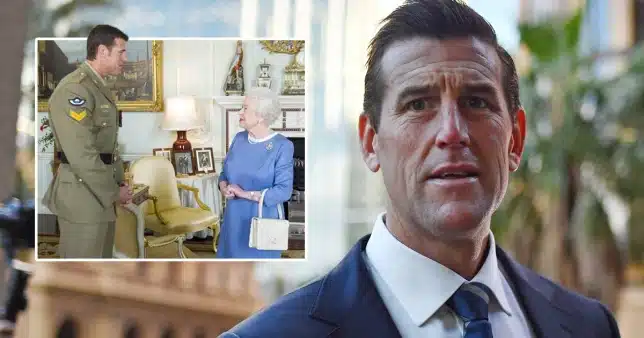
The most decorated war veteran in Australia resigned from his position after a civil court found that he had killed four people illegally while serving in Afghanistan.
The historic defamation case against publications that accused Ben Roberts-Smith of war crimes was dropped on Thursday.
It has prompted demands that the 44-year-old’s Victoria Cross medal be taken away.
In 2021, Mr. Roberts-Smith had taken time off from his position as state manager of Seven West Media to concentrate on the legal matter supported by the firm’s executive chair Kerry Stokes.
‘Ben has been on leave whilst the case was running and today has offered his resignation which we have accepted,’ chief executive James Warburton said on Friday in a staff email.
‘We thank Ben for his commitment to Seven and wish him all the best,’ Mr Warburton added.
Mr Roberts-Smith has been fighting the case since 2018 when Australian newspapers including The Sydney Morning Herald, The Age and The Canberra Times accused him of killing six people in Afghanistan.
He argued five of the killings reported by the newspapers had occurred legally during combat, and the sixth did not happen at all.
Britain’s Queen Elizabeth II greeted Australian SAS Corporal Ben Roberts-Smith in 2011 (Picture: PA)
But the judge dismissed the case on Thursday because it was found the articles were substantially true.
Justice Anthony Besanko found him responsible for four out of the six unlawful deaths he was accused of.
These included a handcuffed farmer the soldier had kicked off a cliff – a fall which knocked out the man’s teeth, before he was shot dead.
A captured Taliban fighter who was shot at least 10 times in the back, before his prosthetic leg was taken as a trophy and later used by troops as a drinking vessel.
Two killings which were ordered or agreed to by Mr Roberts-Smith to initiate or ‘blood’ rookie soldiers.
It was found the newspapers had not proven two other murder allegations; nor reports Mr Roberts-Smith had assaulted a woman with whom he was having an affair; nor a threat against a junior colleague.
Ben Roberts-Smith seen departs the Federal Court of Australia in 2021 (Picture: Getty Images)
Allegations he unlawfully assaulted captives and bullied peers were found to be true.
Media lawyer Justin Quill said Mr Roberts-Smith’s lawyers would have been shocked by the extent of his loss.
‘Ultimately there is a judge’s finding that he committed four murders and that’s about as bad as you could possibly get,’ Mr Quill said.
‘I’d say even in his worst nightmares he didn’t expect yesterday to go quite as badly as that.’
Speaking outside the Federal Court in Sydney, the news outlets that exposed Mr Roberts-Smith called the judgement a ‘vindication’ for their reporting.
‘It’s a day of justice for the brave men of the SAS who stood up and told the truth about who Ben Roberts-Smith is: a war criminal, a bully and a liar,’ said investigative reporter Nick McKenzie, who wrote the stories alongside Chris Masters and David Wroe.
‘[And] today is a day of some small justice for the Afghan victims of Ben Roberts-Smith.’
Mr Roberts-Smith remains under police investigation for criminal prosecution for war crimes.
He is the first person charged with war crimes from Australia’s 20-year campaign in the Middle East country.
The Australian government refused to comment on the case.
A Taliban spokesperson said the case was proof of ‘uncountable crimes’ by foreign forces in Afghanistan, but added they did not trust any court globally to follow them up.
Minor Greens Party Senator David Shoebridge, said Mr Roberts-Smith should be stripped of his honours and the Australian War Memorial should remove memorabilia including portraits, medals and a uniform display.
‘At a minimum, we should be seeing action by the Australian War Memorial to remove the display that is now there for Ben Roberts-Smith. His uniform and his medals, which thousands of people will attend tomorrow to view and witness,’ Mr Shoebridge said.
‘The Australian War Memorial has an obligation to tell the whole truth about Australia’s involvement in Afghanistan,’ he added.
The civil court context could be added to the Roberts-Smith display, the memorial confirmed.
The whole case which lasted 110 days was rumoured to have cost up to A$25 million ($16.3 million, £13.2 million).
More than 40 witnesses – including Afghan villagers, a government minister and a string of current and former SAS soldiers – gave evidence.
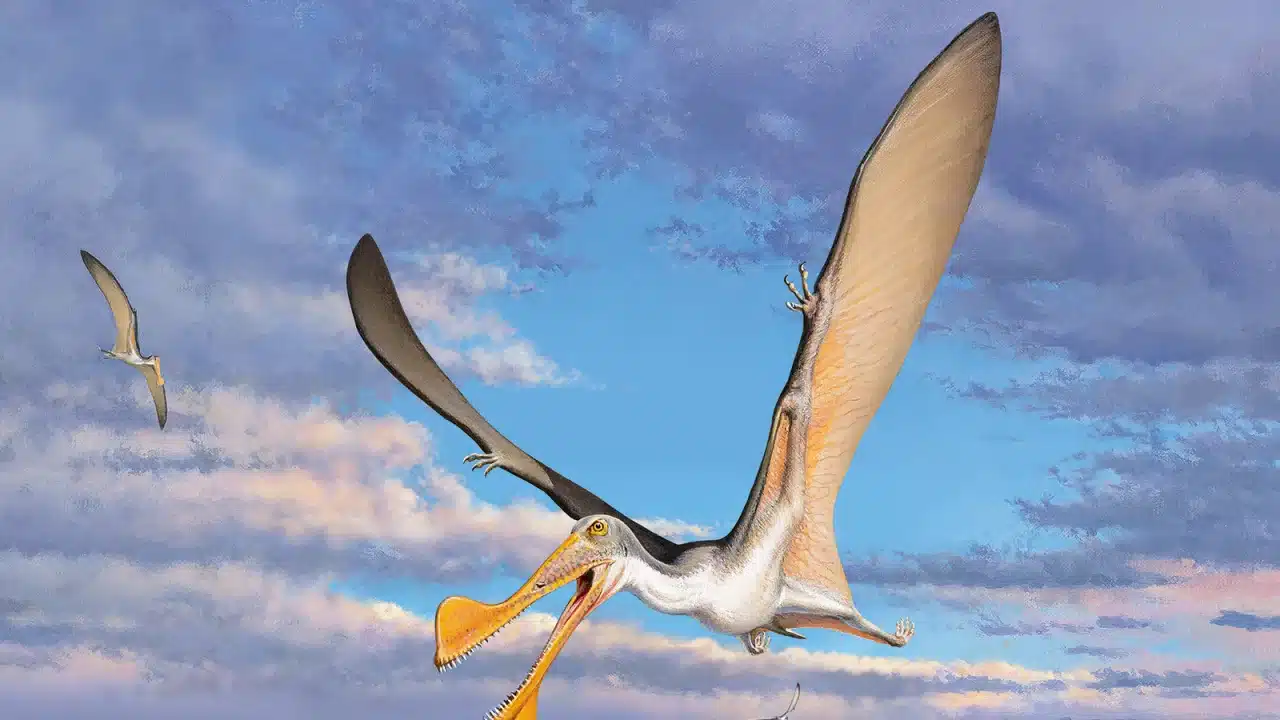
A study released on Wednesday claims that pterosaurs, the world’s earliest flying reptiles, were once able to fly across Australia 107 million years ago.
After scrutinising two fragments of ancient bone taken more than three decades ago at Dinosaur Cove, a fossil-bearing site in the Australian state of Victoria, palaeontologists came to that conclusion.
According to a study published on Wednesday in the scientific journal History Biology, the samples turned out to be the oldest pterosaur remains ever discovered in the nation.
The giant creature was the first vertebrate to evolve the ability of flight and lived alongside dinosaurs during the Mesozoic Era which started 252 million years ago.
Experts from the Perth-based Curtin University and Museums Victoria, in Melbourne, examined bones from two individuals, including a wing bone belonging to the first juvenile pterosaur ever reported in Australia.
A piece of pelvis bone was found to have come from a pterosaur with a wingspan exceeding two meters (6.5 ft). Some pterosaurs had wingspans of more than 10 meters (33 ft).
The Australian specimens were discovered during an excavation at Dinosaur Cove in the 1980s, led by palaeontologists Tom Rich and Pat Vickers-Rich, from Museums Victoria Research Institute.
The lead author of the study published Wednesday, Adele Pentland from Curtin University, told CNN that the discovery showed the massive creatures flew over Australia tens of millions of years ago, despite harsh conditions during the Cretaceous Period (145 million to 66 million years ago), when Victoria was in darkness for weeks on end.
“Australia was further south than it is today,” she said, adding the location where the two specimens were recovered would have been in the polar circle at the time.
Fewer than 25 sets of pterosaur remains belonging to four species have been found in Australia since the 1980s, she said. By comparison, in places like Brazil and Argentina more than 100 sets have been retrieved at individual sites, she added.
Pentland, a PhD student, attributed the three decades it took to confirm the present specimens to the lack of enthusiasm about the species in the country, until she got hold of them and “finally gave them the moment in the sun.”
In a statement, Rich, from Museums Victoria Research Institute, said it was “wonderful” to see the excavation work done at Dinosaur Cove in the 1980s pay off.
At the time, volunteers spent years digging a 60-meter tunnel in a seaside cliff where the bones were found.
“These two fossils were the outcome of a labor-intensive effort by more than 100 volunteers over a decade,” he added.
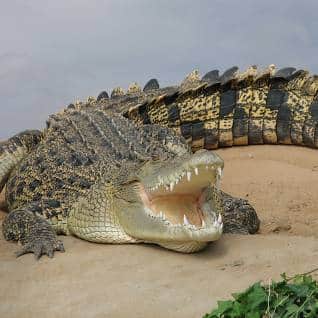
An Australian guy who was snorkelling off the coast of far-north Queensland when he was bitten on the head by a crocodile managed to escape the unique attack by prying apart the reptile’s jaws.
The avid surfer and diver Marcus McGowan was snorkelling with his wife and a group of friends near a remote island off the northern edge of the country when he felt something had “got its jaws around my head.”
McGowan said in a statement on Tuesday that he initially believed he had been bitten by a shark, but that as he reached up, he discovered it was actually a crocodile.
“I was able to lever its jaws open just far enough to get my head out,” recalled the Gold Coast resident, who said the crocodile then struck at him again, but he managed to push it away with his hand.
The boat that had taken McGowan’s group to the diving spot near Charles Hardy Islands, some 40 kilometers off the coast, heard their screams and came to retrieve them.
McGowan was rushed to Haggerston, a resort island some 45 minutes away, before being helicoptered to a regional hospital. He suffered cuts and puncture wounds to his head and hands.
“I was simply in the wrong place, at the wrong time. I’m just grateful it was me and not one of the kids or ladies in the group,” he said in the statement.
McGowan said the attack happened so quickly he was unable to get a proper look at the croc but guesses it was a juvenile, about two to three meters long.
Saltwater crocodiles can grow up to six meters long and weigh up to 1,000 kilograms, according to Australia Zoo.
Known locally as “salties,” the reptiles are more commonly found in the country’s warmer northern regions. According to federal government estimates, there are about 100,000 saltwater crocodiles in Australia.
Crocodiles were sighted on nine occasions in Cook Shire on Cape York since the start of this year, according to the Queensland government.
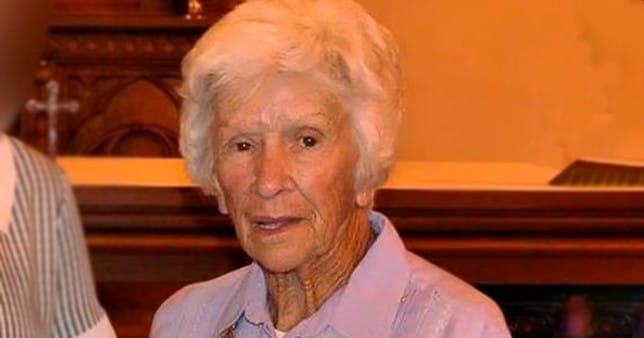
A police officer in Australia who tasered a 95-year-old great-grandmother suffering from dementia has been suspended.
Officers responded to complaints that Clare Nowland was rummaging around with a knife at a care facility last week and found her with a cracked skull and brain bleeding.
Since the incident on May 17, she has continued to receive ‘end-of-life care’ at Cooma District Hospital in New South Wales.
Senior constable with roughly 12 years of service, who used the Taser, has been stood down with pay, according to NSW Police.
The force said: ‘A 33-year-old senior constable attached to Monaro Police District was suspended from duty with pay.
‘As investigations continue into the critical incident, further updates will be provided.’
The incident led to public outcry, with Clare’s loved ones and campaigners calling the police response disproportional and unreasonable.
Family friend Andrew Thaler told the BBC that the family are ‘shocked’ at what happened to Clare.
The mother-of-eight celebrated her 80th birthday by skydiving in Canberra and had lived at the nursing home for around five years.
‘The family are shocked, they’re confused… and the community is outraged,’ Andrew told the broadcaster today.
‘How can this happen? How do you explain this level of force? It’s absurd.’
While the worldwide support is welcome, Rowland’s family said in a statement on Monday, they have asked for privacy amid a ‘worrying and distressing time’.
‘Well respected, much loved and a giving member of her local community, Clare is the loving and gentle-natured matriarch of the Nowland family,’ they said.
The NSW Council for Civil Liberties said the NSW Police, long beleaguered by accusations of excessive force, needs better training when it comes to responding to ‘vulnerable people experiencing dementia or a mental health crisis’.
‘In 2008, great-grandmother Clare Nowland was filmed for a feel-good segment by the ABC when she decided to go skydiving for her 80th birthday,’ the group said on Monday.
‘This week, the now 95-year-old has made headlines for a different and incredibly disturbing reason, after she was allegedly Tasered by police in an incident at her nursing home.’
Yesterday, New South Wales Police Minister Yasmin Catley told Parliament that she is ‘shocked’ by the incident.
‘I believe that it is the case that none of us in this place, would want that to happen to anybody,’ she added.
Two officers arrived at the Yallambee aged care home in Cooma, about 250 miles southwest of Sydney, at about 4am.
Clare, 5’2″ and 95 lbs, was holding a serrated-edge steak knife from the nursing home kitchen, assistant police commissioner Peter Cotter said in a news conference last Friday.
She refused to drop the knife when police found her alone in a small treatment room, Cotter said, and an officer then struck Nowland with the Taser.
‘She was approaching police. It is fair to say, at a slow pace. She had a walking frame. But she had a knife,’ he added.
In an initial statement on the day of the incident, police said that an ‘an elderly woman suffered injuries during an interaction with police’ but did not mention the Taser.
The incident was captured on body cameras but as it is an ongoing investigation, Cotter said it is not in the ‘public interest’ to release the footage.
The officer was taken off duty pending a ‘level one critical incident investigation’, a category police reserve for exceptional cases of police actions leading to ‘death or imminent death’.
Such cases are reviewed by homicide officers and the state crime command, Cotter said, adding: ‘If a threshold is met where it changes from being a departmental issue to being a criminal issue, we are certainly mature and transparent enough as an organisation to do what has to be done.’
The officer has not been charged and is being supported by members of the local area command.
Asked by a reporter if Cotter understands why people are outraged by the incident, he said he is ‘concerned about the matter’.
‘That’s why we have commenced the investigation,’ Cotter added.
According to local authorities, remains discovered inside a crocodile in Australia are thought to belong to a 65-year-old fisherman who went missing over the weekend.
Although the remains have not yet been officially identified, Queensland police said in a statement on Wednesday that search and rescue efforts for the missing man—named Kevin Darmody by CNN affiliates—had been suspended.
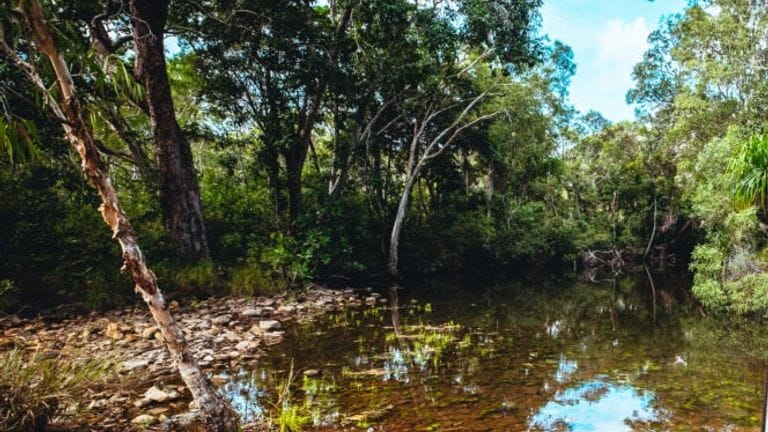
On Saturday, wildlife officials from the Department of Environment and Science (DES) were fishing on the Kennedy River in Rinyirru (Lakefield) National Park, northeast Queensland, when they came across two sizable crocodiles upstream from the location where Darmody was last seen.
The two crocodiles were 4.1 meters (13.5 feet) and 2.8 meters (9.2 feet), police said in a statement. According to DES, the “vast majority” of attacks are carried out by crocodiles larger than two meters (over six feet).
Human remains were found within one of the crocodiles, though police officers believe both were involved in the incident with Darmody, the statement added.
Queensland police, the state emergency service and a Queensland government rescue helicopter had been searching for Darmody since police received reports of his disappearance on Saturday.
Detective Acting Inspector Jason Chetham had speculated onMonday that it was possible that Darmody had been dragged into the water by a large crocodile.
“It could have happened, for sure,” Chetham said, according to CNN Affiliate 9 News. “There was a noise, a loud yell, and then the sound of the water splashing.”
“It’s a national park and there are wild animals up there, wild crocodiles,” he added. “Obviously that’s one of the possibilities.”
DES notes that crocodiles can be found in the rivers, creeks, swamps, wetlands, waterholes and along beaches of Rinyirru (Lakefield) National Park, which is home to both estuarine or saltwater crocodiles and relatively shy freshwater crocodiles.
The park, about 340 km (around 211 miles) northwest of Cairns,is one of six main areas of estuarine crocodile conservation in Queensland.
Locals urged others to be careful of getting too close to the water.
“This happened to an extremely croc-aware person so stay away from the water’s edges,” one person posted on a local community Facebook page, according to CNN affiliate 7 News. “Don’t take anything for granted.”
Queensland is no stranger to crocodiles and the dangers they can pose. In March, Queensland authorities warned residents to avoid crocodile-infested waters after record-breaking floods.
Police in Australia are searching a Queensland dump site for the remains of a lady whose body they suspect were in a trash container that was dumped into a garbage truck as part of a routine garbage collection.
Late in March, Lesley Trotter’s family in Brisbane reported her missing. Initially, search efforts for the 78-year-old woman concentrated on the local bushland walking trails where she liked to go trekking.
However, earlier this month, Queensland homicide detectives revealed they had proof that she had passed away and that her body might have been inside a bin that was emptied into a garbage truck. This information caused the search to take a morbid turn.
The truck was one of 23 that took their waste collections to a transfer station, where it was compressed before being distributed to two landfill sites, Queensland Police said in a statement.
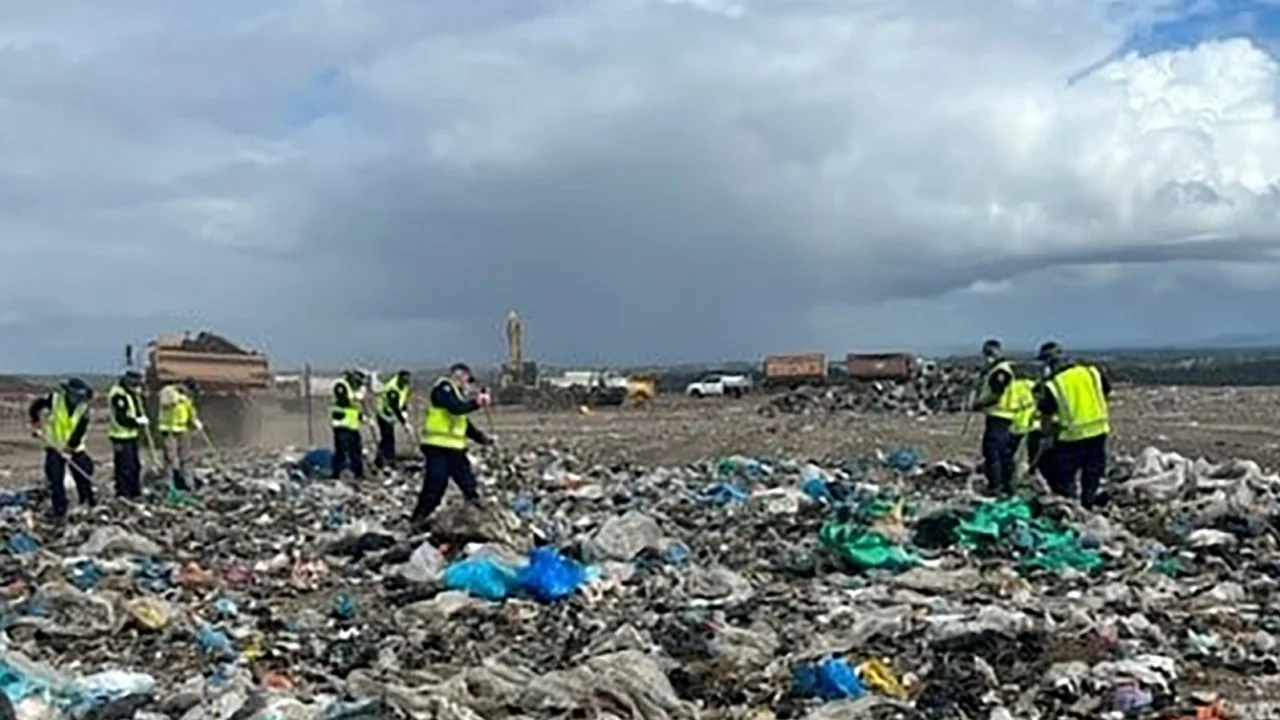
On April 18, officers partially cordoned off one of those sites and have been sifting through rubbish for Trotter’s body, or any clues to her whereabouts.
At the time, Detective Acting Superintendent Andrew Massingham described the search area as “quite enormous.” “There is some 3,000 tons of general waste that we need to sort through,” he said.
“The waste will be exhumed from the ground. It will then be tipped into lanes approximately 30 meters deep, at which time our police and ADF (Australian Defense Force) personnel will sift through by hand and using rakes,” he said.
On Thursday, police said less than 13% of the search area had been covered, and the entire process could take several weeks. Though they said paperwork belonging to a nearby resident had been found, suggesting they’re looking in the right place.
Previously Massingham said he could not “rule out foul play,” according to CNN affiliate 7 News.
Police confirmed they were looking into a possible link between Trotter’s disappearance and her recycling habits – she was known to go through trash cans outside her home and neighboring properties for recycling waste that had been put in the wrong bins.
She’d then put it in the correct bin to be recycled, police said.
“Whether that’s created some angst amongst the tenants, we’re working through that at the moment,” Massingham said.
An American woman was detained in Sydney after flying from Los Angeles and landing there with a firearm that was 24-carat gold-plated.
The Australian Border Force (ABF) said in a statement that the 28-year-old lady did not have a permission to import or possess a handgun in Australia when she arrived in Sydney on Sunday.
Australia has some of the strictest gun laws in the world, and it is against the law to “intentionally” import weapons without authorization. Australia’s maximum sentence for this crime is ten years in prison.
The woman, who was not identified in the statement, appeared before a local court Monday and received bail. The status of her visa and continued stay in Australia is subject to the courts. Depending on the outcome, she could be removed from the country, according to the ABF.
ABF Commander Justin Bathurst said the arrest spoke to the diligence of the force’s officers and sophistication of the country’s detection technology.
“ABF officers are committed to protecting our community by working with law enforcement partners to prevent items like unregistered firearms getting through at the border,” Bathurst added in the statement.
Australia is often held up as an example of how decisive action gun control can succeed in reducing deaths from firearms.
The country implemented sweeping gun-control measures after a lone shooter murdered 35 people in Port Arthur, Tasmania, in April 1996.
Rapid-fire rifles and shotguns were banned, gun owner licensing was tightened and remaining firearms were registered to uniform national standards alongside a hugely successful nationwide buy-back and amnesty scheme.
Gun violence has reached record levels in the United States, which is the only nation in the world where civilian firearms outnumber people. In Australia, there are approximately just 14 guns for every 100 people, compared to 120 per 100 in the US, according to the Switzerland-based Small Arms Survey (SAS).
The US also has more deaths from gun violence than any other developed country per capita. The rate in the US is eight times greater than in Canada, 22 times higher than in the European Union and 23 times greater than in Australia, according to Institute for Health Metrics and Evaluation (IHME) data from 2019.
A day before Chris Hipkins, the prime minister of New Zealand, visited Australia, the country announced on Saturday that residents of New Zealand living there would have a clear road to citizenship.
Hipkins praised the decision as “the biggest improvement in the rights of New Zealanders living in Australia in a generation” as he prepared to travel to Brisbane, the state capital of Queensland, on Sunday.
New Zealanders who have lived in Australia for four years or longer are now eligible to seek for citizenship without first becoming permanent residents, according to Australian Prime Minister Anthony Albanese. The reforms took effect in July.
“We know that many New Zealanders are here on a Special Category Visa while raising families, working and building their lives in Australia. So I am proud to offer the benefits that citizenship provides,” Albanese added.
New Zealand has long campaigned for changes since visa rules were altered in 2001, making it tougher for Kiwis in Australia to get citizenship.
The reform would bring New Zealanders’ rights more into line with those of Australian expats living in New Zealand, Australia’s Labor government said.
“Kiwis taking up Australian citizenship will still retain their New Zealand citizenship. These dual citizens are not lost to New Zealand – but draw us closer together,” Hipkins said in a statement.
The changes also meant children born in Australia since July to an Australia-based New Zealand parent would be automatically entitled to Australian citizenship, he said.
“This will make critical services available to them,” he said, adding the changes delivered on an Albanese promise that no New Zealander be left “permanently temporary” in Australia.
Around 670,000 New Zealand citizens live in Australia, while there are around 70,000 Australians in New Zealand, according to Australia’s Department of Foreign Affairs and Trade.
A Sydney court denied bail to an Australian man who was accused of engaging in foreign interference by collecting money from alleged Chinese intelligence officers, citing the individual’s close ties to China as a flight risk.
Alexander Csergo, according to Magistrate Michael Barko, was a “sophisticated, worldly businessperson” who, prior to his Friday arrest, had been on Australian intelligence’s radar for some time.
Considering that Csergo had spent a considerable amount of time in China, Barko felt that the prosecution’s case against him was solid.
Csergo is alleged to have arrived back in Australia this year with a “shopping list” of intelligence priorities he had been asked for by two people he had suspected since 2021 to be agents for China’s Ministry of State Security, the court heard.
The pair, named in court only as “Ken” and “Evelyn,” first made contact with Csergo through LinkedIn.
This shopping list had been discovered by Australian intelligence authorities three weeks after Csergo returned to Sydney, the court was told.
Csergo had been allegedly asked to handwrite reports about Australia’s AUKUS defense technology partnership with the United States and Britain, the QUAD diplomatic partnership, iron ore and lithium mining, Barko said.
A marketing executive, Csergo, 55, was arrested in the beachside suburb of Bondi on Friday.
He is the second person charged under Australia’s foreign interference law, which criminalizes activity that helps a foreign power interfere with Australia’s sovereignty or national interest. It carries a maximum 15 year prison sentence.
Csergo appeared in court via video link from Parklea Prison where he is being held as a high security prisoner. His mother and brother were in court.
Csergo had told Australian intelligence agents in an interview that when he met Ken and Evelyn in Shanghai cafes and restaurants, the establishments had been empty and he suspected they had been cleared, Barko said.
He developed a high level of anxiety and was in “survival mode,” he had told the Australian authorities.
Csergo had exchanged around 3,300 WeChat messages with the pair, and had accepted cash payments in envelopes, Barko said.
Barko raised concerns for Csergo’s safety, saying some people may not want him to give evidence against China.
Csergo’s lawyer, Bernard Collaery, had sought bail, saying the reports Csergo had written were based on publicly sourced information and the case against his client was “shallow and unsubstantiated.”
Prosecutor Conor McCraith disputed this, saying it was not all open source because he had engaged covertly with two others to prepare reports. He also said Csergo had not come to Australian authorities with his concerns about Ken and Evelyn, and had instead invited Ken to come to Australia.
Collaery said making cash payments was a common business practice in China, and Csergo undertook the consulting work during the COVID-19 lockdown in Shanghai as a source of income.
“Of course he believed Ken and Evelyn were keeping tabs on him. That’s how it works in China, he became very worried about it,” Collaery said.
Csergo had worked in China since 2002 in data marketing, including for a major international advertising agency.
Collaery said Csergo’s career had come “tumbling down” since his arrest and he had no intention to return to China and instead planned to pursue the Australian government for damages for ruining his career.
Collaery told media outside the court the case was a “civil liberties” issue and raised concerns about the scope of the foreign interference law introduced in 2018.
“If you work as a consultant in any foreign country… and you undertake consulting work that may relate to Australia’s foreign influences or national security… you can be guilty of foreign interference,” he told reporters.
The ambulance service tweeted a confirmation of the incident: ‘Unfortunately, a second little child has suffered serious injuries from dog bites.
“At 5:20 p.m., multiple paramedic units were dispatched to a private address in Yatala and transported a child with serious head and neck injuries to Queensland Children’s Hospital.”
Local media identified the victim as a girl, aged three, adding she was attacked by at least three dogs.
It is understood two German Shepards and a French Bull Mastiff were taken from the home at about 7pm.
Pictures from the scene show the animals being taken away in metal cages by the management officers.
This is the second dog attack this week after a six-year-old girl was mauled by two bull Arabs in Woodbridge.
The child was also rushed to Queensland Children’s Hospital in a serious condition after sustaining significant abdominal, chest and shoulder injuries.
Australia defeated England 2-0 in their debut match under new coach Sarina Wiegman, ending England’s 30-match winning streak.
It was a performance that belied the sombre atmosphere at the Gtech Community Stadium, as the Lionesses failed to win their final match before the Women’s World Cup roster was revealed after their thrilling Finalissima victory.
Sam Kerr, a great forward for Australia, led the team to victory. Australia had every aspect of England’s game plan figured out.
England skipper Leah Williamson’s error allowed the Matildas captain through to slot home past Mary Earps – although replays showed she was offside.
It was Williamson again involved in Australia’s second.
Charlotte Grant’s header (67) hit the defender on the way through before nestling into the back of the net.
It is the first time England have conceded more than one goal in a game under Wiegman.
The Lionesses never really responded and struggled to break down a well-drilled Matildas side, finding it tough to deal with their aggressiveness that forced plenty of errors.
But Williamson does not view the result as a setback, telling ITV Sport: “Absolutely not a setback. Sometimes you have to take blessings in disguise and I think maybe that’s not the worst thing that could’ve happened to us.
“We wanted to learn this whole time, we wanted to be pushed to our limits and we need to take it up a new level. In the past we won those games, we turned them around but actually, tonight to lose it gives you a bit of fire.”
“I’m not worried. I don’t worry very quickly. We know we have to be at our top level and that’s when we go into the World Cup too.
“Every game we get some warnings – against Brazil we got some warnings in the Finalissima. We know where we want to go to and what we have to do.
“I don’t think we’re losing momentum, I think it’s building. There’s 100 days to go and everyone’s really excited to go to Australia and this is just a very big learning moment for us that we need to get to a higher level to win these games.”
Questioned about the 30-game unbeaten run being over, Wiegman responded: “I haven’t been focused on that ever.
“We just want to win every next game and you remind us all of the time [about the unbeaten run] but we don’t talk about that in our camp.
“We talk about the next game and we want to improve every game and try to adapt to the opponent.
“I would’ve loved to have had a 31st win but sometimes you win and sometimes you lose.”
Two miners who vanished when an Australian mine collapsed have now been found dead.
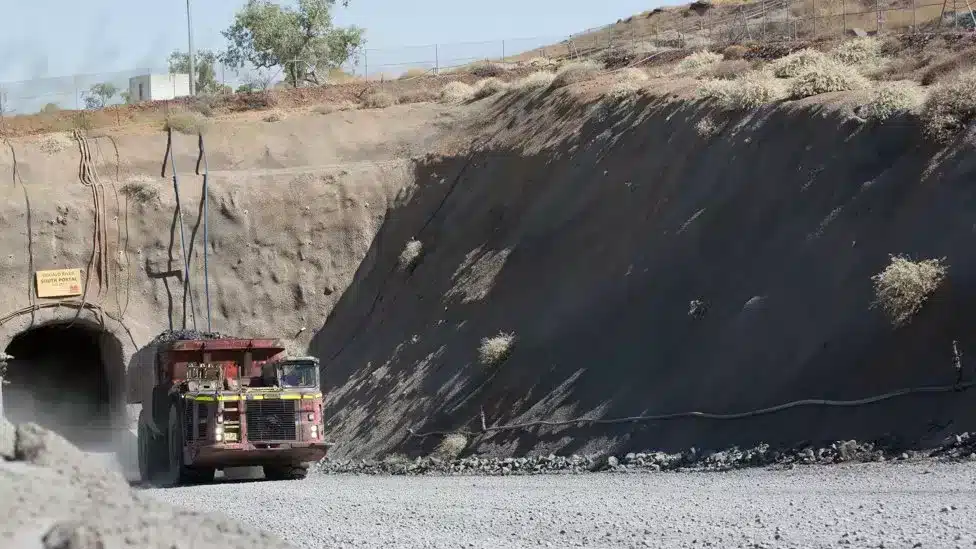
According to local media, Dylan Langridge and Trevor Davis were driving 125 meters (410 feet) deep on Wednesday within the Dugald River mine in Queensland when the ground broke way.
They plunged 25m into a void along with their utility car, a drill rig, and the drill rig operator.
The drill rig operator was able to flee and sound the alarm before receiving minor injury treatment.
The remains of Mr. Langridge and Mr. Davis were discovered following a “major” search operation at the mine near Cloncurry, according to Perenti, the international mining company that employed the two men.
“This is a devastating outcome and I want to extend my deepest sympathies and condolences to the families, friends, colleagues and loved ones of Trevor and Dylan, both of whom should have come home safely from work yesterday,” chief executive Mark Nowell said on Thursday.
The two men were reported to be “fly-in, fly-out workers”, a common practice in parts of Australia where staff are flown temporarily to remote work sites.
Mr Langridge, 33, joined Barminco, a Perenti company, in March 2020, Perenti said. He began working at the Dugald River mine later that year.
Mr Davis, 36, had worked at the mine since November 2021 after joining the company a year earlier. Both worked as charge-up operators, the company said.
All operations at the zinc mine were suspended during the search, according to mine owner MMG.
Rescuers worked all night using heavy equipment to gain access to the utility vehicle, and on Thursday morning MMG general manager Tim Akroyd said a mission had begun to recover it from below.
On 1 February, the group was discovered clinging to an esky cool box off the coast of Western Australia.
They allegedly told police that their boat capsized while they were out fishing.
However, they now claim that the men were involved in a drug shipment from abroad and are pleading with them to come forward.
When the trio was first saved near Eclipse Island, 17 km south of Albany in Western Australia, authorities applauded them and said in a press release that their case “highlighted the importance of wearing a lifejacket and carrying an emergency beacon.”
But WA police soon found inconsistencies in the trio’s story and contacted the Australian Federal Police (AFP), who started an investigation.
Six days after the men were rescued, a black plastic-wrapped package containing parcels of cocaine was found on a beach 54km (33 miles) west of Albany.
And the next day an overturned cabin cruiser was discovered with eight similarly wrapped packages, each containing about 40kg of cocaine.
Police believe the drugs were collected from the ocean and ferried to shore in the boat. How the drugs were initially left in the ocean is not known.
Detectives have now asked the public to help locate Mate Stipinovich, 49, and Karl Whitburn, 45, from Perth, and 36-year-old Aristides Avlontis, who is thought to be in the Northern Territory.
AFP Acting Commander Graeme Marshall said the seizure of the drugs would deal a “significant blow” to a “well-resourced syndicate”.
“The AFP estimates this seizure has saved the community more than $235 million in drug-related harm, including associated crime, healthcare costs, and loss of productivity,” he said.
Due to concerns about national security, Australia will remove surveillance equipment made in China from defence facilities.
It follows the discovery of 900 pieces of surveillance hardware made by the companies Hikvision and Dahua on government properties during an audit.
Similar actions were taken by the UK and the US last year due to concerns that the Chinese government might access the device data.
These worries are unfounded, according to Hikvision. A request for comment from Dahua has not been met.
In almost every department, including the departments of foreign affairs and attorney general, cameras and security equipment were found to be installed on more than 200 buildings.
At least one unit was also found in the defence department, but the total number at defence sites is unknown.
Defence Minister and Deputy Prime Minister Richard Marles on Thursday said the government would find and remove the cameras from any defence locations to make them “completely secure”.
“I don’t think we should overstate [the seriousness]… but it’s a significant thing that’s been brought to our attention and we’re going to fix it,” he said, adding the devices pre-dated his time in office.
Attorney General Mark Dreyfus said the government will review whether the cameras on other government buildings need to be removed as well.
Shadow Minister for Cyber Security James Paterson, who requested the audit, says they do.
Australia has “no way” of knowing whether data collected by the devices is being handed over to Chinese intelligence agencies, he said.
China’s national security law can be used to compel any organisation or citizen to “support, assist and co-operate with the state intelligence work”.
Senator Paterson also argued Australia should not be supporting Hikvision and Dahua for “moral” reasons. He said both companies have been directly implicated in the alleged human rights abuses and mass surveillance of Uyghurs in Xinjiang.
Hikvision says it is “categorically false” to represent them as a threat to national security.
“No respected technical institution or assessment has come to this conclusion,” a spokeswoman said.
The company says it cannot access end users’ video data and therefore cannot transmit it to third parties, she said.
But in November, the UK also blocked the installation of any new surveillance cameras made by Dahua and Hikvision on “sensitive sites” due to security concerns. It also said it would review whether devices already in place should be removed.
Days later the US banned the sale and import of new communications equipment from five China-based companies including Dahua and Hikvision.
Prime Minister Anthony Albanese said he was unconcerned about how the Chinese government might react to the move. “We act in accordance with Australia’s national interest. We do so transparently and that’s what we will continue to do,” he told reporters.
Ties between China and Australia soured after Canberra banned Huawei from its 5G network in 2018, and China responded with trade restrictions and tariffs on Australian exports such as coal, lobsters, and wine.
But relations have been improving under the centre-left government, which came to power in May 2022.
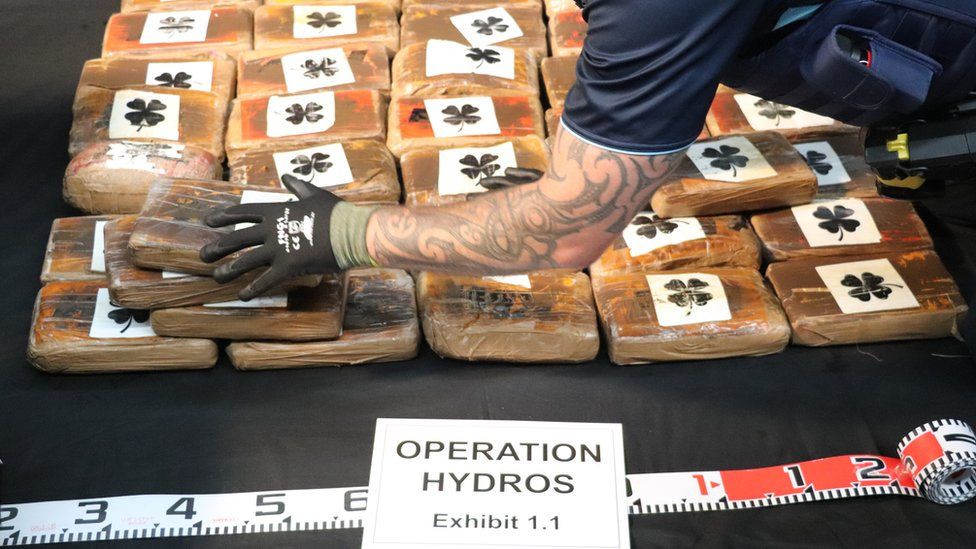
The cache, which weighs 3.2 tonnes (3,200 kg) in total and is worth $500 million NZD (£263 million; $316 million), was discovered drifting hundreds of kilometers northwest of New Zealand.
Police were of the opinion that it was going to Australia, where it would have been sufficient to supply that market for a year.
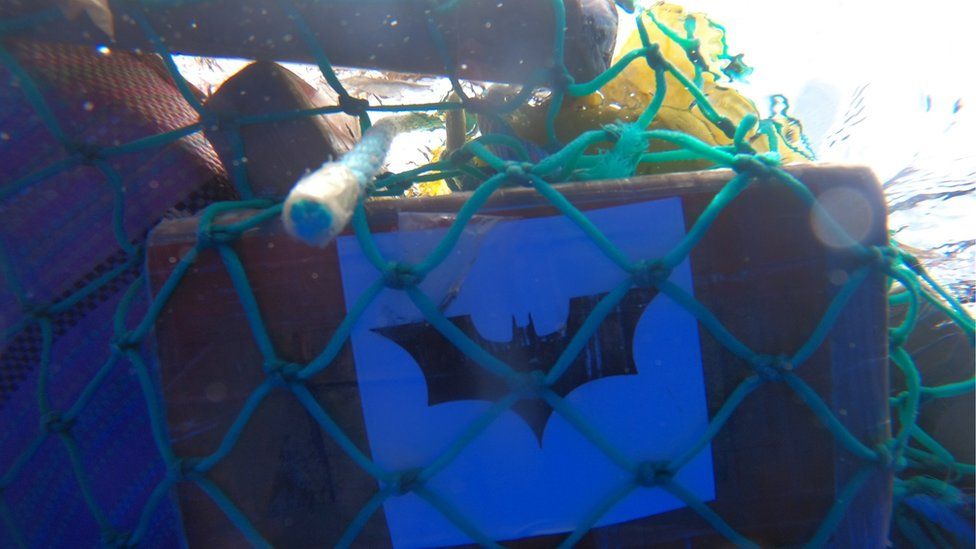
Some of the packages’ labels featured a Batman symbol and were buoyantly strung together.
Coke packets labeled with a clover leaf symbol were also visible in images released by New Zealand police and defense officials.
“This is the largest find of illicit drugs by New Zealand agencies, by some margin,” said New Zealand’s police commissioner Andrew Coster on Wednesday.
“It is more than New Zealand would use in 30 years,” he added.
Image caption,Some bales had a Batman symbol on them…Image caption,and others were wrapped in brown paper with a clover leaf symbol
New Zealand’s navy deployed a vessel to retrieve the massive shipment last week, which comprised 81 bales of cocaine.
They were brought to Auckland in New Zealand’s North Island on Tuesday and taken to a security facility to be documented and destroyed, officials said.
“We believe we have dealt a significant blow to an international criminal syndicate’s operation,” Mr Coster said.
The 27-year-old entered a guilty plea in a Canberra court after his attorneys were unsuccessful in getting the charge dropped due to his mental health.
During a quarrel in Canberra in 2021, Mr. Kyrgios pushed Chiara Passari onto the sidewalk, the court heard.
When sparing him a criminal record, the magistrate referred to the incident as “a single act of stupidity or frustration.”
In a statement following the decision, Mr. Kyrgios expressed his appreciation to the court for dismissing the charges without finding him guilty.
“I was not in good place when this happened and I reacted to a difficult situation in a way I deeply regret,” he said.
“I know it wasn’t OK and I’m sincerely sorry for the hurt I caused.”
Agreed facts tendered to the court say Mr Kyrgios pushed Ms Passari after she stopped his car from driving away while they were arguing on 10 January 2021.
Ms Passari reported the incident to police the next month but did not make a formal complaint. The couple reconciled and resumed a relationship, but after they broke up, Ms Passari made a formal complaint in December 2021.
Mr Kyrgios’ lawyer argued his client had been trying to de-escalate the fight bycalling an Uber and had repeatedly tried to “lawfully” move Ms Passari away from the car.
“It is in that context and the frustration that resulted, that my client reacted and the offence occurred,” Michael Kukulies-Smith said.
The court heard Mr Kyrgios had sworn at Ms Passari and told her to go away. He then put his hands on her hips and moved her an arms length from the door, but Ms Passari stepped back.
The tennis star then said: “I’m serious. I’m going to…” before pushing Ms Passari in the shoulder, causing her to fall.
According to the court, Ms Passari felt some pain and later noticed grazing on her knee.
The court heard Mr Kyrgios apologised the next day—an act that showed he accepted responsibility for his actions, his lawyer said.
Mr Kukulies-Smith also told the court on Friday there was: “a relationship between the mental health and the offending – even though he no longer suffers it to the same extent today.”
Mr Kyrgios’ psychologist, Sam Borenstein, told the court the tennis player’s mental illness was “recurrent” and he had suffered from thoughts of self harm – but his condition had been improving.
When sentencing Mr Kygrios, Magistrate Beth Campbell said he had been “a young man trying to extricate himself from a heighted emotional situation”.
“You acted in the heat of the moment,” she said.
“I am dealing with you in the same way I would deal with any young man in this court. You are a young man who happens to hit a tennis ball particularly well.”
She told Mr Kyrgios that references from family showed he had a lot of “love and support” around him.
The tennis player arrived at court on Friday on crutches following recent knee surgery. An injury forced him to withdraw from theAustralian Open last month.
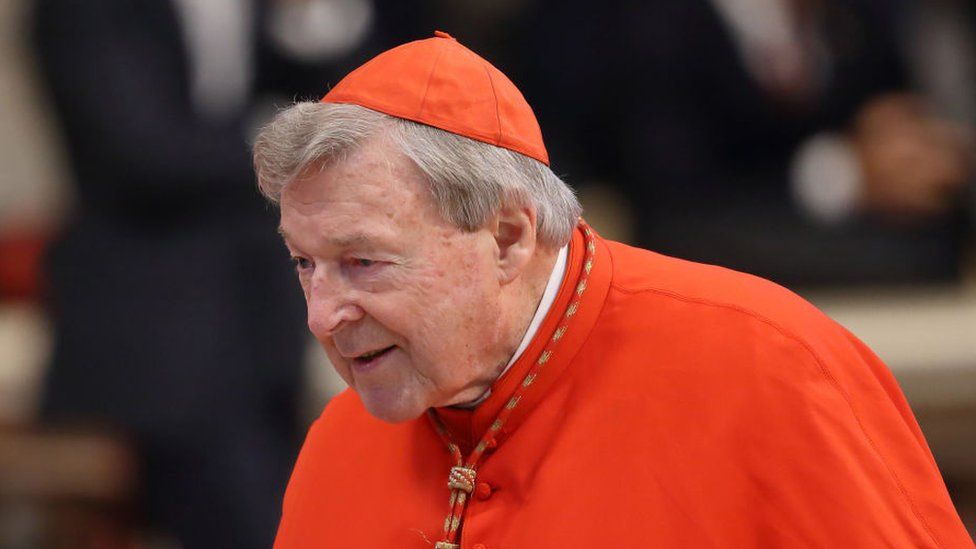
Cardinal George Pell’s funeral on Thursday in Australia, mourners murmured prayers and sang hymns; however, hecklers kept shouting his damnation.
The Catholic priest, who passed away last month at the age of 81 due to complications from surgery, leaves behind a difficult legacy.
He was once the top assistant to the Pope and the top Catholic in Australia.
But unsubstantiated claims that he committed child sexual abuse and covered it up damaged his reputation.
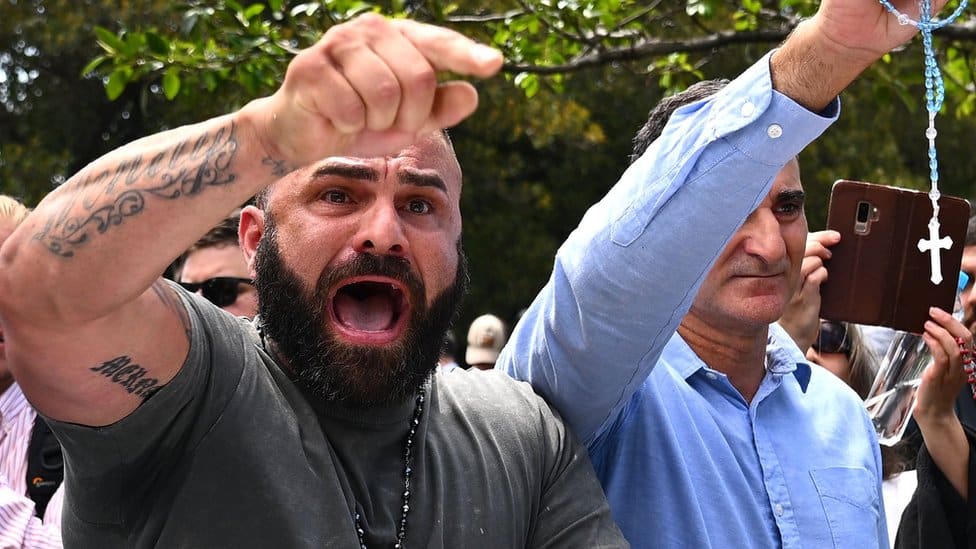
These accusations dominated Thursday’s events in Sydney. Police outside St. Mary’s Cathedral took action at one point to separate irate mourners from chanting protesters. One protester was earlier detained.
Inside the church, where Cardinal Pell served as the city’s archbishop for over a decade, dignitaries including former Prime Ministers John Howard and Tony Abbott filled pews. Hundreds more gathered in a forecourt to watch the requiem Mass on big screens.
Noticeably absent were Prime Minister Anthony Albanese and New South Wales Premier Dominic Perrottet – himself a devout Catholic. Both sent delegates.
In a message read to the congregation, Pope Francis praised Cardinal Pell’s “dedication to the gospel and to the Church”, while Archbishop of Sydney Anthony Fisher lauded him as “giant of the Catholic Church in Australia” who had been wrongly demonised.
Over six decades, Cardinal Pell rose to prominence in the Church as a strong supporter of traditional Catholic values.
He took on the role of Vatican treasurer in 2014 but left in 2017, returning to Australia to face trial on child sexual abuse charges. He was convicted, then later acquitted on appeal.
Many of Cardinal Pell’s supporters believe he was unfairly persecuted, and that his record on the issue of child sexual abuse is part of what made him great.
Mr Abbott, who spoke at the funeral, claimed Cardinal Pell had been the first Australian Catholic to sack child abusers and report them to police. Others pointed to the landmark – but controversial – compensation scheme he set up.
“He was greatest man I’ve ever known,” Mr Abbott said.
Image caption,Cardinal George Pell was Australia’s highest-ranking Catholic
Others who gathered to pay their respects said he was a kind man, quick to offer support and encouragement to those going through challenging times.
One mourner told the BBC he hopes the cardinal will be remembered “for the things he did and not for the things that he was accused of”.
“He was a good man,” Nathan, 33, added. “He fought for the rights of many people, contrary to popular belief.”
But outside the cathedral square, child abuse survivors remembered him as someone who had failed to protect them.
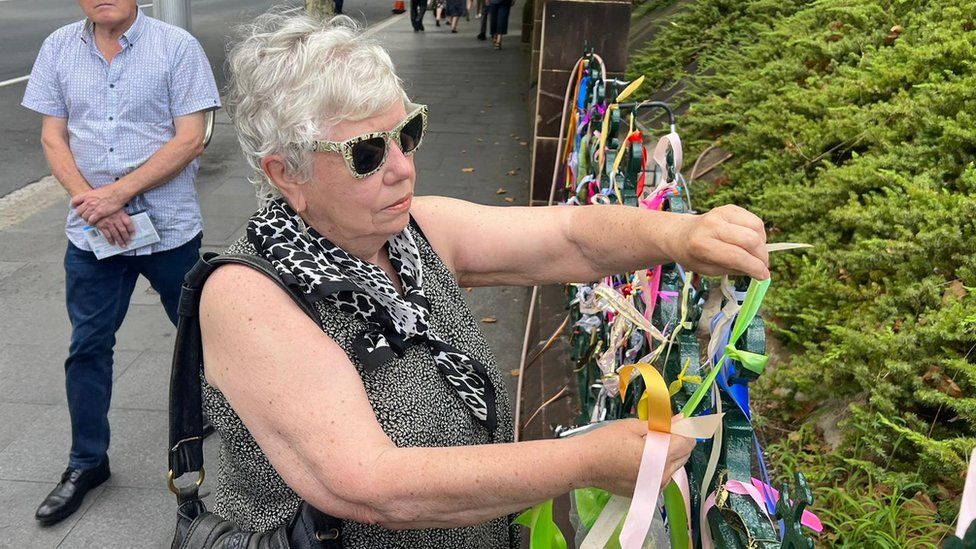
Some travelled from other states to tie ribbons to the church fence – a gesture seen in Australia as a tribute to victims of the Church abuse crisis. Most were cut down overnight on Wednesday by supporters of Cardinal Pell.
A landmark inquiry into Australian child sexual abuse found Cardinal Pell had personally known of abuse by priests as early as the 1970s and had failed to act. Cardinal Pell disputed the findings, saying they were “not supported by evidence”.
“I can’t let today pass without standing for him. He is not well enough to stand for himself,” she told the BBC.
Image caption,Maureen was among those who left hundreds of ribbon tributes for child sexual abuse survivors
Protesters gathering in parkland opposite the cathedral remembered Cardinal Pell as a “monstrous bigot”.
“Pell stood for blatant homophobia, misogyny… covering up abuse within the Catholic Church,” organiser Kim Stern told the BBC.
“We think it’s pretty disgusting he’s getting a send-off like this.”
Also out in force were police, trying to temper simmering tensions.
Thursday’s funeral follows weeks of tense debate in Australia about Cardinal Pell’s legacy.
Mourner Louisa Pastoois personally admired the cardinal, but she told the BBC she has accepted his legacy will be mixed.
“The legacy he leaves behind in the Church, and the world… is something different,” Louisa said.
“I think there needed to be someone to take the blame for all that’s happened in the church… there needs to be a face to the sins and unfortunately, it was his.”
The Reserve Bank of Australia (RBA) states that the new design will honour “the culture and history of the First Australians.”
The current five dollar note features a portrait of the late Queen Elizabeth II.
After the Queen passed away in 2017, discussions about Australia’s future as a constitutional monarchy resurfaced.
“This decision by the Reserve Bank Board follows consultation with the Australian government, which supports this change,” the bank said in a statement.
“The Bank will consult with First Australians in designing the $5 banknote. The new banknote will take a number of years to be designed and printed. In the meantime, the current $5 banknote will continue to be issued. It will be able to be used even after the new banknote is issued,” it added.
The RBA currently has no plans to change the design of any other denomination of Australian banknotes, a spokesperson told the BBC.
It has not yet set a date for when it will reveal the new five dollar note design, they added.
The decision was welcomed by Aboriginal politicians and community leaders.
“This is a massive win for the grassroots, First Nations people who have been fighting to decolonise this country,” Lidia Thorpe, a Greens senator and DjabWurrung Gunnai Gunditjmara woman.
First Nations people lived in Australia for at least 65,000 years before British colonisation, according to recent estimates.
This is a massive win for the grassroots, First Nations people who have been fighting to decolonise this country. First Nations people never ceded our Sovereignty to any King or Queen, ever. Time for a Treaty Republic! pic.twitter.com/J4LjyFXwUe
The King became the British monarch after his mother’s death in September.
As the British monarch, he is also the head of state of Australia, New Zealand and 12 other Commonwealth realms outside the United Kingdom. The role is largely ceremonial.
The British monarch’s portrait has appeared on at least one design in every series of Australian banknotes.
However, in September Australia said the image of the new monarch would not automatically replace the Queen on its five dollar notes, and that she might be replaced by Australian figure.
Much of Australia’s currency already features Indigenous Australian figures and artworks.
In a 1999 referendum Australian voters chose to keep the British monarch as the country’s head of state.
In 2021, Australia officially changed its national anthem to remove reference to the country being “young and free”.
A major mining company Rio Tinto, has apologised for losing a tiny radioactive capsule that was being transported across Western Australia.
Along the 1,400 km (870 mile) route, there is an urgent search for the object, which is about the size of a pea.
A tiny amount of radioactive Caesium-137 is present in the capsule, and anyone who comes into contact with it runs the risk of developing serious illness.
This might involve burns, radiation sickness, or skin damage.
Radiation detectors and other specialised equipment are being used by emergency services to find the device.
But Australia’s Department for Fire and Emergency Services said the silver capsule – which is just 6mm (0.24 inches) in diameter and 8mm long – was so small it might have become lodged in the tyre of a vehicle passing along the road.
The capsule may have gone missing up to two weeks ago.
Rio Tinto, which has big mining operations in Australia and has been the subject of a series of controversies in recent years, said it was sorry for the alarm that had been caused.
The firm would be launching its own investigation into what had happened, it said in a statement.
The lost device is part of a density gauge, common in the mining industry. It was being used at Rio Tinto’s Gudai-Darri mine in the remote Kimberley region.
The gauge was being transported by a subcontracted company, who picked it up from the mine site on 12 January to move it to a storage facility in the north-east suburbs of Perth.
When it was unpacked for inspection on 25 January the gauge was found broken apart and the radioactive capsule was gone. One of four mounting bolts and screws were also missing.
The authorities said vibrations during transit may have caused the bolts to become loose, allowing the capsule to fall through gaps in the casing and truck.
Analysis, Phil Mercer, Sydney
The search route is huge. It is roughly equivalent to the distance by road from John O’Groats in Scotland to Land’s End in Cornwall, or from Washington DC to Orlando, Florida.
Specialist radiation detection equipment is being fitted to patrol vehicles that will cover the length of it. Over five days, they will travel in both directions along the Great Northern Highway at speeds of around 50km/h (30mph).
Emergency authorities in Western Australia say the chances of finding the tiny device are “pretty good”. But if it has become lodged in another vehicle’s tyre it could be well outside of the search zone already.
Or if it is found by a member of the public, they might inadvertently keep it as a souvenir.
So the authorities are keen to stress that holding the capsule could result in radiation burns, while long-term exposure could cause cancer.
“As part of this investigation we are working closely with the contractor to better understand what went wrong in this instance,” said Simon Trott, chief executive of Rio Tinto’s iron ore division.
“Rio Tinto engaged a third-party contractor, with appropriate expertise and certification, to safely package the device in preparation for transport off-site ahead of receipt at their facility in Perth.
“Prior to the device leaving the site, a Geiger counter [a device to detect radioactivity] was used to confirm the presence of the capsule inside the package,” said Mr Trott.
Image caption,Rio Tinto’s Gudai-Darri mine is in a remote region of Western Australia
State officials have issued a radiation alert across a vast swathe of Western Australia as the search for the capsule continues.
Exposure to trace quantities of the metal is like “receiving 10 X-rays in an hour, just to put it in context, and… the amount of natural radiation we would receive in a year, just by walking around,” said Western Australia’s chief health officer Andrew Robertson.
The state’s desert is remote and one of the least populated places in the country. Only one in five of Western Australia’s population lives outside of Perth, the state’s capital.
However, officials say they are concerned that someone could pick up the capsule, not knowing what it is.
“If you have contact or have it close to you, you could either end up with skin damage, including skin burns… and if you have it long enough near you, it could cause what is called acute radiation sickness, and that will take a period of time,” Mr Robertson added.
This incident comes as Rio Tinto tries to repair its reputation in Australia after it was hit by a backlash for destroying sacred Aboriginal rock shelters in Western Australia.
In 2020, Rio Tinto blasted the 46,000-year-old rock shelters at Juukan Gorge to expand an iron ore mine, sparking a major outcry that led to several of the company’s top bosses standing down.
And last year, a parliamentary inquiry found sexual harassment was rife at Australia’s mining firms, after an internal review at Rio Tinto found more than 20 women had reported actual or attempted rape or sexual assault over five years.
Graham Arnold will continue serving as the national team’s head coach until the 2026 World Cup.
In Qatar last year, the Socceroos achieved a feat similar to that of 2006. They advanced to the round of 16.
Australia won against Tunisia and Denmark to post their best showing at a World Cup finals after falling to eventual champions France in their opening group match. In a close match in the round of 16, they fell to Argentina, led by Lionel Messi, 2-1.
Arnold, who was caretaker manager of the national team between 2006 and 2007 and also took charge of Australia’s Olympic side at the delayed Tokyo 2020 tournament, has now signed a new contract to keep him in place through to the 2026 World Cup, which will be held in the United States, Mexico and Canada.
Football Australia chair Chris Nikou said: “What Graham and the entire squad achieved under the most challenging of circumstances during the last FIFA World Cup campaign was exceptional, and we are delighted that we have secured his services for a further four years.
“Football Australia is ambitious, where we expect continued progress and results from our senior and youth national teams, and through our discussions with Graham over recent weeks, we know our thinking is aligned on the future direction of Australian football and the Socceroos.”
James Johnson, Football Australia’s chief executive, noted Arnold had “contributed to some of Australian football’s most iconic moments”, but that “his exploits as the Socceroos head coach have propelled him into a league of his own.”
Arnold said: “I love Australia and I love Australian football, and nothing in football can ever match the elation, pride and sense of achievement I and the entire set-up felt in Qatar.
“The hunger to continue in the role has never been stronger and I know I have more to give to the Socceroos’ programme and Australian football, where I want to deliver more smiles for our fans as we did in Qatar.
“I approach the next four years with a clean sheet, which is underpinned by a burning ambition to provide more opportunities to our leading emerging and established talent, whilst challenging for major titles starting with the AFC Asian Cup in Qatar next year.”
Arnold explained he hopes Australia’s performance at the World Cup convinces the country’s government to allocate more funding to the sport and establish a permanent base for the Socceroos.
“It’s crazy to think the Socceroos don’t get any high-performance funding from the government,” he told reporters.
“They don’t have a home. How can you have a football culture if you don’t have a home?
“Funding will help the programmes but the home of football is crucial. It’s something as a sport we’ve missed out on. We’ve got nothing, nowhere to go.”
Arnold has won 30 of his 51 games in charge of Australia, with his 59 per cent win rate the highest of any of the 12 coaches to have overseen the Socceroos on more than 20 occasions.
In response to the musician’s anti-Semitic remarks, pressure has increased to deny him an entry visa if he attempts to travel to Australia.
Ye, formerly known as Kanye West, the famous rapper, may not be granted a visa to enter Australia because of his anti-Semitic remarks, according to a minister in the Australian government.
In response to media reports that the American celebrity planned to visit the family of his new Australian partner Bianca Censori in Melbourne the following week, Australia’s Education Minister Jason Clare issued a statement on Wednesday.
Clare said he was unaware of Ye’s visa application but noted that anti-Semitic individuals have previously been denied entry to Australia.
“I don’t know if he’s applied for a visa yet but google it and you’ll see that it seems like he’s a pretty big fan of a person who killed six million Jewish people last century,” Clare told the Today show on Australia’s Nine Network television.
“People like that who’ve applied for visas to get into Australia in the past have been rejected. I expect that if he does apply, he would have to go through the same process and answer the same questions they did.”
A spokesperson for Ye did not immediately respond to a request for comment.
Seven Network News reported that Ye and Censori intend to visit her family who live in the northeast Melbourne suburb of Ivanhoe next week.
Last month, Ye praised Hitler in an interview with conspiracy theorist Alex Jones. Twitter suspended Ye after he tweeted a picture of a swastika merged with the Star of David. Ye has also been dropped by major corporate partners, including Adidas, over his comments.
Australia’s Migration Act sets security and character requirements for non-citizens to enter the country. Any decision on whether Ye gets an Australian visa would be made by Immigration Minister Andrew Giles, whose office said he could not comment on individual cases due to privacy reasons.
Australia has previously refused or revoked visas to far-right figures for failing the “good character” test. British conspiracy theorist David Icke had his visa revoked in 2019, just before starting a speaking tour.
Gavin McInnes, founder of the Proud Boys, a male-only group who identify as “Western Chauvinists”, was denied a visa in 2018 after a public campaign that included a petition with 81,000 signatories, according to local media.
Australia’s opposition leader Peter Dutton said if he were in government, he would be inclined to bar Ye on character grounds.
“My inclination would be not to allow him in,” Dutton told Melbourne’s Radio 3AW on Tuesday.
“His conduct and his behaviour is appalling, and he’s not a person of good character,” Dutton said.
The Liberal Party’s David Coleman said on Wednesday the decision to deny Ye a visa should be “easy”.
No way Kanye West passes the character provisions of the Migration Act. Easy decision for @andrewjgiles if he applies for a visa.
Peter Wertheim, co-chief executive officer of the Executive Council of Australian Jewry, met government officials on Tuesday to argue for Ye’s entry ban.
“We had a sympathetic hearing,” Wertheim said on Sky News.
The European-designed Taipan helicopters in Australia’s fleet are being replaced by the Black Hawks ten years early.
A decade earlier than expected, Australia has announced that it will replace its fleet of Taipan military helicopters with 40 Black Hawk helicopters from the United States, at an estimated cost of 2.8 billion Australian dollars ($1.97 billion).
Defence Minister Richard Marles announced on Wednesday that Australia’s fleet of MRH-90 Taipan helicopters, which have been beset for years by expensive maintenance problems, will be replaced by UH-60M Black Hawks from US manufacturer Lockheed Martin Corp.
“We’ve just not got the flying hours out of the Taipan that we would need,” Marles told ABC News. “We’re confident that we can get that from the Black Hawks. It’s a platform we’re familiar with.”
The French government has a significant stake in Airbus – the European aerospace company that manufactures the Taipans – and Paris had been urging Australia to keep its 40-strong fleet.
Marles said he had spoken with his French counterpart several times and was confident the US helicopter deal “won’t interrupt” the renewed relationship with France.
In a statement, Airbus said it “acknowledges” the decision and that Australia remained a key market for the company.
Royal Australian Navy aircrew from the 808 Squadron beside their MRH90 Taipan helicopter in Wollongong, Australia in November 2021. Australia will ditch its fleet of European-designed Taipans and instead buy US Black Hawks [File: Kylie Gibson/ADF via AP]
Dropping the Taipans comes as relations between Paris and Canberra had warmed following Australia’s decision in 2021 to ditch French-made submarines for nuclear subs to be built by the United States and the United Kingdom.
The shock move by Australia’s then-conservative government to abruptly rip up the 90-billion-dollar ($62bn) agreement with France for the provision of submarines sparked a bitter diplomatic dispute and relations plummeted.
At the height of the controversy, French President Emmanuel Macron accused Australia’s then-Prime Minister Scott Morrison of lying about the deal, and Paris recalled its ambassador from Canberra.
Marles said he was confident that the helicopter deal would not damage relations with France, which had been somewhat repaired since the submarine row.
The acquisition of Black Hawks comes as Australia moves to boost defence spending amid China stepping up its presence in the Indo-Pacific region.
Australian Major General Jeremy King said the Black Hawks would meet the country’s strategic needs.
“This acquisition will mean we can continue to defend Australia and respond in times of need in a safe and effective way for years to come,” King told ABC News.
A mid-air collision between two helicopters near Seaworld on Australia‘s Gold Coast has resulted in four fatalities.
According to Queensland Police’s preliminary investigations, the collision occurred while one aircraft was taking off and the other was landing.
The identical helicopter carried those who died. Three further people are in serious condition.
Minor injuries were sustained by two of the six passengers aboard the other aircraft, which had to make an emergency landing.
The crash occurred at around 14:00 local time, and the Australian Transport Safety Bureau (ATSB) is looking into it (04:00 GMT).
The two planes crashed down close to Main Beach, a popular tourist destination approximately 75 kilometers (47 miles) south of Brisbane.
According to Queensland Police Service spokesperson Gary Worrell, the four fatalities and three grave injuries all took place in the same aircraft.
“It’s a difficult scene,” he said. “Due to the area it’s located, on the sand bank, it was difficult to gain access, to get our emergency services to the scene to manage it appropriately.”
Images from the accident site show the area littered with wreckage and a broken helicopter that appears to be resting upside down next to the Seaworld resort.
The other helicopter, which is marked on its fuselage with the emblem of a well-known marine park, appears to have made an emergency landing following the incident.
Local police have blocked off traffic on Seaworld Drive, the main entrance to the marine park.
They advised drivers and pedestrians to stay away from the area while emergency personnel assessed the situation.
Investigators from the ATSB’s offices in Brisbane and Canberra are being deployed to the scene to gather evidence, examine the wreckage and interview witnesses.
ATSB chief commissioner Angus Mitchell has also asked eyewitnesses who saw the collision or the helicopters in flight to contact investigators.
A preliminary report will be made public in the next six to eight weeks, with a final report to follow once the investigation is complete, he added.
The Gold Coast region is currently in its peak tourist season, with children on their summer breaks.
A British woman has been stabbed to death during a break-in at her home in Australia.
Emma Lovell, 41, originally from the Ipswich area, died after confronting intruders at her home in North Lakes, Brisbane, on Boxing Day night, police said.
Her husband Lee Lovell, 43, who was also stabbed, described his wife as the “glue to our family”.
Two boys, aged 17, have been charged with murder.
Mr Lovell, whose injuries were non-life threatening, told reporters his family was “devastated”.
Image caption, The fatal stabbing took place at the Lovell’s home near Brisbane
“Emma was the glue to our family,” he said
“She was such a beautiful person. We’re all just devastated from her loss.
“It’s senseless. I don’t know what people do it for.”
The Lovells have two daughters.
Mr Lovell, who is also from the Ipswich area, shared photographs on social media of them all together at a nearby Sunshine Coast beach on Christmas Day.
Image caption, People have left floral tributes outside the Lovell’s Brisbane home
In a statement, the Queensland Police Service (QPS) said an altercation took place inside an address in Whitfield Crescent at 23:30 UTC and “moved outside to the front yard”.
“Two offenders fled on foot prior to police arrival,” it said, and “investigators, with the assistance of the dog squad, located four teenagers at a nearby location just before 04:00” on 27 December.
Two 17-year-old boys, one from Holland Park and the other Zillmere, the QPS said, were charged with one count each of murder, attempted murder and entering a dwelling with intent in company.
Both have been denied police bail and were due to appear in the Brisbane Children’s Court.
A 17-year-old boy and a 16-year-old boy continue to assist police with inquiries, the force said.
Two police officers were killed in a suspected ambush in rural Australia. The suspects appear to have posted a video during the attacks where they confessed to the killings.
Although the Queensland Police claimed to be aware of the tape, they could not confirm whether Gareth and Stacey Train were on it.
Police shot the couple and Gareth’s brother Nathaniel before killing them along with two other officers and a neighbour.
Police are investigating the group’s potential ties to conspiracies.
Officials said the suspects used “many weapons”, but are yet to reveal what kind – or any motive for the attack.
But Prime Minister Anthony Albanese on Thursday said it was a “vicious and deadly ambush”. The Queensland Police unionboss Ian Leavers claimed the property was set up with a sophisticated surveillance system and a stockpile of guns and ammunition.
In videos uploaded to a YouTube account – first reported by local media outlet Crikey on Friday morning – a pair sharing the likeness of Gareth and Stacey rail against police.
On the account, which has since been deleted, they use the names Daniel and Jane. Crikey and other local outlets have reported they are Gareth and Stacey’s middle names.
The BBC has verified the existence of the YouTube account using internet archives, but not the identity of its owners.
The most recent video appears to show Gareth, 47, and Stacey, 45, shrouded in darkness, admitting to the killings. The man refers to “devils” and “demons”.
The video was published at 19.39 on Monday, three hours after four officers arrived at the property in Wieambilla – 270km (168 miles) west of Brisbane – and were met with a hail of bullets.
Two constables – Matthew Arnold and Rachel McCrow – were killed, as was 58-year-old Alan Dare, a neighbour who turned up at the house concerned it was on fire.
After a six-hour standoff, specialist police shot and killed the three suspects.
Gareth’s brother and Stacey’s ex-husband, Nathaniel Train, is the missing man police were at the property to check on. He does not feature in the video.
In a statement, Queensland Police said it would be “inappropriate” to comment on the video while the “complex and thorough” investigation is underway.
Queensland Police Commissioner Katarina Carroll has previously said the investigation will looking into the suspects’ online activity.
“We’re definitely investigating every avenue – whether it be premeditated, some of the stuff that’s online from these people,” she said.
On Thursday, Home Affairs Minister Clare O’Neil said radicalisation was likely to have played a role in the shooting.
“Radicalisation is not new. But… conspiracy theories, disinformation and misinformation – problems as old as time – are being turbocharged by technology into terrible acts of violence,” she told parliament.
In Australia,toxic spinach has prompted an urgent health alert after consumers experienced severe sickness and hallucinations.
Nine people who consumed the Riviera Farms baby spinach from Costco required medical attention.
According to medical professionals, these patients have also experienced delirium, elevated heart rates, and blurred vision.
The spinach, according to Riviera Farms, was tainted by a weed, but no other products were impacted.
New South Wales Health has warned any packets of the brand’s spinach with an expiry date of December 16 are not safe to consume and should be thrown out.
It also urged anyone who has experienced any unusual symptoms after eating the spinach to immediately seek hospital care.
“No one has died, so we’re very happy with that and we hope it remains that way, but these people are quite sick… to the point of marked hallucinations, where they are seeing things that aren’t there,” Dr Darren Roberts, from the state’s Poisons Information Centre, told the Sydney Morning Herald.
A Riviera Farms spokesperson said they had taken action immediately, asking shops to remove them from shelves.
“There is no suggestion, and to our knowledge no possibility, that any other products have been impacted by this weed,” they said.
All of those affected so far are from Sydney, NSW Health said, but it has alerted authorities in other states as it investigates.
The long-held belief that female snakes lacked a clitoris has been disproved by the discovery that they do in fact possess one.
The first accurate anatomical descriptions of the female snake genitalia were published in research on Wednesday.
Hemipenes, the penises of snakes, have been researched for many years. Some of them have spikes embedded, and they are forked.
However, researchers claimed that the female sex organ had been “overlooked in comparison”.
It wasn’t so much that it was difficult to find as that researchers weren’t really looking for it.
“There was a combination of female genitalia being taboo, scientists not being able to find it, and people accepting the mislabelling of intersex snakes,” said Megan Folwell, a doctoral candidate and lead researcher.
Her co-authored paper published in the Proceedings of the Royal Society B Journal this week locates the clitoris in a female snake’s tail.
Snakes have two individual clitorises – hemiclitores – separated by tissue and hidden on the underside of the tail. The double-walled organ is composed of nerves, collagen and red blood cells consistent with erectile tissue, researchers said.
Ms Folwell said she started looking for it because the literature she had read about snake’s female sexual organs – that they didn’t have them or had been bred out through evolution – “just didn’t quite sit right with me,” she said.
“I know it [the clitoris] is in a lot of animals and it doesn’t make sense that it wouldn’t be in all snakes,” she said.
“I just had to have a look, to see if this structure was there or if it’s just been missed,” she said.
She started on a death adder and found the clitoris – a structure in the shape of a heart – pretty immediately, near the snake’s scent glands which are used in attracting mating partners.
“There was this double structure that was quite prominent in the female, that was quite different to that of the surrounding tissue – and there was no implication of the [penis] structures I’ve seen before.”
Her team then checked this in a variety of snakes – dissecting a total of nine species including the carpet python, puff adder and cantil viper. The hemiclitores varied in size but were distinct.
Re-writing snake sex
The finding now allows for new theories about snake sex – which could involve female stimulation and pleasure.
Until now, scientists believed snake sex was “mostly about coercion and the male snake forcing the mating,” says Ms Folwell.
This was because male snakes were typically quite physically aggressive during mating while the female was more “placid”.
“But now with the finding of the clitoris we can start looking more towards seduction and stimulation as another form of the female being more willing and likely to populate with the male,” she said.
It also casts a new light on hypothesised snake foreplay. Male snakes will often wrap around their partner’s tail – where the clitoris is located – and pulse.
“There’s a lot of behaviour potentially signalling they might be there to stimulate the female.”
Ms Folwell said there had been a positive reception to the finding in the snake science world – “a bit of shock that it’s been missed for so long, but also surprise because it makes sense that it exists”.
She noted that in some snake species, the clitoris is fragile and particularly small – less than a millimetre.
There had also been a prevailing belief that female snakes had a smaller version of the male hemipene, as is the case in monitor lizards. As such, in some studies of intersex snakes, scientists had mislabelled a hemipenes as a hemiclitores.
One of the other researchers on the project, Associate Prof Kate Sanders at the University of Adelaide, said the discovery wouldn’t have happened if not for Ms Folwell’s “fresh perspective”.
Six people, two of whom were police officers, have been shot and killed at a remote Australian property following an alleged ambush.
270 kilometres (168 miles) west of Brisbane, Queensland, in Wieambilla, police said they were looking for a missing person when they came under fire.
Three suspects were fatally shot by police after a protracted siege. According to authorities, a reason is still unknown.
Australia was experiencing a “heartbreaking day,” according to Prime Minister Anthony Albanese.
Four police officers – who are armed in Australia – initially went to the property on Monday afternoon local time, after a request from New South Wales police.
Constables Matthew Arnold, 26, and Rachel McCrow, 29, were shot dead as they approached the property. Another officer suffered a “bullet graze” and the fourth escaped without physical injury, police said.
A neighbour, 58-year-old Alan Dare, was killed by the suspects after going to the property to investigate.
The siege involved “many weapons” and continued for hours, before the suspects – two men and a woman – were shot by specially trained officers, authorities said.
One was identified as Nathaniel Train, 46, a former school principal and the missing person police had been sent to check on.
The others were his brother Gareth Train, 47, and Gareth’s wife Stacey Train, 45, who co-owned the property.
Queensland Police Commissioner Katarina Carroll described the attack as an “unimaginable tragedy” and the force’s largest loss of life in a single incident in many years.
“Those officers did not stand a chance. The fact that two got out alive is a miracle,” she said after visiting the scene on Tuesday.
The uninjured officer – a rookie sworn in only weeks ago – managed to find cover and call for help.
The suspects had then tried to draw her out by lighting a fire, said Queensland Police Union president Ian Leavers.
“She did not know whether she was going to be shot, or [if] she was going to burnt alive,” he told the Australian Broadcasting Corporation (ABC).
“I do know she was sending messages to loved ones, saying she was at a point where she thought it was her time. What was going through her mind, one cannot comprehend.”
Specialist police later arrived and took over the operation.
“Both under 30 years of age. Both had wonderful careers and lives ahead of them,” the visibly emotional commissioner told reporters.
Several media outlets reported that Gareth Train appeared to have contributed often to online forums which promoted conspiracy theories. In posts he had expressed a distrust of police and wrongly claimed the country’s deadliest mass shooting was a government ploy to disarm Australians, The Guardian reported.
Australia introduced some of the world’s strictest gun regulations after 35 people were killed in a massacre by a lone gunman at Port Arthur, Tasmania, in 1996.
Since then, there have been only three mass shootings – defined in Australia as those resulting in at least four deaths, excluding perpetrators.
Mr Albanese said Monday’s shooting was devastating “for everyone who loved these Australians” and “our hearts go out to those in the grip of terrible grief”.
He noted it would be a “rough day indeed” for all police officers and their families. “This is not a price that anyone who puts on the uniform should ever pay,” he said.
Local MP David Littleproud said it had left his community “numb”.
“[These] are small country towns where this sort of thing just doesn’t happen,” he told the ABC.
The deaths will be investigated by the coroner and the police response will be examined by the force’s ethical standards command, in line with standard practice.
Two police officers and a member of the public were killed in a shooting at a remote Queensland property.
Officers were responding to reports of a missing person in Wieambilla, which is located 270 kilometres (168 miles) west of Brisbane.
The offenders are still at large, according to police at a press conference. Residents have been told to stay inside “until further notice.”
Queensland Police Commissioner Katarina Carroll said four officers responded to the scene.
One received a “bullet graze”, while another escaped the property. Both are receiving treatment in hospital, she said.
Ms Carroll said the offenders are yet to be taken into custody, and that the police operation involves PolAir – which provides aerial support to police – and specialist forces.
She added that it is the largest loss of life suffered in one incident in recent times, paying tribute to the officers who “paid the ultimate sacrifice to keep our community safe”.
Mark Ryan, Queensland Police Minister, also spoke at the news conference, describing the incident as “a traumatic, confronting and devastating event for our community”.
Australian Prime Minister Anthony Albanese said it was a “heartbreaking day for the families and friends” of the Queensland Police officers who lost their lives in the line of duty.
The Reserve Bank of Australia (RBA) has raised interest rates to a decade high, putting mortgage holders under even more strain as it seeks to calm soaring prices.
The RBA raised the benchmark rate, which determines how much commercial banks charge for loans, by a quarter percentage point to 3.1 percent on Tuesday.
The increase, combined with six previous increases since May, adds more than $1,000 Australian dollars ($672) to the monthly cost of an average mortgage.
The move follows a smaller-than-expected quarter-percentage-point increase in October, which deviated from counterparts such as the United States Federal Reserve’s aggressive stance.
According to RBA Governor Philip Lowe, inflation remains too high at 6.9 percent, far above the target range of 2-3 percent.
“Global factors explain much of this high inflation, but strong domestic demand relative to the ability of the economy to meet that demand is also playing a role,” Lowe said in a statement.
Lowe said he expected inflation to rise to 8 percent during the final quarter before easing next year.
“The board expects to increase interest rates further over the period ahead, but it is not on a pre-set course,” he said. “It is closely monitoring the global economy, household spending and wage and price-setting behaviour.”
He added that the central bank remains “resolute in its determination to return inflation to target” and will do “what is necessary to achieve that”.
The RBA noted that the labour market remains tight, with unemployment at 3.4 percent in October — the lowest since 1974 — and many firms struggling to hire workers.
Still, there are signs the rate hikes are already cooling the economy.
Australia’s inflation slowed to 6.9 percent in October, while home prices fell for a seventh straight month in November, a drag on household wealth that could curb consumer confidence and consumption over the months ahead.
Argentina beat Australia 2-1 on Saturday to advance to the quarterfinals, and Lionel Messi scored his first goal in the World Cup elimination stage to commemorate his 1,000th career appearance.
At Ahmad bin Ali Stadium, Australia was content to delay their opponents, but as halftime drew near, Messi used his signature style to split the Socceroos open, picking out the bottom-left corner to score.
As exquisite as Argentina’s first goal was, their second goal almost bordered on the ludicrous as Australia goalie Mathew Ryan sent the ball to Julian Alvarez, who scored the game-winning goal with ease.
When Craig Goodwin’s shot bounced off Enzo Fernandez and past Emiliano Martinez, Australia cut the deficit in half, but Argentina never looked like they would be beaten as they set up a quarterfinal matchup with the Netherlands.
Argentina found it difficult to advance early on due to Graham Arnold’s team’s staunch defense, but La Albiceleste can credit their seven-time Ballon d’Or winner for helping them take the lead with their first significant attack.
After 35 minutes had passed, Messi ducked inside from the right flank to grab Nicolas Otamendi’s pass before putting a brilliant side-footed finish over Ryan’s helpless dive.
As Argentina sought a second goal after the break, Messi had a shot ricochet into Ryan’s arms. However, Ryan was at fault when Argentina extended their lead after 57 minutes.
When pressured by Rodrigo De Paul and Alvarez, Ryan puzzlingly attempted to dribble his way out of difficulty, and the Manchester City striker executed the easiest of finishes after seizing the ball.
When Fernandez unintentionally deflected Goodwin’s long-range shot into the bottom right corner, Australia unexpectedly cut the lead. Lisandro Martinez then made a superb last-ditch block to stop Aziz Behich from scoring a dramatic equalizer.
As Argentina clung on to secure their advancement, substitute Lautaro Martinez came close on three separate occasions until Emiliano Martinez stopped Garang Kuol from close range at the end.
Messi surpasses Maradona, chases Batistuta
On the day Messi brought up 1,000 career appearances – 169 of them for Argentina, he also inched closer to making another piece of history for his country.
Messi’s opener saw him surpass Diego Maradona and Guillermo Stabile’s tallies of eight World Cup goals. Only Gabriel Batistuta (10) has now outscored Messi when representing the country at the tournament.
Alvarez impresses once more
While Messi stole the headlines on Saturday, his 22-year-old strike partner also demonstrated his worth with another energetic performance.
Alvarez’s goal may have owed much to the poor decision-making of Ryan, but it made the City striker just the sixth Argentina player to score on each of his first two World Cup starts, and the first since Hernan Crespo did so in 2006.
Once every four years players from across the globe get a chance to perform on the world stage and force their way into the football zeitgeist.
Whether it is a young midfielder from Ghana who has been battling injuries the past couple of seasons, or a mercurial Dutch forward trying to push his way out of the Eredivisie, it is the perfect launchpad to alter the course of a player’s career.
Stats Perform has identified four players who have lit up Qatar and, in turn, have seen their profile and transfer stock skyrocket, opening the door to a new world of possibilities come the January transfer window.
Take a look at these young leading lights…
Cody Gakpo, the Netherlands
Cody Gakpo has perhaps been the breakout star of the tournament, finding the back of the net in all three of the Netherlands’ group matches.
Having spent his entire career with PSV, the 23-year-old six-foot-four forward took a huge step forward in the 2021-22 season when he shattered his best goal return, following up his 11 goals in the 2020-21 campaign with 21 last time out.
While those in the Netherlands set-up were waiting to see if he could replicate his terrific 12 months, he has taken another leap, with 12 goals and 14 assists in 19 combined Eredivisie and Europa League contests this term.
There were rumours in the most recent transfer window that Leeds United were among the clubs looking to lure Gakpo away from PSV for a fee in the range of €30million, but he opted to reject their contract offer in the hope of landing at one of Europe’s biggest clubs.
That bet on himself has proven to be a masterstroke, with his performances on the Qatar stage well and truly putting him on the radar of Champions League sides including Real Madrid, Liverpool and Bayern Munich, per Dutch journalist Marco Timmer.
He became the first player from any European nation since 2002 to score in each group match, while he also became only the second player to put his side 1-0 up in all three group fixtures.
Enzo Fernandez, Argentina
Just over six months ago, Enzo Fernandez was playing for River Plate back in Argentina, but just half a season after arriving at Benfica for a deal worth up to €18m, the attacking midfielder could be moving on to greener pastures.
Fernandez, 21, broke into the Argentina squad while still with River Plate, but did not receive his senior debut until September 24 this year.
His lead-up to the World Cup was strong enough to book his ticket to Qatar, and after coming off the bench in Argentina’s first group-stage loss to Saudi Arabia, he came on and scored against Mexico, forcing his way into the starting XI before contributing an assist against Poland.
His rapid rise has not gone unnoticed, and Marca is reporting Benfica have slapped a €100m fee on their new star if any team wants to pry him away while his contract still has another four seasons locked in.
Real Madrid are one side said to be accepting of that figure, with Marca claiming they now view him as an alternative option to Borussia Dortmund and England prodigy Jude Bellingham.
Mohammed Kudus, Ghana
Ajax’s Mohammed Kudushad begun to break out at the club level this season heading into the World Cup.
The 22-year-old central midfielder scored four goals – including one each against Liverpool and Napoli – while adding two assists in six Champions League fixtures.
After being awarded his first senior international cap for Ghana back in 2019, he was spotted at Danish side Nordsjaelland and brought over to Ajax for a €9m fee in 2020.
He missed extended stretches of both the 2020-21 and 2021-22 campaigns through injuries, and still has not been used as a guaranteed starter this season, but his emergence on the World Cup stage has been undeniable.
Against South Korea, Kudus delivered Ghana their only win of the group as he found the back of the net twice in a 3-2 triumph, and it was a performance that is said to have caught the eye of European powerhouses.
Fichajes named Liverpool, Chelsea, Real Madrid and Paris Saint-Germain as interested parties, and Sports Illustrated believe his price will be around £90m.
Harry Souttar, Australia
Australia have now qualified for five World Cups in a row, but after not winning a game at both the 2014 and 2018 editions, they had centre-back Harry Souttar to thank for finally taking three points against Tunisia.
Souttar, 24, stands at a towering six-foot-six and showed off an impressive ability to cover ground in a hurry when he was called upon for a potentially game-saving, last-man challenge to defend Australia’s 1-0 lead.
It was one of the most spectacular defensive efforts of the tournament so far and one that will go down in Australian football folklore, and it is even more significant when taking into account his recent history.
Tipped as a potential £20m transfer target late in 2021, Souttar then tore his ACL and missed 12 months of action, returning to the field in time to get three games under his belt with Stoke City before jetting off to the World Cup.
While he could be forgiven for needing time to work his way into form, he has instead started all three group games and been the Socceroos’ top performer, including his stellar efforts in a second clean sheet against Denmark to help his side through to the knockout stage.
Clearly back to the player he was before his injury – at least – Souttar’s showings on the world stage have been the kind that can take a career to a new level.
Following his outstanding performance against Australia, Hugo Lloris is certain Adrien Rabiot will be essential to France’s World Cup defense, while Didier Deschamps expects even more from Ousmane Dembele.
Rabiot took on a central role for Les Bleus in their 4-1 victory over the Socceroos in Qataras a result of the injuries to Paul Pogba and N’Golo Kante.
Before halftime, the Juventus midfielder took control of the situation by equalizing Craig Goodwin’s earlier goal and helping set up the first of Olivier Giroud’s two goals.
Rabiot then became the first French player since Christophe Dugarry against South Africa in 1998 to both score and assist a goal in his World Cup debut.
Lloris said: “A lot has been said about the absences of Kante and Pogba, who have been vital engines for us for some years now.
“But you can forget that there are players who can step up and have the maturity and experience to take a leading role – Adrien has that.
“We know his qualities, there is an opportunity for him at this World Cup.
“The opportunity is coming at the right time and he has shown that against Australia.
“He stepped up and scored that goal and gave an assist to Olivier, it shows the impact he can have on the team.
“We know how talented he is, but he also is a very hard worker, he is very technically gifted, a very elegant player. I’m sure he’ll help us go as far as possible.”
Although Dembele contributed to Australia’s triumph, Deschamps thinks he still has to work on his game.
The Barcelona forward started France’s opening two games at the 2018 tournament, but he only made two more substitute appearances in Russia. His superb cross set up Kylian Mbappe.
After that, he did not play in the final victory.
But Deschamps insists Dembele has not arrived in Qatar with a point to prove, saying: “I don’t think he wants to make up for it or forget it; he was in 2018 squad, and it was successful.
“Four years ago, he was going through a difficult time with major injuries. Now, he is more mature, but he is still full of youthful exuberance. He is in a club that is very demanding, and maybe he is better at that club.
“He is always capable of creating problems for the opponent as he is so quick and skilful, but he needs to rule out any wastefulness and be as effective as he possibly can.
“He was pleased to be in first XI [against Australia], and he put in a good performance.”
A five-year-old Australian boy survived being bitten, constricted, and dragged into a swimming pool by a three-foot-long python.
Beau Blake was swimming at home when the 3m (10ft) reptile struck, according to his father, who told a local radio station.
Beau’s elderly grandfather dragged the entangled pair from the pool, and his father Ben freed the boy from the animal.
Beau, on the other hand, is in good spirits and has only minor injuries.
“Once we cleaned up the blood and told him that he wasn’t going to die because it wasn’t a poisonous snake… he was pretty good actually,” his father Ben told Melbourne radio station 3AW on Friday about the incident that happened a day earlier.
“He’s an absolute trooper,” Ben added, saying the family – who are based in the coastal town of Byron Bay in New South Wales – would monitor the bite wounds for signs of infection.
Despite the lucky escape, the dramatic saga was still quite “an ordeal”, he said.
“[Beau] was just walking around the edge [of the pool]… and I believe the python was sort of sitting there waiting for a victim to come along… and Beau was it.”
“I saw a big black shadow come out of the bush and before they hit the bottom, it was completely wrapped around his leg.”
With “no self-preservation whatsoever”, Beau’s 76-year-old grandfather Allan jumped in the pool and passed the boy and snake to Ben.
“I’m not a little lad… [so] I had him released within 15-20 seconds,” Ben said.
Ben then held on to the python for about 10 minutes as he desperately tried to calm his children and his father, before releasing the snake back into the vegetation.
“He went back to the scene of the crime, the naughty thing.”
Ben told the radio station pythonswere a fact of life in the area, about 8 hours north of Sydney, saying “look…it is Australia”.
After a report slammed the former prime minister for giving himself secret roles, Australia is setto enact new laws to increase transparency.
Scott Morrison, who was defeated in this year’s election, has defended his appointments to various ministries as “necessary” in “extraordinary times.”
However, a former High Court justice’s investigation concluded that his actions were “corrosive of trust in government.”
And current Prime Minister Anthony Albanese calls it “unprecedented and inexcusable.”
Mr Morrison became joint minister for health, finance, treasury, home affairs, and resources in the two years before he lost power in May, it was revealed in August this year.
Most ministers were reportedly unaware they were sharing portfolios with Mr Morrison and he has been widely criticised, including by close colleagues.
Mr Morrison only used his extra powers once, to overrule the resources minister in a matter unrelated to the pandemic.
An investigation by the solicitor-general early this year found Mr Morrison had acted legally but had “fundamentally undermined” responsible government.
After a three-month inquiry, Virginia Bell came to a similar conclusion.
She ultimately found the appointments were “unnecessary” and three of five had “little if any connection to the pandemic”.
Mr Morrison’s rationale for swearing himself in to the ministries was “not easy to understand and difficult to reconcile,” she added.
The report also revealed that Mr Morrison also instructed his department to plan for his appointment to administer a sixth additional role, but ultimately decided not to proceed with it.
The report does not criticise Australia’s governor general who oversaw the secret appointments, saying he was acting on the advice of the government of the day.
Mr Morrison on Friday repeated his defence of his actions, in a statement posted on social media.
“These decisions were taken during an extremely challenging period, where there was a need for considerable urgency,” he said, noting critics were speaking with the “benefit” of hindsight.
He questioned the ability for “third parties” to draw “definitive conclusions” on the matter.
But Mr Albanese said report showed that the actions of the former prime minister were “extraordinary” and “wrong”, adding the previous government had operated under a culture of secrecy.
Mr Albanese accepted the report’s suggestions for reform, including new legislation that would require any appointments be publicly disclosed.
Earlier on Friday morning, former Treasurer Josh Frydenberg spoke out for the first time, saying Mr Morrison’s secret ministries were “extreme overreach”.
Mr Morrison was a close political ally and still hasn’t apologised for secretly swearing himself into the treasury portfolio, Mr Frydenberg – who lost his seat at the election – has told columnist and author Niki Savva.
Fans gathered in Tunis Tuesday (Nov to watch the national football team kick off their World Cup tournament. The Carthage Eagles will face Australia Saturday (Nov 26).
Tunisia held European Championship semifinalist Denmark to a 0-0 draw.
Football lovers were over the moon.
”We didn’t play badly. We were able to score, but the referee canceled a penalty kick for us”, Charfeddine Ben Osman passionately explains.
“We did a good job. Now, we have to do more against France and Australia. I hope God will be with us. Only make us happy in this country.”
Despite the draw at the Education City Stadium in Qatar, both teams produced 13 shots with several goal chances. And they each secure a precious point in group D. France is leading with 3 points after a win against Australia.
“How courageous, how strong, how willing they were!”, this other Tunisian supporter exclaimed.
“This is the determination that we want. This is the strength of the Tunisian players that we want. That’s why all the world is talking about us. These players are the “Italian-Arab “players. We have the strongest determination and will in the Arab world. With this determination, we will win,” Oussama Dridi predicted.
Before a stadium filled almost entirely with Tunisia’s red-clad supporters, midfielder Aïssa Laïdouni set the tone in the very first minute when he stripped emblematic Denmark playmaker, Christian Eriksen of the ball, with an aggressive sliding tackle — then stood up and pumped his arms menacingly, gesturing to the crowd to get even more fired up.
Tunisia likely deserved more but an expert save shortly before halftime by goalkeeper Kasper Schmeichel helped Denmark preserve the draw.
Having already gone down to the grass after Tunisia broke through the defense.
Assuming his customary playmaker position, Dane Christian Eriksen produced a dangerous long-distance shot on goal in the second half that Tunisia goalkeeper Aymen Dahmen had to bat away.
And on the ensuing corner, Denmark hit the post.
After a lack of atmosphere at several of the opening matches, the huge number of Tunisian fans inside Education City Stadium made it feel like a home match for the North African team.
The fans chanted, banged drums, and blew air horns when their squad had the ball — then hissed and whistled loudly whenever Denmark had possession.
Tunisia seeks to reach the knockout stage for the first time in its sixth World Cup appearance.
Graham Arnold has refused to mention the names of France’s star players, including Kylian Mbappe, ahead of Australia’s clash against the World Cup holders.
The Socceroos meet Les Bleus for the second successive finals, with Paul Pogba’s deflected late strike sealing a narrow 2-1 win for Didier Deschamps’ side in Russia four years ago.
Australia head into their Group D opener having failed to register a clean sheet in 10 previous World Cup matches against European nations, with their only clean sheet at the finals against any opposition coming in a goalless draw against Chile in 1974.
But Arnold, who was the Socceroos’ assistant to Pim Verbeek at the 2010 tournament in South Africa, has tried to ease the pressure on his players.
“It’s not being disrespectful at all, but I’ve hardly mentioned the word France,” he said. “And I’ve hardly mentioned any of the players’ names because the players know who they are,
“It’s one against one, it’s 10 blue shirts against 10 yellow shirts, and it’s a fight. That’s what it is.”
Mat Ryan, who is set to become the first Australia goalkeeper to appear at three World Cups, was between the sticks for that 2-1 defeat in 2018.
But despite the reverse, the Socceroos captain believes the experience will serve his side well four years later.
“[We] felt like we almost got a great result there against France, and we felt were quite unlucky,” he reflected.
“Something that I learned that day, you’ve got to have the right amount of respect for the opposition, but don’t be in awe of them or be overwhelmed too much.
“We’re playing some very good players in a good team, but we’re all human out there, and we’ve got a real good chance to win.”
A classroom science experiment gone wrong has injured several studentsat a primary school in Sydney, Australia.
According to reports, at least two students were taken by ambulance to a hospital with severe burns. Another nine people are thought to have received minor burns.
According to initial reports, the experiment used sodium bicarbonate and methylated spirits, according to 9news.
At the scene, helicopters, paramedics, and fire trucks were seen responding.
On Monday, around 13:00 local time (02:00 GMT), the incident occurred at Manly West Public School.
New South Wales Ambulance Acting Superintendent Phil Templemen said the wind impacted the experiment and blew around some of the chemicals that were used.
The children – believed to be aged between 10 and 11, according to reports – suffered burns to their bodies, including on their face, chest, lower abdomen and legs, said the Sydney Morning Herald (SMH).
One teacher was also treated for minor injuries.
Several parents who dropped by the school on Monday afternoon said they had questions as to why the experiment took place, but added that the school had got things “under control”.
“We heard online what happened, it was a bit worrying but everything seemed to be under control quite quickly,” Mich Ashton, a parent at the school, told the BBC.
Another parent, who did not want to be named, said it was a “routine science experiment” that occurred, adding that the teacher involved was “much loved”.
One resident told the SMH that a teacher had emerged from the school earlier to speak to a group of people who had gathered outside.
“The teacher who addressed us said it was a science experiment that went wrong and some chemical burns were involved,” said Tyson Atkins.
One popular school science experiment that can be found online, called the Carbon Sugar Snake, uses methylated spirits and baking soda, also known as sodium bicarbonate.
It involves mixing sugar with baking soda, placing a small amount of the mixture in sand soaked with methylated spirits, and igniting the concoction.
France will not call up a replacement for Karim Benzemaafter the Ballon d’Or winner was ruled out of the World Cup with a thigh injury, head coach Didier Deschamps has confirmed.
Deschamps’ side are looking to become the first team to retain the trophy since Brazil in 1962, but they have suffered several injury blows ahead of the tournament in Qatar.
Having already seen midfielders Paul Pogba and N’Golo Kante ruled out, France lost Presnel Kimpembe and Christopher Nkunku after naming their 26-man squad for the competition, but the most severe blow was still to come as Benzema was forced to leave their camp after failing to complete Saturday’s training session.
With Benzema facing three weeks on the sidelines, reports suggested France would decide whether to call up another attacker on Sunday, but Deschamps is content with his existing options.
“It’s obviously a big blow. Karim had done everything, so had we. He was in the session and with an almost innocuous gesture, he felt muscle pain on the other leg,” Deschamps told Telefoot.
“The exams unfortunately confirmed too much damage compared to the deadlines that await us.
“Will he be replaced? No. We have seven to eight attacking players.”
De ma vie je n’ai jamais abandonné mais ce soir il faut que je pense à l’équipe comme je l’ai toujours fait alors la raison me dit de laisser ma place à quelqu’un qui pourra aider notre groupe à faire une belle Coupe du Monde. Merci pour tous vos messages de soutien 🙌🏼❤️ pic.twitter.com/SBalX0juAH
Alongside 2018 World Cup winners Kylian Mbappe, Antoine Griezmann, Olivier Giroud and Ousmane Dembele, France can call upon Kingsley Coman, Randal Kolo Muani and Marcus Thuram as attacking options.
Benzema has endured a frustrating season, missing several of Real Madrid’s games after sustaining a knee injury in September before being plagued by muscle fatigue in the build-up to the World Cup.
Deschamps insists France’s medical staff should not shoulder the blame for his latest injury, adding: “I know that you are looking for controversy, but everything has been done [for Benzema to be fit].
“It happened in the game, not even on an acceleration or a strike. It can happen, it’s never the right time, it’s not a relapse.
“He has a concern on the other side, which prevents him from staying with us. It’s never fun, it doesn’t make you smile.
“We had already lost Christopher, but we have a goal, the group knows very well what awaits us. We have a quality group. I am convinced of it, I have confidence in them.”
Deschamps offered a more positive update on the fitness of Raphael Varane, saying the Manchester United defender “will be available” for Tuesday’s Group D opener against Australia.
Varane had been a doubt for the tournament after suffering a leg injury in the Red Devils’ Premier League draw with Chelsea last month, but he completed his first collective training session since meeting up with Les Bleus on Saturday.
Youssouf Fofana says he “will do everything” possible to earn a place in France’s starting line-up at the World Cup in Qatar.
Fofana only made his Francedebut against Austria in September, but his impressive form in Ligue 1 for Monaco was enough to earn him a spot in Didier Deschamps’ 26-man squad for the tournament.
Injuries to fellow midfielders Paul Pogba and N’Golo Kante mean he may even start for the reigning world champions, potentially alongside former team-mate Aurelien Tchouameni.
The 22-year-old says he will do all he can to receive a place among France’s starters for their opening match against Australia on Tuesday.
“As a newcomer [to the squad], we come to discover this great competition,” Fofana told reporters. “Whether you are 23 or 30, the first World Cup is always important.
“As a competitor, I will do everything to earn my place in the 11, like the 26, but always with respect for my teammates.”
Fofana’s late charge into the squad may induce questions of whether he is up to the required standard to play at a World Cup for France, but the 22-year-old feels his performances speak for themselves.
“As I said, it’s on the field that speaks,” Fofana added. “The coach validated me. After the first game [debut against Austria], everyone validated me too!
“I no longer have time to tell myself whether I am happy or proud. The competition starts in two days.
“Two major players are absent [Pogba and Kante], but they also started in the France team one day. There is a beginning for everything.”
France received a boost on Saturday as Raphael Varane returned to full training on Saturday.
After their match with Australia, Deschamps’ men will take on Denmark and Tunisia in Group D as they look to retain their World Cup crown.
Commonly referred to as COP27, the conference has urged member states to take action on past climate change commitments with UN Secretary-General Antonio Guterres warning the world is “on a highway to climate hell”.
Indigenous leaders told Al Jazeera that they, too, need to have a prominent role in the process.
“Having us at the decision-making table is critical,” Jamie Lowe, CEO of Australia’s National Native Title Council, told Al Jazeera.
“We are at an unprecedented moment on Earth and we need unprecedented collaboration to work through solutions together.”
While stakeholders such as Indigenous groups have been given an opportunity to present at COP27, any final agreements and negotiations are restricted to UN member states.
Lowe – who is from the Gunditjmara and Djab Wurrung peoples – told Al Jazeera that this separation of decision-making powers constituted a “disconnect”.
“Decision makers go off into another room and make the decisions about our peoples’ future,” he said.
“We need to be at the decision-making table and making calls on what happens in regard to the globe and climate change.”
Drought, fire, floods
As parts of eastern Australia succumb to widespread flooding, two years after catastrophic bushfires burned communities to the ground and killed millions of native animals, Indigenous Australians are concerned their voice continues to be ignored despite the rapid rate of climate change.
Indigenous people successfully managed the land with which they have a unique spiritual and cultural relationship for more than 60,000 years. But 200 years after the British colonised Australia the environment has been devastated.
Nearly half of Australia’s bushland has been cleared, and Australia has the highest rate of mammal species extinction of any continent, with 500 species at risk of disappearing forever.
Les Schultz, from the Ngadju and Mirning peoples, is the chair and founder of Ngadju Conservation Aboriginal Corporation.
Also in attendance at COP27,he agreed with Lowe that Indigenous peoples need to be at the decision-making table in the fight against climate change.
“We [Indigenous peoples] look after 80 percent of the world’s biodiversity – we should be at the table,” he said.
Schultz helped establish one of the first Indigenous ranger programmes in Australia, which draws on traditional land management practices to reduce catastrophic bushfires, such as “cool burning”, a preventive fire burning technique.
“The Indigenous rangers are continuing thousands of years of practice so we have that knowledge base,” he told Al Jazeera.
“Indigenous rangers are extremely successful in Australia. There are a lot of benefits to the Australian Indigenous ranger program that could be copied across the globe in response to climate change.”
Along with the protection of biodiversity, Schultz said it was vital that Indigenous cultural heritage was protected.
In 2020, mining giant Rio Tinto destroyed the sacred Juukan Gorge cave which contained evidence of 46,000 years of Indigenous inhabitancy dating back to before the last Ice Age.
“We are also seeing a lot of cultural sites being desecrated,” said Schultz. “With ranger programmes in place a lot of that could be prevented.”
Chris Bowen, Australia’s minister of climate change and energy told COP27 the country was back as a ‘constructive, positive and willing climate collaborator’ [Peter Dejong/AP Photo]
Joshua Gorringe, the general manager of Mithaka Aboriginal Corporation, was also in Egypt and agreed with Schultz.
“Something the world has really got to consider is a lot of these First Nations peoples have been on the land and worked with the land,” he said.
“Yet a lot of Western agriculture works against the land. With better land practices we will get back to a more sustainable future.”
Gorringe, from the Mithaka peoples, said that Indigenous cultural practices were inherently centred on caring for the environment, which he referred to as “country”.
“Part of the culture is caring for the country and the way we managed that was that we worked with the country not against it,” he said.
“A lot of our ceremonies are connected to the way the land works with us, not against us. A lot of these practices really need to start being listened to.”
Priceless environment
Gorringe told Al Jazeera that his attendance at COP27 was to highlight the impact not only of mining, but also hydraulic fracturing – or “fracking” – on his traditional lands.
Fracking – a process which uses small explosions to break up shale rock formations to extract gas and oil – has been criticised for its potentially devastating environmental and health effects.
While a ban on fracking was recently reintroduced in the United Kingdom by new Prime Minister Rishi Sunak, energy company Origin was recently given permission to frack the delicate riverine region of Gorringe’s traditional homelands.
“In the world that we are in now where we are talking rising sea levels and climate damage surely the dollar is not worth as much as what the environment is,” he said.
“We successfully managed the country for 60,000 plus years and in just 200 years all that management practice has gone out the window because governments and other people thought they could manage it better. And the world is paying the consequences now.”
Australia’s efforts in tackling climate change are ranked 55 out of 63 countries, according to the global Climate Change Performance Index, up four places from last year when the country came last.
Not only is Australia’s 2030 emissions reduction target one of the weakest, it has also yet to start phasing out coal and gas production. Australia is currently the fifth-largest producer and the second-largest exporter of coal in the world.
In 2017, former Prime Minister Scott Morrison – then treasurer – even brandished a lump of coal in parliament in support of the coal industry, including the establishment of the giant Adani coal mine.
However, the government of Anthony Albanese, which was elected in May, has committed to addressing climate change, with the prime minister declaring shortly after his election victory that Australia had an opportunity to become “a renewable energy superpower”.
“Australia is back as a constructive, positive and willing climate collaborator,” climate change minister Chris Bowen told COP27, although he was later criticised for refusing to join a pledge to end public support for fossil fuel projects overseas.
Back home in Australia, the government is touting its recent “Rewiring the Nation” project, which includes a 1.5 billion Australian dollar ($1bn) pledge to fast-track renewable wind power in the state of Victoria.
While supportive of such initiatives, First Nations Clean Energy Network spokesperson Ruby Heard told Al Jazeera that in the race to combat climate change, Indigenous peoples should not continue to be overlooked as they had been in the past.
“It is a rapid transition, and it needs to be a rapid transition for our environment. But we have to take the time to do this part right,” Heard said.
“We are trying to avoid some of the mistakes and some of the problems that we’ve seen in the mining industry where our communities haven’t been given a fair go and they haven’t shared in benefits.”
Shifting mindset
Australia’s vast land mass may be attractive to green energy companies wishing todevelop banks of solar and wind power, and mine renewable energy resources for batteries and solar panels.
However, Heard – from the Jaru peoples – said that it was vital to develop business partnerships with Indigenous peoples and retain respect for sacred cultural sites.
There was outrage over miner Rio Tinto’s destruction of ancient rock shelters in the Juukan Gorge [File: Richard Wainwright/EPA]
“We really want to see co-ownership of projects,” she told Al Jazeera.
“We want our people to not just receive royalties for projects on their land but be more active participants in these projects and have a financial stake in them and have some ownership over them as well.
“We want to see our First Nations people have the option to say no if they don’t want a project on their lands or at least to be able to redirect the project away from significant sacred sites.”
Still, Heard is confident that green energy companies will be more respectful of Indigenous peoples than fossil fuel mining conglomerates.
“With renewable energy comes a slightly different mindset. It does tend to be a lot more socially and community focused,” she said.
“We are feeling really hopeful about resetting those relationships and taking this in a different direction – a better direction.”