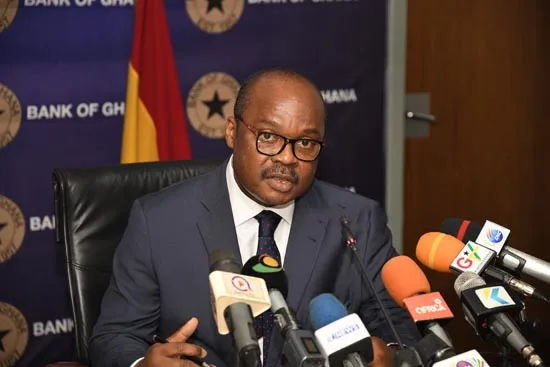
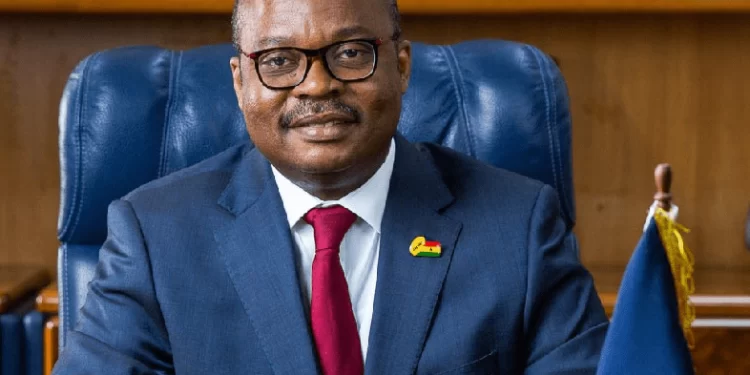
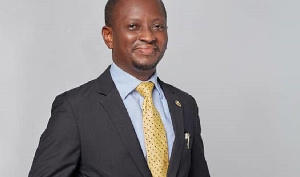
Bank of Ghana (BoG) Governor, Dr. Johnson Asaima, has provided key insights into the cost of construction of the institution’s new headquarters, a project initiated under the Akufo-Addo administration.
Appearing before Parliament on Wednesday, March 5, he disclosed that the budget of the project was first pegged at $81.8m and presented to the Public Project Authority (PPA) for further deliberation.
However, he stated that following a re-evaluation by the Central Bank, the amount rose to $121.1 million. He further noted that the budget was later revised upward to $222.8 million, featuring redesign elements and other adjustments.
“Mr Speaker the project was initially valued by the PPA at $81.8m but later increased to $121.1m after the Bank of Ghana requested for re-evaluation. This was revised again to $222.8m after the redesign and inclusion of building management system.
“Mr Speaker there was also 33 requirements, security needs and sustainability consideration, as a result the total project cost increased to $261.8m,” he added.
The new BoG’s headquarters site was formally handed over to the contractor in March 2021 for commencement of preliminary site works and designs.
Later on, there was a review of the design, prompting the ETC of the Bank at its meeting held on 19th December 2022 to revise the project cost of USD2,068.00/m2.
CTRC subsequently granted concurrent approval for the revised scope of works at cost of USD2,068.00/m2 on 17th January 2023.
The land was compulsorily acquired by the Government of Ghana by Executive Instrument, 2020 E.I 304 for the New Bank of Ghana Headquarters, a building of national interest.
The compulsory acquisition process started in 2019 and the Executive Instrument was published and gazetted in 2020.
Former President Akufo-Addo officially inaugurated the Bank Square on November 20, 2024, before leaving office.
Managing Director of First Bank Ghana, Victor Yaw Asante, has shared insights into how the bank managed to withstand the impact of Ghana’s Domestic Debt Exchange Programme (DDEP) without facing major difficulties.
During an appearance on Joy News’ PM Express Business Edition on Thursday, February 27, he attributed the bank’s stability to prudent financial strategies that limited its exposure to government bonds.
“We stuck to our risk portfolio, our risk guidelines and so on. So when you do that, when there’s a problem in any particular area, you still are capped,” he added.
According to him, many financial institutions struggled with liquidity issues as a result of their significant investments in government bonds, but First Bank Ghana adopted a more prudent strategy.
Yaw Asante noted that while government securities were a tempting investment, the bank intentionally minimized its reliance on them to ensure stability.
“Even though it became easier to, for example, buy government bonds and so on, we didn’t. We didn’t go for that temptation at all,” he stated.
Amid worsening debt and financial instability, African nations have agreed to create a fund aimed at offering low-cost financing to governments facing economic hardship.
Named the African Financial Stability Mechanism (AFSM), this initiative will be administered by the African Development Bank (AfDB), as reported by Reuters on Tuesday.
With an independent credit rating, the fund will have the ability to raise capital from global financial markets, according to a statement from the bank.
The proposal for this facility first emerged in 2022 when the economic fallout from the Covid-19 pandemic and the Ukraine conflict pushed several developing countries into debt crises.
Participation in the initiative is voluntary, and all African Union member states will have the opportunity to join, the bank confirmed.
In a recent statement, CBG clarified that these rumors are false, reaffirming that the bank remains entirely government-owned.
The bank assured its customers that their deposits are safe and emphasized that there has been no shift in ownership.
CBG reaffirmed its commitment to maintaining high standards of service and innovation, emphasizing its dedication to both existing and potential clients.
The statement further highlighted the bank’s role as a preferred choice for SMEs and expressed gratitude for the ongoing trust and loyalty of its customers.
CBG encouraged the public to rely on its official communication channels for accurate information.
“There has been no change in the ownership of the Bank and the Government of Ghana remains the sole shareholder. We wish to state that reports of the sale of the Bank are entirely false and misleading.
“There is therefore no cause for concern regarding customer deposits and the Bank’s operational integrity.
“The Bank continues to deliver exceptional customer service and innovative products. As the SME Bank of choice, the loyalty and trust placed in us by our customers are highly appreciated.
“We assure our cherished customers that their funds are secure with the Bank, and urge the public to rely on the Bank’s official communication channels for any information,” part of the statement read.
Facing a 50/50 chance of survival after being diagnosed with stage three cancer, Yvonne, a Ghanaian woman residing in Germany, has chosen this difficult time to confess her past misdeeds. Now 39 years old, she is bedridden after undergoing a double mastectomy, but her resolve to come clean about her criminal past remains strong.
Yvonne revealed that she and her partner were deeply involved in illegal activities, including credit card and bank fraud, car theft, and trafficking stolen goods to Ghana.
Reflecting on how she was led astray, she shared, “I was financially independent and doing well on my own until I met a man who introduced me to a world of crime. I learned to manipulate banks, steal cars, and deceive people—all for the sake of money.”
She detailed how she would impersonate bank customers to gain access to their accounts, saying, “My partner provided me with detailed information about the victims, and I would call international banks pretending to be the account holders. With all the necessary details, the banks trusted me, and I was able to extract their financial information effortlessly.”
Their criminal activities extended to stealing cars, often from rental services, and shipping them to Ghana. “I would contact rental services to arrange for cars, which my partner would then ship back home,” Yvonne explained.
She also disclosed that her partner was involved in using black magic, or “juju,” to manipulate their victims further. “After conning people, he would use charms on them to keep them under his control,” she said, highlighting the extent of their criminal behavior.
Yvonne admitted that they targeted both black and white individuals, particularly those with wealth. Her partner, she claimed, had connections that allowed him to infiltrate prominent places, even mentioning Buckingham Palace.
Reflecting on her current condition, Yvonne believes that her suffering is a direct consequence of her past actions. “I think I’m being punished for all the harm I’ve caused. I lived a healthy lifestyle, but now I’m facing this illness. I feel it’s more than just physical—it’s spiritual,” she pondered.
She revealed that her partner abandoned her once she became ill, leaving her to face the consequences alone. Now, as she battles her illness, Yvonne is issuing a stern warning to young people. “Don’t let greed and the pursuit of money lead you down the wrong path. It cost me everything—my health, my relationships, and my peace. Choose love and genuine care over wealth that comes with strings attached.”
Her message is clear: the path she took led to nothing but pain and regret, and she hopes others will learn from her mistakes and avoid the same fate.
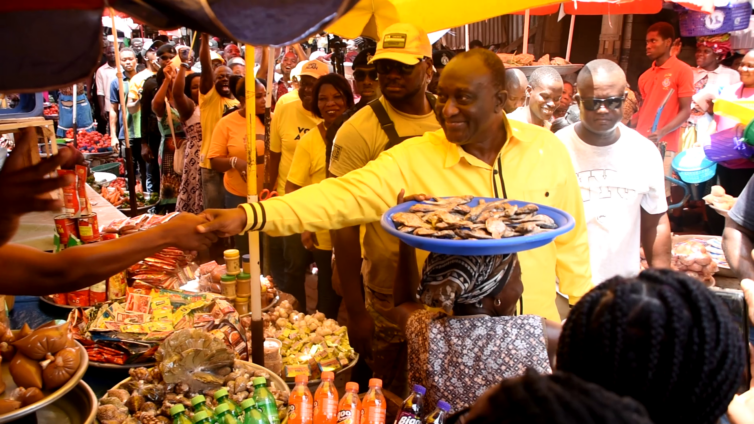
On Alan Kyerematen’s recent visit to the Bosoma Market in the Sunyani Municipality of the Bono Region, he made two major promises to improve the economic prospects of traders and the youth.
Addressing a large and enthusiastic crowd of traders, the presidential candidate for the Movement for Change/Alliance for Revolutionary Change, announced his plan to create a dedicated traders’ bank.
This bank aims to provide vital capital to traders, helping them expand their businesses, invest in new opportunities, and improve their livelihoods.
The envisioned traders’ bank is seen as a key tool for encouraging entrepreneurship and boosting local economies. By providing access to financial resources, the bank will play a crucial role in strengthening domestic trade and supporting the country’s economic growth.
In addition to the traders’ bank, Kyerematen also promised to build modern markets for traders in Ghana to enhance their trading activities.
He stated, “I will build modern markets to facilitate domestic trade for our traders.” These markets will feature state-of-the-art clinics and schools for traders’ children, as well as modern car parks to ease transportation.
Furthermore, Kyerematen emphasized that such infrastructure would significantly improve working conditions, enhance the health and education of traders and their children, reduce transportation costs, boost productivity, and overall economic growth, creating a more vibrant trading environment.
Highlighting his track record in job creation, Kyerematen promised, “I will also work hard to create jobs for your children.” Job creation is essential for increasing income levels, boosting consumer spending, and reducing poverty.
By focusing on providing employment opportunities for the children of traders, Alan Kyerematen’s plan addresses the critical issue of unemployment. His experience and dedication to job creation indicate a strategic approach to fostering a prosperous future for the youth and ensuring economic stability.
Alan Kyerematen’s pledges are grounded in his extensive experience and proven track record in economic development and job creation. His detailed plans for market infrastructure, financial empowerment, job creation, and economic stability demonstrate his capability to address critical issues facing traders and the broader economy.
His commitment to these initiatives, coupled with past successes, makes a compelling case for him as a trustworthy leader capable of delivering on his promises.
Alan Kyerematen’s vision for the economic empowerment of traders and their families offers a promising future for the Sunyani Municipality and beyond. His strategic initiatives aimed at creating a thriving and resilient economy.
Banking Consultant Dr. Richmond Atuahene has expressed his opposition to the proposed Minerals Development Bank by Dr. Mahamudu Bawumia, aimed at increasing Ghana’s gold reserves and supporting the cedi.
The flagbearer of the New Patriotic Party (NPP), Dr. Mahamudu Bawumia, has announced plans to establish a Minerals Development Bank if he becomes President.
Speaking at the 3rd Annual Transformational Dialogue on Small Scale Mining in Ghana at the University of Energy and Natural Resources in the Bono Region, the Vice President highlighted that this initiative would revolutionize financial support for mining projects in the country.
“We also want to, as I said, in collaboration with the relevant state institutions like MIIF, PMMC, the Bank of Ghana, the private sector, and others, we want to establish a minerals development bank to finance viable local mineral projects and to mitigate foreign financing of local mining projects, which leads to heavy smuggling of the produce afterwards,” he said.
“I don’t think Ghana needs another institution to be talking about mining, I think they should really be thinking about the environment. Setting up a new bank, I have a different view about it. Dr. Kwame Nkrumah set up Agric Bank we destroyed it and he came up with NIB. Acheampong talks about Banking and Construction. Social Security Bank go and ask the history about it.”
“We set up development banks and don’t know what will come over them. So for me, I beg to differ especially when it comes to development banks like a mining bank. I totally disagree with them because, number one do we discourage the destruction of the environment?” Dr. Atuahene asked.
He continued: “We are destroying it, they should take it as a joke because I have travelled far in the country and I know what degradation is. So for me, I don’t support those ideas so I don’t even talk about it.”
However, Dr. Atuahene believes this move will exacerbate illegal mining and environmental degradation.
Dr. Atuahene emphasized the need for a focus on environmental conservation rather than creating new financial institutions for the mining sector.
Vice President Dr. Mahamudu Bawumia highlighted Africa’s burgeoning mobile phone connectivity and internet penetration as a fertile ground for Fintech startups to flourish.
He emphasized that Africa’s 1.2 billion population and three trillion economy position the continent to lead in Fintech evolution and technological solutions.
Dr. Bawumia urged Fintech startups and investors to pioneer innovative financial products and services to tackle the unique challenges faced by African consumers and businesses.
He made these remarks at the inaugural 3iAfrica Summit in Accra on Tuesday.
The three-day summit is on the theme: “Unleasing the Fintech and Digital Economic Potential of Africa”.
Taking place from May 13th to 15th, 2024, the event drew innovators, investors, policymakers, and prominent stakeholders from the global fintech and technology sectors.
Hosted by the Bank of Ghana (BoG) and the Development Bank Ghana (DBG), in collaboration with the Monetary Authority of Singapore via its subsidiary, Elevandi, the summit aimed to foster collaboration and innovation in fintech.
The Vice President emphasized the need for fintech startups to adopt a multifaceted approach to attract significant investment in Africa.
This approach involves showcasing the expansive market potential, ensuring strict regulatory compliance, and maintaining transparency.
“Today, we delve into the dynamic world of FinTech in Africa, a landscape marked by rapid growth, innovation, and immense potential. The FinTech industry in Africa has experienced a significant surge over the past decade, driven by technological advancements, rising mobile phone penetration, and a youthful population eager to harness the transformative power of digital financial services,” Dr Bawumia observed.
According to the Vice President, over the past three decades, African nations have implemented substantial reforms in the formal sector and made notable advancements in macroeconomic management.
These efforts have led to enhanced economic stability and consistent growth rates in numerous countries. Additionally, national economies have become more open, resulting in increased trade openness across the continent.
The Vice President highlighted the growing fintech sector as a key driver in accelerating this growth trajectory.
He pointed out that initially, African consumers and businesses were hesitant to embrace e-commerce, which accounted for only 1% of Africa’s $1 trillion economy in 2009. However, the landscape has undergone significant transformation since then.
“Recent developments in fintech and mobile financial services have catalysed rapid growth in online commerce.
Recent statistics highlight this shift, projecting online sales in Africa to soar to $75 billion by 2025.
Of this amount, an estimated $56 billion is anticipated to stem from consumer spending as digital payment platforms gain traction across developing economies; a substantial leap from the $8 billion consumer spending estimate recorded in 2013.
Dr Bawumia noted that the evolving consumer purchasing habits in Africa, increasingly influenced by fintech innovations, were emblematic of the continent’s dynamic economic transformation.
“The fintech sector’s role in facilitating digital payments and e-commerce growth spotlights its significance as an impetus for economic development and financial inclusion across Africa,” he stated.
Another remarkable advancement on the continent is the rapid growth in mobile phone usage and the telecommunications sector.
The explosive growth of mobile phone usage in Africa exceeds a mere technological shift, it stands as one of the foremost catalysts driving the fintech revolution across the continent.
Currently, Africa is home to over 489 million mobile phone users, and projections suggest that this number could reach a staggering 700 million by 2030.
This proliferation of mobile connectivity has created an ecosystem ripe for fintech innovation. As telecommunications infrastructure expands, fintech services are rapidly penetrating previously under-served communities and remote regions.
This expansion is fueled by significant investments from stakeholders in both the telecommunications and fintech sectors, aimed at reinforcing infrastructure and enhancing digital capabilities, Dr Bawumia stressed.
He believed that an integration of robust telecommunications networks with fintech solutions was democratising access to financial services, fostering entrepreneurial spirit, and unlocking unprecedented economic opportunities.
“As Africa continues to embrace this digital transformation, the synergy between telecommunications and fintech will undoubtedly remain a driving force behind the continent’s growth,” he added.
Industry research indicates a remarkable surge in tech startups across Africa, with the number nearly tripling from 2020 to 2021 to reach approximately 5,200 companies.
Notably, fintechs comprise just under half of those startups, indicating a significant focus on innovation and responsibly disrupting the financial services sector.
The rapid development in FinTech in Africa spans across multiple segments, from blockchain and cryptocurrency to robo-advisors and payment platforms.
He emphasized that each segment presented unique opportunities and challenges, underscoring the continent’s need to remain agile and adaptable in its approaches.
In the domain of payments and settlements systems, innovations such as the Ghana Interbank Payment and Settlement Systems (GhIPPS) and platforms like M-Pesa in Kenya have revolutionized payment methods. Dr. Bawumia highlighted how these solutions have enhanced financial accessibility, convenience, and affordability for millions across the continent.
Regarding lending platforms, he noted the emergence of key players like Branch, Fido, and Tala. These companies have addressed the credit gap by providing quick and convenient loans to individuals and small businesses.
“In InsurTech, innovators such as Bima and Pula are leveraging mobile technology to offer micro-insurance products tailored to the unique needs of the African market. Blockchain and Cryptocurrency are also gaining traction on the continent with startups like Luno and BitPesa leading the charge.
The rise of FinTech, he said, had ushered in transformative changes in the global financial landscape, noting that as technology continued to advance at an unprecedented pace, the financial sector was undergoing a profound transformation, with Africa being no exception.
“The continent, with its growing population and increasing mobile penetration, presents a fertile ground for FinTech innovation,” Dr Bawumia stated.
The Bank of Ghana (BoG) has taken steps to stabilize the forex markets, with Governor Dr. Ernest Addison providing assurance that the central bank has accumulated “sufficient reserves to address the challenges” that have impacted the cedi in recent weeks.
During the launch of the new commercial paper market, Dr. Addison acknowledged that the cedi has encountered “some challenges” following a period of relative stability.
However, he emphasized that the BoG is closely monitoring the situation and possesses the capability to intervene effectively.
“The exchange rate has been generally stable until recent weeks when some headwinds have been observed in segments of the market. But this is receiving much attention as the bank has built up enough reserves to tackle the pressures on the market,” Dr. Addison stated in a speech read on his behalf.
The reassurances arrive as the cedi has faced significant challenges in 2024 due to escalating corporate dollar demand and a strengthening U.S. currency. Since January, the local currency has depreciated by approximately 14 percent against the dollar.
Financial analysts caution that the prospects for foreign exchange inflows are uncertain, which could exacerbate the strain on the weakened cedi in the upcoming months.
“The near-term outlook for FX supply is decidedly negative due to a panel of fundamental factors,” Constant Capital stated in a market review, citing elevated inflation, low cocoa output, and constrained portfolio inflows.
According to GCB Capital, although gross international reserves saw a slight increase to US$6.2 billion in March, equating to 2.8 months of import cover, usable reserves have declined substantially to just US$4 billion. This amount is only sufficient for 1.8 months of imports when encumbered assets are taken into account.
“These levels offer limited protection against balance of payment shocks, indicating that the BoG will likely continue redirecting hard currency away from the interbank market to bolster reserves in the medium term,” the firm stated.
Databank’s weekly updates indicate that the BoG has already infused an estimated US$270 million into the forex market this year through spot and forward interventions, following US$713 million in support during 2023.
However, analysts suggest that significantly more firepower may be necessary, particularly with credit to the private sector described by the governor himself as “weak” due to lenders exercising caution.
In an effort to stimulate bank lending, the BoG recently introduced a “dynamic cash reserve ratio” policy linking required reserves to banks’ loan portfolios – a move aimed at incentivizing effective financial intermediation.
Under the new policy framework, banks with Loan to Deposit Ratios above 55 percent must maintain a 15 percent CRR, those between 40-55 percent face a 20 percent CRR, and banks below 40 percent are subject to a 25 percent CRR.
Currently, attention remains focused on the BoG’s forex reserves and its readiness to utilize them in response to the cedi’s depreciation.
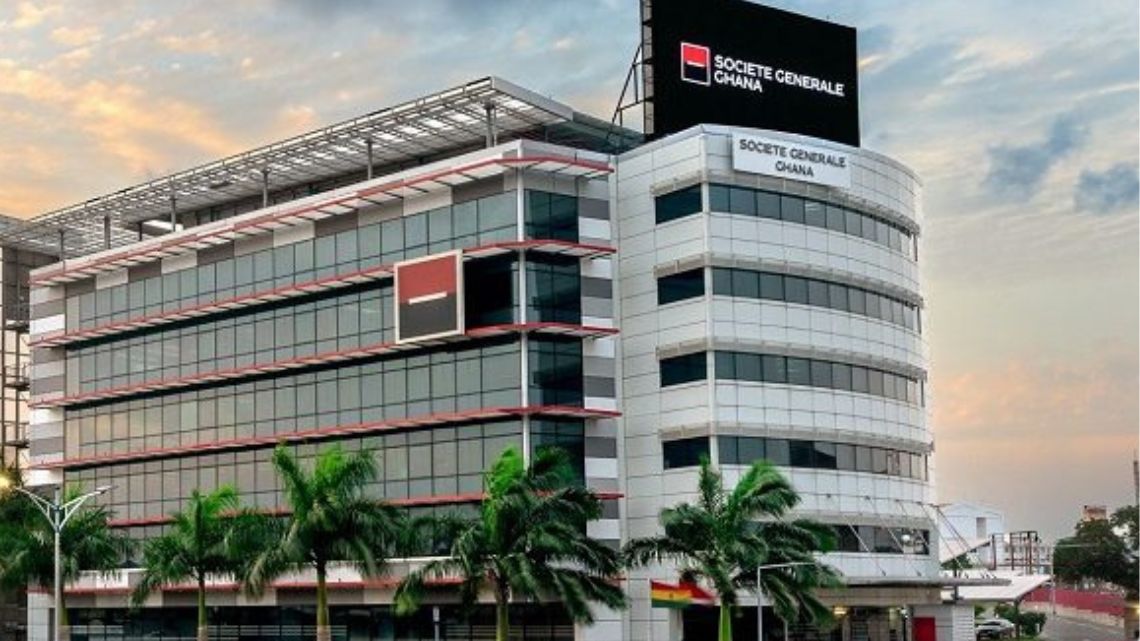
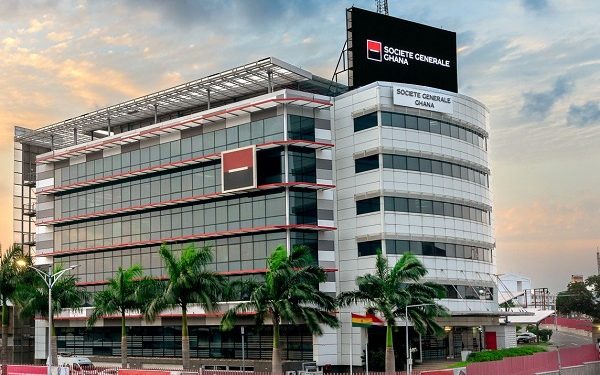
French bank Société Générale has refuted rumours of its withdrawal from the Ghanaian banking sector, dismissing them as baseless speculation.
The bank clarified that it is undergoing a restructuring of its operations to better align with international market dynamics.
During the 44th Annual General Meeting, Société Générale’s Managing Director, Hakim Ouzzani, addressed concerns raised by shareholders regarding the alleged departure, emphasizing that the reports did not originate from the bank itself.
“Some rumours have indeed taken root regarding SG Ghana. But it’s important to mention to all our stakeholders and our shareholders that the news item being circulated in the media was not issued by the group nor by SG Ghana.
“We don’t want to comment further. But really, I insist on the papers is not by SG, it is not by SG Ghana,” he stated.
Reports widely circulated indicated that Société Générale was exiting the Ghanaian banking sector after 20 years of operation.
This move comes after Société Générale recently finalized deals with Saham Group to offload its operations in Morocco. In 2023, the bank divested from several African countries, including Congo, Equatorial Guinea, Mauritania, Burkina Faso, and Chad.
Citing its long-standing presence in Africa, Société Générale aims to focus its resources on markets where it can assert itself as a leading bank, aligning with its overarching strategy outlined on its website on April 12, 2024.
French Bank, Société Générale, has announced its decision to exit the Ghanaian market, concluding its two-decade presence in the country.
Alongside Ghana, the bank has chosen to cease operations in other African nations, including Tunisia and Cameroon.
Insiders familiar with the matter revealed that the French bank has enlisted investment bank Lazard to explore potential buyers for its subsidiaries in the aforementioned countries. Rumors suggest that Absa Bank has emerged as a strong contender for acquiring Société Générale’s assets.
Recently, Société Générale finalized deals with Saham Group to divest its Moroccan operations. In 2023, it divested from several African countries, including Congo, Equatorial Guinea, Mauritania, Burkina Faso, and Chad.
With a focus on markets where it can establish itself as a leading bank, Société Générale aims to concentrate its resources, aligning with its overarching strategy outlined on its website on April 12, 2024.
This move reflects a broader trend among European banks, with notable examples such as Barclays and Standard Chartered scaling back operations in some countries while maintaining a presence in Ghana and select African nations.
Furthermore, newer players like Atlas Mara have exited the continent, while Credit Suisse has retained operations solely in South Africa.
As European and other non-African banks withdraw, there is speculation that African banks, particularly those from South Africa and Nigeria, may emerge as dominant forces in the continent’s banking sector.
The CEO of Mikaddo Holdings and Founder of KAMA Group of Companies, Nana Dr. Michael Agyekum Addo, has opened up about the financial struggles he has encountered since the banking sector clean-up.
Speaking at a book launch held at Academic City College in Accra on March 28, he disclosed how his retirement savings, amassed over three decades, were impacted by the clean-up, leaving him unable to back valued initiatives like the book launch.
“I am a pensioner and all my money, I must confess, the money that I saved to take care of my pension has been taken over by the banking clean-up.
“So, I don’t have the money to support such a wonderful book. And if I tell you how much I saved for over 30 years to take care of my position now, you will weep for me,” he said.
Dr. Addo also detailed the operational challenges his pharmaceutical manufacturing company in Tema, one of the city’s foremost, faced due to frozen funds resulting from the clean-up. This financial strain, he explained, has escalated overhead expenses, compounded by pressures from tax agencies and utility providers.
“One of the best pharmaceutical manufacturing companies, WHO standard, in Tema; because my money has been locked up and they cannot give it to me, I’m having problems with my overheads. I’m telling you, either GRA is on your neck or the ECG has come to put off your light,” he shared.
His narrative sheds light on the wider repercussions of the banking sector clean-up on individuals and enterprises nationwide.
What led to this?
In 2017, the Ghanaian government, led by Finance Minister Ken Ofori-Atta, initiated a comprehensive restructuring of the banking sector.
This initiative saw the consolidation of banks from 34 to 23 and the revocation of licenses for 347 microfinance institutions, 15 savings and loans companies, and eight finance houses due to governance issues.
The state’s intervention in this process, excluding interest payments, was estimated at GH¢16.4 billion from 2017 to 2019.
However, by 2020, the government reported that the total expenditure on the banking sector clean-up had risen to around GH¢21 billion.
Numerous financial institutions affected by the license revocations have contested the government’s actions in court, and legal proceedings regarding these matters are ongoing.
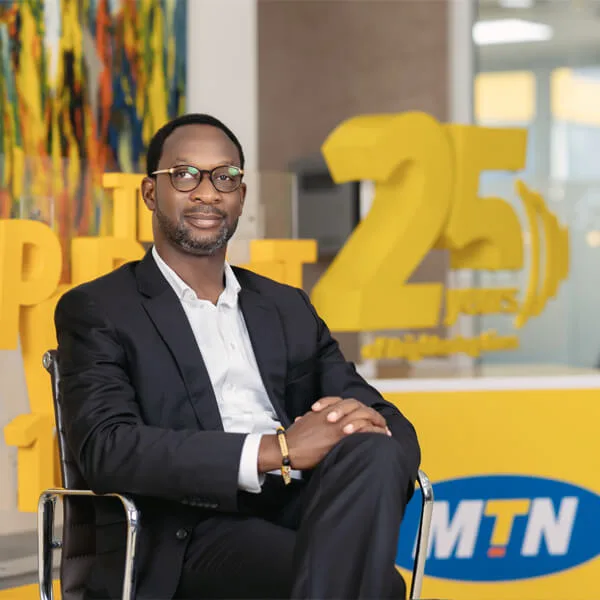
Selorm Adadevoh, the outgoing Chief Executive of MTN Ghana, has emphasized that the company currently has no immediate plans to establish a bank through its mobile money business.
He further stated that MTN’s focus is on collaborating with commercial banks to provide financial services to its subscribers.
“I get this question a lot, but as at today, I want to assure you that this is not on the table. MTN is committed to working with the commercial banks to expand the fintech eco system,” he said on JoyNews’ PM EXPRESS BUSINESS EDITION on February 15, 2024.
When asked about the possibility of MTN establishing a bank upon assuming his new role as Chief Commercial Officer of the group, Mr. Adadevoh stated that he did not have an answer to that question.
Speculation about MTN Ghana’s intention to become a bank has circulated for some time. The telecom operator was observed by some to be installing machines resembling ATMs in strategic locations, but these were later removed.
MTN’s dominance in the mobile money sector has seen significant growth. The Bank of Ghana, in regulating the mobile money sector, mandated telecom operators to separate mobile money operations from their core telecommunications activities. This led to the establishment of MTN Mobile Money Limited to oversee its operations.
Bank of Ghana data indicates that the total value of mobile money transactions in 2023 exceeded GH¢1 trillion, with the MTN platform accounting for more than half of these transactions. The total number of registered mobile money accounts reached 817,000 by the end of 2023.
These developments have fueled speculation that MTN is laying the groundwork to become a fully-fledged financial institution. However, Mr. Adadevoh reiterated that MTN remains committed to collaborating with banks to expand financial services to the public.
Regarding concerns about the potential impact of Artificial Intelligence (AI) on jobs at MTN, Mr. Adadevoh argued against this notion, suggesting that the situation would be different in Ghana’s case. He emphasized the importance of considering the benefits of AI in improving service quality and expanding network coverage.
“We all have a responsibility to work hard to adapt to the situation to ensure that we stay in business and not lose out and that is what it is” He added
Mr. Adadevoh added that even though AI will affect some kinds of jobs, the point must be made that it will equally create more jobs.
“Artificial Intelligence will affect some types of Jobs, but it will also create some kinds of jobs”.
Upon checking, the party was informed that “all their accounts had been stopped from being used”.
Mr Maken said that the party got money from online fundraising, and the youth wing got money from membership fees. He said that the bank stopped the accounts of the young members of the Indian Youth Congress.
Mr Maken said we don’t have money to pay for electricity or salaries for our workers. This will affect all the activities of our party.
He said they took action because the party filed their income tax returns 45 days late for 2018-2019.
Vivek Tankha, a leader of the Congress party, said that the court will listen to the party’s request for temporary help from the actions of the IT department on Wednesday.
Critics say that the BJP, led by Narendra Modi, is using government resources to go after opposition leaders before the elections. Modi and the BJP say the accusation is not true.
The Development Bank Ghana (DBG) has played a pivotal role in bolstering the private sector, injecting more than GHS1 billion since its inception in June 2022, according to the Chief Executive Officer, Kwamina Duker. This substantial investment has fortified over 80 businesses, resulting in the creation of over 6,000 jobs, with 38% of these jobs empowering women. Additionally, DBG’s interventions have generated significant foreign exchange revenue exceeding US$40 million over the years.
CEO Kwamina Duker emphasized that the bank’s focus extends beyond immediate financial inputs to emphasize long-term impacts and profitability. He made these remarks during the 2024 Africa Prosperity Dialogues’ Business and Policy Leaders Dialogues held in Aburi, Eastern Region, under the theme ‘Delivering Prosperity in Africa: Produce, Add Value, Trade.’
Highlighting the shift from conventional transactional approaches, Duker noted that DBG is prioritizing enduring impact and value generation. The bank aims to de-risk the financing landscape by enhancing the capabilities of financial entities to explore traditionally high-risk sectors while empowering local businesses to adopt innovation and scalability.
Duker also revealed that DBG, in collaboration with the central bank and the Monetary Authority of Singapore, is developing the Ghana Integrated Financial Ecosystem (GIFE). This unique platform is designed to enhance financial inclusion and literacy across Africa, providing a secured digital platform that empowers businesses with reliable financial tools and services.
Encouraging African entrepreneurs to utilize GIFE, Duker highlighted its role in facilitating swift access to financial products from various parts of the continent. With reliable credentials, entrepreneurs can effortlessly interact with financial institutions and trade partners, promoting confidence and transparency in every transaction.
“This vision is the embodiment of the African Prosperity Dialogue: creating a seamless and integrated marketplace underpinned by trust and digital innovation,” concluded CEO Kwamina Duker.
The Bank of Ghana (BoG) foresees a further alleviation of inflation in 2024, buttressed by the sustained implementation of sound policies, with the aim of firmly anchoring inflation expectations towards the single-digit target.
A significant positive shift has been noted over the past year, witnessing a substantial reduction in inflation from approximately 54 percent to 23 percent by the conclusion of 2023.
In a concise statement following the successful completion of the First Review of the Extended Credit Facility (ECF) Programme with the International Monetary Fund (IMF) on January 19, 2024, Governor Dr. Ernest Addison underscored the central bank’s unwavering commitment to monitoring both domestic and external developments.
The primary objective is to respond judiciously, ensuring the sustainability of the recent decline in inflation without compromising economic growth.
Dr. Addison highlighted the favorable experience of 2023, marked by a noteworthy reduction in inflation and heightened economic growth.
Shifting focus to the banking sector, he reassured stakeholders that it remains robust, liquid, and profitable. The Bank of Ghana is set to closely monitor banks’ initiatives for capital restoration, especially in light of the impact of the Domestic Debt Exchange Programme (DDEP).
Anticipating early recapitalization, Dr. Addison emphasized its potential to fortify the resilience of the banking sector and facilitate effective financial intermediation, contributing significantly to macroeconomic recovery.
Discussing the completion of the First Review of the ECF Programme, Dr. Addison stressed the imperative of sustained vigilance and commitment throughout 2024 to implement the envisioned structural reforms.
While acknowledging the challenges ahead, he expressed confidence in the ongoing economic recovery process.
He underscored the critical importance of executing necessary structural reforms to support a more efficient functioning of the economy, ensuring its long-term sustainability.
Looking ahead, he urged the country to prepare for the second review of the program and highlighted the pivotal role of structural reforms in achieving a well-functioning and sustainable economy.
“Let me say that in all these matters, as I have always admonished, it is good for the mining companies, and the Chamber to carry the communities along.
“What I can assure you is that the government is fully committed to providing adequate security for your concessions. Because it is when your concessions are safe that you can work in peace to support the government. So, whatever we need to do is to ensure that your concessions are safe…..we will do it”, he explained.
“And in this regard, I will continue to count on the leadership of the Chamber. If there are specific or special cases we need to deal with let us know and we will take the necessary steps to deal with them”, he added.
The Governor of the Bank of Ghana (BoG), Dr. Ernest Addison, has asserted that the recent inflation trends indicate the economy is on track, with inflation dropping from 54 percent to 23 percent by the end of 2023.
Dr. Addison attributes this to robust policies, tight monetary conditions, and exchange rate stability.
Factors supporting the disinflation process include stable crude oil prices, leading to steady fuel prices, and a resilient exchange rate.
He cited “monetary policy stance throughout 2023, stable crude oil prices which led to stable fuel prices with favourable impact on transportation costs, a relatively stable exchange rate environment, stronger FX reserve accumulation due to the gold for reserve programme, and favourable climatic conditions on the food supply chain process,” as the factors.
Looking ahead to 2024, he said, the expectation is for inflation to ease further, underpinned by continued implementation of sound policies till inflation expectations are firmly anchored towards our single digit objective.
“In this regard, the Bank of Ghana will continue to monitor both domestic and external developments and respond appropriately to ensure that the downward inflation trajectory observed in recent months is sustained without undermining growth. The 2023 experience of a strong reduction in inflation and stronger growth is instructive,” Dr Addison said during the joint Ghana-International Monetary Fund (IMF) press conference in Accra on Friday, January 19 on completion of the First Review of the Extended Credit Facility (ECF) Programme
Looking ahead to 2024, he anticipates further easing of inflation, emphasizing the need for sound policies.
Dr. Addison assures the banking sector’s soundness, liquidity, and profitability but underscores the importance of monitoring capital restoration efforts.
He encouraged early recapitalization for sector resilience and effective financial intermediation.
While recognizing 2024’s challenges, Dr. Addison expresses confidence in the economic recovery process and underscores the necessity of structural reforms for long-term sustainability.
Deputy Attorney-General Alfred Tuah-Yeboah has clarified why Dr. Mensa Otabil was exempted from prosecution in the Capital Bank collapse, even though he was a board chairman.
Criticism arose after Ato Essien’s imprisonment, with some suggesting Otabil’s political ties shielded him. Legal expert Martin Kpebu urged accountability for Otabil’s alleged involvement.
“People are wondering what happens to Mensa Otabil,” Kpebu said on the Key Points on TV3 on Saturday, October 14.
He added “The truth of the matter is that he is a powerful person so somehow there are biases. This amount is too colossal that we can’t say the board chair doesn’t have questions to answer.”
In response to Martin Kpebu’s concerns, the Deputy Attorney-General revealed that Dr. Mensa Otabil underwent a thorough investigation and questioning.
Nevertheless, the Attorney-General couldn’t pursue prosecution since no wrongdoing emerged from the investigations.
“They were questioned but I will need to check when it was done”, he said on TV3’s KeyPoints program.
When the show’s host inquired whether the Attorney-General chose not to prosecute Dr. Mensa Otabil due to insufficient evidence, Tuah-Yeboah responded, “based on the investigations and evidence available way back in 2017, that was what we had but it’s not closed as long as it’s a criminal case.”
Ato Essien was found guilty of embezzling a staggering GH¢90 million from the bank. The judge’s decision followed a thorough evaluation of the detrimental effects of Essien’s actions on the bank’s depositors and the country.
The judge stated, “The convict demonstrated sheer greed in his desire to own another bank besides Capital Bank Ltd and left no stone unturned through subterfuge and deceit with pure criminal intent to set up Sovereign Bank Ltd. Being in a position of trust, he was expected to have demonstrated a sense of responsibility and true fidelity. He had no cause, whatsoever, to steal such gargantuan sums of money.”
Justice Kyei Baffour, serving as both a Justice of the Court of Appeal and a High Court judge, underscored the severe hardships inflicted upon numerous individuals as a result of Essien’s actions during the Capital Bank’s collapse.
Directors of collapsed banks, such as UniBank, UT, and Beige Bank, have the option to negotiate for settlements outside of court before the trial commences, as stated by Deputy Attorney General Alfred Tuah-Yeboah.
While the state remains committed to prosecuting the directors of these financial institutions, this approach offers an avenue for resolution.
This announcement follows the recent imprisonment of William Ato Essien, the former Chief Executive Officer of the now-defunct Capital Bank, who was convicted of embezzlement.
“We were expecting that he would go by the agreement that we had but unfortunately on his part, he could not fulfill his part of the bargain. As we speak, he has been able to pay close to about 37 million cedis and because of his inability to pay the rest, per the agreement that we had, the court had the right to sentence him to a prison term and the court just did that. I am yet to get the full complement of the orders of the court, now that he has been imprisoned if he gets the money to pay that is another ballgame to look at because after a court has given its ruling or judgment the court becomes functus officio, so my expectation is that when he pays then he goes into mitigation when he wants to appeal the sentence.
“Let’s hope that he gets the money to pay. Let us also add that even if he is going to serve the 15 years Ghanaians have also benefited somehow because at least 37 million cedis has been paid to the state. If he had been sentenced last year, we wouldn’t have even recovered this.
“As we speak, we have other cases in court, Beige bank is in court, we are hearing the matter. UT is also in court, we have other banks, like Duffuor’s bank (Unibank) all in court, and we are doing them one after the other. If the money that we have lost they are ready to refund the money we will look at section 35 and go by that and we can have the same agreement,” he is reported to have said.
The Bank of Ghana revoked the licenses of UT Bank, Unibank, and Beige Bank as part of the financial sector cleanup between 2017 and 2019.
Development Bank Ghana (DBG) is set to broaden its financial offerings by introducing an equity fund to supplement its lending operations.
DBG’s Chief Executive Officer, K. Duker, disclosed that the bank is in the advanced stages of establishing the equity fund, with the objective of offering a more extensive array of financial products to cater to the needs of both organizations and borrowers at different development stages.
“We’re in the closing stage of providing an equity fund. It’s going to be small to start off with; but again, when the only thing you can do is lend, guess what? everything looks like a loan, and that’s not the case. So, we need to have other products,” Mr. Duker stated, emphasising the importance of diversifying DBG’s offerings.
“At the moment, we are in the closing stage with the regulators to set up an equity fund, which will then allow us to have even more patient-capital. So, we can have equity, we can have loans among others., and the other products that we’re coming to the market with. But they’re all intended to provide a virtuous circle of different products that are applicable at different times of an institution’s life or a borrower’s life.”
DBG has been committed to fostering Ghana’s economic growth and development since its founding in June 2022, and has already distributed an astounding GH731 million across several industries. Mr. Duker described the bank’s future goals, saying:“Our vision is clear, and our processes streamlined. With our enhanced lending system we’ve become more efficient, enabling swifter disbursements to our partners. By the end of 2023, we aim to have disbursed a staggering GH¢1billion”.
DBG’s focus extends beyond becoming the largest lender in Ghana, Mr. Duker stressed; their commitment is to transforming the private sector. “If I become the largest lender without transforming the private sector, I would have failed,” he added.
Established by the government, Development Bank Ghana (DBG) functions as a Development Finance Institution, primarily dedicated to facilitating and reinforcing long-term financing for Ghanaian businesses. Beyond its financial services, DBG is committed to providing relevant non-financial support to enhance the country’s business environment, all while adhering to sustainable and global best practices.
Mr. Duker has reiterated DBG’s commitment to supporting the growth of small and medium-sized enterprises (SMEs), job creation, and promoting inclusive and sustainable development in Ghana. To achieve this, the bank has plans to expand its network of Participating Financial Institutions (PFIs) by identifying and bringing on board new PFIs. The objective is to have a minimum of ten PFIs by the end of the year, with Sinapi Aba being the latest addition to the network, alongside existing partners such as Ecobank, Absa, and Zenith Bank.
In April of this year, DBG gained attention when it announced a seed fund of US$70 million for its partial credit guarantee scheme. This scheme is designed to offer additional support to Participating Financial Institutions (PFIs) in managing risks associated with loan defaults. The scheme’s aim is to stimulate more investments in high-risk sectors of the economy, bolstering the PFIs’ capacity to effectively serve the SME sector while sharing the investment risk with DBG.
“As we move forward, we will rely on the support of all our banking partners in our initiative to digitally transform financial services,” Mr. Duker emphasised, highlighting DBG’s commitment to innovation. “We seek your continued support as we aim to be a conduit for financial institutions to collaborate on innovations, such as common underwriting standards and co-creating robust alternative credit scoring models. These joint efforts will allow us to better-serve the needs of businesses while also promoting prudent lending practices and risk management within our industry.”
A major step toward the bank’s goal of promoting economic growth, encouraging innovation, and aiding in the transformation of Ghana’s private sector is the DBG’s entry into equity funding. DBG is well-positioned to play a significant role in influencing the future of Ghana’s financial sector because to its clear vision and strategic plans.
The Bank of Ghana’s Interbank forex rates on October 9, 2023, reveal that the Ghana Cedi is exchanging against the US dollar at a purchase rate of 11.2231 and a selling rate of 11.2343.
In an Accra-based Forex bureau, the Dollar is being purchased at a rate of 11.65 and sold at 11.95.
Against the Pound Sterling, the Cedi has a buying rate of 13.7326 and a selling rate of 13.7486.
At a Forex Bureau in Accra, the Pound Sterling is being acquired at a rate of 14.10 and sold at 14.60.
The Euro is currently trading at a buying rate of 11.8753 and a selling rate of 11.8870.
In an Accra-based Forex Bureau, the Euro can be purchased at a rate of 12.00 and sold at a rate of 12.50.
The South African Rand has a buying rate of 0.5811 and a selling rate of 0.5815.
At a Forex bureau in Accra, the South African Rand is being bought at a rate of 0.35 and sold at a rate of 0.95.
The Nigerian Naira has a buying rate of 68.3739 and a selling rate of 68.4184.
In an Accra-based Forex bureau, the Nigerian Naira is being bought at a rate of 10.00 Naira for every 1 Cedi and sold at a rate of 15.00.
Regarding the CFA, it is trading at a buying rate of 55.1827 and a selling rate of 55.2371.
In a Forex bureau in Accra, the CFA can be bought at a rate of 16.50 CFA for every 1 Cedi and sold at a rate of 20.50 CFA for every 1 Cedi.
Our forex bureau rates are provided by Afriswap Bureau De Change in Osu, Accra.
Note that these rates may be different at a forex bureau near you. Our forex bureau rates are provided by Afriswap Bureau De Change in Osu, Accra.
National Investment Bank (NIB) employees have outlined a series of challenges that have adversely affected the bank in recent years, leading to its current precarious state.
In an open letter, these employees have appealed to the government for assistance in recapitalizing the bank to prevent its potential collapse.
Among the issues raised, the workers mentioned various internal problems, including the impact of the Domestic Debt Exchange Programme, contributing to the bank’s current predicament.
They noted that the Bank of Ghana’s embargo on granting of loans for the past six (6) years is “practically depriving the bank of huge interest income and technically out of trade and business.”
“Secondly, a chunk of non-performing loans totaling over GHS2.1 billion granted to companies and individuals to execute government of Ghana projects. These companies and individuals have executed the projects, raised Interim Payment Certificates, and are yet to be paid by the government.
“Thirdly, the Bank’s investments in Government of Ghana bonds of GHS857,000.00 held up and affected by the Domestic Debt Exchange Program (DDEP) is also not helping matters,” parts of the statement read.
The staff further noted that despite these challenges, the Bank has performed “excellently well by increasing its deposit position from GHS3.2 billion in August 2022 to GHS5.1 billion in August 2023.”
“Deposit increases month on month and the target of a billion-year ending December 2023 is highly achievable. The goodwill from our loyal customers has been amazing as the bank opens over 2,000 new accounts every month. The bank’s nationwide customer cash collection service is second to none.
“Internal management staffing restructuring has been successful. The staff strength saw a reduction from 1700 in 2021 to a little over 900 in July 2023. There is still the edge for further downsizing to ensure efficiency and increase savings,” the statement said.
Workers are also calling with the government to reconsider its decision to transfer NIB operations to the Agricultural Development Department.
The National Investment Bank (NIB) has issued a response to allegations suggesting that the bank’s managing director managed its operations remotely via Zoom for a period of one year.
Isaac Adongo, the Member of Parliament for Bolgatanga Central, previously asserted in an interview that the financial challenges faced by the bank could be attributed in part to the absence of the managing director.
In a statement released by the bank to counter these claims, NIB asserted that the allegations lacked any factual basis or substantial evidence. Furthermore, the bank contended that these allegations were unfairly skewed to tarnish the reputation of NIB.
Read the full statement below
Our attention has been drawn to certain statements made in the media on 28 September 2023 attributed to the Honourable Isaac Adongo, MP for Bolgatanga Central, in which a clear attempt was made to malign the Bank’s Managing Director, and by extension, discredit the integrity of the institution he presides over.
Adongo in his interview with Multimedia stated that the Bank’s Managing Director was for one year managing the Bank via Zoom. The Board and Management of NIB take extreme exception to the claims made in the said statements, particularly since it had no substance or factual basis and appeared skewed just to bring the hard-won image of the Bank into disrepute” the NIB statement read.
You may be reminded that NIB is a reputable financial institution and the pride of the nation. Transparency and accountability have been the cornerstones of our Bank’s governance structure and its Management remains committed to upholding the highest ethical standards in all our operations any misinformation, such as this, has a huge implication on the Bank.
To set the records straight, we would like to point out that the Managing Director, the subject of the unsavoury commentary, is entitled to annual vacation or leave days that are set by policy for all employees of the Bank and he has been taking same whenever the need arises subject to the approval of the Board” the NIB press statement further read.
Whenever it became necessary to travel out of the country, due approval had always been sought from the Board and is reported to the Bank of Ghana, the regulator, as required.
NIB is profoundly satisfied with the exceptional dedication and hard work exhibited by our management team. Their unwavering commitment to our institution’s stability and success is truly commendable and reassuring.
It is our firm belief that necessary as it may be for progress and the common good of the country, public discourse must always be grounded in truth and evidence, and it is essential that public figures maintain the highest standards of honesty and integrity when making statements that may tend to influence public opinion” the bank pointed.
Misleading or false statements erode trust and undermine the principles of a transparent and accountable society. In conclusion, we entreat the general public to critically evaluate information, seek out reliable sources, and engage in informed discussions on important matters.
In this era of misinformation, it is our collective responsibility to ensure that truth prevails over falsehoods, and that our society remains rooted in facts and evidence” the NIB stated in the concluding part of their press release.
In an open letter, employees of the state-owned National Investment Bank (NIB) Limited have implored the government to refrain from liquidating the firm.
They firmly believe that the existing board, management team, and workforce possess the capabilities to rejuvenate the bank and restore it to its previous prosperous state.
Their appeal is straightforward: they urge the government to inject fresh capital into the bank and reject any notion of liquidation.
They substantiate their plea by pointing out a substantial amount of non-performing loans, exceeding GHS 2.1 billion, which were extended to both companies and individuals for the execution of government projects. These projects have been successfully completed, Interim Payment Certificates have been issued, yet payments from the government remain outstanding.
With an estimated workforce of 900, these employees express grave concerns about potential job losses in the event of a liquidation.
They emphasize that their plea is prompted by recent reports, information, and intelligence suggesting the imminent liquidation of the National Investment Bank (NIB) Limited.
THE LIQUIDATION OF NATIONAL INVESTMENT BANK LIMITED AND MATTERS ARISING
We humbly plead that you use your good office to intervene for the Government to recapitalize the bank and not to entertain any form of liquidation. Our earnest plea comes on the backdrop of recent news, information, and intelligence gathered suggesting a possible liquidation of National Investment Bank (NIB) Limited. The current board, management team, and the entire staff can turn around the bank and bring it back to previous glorious days.
National Investment Bank (NIB) was set up in 1963 by an act of Parliament (ACT163). It was incorporated as an autonomous joint state-private institution on March 22, 1963, it was established primarily to promote and strengthen rapid industrialization in all sectors of the economy.
NIB, therefore, is the first development bank in Ghana. NIB set up over 100 joint enterprises, including the defunct regional development corporations. Other existing companies, including Nestle Ghana Limited, Novotel (now Accra City Hotel), Kabel Metal (now Nexans Kabelmetal), Aluworks, etc, etc.
The Bank has undergone management, institutional, and financial restructuring, which has strengthened the organization. It now has 48 Branches and 3 Agencies nationwide and has tens of thousands of customers and continues to enjoy an increase in deposits. Its unique customer base spans from public and civil institutions, private companies, small to medium enterprises to individual customers. These customers are very loyal and in return enjoy excellent customer service from the bank.
Nevertheless, the recent global economic changes coupled with unique but solvable internal challenges have created capital gap for the bank.
The internal challenges include Bank of Ghana’s embargo on granting of loans for the past six (6) years practically depriving the bank of huge interest income and technically out of trade and business.
Secondly, a chunk of non-performing loans totaling over GHS2.1 billion granted to companies and individuals to execute government of Ghana projects. These companies and individuals have executed the projects, raised Interim Payment Certificates, and are yet to be paid by the government.
Thirdly, the Bank’s investments in Government of Ghana bonds of GHS857,000.00 held up and affected by the Domestic Debt Exchange Program (DDEP) is also not helping matters.
Amid all these challenges, the Bank has performed excellently well by increasing its deposit position from GHS3.2 billion in August 2022 to GHS5.1 billion in August 2023. Deposit increases month on month and the target of a billion year ending December 2023 is highly achievable.
The goodwill from our loyal customers has been amazing as the bank opens over 2,000 new accounts every month. The bank’s nationwide customer cash collection service is second to none.
Internal management staffing restructuring has been successful. The staff strength saw reduction from 1700 in 2021 to a little over 900 in July 2023. There is still the edge for further downsizing to ensure efficiency and increase savings.
Also, the management workable structures put in place by the current management team have been very effective and responsible for the sustenance and continued existence of the bank despite BoG embargo on granting of loans and other delimitating factors. Notable among the structures are a strong Risk Department, independent Internal Audit, solid Compliance team, effective Operations Division, Executive Committee (EXCOM), Management Committee (MANCOM), solid Business Development, and robust ICT divisions.
The bank currently requires a capital injection of GHS2.2 billion to operate efficiently. Though the amount is significant it is possible to be secured by the majority shareholder or other minority shareholders if pursued.
It is our fervent plea that the majority shareholder (Government):
· Should recapitalize the bank by injecting GHS2,2billion being the capital deficit.
· Should implore the Bank of Ghana (BOG) to lift the embargo on granting of loans immediately to enable the bank trade.
· Should honour its obligation regarding Interim Payment Certificate raised by customers of the bank in connection with work done for the state.
· Should explore other prudent alternatives other than liquidation.
· Should have faith and allow the current Board and Management team to turn the bank around.
It is our humble plea and desired will that you use your esteemed office to intervene and save the National Investment Bank and all stakeholders especially the staff whose livelihood greatly depends on the very existence of the Bank.
The Bank of Ghana’s Interbank forex rates today, September 25, 2023, indicate that the Ghana Cedi is trading against the dollar with a buying price of 11.0690 and a selling price of 11.0800.
Meanwhile, at a forex bureau in Accra, the dollar is being bought at a rate of 11.40 and sold at a rate of 11.60.
Against the Pound Sterling, the Cedi has a buying price of 13.5628 and a selling price of 13.5786.
Similarly, at an Accra-based forex bureau, the pound sterling is being bought at a rate of 14.30 and sold at a rate of 14.70.
The Euro is trading with a buying price of 11.7937 and a selling price of 11.8064, while at a forex bureau in Accra, the Euro is bought at a rate of 12.00 and sold at a rate of 12.50.
The South African Rand is listed with a buying price of 0.5899 and a selling price of 0.5906, but in Accra’s forex bureau, it is bought at a rate of 0.35 and sold at a rate of 0.95.
As for the Nigerian Naira, it has a buying price of 69.5291 and a selling price of 69.6194, whereas, at a forex bureau in Accra, it is bought at a rate of 10.00 Naira for every 1 Cedi and sold at a rate of 15.00.
Regarding the CFA, it trades with a buying price of 55.1577 and a selling price of 55.2078, while at a forex bureau in Accra, the CFA is bought at a rate of 16.50 CFA for every 1 Cedi and sold at a rate of 20.50 CFA for every 1 Cedi.
Note that these rates may be different at a forex bureau near you. Our forex bureau rates are provided by Afriswap Bureau De Change in Osu, Accra.
Our forex bureau rates are provided by Afriswap Bureau De Change in Osu, Accra.
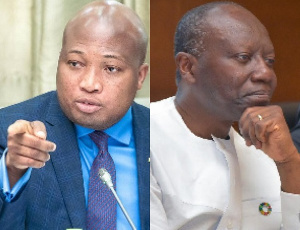
Member of Parliament for North Tongu, Samuel Okudzeto Ablakwa, has criticized Finance Minister Ken Ofori-Atta’s call for Ghanaians to rally behind the Bank of Ghana (BoG) instead of subjecting it to criticism.
The central bank has faced severe scrutiny, particularly from opposition voices, following substantial losses recorded in its 2022 annual report. This has led to calls for the governor and his two deputies to step down, with the Minority in Parliament and various pressure groups planning a protest campaign known as #OccupyBoG to emphasize their demands.
Amid these losses, concerns have arisen about the bank’s ongoing construction of a new head office, which is alleged to cost taxpayers US$250 million. This has further intensified the pressure on the bank.
In response to these challenges, Ken Ofori-Atta penned an article this week in defense of the bank, addressing all the criticisms. One of the notable quotes from the article pertains to the new head office building.
In response to this quote, Ablakwa posted on Facebook: “Why not build a befitting economy for all of us first? This is the self-acclaimed Solid Team!”
Today, on September 8, 2023, the Bank of Ghana’s Interbank forex rates reveal various currency exchange rates.
The Ghana Cedi is trading against the dollar at a buying price of 11.0346 and a selling price of 11.0456. At an Accra-based forex bureau, the dollar is being purchased at a rate of 11.40 and sold at a rate of 11.65.
Against the Pound Sterling, the Cedi is trading at a buying price of 13.7701 and a selling price of 13.7860. In Accra’s forex bureaus, the pound sterling is being bought at a rate of 14.35 and sold at a rate of 14.85.
The Euro is trading at a buying price of 11.8167 and a selling price of 11.8294. At Accra’s forex bureaus, the Euro is being acquired at a rate of 12.10 and sold at a rate of 12.60.
The South African Rand is trading at a buying price of 0.5755 and a selling price of 0.5760. In Accra’s forex bureaus, the South African Rand is being bought at a rate of 0.35 and sold at a rate of 0.95.
The Nigerian Naira is trading at a buying price of 69.6570 and a selling price of 70.4414. In Accra’s forex bureaus, the Nigerian Naira is being purchased at a rate of 11.00 Naira for every 1 Cedi and sold at a rate of 16.00.
For the CFA, it is trading at a buying price of 55.4514 and a selling price of 55.5110. In Accra’s forex bureaus, CFA is being acquired at a rate of 16.50 CFA for every 1 Cedi and sold at a rate of 20.50 CFA for every 1 Cedi.
Note that these rates may be different at a forex bureau near you. Our forex bureau rates are provided by Afriswap Bureau De Change in Osu, Accra.
Our forex bureau rates are provided by Afriswap Bureau De Change in Osu, Accra.
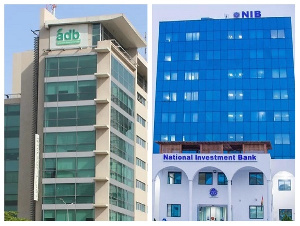
There are reports suggesting that the government is contemplating a plan for the Agriculture Development Bank (ADB) to assume control of the National Investment Bank’s (NIB) operations.
The decision stems from the need to restructure NIB, a state-owned institution that has faced numerous challenges in recent years.
The government is finding it increasingly difficult to provide financial support to NIB. Sources familiar with the proposed takeover indicate that while the government is exploring other options, allowing ADB to assume NIB’s operations appears to be the most favored option at present.
This move by the government follows hints from the Central Bank Governor, Dr. Ernest Addison, who mentioned in July of this year that discussions were underway to assess the viability of NIB.
Dr. Addison made these comments during the 113th Monetary Policy Committee (MPC) press briefing, stating that issues related to NIB and other under-capitalized institutions are now part of Ghana’s financial sector strategy under the current IMF-supported program.
“The NIB is one of the banks that we will make that assessment on, to ascertain whether it is still viable or not. If it is viable and the government can find money to recapitalise it, then Yes. But if it is not viable, then, obviously, we will have to find a different use for that instrument,” Dr Addison earlier said.
“These are ongoing discussions between us and the international partners and I believe that in the next year [2024] or so, we will get a clearer sense of how to handle those particular institutions that are very weak,” he added.
As part of Ghana’s 17th IMF program, the Central Bank has pledged to resolve the solvency issues faced by under-capitalized institutions, including the National Investment Bank (NIB). This initiative is also a response to the persistent under-capitalization problem among various special deposit-taking institutions (SDIs) following the banking sector cleanup operation.
While some banks in the country underwent recapitalization in the aftermath of the banking sector cleanup, the state-owned National Investment Bank, which was on the verge of insolvency, did not participate in the recapitalization process.
ADB’s financial strength for NIB takeover
As reported by Joy Business, sources knowledgeable about the takeover negotiations have suggested that ADB may require financial assistance to facilitate a seamless transition of NIB, which is currently grappling with financial challenges.
Furthermore, some financial market observers have proposed that the government should consider fully privatizing NIB as this could provide the government with additional time to completely relinquish all responsibilities related to NIB.
While discussions are ongoing, certain stakeholders have expressed strong opposition to ADB taking over NIB. These dissenting parties contend that NIB has initiated efforts to revitalize the bank, making a takeover counterproductive.
They argue that NIB has significantly increased its deposit holdings within a short timeframe and has implemented measures to address revenue losses. They further assert that a capital injection of GH¢2.2 billion could enable the state-owned bank to fully recover and enhance its operations.
“We think that NIB should be made to also borrow from private investors. Government can even allow NIB to float shares to individuals and institutional investors to raise funds to recapitalise the bank”, an opposition to the takeover is quoted Joy Business.
President of the Private Newspaper and Online News Publishers Association of Ghana (PRINPAG), Andrew Edwin Arthur, has praised the Bank of Ghana for its efforts on behalf of Ghana as a whole.
He claims that the Central Bank has taken steps to ensure that media representatives are adequately informed about its policies and measures for improving financial reporting on economic development, growth, and stability.
The PRINPAG president noted that although the Central Bank has received public criticism recently, he feels that its actions have been within the regulations controlling its mandate while speaking at the BoG’s annual financial literacy event organized for business and financial media.
“I applaud Bank of Ghana for forging a partnership and collaboration with the Ghanaian media to educate the public about the economy, echoing PRINPAG’s policy of encouraging its members to specialize in their chosen profession,” Mr Arthur said.
“This collaboration with the media is helping Ghanaians better understand economic issues, thus fostering greater interest in public discussions about the economy,” he added.
The annual financial literacy program, conducted under the theme “Restoring Confidence in the Economy: The Impact of Monetary Policy,” is an integral component of the Bank of Ghana’s dedication to implementing policies and initiatives that prioritize the well-being of the people, foster financial inclusion, and stimulate business growth within the country.
Dr. Philip Abradu-Otoo, the Director of Research at the Bank of Ghana, who stood in for Central Bank Governor Dr. Ernest Addison, conveyed appreciation for the media’s vital role in disseminating valuable information regarding economic policies. He emphasized that such efforts promote transparency and accountability in economic matters.
“We believe in the power of the media to educate and inform the public and we are committed to fostering this collaboration for the betterment of Ghana’s economy,” the BoG Director said.
“This positive collaboration has contributed significantly to the media’s ability to provide accurate and comprehensive reporting on financial matters, thereby enhancing public awareness and confidence in the financial sector,” he added.
The presidents of Journalists for Business Advocacy (JBA) and Institute for Financial and Economic Journalists (IFEJ), as well as other important business and financial journalists from across the nation, attended the training event.
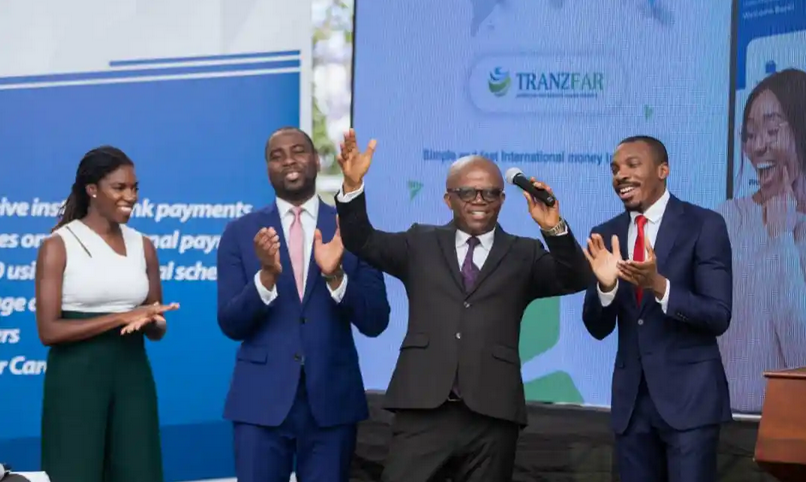
A UK fintech firm, Tranzfar, has introduced the groundbreaking Freedom Bank Account in Ghana.
This innovative digital banking product offers users versatile functionality, including instant money transfers, setting up standing orders and direct debits, and various banking operations.
This pioneering account, the first of its kind in Africa, empowers Ghanaian users to seamlessly send and receive funds internationally, spanning continents like Africa, Asia, and the Americas.
A distinctive feature of this digital banking service is its multi-currency support in pounds, dollars, and euros. Ghanaians, even those not residing in the UK, can now own UK-based bank accounts.
Deputy Minister for Trade and Industry, Dr. Stephen Amoah, commended Tranzfar for conceptualizing the Freedom Bank Account.
He anticipates this product to foster entrepreneurship, boost trade and industry, and contribute to the Ghanaian economy’s growth.
Mr. Ryan Romeo, Co-Founder and CEO of Tranzfar, highlights the account’s inclusivity.
It serves various segments, from students studying abroad to small businesses aiming to expand their global customer base.
Consultancy businesses, online enterprises, and individuals seeking foreign currency savings also benefit.
Accessible via mobile app or website, the Freedom Bank Account aligns with the quest for global connectivity and financial inclusivity.
Dr. Olusiji Sanya, Co-Founder and CFO of Tranzfar, emphasizes their belief in granting universal access to global banking services, regardless of location or origin.
The African Development Bank (AfDB), has reported that around 15 million individuals in Africa were plunged into poverty in 2022 as a result of elevated food and energy costs.
Nevertheless, the AfDB noted that the influence of rising energy prices on poverty was more pronounced than that of food prices.
This disparity arose because the escalation in energy costs directly impacted household earnings, whereas the adverse effect of elevated food prices was somewhat counteracted by augmented household income from net sales.
“In Africa, the additional number of people falling into extreme poverty due to energy price inflation is estimated at 10.2 million, bringing the combined poverty effect of soaring food and energy prices to about 15 million people,” the bank noted.
This information was detailed within the African Development Bank’s (AfDB) 2023 West Africa Economic Outlook report, which highlighted a notable 10% surge in the region’s average poverty rate from 2019 to 2022.
The report also identified that, in comparison to a counterfactual scenario, the international poverty rate, defined by the US$2.15-a-day poverty line, saw an upturn in nine West African countries.
Among the observations, it was noted that the average household well-being diminished in 12 out of 14 countries, collectively resulting in an average actual income decline of 0.82%. The AfDB underscored that this decline disproportionately affected the more economically disadvantaged households.
“The fall in real household per capita income due to high global food and energy prices has impacted household welfare and exacerbated poverty and inequality in African countries,” AfDB reported.
The report cautioned that prolonged increases in the prices of food and energy could yield lasting ramifications for prosperity in numerous African nations, further exacerbating issues of poverty and inequality.
In response, the Bank urged African governments to adopt proactive measures encompassing monetary, fiscal, and structural policies to counter the repercussions of mounting inflation and subdued economic growth.
The AfDB also advocated for heightened support towards fostering a pro-growth structural transformation, which is crucial for sustaining rapid, sustainable, and inclusive economic expansion.
As Russia initiated its invasion of Ukraine from February to March 2022, crude oil prices escalated by approximately 20%, surging from $93.5 per barrel per day (bpd) to $112.4 bpd. Throughout the period from March to October 2022, the average stood at $102.8 bpd in Africa.
In a similar trajectory, wheat prices experienced a surge of approximately 28%, climbing from $364.9 per metric ton (mt) in February 2022 to $446.5 per mt in March 2022. Between March and October 2022, the average price was $427.2 per mt.
Similarly, fertilizer prices also underwent an increase of around 22%, soaring from $547.1 per mt in February 2022 to $668.9 per mt in March 2022. The average price from March to October 2022 settled at $624.9 per mt.
Uganda’s President Yoweri Museveni has once again criticized the World Bank for withdrawing funding, asserting that the organization is mistaken if it believes this action will intimidate the Ugandan people.
In a statement shared on his former Twitter account, Mr. Museveni characterized the World Bank as “superficial and intolerable imperialist agents who lack restraint.”
Last week, the World Bank suspended financial assistance to Uganda due to a controversial anti-homosexuality law enacted in May, which contradicted the organization’s principles.
This law has drawn widespread international criticism due to its severe penalties, including imprisonment or even death for individuals engaging in certain same-sex activities.
In response to the World Bank’s actions, President Museveni accused the institution of attempting to pressure Uganda into reversing the law by ceasing funding. However, he also affirmed that Uganda would continue to progress even without the World Bank’s support.
Reiterating his stance on Thursday, President Museveni emphasized that the discontinued funding would not hinder Uganda’s economic advancement. He suggested that the World Bank’s drastic decision could paradoxically aid Uganda’s efforts to diminish external debt and foster self-sufficiency.
President Museveni further noted that Uganda maintains several Western allies but claimed that these allies were hesitant to continue supporting the country.
Choosing to invest in numerous channels is a crucial choice. Savings are a good thing, but investments are more effective at helping you build wealth.
Here are five potential investment areas in Ghana. Choose one of the five or invest in all of them to diversify your portfolio.
The concept of saving and investment remains ambiguous in developing countries worldwide, including Ghana. Due to the prevalent high unemployment rates and meager salaries for many workers in the country, investing has become a privilege limited to only a fortunate few.
Nevertheless, there has been a recent surge in efforts to educate people about the advantages of investments, and this has led to a growing number of Ghanaians, particularly the youth, actively participating in investment opportunities.
During an exclusive interview with Pulse Ghana, Desmond Bredu, a Chartered Investment Professional, outlined five effective ways for individuals to invest their money in Ghana.
1. Fixed deposits
Also referred to as term deposits are quite straightforward as they employ the simple interest formula for calculating interest. What is important is a principal(amount you want to invest), a given interest rate, a defined period. Eg. you may walk to bank XYZ to buy a fixed deposit 1000ghs (principal) @ 14% for a year.
For fixed deposits, at the end of the period, you get the 140ghs as interest using the formula [(Principal x Time x Rate)/365]. Thus you’re given 1,140 on maturity ie. Principal plus interest. The actual day counts for fixed deposits are calendar year specific.
2. Mutual Funds
A mutual fund is a kind of investment that uses money from a pool of investors to invest in securities such as fixed deposits, equity, bills, bonds or other types of investment. A fund manager decides how to invest the money, and for this he is paid a fee, which comes from the money in the fund. One great thing about these investments is, it doesn’t matter your contribution, everyone in the fund enjoys the same return percentage-wise. Obviously,the money returns will be different if you have 20k in the fund as compared to someone with 5k but in percentage terms both will earn the same rate.
3. Shares
It is basically a unit ownership in a company. Thus, anyone who purchases becomes a part owner of the company and is entitled to certain rights- all completely public in a document called Prospectus.
4. Treasury Bills
Treasury bills/notes (T-Bills) are short term money market instruments issued by Bank of Ghana (BOG) on its own account or on behalf of the Government of Ghana (GOG). This is a common method used by governments to borrow money from citizens for development purposes.
The various types of bills/bonds listed on the Ghanaian money market are as follows: 91-day Treasury Bill 182-day Treasury Bill 1 and 2-Year Treasury Notes 3 and 5-Year Bonds
5. Bonds
A bond is a fixed-income instrument that represents a loan made by an investor to a borrower (typically corporate or governmental). A bond could be thought of as an I.O.U. between the lender and borrower which includes the details of the loan and its payments. Bonds are used by companies, municipalities, states, and sovereign governments to finance projects and operations.
Nigeria’s suspended bank chief has made a court appearance over a month after being arrested by the country’s secret police.
Godwin Emefiele faced charges of illegally owning a shotgun and ammunition during Tuesday’s hearing in Lagos, where he arrived with a large Bible in hand.
Emefiele vehemently denied the allegations.
Despite the government’s claim that he posed a flight risk, Justice Nicholas Oweibo granted the 61-year-old bail.
This turn of events marks a significant downfall for a man who had recently considered running for Nigeria’s presidency. Although he did not secure the nomination of the ruling party, his decision to pursue it while still serving at the bank drew strong criticism and marked a low point in the institution’s history, according to critics.
Before the tightly contested presidential election in February, Emefiele led an unsuccessful effort to redesign the local currency to combat vote-buying.
Many Nigerians view him as a crucial figure in the government of former President Muhammadu Buhari, which presided over eight years of economic turmoil, including two recessions, high inflation, currency devaluation, surging unemployment, and mounting debts.
In the course of the trial at the Financial and Economic Division of the High Court in Accra, it came to light that the Investigator assigned to the case involving the founder of the defunct Beige Bank lacks awareness of crucial details regarding a Share Purchase agreement. This agreement was between the Beige Group and First Africa Group (FAG) for the acquisition of First Africa Savings and Loans (FASL) by Beige Group.
FAG, being the parent organization of FASL, had reached an agreement with Beige Group for the latter to take control of FASL. However, despite being tasked with investigating the matter, Assistant Superintendent of Police (ASP) Joseph Abednego Atsah, the investigator, admitted to not being informed about the specifics explicitly outlined in the share purchase agreement.
ASP Abednego Atsah, who serves as the Fifth Prosecution Witness in the ongoing trial, had his Witness Statement recorded on December 8, 2022, and subsequently adopted by the Court as his evidence-in-chief, along with various exhibits, on July 7.
The purpose of his testimony in the Court, presided over by Justice Afia Serwah Asare-Botwe, a Justice of the Court of Appeal sitting as an additional High Court judge, is to support the Prosecution’s charges leveled against Mr. Michael Nyinaku.
Mr. Michael Nyinaku, the founder and Chief Executive Officer of the defunct bank, is facing allegations of siphoning customers’ funds and stands accused of stealing GH¢2.1 billion of depositors’ money from the bank.
He has entered a plea of not guilty to 43 charges, including stealing, fraudulent breach of trust, and money laundering, and has been granted bail during the legal proceedings.
Beige Group & FASL Purchase agreement
According to the Share Purchase agreement between The BEIGE Group and FAG, both parties agreed that Beige Group would assume complete control and management of FASL within 90 days from the effective date of the agreement.
The agreement laid out a structured three-stage process for the takeover: the Commencement date, the transitional period, and the Cut-off date. All these significant milestones were expected to occur within the 90-day timeframe, after which Beige Group would assume full responsibility for FASL.
During the negotiation process, FAG, jointly represented by Kwesi Tetteh Dadzie and Gifty Affenyi Dadzie, made representations to BEIGE, assuring them that they had obtained all the necessary approvals from the Bank of Ghana (BoG) for the share sale transaction. However, it later came to light that these representations were not accurate.
Under cross-examination by Defence Lawyers, led by Lawyer Thaddeus Sory, ASP Abednego Atsah, who has served at the Criminal Investigation Department of the Ghana Police Service for 21 years, admitted that he was not fully aware of the specific details of the agreement despite being involved in the investigation of the matter.
Cross-Examination
ASP Abednego Atsah, who had worked with the Police for the past 21 years, had made reference to the share purchase agreement in paragraph 9 of his witness.
But did not attach a copy of the said agreement as stated to his statement to the Court.
Shown a copy of the share purchase agreement by Lawyer ThaddeusSory, (Marked as Exhibit 20) between two entities one known as First African Group (FAG) and the Beige Group who are seller and buyer respectively, he confirmed to the court that the Share Purchase Agreement.
Asked by Mr. Sory, that from the parties to the agreement per exhibit 20, it is clear that contrary to what he had said in paragraph 9 of his witness statement, the purchaser of those shares is the Beige Group and not the Beige Bank.
“That is correct. I suppose there was a typographical error in the statement, it should have read ‘Beige Group’, ASP Atsah, the Investigator answered.
When it was put to him by Mr Sory that, “contrary to what you say in paragraph 11 of your witness statement, the signatories to the FASL account were representatives of the two parties stated in Exhibit 20 who are the First Africa Group (FAG) and the Beige Group and not the Beige Bank,”
The Witness in his response agreed, before explaining that, “I can recall that Counsel said that the Beige Bank is part of the Beige Group.”
Mr Sory again put to him that, the Beige Bank and the Beige Group are different, the Witness also agreed with Counsel, saying , “that is correct.”
Asked by Mr Sory if he had made any findings on Exhibit 20 as part of his investigation on the management of FASL, the Witness instead offered explanation.
“My lady because of the share purchase agreement, Beige Group had sent its representatives to work with FASL so the representatives had the opportunity to work with FASL as a result of the share purchase agreement,” the Investigator noted.
I’m not aware of Agreement details
Counsel for the accused had put to the Investigator that, “by that Share Purchase Agreement, there were three crucial dates in the Share Purchase Agreement, there was the commencement date, the transitional period and a cut-off date.”
But, the Witness in his response said, “My lady I do not know how counsel segregated it but all I know is that, there was a share purchase agreement between FAG and the Beige Group.”
Below are excerpts of the cross-examination conducted by Lawyer Thaddeus Sory
CROSS EXAMINATION OF PW5 BY MR. SORY
Q: Do you have any training in accounting?
A: No my lady. I have never done accounting.
Q: And apart from this case in which you were involved in the investigations, have you investigated any other matter that raised accounting related issues?
A: I have. In fact, I did financial analysis and reporting at the MSC Level.
Q: Can you tell the court what investigations you have conducted that raised accounting-related matters apart from this one?
A: I investigated a case involving a construction company’s account. I cannot recollect the name off head. It was constructing road awarded by the Ministry of Roads and Highways at the Effiduase Area in the Ashanti Region. The then Managing Director, one Kwasi Asare had embezzled several funds from the company’s account. The company’s accounts were at Ecobank Headquarters, Accra.
Q: Do you have any banking experience?
A: No my lady.
Q: But have you conducted any banking-related investigations apart from this particular one in which you were involved?
A: The only time I conducted banking-related investigations was when I went to Ecobank in respect of the case involving Akwasi Asare.
Q: Do you have any auditing background or experience
A: No I have never studied auditing before.
Q: And have you conducted any auditing related investigations apart from this case which you are involved?
A: Yes, I have conducted investigations in which we had to call for auditors reports when those cases were reported.
Q: As in “those cases”, do you mean this case or some other case?
A: In other cases.
Q: From your witness statement, your investigations covered a number of areas such as the supposed suspicious accounts opened in the name of First African Savings and Loans (FASL), the transfer of customer deposits from the Beige Bank to Beige Capital Assets and Management (BCAM), the transfer of funds from BCAM to the supposed suspicious FASL account, related third party transactions and other individual transactions involving the bank, is that correct?
A: That is correct.
Q: For purposes of your investigations, you not only interviewed and interacted with all individuals involved in the transactions as well as officials of the affected institutions but also collected documents from them, is that correct?
A: That is correct.
Q: And so in the course of your investigations, where a person made a statement which could be supported by a document, you called for it in order to authenticate or prove what the person is saying in their statement, is that correct?
A: That is correct.
Q: When you concluded your investigation, you wrote a report indicating your findings, is that correct?
A: That is correct.
Q: That report has not been attached to your witness statement, is that correct?
A: That is correct my lady. The cases were in segments. As and when the Receiver brings a particular aspect of the case, when I finish with that, report was written with findings. That is how it ran through all the cases until they were finally consolidated.
Q: Can you make the reports available to us before the next adjourned date?
A: Yes my lady.
BY COURT
The prosecution is directed to file further disclosures in respect of reports authored by PW5 in connection with Beige Bank/Beige Group investigations by Tuesday 11th July, 2023.
Q: In paragraph 9 of your witness statement, you make reference to a share purchase agreement which is not attached to your witness statement, is that correct?
A: That is correct?
Q: Take a look at Exhibit 20, that is a share purchase agreement between two entities one known as First African Group (FAG) and the Beige Group who are seller and buyer respectively, is that correct?
A: That is correct.
Q: Is that the Share Purchase Agreement you are referring to or there is another one?
A: This is the Share Purchase Agreement.
Q: From the parties to the agreement you are looking at which is Exhibit 20, it is clear that contrary to what you say in paragraph 9 of your witness statement, the purchaser of those shares is the Beige Group and not the Beige Bank?
A: That is correct. I suppose there was a typographical error in the statement, it should have read “Beige Group”.
Q: I am putting it to you that contrary to what you say in paragraph 11 of your witness statement, the signatories to the FASL account were representatives of the two parties stated in Exhibit 20 who are the First Africa Group (FAG) and the Beige Group and not the Beige Bank.
A: That is correct. I can recall that Counsel said that the Beige Bank is part of the Beige Group.
Q: I am putting it to you that the Beige Bank and the Beige Group are different.
A: That is correct.
Q: As part of your investigations into Exhibit 20 that you are holding, did you make any findings regarding the effect of Exhibit 20 on the management of FASL?
A: My lady because of the share purchase agreement, Beige Group had sent its representatives to work with FASL so the representatives had the opportunity to work with FASL as a result of the share purchase agreement.
Q: I am putting it to you that by that Share Purchase Agreement, there were three crucial dates in the Share Purchase Agreement, there was the commencement date, the transitional period and a cut-off date.
A: My lady I do not know how counsel segregated it but all I know is that, there was a share purchase agreement between FAG and the Beige Group.
Q: I am further putting it to you that from the transitional period which started from the commencement date up to the cut-off date, officials of the Beige Group (TBG) were to commence taking over full responsibility of FASL.
A: What I know is that the share purchase was 90% which part was paid for and for that matter, it could not have been full responsibility of FASL if it was 90% share agreement.
Q: I am further putting it to you that the transitional period as per Exhibit 20 was not to last beyond 90 days from the date of commencement.
A: That I am not aware of.
Q: I am also putting it to you that after the transitional period of 90 days from the date of commencement, there was then a cut-off date at which time officials of TBG now took over full control of FASL and that is what Exhibit 20.
A: That I am not aware of.
Q: I am finally putting it to you that at least by December 2017, the transitional period was over and officials of the BEIGE Group in accordance with the provisions of Exhibit 20 took over full control of FASL all of its operations and management.
A: I knew they were waiting for Bank of Ghana’s approval but I do not know if they had taken full control as at December 2017.
Q: You referred to the suspicious FASL account, can you tell the court when it was opened?
A: If I could refer to my statement.
By Court: The witness is granted permission to refresh his memory on his statement.
Q: You referred to the suspicious FASL account, can you tell the court when it was opened?
A: The specific date is not mentioned but the account number is captured here but the specific date is not here.
Q: So in other words, you do not know the date when that suspicious account was opened?
A: If I refer back to Susana Philip’s statement, she is the official who opened the account so I can get the actual date.
By Court:
The witness is granted permission to refresh his memory on the statement of Susana Philips.
Q: What is the date?
A: Susana indicated that she had instruction from Vanessa Akorfa Atsu on 14th March, 2018 to open the account.
Q: The Susana Philips’ statement you are looking at, it is dated 12th September, 2018, is that correct?
A: That is correct.
Q: And it was made to the Commercial Crime Unit of the CID, is that correct?
A: Yes my lady
Mr. Sory: My lady we wish to tender the document through the witness.
By Court: Any objection.
Mrs. Keelson: My lady we have no objection
BY COURT
The document is admitted without objection as Exhibit 26.
Q: If you look at the second page of that statement starting from about the 10th or 11th line, Susana told the Commercial Crime Unit (CCU) of the CID that the account was opened after all proper procedures of the bank were followed, is that correct?
A: My lady if I may read that portion. Witness reads the 10th and 11th lines to the hearing of the court.
Q: Take a look at the third line, it says that, that account was directly linked to the FASL operational account, is that correct?
A: That is correct my lady.
Q: She also made another statement to the Special Investigations Team (SIT) dated 18th January, 2019, do you have a copy of it?
A: Yes my lady, I do have a copy.
Mr. Sory: My lady we pray to tender that statement through the witness
By Court: Any objection.
Mrs. Keelson: My lady we have no objection.
BY COURT
The document is admitted without objection as Exhibit 27.
Q: If you look at the second page of that statement, from about the 7th line onwards, Susana explains to the Special Investigations Team (SIT) where you work that the purpose of that account which you call suspicious was to receive placements from BCAM, is that correct?
A: It was a reported speech from Yvonne Philips. If my lady will permit me to read.
By Court: The witness reads from the 7th line to the hearing of the court.
Q: It is clear what the purpose of the account you call suspicious was opened for, it was for BCAM placements, I am putting that to you.
A: Per the assertion of Susana Philips who opened the account, that is correct.
Q: Take a look at your statement again, there is one written by Yvonne Philips dated 7th September, 2018 written to the Commercial Crime Unit (CCU) of the CID, do you have it?
A: Yes my lady.
Mr. Sory: My lady we pray to tender that statement through the witness
By Court: Any objection.
Mrs. Keelson: My lady we have no objection.
BY COURT
The document is admitted without objection as Exhibit 28.
Q: If you read from line 17 to about line 25 on the second page, Yvonne Philips explains how this second account was opened.
A: Witness reads line 17 to line 25 of Exhibit 28 to the hearing of the court.
Q: I am putting it to you that the procedure was duly followed.
A: This is the account of Yvonne Philips to the police.
Q: From line 28 of that same statement, Yvonne Philips again tells the police that she became aware that BCAM made placements into that account.
A: Witness reads line 28 of Exhibit 28 to the hearing of the court.
Q: It is correct that BCAM placed funds with FASL into that second account which you call suspicious.
A: Per the statement of Yvonne Philips, that is so.
Q: I am putting it to you that from Exhibits 26 to 28, it is clear that when you say in paragraph 12 of your witness statement that the second account without the knowledge and consent of FASL management is not correct.
A: These accounts as read out are accounts from personnel who worked with Beige and they gave these accounts to the police both at the CCU and SIT
Q: So these personnel were also personnel from FASL and that is clear from paragraph 11 of your witness statement.
A: I did state that Vanessa Akorfa Atsu was at FASL representing the interest of Beige Group.
The International Money Transfer Operators (IMTOs) have been ordered by the Central Bank of Nigeria (CBN) to start sending beneficiaries remittances in Naira in addition to foreign currency.
Additionally, it has mandated that the rate for such Naira payouts be determined using the Investors and Exporters’ Window foreign currency rate.
The Director of Trade and Exchange issued a CBN circular with the following reference: FED/FEM/PUB/FPC/001/004. Ozoemena Nnaji, M.D.
According to CBN, the new circular, issued July 10, 2023, was a continuation of an earlier circular, dated November 30, 2022, with reference number: FED/FEM/FPC/01/011 which set forth rules on the payout policy of beneficiaries receiving remittances from the diaspora.
The payment of dollars to recipients of diaspora remittances through international money transfer operators (IMTO) through the selected bank of their choosing and with unlimited access to their funds was made official by that November 30, 2022 circular.
The Naira payment was only one of three options for receiving remittances from the diaspora, along with US dollars and E-Naira, according to the latest circular.
“Further to the circular referenced FED/FEM/FPC/01/011 dated November 30, 2022 in respect of the foregoing subject, the Central Bank of Nigeria hereby announces Naira as a payout option for receipts of proceeds of International Money Transfers,” the circular’s complete text reads.
“Accordingly, all recipients of Diaspora remittances through the CBN-approved International Money Transfer Operators (IMTOs) on the attached list shall henceforth have the option of receiving Naira payment in addition to USD and e-Naira as payout options.
“For the avoidance of doubt, IMTOs are required to pau out the proceeds using the Investors’ & Exporters’ window rate as the anchor rate on the date of the transaction.
“The regulation takes effect immediately.”
Recall that the CBN announced the consolidation of all forex market segments in Nigeria by merging all windows into the Investors & Exporters (I&E) window in the middle of last month.
The action was seen as a part of the new administration’s initiatives to increase market stability and liquidity by luring foreign capital into the Nigerian economy.
The RT200 program and the Naira4dollar remittance plan were both discontinued by the apex bank last month.
Recall that the CBN announced the consolidation of all forex market segments in Nigeria by merging all windows into the Investors & Exporters (I&E) window in the middle of last month.
The action was seen as a part of the new administration’s initiatives to increase market stability and liquidity by luring foreign capital into the Nigerian economy.
The RT200 program and the Naira4dollar remittance plan were both discontinued by the apex bank last month.
A statement released by DPO Pay on July 11 2023, the Bank of Tanzania (BoT) has approved the company’s application to operate as a payment service provider in Tanzania.
The local company One Payment Tanzania Limited is the DPO’s registered name.
The business has obtained a license in accordance with the National Payment System Act of 2015, which stipulates that in order to offer payment services in Tanzania, Payment Service Providers (PSPs) must go through a rigorous application process.
The license, according to DPO Pay’s managing director Judy Waruiru, highlights the company’s dedication to regulatory and compliance requirements.
“This milestone demonstrates our dedication to driving financial inclusion and economic growth in Tanzania, empowering businesses of all sizes to thrive in the digital era.
“We will continue to prioritise the security of transactions, adhering to stringent data protection protocols and industry best practices,” Ms Waruiru said in the statement.
According to DPO Pay, which has been effectively functioning throughout Africa since 2006, Network International, a key enabler of digital commerce throughout the Middle East and Africa (MEA) region, just bought the company.
In order to provide secure and continuous services to its partners and merchants, it has closely collaborated with regulators across the continent to get new licenses.
With its considerable experience in the travel and tourist industry, DPO Pay has attracted the attention and trust of major companies across a variety of industries, including hotels and resorts in Arusha, Dar es Salaam, and Zanzibar.
The company, the statement said, has established itself as the preferred payment solution for major merchants in the region, including industries such as Airlines, Hotels, online retailers and logistic companies.
With a firm focus on expanding its network, DPO Pay continues to seek collaboration with top-tier businesses and brands, and cater to the diverse needs of merchants across various industries.
The company’s robust security systems ensure that merchants and consumers can transact with confidence, safeguarding their sensitive information and maintaining the highest standards of integrity. With the recently updated DPO Pay Mobile app, merchants are able to collect and receive payments anywhere and anytime.
DPO Pay provides efficient payment solutions enabling businesses and individuals across the continent to accept both local and international payment options.
It has developed integrated payments technology to support businesses of all sizes in over 20 countries and accept payments securely and swiftly in multiple currencies and through diverse payment methods including cards, mobile money, bank transfers, USSD, and EFT.
Customers and businesses may interact with confidence because to the company’s strong security measures, which protect sensitive data and uphold the highest standards of integrity. The recently upgraded DPO Pay Mobile software allows businesses to accept payments anywhere at any time.
Businesses and people across the continent can accept both domestic and foreign payment methods thanks to DPO Pay’s effective payment solutions.
In order to help businesses of all sizes in more than 20 countries, it has developed integrated payments technology. This technology enables them to securely and quickly accept payments in numerous currencies using a variety of payment methods, including cards, mobile money, bank transfers, USSD, and EFT.
The freshly replaced airfield lighting systems at the domestic runway 18/36L of Murtala Muhammad Airport are purportedly gone.
The PUNCH learned that the security situation at Nigeria’s largest airports has deteriorated due to the removal of the approach lighting systems.
A source who requested anonymity said those who removed the lighting systems profited from the runway being closed for more than three months.
According to the report, several FAAN employees colluded with outsiders to steal the airport lighting equipment.
“The criminal took advantage of the closure to commit the crime. I cannot give the actual worth of the theft, but almost all the lighting was removed. The permanent secretary came around to see for himself the huge damage done. A lot of FAAN officials have been suspended,” the source confirmed.
According to information obtained by The PUNCH, Dr. Emmanuel Meribole, Permanent Secretary of the Ministry of Aviation, ordered the suspension of some FAAN department heads due to missing lighting equipment.
The insider also said that inquiries had started in order to identify people in charge of the missing safety equipment.
The insider claims that a syndicate made up of some agency employees with access to the restricted areas and collaborators from the outside often breaches airport security and steals safety components.
A senior FAAN employee who did not want his name published claimed that Mr. Kabir Yusuf, the agency’s managing director, was unhappy with the development.
The FAAN MD, according to him, also ordered the suspension of the security staff in charge of manning the most important airport facilities.
Reacting to the latest development, a former Military Commandant at the Murtala Muhammed International Airport, Lagos, Group Capt. John Ojikutu (retd.), said, “This is not new at MMA. I wish the FAAN management could go back to 1990 when similar things happened in the airport. I was convinced that it was an ‘insiders threats’. What did I do? I positioned soldiers on the runways and ensured that no FAAN maintenance staff went near the runways for anything without my approval; otherwise, it was shoot at first sight. It stopped completely. Runway lightings were being stolen and my conclusion then was that runway lightings can only be useful for runways and not roads or houses.
“Those stolen were being sold to FAAN by the same workers. That is why I am not in support of the unions carrying the picketing of their employers to the airport’s security controlled areas.”
The Director of Public Affairs and Consumer Protection, FAAN, Mr Yakubu Funtua, told The PUNCH stated that investigations had been launched and that the agency would do all within its powers to avoid a reoccurrence.
He said, “FAAN is doing all it can to get to the bottom of this. You are very aware that there are many agencies within the airport, including the different ones that are supposed to be taking care of security there. So, it would be unfair to put this (the theft) on our (members of) staff and I don’t think there is any FAAN (member of) staff that wants the agency to crash.
“Note that most of our revenue comes from Lagos. So, what kind of staff will ‘kill the goose that lays the egg?’ However, we can’t say exactly who did it, but we are doing all that we can to recover what is lost. We are going to recover it because we are going to find out those people who did it and then block all those loopholes.”
Due to a lack of airfield illumination, the domestic runway 18L at Lagos Airport was closed to night operations for 15 years.
Domestic aircraft were compelled to use runway 19 at the international airport, a longer route that uses more fuel.
The apparatus was built on the 2.7-kilometer runway in November and helps aircraft take off and land at the domestic airport during the night.
The former manager of a Keystone Bank branch in the Agege neighborhood of Lagos State, Tijani Saleh, is accused of making an unauthorized withdrawal of N5.9 million from his business account, which has made it impossible for account holder Bala Ibrahim to satisfy his financial obligations.
During a conversation with media correspondent, Ibrahim claimed that his attempts to get the bank to repay his money had failed.
PUNCH According to Metro, Ibrahim opened a business account with the bank and deposited N20 million into it.
Ibrahim stated shortly after the account was funded that he needed N5.9m to support some of the projects his business was undertaking but had not yet received a check to withdraw funds from the corporate account.
Ibrahim claimed that in an effort to withdraw the funds, he went to the bank manager for advice on the avenues to pursue. He added that the manager required his company’s letterhead paper in order to execute the request.
The businessman, however, claimed that things took an unexpected turn when the bank manager allegedly withdrew N5.9 million from his corporate account using letterhead paper without his permission.
Ibrahim stated that he raised the alarm when he requested his statement of accounts and that the bank fired the manager as a result of learning about the manager’s actions.
Although he was aware that the former manager was responsible for the unauthorized withdrawal, he pointed out that the bank had yet to reimburse him for his money.
An account holder with the Keystone Bank, Bala Ibrahim, has been finding it difficult to meet his financial needs after an erstwhile manager of a branch of the bank in the Agege area of Lagos State, Tijani Saleh, allegedly made an unauthorised withdrawal of N5.9m from his corporate account.
Ibrahim, while speaking with our correspondent, said efforts to get the bank to refund his money proved abortive.
PUNCH Metro gathered that Ibrahim opened a corporate account with the bank and funded the account with N20m.
Shortly after funding the account, Ibrahim said he was in need of N5.9m to fund some of the projects his company was doing but had yet to be given a cheque to withdraw money from the corporate account.
In a bid to get the money withdrawn, Ibrahim said he approached the bank manager to advise him on the options to explore to enable him to withdraw the money, adding that the manager demanded the letter-headed paper of his company to process the request.
The businessman, however, said things took another dimension when without his consent, the bank manager allegedly used the letter-headed paper to make an unauthorised withdrawal of N5.9m from his corporate account.
Upon discovering that the money had been withdrawn when he requested his statement of account, Ibrahim said he raised the alarm and the bank, after getting wind of the manager’s action, sacked him.
He, however, noted that the bank had yet to refund his money despite knowing that the erstwhile manager was responsible for the unauthorised withdrawal.
Ibrahim said, “I opened a N20m corporate account with the Keystone Bank. But when I needed some money to facilitate some projects in my company, I approached the bank manager. He told me to send the letter-headed paper of my company and I did.
“It was later on I realised he used the letter-headed paper to withdraw N5.9m from my account without my consent. The bank got wind of his action and sacked him. Since then I started begging them to return my money, but they refused.
“I then reported the matter to the EFCC but the matter was turned against me and I was charged to court. We spent over five years on the case before I was finally discharged and acquitted.”
Ibrahim said after the case was concluded, the EFCC failed to charge the bank to court or compel them to pay him the money.
“They accused me of withdrawing the money and yet claimed for a reversal. I wrote several letters to make them reverse the money. They have refused. I wrote the EFCC to charge them to court as they did to me but they refused. All I want is my money back,” he said.
Reacting, the spokesperson for Keystone Bank Plc, Edward Ettu, in an email sent to our correspondent, said a forensic report showed that Ibrahim withdrew the money through a counter cheque.
Ettu partly stated, “When the matter was reported to the police, they went further to investigate the N20m lodged into the account of the customer. The customer refused to allow his fingerprints, amongst others, to be taken but eventually, a forensic report showed that he was the one that withdrew the money through a counter cheque because his chequebook was not ready.
“That judgment neither said he had money with the bank nor that the bank debited his account legally. That did not come up in court at all. The same man that is asking about N5.9m filed a suit against the FG, EFCC, and the bank claiming damages to the tune of over N2 bn but did not make any claim of N5.9m against the bank.
“Up till now, there is no suit against the bank on N5.9m. Our record shows that he was the one that withdrew the money and the forensic examination conducted on his writing and signature proved that. It is not true that the bank debited his account illegally and no court order said so.”
Calls and text messages sent to the EFCC spokesperson, Wilson Uwujaren, for a comment on the matter were yet to be responded to as of the time this report was filed.
An innovation and research firm FITC, has reported that fraudulent activities has cost Nigerian bank customers N472 million in the first three months of 2023.
Additionally, it was revealed that 12,553 fraud incidents in total were reported throughout this time.
This was according to the Q1 report that The PUNCH downloaded from the FITC website.
The Central Bank of Nigeria, the Nigeria Deposit Insurance Corporation, and all licensed banks in Nigeria are members of the Nigerian Banker’s Committee, which also includes FITC’s institutional members.
FITC’s data indicates a significant decrease in losses when compared to fraudulent banking activities in Q4 2022. In that quarter, a total of N3.18 billion was lost to fraudsters across banking platforms. However, in Q1 2023, the losses reduced by 85.13 percent.
The report from FITC also highlights a considerable decrease in the total amount involved in fraud cases in Q1 2023 compared to the previous quarter. The amount decreased by 79.44 percent, declining from N12.58 billion to N2.59 billion.
Furthermore, the total number of reported fraud cases in Q1 2023 decreased by 14.07 percent. A total of 12,553 cases were reported in the first quarter of the year, compared to 14,609 cases in the preceding quarter.
The report also notes that the most common avenues for fraud were mobile, computer/web, and Point of Sale (PoS) transactions. This trend aligns with the pattern observed in the previous quarter.
“For Q1 2023 under review, an analysis of the magnitude-based ranking of fraud categories shows that mobile fraud has the highest ranking which accounts for N1.1bn (42.72 per cent), and this is followed by the computer/web fraud category at N646m (24.99 per cent). This was followed by PoS fraud at N450m (17.41 per cent) and fraudulent withdrawals at N139m (5.36 per cent),” the report indicated.
The statistics also showed that, of the total amount lost in Q1, 2023, mobile fraud accounted for 34.07 percent at N161 million, followed by computer/web fraud at N130 million and fraudulent withdrawals at N116 million.
Effective July 1, 2023, commercial banks operating in the country will commence the use of armoured bullion vans or vehicles for Cash in Transit (CIT).
This is according to the Association of Bullion Operators Ghana whose President, Alhaji Iddi Sumaila has disclosed that some banks, however are yet to finalize their respective agreements with the Association.
“By 1st of July we will see banks using armoured vehicles/bullion vans. However, other banks have not finalized the agreement with us,” he told Accra-based 3FM in an interview.
“We have about 150 bullion vans in the country. Most banks have signed contracts with us to deploy to them. It goes through a process for the banks to get it and that takes time,” Iddi Sumaila added.
Following a spate of robbery incidents on CIT vehicles in 2021, the Bank of Ghana issued a directive for financial institutions to procure armoured bullion vans.
Meanwhile, the recent disclosure by ABOG comes after a robbery attack on a CIT vehicle took place at a filling station in Ablekuma on June 22, resulting in the shooting and death of a police officer on duty.
A contract staff member of a major bank in Ghana has been apprehended by security agencies on allegations of embezzling approximately GH¢1.2 million from customers’ bank accounts.
The targeted accounts reportedly included those of a deceased former Inspector General of Police and a judge.
According to reports, the accused individual utilized a variety of means to carry out the fraudulent activities.
These included purchasing luxury items such as an iPhone 14 Pro Max and a Toyota Camry vehicle, as well as transferring funds to multiple bank accounts and mobile money accounts belonging to both himself and his accomplices—amounting to a total of 17 different accounts.
Furthermore, it is claimed that the suspect had planned to flee to Dubai, United Arab Emirates, with his girlfriend after purchasing an airplane ticket.
However, law enforcement acted swiftly, initiating surveillance and managing to arrest him at Kotoka International Airport on June 4, 2023.
It is alleged that the accused person obtained his supervisor’s password through covert means. Reportedly, he secretly filmed his boss entering her password using a mobile phone, later reviewing the footage to gain access to her account credentials. He then exploited a two-month period to siphon off funds from various customers’ accounts.
The accused, a 25-year-old named Emmanuel Sakyi Afriyie, has been brought before the court alongside several of his alleged accomplices. While his partners have been granted bail, Emmanuel has been remanded in custody. The charges against him include theft, conspiracy, forgery, and falsification of accounts, amounting to a total of 13 charges.
Meanwhile, eleven other suspected accomplices remain at large, prompting ongoing investigations by the police. Emmanuel is scheduled to appear before Judge Ellen Ofei-Ayeh on June 16, 2023. Despite the charges brought against him, the accused individual has pleaded not guilty to the offenses.
Facts
The Head of Fraud Detection and Operations at the bank is the complainant in the case.
According to him, the accused person is a resident of Labone and until May 2023, he was contracted as Processing Officer at the bank.
The accused person was employed by the bank as a contract staff in the month of February 2022 and was posted to the Osu branch as a Processing Officer, whose job description was to assist customers in loan processing, T-bill processing, debit card processing, dormant account activation and customer account maintenance among others.
Due to the job description, the accused worked on several accounts.
However, somewhere in February 2023, the accused registered for an online coding course, which the renewable annual subscription fee was US$174.30, equivalent to GH¢2,287.69.
Instead of paying for the course out of his own pocket, the accused rather made the payment on one of the bank’s customer’s Visa card on February 6, 2023.
As a result, the complainant and the Fraud team of the bank were gathering evidence on the matter to engage the accused, but he made a swift move to tender in his resignation letter, effective May 31, 2023.
The sudden resignation and the alleged illegal transaction on the customer’s visa card by the accused person made the bank officials more suspicious to investigate him in other areas.
The complainant, together with the fraud team, made up of the bank’s IT experts, detected that on April 20, 2023 the accused by his own machination accessed one of his colleague’s User ID and password to change the contact number on another customer’s accounts.
So, on April 21, 2023 the accused personally set up an internet and mobile banking access on the same customer’s account, using his own User ID and password, after which he had access and started operating on the account without the victim customer receiving SMS alert.
Therefore, from April 21 to May 12, 2023, the accused with full access to the said account, fraudulently transferred a total of GH¢945,133.00 including charges from the accounts to a number of people.
First and foremost, he transferred GH¢90,000.00 to a girlfriend of another accused person, GH¢180,000.00 to another’s account; GH¢30,000.00 together with other transfers in tranches of GH¢30,000.00 on different dates within the said period to other accused persons accounts in different banks.
On May 9, 2023 from 7:21am to 7:32am, he used another colleague and that of the branch Manager’s Users IDs to change and authorise the contact numbers of eleven customers’ accounts, including the account of the deceased judge and the former IGP, who is also deceased and other customers and replaced them with only one contact phone number.
The prosecutor told the court that the accused used eleven minutes to complete these processes, after which he used his own User ID to set up online and mobile banking for these accounts on May 10, 2023.
On May 11, 2023 he transferred tranches of GH¢50,000.00 to other accounts and repeated that the next day.
From those transfers, the receivers stated in their respective investigation cautioned statements that the accused came to their shops to purchase Iphone 14 Pro Max and requested for their bank accounts details and forwarded the same to him to effect those transfers into their accounts.
On May 12, 2023 he was arrested by the Police in respect of the Visa Card theft and was granted Police enquiry bail to be reporting.
On May 15, 2023, the complainant on behalf of the bank petitioned the Director General of CID in respect of GH¢1,207,017.00 theft detected in furtherance to the Visa Card case.
Interestingly, when he was contacted to report himself to police, he refused to show up, meanwhile, effort to compel his surety to produce him also failed.
Arrest
On June 4, 2023, the accused together with his girlfriend, who stood as surety for him attempted to escape from the jurisdiction to Dubai, but he was arrested at the Kotoka International Airport by the Ghana Immigration Service and handed over to the police.
The investigation so far has revealed that the accused, together with his accomplices, within the period of April and May 2023, stole a total amount of GH¢1,209,304.69 from the various customers’ accounts.
The police are still investigating the matter to trace and arrest all the remaining accused persons as well as the proceeds of crime.
The stories have changed significantly in recent years as women all around the world continue to break down barriers in professions that have historically been controlled by males.
From top positions in banks, the military, and the apex judicial courts of the world, among others, the new trend is the emergence of many women at the helm of affairs.
Joining the pack of these formidable women is a Ghanaian named Afua Kyei, who is the current Chief Financial Officer and Executive Director at the Bank of England-UK.
The 40-year-old rose through the ranks at the UK Central Bank after joining in 2019 and currently sits on a balance sheet of about 1 trillion pounds.
Afua Kyei also oversees the Bank of England’s Asset Purchase Facility Fund and its Alternative Liquidity Facility. She also serves as a Co-Executive Sponsor, leading the Bank’s approach to climate change and is focused on Diversity and Inclusion.
Her rise to the top position began in 2019 when she joined the Bank of England from Barclays Bank, where she served as a Finance Director from 2012-2019.
During her tenure at Barclays, Afua Kyei worked across three divisions; Group Operations and Technology, the Investment Bank, and later worked in the Retail Bank as Chief Financial Officer (mortgages).
Kyei was instrumental in the Strategic Cost Transformation Programme and was an Ambassador for Diversity and Inclusion for the Bank’s Group Finance Director functions.
Prior to joining Barclays, she held a Strategic Advisory position at UBS during its mergers and acquisitions. From 2007 to 2009, Kyei served as Investment Banker for UBS at its financial institutions’ group. She also covered the UK, Benelux, Central and Eastern Europe arms of the bank from 2009-2011.
Her diverse experience and roles occupied helped her to become part of the team that helped to provide advisory services to RBS during the financial crisis about its divestments mandated as part of European Union State Aid remediation, participation in HM Treasury’s £282 billion asset protection scheme and its capital issuance of £33.5 billion to HM Treasury.
Afua Kyei studied at Somerville College, Oxford University reading Chemistry and holds a Master’s degree. She was also awarded a Junior Research Fellowship honour by US-based Princeton University in Organic Chemistry.
Share some details of her personal journey in an article published on the BoE website, Afua noted that “Growing up, I wanted to be doctor and then decided to read Chemistry here in the UK at Oxford and specialised as an Organic Chemist. My thesis focussed on using organic synthesis to create anti-tumorous molecules that occur in nature.
I wanted to do research in the US and was awarded a Junior research fellowship in the US at Princeton. Then I decided I wanted to do something more fast-paced, so I changed paths and decided to move into the financial sector. I then went on to apply my problem-solving skills through building a career in banking and financial services in the private sector.”
She continued, “Fast forward, I joined the Bank of England as their CFO, four years ago. The reason I was attracted to the Bank, is because it was a wonderful opportunity for me to combine my innate desire to help people, whilst using my skills to do something purposeful in the public sector, helping society as a whole. My diverse set of experiences has helped me to shape my role as CFO and co-executive sponsor of DEI.”
“At the time I joined the Bank, I was the only executive of colour. I was 36, and was the youngest member of the executive team. I was the first black executive to be appointed in the 329 year history of the Bank. When I was appointed, Sir Bradley Fried was the Chairman, Mark Carney was the Governor. I was inspired by them and about what I had learned about the Bank – this drew me into the organisation. At the time, the CFO reported into the COO. Then, two years ago, Governor Andrew Bailey changed this and I now report into him directly,” Kyei recounted.
She further shared that striking a balance between her work and personal life is of grave importance to her adding that when she is not occupied with work, she enjoys spending time with her three children, family and friends.
Afua Kyei is a qualified Chartered Accountant (ICAS) with Ernst & Young in the UK.
She was recently named in the 2023 list of 100 Most Reputable Africans complied by Reputation Poll International (RPI), a leading global reputation firm.
The China Development Bank has been accepted by the Nigerian Senate as the new funder for a rail project, which is expected to cost close to $1 billion.
Another Chinese lender had been due to fund the line between Kaduna and Kano – the largest city in the north – but it pulled out in 2020.
When President Muhammadu Buhari came to power eight years ago, he prioritised upgrading the country’s poor transport network and power supply.
However, funding has been a major constraint.
Parliament has approved several billion dollars worth of loans from Chinese and other international lenders but funds have yet to materialise.
When president-elect Bola Tinubu takes over in May, he will inherit a raft of challenges including double-digit inflation and widespread insecurity.
It may take some time for the majority of wealthy people to fully appreciate the worth of their resources and holdings.
Aliko Dangote, the richest man in Africa, has revealed details about how he once did something incredible: he went to the bank to withdraw a significant amount of money just to gaze at it. You did really hear correctly!
Aliko Dangote, who according to Forbes is today worth $13.5 billion, recalled making his first $100 million and the events that followed in an interview with Mo Ibrahim in 2019.
“When you first start a business, your target is to make your first million and I did that but after the years went on, I realised I had about US$12 to $13 billion and I said okay fine, all these numbers are just written and so one day, I went the bank where at the time, there were fewer restrictions and so I wrote a cheque to cash of $10 million dollars for myself.
“…So, I put the money in the boot of my vehicle and went home to open it just to look at it which made me believe I truly have money,” a hearty Dangote said while the crowd in the audience laughed and cheered him.
He further revealed that he went to the bank all by himself to cash the cheque, stare at the money at home and returned the money to the bank the following day.
Despite recording a drop in fortune of about $400 million, bringing his wealth to $13.5 billion, Nigerian business magnate, Aliko Dangote still emerged as the wealthiest person in Africa for the twelfth consecutive time.
This was captured in the recently released 2023 list of Africa’s billionaires compiled by Forbes Magazine.
Aliko Dangote, who is noted for being a renowned industrialist, is expected to see his net worth increase on the back of commencing production on an oil and petrochemical refinery, which is set to take off later in 2023.
The day Aliko Dangote withdrew $10 million from the bank just to stare at it.
Despite assurances from the US president that America’s financial system is secure in the wake of the failure of two American lenders, bank shares in Asia and Europe have plummeted.
The falls come after authorities moved to protect customer deposits when the US-based Silicon Valley Bank (SVB) and Signature Bank collapsed.
Joe Biden promised to do “whatever is needed” to protect the banking system.
But investors fear other lenders may still be hit by the fallout.
Tuesday trading saw sharp falls in share prices globally, with Japan’s Topix Banks index falling by more than 7%, putting it on course for its worst day in more than three years.
Shares of Mitsubishi UFJ Financial Group, the country’s largest lender by assets, were down by 8.1% in mid-day Asian trading.
On Monday, Spain’s Santander and Germany’s Commerzbank saw their share prices dive by more than 10% at one point.
A string of smaller US banks suffered even worse losses than European counterparts, despite reassuring customers that they had more than enough liquidity to protect themselves from shocks.
The volatility has led to speculation that America’s Federal Reserve will now pause its plans to keep raising interest rates, designed to tame inflation.
Mr Biden said that people and businesses that had deposited money with Silicon Valley Bank would be able to access all their cash from Monday, after the government stepped in to protect their deposits in full.
Many business customers had faced the prospect of not being able to pay staff and suppliers after their funds were frozen.
BBC North America Technology correspondent James Clayton spoke to people queuing up all day outside the SVB branch in Menlo Park, California, to access their funds.
As the bank was no longer offering wire transfers, they were taking out their money in cashier cheques.
The BBC is not responsible for the content of external sites.
End of twitter post by James Clayton
How did Silicon Valley Bank collapse?
Silicon Valley Bank – which specialised in lending to technology companies – was shut down by US regulators who seized its assets on Friday. It was the biggest failure of a US bank since the financial crisis in 2008.
It had been trying to raise money to plug a loss from the sale of assets affected by higher interest rates. Word of the troubles led customers to race to withdraw funds, leading to a cash crisis.
Authorities on Sunday also took over Signature Bank in New York, which had many clients involved in crypto and was seen as the institution most vulnerable to a similar bank run.
Image caption,Silicon Valley Bank’s headquarters in Santa Clara, California
Mr Biden promised that covering the deposits would not cost taxpayers anything, and instead be funded by fees regulators charge to banks.
As part of efforts to restore confidence, US regulators also unveiled a new way for banks to borrow emergency funds in a crisis.
Yet there is concern that the failures, which came after the collapse of another US lender, Silvergate Bank, last week, are a sign of troubles at other firms.
Paul Ashworth of Capital Economics said the US authorities had “acted aggressively to prevent a contagion developing”.
“But contagion has always been more about irrational fear, so we would stress that there is no guarantee this will work,” he added.
Danni Hewson, head of financial analysis at the stockbrokers AJ Bell, said: “The first rush of relief has been replaced by niggling concerns that the era of high rates might be more difficult for some banks to stomach than had been previously thought.
“In the US, bank stocks slid despite Joe Biden’s pledge that ‘whatever is needed’ will be carried out to prevent more dominos from tumbling.”
Political fallout
The failure of SVB has re-ignited debates – similar to those seen following the 2008 financial crisis – about how much the government should do to regulate and protect banks.
The chair of the US Federal Reserve, Jerome Powell, says there will be a thorough and transparent review of the collapse.
Mr Biden called for tougher rules and emphasised that investors and bank leaders would not be spared.
“They knowingly took a risk… that’s how capitalism works,” he said.
Still, Republican Senator Tim Scott, seen as a potential presidential candidate in 2024, called the rescue “problematic”.
“Building a culture of government intervention does nothing to stop future institutions from relying on the government to swoop in after taking excessive risks,” he said.
Once again people are worried about banks. Once again there is intense debate about bailouts. But this isn’t 2008.
Following the global financial crisis, the focus was on reforming banks considered “too big to fail”. Today’s problems are centred around medium- and smaller-sized banks.
Both of the banks that collapsed – Silicon Valley Bank and Signature Bank – had the same thing in common: their business models were too concentrated in one sector and they were over exposed to assets whose values came under pressure from rising interest rates.
The criticism is that they should have foreseen this and they didn’t. US Federal Reserve chair Jerome Powell has gone to great lengths to signal the Fed’s intention to raise interest rates.
Since most banks are well diversified and have plenty of cash on hand, the assumption is that the risk to the rest of the banking sector is low. That won’t stop regulators looking into what went wrong and what rules need to change.
And the pressure on small- and medium-sized banks hasn’t gone away. What happens to the US economy and the fight against inflation also remains to be seen.
A former National Service Personnel, Deborah Seyram Adablah with First Atlantic Bank has sued the Bank and her former Boss, Ernest Kwasi Nimako who was her ‘Sugar Daddy’ during the one-year period of her National Service.
In a writ of summons which has since gone viral, Deborah alleges that she fell for the relationship because she wanted to keep her job and also for her peace of mind in the working space since other ladies who turned down Managers at First Atlantic Bank made life uncomfortable for them.
Deborah says what’s even worrying is the fact that ladies who work for the Bank are made to make sexual advances at big clients in order for them to open accounts with the Bank; something which is worrying but the management looks on unconcerned.
She said while they were in the relationship, Ernest Kwasi Nimako asked that she rejects a contract offer from the bank and promised among other things to take care of her basic needs which include rent, and monthly allowance.
Also, he promised to divorce his wife and marry her because his marriage had broken beyond redemption
However, their relationship suffered some differences in July 2022 when the first defendant Ernest Kwasi Nimako decided to stop paying her rent and also providing other benefits he promised her.
She is, therefore, asking the court to make Ernest Kwasi Nimako transfer the title of Car registered GC-7899-21 to her, refund the cost of repair for her car which is GHc 10,000, pay a lump sum to help her start a business to take care of herself.
She is also seeking payment of arrears of her monthly allowance from July 2022 and arrears of her apartment.
While more than half of consumers use apps to help them manage their finances, new research suggests that most don’t understand how much of their financial data is being collected and how it’s being used.
Researchers learned that not only are consumers largely unaware of the data privacy implications of using such apps, but some would avoid using financial apps if they had a better understanding of them.
In their quest to handle money-related tasks, a sizable portion of consumers — 54% — have used a financial app in the past year, the study found. Most of them — 70% — said they were confident that their information is safe and private. Yet only 11% of financial app users surveyed said they had read and understood their apps’ terms and conditions.
That leaves a lot of room for misunderstandings, and the survey revealed a lack of awareness in several key areas:
Only 19% of app users knew that some apps use third parties to access their bank information.
Only 21% of app users knew that financial apps can access their data until they revoke their bank account credentials.
21% of app users said they don’t know how non-bank financial apps use their data.
The survey also suggests that, with a greater understanding, some consumers may be less inclined to use financial apps. Consumers were particularly uncomfortable with the idea of sharing their bank account usernames and passwords with an app, with 68% of respondents expressing discomfort with providing that information. Also, 62% said they were uncomfortable about sharing their bank account numbers.
Once survey respondents received more information about how financial apps accessed their information, 53% said they were less likely to use the apps. However, younger consumers were more likely to overlook security and privacy concerns.
Only 47% of consumers between ages 18 and 34 said they would be less likely to use financial apps due to these concerns, compared to 57% of consumers between ages 35 and 44 and 63% of consumers age 45 and over.
While financial apps can add convenience to your money management efforts, it’s important to take precautions to keep your data safe. Not only should you read all the fine print about how apps will use your data, but make sure you understand the implications of linking your bank account to various online services and apps.
Also, take steps to limit your risk, such as tracking bank account activity and regularly changing your passwords.
Managing Director of the Agricultural Development Bank PLC (ADB), Dr. John Kofi Mensah, is set to retire from his position, effective November 30, 2022, after serving for five years in the role.
Appointed in August 2017, ADB PLC has seen a significant transformation from a loss-making Bank in 2015/16 to a consistent profit-making bank during his tenure.
A statement issued by the Bank noted that, Dr. John Kofi Mensah led a strategic vision of refocusing the Bank to its core mandate of agricultural financing with the aim of ensuring a significant portion of its loan portfolio was dedicated to the agricultural sector and also increased the number of branches of the Bank from 78 in 2016 to 87 by the end of this year.
With a remarkable banking career of more than three decades, Dr. Kofi Mensah has positioned ADB stronger than it was in 2016 with significant growth in assets, deposits and consistent profit growth.
The Board Chairman, Dasaabre Akuamoah Agyepong II thanked Dr. Kofi Mensah for his contribution towards the growth of the Bank “On behalf of the Board, Management and Staff we wish to thank Dr. Kofi Mensah for his remarkable contribution towards the growth and development of ADB.”
According to the ADB Board Chairman, Dr. Kofi Mensah’s tenure will be remembered for the numerous positive changes that he spearheaded, including the Bank being the first in the country to establish the Security Operating Centre (SOC) and also the attestation and certification of the Bank in a number of International Organization for Standardization (ISO) certificates and the refocusing of the Bank to its core mandate of agricultural financing.
On his part, the outgoing Managing Director thanked the Board, Management and Staff for their support during his tenure which led to the stability and growth it witnessed over the period.
Shareholders have since appointed the Deputy Managing, Mr. Alhassan Yakubu-Tali as the new Managing Director awaiting regulatory approval.
ABOUT AGRICULTURAL DEVELOPMENT BANK PLC (ADB)
Established in 1965, the Agricultural Development Bank PLC is the leading Bank in Agribusiness Financing in the country, with one of the largest branch networks of 87 locations nationwide. The Bank has won several awards, including the Best Bank in Cocoa Financing at the Ghana Cocoa Awards.
Ghana’s Central Bank has increased the benchmark interest rate as the significant upside risks to inflation outlook remain.
To continue to contain inflationary pressures, the Monetary Policy Committee on Monday, November 28, 2022 decided to increase the policy rate by 250 basis points to 27.0 percent.
This means cost of borrowing is expected to go up further.
The inflation forecast shows that in the outlook, inflation will likely peak in the first quarter of 2023 and settle at around 25% by the end of 2023.
“This forecast is conditioned on the continued maintenance of tight monetary policy stance and the deployment of tools to contain excess liquidity in the economy. There are however some risks to this forecast that would have to be monitored, including additional pressures from the proposed VAT increase, and exchange rate pressures. Continued vigilance to the evolution of these potential price pressures in the outlook will be key”, Dr. Ernest Addison, Governor of the Bank of Ghana stated.