Tag: banking

  • Nigeria records surge in access to financial products and services

    Nigeria records surge in access to financial products and services


    Nigeria has witnessed remarkable strides in financial inclusion, largely driven by enhanced accessibility and equity in accessing financial products and services.

    Recent data indicates promising progress towards the nation’s financial inclusion objectives.

    At the Citi-CEEMA conference in London, Muhammad Sani Abdullahi, Deputy Governor of the Economic Policy Directorate at the Central Bank of Nigeria (CBN), disclosed that as of 2023, three out of every five Nigerians were financially included, as per data sourced from Enhancing Financial Innovation and Access (EFIna), a leading financial sector development organization.

    EFIna’s latest survey highlights a notable increase in the proportion of financially included individuals, rising from 68% in 2020 to 74% by December 2023.

    This surge is attributed to the rapid advancements in financial technology (fintech) solutions and the proliferation of digital assets, which have expedited the growth of financial inclusion.

    Formal financial inclusion has experienced significant growth, escalating from 56% in 2020 to 64% in 2023, driven by modest increases in banked populations and substantial gains in the adoption of non-bank formal services.

    Despite these strides, approximately one-quarter of Nigerian adults still remain financially excluded. However, the reliance solely on banking services is diminishing, indicating a shift in the financial ecosystem towards diversified service providers, with technology playing a pivotal role in enhancing accessibility.

    Although there have been substantial improvements, disparities persist, particularly in the North-East and North-West regions, where exclusion levels exceed the national average. Efforts to bridge these gaps should focus on leveraging the successes observed in other regions to ensure comprehensive inclusion across all states.

    The report also underscores the significance of addressing income-related challenges, which have emerged as a notable barrier to financial inclusion, alongside emphasizing the growing importance of mobile phones in facilitating access to financial services.

    From 2016 to 2023, Nigeria has witnessed a significant transformation in its financial inclusion landscape, with formal financial service usage nearly doubling. The utilization of financial service agents has surged dramatically, and there has been a notable rise in the adoption of informal financial service providers, particularly in the South East.

    Moreover, there has been an uptick in the usage of various financial services, including transaction accounts, savings, remittances, credit, and insurance, indicating a deepening of financial inclusion. However, challenges such as fraud, high banking costs, and inadequate financial literacy persist, hindering broader impact.

    With Nigeria nearing its NFIS targets for 2024, there is a pressing need to intensify efforts to enhance the quality and efficacy of financial inclusion initiatives. While innovation has propelled growth in the payment ecosystem, translating this growth into more comprehensive financial services remains a critical challenge requiring urgent attention.

    The NFIS aims to ensure access to and usage of financial products and services by 95% of adults by 2024, with a recommended financial exclusion target of 25% by the same year. However, achieving these targets necessitates concerted efforts, considering population growth and the current status of enabling factors.

    “Nigerians continue to rely on physical financial coping mechanisms to meet their goals, address liquidity distress and cope with shocks. Both active physical mechanisms, such as taking on additional work and cutting back on expenses, and passive physical mechanisms, like doing nothing, remain prevalent choices.

    “With over one-third of adults reporting low financial capability and relatively low access to formal, efficient mechanisms to meet financial needs, Nigeria reports a 12% point drop in the proportion of financially healthy adults.

    “Nigeria is just 1% point away from achieving the 2022 NFIS recommended targets for 2024 and must now pay equal attention to deepening the quality and impact of inclusion.

    “While innovation has catalysed growth in the payment ecosystem, translating the growth in payment services into broader, impactful financial services remains a significant challenge that urgently requires attention,”


  • Providing cheaper funds to private sectors will boost the economy – Banking consultant to govt

    Providing cheaper funds to private sectors will boost the economy – Banking consultant to govt

    Banking consultant Dr. Richmond Atuahene has urged the government to provide more affordable funds to private sector players to boost the country’s economy.

    Emphasizing that this strategy would contribute to an improved Gross Domestic Product (GDP) and foster economic stability, Dr. Atuahene expressed concern over the risks associated with the government’s continued borrowing, particularly when the private sector lacks competitiveness.

    During an Investment Dialogue on Citi TV, he cautioned against relying solely on government borrowing as it might not ensure the country’s economic recovery and could potentially escalate unemployment rates.

    Dr. Atuahene urged a shift towards granting the private sector access to more affordable funds to drive economic growth, emphasizing that this approach would enhance GDP, economic stability, and overall prosperity.

    “The governor said recently that credit in the private sector has declined in real terms by 10% because the government is just like a snake, this snake, I don’t know its name, it only swallows, swallows. He is taking money. What does he take the money for?”

    “Let the private sector have cheaper funds to turn the economy. That is when the GDPs or you are talking about the economy, the stability, and everything will come. But you see if the government is borrowing and the private sector cannot compete then we are crowding out the business. And it is a very dangerous thing. There will be no recovery. And if the economy does not recover, unemployment will be very high. There will be no job creation…The reality is that there is so much unemployment and non-job creation in the country at the moment.”

  • Banking specialist suggests amending constitution to include limit on debt

    Banking specialist suggests amending constitution to include limit on debt

    A banking consultant, Dr. Richmond Atuahene, has proposed the inclusion of a debt limit or cap through a constitutional amendment.

    He argued that this step is essential to maintain economic stability and effectively manage debt, thereby preventing a financial crisis, especially in the aftermath of an IMF program.

    Regarding Ghana’s concerning debt levels, which have led the country to request its 17th bailout program from the IMF, Dr. Atuahene emphasized the need for Ghana to implement rigorous measures to increase domestic revenue.

    He also recommended innovative approaches to broaden the tax base and reduce excessive borrowing.

    “To prevent future debt crisis, the government and the legislature must ensure that the 1992 Constitution is duly amended and the Debt-to-GDP Ratio is explicitly enshrined,” the Banking Consultant suggested.

    He continued, “To build back better post-IMF, the country would require aggressive agricultural development strategies with the private sector, over the medium-term, with view to accelerate the modernization of agriculture and ensure its linkage with industry through the application of science, technology and innovation.”

    Meanwhile, the debt ceiling represents a cap on the overall borrowing capacity of the government.

    The 12th edition of the Ghana Economic Forum occurs during one of the most challenging macroeconomic periods in over a decade. This situation is characterized by Ghana’s utilization of a $3 billion Extended Credit Facility (ECF) from the International Monetary Fund and the consequences of the Domestic Debt Exchange Programme (DDEP).

    The theme for this year’s forum is; “Build back better: IMF support, strategies to build a sustainable economy and dynamic business environment.”

    The GEF convened a gathering of financial sector experts and influential thinkers to deliberate on pivotal subjects influencing the nation’s economic terrain.

  • Tanzania advocates for online banking in advance of El Niño

    Tanzanian banks are encouraging their customers to make a transition to electronic payments and online banking in an effort to minimize potential disruptions in financial services during the upcoming rainy season.

    The rains are expected to be heavier than usual due to the El Niño climate phenomenon, which occurs roughly every two to seven years and has a global impact on weather patterns.

    The Tanzania Meteorological Authority has warned that El Niño could disrupt the upcoming short rainy season, which typically occurs from October to December. El Niño tends to result in flooding in northern regions, while some parts of the south receive less rainfall than usual.

    The central bank has expressed concerns about the potential consequences of these weather patterns on vital sectors of the economy. It has also advised financial institutions to raise transaction limits for customers and obtain insurance coverage for loans provided to clients.

    Additionally, the country’s disaster unit has recommended that residents in lowland areas consider relocating in preparation for possible flooding.

  • Signs of recovery evident in banking sector after DDEP – BoG Governor

    Signs of recovery evident in banking sector after DDEP – BoG Governor

    Bank of Ghana (BoG) Governor, Dr. Ernest Addison has revealed that there are encouraging signs of recovery in the nation’s banking industry after a difficult 2022.

    Speaking during a press briefing at the 112th Monetary Policy Committee’s (MPC) conclusion in Accra, he said despite the Domestic Debt Exchange Programme’s (DDEP) impact and the overall difficult operating environment that affected banks’ financial performance, the sector witnessed a turnaround in performance during the first four months of 2023, following closure of the DDEP.

    “In the first four months of this year, prudential data show some turnaround in the banking sector’s performance following conclusion of the DDEP, and following the consensus reached among stakeholders on the treatment of losses arising from the same,” he said.

    He added that banks have begun rebalancing their portfolios, shifting away from medium-to-long-term investments and increasing their focus on short-term investments and new loans.

    This comes after the audited financial statements for 2022 brought to light substantial losses incurred by banks. These losses primarily stemmed from mark-to-market valuation losses on government bonds, which were a consequence of implementing the DDEP (Dynamic Discounted Expected Provisions). Additionally, the banks faced increased impairments on loans and rising operating costs – contributing further to their financial setbacks.

    Positive numbers

    In 2023, most banks returned to profitability; with higher operating income contributing to a 47 percent increase in profit-before-tax for April 2023 compared to the same period last year. Net income or profit-after-tax for the industry increased by 45.8 percent to GH¢2.8billion in April 2023.

    At the previous year-end, the industry encountered significant profit-before-tax losses totalling GH¢8billion; which stood in stark contrast to the GH¢7.4billion profit recorded in the previous year of 2021.

    Similarly, pre-tax losses amounted to GH¢6.6billion in 2022 compared to a post-tax of GH¢4.8billion in the preceding year. As a result of these losses, key profitability indicators such as return on assets and return-on-equity turned negative in 2022.

    In the first four months of 2023, the sector witnessed positive growth with its return-on-assets increasing from 4.7 percent to 5.5 percent. Similarly, the return-on-equity experienced an upward trend, rising from 22.3 percent to 36.3 percent.

    However, there was a significant decline in the capital adequacy ratio (CAR), which dropped from 21.3 percent in April 2022 to 14.8 percent in April 2023. Most banks continued to maintain CAR above the regulatory minimum of 10 percent by the end of December 2022

    The year-on-year decline was attributed to the increase in risk-weighted assets caused by fluctuations in exchange rates and losses incurred on mark-to-market investments. But a bigger dip was mitigated due to temporary regulatory reliefs provided for banks to stem the impact of the DDEP, similar to the measures implemented with onset of the pandemic.

    Furthermore, the non-performing loans (NPLS) ratio worsened to 18 percent in April 2023, indicating higher loan impairments and heightened credit risks. Nevertheless, the industry’s liquidity indicators have improved following implementation of the revised cash reserve requirement (CRR).

    Governor Addison is resolute that the sector’s recovery in the first four months of 2023 demonstrates resilience and a positive outlook, but added continued efforts are needed to address remaining challenges and ensure sustained growth.

    Already, it has emerged that a comprehensive strategy to revive the nation’s financial sector is being readied for the end of June as part of the US$3billion facility being provided by the International Monetary Fund.

    Under the proposed reforms – which aim to strengthen the sector, restore market confidence and promote lending to the private sector – commercial banks, special deposit-taking institutions and other regulated entities must submit plans for recapitalisation.

  • Banking fears causes oil to hit lowest since 2021

    Banking fears causes oil to hit lowest since 2021

    As traders worried that a developing banking crisis may slow down global economic development, oil prices fell dramatically on last Wednesday.

    West Texas Intermediate futures hit their lowest point since December 2021 when they dropped more than 5% to end at $67.61 per barrel. The global standard, Brent crude, dropped 4% to $74.36 per barrel.

    “The oil market is going to be stuck in a surplus for most of the first half of the year, but that should change as long as we don’t see a major policy mistake by the Fed that triggers a severe recession,” said Ed Moya, senior market analyst at Oanda. “Now near the mid-$60s, WTI crude’s plunge is at the mercy of how much worse the macro picture gets.”

    He added that a repeat of October’s lows might put more downward pressure on WTI oil and that energy equities might struggle given the deteriorating demand outlook and the likelihood of a short-term surplus.

    “Longer-term views however still support having energy in your portfolios as a lot of the oil giants have robust balance sheets that support continued buybacks and dividends,” he added.

    The drop came as global risk markets sold off following news that Credit Suisse’s biggest investor, the Saudi National Bank, would not provide more assistance for the embattled bank. The news led to a more than 20% drop in the bank’s U.S.-listed shares. It also raised concern over the state of the global banking system less than a week after two U.S. regional banks failed.

    The stress in smaller banks led Goldman Sachs to cut its U.S. GDP growth forecast.

    “Small and medium-sized banks play an important role in the US economy,” Goldman economists wrote. “Banks with less than $250bn in assets account for roughly 50% of US commercial and industrial lending, 60% of residential real estate lending, 80% of commercial real estate lending, and 45% of consumer lending.”

    “US policymakers have taken aggressive steps to shore up the financial system, but concerns about stress at some banks persists,” they added. “Ongoing pressure could cause smaller banks to become more conservative about lending in order to preserve liquidity in case they need to meet depositor withdrawals, and a tightening in lending standards could weigh on aggregate demand.”

    The Federal Reserve is slated to hold a policy meeting next week. Entering this week, traders had priced in at least a 25 basis-point rate hike. However, CME Group’s FedWatch tool now shows nearly a 2-to-1 chance of rates staying at current levels.

  • British banking system is “secure” after Credit Suisse’s rescue

    British banking system is “secure” after Credit Suisse’s rescue

    The UK’s financial system is “secure and sound,” according to the Bank of England, after regulators approved a rescue plan for Credit Suisse in an effort to calm markets around the world.

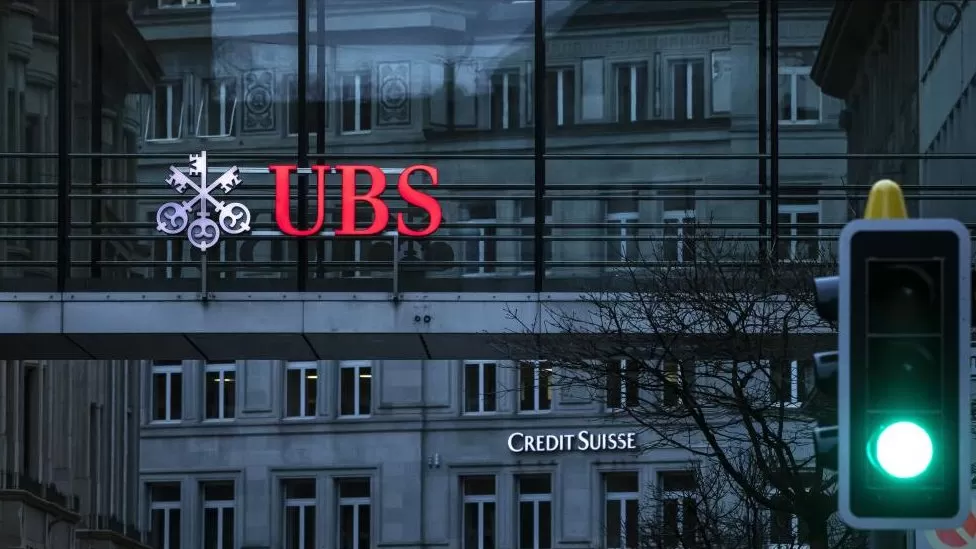
    In a deal supported by the Swiss government, the bank was acquired by rival UBS on Sunday.

    It happens amid worries about the global financial system following the failure of two smaller US banks in recent weeks.

    Shares in lenders around the world have fallen sharply and central banks have had to step in to provide reassurances.

    However, experts are not forecasting a repeat of the 2008 financial crisis when the failure of a number of big banks sparked a global recession.

    The Swiss National Bank said the rescue deal for Credit Suisse was the best way to restore the confidence of financial markets and to manage risks to the economy.

    Credit Suisse said it was not expecting “any disruption to client services”.

    “We are fully focused on ensuring a smooth transition and seamless experience for our valued clients and customers,” the bank told the BBC.

    Credit Suisse shareholders were deprived of a vote on the deal and will receive one share in UBS for every 22.48 shares they own, valuing the bank at $3.15bn (£2.6bn).

    At the close of business on Friday Credit Suisse was valued at around $8bn.

    But the deal has achieved what regulators set out to do – secure a result before the financial markets opened on Monday.

    Mark Yallop, the former UK chief executive of UBS, said the his former employer’s purchase of Credit Suisse “should” do the job of reassuring investors.

    “This is a takeover of a challenged institution with particular idiosyncratic problems that relate to it specifically [and are] not reflective of broader issues in the banking markets,” he told the BBC’s Today programme.

    “I think this transaction will definitely stabilise [the bank] and should bring a good degree of confidence back to the banking market more generally.”

    However, stock markets across Asia stumbled despite the deal. Japan’s Nikkei 225 was down by 1.4% while the Hang Seng Index in Hong Kong fell by more than 3%.

    “The human psychological aspect of markets contagion risk and bank runs suggest we could be in for an extended period of uncertainty before the storm clouds eventually lift,” Stephen Innes from SPI Asset Management said in a note.

    In a bid to keep cash available through the global financial system, six central banks, including the Bank of England, announced they would boost the flow of US dollars through the global financial system.

    The Bank of England, along with the Bank of Japan, Bank of Canada, the European Central Bank, US Federal Reserve and Swiss National Bank, said the move served as an “important backstop to ease strains in global funding markets” and take the pressure off banks.

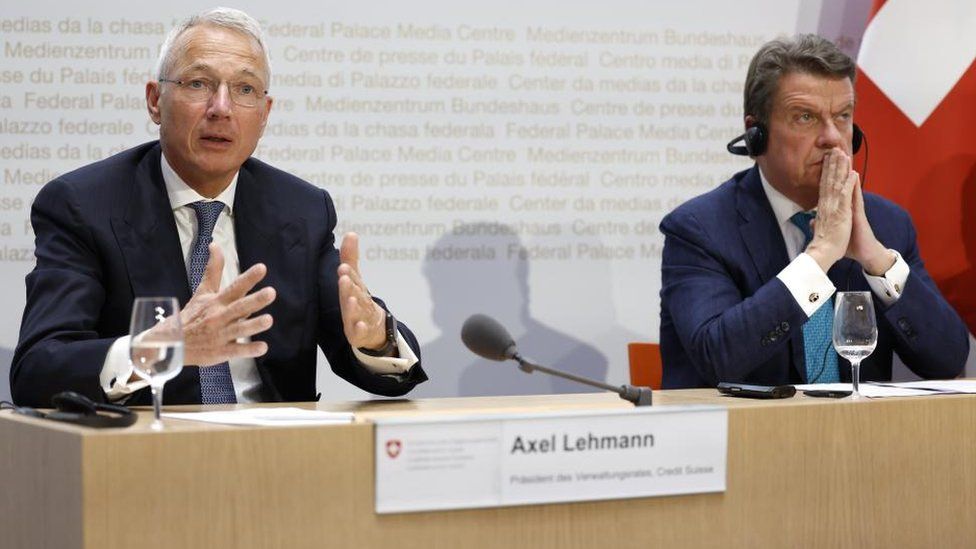
    Axel Lehmann (L), Chairman Credit Suisse, speaks next to Colm Kelleher (R), Chairman UBS, during a press conference in Bern, Switzerland
    Image caption,The chairmen of both banks spoke at a news conference in Bern on Sunday

    In a statement following UBS’s takeover of Credit Suisse, Switzerland’s central bank said the deal protected the Swiss economy “in this exceptional situation”.

    The 167-year-old bank is loss-making and has faced a string of problems in recent years, including money laundering charges.

    It was given an emergency $54bn lifeline from the Swiss National Bank on Wednesday in a bid to reassure markets, but Credit Suisse shares tumbled 24%, meaning a rescue deal was needed.

    Speaking in the Swiss capital Bern after Sunday night’s announcement, UBS chairman Colm Kelleher said the takeover had been “attractive” for UBS shareholders, but described it as “an emergency rescue”.

    Mr Kelleher said UBS would be winding down the investment banking part of Credit Suisse.

    The UBS chairman said it was “too early” to say what would happen about jobs. The Swiss bank has around 74,000 staff, around 5,000 of them in the UK.

    “We need to do this in a rational way thoughtfully, when we’ve sat down and analysed what we need to do,” he said.

    Other global financial institutions praised the deal.

    The Bank of England said it welcomed the “comprehensive set of actions” set out by the Swiss authorities.

    “We have been engaging closely with international counterparts throughout the preparations for today’s announcements and will continue to support their implementation.”

    It added the UK banking system was “well capitalised and funded, and remains safe and sound”.

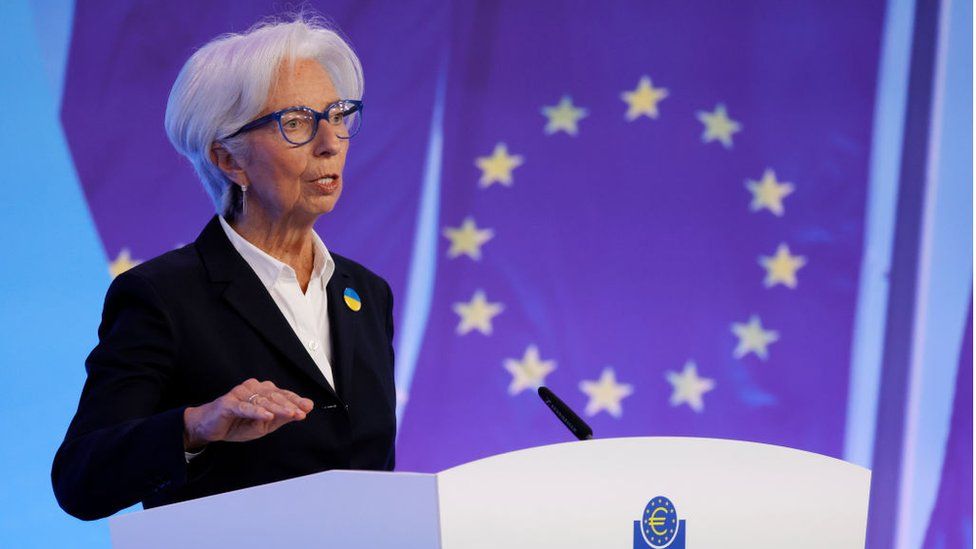
    Christine Lagarde

    Christine Lagarde, president of the European Central Bank, said she welcomed the “swift action” of the Swiss authorities.

    “The euro area banking sector is resilient, with strong capital and liquidity positions,” Ms Lagarde added.

    US Treasury Secretary Janet Yellen and Federal Reserve chairman Jerome Powell both said the US banking system remained “resilient”.

    Credit Suisse has become the latest and most important casualty of a crisis of confidence that has already seen the failure of two mid-sized US banks and an emergency industry whip-round for another. But this is different. Switzerland’s second biggest lender was considered one of the top 30 most important banks in the world – which is why this takeover was rushed through by the Swiss authorities.

    Although the reasons for each failure differ slightly, the main factor has been a sharp rise in global interest rates which has hit the value of even safe investments that banks keep some of their money in. That has spooked investors and seen the share prices of all banks fall with those considered weakest hit hardest.

    The financial authorities in the EU, US and UK are saying they support this deal, stressing that banks are strong and people’s savings and deposits are safe.

    The acid test as to whether this Swiss rescue has calmed nerves in the financial world will be when financial markets open on Monday – which is why it was so important to get this done on Sunday night.

    Source: BBC

  • Credit Suisse emergency loan sparks banking fears

    Credit Suisse emergency loan sparks banking fears

    In order to strengthen its finances, Credit Suisse has announced that it will borrow up to 50 billion Swiss francs (£44.5 billion) from the nation’s central bank.

    The struggling banking behemoth declared that it is taking “decisive action” to improve and streamline its operations.+

    Following the announcement that it had discovered “weakness” in its financial reporting, shares of Credit Suisse dropped 24% on Wednesday.

    Fears of a wider banking crisis sparked steep falls on stock markets, with Asian shares dropping.

    However, markets in Europe are expected to open higher on Thursday.

    The BBC understands that the Bank of England has been in touch with Credit Suisse and the Swiss authorities to monitor the situation.

    Swiss National Bank, the country’s central bank, insisted Credit Suisse had the money it needed, but stressed it was ready to step in and help further if required.

    Problems in the banking sector surfaced in the US last week with the shock collapse of Silicon Valley Bank, the country’s 16th-largest lender, followed two days later by the failure of New York’s Signature Bank.

    The US central bank had been forced to step in to prevent a run on bank deposits as panic spread.

    Sir John Gieve, former deputy governor at the Bank of England, told the BBC that central banks were sending a “message” that such problems would be contained locally.

    He added that in Credit Suisse’s case, this was likely to be enough to stop the crisis spreading.

    “What we’ve seen overnight is the Swiss central bank saying no, we will not let this get into a disorderly collapse,” he told the BBC’s Today programme.

    “I don’t know what the future for Credit Suisse holds but so far they are still standing and it looks like the Swiss central bank will ensure it’s standing long enough to rearrange its affairs for the future.”

    Japan’s Nikkei 225 index was down by 1.1% in late midday trading, with markets in Hong Kong and Sydney down by over 1.5%. The Shanghai Composite lost 0.5%.

    ‘Material weaknesses’

    Credit Suisse, founded in 1856, has faced a string of scandals in recent years, including money laundering charges, spying allegations and high profile departures.

    It lost money in 2021 and again in 2022 and has warned it does not expect to be profitable until next year.

    The bank’s disclosure on Tuesday of “material weakness” in its financial reporting renewed investor concerns.

    Daniel Davies, managing director at Frontline Analysts, and a former bank analyst at Credit Suisse, said that the bank’s “millionaire and billionaire client base just seems to have reached the end of their tolerance and they’ve been taking money out over the last six months at what began to look like an increasing rate”.

    He added that the Bank of England will have been asking its Swiss counterpart whether it still had faith in Credit Suisse.

    “Because the nature of these crises is that when you have a real massive deposit run it is like a tsunami – nothing humans can make can stop it. The only thing you can do is stop it before it turns into a proper deposit run and the only people that can do that are the central banks.”

    These were intensified when the Saudi National Bank, Credit Suisse’s largest shareholder, said it would not buy more shares in the Swiss bank on regulatory grounds.

    On Wednesday shares in the lender plunged as other banks rushed to pull out their funds from the bank and prime ministers in Spain and France spoke out in an attempt to ease fears.

    The collapse of Silicon Valley Bank has also fuelled concerns about the value of bonds held by banks, as rising interest rates made those bonds less valuable.

    Central banks around the world – including the US Federal Reserve and the Bank of England – have sharply increased interest rates as they try to curb the rate of price rises, or inflation.

    Banks tend to hold large portfolios of bonds and as a result are sitting on significant potential losses.

    The falls in the value of bonds held by banks is not necessarily a problem unless they are forced to sell them.

    Silicon Valley Bank – which specialised in lending to technology companies – was shut down on Friday by US regulators in what was the largest failure of a US bank since 2008.

    Source: BBC

  • Banks and others accept outdated N500 and N1,000 notes

    Banks and others accept outdated N500 and N1,000 notes

    The widespread rejection of the old N500 and N1,000 notes ended on March 14, as banks and People begun to accept the notes in accordance with the Central Bank of Nigeria’s (CBN) mandate.

    The Supreme Court’s decision that the old notes must continue to be legal tender alongside the newly designed notes through December 31, 2023 was followed by the CBN on Tuesday night.

    Consequently, banks yesterday began to accept the old N500 and N1,000 notes from customers without requesting for the CBN cash return reference code.  

    Vanguard survey also showed increasing acceptance of the old notes among Nigerians, while rejection persisted in some segments especially among transporters.  

    Banks pay, accept old notes

    Vanguard’s  visits to banks around Igando and Ikotun areas of Lagos   revealed that banks have started dispensing and receiving old notes without the CBN reference code.  

    A Fidelity Bank security guard   disclosed that the bank paid N10,000 over the counter while Mrs. Uju Okorojie, a customer of the bank confirmed it saying: “I just withdrew N10,000 from the bank. The cashier told me I can deposit old notes without the CBN reference code.”

    Similarly, a customer of Stanbic IBTC Bank   confirmed she deposited old notes without the reference code   saying: “I have been trying to deposit the N100,000 old notes with me for weeks now. When I heard the news I decided to visit the bank and was given a deposit slip to fill without a reference code from the CBN website.

    In Abuja, some of the banks visited by Vanguard such as United Bank for Africa and Zenith paid   customers the old notes while the long queues which have characterised banking premises and Automated Teller Machines in the last two months had disappeared.

    At the Ceddi Plaza Branch of the UBA, for instance, customers were allowed to withdraw N20, 000 each, while Zenith, Ogbmosho Street, Area 8, Garki paid   only N5, 000 per customer at the counter.

    However, none of the branches of Fidelity, Access and Union banks visited by our correspondents paid money to customers.

    It was also observed that none of the ATMs in the capital city dispensed cash as they were all empty.

    A bank staff member who spoke in confidence said that the banks were yet to be given the old notes by the CBN, as at the time of filing this report at about 2.30 pm.

    The staff said that the available notes were not yet enough to feed the ATMs and that the management of the banks decided that withdrawals would only be done at the counters until the apex bank released the old notes earlier returned to it by the banks.

    It was learnt that the banks that paid customers were those that had the old notes in their vaults and decided to disburse them since the CBN has made the necessary pronouncement.

    Traders accept old notes  

    A groundnut oil seller, Mrs Dupe Olayinka said: “In this Igando market, everybody is now accepting old notes. I thank the government for considering the masses as people and businesses have suffered from this crisis.

    “Though people are still used to paying for their goods through transfers, I think with time they will embrace accepting the old notes.”

    A wrist watch and wrist accessories seller at Iyanaba said: “The federal government has done well in accepting the ruling of the Supreme Court.

    Also speaking, a trader identified as Iya Deborah, said that she has never rejected the old note even after the President broadcast.

    “I have been collecting the old note and I will continue. I was very happy when the Supreme Court gave us the go ahead to collect the money.

    “Some of my fellow traders have not been collecting the money but they collect transfers either direct or via Point of Sales, PoS”, she said.

    But Mrs. Temitope Olaniran, a PoS agent said she has not visited the bank to withdraw the old notes for fear that customers might reject them.

    “I have not visited the bank to withdraw the old notes.   I had a bad and stressful experience depositing them and I don’t want to pass through such stress again.

    “I have decided to wait and see the outcome of business transactions made today with the old notes to decide whether I will make transactions with it or not.”

    Transporters   reject old notes

    However, some commercial drivers and motorcycle riders rejected the old notes from passengers, claiming   they   were not aware of the   CBN directive.  

    Speaking to Vanguard, a    commercial driver, Mr. Willington Nkemerulam, said he cannot accept the old notes because the President Muhammadu Buhari, has not given the   go ahead.

    Asked if he was   aware of the CBN directive, he said he only heard passengers (Commuters) discussing it in his bus but he was not aware.

    Nkemerulam said: “I had a heated argument with a woman very early this morning because she gave me an old N1000 note and I rejected the money. There was no insult I did not receive from her, but my concern is she must pay me. She actually paid with N200 new note.

    “CBN might have said they should be collecting it but I have not heard, once everybody starts collecting the money including banks, I will collect. But you don’t expect me to be collecting money that even the bank would give me stress to deposit.”

  • Digital and electronic banking key to combating coronavirus – Ecobank MD

    Digital and electronic banking hold the key to the future of banking globally and combating the spread of the novel Coronavirus, the Managing Director (MD) of Ecobank Ghana and Regional Executive for the Anglophone West Africa Region, Mr Dan Sackey, has said.

    He explained that digital and electronic banking were fast and secure and provided great convenience for customers while minimising the risk of contracting COVID-19.

    Speaking during a virtual forum yesterday to engage customers and the public on the effects of COVID-19 on health in Africa as well as on individuals and businesses, Mr Sackey advised the public to use electronic channels for payments, funds transfer and other routine banking transactions, instead of physically visiting the bank.

    Held virtually via Facebook Live and YouTube, the forum attracted hundreds of participants, in real-time, with many shares and downloads of the event, was organised by Ecobank in partnership with the Africa Centre for Disease Control and Prevention (CDC).

    The public and Ecobank customers asked how they could cope with the current situation and continue with banking transactions as well as engage the bank in this era of the Coronavirus pandemic and also enquired about precautionary measures that the bank had put in place to ensure customer safety and what the future or a post-COVID-19 era would look like.

    Mr Sackey outlined some of the measures that Ecobank had put in place, as advised by recognised health agencies, to ensure the safety of staff, customers and stakeholders.

    He also informed customers about Ecobank’s digital channels, including the mobile and various online banking services.

    Mr Sackey stressed that the Ecobank Automatic Teller Machines (ATMs) could facilitate cash withdrawal and deposit and the Ecobank Xpress Points, which provided basic banking needs and were available in over 1,500 community-based shops in Ghana.

    The Africa Director of CDC, Dr John Nkengasong cautioned participants to refrain from self-medication, as this could worsen their health conditions, especially during this period of COVID-19 pandemic.

    He warned participants not to take chloroquine and hydroxychloroquine for the treatment of COVID-19 without their doctor’s prescription because of the severe consequences, including deaths.

    “As much as possible people should stay home, exercise regularly, eat well, drink lots of fluids, and take adequate amounts of relevant vitamins. This will boost their immune system and prepare the body to fight diseases,” Dr Nkengasong advised.

    The African Director of CDC, who traced the history of pandemics, indicated that over the years, the world has witnessed one major pandemic every century, citing the Great Plague of Marseille in 1720, the Asian cholera outbreak in 1820, the Spanish flu in 1920 and now the COVID-19 pandemic in 2020.

    The Regional Head of Corporate Communications and Marketing at Ecobank, Mrs Rita Tsegah said the objective of the forum was to educate customers and the public strategies to “adapt to the changing times,” and the measures initiated by the bank to fight COVID-19.

    “Ecobank remains resolute to discharging its obligation by collaborating with partners that are committed to mitigating the impact of COVID-19,” she said.

    Source: Ghanaian Times

  • Coronavirus slows down banking sector business John Awuah

    Mr John Awuah, the Deputy Chief Executive Officer of Ghana Association of Bankers, has revealed that the advent of the COVID-19 pandemic have slowed down banking business and increased risk of impact on loan performance.

    COVID-19 has had a negative impact on the economy and the banking sector as economic activities had taken a downturn with growth projected to be 1.5 per cent compared to an earlier outlook of 6.5 per cent for 2020, he said.

    Mr Awuah explained that some sectors of the economy have had zero cash inflows during the pendency of the pandemic especially Aviation, hotels and resorts, bars and restaurants.

    Mr Awuah said this at the Second Edition of Webinars organised by Integrity Magazine, a subsidiary of Krif Ghana Limited, on the theme: “Effects of COVID-19 On Corporate Ghana- The Banking Sector- Part 1”

    He said economic projection of the COVID-19 was that: “It will take much longer for businesses and households to return to normal operations with its consequential impact on the ability to perform on existing obligations resulting in a heightened probability of increased non- performing loans”.

    Mr Awuah outlined some post-COVID-19 activities by the banks amongst which were credit expansion to productive sectors such as the manufacturing and small and medium enterprise financing.

    Others measures were for banks to invest heavily to enhance Fintech capabilities, whilst Government introduced policy initiatives to redirect the trajectory of credit expansion and the Banking Regulator to proactively balance the need for regulatory prudence and inertia post-COVID-19.

    He said banks had a duty to anchor the economy by cautiously continuing with credit expansion to productive sectors among others.

    He also mentioned that banks have cut interest rates by between 1.5 per cent and 3.5 per cent. In addition, a total of 1.6 billion Ghana cedis of Payment Holidays had been granted to selected customers with specific needs during this COVID-19 period.

    The Reverend Mrs Patricia Sappor, President of the Chartered Institute of Bankers, said the banks had begun to aggressively drive the digital agenda whilst encouraging customers to jump onto the digital train using channels like Mobile Apps, USSDs, Internet Banking, and ATMs to facilitate transactions.

    “One of the key impacts of the current pandemic is the emphasis on social/physical distancing and contactless payment options. The situation presents financial institutions with the opportunity for digital transformation both at the front and back-office levels.”

    “This, if done effectively, could result in efficient service delivery, quicker turn-around time and improvement in the overall service experience for bank customers,” she noted.

    Rev. Sappor explained that investing in large and expensive edifices to accommodate employees could be curtailed as banks have found ways for workers to work more remotely and digitally.

    “This will reduce the operating costs of banks since lesser expenses on utilities and depreciation are incurred”.

    She said banks have had to re-strategize and re-prioritize projects due to the COVID-19 pandemic.

    “Banks can no longer go back to their old ways of operating since the needs and psyche of customers have changed significantly as a result of COVID-19”.

    “In a nutshell, low transactional volumes will result in low profitability, low deposits, and significantly, high Non-Performing Loans and high operating costs are some of the adverse impacts to be envisaged by financial entities as a result of COVID-19.”

    She said banks should proactively stay in touch and build good relationships with their clients supporting them in these difficult times.

    Rev. Kennedy Okosun, the Publisher and Editor-in-Chief of the Integrity Magazine, called on stakeholders to find out how banks and other financial institutions in Ghana could better protect themselves from the harsh effects of the lockdown and still play their important role as “engine of growth.”

    He said through such webinars solutions would be proposed as to the way forward for policymakers and industry players to reduce the biting effect of the Covid-19 on corporate Ghana.

    Source: GNA