Tag: BBC documentary

  • Do not lose focus – TB Joshua’s wife encourages church members after BBC documentary

    Do not lose focus – TB Joshua’s wife encourages church members after BBC documentary

    The wife of the late Nigerian megachurch leader and televangelist, Prophet TB Joshua, Pastor Evelyn Joshua, has urged members of his church to remain faithful and focused on Jesus Christ amid controversy sparked by a BBC documentary exposing alleged abuse and torture by the late prophet.

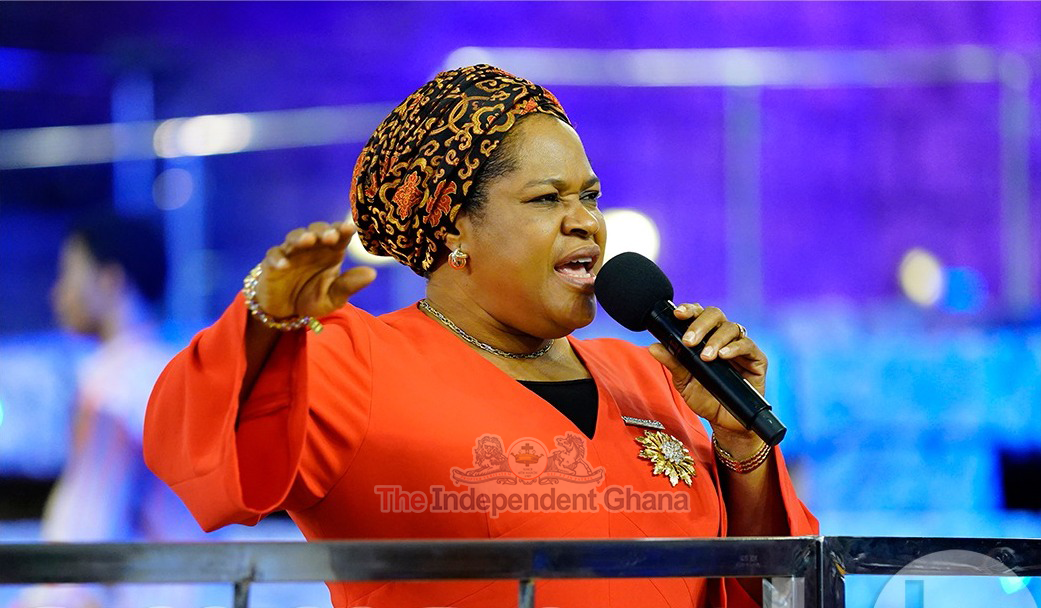
    Pastor Evelyn Joshua, who assumed leadership of the Synagogue Church of All Nations (SCOAN) after her husband’s death in June 2021, addressed the congregation on Sunday, January 14, 2024, at the church’s headquarters in Lagos, Nigeria.

    This marked her first public address to the church since the release of the BBC Africa Eye documentary titled “Disciples: The Cult of TB Joshua.” The documentary featured former disciples accusing the late prophet of misconduct, including rape, physical abuse, and coercion for abortions.

    Though Pastor Evelyn Joshua did not directly reference the documentary or the allegations, she expressed gratitude to the church members for their love, faith, steadfastness, and commitment during the “eventful week”. She reminded them of the church’s core beliefs, such as faith in the Holy Spirit, the word of God, the salvation of Jesus Christ, and the judgment day.

    Encouraging the congregation to evaluate all things in the light of God’s word, she emphasized the importance of love, quoting 1 Corinthians 13:4-8, which says that love is not irritable or resentful, and does not rejoice in wrongdoing, but rejoices with the truth.

    Pastor Evelyn Joshua urged members not to lose focus and to keep Jesus Christ as their central focus and guide, emphasizing that Jesus stood for truth and love, and that the church was a house of joy, which was their conquering power.

    She then quoted the alleged last words of her late husband: “Watch and pray, and you will see the glory of God.” She blessed the congregation and thanked them for their support.

    Pastor Evelyn Joshua, who married TB Joshua in 1990 and had three daughters with him, was appointed as the new leader of SCOAN in September 2021, after a court order made her a member of the church’s board of trustees.

    She faced some opposition from some factions within the church, who questioned her legitimacy and transparency. However, she has since asserted her authority and vision for the church, which has millions of followers around the world.

    TB Joshua, who died at the age of 57, was one of the most influential and controversial religious figures in Africa. He claimed to have the power to heal various diseases, including HIV/AIDS and cancer, and to prophesy about world events.

    He attracted thousands of pilgrims to his church in Lagos, where he performed his “miracles” and delivered his sermons. He also had a huge online presence, with more than six million followers on Facebook and more than one million subscribers on YouTube.

    He was praised by some as a man of God and a philanthropist, but he was also criticized by others as a fraud and a cult leader. He faced several lawsuits and investigations over his practices and claims, and he was also accused of being involved in politics and corruption.

    The BBC documentary has reignited the debate over his legacy and the future of his church, as well as the wider issues of accountability and regulation in the Nigerian and African religious landscape.
    https://www.youtube.com/watch?v=YHUK__L1joM
  • ‘I am not convinced TB Joshua performed fake miracles – Blakk Rasta over BBC documentary

    ‘I am not convinced TB Joshua performed fake miracles – Blakk Rasta over BBC documentary

    Blakk Rasta expresses skepticism towards allegations of fake miracles against the late TB Joshua, disputing claims made in a BBC documentary.

    He points to miracles performed in European and Asian countries, insisting on their authenticity.

    Blakk Rasta firmly rejects the notion that TB Joshua’s miracles were fake, opposing the narrative presented in the BBC documentary.

    “I will not be convinced if anybody tells me that the miracles that TB Joshua performed were all fake miracles, I wouldn’t believe that. My brother, he [TB Joshua] travelled to Japan. He went all the way to Asia, Europe and even America. Are you telling me that the tens of thousands of people who were seen falling down and vomiting blood all had been paid to do a certain Cantata?

    “Are you telling me that even family members who we knew, went to the SCOAN and were allegedly healed of cancer or other dangerous diseases they came home and were healthy, are you telling me that they’re all fake? How about those who just touched the TV and then got healed? How do you explain that? I will not believe that,” he said.

    In response to the BBC documentary unveiling reported abuses within the Synagogue Church of All Nations (SCOAN), led by the late Prophet TB Joshua, Blakk Rasta shares his views.

    The documentary delves into sexual abuse, rape allegations, and manipulations of miracles within the SCOAN, sparking varied reactions. Some criticize the prophet, while others question the authenticity of the allegations against the deceased man of God.

  • Matt Willis confesses he takes in 6 grams of cocaine daily

    Matt Willis confesses he takes in 6 grams of cocaine daily

    Matt Willis has been open and honest about the degree of his drug use, admitting that he would regularly consume 6 grams of cocaine.

    In the new BBC documentary Fighting Addiction, the Busted icon, 39, discusses his struggles with substance usage with his 47-year-old wife Emma Willis.

    The artist originally quit drinking in 2008, the year he wed Emma. He later relapsed, including after the couple’s children, Isabelle, 13, Ace, 10, and Trixie, 6, were born.

    During the hour-long feature, Matt reflects on his most recent relapse, which was five years ago, during a reunion tour with his band Busted, the noughties pop band behind hits like Year 3000.

    He tells the programme-makers that during the after-party after one of their sold-out dates, he was offered a line of the class A drug, which he accepted because he believed his addiction issues stemmed from alcohol.

    ‘I was like, “Cocaine wasn’t a problem for me, alcohol was my downfall,” he explained.,

    Matt Willis and his brother
    Matt meets with his brother to look back on the origin of his addiction issues (Picture: BBC/Twofour)

    ‘Within a month I was doing six grams, bang, bang, bang, bang, on my own every f**cking day and not coming home until 3am in the morning, pretending I was working on my album.

    ‘I wasn’t really writing I was making s**t music in the studio doing coke.

    ‘It was straight back to that shame cycle, the shame of relapse, the same of letting everyone down, the shame of using uncontrollably trying to stop and not being able to.’

    Emma, struggling to hold back tears, explains she was ‘flabbergasted’ Matt had relapsed, adding: ‘I didn’t expect it. I think because he had been doing so well for such a long time.

    ‘It was the last thing I thought.’

    Matt has previously spoken about feeling ‘ashamed’ about being ‘the mastermind at gaslighting Emma, making her think she was crazy.’

    ‘I’m so ashamed of that,’ he confessed to The Guardian. ‘And I never want her to feel like that again.’

  • Sheer propaganda – India labels BBC film on Modi’s role in Gujarat riots

    Sheer propaganda – India labels BBC film on Modi’s role in Gujarat riots

    The findings of a UK investigation into the deadly riots in 2002, which are included in the BBC documentary, demonstrate that Prime Minister Modi failed to put an end to the violence.

    A BBC documentary on Prime Minister Narendra Modi that questions his leadership during the deadly riots in Gujarat in 2002 has been dismissed as “propaganda” by India’s foreign ministry.

    When communal riots in Gujarat, a state in western India, left more than 1,000 people dead, the majority of them Muslims, Modi served as the state’s chief minister. After a train carrying Hindu pilgrims caught fire and killed 59 people, violence broke out.

    The report of a United Kingdom inquiry showcased in the documentary refers to the events as a “systematic campaign of violence” which has “all the hallmarks of ethnic cleansing”, and places direct responsibility on Modi.

    The UK government report was never made public until it was revealed in the documentary.

    According to the documentary, released on Tuesday, the inquiry team claimed that Modi had prevented the police from acting to stop violence targeted at Muslims and cited sources as saying Modi had specifically ordered authorities not to intervene.

    Modi denied the accusations and was exonerated in 2012 following an inquiry by India’s top court. Another petition questioning his exoneration was dismissed last year.

    Terming the BBC documentary a “propaganda piece” meant to push a “discredited narrative”, India’s foreign ministry spokesperson Arindam Bagchi said “bias”, “lack of objectivity” and “continuing colonial mindset” is “blatantly visible” in it.

    “It makes us wonder about the purpose of this exercise and the agenda behind it, and we do not wish to dignify such efforts,” he told a news conference.

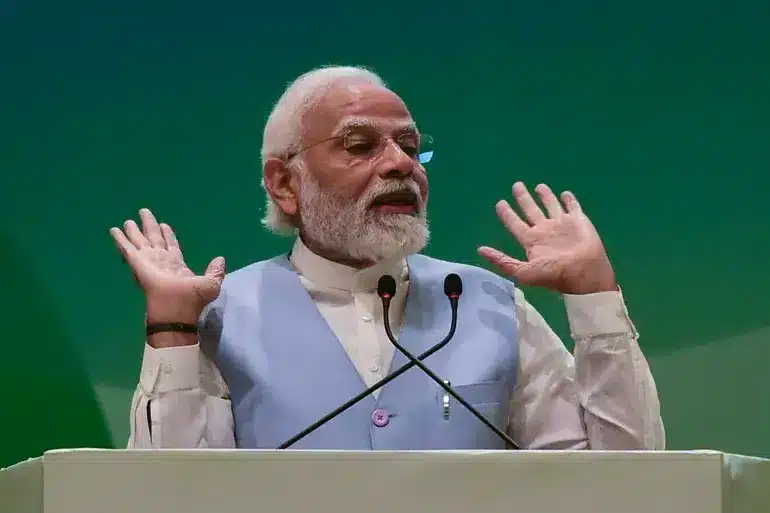
    India's Prime Minister Narendra Modi waves to his supporters as he arrives to cast his vote during the second and last phase of Gujarat state assembly elections in Ahmedabad, India, December 5, 2022. REUTERS/Amit Dave
    India’s Prime Minister Narendra Modi waves to his supporters in Gujarat state [File: Amit Dave/Reuters]

    The BBC, contacted for comment, said the documentary was “rigorously researched” and involved a “wide range” of voices and opinions, including responses from people in Modi’s Bharatiya Janata Party (BJP).

    “We offered the Indian government a right to reply to the matters raised in the series – it declined to respond,” a BBC spokesperson said.

    Ongoing discrimination

    The documentary also features a former top UK diplomat as saying the violence had been planned by the Vishwa Hindu Parishad (VHP) – an affiliate of the Rashtriya Swayamsevak Sangh (RSS), a Hindu nationalist paramilitary organisation. Modi joined the RSS at a young age in his home state of Gujarat.

    The VHP “could not have inflicted so much damage without the climate of impunity created by the state government”, the inquiry team said.

    Jack Straw, who was the UK’s foreign secretary at the time of the violence, was also interviewed in the documentary and said allegations against Modi undermined his reputation.

    “These were very serious claims – that Chief Minister Modi had played a pretty active part in pulling back the police and in tacitly encouraging the Hindu extremists,” Straw said. “That was a particularly egregious example.”

    “What we did was establish an inquiry and have a team go to Gujarat and find out for themselves what had happened. And they produced a very thorough report,” he added.

    The report also claimed there was widespread rape of Muslim women during the 2002 violence. It added that the riots’ objective was to “purge Muslims from Hindu areas” – something critics today say has become state policy under the BJP’s Hindu nationalist agenda.

    Under Modi, whose party has been in power since 2014, Muslims in India have repeatedly been subjected to violence and lynchings as well as blatant discrimination, which is often politically motivated.

    Hindu supremacist groups and supporters of the governing BJP have also intensified calls to turn the country into an exclusive Hindu state.

    The systematic, state-sponsored discrimination against Muslims includes laws that ban the hijab, a headscarf worn by many Muslim women, in certain parts of the country. Other controversial laws passed over the years include the Citizenship Amendment Act, which grants nationality to non-Muslim minorities from neighbouring countries.

    The UK inquiry, according to the BBC documentary, shows that “reconciliation will be impossible” as long as Modi remains in power.

  • Abla Pokou: The 1700s Asante female royal who sacrificed her son to save her people

    She was a courageous, outspoken member of the royal family in Asanteman in the 1700s until her outspoken nature got her ousted from her people in the territory which later became known as Gold Coast and subsequently Ghana.

    While little is known about her heroism in Ghana, the people of what is now known as Cote d’Ivoire celebrate and honour the memory of Abla Pokou, also because she was a daring woman.

    Narrating the story of how Abla Pokou came to settle in Cote d’Ivoire and became the mother of the Baoule kingdom, Francis Tagro explained that she had a dispute over a succession during her time in the territory that is today known as Ghana but this escalated into a bitter rivalry, forcing her to flee the land to the neighbouring country.

    Speaking in a BBC documentary, the curator stated that this conflict happened under the reign of the Asantehene, Osei Tutu I.

    “All the Akan people living in Cote d’Ivoire are originally Asante. There was a conflict over the succession at the time of King Osei Tutu I, in what is today Ghana. During that migration, it was the last wave that was the most important, the one that led to the Baoule kingdom, and had at its head the Queen Abla Pokou,” he narrated.

    Continuing the narration, Francis Tagro said that Abla Pokou and her people got to a very trying point in their journey that required an unusual sacrifice to a river god.

    He explained that after several attempts, the royal had to succumb and give up her son as the perfect sacrifice – a move that saved them from damnation.

    “She left with her family and during the migration, they came to a river, the Komoe River but the Akans were not strong enough swimmers. So, they asked the river god to advise them on how best to cross the river. A priest in her entourage told her that the spirit of the river was demanding a sacrifice. It had to be something valuable.

    “So, they all removed their bracelets, finery, rings, every possession they had with them and offered them to the river, but the spirit refused these and insisted on them giving something that was even more valuable to them.

    “The priest told them that the river demanded that Abla Pokou sacrifice the baby son she was carrying. Once they reached the other side, the people who had been in pursuit of them stopped chasing them when they saw the river and were unable to cross it. The queen them said to her people, ‘The child is dead,’ informing them that she had sacrificed her child to gain their safe passage,” he said.

    Francis Tagro further explained that while this is a sad story, it has since informed the line of succession for the Baoule kingdom of Cote d’Ivoire, which was eventually set up by Abla Pokou.

    “It is really sad, that is why in the Asante Kingdom in Cote d’Ivoire, the method of choosing a successor in the royal family is matrilineal because it was the mother, Abla Pokou, who gave her son so that her people could be saved. Queen Abla Pokou is a charismatic character for the Akan people. She is highly revered. She epitomizes energy and determination,” he added.

    In further details shared by dw.com, Abla Pokou was the niece of King Osei Tutu and was born at the beginning of the 18th century.

    She is said to have fled the country after the death of her uncle with some loyal people to Dakon, her second brother.

    According to a curator at the Museum of Civilisation in Cote d’Ivoire, Tagro Gnoleba Francis, the story of this brave Asante queen, Abla Pokou, is one that is etched in the history of the people so much so that even after many centuries, her singular sacrifice of her son is still upheld.

    Source: Ghanaweb

  • Leaked dossier suggests Scottish ferry deal may have been rigged

    A leaked dossier has suggested the process of awarding a £97m Scottish ferries contract may have been rigged.

    Documents obtained by BBC Disclosure indicate that successful bidder Ferguson Marine Engineering benefited from preferential treatment.

    The two ferries are still being built for CalMac, but will be at least £150m over budget and five years late.

    Deputy First Minister John Swinney said he was concerned by the BBC findings and would look into the matter further.

    Government-owned ferries agency CMAL defended the procurement and said an audit in 2018 found “no adverse issues”.

    The BBC documentary, however, uncovered evidence of a number of irregularities:

    • CMAL may have broken its own rules by allowing Ferguson to go ahead with its bid despite being unable to provide evidence of a builders refund guarantee, a mandatory financial safeguard
    • Ferguson obtained a 424-page document from a design consultant setting out CalMac’s technical requirements, while other bidders had to rely on a more limited 125-page specification. A key section of its bid was mostly cut-and-pasted from this longer document
    • The shipyard was allowed to significantly change its design halfway through the tender by developing a variant mentioned but discounted in its original submission.
    • This change also allowed it to reduce its price by nearly £10m, making it more competitive
    • CMAL assessors held a “confidential” meeting with Ferguson, the only bidder to receive an in-person meeting

    The Port Glasgow shipyard fell into administration in August 2014, but was bought a week before the independence referendum by Jim McColl, a businessman who sat on First Minister Alex Salmond’s council of economic advisers.

    The following year his new firm, Ferguson Marine Engineering Ltd (FMEL), won a £97m contract to build two dual fuel LNG vessels for state-owned ferry operator CalMac.

    But the project has been beset by problems and the yard has been nationalised after going back into administration.

    The delays have added to pressure on CalMac’s old and increasingly unreliable fleet. The Arran route, where the first ship was due to enter service in 2018, has faced more than 2,500 cancellations in the past five years.

    CMAL has previously said that Ferguson was named preferred bidder because it produced the most detailed concept design, outscoring other shipyards on quality even though it was the most expensive.

    However, the BBC has learned that two expert reports submitted during the tender process did not support that evaluation.

    One, by ferry operator CalMac, found that a rival bid from a Polish shipyard best met its requirements, while an independent naval architect noted that FMEL’s initial design was heavier and less efficient than the others.

    John Kerr, a former CalMac technical director who was asked to review some of the leaked documents, was surprised Ferguson was then allowed to submit a revised, far lighter design after the tender deadline, describing it as effectively “a new bid”.

    The documents indicate that no other bidder was given a similar opportunity to revise its submission so significantly. One design was eliminated because it was considered overpowered.

    A procurement law expert told Disclosure claims of unequal treatment of bidders in tender processes can lead to breaches in EU law and potential legal action from unsuccessful bidders.

    Media caption, Jim McColl said “with hindsight” having the CalMac document put Ferguson in a strong position

    Jim McColl confirmed to BBC Disclosure that he first looked into buying Fergusons at least two months before it went bust.

    He sent in senior staff to examine business opportunities but felt there were too many issues that needed “tidying up” and waited until it fell into administration.

    When he later agreed to buy the yard, he said there were “no sweeteners” – but that he insisted on a letter from Alex Salmond promising a £12m order for a small CalMac ferry to enable him to re-employ the workers.

    He said he had no knowledge of being given special treatment for the larger ferries but accepted that having CalMac’s requirements document was an advantage.

    He said: “With hindsight, it put us in a very strong position, because we were responding to what CalMac were looking for, and not what CMAL had put out to… the other yards.

    “We didn’t know about that at the time.”


    Ferguson copied a large section of its bid from a CalMac document

    The BBC understands Ferguson obtained the document from design consultants it had hired to help with its bid.

    CMAL had used the same firm to help draft the tender pack which went to bidders, but has previously told MSPs it saw nothing problematic in this.

    Edward Mountain, who was convener of a Holyrood committee that looked into the ferries scandal two years ago, told the programme he had “real concerns” that MSPs “haven’t been told the whole truth about what happened in this procurement process”.

    Deputy First Minister John Swinney said the information presented by BBC Disclosure would be investigated further.

    He said: “It is material that I take seriously, about which I have concerns, which raises fundamental issues for me about the fairness and the appropriateness of the tender process.”

    He said he was not aware of any interference by ministers or civil servants in the procurement process.


    Deputy First Minister John Swinney has pledged to look into the new evidence

    CMAL said in a statement that new information contained in the programme would need to be “carefully investigated”. It added that some staff employed at the time had now left.

    It said its board had voiced concerns to Transport Scotland about the contract award to Fergusons, particularly in relation to the lack of refund guarantees, which were well-documented.

    CMAL confirmed that an in-person meeting for the purposes of clarification did take place at the shipyard on 4 June, but said it believed this was normal and appropriate.

    The current chief executive of CMAL, Kevin Hobbs, declined to be interviewed and when confronted by BBC Disclosure about the findings, made no comment. CalMac declined to give either an interview or a statement.

    CMAL and Jim McColl’s former management team have blamed each other for problems that later developed with the construction of the ships.

    In 2019, the shipyard went back into administration and was nationalised after ministers rejected a last-ditch offer from Mr McColl to split the cost of completing the two ferries, claiming this would breach EU state aid rules.

    The government then appointed a “turnaround director”, Tim Hair, who reported it would cost an extra £110m to finish the vessels.

    His 454-day tenure in the role cost the taxpayer almost £1.3m but BBC Disclosure has learned that it ended in more disillusionment for the workforce.

    Representatives told the programme they became increasingly worried about the growing number of managers being taken on, which they felt undermined long-term competitiveness, with little evidence of progress.

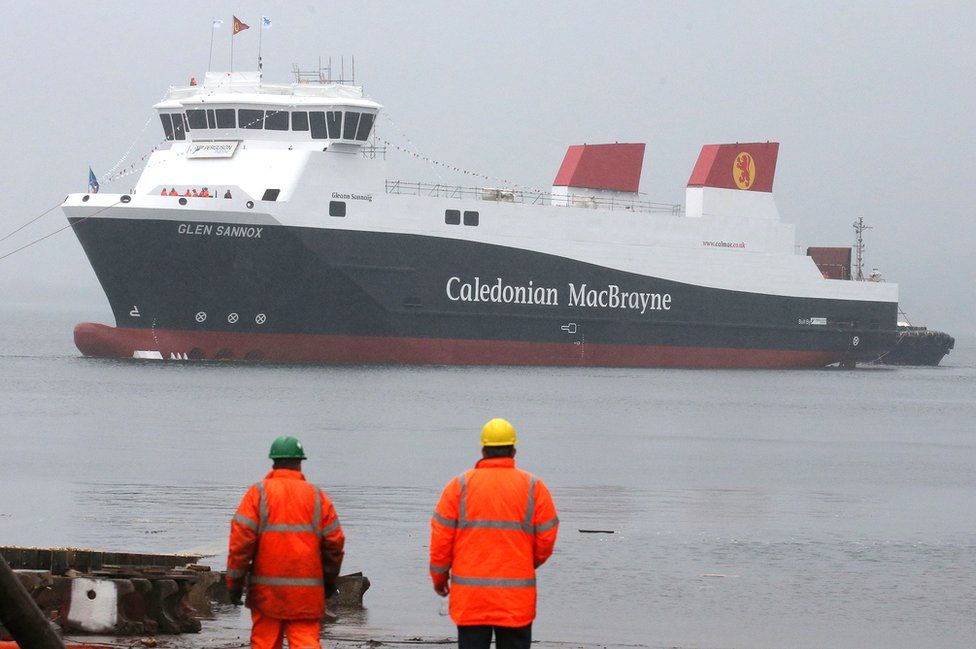
    Glen SannoxImage source, PA Media
    Image caption, Glen Sannox floated high in the water after it was launched in 2017 because so much equipment had yet to be fitted

    GMB union convener John McMunagle said the concerns were raised at board meetings, where they highlighted that there were “managers everywhere” – but they could not get steelworkers.

    The documentary learned that last November union representatives told Finance Secretary Kate Forbes they had lost confidence in the senior management team.

    The following month it was announced that Mr Hair was moving on. He has been contacted for comment.

    Despite many false dawns, the workforce told the BBC there was now a growing optimism that the ferries would be completed next year, and that the modernised shipyard could restore its reputation.

    Source: BBC