Tag: Belarus

  • Broken headstones serve as memorial to identify desecrated Jewish cemetery in Belarus

    In Belarus, a long time ago, a big Jewish cemetery was turned into a sports ground. The stones from the cemetery were used to make roads and buildings instead.

    Many years later, the damaged stone slabs started to appear during the renovation. Now, because of the dedicated efforts of a charity organization from Belarus and the United Kingdom, the headstones will be treated with the proper dignity they deserve as part of a new memorial at the location.

    They will build a scary building where the old cemetery used to be in Brest. The building will be made from pieces of old tombstones that have been found in the city and nearby areas over the past 20 years.

    Brest, also called Brest-Litovsk, used to be an important place for Jewish people’s lives before World War II. Jewish people started living there since the 14th century. Before the war, over 20,000 Jews lived there. According to Yad Vashem, Israel’s national Holocaust museum, only around 10 people were left after the Holocaust.

    Many people think that a lot of people were buried in the cemetery, including important rabbis and wise teachers. However, today there is not much proof that their graves were actually there.

    In simpler words, the first part of the destruction started during the war when the Nazis tried to ruin the cemetery by selling the tombstones. The damage kept happening even after the war when the Soviets used religious symbols for construction work. They eventually covered the entire area with asphalt to make a running track and football stadium, according to members of the Jewish community in Belarus. The sports buildings, even though they are in bad condition, are still there and can be used by anyone.

    The cemetery was forgotten for a long time, but in the late 1990s, some pieces of the broken stones started to appear again when people were doing construction work in the city.

    Debra Brunner, the CEO and co-founder of The Together Plan, a charity leading the memorial project, explained that right now, there is no evidence or indication that it is a cemetery.

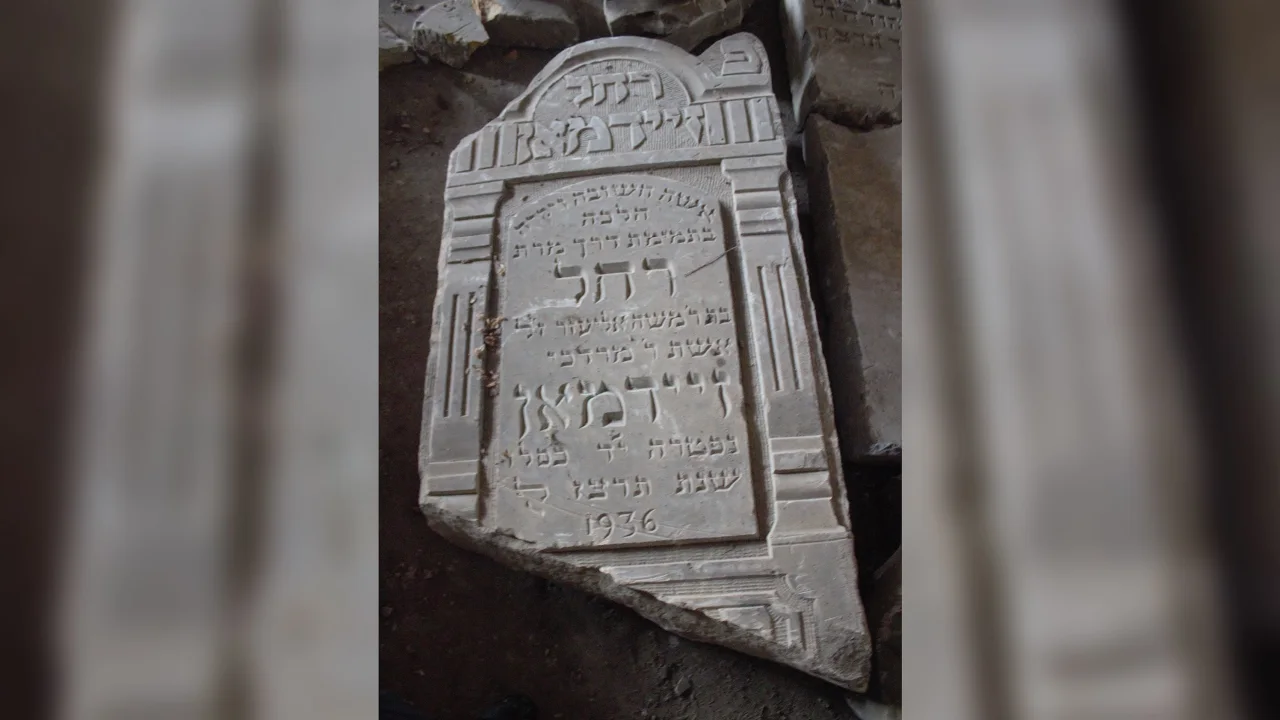
    In the last few years, many headstones (called matzevot in Hebrew) have been found and saved. They have been taken pictures of, organized, and put into a searchable database in a warehouse. They will become part of a big memorial on the location.

    Artur Livshyts, co-director of The Together Plan, says there are 1,287 pieces with writing on them. There are also around 2,000 to 2,500 more pieces without any writing on them. The organization’s US partner is called The Jewish Tapestry Project.

    Earlier this year, Livshyts, who is one of about 20,000 Jewish people living in Minsk, Belarus, received a message from a young couple. The couple had recently purchased a run-down house in Brest that had been vacant for over 20 years.

    Brunner said that the house was in really bad shape, but they still purchased it with the intention of fixing it up. While doing construction, they found out that the basement was made from gravestones. After the war, the family who lived in this house used the matzevot as materials to build with.

    After the family had a lot of bad things happen to them, people believed it was because of a curse from the headstones, according to Brunner.

    “When the new couple found the markers for graves, they felt a strong urge to do what was right, so they contacted the Jewish community in Brest to ask for guidance. ”

    Brunner and Livshyts want to build a memorial by the end of 2024. The memorial will remember the community that was tragically destroyed and teach people about Brest’s current Jewish community.

    The memorial will be placed in a corner of the area, far from the sports facilities. The place will have a black rock with words in English, Russian, and Hebrew. The area around it will have trees, grass, and pretty flowers. The Brest municipality is in favor of the idea and has promised to take care of it once it becomes available, as stated by The Together Plan.

    The mayor of Brest’s office has not replied to CNN’s request for a comment on the project yet. Belarus, led by President Alexander Lukashenko, is facing criticism from the international community for its involvement in Russia’s war in Ukraine and crackdown on civil society.

    The charity thinks it needs to collect about $325,000 for the memorial. Some of this money has already been promised by a donor named Stephen Grynberg, who has a close connection to Brest’s Jewish history.

    Grynberg’s dad, Jack, was one of a few Jewish people in Brest who made it through the Holocaust. The filmmaker from Los Angeles told CNN that many of his family members were killed by the Nazis.

    During the 1990s, Grynberg interviewed Holocaust survivors for the Shoah Foundation. The foundation was created by Steven Spielberg, a famous Hollywood figure, to capture and document their experiences. After seeing how impactful the work was, he convinced his dad to talk about his experiences during the war, and they went back to Brest together.

    “I had a deep experience during that trip,” said Grynberg, who is 60 years old, when talking to CNN. I found out that there were 70 to 100 family members in this town and they all died. Dad’s ancestors from both sides, his siblings, his parents’ siblings, and his extended family. His entire extended family, except for his immediate family, were killed.

    He said that in 1997, there were no indications of the cemetery. We were brought to that place and our guide told us ‘this is where the cemetery used to be. ‘ Understanding things about the Holocaust is difficult, you can only have powerful and complex emotions about it. I was just thinking about the possibility of them destroying a cemetery and constructing something on top of it. I felt very empty inside.

    In 2015, Grynberg went back to Brest. He learned about headstones appearing during construction and met with Brunner and Livshyts.

    Grynberg asked a designer named Brad Goldberg to create a plan for the memorial. Goldberg’s family had helped Grynberg’s father when he came to the US, so he knew him well.

    “I’m not certain, but I don’t think any of my family members are buried in this cemetery because my ancestors lived in Brest,” Grynberg said. He explained that his grandparents had moved to Brest, so it’s likely that his relatives were buried in a different place in Belarus. These are all the people who were buried there before the war. It feels like my connection to this town is more important.

    He explained that the goal is not to copy a cemetery, but to make sure that people buried in this place are respected and honored.

    During a phone interview with CNN, Goldberg explained that his design consists of two big curved shapes that create a big area on the location. This area will showcase some of the damaged stones.

    “I named it a hug,” he said. This hug is for the gravestones that are still whole.

    “It’s not a graveyard,” he said. All of them are looking in different ways, like they are talking to each other.

    We asked one rabbi what it was about, and he said it’s more about life than death.

    Livshyts said to CNN: “This will finally put the stones to rest, right where they should be. ” I think it’s a fair outcome based on past events.

    He said that even though the actual bodies cannot be found, they can bring back the stones and place them where the cemetery used to be.
  • Belarusian Jewish cemetery marked by memorial made of broken headstones

    Belarusian Jewish cemetery marked by memorial made of broken headstones

    In the past, a big Jewish cemetery in Belarus was covered with pavement to build a sports ground. The tombstones from the cemetery were taken and used to make roads and buildings.

    Many years later, the damaged stone slabs started to appear while repairs were being done. Now, because of the efforts of a charity in Belarus and the United Kingdom, the headstones will be treated with the respect they deserve as part of a new memorial on the site.

    The spooky building will be built where the old cemetery used to be in Brest. It will be made from pieces of tombstones that have been found in the city and nearby over the last 20 years.

    Brest, also called Brest-Litovsk, was a place where many Jewish people lived before World War II. They started living there in the 14th century. Before the war, more than 20,000 Jewish people lived there. After the Holocaust, Yad Vashem, the national Holocaust memorial center in Israel, says that only around 10 people were still alive.

    It is thought that a lot of people were buried in the cemetery, including important rabbis and scholars. However, it is hard to find proof that their graves were actually there.

    During the war, the Nazis started ruining the cemetery by selling the headstones. The Soviets destroyed the religious markers and used them for paving slabs and building works after the war. Later, they covered the entire site with asphalt to make a running track and football stadium, as stated by representatives of the Jewish community in Belarus today. The sports facilities are old and in bad condition, but they are still there and anyone can use them.

    All signs of the big cemetery were gone until the late 1990s, when some broken stones started to show up during construction in and around the city.

    Debra Brunner, the CEO and co-founder of The Together Plan, a charity leading the memorial project, said that there is currently no evidence to indicate that it is a cemetery.

    In the last few years, many headstones called matzevot were gathered and kept in a large building. They were recorded and photographed and then added to a database that can be easily searched. They will now be included in a big memorial at the location.

    Artur Livshyts, a co-director of The Together Plan, which works with the Jewish Tapestry Project in the US, said that they have found 1,287 pieces with writing on them. They believe there are probably between 2,000 and 2,500 more pieces that do not have any writing.

    Earlier this year, Livshyts, who is one of around 20,000 Jewish people living in Minsk, Belarus, received a message from a young couple. The couple had recently purchased a very old and broken-down house in Brest, which had been empty for more than 20 years.

    Brunner said that even though the thing was in really bad shape, they still bought it with the intention of fixing it up. While they were doing construction, they found out that the basement was made of matzevot. After the war, the family living in this house had used the matzevot as materials to build with.

    After the family experienced a lot of bad luck, people believed that it was caused by some kind of curse related to the headstones, according to Brunner.

    “When this new couple found the gravestones, they felt like they should do the right thing and got in touch with the Jewish community in Brest to ask for guidance on what to do. ”

    Brunner and Livshyts want to build a memorial by the end of 2024. The memorial is meant to remember the community that was killed and to teach people about Brest’s Jewish community today.

    The memorial will be placed on a corner of the area, far from the sports facilities. The place will have a black stone plaque with words in English, Russian, and Hebrew. The area around it will have trees, grass, and wild flowers. The Brest government likes the idea and promised to take care of it once it’s open, as stated by The Together Plan.

    The mayor of Brest’s office has not replied to CNN’s request for a comment on the project. Belarus, led by President Alexander Lukashenko, is facing criticism from the international community for its involvement in Russia’s war in Ukraine and its suppression of civil society.

    The charity thinks it needs to collect about $325,000 for the memorial. They have already received a promise of one-third of the amount from a donor named Stephen Grynberg, who has a strong connection to Brest’s Jewish history.

    Grynberg’s dad, Jack, was one of the few Jewish people in Brest who survived the Holocaust. The person making movies from Los Angeles told CNN that many of his family members were killed by the Nazis.

    In the 1990s, Grynberg had a job as an interviewer for the Shoah Foundation. This project was started by famous Hollywood director Steven Spielberg and its purpose was to collect and record the stories of people who had survived the Holocaust. He saw the good things it did and convinced his dad to talk about his experiences in the war. They went back to Brest together.

    “That trip meant a lot to me,” Grynberg, who is 60 years old, said to CNN. I found out that there were 70 to 100 family members in this town, and unfortunately, they all died. Dad’s grandparents on mom’s side, dad’s grandparents on dad’s side, dad’s brothers, dad’s sisters, dad’s relatives. His entire family, except for his immediate family, was killed.

    He said, “In 1997, there were no indications of a cemetery. ” We were brought to that place, and our guide told us that it used to be a cemetery. The Holocaust is very difficult to comprehend, and it evokes strong emotions that are hard to explain. I was just thinking about the concept of them destroying a cemetery and constructing something on it. I felt really empty.

    In 2015, Grynberg went back to Brest. While he was there, he found out that headstones were being found again when buildings were being made. He also met with Brunner and Livshyts.

    Grynberg asked designer Brad Goldberg, who had a close relationship with Grynberg’s father, to create a plan for the memorial at the old cemetery.

    “I’m not sure, but I don’t think any of my family members are buried in this cemetery because my relatives moved to Brest,” said Grynberg. He mentioned that his grandparents had relocated to Brest, so it’s probable that his ancestors were buried in a different part of Belarus. These are all the people who were buried there before the war. It feels like I am more connected to this town.

    He said that the purpose is not to make a copy of a cemetery, but to give respect to the people who are buried there.

    Goldberg explained in a phone interview with CNN that his design includes two big curved shapes surrounding a big area on the land. This area will showcase some of the damaged stones.

    “He said he calls it a hug. ” This hug is meant to hold the headstones that are still in one piece.

    “It’s not a graveyard,” he said. They are all looking in different ways, as if they are talking to each other.

    “We spoke to a rabbi who said it’s more about life than death. ”

    Livshyts informed CNN that the stones will be put to rest in their rightful place. I call it fair treatment based on past events.

    He said that although the actual bodies cannot be found, they can at least bring back the stones and place them where the cemetery used to be.
  • Two Belarus border crossings shut down by Lithuania

    Two Belarus border crossings shut down by Lithuania

    Two of Lithuania’s six border crossings with Belarus will be closed.

    Starting on Friday, there won’t be any commercial vehicle traffic at the two remote crossing sites.

    The administration claimed that the decision was made in reaction to smuggling, threats to national security, and changes in the geopolitical environment.

    Since Minsk provided shelter to fighters from Russia’s Wagner mercenary group, Belarus’ western neighbours have tightened security.

    This was a provision of a deal Wagner made to put a stop to a brief mutiny in Russia in June.

    The Tverecius and Sumskas crossings will be blocked, according to the Lithuanian government, and traffic will be redirected to Medininkai, one of its six checkpoints.

    The closures were just temporary, according to deputy minister of transport Agn Vaiciukeviciute, who spoke to the Associated Press.

    Additionally, Poland has severely restricted entry from Belarus, and on Tuesday, Latvia ordered border reinforcements.

    For the benefit of both his own citizens and the rest of Europe, Latvian Prime Minister Krisjanis Karin said Belarus needed to understand that his nation was serious about defending its borders.

    This summer, we have observed that Belarus has been exerting growing pressure rather than lessening, according to Mr. Karin.

    “We are merely stepping up our presence and making it abundantly clear to both our own society and the Belarusian government that this is no joke,” the group stated.

    Following an alleged invasion by Belarusian military helicopters, Poland declared last week that it was deploying 10,000 additional troops to its border with Belarus.

    After Polish Prime Minister Mateusz Morawiecki warned that Wagner militants could pose as migrants and enter the EU, Belarus’ government has pledged to help protect against mercenaries from Russia’s Wagner group who have moved there.

    Since June, when Wagner’s mutiny questioned President Vladimir Putin’s authority, worries have grown among Belarus’ neighbours. Belarus is a staunch ally of Russia.

    A compromise put an end to a 24-hour uprising that saw the troops seize Rostov in southern Russia and advance on Moscow before stopping their advance barely 200 kilometres (124 miles) from the capital.

    According to the deal, Wagner fighters had the option of joining the regular Russian army or relocating to Belarus.

  • I prevented Putin from ‘destroying’ Wagner group – Lukashenko

    I prevented Putin from ‘destroying’ Wagner group – Lukashenko

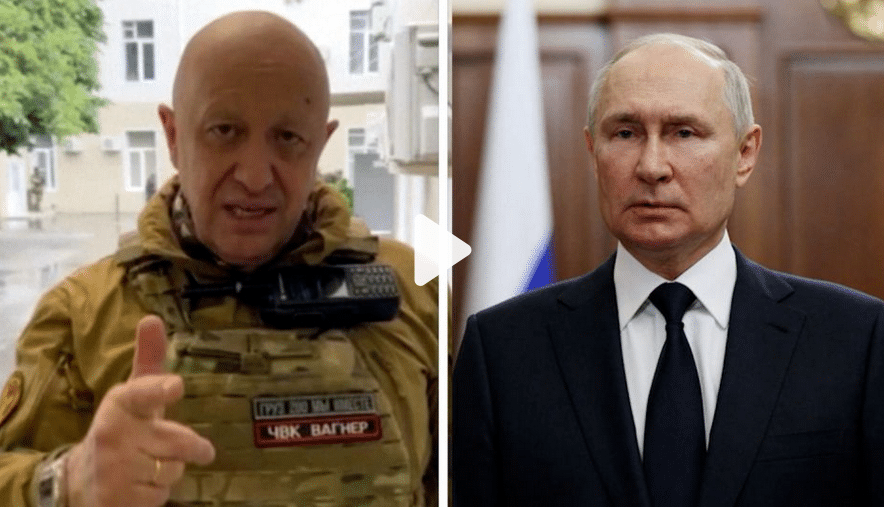
    Speaking of his participation in quelling the mercenaries’ military uprising that sparked crisis in Russia over the weekend, Belarus President Aleksandr Lukashenko asserts that he persuaded Russian President Vladimir Putin not to “destroy” the Wagner organisation and its leader Yevgeny Prigozhin.

    On Tuesday, Lukashenko gave his perspective on the negotiations that caused Prigozhin to halt his march towards Moscow and said the oligarch is now in Belarus in accordance with the agreement.

    According to Belarussian official media, Lukashenko stated that “the most dangerous thing, as I understand it, is not what the situation was, but how it could develop and its consequences.”

    “I also realized there was a harsh decision taken – to destroy. I suggested Putin not to hurry. Let’s talk with Prigozhin, with his commanders.”

    Lukashenko – a longtime ally of the Russian President – said Putin told him: “Listen, Alex, it’s useless. (Prigozhin) doesn’t even pick up the phone, he doesn’t want to talk to anyone.”

    But Lukashenko said he managed to get hold of the Wagner boss and, according to his account, warned he would be “crushed like a bug” if Wagner troops continued their advance to the Russian capital.

    “We talked for the first round of 30 minutes in a swear language. Exclusively. There were 10 times more swear words (I later analyzed them) than normal vocabulary,” Lukashenko added, describing his interactions with a foul-mouthed Prigozhin.

    “Of course, he apologized in advance, and began to tell me everything using these obscene words.”

    The Kremlin has credited Lukashenko with helping to deescalate the situation, though the Belarus leader’s account of events has not been corroborated by Putin or Prigozhin.

    Kremlin spokesperson Dmitry Peskov said Lukashenko was able to draw on a personal relationship with Prigozhin to reach the deal, which would also see Wagner troops and equipment absorbed by the Russian military.

    Russia’s Federal Security Service meanwhile said it would drop a case against Wagner fighters over the apparent uprising.

    Prigozhin’s rebellion marked a sudden and dramatic escalation of his long-running feud with Russia’s military commanders.

    He seized control of a southern military headquarters and directed his private Wagner troops towards Moscow, and demanded the resignation of defense minister Sergei Shoigu – a call that Lukashenko says he eventually backed down from during discussions.

    While Putin survived the events, his standing appears significantly weakened. In an address on Monday, the Russian leader thanked the mercenaries for making the “right decision” in halting their advance, and offered them contracts to join the Russian ministry of defense’s force. He also claimed that the “armed rebellion would have been suppressed anyway,” without specifying how.

    Lukashenko said Tuesday that Prigozhin has received his personal assurances of safety, and the safety of his men, in order to defuse the rebellion on Saturday evening.

    “At five o’clock in the evening he called me and said: “…I accept all your conditions. But … What should I do? We stop – they will destroy us.” I say: “They won’t. I guarantee you. I’ll take it upon myself,” Lukashenko recalled.

  • Opposition leader warns against Russian nuclear weapons ‘in hands of Belarus dictator’

    Opposition leader warns against Russian nuclear weapons ‘in hands of Belarus dictator’

    Svetlana Tikhanovskaya, the exiled leader of the Belarusian opposition, has expressed concerns about the potential transfer of nuclear weapons from Russia to Belarus, warning of the risks of placing such weapons “in the hands of a crazy dictator.”

    Her remarks came after Alexander Lukashenko confirmed that the first “missiles and bombs” had arrived in Belarus.

    Speaking to the BBC in Warsaw, Tikhanovskaya criticized Western politicians for their silence regarding the first deployment of tactical nuclear weapons outside of Russia since the collapse of the USSR in 1991.

    Lukashenko, the authoritarian leader of Belarus, made the announcement during a staged discussion with a Russian state TV presenter. The setting featured military trucks and equipment carefully positioned in the background.

    When asked to clarify his statement about the arrival of weapons, Lukashenko chuckled and replied, “Not all of them. Gradually.”

    Lukashenko is widely regarded as a key ally of Russia, and Belarus has been seen as a launchpad for Russian President Vladimir Putin’s invasion of Ukraine in February 2022.

    In a move seemingly intended to unsettle Ukraine’s Western allies, Lukashenko emphasized that the Russian bombs were “three times more powerful” than those dropped by the US on Nagasaki and Hiroshima during World War Two.

    He further claimed that he had not merely requested the nuclear weapons from Putin but had instead demanded their return. Lukashenko justified the need for such weapons as protection against external aggression, a false threat he has used to justify his repression of political opposition.

    Lukashenko, who has been in power since 1994, declared victory in the disputed 2020 elections, sparking mass protests and a brutal crackdown by the Belarusian KGB security service and riot police.

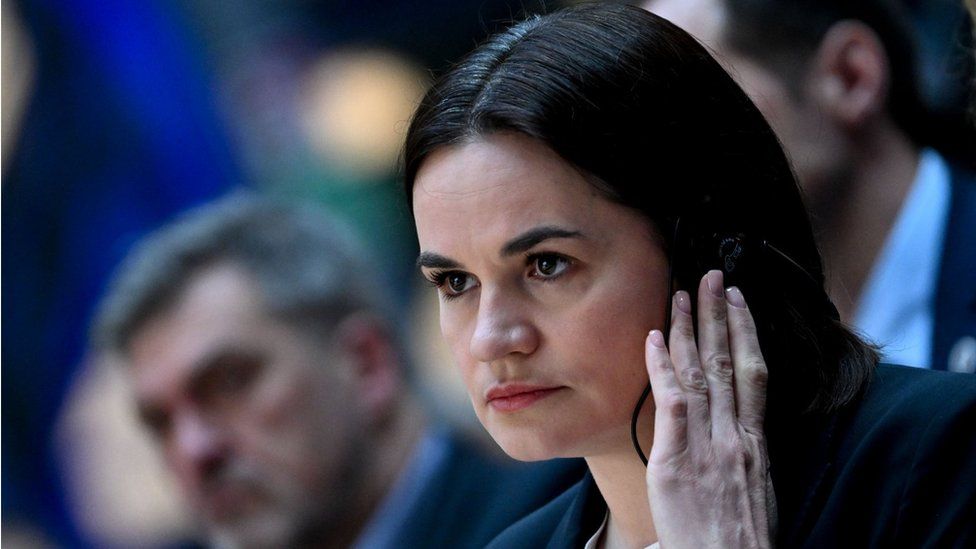
    Svetlana Tikhanovskaya. File photo
    Image caption,Svetlana Tikhanovskaya fled Belarus in 2020 after running against Alexander Lukashenko in presidential elections

    Belarus, like Ukraine and Kazakhstan, gave up its nuclear arsenal in the 1990s in return for security guarantees from post-Soviet Russia and the West. That makes this a significant reversal, although there is as yet no proof that the Russian weapons have been delivered.

    Mr Putin first announced the transfer in March, pointing out that the US has deployed similar weapons in Europe. He later said the move would only take place when storage sites had been prepared, but Alexander Lukashenko now says Belarus has “more storage sites than village dogs” and several have already been renovated.

    Moscow says it will retain control of the missiles, which are tactical – not longer-range strategic weapons.

    “I am not planning to fight the US… tactical weapons are fine,” Mr Lukashenko said. “And the Iskander [rocket] travels 500 kilometres (310 miles) or more.”

    “This deployment creates no new threat to Nato countries, so they don’t take it seriously,”Ms Tikhanovskaya argued, believing that Western countries see no difference between a missile fired from Russia or from Belarus.

    Russia already has nuclear weapons in its western-most Kaliningrad region, putting Poland and the Baltic states well within range.

    “But Belarus is our country and we don’t want nuclear weapons,” Ms Tikhanovskaya said. “This is like the last step to keeping our independence. And they [in the West] are staying silent about that.”

  • Russia to deploy nuclear weapons in Belarus

    Russia to deploy nuclear weapons in Belarus

    Belarus has consented to let Russia station tactical nuclear missiles there.

    The action formalises an agreement that Belarus President Alexander Lukashenko and Russian President Vladimir Putin reached earlier this year.

    Putin has regularly vowed to defend Russia’s “territorial integrity” with nuclear weapons since the invasion of Ukraine last year.

    Ukraine said Belarus had been ‘held hostage’ by the Kremlin when the arrangement was first revealed back in March.

    Speaking in Minsk, Russia’s defence minister Sergei Shoigu said: ‘In the context of an extremely sharp escalation of threats on the western borders of Russia and Belarus, a decision was made to take countermeasures in the military-nuclear sphere.’

    He said Moscow will retain control over the weapons and any decisions on their use.

    Russian news agency TASS quoted him as saying Iskander-M missiles, which can carry conventional or nuclear warheads, had been handed to the Belarusian armed forces, and some Su-25 aircraft had been converted for the possible use of nuclear weapons.

    epa10616523 A Russian Iskander mobile short-range ballistic missile system drives in the downtown area of Moscow, Russia, 09 May 2023, before the military parade which will take place on the Red Square to commemorate the victory of the Soviet Union's Red Army over Nazi-Germany in WWII. EPA/MAXIM SHIPENKOV
    A Russian Iskander mobile short-range ballistic missile system drives in the downtown area of Moscow (Picture: EPA)
    Mandatory Credit: Photo by EyePress News/REX/Shutterstock (12816296b) Image grab from footage released by the Russian Defence Ministry on Saturday Feb 19, 2022 shows a cruise missile of the Iskander tactical missile system, and a ballistic missile of the Sineva tactical missile system was carried out in different unknown locations. The Russian Ministry of Defense said in a statement Friday (February 18) that the forces and facilities of the Aerospace Forces, the Southern Military District, the Strategic Missile Forces, the Northern and Black Sea Fleets would be involved in the exercises. Russia President Vladimir Putin and Belarusian leader Alexander Lukashenko watched the exercises from the situation center in the Kremlin. Russia Belarus Joint Exercise, Undisclosed Location, Russia - 16 Feb 2022
    Image grab from footage released by the Russian Defence Ministry showings a cruise missile of the Iskander tactical missile system (Picture: EyePress News/Rex/Shutterstock)
    Su-25UB attack airplane of the Russian Air Force performing demonstration flight, Kubinka, Russia.
    A Russian Su-25UB attack airplane (Picture: Getty Images/Stocktrek Images)

    ‘Belarusian servicemen have received the necessary training in Russian training centres,’ Shoigu added.

    No detail was announced regarding when the weapons would be deployed in Belarus, but Putin previously said that the construction of storage facilities would be completed by July 1.

    Exiled Belarusian opposition leader Sviatlana Tsikhanouskaya condemned the move.

    ‘We must do everything to prevent Putin’s plan to deploy nuclear weapons in Belarus, as this will ensure Russia’s control over Belarus for years to come,’ Tsikhanouskaya said.

    ‘This will further jeopardize the security of Ukraine and all of Europe.’

    Independent Belarusian military analyst Aliaksandr Alesin said about two-thirds of Russia’s arsenal of medium-range nuclear-tipped missiles were held in Belarus during the Cold War, adding that there are dozens of Soviet-era storage facilities that could still be used to store such weapons.

    Soviet nuclear weapons stationed in Belarus, Ukraine, and Kazakhstan were moved to Russia in a US-brokered deal after the dissolution of the Soviet Union in 1991.

    ‘Documents in Minsk on the return of nuclear weapons were defiantly signed just at the moment when Ukraine declared a counteroffensive and Western countries are handing over weapons to Kyiv,’ Alesin said.

    ‘This Belarusian nuclear balcony should spoil the mood for politicians in the West, since nuclear missiles are capable of covering Ukraine, all of Poland, the Baltic States, and parts of Germany.’

    Russia and Belarus have an alliance agreement under which the Kremlin subsidises the Belarusian economy, via loans and discounted Russian oil and gas.

    Moscow used Belarusian territory as a staging ground for invading neighbouring Ukraine and has maintained a contingent of troops and weapons there.

  • Belarus to join Russia in war if attacked 

    Belarus to join Russia in war if attacked 

    President Alexander Grigoryevich Lukashenko has announced Belarus’ readiness to join the Russia-Ukraine war.

    It is however on the condition that Ukraine attacks Belarus.

    President Lukashenko made this known while interacting with international media during an interview on Thursday, February 16, 2023.

    “I’m ready to provide [territory] again. I’m also ready to wage war, alongside the Russians, from the territory of Belarus. But only if someone – even a single soldier – enters our territory from there (Ukraine) with weapons to kill my people.”

    Military cooperation between Russia and Belarus has been on the increase, with joint drills and the formation of a joint military grouping. But so far the Belarusian leader has avoided sending his troops into Ukraine to fight alongside Russian forces.

    The UK, EU and the United States do not recognise Alexander Lukashenko as the legitimate president of Belarus. In 2020 Belarusians poured on the streets to accuse him of stealing the country’s presidential election. The protests were brutally suppressed.

    Mr Lukashenko used Thursday’s event to blame the West for the war in Ukraine. He accused Western governments of fuelling the conflict and engaged in a touch of Putinesque nuclear sabre-rattling.

    “If you continue this escalation, you will get nuclear weapons and Russia has more than anyone,” he said.

    “So, you should stop this. If a nuclear war starts, Belarus will cease to exist. We need to sit down at the negotiating table, because nuclear war will wipe out the USA too. No-one needs this.”

    Having facilitated the Russian invasion of Ukraine one year ago, the Belarusian leader now claims he can help negotiate peace.

    Mr Lukashenko suggested that next week would be a good time to start, with US President Joe Biden due to visit Poland.

    “I invite [President Biden] to Belarus,” Mr Lukashenko said. “It’s not far from Warsaw, Thirty minutes and he’ll be in Minsk. He could land his plane here. I will persuade the president of Russia to come. I invite him too to Minsk, as well as Biden. We will sit down and reach an agreement.”

    The authoritarian leader of Belarus is a firm Kremlin ally and backer of what Mr Putin refers to as the “special military operation” – what most of the world calls Russia’s war in Ukraine.

    Since his full-scale invasion of Ukraine a year ago, Mr Putin hasn’t sat down with Western journalists.

    Source: BBC

  • Poland to close its border crossing with Belarus after the latter jailed Polish journalist

    Poland to close its border crossing with Belarus after the latter jailed Polish journalist

    The announcement follows a Belarusian court’s eight-year prison sentence for a journalist with Polish ancestry.

    The Polish interior minister announced that Poland will close a crucial border crossing with Belarus until further notice as relations between Warsaw and Minsk reach new lows.

    Relations between Poland and Belarus, which were already tense, became even more tense on Wednesday when a journalist with Polish ancestry was given an eight-year prison sentence by a Belarusian court in a case that Warsaw claims was politically motivated.

    “Due to the important interest of state security, I decided to suspend until further notice from 1200 [11:00 GMT] on Feb. 10 this year traffic at the Polish-Belarusian border crossing in Bobrowniki,” Mariusz Kaminski wrote on Twitter.

    Bobrowniki, more than 200km (125 miles) northeast of Warsaw, is one of the main crossing points between Poland and Belarus.

    Anton Bychkovsky, a spokesman for the Belarus state border service, said the move was unwarranted and could cause the remaining crossings to become overloaded, Russia’s state TASS news agency reported.

    Bychkovsky told the Belarus STV channel only two of the six main border posts would be operational, which he said would hurt truckers and citizens, according to TASS.

    “The Belarusian side sees no objective reasons for taking such a decision given that there is no threat from the territory of Belarus,” TASS quoted him as saying.

    Kaminski also said that as a result of the jailing of journalist Andrzej Poczobut, he would apply for further people connected with Belarusian President Alexander Lukashenko to be added to sanctions lists.

    A Belarusian court on Monday sentenced Poczobut for “instigating hatred against religious and national groups, and rehabilitating Nazism”, the Polish state-run news agency PAP reported.

    Poland’s charge d’affaires in Minsk was summoned to the Belarusian foreign ministry, the Polish foreign ministry’s spokesman said on Thursday.

    Poland has become a key refuge for opponents of Lukashenko as well as one of Ukraine’s staunchest allies since Belarusian ally Russia invaded the country in February last year.

    Russia used Belarus as a staging post for its ultimately abortive advance on the Ukrainian capital Kyiv.

    In 2021, Poland and the European Union said Belarus had engineered a refugee crisis on its borders, an accusation Minsk denies. More recently, Poland has condemned the vandalism of Polish graves in Belarus.

    Thousands of people of Polish origin live in Belarus as the west of the country was Polish territory until borders were redrawn after World War II.

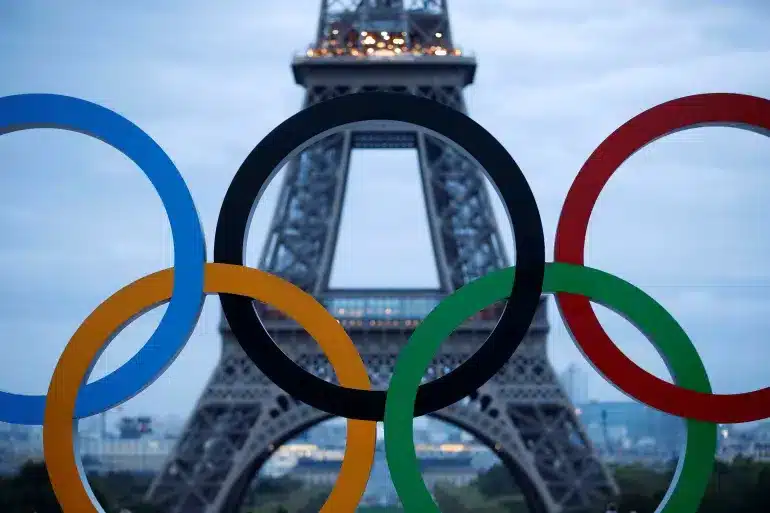
  • Ukraine warns to shun 2024 Olympics if Russia participates

    Ukraine warns to shun 2024 Olympics if Russia participates

    The International Olympic Committee says it will “explore a pathway” for athletes from Russia and Belarus to compete in the Paris Games.

    However, Ukraine has warned that ,if  Russian and Belarusian athletes are permitted to compete in the Paris Games, it will boycott the 2024 Summer Olympics.

    According to the Ukrainian sports minister, Vadim Guttsait, Russian and Belarusian athletes shouldn’t participate in international competitions as long as there is a war in Ukraine.

    Russia’s major ally, Belarus, served as a staging area for Russia’s full-scale invasion of neighbouring Ukraine.

    After the International Olympic Committee (IOC) declared it would “explore a pathway” for athletes from the two countries to compete as neutrals, Guttsait made his remarks.

    “Work is currently under way on further possible steps and first steps to continue sanctions and prevent Russians and Belarusians from international competitions,” Guttsait said in a post on Facebook.

    “If we are not heard, I do not rule out the possibility that we will boycott and refuse participation in the Olympics,” he added.

    Guttsait, who is also the president of Ukraine’s National Olympic Committee, added that talks with national sports federations over a possible boycott had already begun.

    IOC ‘disregarding Russian war crimes’

    Since Russia’s invasion of Ukraine in February last year, many international sports bodies have suspended Russian and Belarusian teams or athletes in protest against the war. Others have been permitted to compete under a neutral flag.

    Just days after Russia launched its offensive on February 24, the IOC had urged sporting governing bodies and organisers to exclude Russian and Belarusian athletes and officials from international events.

    But on Wednesday, in an apparent change of course, it said the possibility of athletes from the two countries competing in sporting events as neutrals should be “further explored”.

    “No athlete should be prevented from competing just because of their passport,” the IOC said in a statement following a meeting of its executive board.

    Following that announcement, the Olympic Council of Asia said on Thursday it had offered athletes from both countries the chance to compete in this year’s Asian Games, giving them a qualification pathway for the Paris Games through Asia rather than Europe, where they could face boycotts and hostility.

    The move was met with dismay and anger in Kyiv.

    Ukrainian President Volodymyr Zelenskyy said he had told his French counterpart Emmanuel Macron on Tuesday that Russia should have “no place” in the Olympics.

    Foreign Minister Dmytro Kuleba also weighed in, urging all “sports figures to make their stance known”.

    “[The] IOC has been disregarding Russian war crimes, claiming that ‘No athlete should be prevented from competing just because of their passport’, while Ukrainian athletes continue to be killed by Russia because of their passports,” Kuleba said.

    ‘The wrong path’

    There was no immediate response from the French government, but other European countries backing Ukraine in the war also criticised the IOC’s decision.

    British Culture Secretary Michelle Donelan said the organisation’s stance was “a world away from the reality of war being felt by the Ukrainian people”.

    In Germany, Interior Minister Nancy Faeser called it “the wrong path”.

    But in Russia, there was praise for the IOC’s approach from Igor Levitin, an aide to President Vladimir Putin and senior vice president of the Russian Olympic Committee.

    “I think it is already a success. Olympic society understands that the Olympic Games cannot be staged without Russia,” Levitin was quoted as saying by the state-owned TASS news agency.

    Meanwhile, the International Paralympic Committee said it would “follow with interest the IOC proposed process”.

    “We wish to reiterate that we hope and pray that the conflict comes to an end, that no more lives are taken, and that we can run sports and politics separately,” Andrew Parsons, the IPC’s president, said in a statement.

    The Paris Games are scheduled to take place from July 26 to August 11 next year.

  • Russia dispatches additional troops to Belarus as fears of a new attack grow

    Russia dispatches additional troops to Belarus as fears of a new attack grow

    Ukraine says that Moscow may use Belarus as a staging area for a northern offensive, thereby opening up a new front.

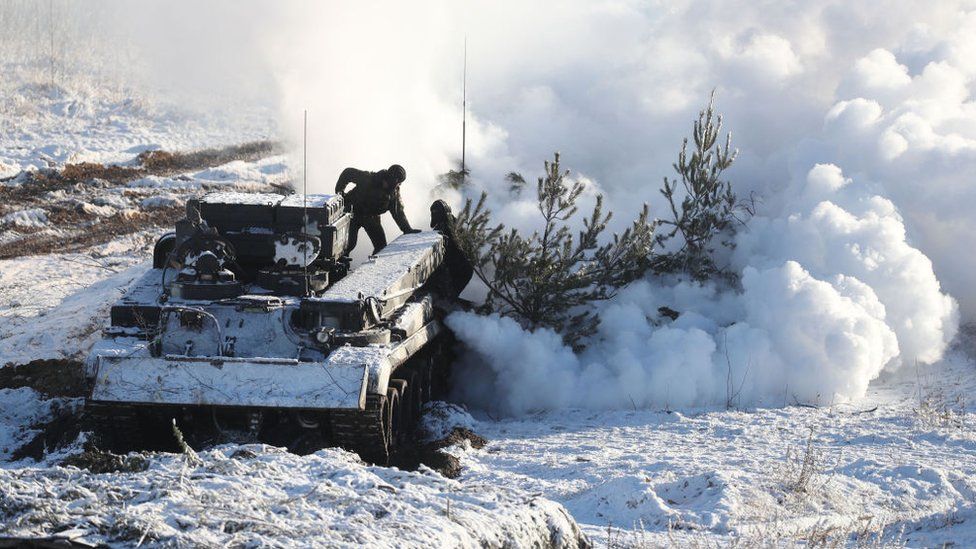
    A train carrying Russian troops and equipment has arrived in Belarus, raising fears that Moscow will use the territory of its ally to launch an attack on Ukraine from the north.

    Belarus’ defence ministry confirmed the contingent’s arrival on Friday, saying President Alexander Lukashenko had visited a military base where Russian troops were already stationed.

    According to the report, Lukashenko and an unnamed representative from the Russian army discussed joint military drills between the two countries during the meeting.

    Russian troops “are ready to carry out tasks as intended”, the representative said.

    The developments came after Belarus, which has backed Russia over its war in Ukraine, said on Thursday that it will receive more weapons and equipment from its neighbour as the two continue to boost military cooperation.

    The Belarusian defence ministry said the goal of creating a joint force was “strengthening the protection and defence of the Union State [of Russia and Belarus]”.

    “Personnel, weapons, military and special equipment of the armed forces of the Russian Federation will continue to arrive in the Republic of Belarus,” the statement said.

    The two countries are preparing for joint air force exercises, the ministry said, without providing any further details.

    The Belarusian government has repeatedly said the country will not join Russia’s war in Ukraine.

    But Moscow deployed thousands of forces to Belarusian territory under the pretext of military drills before launching its offensive and then funnelled troops into Ukraine when its invasion began on February 24.

    According to Kyiv, Russia continues to use Belarusian airspace for drone and missile attacks.

    Any new attack on Ukraine from Belarus would open a major new front in the war, which has killed tens of thousands of people.

    Lukashenko has blamed Western nations for the war, accusing them of seeking confrontation with Russia and provoking the ongoing bloodshed.

    The 67-year-old says Ukraine has the power to end the conflict by accepting Moscow’s demands – namely the loss of partly-occupied regions in eastern and southern Ukraine.

    Source: Aljazeera.com
  • Belarus, Russia relations: Alexander Lukashenko ‘unlikely’ to enter war

    Alexander Lukashenko and Vladimir Putin spoke yesterday in Minsk, sparking rumours that Putin may be trying to convince Belarus to join the conflict.

    According to experts, Belarus will not directly enter the conflict because Belarusian President Alexander Lukashenko “likely deflected” Mr. Putin’s efforts.

    Belarus needs to defend its borders against the West and NATO, according to US-based think tank The Institute for the Study of War, which claimed Mr. Lukashenko was doing this to avoid taking part in the invasion.

    In a joint news conference after the talks, both presidents refrained from discussing the invasion.


    The ISW said that if Mr Lukashenko were planning on joining the war, he would likely “adjust his rhetoric to create some plausible explanation to his own people about why he was suddenly turning away from the fictitious NATO invasion threat”.

    This is not to say the Kremlin hadn’t planned to pressure Belarus.

    According to the think tank, Moscow has “attempted to conceal Putin’s likely original intentions to pressure Lukashenko”.

    The ISW pointed out that Kremlin spokesperson Dmitry Peskov dismissed the speculation as “foolish” – and that he had avidly denied Russia’s intention to invade days before the war.

    “But this denial is more likely an attempt to cover up Putin’s desperation to involve Lukashenko in the war and apparent failure – again – to do so,” the ISW said.


  • Russia-Belarus alliance: Ukraine to boost Belarus border defences

    Ukraine is beefing up border defences with Belarus amid fears that Russia is planning a new attack, according to a government official.

    According to Deputy Interior Minister Yevhen Yenin, Ukraine will reinforce its border with Belarus with armed forces and ammunition.

    The announcement came as Vladimir Putin was on his way to Minsk to meet Belarusian President Alexander Lukashenko.

    Belarus shares a border with both Russia and Ukraine.

    The Russian president later ordered the strengthening of Russia’s borders and of social control within Russia. He said the security services should quickly thwart any attempt to violate Russia’s borders, combat risks coming from abroad, and identify traitors and saboteurs.

    He also said the special services should ensure the safety of people living in the parts of Ukraine that Moscow claims as its own. In some of these areas, most notably Kherson, Russia recently suffered significant military reverses.

    Russia’s defence ministry announced that its troops stationed in Belarus would conduct joint military exercises with Belarus.

    Reacting to this and the visit Mr Yenin confirmed: “We are building up our defence lines all across the border with Russia and with Belarus.”

    While Belarus has not become involved in the war directly, it did allow Russian troops to use its territory to launch the invasion in February.

    Russia and Belarus holding joint military drills in February 2022
    IMAGE SOURCE,GETTY IMAGES Image caption, Russia and Belarus held joint military drills near the Ukrainian border in February – just days before Russia’s full-scale invasion

    Minsk is coming under increasing pressure from Moscow to step up its support in the “special military operation”.

    But Kremlin spokesman Dmitry Peskov dismissed the reports “as totally stupid, groundless fabrications”.

    President Putin flew to Minsk for talks with President Lukashenko – the first time in three-and-a-half years the pair have met in Belarus.1px transparent line

    The meeting has been described as a “working visit” and lasted for more than two hours.

    Speaking at a joint press conference President Putin said Russia did not want to “absorb” anyone. He also said that unspecified “enemies” wanted to stop Russia’s integration with Belarus.

    Speaking later on Monday, US state department spokesperson Ned Price said Putin’s statement was the “height of irony” given he was currently seeking to absorb Ukraine.

    Something rare happened today: Vladimir Putin got on a plane and flew to Minsk. Now, President Putin and President Alexander Lukashenko meet a lot – but in Russia.

    For the first time in three-and-a-half years, here was President Putin in Belarus. So why did he go… and why now?

    There were few clues at the joint press conference as the two leaders spoke a lot about economic relations, trade, but also security.

    President Putin indicated that some Belarusian military aircraft have been re-equipped to potentially carry nuclear missiles and that Russia is helping to train their crews.

    In return, President Lukashenko thanked him for providing Belarus with an S-400 air defence system and Iskander ballistic missile system.

    The word “Ukraine” was hardly mentioned – in public.

    But the visit has fuelled speculation that the Kremlin leader may be trying to pressure the leader of Belarus into joining a possible new ground offensive in Ukraine.

    This may indeed be just a rumour. Or a ploy by Moscow to make Ukraine expect a Belarusian offensive and so tie up Ukrainian soldiers in the north.

    But, there are reportedly several thousand Russian soldiers already in Belarus and there have been joint exercises.

    Until now Alexander Lukashenko has been reluctant to commit his own troops to fighting in Ukraine.

    All eyes are on Minsk to see if that remains the case.


  • General Staff: Ukraine beefs up forces near the border with Belarus in case of an attack

    Ukraine has increased the number of forces deployed in northern regions near Belarus to counter any potential renewed Russian attack across the border, according to the country’s general staff.

    “At the current time, the creation of a strike force [in Belarus] is not observable. [But] there are and will be threats. We are reacting, we have already increased our troops in the northern direction,” Oleksii Hromov, deputy head of the general staff’s main operations directorate, told a regular news briefing.

    Belarus is a close ally of Russia and has previously allowed Moscow’s forces to use its territory as a springboard to attack Ukraine.

    Earlier this month, Belarusian President Alexander Lukashenko said Belarus and Russia would deploy a joint military task force near Ukraine in response to what he claimed was a clear threat to his country from Kyiv and its backers in the West, without providing evidence for the assertion.


  • Belarus on high alert for terrorism

    Belarusian President Alexander Lukashenko said his country is on high alert for terrorism due to tensions on its borders.

    Mr. Lukashenko linked the decision to his declaration on Monday that he had ordered Belarusian troops to deploy along Belarus’s southern border with Ukraine alongside Russian forces.

    “In connection with the escalation of tension, a regime of heightened terrorist danger has been introduced,” Mr Lukashenko said in a Russian TV interview.

    “Therefore we began a procedure with the Union group of forces, the basis of which, as I already said, is the Belarusian army, which will be supplemented by units from the Russian Federation. Everything is going according to plan.”

    Belarus is allied with Moscow but wedged between Russia, Ukraine, and three NATO countries.

    Belarus allowed Russia to use its territory as one of the launchpads for its 24 February invasion.

    Its latest troop movements have raised concern in Kyiv and the West that Mr Lukashenko may be about to commit his army to support Russia’s faltering war effort.

    Political analysts say that is an unappealing option for him but that he may not be in a position to refuse if Russian President Vladimir Putin demands it.

    Belarus depends on Russia politically and economically, and Mr Putin’s support helped Mr Lukashenko survive mass pro-democracy protests in 2020.

    Mr Lukashenko crushed the demonstrations and all leading opposition figures have been jailed or forced to flee abroad.


  • Amnesty International accuses Latvia of mistreating migrants on Belarus border

    According to Amnesty International, Latvia “violently” forced migrants back into Belarus and even tortured some of them.

    They say a recent complaint by the rights group, border guards beat and humiliated individuals trying to enter from Belarus into neighbouring Latvia.

    Latvia’s government denied officials used undue force, and said the measures were due to “illegal crossings”.

    Last year it declared a state of emergency, which suspended the right to seek asylum in four border areas.

    Latvia says that means so-called pushbacks are allowed, even though they contravene EU law.

    The state of emergency, which is still in place, was introduced after a surge in people trying to cross over the border from Belarus.

    Amnesty International’s report details alleged abuses of power, arbitrary detention, ill-treatment, unsafe and unsanitary conditions, and even torture.

    It quotes an Iraqi man named Zaki, who said he was pushed back and forth at the border more than 150 times in three months, including sometimes as many as eight times per day.

    Another Iraqi man, Adil, said he and fellow migrants slept in the forest on the snow.

    “We used to light a fire to get warm, there were wolves, bears but because we had a fire… they [were] afraid,” he is quoted as saying in the report.

    “That is how we survived it, but they [Latvian authorities] did not provide us with special clothes for the weather,” he added.


    Amnesty reports that migrants, including children, were held arbitrarily in undisclosed sites in the Latvian forest, and then returned to Belarus.

    Many faced beatings and electric shocks with tasers, including on their genitals. Some were returned “voluntarily” to their home countries.

    “The Latvian authorities have left men, women and children to fend for themselves in freezing temperatures, often stranded in forests or held in tents,” said Eve Geddie, Amnesty’s Director of the European Institutions Office.

    “They have violently pushed them back to Belarus, where they have no chance of seeking protection. These actions have nothing to do with border protection and are brazen violations of international and EU law.”

    Amnesty added that Latvia’s treatment of migrants from Belarus stood in stark contrast to its “swift mobilisation” to provide refuge for more than 35,000 Ukraine migrants.

    Kristaps Eklons, Latvia’s Minister of the Interior, defended the government’s measure on the border in a written response included in the report.

    “The [state of emergency] order was adopted to ensure the internal security of the state,” he said.

    Mr Eklons added that authorities had found no evidence of officials using “physical force of special means” against those crossing the border.

    Last year Latvia, Poland and Lithuania all saw a huge surge in the number of people trying to enter their countries from Belarus.

    The European Union accused the country’s leader Alexander Lukashenko of orchestrating the problem in retaliation against sanctions, which were introduced in response to a crackdown on mass protests.

    The BBC uses the term migrant to refer to all people on the move who have yet to complete the legal process of claiming asylum. This group includes people fleeing war-torn countries, who are likely to be granted refugee status, as well as people who are seeking jobs and better lives, who governments are likely to rule are economic migrants.


  • “A leader of great power “- Belarus’ Lukashenko calls Putin on his 70th birthday

    Vladimir Putin, president of Russia, has received wishes from the president of Belarus in honour of his 70th birthday, which falls on Friday, October 7.

    Aleksandr Lukashenko, the president of Belarus, has sent his congratulations to Russian President Vladimir Putin on his 70th birthday.

    “Please accept my warmest congratulations on your anniversary. Being a true leader of great power, you make deliberate and difficult decisions in order to ensure the independent development of the Russian Federation, and protect the traditions and values of the Russian people,” Aleksandr Lukashenko said.

    The Belarus president said that “he cherishes open and trusting relations with the Russian President and an equal and fruitful dialogue, which serves to strengthen the allied Belarusian-Russian ties.”

    “Recently, this has clearly manifested in the closer integration of our countries. I am convinced that together Minsk and Moscow will adequately respond to global challenges and reach a new level of strategic partnership.

    “I wholeheartedly wish you, dear Vladimir Vladimirovich, excellent health, constructive accomplishments for the benefit of the Russian state and long years in a circle of loving family and reliable friends,” the message read.

    The news comes after Lukashenko to the nation of Belarus that “From October 6, all price increases are FORBIDDEN. Forbidden!”


  • Nobel Peace Prize awarded Human rights campaigners in Belarus, Russia and Ukraine

    According to Berit Reiss-Andersen, chair of the Norwegian Nobel Committee, the judges sought to recognise “three exceptional supporters of human rights, democracy, and peaceful coexistence.”

    Ales Bialiatski, a jailed human rights advocate from Belarus, Memorial, a Russian advocacy organisation, and the Center for Civil Liberties in Ukraine have all received the Nobel Peace Prize.

    The winners were announced in Oslo by Berit Reiss-Andersen, chair of the Norwegian Nobel Committee.

    She said the judges wanted to honour “three outstanding champions of human rights, democracy, and peaceful coexistence in the neighbour countries Belarus, Russia, and Ukraine”.

    She added: “Through their consistent efforts in favour of human values and anti-militarism and principles of law, this year’s laureates have revitalised and honoured Alfred Nobel’s vision of peace and fraternity between nations, a vision most needed in the world today.”

    The award traditionally recognises the work of groups and activists seeking to prevent conflict, tackle hardship, and protect human rights.

    Last year’s winners have faced a difficult time since receiving the prize.

    Journalists Dmitry Muratov of Russia and Maria Ressa of the Philippineshave been fighting for the survival of their news organisations and defying government efforts to silence them.

    They were honoured last year for “their efforts to safeguard freedom of expression, which is a precondition for democracy and lasting peace.”

    A week of Nobel Prize announcements kicked off on Monday with Swedish scientist Svante Paabo receiving the award in medicine for unlocking secrets of Neanderthal DNA that provided key insights into the immune system.

    Three scientists jointly won the prize in physics Tuesday.

    Frenchman Alain Aspect, American John F Clauser, and Austrian Anton Zeilinger had shown that tiny particles can retain a connection with each other even when separated, a phenomenon known as quantum entanglement, that can be used for specialised computing and to encrypt information.

    The Nobel Prize in chemistry was awarded on Wednesday to Americans Carolyn R Bertozzi and K. Barry Sharpless, and Danish scientist Morten Meldal for developing a way of “snapping molecules together” that can be used to explore cells, map DNA and design drugs that can target diseases such as cancer more precisely.

    French author Annie Ernaux won this year’s Nobel Prize in the literature on Thursday.

    The panel commended her for blending fiction and autobiography in books that draw on her experiences as a working-class woman to explore life in France since the 1940s.

    The 2022 Nobel Prize in economics will be announced on Monday.

    The prizes carry a cash award of 10 million Swedish kronor (around £800,000) and will be handed out on 10 December.

    The money comes from a bequest left by the prize’s Swedish creator who invented dynamite.