Four individuals, among them a 6-month-old infant, suffered injuries when a cemetery wall collapsed on them in Kasoa Zongo, located in the Awutu Senya East Municipality of the Central Region on Monday.
The incident, spurred by heavy rains, transpired as the victims sought refuge under a shelter near the market center adjacent to the cemetery.
Reports suggest the wall had been deteriorating over time before finally giving way, resulting in injuries to those beneath it.
Among the injured, a 16-year-old boy and a 60-year-old woman sustained severe injuries and are presently undergoing treatment at the Kasoa Polyclinic.
Meanwhile, the toddler and his mother have been treated and discharged from medical care.
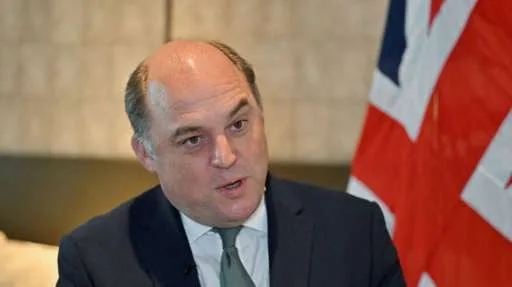
In today’s Daily Telegraph, former UK Defense Minister Ben Wallace issues a warning that Israel’s current strategies in Gaza may “fuel the conflict for another 50 years” and have the potential to radicalize Muslim youth globally.
Wallace clarifies that he is not advocating for an immediate ceasefire, stating, “You can’t have a ceasefire with Hamas unless they are prepared to declare one.” However, he emphasizes the need for Israel to halt its “crude and indiscriminate method of attack.”
While Wallace acknowledges the legitimacy of targeting Hamas, he strongly criticizes the widespread destruction in Gaza, stating, “Obliterating vast swathes of Gaza is not.”
Expressing unwavering condemnation for Hamas, Wallace accuses the group of using Palestinians as “cannon fodder” and asserts that Hamas is both anti-Semitic and anti-democratic, showing no interest in peaceful coexistence with Israel.
In assessing the current generation of Israeli politicians, Wallace argues that they are acting “like a bull in a China shop.”
If Rishi Sunak is elected, one of the first big concerns he will face is appointing a new defence secretary.
Of course, we don’t yet know who will be in his cabinet, but as think tank chief Torsten Bell points out, the present (and popular) Defence Secretary Ben Wallace’s stance on defence expenditure may complicate matters.
Unless Ben Wallace finds himself a climb down strategy the first crisis of this new government could be losing the defence secretary. We ain’t going to be spending 3% of GDP on defence
Mr Wallace, one of the most experienced and well-regarded members of the cabinet, has campaigned hard for increases in defence spending.
One of Liz Truss’s key pledges had been to boost defence spending to 3% of national income by 2030.
But Jeremy Hunt – who is widely expected to stay on as chancellor when the new prime minister comes in – has refused to commit to this promise.
He said the Ministry of Defence would need to make additional savings, along with other departments.
Mr Sunak himself has also signalled he is unlikely to stand by the 3% spending promise.
He said this target was “arbitrary” and “not a plan”.
The former chancellor had also become embroiled in a row with Mr Wallace, with the latter claiming Mr Sunak had tried to block a multi-year settlement for the Armed Forces in 2019.
More than 80% of Conservative Party members think Liz Truss is doing a bad job – with 55% saying she should stand down as leader.
Boris Johnson is the members’ favourite to take over – beating out Rishi Sunak and Ben Wallace.
New polling from YouGov surveyed 530 Tory members today and yesterday for their opinion, a comparatively smaller sample size than opinion polls of the public at large.
Some 83% of paid-up Conservative backers think Ms Truss is doing badly – with just 15% saying she is doing well. Only 2% don’t know.
When asked if Ms Truss should resign, 55% of all those asked said yes, 38% said no, and 7% did not know.
Almost 40% of members who voted for Ms Truss in the leadership race now want her to go, the poll found.
It follows similar bad numbers from JL Partners overnight (see 6.29 am post), which found that most Truss supporters in the Tory party regret their choice.
When asked by YouGov who they want to take over as PM should Ms Truss stand aside, 32% said Boris Johnson, 23% said Rishi Sunak, 10% Ben Wallace and 9% say Penny Mordaunt.
Going forward, most Tory members – around 31% – think they alone should choose Conservative Party leaders, with no input from MPs.
Only 25% think the current system should remain,with another 25% thinking MPs alone should choose the leader.
However, if Ms Truss does stand down, six in 10 members want MPs to agree on a unity candidate and there not to be another election at the current time.
Defence spending had been set to rise to 3% of GDP by 2030-but Chancellor Jeremy Hunt refuses to make that commitment.
The UK’s new chancellor has raised the possibility of ditching a key pledge by Liz Truss to boost defence spending – a move that would likely be a resigning matter for her defence secretary, Ben Wallace.
Jeremy Hunt on Saturday refused to commit to lifting the amount of money spent on the armed forces to 3% of national income by 2030, as promised by the prime minister.
He also said the Ministry of Defence, like all other departments, would have to make additional savings.
Mr Wallace, one of the most experienced and well-regarded members of the embattled prime minister’s cabinet, has fought hard over the past three years to secure much-needed increases in defence spending at a time of growing security threats.
Asked whether any backtracking on defence spending goals would be a resigning issue, a defence source said Mr Wallace would hold the prime minister to the pledges made.
This includes a commitment to increase defence spending to 2.5% of gross domestic product (GDP) by 2026 from around 2% at present and then to 3% of GDP by 2030 in what would equate to around an extra £157billion over eight years.
But speaking about tough times ahead, Mr Hunt told Sky News: “I’m going to ask all departments to find more efficiencies than they were planning to find.”
He repeated this on Radio 4’s Today programme and was asked specifically if a “difficult tough decision” would be taken over the defence budget.
Mr Hunt replied: “We do need to increase defence spending, but I can’t make a promise to you here and now about the timings of that.”
He continued: “The long-term ability to fund an increase in defence spending will depend on stability in the economic situation and a healthily growing economy.”
Pressed on how he was leaving open the possibility of the 3% defence spending pledge not being delivered by 2030, Mr Hunt said: “I am leaving open all possibilities this morning. I wish I could give you more detail, but I will be presenting to parliament in a fortnight on Monday exactly what is going to happen and the answer to all those questions.”
He was referring to 31 October when the chancellor is due to issue a fiscal statement.
As well as a failure to commit to defence spending, Mr Hunt also made a flawed assessment that long-term defence spending can only be secured if there is economic stability.
In reality, there can be no economic stability without security.
The energy price rise – as the prime minister keeps saying – is caused by Vladimir Putin using energy as a weapon, reducing the flow of Russian oil and gas to pressure Western nations to stop their crucial support to Ukraine, which has helped thwart his invasion so far.
Had the Conservatives – and Labour before them – genuinely demonstrated the mantra that national security is their first priority the UK would not have seen successive governments slash defence spending and military capability over the past three decades.
NATO allies are less likely to invest in defense if the UK doesn’t
Hollowed-out defences – and this is a simplification of a time that also included the disastrous Iraq and Afghanistanwars – have left the UK and fellow European NATO allies less able to deter the existential threats posed by authoritarian regimes like Russia’s.
So, it makes no sense to use the economic crisis, triggered in part by Russia’s war in Ukraine, as a reason to backtrack on a vital need to rebuild the UK’s armed forces.
Russia’s Vladimir Putin, Xi Jinping of China, North Korea’s Kim Jong-un, and all other leaders who prefer authoritarian rule over the values of democratic governments – human rights, rule of law, and other freedoms – will be laughing.
Britain is one of the strongest voices in NATO, urging increased defence spending among all 30 allies – it is a live debate right now, with hopes to lift a minimal expenditure target to 2.5% of GDP from 2%.
If the UK were to lead by example and reduce ambitions to grow defence spending, it would make it far less likely other European allies will feel under pressure to boost their budgets.
The MoD has a largely poor track record of procurement, with programmes to build warships, aircraft, and tanks too often running billions of pounds over budget and delivered late or not at all. That is inexcusable and also needs to change.
But ordering more efficiencies is going to make a bad situation even worse.
Many people have tried and failed to make the MoD and the armed forces more efficient.
The thing is, the UK’s military, security and intelligence services are too vital to fail and too important not to fund adequately, especially at a time of war in Europe, and the very real threat of escalation with Russia and China.
A Royal Navy frigate has been sent to the North Sea after suspected sabotage last week on the Nord Stream gas pipelines.
The Ministry of Defence (MoD) said the ship was working with the Norwegian navy “to reassure those working near the gas pipelines”.
European nations believe the damage to pipelines under the Baltic Sea could only have been caused by an attack, with Russia strongly suspected.
The Kremlin has denied it was responsible and instead pointed the finger at the West.
Russia’s Gazprom said on Monday that the pipelines had now stopped leaking. The gas giant said pressure had stabilised in the damaged pipelines and that it was pumping gas out of the undamaged string B of Nord Stream 2so that its integrity could be checked.
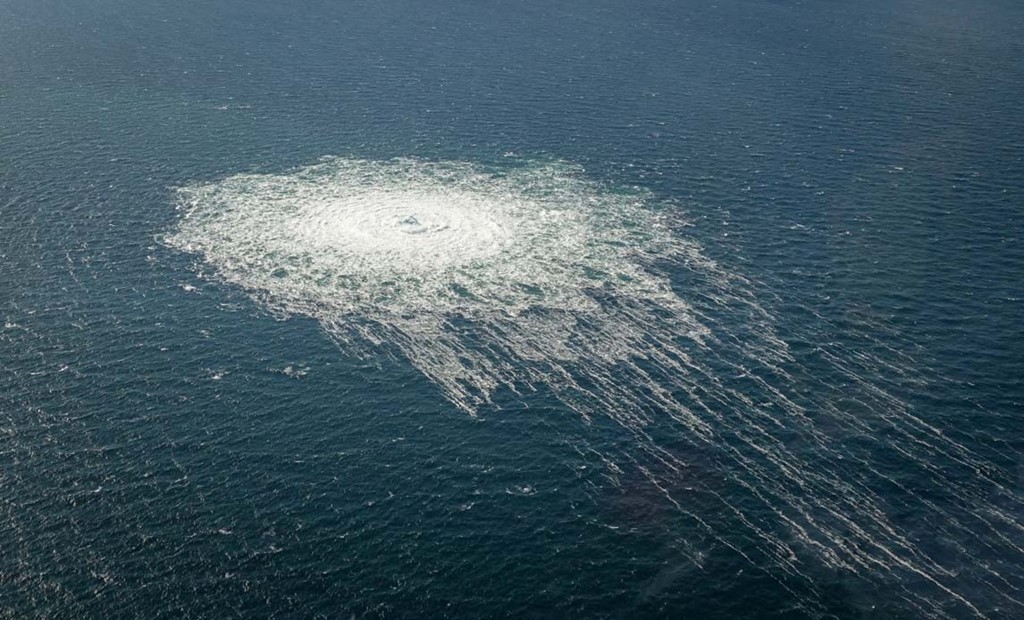
Methane had been bubbling up since four leaks were found on the pipelines near Denmark’s Bornholm Island.
A British defence source told Sky News they were likely premeditated attacks using underwater explosives.
Defence Secretary Ben Wallace said on Sunday at the Tory Party conference that Russia made “no secret” of its ability to attack underwater infrastructure.
He said the damage to the pipelines – which run from Russia to Germany – showed “the Nordic states and ourselves are deeply vulnerable to people doing things on our cables and our pipelines”.
Mr Wallace said the UK would acquire two specialist ships to protect the network as the country’s “internet and energy are highly reliant on pipelines and cables”.
“The first multi-role survey ship for seabed warfare will be purchased by the end of this year, fitted out here in the UK and then operational before the end of next year,” he said.
“The second ship will be built in the UK and we will plan to make sure it covers all our vulnerabilities.”
Mr Wallace met other ministers of the Joint Expeditionary Force (JEF) on Monday to shareassessments of what the MoD called a “blatant and irresponsible” attack.
In a statement, it said the members had decided to increase their presence in the area, as well as “intelligence surveillance and reconnaissance activities” to deter future acts and reassure allies.
The JEF is focussed on security in the High North, North Atlantic and Baltic Sea region.
It includes Denmark, Estonia, Finland, Iceland, Latvia, Lithuania, Netherlands, Norway, Sweden, and the UK.
Ben Wallace, the governmentwill purchase two specialised ships to guard pipes and cables that are submerged in the ocean.
In remarks to the Conservative Party conference in Birmingham, the defence secretary referred to the “mysterious damage inflicted” last week following leaks in the Nord Stream gas pipelines in the Baltic Sea.
There have been suggestions that Russia could have been behind the alleged sabotage of the pipes, including Nord Stream 1 which was already shut but had previously pumped gas from Russia to Europe. Nord Stream 2 had not started operations.
Gas bubbles rise to the surface from the Nord Stream 2 leak
Mr Wallace said the pipeline incident “should remind us of how fragile our economy and infrastructure is to such hybrid attacks”.
“Our intent is to protect them. Our internet and energy are highly reliant on pipelines and cables. Russia makes no secret of its ability to target such infrastructure.”
He went on: “So for that reason, I can announce we recently committed to two specialist ships with the capability to keep our cables and pipelines safe.
“The first multi-role survey ship for seabed warfare will be purchased by the end of this year, fitted out here in the UK, and then operational before the end of next year.
“The second ship will be built in the UK and we will plan to make sure it covers all our vulnerabilities.”