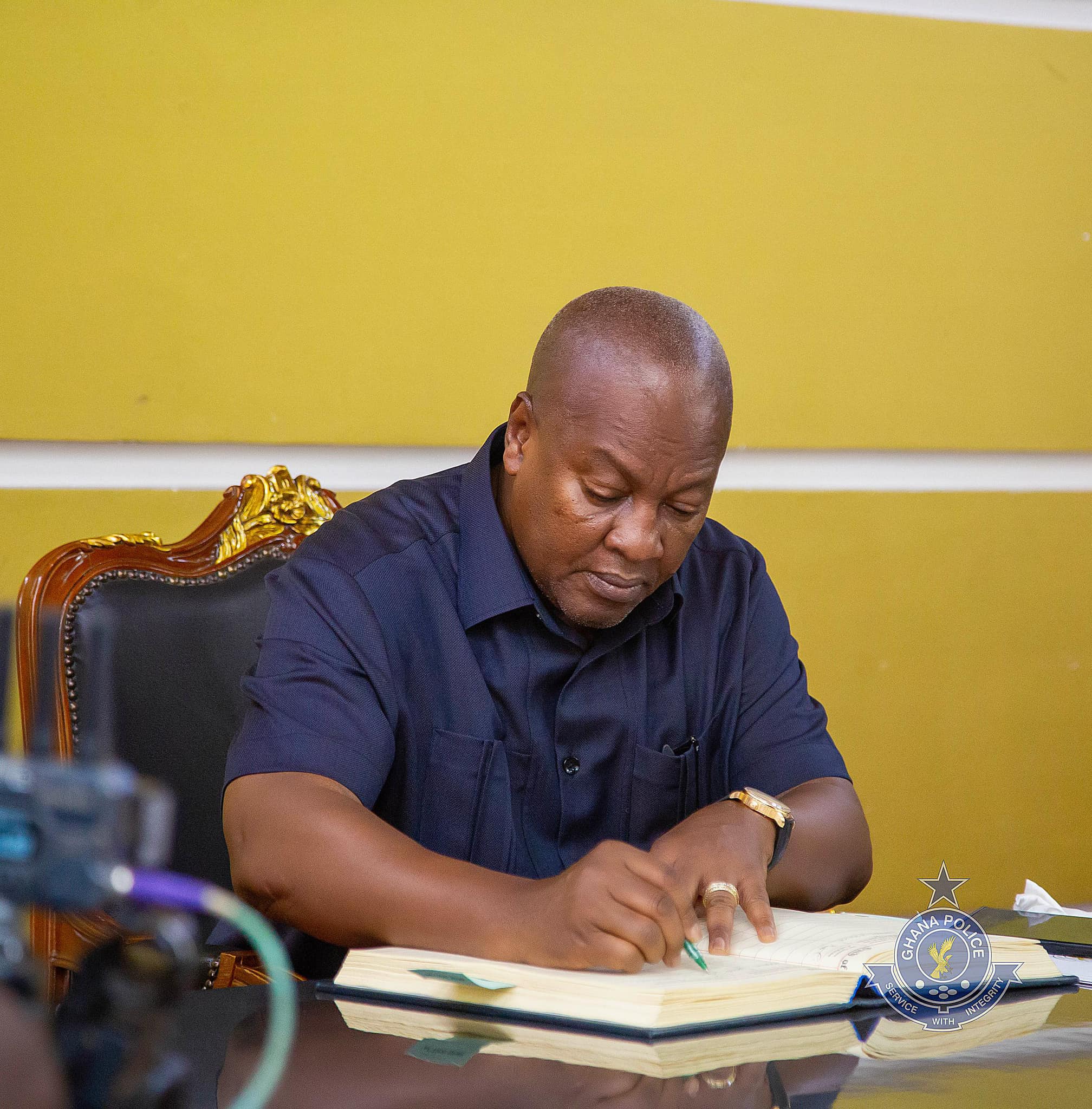
President John Dramani Mahama has signed into law a set of bills designed to eliminate various taxes, such as the Electronic Transfer Levy (E-Levy), Betting Tax, and Emissions Tax.
The E-Levy, introduced in 2022 under the previous New Patriotic Party (NPP) administration, imposed a 1.5% tax on electronic transactions, including mobile money transfers, bank transactions, and online payments.
Although it was later reduced to 1%, the levy remained unpopular, drawing criticism from businesses, consumers, and political stakeholders who argued that it stifled digital transactions and disproportionately affected low-income earners.
The decision to scrap the tax aligns with the Mahama administration’s broader agenda to eliminate what it describes as “nuisance taxes” imposed under the former government. During the presentation of the 2025 Budget Statement on March 11, Finance Minister Dr. Cassiel Ato Forson announced the government’s commitment to repealing multiple levies to ease financial pressures on businesses and households.
“Mr. Speaker, we will abolish the 10% withholding tax on winnings from lotteries, otherwise known as the ‘betting tax.’ We will abolish the Electronic Transfer Levy (E-Levy) of 1%.
We will abolish the emission levy on industries and vehicles. We will abolish the VAT on motor vehicle insurance policies. And we will abolish the 1.5% withholding tax on the sale of unprocessed gold by small-scale miners,” he stated.
Parliament on March 26 approved a bill to repeal the Electronic Transfer Levy (E-Levy), marking a significant policy shift aimed at reducing the tax burden on Ghanaians.
While the repeal has been widely welcomed, some economic analysts have raised concerns about the potential revenue gap it could create. The government has assured the public that measures are being put in place to address any shortfall, including adjustments to the tax refund ceiling and improved revenue collection strategies.
Government data shows that as of the end of 2024, revenue from the COVID-19 Health Recovery Levy stood at approximately GH¢6.4 billion, while the E-Levy generated GH¢246.9 million.
Despite the removal of these taxes, the Mahama-led administration maintains that its new tax policy will support economic recovery without placing excessive financial pressure on Ghanaians.
Parliament has received the Ghana Gold Board Bill 2025, which seeks to establish a regulatory authority to oversee gold trade, including its acquisition, distribution, and export.
The bill also aims to strengthen the nation’s foreign exchange reserves through enhanced gold trade management.
The government asserts that the board will play a vital role in formalizing gold transactions within the small-scale mining sector, improving traceability, and advancing Ghana’s pursuit of London Bullion Market Association (LBMA) certification.
Upon its introduction, First Deputy Speaker Bernard Ahiafor assigned the bill to the Finance and Lands and Natural Resources Committees for further examination and recommendations.
“Honourable members, the Ghana Gold Board Bill 2025 is presented and read for the first time and accordingly referred to the Finance Committee for consideration and reports,” he announced.
The Supreme Court, in a unanimous decision, has dismissed a petition challenging the constitutionality of the Human Sexual Rights and Family Values Bill.
The petition was filed by broadcast journalist and lawyer Richard Dela Sky, who had argued that the bill, which has been the center of intense national debate, was legally invalid.
The bill, which seeks to criminalize advocacy for LGBTQI rights, has sparked division within the country.
It proposes penalties for individuals involved in promoting, funding, or indirectly supporting LGBTQI-related activities. Supporters argue the bill is necessary to uphold Ghana’s cultural and family values, while critics, particularly human rights organizations, see it as a violation of basic freedoms.
Sky’s petition was accompanied by another legal challenge from equality advocate Amanda Odoi.
Both petitioners argued that Parliament did not meet the required constitutional quorum during the legislative process, making the bill’s passage unconstitutional.
However, the court ruled that the bill, as it had not yet been signed into law by the President, could not be reviewed on constitutional grounds.
Justice Lovelace Johnson, who presided over the case, clarified that the judicial review process can only take place once a bill has received presidential approval and become law.
The government is set to raise GH¢6.896 billion through its upcoming treasury bill auction scheduled for November 22, 2024.
In the previous auction held on November 15, 2024, the government secured GH¢5.180 billion, falling short of its target of GH¢6.228 billion by GH¢1.04 billion.
The 91-day bills in that auction experienced strong demand, with bids totaling GH¢3.942 billion.
Meanwhile, the 182-day and 364-day bills garnered bids of GH¢653.43 million and GH¢584.16 million, respectively.
Interest rates for the 91-day bills are set at 26.96%, while the 182-day and 364-day bills offer rates of 27.78% and 29.21%, respectively.
This marked the first undersubscription for the government in five weeks.
President Akufo-Addo has reassured the diplomatic community that the anti-LGBTQI bill, recently passed by Parliament, will not compromise the country’s strong human rights track record.
The President stated that no such regression in human rights will be considered or allowed.
In a message to the diplomatic community on Monday, March 4, President Akufo-Addo clarified that the bill has not yet reached his desk for approval.
He acknowledged concerns raised by the international community and friends of Ghana but emphasized that no backsliding on human rights principles would occur.
President Akufo-Addo urged patience, mentioning that a concerned citizen has challenged the constitutionality of the proposed legislation at the Supreme Court.
He emphasized the importance of awaiting the court’s decision before taking any action.
“I am aware that last week’s bi-partisan passage by Parliament of the Proper Human Sexual Rights and Ghanaian Family Values Bill, on a Private Member’s motion, has raised considerable anxieties in certain quarters of the diplomatic community and amongst some friends of Ghana that she may be turning her back on her, hitherto, enviable, longstanding record on human rights observance and attachment to the rule of law. I want to assure you that no such back-sliding will be contemplated or occasioned.
“I think it will serve little purpose to go, at this stage, into the details of the origin of this proposed law, which is yet to reach my desk. But, suffice it to say, that I have learnt that, today, a challenge has been mounted at the Supreme Court by a concerned citizen to the constitutionality of the proposed legislation.
“In the circumstances, it would be, as well, for all of us to hold our hands, and await the decision of the Court before any action is taken. The operation of the institutions of the Ghanaian state will determine the future trajectory of the rule of law and human rights compliance in our country,” President Akufo-Addo said.
Parliament passed the Proper Human Sexual Rights and Ghanaian Family Values Bill on February 28, commonly known as the anti-gay Bill, sparking various reactions, including concerns from the diplomatic community.
The Ministry of Finance, in a brief on March 4, highlighted dire implications of assenting to the bill.
The International Monetary Fund (IMF) has announced that it will provide comments on the Proper Human Sexual Rights and Ghanaian Family Values Bill after it is officially signed into law.
The IMF states that its evaluation will specifically focus on the economic and financial consequences of the legislation.
In a released statement, the IMF emphasized its commitment to diversity and inclusion as integral values. “We cannot comment on a bill that has not yet been signed into law and whose economic and financial implications we have yet to assess.”
The institution underscores its internal policies prohibiting discrimination based on personal characteristics, including gender, gender expression, or sexual orientation.
“Diversity and inclusion are values that the IMF embraces.”
“Our internal policies prohibit discrimination based on personal characteristics, including but not limited to gender, gender expression, or sexual orientation. Like institutions, diverse and inclusive economies flourish,” the statement from the Fund added.
The IMF asserts that diverse and inclusive economies thrive, aligning with its principles.
This statement follows the recent passage of the bill by Ghanaian lawmakers on March 28, with support from both the ruling party and the opposition.
The legislation aims to criminalize LGBTQ+ activities, along with their promotion, advocacy, and funding.
Offenders may face jail terms ranging from 6 months to 5 years, depending on the nature of the violation.
Acknowledging the significance of the situation, the IMF states that it is closely monitoring developments in Ghana. However, it refrains from commenting on a bill that has not been signed into law, pending a comprehensive assessment of its economic and financial implications.
Ghana, facing economic challenges and seeking an IMF bailout, may see uncertainties in securing the third tranche due to the recent legislation.
The country’s dollar bonds have experienced a decline, ranking as the second-worst performers in an index monitoring emerging-market sovereign hard-currency debt.
All 14 of Ghana’s dollar notes in the gauge saw a drop in value, with bonds maturing in 2034 experiencing the most significant impact.
Pressure is mounting on President Akufo-Addo to assent to the bill amid these developments.
The Speaker of Parliament, Alban Bagbin, has issued a veiled message directed at Deputy Majority Leader, Alexander Kwamina Afenyo-Markin, in relation to the anti- LGBTQ+ bill.
Bagbin’s remarks came after Afenyo-Markin proposed engaging the flagbearers of the leading political parties on the bill and suggested amendments replacing imprisonment with community service.
However, Bagbin has urged Afenyo-Markin to align his actions with his words, emphasizing that the time for stakeholders’ engagement had passed.
He stressed that actions speak louder than words, and the House must continue its authorized proceedings without further delays.
Bagbin stated, “We have gone past that, we have done the second reading, this is not the time to call for stakeholders’ engagement; there is no such practice in our proceedings. Please, actions speak louder than words; take note of that. It is not a matter of getting up and saying I am not opposed to the bill; I am in complete support of the bill, meanwhile, your actions are speaking differently from the words you are using.
“This House must continue to consider and do what it is authorized to do. After that, anybody else can decide on what to do. I can no longer extend this grace for a delay in the processing of this bill”.
In response to the lack of support for his proposed amendments, Afenyo-Markin withdrew all suggested changes to the anti-LGBT+ bill.
Initially moving a motion for the amendment of 20 clauses, he faced opposition during a voice vote, leading to the withdrawal of his proposals. Despite suggesting a secret vote, the Speaker instructed him to withdraw a similar proposed amendment, which he complied with.
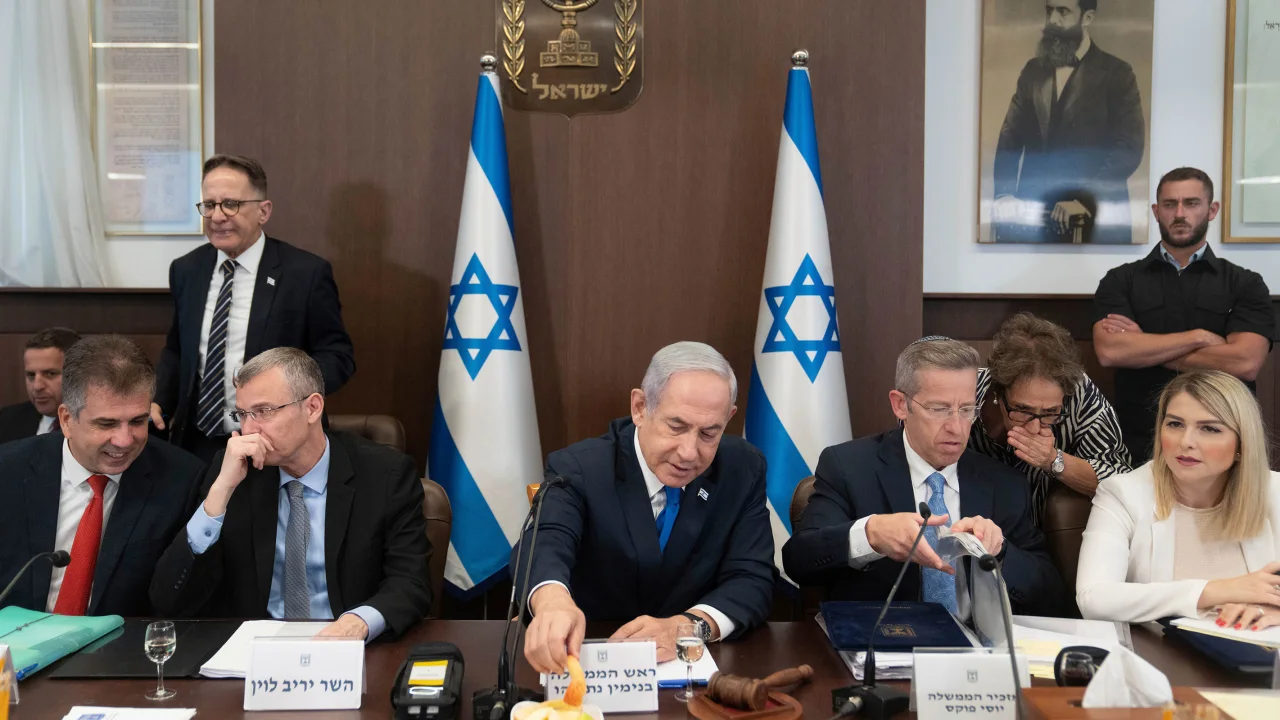
Israel’s Supreme Court opened hearings Tuesday on a law to curb its powers, in a case that could set the judiciary on a collision course with Prime Minister Benjamin Netanyahu’s hardline government after months of mass protests over the controversial legislation.
The court is hearing arguments for and against the first part of Netanyahu’s judicial overhaul plan to pass parliament – a law that restricts the court’s ability to nullify government actions it deems “unreasonable.”
Beyond the legal questions surrounding the law and the justices ruling on their own powers remains the question of whether Netanyahu’s government would even abide by a court ruling – possibly months away if it comes – striking down the law. That would set Israel up for an unprecedented judicial and political crisis.
Netanyahu has always claimed that he is in full control of this government – no matter who his ministers are. But the next few weeks could be critical to his own future.
“If Netanyahu wants to survive as prime minister, he must have his hands on the steering wheel, otherwise he will fall apart,” said Amit Segal, chief political correspondent for Israel’s Channel 12. “The Supreme Court and the government alike possess a credible nuclear threat against the other side … if both sides are rational actors, they will … disarm themselves. Problem is, we’re in a crisis that is not very rational anymore.”
Netanyahu’s proposals to weaken the courts have divided Israeli society, with critics describing them as a threat to the country’s democracy. Tens of thousands of Israelis took to the streets outside of the Supreme Court on Monday evening, part of the 36-week long protest movement against the overhaul, to show support for the justices ahead of the hearing. Some of the demonstrators later marched to the prime minister’s official residence in Jerusalem.
The Supreme Court is hearing appeals against the so-called “reasonableness law,” the first aspect of the judicial overhaul passed in July by Netanyahu’s government despite months of street demonstrations, warnings from the Biden administration and a boycott by all opposition lawmakers of the final vote on the bill.
The measure, which amended one of Israel’s Basic Laws, came into effect two days after it was passed and strips the Supreme Court of the power to strike down government decisions it finds to be unreasonable.
Like the United Kingdom, Israel doesn’t have a written constitution. Instead, it relies on 13 Basic Laws, as well as court ruling precedents that could one day become a constitution. That leaves the Supreme Court as the only check on the executive and legislative branches of government. Striking down a Basic Law would be uncharted territory for the Supreme Court, although it has examined and commented on Basic Laws before.
In 2021, the court outlined very narrow circumstances under which a Basic Law can be annulled. Supreme Court President Esther Hayut said a Basic Law could be struck down if it endangers democratic principles such as those that deal “a mortal blow to free and fair elections, core human rights, the separation of powers, the rule of law and an independent judiciary.”
That standard was then used this year when Netanyahu dismissed key ally Aryeh Deri from all ministerial posts, in compliance with a Supreme Court ruling that it was unreasonable to appoint him to positions in government due to his criminal convictions and because he had said in court last year that he would retire from public life.
In a historic first, all 15 judges on the court have been convened to hear the challenge to the controversial law, which is expected to last no longer than a couple of days. The court must issue its ruling by January 12, 2024, because of a retirement coming up on the bench.
In an interview with CNN in July, Prime Minister Netanyahu refused to commit to abiding by a potential Supreme Court decision to strike down the law, which he and his allies say is necessary to rein in an activist judiciary that is not accountable to the will of the people.
The anti-judicial overhaul demonstrations are now the longest and largest protest movement in Israeli history.
It started when Netanyahu took back power late last year – leading the most right-wing and religious coalition ever to hold power.
And though judicial reform was barely, if ever, mentioned during Netanyahu’s election campaign, it quickly became the main issue when Justice Minister Yariv Levin announced the sweeping plans days after being sworn in.
The original proposals included reshaping how Supreme Court justices are selected, taking away some of its powers to nullify government actions, significantly limiting the authority of government legal advisers, and even giving parliament the power in certain cases to overturn Supreme Court rulings with a simple majority.
Netanyahu’s coalition said the changes were necessary to rebalance the branches of government, claiming that the Supreme Court had become insular and elitist, and held too much power over the democratically elected legislators. Opponents saw the reforms as a power grab for the ultra-Orthodox and settler movements and as a way to help Netanyahu as he faces an ongoing corruption case – charges he has vehemently denied.
Although aspects of the reforms have been dropped or softened since their initial rollout, the demonstrations have grown and morphed into a wider protest movement against the government, whose far-right ministers like Bezalel Smotrich and Itamar Ben Gvir have made controversial statements about Israeli society and about Palestinians that have raised concerns from international allies.
Many Israelis, both those for and against the judicial changes, say Israel is risking tearing itself apart, and that the judicial overhaul is just one aspect of what’s really fueling the divide – the battle between secular and religious, settler and not.
“Every single Western democracy experiences an identity crisis in its third or fourth generation. Who are we?… What are we here for? And in Israel? The crisis is whether we are Jewish and democratic state, or a democratic and Jewish state. What is the 51%? And what is the 49%? Is it a strawberry banana yogurt, or a banana strawberry yogurt?” Segal said.
The judicial overhaul and the government’s actions have not only sparked the massive protest movement that has regularly shut down some of Israel’s busiest roads and highways, but it’s also affected everything from Israel’s military, to its economy, and its international relations.
Thousands of military reservists and even some active duty soldiers have vowed not to serve if the judicial overhaul went into effect. Banks and credit ratings agencies warned about the stability of Israel’s business climate as a result of the reforms. Israel’s famous high-tech community has been unanimous in expressing deep concern over the plans, and Israel’s security establishment, including former military generals, chiefs of staff, Ministers of Defense, and chiefs of Israel’s security and intelligence agencies have said such changes would or have already weakened Israel’s security.
Haim Tomer, who served as the Mossad’s chief of intelligence and then its chief of international liaison – meaning he worked with other nations’ spy agencies –until 2014, told CNN that Israel’s security is weakening because the spirit of the armed forces, the feeling of solidarity and “shared values” have taken a hit.
“The pro-Iran camp, Iraq, Lebanon, and other Shiite forces that actually are following what’s going on see it as a kind of opportunity. (Hezbollah leader) Hassan Nasrallah has said it in his own, I would say very clear-cut phrases, he said, ‘I see that the collapse of Israel has already started. We should wait on the sidelines and see how Israel is ruining itself,’” Tomer said. “So they are looking for an opportunity to help us to give us a little push to this collapse.”
Allies, most notably the United States, have expressed deep concern over the overhaul with President Joe Biden urging Netanyahu only to pass such changes under a broad compromise agreement with opposition parties. A meeting between Netanyahu and Biden in the US has been publicly mooted, though has notably not happened yet as a result of the legislation – highly unusual for two countries that claim to be such stalwart allies.
And Tomer said regional and newer allies, like the United Arab Emirates are also expressing concern.
“The need for unity is not only to be strong, vis a vis our enemies,” Tomer said. “But the need for unity is very much requested to keep up the relations or even to develop relationships with our partners in the region.”
There are reports in Israeli media that Netanyahu is considering announcing he’s agreeing to Israeli President Isaac Herzog’s compromise plan on judicial reform. But until legislation is credibly on the table or passed regarding the law the Supreme Court is weighing this week, the hearings will move forward.
Tomer says a move by the court to strike down the legislation could lead to some major dilemmas for Israel’s security leadership.
“It means that there is a question for the chief of police. Who should he – so to speak – obey? (National Security Minister) Ben Gvir that might ask him in two weeks to stop all licenses for demonstrating on the streets, because he’s against that? Or for the Supreme Court that might say we have a right to demonstrate, the right to strike by our so to speak legal system,” Tomer said.
Meanwhile Netanyahu is heading to the US to speak at the United Nations General Assembly next week as a Biden invitation remains unfulfilled, all the while a possible peace accord between Israel and Saudi Arabia is being hammered out, according to reports.
If Netanyahu wants such achievements, he must do so while also balancing the desires of his coalition partners, whom he needs to remain in power. A deal with Saudi Arabia would likely require serious concession to the Palestinians, which may be a step too far for some of his more ultra-nationalist partners.
“(Netanyahu) lacks the power to actually lead this coalition boat to the destination that he seeks, because he is fully dependent on his far-right partners, so Netanyahu that we know, wants to promote the peace accords with Saudi Arabia and to promote the economy. And yes, to have some judicial reform, but not the full monty,” Segal said. “So what I really think is that unless Netanyahu wakes up and tells his tells his partners that they must go to the direction that he wants to, his government is in danger of falling apart.”
The Contract (Amendment) Bill of 2022 has been successfully passed by the parliament and enacted into law.
This move aims to enhance the efficiency of public sector contracts and alleviate the burden of unnecessary interest payments that have been a strain on state finances.
Before its amendment, the Contracts Act of 1960 (Act 25) lacked specific provisions outlining the individuals authorized to engage in contracts on behalf of the government. Likewise, it lacked a standardized method for calculating interest payments applicable to government contracts.
The report from the Committee on Constitutional, Legal, and Parliamentary Affairs underscored that this absence of restrictions on who could enter into contracts on behalf of the government allowed individuals in positions of authority to do so without the knowledge or approval of the sector ministers who held the overarching responsibility and executive authority for sector administration.
Furthermore, the report highlighted that the flexibility in determining the mode of interest calculation in government contracts could potentially lead to misuse of discretionary powers by those involved in contract negotiations on behalf of the state.
The amendment, which was concluded by parliament prior to its recess, was crafted to eliminate ambiguities in the legislation.
It achieved this by precisely defining the individuals qualified to enter into contracts on behalf of the government. Additionally, the amendment introduced a standardized formula for computing interest payments for parties involved in state contracts.
“The bill, then, establishes clear provisions for those who are permitted to engage in business on the government’s behalf. The measure also stipulates that interest payments on any sums owed under contracts or transactions executed on behalf of the government will be computed at simple interest, according to a portion of the committee’s report.
The committee’s chair and Member of Parliament for the Asante-Akim Central constituency, Kwame Anyimadu-Atwi, has outlined a new approach aimed at safeguarding the state’s interests concerning interest payments and, in effect, reducing the financial burden associated with state contracts or transactions.
In presenting the reasons for the suggested revisions to the committee, Deputy Attorney General Diana Asonaba Dapaah stressed the importance of uniformity in interest payment across all state contracts.
However, the committee, in its report, raised reservations about the proposed changes, asserting that they may infringe upon the principle of freedom of contract. This principle allows all parties in a contract to negotiate and establish terms without external interventions, such as state-imposed regulations.
This perspective was countered by the Deputy Attorney General, who maintained that the amendments are aimed at establishing a parallel condition as outlined in Article 181 of the 1992 constitution. This constitutional provision mandates parliamentary approval for all international transactions conducted by the government on behalf of the state.
Additionally, the Deputy Attorney General underscored that the proposed amendments serve as guidance for state authorities and other contracting parties involved in government contracts, specifically concerning decisions pertaining to potential state-funded interest payments.
Persons authorised to enter into contracts
The committee highlighted that the intended revisions are designed to grant authorization exclusively to state ministers or individuals expressly empowered by ministers to engage in contracts on the state’s behalf.
The underlying issue that the amendment aims to address, as articulated by the Deputy Attorney General, is the prevention of scenarios where individuals in positions of authority can form contracts on behalf of the state without the awareness or consent of the sector minister responsible for overseeing the sector’s administration, a role designated by the President.
Nonetheless, the committee observed that the proposed modification exclusively pertained to the executive branch of government and did not encompass the other two branches: the legislative and judicial arms. Unlike the executive arm, these branches are not led by ministers and are legally permitted to form contracts.
As a result, an additional amendment has been proposed to accommodate other individuals who possess legal authorization to enter into contracts on behalf of the state.
“A person who wilfully enters into a contract contrary to this section commits an offence and is liable on summary conviction to a fine of not less than 5000 penalty units and not more than 10,000 penalty units or to a term of imprisonment of not less than 10 years and not more than 15 years or to both,” the proposed amendment states.
“The committee after extensive deliberations on the bill was of the view that the introduction of controls into government contracts with respect to persons authorised to enter into a contract on behalf of the state as well as mode of calculating interest payments due other parties in the contract is a right approach,” the report said.
Speaker of Parliament, Alban Bagbin, has called upon Members of Parliament (MPs) to openly express their stance on the Promotion of Proper Sexual Human Rights and Ghanaian Family Values Bill, anti LGBQT bill, during the parliamentary session.
This request follows a statement made by Andy Appiah Kubi, the Member of Parliament for Asante Akyem North and a member of the Majority Caucus.
In his speech on the bill, Kubi declared that all MPs unanimously support the proposed legislation.
Alban Bagbin encouraged those who oppose the bill to articulate their positions and put forward any suggestions they may have during the session.
“Any member who disagrees with the submission just made by Andy Appiah Kubi that all the 275 are in support of the bill, anybody who is not in support, be on your feet and I will recognise you.”
“Since all members are in support of the bill, I will not gag the House and I will give the House the opportunity to do a proper amendment to the bill.
In June 2023, the government successfully raised GH¢10.50 billion through treasury bills, although the subscriptions were lower compared to the previous month’s auctions, which garnered GH¢11.26 billion.
The total bids fell short of the set target of GH¢11.53 billion. T
he economy showed signs of stability, according to the International Monetary Fund’s initial assessment. Interest rates have been steadily increasing, reaching nearly 26% at present.
However, the recent auction fell short of the target by 17%. The Bank of Ghana stated that the target included a sell buy-back of GH¢1.01 billion, which will mature and be rolled over on July 6, 2023.
Interest rates for the 91-day bill stood at 23.95%, while the 182-day bill reached 25.79%. In the next auction, the government anticipates raising GH¢1.57 billion through the 91-day bill, 182-day bill, and 364-day bill.
A bill to make caste discrimination illegal in California is due to be debated in the state assembly this week.Savita Patel, a California-based independent journalist, speaks to those supporting and opposing the bill becoming a law.
Sukhjinder Kaur*, a nurse at a hospital in California, works long and tiring hours serving patients. But whenever it’s break time, things become oppressive.
She is a Dalit (a community that is placed at the bottom of India’s deeply discriminatory caste hierarchy) and says she often faces casteist insults from her South Asian colleagues.
Dalit rights activists say scores of caste-oppressed Californians face housing, educational, professional, and social discrimination.
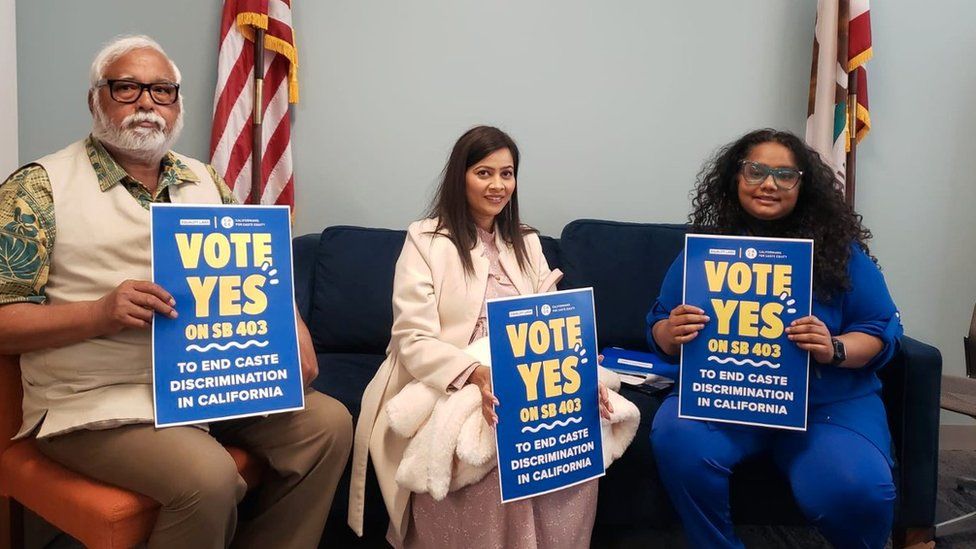
In March, Senator Aisha Wahab, a lawmaker from the Democratic Party, authored and introduced the SB-403 bill – legislation that seeks to add caste as a protected category in the state’s anti-discrimination laws alongside gender, race, religion and disability.
The bill was passed by the state’s senate in May with a 34-1 vote. If it goes through in the state assembly, California will become the first US state to ban caste discrimination.
“Nurses from upper castes pass slurs about chamars [a pejorative term for Dalits] being dirty and polluting,” says Ms Kaur, who is among those who are in favour of the law.
In February, Seattle became the first city in the US – and outside South Asia – to outlaw caste discrimination, generating momentum for the legislation in California. It is being propelled by the same broad multi-faith, inter-caste, multi-racial coalition of over 40 American and international Dalit and human rights activists and organisations, led by California-based Equality Labs.
California has a large South Asian diaspora and is home to some of the world’s biggest tech companies.
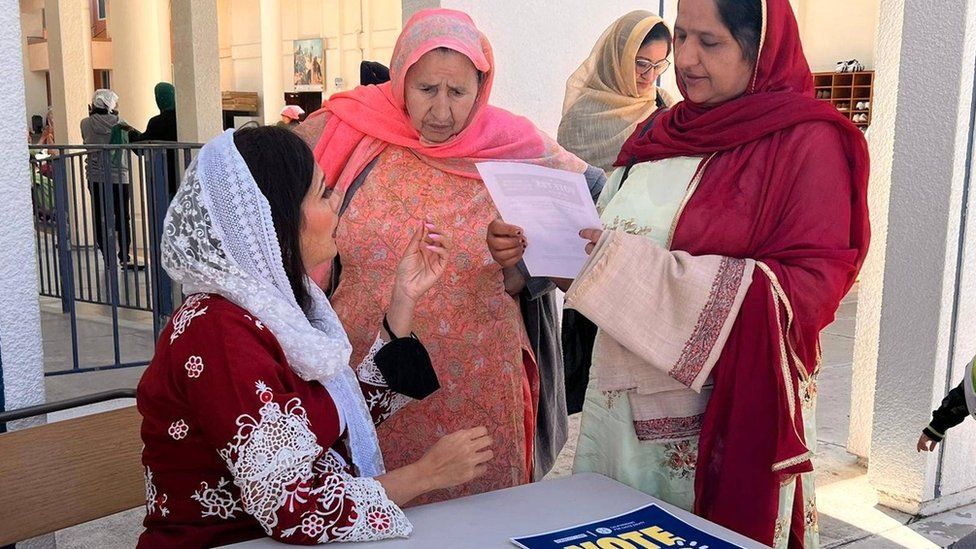
Image caption,Renu Singh (left) has been advocating for the bill at the grassroots level
The state is home to more than half of the 500,000-plus Sikh population in the US and gurudwaras (Sikh temples) in California have been mobilising momentum to outlaw caste discrimination.
Two of the community’s largest advocacy groups – The Sikh Coalition and Sikh American Legal Defense and Education Fund – support the bill. Among Sikhs, it is the Ravidasia community – the largest Dalit community in the state with approximately 15,000-20,000 members – which is advocating for the bill at grassroots level.
Renu Singh, who follows the Ravidasia tradition and is also a women’s rights activist, has been urging women to speak about their own experiences of caste discrimination and those they see around them so that lawmakers understand the gravity of the issue.
Data from an Equality Lab study shows that one in four caste-oppressed people from the South Asian American diaspora have faced physical and verbal violence; one in three has faced discrimination in education, and two out of three have experienced workplace discrimination.
It was the first extensive study of caste distribution and its effects in the US and had over 1,500 respondents. The findings, published in 2018, say that those from “lower castes” fear retaliation and worry about being “outed” and hence “hide their caste”.
However, a significant section of the Indian diaspora rejects caste discrimination claims.
Deepak Aldrin, a San Francisco-based Dalit activist is not in favour of the bill. “I’ve lived here for 35 years. No Hindu has ever asked me what caste I belong to,” he says.
The bill is meeting strong opposition from many Indian-American individuals, religious and professional groups, who argue that even though it does not specifically name their religion, it will “discriminate against Hindus, their places of worship and even make them less hiring worthy”.
They say the existing laws in California are sufficient to address any discrimination and are mobilising the community to urge their lawmakers to disallow the legislation to proceed.
Image caption,Dalit rights activists say scores of caste-oppressed Californians face discrimination
Many businesses and Hindu temples under HinduPACT – an American Hindu grassroots advocacy initiative – have appealed to California lawmakers to reject the bill. Its convenor Ajay Shah says that the legislation is “deeply flawed, ill-intentioned and targets children and youth from the Indian subcontinent and those who follow the Hindu dharma [Hinduism].”
Suhag Shukla, co-founder and executive director of the Hindu American Foundation, says this bill is already creating an “undesirable” awareness about caste. She says she has been “hearing inappropriate queries from workers, especially in tech, who are being asked about their caste by non-South Asians”. She says if this becomes a pattern, it can be grounds for ethnicity-based harassment.
The foundation has sued the state in a federal court for an “unconstitutional definition of caste” and has also challenged the addition of caste to its non-discrimination policy, saying that it “singles out one community for ethnic profiling and additional policing”.
Those opposing the bill say they are also perplexed as to how the state plans to identify an individual’s caste since it’s a very complex issue, .
The bill, Ms Wahab explains, does not include details for identifying caste, similar to other protected categories.
“There is no language on how caste will be determined. This is simply an anti-discrimination bill. When somebody takes a matter up to the courts, that is usually when subject matter experts are engaged, the type of discrimination potentially that has taken place [is investigated].”
Ms Wahab says she has received “death threats” after proposing the bill. She now faces a recall campaign and a possible re-election. She adds that the “visceral reaction” to the bill is “disheartening” and has urged Californians to read the bill.
“Whether you’re upper caste or lower caste, it does not matter, it will protect you as well,” she says.
*Some names have been changed to protect identity.
The Senate unanimously approved legislation to restrict private ownership of big cats such as lions and tigers in the United States.
The Big Cat Public Safety Act would prevent individuals from keeping the animals as pets and from exposing them to public petting and photographing.
Following the release of the Netflix documentary series Tiger King, efforts to limit private ownership have increased.
President Joe Biden must now sign the bill into law.
Democratic Congressman Mike Quigley, who introduced the bill into the House, said on social media that it will mean “a lot of big cats will live better lives”.
According to estimates from conservationists, as many as 7,000 tigers are living in the US either in zoos or privately owned – nearly double the estimated 3,890 tigers living in the wild worldwide.
Many in the US are on public display, where the hunt for profits in some privately-owned facilities are alleged to drive a ” relentless breeding cycle that floods the exotic pet trade with surplus tigers who have outgrown the cub stage”, according to the Animal Welfare Institute.
What’s more, the institute alleges facilities that offer cub petting have been known to kill tigers once they can no longer be used to make money.
Under the new bill, possession of lions, tigers, leopards, cheetahs, jaguars, cougars or any hybrid of these species would be limited to wildlife sanctuaries, universities and certified zoos.
Those on display would need to be kept at least 15 feet (4.5 metres) away from the public or behind a barrier to prevent contact.
However, current owners of big cats will be allowed to keep their animals – as long as they don’t allow direct contact between them and the public and register them with the US Fish and Wildlife Service.
Susan Millward, executive director of the Animal Welfare Institute,has said the Big Cat Public Safety Act “will end the horrific exploitation of big cats and bolster public safety”.
“These beautiful but powerful predators deserve to live in the wild, not be kept in captivity for people’s entertainment—even as cubs,” she added.
Carole Baskin, one of the stars of the Tiger King series and the founder of the Big Cat Rescue sanctuary, has become a champion of the bill and has said she is “thrilled” by the outcome.
Parliamentin Sierra Leone has unanimously approved legislation that will ensure that one in three of its members, and a third of all local councillors, are women.
The bill will now go to President Julius Bio to be signed into law.
Despite it being a key promise in his 2018 election campaign, it took three years for cabinet to approve the draft.
An earlier version was withdrawn over a technicality.
Currently only 19 of Sierra Leone’s 146 members of parliament are women.
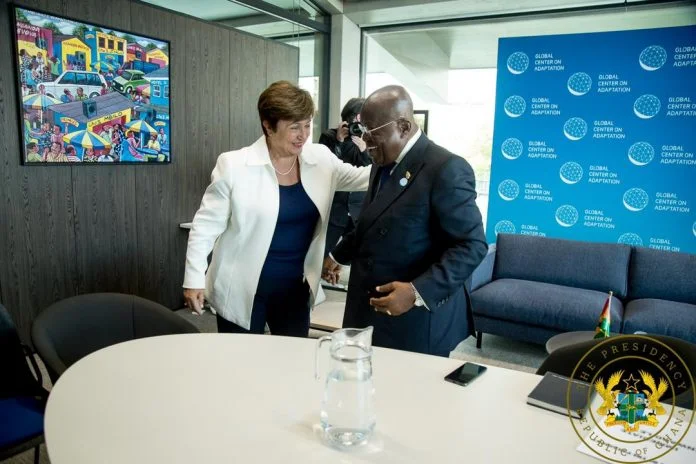
At the annual meetings of the World Bank and IMF this month, lobbyists circulated photographs of Ghana’s Finance Minister Ken Ofori-Atta sitting together with Britain’s Chancellor of the Exchequer Kwasi Kwarteng.
Before the end of the week, Chancellor Kwarteng was on a flight back to London, forced to cancel his participation in the rest of the summit because his job was at risk. Within days, the British government had collapsed, and Prime Minister Liz Truss had joined Kwarteng on the back benches.
This week Ghana’s Ofori-Atta faces a rebellion from MPs in his own party, calling for his resignation and accusing him of mismanaging the economy. The risk that London’s political drama plays out similarly in Accra must worry Ofori-Atta and President Nana Akufo-Addo.
Common shaky ground
On the surface, both men are relatively similar; Ghanaian economists and bankers are in charge of the fiscus of two countries with a shared colonial experience.
However, there is a deeper layer to the symbolic ties between the Chancellor and the Minister.
Kwasi Kwarteng’s woes are universally acknowledged to have stemmed from his botched mini-budget. At a time of widespread anguish about inflation and interest rate hikes in America, the mini-budget, with its ideological flourish of “the largest tax cuts since 1972” and unfunded growth pills, rang of neoliberal excess.
Interestingly, the heaviest backlash came from the markets. A Conservative Prime Minister and her Chancellor didn’t expect the blowback to come from the financial heartlands.
After all, caps on bankers’ bonuses were to be scrapped, and the highest tax rate (for the top 1.1%, roughly a third of whom work in financial services) was to be brought down from 45% to 40%. Planned corporation tax increases were dropped.
And a raft of regulations bogging down business was to be cut’ more free zones, with even fewer taxes and regulations, created. A Conservative newspaper, the Daily Mail, crooned: “A Tory budget at last!”
Surely the grandees of the historic square mile of central London, the fount of global capitalism, would jump on board? The charm offensive of the Chancellor, himself a JPMorgan alum and longtime finance guy, must have seen to that?
They didn’t.
Analysts deciphered the consequences of a mini-budget to include a massive spate of borrowing at a time of rising interest rates, an undoing of the Bank of England’s efforts to tackle inflation, and a squeeze of middle-class incomes (in the ~£60,000 to ¬£120,000 band), with potential effects on demand.
The market took a longer horizon and broader-demographic perspective. That aligns with the increasingly nuanced view of the link between pro-growth tax cuts and market benefit that has emerged from the vast literature on the Trump tax cuts.
So, the markets revolted.
Yields on long-term government securities, a measure of investors’ sense of the state’s creditworthiness and likely cost of future borrowing, rose by a staggering 150 basis points. The pound sterling sank immediately.
Lunging for stability, the blindsided Bank of England announced a £65 billion program to buy back government bonds caught in therout, reversing an earlier plan to sell £80 billion more into the market. Only the wholesale repudiation of the Kwarteng-Truss mini-budget could calm the markets.
Off the straight and narrow
It is mainly the short-lived tenor of Britain’s most recent episode of fiscal adventurism that marks it out from Ghana.
In their six years in power, the ruling party in Ghana has sought to transform the country’s finances into a rollercoaster capital market play. It has devised various unprecedented fiscal devices to do so.
It has securitised future tax streams, grabbed the cash up-front, and splashed on massive capital and welfare projects. The securitisation extravaganza has touched taxes meant to fund the educational sector, energy sector levies, and road taxes.
As future revenue streams have been packaged into products on the capital markets and sold and spent upfront, the government’s budget has become rigid, unable to respond to international pressure. The government’s love for fiscal gaming encouraged support for a domestic debt securities market (GFIM) in Ghana.
At its birth in 2015, total trade turnover hovered around cedis 5 billion in local currency units. In the first nine months of this year, trade volumes exceeded cedis170 bn.
Even adjusted for inflation, it has grown ten times, but almost all securities traded are government-issued. This means they reflect more than anything the government’s unrelenting use of the capital markets to fund a degree of fiscal expansion never before witnessed. And not just domestically.
From tripling Eurobond issuances, to opening up domestic debt to foreign investors, Ghana’s government took capital market liberalisation to every possible extreme. At one point, Ghana ranked number five worldwide for foreign ownership of domestic debt.
International capital maestros like Michael Hasenstab, at the height of his “Emerging Markets Bond King” reputation, piled in. In 2017, Ghana rode on the back of such powerbrokers to launch Africa’s largest-ever dollar-denominated domestic bond.
Bills, bills, bills
All this fiscal brinksmanship came at a cost: debt servicing.
Today, Ghana is on course to spend nearly 60% of all government revenue just dealing with debt. This is up from about 10% a decade and a half ago when the international community forgave a chunk of Ghana’s debt pile from previous decades of excesses.
Now, Ghana’s capital market friends have brought out the whips. They have shut her out of the market and are dumping the bonds they bought previously.
Their actions have finally driven Ghana to the IMF for much-needed disciplining. Inflation is hovering around 40% and the cedi has plunged from about 5.8 to the dollar at the beginning of the year to more than 14.5 to the dollar.
It seems that the government’s bubbly enthusiasm for capital market devices, and the massive hoard of fees and commissions (some shared by companies founded by the Finance Minister and his deputy), have not been sufficient to keep the love story going.
These days, far from endearing politicians to the markets, neoliberal fiscal adventurism is a sure way to invite their painful censure.
According to a post shared by AJ+, a social media publisher owned by Al Jazeera Media Network, the amount will now add to the estimated $116 million bill UK taxpayers pay every year to support the royals.
“Queen Elizabeth’s funeral cost an est. $9 million — adding to the est. $116 million bill UK taxpayers pay every year to support the royals. Due to the ceremony, hospitals canceled “non-urgent” services like cancer treatment and many food banks have closed “out of respect,” the post shared on Twitter read.
On Monday, September 19, dozens across the world witnessed the funeral of Queen Elizabeth II who died on September 8, 2022.
The British Monarch has been lying in state from Edinburgh in Scotland all through to Westminster Hall in London with a final ceremony held at Westminster Abbey, where her final funeral rites was held in front of an expected crowd of about 2,000 persons.
Dozens of heads of state and dignitaries including Ghana’s President Akufo-Addo and first lady Rebecca Akufo-Addo have travelled from all over the world to London for the funeral.
After the service, the Queen will be taken in a procession across London to Windsor Castle. Her interment will take place at the St. George’s Chapel inside Windsor Castle after a committal service.
Queen Elizabeth’s funeral cost an est. $9 million — adding to the est. $116 million bill UK taxpayers pay every year to support the royals.
Due to the ceremony, hospitals canceled “non-urgent” services like cancer treatment and many food banks have closed “out of respect.” pic.twitter.com/fFRKGWIG5a
The royals cost UK taxpayers $116M a year — almost half used for upkeep of their land holdings.
Meanwhile,
▪️ 2.4 million people in the UK can’t afford to eat every day
▪️ 2.6 million children without regular access to healthy food
▪️ Food insecurity up ~60% from start of year pic.twitter.com/LtWQ8iCZZC