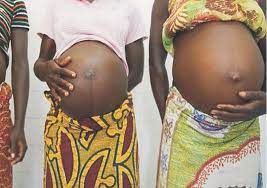
869 registered births in 2022 were recorded to females under the age of 15, a recent report by the Births and Deaths Registry and the Ghana Statistical Service (GSS) has revealed.
Out of the 677,140 registered births documented in 2022, this subset constitutes approximately 0.13%. Despite its relatively small proportion, the figure underscores the imperative to bolster child protection services and undertake concerted efforts to reduce such occurrences.
The Northern region recorded the highest number of registered births to mothers under 15, with 160 instances, followed closely by the Oti and Central regions, each tallying 125 registered births.
Conversely, the Savannah, North East, and Upper East regions each reported just one registered birth to a mother under 15, while the Ashanti region recorded none.
This report highlights the urgent need for interventions to safeguard children. It is noteworthy, however, that not all births to individuals under 15 may have been registered, emphasizing the significance of this issue.
The latest report from the Births and Deaths Registry reveals that more than 60% of registered deaths in 2022 were males, while 39.7% were females.
This means that “6 out of every 10 registered deaths are likely to be males,” the report highlighted.
The report also revealed that six regions (Central, Western North, Greater Accra, Ashanti, Volta, and Bono) had proportions of registered deaths below the male national average of 60.3%. The Northern Region had the lowest percentage of registered female deaths at 27.4%.
In 2022, Ghana recorded a total of 50,992 registered deaths, with approximately 7 out of every 10 registered deaths occurring in the Greater Accra, Ashanti, or Eastern regions.
A notable finding is that 4 out of every 10 registered deaths occurred outside healthcare facilities, indicating challenges associated with inadequate healthcare facilities.
Furthermore, the data highlights that “about 9 out of every 10 registered deaths resulted in burials in public cemeteries, indicating the prevalence of organised and official burial practices in Ghana.”
The statistical data for 2022 deaths registration reveals disparities in regional responses to death registration activities.
Several regions recorded disproportionately higher registered deaths. The Greater Accra Region exceeded the expected coverage by 8.3%. Additionally, the Eastern Region (53.6%), Ashanti Region (46.7%), and Bono Region (43.8%) all exceeded the national average of 37.8%.
Ghana’s Births and Deaths Registry (BDR) has recently introduced an all-encompassing Instruction Manual specifically designed to enhance the process of births and deaths registration in the country. This comprehensive manual aims to provide clear guidelines and procedures, ensuring efficient and accurate registration of births and deaths across Ghana. The BDR’s initiative is poised to streamline operations, improve data management, and promote the integrity of vital statistics in the nation.
Through collaborative efforts with key stakeholders such as the Ministry of Local Government and Rural Development, Ghana Health Service (GHS), National Identification Authority (NIA), and United Nations Economic Commission for Africa (UNECA), the Births and Deaths Registry (BDR) has successfully achieved this milestone. Furthermore, the implementation of the new Instruction Manual was made possible with the valuable technical and financial support provided by UNICEF.
It comes on the back of the passage of the Registration of Births and Deaths Act, 2020 (Act 1027) and the Registration of Births and Deaths Regulations 2021 (L.I. 2436).
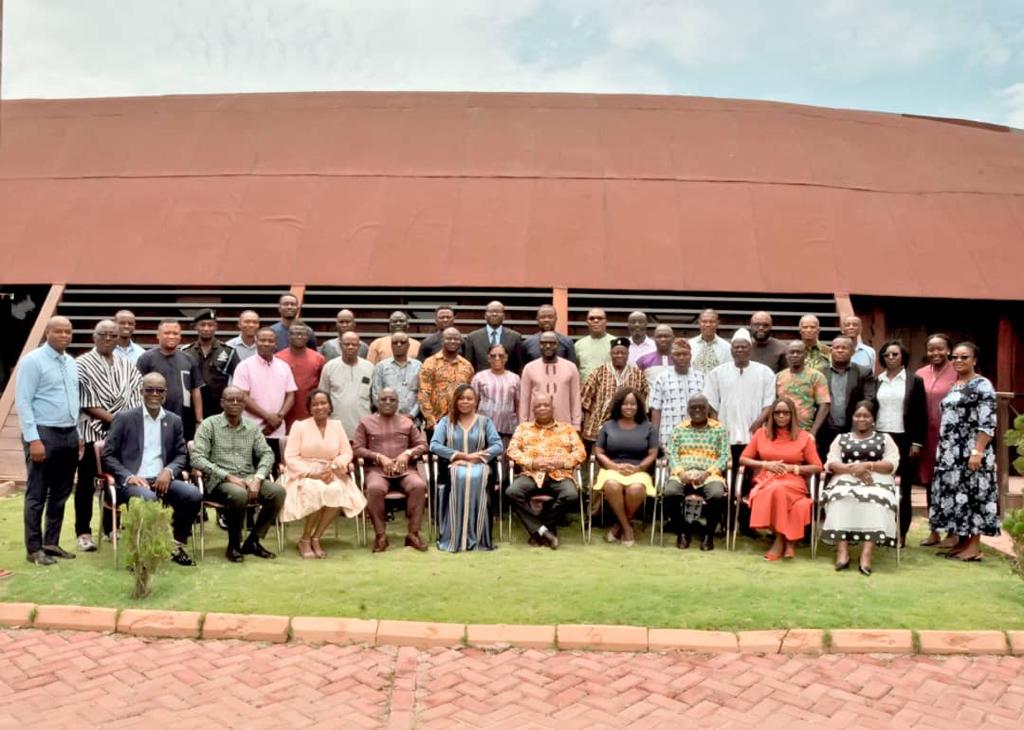
During a workshop held in Ejisu, Ashanti Region, from the 22nd to the 24th of June 2023, the Births and Deaths Registry (BDR) unveiled and validated the extensive and valuable document, shedding light on its significant progress in the field of births and deaths registration.
The workshop, supported by UNICEF, brought together stakeholders from various organisations, including the Ministry of Local Government Decentralization and Rural Development, the Office of the Head of Local Government Service, the Local Government Institute, Ghana Immigration Service, the Passport Office, and all 16 Regional Registrars of the Births and Deaths Registry.
In an address, Madam Henrietta Lamptey, Registrar, BDR, said, the collaborative efforts and the valuable inputs from stakeholders had culminated in the development of an instruction manual that “serves as a comprehensive guide for birth and death registrations in Ghana.”
It reflects the best practices and international standards in civil registration and vital statistics, ensuring accuracy, timeliness, and data security.
“The new instruction manual offers several key benefits for both the registry and the citizens of Ghana. Firstly, it aligns the registration processes with the national identification system overseen by the NIA.”
This integration fosters synergy between the two vital components of citizen identification and registration, streamlining administrative procedures and reducing duplication, she said.
According to her, the collaboration with the GHS enabled a seamless transfer of birth and death records from health facilities to the registry. This integration ensures that vital events are promptly captured and recorded, creating a more efficient and reliable system of registration.
“The manual places a strong emphasis on data quality, privacy, and security, addressing the evolving technological landscape and the need for robust data protection measures.
By implementing stringent protocols, the Births and Deaths Registry aims to safeguard the personal information of individuals while providing accurate and reliable vital statistics.”
The Registrar thanked all stakeholders and participants for their invaluable contributions.
“Together, we are forging a stronger and more inclusive civil registration system that will have far-reaching benefits for the people of Ghana.
As we move forward, we encourage all citizens to familiarize themselves with the new instruction manual and engage with the Births and Deaths Registry to ensure their vital events are accurately recorded. “
By doing so, we can collectively strengthen our civil registration system, enhance data accuracy, and empower individuals with the necessary documentation to exercise their rights and access vital services.
The Births and Deaths Registry remains committed to upholding the highest standards of civil registration and vital statistics. We believe that this milestone will pave the way for an improved and more efficient system that will benefit all Ghanaians, Madam Lamptey pledged.
The Acting Registrar of the Births and Deaths Registry, Henrietta Lamptey, has lamented Ghana’s low rate of civil registrations and vital statistics.
She said although Ghana had a long history of Civil Registration and Vital Statistics (CRVS), the level of civil registration of vital events and the quality of the data produced remained unacceptably low.
She said the situation was much dire in the area of death registration.
Mrs Lamptey was speaking at a workshop for institutions whose operations border around the production of CRVS.
The Registrar said she was therefore hopeful that through the workshop, participants would be equipped with the requisite knowledge and skills to effectively improve the process of registering vital events.
This, she said would help the country achieve the United Nations sustainable development goal target 16.9. Workshop
The four days’ workshop, which was organised by the Births and Deaths Registry in collaboration with the Ghana Statistical Service, formed part of activities of the CRVS system improvement framework project in Ghana.
Sponsored by the United Nations Economic Commission for Africa (UNECA), the workshop brought together participants from the Ghana Police Service, National Identification Authority, Judicial Service, the Ghana Health Service, National Road Safety Authority, Office of the Attorney General’s Department, and the United Nations Children’s Fund (UNICEF).
Others were the Ministry of Local Government, Decentralisation and Rural Development, Pathology department of Korle Bu Teaching Hospital, Registrar General’s Department and other individuals who have expertise in the CRVS system in Ghana.
Over the course of the four-day training workshop, Participants were taken through various topics that were aimed at improving their understanding of the business process models of CRVS. They were admonished to see CRVS as business and treat it as such by becoming more client centered.
The participants were then split into task teams and challenged to develop solutions to a wide array of Civil Registration and Vital Statistics themes like marriages, divorce, birth registration and death registration among others Improving CRVS.
The Chief of the Demographic and Social Statistics Section at the African Centre for Statistics of the United Nations Economic Commission for Africa (UNECA), Dr William Muhwava, said UNECA was committed to help improve the country’s CRVS system.
He commended the institutions and agencies for the work they have done so far.
Dr. Muhwava admonished participants to own the CRVS system and drive it.
He was of the view that in this time of donor fatigue, there was the need for Ghana to be more proactive in ensure the country gets things right this time.
A consultant for the initiative, Dr Felicia Dake, for her part, highlighted that the workshop had brought together different stakeholders in the CRVS value chain to critically examine the current status of the CRVS system and to develop a sustainable strategy to improve and run the system effectively and efficiently.
A retired officer of the Birth and Death Registry (BDR) in the Bolgatanga Municipality of the Upper East Region says efficient registering of births and deaths is important for socio economic development of the country.
Mr Somalia Mohammed said many people did not attach seriousness to registry of deaths until one required the certificate for the purpose of following up on benefits of a deceased family member.
Mr Mohammed, speaking in an interview with the Ghana News Agency in Bolgatanga said there were instances when an orphan would have to proof the death of a parent before getting some assistance, and, therefore, families should not only start looking for one when such needs arise.
He said the state was a key recipient of such data with regards to gathering information on some causes of deaths, adding, “Government needs to know the cause of certain ailments and deaths and that data can inform it to put in interventions to curb the incidents. The data would also help with timely statistics for planning purposes.”
He suggested that populous municipalities and districts be sectionalised by the Births and Deaths Registry to help in the collation of such data especially in the case of Muslims who had to be buried immediately after death. The BDR officer or volunteer he said would be readily available in the community to help in accessing a burial permit.
On birth registry, he stressed that births must first be registered even before death and all children zero to four years in Ghana should be registered.
The BDR was established by Act 301 of 1965, and was replaced by Registration of Births and Deaths Act, 2020(Act 1027) within the Ministry of Local Government and Rural Development to handle and develop the births and deaths registration system in Ghana with core mandate to provide accurate timely and reliable information on all births and deaths accruing within Ghana through certification for socio economic development of the country.
Mr Desmond Nana Amponsah, an Assistant Information Technology (IT) and Information Manager (IM) at the Bolgatanga Health Centre, said there had been improvement in the birth registry.
The improvement achieved has been made possible through weekly sensitisation programmes at the ante-natal clinics.
He noted that staff were always ready to make follow up to ensure the babies were registered and added that there were still challenges with deaths registration since communities in rural areas buried without permit.
He said the Bolgatanga Municipal annual target for birth registration was 32,021 for 2022 and noted that 14,269 births had been registered by June.
Among other challenges, the IT Officer mentioned rains disrupting operations especially when travelling to provide such services.
A new app system he said had been developed in collating information on registered births, which he described as quicker and faster and urged families to register their babies when they are born.