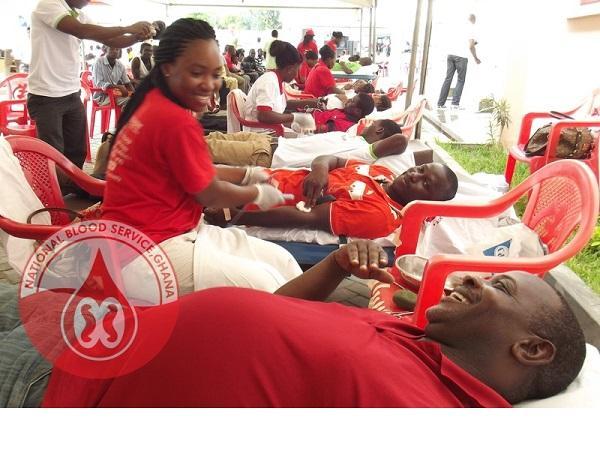
Tag: blood donation

  • Laboratory scientist urges blood donors to be honest during questioning

    Laboratory scientist urges blood donors to be honest during questioning

    Medical Laboratory Scientist in Charge of the Blood Bank at the International Maritime Hospital (IMaH) in Tema, Ms. Doris Kusima Baiden, has emphasized the importance of honesty when answering questions before donating blood.

    She highlighted that potential blood donors are required to respond truthfully to a confidential questionnaire regarding their medical history.

    The purpose of this questionnaire is to provide healthcare professionals with essential information about the donor’s overall health and blood condition. By obtaining accurate information, it enables the medical staff to offer a better service to both donors and recipients.

    Ms. Baiden addressed these issues as part of the “Your Health! Our Collective Responsibility!” initiative, organized by the Ghana News Agency.

    The initiative aims to promote health-related communication and serve as a platform for disseminating health information, ultimately enhancing health literacy and influencing individuals’ personal health choices.

    Ms. Baiden, supported by Mr. Robert Tetteh Djimajor, also a IMaH Medical Laboratory Scientist, explained that, as a routine before blood donation “we first take personal details like your name, age, date of birth, address, and other contacts. We then further proceed to ask confidential health questions.”

    Ms. Baiden emphasised that donors were expected to come clean about medications taken in recent times, current health status, specific sexual activities, and other lifestyles.

    “These questions are very confidential and help safeguard your own health and the health of the person receiving the blood. We only want to ensure that one is fully fit physically, mentally, and emotionally before donating blood,” she said.

    Due to the potential transmission of infections such as HIV, Hepatitis B and C, and Syphilis to recipients in blood donation, she said honesty cannot be compromised.

    Additionally, Ms. Baiden highlighted that blood donation not only benefits the recipient but also provides an opportunity for donors to undergo a brief medical examination.

    This examination typically includes checking vital signs such as temperature, pulse, and blood pressure, as well as ensuring that the donor meets the minimum weight and haemoglobin level requirements.
  • Lab-grown blood given to people in world-first clinical trial

    Blood that has been grown in a laboratory has been put into people in a world-first clinical trial, UK researchers say.

    Tiny amounts – equivalent to a couple of spoonfuls – are being tested to see how it performs inside the body.

    The bulk of blood transfusions will always rely on people regularly rolling up their sleeve to donate.

    But the ultimate goal is to manufacture vital, but ultra-rare, blood groups that are hard to get hold of.

    These are necessary for people who depend on regular blood transfusions for conditions such as sickle cell anaemia.

    If the blood is not a precise match then the body starts to reject it and the treatment fails. This level of tissue-matching goes beyond the well-known A, B, AB and O blood groups.

    Prof Ashley Toye, from the University of Bristol, said some groups were “really, really rare” and there “might only be 10 people in the country” able to donate.

    At the moment, there are only three units of the “Bombay” blood group – first identified in India – in stock across the whole of the UK.

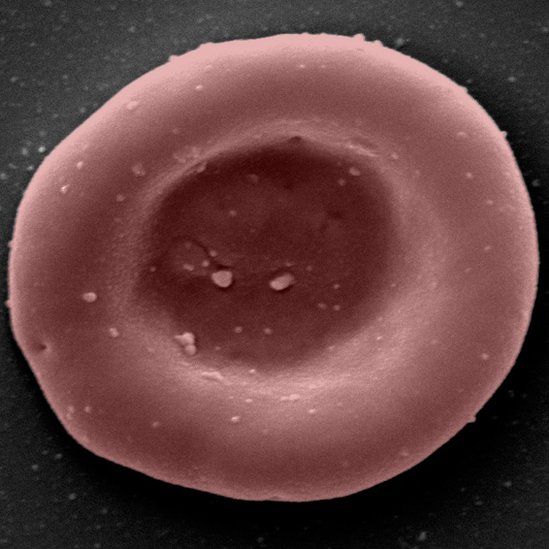
    A lab-grown red blood cell
    Image source, NHSBT
    Image caption,
    A laboratory-grown red blood cell, which carriers oxygen and carbon dioxide around the body

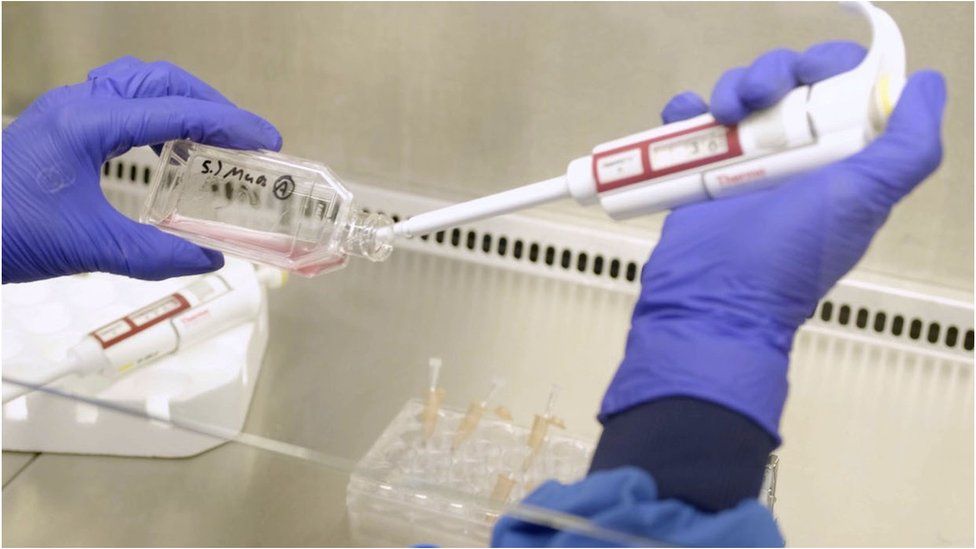
    So how is the blood grown?

    The research project combines teams in Bristol, Cambridge, London and at NHS Blood and Transplant. It focuses on the red blood cells that carry oxygen from the lungs to the rest of the body.

    • They start with a normal donation of a pint of blood (around 470ml)
    • Magnetic beads are used to fish out flexible stem cells that are capable of becoming a red blood cell
    • These stem cells are encouraged to grow in large numbers in the labs
    • And are then guided to become red blood cells

    The process takes about three weeks and an initial pool of around half a million stem cells results in 50 billion red blood cells.

    These are filtered down to get around 15 billion red blood cells that are at the right stage of development to transplant.

    “We want to make as much blood as possible in the future, so the vision in my head is a room full of machines producing it continually from a normal blood donation,” Prof Toye told me.

    Lab grown bloodImage source, NHSBT

    The first two people have taken part in the trial, which aims to test the blood in at least 10 healthy volunteers. They will get two donations of 5-10mls at least four months apart – one of normal blood and one of lab-grown blood.

    The blood has been tagged with a radioactive substance, often used in medical procedures, so scientists can see how long it lasts in the body.

    It is hoped the lab-grown blood will be more potent than normal.

    Red blood cells normally last for around 120 days before they need to be replaced. A typical blood donation contains a mix of young and old red blood cells, whereas the lab-grown blood is all freshly made so should last the full 120 days. The researchers suspect this could allow both smaller and less frequent donations in the future.

    However, there are considerable financial and technological challenges.

    The average blood donation costs the NHS around £130. Growing blood will cost vastly more, although the team will not say how much.

    Another challenge is the harvested stem cells eventually exhaust themselves, which limits the amount of blood that be grown. It will take more research to produce the volumes that would be needed clinically.

    Dr Farrukh Shah, the medical director of transfusion at NHS Blood and Transplant, said: “This world-leading research lays the groundwork for the manufacture of red blood cells that can safely be used to transfuse people with disorders like sickle cell.

    “The potential for this work to benefit hard to transfuse patients is very significant.”

    Source: BBC

  • Information Ministry organises 2nd blood donation, health screening exercise

    The Ministry of Information together with its press pool have donated 68 pints of blood to complement stock at the National Blood Bank.

    The exercise which was the second time in a row brought together staff, members of its press pool and other members of the general public to shore up supply at the Blood Bank.

    Information Ministry organises 2nd blood donation, health screening exercise

    Additionally, about 138 people were screened for BP, malaria, Body Mass Index (BMI) and HIV.

    Information Ministry organises 2nd blood donation, health screening exercise

    The Deputy Minister for Information, Fatimatu Abubakar in her opening remarks said that the exercise was in response to urgent calls by the Blood Bank to stock up after the COVID-19 and its corresponding restrictions on movement affected mass donation of blood.

    Information Ministry organises 2nd blood donation, health screening exercise

    “I am impressed that my colleagues in the press pool, in addition to the staff of the Ministry of Information, Information Services Department and other volunteers responded to the call of the National Blood Bank and came in their numbers to participate in stocking the Blood Bank”, she said.

    Information Ministry organises 2nd blood donation, health screening exercise

    The Deputy Minister was excited about the turn out of event and thanked the media personnel, staff and volunteers who availed themselves to donate blood.

    She lauded the Ministry for the initiative and called on other Ministries, Department and Agencies to follow suit.

    Information Ministry organises 2nd blood donation, health screening exercise
    Information Ministry organises 2nd blood donation, health screening exercise
    Information Ministry organises 2nd blood donation, health screening exercise

    The Principal Blood Donor Recruitment Officer of the National Blood Service Madam Joyce Oppong Adu, underscored the importance of blood donation to save lives urging the public to participate in subsequent blood donation exercises.

    Information Ministry organises 2nd blood donation, health screening exercise

    The Head of Communications of Stanbic Bank Ghana, Mr. Kojo Larbi was delighted that his outfit came through to support the exercise to make it a success.

    Information Ministry organises 2nd blood donation, health screening exercise

    He said the exercise is a laudable one and as such Stanbic Bank is more than happy to partner the Ministry in future exercises of this kind.

    Information Ministry organises 2nd blood donation, health screening exercise

    For his part, the head of Corporate Affairs at the EXIM Bank Ghana, Mr. Richard Anane Osei, said the success of the exercise showed how much we can achieve as a collective entity if we bring our hands on deck.

    Information Ministry organises 2nd blood donation, health screening exercise
    Information Ministry organises 2nd blood donation, health screening exercise

    He mentioned that the EXIM Bank Ghana would continue to lend a helping hand anytime it is called upon to make sure events like this become successful.

    Information Ministry organises 2nd blood donation, health screening exercise

    The exercise was supported by Stanbic Bank Ghana, Aryton Drugs, Ghana EXIM Bank, Ocean Spray, FanMilk Limited, Dano Milk, Cocoa Processing Company (Golden Tree), Coca-Cola, Special Ice, Niche Confectionary, Voltic, Frutelli, Tobinco and Kalypo.

    Information Ministry organises 2nd blood donation, health screening exercise
    Information Ministry organises 2nd blood donation, health screening exercise

    It was also supported by media partners; Graphic Communications, Ghanaian Times, Joy FM, Asaase Radio and Citi FM.

    Information Ministry organises 2nd blood donation, health screening exercise

    Source: Myjoyonline

  • Stocking National Blood Bank is our collective responsibility – Oppong-Nkrumah

    Information Minister Kojo Oppong Nkrumah Wednesday led the staff of the Information Ministry and members of the Ministry’s Press Corps to donate blood to stock up the National Blood Bank.

    They targeted to donate 100 unit pints of blood to the blood bank at the Korle-Bu Teaching Hospital following a report of shortage of blood at the facility due to the Covid-19 pandemic.

    Mr Oppong Nkrumah, who personally donated blood to set an example for others, encouraged everyone and corporate entities to volunteer to donate blood for a just cause.

    “We must donate blood to save lives and so I want to appeal to everybody and corporate organisations to help in stocking up the blood bank,” Mr Oppong Nkrumah added.

    Dr Justina Kordia Ansah, the Chief Executive Officer of the National Blood Service, in her welcome remarks, said donating blood was a civic responsibility of every citizen, adding that persons between 17 and 60 years with a sound mind and good health condition qualify to donate blood.

    She said the Covid-19 pandemic had affected voluntary blood donation, especially from schools, and thus, entreated corporate bodies and individuals to help stock up the blood bank.

    Dr Kordia Ansah explained that persons with hypertensive and asthmatic conditions would not be allowed to donate, saying that prospective donors were taken through medical screening and required to answer questionnaires before being cleared to donate blood, in order not to compromise anyone’s health.

    She advised donors should drink more water and fluid to replenish the lost blood after donating blood, adding that they’re not supposed to drink alcohol, drive long distances, or climb high heights.

    Mrs Mamle Andrews, the Chief Director of the Information Ministry, lauded the sector Minister for the initiative and praised all donors for showing patriotism for a just cause.

    Some corporate organisations including Cocoa Processing Company, Kasapreko Company Limited, Accra Brewery Limited, Awake Mineral Water, Tobinco Pharmaceuticals, and Fanmilk Ghana Limited donated products and souvenirs to the donors in appreciation for their voluntary service.

    Source: GNA

  • National Blood Service sees 25.9% drop in blood donation

    The National Blood Service has recorded a sharp decline in blood donation in the first five months of 2020 as compared to the same period in the previous year in the Southern Zone – Accra and its environs.

    This decline is attributed to the impact of COVID-19 and its restrictions.

    The volume of blood dropped from 7,494 pints in the first five months of 2019 to 5,555 this year.

    This represents a whopping 25.9% drop.

    This means that thousands of Ghanaians with various health conditions that required blood transfusion might have died as a result of the non-availability of blood.

    The Public Relations Officer (PRO) of the National Blood Service, Mr Steven Addai-Baah, told The Finder that “stocks have always been dwindling since the novel coronavirus was recorded in the country”.

    He explained that most donors have been under restrictions for some time while the fear of contracting COVID-19 has also scared others from donating blood.

    “Institutions like the churches, schools and other institutional bodies have been our constant donors.

    “Prior to the COVID-19, stocks were usually appreciable because our donors were consistent, but as result of the restrictions, donations have declined.

    “We had a plan with the churches, schools and institutions to donate every four months, with others also donating every two years,” he stressed.

    Total units of blood in the nation

    Addai-Baah mentioned that he could not disclose the volume of blood the country has at the moment because they did not have the data from other Regions.

    The National Blood Service is divided into three zones: southern zone, which is Accra and its environs; central zone, which is Kumasi in Ashanti Region and its environs; and Tamale takes care of the five regions of the north.

    “In Accra, we usually supply about 150 to 200 pints of blood every day, but because of the coronavirus pandemic, we are unable to meet that demand even though the request for blood keeps coming in.

    “About eight to 15 people currently donate blood in a day, which is woefully inadequate.

    “We have types of blood donation, which is the voluntary blood donation, family replacement donation and commercial donations. Currently, we normally do more of family replacement, where a relative is asked to donate to the other, and that has increased more in this period of COVID-19,” he added.

    Strategies to make up for voluntary blood donation

    In the quest to make up for easy and accessible voluntary donation of blood, he said, the southern zone has set up more centres within communities.

    His outfit, Addai-Baah indicated, has resorted to appealing to people at their doorsteps to donate blood, adding, “We have asked people to come around to donate blood. Prior to the pandemic, we waited for people to walk in to donate blood, and this has become difficult, so we are currently taking it to the doorstep of the community.

    “We currently have one at Adenta Municipal Assembly, Tema Municipal Assembly and Kasoa Methodist Church.

    “The assemblies have been kind enough to announce to the community by the help of their information van to go round the community to announce that the blood donation team is stationed at the assembly and that they should come and donate,” he said.

    The PRO for the National Blood Service also stated that they have a database of their regular donors, and it helps them to call to remind them to donate blood.

    Source: The Finder

  • Speaker directs probe into death of minor during blood donation

    Speaker Aaron Mike Oquaye has directed three committees in Parliament to investigate a blood donation exercise by the National Blood Service at Adjen-Kotoku Senior High School, in the Ga West Assembly, leading to the death of a minor.

    The Committees are the Constitutional and Legal Affairs, Gender and Children, and Health.

    Additionally, the Speaker also requested Dr Bernard Okoe Boye, Member of Parliament (MP) for Ledzokuku, Dr Zanetor Agyaman-Rawlings, MP for Klottey Korle and Mr Alex Afenyo Markin, MP for Afutu, to join the three committees and report to the House in two weeks to enable the Attorney General to take over the prosecution of the case.

    The directive follows a statement by Mr Afenyo Markin on the Floor of the House to the effect that a blood donation exercise carried out by the National Blood Service (NBS) at the Adjen-Kotoku SHS on February 26, had led to the demise of a student with several others being hospitalised.

    Prof Oquaye stressed the need to tighten the law on blood donation by minors to prevent the abuse of children in the system.

    He said no teacher or school authority had the right to draw the blood a child without the written consent of his or her parents.

    He regretted that, from his readings, the child was actually compelled to give two pints of blood, which he described as exploitative.

    Prof Oquaye emphasised the need for public education on the procedures that should be followed during blood donation exercises.

    He, therefore, charged the House to consider the issue thoroughly so that the Legislature would be seen as being responsive to the needs of the people who sent them there.

    Mr Afenyo Markin, in his statement, noted that on Thursday, March 5, his attention was drawn to the news item on Peace FM concerning a blood donation exercise at the school, leaving several of the students hospitalized.

    He said the report indicated that some of the students who were reluctant to participate in the exercise were, however, coerced by school authorities to do so.

    He cited for example that the required age for blood donation in Ghana ranges from 17 to 60 years and below 17 years parental/guardian consent must be sought.

    Mr Afenyo Markin said the donors are also to take a short physical examination to make sure the donation was not hazardous to their health and expressed surprise that the NBS would supervise blood donation without any precaution.

    “The blood donation that took place at the Adjen-Kotoku Senior High School Campus without considering the age factor of the students and also seeking parental consent, has led to the unfortunate demise of this young school boy,” he said.

    He, therefore, appealed to the Speaker for urgent investigations into the matter to bring to book all persons found culpable and compensate the bereaved family for the loss.


    Source: myjoyonline