As the country gears towards the general elections come December, 2024, Mrs. Addy has issued a fervent plea for peaceful and nonviolent acts urging all Ghanaians to abstain from resorting to aggression and allowing themselves to be contracted by politicians to perpetuate violence for their selfish thirst for power.
Politicians who supply arms to people to cause havoc during elections according to Mrs Addy are proof that they disregard the well-being of its supporters hence the need to uphold peace and solidarity throughout the electoral process.
“Really, no politician, no political party, is worth one drop of your blood, not a drop. So please let us all sit back and take a deep breath. No one is worth it. Anybody who comes to you and say, here is a machete, here is a gun, you must know that they do not value your life.
“Because as for machetes and guns, anybody can get them. So, if somebody says that this is the role that you have to play in bringing me to power.
You must know that the person does not have your interest at heart. Their family members are not holding guns, running around, or misbehaving” she advised during an interview on JoyNews’ AM show on Wednesday, May 22, 2024.
Encouraging open dialogue as a constructive approach to addressing any emerging challenges during the election period, Mrs. Addy highlighted its significance in fostering understanding and resolution.
Furthermore, she acknowledged the inevitability of encountering sporadic hotspots during such a pivotal time but emphasised the importance of collaborative efforts among stakeholders to swiftly identify and mitigate potential areas of concern.
“It is unrealistic to think that you are going to go through the whole election season, and you will not have one or two hotspots or a couple of eruptions.
That is an unrealistic expectation. What you need to do is ensure you have a mechanism for addressing those issues when they come up, and that is not to say that all of it would be done and there would be nothing but a squeak; there would be some, but for these interventions, it would have been so much, so when issues come up, what we need to do is come together and find the mechanism for addressing the issue rather than saying at this point there is no coming back” she noted.
Presumed human bones were found in the room of a 30-year-old man who reportedly took his own life in Dabiasem, a neighborhood within the New Juaben North municipality in the Eastern region.
Reports indicate that the young man who tragically ended his life had a shrine inside his room. Recent information reveals that the shrine was marked with a red substance, which some speculate could be blood. Additionally, the police discovered several other items, including cola nuts and various objects associated with ritual practices.
The deceased, Yaw Christopher, was discovered lifeless in his room on the morning of Wednesday, November 8, 2023. Prior to this tragic event, he allegedly expressed remorse for his intention to end his life and instructed his family to sell his belongings to support his mother, Martha Yaa Badu.
“Oh God please forgive me! If found, please sell my house and properties and help my mother Martha Yaa Badu. Rest in Peace to my soul,” Yaw Christopher’s suicide letter cited by Nyankonton Mu Nsem read.
Christopher was found suspended in his room after neighbors noticed his absence and had to forcibly open his door.
Due to the declining blood supply in the country’s hospitals and a rise in blood shortages, the National Insurance Commission (NIC) is partnering with various organizations in Ghana’s insurance sector to replenish blood banks nationwide on September 27, 2023.
The objective is to safeguard the lives of pregnant women in labor, children, accident victims, and others who may require blood for their survival.
In a statement released by the insurance regulator, the blood donation initiative has become a necessity, urging the insurance industry to contribute to restocking the nation’s blood banks.
“The insurance industry does not work in isolation from the people they are expected to insure either by way of their lives or by the assets that are insured,” the statement read.
“This gesture by the Insurance industry followed a request to the NIC by the National Blood Service (NBS) to the industry in 2021 to help re-stock the country’s blood banks which were fast running out of stock. As part of the Industry’s Corporate Social Responsibility, the entire insurance industry kick-started this annual campaign and donated 801 units of blood in 2021. The numbers increased exponentially in 2022 with a record 2,015,” it added.
The NIC also announced that the industry is preparing for another nationwide blood donation campaign this year, with higher expectations.
Dr. Emmanuel K. Srofenyoh, Director of the Greater Accra Regional Hospital at Ridge, will deliver the keynote address at the launch of the 2023 Blood Donation Campaign on Wednesday, September 27, 2023, at the NIC’s headquarters in Accra.
The theme for this year’s campaign is “Donate blood; save a life – as you do it for someone, you do it for yourself.”
Additionally, the Chief Executive Officers of insurance companies will be the first to donate blood to support the Oncology Unit of the Korle Bu Teaching Hospital in observance of Childhood Cancer Month (September).
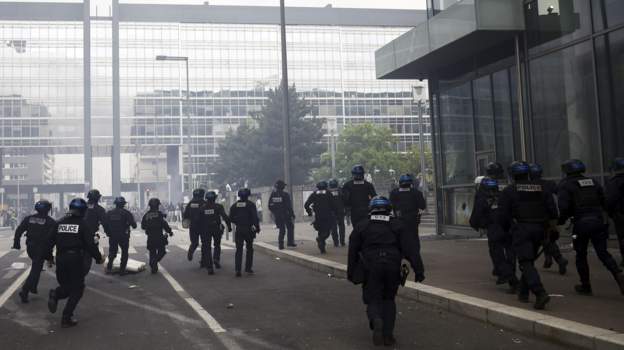
Reports say French police are preparing for more violent protests around the nation.
The AFP news agency reports that an internal security note says the “coming nights” are expected “to be the theatre of urban violence” – with “actions targeted at the forces of order and the symbols of the state”.
We already know that Interior Minister Gerald Darmanin has arranged for 40,000 police officers to be deployed across France tonight, in order to deal with any further unrest.
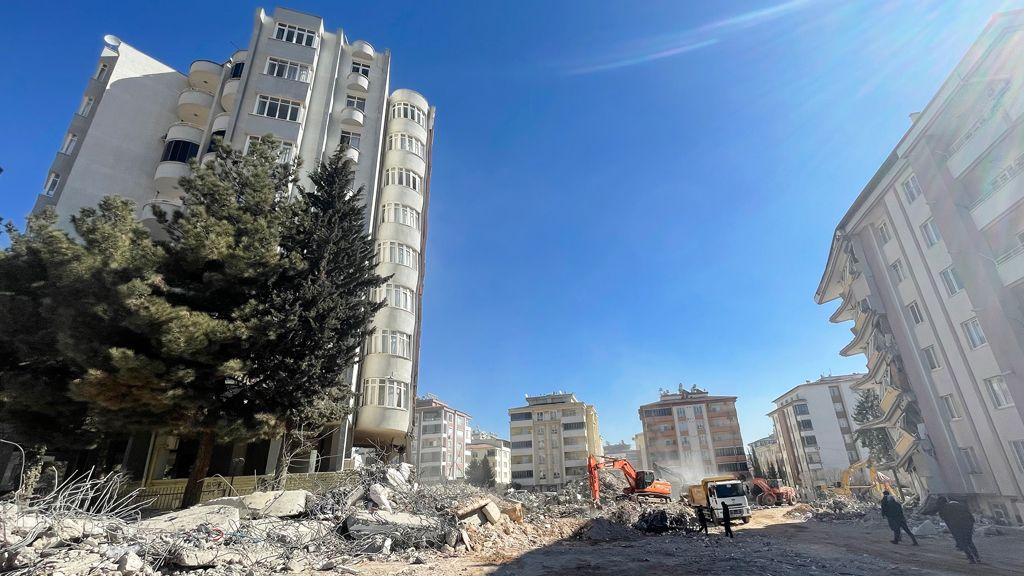
Safety concerns at an apartment complex in the Turkish city of Gaziantep were raised long before last week’s deadly earthquakes.
More than 130 people living there lost their lives.
A BBC team has spent three days looking at what happened – and the early warnings voiced by residents.
With only a bonfire for light and warmth on a bitter winter’s night, an extended family sits at the roadside waiting for amiracle.
They’ve been here for nine days and nights but their loved ones have not been found.
This personal grief is being played out in the rubble of one of the most desirable streets money can buy here.
“This is one of the most luxurious residential areas in Gaziantep,” says musician Yunus Emre, whose cousin and his family of four are missing. “The wealthiest live here. Those flats are sold for millions.”
But the price of the property meant nothing when the earthquake struck.
“I’m just angry. I want to bring someone to justice but I don’t know who,” says the 28-year-old. For him, so many parties are culpable in what is not just a national tragedy but, with the collapse of so many buildings, a national scandal.Image caption,
Yunus Emre lost five family members
“It starts with the contractor,” he explains.
“He uses low-quality building material. Next comes the certifying authority. They have the bloodof people who died here on their hands.
“It’s not right to scapegoat the contractor. The ones who approved this building are responsible together with the government and the state. They shouldn’t have signed off on this building project at all.”
The Ayşe Mehmet Polat apartment complex is 24 years old. Four of its six blocks collapsed while other buildings around it stood tall.
We came to this site because we had heard that a man said to be the building’s contractor had been arrested. He will later tell us through his lawyer he was doing nothing wrong and should bear no responsibility.
But what exactly happened here on 6 February, and could it have been prevented?
As we return to the complex the next morning, emergency services reveal to us a shocking figure – 136 people are known to have died here as they slept.
At a petrol station next door, we ask if they have any CCTV footage of when the earthquakes struck. We are given videos from four separate cameras which show the horror unfolding. First, the violent shaking of the lights, then seconds later, people running for their lives before, finally, a thick cloud of smoke and dust enveloping everything in its path.
The neighbouring apartment buildings collapsed in a matter of seconds.Media caption,
Watch: CCTV from a petrol station next to the apartment complex shows when one of the earthquakes struck
As we leave the petrol station, we are drawn to the pile of personal possessions on the edge of the forecourt. It is a deeply upsetting museum of lives suddenly extinguished – homework, dolls, cooking pans and family photos. Scouring the heap, and sobbing inconsolably, is 65-year-old Emel Filik.
“Everything is gone,” she tells us.
She explains that her cousin had been sleeping in one of the four destroyed blocks, and no-one had taken responsibility for keeping the building safe.
“Once you start to live in your flat, nothing happens. No inspection. Earthquake insurance and property insurance don’t work either. The municipality doesn’t make checks. No such thing as monitoring.”Image caption,
Emel Filik tells us apartment residents were worried about safety before the earthquakes.
There had been concerns about these apartments, she says, adding that the head of the residents’ association – a woman known as Selma – had even asked neighbours to come to a meeting to listen to her fears.
“Six months ago, Selma told us about the problems of the building. She said ‘Dear residents, our buildings might collapse at the slightest of earthquakes. Let’s strengthen the pillars. If you’re short on money, the municipality could help us for a cheaper solution.’ She held several meetings. But nothing happened.”
We find a phone number for Selma and she confirms she held meetings to express her fears.
But should residents really have to pay to be safe in their own homes? This was a question of structural integrity, not repainting walls.
The head of the organisation representing architects in Turkey, Eyüp Muhçu, tells us the ultimate responsibility for making sure buildings are safe rests with the Turkish government.
“The priority of the central government was not to make the cities safe, but to implement some projects that were solely planned for maximising profits. For this reason, 65% of the current building stock in Turkey is risky. And no measures have been implemented regarding these risky structures.”
With two residents having told us there had been potential problems within the blocks – we start trying to find out if those responsible for the building knew about it and whether they did anything.
When we had first arrived at the block the previous night, a boy had come up to us briefly to say his dad had pulled seven people from the rubble with his bare hands. It sounded a remarkable story, given the scale of the destruction we could see, but we didn’t discount it.
And sure enough, when we hear others talking about the bravery of a man called Bahattin Aşan we decide to track him down.
“I saw the building twirling and crashing down. I came here running, it was dark, raining, there was snow and I was the first responder,” he tells us.Image caption,
Bahattin Aşan says he pulled seven people from the rubble
Bahattin Aşan used to work as a security guard at the housing complex.
He shows us a harrowing video he took in the smoking ruins, in which he’s calling out to those trapped. Some people reply.
“I rescued seven people by myself. It was like the apocalypse. Even now as I’m telling you this, I’m still shaking,” he says.
But what about these supposed concerns over the buildings’ safety, I ask? Did he see this?
“In the car park, I witnessed the defects with my own eyes. When I touched the concrete columns it would crumble to dust in my hands, as though it wasn’t concrete at all. Iron was rusting in the columns, the rainfall was damaging and corroded the iron.”
When I ask Bahattin Aşan if he ever reported this, he insists it was obvious to the management as well as the residents.
“I used to tell a friend that if they were to give me a flat here I wouldn’t take it. I said it was because I didn’t think the columns were solid and in an earthquake the building would collapse.”
But the man accused of being the contractor, Mehmet Akay, says the building complied with regulation at the time it was built. He claims that sewage and water works were added to the property after construction – and that this, or other work, may have damaged the supporting columns.
How many other security guards and caretakers across Turkey had voiced similar concerns in a country precariously positioned at the crossroads of shifting tectonic plates?
Your device may not support this visualisation
The immediate picture that is emerging in this Gaziantep neighbourhood is not of a cover-up or conspiracy – but either indifference or inaction.
Everyone knew there was a problem, but nobody did anything.
For opposition MP Garo Paylan, from the HDP party, who we meet as he visits this site, it is indicative of criminal negligence on an industrial scale in Turkish construction and oversight.
“This is a crime. This is a sin.”
Mr Paylan accuses the government of Turkey’s president, Recep Tayyip Erdogan, of failing to ensure the safety of new buildings as well as failing to strengthen older ones.
“The scientists were shouting about it, this disaster is coming, but the government did almost nothing. We warned the cities, we warned them to prepare the rescue teams, but they did nothing and we live this catastrophe. They say this is destiny. No, it is not. In civilised countries these kinds of disasters happen but fewer people die. But here we have tens of thousands of people under the rubble.”
Mehmet Akay, the man whom authorities say was the building contractor for the Ayşe Mehmet Polat complex, was arrested on Saturday 11 February – five days after the earthquakes. He was stopped at Istanbul Airport as he tried to leave the country.
State prosecutors say he was the building contractor, but responding to questions put to him through his lawyer, Mr Akay claims he was the construction co-ordinator, but not the contractor. He also rejects accusations that cheap building materials were used.
Image source, Istanbul PoliceImage caption,
Mehmet Akay (l) was detained by police in Istanbul
In Gaziantep, we ask the local authority, Şehitkamil Municipality, for a response. Spokesman Ahmet Aydın Sert says no complaints were received about the complex buildings, and therefore no inspections were made. “We went through the records and found no irregularities.”
President Erdogan has conceded that the emergency response to the disaster was slow in places, but has urged his people not to listen to those whom he accuses of politicising a tragedy.
His government denies negligence and claims that more than 98% of buildings that collapsed were older – like the Ayşe Mehmet Polat complex – and built before the ruling party took office.
There are plenty who would say every country has a moral – if not legal – duty to protect its citizens, no matter the age of their property.
And when Turks go to the polls in the summer they will decide for themselves who can best ensure their families are safe in their own homes.
Additional reporting by Naomi Scherbel-Ball, Doğu Eroğlu, Dilay Yalçin and Jake Horton
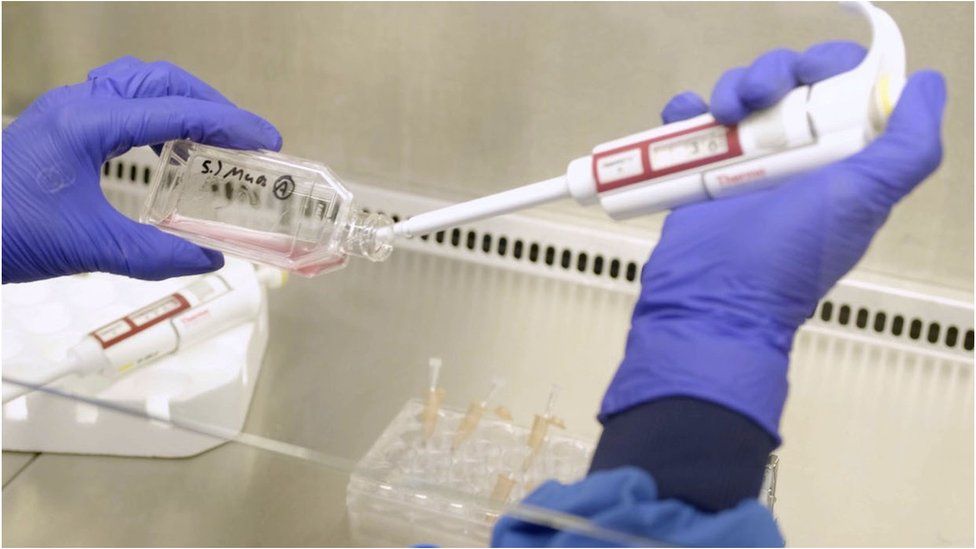
Blood that has been grown in a laboratory has been put into people in a world-first clinical trial, UK researchers say.
Tiny amounts – equivalent to a couple of spoonfuls – are being tested to see how it performs inside the body.
The bulk of blood transfusions will always rely on people regularly rolling up their sleeve to donate.
But the ultimate goal is to manufacture vital, but ultra-rare, blood groups that are hard to get hold of.
These are necessary for people who depend on regular blood transfusions for conditions such as sickle cell anaemia.
If the blood is not a precise match then the body starts to reject it and the treatment fails. This level of tissue-matching goes beyond the well-known A, B, AB and O blood groups.
Prof Ashley Toye, from the University of Bristol, said some groups were “really, really rare” and there “might only be 10 people in the country” able to donate.
At the moment, there are only three units of the “Bombay” blood group – first identified in India – in stock across the whole of the UK.
Image source, NHSBT
Image caption,
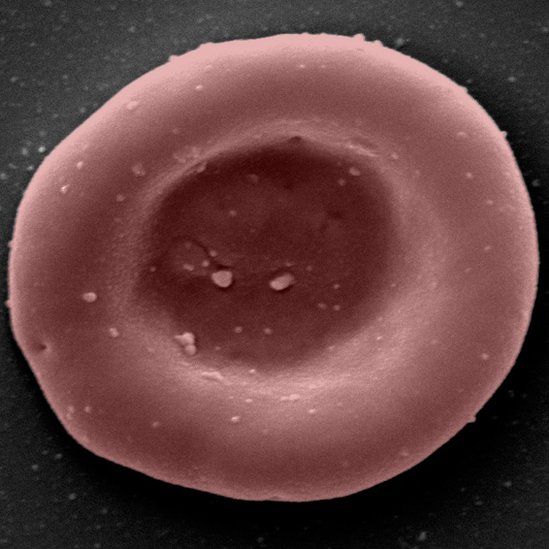
A laboratory-grown red blood cell, which carriers oxygen and carbon dioxide around the body
So how is the blood grown?
The research project combines teams in Bristol, Cambridge, London and at NHS Blood and Transplant. It focuses on the red blood cells that carry oxygen from the lungs to the rest of the body.
They start with a normal donation of a pint of blood (around 470ml)
Magnetic beads are used to fish out flexible stem cells that are capable of becoming a red blood cell
These stem cells are encouraged to grow in large numbers in the labs
And are then guided to become red blood cells
The process takes about three weeks and an initial pool of around half a million stem cells results in 50 billion red blood cells.
These are filtered down to get around 15 billion red blood cells that are at the right stage of development to transplant.
“We want to make as much blood as possible in the future, so the vision in my head is a room full of machines producing it continually from a normal blood donation,” Prof Toye told me.
Image source, NHSBT
The first two people have taken part in the trial, which aims to test the blood in at least 10 healthy volunteers. They will get two donations of 5-10mls at least four months apart – one of normal blood and one of lab-grown blood.
The blood has been tagged with a radioactive substance, often used in medical procedures, so scientists can see how long it lasts in the body.
It is hoped the lab-grown blood will be more potent than normal.
Red blood cells normally last for around 120 days before they need to be replaced. A typical blood donation contains a mix of young and old red blood cells, whereas the lab-grown blood is all freshly made so should last the full 120 days. The researchers suspect this could allow both smaller and less frequent donations in the future.
However, there are considerable financial and technological challenges.
The average blood donation costs the NHS around £130. Growing blood will cost vastly more, although the team will not say how much.
Another challenge is the harvested stem cells eventually exhaust themselves, which limits the amount of blood that be grown. It will take more research to produce the volumes that would be needed clinically.
Dr Farrukh Shah, the medical director of transfusion at NHS Blood and Transplant, said: “This world-leading research lays the groundwork for the manufacture of red blood cells that can safely be used to transfuse people with disorders like sickle cell.
“The potential for this work to benefit hard to transfuse patients is very significant.”
Somali students are descending on hospitals to donate food and water as well as their blood to the victims of a twin bombing in the country’s capital. More than 100 people died in the blasts near the Somali Education Ministry. “I have nothing more I can do for them except to donate my blood to save lives,” says 23-year-old student Ismail Muse Mohamed.
“As young Somali people, specially university students, these blasts hurt us a lot, therefore, the universities and schools were closed so that the students are able to take part in blood donations and other rescue efforts for the victims.” university student Mohamed Yusuf Kariye said.
On Sunday, Somalia’s president has issued an urgent plea for international help for the wounded victims of the devastating car bombings. Bulldozers were still clearing the blast site in the capital Mogadishu on Monday in the hunt for bodies feared trapped under the rubble.
Saturday’s attack, which also wounded more than 300 people, was claimed by the Al-Shabaab jihadist group and was the deadliest in the fragile Horn of Africa nation in five years.
“We appeal for the international community, Somalibrothers, and other Muslim brothers and or partners to send doctors to Somalia to help the hospitals treat the wounded people,” President Hassan Sheikh Mohamud said in a statement.
He warned that the death toll could rise, as ill-equipped hospitals were swamped. Somalia has been mired in chaos since the fall of president Siad Barre’s military regime in 1991 and has one of the world’s weakest health systems after decades of conflict.
“We cannot airlift all these numbers of wounded people… anyone who can send us (help) we request to send us,” said Mohamud.
Prime Minister Hamza Abdi Barre has ordered schools closed so that students can take part in a national blood donation drive. Mohamud said he himself was among several hundred people who had donated blood to hospitals for the victims.
The World Health Organization said on Sunday it was ready to help the government treat the wounded and provide trauma care.
One of the doctors, Dr. Abdirazak Yusuf Ahmed explained when the hospital doors for blood donors were opened and free blood bags were given, some 2000 (two thousands) people mainly young men, politicians and other locals,wanted to donate their blood.”. “We ran tests on their blood samples and sent them to the hospitals in need for the blood donations.” sqid Ahmed.
– We are ‘at war’ –
Al-Shabaab, an Islamist group linked to Al-Qaeda, claimed responsibility for the attack in which two cars packed with explosives blew up minutes apart near the city’s busy Zobe intersection, followed by gunfire.
It said it had targeted the country’s ministry of education.
The explosions tore through walls and shattered windows of nearby buildings, sending shrapnel flying and plumes of smoke and dust into the air.
Ali Yare Ali, a local government official in Mogadishu, told reporters that between seven and nine bodies were suspected to be under the rubble of buildings destroyed by the blasts.
The attack took place at the same junction where a truck packed with explosives blew up on October 14, 2017, killing 512 people and injuring more than 290, the deadliest attack in Somalia.
Somalia’s allies denounced the bombings, with the United States, the United Nations and the African Union among those issuing messages of support.
The attack tests the government’s ability to secure the conflict-weary nation, including the capital of nearly 2.5 million people.
“The Somali nation and these terrorists are at war, as I speak now, there is fighting ongoing in many parts of the country,” Mohamud said Sunday.
“We are at war with them, and we are killing each other.”
– ‘Horrible scenes’ –
Mohamud called on all Somalis to show solidarity and support those affected by the attack.
“We must get united in providing assistance to the families, children and parents of those who were martyred,” he said, lauding donations of water, food and clothes to survivors.
It was not immediately clear how the cars loaded with explosives evaded the numerous checkpoints that ring-fence the coastal city.
Witnesses said the road was busy with rows of tuk-tuks and other vehicles when the first blast hit.
First responders were met with a second explosion, killing the elderly and women with children strapped on their back, police said.
“I could not sleep last night because of the horrible scene,” police officer Adan Mohamed told AFP on Sunday.
Al-Shabaab fighters have stepped up their attacks in Somalia since Mohamud was elected in May and vowed an “all-out-war” on the Islamists.
In August, the group launched a 30-hour gun and bomb attack on the popular Hayat hotel in Mogadishu, killing 21 people and wounding 117.
The insurgents have been seeking to overthrow the fragile foreign-backed government in Mogadishu for about 15 years.
They were driven out of the capital in 2011 by an African Union force but the group still controls swathes of countryside and continues to wage deadly strikes on civilian, political and military targets.
The Bono Regional Hospital is appealing for voluntary blood donation from the general public as its blood bank has run out of stock.
The shortage of blood at the blood bank, management says is adversely affecting the daily operations of the hospital.
The hospital which needs an average of 20 pints of blood daily for an emergency, labour and surgical cases is currently unable to meet the demand as a result of the shortage.
According to the Head of Laboratory of the Bono Regional Hospital, Mr Abdul Ganiu, there has been a significant reduction in the quantity of blood in stock.
Abdul Ganiu attributed the drastic reduction in blood donation to the outbreak of the novel Coronavirus has put fear in many people.
He told Ghanaweb in an exclusive interview that before COVI9-19, the hospital used to record over 350 voluntary blood donations a month but the figure has gone down drastically as only 17 people have donated blood between January and July this year.
He revealed that because the hospital is unable to engage institutions as it used to do as a result of the restrictions imposed on mass gatherings because of Coronavirus, it is now forced to rely on a family replacement to stock the blood bank.
“Our blood bank has currently run out of stock as people have stopped donating blood voluntarily since the outbreak of the Coronavirus. We need blood to be able to carry out operations at the surgical, labour and children wards and to handle accident cases effectively.â€
He urged the public to cultivate the habit of voluntarily donating blood by joining the “I pledge 25” campaign as it will go a long way to save many lives.
The Medical Director of the Eastern Regional Hospital, Dr. Cardinal Newton, has bemoaned the havoc being caused by the novel coronavirus (COVID-19) pandemic, especially to health institutions.
According to him, the COVID-19 pandemic has crippled the incomes and the general financial base of the Eastern Regioonal Hospital.
Dr. Newton made this knwon in an interview with Ghanaweb in Koforidua on Friday.
He averred that due to the COVID-19, over 80 percent of the blood donation sources of the Regional Hospital had been curtailed, thus rendering the blood bank almost a zero account.
“As a hospital we cannot survive without blood (in the blood bank). There are many critical cases that require blood (transfusion).
“This hospital gets 80% blood (donated) from the secondary schools but because of this virus, all these institutions are closed. What it means is that this hospital is losing 80% of its blood donation sources,” he said.
He further expressed that, “This COVID-19 didn’t come as a disease alone, it has come to cripple everything… everything in the hospital.”
Dr. Newton indicated that a lot more patients, though sick, are staying home and are not visiting the hospital because of COVID-19.
He also indicated that people visiting the hospital for various purposes end up contributing to the financial base of the hospital, but are all not coming due to COVID-19.
“You don’t have patients coming, where are you going to (make money)? It is when people come that you prepare insurance to be paid.
When people are not coming where do you get cash to run the hospital? So very soon you will be hearing that people are being retrenched,” he said.
On laying off workers, Dr. Newton however was quick to allay fears, saying, “But we don’t want to get there. I am 100% sure that Eastern Regional Hospital will not sack workers.”
Hundreds of lives are on the line as patients, including women in labour, children and accident victims with bleak hope expect blood from a nearly empty blood bank in Koforidua.
Officials at the Koforidua Regional Hospital Blood Bank have resorted to making distress phone calls to some voluntary donors sometimes late in the night, virtually begging them to urgently come to donate to save patients whose lives are on the verge of death.
Relations of sick persons also had to desperately make calls to friends and loved ones to rush in to donate blood to save the dying souls.
The Eastern Regional Hospital Blood Bank is the central point that all other hospitals across the region rely on for blood.
A visit to the Regional blood bank saw a more desperate situation than can be imagined.
Empty storage freezers were seen at the technical room at the blood bank. Lab technicians sitting almost idle hoping that blood donors would come, be tested before giving the green light for them to donate.
Beds specially laid expectantly for blood donors were all vacant. Only one voluntary donor had come to donate blood as at the time Ghanaweb Regional Correspondent got to the blood bank.
The situation has become dire at the time when all schools, churches and other relevant institutions, which are the main source of blood for the bank, have shutdown as a result of the outbreak of the novel coronavirus (COVID-19).
In an interview, the Eastern Regional Blood Donor Organiser, Madam Philomena Quayson, said there was less than 20 pints of blood at the bank to serve emergency situations.
She contended, the quantity was very inadequate and could finish within hours.
She disclosed that in a week, the bank expends more than 150 units of blood to the various wards of which more of it goes to the maternity and the children wards.
Madam Quayson expressed fears that lives may be lost if the situation remains same; that is, if blood is not donated within the week.
She appealed to the general public to immediately come to their aid to donate blood to stock the bank.
Maame Akosua, a lady whose father was on admission and needing blood almost lost his life but for the timely intervention of a friend who rushed in to donate a pint of his blood.
“Now my father’s situation is stable, he is getting better,” she told Ghanaweb.
According to the Head of the Eastern Regional Medical Lab Scientists, Reverend George Mensah Damptey, “it is not true that one will get any complications after donating blood.”
He urged Ghanaians to do away with that fear and come in their numbers to donate, since due diligence would be followed before allowing a person to donate his or her blood.
The Kumasi abattoir remains on edge after the third time of bloody violence between two factions battling for leadership at the slaughterhouse left six people injured on Tuesday morning.
The factions, each led by their leadership, slugged it out and pelted themselves with stones, according to eyewitnesses.
There were reports of machete brandishing and groups of men with sticks and stones wandering the premises of the slaughterhouse during the facing off, while visitors and customers ran helter-skelter for their lives.
Sixteen people eight from each of the factions have been charged so far in the violence that broke out around 11:30 am on the premises of the slaughterhouse, the Ashanti Regional Police Command said.
ASP Godwin Ahianyo, spokesperson for the command, said they were arrested for disturbing public peace and later granted police inquiry bail pending their processing for court.
According to him, Alhaji Muntari Baturi and Alhaji Wahab are contesting the position of chief butcher of the Kumasi Abattoir.
ASP Ahianyo stated that the two had failed to adhere to instructions by the Ashanti Regional Security Council (REGSEC) for each of them not to hold himself as chief butcher, pending a report by a committee set up to look into the issues surrounding succession plan.