Tag: bloomberg

  • Ghana’s economy slows to 4.5% in July 2025, down from 8.3% last year

    The Ghana Statistical Service (GSS) has introduced a new index aimed at filling the information gap between quarterly GDP releases, providing policymakers and investors with a more immediate measure of economic performance.

    Data from the index indicates that the economy continued its growth momentum, with the MIEG rising to 110.2 in July 2025, up from 105.4 in the same period last year.

    Despite the positive trend, the latest figures point to a slowdown compared to the 8.3 percent growth recorded in July 2024. The expansion was largely supported by a strong rebound in agriculture, which grew by 8.0 percent, and steady growth in the services sector at 6.4 percent.

    The industrial sector, however, showed minimal growth, recording only a 0.1 percent increase.

    Presenting the findings, Government Statistician Dr. Alhassan Iddrisu said the MIEG provides “timely insights to support swift and evidence-based policy responses.”

    He added that the new measure serves as a “leading high-frequency indicator of GDP growth,” enabling better tracking of policy impacts and improving the forecasting of economic trends.

    According to the sectoral analysis, services contributed 2.63 percentage points to the 4.5 percent total growth, while agriculture accounted for 1.67 percentage points. The industrial sector made a modest contribution of 0.04 percentage points.

    Although industrial gold production increased, the GSS noted that this was largely offset by a decline in petroleum and gas output.

    The MIEG, which uses 2023 as its base year with an index of 100, is provisional and may be revised as more comprehensive data becomes available. The next update, covering August 2025, is scheduled for release on November 12.

    Meanwhile, the World Bank has made a U-turn on its earlier prediction of Ghana’s 2025 economic growth, upgrading the forecast from its previous estimate to 4.3 percent.

    This was contained in the October 2025 edition of Africa’s Pulse Report, released by the Bank in Washington, D.C. In April this year, the World Bank projected Ghana’s economy to expand by 3.9%.

    The Bank attributed weather-related uncertainties as factors that could influence the country’s overall economic performance. Meanwhile, the World Bank expects Ghana’s December inflation to close at 15.4%.

    Earlier in September, the World Bank disbursed $360 million from its International Development Association (IDA) to Ghana.

    This funding was made possible through the Second Resilient Recovery Development Policy Financing operation, to support Ghana’s efforts to restore macroeconomic stability.

    Parliament gave the nod in July after the World Bank Board approved the facility in June. The World Bank Group is a family of five international organizations that provide leveraged loans to developing countries. It is the largest and best-known development bank in the world, serving as an observer at the United Nations Development Group.

    The Bank is headquartered in Washington, D.C., United States. Its objectives are to restore fiscal sustainability, support financial sector stability and private sector development, improve energy sector financial discipline, and strengthen social and climate resilience.

    The recent disbursement comes at a time when Ghana’s local currency, the cedi, has been ranked as the worst-performing currency in a recent report published by the global financial news outlet Bloomberg.

    Ghana cedi’s strong performance was a central theme highlighted by President John Mahama during an interaction with potential investors in Singapore and Japan weeks ago. President Mahama emphasised the robust performance of the local currency to underscore Ghana’s macroeconomic stability and attractiveness as a destination for foreign capital.

    However, the cedi’s brief gains were short-lived after its rapid depreciation made it the worst-performing currency. According to Bloomberg’s recent report released on Thursday, September 4, the Ghana cedi is the worst-performing currency among all trading currencies, attributing the depreciation to a surge in demand for dollars by companies paying for imports.

    “A surge in demand for dollars by companies paying for imports has ended the Ghana cedi’s recent strong performance,” Bloomberg said.Bloomberg attributed the new development to the “strong gold prices,” while emphasizing that Ghana’s cedi has seen more than a ten percent (10%) depreciation in the current quarter.

    This, Bloomberg noted, has erased the fifty percent gain against the dollar in April and June. According to Bloomberg, the cedi traded 0.1 per cent weaker at GH¢11.9507 per dollar at 1:50 a.m. Despite the losses, it has gained 23 per cent so far this year.

    “Now, the currency, which had ranked first globally on the back of strong gold prices, has weakened by 13 per cent in the current quarter. Bloomberg data showed this was the steepest fall worldwide, erasing part of the 50 per cent gain recorded between April and June,” the report said.

    But Bloomberg has indicated that “Despite the losses, it has gained 23 per cent so far this year based on market data.” Reacting to Bloomberg’s report, the Bank of Ghana (BoG) noted, “The cedi should be stable within a reasonable range,” the central bank said in an emailed response.

    “Our role is to ensure fluctuations remain orderly, that they reflect fundamentals, and that they do not undermine confidence in the broader economy.”

    Bloomberg, in April this year, ranked the cedi as the best-performing currency with a sixteen percent (16%) gain against the dollar. What made the cedi earn the tag as the worst-performing currency is the steepest decline on the global level.
  • Bloomberg, Oceana supporting data gathering efforts for policy and project planning – Fisheries Minister

    Bloomberg, Oceana supporting data gathering efforts for policy and project planning – Fisheries Minister

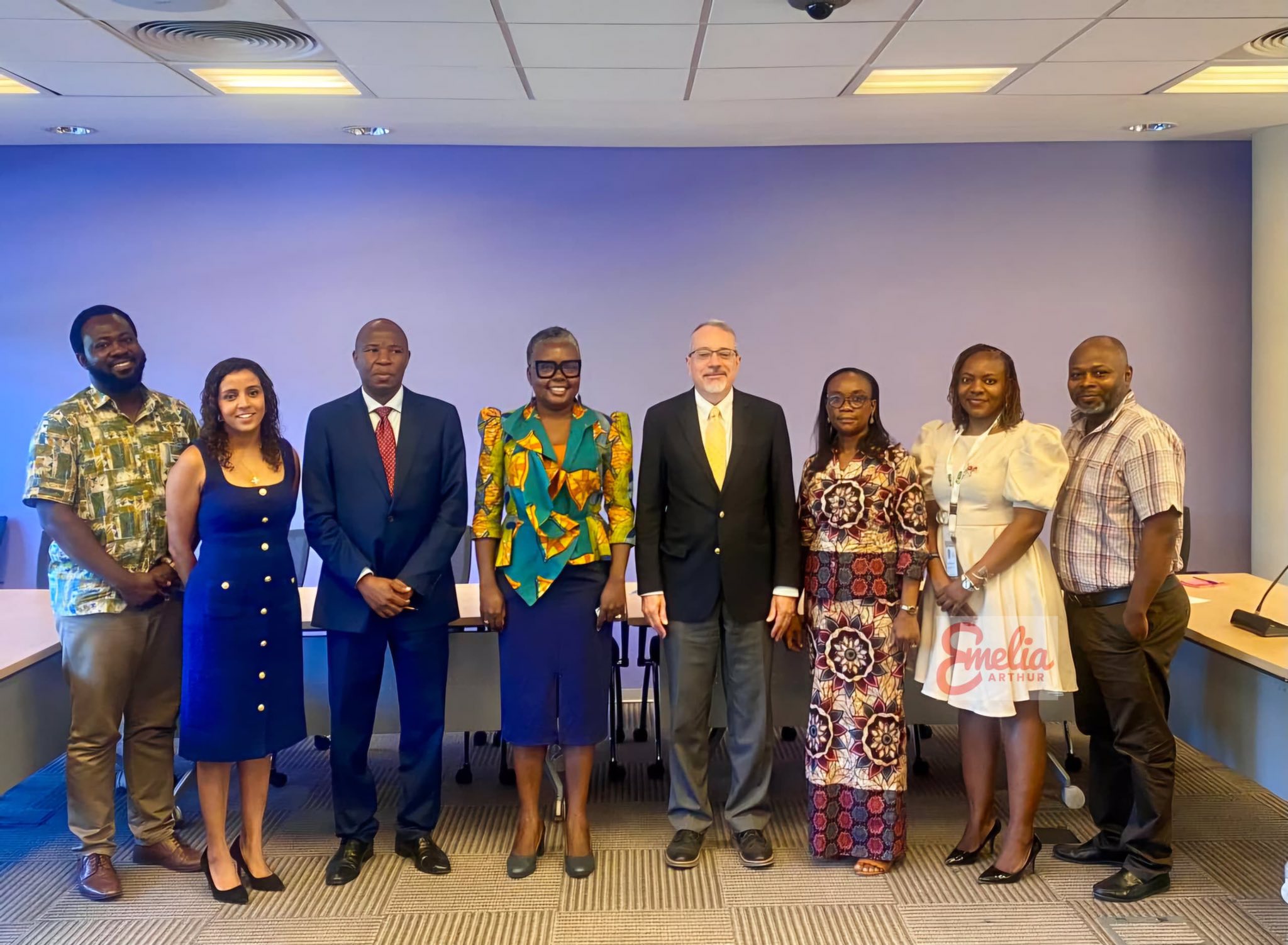
    Minister for Fisheries and Aquaculture, Emelia Arthur, has announced that Bloomberg and Oceana, as well as other international partners, are supporting the data-gathering efforts in the fisheries sector to aid policy and project planning. 

    The sector minister revealed this information following a meeting at the World Bank Office in Accra to discuss key strategies for advancing Ghana’s fisheries sector on Monday. 

    “With increased investment and technical support, I’m confident we can unlock the full potential of our fisheries sector and drive sustainable growth in our coastal regions,” she stated.

    Bloomberg is a reputable entity that delivers trusted data, business and financial information, news, and insights to its customers to facilitate informed decision-making, whereas Oceana, an international advocacy organization that focuses entirely on ocean conservation, focuses on law, science, strategic communications, and grassroots activism to win policy change around the world.

    The May 12 meeting focused on job creation, coastal infrastructure development, and promoting gender empowerment in the coastal communities.

    “I am grateful for the World Bank’s commitment to supporting our initiatives and their willingness to collaborate on a shared development vision,” she wrote.

    She welcomed the proposal for further technical engagement to solidify project plans.

    The World Bank’s job creation agenda aligns with the Ministry’s goals, particularly in developing Ghana’s aquaculture industry and creating sustainable livelihoods for women and youth in coastal areas.

    Meanwhile, the Ministry of Fisheries and Aquaculture has inaugurated the Governing Council of the Fisheries Commission with a firm mandate to scale up the fight against Illegal, Unreported, and Unregulated (IUU) fishing activities in Ghana’s waters.

    This development comes at a critical time when Ghana is facing increased international scrutiny over its fisheries management practices. The European Commission has issued a “yellow card” warning to Ghana, signaling the country’s potential classification as non-cooperative in the global fight against IUU fishing.

    While the yellow card does not yet carry trade restrictions, prolonged non-compliance could lead to a red card, which would bar Ghana from exporting fishery products to the European Union market.

    To avoid such sanctions and restore international confidence, the Minister for Fisheries and Aquaculture, Emelia Arthur, outlined a number of decisive actions at the inauguration of the Commission’s new board. These include delisting non-compliant vessels and strengthening enforcement across the industry.

    “This is not just an administrative appointment—it is a national calling,” the Minister told the newly sworn-in council. “Our sector feeds millions, employs thousands, and has the potential for economic transformation. We must pursue a sustainable, well-governed, and resilient fisheries and aquaculture sector that delivers food security, decent jobs, and economic growth.”

    As part of reforms, the Ministry is also preparing to reintroduce a revised fisheries law after the previous legislation failed to gain parliamentary approval. The new legal framework is expected to align Ghana’s policies with international commitments and improve governance within the sector.

    Chairperson of the newly constituted Council, Professor Wisdom Akpalu, acknowledged that the fisheries sector has suffered setbacks over the years, making it vulnerable to IUU activities. He emphasized the need for urgent reforms, especially in monitoring, control, and surveillance.

    One of the major issues flagged includes illegal transshipment at sea, involving juvenile pelagic species exchanged between industrial trawlers and local canoes—activities that breach both local and international regulations.

  • Bloomberg ranks Ghana cedi as the best performing currency as of April 2025

    Bloomberg ranks Ghana cedi as the best performing currency as of April 2025

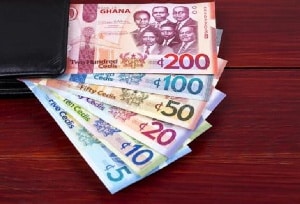
    The Ghana cedi has been ranked as the best-performing currency globally for the month of April 2025, appreciating nearly 16% against the US dollar, according to data from Bloomberg.

    This impressive appreciation has played a significant role in easing inflationary pressures in the country, bringing Ghana’s inflation rate to its lowest level in eight months. The cedi is currently trading at GH₵13.4 to the dollar.

    This comes after the Ghanaian cedi performed poorly against the US dollar, depreciating significantly and reaching its lowest point of the year at approximately GH₵16.71 per dollar in October 2024.

    Government Statistician Alhassan Iddrisu announced on Wednesday that consumer inflation dropped to 21.2% in April, down from 22.4% in March. Monthly inflation also slowed to 0.8%, largely due to reduced import costs made possible by the cedi’s strength.

    Food and non-food inflation also saw notable declines. Food inflation fell from 26.5% to 25%, while non-food inflation eased from 18.7% to 17.9%. Iddrisu credited the cedi’s appreciation for the drop, stating that the currency’s surge had helped curb the cost of imported goods.

    Bloomberg’s analysis confirmed that since April began, the cedi has outperformed all other global currencies against the dollar, boosting consumer confidence and reducing inflationary pressures tied to import prices.

    However, despite the positive outlook, financial analysts believe the Bank of Ghana (BoG) is unlikely to lower interest rates in the immediate term.

    Dr. Agyapomaa Gyeke-Dako, an economist at the University of Ghana Business School, explained that the central bank had taken a tightening stance in its last policy move to absorb excess liquidity. As a result, any decision to cut rates will likely depend on continued improvements in inflation, especially in the face of rising utility costs.

    In March, the Bank’s Monetary Policy Committee raised the benchmark interest rate by 100 basis points to 28% in a surprise move aimed at curbing inflation. The central bank has since signaled a cautious approach, committing to monitor economic conditions before making further changes to its policy stance.

    “It tightened at its last meeting to mop up any excess liquidity,” said Dr. Agyapomaa Gyeke-Dako, an economist and senior lecturer at the University of Ghana Business School. “So now the central bank action going forward may not readily reduce the monetary policy rate yet because there might still be some threats to inflation coming from the hikes in utility prices.”

    The Monetary Policy Committee (MPC) had surprised markets in March with a 100 basis-point hike, raising the key rate to 28% as part of efforts to stabilise prices. The central bank has indicated it will continue to assess inflation trends before easing its stance.

    “Easier monetary conditions could rekindle inflationary pressures,” warned Mark Bohlund, senior credit analyst at REDD Intelligence, cautioning that the Bank of Ghana may hold off on any near-term rate cuts.

    On issues regarding the volatility of the cedi, the BoG Governor Johnson Asiamah has stated that there is cautious optimism for rate relief later in the year if disinflation continues. 

    “As the monetary authority sees the next readings of inflation and we see declines, the committee will reassess the scope for a gradual easing in the policy stance.”

    In the wake of the cedi’s recent surge against the U.S. dollar, some critics have accused the government of propping up the local currency by offloading foreign reserves. However, the Bank of Ghana has strongly denied these claims, insisting that the currency’s gains are not the result of artificial intervention.

    According to the central bank, the cedi’s improved performance is largely driven by a steady buildup of foreign reserves, which has been made possible through the implementation of sound economic policies and strategic initiatives aimed at boosting forex inflows. These efforts, officials say, are strengthening the currency on a more sustainable basis.

    Despite this progress, inflation in Ghana remains above the Bank of Ghana’s target range of 6 to 10 per cent—a trend that has persisted since September 2021, when a debt crisis triggered a steep cedi depreciation and sharply increased the cost of imports. The Monetary Policy Committee expects inflation to ease to around 16 per cent by the end of 2025 and gradually return to the target band by mid-2026.

    The International Monetary Fund (IMF), which is working closely with Ghana under a support programme, also expressed optimism. 

    “It makes us very confident that inflation is going to go down in the next few months toward the program objectives,” said Stéphane Roudet, IMF Mission Chief to Ghana, during a recent briefing in Washington.

  • Cedi is trading at GHS15.67 per US dollar as of September – Bloomberg

    Cedi is trading at GHS15.67 per US dollar as of September – Bloomberg

    Ghana’s cedi continues to struggle against major currencies, including the US dollar. Despite showing some relative stability in July, the cedi has recently weakened by 0.1%, trading at GH¢15.67 per dollar.

    This decline exacerbates the challenges facing the Ghanaian economy, influenced by fluctuating business prices.

    Bloomberg reports that Ghana’s dollar bonds maturing in 2032 have risen slightly by 0.2 cent to 52.36 cents on the dollar as of September 11, 2024, in London.

    On a positive note, inflation in Ghana eased from 20.9% to 20.4% in July 2024. This slowdown may prompt the Bank of Ghana’s Monetary Policy Committee to consider an interest rate cut in its upcoming meeting.

    Currently, with the policy rate set at 29%, businesses and investors are cautiously optimistic about future economic growth and potential election-related risks. The Bank of Ghana aims to reduce inflation to between 13% and 17% by the end of 2024.

    Overall, the cedi has depreciated nearly 1% against the dollar over the past month and has lost almost 24% of its value this year, according to Bloomberg.

  • Dollar expected to hit GHS16 by end of 2024 – Bloomberg

    Dollar expected to hit GHS16 by end of 2024 – Bloomberg


    A renowned financial and media corporation, Bloomberg, has forecasted further depreciation of the Ghana cedi by the conclusion of 2024.

    As per Bloomberg’s projection, the cedi is anticipated to hit GH¢15.98 against the dollar.

    Reports from the Ghana Association of Forex Bureaux reveal that the cedi has experienced a depreciation of more than 14% since the start of the year.

    Presently, the dollar is trading at GH¢14.75 in the retail market.

    In terms of its performance on the global stage, Bloomberg noted that the cedi is undergoing its lengthiest period of weakness against the dollar and other major currencies.

    The local currency has not shown significant gains against the dollar in the past 22 trading sessions.

    “This represents the longest streak as per Bloomberg’s compiled data dating back to 1994.”

    Bloomberg elucidated its cedi projection methodology, stating that its “forward pricing is computed based on the spot rate and the interest rate differentials between the two currencies for the forward’s tenor.”

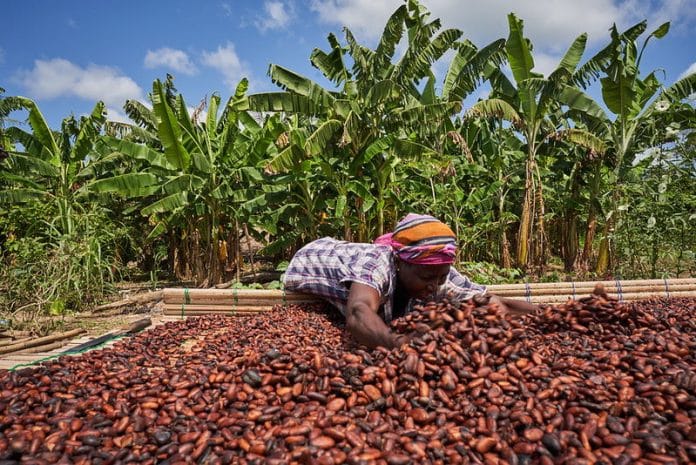
    Bloomberg attributes the dwindling dollar supply to “a decline in cocoa revenue, with exports plummeting by almost a third to $508 million in the first two months of the year due to adverse weather, diseases, and fertilizer shortages.”

    “It is the longest streak according to data compiled by Bloomberg going back to 1994.”

    The cedi’s depreciation has been linked to a deficit in dollar supply to meet the escalating demand.

    “forward pricing is calculated based on the spot rate and the interest rate differentials between the two currencies for the tenor of the forward.”

    Bloomberg blames the decline in dollar supply on “a slump in cocoa earnings, with exports dropping by nearly a third to $508 million in the first two months of the year due to adverse weather, disease, and fertilizer shortages.”

  • Abu Dhabi emerges as premier wealth hub for billionaires – Bloomberg

    Abu Dhabi emerges as premier wealth hub for billionaires – Bloomberg

    For decades, the world’s wealthiest individuals opted to secure their assets in various overseas havens, ranging from the Cayman Islands and Switzerland to the British Virgin Islands.

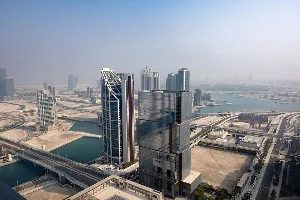
    However, there is a notable shift in this trend as a new wealth hub gains immense popularity among billionaires—the towering skyline of Abu Dhabi.

    Prominent figures like cryptocurrency’s wealthiest man, Zhao Changpeng, India’s Adani family, hedge fund billionaire Ray Dalio, and Russian steel magnate Vladimir Lisin are among the numerous high-net-worth individuals establishing special purpose vehicles (SPVs) in Abu Dhabi’s international financial center this year, as reported by Bloomberg News after reviewing hundreds of corporate filings in the United Arab Emirates.

    The number of SPVs in Abu Dhabi Global Market (ADGM) has surged to over 5,000 from just 46 in 2016, as per data compiled by M/HQ, a leading wealth advisory firm specializing in their establishment.

    While the specific details of where billionaires relocated their assets, the reasons behind the move, or the contents of each SPV remain undisclosed, the substantial increase in wealth flowing into Abu Dhabi reflects a broader global shift in how the world’s affluent individuals safeguard their fortunes.

    “ADGM is a great place to set up SPVs and it’s increasing sharply,” said Mr Bhaskar Dasgupta, a corporate adviser who previously worked for the Abu Dhabi free zone. “We’re seeing more high-net-worth individuals moving from the BVI (British Virgin Islands), Caymans, Mauritius and Singapore to here.”
    Billionaire arrivals

    SPVs, popularized by junk-bond king Michael Milken in the late 1980s, serve as separate legal entities and have become the preferred structures for high-net-worth individuals aiming to compartmentalize their financial risk.

    Abu Dhabi positions its SPVs as holding companies managing wealth, with the flexibility to encompass diverse assets such as property and equity.

    This influx of financial activity to the UAE signifies a new role for its US$509 billion (S$684 billion) economy as the ruling Al Nahyan family endeavors to diversify away from oil dependence.

    Abu Dhabi’s prosperity in this regard coincides with increased scrutiny faced by low-tax jurisdictions like the British Virgin Islands and the Cayman Islands from officials worldwide, leading to a decline in new corporate registrations.

    Bhaskar Dasgupta, a corporate adviser with previous experience in the Abu Dhabi free zone, attests to ADGM’s appeal, stating, “ADGM is a great place to set up SPVs, and it’s increasing sharply. We’re seeing more high-net-worth individuals moving from the BVI (British Virgin Islands), Caymans, Mauritius, and Singapore to here.”

    The emirate’s attractiveness extends beyond its financial benefits, encompassing factors such as geopolitical stability, residency incentives, and the presence of sovereign wealth funds and influential private investment firms. Abu Dhabi’s strategic positioning and comprehensive regulatory framework contribute to its success in luring more SPVs.


    The allure of the Middle Eastern business hub lies in its ability to safeguard assets from foreign jurisdictions and leverage the UAE’s double tax treaty network, as disclosed by individuals familiar with the matter.

    The UAE’s double tax treaty facilitates tax minimization for affluent individuals with companies housed within the SPV, contingent on agreements between the Gulf state and the additional countries where they conduct business.

    Wealth advisers and international investors, who spoke anonymously, highlight several advantages offered by the emirate. Abu Dhabi and nearby Dubai have evolved into thriving global cities, offering long-term residency and, in some instances, UAE passports to those making substantial investments.

    Additionally, Abu Dhabi boasts sovereign wealth funds overseeing assets exceeding US$1 trillion and influential private investment firms. The UAE, in recent years, has served as a haven for those navigating regulatory challenges overseas.

    Prominent figures like Zhao, the former CEO of Binance, found Dubai appealing, citing its pro-crypto policies. Despite legal issues leading to guilty pleas for anti-money laundering and US sanctions violations in November, Zhao established multiple SPVs in Abu Dhabi in 2021, holding both UAE and Canadian citizenship.

    The international financial free zone, inaugurated in 2015, has gained attractiveness due to the UAE refraining from sanctioning countries like Russia while Western nations increased restrictions.

    Simultaneously, countries like Switzerland, Britain, and certain Caribbean nations have tightened scrutiny on individuals linked to countries facing sanctions.

    Abu Dhabi’s structures are gaining favor, even among the royals. Subsidiaries of Royal Group, controlled by National Security Adviser Sheikh Tahnoon bin Zayed Al Nahyan, the UAE President’s brother and a prominent dealmaker, have established several ADGM SPVs in the latter half of this year, according to filings and insiders.

    The success of Abu Dhabi in attracting more SPVs is attributed, in part, to the strategic utilization of its golden visa and passport programs over the past few years, fostering a trend of billionaires making the Gulf state their more permanent abode.

    Armand Arton, founder of citizenship firm Arton Capital, notes this trend, emphasizing that as billionaires feel welcomed and secure, they increasingly consider relocating both their businesses and assets, with ADGM emerging as a preferred destination.

  • Wealthiest families globally saw their fortunes increase by $1.5 trillion in 2023

    Wealthiest families globally saw their fortunes increase by $1.5 trillion in 2023

    Bloomberg has reported that the world’s 25 wealthiest families experienced unparalleled success in 2023, marking a period of exceptional financial growth and prosperity.

    Abu Dhabi’s Al Nahyan rulers and the proprietors of the esteemed French luxury fashion house Hermès have witnessed a significant surge in their wealth during 2023, as reported by Bloomberg.

    Surpassing the Walton clan of the United States, the Al Nahyans, leaders of the oil-rich Middle-Eastern emirate and owners of the UK soccer club Manchester City, have claimed the title of the world’s wealthiest family, marking the first instance in five years that a family other than the heirs of Walmart has held this distinction, as reported by the publication.

    Meanwhile, the family that controls Herms – including the brand’s artistic director Pierre-Alexis Dumas and executive chairman Axel Dumas – added $56 billion worth of wealth in 2023 to place third on Bloomberg’s list.

    The Waltons, chocolate tycoons the Mars family, and oil billionaires the Kochs are the US’s three representatives in the outlet’s top 10.

    The ultra-rich getting richer has been a consistent theme in 2023, with stock prices rebounding and the world economy tending to hold up better than gloomy forecasters had expected at the start of the year.

    The world’s two richest men – Tesla CEO Elon Musk and Amazon founder Jeff Bezos – have added over $150 billion worth of wealth alone, according to Bloomberg’s Billionaires Index.

    Indian tycoon Gautam Adani and American socialite and philanthropist Julia Koch are the only two of the world’s 20 richest people who’ve gotten poorer this year, per the outlet.

  • Ghana’s Finance minister juggles budget challenges amid debt restructuring, election Pressure

    Ghana’s Finance minister juggles budget challenges amid debt restructuring, election Pressure

    Ken Ofori-Atta faces the challenging task of presenting a national budget for 2024 amidst a debt restructuring process, all while adhering to the fiscal constraints set by an International Monetary Fund (IMF) program.

    Complicating matters further, Ghana finds itself excluded from global capital markets. Additionally, the upcoming election, where Vice President Mahamudu Bawumia is anticipated to contend against former leader John Mahama, adds a political dimension to the fiscal scenario.

    The government is under pressure to rebuild investor confidence and restore credibility, especially given the country’s descent into a debt trap.

    Demonstrating a firm commitment to increasing revenue and restraining expenditures is crucial. Considering the minister’s track record, having implemented levies in the previous year, there is a possibility of additional fiscal measures being announced during the budget presentation on Wednesday.

    Despite the challenges, some early indicators suggest positive developments in this regard.

    “Following a strong performance in the year to date, we expect the 2024 budget to sustain the expansion in government revenue through fiscal reforms,” according to Yvonne Mhango of Bloomberg Economics.

    Ofori-Atta might announce a shift toward a modest primary budget surplus for the next year, aiming to prevent a further deterioration of liabilities.

    This move is expected to enhance the government’s standing with creditors as it seeks their approval for potential losses and secures the next tranche of a $600 million IMF loan.

    In a positive development this month, Fitch upgraded Ghana’s local-currency credit rating from restricted default following the successful completion of a domestic restructuring, resulting in substantial savings on debt-servicing.

    However, the challenges persist. The current high level of total public debt, standing at around 100% of gross domestic product (GDP) before the recent overhaul, leaves little room for the typical election-year spending boost.

    The government is mandated to reduce this figure to 55% of GDP by 2028. A weakened currency has led to increased prices, triggering protests in the capital.

    Amidst food inflation exceeding 40% and record-high interest rates, Ofori-Atta faces the daunting task of persuading a weary electorate that the fiscal crisis is a temporary setback.

  • Rot-causing disease affects Cocoa output, hiking prices

    Rot-causing disease affects Cocoa output, hiking prices

    Cocoa prices have surged to a 13-year high due to heavy rainfall across West Africa, which has accelerated the spread of a rot-causing disease, posing a threat to cocoa output in major producing countries.

    Farmers in Ivory Coast, Ghana, and Nigeria have reported the presence of blackpod disease, causing cocoa pods to blacken and rot. This disease can have a significant impact on the quality and quantity of cocoa beans, potentially disrupting the supply chain. According to Fuad Mohammed Abubakar, the head of Ghana Cocoa Marketing Co., the disease can be devastating for cocoa production.

    Farmers in Ivory Coast are concerned about the mid-crop’s output and quality, expecting it to be disappointing compared to the previous year. This raises worries that the smaller harvest may not be sufficient to offset any shortfall from the main crop.

    Cocoa is harvested twice a year, with the main crop harvested mostly from October to March and the mid-crop from May to August.

    London cocoa futures have experienced a remarkable surge of over 20% this year. On Monday, the most active futures reached £2,544 per ton, marking the highest level since mid-2010.

    In Nigeria, farmer Sola Ogunsola reported significant damage to cocoa farms in coastal areas, resulting in the loss of developing pods. Additionally, heavy rainfall has made roads impassable, hindering the application of chemical treatments in plantations and the transportation of cocoa to ports.

    Ivory Coast farmers have sent 2.24 million tons of cocoa to ports during the current season, slightly below the estimated 2.29 million tons from the previous year.

    Furthermore, the return of El Niño conditions is adding support to cocoa prices, as the weather phenomenon typically brings hot and dry conditions to West Africa, increasing the risk of a potential 10% drop in output, according to Bloomberg Intelligence estimates.

  • Cedi among worst-performing African currencies – Bloomberg report shows

    Cedi among worst-performing African currencies – Bloomberg report shows

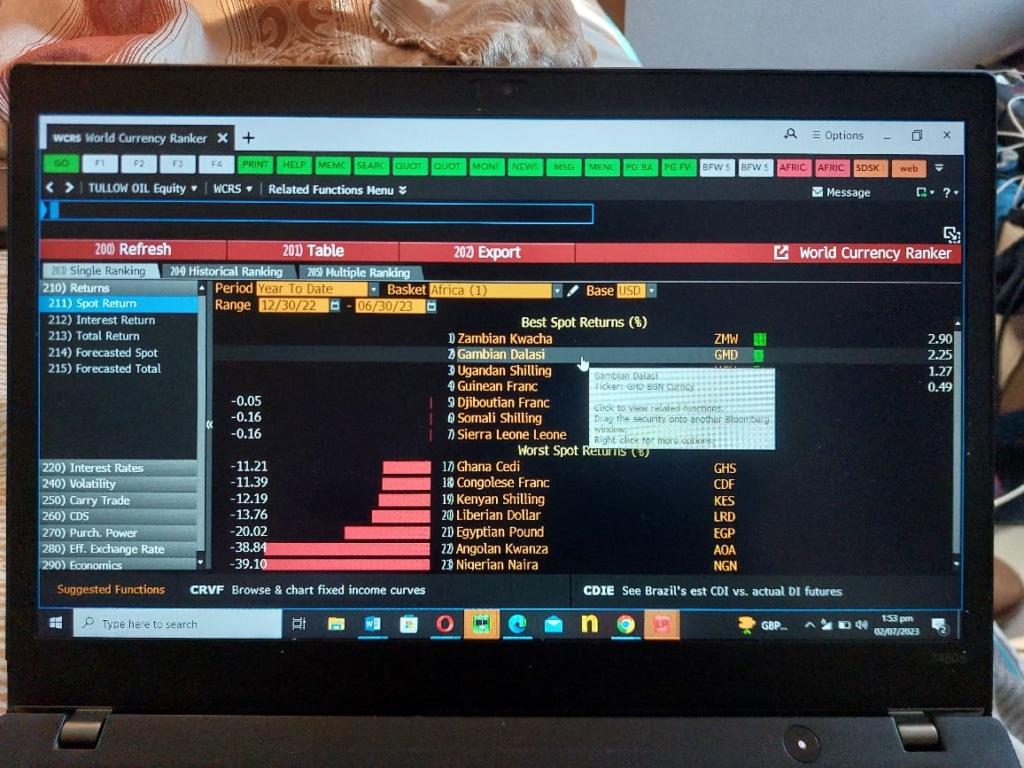
    Ghana’s cedi has been ranked as one of the worst-performing African currencies against the US dollar, according to Bloomberg‘s World Currency Ranker.

    The cedi ranked 17th on the list, with a year-to-date depreciation of 11.21 percent as of July 3, 2023. The Zambian kwacha topped the list as the best-performing African currency, with a year-to-date appreciation of 9.62 percent.

    The cedi’s performance was slightly better in the first half of 2023 compared to the same period in 2022, when it lost about 20 percent of its value on the interbank exchange market, according to the Bank of Ghana.

    On the retail market, the cedi was selling at GH¢11.90 to the US dollar on July 3, 2023, while the Bank of Ghana quoted GH¢11.00 as of 8:00 am on Monday.

    The cedi has made some gains against the US dollar in the past three months of 2023, following the approval of Ghana’s IMF-supported program, the Extended Credit Facility of $3 billion, aimed at restoring macroeconomic stability and growth.

    The program was approved by the IMF board on May 17, 2023, after months of negotiations and delays. Since then, the cedi has appreciated by about 9 percent on the retail market.

    However, the cedi’s recovery may be short-lived, as the Economist Intelligence Unit (EIU) has projected that it will depreciate by 22 percent in 2023, making it the third weakest performing currency on the continent.

    The EIU cited Ghana’s high public debt, large fiscal deficit, and low foreign exchange reserves as some of the factors that will weigh on the cedi’s outlook.

    Meanwhile, the Nigerian naira was identified as the worst-performing African currency by Bloomberg, having lost about 39 percent of its value against the US dollar.

    The Angolan kwanza and the Egyptian pound also ranked among the worst performers, with year-to-date losses of 38.8 percent and 20 percent, respectively.

  • Bloomberg records 11.21% cedi depreciation against the dollar in first half of 2023

    Bloomberg records 11.21% cedi depreciation against the dollar in first half of 2023

    The cedi experienced a depreciation of approximately 11.21% against the US dollar in the first half of this year, according to Bloomberg.

    The local currency cedi concluded the first half of this year with a stronger performance compared to the same period last year.

    However, it was still categorized among African currencies with relatively weak returns.

    On the interbank market, the Bank of Ghana reported a year-to-date depreciation of the cedi against the dollar of about 20%. Currently, in the retail market, the exchange rate stands at ¢11.68 to the dollar, while the Bank of Ghana (BoG) quotes it at ¢10.99.

    Over the past three months, the cedi has exhibited a favorable performance against the US dollar.

    Following the announcement of an approved International Monetary Fund (IMF) programme in the first quarter of 2023, the cedi has demonstrated resilience against the US dollar. The local currency has gained approximately 9% on the retail market since then.

    However, some analysts argue that the local currency’s strength may be attributed to the suspension of principal and interest payments on external debt in December 2022.

    Recent reports suggest that demand pressures for the US dollar have eased, which has been favorable for the cedi. This trend is expected to continue this week, assuming no major changes occur.

    Meanwhile, according to Bloomberg, the Nigerian Naira is currently the worst-performing African currency this year. It has experienced a devaluation of around 39% against the US dollar. The Angola Kwanza and the Egyptian pound follow closely behind with year-to-date losses of 38.8% and 20%, respectively.

    During the first quarter of 2023, the Bank of Ghana reported a depreciation of the cedi against the dollar at 22.1%.

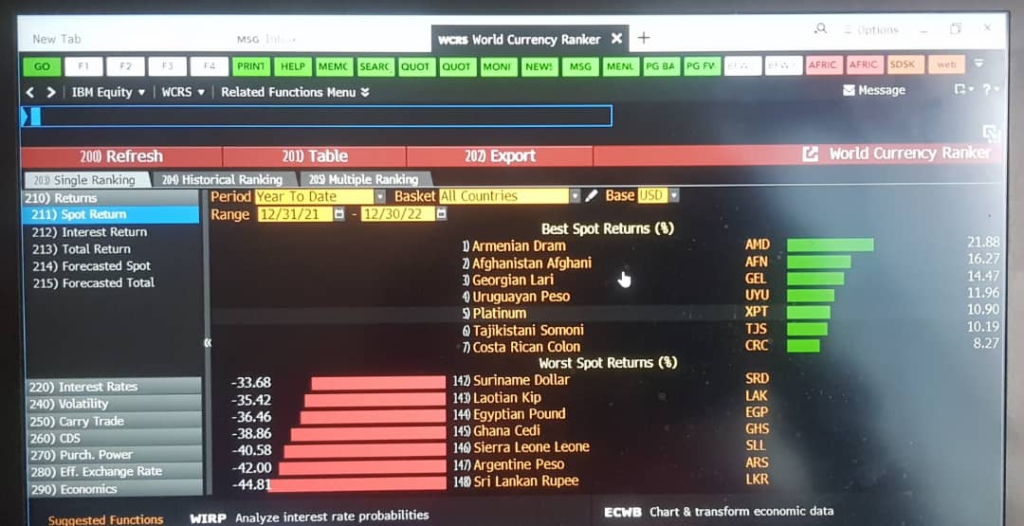
    According to Bloomberg, in 2022, the Ghanaian cedi experienced a depreciation of approximately 38.86% against the US dollar. This decline in value occurred amidst challenging economic conditions in Ghana.

    On a global scale, the Ghanaian currency ranked 145th. The Sierra Leone Leone secured the 146th position, followed by the Argentina Peso and the Sri Lankan Rupee at 147th and 148th, respectively.

  • Ghana misses restructuring target, Bloomberg says

    Ghana misses restructuring target, Bloomberg says

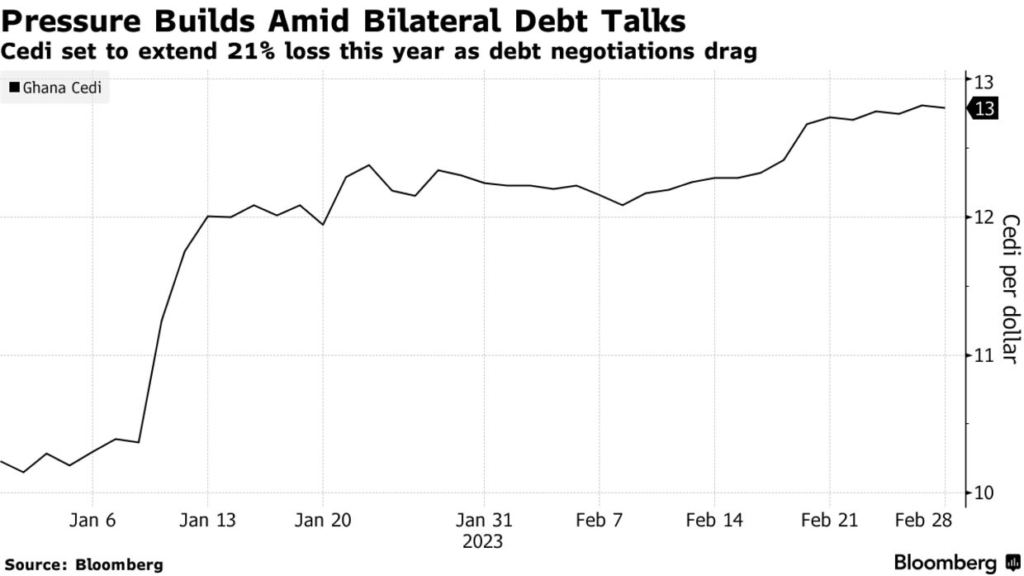
    Ghana’s local currency, cedi, the second-worst performing currency in the world this year, is doomed to further suffering after the nation missed a deadline it set for itself to restructure its bilateral debt and go closer to receiving international aid.

    In order to be eligible for a $3 billion International Monetary Fund program, Finance Minister Ken Ofori-Atta wanted to negotiate a restructuring agreement with bilateral creditors by the end of February.

    Ghana has only partially finished the exchange program’s domestic debt component so far.

    After the Lebanese pound, the cedi has underperformed among the more than 100 currencies tracked by Bloomberg, falling 21% versus the dollar in 2023.

    Still, the missed deadline doesn’t automatically derail the talks.

    Rather, it highlights the difficulties Ghana faces as it tries to reduce its debt load and contend with critics ranging from international bondholders to local trade unions.

    Ghana misses restructuring target in blow to ailing currency

    “For the foreseeable future the cedi will continue to be volatile until we are able to make substantial progress on the external debt restructuring front,” Kweku Arkoh-Koomson, an economist at Databank Group, said by phone.

    “The IMF deal is what will cause a clear stability in the cedi.”

    Ghana is trying to restructure most of its public debt, estimated at ¢576 billion ($45 billion) at the end of November.

    Local bondholders have been asked to voluntarily exchange ¢130 billion of debt for new bonds that will pay between 8.35% and 15% interest, compared with an average of 19% on old bonds.

    Ghana stands to ask external creditors to write off as much as 50% of the debt it owes them — far higher than the 30% the government initially considered, S&P Global Ratings said in a report Tuesday.

    “Uncertainty on when the rest of the restructuring will be completed” is influencing cedi volatility, said Courage Boti, an economist at Accra-based GCB Capital Ltd.

    “To the extent that those things are hanging in the balance now — in that timelines are not very certain — the volatility of the cedi will continue.”

    To date, local investors have exchanged ¢87.8 billion, or 67.5% of bonds under restructuring, for new securities, against an overall target of 80%.

    The country will have to reorganize obligations owed to local pension funds to complete the domestic exchange, a move that’s running into criticism from trade unions. 

    The government aims to start “substantive” discussions with international bondholders and their advisers in the coming weeks, Ofori-Atta said last month, offering eurobond holders some losses while seeking to reschedule payments on bilateral obligations.

  • Elon Musk reclaims title as world richest person after loosing $200bn

    Elon Musk reclaims title as world richest person after loosing $200bn

    Bloomberg’s calculations, has again titled Elon Musk as the world’ s richest person in the world.

    In December 2022, Bernard Arnault, CEO of the French luxury retailer LVMH (LVMHF), deposed the Tesla CEO from the top rank, moving Elon Musk to number two on the list for more than two months. Yet as of Monday, according to Bloomberg, a surge in Tesla stock has sent Musk back to the top of the Billionaires Index.

    According to Bloomberg, as of Monday after the markets closed, Musk’s net worth was $187.1 billion, barely surpassing Arnault’s $185.3 billion fortune.

    While Tesla (TSLA) stock declined steeply last year amid Musk’s problem-plagued acquisition of Twitter and a broader market downturn in tech, shares for the electric vehicle maker have since surged in 2023.

    Musk might hold the current title of the richest person in the world, but he also holds a record for the biggest fortune ever lost by anyone in history. December 2022, Musk became the first person ever to lose $200 billion in wealth — after his net worth slid from $340 billion in November, 2021 to $137 billion in December 2022.

  • Peter Obi becomes top pick for Nigerian President – Bloomberg claims

    Peter Obi becomes top pick for Nigerian President – Bloomberg claims

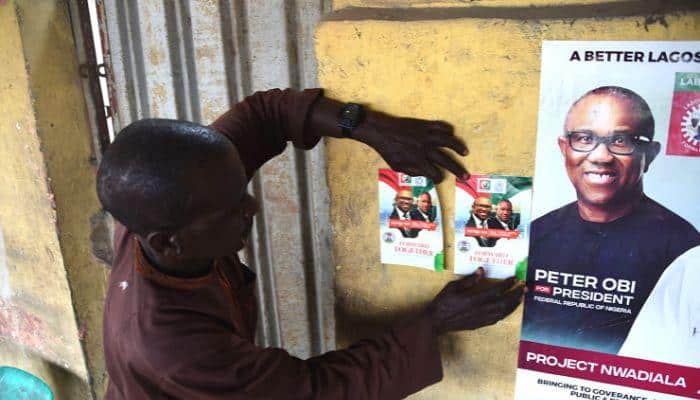
    A recent survey conducted by Bloomberg, the New York-based international television and media conglomerate, has concluded that Nigerian businessman and former governor of the state of Anambra Peter Obi is still the front-runner to lead the country as its next president.

    Two-thirds of respondents said in the polls published Friday they intend to vote for Obi, a third-party candidate, in elections scheduled for February 25, 2023.

    The results of the survey conducted for Bloomberg News by Premise Data Corp. a San Francisco based data company, were published on Friday – 15 days before the vote to choose President Muhammadu Buhari’s successor. Premise Data Corp has so far conducted six polls for Bloomberg, and in all Obi has maintained an unassailable lead.

    Of the 93% of participants who said they’ve decided how to vote, 66% named Obi as their preferred choice. Obi scored a slightly higher 72% among decided respondents in an earlier Premise poll that was released by Bloomberg in September as the official election campaign kicked off.

    While Obi’s campaign has generated a momentum that the two established forces in Nigerian politics were not expecting, the ruling All Progressives Congress and main opposition Peoples Democratic Party insist that he cannot triumph on Feb. 25. They say his appeal is too thinly spread across the country’s states and have derided polling that has almost universally put the candidate of the much smaller Labour Party in first place.

    Still, Obi has emerged as the most popular candidate in six polls including the two surveys conducted by Premise for Bloomberg. Another poll released this week by Lagos-based media and data company Stears predicted that Obi will win in the event of high turnout, but lose to Bola Tinubu of the APC if participation is weak.

    Dismissed by his opponents as a “social media candidate,” Obi’s rise has been fueled by disenchantment with the status quo. His campaign has attracted an enthusiastic following known as “Obidients” — initially online but increasingly at rallies and marches — even if the man they wish to help to Nigeria’s biggest ever electoral upset hardly has an anti-establishment background.

    Pollsters say they account for Nigeria’s electoral makeup when designing their surveys.

    San Francisco-based Premise polled 2,384 Nigerians from Jan. 26 to Feb. 4 via a smartphone app. Submissions were selected from quotas developed by age, gender and location across the country’s six geopolitical zones, the company said. Results were then weighted against the original quotas to ensure national representation.

    About 44% of Nigerians own smartphones, according to the Alliance for Affordable Internet. Premise estimates that the access rate rises to 74% among the voting age population.

    The candidates of the two parties that have ruled Nigeria since the restoration of democracy in 1999 finished in a distant second and third. Tinubu obtained 18% of decided voters and the PDP’s Atiku Abubakar tallied 10%.

    A former governor of the southeastern Anambra state and ex-chairman of Lagos-listed Fidelity Bank Plc, Obi is running on the ticket of the Labour Party, whose presidential candidate garnered only 0.02% of votes in the last election four years ago. The APC and PDP dominate both chambers of parliament, and 35 of the country’s 36 governors come from their ranks.

    While widespread frustration with worsening economic hardship and growing insecurity has propelled Obi’s campaign further than many initially felt possible, his party lacks the nationwide organizational capabilities of the APC and PDP — which are experienced at mobilizing voters across the West African country of approximately 200 million people. Vote buying is also common in Nigerian elections which provides an advantage to better resourced parties.

    State Threshold

    The constitution also dictates that a candidate acquiring the most votes in the election can only win the presidency in the first round if they secure over 25% in more than two-thirds of the states. If no one crosses that threshold, Nigeria will have its first runoff between whoever polled best overall and the remaining contender who scored majorities in the higher number of states.

    The APC insists the rules make a Labour Party victory impossible as its Christian candidate will not be able to accumulate a quarter of the votes in states across the predominantly Muslim north or Tinubu’s southwestern stronghold that includes the commercial hub of Lagos.

    “Peter Obi cannot win the election,” Nasir el-Rufai, the APC governor of the northern Kaduna state, said in a television interview this month. “He doesn’t have the number of states.” Out of Nigeria’s six so-called geopolitical zones, 43% of the country’s 93.5 million registered voters are located in the northwest and southwest.

    Another factor that will have a significant impact on the result is the level of participation — turnout in 2019 was the lowest ever at only 35%.

    Source: businessday.ng

  • Aliko Dangote earns $411m so far in 2023 – Report

    Aliko Dangote, the richest man in Africa, experienced a huge decrease in his net worth in 2022, but thanks to a recent rise in his wealth numbers since the year’s beginning, he is swiftly recovering the losses from the previous year.

    According to the Bloomberg Billionaires Index, Aliko Dangote has increased his net worth by more than $400 million since the beginning of the year, making him Africa’s richest man for the 12th straight year despite facing a $400 million wealth decline in 2022.

    The Nigerian cement magnate, who derives the majority of his wealth from an 86 percent stake in Dangote Cement, has seen his net worth rise by $411 million since the beginning of 2023, from $18.7 billion on January 1 to $19.1 billion at the time this report was written, according to data tracked by Billionaires.Africa.

    The $411 million increase in his net worth can be used to explain the recent rise in the market value of his 86 percent interest in Dangote Cement. At the beginning of the year, the company’s shares were worth N261 ($0.567), but as of this writing, they are worth N270 ($0.586).

    At the time of writing, Aliko Dangote’s stake in his flagship cement business was worth $8.42 billion, with an additional $5.15 billion linked to his closely held fertilizer plant, which has the capacity to produce up to 2.8 million metric tonnes of urea per year.

    Dangote is on the verge of becoming the first African and Black person to amass a fortune of $30 billion. With the commissioning of his 650,000-barrel-per-day Dangote Refinery and Petrochemical Ltd set to take place this year, the billionaire is set to enjoy an $18 billion boost to his net worth.

    He is poised to hold a 90 percent stake in the refinery, which will bring his total worth to well over $30 billion, solidifying his place as a leading player in the global petroleum industry.

  • $672m back-tax demanded from MTN Group by GRA withdrawn

    $672m back-tax demanded from MTN Group by GRA withdrawn

    The largest wireless carrier in Africa, MTN Group Limited, according to Bloomberg has declared that a tax bill for GH8.2 billion ($672 million) it received from the Ghana Revenue Authority (GRA) has been cancelled.

    According to a filing by MTN on Friday, the decision was reached following “extensive and productive discussions” over the course of a 21-day negotiation period between the revenue authority and the mobile phone provider (February 3, 2023).

    The Ghana Revenue Authority surprised Ghana’s largest corporate taxpayer last month with an unexpected claim for the years 2014 to 2018. This led to the decision to drop the tax payment.

    The potential fine represented about 5% of MTN’s market capitalisation and the government’s decision “removes a threat to this year’s shareholder returns,” Bloomberg Intelligence analyst John Davies said in a note.

    Some of the biggest firms in the country have been under pressure from the Authority to pay millions in overdue taxes.

    Similar bills were sent to Gold Fields Limited, Kosmos Energy Limited, and Tullow Oil Plc.

    The businesses all refute the government’s assertions.

    Ghana’s rising debt and high loan servicing costs prevented it from accessing foreign capital markets.

    The government has been forced to allocate most of its revenue to service an estimated GH¢576 billion of public debt.

    It is restructuring most of its obligations amid a slump in the cedi and is seeking a $3 billion loan from the International Monetary Fund (IMF).

  • Spotify expected to layoff by this week: Bloomberg

    Spotify expected to layoff by this week: Bloomberg

    After recent layoffs at Apple, Google, Microsoft, and Amazon, the Swedish audio streaming giant is reportedly preparing to make some cuts to its workforce.

    According to Bloomberg News, the Swedish audio streaming giant Spotify Technology is getting ready to announce layoffs as soon as this week, adding to the industry-wide carnage that has already cost thousands of jobs at Apple, Google, Microsoft, and Amazon.

    Unnamed sources familiar with the situation told Bloomberg on Monday that it is unclear how many positions at the well-known streaming service will be eliminated.

    In October, Spotify, which has about 9,800 employees, let go of 38 employees from its podcast studios Gimlet Media and Parcast.

    Spotify, which saw its share price plunge 66 per cent last year, did not immediately respond to a request for comment.

    Tech firms have cut thousands of jobs in the last year as slowing advertising revenues and recession fears prompt reassessments of headcounts that ballooned during the COVID-19 pandemic.

    In recent weeks, Google parent Alphabet, Microsoft and Amazon have let go of a combined 40,000 employees, after Meta and Twitter cut more than 18,000 staff combined late last year.

    Smaller tech players such as UK-based cybersecurity firm Sophos and cryptocurrency players such as Coinbase have also announced job cuts affecting up to 20 percent of their workforce.

    More than 55,000 tech employees worldwide have been laid off during 2023 so far, according to data collected by the Layoffs.fyi website.

  • Be extra vigilant on Tetteh Quarshie-Mallam stretch – Bloomberg report urge drivers

    A road safety report has ranked the George Walker Bush Highway segment of the National Road One (N1) as the riskiest in Accra.

    The segment extends from the Tema-Accra Motorway at Tetteh Quarshie Interchange to Mallam Junction.

    The 2021 Accra Road Safety Report also noted the Opeibia, Lapaz, North Dzorwulu, Kawukudi and Hansonic intersections as the top five fatal crash intersections in Accra.

    The global road safety initiative in a report, also named distances between the Apenkwa overhead and Dimples Roundabout, Akweteyman to Lapaz, the Airport Junction to North Dzorwulu intersection, the Abeka Junction to Total Station (J.A. Kufuor Avenue), and the Hansonic to Kaneshie First Light as the top five fatal crash corridors in the city.

    Overall, speeding increased from 50 per cent in 2021 to 51 per cent in 2022, indicating that speeding remains the prime risk factor for severe road crashes.

    The report was put together through the collaborative efforts of the National Road Safety Authority, the Ghana Police Service, the Accra Metropolitan Authority and other local city authorities with support from Bloomberg Philanthropies, which is working to improve road safety globally; Vital Strategies and the Johns Hopkins International Injury Research Unit.

    The Chief Executive Officer of the Accra Metropolitan Assembly, Elizabeth Sackey, launched the report in Accra yesterday.

    Deaths

    Vulnerable road users who are persons not in any vehicle, including pedestrians, motorcyclists, and cyclists, accounted for about 80 per cent of all deaths resulting from road crashes in Accra, the report pointed out.

    It said 99 persons out of the 123 people who died from road accidents in Accra in 2021 were vulnerable road users, constituting 80 per cent of the road traffic deaths in 2021, although the figure declined by nine per cent, from 136 in 2020 to 123 in 2021

    The number of reported fatalities, according to the study, dropped by 10 per cent from 2020 to 2021 even though overall crashes increased by two per cent in the same period.

    Pedestrians constituted 58 per cent of the reported deaths, while persons aged between 20 and 29 were among the highest number of deaths and serious injuries recorded that year.

    Additionally, reported road traffic crashes in Accra rose by two per cent from 1,774 in 2020 to 1,808 in 2021.

    The study also revealed that more than half of the reported fatalities in 2021 occurred on weekends (Friday to Saturday) representing 53 per cent of the total figure.

    The pattern, according to the report, had been consistent in the capital since 2016.

    The Accra Metropolitan Chief Executive CEO, who underscored the relevance of data in the fight against road crashes, commended the stakeholders for providing the first AMA city-specific road safety report, adding: “Without data, we are like blind and deaf people in the middle of a freeway”.

    Mrs Sackey said although the city had recorded a slight decrease in deaths, more concerted effort was needed to ensure the city’s roads were safe for all users.

    “This decrease must stir us up to double our efforts in our various interventions, leaning against the confidence that we can achieve so much by putting in more effort.

    “It is critical that all of us at the forefront of road safety stakeholder institutions redouble our efforts to ensure political commitment and responsibility for acting on road safety,” Mrs Sackey said.

    She urged all the key road safety holder institutions to use the report effectively to guide interventions being undertaken towards ensuring safety on the country’s roads.

    Commitment

    Mrs Sackey explained that her outfit was committed to helping to reduce road crashes in the country.

    In line with that, she noted that the AMA in December last year launched a speeding mass media campaign aimed at sensitising motorists to excess speeding.

    Priority

    A member of Bloomberg Philanthropies’ Public Health team, Becky Bavinger, said understanding data was crucial for policy formulation.

    The report, she said, highlighted the need to prioritise the safety of pedestrians and other vulnerable road users who made up 80 per cent of people who died from road crashes.

    She also emphasised the need to address the high speed on roads in the country and added that the roads were designed for the country’s real estate and not necessarily for cars.

    Source: Graphic online

  • Apple reportedly reverses course on opposition to MacBook with touch screen

    Apple reportedly reverses course on opposition to MacBook with touch screen

    Apple has long opposed the idea of a MacBook with a touch screen, but that may soon change. 

    Sources tell Bloomberg that Apple engineers are working on a touch screen for the MacBook Pro and have a tentative launch of 2025. Speculation about the tech giant developing a computer with a touch screen dates back to 2010, when the company filed a patent for what was called the iMac Touch, according to Patently Apple. 

    Apple co-founder Steve Jobs dismissed rumors that same year, arguing that a touch screen laptop would not work. “We’ve done tons of user testing on this, and it turns out it doesn’t work,” he said, according to Insider. “Touch surfaces don’t want to be vertical.” 

    Since then a number of competitors, including Microsoft and Dell, have not only entered the touch screen computer space, but also adopted the two-in-one laptop-tablet hybrid. 

    In 2021, the topic of a touch screen laptop was revisited with Apple’s senior vice president of hardware engineering John Ternus, who believed the company didn’t need to entertain the idea due to the existence of the iPad. 

    “We make the world’s best touch computer on an iPad,” Ternus said. “It’s totally optimized for that. And the Mac is totally optimized for indirect input. We haven’t really felt a reason to change that.” 

    A subsequent remark from Apple’s senior vice president of software engineering Craig Federighi seemed to suggest that the company’s resistance was waning:

    Asked if the Mac will ever get a touch screen, Craig Federighi: “Who’s to say?” Better than the usual no chance. — Mark Gurman (@markgurman) October 26, 2022.

    Source: Complex.com

  • A $150 billion spending binge begins the year of the bond

    A $150 billion spending binge begins the year of the bond

    In just four days, borrowers raised more than $150 billion (R2.56 trillion) in new debt after weeks of rising confidence that 2023 might finally provide respite for the world’s battered bond purchasers.

    The sales blitz took place around the globe, with Mexico selling $4 billion of dollar bonds and Credit Suisse Group AG divisions issuing a combined $4.3 billion in US dollars and sterling. Hong Kong raised $5.8 billion through the sale of its largest-ever green bond, raising that amount from investors.

    It was a fresh beginning for a market that suffered a whopping 16.25% loss last year. And while investors are off to a quick start in making back some of that money, the pace of this week’s bond rush shows that issuers are bracing for something that’s still very 2022: volatile markets where the opportunity to borrow can slam shut faster than you can say consumer price index.

    Barclays Capital’s investment-grade debt syndicate co-head, Meghan Graper, explained the situation last month at a Bloomberg Intelligence event in New York. With so much uncertainty around inflation and the direction of the economy, investor appetite can be easily ruined by any number of data points or policy discussions — CPI, consumer confidence, central bank meetings or speeches.

    The extra premium demanded on the days of such events tends to scare away borrowers, leaving them all trying to cram their offerings into days where the chance of a big surprise seems low, she said.

    “Three quarters of supply in any given month this year came in a matter of five business days,” Graper said at the 15 December event. “We’ve had a record setting zero-volume days in the primary market. And then everybody running through the same narrow window.”

    The trend is likely to continue this year, she said. Which means companies that need to borrow will not only have to navigate higher interest rates but also the risks of getting the timing wrong. Even on those all-in days, bond buyers can test the market’s limits. After a $53 billion, 48-hour sales binge in the US corporate bond market, investors started demanding larger concessions to buy the debt, Bloomberg’s Brian Smith noted.

    China relief

    China’s embattled property developers got more good news this week. Beijing is planning to relax the so-called three red lines restrictions it had placed on the sector, which exacerbated one of the biggest real estate meltdowns in history, Bloomberg News reported this week.

    The move could be the most significant of a string of measures that China has put in place to bolster the industry, which accounts for about a quarter of the nation’s economy. The nation’s developers defaulted on more than 140 bonds last year, missing payments on a combined $50 billion in domestic and international debt issues.

    Elsewhere:

    China Evergrande Group, the developer at the epicenter of the nation’s property crisis, is planning its first in-person meeting with members of a major offshore bondholder group.

    Retailer Bed Bath & Beyond has started preparing for a bankruptcy filing after a worse-than-expected holiday season and a failed debt exchange proposal. The company’s turnaround plans will mainly revolve around the fate of its prized Buybuy Baby brand, Bloomberg’s Eliza Ronalds-Hannon wrote.

    Party supply chain Party City is also headed toward a Chapter 11 filing in a deal that could hand the keys to creditors.

    Bankrupt crypto exchange FTX’s caretakers reached a deal with liquidators in the Bahamas that settles most of the disputes that had threatened to disrupt the cleanup of Sam Bankman-Fried’s failed digital asset empire.

    The asset management arm of Goldman Sachs led one of Italy’s biggest ever deals in the private credit market, a €700 million loan to support the private equity investment in pharmaceutical firm Neopharmed Gentili SpA.

  • Cedi ranked 2nd weakest currency in Africa, 4th worst globally at end of 2022

    Cedi ranked 2nd weakest currency in Africa, 4th worst globally at end of 2022

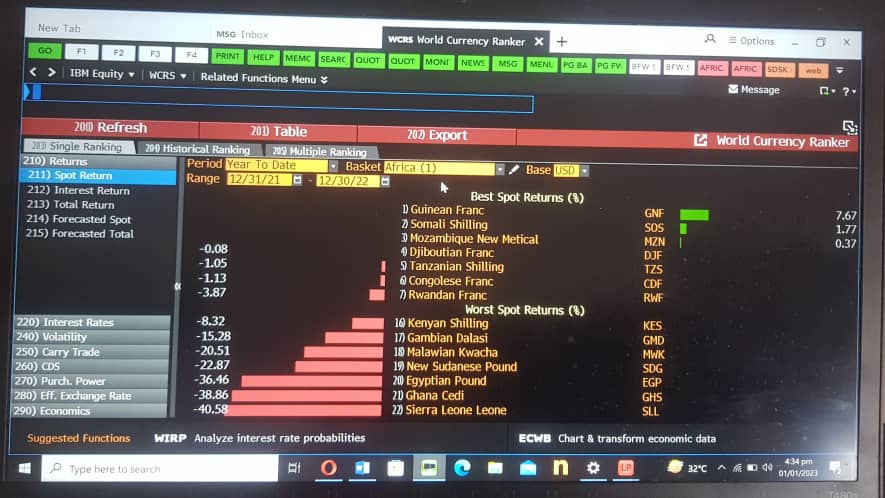
    With a year-to-date loss of 38.86% against the US dollar, the Ghana Cedi finished 2022 as the second-weakest currency on the African continent, according to Bloomberg.

    The local currency came in 145th position overall. The Argentina Peso and Sierra Lankan Rupee were ranked 147th and 148th, respectively, while the Sierra Leone Leone rated 146th.

    According to Bloomberg, they are the currencies having the “Worst Spot Returns.”

    All of these nations faced economic difficulties because their debt loads had grown to unmanageable levels and their budget deficits had alarmingly widened.

    In Africa, the Kenyan Shilling (-8.32%), The Gambian Dalasi (-15.28%), Malawian Kwacha (-20.51), New Sudanese Pound (-22.87%), Egyptian Pound (-36.46%), Ghana Cedi (-38.36%) and Sierra Leone Leone (-40.58%) were the currencies with the “Worst Spot Returns”.

    Cedi ends 2022 as 2nd weakest currency in Africa, 4th worst globally – Bloomberg
    Cedi ends 2022 as 2nd weakest currency in Africa, 4th worst globally – Bloomberg

    For the “Best Spot Returns”, the Guinea Franc (7.67%), Somali Shilling (1.77%), Mozambique New Metical (0.37%), Djibouti Franc (-0.08%), Tanzania Shilling (-1.05%), Congolese Franc (-1.13%) and Rwanda Franc (-3.87%) were the strongest currencies in Africa in 2022.

    The Ghana cedi under significant pressure in 2022, dropping almost 50% of its value at one point before recovering in December as a result of a staff-level agreement made between the International Monetary Fund and the Government of Ghana. This drastically cut its year-to-date losses.

    Before then, the Domestic Exchange Program’s debut was announced by Finance Minister Ken Ofori-Atta.

    Thus, by the end of 2022, the local currency was selling on the retail or foreign market, on average, at roughly 11.60 to the American “greenback.”

    According to some observers, the cedi’s rebound in December 2022 was more the result of general uncertainty and speculative activity than it was genuinely supported.

    They argued that the cedi should be more susceptible to depreciation than appreciation due to an inflation rate of more than 50%, several years of consecutively high budget deficits leading to debt distress, and a forex reserves cover of less than three months of import cover.

    However, they countered that a stable cedi in 2023 will mostly depend on a support program from the IMF.

    Cedi records 18.21% depreciation to dollar in quarter 1

    The cedi recorded an 18.21% rate of depreciation to the US dollar in the first quarter of 2022, according to Bloomberg.

    This ranked the local currency as the worst among African currencies with the “Worst Spot Returns”.

    However, for the timely intervention by the Bank of Ghana, the situation could have been worse.

    Cedi loses 16.86% value to dollar in first half-year of 2022

    In the first-half of 2022, the Ghana cedi lost 16.86% in value to the US dollar on the interbank market but over 20% in the retail forex market.

    However, the rate of depreciation of the cedi slowed down in the last two months (May and June 2022), after stern monetary actions from the Bank of Ghana coupled with some fiscal measures to halt the free fall in the first four months of 2022.

    Cedi loses 40% value to dollar in nine months of 2022; places 147th position in world – Bloomberg

    In the first nine months of 2022, the Ghana cedi lost 40.05% in value to the US dollar, ranking it as the second worst performing currency in the world in the 147th position, according to Bloomberg.

    This decline in the local currency against the American currency was the worst in over three decades.

    There was a free fall of the cedi in the months of August 2022 and September 2022.

  • Government committed to stabilising cedi – Palgrave Boakye-Danquah

    Palgrave Boakye-Danquah, the government’s spokesperson on governance and security, reaffirmed the government’s commitment to stabilizing the Ghana cedi by the end of the year.

    He claimed that one of the main factors contributing to the recent devaluation of the cedi and one for which the government and Bank of Ghana have taken action is dealing with speculation.

    Although the devaluation of the cedi has increased the cost of conducting business in the nation, according to Palgrave Boakye-Danquah, he is optimistic that the rate of depreciation of the local currency would slow down and provide relief to enterprises.

    He pointed out that, “the dollar had strengthened against the other major foreign currencies, leading to the depreciation of the Yen, Pound and the Euro,” Palgrave Boakye-Danquah told Accra-based Original FM 91.9

    He charged industries to increase their productive capacity to stimulate job creation, adding that “we cannot continue to be a nation of importers.”

    Bloomberg has tagged the Ghana cedi as the best-performing currency against the US dollar this week.

    After being compared to some 150 currencies across the globe, the cedi emerged as the best-performing currency against the dollar this week (for the past 5 days).

  • Adjustment of prices: Institutions in charge of price regulation must act- NPP Communicator

    Mr. Eric Agyei, a communications officer for the New Patriotic Party (NPP), has urged institutions in charge of price regulation to take fast action in response to the country’s adjustment of the pricing of products and services.

    The request is an addition to the one made by the Ghana Union of Traders’ Associations (GUTA) to the business community to modify prices for goods and services in light of the Cedi’s recent performance against the US dollar.

    In a statement, GUTA expressed appreciation for the efforts being made by the Ghanaian government and the Bank of Ghana to stabilize the Cedi and urged the business sector to raise pricing for goods and services to reflect the gains the Cedi is now experiencing.

    This year, the cedi to dollar exchange rate reached $1 to GH15, but it now trades slightly above GH12.50 to the dollar.
    In a statement issued over the weekend, GUTA urged the Government to continue with more efforts to sustain the program and bring relief to the business community.

    “As the value of the Cedi begins to appreciate, GUTA wishes to appeal to members of the business community to also adjust prices of goods and services accordingly, to make the consuming public feel the impact of this positive trend,” the statement added.

    “We hope to see further and continuous appreciation of the Cedi and envisage that the economy will turn around in the shortest possible time,” GUTA said.

    Meanwhile, Bloomberg reported that the Ghana cedi was the best-performing currency against the US dollar last week.

    The currency, having lost more than 50% of its value in the year, gained 10% against the dollar.

    Speaking on Atinka TV’s morning show, Ghana Nie with Ekourba Gyasi Simpremu, Mr. Eric Agyei observed that although the Cedi was performing better as against the Dollar, most business owners have refused to reduce the prices of their goods and services.

    Citing fuel prices, he observed that although fuel prices have reduced, the ‘trotro’ drivers have refused to reduce the price of transportation fares, therefore calling on the institutions that matter in terms of the regulation of prices to come in immediately to ensure that the prices of goods and services are adjusted.

    “Last week, I went to buy fuel and there is a significant change in the price, but ‘trotro’ drivers do not want to reduce the fares, so the Institutions that matter in terms of price regulation must come in because it is not everything that the government can come in and that is why the government has sectors, and all the prices must come down because when things go up, they increase prices, but when things go down, you say you will not reduce prices and we have to look at that,” he said.

    Meanwhile, he assured that the cedi will keep appreciating for sometime due to some measures put in place by the government.

  • GUTA pushes companies to increase product prices to reflect Cedi gains

    The Ghana Union of Traders’ Associations (GUTA) has advised the business community to adjust the prices of goods and services to reflect the gains being made by the national currency because it recognizes the efforts being made by the government and the Bank of Ghana to stabilize the Cedi.

    The cedi to dollar exchange rate hit $1 to GH15 this year, but it currently trades just around GH12.50 to the dollar.

    The GUTA asked the government to continue with greater efforts to maintain the program and provide assistance to the business community in a statement released over the weekend.

    “As the value of the Cedi begins to appreciate, GUTA wishes to appeal to members of the business community to also adjust prices of goods and services accordingly, to make the consuming public feel the impact of this positive trend,” the statement added.

    “We hope to see further and continuous appreciation of the Cedi and envisage that the economy will turn around in the shortest possible time,” GUTA said.

    Meanwhile, Bloomberg reported that the Ghana cedi was the best-performing currency against the US dollar last week.

    The currency, having lost more than 50% of its value in the year gained 10% against the dollar.

  • Ghana must repay loans totaling $3.5 billion next year, over $3 billion the IMF had anticipated

    Ghana will have to repay bonds and loans totaling $3.5 billion next year, according to data collated by Bloomberg.

    The amount given is larger than what Ghana anticipates from the IMF if an agreement is reached.

    Additionally, Fitch predicted that Ghana will pay $3 billion in interest and amortization as part of its debt service obligations in 2023.

    Ghana continues to borrow money to fund its projects and flagship programs, which has resulted in a debt-ridden economy.

    Bloomberg in its December 9, report said “Ghana, a regular client of the IMF — this is its 17th request to the fund — has often failed to meet targets set in previous programs, including the last one, which ended in 2019 with a waiver from the fund, essentially rubber-stamping its lack of progress. The government’s decision to aggressively tap Eurobond markets in 2020, so soon after that program ended, spooked investors and led the agencies to revisit their ratings.”

    “A government plan to slash expenditure by 20% did little to assuage the market,” it added.

    After continuous downgrades by rating agencies since the beginning of the year which saw Ghana get kicked out of the international capital market, the country has battled with harsh economic conditions coupled with high inflationary pressures, soaring interest rates, and cost of borrowing as well as a depreciation of the cedi.

    The government however expects that a financial bailout from the IMF could alleviate the burden on the gold and cocoa-rich country. But before an IMF deal could be reached, Ghana is embarking on a debt exchange programme, an admission of default on its debts.

    However, bondholders and creditors have expressed their disagreement with the programme. According to them, proper consultation and consensus-building have not been achieved.

    “There is no more stigma around defaulting or restructuring, and this is quite unusual in the context of emerging markets history. It is part of the natural economic cycle,” Yerlan Syzdykov, a global head of emerging markets at Amundi SA, Europe’s biggest money manager that is a member of the Ghana bondholders committee was quoted by Bloomberg.

    As part of the IMF conditionalities as noted, the finance minister also announced a freeze in public sector employment in 2023 and an increase in the Value Added Tax by 2.5%.

  • Ghana cedi best performing currency against the US dollar – Bloomberg

    An International Organisation, Bloomberg has described the Ghana cedi as the best performing currency against the US dollar.

    According to Bloomberg, the cedi performed the best against the dollar this week after being compared to almost 150 different currencies worldwide for the past 5 days.

    It will be recalled that the Ghana cedi, which lost 45.1% of its value against the US dollar this year, was tagged by Bloomberg as the worst-performing currency in the world on October 17, 2022.

    However, the Ghana cedi has witnessed an overwhelming appreciation in value against the dollar.

    Currently, the local currency is being sold by forex bureaus at an average of ¢12.80 to the US dollars.

    The Ghana cedi has also improved in value against other significant international currencies like the pound and the euro.

    The Euro and the Pounds are trading at ¢12.85 and ¢15.00 respectively.

    The Ghana cedi for the past weeks had been comparatively steady against the dollar. On the retail market, it increased by 3.12% against the dollar, 0.88% against the pound, and 3.79% against the euro.

    The current appreciation of the Ghana Cedi has been attributed to Ghana’s Debt Restructuring Programme.

    Source: The Independent Ghana

  • Bloomberg: Developing world faces $2.5 trillion shock; Ghana behaves like a wealthy king in the gulf

    Although the bond market has recently experienced a modest uptick, distressed debt in emerging markets continues to be a serious weakness in the world economy that is gearing up for a downturn.

    $215 billion in debt due in the next two years must be refinanced by governments of developing nations.

    But many are no longer able to borrow.

    Asset managers like Allianz SE, BlackRock Inc. ,and Fidelity Investments are among those with the greatest exposure to distressed debt.

    “We expect the borrowing conditions for emerging markets to stay difficult and rates to remain high,” said Guillermo Osses, head of emerging-market debt strategies at hedge fund manager Man GLG, which has run the best performing EM fund this year.

    “Around 15 countries have sovereign bonds trading at distressed levels, and there is no option for them to refinance the current level of debts at these rates. They will have to either go to the IMF, devalue their currencies or restructure the debt.”

    Along with dozens of other developing countries,Ghana benefited from a debt-relief initiative run by the IMF and World Bank in the early 2000s, which wiped about $4 billion off its debt stock by 2006. That shift from mostly concessional funding before 2007 to largely commercial borrowing afterwards was transformational for Ghana, says Bright Simons, an analyst at the Accra-based think tank Imani Centre for Policy and Education.

    “This new source of funding was completely different from what we’d experienced in the past — this money was going directly to the budget like a steroid injection straight into
    the bloodstream,” said Simons.

    The cathedral “is the perfect example of the spending spree: Ghana behaving like a fabulously
    rich sultanate in the Gulf rather than a developing country just attaining frontier market status.” Erasing the ‘stigma of default’ Ghana spent years pitching itself as a business-friendly country that offered political stability, and a place for foreign investors to make outsized returns that they would easily be able to repatriate.

    Foreign Direct Investment soared to nearly $4 billion in 2019, regularly outstripping neighboring
    Nigeria, which has an economy over five times larger.

    But, as Simons notes, Ghana’s FDI-stock-to-GDP ratio of nearly 80% — compared with a continental average of around 25% — makes it “highly vulnerable to global shifts in sentiment.”

    Those shifts have caused domestic problems for President Nana Akufo-Addo. Store closures and street protests over the cost-of-living crisis have sprung up around the country.

    And the majority of his own ruling party has called for the resignation of Ken Ofori-Atta, the finance minister, who faces a censure motion from parliament over his management of the economy, including spending on the cathedral.

    The beginning of commercial oil production in 2010 helped shape Ghana’s economic ascent, but stresses in the system have become more apparent. Crude production figures have never matched government projections — it sits at under 200,000 barrels per day, less than half of earlier predictions — and investment in the sector has slowed in recent years.

    Along with the impact of the pandemic and the Ukraine war on the economy the government and opposition largely blame each other’s overspending for the crisis that the country finds itself in. Some current ministers point to a slew of lucrative take- or-pay power contracts awarded by the previous government between 2013 and 2015.

    Designed to solve a short-term electricity crisis, the deals resulted in private producers setting up plants that can supply 4,600 megawatts, nearly double national peak demand of 2,700 megawatts — leaving the country paying $500 million a year for power it does not use and cannot store.

    Debt owed to fuel suppliers and the power companies could reach $12.5 billion by 2023.

  • Ghana Cedi’s drop for months portends deeper losses for currency – Report

    Ghana’s currency has lost more than half of its value this year, but the weakening trend may not be about to end any time soon if history is any guide.

    The cedi, the worst-performing among 148 currencies tracked by Bloomberg, is down more than 57% against the dollar this year and is on track to slip for a seventh straight month in November.

    The last such streak was in 2015. Investors who continued to bet on the dollar after such an episode gained an average 17% over the next six months.

    Slipping Away

    Cedi’s rare 7-month losing streak against dollar has led to more declines

    Ghana’s inflation accelerated at 40% in October and the government has yet to reach a bailout deal with the International Monetary Fund, prompting investors to shun the nation’s assets.

    Lawmakers in the West African nation Thursday are debating an opposition motion to remove Finance Minister Ken Ofori-Atta over the economic crisis.

    Source: Ghanaweb 

  • Dangote’s net worth increases by $700 million – Report

    Bloomberg in its Billionaires Index has revealed that Aliko Dangote’s net worth has increased by $700 million in the last week, rising from $17.6 billion on November 1 to $18.3 billion on November 7.

    The significant uptick in his net worth above $18.3 billion can be attributed to the performance of his 86 percent stake in publicly traded Dangote Cement, as the share price of the leading cement company recovered strongly after falling to a one-year low near the end of October.

    The $700-million bump in his wealth figures was fueled by an 8.8 percent increase in the company’s share price on the Nigerian Exchange from N220.5 ($0.502) on November 1 to N240 ($0.546) at the time of writing this report, as investors on the local bourse renewed buying interest in the company’s shares, which continue to trade below their fair value.

    The Bloomberg Billionaires Index tracks and compares the fortunes of the world’s 500 richest people.

    According to Simply Wall St, a Sydney-based research firm, the company’s shares are trading below analysts’ calculated fair price-to-earnings ratio, a financial ratio that compares a company’s valuation to earnings and tells investors how much a company is worth.

    The Australian company also revealed that the cement maker’s earnings are expected to grow by 18.83 percent per year and that analysts are unanimous in their prediction that the company’s stock price will rise by 38.8 percent in the short to medium

    Leaving aside these estimates, Dangote Cement is struggling to outperform last year’s financial results, with profits falling by double digits at the end of the first nine months of its current fiscal year due to lower demand and rising energy costs.

    The group’s earnings dropped by 23.4 percent to N213.1 billion ($486.5 million) at the end of the first nine months of its 2022 fiscal year, from N278.25 billion ($635.2 million) the previous year, according to figures contained in the group’s recently published financial statement, as rising energy and distribution costs ate into its earnings.

    In light of the drop in earnings, the billionaire businessman, who is not only Nigeria’s richest man but also Africa’s richest billionaire, may receive a lower dividend next year than the N293 billion ($704.1 million) he received this year.

    Source: billionaires.africa via Myinfogh

  • Brittney Griner’s appeal rejected in Russian Court, sentence upheld

    Brittney Griner’s appeal has been rejected.

    Per a report from the Associated Press, Griner’s appeal in response to her nine-year sentence was rejected in Russian court on Tuesday. Thus, the sentence will be upheld, although the Moscow court in question is reported to have also said that the length of the sentence “will be recalculated” to include the time she spent detained before going to trial. Bloomberg writes that the 32-year-old will soon “leave pre-trial detention near Moscow and be sent to serve her prison term in a penal colony elsewhere in Russia.”

    In August, Griner’s legal team filed an appeal following a conviction earlier that month in connection with the possession of a small amount of hash oil. In a statement shared in response to Griner’s conviction, President Joe Biden said this move by the Russian court marked an “unacceptable” development.

    “Today, American citizen Brittney Griner received a prison sentence that is one more reminder of what the world already knew: Russia is wrongfully detaining Brittney,” Biden said at the time.

    The U.S. government has maintained this stance throughout coverage of Griner’s detainment, which began with her arrest at a Moscow airport in February. Prior to the detainment, Griner had played for the region’s UMMC Ekaterinburg team.

    Griner’s detainment has remained a source of global criticism, as have the larger issues surrounding it. At one point, Dennis Rodman had plans to travel to Russia to offer assistance in securing Griner’s release. However, later that same month, it was reported that Rodman would actually not be making such a trip.

    Breanna Stewart, meanwhile, has been among the fellow athletes who have pushed for Griner’s release. In a post shared to Twitter on Monday, the Seattle Storm player noted how long Griner had already been detained at that point, tagging President Biden and Vice President Kamala Harris in the process.

    It has been 249 days since our friend, Brittney Griner, has been wrongfully detained in Russia. It is time for her to come home. @WhiteHouse @potus @vp , we are paying attention and we are counting on you. #WeAreBG

    — Breanna Stewart (@breannastewart) October 24, 2022


    Source: Complex.com
  • Alex Jones requests new trial after billion-dollar Sandy Hook verdict

    Alex Jones wants a redo.

    According to the Associated Press, the far-right media figure has asked the court to scrap the nearly $1 billion verdict in his Sandy Hook defamation lawsuit. The suit—brought forth by eight families of Sandy Hook victims—alleges Jones had used his platform to propagate baseless conspiracy theories about the 2012 school shooting, which left 20 children and six adults dead.

    Jones had repeatedly claimed that the massacre was an elaborate hoax orchestrated by gun control activists. The plaintiffs said they were falsely accused of being “crisis actors” and were subjected to constant harassment and death threats from those who believed Jones’ claims. The court ultimately ruled in the families’ favor, and ordered the Infowars founder to pay $965 million in compensatory damages to the plaintiffs.

    The Connecticut jury also determined that Jones and Infowars’ parent company should pay the plaintiffs punitive damages. The judge will determine that award sometime next month; however, the families have already asked the court to impose “the highest possible” amount, which could be as high as $2.75 trillion, according to Bloomberg.

    “The only appropriate punitive damages award in this case is the largest award within the court’s power,” the families said in the filing. “The defendants have acted willfully, maliciously, and evilly, in full knowledge of the harm they are causing people who had no means to fight back, except to bring this case.”

    In an effort to secure a new trial, Jones argued that the $1 billion verdict was “unjust and against the weight of the evidence.”

    “In short, (Jones and his parent company Free Speech Systems) contend that verdict is exorbitant and a result of passion and prejudice,” his attorney, Norm Pattis, wrote in the motion filed Friday.

    “Additionally, the (families’) failure to offer any evidentiary standard by which the jury could calculate damages rendered the verdict a species of wild speculation unsupported by law and resulted in a verdict that denies (Jones and FSS) due process of law.”

    Source: Complex.com

  • Ofori-Atta has failed miserably, why can’t he be fired? – Kofi Oduro asks Akufo-Addo

    Prophet Kofi Oduro, General Overseer, Alabaster International Ministry, cannot comprehend why Ken Ofori-Atta, the Finance Minister who has failed miserably, will still be keeping his job.

    According to him, if Ghana was his private company, he would have fired the under-fire minister and hired a different person who would deliver results.

    In a viral video sighted by GhanaWeb, Prophet Oduro noted that the current government under the leadership of President Nana Addo Dankwa Akufo-Addo does not like to hear the truth, but as a man of God, he has to tell the President and his ministers the truth.

    “Wrong is wrong. When you are wrong, I need to look into your eyes and tell you that you are wrong. It doesn’t matter [who you are]; that is what is killing this nation, and it is killing churches…

    “This is the time, Your Excellency, to make changes, and that changes must be to the honour and glory of God…our finance minister, even though he is a Christian, has failed miserably, and I am telling Your Excellency with all due respect, this is the time to make drastic changes. We cannot sit here when $1.00 is equal to GHC12.00,” Prophet Kofi Oduro said.

    “You can do whatever you like; I came with a fresh grace to tell you something. Look! What I have observed is that the current government hates being told the truth, but I am telling, ‘you will take it’. If Ghana is my private company and somebody is not delivering; I fire them; I replace them; I hire somebody else and then we are working…why can’t a nation do that?” he quizzed.

    The Cedi has recently been classified by Bloomberg as the worst-performing currency against the US Dollar.

    Currently, the Cedi is trading at around GH¢13 – GH¢14 to a dollar at some forex bureaus. The depreciation rate is a contributory factor for the ongoing shop closures ordered by the Ghana Union of Traders Association (GUTA).


  • ‘Urgent interventions needed to stop haemorrhaging of the Cedi’ – John Kwakye

    Director of Research at the Institute of Economic Affairs (IEA), Dr John Kwakye, has called on government to devise strategic measures to stop the continuous depreciation of the local currency.

    His comment comes after the cedi was adjudged by Bloomberg the world’s worst-performing currency against the US Dollar.

    Bloomberg reported that the cedi lost about 45.1% to the US dollar this year to sell at GH¢11.2625 per dollar.

    This makes the cedi’s depreciation the worst among 148 currencies tracked by Bloomberg, overtaking Sri Lanka’s rupee whose depreciation has been 44.7%.

    Reacting to this in a tweet sighted by GhanaWeb, Dr John Kwakaye said, “Urgent interventions are needed to stop the haemorrhaging of the cedi.”

    Meanwhile, Ghana is targeting an amount of $3 billion over a three-year period from the IMF once an agreement on a programme is reached.

    The new amount requested as a loan is double the government’s initial target of $1.5 billion.

    The IMF programme is aimed at restoring macroeconomic stability and safeguarding debt sustainability among many others.

    Source:ghanaweb.com

  • Bill Gates Has Big News About Terrible Disease

    Bill Gates almost never gives up in a fight. “Several significant worldwide setbacks over the past few years have left many people disillusioned and wondering whether the world is doomed to get worse,” the billionaire philanthropist bemoaned on Twitter on July 13 after what he dubbed “setbacks.”

    The pandemic is one of the biggest setbacks in history. The war in Ukraine is a gigantic tragedy for the entire world. The damage from climate change is already worse than most models predicted. The U.S. has taken a huge step backward for gender equality and women’s health.”

    He later appeared somewhat optimistic, as if he’d been trying to persuade himself that he saw light at the end of the tunnel.

    “But I’m still optimistic. These setbacks are happening in the context of two decades’ worth of historic progress and I believe it is possible to mitigate the damage and get back to the progress the world was making,” the entrepreneur said.

    $1.2 Billion to Fight Polio

    A few months later, the philanthropist seems to have regained his energy and his will to win his humanitarian battles.

    He has thus just promised $1.2 billion more to eradicate polio. The announcement was made on Sunday in Berlin by the Bill and Melinda Gates Foundation, which made the pledge to the Global Polio Eradication Initiative.

    “By coming together and funding efforts like the Global Polio Eradication Initiative, we can #EndPolio and build a healthier world, ” Gates tweeted on Oct. 15.

    “We’re very committed,” Gates told Bloomberg in an interview. “I can’t say forever, but giving up would mean hundreds of thousands of kids being paralyzed.

    The new fund will help redouble and speed efforts to fight this disease, which has reappeared in recent months in regions where it was thought to have disappeared. A resurgence would jeopardize billions of dollars of investment over decades.

    Polio Reappears in New York

    A case of polio had been identified last summer in Rockland County, N.Y., half an hour north of Midtown Manhattan. Traces of the virus had also been detected in sewage in the U.K. and Israel, which had suggested that the disease, which had been almost eradicated worldwide, had resurged.

    “The individual experienced severe symptoms, including paralysis, and was hospitalized,” New York State and County health officials said. “New Yorkers should know that paralysis from polio is typically permanent, resulting in life-long disability.”

    The last known case of polio in the U.S. was in 2013, according to the Centers for Disease Control and Prevention. A 7-month-old child who had just moved from India to the U.S. was diagnosed in San Antonio.

    The World Health Organization in June warned that a type of poliovirus derived from the oral polio vaccine – which, in rare cases, can cause infection in others but not in the person vaccinated – had been detected in London sewage samples. It can cause severe illness and paralysis in unvaccinated people.

    Polio, which largely affects children under age 5, has been virtually eradicated worldwide, according to Unicef. Cases have fallen by 99% since 1988 when polio was still endemic in 125 countries and 350,000 cases were recorded. Polio remains endemic in two countries – Afghanistan and Pakistan.

    Infections declined sharply in the late 1950s and early 1960s in the U.S., with the development of a vaccine. The last natural infection to have occurred in the U.S. dates from 1979.

    The Gateses, through their foundation, have already donated nearly $5 billion directly to the fight against polio.

    For 2019-2023 some $4.2 billion is needed to eradicate polio through vaccination and other health services, according to the Global Polio Eradication Initiative. The program had $2.2 billion before Gates’ pledge. After the commitment, the funding shortfall is around $1.4 billion. Germany will co-host a pledge event at the World Health Summit on Oct. 18 in Berlin.

    “India’s success against poliovirus showed the world that to #EndPolio, perseverance and collaboration are vital. @naveenthacker and over 1,300 leading global experts have urged the world to recommit to ending polio,” Gates posted on Oct. 15.


  • Ghana Cedi is the world’s worst performing currency against dollar

    Ghana’s cedi slumped to the world’s worst-performing currency to the dollar as wait-and-see investors continued to squeeze foreign capital into the west African country before its deal with the International Monetary Fund(IMF).

    The currency of the world’s second-biggest cocoa producer depreciated 2% on Monday to 11.2625 per dollar, taking its losses this year to 45.1%, the most among 148 currencies tracked by Bloomberg.

    The currency that derived its name from ‘sedie’, the local Akan language name for cowrie shell, switched position with the Sri Lankan rupee, which is now the second worst performer with a 44.7% drop to the greenback this year.

    Ghana started engaging with the IMF in July but only began formal negotiations for an extended credit facility program with the lender last month.

    The country is hoping to receive up to $3 billion in loans over three years under the arrangement to spur its finances and support the balance of payments.

    Ghana reversed course to seek IMF help after homegrown policies, including cutting 2022 discretionary expenditure by up to 30%, failed to stem a selloff in its international bonds.

    The premium investors demand over US Treasuries to hold Ghana debt has widened to 2,669 basis points.

  • Kanye West: JP Morgan Chase has severed connections with rapper

    JP Morgan Chase, the world’s largest bank, has ended its connection with rapper and designer Kanye West, now known as Ye, and his Yeezy brand.

    A conservative commentator shared a letter from the bank alerting Mr West of the decision on Twitter.

    At the weekend, his Twitter and Instagram accounts were suspended after he posted anti-Semitic messages.

    The BBC understands the letter from JP Morgan pre-dated recent controversies, as it was sent on 20 September.

    In the letter, the bank gave Mr West until 21 November to transfer his business.

    JP Morgan Chase declined to comment.


    Mr West had previously taken to social media to criticise JP Morgan’s leadership and said they would not give him access to the bank’s chief executive Jamie Dimon.

    He told Bloomberg in September that he was severing ties with his corporate partners and that “it’s time for me to go it alone”.

    Representatives for Mr West did not immediately respond to a request for comment from the BBC.

    The move by JP Morgan comes as Mr West’s business partnerships have come under increased scrutiny.

    Last week, sportswear firm Adidas said it was reviewing its deal with him days after he showed a “White Lives Matter” T-shirt design at Paris Fashion Week.

    The company did not mention the controversy but said “successful partnerships are rooted in mutual respect and shared values”.

    Mr West responded on Instagram, claiming the firm “stole” his designs. That post now appears to have been deleted.

    Adidas told the BBC it had made the decision to put the partnership under review after “repeated efforts to privately resolve the situation.”

    A spokesperson for the German sportswear company also said that the “Adidas Yeezy partnership is one of the most successful collaborations in our industry’s history.”

    Last month, Mr West said he was ending his partnership with the retailer Gap.

    He accused the firm of failing to honour the terms of the deal, including by failing to open standalone stores for his Yeezy fashion label.


  • Reports: White House considering complete ban on Russian aluminium

    The White House is considering a complete ban on Russian aluminium in response to Russia’s military escalation in Ukraine, Bloomberg reports.

    Talks are underway to raise tariffs to levels so punitive they would impose an effective ban, or sanctioning of United Co Rusal International PJSC, the company that produces Russia’s metal, Bloomberg said, citing sources familiar with the decision-making.

    The report also said the White House had held off sanctioning Russian aluminium at the start of the invasion out of fear it could disrupt global suppliers.

    But there were fewer products remaining for the US and Ukraine’s allies to ban now, Bloomberg said.

    In response to the report, a White House official said: “We’re always considering all options. There is no movement on this as of now.”

  • World second-richest person: Indian tycoon oust Jeff Bezos

    The second-richest person in the world, Jeff Bezos, has just dropped to third place as Indian business tycoon Gautam Adani rapidly advances up Bloomberg’s Billionaire Index.

    With $260 billion in his bank account, Elon Musk, who is still the richest person in the world, may need to be careful.

    After beginning the year in position 14, Adani climbed from there to position 2 in less than ten months.

    Since white tech entrepreneurs have long dominated Bloomberg’s list, a person from Asia has never placed so high on the list.

    Adani’s $146.9 billion fortune, largely tied up in holdings of his sprawling Adani Group conglomerate, still trails well behind Musk’s $260 billion. The group operates a range of businesses including ports and coal that have thrived in recent years.
    Shares of some Adani companies have jumped more than 1,000% since June 2020 — reflecting investor optimism about the conglomerate’s strength in areas like infrastructure and renewable energy that Prime Minister Narendra Modi has prioritized for development. Shares of his flagship Adani Enterprises are up more than 115% in 2022.
    In February, Adani overtook fellow Indian tycoon Mukesh Ambani to become Asia’s wealthiest person.
    Bezos’s net worth slumped to $145.8 billion, according to Bloomberg, as tech stocks were hit hard amid a broader equities selloff Friday. Amazon shares fell 3% in early trading, and the stock is down more than 25% this year.
    The Amazon founder previously ranked No. 1 on the list, but his wealth took a hit after his 2019 divorce. Much of his wealth is tied up in Amazon stock. According to Bloomberg, the tech selloff has shaved $45 billion off Bezos’ net worth since January.
  • Bloomberg classifies cedi as worst of “Worst Spot Returns” of African currencies

    The Ghana cedi has been classified as the worst of African currencies with the “Worst Spot Returns” by Bloomberg.

    Bloomberg pegs the depreciation of the cedi to the dollar at 8.86% between January 1, 2022 and February 25, 2022.

    It is followed by the Zambian kwacha with a depreciation of 6.02%.

    Ghana and the Zambian economies have been battling with fiscal slippages, whilst their rising debts have created fears among investors regarding their economic outlook.

    Whereas, Zambia agreed to an International Monetary Fund bailout of $1.4 billion December 2021 for a crucial three year programme to restructure its debt, Ghana is adamant in returning to the Bretton Wood institution for a similar programme to build investor credibility.

    Crude oil has been selling above $100 per barrel, but the foreign inflows from the commodity have done little to help stabilise the cedi.

    However, the five-year $4.5 billion Country Partnership Framework from the World Bank is expected to inject some dollar inflows into the economy, and help shore up the value of the cedi.

    The Gambian dalasi, New Sudanese pound and Ethiopian birr are among African Currencies with the “Worst Spot Returns” by Bloomberg.

    Angola Kwanza, Namibian dollar and South Africa are however among African currencies with the “Best Spot Returns”.

    Source: Joy Business 

  • Old Mutual confident of meeting NICs new minimum capital requirement

    Insurance firm, Old Mutual Ghana says it is optimistic about meeting the new minimum capital requirement set out by the regulator for insurance, the National Insurance Commission (NIC).

    This is according to the Chief Financial Officer of Old Mutual Ghana, Clara Amarteifio-Taylor who says her outfit has put in place the necessary procedures to meet the June 2021 deadline for insurance firms.

    The NIC in 2019 increased the capital for insurance companies from GH¢15 million to GH¢50 million and that of Reinsurance companies from GH¢40 million to GH¢125 million. That for Insurance Broking companies was also been increased from GH¢300,000 to GH¢500,000.

    The minimum capital requirement for reinsurance broking companies was however maintained at GH¢1 million.

    Consequently, like the banking sector, there have been concerns the increase in minimum capital requirement could result in the subsequent collapse of some insurance firms.

    But some industry experts have indicated that the increase will rather help in creating a robust and resilient insurance sector.

    Last week, Bloomberg reported that Old Mutual registered a 5 percent drop in earnings for 2019 with the company indicating that its operations were weighed down by a stuttering South African economy.

    Source: www.ghanaweb.com