An explosion happened at the border between Kenya and Somalia. A bomb was attached to a donkey cart and it killed a police officer, according to local news.
Two more people got hurt, according to a post on X from the Nation newspaper.
The two donkeys that were pulling the cart are said to have lived through it.
The police were checking the things on the cart when a bomb exploded after it entered Kenya at Mandera, in the far north-east of the country.
A video shows lots of black smoke coming from where the explosion happened. Photos after the event show a donkey with marks standing.
Mandera has been attacked before by the al-Shabab group from Somalia.
Tag: Bomb
-
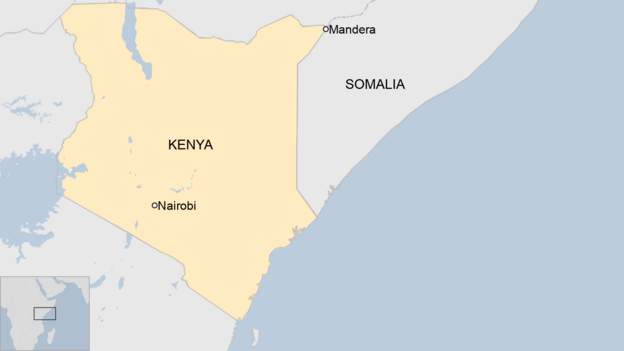
Kenyan police officer killed by donkey-cart bomb
-
Suicide bomb attack target Turkey’s interior ministry
The interior minister of Turkey has labeled the explosion that occurred outside the country’s interior ministry in the capital city of Ankara as a “terrorist attack.”
According to Ali Yerlikaya, two assailants arrived at the scene in a commercial vehicle at approximately 09:30 local time (06:30 GMT) and executed the attack, resulting in injuries to two police officers. Yerlikaya explained that one attacker detonated an explosive device in front of a ministry building, while the other was “neutralized.”
The explosion unfolded shortly before the parliament was scheduled to reconvene. The identities of the attackers remain unknown, and no group has claimed responsibility for the attack.
A senior Turkish official informed Reuters news agency that the attackers had seized the vehicle and killed its driver in Kayseri, a city located 260 kilometers (161 miles) southeast of Ankara.
One of the injured officers sustained shrapnel wounds, and initial media reports mentioned gunfire heard in the vicinity.
In response, emergency services swiftly arrived at the scene, with police cordoning off several nearby roads.
“Our struggle will continue until the last terrorist is neutralised,” Mr Yerlikaya wrote on social media.
Ankara’s police force has stated that they are conducting “controlled detonations” of “suspicious packages” as a precautionary measure to avert potential further explosions.
President Recep Tayyip Erdogan was scheduled to address the parliamentary session later on the same Sunday.
During the autumn session, the Turkish parliament is anticipated to officially approve Sweden’s entry into NATO.
In July, Turkey withdrew its opposition to Sweden’s NATO membership after months of disagreements, primarily centered on accusations of Sweden harboring Kurdish militants.
Previously, militants, primarily associated with the banned Kurdish Workers Party, were responsible for frequent attacks throughout the country.
In response, the authorities have applied substantial pressure, including the incarceration of its leaders and military operations targeting Kurdish bases within Turkey and across the borders in Syria and Iraq.
-
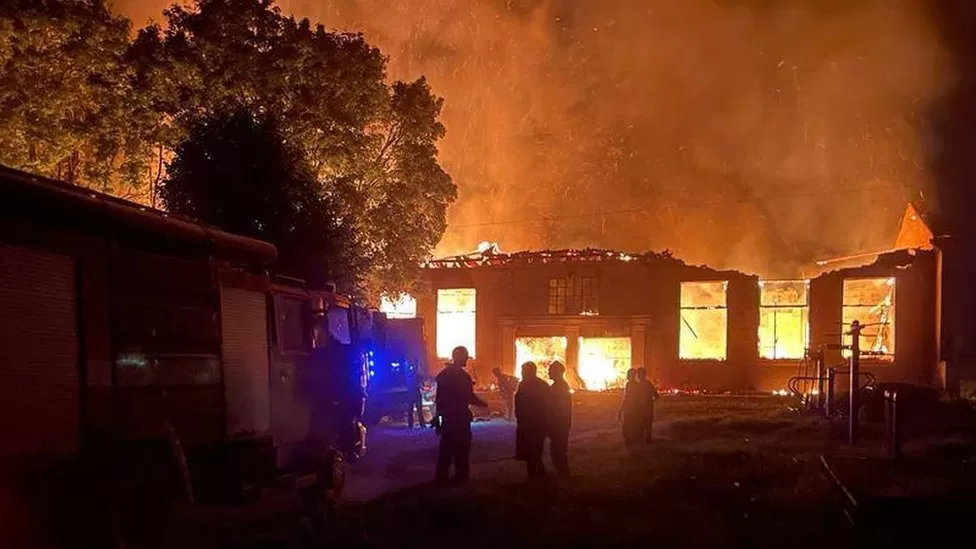
‘Guided bomb’ hits Ukraine blood transfusion centre
President of Ukraine, Volodymyr Zelensky have said tha a Russian “guided bomb” struck a blood transfusion facility in northeastern Ukraine, killing one person and injuring several others.
The number of those killed or injured in the attack that took place in the Kharkiv region on Saturday was not disclosed by Volodymyr Zelensky.
“This war crime alone says everything about Russian aggression,” he said.
Russia has made no remarks. It has previously refuted any claims that it has committed war crimes or targeted civilians.
The BBC has not been able to verify the report.
Two months in, Ukraine’s big offensive is slower than it hoped
Saturday night’s attack occurred in the Kypiansk area.
The city of Kupiansk and nearby settlements were seized by Russian troops in the first few days of Moscow’s full-scale invasion of Ukraine, launched in February 2022.
The area was liberated during a Ukrainian counter-offensive last September.
In a post on social media, Mr Zelensky described the perpetrators as “beasts”.
“Defeating terrorists is a matter of honour for everyone who values life,” he added.
President Zelensky reported that on Saturday, Russia conducted a missile attack on an aeronautical company operated by the Motor Sich group in the western Khmelnytskyi region.
These Russian strikes occurred in the context of Moscow’s accusation against Ukraine of targeting a Russian tanker in the Black Sea with a drone attack, resulting in damage to the engine room of the Sig tanker in the Kerch Strait. Fortunately, there were no injuries among the 11 crew members on board during this incident, marking the second sea drone attack within two days.
Russian tanker hit in attack near Crimea
The Kerch Strait connects the Black Sea and the Sea of Azov, separating Crimea – Ukraine’s peninsula annexed by Moscow in 2014 – and Russia’s Taman peninsula.
Ukraine has not publicly commented. But a Ukrainian security service source told the BBC a sea drone had been used.
-

Japan PM evacuated after apparent smoke bomb blast
Prime minister of Japan, Fumio Kishida, was unharmed while leaving a public function after what appeared to be a smoke bomb was hurled in his direction.
Local media said that a guy was apprehended on the spot in Wakayama, where Mr. Kishida was scheduled to deliver a speech.
A witness said they saw a person throwing something, followed by smoke, while another said they heard a big bang. No injuries were reported.
Video showed officers piling on top of a person, believed to be a suspect.
He was arrested on suspicion of obstruction of business and later identified by the authorities as 24-year-old Ryuji Kimura. His motivation is still unclear.
Japan’s public broadcaster, NHK, quoted Mr Kishida as saying there was a “loud blast” at the venue. “Police are investigating details, but I’d like to apologise for worrying many people and causing them trouble.”
NHK broadcast footage in which crowds of people appear to be running away from the scene.
The footage also shows people swarm around one man, hold him down, and then carry him away.
-
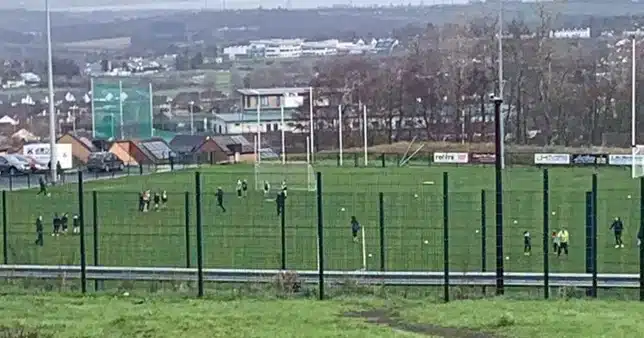
Four detained after a bomb was discovered near children playing football
In Derry, Northern Ireland, a bomb was discovered close to where kids were playing football.
Just a few metres away from the location of the “viable” explosive are more than 20 people.
Following a failed hijack attempt in the city on Friday, police conducted a large-scale security operation and found the device.
Four men, aged 54, 29, 34 and 32 have since been arrested, and they remain in custody pending further enquiries.
Derry City and Strabane area commander, chief superintendent Nigel Goddard said the bomb has been taken away for further examination.
‘A number of cordons remain in place as police continue to search the area as part of our investigation,’ he added.
‘We would like to thank the local community for their patience and understanding during this time.
‘This explosive device was recklessly left in a public area, just metres away from houses and a sports area where a number of children were playing football.
‘Four people have been arrested and a number of searches have been carried out by detectives investigating this incident and an attempted hijacking on Friday.
‘They remain in custody assisting us with our inquiries.’
Mr Goddard added: ‘Our focus remains firmly on keeping people safe against the threat posed by violent groups.
‘No matter what level of involvement people have with any criminal or terrorist activity, we will investigate and where appropriate, put people before the courts to answer for their actions.
‘Our investigation into this incident is ongoing, and we strongly urge anyone with information, suspicions or concerns about dangerous and illegal activity in our community to contact us on 101.’
-
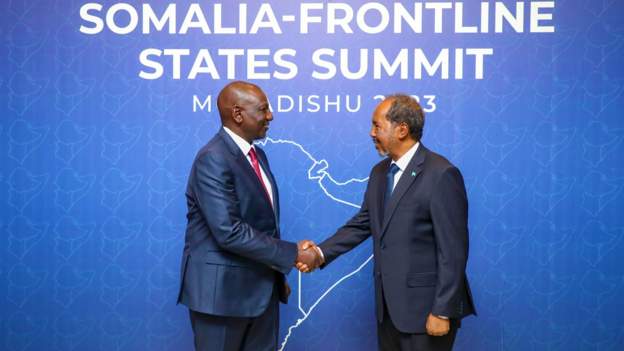
Bombs hit Mogadishu as leaders meet at summit
Under UK modern slavery legislation, the Ekweremadus and the doctor are accused of conspiring to arrange the travel of another person for the purpose of exploitation.
Senator Ike Ekweremadu’s trial on the alleged organ harvesting will resume today, Tuesday, January 31, 2023, in the United Kingdom.
SaharaReporters had earlier reported that the senator’s matter was adjourned in November, while arguments were heard on December 16 and 19, 2022.
Ekweremadu who represents Enugu West Senatorial District on the platform of the Peoples Democratic Party (PDP) and his wife, Beatrice were arrested on June 23 in London and charged with conspiracy for human trafficking and organ harvesting.
According to the UK court, Ekweremadu’s alleged crime was in violation of the Modern Slavery Act 2015.
According to prosecutors, the defendants planned to have a kidney removed from a 21-year-old Nigerian man so that it could be given to the politician’s daughter, Sonia.
Source: Sahara reporters
-
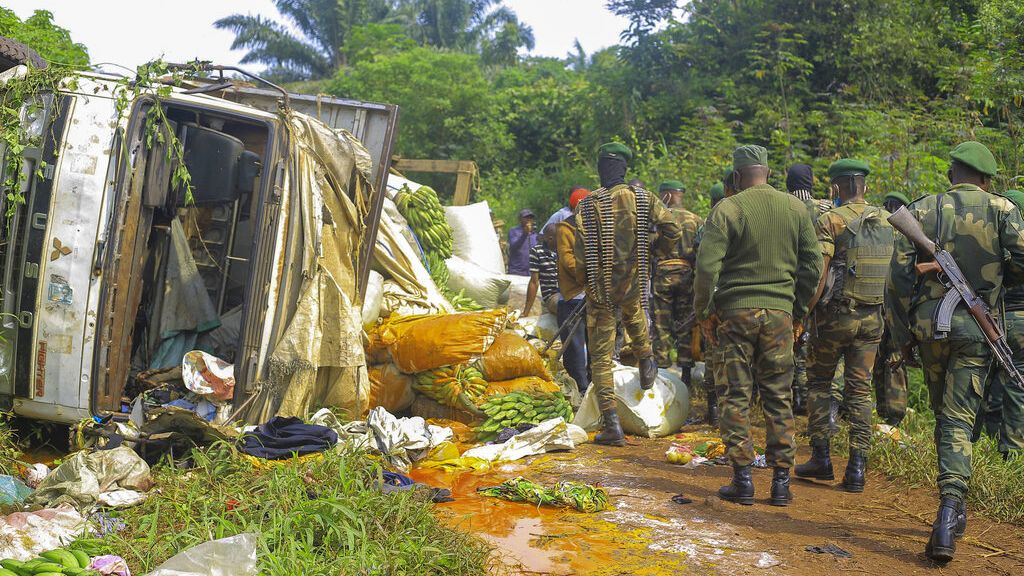
Bomb injures at least 12 people near a market in north-eastern DR Congo
A bomb exploded at a market in eastern Congo on Wednesday (Jan. 25), injuring at least a dozen people, authorities said.
An unknown person detonated a bomb inside a bag in North Kivu’s Beni town, said Tharcisse Katembo, a local official.
“Damage was documented (and) at least 12 people were injured. They were injured in the lower limbs, others in their upper limbs and others were hit in the head,” he told reporters in Beni.
The victims were taken to the hospital and an investigation was underway, Katembo said.
No one claimed responsibility for the bomb. However, attacks by the Allied Democratic Forces, which is believed to be linked with the Islamic State extremist movement, have been increasing in North Kivu, according to the United Nations.
Deadly violence
Earlier this month, at least 14 people were killed and dozens injured in an attack on a church in Kasindi town, which was claimed by Islamic State. It said in its Aamaq news outlet that it planted an explosive device inside the church and detonated it while people were praying.
Since April, attacks by the Allied Democratic Forces have killed at least 370 civilians, and the group has abducted several hundred more, including a significant number of children, the U.N. says.
The explosion Wednesday (Jan. 25) occurred in a local market next to a cassava mill, witnesses said.
Source: African News
-
Suspect in Lockerbie bombing is now in US custody
A Libyan man has been arrested by Scottish police on suspicion of creating the bomb that destroyed Pan Am Flight 103 over Lockerbie 34 years ago and is in US jail.
The United States charged Abu Agila Masud two years ago, stating that he was a crucial figure in the December 21, 1988, attack.
270 persons were killed in the Boeing 747 explosion.
It is the deadliest terrorist incident to occur on British territory.
All 259 passengers and crew on board the jumbo jet bound for New York from London died while another 11 people were killed in Lockerbie when wreckage destroyed their homes.
Last month it was reported that Masud had been kidnapped by a militia group in Libya, leading to speculation that he was going to be handed over to the American authorities to stand trial.
A US Justice Department spokesperson told the Reuters news agency that Masud would make an initial appearance in a federal court in Washington.
In 2001 Abdelbaset al-Megrahi was convicted of bombing Pan Am 103 after standing trial at a specially-convened Scottish court in the Netherlands.
He was the only man to be convicted over the attack.
Megrahi was jailed for life but was released on compassionate grounds by the Scottish government in 2009 after being diagnosed with cancer.
He died in Libya in 2012.
Megrahi, who always proclaimed his innocence, launched two appeals against his 27-year sentence. One was unsuccessful and the other was abandoned.
A spokesperson for the Crown Office and Procurator Fiscal Service (COPFS) said: “The families of those killed in the Lockerbie bombing have been told that the suspect Abu Agila Mohammad Mas’ud Kheir Al-Marimi (“Mas’ud” or “Masoud”) is in US custody.
“Scottish prosecutors and police, working with UK government and US colleagues, will continue to pursue this investigation, with the sole aim of bringing those who acted along with Al Megrahi to justice.”
Lockerbie bombing timeline
- US and British investigators indicted Megrahi in 1991 but he was not handed over by the Libyans until April 1999.
- May 2000 – A special trial under Scots law starts on neutral ground at Camp Zeist in the Netherlands.
- 31 January 2001 – Former Libyan intelligence officer Megrahi is found guilty of mass murder and jailed for life with a minimum term of 27 years.
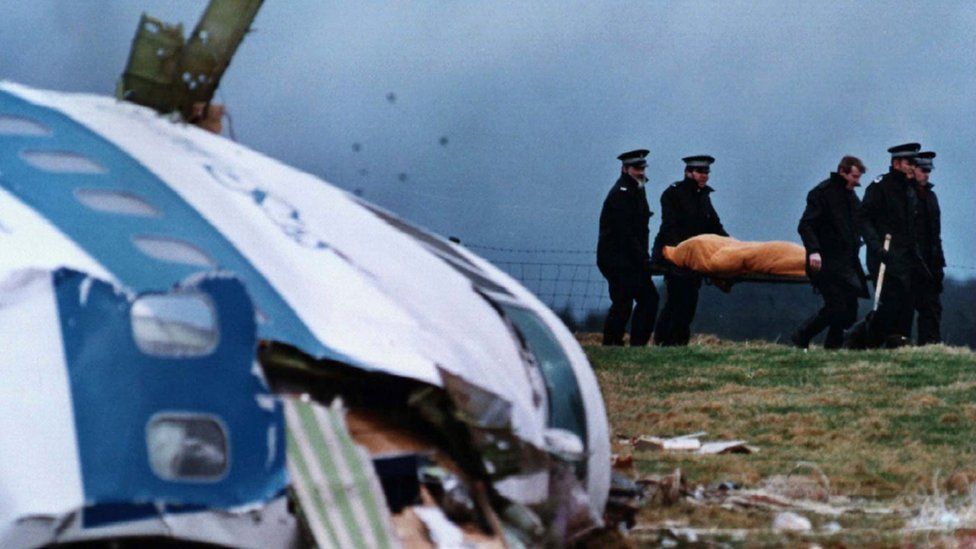
IMAGE SOURCE, REUTERS Image caption, The Pan Am flight was bombed just days before Christmas - March 2002 – Megrahi loses an appeal against his conviction.
- September 2003 – The Scottish Criminal Cases Review Commission (SCCRC) is asked to investigate Megrahi’s conviction.
- June 2007 – The SCCRC recommends that Megrahi is granted a second appeal against his conviction.
- 18 August 2009 – Megrahi’s move to drop his second appeal is accepted by judges at The High Court in Edinburgh.
- 20 August 2009 – Megrahi, who has terminal prostate cancer, is released from prison on compassionate grounds.
- May 2012 – Megrahi dies at his home in Tripoli, aged 60.
- July 2015 – Scottish judges rule that relatives of the Lockerbie bombing victims should not be allowed to pursue an appeal on Megrahi’s behalf. Courts had previously ruled that only next of kin could proceed with a posthumous application.
- July 2017 – Megrahi’s family launched a new bid to appeal against his conviction.
- March 2020 – The Scottish Criminal Case Review Commission said Megrahi’s conviction can be taken to a fresh appeal.
- November 2020 – Five Scottish judges hear the third appeal against Megrahi’s conviction on grounds of a possible miscarriage of justice.
-
Bomb blast at an Afghan school kills students
Afghanistan’s Taliban regime has announced that at least ten people were killed when a bomb exploded near a religious school in northern Afghanistan.
The blast is said to have occurred as people were leaving congregational prayers, and a doctor at the local hospital said most of the victims were students at the school.
“All of them are children and ordinary people,” one doctor was quoted by AFP as saying.
Interior ministry spokesperson Abdul Nafee Takkur said the Taliban’s security forces were investigating the attack, and vowed to “identify the perpetrators and punish them for their actions”.
Afghanistan has been rocked by dozens of blasts since the Taliban seized power last year, mostly claimed by the local offshoot of the Islamic State group.
-
Turkish police arrest 46 people over Istanbul explosion
Interior minister blames blast on Kurdish fighters, says those detained include ‘the person who left the bomb’ on Istiklal Avenue.
Turkish police have arrested 46 people over the explosion in central Istanbul that left at least six people dead and 81 others wounded, Istanbul police have said.
Interior minister Suleyman Soylu told reporters on Monday that the suspects included the “person who left the bomb that caused the explosion” on the busy Istiklal Avenue in Turkey’s largest city.
Al Jazeera’s Sinem Koseoglu, reporting from Istanbul, said a three-year-old girl and her father were among those killed.
#URGENT Person who left bomb that caused explosion Sunday on Istanbul’s Istiklal Avenue arrested by police, says Interior Minister Suleyman Soylu pic.twitter.com/I08OTC4rPb
— ANADOLU AGENCY (@anadoluagency) November 14, 2022
Soylu blamed the outlawed Kurdistan Workers Party (PKK) for Sunday’s blast, in the popular shopping and tourism spot, saying: “Our assessment is that the order for the deadly terror attack came from Ain al-Arab [Kobane] in northern Syria,” where he said the group has its Syrian headquarters.
“We will retaliate against those who are responsible for this heinous terror attack,” he said, adding that 81 people had been wounded, two of them in critical condition.
Turkish authorities are not ruling out ISIL (ISIS) ties, a senior Turkish official said Monday.
The PKK has issued a statement in which it denied involvement in the attack, and expressed its condolences.
Turkish President Recep Tayyip Erdogan on Sunday described the explosion as “treacherous” and said it “smells like terrorism”.
Justice minister Bekir Bozdag told A Haber television later on Sunday that a woman was seen sitting on one of the benches on Istiklal Avenue for more than 40 minutes.
The explosion occurred just minutes after she got up, he said.
“There are two possibilities,” he told A Haber. “There’s either a mechanism placed in this bag and it explodes, or someone remotely explodes [it]”.
Al Jazeera has obtained pictures of the woman suspected to be behind the bombing.
#الجزيرة تحصل على صور من زوايا مختلفة للسيدة المشتبه في أنها تقف وراء هجوم #اسطنبول pic.twitter.com/DgdojrKMMY
— قناة الجزيرة (@AJArabic) November 13, 2022
In initial questioning, the woman said she was trained by Kurdish militants in Syria and entered Turkey through northwest Syria’s Afrin region, the police said.
Television news reports also showed images of a person, who appeared to be a woman, leaving a package below a raised flower bed on Istiklal, which has a tramline running the length of the street.
Al Jazeera’s Koseoglu said two more Syrian nationals were involved in the attack, according to security sources.
“The interior minister mentioned that these perpetrators are linked to the YPG, the Syrian Kurdish fighter group, which Turkey considers as an offshoot of the outlawed PKK,” Koseoglu said.
“We’re waiting for officials to give more details about the suspects… [including] how they crossed the Turkish-Syrian border as Turkey has been very strict about Syrians who are staying in big cities without residential permits or without being registered.”
She added that the woman seems to be in her late twenties or early thirties and “was captured by the police in the place where she was staying” at 2:50am.
According to Istanbul police, 1,200 security cameras have been checked near the site of the explosion. Police have conducted raids at 21 different addresses the female suspect has been identified to have links with.
Istanbul and other Turkish cities have been targeted in the past by Kurdish separatists, ISIL (ISIS), and other groups, including in a series of attacks in 2015 and 2016.
These include twin bombings outside an Istanbul football stadium in December 2016 that killed 38 people and wounded 155. The attack was claimed by an offshoot of the PKK, which has kept up a campaign for Kurdish self-rule in southeastern Turkey since the 1980s and is designated a terrorist group by Turkey, the European Union and the United States.
Regularly targeted by Turkish military operations, the PKK is also at the heart of a tussle between Sweden and Turkey, which has been blocking Stockholm’s entry into NATO since May, accusing it of leniency towards the Kurdish group.
Condemnations of Sunday’s attack and condolences for the victims rolled in from several countries, including Azerbaijan, Egypt, France, Greece, Italy, Pakistan, Ukraine, the United Kingdom, and the US.
Greece “unequivocally” denounced the blast and expressed condolences, while the US said it stood “shoulder-to-shoulder with our NATO ally in countering terrorism”.
French President Emmanuel Macron said in a message to the Turkish people: “We share your pain. We stand with you in the fight against terrorism”.
Ukrainian President Volodymyr Zelenskyy also tweeted in Turkish: “The pain of the friendly Turkish people is our pain.”
European Council President Charles Michel also sent condolences, tweeting: “My thoughts are with the victims and their families.”
Source: BBC.com
-
Hurricane Ian: At least 30 killed as survivors liken impact of deadly US storm to an ‘A-bomb’
Damage of tens of billions of pounds has been done, and around 1.7 million homes and businesses are without power. Rescuers are still searching the rubble, so it’s possible that the death toll may grow.
At least 30 people have been killed after one of the most powerful storms ever to strike the US mainland wrought widespread destruction, with the number of dead expected to rise.
Hurricane Ian has caused tens of billions of pounds in damage and left around 1.7 million homes and businesses without power, leaving residents to liken the impact to “an A-bomb”.
In Florida, where the storm made landfall after battering western Cuba, coastal towns were turned into disaster areas and around 10,000 people remain unaccounted for although the authorities believe many are likely to be in shelters or without power.

Image:Whole neighbourhoods remain flooded in Florida Rescuers are continuing to search for survivors among the ruins of flooded homes.
Ian went on to hammer North and South Carolina with winds of 85mph, destroying piers and leading roads to be blocked by flooding and fallen trees.
Although now a post-tropical cyclone and weakening, it was still expected to bring treacherous conditions to parts of the Carolinas, Virginia and West Virginia on Saturday.
The National Hurricane Center said: “The dangerous storm surge, flash flooding, and high wind threat continues.”
While the number of casualties and repair costs remain unclear, the scale of the damage was becoming apparent in Florida.
State governor Ron DeSantis said: “Those older homes that just aren’t as strong built, they got washed into the sea.
“If you are hunkering down in that, that is something that I think would be very difficult to be survivable.”
Meanwhile, insurers are braced for a hit of up to $47bn (£42bn), in what could be the costliest Florida storm since Hurricane Andrew in 1992, according to US property data and analytics company CoreLogic.
US President Joe Biden has approved a disaster declaration, making federal resources available to areas impacted by the storm.
“We’re just beginning to see the scale of that destruction.
“It’s likely to rank among the worst… in the nation’s history,” he said.
Mr Biden also declared an emergency in North Carolina on Saturday.
The confirmed dead include 27 victims in Florida, mostly from drowning but also as a result of the storm’s aftermath.
An elderly couple died after their oxygen machines shut off when they lost power, authorities said.
Other victims included a 68-year-old woman swept into the ocean by a wave and a 67-year-old man who fell into rising water inside his home while awaiting rescue.
A 71-year-old man suffered a fatal fall from a rooftop while putting up rain shutters.
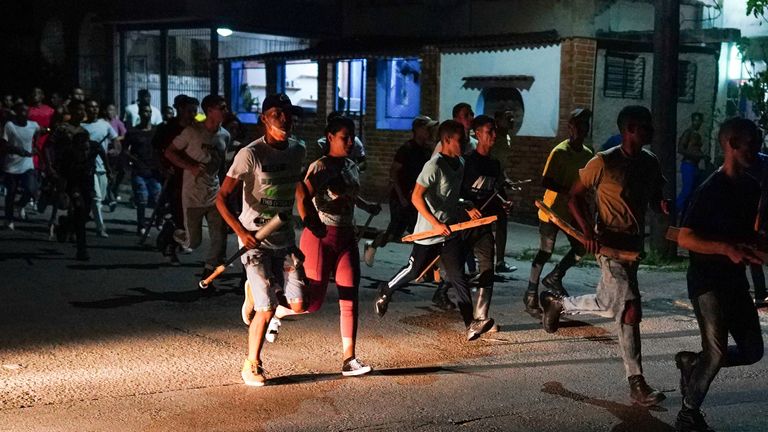
Image: Protests have been held in Havana over continuing power cuts following the storm The authorities have warned the number of dead is likely to rise much higher once more extensive searches were carried out.
Meanwhile, Cubans have staged protests in neighborhoods of Havana still without electricity, days after Hurricane Ian knocked out power to the island, as well as flattening homes and ravaging agricultural fields.
-
Multiple bomb and arson attacks hit southern Thailand
Explosions and fires ripped through at least 17 locations in southern Thailand on Wednesday, authorities said, in what appeared to be multiple coordinated attacks that injured seven people.
The bombings and arson attacks happened after midnight and targeted convenience stores and a gas station across three provinces, lightly injuring at least seven, according to police and military statements.No one has claimed responsibility for the attacks so far.Provinces in southern Thailand along the border with Malaysia have seen a decades-long, low-level insurgency, in which the Thai government has battled shadowy groups seeking independence for the predominantly Muslim provinces of Pattani, Yala, Narathiwat and parts of Songkhla.More than 7,300 people have been killed in the conflict since 2004, according to the Deep South Watch group, which monitors the violence.Peace talks that began in 2013 have faced repeated disruptions.Wednesday’s attacks came after the Thai government earlier this year restarted discussions with the main insurgent group, the Barisan Revolusi Nasional, after a two-year hiatus due to the pandemic.The Patani United Liberation Organisation (PULO), which was sidelined from the latest round of talks, carried out bombings during the holy Muslim month of Ramadan, claiming the dialogue is not inclusive. The government has said it is ready to talk to all groups.The organization’s leader, Kasturi Makhota, told Reuters Wednesday’s attacks have “nothing to do with PULO.”Source : CNN -
Dried-up Italian river reveals unexploded WWII bomb due to drought
An unexploded World War Two bomb submerged in an Italian river has been revealed due to extreme drought.
The bomb weighing 450kg (1,000lb) was found by fishermen on the banks of the depleted River Po.
Large sections of the 650km (400 miles) river have dried up in Italy’s worst drought for 70 years.
Low rainfall levels and unusually hot weather and have compounded northern Italy’s water shortages and heightened fears about the effects of climate change.
“The bomb was found by fishermen on the bank of the Po river,” army official Colonel Marco Nasi told Reuters news agency.
The unexploded device, which Italian military officials said contained 240kg (530lb) of explosive, was discovered near the Lombardy village of Borgo Virgilio in July.
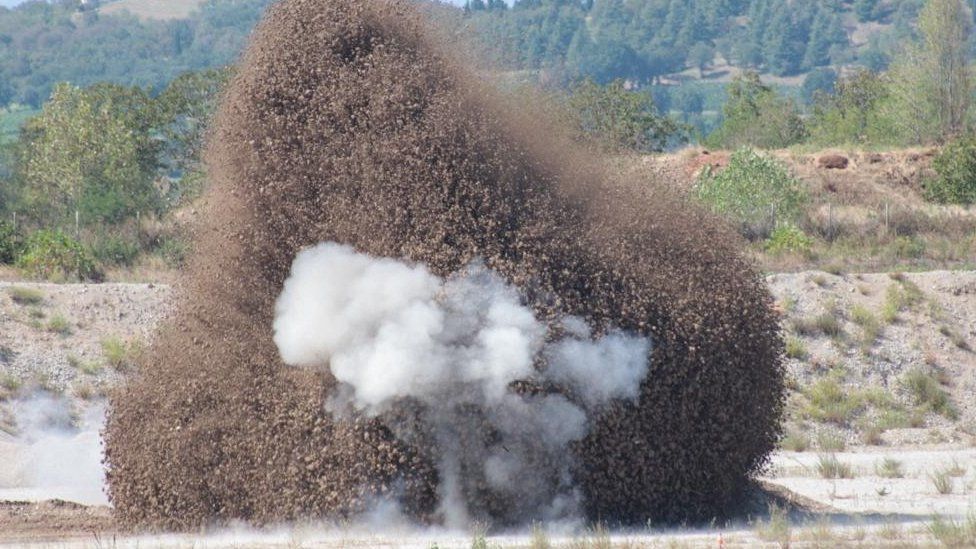 IMAGE SOURCE, ITALIAN ARMY
Image caption, Army officials detonated the bomb in a controlled explosion on SundaySome 3,000 nearby residents were reportedly evacuated so that bomb disposal experts could safely carry out a controlled explosion on Sunday.
“At first, some of the inhabitants said they would not move, but in the last few days we think we have persuaded everyone,” local mayor Francesco Apori said.
Along with river traffic on the channel itself, the area’s airspace was briefly closed.
The Po is the longest river in Italy, flowing from the south-western Alps to the Adriatic Sea. However, this year’s annual satellite photographs show growing portions of the dried-up riverbed due to the severe drought.
Last month, Italian authorities issued an emergency declaration for the Po’s environs, which irrigates around one-third of the nation’s agricultural output.
Its current has grown so weak due to heat and lack of rainfall in recent months that farmers in the Po Valley say salty seawater is now seeping into the river, destroying crops.
-
Iran’s atomic energy chief says country could build a bomb but has no plan to
Iran’s atomic energy chief says the country has the ability to build a nuclear weapon but has no plan to, an Iranian news agency reports.
Mohammad Eslami‘s comments echo a similar recent statement by a senior adviser to Iran’s supreme leader.
Such public claims by top officials are rare and are likely to intensify concerns over the nature of Iran’s nuclear program.
It has advanced its nuclear activities since a deal limiting them faltered.
The 2015 agreement began to unravel when the US pulled out and reinstated crippling economic sanctions.
Iran has repeatedly claimed its nuclear program is for purely peaceful purposes but Western powers and the global nuclear watchdog say they are not convinced.
Western officials have warned time is running out to restore the deal before Iran’s program reaches such a point where it cannot be reversed.
In his remarks reported on Monday by the semi-official Fars news agency, Mr. Eslami reiterated comments made by the senior adviser, Kamal Kharrazi.
“As Mr. Kharrazi mentioned, Iran has the technical ability to build an atomic bomb, but such a program is not on the agenda,” Mr. Eslami said.
In his own remarks made to the Al Jazeera news channel on 17 July, Mr. Kharrazi said: “Iran has the technical means to produce a nuclear bomb but there has been no decision by Iran to build one.”
There have been growing concerns over the so-called breakout time or the amount of time it will take Iran to amass enough highly enriched uranium for a nuclear weapon.
In June, the head of the global atomic energy agency, Rafael Grossi, said Iran could acquire such a quantity in a matter of weeks. The US put the breakout time at about a year during the period in which the nuclear deal was intact.
However, Mr. Grossi said possessing enough material did not mean Iran could manufacture a nuclear bomb.
In its latest report in May, the IAEA said Iran had 43.1kg (95lb) of uranium enriched to 60% purity. About 25kg of uranium enriched to 90% is needed for a nuclear weapon.
The claims from Iran that it has the technical know-how to develop a bomb come at a time when Iran and world powers are at loggerheads over reviving the 2015 deal.
Months-long on-off-talks in Vienna have stalled, and rare indirect negotiations between the US and Iran on the issue which took place in Qatar in June ended without agreement.
Source: bbc.com
-
Bombing kills physicians in Afghan capital
At least five people, mainly doctors, were killed and two others wounded in an explosion in the capital Kabul, security officials said on Tuesday.
A magnetic bomb attached to the vehicles of physicians working for the government was hit in the city’s police district seven, Kabul police spokesman Ferdows Faramarz said.
Three female physicians, a man and a passerby were among those killed in the blast, Faramarz added.
Despite the start of peace talks to end Afghanistan’s decades-long strife, violence has increased in various parts of the country.
Mornings in Kabul residents have recently seen regular bombings, assassinations and rocket attacks.
The Afghan government and the Taliban have been holding peace talks for more than three months aimed at ending decades of war, without any breakthrough.
Since the beginning of the talks, both parties have reported initial progress. Both sides have agreed on the procedures for peace talks and to start discussing the agenda on January 5 after a three-week pause.
Source: GNA
-
Berlin WW2 bombing survivor Saturn the alligator dies in Moscow Zoo
An alligator who survived World War Two in Berlin and was rumoured – wrongly – to have belonged to Nazi leader Adolf Hitler has died in Moscow Zoo.
“Yesterday morning, our Mississippi alligator Saturn died of old age. He was about 84 years old – an extremely respectable age,” the zoo said.
Saturn was gifted to Berlin Zoo in 1936 soon after he was born in the US. He escaped the zoo being bombed in 1943.
British soldiers found him three years later and gave him to the Soviet Union.
How he spent the intervening years always remained a mystery, but since July 1946 the alligator has been a hit with visitors in Moscow.
“Moscow Zoo has had the honour of keeping Saturn for 74 years,” the zoo said in a statement.
“For us Saturn was an entire era, and that’s without the slightest exaggeration… He saw many of us when we were children. We hope that we did not disappoint him.”
????? ????? ??? ???????????? ????????? ?????? ???? ?? ????????. ??? ???? ????? 84 ??? ?????? ????????? ???????. ??????????? ???????? ?????? ????? ????????? ??????? 74 ????. ?? ????? ?????? ?? ??? ??????. ????????, ??? ?? ??? ?? ????????????. pic.twitter.com/UigsB8xwBv
— ?????????? ??????? (@moscowzoo) May 23, 2020
The zoo reported that Saturn knew his keepers, loved being massaged with a brush – and was able to crack steel feeding tongs and bits of concrete with his teeth if irritated.
Mississippi alligators usually live to 30-50 years in the wild, it added.
Saturn may even have been the world’s oldest alligator – it’s impossible to say. Another male alligator, Muja who is at Belgrade Zoo in Serbia, is also in his 80s and still alive.
But it’s doubtful any alligator could compete with Saturn if it came to selling their memoirs.
The most headline grabbing detail is the rumour that Saturn had belonged in Hitler’s personal collection, which is untrue.
“Almost immediately after the arrival of the animal, the myth appeared that it was supposedly in Hitler’s collection, and not in the Berlin zoo,” Interfax news agency reports.
It is unclear how the rumour started.
Moscow Zoo dismissed such reports, noting that animals “do not belong to politics and mustn’t be held responsible for human sins”.
Saturn’s death-defying escape in 1943 is unlikely ever to be explained.
Berlin, the capital of Nazi Germany, was subjected to intense Allied bombing before the war ended in 1945.
The so-called Battle of Berlin began in November 1943 and the night of 22-23 November saw extensive damage to areas west of the centre, including the Tiergarten district where the city’s zoo is located.
Thousands of people were killed or injured and many of the zoo’s animals perished too.
The zoo’s aquarium building took a direct hit. One report said passers-by had seen the corpses of four crocodiles in the street outside, tossed there by the force of the blast.
Saturn somehow survived and then lived for three years in a city ravaged by war, and a climate unsuited to alligators.
It’s reported he will now be stuffed and exhibited in Moscow’s popular museum of biology named after Charles Darwin.
Source:Â bbc.com
-
Cluster bombs dropped in Libyan capital
Cluster bombs were dropped in a residential area in Libya’s capital, Tripoli, on 2 December by forces allied with renegade commander Khalifa Haftar, campaign group Human Rights Watch has said.
During a visit to the site on 17 December, its investigators found “remnants of two RBK-250 PTAB 2.5M cluster bombs, as well as evidence that high-explosive air-dropped bombs were used in the attack”, HRW said.
The air strike had been carried out in the area by Gen Haftar’s Libyan National Army (LNA) or its foreign allies, who include the United Arab Emirates and Russia, HRW said.
There were no reported casualties because that area in southern Tripoli had already been largely abandoned by residents because of heavy fighting.
The use of cluster bombs is banned under an international convention signed in 2008.
Although Libya is among 75 countries – including Russia and the US – which never signed up to the convention, most usually comply with the ban because of the indiscriminate effect of cluster bombs and the long-term danger they pose.
“They typically explode in the air and send dozens, even hundreds, of small bomblets over an area the size of a football field.
“Cluster submunitions often fail to explode on initial impact, leaving duds that act like landmines,” HRW said.
Meanwhile, the UN Security Council has adopted a resolution “demanding†that a “lasting ceasefire” comes into force in Libya.
The oil-rich state has been hit by instability since the overthrow of long-time leader Mummar Gaddafi in 2011.
Gen Haftar’s forces launched an offensive last year to capture Tripoli, but have not yet done so.
Turkey has sent troops to bolster the Tripoli-based government.
Source: bbc.com
-
Sudan agrees to pay out families of bombed sailors
Sudan has signed a deal to compensate the families of 17 American sailors who died when their ship, the USS Cole, was bombed at a port in Yemen in 2000.
This is a key condition set by the US for Sudan to be removed from a terrorism blacklist. It is not clear how much Khartoum will pay.
Al-Qaeda said it had carried out the attack in which the warship was rammed by a rubber dinghy packed with explosives.
The US ruled Sudan was responsible because the two suicide bombers were trained in the country – an allegation denied by Khartoum.
-
Suicide bomber attacks Algerian army base
A soldier has been killed in a suicide car bombing that targeted a military barracks in southern Algeria.
It was the first such attack in the country for several years.
It is not known who was behind the bombing, which happened in the Bordj Baji Mokhtar region, in Adrar province, close to the border with Mali.
Conflict in neighbouring Libya and deteriorating security conditions in Mali have contributed to increased militant activity in the Sahara and Sahel areas of North Africa.
Source: bbc.com
-
Rush hour car bomb kills many in Somali capital
At least 30 people are reported to have been killed by a car bomb during morning rush hour in Somalia’s capital.
The blast took place at a checkpoint at a busy intersection in Mogadishu.
“The blast was devastating, and I could confirm more than 20 civilians killed, there were many more wounded,” police officer Ibrahim Mohamed was quoted by news agency AFP as saying.
Read: Bomb blast hits police bus in southern Turkey, five wounded Governor
No group has yet claimed responsibility for the bomb but al-Shabab militants have often carried out attacks there.
Al-Shabab – a group of Islamist militants, allied to Al-Qaeda – has waged an insurgency for more than 10 years. It was forced out of the capital in 2011 but still controls areas of the country.
Who are Somalia’s al-Shabab?
Witnesses described carnage at the scene.“All I could see was scattered dead bodies … amid the blast and some of them burned beyond recognition,” said Sakariye Abdukadir, who was close to the blast.
Read: Australian brothers guilty of IS plane bomb plot
Many were severely injured in the blast
One Somali MP, Mohamed Abdirizak, put the death toll at more than 90, although the information he said he had received has not been independently confirmed.“May Allah have mercy on the victims of this barbaric attack,” the former internal security minister added.
Five people were killed earlier this month when al-Shabab attacked a Mogadishu hotel popular with politicians, diplomats and military officers.
Source:Â bbc.com