Tag: Botswana

  • 2026 World Athletics Relays to take place in Botswana

    2026 World Athletics Relays to take place in Botswana

    Botswanas growing success in athletics has earned it the privilege of hosting the 2026 World Athletics Relays.

    The competition will be held in the capital city, Gaborone, from May 2 to May 3, 2026, as officially confirmed by World Athletics.

    World Athletics President, Sebastian Coe, announced Botswana as the host nation on Tuesday, March 25, 2025, during a council meeting in Nanjing, China.

    Reacting to the news, Botswana’s Minister of Sport and Arts, Jacob Kelebeng, took to X (formerly Twitter) to celebrate and commend the Botswana Athletics Association (BAA) for the achievement.

    “We made it. We have won the bid to host World Relays 2026. Congratulations to BAA,” he wrote.

    Botswana has one of the top relay teams in the world, with their 4x400m squad securing a silver medal at the 2024 Paris Olympics.

    Before the Olympics, they also won gold at the World Athletics Relays in the Bahamas.

    So far, the team has earned three medals at the World Relays—one gold, one silver, and one bronze.

    The World Athletics Relays is a prestigious international track and field event organized by World Athletics. It focuses on relay races, where teams of athletes pass a baton to complete a race. The event is held every two years and serves as a platform for countries to showcase their relay teams. It also acts as a qualification stage for major competitions like the World Athletics Championships and the Olympic Games.

    The relays typically include events like the men’s and women’s 4x100m and 4x400m, as well as the mixed 4x400m relay. Over the years, the competition has evolved, with new relay formats being introduced to keep the event exciting and engaging for both athletes and fans.

  • Botswana’s Ruling Party loses elections after 58 years in power

    Botswana’s Ruling Party loses elections after 58 years in power

    Botswana’s President Mokgweetsi Masisi held a press conference on November 1, 2024, to officially acknowledge his party’s defeat in the October 30 general elections.

    The ruling Botswana Democratic Party (BDP) lost to the opposition coalition, the Umbrella for Democratic Change (UDC), marking a significant shift in the country’s political landscape.

    On this occasion, Masisi admitted that the BDP had lost its parliamentary majority in a dramatic fashion, bringing an end to nearly sixty years of governance. Preliminary reports indicated that the UDC, led by lawyer Duma Boko, was poised to claim victory as more than half of the constituencies had been reported.

    Experts attributed the BDP’s loss to growing socio-economic discontent, especially among the youth, who have expressed dissatisfaction with the party’s handling of various issues. Since gaining independence from Britain in 1966, Botswana has relied heavily on diamond exports; however, a recent decline in the global diamond market has resulted in a sharp economic downturn, with unemployment soaring to 28%.

    State television announced that, with results from 41 of the 61 constituencies counted, the UDC secured 26 parliamentary seats, while the BDP only managed to win three. In Botswana, members of parliament are responsible for electing the president.

    Although Duma Boko has not yet made a public statement regarding the election results, his campaign focused on critical issues such as increasing the minimum wage and enhancing social grants.

    “Although I wanted to stay on as your president, I respect the will of the people and I congratulate the president-elect. I will step aside and I will support the new administration,” Masisi said at a press conference.

    On Friday morning, the atmosphere in the capital city of Gaborone was tranquil, with small clusters of opposition supporters gathered in the streets to celebrate.

    “I did not ever think I would witness this change in my life,” said 23-year-old student Mpho Mogorosi. “The BDP had stayed too long in power and I am proud to be part of the people that removed them for a better Botswana.”

    This year, the Botswana Democratic Party (BDP) became the second long-standing party in southern Africa to experience a loss at the polls, following South Africa’s African National Congress, which lost its parliamentary majority after three decades in power and had to establish a coalition government.

    In the coming weeks, neighboring Namibia will conduct elections, where the ruling SWAPO party, in power since 1990, is anticipated to encounter a significant challenge.

    “The outcome of Botswana’s elections should serve as a warning to long-time ruling parties across southern Africa and beyond that without economic progress and employment opportunities, political dominance will falter,” said Zaynab Hoosen, an Africa analyst at Pangea-Risk.

  • Batswana angry over govt’s call for donations to reward Olympic athletes

    Batswana angry over govt’s call for donations to reward Olympic athletes

    Botswana’s social media has been ablaze with anger after the government requested citizens to contribute money to reward the nation’s historic Olympic gold medalists.

    In a statement on Monday, the government suggested that the public could honor the athletes by “contributing rewards to our champions.”

    Letsile Tebogo made history as the first African athlete to win the men’s 200m at the Olympics, securing Botswana’s first-ever gold medal.

    However, the government’s call for donations has dampened the celebrations for some, who are questioning why their tax money isn’t being used to reward the Olympians.

    “We are already paying tax, give our champions [sic] money from the government purse,” raged one user on Facebook.

    The Botswana government did not respond to the BBC’s request for comment and it is unclear if they are also contributing to the reward pot.

    “I would love to donate in support of the boy’s historic achievement, but unfortunately, I’m currently an unemployed electrical engineering graduate with a bachelor’s degree,” one user said.

    One individual proposed that the cabinet should set an example by donating 25% of their salaries.

    In Africa, it is common for Olympic gold medalists or Africa Cup of Nations winners to be rewarded with houses or large cash prizes by their governments.

    Although Botswana boasts one of the highest per capita incomes on the continent, it also suffers from one of the world’s highest youth unemployment rates, according to Afrobarometer.

    Despite being a major diamond producer, Botswana has recently faced a downturn in diamond revenues, leading to government budget cuts, as reported by Bloomberg.

    While many have criticized the fundraising effort, some have expressed support for the idea, with one person eagerly suggesting that the fund be open to contributions from anyone across the continent.

    “Open it to all Africans, I want to contribute from Kenya,” said one voice of support.

    Tebogo set a new African record with a time of 19.46 seconds in the 200m and also secured a silver medal in the men’s 4x400m relay with his teammates.

    On Tuesday, the National Stadium in Gaborone, the capital, was filled with tens of thousands of people who came to celebrate the Olympic team’s return after President Mokgweetsi Masisi declared a half-day holiday.

  • Professor Goemeone Mogomotsi Africa’s most educated man?

    Professor Goemeone Mogomotsi Africa’s most educated man?

    Professor Goemeone Mogomotsi, possibly one of Africa’s most educated individuals, has garnered attention for his remarkable academic achievements.

    A post by We Are Trending Mzansi on Facebook highlighted his journey, showcasing how he became a professor at the young age of 33 in 2021.

    With a PhD in Law, five Master’s degrees (including two in law), and three Bachelor’s degrees, Professor Mogomotsi’s academic credentials are truly impressive.

    His wife, Patricia Finky Mogomotsi, also achieved the remarkable feat of becoming a professor at the age of 31 in 2020. Together, they form an educated power couple, setting a high standard in the academic world.

    The post on Facebook received numerous positive and uplifting responses from netizens, who praised the couple for their academic achievements and viewed them as a source of inspiration for people of colour. They are seen as a beacon of hope for many Africans aspiring to excel in academia.

  • Botswana’s President criticizes UK’s proposed trophy import ban

    Botswana’s President criticizes UK’s proposed trophy import ban

    Botswana’s President, Mokgweetsi Masisi, has voiced criticism against proposed legislation in Britain aimed at prohibiting the import of trophies from hunted endangered animals, including elephant tusks.

    While the British government asserts that the ban will play a crucial role in safeguarding threatened wildlife, Mr. Masisi has defended trophy hunting as a method of managing the elephant population.

    In an interview with the BBC, he lamented the lack of efforts to comprehend the potential impact of the ban on his country, describing it as a “sad tragedy.”

    Mr. Masisi labeled the move as “hypocritical,” pointing out that Britain permits the hunting of stags and the export of their antlers.

    Botswana lifted a moratorium on hunting in 2019, citing an elephant population of over 130,000 and a rise in instances of human-wildlife conflict in the southern African nation.

  • Ghana-Botswana friendly scrapped after backlash

    Ghana-Botswana friendly scrapped after backlash

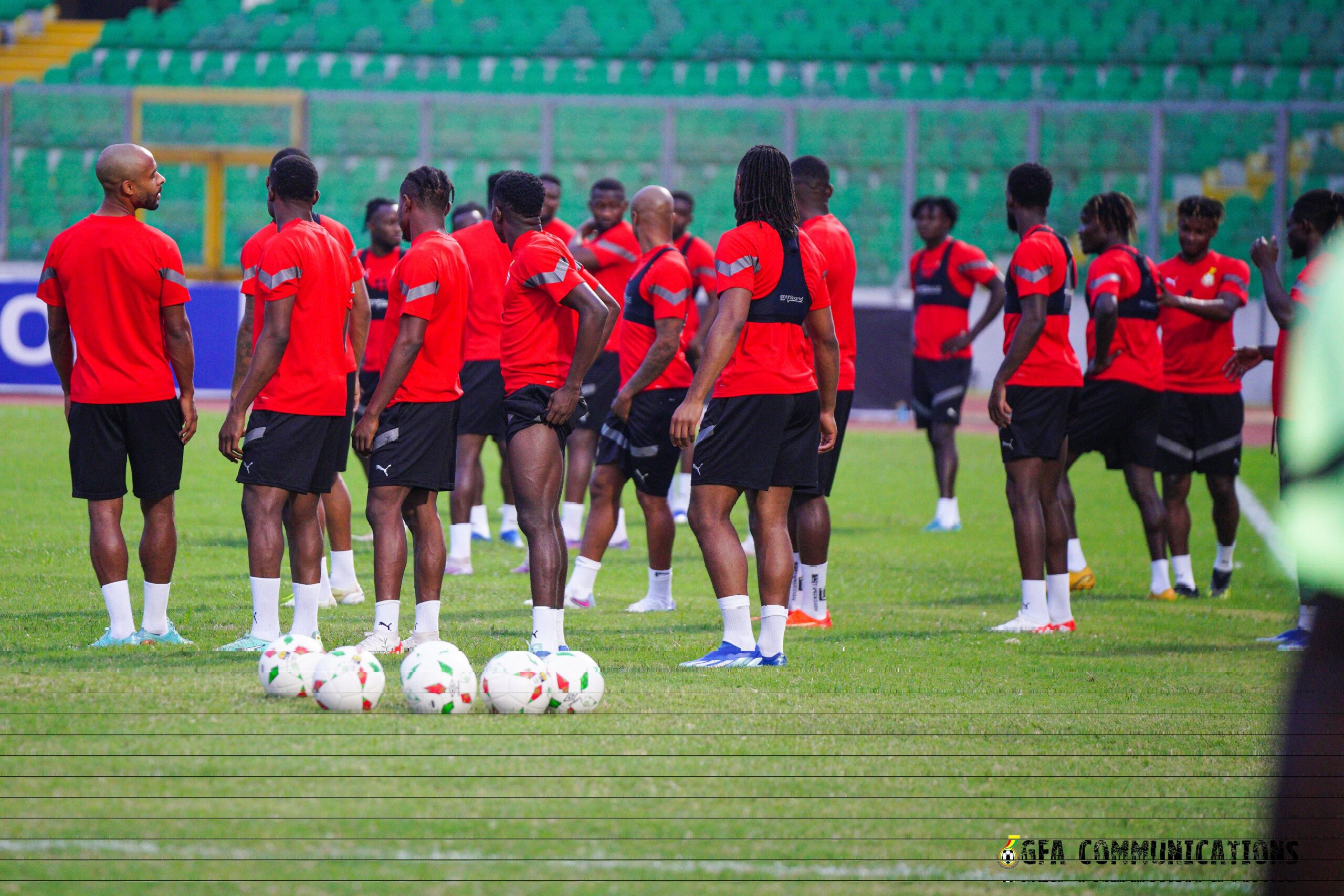
    The anticipated pre-AFCON friendly between Ghana and Botswana has been canceled following public disapproval.

    The Ghana Football Association (GFA) had initially confirmed a Johannesburg camp and a friendly match against Botswana, which faced backlash from fervent football enthusiasts in the country.

    Responding to public sentiment, the Sports Ministry, in collaboration with the Ghana Football Association, has altered course and is now considering a training camp in Kumasi.

    Additionally, Ghana is set to play a friendly game with Namibia as part of its preparations for the 2023 Africa Cup of Nations (AFCON).

  • Former Botswana trade minister highlights concerns with African trade agreements

    Former Botswana trade minister highlights concerns with African trade agreements

    Former Botswana Trade Minister and Special Advisor to UN Climate Change Champions, Bogolo Kenewendo, has expressed concerns regarding the trade agreements between Africa and the Western world. She has called for increased advocacy among Africans when it comes to trade negotiations, expressing disappointment in trade agreements that appear to be unfairly tailored for African nations.

    During an interview on The Point of View, Bogolo Kenewendo emphasized the importance of Africans adding value to their exported products for the Western world, thereby enabling the generation of higher incomes.

    She firmly believes that value addition not only creates job opportunities for the youth within the value chain but also offers significant advantages to economic systems.

    “There’s still a little bit of unfairness in the way our trade agreements were tailored, and we need to change that. We need to advocate for ourselves and not just add value. Adding value is a step in the right direction to ensure that we capture more value, not only the more value that is captured.

    There’s an opportunity that arises when you add value, as well as employment and an improvement in the balance of payments. All economic systems benefit from a strong and concerted effort on beneficiation. For example, cocoa that is raw or semi-processed can be transformed into chocolate, which commands a higher price.”

    The former Trade Minister of Botswana underlined the necessity of investing in the trade sector, emphasizing the potential advantages for Africans.

    Additionally, she conveyed her optimism that significant transformations in Africa’s economies could be achieved through investments in human capital.

    “I’m confident that money is the pathway to Africa’s transformation. To get money, we need money to trade. There’s more money to be made when you go further up the value chain. There’s less money in selling raw materials, and the more value you add, the more money you can unlock in a product.

    “I remain confident that the more we invest in this and in human capital, which can boost our ability to trade both goods and services, the more we will be able to transform our economies. I’m confident that if we work much more concertedly on the Africa free trade area and start trading among ourselves,” she opined.

    Asked what can be done to improve intra-trade in Africa, she said, “First is the facilitators of trade, infrastructure, roads, trains that go from the North to the East to the West and so forth. But also our policies being friendlier. We must recognize that no one will be more successful than the other if we do not cooperate. We should be more accepting of each other. Intra-industry trade is the reason why the European market survived.”

  • Mauritus tops list of Africa’s most peaceful nation

    Mauritus tops list of Africa’s most peaceful nation

    The Global Peace Index (GPI) study from 2022, published on July 12, 2023 has indicated that the three most tranquil nations in Africa are Sierra Leone, Botswana, and Mauritius.

    Mauritius, an island nation in East Africa, maintains the 23rd overall position and overall score of 1.546 that it has held for the past few years.

    Botswana received a total score of 1.762 and was ranked 42nd globally, while Sierra Leone received a score of 1.792 and was ranked 47th globally. The list takes into account 163 nations worldwide.

    Top 10 most peaceful countries in Africa:

    a. Mauritius

    b. Botswana

    c. Sierra Leone

    d. Ghana

    e. Senegal

    f. Madagascar

    g. Namibia

    h. The Gambia

    i. Zambia

    j. Liberia

    See Africa’s most peaceful country ranking

    About the GPI report

    The Global Peace Index (GPI), which rates 163 independent states and territories based on how peaceful they are, is in its 17th edition.

    Created by the Institute for Economics and Peace (IEP), the GPI, c is the most often used indicator of world peace. The trends in peace, its economic importance, and how to create peaceful communities are all covered in this research in the most thorough data-driven examination to date.

    Using 23 qualitative and quantitative indicators from reputable sources, the GPI covers 163 nations and 99.7% of the world’s population. It gauges the condition of peace in three areas:

    the magnitude of ongoing domestic and international conflict, the level of societal safety and security, and the level of militarization

  • Minister from Botswana shares workplace sexual harassment experience

    Minister from Botswana shares workplace sexual harassment experience

    Bogolo Kenewendo, an economist, made international news five years ago when he was appointed trade minister of Botswana at the age of 31, making him one of, if not the youngest, government ministers in history.

    But in an interview with the BBC Focus on Africa podcast she has spoken about the sexual harassment and discrimination that she faced.

    Looking back at her 19 months in the job she spoke about how she “survived the environment”.

    “When you’re a young woman in such a space there are a lot of innuendos – how you got the job – but even those who you work with, fighting off sexual advances or even harassment in some cases.

    “There was a severe case that happened and I reported it to my principals and there was action,” she told the BBC’s Audrey Brown without going into more details.

    She added that as a result she felt empowered to bring bills to parliament that dealt with the protection of women and children.

  • A third of Botswana’s rhinos lost in 5 years

    A third of Botswana’s rhinos lost in 5 years

    According to Botswana, rhino poaching has increased significantly, with the country losing about one-third of the rhinos there.

    Although numbers drastically decreased last year, tourism minister Philda Kereng informed parliament that 138 rhinos had been slain during the previous five years.

    According to statistics, only two animals were stolen in the five years leading up to 2017.

    The minister ascribed the increase to the persistent demand for rhino horn on the world market, particularly in East Asia.

    She also brought up the fact that poaching groups have been expelled from other southern African nations.

    Botswana had less than 400 rhinos, according to conservationist estimates for 2019.

  • ‘We want a bigger share’: De Beers and Botswana are at odds over diamond sale

    ‘We want a bigger share’: De Beers and Botswana are at odds over diamond sale

      President of Botswana, Mokgweetsi Masisi, issued a warning on Sunday, threatening to cut off relations with De Beers if talks to renegotiate a sales agreement do not go well for his nation.

      The 2011 sales agreement governing the terms of marketing diamonds produced by Debswana – a 50-50 joint venture between the government and De Beers – expired in 2021.

      It has been extended by the parties, who cited the coronavirus outbreak as the reason for the delay in concluding negotiations, and will end on June 30, 2023.

      Speaking at a rally of his ruling Botswana Democratic Party (BDP) in his home village of Moshupa, about 65 kilometers from the capital Gaborone, Masisi warned, “If we don’t reach a win-win situation, each side will have to pack up and go home.”

      Under the 2011 agreement, the mining company De Beers received 90% of the rough diamonds produced while Botswana, Africa’s largest diamond producer, received 10%. In 2020, Botswana’s share was increased to 25%.

      In 2020, Botswana’s share was increased to 25%.

      Today, “we got a glimpse of how the diamond market works, and we found out that we received less than we should have,” said Mr. Masisi, who spoke in both English and the local language, Tswana.

      “We also found out that our diamonds are bringing in a lot of profit and that the (2011) agreement had not been favorable to us,” he added, before warning: “We want a bigger share of our diamonds. Business cannot continue as before.

      Source: Africa News

    • Battery theft affecting phone service in Botswana

      Surging world prices for rechargeable batteries are being blamed for the growing theft of lithium cells from mobile phone towers in Botswana.

      The country’s biggest mobile operator, Mascom Wireless, said the thefts were compromising the quality of its service to subscribers.

      On Tuesday, the Botswana police said they had arrested four men from Zimbabwe caught with 40 batteries worth nearly $80,000 (£67,000).

      Source: BBC

    • Botswana army call for unmarried recruits sparks row

      People in Botswana have expressed anger over a requirement not to be married so as to join the army.

      An advertisement posted on Facebook by Botswana Defence Force (BDF) has announced ‘very limited’ vacancies of officer cadet posts that require potential candidates not to be married.

      The army said applicants should also have “no dependents or legal obligation to support a child or children,” the public poster

      read.

      A section of public have urged the army to revise that requirement terming it discriminatory.

      “Why does being married deprive one’s right to join army?” Moses Angel asked.

      “BDF wants to find a partner for the recruit? Why is being married and having dependents an issue? Titoga Ding Ketlhabanetswe, wondered.

      The army also requires female candidates not to be pregnant

      during recruitment.


      Source: BBC

    • Botswana allows wives to own land

      Botswana wives can for the first time own land alongside their husbands, President Mokgweetsi Masisi has said.

      Until now, the country’s land policy stopped wives from owning land if their husbands already had some.

      Only unmarried women or the wives of men who did not already own land were eligible.

      The discrimination left millions of women without access to the land where they live and work.

      The president tweeted the amended law that reads: “Each Motswana will be eligible for allocation of one residential plot at an area of their choice within the country, on both state land and tribal land.”

      He said the new policy will also protect widows and orphans who head households and are in need of land for residential purposes.

      Rights groups have welcomed the change saying it was long overdue.

      Source: bbc.com

    • Botswana bans alcohol sales

      Botswana’s government has banned the sale of alcohol and suspended all liquor licences.

      A gazette notice said the suspension was until further notice. All alcohol selling stores will remain closed.

      The reason given for the ban was that alcohol had “negative effects on adherence to Covid-19 protocols”.

      Last week, the government reinstated a strict lockdown in the capital, Gaborone, for two weeks to curb rising cases.

      The country has to date confirmed 804 coronavirus cases and two deaths.

      Source: bbc.com

    • Botswana president goes into coronavirus quarantine

      Botswana President Mokgweetsi Masisi has quarantined himself after an official working closely with him tested positive for Covid-19, a government statement says.

      Some other people in the president’s inner circle are also self-isolating, it adds.

      The government encourages people to continue taking precautions in order to prevent the spread of the virus.

      The country of 2.25 million people has so far recorded 227 cases of the virus and one death.

      bbc.com

    • Botswana probes death of 56 elephants

      Botswana is investigating the mysterious death of 56 elephants in the last two months. Authorities have ruled out poaching, as all carcasses were found intact.

      The country’s Ministry of Environment, Natural Resources Conservation and Tourism says 12 elephants were found dead last week in villages in the Okavango Delta panhandle. In March, 44 animals died.

      Wildlife officer Dimakatso Ntsebe, downplayed the possibility of farmers poisoning the elephants, who tend to eat and stomp on crops.

      A local farmer says it is difficult to know the cause of death, but says elephants are a constant menace.

      “Farmers had a good harvest this year, but they constantly face problems with the encroaching animals,” the farmer said. “But it is a rare occurrence (to poison the elephants). It might be something else. We will have to wait for investigations.”

      Local conservationist Ive Maps, says the animals could have died of natural causes.

      “It is also possible that it is a natural phenomenon from the disease anthrax, which occurs in Botswana occasionally, especially after a good rainy season or a severe drought. Poisoning is not something common up there,” Maps said. “I think we should wait for pathology to find out if this is indeed poisoning or a natural anthrax phenomenon.”

      Fellow conservationist Neil Fitt says if the cause of death was poisoning, other species could be dying, as well.

      “I wonder why we have not heard reports of other species also dying,” he said. “If elephants are eating the poison, then it surely means other things will be eating it.”

      The public has been urged against consuming meat from dead carcasses.

      Botswana has the largest elephant population in Africa, numbering over 130,000 animals.

      Source: allafrica.com

    • Botswana extends nationwide coronavirus lockdown

      Botswana’s President Mokgweetsi Masisi has announced a one-week extension of the nationwide lockdown that was due to end on 30 April after one month.

      President Masisi said the extension was agreed after advice from health experts following an increase in local transmissions.

      The extension will end on 7 May followed by two weeks of “sequentially easing” the restrictions.

      During the extension, the government will decide on a strategy to ease restrictions depending on how citizens follow guidelines designed to reduce the spread of coronavirus.

      Botswana has confirmed 22 cases of the virus and one death.

      Source: bbc.com

    • Botswana MPs caught breaking coronavirus rules

      Several MPs in Botswana have been caught breaking their self-isolation instructions and have now been placed in supervised quarantine.

      On Thursday, all parliamentarians and President Mokgweetsi Masisi were asked to quarantine for 14 days after a health worker who had been screening them for the coronavirus herself tested positive.

      However a government statement said some of the MPs had regrettably been seen shopping in supermarkets.

      They have been moved from their homes to a supervised government facility.

      The statement did not say how many lawmakers had broken the rules.

      Botswana has reported 13 coronavirus cases and one death.

      Source: bbc.com

    • Botswana auctions off permits to hunt elephants

      Botswana held its first auctions for the right to hunt elephants since lifting a ban last year.

      The country has some 130,000 elephants, the largest population in the world.

      The government sold seven hunting licences on Friday, with each allowing hunters to kill 10 elephants in “controlled hunting areas”.

      Officials revoked a 2014 ban in May, saying human-elephant conflict and the negative impact on livelihoods was increasing.

      The lifting of the ban has been popular with many in rural communities, but has been heavily criticised by conservationists.

      How did the auctions work?
      Seven packages of 10 elephants each were sold at the auction in the capital Gaborone on Friday afternoon, the BBC’s Southern Africa correspondent Nomsa Maseko reports.

      Only companies registered in Botswana were allowed to bid for the licences. Bidders put down a refundable deposit of 200,000 pula ($18,000; £14,000).

      The government has issued a quota for the killing of 272 elephants in 2020.

      The hunting would help areas most impacted by “human wildlife conflict”, wildlife spokeswoman Alice Mmolawa told AFP news agency.

      Why was the ban reversed?

      Many rural communities believe a return to commercial hunting will help keep the elephant population away from their villages, and also bring in much-needed income in places not suitable for high-end tourism.

      But critics fear it could also drive away luxury-safari goers who are opposed to hunting.

      Audrey Delsink, Africa’s wildlife director for the global conservation lobby charity Humane Society International, called the auctions “deeply concerning and questionable”.

      “Hunting is not an effective long-term human-elephant mitigation tool or population control method,” she told AFP.

      Ross Harvey, an environmental economist in South Africa, told the BBC: “There is no scientific evidence to support the view of there being too many elephants.

      “We know that Botswana’s elephant numbers haven’t actually increased over the last five years, we have a stable population. Elephants are critical to Botswana’s ecology.”

      President Mokgweetsi Masisi’s predecessor Ian Khama introduced the ban in 2014 to reverse a decline in the population of wild animals.

      Source: bbc.com

    • Crisis at Botswana’s Ministry of Water Resources

      Ministry of Lands Management, Sanitation and Water Resources top management and Public Procurement and Asset Disposal Board’s (PPADB) failure to listen to the advice from their Project Management Officers (PMOs) has come back to haunt them and has thrown the whole government into financial mess.

      The two entities found themselves in the multibillion tenders which they withdrawn from China Jiangsu International after the advice of the Directorate of Intelligence Services (DIS) that the company is involved in massive corruption and are a threat to national security.

      Last week High Court confirmed the fears of PMO when delivering judgment stating that the withdrawal of an award for the award of the tender for the Design, Supply and Build of Water Distribution Network, Sanitation, Reticulation, Telemetry and SCADA and other associated Works in Maun was illegal.

      Delivering judgment, Acting Judge Rahim Khan ordered that MLWS to issue a letter of notification of award to China Jiangsu International for the Maun Project immediately and forthwith.

      This judgment came after MLWS advised PPADB to withdraw the awarding of the tender to the Chinese State company because DIS has indicated that they are involved in massive corruption and are threat to national security.

      The withdrawal of the P1.5 billion tender didn’t sit well with the Chinese company who applied for an expedited appeal at the Court of Appeal whilst waiting for the review of the decision which was before Justice Khan. The Court of Appeal Justice Isaac Lesetedi dismissed the application with costs.

      Immediately after the Court of Appeal, senior leadership at MLWS ordered the speedily re-awarding of the P1.5 billion Maun Water Reticulation project to the second bidder Zhengtai Group Botswana.

      The PMOs then advised the ministry senior leadership that the matter is still before the court and insisted that they should first wait for the judgment on the review.

      This was prompted by the statement made by Justice Dube and Khan that PPADB cannot rely on the mere correspondence from DIS in withdrawing the tender.

      Dube stated that the information from DIS advising the procuring entities not to conduct business with China Jiangsu International could not be admissible in court because it was introduced outside the procurement process.

      Justice Khan echoed the same statement when throwing confusion at the government enclave regarding the Maun Water project tender.

      “The note by DISS which makes certain allegations without being substantiated is unacceptable as criteria to be considered in the evaluation process,” stated Justice Khan.

      He said that PPADB has statutory obligations in terms of its mandate to fulfill and that it cannot transfer those responsibilities to a third party as this is not permissible in terms of the legislation.

      “Its reliance on the note by DISS is entirely misplaced and therefore the contents of the note by DISS must be ignored as a basis for the rejection by the 1st respondent (PPADB) of the tender,” he stated.

      Another concern for the PMOs is that the difference between the first bidder China Jiangsu and Zhengtai Group is P300 million, which they argue, doesn’t make economic sense for the ministry and government.

      China Jiangsu International had won the tender to the value of P1.5 billion with Zhengtai Group coming second with a quote of P1.8 billion.

      On the 21st December DIS Director General Peter Magosi wrote a letter to PPADB advising them to terminate all the tenders awarded to China Jiangsu International as their investigations have shown that the company is involved in massive corruption and threat to national security.

      In February 2019 PPADB withdrew all the tenders awarded to China Jiangsu.

      MLWS through Water Utilities Corporation (WUC) will soon find themselves in another predicament regarding the over P800 million tender for the design supply, installation and commissioning of the Mmamashia Water Treatment Plant-Tender No. WUC 015(2018). The tender was won by China Jiangsu International but DIS instructed WUC to withdraw the awarding of the tender to the state owned Chinese company. Lobatse High Court Judge Justice Tebogo Tau instructed that an International arbitrator be appointed to mediate on the matter.

      Justice Khan smells rat

      In delivering judgment on the Maun Water Reticulation project, Justice Khan hinted that the conduct of the respondents appeared to be employing tactics which will allow the case to drag on indefinitely whilst at the same time the contract is being implemented.

      Immediately after China Jiangsu lost the appeal at the court of Appeal, MLWS is said to have instructed PPADB to sign contract with Zhengtai Group. The company was immediately given P180 million by MLWs as advance payment.

      “That there has been substantial progress in the implementation of the contract so that this court should not reverse the progress made in implementation and that on a balance of convenience it would be preferable for the contract to continue rather than impede its implementation,” observed Justice Khan.

      He said that it is clear that the implementation of the project whilst the matter is still before the courts was to try to ensure that the project even if the matter is appealed; a period of time will elapse and benefit MLWS.

      “So as implementation would have occurred and the courts are reluctant to impede a contract where substantial progress has been made and it would not be expeditious to prevent their progress in a contract,” he said.

      Source: allafrica.com