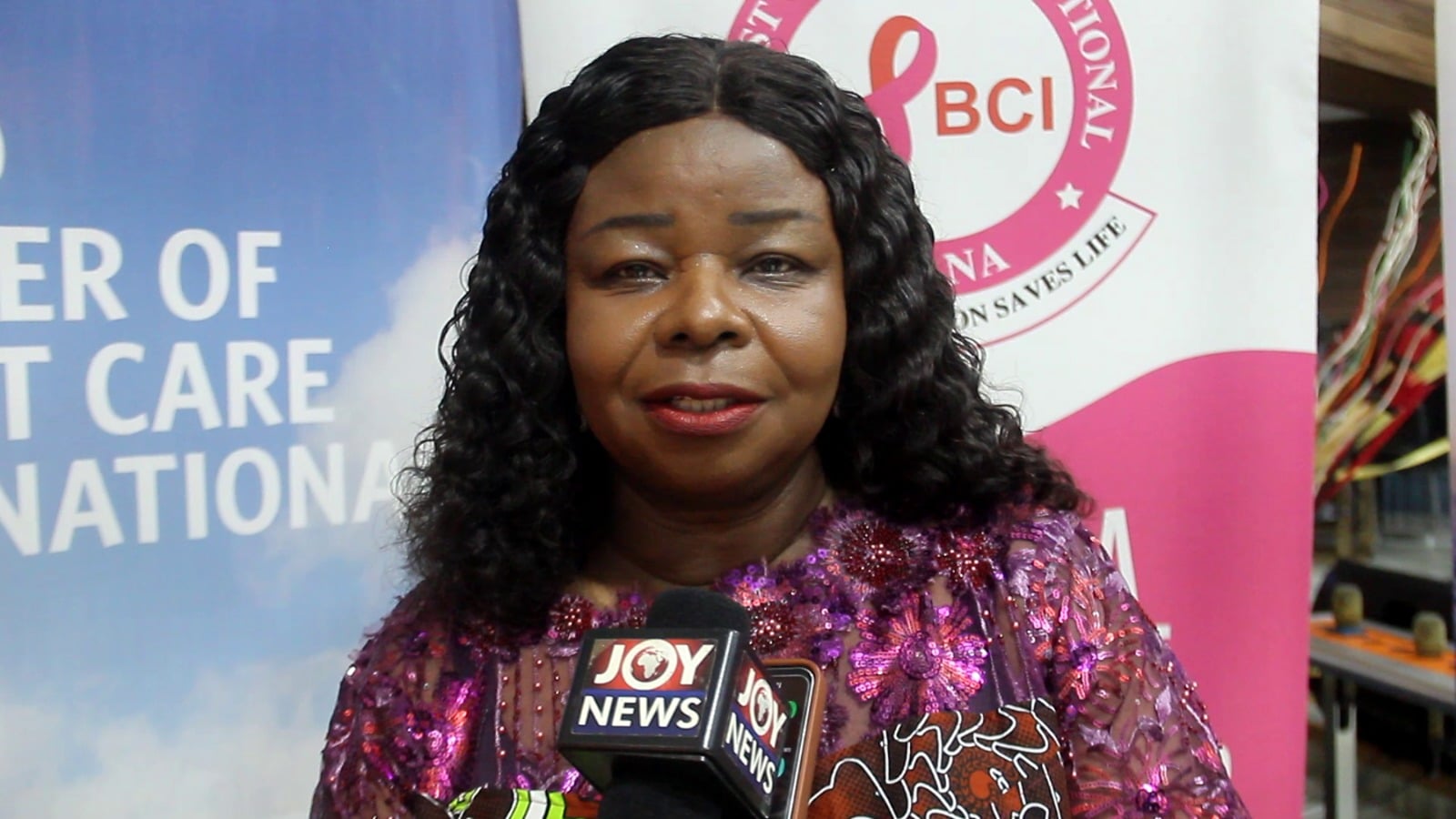
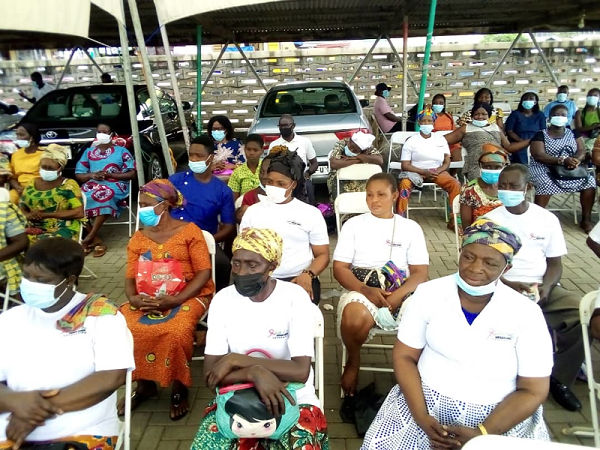
A general practitioner at Trust Hospital, Dr. Dorcas Anto, underscored the critical importance of regular breast cancer screenings, emphasizing that the disease affects individuals without discrimination.
According to her, every person with breast tissue is susceptible, regardless of their societal position.
In a discussion on Frontline with Kwabena Agyapong on Rainbow Radio 87.5FM, she raised concerns about the detrimental impact of treatment delays, which can result in severe health issues and even fatalities.
Dr. Anto pointed out that approximately 70% of breast cancer patients only seek medical help when their condition has significantly worsened, leading to a 50% mortality rate among these late presenters.
Globally, around 2.3 million women were diagnosed with breast cancer in 2022, contributing to an estimated 670,000 deaths. While the survival rate in the United States stands at about 90% over five years, the situation in Africa is more challenging, with survival rates dropping below 40%.
“In 2022, there were 2.3 million women diagnosed with breast cancer and 670,000 deaths worldwide. Breast cancer occurs in every country of the world in women at any age after puberty, but the incidence increases in later life.
“Ghana records approximately 4,000 new occurrences of breast cancer each year, and the statistic is increasing, but the bad news is that many patients with the disease present their cases late. Approximately 70% of breast cancer patients show their cases relatively late. Out of the 70%, 50% do not survive. This is because they do not report their condition to the hospital in a timely manner. Some individuals are unaware of their ailment and do not present it on time. Some patients arrive at the hospital when their disease has progressed to the point of no return.
In Ghana, there are about 4,000 new breast cancer cases reported each year, and this number is on the rise. Dr. Anto stressed the urgent need for public education regarding the importance of early detection to improve survival outcomes.
She also highlighted age as a significant risk factor for breast cancer, referencing the World Health Organization, which identifies female gender and being over 40 as key determinants. Interestingly, many diagnosed women lack a family history of breast cancer, emphasizing that awareness and screening are vital for all, including younger women under 40.
Breast cancer is not limited to women: While it is less common, men can also develop breast cancer. Men should be aware of potential symptoms and risk factors.
Family history isn’t the only risk factor: While having a family history of breast cancer does increase your risk, most people diagnosed with breast cancer have no family history of the disease. Other factors like age, hormonal factors, lifestyle choices, and genetic mutations can also play a role.
There are different types of breast cancer: The most common types are invasive ductal carcinoma and invasive lobular carcinoma, but there are several subtypes of breast cancer, each with distinct characteristics and treatments.
Early detection is critical: Early detection through regular breast self-exams, clinical breast exams, and mammograms can significantly improve the chances of successful treatment. Self-exams can help individuals become familiar with their breasts and identify changes.
Triple-negative breast cancer is aggressive: Triple-negative breast cancer is a subtype that lacks estrogen, progesterone, and HER2 receptors. It tends to be more aggressive and harder to treat.
Hormone replacement therapy can increase risk: Women who use hormone replacement therapy (HRT) for menopausal symptoms may have an increased risk of breast cancer. It’s essential to discuss the risks and benefits of HRT with a healthcare provider.
Genetic mutations: Inherited genetic mutations, such as BRCA1 and BRCA2, significantly increase the risk of breast cancer. Genetic testing can identify individuals at risk, and preventive measures can be taken.
Environmental factors: While the exact causes of breast cancer are not fully understood, some environmental factors, like exposure to certain chemicals, radiation, and lifestyle choices (smoking, alcohol consumption, obesity), may contribute to an increased risk.
Breast cancer affects young women: Although the risk increases with age, breast cancer can occur in younger women. It’s crucial for women of all ages to be aware of their breast health.
Survivorship issues: Surviving breast cancer often comes with long-term physical, emotional, and psychological challenges, which may include treatment side effects, anxiety, and depression. Support and resources are available to help survivors cope with these issues.
Advances in treatment: Research and medical advancements continue to improve breast cancer treatment options, including targeted therapies and immunotherapies, which can increase treatment efficacy while minimizing side effects.
It’s essential to stay informed about breast cancer and take steps to reduce your risk, such as maintaining a healthy lifestyle, getting regular check-ups, and following any recommendations from your healthcare provider. If you have concerns about breast cancer, seek guidance from a healthcare professional.
The Ghana Health Service (GHS) has stressed the need for citizens to have their breasts checked to curb the contraction of breast cancer.
According to the Service, early detection of cancer can save one’s life from several complications.
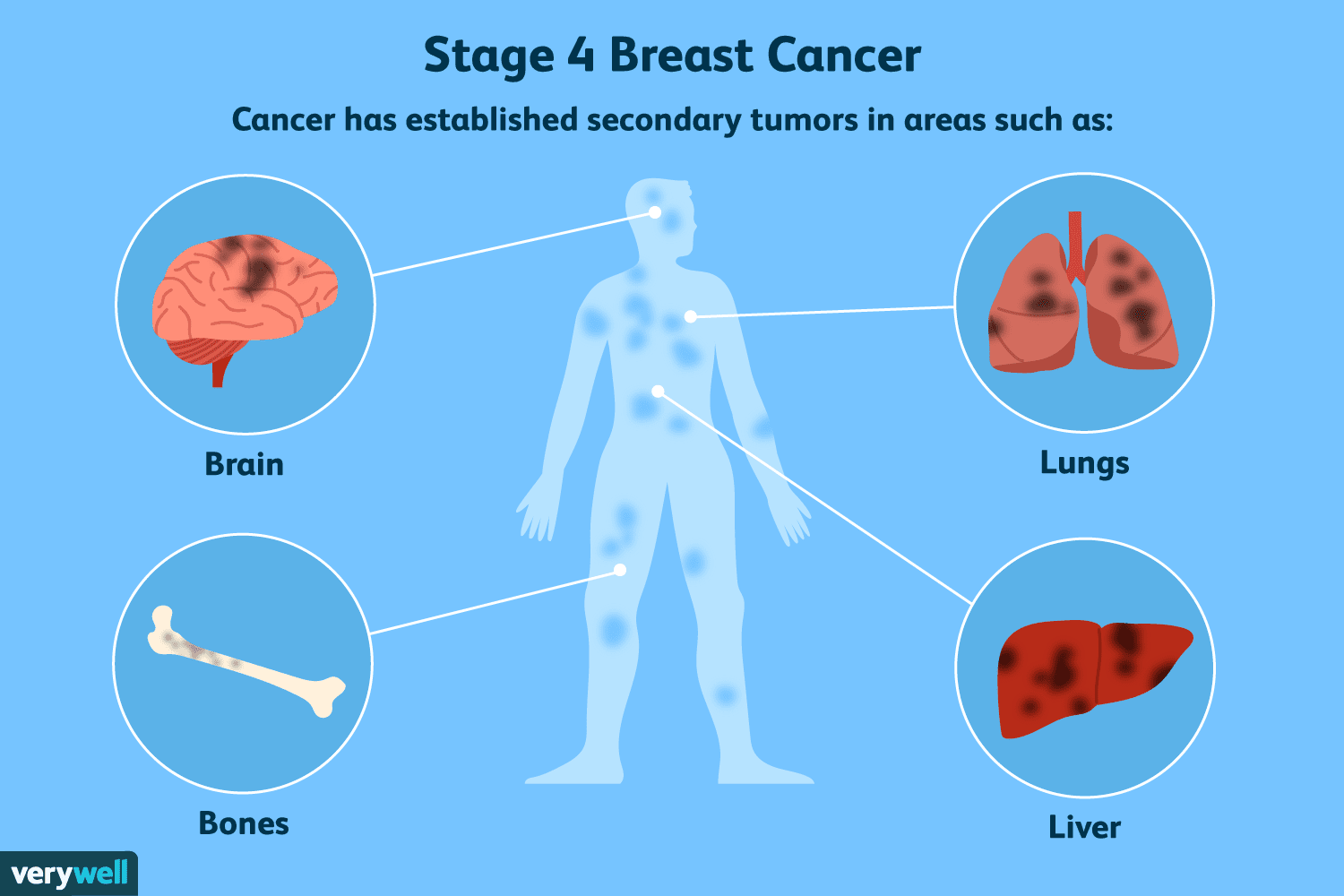
In a circular, the GHS noted that late detection of breast cancer can lead to the following: ulcers on the breast, swellings in the armpit, fluid accumulation in the lungs and the spread of cancer cells to lungs, brain and bones.
Breast cancer is a disease in which abnormal breast cells grow out of control and form tumours. If left unchecked, the tumours can spread throughout the body and become fatal.
Breast cancer cells begin inside the milk ducts and/or the milk-producing lobules of the breast. The earliest form (in situ) is not life-threatening. Cancer cells can spread into nearby breast tissue (invasion). This creates tumours that cause lumps or thickening.
Invasive cancers can spread to nearby lymph nodes or other organs (metastasize). Metastasis can be fatal.
Treatment is based on the person, the type of cancer and its spread. Treatment combines surgery, radiation therapy and medications.
The treatment of breast cancer in men follows the same principles of management as for women.
According to the WHO, “In 2020, there were 2.3 million women diagnosed with breast cancer and 685 000 deaths globally. As of the end of 2020, there were 7.8 million women alive who were diagnosed with breast cancer in the past 5 years, making it the world’s most prevalent cancer.”
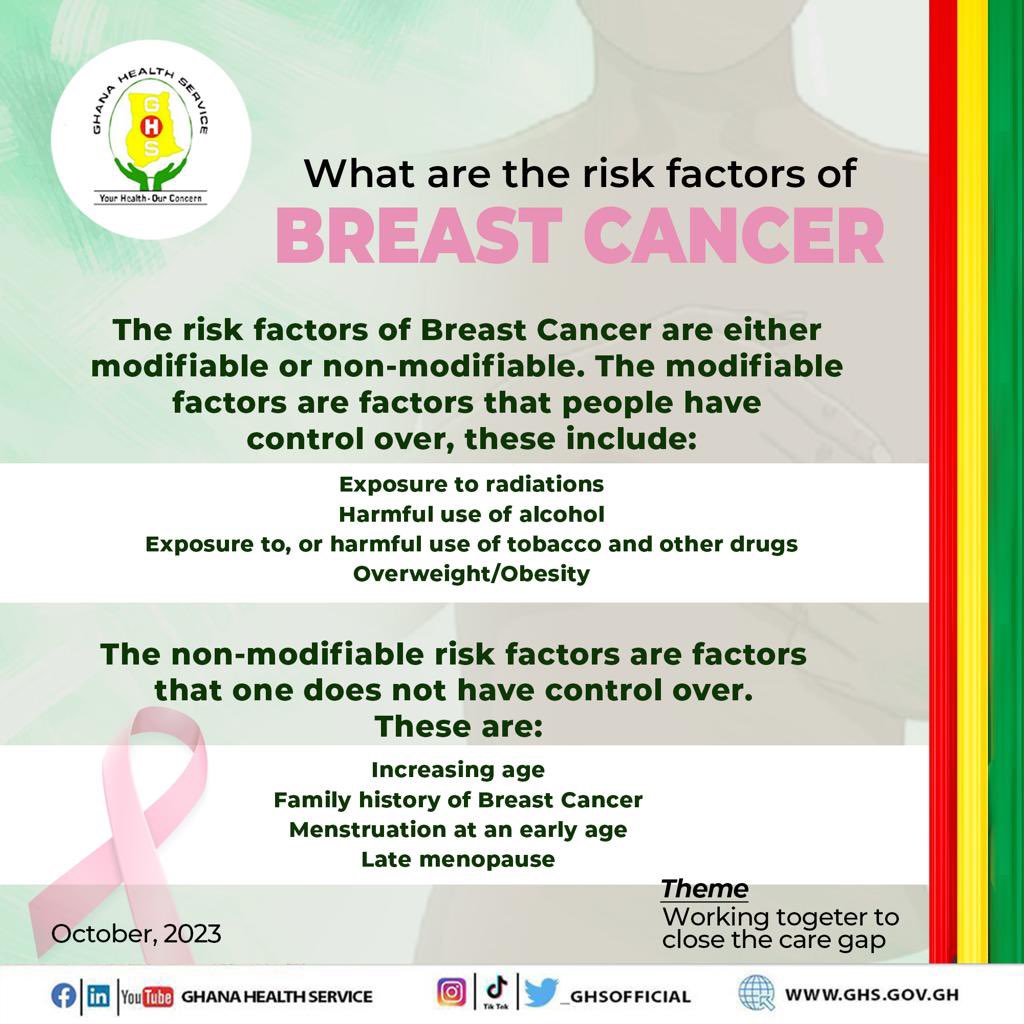
Certain factors increase the risk of breast cancer including increasing age, obesity, harmful use of alcohol, family history of breast cancer, history of radiation exposure, reproductive history (such as age that menstrual periods began and age at first pregnancy), tobacco use and postmenopausal hormone therapy.
Approximately half of breast cancers develop in women who have no identifiable breast cancer risk factor other than gender (female) and age (over 40 years), the WHO adds.
The Ghana Health Service (GHS) has called on members of the general public, particularly males, to have their breasts checked to prevent the contraction of breast cancer.
In a circular, the GHS noted that “both men and women can get breast cancer,” hence “let’s take the opportunity to get our breasts checked this Pinktober.”
“Both males and females can get breast cancer, but the disease mostly (99%) affects females. Some people also have greater chances of getting Breast Cancer due to the exposure of certain risk factors,” it noted.
According to the World Health Organisation (WHO), approximately 0.5–1% of breast cancers occur in men.
The Service stressed the fact that early detection saves lives.
Breast cancer
Breast cancer is a disease in which abnormal breast cells grow out of control and form tumours. If left unchecked, the tumours can spread throughout the body and become fatal.
Breast cancer cells begin inside the milk ducts and/or the milk-producing lobules of the breast. The earliest form (in situ) is not life-threatening. Cancer cells can spread into nearby breast tissue (invasion). This creates tumours that cause lumps or thickening.
Invasive cancers can spread to nearby lymph nodes or other organs (metastasize). Metastasis can be fatal.
Treatment is based on the person, the type of cancer and its spread. Treatment combines surgery, radiation therapy and medications.
The treatment of breast cancer in men follows the same principles of management as for women.
According to the WHO, “In 2020, there were 2.3 million women diagnosed with breast cancer and 685 000 deaths globally. As of the end of 2020, there were 7.8 million women alive who were diagnosed with breast cancer in the past 5 years, making it the world’s most prevalent cancer.”
Certain factors increase the risk of breast cancer including increasing age, obesity, harmful use of alcohol, family history of breast cancer, history of radiation exposure, reproductive history (such as age that menstrual periods began and age at first pregnancy), tobacco use and postmenopausal hormone therapy.
Approximately half of breast cancers develop in women who have no identifiable breast cancer risk factor other than gender (female) and age (over 40 years), the WHO adds.
When you notice certain symptoms in your breast, they demand your quick care.
Being constantly aware of and attentive to your body will help you avoid potentially fatal situations.
Here are five breast symptoms that, if present, demand rapid medical treatment.
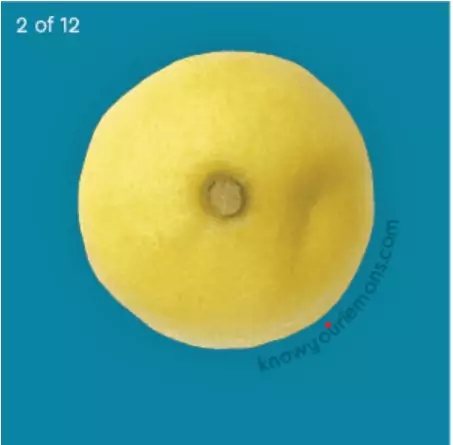
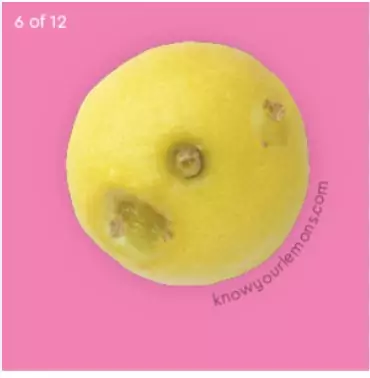
1. Dimpling: Also known as “peau d’orange” (French for “orange peel skin”), dimpling refers to the appearance of small, dimpled, or pitted areas on the skin of your breast.
This can be a sign of an underlying issue, so it’s essential to consult a healthcare professional if you notice this change in texture.
2. Unusual rash and sore: An unusual rash on your breast can manifest as redness, irritation, or changes in skin texture.
It may not necessarily be itchy, but if you notice any persistent, unexplained changes in your breast skin, it’s crucial to have it evaluated by a healthcare provider.
3. Detected lump: The most well-known sign of breast abnormalities is the presence of a lump. These lumps can vary in size, shape, and tenderness.
While not all lumps are cancerous, any new or unusual lump in your breast should be assessed by a medical professional to determine its cause and, if necessary, to rule out breast cancer.
4. Changes in skin color: Changes in skin color can manifest as redness, inflammation, or darkening of the skin on or around your breast.
These changes can be subtle but might indicate an underlying issue that requires medical attention.
5. Inverted nipples: An inverted nipple is one that appears pulled inward rather than pointing outward.
While some individuals have naturally inverted nipples, if you notice a recent change in the position of your nipple or if it becomes inverted when it was not before.
It’s important to consult a healthcare provider to rule out any underlying concerns, including breast cancer.
6. Thick area: if some parts of the breast thicken up it could be as a result of breastfeeding or menstruation.
But if thickness does not disappear after breastfeeding or menstruation, seek medical attention immediately.
Nipple discharge: Nipple discharge can vary in color, consistency, and frequency.
It may be clear, bloody, green, yellow, or milky, and it can occur spontaneously or with pressure applied to the breast or nipple.
While nipple discharge can have benign causes, it can also be a sign of an underlying health issue.
These signs can be indicative of various breast conditions, not just cancer.
However, early detection is crucial, so if you notice any of these signs or have
Over 2,262 women succumbed to breast cancer in 2020, according to the Acting Programme Manager of the Non-Communicable Diseases (NCD) Control Programme at Ghana Health Service (GHS), Dr. Efua Commeh.
Dr. Commeh attributed these deaths to patients rejecting conventional treatment and seeking medical attention at later stages.
During the same year, more than 4,000 Ghanaian women were diagnosed with the disease.
Speaking at the 4th Annual General Meeting of the Breast Society of Ghana (BSoG), Dr. Commeh emphasized that while over 4,000 cases were diagnosed, there still remained a substantial number of women who needed screening.
She expressed concern about breast cancer patients who discontinue their treatment, particularly highlighting the need for health workers, especially female professionals, to take self-breast examinations seriously.
“There are a lot more lumps that have not been picked up at the hospitals and some are also hiding behind alternative medicine,” she said.
According to her, although health workers actively engage in breast screening initiatives, they sometimes neglect their own health by not participating in screenings.
Dr. Commeh noted that many health workers admit to not examining their breasts, which contributes to late-stage presentations of breast cancer among them.
“We come into contact with many health workers who confirm to us that they do not examine their breasts or have their colleagues do the examination for them. This is bad considering the number of health workers we are seeing with late presentation of breast cancer. So we continue to tell them they are also humans therefore the need to examine themselves just like every other person,” she said.
She emphasized the importance of self-examinations and urged health workers to set an example for others.
Dr. Commeh stressed the significance of training and informing health workers about breast cancer screenings, stating that well-informed nurses can teach patients through demonstrations, ultimately empowering women to take control of their health.
Regarding breast cancer, Dr. Commeh clarified that it is not a death sentence, contrary to some perceptions in Ghana.
She mentioned that timely reporting and avoiding alternative treatments, such as herbal remedies or prayer camps, are crucial in improving outcomes.
The Breast Society of Ghana, represented by its president, Dr. Hannah Ayittey Anie, strives to provide coordinated medical, allied health, and social interventions to enhance breast care standards and outcomes.
Dr. Ayittey highlighted the increasing incidence of non-communicable diseases, including breast cancer, in Africa and Ghana.
She underscored the organization’s commitment to raising awareness about breast cancer and dispelling misconceptions surrounding the disease, aiming to make it a well-known topic accessible to everyone.
Newspaper Review: Breast cancer killed 2,262 in 2022
The Breast Society of Ghana has reported that 50% of the women, totaling over 4,000, who are diagnosed with breast cancer annually, do not survive the disease.
This concerning information came to light during the society’s 4th Annual General Meeting (AGM) held in Accra on Friday.
The event was centered around the theme “Improving Breast Diseases Outcomes, the Role of the Breast Society.”
The Acting Programme Manager of the Non-Communicable Disease Control Programme at the Ghana Health Service (GHS), Dr. Efua Commeh, has emphasized the urgent need for robust public awareness campaigns aimed at dispelling the misconceptions surrounding breast cancer, with the ultimate goal of preserving more lives.
Dr. Commeh stressed the crucial importance of early breast cancer detection, noting that its timely identification can substantially mitigate the disease‘s complications and avert fatalities.
“Unfortunately, we lose a lot of women because they come in stage three and four. This is not acceptable anywhere. If cases were coming in stage one, for instance, treatment is better and the patients themselves will be better. They don’t need to go through expensive chemotherapy and other treatments, which can be very worrying for the patient. All these treatments come with side effects as well.”
“So we keep preaching that early detection saves lives. That is what it means. When we pick you up early enough, we will be able to treat you so that you can continue living your normal life, and we don’t continue having the high deaths from cancers that we have,” Dr Commeh added.
President of Breast Care International (BCI), Dr. Beatrice Wiafe-Addai, has urged women to seek early medical attention to prevent the loss of their breasts.
Dr. Wiafe-Addai holds the assertion that many women avoid hospitals due to their fear of undergoing procedures that may result in the removal of their breasts. This situation, she finds deeply troubling.
“A lot of women run away from the hospital because of Mastectomy, they don’t want to lose the breast we understand, so if you don’t want to lose the breast you have to come early to the hospital,” she urged.
At a breast cancer screening programme at the Assemblies of God Church, Dr. Wiafe-Addai encouraged women to take self-breast examination seriously since the death rate is high.
Dr. Beatrice Wiafe-Addai charged the media, religious leaders, among others to help lessen the high level of stigma in Ghanaian communities in order to encourage women to visit the hospital.
“I’m appealing to the media, you need to help us to reduce the stigma surrounding the disease, the more we speak about it, the more we showcase survivorship,” she noted.
Breast cancer remains a significant cause of mortality among women worldwide, including in Ghana. The World Health Organization (WHO) reports that breast cancer accounted for approximately 16% of all cancer-related deaths in 2020.
The delay in detecting the disease is one of the primary factors contributing to the rise in breast cancer cases. Dr. Wiafe-Addai emphasizes the importance of early detection, as it significantly increases the chances of survival.
Martha Drohobyczer, a nurse practitioner and midwife in Las Vegas, Nevada, highlights the significance of regular breast cancer screening in reducing the disease’s prevalence. She urges women to undergo screening on a frequent basis and visit healthcare facilities for this purpose, aiming to effectively combat breast cancer in Ghana. In the United States, volunteer screening has led to a decline in breast cancer cases, according to Drohobyczer.
She advises women not to hesitate in seeking medical attention if they notice any unusual changes or shapes in their breasts.
Rev. Adu Gyamfi Yeboah, the Head Pastor of the Assemblies of God, Upper Room Revival, commends Breast Care International (BCI) for its passionate dedication to fighting breast cancer in Ghana.
Women who use skin bleaching products have been advised to desist from the practice as it may increase the risk of breast cancer.
Skin-lightening products that contain mercury have been identified as having possible breast cancer effects among women of African descent.
The President of Breast Care International (BCI), Dr. Mrs. Beatrice Wiafe-Addai, who made the disclosure, has therefore advised women on the use of the products.
She said research conducted by Peace and Love Hospital, Komfo Anokye Teaching Hospital and Korle-Bu Teaching Hospital in Kumasi and Accra made that revelation.
The research was funded by National Cancer Institute (NHI), in the USA, according to Dr Mrs. Beatrice Wiafe, who is also the CEO of Peace and Love Hospitals.
She said this during a free breast cancer education and screening at the Kwadaso SDA Nursing and Midwifery Training College – Kwadaso Campus, in the Atwima Nwabiagya North district of the Ashanti region.
The program held on Sunday, January 29, 2023, was part of Delta Airline’s sponsored “Kick Breast Cancer Out” campaigns, in collaboration with BCI and Peace and Love Hospitals.
“Ghana Breast Health Study conducted revealed that the use of skin lightening (bleaching) agents like creams, pills and injection may increase the risk of breast cancer,” she warned.
“Apart from contracting skin cancer, using skin bleaching agents may also put the person at breast cancer risk. I, therefore, advise women to desist from the habit,” Dr. Wiafe Addai appealed.
The students were advised also to adopt self-breast examination to avoid contracting the dreadful breast cancer disease.
She said most women got the disease without being aware and the only way to avoid is through self-examination and clinical screening.
“Regular screening of the breasts helps in detecting lumps as well as reporting any changes of the breasts to the hospital would lead to early diagnosing and treatment,” she stated.
The nursing trainees who had their breasts clinically screened expressed their profound gratitude to Dr Mrs Beatrice Wiafe Addai and believed that the education will go a long way in shaping their lifestyles.
The Principal of Kwadaso SDA Nursing and Midwifery Training College, Daniel Atta Tuffour, said the knowledge acquired in the program would help the nurses to also educate their families on the disease.
He also added his voice on the adaptation of regular self-examination and clinical breast cancer screening to avoid the late stage of the disease.
Kumawood Actress Dorothy Acheampong, also known as Wasaa Bronii organized a free breast screening exercise for hundreds of women in Kumasi to crown this year’s breast cancer awareness campaign.
The event which saw the presence of Actor Kwaku Manu, Blogger Zion Felix, and other dignitaries took place at the Church Of Pentecost, Sepe Buokrom District in the Ashanti Region of Ghana, and powered by Anchor Multibillion Foundation.
The Actress and Entrepreneur, through her Anchor Multibillion Foundation which is purposed to help and provide for the needy through charity works, also made donations to the Okomfo Ankoye Teaching Hospital children’s ward, in April this year. They made payments to settle the bills of the children suffering from cancer but couldn’t afford to pay for their treatment.
Some institutions like the Edwenase Rehabilitation Center, have also benefited from the Actress‘s benevolence through her Foundation.
The foundation in December last year, donated food items such as bags of rice, gari, water, gallons of oil, boxes of canned sardines, tubers of yam, etc to the Center.
The Danquah institute has held a symposium at the University of Cape Coast (UCC) to mark the global month-long advocacy of breast cancer in the Central Region.
This forms part of efforts to reduce cases of breast cancer, increase its awareness for early detection and encourage the public to break the myth surrounding the disease.
The symposium organised in partnership with the Women’s Commission under the Senior Staff Association of the University of Cape Coast and the Breast Care International had a total of one hundred and fifty- four (154) students and staff from the University community screened.
Out of the number screened, it emerged that six cases (6) were recorded between the ages of 20- 40years with the youngest 21 and oldest 40 years respectively.
Speaking on the theme for the event, “Breast Cancer Knowledge, Attitudes and screening Practices in Ghana” the Pro Vice-Chancellor of the University of Cape Coast, Professor Mrs. Rosemond Boohene noted that breast cancer is a health red flag which has been hoisted very high to attract the attention of policy makers, health experts, traditional authorities and the ordinary citizens.
Expressing her appreciation to the Danquah Institute for bearing the cost of the screening and consultation exercise for the University community by bringing on board the Breast Care International, she stressed that breast cancer is the leading type of cancer in women.
“When the pandemic hit, people with breast cancer found themselves in a difficult situation with a lot of them at high risk of contracting the virus due to overwhelmed hospitals with some extreme cases even postponed” – she recounted.
She observed that in 2020, there were 2.3 million diagnoses of breast cancer and 685,000 deaths globally, with higher mortality rate of women in developing countries.
Declaring her unflinching support to win the global fight against the disease, the Professor of Enterprise Development at the Centre for Entrepreneurship and Small Enterprise at the School of Business of the UCC, explained that the global breast cancer awareness initiative of the World Health Organisation aims to reduce the cancer mortality by 2.5% per year.
“The WHO has introduced three measures to achieve this goal through health promotion for early detection, timely diagnosis and comprehensive breast cancer management, and the school together with all partners supports the course through the first and second measures because we believe in contributing to a healthy Ghana in our own small way hoping to see more partnership with the Danquah Institute to achieve the third measure.”
Delivering a speech on behalf of the Executive Director of the Danquah Institute, the Board Secretary of the Institute, Lawyer Mansa Williams said the Institute prides itself in creating more of such platforms for dialogue and to add to knowledge for informed decision making for policy makers on subject of national importance and the wellbeing of the people.
She remarked “the programme is important to change attitudes towards the fight against the disease because breast cancer is an ailment the country and globally can’t be taken for granted as it affects mostly women. In Ghana, 31.8% of cancer cases were breast cancer and mostly diagnosed at the advanced stages unlike in the developed world high percentage of cases are detected at the early stages.”
She urged that the narrative in our parts of the world especially Ghana is changed with conscious effort to deepen our knowledge about the disease, change our attitudes and cultivate the habit to screen frequently.
She observed that last year the institute successfully held a similar event which involved a panel discussion with eminent persons with vast experience on the subject to sensitize the general public and duty bearers to rise to the occasion by putting in place effective policies to help mitigate the dangers the disease is having on the human resource capital especially women and girls.
In conclusion, she stated that the Institute is committed to hold more of these events by moving out of Accra to make the desired impact as the Institute is aware of the seriousness of breast cancer in order not to lose lives.
Resource person for the symposium, who is a retired Radiographer and renowned breast cancer advocate with the Breast Care International (BCI), Madam Grace Animwaa addressing the University community and invited dignitaries underscored the need to overcome fear in getting scanned as the effects of radiography seems to cause more fright to women.
The advocate who has worked at the Komfo Anokye Hospital and with over 30 years of experience in mammography however admitted that there is a level of negative effect in coming into contact with radiation but it shouldn’t deter the public most especially women as the advantage of knowing the status and taking charge of the breast outweighs the dangers when diagnosis is delayed.
Other dignitaries that graced the occasion are the Deputy Director of the Danquah Institute, Dr. Hayford Ayerakwa, the Womens’ Commissioner of Senior Staff Association-UCC, Mrs. Joana Akinola, Director of the Centre for Gender, Research, Advocacy and Documentation-CEGRAD, Dr. Georgina Yaa Oduro, a representative of the Central Regional Minister, Hon Justina Marigold Assan, the President of Breast Cancer Survivors’ Association, Mrs Vivian Gyasi Sarfo and others.
The session of the symposium where survivors shared their stories was moderated by Dr. Doris Akyere Boateng, a Fellow of the Danquah Institute and senior lecturer at the University of Ghana, Social Work department.
Board Secretary of the Danquah Institute, Lawyer Mansa Williams
As October draws to a close, the President of Breast Care International (BCI), has urged the public to continue breast campaigns in the country to prevent late screening.
Dr. Beatrice Addai Wiafe, says because breast cancer does not just happen in October, ladies should get interested in going to the hospital for frequent checkups.
“Today, we came to educate their (Contracta) members of staff. Workplace education and awareness creation and screening are very important because the working mother is always busy.”
The oncologist stated that, a working mother does not have time to screen themselves and therefore the late-stage of the disease occasionally manifests in them.
Speaking at a breast cancer awareness event organised by the Contracts Construction Company Limited in Kumasi, Dr. Wiafe-Addai also expressed her gratitude to the construction firm for providing transportation, medication, food, and other services to more than 20 breast cancer patients at the Peace and Love Hospital.
In order to prevent the late stage of the sickness, which she says is highly expensive to cure, she recommended to women to examine their breasts routinely.
“One late-stage case can cater for 10 early-stage diseases. So why don’t you come early so that even if you don’t have money, we can support you to go through your treatment? If you come late, then you are just coming to squander all the money that people have contributed and that is not good enough,” she noted.
Due to the high levels of fat they contain, Dr. Addai-Wiafe also advised the general public, in particular women, to avoid consuming too many “fast foods” because it is bad for the health of their breasts.
According to Mr. Emmanuel Danso, a consultant at the Contracta Construction Company Limited, the event was organised as part of their social obligation to protect the public and their employees against breast cancer.
He said that several sensitisation activities have been planned as part of their ongoing campaign to raise breast cancer awareness in several districts of Kumasi, including Bantama, the Racecourse, and the Airport areas.
Mr. Danso also mentioned that the cost of treating breast cancer is high, which is why the company has chosen to support some breast cancer patients for the past two years in an effort to decrease unnecessary deaths.
“It’s part of our corporate social responsibility because treating breast cancer is not easy, it’s very expensive so as part of our corporate social responsibility, we sponsor them for this payment for the past two years,” he indicated.
Researchers in the US have found a genetic link between people with African ancestry and an aggressive type of breast cancer.
They hope their findings will encourage more black people to get involved in clinical trials in a bid to improve survival rates for people with the disease.
“I never thought I had anything to worry about,” says Laverne Fauntleroy, a 53-year-old African American from New York.
Laverne led a healthy lifestyle.
She ate well and exercised regularly but in January, not long before her birthday, she received a diagnosis that left her feeling confused and afraid.
“They just told me I had breast cancer,” she says.
“Most people that I know that had cancer didn’t survive so, of course, I was devastated and very scared.”
IMAGE SOURCE,LAVERNE FAUNTLEROY
Image caption, Laverne was diagnosed with TNBC in January
Laverne found out that she had triple-negative breast cancer (TNBC).
It is a less common type of the disease but grows quickly, is more likely to spread, more likely to return and has the worst survival outcome of all breast cancers.
Because it lacks three types of receptor found in other forms of breast cancer, drugs which work for them have no impact on TNBC.
It is more common in women under 40 and disproportionately affects black women.
A study published in the journal JAMA Oncology found that black women diagnosed with TNBC are 28% more likely to die from it than white women with the same diagnosis.
Now a new study has confirmed a definitive genetic link between African ancestry and TNBC.
How to check your breasts
Relax – know what’s normal for you and check your breasts once a month
The best time to check is in the shower with soapy hands
Take a good look in the mirror beforehand and look for any obvious lumps, skin changes, nipple changes or discharge
Remember to check your armpits
Be aware that young women especially can have lumpy breasts which are entirely normal
Breasts can change depending on menstrual cycle but if a lump persists for more than one cycle, see your GP
Know your family history. There will be a stronger suspicion if there are many cases of breast or ovarian cancer in the family (both mother’s and father’s sides)
IMAGE SOURCE,WEILL CORNELL MEDICINE
Image caption, Dr Newman says this latest research is critical to understanding TNBC better
Dr Lisa Newman, of Weill Cornell Medicine, has been part of an international project studying breast cancer in women in different regions of Africa for 20 years.
Her work has shown that TNBC is particularly common in women from countries in western sub-Saharan Africa, such as Ghana.
She says the reason might be that the genetics of women from this area have been shaped over generations by battling deadly infectious diseases such as malaria.
“Studying triple negative breast cancer in women with different ancestral backgrounds, we are learning that some of the genetic markers which were related to developing resistance to different infectious agents have downstream effects on the inflammatory landscape of different organs, such as the breast,” Dr Newman says.
Ghanaian choreographer and cultural dance instructor, Van Calebs has urged celebrities to use their social media platform to educate the public about breast cancer and the importance of screening their breasts.
In a social media post, Van Calebs urged celebrities to offer more sensitization on breast cancer to the public, particularly women.
He noted that the rate of breast cancer cases in the country is worrying and that celebrities need to play their role by creating awareness about it.
Van Calebs observed that whereas it is commendable that people take interest in preaching about breast cancer in October, it is imperative that the campaign is extended to all months of the year to continue exhorting the minds of people to the need to constantly check their breasts and practice things that protect and safeguard their breasts.
“The breast cancer month is great and important but I believe we can extend it to the whole year. The impact of breast cancer is devastating and I want to encourage all my celebrity friends to use their platforms to create more awareness about breast cancer. Let’s do this for our women”, he posted on social media.
Breast Cancer Awareness Month is observed every October to bring attention to the dangers of breast cancer.
A breast cancer survivor has shared the challenges she suffered to treat the disease.
Eugenia Asare recounted in an interview on Prime Morning that she was compelled to beg her fellow church members and schoolmates to raise enough funds to cater for the hospital charges.
“It got to a time there was no money. I went to some of the NPP and NDC individuals to beg. I went to individuals… I begged them,” she said.
She was required to raise an amount of ¢3,000 to cover her medical billsfor each of the treatment sections.
The stage two breast cancer survivor, who is also a caterer, shared that she was being stigmatised by friends and some colleagues at work.
She disclosed how her mother supported her spiritually even though she was not financially strong enough to pay the bills.
“My sister has been so helpful. My mother, my prayer warrior, I don’t pray when I’m sleeping because I’m always in pain. So I only tell God to listen to my mother’s prayer before I sleep.
“Please, all those who have grudges with their families should go and make amends because without family and money, and you’re sick at the hospital, you’ll die,” she urged.
Eugenia Asare has lost hope of getting married and giving birth because “I feel uncomfortable to naked myself in front of a man.”
Being the most common cancer across the world, breast cancer is becoming a great public health challenge among women in Ghana, with about 2,900 incident cases occurring annually, and one-eighth of them dying from it.
Eating a balanced diet is especially important when you have breast cancer.
A healthy diet is capable of solving many of our problems, So, it becomes extremely important to take care of your diet when suffering from breast cancer.
Research suggests that some foods may lower your risk of cancer and inhibit cancer growth and progression.
It is important to have a healthy diet for cancer patients and here’s what all you need to include in what you eat.
Beans
Beans are loaded with fibre, vitamins, and minerals. Specifically, their high fibre content may help in managing weight for breast cancer survivors, which is very challenging to do for them. “Breast cancer patients can include kidney beans, black beans, pinto beans, navy beans, and chickpeas in their daily diet.
Fatty fish
Fatty fish such as salmon, sardines, and mackerel, are known for their effective health benefits. Their omega-3 fatty acid, selenium, and antioxidant contents may offer cancer-protective effects.
Leafy green vegetables
Green leafy vegetables such as kale, spinach, mustard greens and collard greens are some of the many dark leafy greens that can fight breast cancer. They are loaded with antioxidants that can destroy cancer-causing free radicals. In a 2012 study published in the Journal of the National Cancer Institute, researchers found that women who ate dark leafy greens had a far lower breast cancer risk than women who didn’t eat these vegetables
Cruciferous vegetables
Experts say that cruciferous vegetables such as cabbage, cauliflower and broccoli contain phytochemicals known as isothiocyanates and indoles which appear to have a protective effect against some types of cancer including breast cancer. It also inhibits cancer growth and progression.
Allium vegetables
Garlic, onions, and leeks come under allium vegetables that boast an array of nutrients, including organosulfur compounds, flavonoids and antioxidants. Consumption of allium vegetables can help against the development of breast cancer. S-allylcysteine, a compound found in onions, has been suggested to suppress cell proliferation, adhesion and invasion in breast cancer cells. Allicin, a component of garlic, can inhibit the proliferation of breast cancer cell lines.
Hello…, you are watching the Independent Africa Tv,
Reducing childbirth is on the to-do list of Tanzania,
President, Samia Suluhu Hassan has called on citizens to take up birth control measures in order to avoid rapid childbirth in the country.
According to her, one health centre in Buselesele ward in Geita region, produces 1,000 children a month.
A 2020 World Bank report estimates said that Tanzania’s fertility rate was at 4.8 births per woman. The high birth rate was attributed to early marriages and low contraceptive use.
While it has been falling over the last 30 years, it has not declined as fast as other countries in the region such as Kenya and Ethiopia.
President, Samia Suluhu Hassan is worried that the current amenities would not be able to cater for the growing number.
Unlike her predecessor, late John Magufuli, President Suluhu wants families to embrace the use of contraception.
The late John Magufuli, openly encouraged women not to use contraception at a rally in the western of Tanzania in the year 2018.
He described those who use contraception as lazy.
We urge you to keep watching this space for more updates and credible news.. Kindly subscribe to this Channel, and visit us on all our socials at The Independent Africa. My name is Amanda Cartey. Thanks for watching. Source: Pulse.com.gh
Breast cancer survivors complain about being the subject of frequent questions whenever they meet new people.
“When people hear that you are a breast cancer survivor, the first question they just ask you [is] ‘did you cut your breast? What are you cutting? Are you cutting bread or meat?’”
They say these questions have been the subject of numerous inquiries from people from all walks of life.
Bernita Obonam, one of the survivors, says such questions are traumatic to survivors like herself.
“Every breast cancer patient has a scar, but the scar does not define who we are,” she explained.
She describes instances where friends would even end their relationship with them because they are survivors or patients.
Breast cancer survivor, Bernita Obonam
Bernita associates the mention of breast cancer with the first thought of death.
Her mother died of breast cancer at the age of 39, and the pain she endured inspired Bernita as part of adulthood plans to raise awareness about the disease.
Unfortunately, as Bernita grew older, she forgot about her decision to become a breast cancer advocate in her quest to save lives.
However, one day in the bathroom, she decided to examine her breast and discovered a lump underneath.
“The thoughts just flashed back to how my mother died, and I was like, is this how I’m going to die and leave my children?” she questioned herself.
She cried almost every day but eventually had to toughen up and live a better life.
Bernita was diagnosed with cancer and was advised to undergo the necessary treatments in order to survive the agony of cancer.
She believes that early detection and prompt action are critical to survival.
“Breast cancer isn’t a death sentence,” she explained.
“Be a friend to the breast and report any changes to the hospital,” said another survivor, Vivian Jessy Sarfo.
According to Vivian, if a patient is not comfortable at the hospital where she was diagnosed, she should seek a second opinion elsewhere.
Breast cancer is only curable and survivable if detected early.
Vivian discovered her breast cancer at an early stage and has now been cancer-free for 18 years.
“The tumor was removed because I reported it early and today I’m here to celebrate.”
She advises women to be cautious of their breasts and, if they are diagnosed, to allow themselves time for meaningful treatment.
“A woman would be diagnosed with breast cancer and decide to conceal the disease from her child. Why should this be the case?” she asked.
Breast cancer survivors are participating in advocacy programmes with Breast Care International (BCI) and sharing their stories with other women in order to remove the stigma and misconception that breast cancer is incurable.
They also assist newly diagnosed breast cancer patients at the Peace and Love Hospital in Kumasi with their navigation.
They appeal to the government to support them in their fight against breast cancer because assistance is needed to help the needy.
More than 2,000 women die of breast cancer each year in Ghana, according to Dr Beatrice Addai Wiafe, President of BCI, and there is a need to reverse the trend.
Stereotyping, she indicates, is one of the factors preventing many women from seeking treatment in health care facilities.
In light of this, she states that public education is critical in educating people about the importance of understanding that breast cancer is curable and survivable in order to overcome fears and stigma.
Over 70 per cent of breast cancer cases diagnosed are in advanced stages, resulting in limited treatment success and high death rates, Dr Winfred Ofosu, Eastern Regional Director, Ghana Health Service, has said.
Dr Ofosu said it was disheartening that many women lost their lives through breast cancer, though they could be saved when detected early.
The Eastern Regional Director of Health Services was speaking at a ceremony to commission a mammogram machine at the Volta River Authority (VRA) Hospital at Akosombo in the Easter region.
It was on the theme: “Early detection of breast cancer saves lives-get screened with a mammogram.”
The commissioning is part of efforts to increase breast cancer awareness as Ghana joins the world this month to create awareness of breast cancer for early detection and treatment.
The mammogram machine will serve the staff of the Authority and all women within the catchment area.
Dr Ofosu said Non-Communicable Diseases (NCD) such as breast cancer, cervical cancer, hypertension and diabetes were now pervasive and a hidden epidemic killing women one at a time, adding that the VRA’s decision to support a mammogram machine was in the right direction.
According to the 2020 Globocan report of the World Health Organisation (WHO), breast cancer is the commonest cancer among all sexes and obviously the commonest among female cancers in Ghana. And every year, over 4,000 cases of breast cancer are diagnosed, out of which almost half die from the disease.
Dr Kwabena Omari Yeboah, Medical Director, VRA Health Service Limited, said statistics indicated that six people died every day in Ghana from breast cancer.
He, therefore, called for the need for self-breast examination and medical screening regularly.
Dr Joyce Aryee, VRA Board Member, described breast cancer as debilitating, hence the acquisition of the mammogram machine to save lives and called on women above the age of 40 to patronise the services.
Dr Joyce Aryee, VRA Board Member
Mr Emmanuel Antwi-Darkwa, Chief Executive, VRA, said the Authority’s decision to acquire the equipment was an affirmation of the resolve to prioritise the health of women and bring the needed changes to communities.
He said: “It is unfortunate that some people are so heavily driven by superstition that they attribute medical conditions like breast cancer to spiritual attacks without seeking medical attention.
“We need all hands on deck to educate our daughters, wives, mothers, sisters and friends to take advantage of the facility to know their status.”
Nana Boafo Ansah Prem IV, Chief of Akosombo, encouraged the locals to make good use of the facility and charged religious bodies to educate their followers on breast cancer.
Female Journalists For Women and Rural Development in Africa FJWoRDA in collaboration with B4 foundation a non governmental plastic waste organization have emabarked on health outreach in Brafoyaw in the Abura Asebu Kwamankese District to create breast cancer awareness.
About 150 community members mostly women had their breasts examined.
They were also screens for sugar and blood pressure and educated on breast cancer.
Nineteen of them were referred for further investigation at the Cape Coast Teaching Hospital.
The Executive Director of FJWoRDA, Shirley Asiedu-Addo said this month of October had been earmarked for breast cancer awareness and that it was prudent for FJWORDA to impact the society through a health screening exercise which forms part the groups activities to give back to the society.
SGBV
The beneficiaries were sensitized on sexual and gender based violence among other sexual and reproductive health issues.
Mrs Asiedu-Addo in her address maintained that breast cancer continued to wreck havoc on families and communities.
She said as journalists they they were humans as well they are also mothers, sisters and wives, children and neighbors and that the problems of the society affected them too.
She added that the outreach was to create awareness and encourage the women to seek prompt treatment if detected anything usual.
“Whilst the mass media is important in creating awareness on pertinent issues affecting their communities, the effect of getting our hands to the plough and reaching to the communities physically can not be underestimated” She stated.
She noted that women must begin to take care of themselves first before taking care of others and that they should live to be able to take care of their families and contribute their quota to society.
She encouraged women to take care of themselves first to be able to live so they can take care of their families and contribute their quota to society and also go for regular checkups to seek prompt health care to avert disastrous consequences.
The Executive Director of FJ-WORDA also called on other benevolent organizations to support the association in diverse ways in it’s bid to contribute to change that society needs.
Health Personnel from the Cape Coast Teaching Hospital screened participants and referred a number of them for further screening.
B4 Foundation
The Chief Executive of B4 Foundation, collaborators of the programme Ursula Adadzewa Fynn indicated that the core function of the foundation is to help women and the under privileged in the society hence the support.
Continuous education
She assured that similar outreaches would be organized annually in the future to raise awareness of major societal issues.
An Officer with the Central Regional Directorate of the Domestic Violence and Victim Support Unit (DOVVSU), Richard Twum Boadi urged the participants who were mostly women to attach importance to domestic violence issues and report such issues early for immediate action.
Sex education
He said he was hopeful parents would also educate adolescents on their sexuality and repercussions of engaging in premarital sex.
The Central Regional Director of the Department of Gender, Richlove Amanoo advised parents to treat children with respect to imporoving communications with them.
She further urged the parents to provide with their basic needs as they would fall prey to sexual abuse.
The ladies wing of Future Global Resource (FGR) Bogoso Prestea Limited has launched an awareness campaign to fight Breast Cancer in their immediate working environment.
Dubbed ‘RISE’, the campaign is aimed at educating both men and women on breast cancer as October is globally named ‘Pink Month’ to sensitise the world on the breast cancer menace.
The theme for this year’s campaign RISE, means ‘Rally in Supporting Everyone’, ‘Rally in Screening Everyone’, and ‘Rally in Serving Everyone.’
President of the Ladies Club of FGR, Madam Primilla Osei, explained that the ladies had also joined the rest of the world to fight breast cancer through some activities to create awareness.
She said a Breast Cancer Awareness Education, screening and Empowerment week would be observed in the second week of October and a prostate cancer health screening for the men will be organised in the third week of October.
“As we seek for healthy breasts we should also look out for our men, thus we will have a prostate check for them too. This is to ensure we all live healthy and happily,” she said.
Madam Osei said there would be a fundraising activity to support the campaign and called on all well-meaning people within Bogoso and Prestea to donate to the campaign.
She said they would end the month with some physical activities like aerobics to promote exercising and good living among the staff and community.
The health screening would be done in partnership with Premier Specialist Hospital.
Although breast cancer generally shows no symptoms in the early stage, timely detection can turn a story of breast cancer into a survivor’s tale.
A breast lump is the most common presenting symptom. But for about 1 in 6Trusted Source women with breast cancer, the broad spectrum of symptoms doesn’t include a lump.
In this article we’ll explore the early signs and symptoms of breast cancer, what happens next, and where to find support.
Early signs of breast cancer
Early on, a person may notice a change in their breast when they perform a monthly breast exam or when minor abnormal pain doesn’t seem to go away. Early signs of breast cancer to look for include:
changes in the shape of the nipple
breast pain that doesn’t go away after your next period
a new lump that doesn’t go away after your next period
nipple discharge from one breast that’s clear, red, brown, or yellow
unexplained redness, swelling, skin irritation, itchiness, or rash on the breast
swelling or a lump around the collarbone or under the arm
A lump that’s hard with irregular edges is more likely to be cancerous.
Later signs of breast cancer
Later signs of breast cancer include:
retraction, or inward turning of the nipple
enlargement of one breast
dimpling of the breast surface
an existing lump that gets bigger
an “orange peel” texture to the skin
poor appetite
unintentional weight loss
enlarged lymph nodes in the armpit
visible veins on the breast
Having one or more of these symptoms doesn’t necessarily mean you have breast cancer. Nipple discharge, for example, can also be caused by an infection. See a doctor for a complete evaluation if you experience any of these signs and symptoms.
HEALTHLINE NEWSLETTER
You’ve got a friend in this battle.
Get the latest breast cancer news, treatment options, advice for doctors visits, plus inspirational stories.
Your privacy is important to us
As you might suspect, there’s really no such thing as a “normal” breast. Everyone’s breasts are different. So, when we talk about normal, we mean normal for you. It’s about how your breasts usually look and feel and what it could mean when this changes.
It’s worth noting that it’s common to experience breast changes during ovulation. This may have to do with extra fluid retention, which can cause:
swelling
tenderness, soreness
pain
lumpiness
These symptoms should resolve after you start your period.
Breast self-checks
Regular self-checks can help you get to know how your breasts normally look and feel so you’ll recognize changes early on. Here’s what to look for:
difference in overall size, shape, or color of your breasts
dimpling or bulging of the skin
redness, soreness, rash, or swelling
nipple inversion, unusual discharge
We often associate pain with something wrong, so when people feel tenderness or pain in their breast, they often think of breast cancer. But breast pain is rarely the first noticeable symptom of breast cancer. Several other factors can cause pain.
Clinically known as mastalgia, breast pain can also be caused by the following:
the fluctuation of hormones caused by menstruation
some birth control pills
some fertility treatments
a bra that doesn’t fit well
breast cysts
large breasts, which may be accompanied by neck, shoulder, or back pain
stress
There are two categories that reflect the nature of breast cancer:
Noninvasive (in situ) cancer is cancer that hasn’t spread from the original tissue. This is referred to as stage 0.
Invasive (infiltrating) cancer is cancer that’s spread to surrounding tissues. These are categorized as stages 1, 2, 3, or 4, depending on how far it has spread.
The tissue affected determines the type of cancer. For example:
Ductal carcinoma. Ductal carcinoma is a cancer that forms in the lining of the milk ducts. This is the most common type of breast cancer.
Lobular carcinoma. Lobular carcinoma is cancer in the lobules of the breast. The lobules are where milk is produced.
Sarcoma. This is cancer that starts in the breast’s connective tissue.
Angiosarcoma. This type starts in cells that line blood vessels or lymph vessels.
Breast cancer can also be categorized based on certain features, although early signs and symptoms are similar. Among them are.
Hormone-positive breast cancer. Hormone-positive breast cancers are fueled by estrogen and/or progesterone.
HER2-positive breast cancer. Human epidermal growth factor is a naturally occurring protein that helps breast cancer cells thrive. If your cancer has high levels of this protein, it’s called HER2-positive.
Triple-negative breast cancer. Triple-negative breast cancer tests negative for estrogen receptors, progesterone receptors, and HER2.
Papillary breast cancer. Under microscopic examination, papillary breast cancer has small, finger-like growths called papules. It can be made up of both invasive and noninvasive cells.
Metaplastic breast cancer. Metaplastic breast cancer may contain abnormal ductal cells along with other types of cells, like skin or bone cells that aren’t usually found there. It’s typically triple-negative.
Some types of breast cancer are more likely to present with symptoms other than a breast lump. For example:
Inflammatory breast cancer. In inflammatory breast cancer, cancer cells block lymph vessels in the skin of the breast. It is so named because the breast appears swollen, red, and inflamed.
Paget’s disease of the breast. Paget’s disease develops around the skin of the nipple and areola. The area may look red and crusty or scaly. The nipple may flatten or become inverted and there may be blood or yellow discharge. Other symptoms include burning or itching.
Metastatic breast cancer. Metastatic breast cancer is breast cancer that has spread to distant parts of the body. It’s also called advanced or stage 4 breast cancer. Symptoms may include weight loss, unexplained pain, and fatigue.
Male breast cancer
Breast cancer isn’t typically associated with people who were assigned male at birth. But male breast cancer can occur in rare instances at any age, although it’s more common in older men.
Many people don’t realize that everyone has breast cells, and those cells can undergo cancerous changes. Because male breast cells are much less developed than female breast cells, breast cancer isn’t as common in this part of the population.
The most common symptom of breast cancer in people assigned male at birth is a lump in the breast tissue. In addition to a lump, symptoms of male breast cancer include:
thickening of the breast tissue
nipple discharge
redness or scaling of the nipple
a nipple that retracts or turns inward
unexplained redness, swelling, skin irritation, itchiness, or rash on the breast
swollen lymph nodes beneath the arm
Since men may not regularly check their breast tissue for signs of lumps, male breast cancer is often diagnosed at a later stage.
When you visit a doctor with concerns about breast pain, tenderness, or a lump, there are common tests they might perform.
Physical examination
Your doctor will examine your breasts and the skin on your breasts, as well as check for nipple problems and discharge. They may also feel your breasts and armpits to look for lumps.
Medical history
Your doctor will ask you questions about your health history, including any medications you might be taking, as well as the medical history of immediate family members.
Because breast cancer can sometimes be related to your genes, it’s important to tell your doctor about any family history of breast cancer. Your doctor will also ask you about your symptoms, including when you first noticed them.
Mammogram
Your doctor may request a mammogram, which is an X-ray of the breast, to help distinguish between a benign and malignant mass.
Ultrasound
Ultrasonic sound waves can be used to produce an image of breast tissue.
MRI
Your doctor may suggest MRI in conjunction with other tests. This is another noninvasive imaging test used to examine breast tissue.
Biopsy
This involves removing a small amount of breast tissue to be used for testing. This is the only way to confirm a diagnosis of breast cancer.
Learn more about breast cancer tests.
HEALTHLINE RESOURCE
Shared Breast Cancer Stories and More
Tap into community conversations discussing breast cancer diagnoses, backed by our powerful BC community. Bezzy BC: empowered by each other.
Depending on the type and stage of cancer, treatments can vary. But there are some common practices doctors and specialists use to combat breast cancer:
A lumpectomy is when your doctor removes the tumor while leaving your breast intact.
A mastectomy is when your doctor surgically removes all of your breast tissue including the tumor and connecting tissue.
Chemotherapy is the most common cancer treatment, and it involves the use of anticancer drugs. These drugs interfere with cells’ ability to reproduce.
Radiation uses radiation beams to treat cancer directly.
Hormone and targeted therapy can be used when hormones or HER2 play a part in the cancer’s growth.
Despite initial treatment and success, breast cancer can sometimes come back. This is called recurrence. Recurrence happens when a small number of cells escape the initial treatment.
Symptoms of a recurrence in the same place as the first breast cancer are very similar to symptoms of the first breast cancer. They include:
a new breast lump
changes to the nipple
redness or swelling of the breast
a new thickening near the mastectomy scar
If breast cancer comes back regionally, it means that the cancer has returned to the lymph nodes or near to the original cancer but not exactly the same place. The symptoms may be slightly different.
Symptoms of regional recurrence
Symptoms of a regional recurrence may include:
lumps in your lymph nodes under the arm or near the collarbone
chest pain
pain or loss of sensation in your arm or shoulder
swelling in your arm on the same side as the original breast cancer
If you’ve had a mastectomy or other surgery related to breast cancer, you might get lumps or bumps caused by scar tissue in the reconstructed breast. This isn’t cancer, but you should let your doctor know about them so they can be monitored.
How I Cope: Liz’s Breast Cancer Story
Watch as Liz shares her personal breast cancer journey.
0 seconds of 4 minutes, 10 secondsVolume 0%
As with any cancer, early detection and treatment are major factors in determining the outcome. Breast cancer is easily treated and usually curable when detected in the earliest stages.
Breast cancer is the most common cancer in women, according to the World Health OrganizationTrusted Source. Whether you’re concerned about breast pain or tenderness, it’s important to stay informed on risk factors and warning signs of breast cancer.
The best way to fight breast cancer is early detection. Talk with your doctor about when you should start breast cancer screening.
If you’re worried that your breast pain or tenderness could be something serious, make an appointment with your doctor today. If you find a lump in your breast (even if your most recent mammogram was normal) see your doctor.
It’s rare, but men can and do get breast cancer. Men’s breasts don’t fully develop like women’s do, but all men have breasttissue.
Male breast cancer is most likely to develop in the milk ducts. This is called ductal carcinoma. For a small number of men, it starts in milk-producing glands. This is called lobular carcinoma.
Only about 1 percentTrusted Source of all cases of breast cancer are in men. In 2015, there were about 2,350Trusted Source new cases of male breast cancer. About 440Trusted Source men lost their lives to the disease.
Because it’s uncommon, men may be more inclined to ignore warning signs and delay seeing a doctor. Awareness that men can and do develop breast cancer is essential to early diagnosis and treatment.
Early diagnosis and treatment generally lead to a more positive outcome. Read on to learn more about risk factors and symptoms of breast cancer in men, and what you should do about it.
The exact cause of male breast cancer isn’t known. Risk factors for breast cancer in men include the following:
Young men can get breast cancer, but the risk increases as you age. The mean age for men at diagnosis is between 60 and 70 years.
An inflammation of the testicles, which is called orchitis, increases your risk.
You’re at greater risk for breast cancer if close relatives have had breast cancer. Also, some inherited mutated genes, like BRCA2, can increase your risk of breast and prostate cancers.
Surgical removal of a testicle, which is called an orchiectomy, increases your risk.
Exposure to estrogen, a female hormone, can also raise your risk. Men who have a genetic condition called Klinefelter’s syndrome often produce higher levels of estrogen. Other things that can increase estrogen levels include hormone therapy, cirrhosis of the liver, and obesity.
Previous radiation treatment to the chest increases your risk.
HEALTHLINE NEWSLETTER
You’ve got a friend in this battle.
Get the latest breast cancer news, treatment options, advice for doctors visits, plus inspirational stories.
Your privacy is important to us
The symptoms of breast cancer in men are similar to those in women. These include:
a breast lump that you can see or feel
an enlargement of one breast
nipple pain
discharge from the nipple
sores on the nipple or areola
an inverted nipple
enlarged underarm lymph nodes
You should contact your doctor right away if you have any of these symptoms.
When both breasts grow larger in a man, it’s called gynecomastia. This condition is unlikely to be cancerous, and it may be caused by:
weight gain
certain medications
marijuana use
excessive alcohol use
When in doubt, it’s best to ask your doctor, especially if you have known risk factors.
Your doctor will ask you about your medical history and conduct a physical examination.
An ultrasound and an MRI are two noninvasive tests that may be used to get detailed pictures. Blood work can help check for signs of disease.
You may need a biopsy if cancer can’t be ruled out. Using a needle, your doctor will remove a sample of the suspicious tissue. In some cases, the entire lump may have to be removed. The tissue will be sent to a pathologist who will examine it under a microscope to determine if it’s cancerous.
Pathology tests can help identify the type of cancer you have and how quickly it can be expected to grow. This will help your doctor recommend the best treatment plan for you.
There are a few surgical options:
In a lumpectomy, the tumor, plus some healthy tissue around it, is removed. If the tumor is larger or you have more than one tumor, it may be better to remove the entire breast. This is called a mastectomy. This sometimes involves removal of chest wall muscles and nearby lymph nodes.
Radiation therapy is used to kill cancer cells that may have been missed by surgery.
Chemotherapy is a systemic treatment. It’s used to kill cancer cells throughout your body.
Targeted therapy focuses on specific substances that are helping your cancer grow. If your lab tests showed particular hormone receptors in the cancer cells, hormone therapy may be prescribed. These medications can block the production of certain hormones. Monoclonal antibody therapy also targets specific substances that are helping your cancer grow.
A combination of treatments is usually necessary.
Men survive breast cancer at about the same rate as women who are diagnosed at the same stage.
The five-year relative survival rate for male breast cancer is 84 percent. The 10-year relative survival rate is 72 percent. These are only averages, though. Breast cancer also tends to be diagnosed later in men than in women.
Besides the type of breast cancer you have and the stage at diagnosis, your individual outlook depends on a lot of unique factors, including:
your age
your general health
the treatment you choose
how well you respond to that treatment
Your doctor is the best source of information regarding your outlook.
The American CancerSociety’s (ACS) most recent guidelinesTrusted Source reflect that self-exams haven’t shown a clear benefit, especially for women who also get screening mammograms, even when doctors conduct those exams. Still, some men and women will find breast cancer and be diagnosed with it as a result of a lump detected during a self-exam.
If you’re a woman, it’s important for you to be familiar with how your breasts look and check them regularly. This will help you become aware of any changes or abnormalities as they occur.
All breast lumps deserve medical attention. Unusual lumps or bumps in breast tissue are something that should be examined by a doctor. The vast majority of lumps aren’t cancerous.
Breast cancer lumps don’t all feel the same. Your doctorshould examine any lump, whether or not it meets the most common symptoms listed below.
Most commonly, a cancerous lump in the breast:
is a hard mass
is painless
has irregular edges
is immobile (doesn’t move when pushed)
appears in the upper outer portion of your breast
grows over time
Not all cancerous lumps will meet these criteria, and a cancerous lump that has all of these traits isn’t typical. A cancerous lump may feel rounded, soft, and tender and can occur anywhere in the breast. In some cases, the lump can even be painful.
Some women also have dense, fibrous breast tissue. Feeling lumps or changes in your breasts may be more difficult if this is the case.
Having dense breasts also makes it more difficult to detect breast cancer on mammograms. Despite the tougher tissue, you might still be able to identify when a change begins in your breast.
HEALTHLINE NEWSLETTER
You’ve got a friend in this battle.
Get the latest breast cancer news, treatment options, advice for doctors visits, plus inspirational stories.
Your privacy is important to us
In addition to a lump, you may experience one or more of the following most common breast cancer symptoms:
swelling on part or all of your breast
nipple discharge (other than breast milk, if breastfeeding)
skin irritation or scaling
redness of the skin on the breast and nipples
a thickening of the skin on the breast and nipples
a nipple turning inward
swelling in the arm
swelling under the armpit
swelling around the collar bone
You should see your doctor if you experience any of these symptoms, with or without the presence of a lump. In many cases, these symptoms aren’t caused by cancer. Still, you and your doctor will want to do some tests to find out why it’s happening.
Breast cancer is the most common cancerTrusted Source diagnosed in women in the United States. Most breast lumps aren’t cancerous, however. You should visit your doctor if you see or feel anything new or unusual in your breast during a self-exam.
Despite the statistics and ACS guidelines, many women still choose to continue performing self-exams. Whether or not you choose to do self-exams, you should talk to your doctor about the appropriate age to begin screening mammograms.
Following recommended breast cancer screening guidelines is the most important thing you can do to ensure early detection of breast cancer. The sooner breast cancer is detected, the sooner treatment can begin, and the better your outlook will be.
Make an appointment with your primary care doctor or gynecologist. Tell your doctor about the new spot you’ve identified and the symptoms you feel. Your doctor will likely conduct a full breast exam and may also check nearby spots, including your collarbone, neck, and armpit areas.
Based on what they feel, your doctor may order additional testing, such as a mammogram, ultrasound, or biopsy.
Your doctor may also suggest a period of watchful waiting. During this time, you and your doctor will continue to monitor the lump for any changes or growth. If there’s any growth, your doctor should begin testing to rule out cancer.
Be honest with your doctor about your concerns. If your personal or family history puts you at a higher risk of having breast cancer, you may want to move forward with the appropriate diagnostic testing so you can know for sure if your breast lump is cancer or something else.
Certain risk factors can increase your chances of developing breast cancer. Some risk factors can’t be changed; others may be reduced or even eliminated based on your lifestyle choices.
The most significant breast cancer risk factors include:
Gender. Women are more likely to develop breast cancer than men.
Age. Invasive breast cancer is more common in women over age 55.
Family history. If a first-degree relative, such as a mother, sister, or daughter, has had breast cancer, your risk is doubled.
Genetics. A small percentage of breast cancers may be caused by genes that are passed generation to generation.
Race. According to the National Cancer InstituteTrusted Source, Hispanic/Latina and Asian women are slightly less likely to develop breast cancer than White and African-American women. African-American women are more likely to be diagnosed with triple-negative breast cancer, which is highly aggressive and more likely to develop at a younger age. African-American women are also more likely to die from breast cancer as compared to White women.
Weight. Being overweight or obese increases your risk for breast cancer.
Benign breast conditions. Certain benign (noncancerous) breast conditions may impact your risk for later developing breast cancer.
Hormone use. If you used or are currently using hormone replacement therapy (HRT), your risk for breast cancer is likely higher.
Menstrual history. An early menstrual period (before age 12) may raise your risk for breast cancer.
Late menopause age. Delayed menopause (after age 55) may expose you to more hormones, which could increase your risks.
Dense breast tissue. Studies suggest women with dense breast tissue are more likely to develop cancer. The tissue may also make detecting the cancer more difficult.
Sedentary lifestyle. Women who do not exercise regularly are more likely to develop breast cancer than women who exercise often.
Tobacco use. Smoking increases the risk for breast cancer, especially in younger women who have not gone through menopause yet.
Alcohol consumption. For every drink you have, your risk for breast cancer might climb. Research suggests drinking some alcohol might be OK, but heavy alcohol use is associated with a higher risk of breast cancer.
Most breast cancers are diagnosed in women. However, men do have breast tissue and can develop breast cancer. Still, less than one percent of all breast cancers occur in men.
Symptoms of breast cancer in men are the same as the symptoms of breast cancer in women. These symptoms include:
a lump in one breast
a nipple that turns inward (inverts)
nipple pain
discharge from the nipple
redness, dimpling, or scaling on the breast’s skin
redness or sores on the nipple or ring around the nipple
swollen lymph nodes in armpits
As with women, breast cancer in men can spread or metastasize to other parts of the body. Diagnosing the cancer in early stages important. This way, you and your doctor can quickly begin treating the cancer.
While breast cancer is rare in men, some common risk factors are known. Read a list of these risk factors for male breast cancer, and find out how you can reduce your risk.
HEALTHLINE RESOURCE
Shared Breast Cancer Stories and More
Tap into community conversations discussing breast cancer diagnoses, backed by our powerful BC community. Bezzy BC: empowered by each other.
Screening techniques help you and your doctor identify suspicious spots in your breast. A mammogram is a common screening option. A breast self-exam is another.
The self-exam was considered an important part of early breast cancer detection for many decades. Today, however, it may lead to too many unnecessary biopsies and surgical procedures.
Still, your doctor may recommend a self-exam to you. At the very least, the exam can help you familiarize yourself with your breasts’ appearance, shape, texture, and size. Knowing what your breasts should feel like could help you spot a potential problem more easily.
1) Pick a date. Hormones impact how your breasts feel, so it’s a good idea to wait a few days after your menstrual cycle ends. If you do not have a period, pick a date on the calendar you can easily remember, such as the first or fifteenth, and schedule your self-exam.
2) Take a look. Remove your top and bra. Stand in front of a mirror. Observe how your breasts look, inspecting them for changes in symmetry, shape, size, or color. Raise both arms, and repeat the visual inspection, noting the changes to your breasts’ shape and size when your arms are extended.
3) Inspect each breast. Once you’ve completed the visual exam, lie down on a bed or sofa. Use the soft pads of your fingers to feel for lumps, cysts, or other abnormalities. To keep the inspection uniform, start at your nipple and work your way out, to your breastbone and armpit, in a spiral pattern. Repeat on the other side.
4) Squeeze your nipple. Gently squeeze on each nipple to see if you have any discharge.
5) Repeat in the shower. Do one final inspection in the shower. Let warm water and soap make the manual examination easier by gliding your fingers over your breasts. Start at your nipple and work your way out in a spiral pattern. Repeat on the other breast.
6) Keep a journal. Subtle changes may be hard to detect, but a journal might help you see developments as they occur. Jot down any unusual spots and check them again in a few weeks. If you find any lumps, see your doctor.
Some health organizations no longer recommend women perform regular self-exams. Learn more about the reasons why, what risks are associated with breast self-exams, and why you might want to do them anyway.
Breast cancer is not the only condition that can cause unusual lumps in your breasts. These other conditions might also be responsible:
swollen lymph nodes
cysts
bacterial of viral infection
a skin reaction to shaving or waxing
allergic reactions
a noncancerous tissue growth (fibroadenoma)
a fatty tissue growth (lipoma)
lymphoma
leukemia
lupus
swollen or clogged mammary glands
A lump in your armpit or breasts is unlikely to be breast cancer, but you should talk with your doctor about any unusual spots to find. Your doctor will likely perform a physical exam and rule out possible causes for unusual lumps.
Your body is your own, and it’s the only one you have. If you find a lump or you’re experiencing any unusual symptoms, you should seek out your doctor’s guidance.
Your doctor may be able to determine from a physical exam whether your lump is likely to be cancerous. If you’re at all concerned about the new signs and symptoms, you shouldn’t be afraid to request additional testing to diagnose your lump.
The Breast Care Center at the Komfo Anokye Teaching Hospital in the Kumasi Metropolis of the Ashanti has raised red flags over the high prevalence of breast cancer in the region.
According to the center, breast cancers are on the astronomical rise in the Ashanti Region affecting hundreds of both men and women.
A Nursing Officer at KATH‘s Breast Care Center, Mariama Amadu said 90 percent of people who reported to the center for biopsy in the last three years turned out to be serious breast cancer cases.
Mariama Amadu was speaking on the Kumasi-based OTEC 102.9 FM’s Health show, “Apomuden Ahotoso” on Sunday, October 9, 2022.
“The rate at which we are recording breast cancer in the past few years is frightening and should be of concern to all stakeholders”. She told host of the show, Kate Appiah Boateng (Radio Nurse).
Medical Check Up
Mariama Amadu urged Ghanaians to regularly do a self-examination of their breast and seek early treatment if they detect any anomalies.
“Early detection was the surest way to win the fight against breast cancer infections”.
She stressed the need for individuals to report any changes in their breasts at health facilities to ensure early treatment.
The nurse however pleaded with men to support their wives when they notice any changes in their breasts and not to abandon them.
About 50 to 60 percent of suspected cases of breast cancer has been recorded during a breast cancer screening for over 250 women at the Kaneshie Medical Centre(KMC) during the breast cancer month-long campaign.
This was disclosed by the Medical Officer of the Kaneshie Medical Centre, Dr Obed Boamah,in an interview with the Ghanaian Times in Accra on Friday.
Organised by the New Times Corporation (NTC) in partnership with other organisations such as Kaneshie Medical Centre, Unichem Ghana Group, World Health Organisation (WHO) and the Kaneshie Polyclinic, the exercise was to create awareness about breast cancer, leading to low mortality rate.
When the Ghanaian Times got to the Medical Centre at the Kaneshie Market Complex, it observed that some women who had made their way to the place were seated patiently waiting to go through the screening process.
The women were also educated on the disease by the nurses who were attending to them while ensuring that the screening process went on smoothly.
According to Dr Boamah, those who had suspicious cases were recommended to visit scanning centres depending on their proximity and later report back to the Medical Centre.
Additionally, he said the screening would also afford the Medical Centre the opportunity to determine who needed urgent attention based on the medical report after the scan had been done.
Dr Boamahnoted that illiteracy was proving a challenge in the fight against the disease as he asserted that through his interaction with the women,it came to light that most of them had little or no knowledge about the disease.
This, Dr Boamah indicated, called for intensified awareness creation by showing images of the disease on various media platforms including broadcast, print and online media and the use of a language that would be understood by the women.
Heappealed to government to include breast cancer screening such as mammogram and ultra-sound screening to the National Health Insurance Scheme (NHIS) as most clients found it costly.
For his part, the Acting Head of Clinical Service at the KMC, Dr Seth KwabenaMawuena, lauded NTC and its associate partners for the exercise, describing it as impressive considering the enthusiasm with which it had been received by the women.
He said through the exercise, breast cancer cases and other health-related cases that would have gone unnoticed had been detected with the appropriate medical assistance being offered.
Dr Mawuena noted that early detection was key in the fight against breast cancer, saying “early detection is very important because when there is late detection it becomes complicated and there is a high chance of death.”
He, therefore, urged the public, especially women, to take advantage of breast cancer screening in order to know their status.
Some women whom the Ghanaian Times spoke to expressed high level of satisfaction about the whole exercise and called for intensified awareness creation about the disease.
They also urged women not to wait until the cancer became severe before visiting the health centre for treatment but rather make frequent check-up a habit.
The breast cancer death rate in the United States has dropped significantly, but Black women continue to be more likely to die from the disease despite having a lower incidence of it, according to a new American Cancer Society report.
The study published this week in the CA: A Cancer Journal for Clinicians finds that in total, the death rate dropped by 43% within three decades, from 1989 to 2020, translating to 460,000 fewer breast cancer deaths during that time.
When the data were analyzed by race, Black women had a lower incidence rate of breast cancer versus White women, but the death rate was 40% higher in Black women overall.
“Death rates are declining in Black women, just like they are in almost every other group, but we’re still seeing the same gap,” said Rebecca Siegel, senior scientific director of surveillance research at the American Cancer Society and senior author of the report.
“The evidence is consistent that Black women receive short shrift in the health care system at every point of the breast cancer care continuum, from lower-quality mammography to delays between the time of diagnosis and the beginning of treatment to poor quality treatment when they are diagnosed,” Siegel said. “The take-home message is that we really need to take a hard look at how we’re treating Black women differently.”
Researchers from the American Cancer Society, Emory University and Weill Cornell Medicine analyzed data on breast cancer incidence and deaths from the National Cancer Institute and registries at the US Centers for Disease Control and Prevention, dating to 1975.
The researchers found that the incidence of breast cancer has risen slowly since 2004, by about 0.5% per year, driven mostly by diagnosing the disease early and more quickly at a localized stage.
In contrast, breast cancer death rates have declined steadily since their peak in 1989, the researchers found, falling 1.9% annually from 2002 to 2011 and then 1.3% annually from 2011 to 2022.
The ongoing racial disparities highlighted in the new American Cancer Society report came as no surprise to Dr. Samuel Cykert, professor of medicine at the University of North Carolina School of Medicine in Chapel Hill, who has conducted research on racial disparities in cancer treatment.
“The fact that the gap is still there doesn’t surprise me because people haven’t focused on it to do something about it,” said Cykert, who was not involved in the report.
“In the late ’70s, outcomes were equal. The reason for that is at that time, diagnosis was lousy, and treatment was very crude, and so nobody had excellent care and so deaths were equal in both groups,” he said. “Then, as you look at the graphs between 1976 and 1985, they split off where the mortality for White patients markedly improved, and for Black patients, they improved but not so much, and then around the mid-‘80s, the gap has remained constant until today.”
To eliminate racial disparities among cancer patients, Cykert said, ensuring that Black women have the same access to hospitals, breast cancer screenings and adequate treatments as White women is key.
“You really need two things: You need a system change that acknowledges that there are disparities and care and outcomes,” Cykert said.
“You also need community involvement so that individual health systems understand what the barriers are for their community. Plus, there also needs to be an accountability,” he said, adding that “health care systems should use their digital data to look at treatment progress for all their patients in real time, especially disadvantaged groups, and build systems to keep engaging folks to complete all care.”
Research has shown that breastfeeding is beneficial to the development of infants, which can enhance their immunity and intelligence and reduce the incidence of sudden death and childhood obesity.
But how about the myth that men who suck their partner’s breast help prevent them from getting breast cancer?
Health practitioner, Dr Joelle Amissah, has debunked claims that sucking the breast can prevent breast cancer,
According to her, the only thing that can help prevent breast cancer is breastfeeding and not men sucking the breast.
When asked if sucking the breast could prevent cancer, Dr Amissah disclosed that breastfeeding rather has the potential of preventing breast cancer than men sucking the breast.
She noted that a hormone called prolactin has a protective effect on the breast which is only stimulated and released when a baby is breastfed.
“There is a hormone called prolactin that has a protective effect on the breast which is only stimulated when a baby sucks the breast. So when the baby is breastfed, the hormone is released and while that is in the system, it protects the breast. So it is breastfeeding and not just sucking the breast,” she said.
While debunking claims that when men suck the breast, it prevents cancer, the health expert noted that just sucking the breast cannot prevent breast cancer.
“They are not really helping to prevent breast cancer. They could suck the breast but it doesn’t add to preventing breast cancer. Unless it’s a baby that is breastfeeding, sucking the breast doesn’t help,” she added.
Breasts come in a wide range of shapes and sizes:
Round
The breasts are equally full at the top and bottom.
East-west
The right and left breasts go from the centre of the chest to the sides. The nipples often point in opposite directions.
Side set (widely set)
The shape is similar to the east-west, with a wider space between the breasts.
Teardrop
The breasts are round. The bottoms are slightly wider than the tops, characterized by very smooth lines.
Narrow
The breasts are thin, and the nipples point down. The bottoms are fuller than the tops. The breasts are longer than they are wide.
Asymmetrical
One breast is noticeably bigger than the other.
Bell shape
The breasts are large, full at the bottom, and slimmer the top.
The Managing Director of the New Times Corporation (NTC), Mr. Martin Adu-Owusu has advised the public to be tenacious and relentless in the fight against breast cancer disease.
“It is our collective and decisive resolve to fight breast cancer in all its tendencies that would have positive impact on both present and future generation,” he said.
Mr Martin Adu-Owusu (middle) speaking at the programme. With him are Ms Dakoa Newman (left) and other dignitaries Photo Victor A. Buxton
He said this when The Spectator, The corporation’s weekly newspaper, organised the maiden Breast Cancer Campaign at the Kaneshie Market Complex yesterday in Accra, to create awareness and also screen market women for the disease.
The two-day Campaign is on the theme “Life before and after Breast Cancer: A future of Positivity and Hope” and it is the NTC’s contribution to raise awareness of the disease.
Mr Adu-Owusu made reference to the World Health Organisation (WHO), 2020 report which said, there were 2.3 million women diagnosed with breast cancer and 685,000 deaths globally, “At the end of 2020, there were 7.8 million women who were diagnosed with breast cancer in the past 5 years making it the world’s most prevalent cancer.”
Mr Martin Adu-Owusu (middle),MD,NTC with Ms Dakoa Newman (fourth from right) and other stakeholders after the launch Photo Geoffrey Buta
He described the situation as worrying, adding that NTC’s campaign was one of the strategies to help reduce the incidence of breast cancer in the country.
He, therefore,called on individuals, and organisations to be ambassadors of breast cancer to fight the menace.
“Breast cancer is preventable and curable when we do regular self-examination and screening. This is not a difficult task and we can save many lives and bring solace, hope and prosperity to many families if we continue with our aggressive campaign on regular self-examination and breast screening,” he said.
The Editor of The Spectator, Mr Emmanuel Amponsah said the campaign would educate the public on early symptoms and signs of Breast Cancer; preventive measures, diagnostic and treatment centres, the measures put in place for early detection and to assist in the management of patients of Breast Cancer, among others.
He referred to the Globocan statistics carried by the Global Cancer Observatory website in March 2021, which said 4,482 women in Ghana were diagnosed with breast cancer in 2020, “In the same year, it said 2,055 deaths were recorded. In fact, it is estimated that 4,650 women are diagnosed with breast cancer annually in Ghana while more than 2,000 women die of the disease yearly.”
Mr Amponsah said the campaign would be taken to the door-steps of the Labone Senior High School to educate the students on Breast Cancer in order to prepare them in the fight against the diseases.
The Member of Parliament for Okaikoi South, Ms Dakoa Newman, urged the market women to desist from storing their mobile phones and other items in their brassieres, adding that this act could expose the breast to radiations emitting from the mobile device
She encouraged women to seek early health check-ups and avoid self-treatment at homes, especially using unprescribed medicines
In a speech read on behalf WHO Representative Dr Francis Kasolo said 2.3 million women in 2020, were diagnosed with breast cancer and 685,000 deaths globally.
“As of the end of 2020, there were 7.8 million women alive who were diagnosed with breast cancer in the past five years, making it the world’s most prevalent cancer,” he said.
According to him, there were more lost disability-adjusted life years (DALYs) by women to breast cancer globally than any other type of cancer.
Dr Kasolo said approximately half of breast cancer develop in women who have no identifiable breast cancer risk factors other than gender and age over 40 years
He said certain factors that increase risk of breast cancer are obesity, harmful use of alcohol, family history of breast cancer, History of radiation exposure, reproductive history (such as age that menstrual periods began and age at first pregnancy), tobacco use and postmenopausal hormone therapy.
Dr Kasolo said strategies for improving breast cancer outcomes depended on fundamental health system strengthening to deliver the treatments that are already known to work.
He expressed the hope that every woman in Ghana diagnosed with breast cancer would have access to specialised care without causing financial catastrophe in line with Universal Health Coverage.
As the world marks this year’s annual campaign to raise awareness about the impact of breast cancer, health expert and CEO of Chartma Herbal Health Centre, Charity Twumasi Ankrah, has encouraged men to suck breasts.
In an interview with Accra-based Joy Prime, she underscored the importance of health advisory she was issuing, stressing that it helped to reduce breast cancer in women.
She mentioned that women who were not lactating faced the challenge of having their breasts sucked unlike those with babies who stood to enjoy the ‘treat’ as a result of breastfeeding.
“Breastfeeding your baby is very important as a woman. That’s why if a woman has not given birth, it is a worry because, at the end of the day, the breast must be sucked,” she said.
Touching on the six-month exclusive breastfeeding for babies, Madam Twumasi Ankrah noted that it ultimately inures to the benefit of the mother despite some mothers seeing it as burdensome.
“Sometimes women are like ‘why should I do six-month breastfeeding?’ You feel you’re just giving the child milk but in essence, you are helping yourself so feeding your child or breastfeeding your child is very important as a woman,” she emphasized.
Charity Twumasi Ankrah posited that men had a key role to play in the necessity of sucking breasts. She said in the month of breast cancer awareness, men ought to suck breasts even if they have not attempted it before.
“So if you are a man, please try as much as possible…even if you haven’t done it before, for this month of October where we have breast cancer awareness try to suck a breast,” she stated.
She cautioned that the sucking should only be done once in a while rather than on a daily basis.
She also advised men to refrain from squeezing the breasts because “it is not a balloon” warning that doing so can cause agony to women.
Madam Charity Twumasi Ankrah further urged women who are victims of breast cancer to heed to cutting off a cancerous breast stating that it should not make one feel shy. She said it should be viewed that the woman was saving her life.
“For the women out there, gather courage if you have to do it. Don’t feel shy, don’t feel bad. Just know that you’re saving yourself, if one breast has to go off,” she encouraged.
As October is breast cancer awareness month, people especially women are recommended to attend their local hospital or breast screening facility to have their breasts checked.
Charity Twumasi Ankrah posited that men had a key role to play in the necessity of sucking breasts. She said in the month of breast cancer awareness, men ought to suck breasts even if they have not attempted it before.
“So if you are a man, please try as much as possible…even if you haven’t done it before, for this month of October where we have breast cancer awareness try to suck a breast,” she stated.
She cautioned that the sucking should only be done once in a while rather than on a daily basis.
She also advised men to refrain from squeezing the breasts because “it is not a balloon” warning that doing so can cause agony to women.
Madam Charity Twumasi Ankrah further urged women who are victims of breast cancer to heed to cutting off a cancerous breast stating that it should not make one feel shy. She said it should be viewed that the woman was saving her life.
“For the women out there, gather courage if you have to do it. Don’t feel shy, don’t feel bad. Just know that you’re saving yourself, if one breast has to go off,” she encouraged.
As October is breast cancer awareness month, people especially women are recommended to attend their local hospital or breast screening facility to have their breasts checked.
Health expert and CEO of Chartma Herbal Health Centre has urged men to suck a breast within October as part of breast cancer awareness month.
Charity Twumasi Ankrah in an interview with KMJ on Prime Morning Tuesday explained that breast-sucking is a major way to help curb breast cancer in women.
According to her, it is very important for a woman’s breasts to be sucked as it keeps the breast healthier.
“Breastfeeding your baby is very important as a woman. That’s why if a woman has not given birth, it is a worry because, at the end of the day, the breast must be sucked.”
She added, “If you’re a man, please try as much as possible, even if you haven’t done it before, for this month of breast cancer awareness, try to suck a breast.”
Also, the health expert indicated that the sucking needs to be done once in a while, not every day.
However, she has cautioned all men to avoid squeezing the breasts as it may cause pain to ladies, saying “it is not a balloon.”
Charity Ankrah also entreated women who are victims of breast cancer to freely cut off the affected breast to protect the whole body. She believes it is not a death warrant.
“Having breast cancer in one breast is not a death warrant. I should be able to take the one that is affected off so I can have my life. It wouldn’t be comfortable to take all two off, but I have to be ok to take one off,” she said.
She further encouraged, “For the women out there, gather courage if you have to do it. Don’t feel shy, don’t feel bad. Just know that you’re saving yourself if one breast has to go off.”
Health expert has called out to the public to stop stigmatising victims of breast cancer, believing it is a part of the reason most women are reluctant to go for checkups or cut off their breasts.
Meanwhile, women are advised to visit the nearest hospital or breast screening centre within the month of October to screen their breasts as October is breast cancer awareness month.
The Executive Director of Crime Check Foundation (CCF), Ibrahim Oppong Kwarteng, has indicated that the fight against breast cancer must not be a yearly fight but must rather be an everyday agenda to save lives.
This, he said, is because the disease is deadly and claims more lives than any other illness.
Mr. Kwarteng was speaking on Peace FM’s ‘Mpom Te Sen’ show when he described how he lost his wife, Amina Oppong Kwarteng, to the disease.
According to her husband, before she passed away, Mrs Kwartenghad planned to lead the fight against breast cancer, should she have recovered.
Mr Kwarteng, speaking about the ordeal his family endured during his wife’s illness, then announced the “Meena Breast Cancer Awareness” project in honour of his late wife.
The Project, he said, is solely aimed at creating awareness and helping those who already have the disease.
He believes that yearly advocacy for the disease is not producing the desired results because many women become aware of the disease only during the breast cancer awareness month of October.
“The disease breaks families apart. The cost of treatment involved is huge and the chance of survival of a patient is narrow so we want to fight breast cancer every day and not only in October. The yearly advocacy is not sustainable,” he said.
Mr. Kwarteng said, apart from the advocacy, breast cancer patients would also be supported financially to undergo treatment under the project.
“We would go to female prisons, villages, towns to drum home the advocacy to do early examination and screening of the breast. The project would be run alongside CCF’s Health Check Series to support patients undergoing treatment,” he noted.
Mr. Kwarteng made a public appeal for support in order to successfully run the campaign and said, “I am going to do this till I depart this earth.”
The ‘Meena Breast Cancer Awareness’ project will be launched on Thursday, October 6, 2022, at the Old Labour Hall in Accra.
Chief Executive Officer (CEO) of Breast Care International (BCI), Dr. Mrs. Beatrice Wiafe Addai, has urged Ghanaians to avoid false beliefs and misconceptions that breast cancer is spiritual and instead seek treatment as soon as possible to save lives.
As more cases of the fatal condition—which has no known causes—were being recorded globally, she stated, “forget about people’s ideas and myths on it having spiritual linkages, the sickness has no connection with spirituality.It is not only Ghanaian women that suffer breast cancer.”
She said that cancer was the leading cause of death for women and urged people to quit hiding in their homes, idly spending time at prayer gatherings, and going to unlicensed medical facilities in order to combat breast cancer.
Out of the 4000 diagnoses, more than 2000 Ghanaian women lose their lives to breast cancer each year.
This reflects the close to 50% of women who suffer needlessly from this illness.
She addressed this at the Ahafo-Ano North Municipal Municipality’s Tepa during the 10th BCI Ghana Walk for the Cure.
Thousands of famous people, students, and other people attended this year’s walk along Tepa’s main streets.
“Breast Cancer Won’t Rest, So Why Should We,” was the event’s theme.
According to Dr. Wiafe Addai, who is also the CEO of Peace and Love Hospitals, breast cancer does not stay in the breast alone; if it is not treated early, it can spread to other organs such as the lungs, brain, liver, and bone. She added that secondary prevention, or early detection and prompt action, was the best course of action.
The BCI and the Peace and Love Hospitals have fought a war against the disease in Ghana and the African continent due to breast cancer’s lethal character. In order to combat and reduce the number of people dying from the treatable disease, she pleaded for help from all relevant parties.
The program’s host, Nana Adusei Atwenewaa Ampem I, Tepamanhene, stressed the importance of public health and the need to treat breast cancer seriously in light of its grave repercussions.
He argued that the government ought to continue the conversation and introduce programs to help the BCI lower the number of breast cancer fatalities.
In order to aid women in seeking early treatment and advancing their wellbeing, the Tepamanhene promised to provide land for BCI to erect a breast care facility in the region.
The municipal chief executive of Ahafo-Ano North, Madam Martina Appiah-Nyantakyi, reaffirmed the seriousness of the disease’s effects and urged women to get treatment as soon as possible to save their lives.
About
October is Breast Cancer Awareness Month, an annual campaign to raise awareness of this complex disease and fund research into its causes, treatment, and cure.
Since 1985, individuals, businesses, and communities have come together every October to show their support for the many people affected by breast cancer.
Breast Cancer Awareness Month can be a time to reflect, give back, or even celebrate.
Yet, for many people, BreastCancer Awareness Month is also a difficult reminder of their personal experience with breast cancer and the many lives they have lost to this disease.
Today, Breast Cancer Awareness Month is commemorated all over the world by thousands of women, charities, and organizations.
Its key aim is to encourage people to tell their story, raise awareness and funds for research of the disease.
The Pink Ribbon is now an international symbol of support for Breast Cancer Awareness Month.
The first Ghanaian Professor of Nursing, Professor Lydia Aziato, has advocated a comprehensive insurance coverage for breast cancer patients to improve affordability and access to screening and treatment.
Although the National Health Insurance Scheme(NHIS) covers some aspects of the treatment process such as the surgery and chemotherapy, she said that was not always reliable.
Prof. Aziato explained that the cost of laboratory investigations for the process was not covered by the NHIS, while some patients also had to foot the bill for the total treatment due to the limited drugs the scheme provided.
She said some patients were not able to either start or complete the treatment even if the cost was subsidised, and that it had contributed to breast cancer related deaths in the country.
She made the remarks at an inaugural lecture on breast cancer care and pain management in Accra last Thursday.
The lecture, dubbed: “The Intersection of Subjectivism and Patient Centred Nursing for Breast Cancer Care and Pain Managementâ€, discussed some critical findings on breast cancer and pain management.
“I, therefore, advocate financial support for women with breast cancer from both government and non-governmental sources, including individual and corporate bodies, to help in treating the disease,†Prof. Aziato said.
“The health insurance scheme should be expanded to cover all aspects of treatment and payment to health facilities, or supplies should be expedited,†she added.
Globally, over 2.3 million women are diagnosed with breast cancer, with 685,000 related deaths.
In 2020, breast cancer ranked first in both incidence and mortality in Africa, with 16.8 per cent new cases and 12.1 per cent deaths.
In Ghana, it ranked first in incidence and second in mortality, with 18.7 per cent and 13 per cent, respectively.
That, Prof. Aziato said, was an indication that there were breast cancer survivors who required care, support and follow-up.
Breast cancer is said to emanate from uncontrolled growth of abnormal cells, and although the main cause remains unknown, there are predisposing factors such as family history, early menstruation, late menopause, never breastfed, toxin exposure, hormonal therapy, among others.
The signs of the disease include a lump, changes in the size or shape of the breast, nipple or skin, abnormal discharge and pain which is a late sign.
Treatment choices include surgery, chemotherapy, radiation therapy, hormonal and immunotherapy depending on the stage and type of breast cancer.
Delayed treatment
Prof. Aziato said breast cancer had a high mortality rate in Ghana because women reported late to the hospital.
She said her research findings suggested that some patients sought alternative treatment at prayer camps due to the high cost of treatment of the disease.
The many months spent at such camps, she said, did not cure the cancer, but rather contributed to the spread of the cancer cells.
Some patients, she said, spent several months at the camps and only went to the hospital when the situation became critical.
In most of such cases, Prof. Aziato said, they ended up losing their lives.
She, therefore, encouraged family members to continue to support breast cancer patients and to endeavour to maintain confidentiality so that other victims would feel comfortable to disclose their diagnosis.
She also urged people who stigmatised breast cancer victims to reflect and change their attitude towards such people.
She further advocated the implementation of stigma-reduction interventions to ensure continuity of positive attitudes towards breast cancer patients.
“Let us remember that all women are at risk of developing breast cancer, and although only one per cent of men are at risk, we must all be concerned with issues of breast cancer because of the critical roles of women in maintaining the family and the home,†Prof. Aziato stated.
A Clinical Psychologist at the Eastern Regional Hospital, Dr Isaac Sarfo-Acheampong, has advocated the involvement of psychologists in the treatment of breast cancer.
He also called for the engagement of psychologists for the management of breast cancer survivors in the country.
That, he said, would enable them to get effective cure and care.
Dr Sarfo-Acheampong said these while addressing a number of women at a breast cancer education awareness campaign in Koforidua, the Eastern Regional capital last Wednesday.
It was organised by the surgical department of the Koforidua Regional Hospital in collaboration with the Judith -Ellen Awuah – Darko Foundation as part of activities to mark this year’s breast cancer awareness month.
Staff of the hospital together with members of the foundation besieged the streets of Koforidua to create the needed awareness of breast cancer and its impact on women and men.
The walk, on the theme; “The Role of the Family in Treating Breast Cancer Patient”, was also part of series of events aimed at sensitising the general public to early detection, treatment, impact and ways to prevent breast cancer.
Negative thoughts
Dr Sarfo-Acheampong said breast cancer patients often died due to too many negative thoughts about the disease.
According to him, research had shown that women who had been infected with breast cancer and had depression were 26 times more to die early than those without depression.
“It is important to attach breast cancer patients to clinical psychologists to take them through the psychological aspect of the disease to enable them overcome too much thinking, as well as other associated problems.
“Sometimes, it is the depression and the thinking about the disease that kills very fast but not the disease.
Let’s begin to attach qualified psychologists to properly counsel them on the dangers of the breast cancer,” Dr Sarfo-Acheampong stated.
Bear cost
The clinical psychologist also urged families of people suffering from breast cancer to support them to bear the cost of managing the disease.
The Head of the Surgical Department of the Hospital, Dr Forster Amponsah-Manu, for his part
He appealed to all women to immediately rush to the nearest medical facility for checkup whenever they detected any abnormal changes in their breast conditions and not to resort to prayer camps.
That, Dr Amponsah-Manu indicated, would ensure early detection and treatment of breast cancer patients and help to save their lives.
He advised women to reduce their intake of oil and salty food and to engage in physical exercises and eat well to avoid contracting breast cancer.
The Medical Director of the Hospital, Dr Arko Akoto Ampaw, also called on all and sundry to encourage young ladies to go for breast screening at least once a year during their lifetime.
According to him, breast cancer had started developing even at earlier ages than it was anticipated, explaining that it was necessary to encourage many women to examine their breasts.
IF a lump is detected by mammogram or by clinical examination, it has to be confirmed to be either a benign (non-cancerous) or malignant (cancerous) mass. This is done by taking a piece of it to investigate further.
This procedure is known in medical parlance as biopsy. A biopsy under the guidance of an ultrasound scan is the recommended diagnostic approach for a newly diagnosed breast lump.
This can be done by sticking a needle in the mass and a piece of it into a syringe to be examined by a pathologist in the laboratory.
The biopsy can also be done by a tru-cut method where a solid piece of the mass is cut and sent for examination under the microscope and in some cases by special staining to characterise the nature of the mass.
The last method of taking a biopsy is by removing the whole mass at surgery called excision biopsy. The mass is then sent to the pathologists to examine and determine whether it is cancerous or non-cancerous.
After the cancer is diagnosed, there are certain factors used to determine the exact prognosis of the disease. This helps in a holistic approach to management aimed at reducing the death rate from the disease.
This is done by looking at certain prognostic and predictive factors which guide clinical management of people with breast cancer. These prognostic factors include: Axillary lymph node status. The axilla is the scientific name for the armpit and because of its proximity, lymph node involvement in the axilla portends worse outcome of the disease.
Tumour size- the bigger the size of the tumour, the poorer the prognosis Lymphatic/vascular invasion – poor prognosis if the tumour has invaded blood or lymphatic vessels by the time of diagnosis.
Histologic grade – certain types of cancers are more aggressive than others depending on its nature under the microscope. Response to therapy – prognosis is better if the tumour is responsive to medications used to treat breast cancer.
Receptor status- ER/PR status which is a target for some medications. Surgery and radiation therapy, along with hormone or chemotherapy when indicated, are now considered primary treatment for breast cancer. Surgical therapy may consist of removal of the lump (lumpectomy) or total breast removal (total mastectomy).
Radiation therapy may follow surgery in an effort to eradicate residual disease while reducing recurrence rates. It can also be done to reduce the tumour size before surgery.
Hormone therapy and chemotherapy are the two main interventions for treating breast cancer that has spread to other organs (metastatic breast cancer). Chemotherapy employs certain medications which target and kill rapidly growing cells. Cancers are rapidly growing cells and so are other cells such as the hair, blood cells and others which are targeted as side effects of these medications.
Two hormonal therapies – selective estrogen receptor modulators, tamoxifen and raloxifene, are given for reduction of breast cancer risk in high-risk women. In very advanced cases, certain medications are given as support medications for bone when there is spread to the bones.
Since the best way of treating breast cancer is early detection and treatment, a lot of efforts are put in to ensure early detection.
The world No Bra Day and Breast Cancer Awareness Month are some of the ways to put the spotlight on the disease. Education by print or mass or social media is also effective.
For those who are living with the disease or have survived the cancer, support groups are very helpful in fighting this cancer. As to be expected of a developing country, there are certain myths and misconceptions about breast cancer.
Hearing from survivors of the disease and what they came against by way of misconceptions on breast cancer, reaffirm the strength and pivotal roles these support groups play in the fight against the disease.
Let us continue to remember October as the breast cancer month and every woman over 40 years should have their breasts regularly examined.
Professor of Surgery at the University of Ghana Medical Centre, (UGMC), Prof. Joe Nat Clegg-Lamptey, has backed calls for women to regularly get their breasts screened for early detection of breast cancer.
Speaking at the launch of the UGMC breast cancer awareness month, Prof. Clegg-Lamptey revealed that doctors can detect the early signs of breast cancer in women who visit health facilities regularly for screening.
“Love your breast, get screened, and save your life. Put away any fear whatsoever, be bold, and get screened for an effective treatment for survival,†Graphic.com.gh quoted Prof. Clegg-Lamptey.
He further noted, the Health Ministry and the country at large must consider a re-examination of strategies which has been employed in breast cancer education and awareness in previous years.
This he added, will attract more women to seek early screening and treatment.
Reports indicate that nearly 70% of women diagnosed with breast cancer in Ghana are usually in the advanced stages.
Pro. Clegg-Lamptey again called on the government to provided health facilities with the requisite logistics and financial support for effective treatment of breast cancer which is currently on the rise.
“Breast cancer is curable so lets all push for our women to get treated at the early stages for survival,†he said.
The theme for the UGMC breast cancer awareness month is “Love your breast, get screened and save your lifeâ€.
Salomey Tetteh, a breast cancer patient and a market woman needs over GHC2000 cedis for her cancer treatment.
Speaking to SVTV Africa, she said, her cancer started as a normal pain under her armpit until she went to the hospital, where she was scanned and later told she has breast cancer.
“Something like a ball came and enter my armpit; it was very painful so l took it to the hospital, it was there they told me it is breast cancer” She lamented.
She was later transferred to the Korle Bu Teaching Hospital where she was instructed to take certain tests, amounting to over GHC1,600 cedis.
According to her, she has been able to do three tests so far.
However, there is another test she is supposed to do and that will cost her 900 cedis, one that is different from the previous three tests she has already done in line with Korle Bu Hospital.
Adding that, there is even another scan in line with her stomach; one she is yet to know the cost.
The mother of one, former wife, and a tomato seller at the market, needs over GHC2000 cedis to make all the mentioned tests a successful one.
A 44-year-old woman in Zimbabwe, Tendayi Gwata, is battling to avoid a mastectomy after her breast cancer treatment abruptly ended when the only radiotherapy machine in the capital, Harare, stopped working.
Ms Gwata, a marketing consultant, had already lost all her hair during chemotherapy. Then she was told that because the machine had broken down, she may need her breast removed.
Zimbabwe’s health sector has largely collapsed amidst an economic crisis that has seen inflation soaring to 785%, and a severe shortage of cash. The crisis has been compounded by the coronavirus outbreak.
Ms Gwata told the BBC’s Clare Spencer about her ordeal:
In July 2019 I had discomfort in my breast so I went to the doctor in Harare and had a scan and mammogram.
A biopsy then confirmed I had stage-three breast cancer and the cancer had spread to my armpit.
I flew to South Africa to go through the full cycles of chemotherapy and had surgery to remove the tumour.
Then I started radiotherapy back in Harare to stop the tumour from recurring.
When we were booking the radiotherapy, there was only one machine working in the whole of Harare and that was at the private facility, Oncocare.
I’d got quite far in my treatment – 21 sessions of the 30 that I was supposed to do.
Then I got the call.
I was in my car on my way to my 22nd daily radiotherapy session when they phoned me to tell me to turn around because the machine had broken.
That was on 21 April. A week went by. A month went by. And I still had no clue when the radiotherapy machine was going to get fixed.
My oncologist said I would need to start thinking about having a mastectomy.
I tried really hard to not cry.
I’ve worked so hard to stay positive, to stay energised, to look to the future and say: “I’m going to survive this,” to only get to this point where I’m now having to go through a new set of fully invasive procedures, in the hope that I have a better chance of survival all because someone won’t fix the machine.
I was really just wanting to burst into tears but my anger took over and I went to Twitter.
I also started learning as much as I could about radiotherapy.
The only research I could find on the impact of missing radiotherapy sessions is for up to two days.
I couldn’t find any research on the impact of missing it for two months, for three months.
It’s not even explored because it’s so incomprehensible to the rest of the world that a machine can break and not be fixed.
I talked on BBC Focus on Africa radio about my anger and frustration and after that interview I had loads of people phoning me asking: “What can I do? How can we help?”
I explained to them that I was failing to get in touch with someone who could actually give me answers and who I could talk to for a way forward.
So, one of my friends I went to high school with gave me the phone number of the head of the health services board, who in turn put me in touch with Ernest Manyawo, the chief executive officer of Harare’s biggest public hospital, Parirenyatwa.
It’s not just me
That’s when I discovered the scale of the problem. He said that there are 500 people sitting at home right now waiting for radiotherapy because of broken machines.
It’s not just me. It’s not just a handful of people but it’s a lot of people and that’s where my outrage comes from.
Having had personal experience of the pain and agony that you go through, going through chemo, surgery, raising money for treatment, the overall impact on your family, just to then fall at the last hurdle because these facilities don’t exist, that really struck a chord with me.
After just seven days, the woman JoyNews raised ¢60,000 to cater for her breast cancer treatment, has died.
Agnes Dogbe, 43 was battling the disease that left one of her breasts rotten.
Her landlord, at the time her story was told had threatened to evict her from the room she occupied with her two children, ages nine and 10 respectively.
What Agnes used to look like before her diagnosis
Her husband was nowhere to be found and her siblings had stated clearly they were in no position to support her get medical treatment.
Agnes was living at the mercy of a few kind friends, who themselves lacked the finances to help her get healthcare.
But when her story was told on the Prime Morning on JoyPrime, June 4, 2020, her plea for help moved many Ghanaians to contribute towards her treatment.
As of June 10, donations received by The Multimedia Group for her exceeded ₵60,000.
At the time of her death, Agnes was on admission at the Korle Bu Teaching Hospital where doctors had hoped to work some magic on her.
Six days ago, Agnes was imprisoned by poverty and trapped by disease.
Every moment was spent in unbearable pain which made her unable to sit up on her own.
To literally add insult to injury, her landlord served her with an eviction notice, because her rent had expired and she was in no position to pay her bills or cater for her two sons, aged 10 and 11.
Her husband was nowhere to be found and her siblings had stated clearly they were in no position to support her get medical treatment.
Agnes was living at the mercy of a few kind friends, who themselves lacked the finances to help her get healthcare.
That was the story told on Prime Morning on JoyPrime on Thursday, June 4, 2020.
Ghanaians heard, were moved, and responded. In a matter of six days, donations were received in excess of ¢60,000.
“We received donations from Ghanaians in Iceland, Netherlands, Denmark, Switzerland, UK, Germany, France, USA, Italy and every corner of the globe,†says an excited Daniel Dadzie, host of Prime Morning.
Speaking on Newsnight on JoyNews TV, Mr. Dadzie said the funds will go into medical expenses, provision for caregivers, upkeep of the children including paying for her rent and food.
Meanwhile, Agnes is currently on admission at the Korle Bu Teaching Hospital. Tests are being done to determine the details of her illness.
Joy Prime and the Multimedia Group would love to express their profound gratitude to all the lovely viewers and listeners who responded to the call and donated so generously.
Thousands of people from all walks of life over the weekend participated in a breast cancer awareness health walk in Cape Coast.
The walk was to sensitise Ghanaians on the causes, symptoms, treatment and dangers of the disease to effectively reduce the burden cancer patients go through in accessing drugs.
It was on the theme: “Early Detection is the Best Protection”. The ninth edition of the walk dubbed: “Walk for the Cure” was put together by Breast Care International (BCI), a breast cancer awareness organization with support from its partners.
October is celebrated as Breast Cancer Awareness Month and the pink ribbon is used as a symbol of solidarity in all countries.
Throughout the month, countries across the world organise events with an aim to help increase attention and support for awareness, early diagnosis, and treatment as well as palliative care for women facing this disease.
The Central Regional walk brought together key personalities including Mr. Kwamena Duncan, the Regional Minister, Madam Otiko Afisa Djaba, a former Minister for Gender, Women and Children Affairs, Obrempong Nyanful Krampah XI, the Paramount Chief of the Gomoa AjumakoTraditional Area and President of the Regional House of Chiefs, Osabarema Kwesi Atta II, Omanhen of Oguaa Traditional Area.
There was also massive representation of females from the second cycle institutions, University of Cape Coast (UCC), the. Federation of Persons with Disabilities (PWDs) and the media.
The enthusiastic participants boldly held their Ghana flags to match their BCI branded white tops, as they commenced the walk from the forecourt of the Cape Coast Castle through the principal streets and finally converged at the Cape Coast Sports Stadium where various speakers took turns to address the milled crowed.
Amidst brass band music, the participants held their Ghana flags and distributed flyers while educating the public on the need to prioritise regular breast cancer check-ups to avoid the dire consequences.\
The President of BCI and Chief Executive Officer of Peace and Love Hospitals, Mrs. Beatrice Wiafe Addai, was grateful to the participants for supporting the exercise to scale-up public education on the menace of Breast cancer.
She called for increased support and sustained public education saying early detection remained the cornerstone of breast cancer control.
“When found early, and if adequate diagnosis and treatment are available, there is a good chance that breast cancer can be cured,” she said.
Mr. Kwamena Duncan advised all especially women to examine their breast regularly for early detection of the disease.