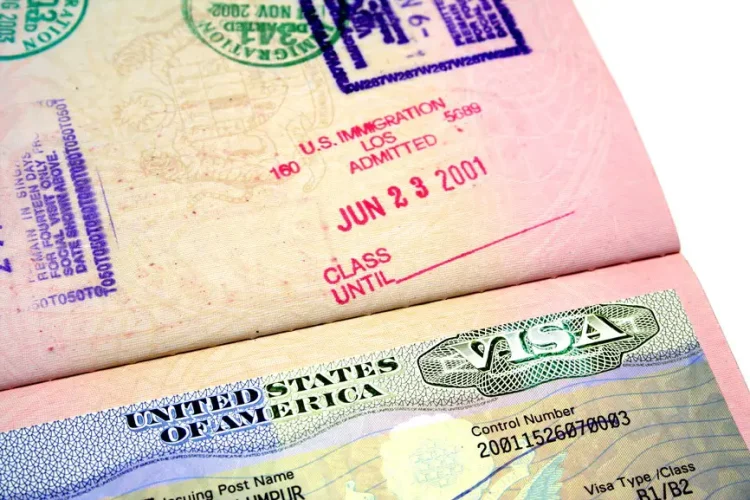
The U.S. Department of State—Bureau of Consular Affairs has limited the number of entries and duration given under non-immigrant visa classifications.
Ghanaian visa applicants, including those applying for B-class visas—covering business and tourism travel—will be issued single-entry visas valid for just three months.
They can no longer access the 5-year visa and multiple-entry.
The updated guidelines, published under the U.S. Visa, reveal that Reciprocity and Civil Documents by Country for Ghana also affect student visa applicants.
F-1 visa holders, who are typically enrolled in full-time academic programmes in the U.S., will now be issued visas that allow for only one entry and expire after three months.
Diplomats and government officials will, however, continue to receive multiple-entry visas with validity ranging from 24 to 60 months.
The K1 visa, issued to the foreign-citizen fiancé(e) of a US citizen intending to marry within 90 days of arrival in the United States, and the K2 visa, provided to the unmarried dependent child (under 21 years old) of a K1 visa holder, are single-entry visas that will be valid for 6 months.
The K3 visa, for the foreign-citizen spouse of a US citizen, and the K4 visa, for their unmarried dependent child (under 21 years old), are multiple-entry visas that will be valid for 24 months.
All other visa applicants, including those applying for B-class visas, which cover business and tourism travel, will now be issued single-entry visas valid for just three months.
In reaction to the US’ new policy that affects Ghana and Nigeria, the Vice President of IMANI-Africa, Bright Simons, quizzed whether or not Ghana and Nigeria can retaliate.
“Given the scale and scope of the restrictions this time around now, citizen interest is likely to be much higher putting pressure on the government to openly discuss the measures it intends to take in response,” he noted while revealing how diplomatic channels resolved similar actions by the US in the past.
He called on the government to provide statistics on whether or not US citizens coming to Ghana do not get long-term, multiple-entry visas as often as Ghanaian citizens visiting the US do.
“Thus, they are trying to frame the issue as one of “reciprocity”. Something that, per policy, they ought to review regularly. Our governments should publish stats on this. Is it true or not?”
“The visa regimes of some other places Ghanaians like to visit, like Europe, China, and the Middle-East are not any more liberal. Getting long-term, multiple-entry, visas for these places has been quite hard. It may be hard to justify retaliation against the US when visa rules for other places seem just as tight or even tighter. Except, of course, that there is no rule that says that retaliation must be symmetrical,” he added.
Nigeria and Ghana are early victims of a new United States policy targeting 36 countries for potential visa restrictions.
1. The beloved 5-year US visa for Ghanaian and American middle-class folks is going to become super-scarce!
IMANI Africa’s Vice President, Bright Simons, has accused influential figures in Ghana of playing a role in the unauthorized entry and spread of dangerous opioids in the country.
His assertions follow a recent BBC investigation that uncovered the influx of Indian-manufactured opioids, particularly Tafrodol, into Ghana’s markets, worsening the country’s addiction crisis.
In a detailed write-up, Mr Simons revealed that Ghana serves as a major gateway for these substances, with large quantities being distributed locally and across West Africa.
Citing customs documentation, he named Indian firms such as Aveo, Westfin International, and PRG Pharma as suppliers of these drugs to Ghanaian companies, including Samospharma.
While Samospharma has denied any connection, Mr Simons provided evidence suggesting the company’s involvement in the trade.
“As far as the export data was concerned, the company has not been smuggling in these items. It has been trading in the open with established firms in India and elsewhere to the tune of millions of dollars. My conclusion, therefore, was that it was operating with the full knowledge of the authorities.
“What is more, Samospharma’s founders are highly respectable members of the pharmaceutical industry. They are, furthermore, the visionaries behind a widely acclaimed digital platform, DrugNet, designed to ensure the safe delivery of high-quality medicines and to prevent the trade in substandard pharmaceutical products,” he wrote.
Mr Simons took aim at Ghana’s regulatory agencies, particularly the Food and Drugs Authority (FDA), accusing them of failing to tackle the opioid crisis effectively.
The FDA clarified that Tafrodol and its ingredients are not approved in Ghana, making them illegal. However, it also acknowledged that Samospharma has authorized dealings with Aveo and Westfin for other pharmaceutical products.
Mr Simons argued that this inconsistency highlights serious transparency issues and weak enforcement within the regulatory framework.
“Despite the FDA’s emphatic confirmation that these drugs are illegal from the outset, the National Security Agencies and the preventive units within the Customs agencies continue to pretend that they have no information to tackle the menace head-on. They continue to talk in very broad and general terms about stopping the flow of opioids, the same talk we have been hearing for a decade,” he added.
Simons claimed that influential figures in Ghana’s government, business sector, and bureaucracy are behind the opioid trade.
He suggested that these individuals are intentionally spreading confusion to divert attention and avoid accountability.
“Everything converges upon my initial theory: the whole saga isn’t adding up because someone or a group of very powerful people in Ghana with tentacles crisscrossing politics, business, and the bureaucracy, and protected by a shield transcending political administrations is the mastermind behind these opioid massacres,” he wrote.
In February, 2020, the Parliament of Ghana ratified the decision of the government to spend nearly $900 million on a “multipurpose” dam in Pwalugu, a small northeastern town just 20 km south of the Border with Burkina Faso, Ghana’s northern neighbor.
Ghanaian-themed art
~$360 million of this amount was allocated to the 60 MW hydropower plant itself; $474 million to the network of canals and weirs needed to create an irrigation system for farmers; and $55 million to a 50MW solar plant.
Separate contracts had been signed for these three components.
For example, in May 2019, the government entered into an agreement with PowerChina International, a Chinese state-owned EPC contractor, for the $474 million irrigation system project component.
Following this contract between the Ministry of Agriculture and PowerChina International, the Ministry of Finance insisted on entering into the subsequent contracts covering the two power plants, which it did in December of the same year.
The joint project costs as submitted to the Ghanaian parliament are presented below.
However, due to objections by some parliamentarians, the tax portions were removed from the final tally bringing the cost of the project down from about $965 million to ~$900 million. The Ministry of Finance pledged to fund the entire project through the budget and committed an immediate amount of ~$91 million, nearly 85% of which was to come from the proceeds of a recent Eurobond issuance.
The following disbursement schedule was presented to Parliament.
As we now know, the Finance Ministry, with the obvious acquiescence of the Presidency, decided not to allocate the Eurobond money to the project. Just about $12 million was paid from the government budget to the contractor, and apart from a celebrated worker camp (see VRA PR materials below) and a few rough access roads, nothing much came out of the money spent.
In the lead up to the 2024 Ghanaian general elections, the issue of corruption took center-stage. The then Opposition NDC accused the ruling NPP government of rampant looting. The Pwalugu Dam “scandal” became emblematic of this campaign to compel NPP officials to account for their “loot” should the NDC win power.
Since his decisive victory in the December 2024 polls, the NDC candidate, now President of Ghana, has fulfilled his promise to initiate a program called Operation Recover All Loot (ORAL) to retrieve looted funds from former government functionaries. Not surprisingly, members of his party has called on him to immediately act on the Pwalugu Dam matter.
The interim head of ORAL has cited the Pwalugu Dam scandal in some of his various engagements with the media.
The Limits of ORAL
Whilst the ORAL initiative is widely popular with the vast majority of objective voters, and the issues of waste and graft are of huge policy significance, some activists like myself from Ghana’s policy think tanks believe that the current mainstream framing can be problematic.
I have tried to explain in other essays that the problems of graft and waste in Ghana rarely manifest in the form of embezzlement seen in countries like Nigeria. They are often wound up within the very fabric of a dysfunctional policy environment.
Thus, whilst the effect is often the same, billions of dollars of wasted funds, the solutions must involve elaborate reforms rather than the quick-and-easy raid-and-retrieve impression created by ORAL’s devoted followers.
When I read that the new Agric Minister has announced a termination of the Pwalugu Dam contract, I felt that this is another opportune moment to double down on advocacy to recruit more citizens to my point of view.
Before I delve into why I believe that the Minister’s call is highly incomplete, misdirected, and therefore misconceived, forgive me as I take a quick detour to explain my overall thesis about the problems of waste and graft in Ghana, and I daresay Africa. Those in a hurry can skip the following section in its entirety.
On katanomy and the dysfunction of the politics-policy-law continuum in Ghana/Africa
An easy way to appreciate the point is to consider the flow as a spectrum. The heat of politics cool down into the light of policies which, when distilled, may evolve into strict laws.
I find it irresistible to apply a few insights from Plato’s The Laws. It is a work less sublime than his majestic The Republic but, nevertheless, more practical. I choose Plato only because his views are widely known and relatively straightforward. There are of course several sophisticated Fante and Akuapem scholars of the 19th and early 20th centuries I could have called upon for help, but this piece is much too short for a detailed exposition.
In The Laws, one of Plato’s characters describes the evolution of law in any state as a progression from persuasion to compulsion, and a constant oscillation between the two modes.
By inference, in a serious participatory democracy, governance swings from the chaos of opinions into the growing enlightenment of policy and finally settles upon laws and other legal instruments (including contracts) which must be enforced until reversed by the backward swing of the process.
My view is that in many African countries the spectrum has been totally fractured and shattered. Politics live on its own plane and has little to no interaction with policy. Laws are often on paper but are haphazardly enforced and rarely express the enlightened march of policy. Hegel’s owl is stuck on a tree, it does not fly.
I call this phenomenon by a new word, katanomy. It is a term I have coined from two Greek roots: “kata” (fragmented) and “nomos” (governance). Those who have mastered it, the katanomists, rise to the top of the polity often to the amazement and confusion of their fellow citizens more given to deliberation and analysis.
The fact that power is acquired through a politics with almost no real linkage to policies often means that only the aggregate effects of policies on the broad conditions of life matter. There are no real stakes attached to the individual policies themselves.
Moreover, if possible, political theatre is used to distract from any close scrutiny of policies. In Ghana’s specific case, the policies are often simply procurement vessels for amassingPublic Relations (PR) equity, money through crony kickbacks, and patronage networks. I have described a specific variant of the whole phenomenon as “state enchantment“.
Because the political process is all there is and the policy community is highly weak and fragmented, policy monitoring and evaluation is a useless endeavour. No government official has much to fear from the poor execution of a specific policy or the lax enforcement of a particular law or contract. Only the combined effects matter but only to the extent that political theatre can or cannot be used to show a marginal overall improvement or decline in the general standard of life in comparison with one’s electoral opponents.
My honest view is that in parts of Asia and the “West”, individual policies are chained more tightly to vested political interests and to the political consciousness of the masses, raising the stakes in political terms for the effectiveness of policy execution.
I apologise to those who only here for ORAL and Pwalugu for how long this has taken. I also apologise to those genuinely interested in the katanomy idea that I cannot develop it further here. I intend to pick up the subject again in a future piece. For now, back to Pwalugu.
Some poorly known facts about the Pwalugu Dam
Plans to build various small hydro dams across Ghana’s many rivers have long been part of the policy record of Ghana, all the way back to the early colonial period. Fascinatingly, even though Pwalugu is consuming all the attention, two of these dams – Hemang and Juale – are in an identical situation, with hundreds of millions of dollars at stake. The fact that virtually all readers are unlikely to have heard of them is mere testament to my point about policy marginalisation.
The first serious discussions about building a dam at Pwalugu actually took place in the 1960s, most notably the Japanese Nippon Koei’s studies in 1967. The strategy was revived in the 1990s, starting with a study by France’s Coyne et Bellier in 1992, and continued to feature in development plan after development plan throughout the 4th Republic.
Two hopes have always driven this interest: a) weaning up to 25,000 hectares of land in the North from rain-fed agriculture and thereby reducing the import of cereals like rice; and b) reducing the spate of flooding that periodically destroys the livelihoods of tens of thousands of Ghanaians living in the White Volta Basin.
Despite the obvious importance of these goals, it was not until 2013 that the government moved seriously towards implementation. As I have explained, policy rarely ties into politics in Ghana because specific policy failures do not get politicised enough to serve as a strong feedback loop against poor executive/ministerial performance.
The only reason Ghana moved forward at all in 2013 was because the government managed to borrow funds from the likes of the French development agency, AFD, and the World Bank to conduct expensive feasibility studies.
Curiously, no one has raised any questions about why, in the last few decades, more than $60 million have been spent on various planning and feasibility studies for the dam with nothing much on the ground to show for it. That should imply that the only reason why the $11.9 million paid to the Pwalugu Dam contractor has become an issue is because politicians decided to score a few political points devoid of the policy context or ramifications.
The second poorly understood fact is that the political claims made for the project are largely suspect.
Someone seems to have belatedly recognised that the dam is positioned in the Mamprusi area, where the former ruling party’s candidate in the 2024 elections, Ghana’s ex-Vice President (Veep), comes from. Obviously, its progress would have made it hugely significant in electoral terms. So, the benefits of the project were catapulted into the stratosphere in “political talk” and project coordination was moved to the Office of the Veep.
It was then declared that the project would immediately halt all perennial flooding, provide water to 30,000 households in the Walewale town, a major Mamprusi ethno-political base, and bring power to most homes.
None of these claims were strictly true.
I. There were no water treatment plants or pumping stations in the design of the project;
II. the power generated would have been far more expensive than the rate at which NEDCO, the electricity distributor for Northern Ghana, sells power; and
III. whilst some flooding could be mitigated, the dam is far from a panacea to that problem.
The flooding point merits a few more words. A careful review of the environmental impact studies for the dam should show that the bulk of the flood mitigation planning related to flooding that could be caused by the dam itself and somewhat less with abating natural flooding trends in the White Volta Basin.
As researchers have shown in the case of Akosombo and the lower Volta Basin, building a dam can actually worsen the flood picture for an area. Tractebel, the environmental engineering consultants for Pwalugu Dam, was thus arguably more focused on designing models for preventing this from happening.
At any rate, a major factor in the flooding situation is the role of the Bagre Dam in Burkina Faso.
Occasional spillage from this dam overwhelms even the mighty Akosombo dam, despite it being located many miles downstream.
If Akosombo, with its 150 billion cubic meters of storage, struggle to contain Bagre spillages, it is hard to understand how Pwalugu, with its 2.6 billion cubic meters of equivalent storage, can somehow absorb all the runoff from Bagre plus that of the various other tributary sources of water-flow across a basin spanning the breadth of Northern Ghana.
Below, I have posted a few tables and graphs to add colour to the main point: Pwalugu would have made a contribution to containing flooding but it cannot on its own substantially curb the threat. Multiple smaller interventions across the basin may well yield a greater overall benefit.
The supremacy, yet marginalisation, of Policy
The above discussion raises the core policy issues casting very serious doubt on the prospect of Pwalugu, despite the nearly $100 million that has been spent chasing the dream over the last couple of decades.
Three key policy trade-offs define the challenge: creating a dam high and wide enough to generate enough power, building an irrigation network dense enough to boost food security without inundating too many existing communities, and designing both systems to mitigate as much flooding as possible.
Only a highly complex process that in policy analysis we call multi-criteria optimisation would yield the right answers in an inquiry such as the above. Yet, that entire process was outsourced to foreign consultants with minor inputs from VRA engineers and Water Resource Commission experts.
Ghanaian politicians and their assorted collaborators contributed little to resolving these trade-offs and conceptual tensions. Once again, policy and politics are like oil and water in Ghana, and never the twain shall meet.
The politics around harvesting votes in Mamprusiland was completely severed from any of the policy choices at stake despite the massive implications for citizens whichever side the chips fell on.
In the end, the consultants presented a chart of project options in 2014. This was not the result of any weighty political compromises but the pure outcome of their further analysis, undertaken at additional cost to Ghana. They had settled on a choice that they believed optimised the total benefits and mitigated the most risks associated with the dam. No doubt they discussed it with officials at the Ministry and their political bosses but missing any of the ingredients of a national policy debate, stakes were low.
The World Bank took one look at the resultant cost of the project in 2017 and washed its hands off the fundraising effort. The African Development Bank also demurred. Still, none of this became politicised. Politicians were thus under no serious pressure to think creatively and conceive an alternative concept at a low enough cost able to actually attract funding.
The reader can conceive another world in which policy options, preferences, and design criteria are linked to energetic political vested interests in Ghana.
A Ghana where GUTA obsesses over the minutiae of tax waiver policies. A world where small-time/cottage industry operators in Mamprusiland prefer the power generation benefits to the irrigation bonanza. Where an association of such manufacturers can team up with civil NGOs to argue vociferously that the solar plant component of the project to be sited in Kurugu miles away from the hydro-dam has no real synergy with the rest of the project. Pointing out that the solar plan has capex costs barely 20% of the hydro-dam’s, they would have insisted on its decoupling as the most sensible approach in order to improve financing prospects.
A Ghana of multiple vested interests buoyed by middle-class solidarity in important policy matters that rise to the level of political consequence and force political parties to react and realign. Tainting citizens with the brush of partisanship would be nonsensically impotent in such a world because it would be the politicians scrambling to align. We would not have citizens scared to death of being associated with empty, slogan-based, welfare clubs masquerading as political parties. Alas, that Ghana does not yet exist.
Why Pwalugu Dam was doomed to fail
The political decision to fund the project using Eurobonds proceeds and the national budget instead of redesigning it to make financial sense is, to cut to the chase, the reason why the project was doomed.
The government’s subsequent decision to bundle it into the Sinohydro package was yet another poorly thought through adaptation that led nowhere as the Chinese have changed their initial approach of funding inefficient projects in Africa in exchange for broader strategic stakes in host societies. It was the last nail in the coffin of abandonment.
Meanwhile, political theatre could continue unabated. The President “cut the sod” for the project to commence, as he usually does.
The Veep declared it the “largest investment ever in Northern Ghana” and everywhere dance troupers and silky-voiced radio announcers held forth on the glorious gospel of Pwalugu.
When by 2022, it became clear to all and sundry that the dam project would not proceed, the Veep resorted to a strange new technique: trying to publicly cajole the World Bank into dishing out funds for the dam despite their having expressed their policy disagreements five years back. After all, in Ghana, policy is hardly a barrier, is it? What is a twisted policy or two among friends, hey?
The way forward according to the new government
The policy proposal of the new government is to cancel the contract due to non-performance, mobilise fresh funding for the project, and re-award the contract. None of the specific policy content will become politicised, of course. No vested interests in Ghana will mobilise to press specific design preferences on policy grounds.
Everything will center on whether the government was able to jail someone for “chopping” (i.e. embezzling) the ~$12 million advanced payment to the contractor or not, with partisans arrayed on both sides in shouting matches consisting primarily of repeating the same talking points but at higher decibel levels.
Consequently, don’t be surprised if no detailed document is presented by the new government to provide a full account of how we got here, what strategies are available to the government, and why a particular course of policy action is preferable. Such transparency only matters when the policy stakes are high, which in Ghana is never the case.
Why the new approach will prolong the mess
Yet, a thorough examination of how and why thePwalugu Dam policy has failed so far should show that what the new government has outlined has no serious policy content at all. Let’s walk through the steps.
When the previous government decided to use the single-sourcing approach to award the contracts to PowerChina on the basis that they did not see the prospect of saving any money through competitive tendering, and the Parliament rubber-stamped the approach, the tone for the ensuing project management was set and any chance of getting a serious development-finance funder on board was scuttled.
Otherwise, the government’s subsequent total disregard of the contractual terms would not have happened. As the reader may recall, in a katanomic setting, policy distention from political seriousness is followed by lax legal behavior. Even though the government had signed a contract and had it ritually ratified by parliament, it soon became clear that it had no intention of following its terms.
In the contract with PowerChina for the irrigation component, for instance, funds were meant to be released by the government to relevant agencies for purposes of monitoring and evaluation. The stipulation was, naturally, promptly ignored.
A payment progress schedule, such as the one presented to Parliament, was incorporated by contract and accordingly ratified by the parties. Naturally, this too was ignored.
A quick look at the three project contracts shows that the $11.9 million being bandied about was far lower than what the government committed to pay in the first year of construction, about $91.4 million.
More problematically, the government breached the contract by refusing to advance the 15% that it committed to the contractor in exchange for a performance security guarantee reportedly issued by Stanbic Bank.
“Termination” is misdirection
For the government to be in a position to terminate for non-performance, it should have paid at least $135 million in total in mobilisation, a sum higher than the year one commitment. It is entirely unclear who agreed to such a large upfront payment when 10% (~$90 million) is usually the norm in such contexts. Anyway.
What is more, Ghana’s negotiators decided to adopt the FIDIC contract template hook, line, and center meaning that all the performance terms are as per FIDIC project governance terms, which are quite sympathetic to contractors in the kind of position PowerChina is in. No wonder then that the government has not seen it fit to exercise its delay penalty rights under the agreement.
Now, here is the bombshell.
In 2023, PowerChina, the contractor, did give formal notice of its intention to “demobilise” from the site. By that time, it had triggered disbursements of ~$60 million of the advanced payment commitment commensurate with the guarantee issued by Stanbic (which may well have expired on its own terms by now). Of course, as we now know, the government made a single-tranche payment of ~$12 million and then promptly forgot about its legal obligations.
Neither the new Agric Minister nor the previous government is interested in explaining to the public that the contractor is actually demanding an extra $12 million from Ghana for three unpaid payment certificates!
Let that sink in, rather than ORAL retrieving $12 million for Ghanaians, the country is actually on the hook for an additional $12 million. In response to Ghana’s delayed payments, the contractor has dismantled the workers’ camp it built. The ragtag feeder roads it built have also all become unmotorable.
In just the same way that dysfunctional policy design led to Ghana spending nearly $100 million on planning with little progress on the ground, dysfunctional legal behavior has led to ~$24 million of contractual liability without any tangible benefits.
The current Agric Minister’s approach so far does not hint strongly at a new way of thinking and doing things. He is talking about terminating a contract when the provisions for dispute resolution in the existing contract clearly call for the setup of a Dispute Adjudication Board before even proceeding to arbitration.
He is talking about termination whilst refusing to address the messy project history. And, most worryingly, he has put nothing on the table to address the fundamental issue leading to all this waste associated with the Pwalugu Dam: the project’s lack of bankability and the absence of clarity around the massive complementary investments that must be made if the social objectives of food and human security are to be met.
As mentioned in preceding passages, optimising the three criteria of flood prevention, energy generation, and irrigation leads to a highly costly set of computational outcomes that may satisfy engineers but cannot arrive at bankability and social policy coherence.
It leads to power that is much too expensive (a $366 million dam that generates 60 MW of electricity); a 20,000-hectare irrigation complex in an area full of peasant farmers who lack the resources to manage the last-mile costs and engineering of connecting to the irrigation weirs, even if the gravity-based flow model cuts operational costs upstream as per project design; and a flood mitigation apparatus that, even in a benign scenario, reduces water inflow into the Akosombo dam and will do little to stop catastrophic flooding resulting from Bagre spillages.
None of these issues are likely to attract serious attention and creative solutions because in Ghana, policy is rarely politicised enough to matter, and legal contracts are hardly worth the paper they are written on so why bother with preparatory rigour before signing them?
What does all this mean for ORAL
It should be self-evident by now, but if not, let me recap. Yes, there is massive waste in Ghana, some of it no doubt driven by a love for kickbacks that blinds decision-makers to strategic incoherence. But the waste is bound up with the entire apparatus of the policymaking process.
Cutting ongoing waste and preventing previous mistakes from continuing to build up more waste are the biggest tasks confronting the ORAL policy. Transforming ORAL into a policy that can actually save and recover public resources, however, requires of us to more tightly link the politics to the policy foundations, and of course to pay more fidelity to our laws and legal covenants.
The big question is whether such a transformation from the status quo can happen solely for ORAL without broader changes to the governance architecture of Ghana.
And so what?
Fundamental to the process of lowering waste is the need to raise the stakes for politicians in high-resource policy decision-making. For that to happen, a critical mass of citizens must be as energised by policy options and tensions as the masses are about partisan politics in Ghana.
My personal mission is to radicalise enough citizens who can connect policy failures and their consequences with the high stakes of national politics. If you are reading this, let me know if I have succeeded in converting you.
The Vice President of IMANI-Africa, Bright Simons, has revealed that an international bank reportedly cautioned President John Dramani Mahama against appointing a certain individual to a prominent ministerial role.
Bright Simons explained that the bank’s apprehension arises from ongoing investigations involving the individual, which could not only jeopardize their nomination but also impact the government’s reputation.
This concern is particularly significant given the administration’s commitment to maintaining high ethical standards under the newly launched Operation Recover All Loot (ORAL).
In a post shared on his X (formerly Twitter) account, Bright Simons remarked, “Those who care about the reputation of the new Ghanaian government would be interested to know that an international bank has reached out confidentially to the office of the current President with a warning that an individual he intends to name to high ministerial office is the subject of adverse investigations. The outcomes of these investigations may become public.”
He continued, “The President was thus being alerted about the potential distractions this individual’s appointment may cause, given that ORAL’s credibility requires the government to maintain the moral high ground.”
The post, which has garnered significant attention online, concluded, “It is generally important that a Ghanaian government avoids a ‘chain of scandals.’ Scandals accumulate to sap goodwill. We can’t say more than this.”
President Mahama has started revealing his ministerial appointments after the initial vetting of three nominees: Dr. Cassiel Ato Forson for Finance Minister, John Jinapor for Energy Minister, and Dominic Ayine for Attorney General.
Nonetheless, the specific ministerial role under scrutiny has not yet been identified.
See the post below:
Those who care about the reputation of the new Ghanaian government would be interested in knowing that an international bank has reached out confidentially to the office of the current President with a warning that an individual he intends to name to high ministerial office is… pic.twitter.com/fgJHA5hJBZ
1. Ghana’s new President has reduced the number of government ministries to 23 from the previous 30 in line with his campaign promises.
2. When it comes to clustering subsectors to create ministries, every wise person you meet would have different opinions.
3. In the 2000s, the Kufuor government decided that “youth and sports” belong with “education”. The Mills government disagreed. But the latter government felt that “works and housing” somehow fit well with “water resources”. In all this clustering business, no government ever bothers to detail its thoughts as to justification. It is just what it is.
4. I too can have an opinion without explanation, I guess. Looking at the new list, I might argue that “water resources” fit best with “land and natural resources” due to similar concessioning and control issues. And that the same ministry should handle “environment”. “Innovations”, nowadays, fit best, in my modest view, with “Science and Technology”. I might question why “agribusiness” is being pulled out of Agriculture and ask whether “pharma business” too doesn’t deserve to be pulled out of “health” if we want to go on that tangent. Etc. I doubt anyone cares.
5. Because, frankly, the usual concern about “number of ministers” is primarily about optics and symbolism. The people just don’t like seeing Presidents appoint a large number of ministers because it “feels” and “looks” quite “obscene”.
6. Cutting down the number of ministries and ministers is thus an exercise in “reading the sentiments” of the public, and in being “responsive”, and not about lean and efficient government reforms per se. Being a “listening government” can have its own rewards separate from efficiency gains.
7. To actually move in the direction of government efficiency, you must ask whether the thousands of workers in collapsed ministries would leave the government payroll or would simply be redistributed. How come we never touch the actual agencies where 98% of public workers and government business reside? Ministries are merely the tip of the iceberg. Agencies like the Police, Ghana Educational Service, and Ghana Revenue Authority are far heftier. State-owned enterprises like GNPC and ECG matter in every respect of spending efficiency than 60% of ministries.
8. Would there be less spending on bureaucracy across the government as a whole following the reduction in the number of ministries? Where are the financial numbers to prove this? If you went back in history and compared spending on “office of government machinery” before and after “listening governments” cut down on the numbers of ministers, you might be surprised to see that the expense tends to increase year on year regardless.
9. Furthermore, ministries are very varied. There are some like the Ministry of Chieftaincy and Religious Affairs that received on average less than $5 million a year as its entire budget. The funny Ministry of Parliamentary Affairs gets barely $600k a year. Frankly, ministries like that and the one for “business development” won’t be missed by anyone. They look like nuisances. On that score alone, citizens like to see them axed. But their total burden on the exchequer is puny.
10. Then there are the giant ministries. Health, education, Roads & Highways, and the Interior. Education gets a cool $2 billion a year, more than 20% of the total government budget in most years. In fact, in 2024, the budget of the Ghanaian ministry of education is twice that of the Nigerian federal ministry of education. Even if you add all public spending on education in Nigeria up, Ghana’s ministry still spends more. It is a true behemoth. The Health Ministry gets a billion dollars. If you really want to make major savings in government spending, you could introduce reforms in health and education that would eclipse the savings made from abolishing 5 ministries. And, here I am talking about truly ABOLISHING. Like, man, sacking workers and auctioning V8s. Not the Ghana-style ministerial collapses in which everything remains as before except the few titles dropped.
11. Anyway, the issue of how to save money across the government is a very broad and multifaceted one. The biggest area is actually in debt management. Then capital expenditure. And finally procurement related to general government operations. Only then does one even get to payroll issues. Ministerial perks should be on the list somewhere, for sure, perhaps on page 17 of the memo, in between stationery and guest house management. Fuel coupons, useless workshops, and travel imprest are all certainly higher up.
12. In short, the issues plenty. And Mr. President has only 4 years. So, the work dey. Serious! But God too dey.
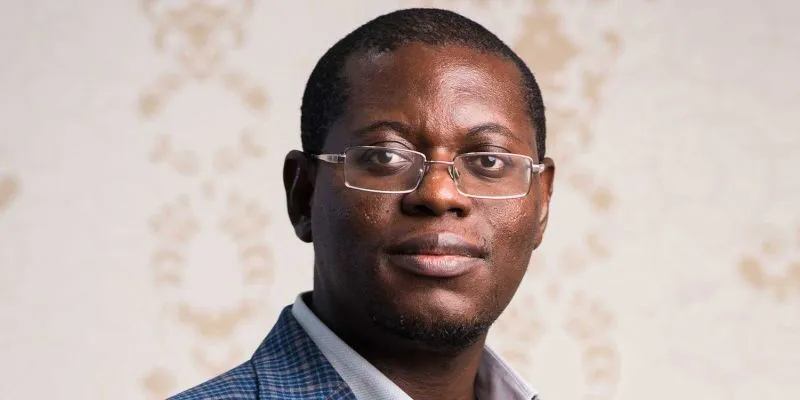
Author: Bright Simons is a Ghanaian social innovator, entrepreneur, writer, social and political commentator. He is the vice-president, in charge of research at IMANI Africa.
DISCLAIMER: TIGPost.co will not be liable for any inaccuracies contained in this article. The views expressed in the article are solely those of the author’s, and do not reflect those of The Independent Ghana.
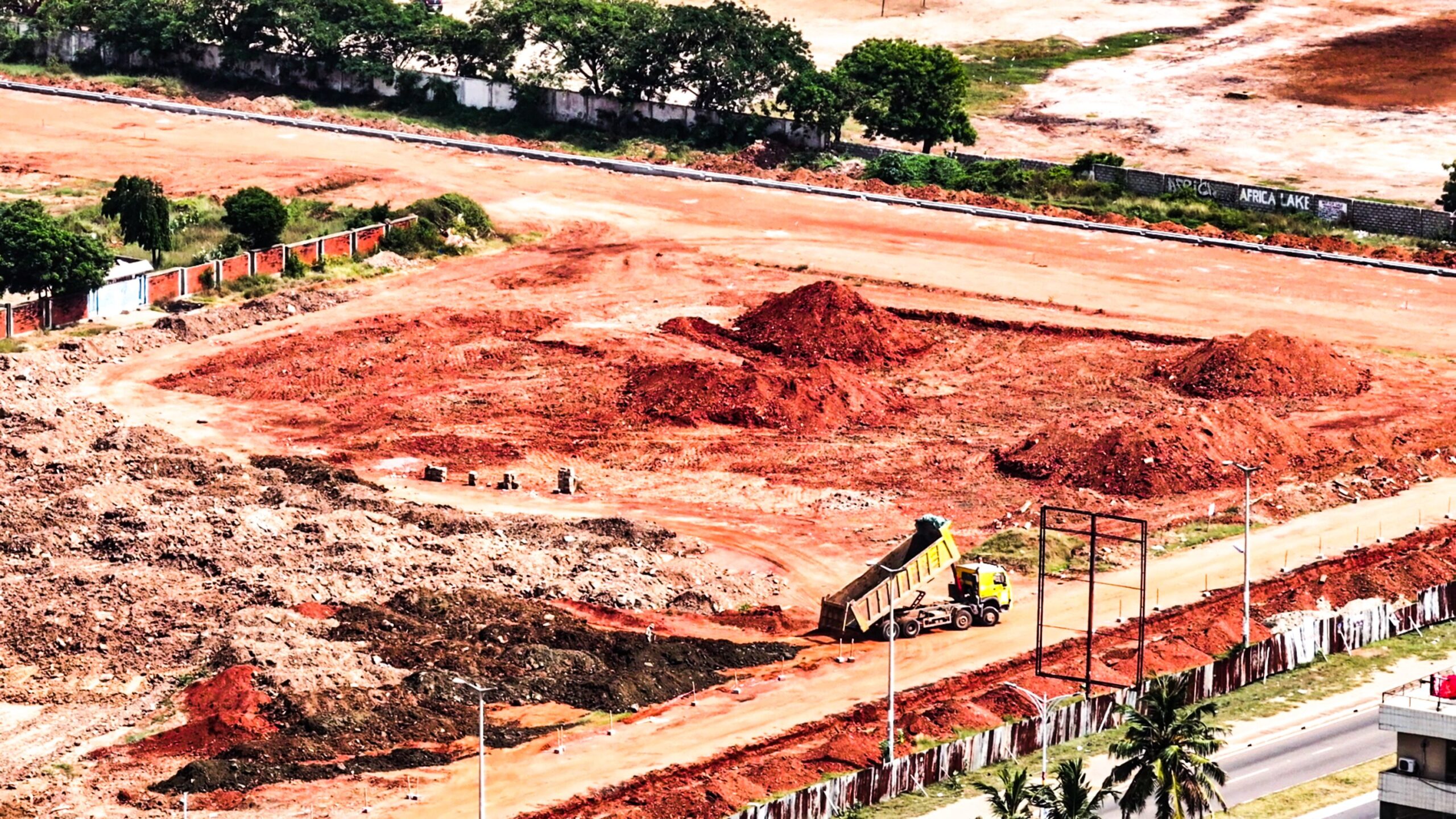
Bright Simons, Vice President of IMANI Africa, has claimed that the convention center works at the Trade Fair site have been halted following the defeat of the New Patriotic Party (NPP) in the 2024 elections.
In a recent update, Simons criticized the management of the Trade Fair project, pointing to a lack of progress and an abandonment of works initially started ahead of the election.
Simons, who has been consistently tracking the project, shared aerial photographs and videos of the site as of this morning, revealing that no changes have occurred since his last report in July this year.
He described the hurriedly started convention center works as an “elaborate scam,” noting that they had been abandoned after the ruling party’s defeat. “No foundation earthworks were done, so they never really meant to build any structure,” he said, referring to the project as a “Potemkin village.”
He went on to provide an overview of the project’s troubled history, detailing how an optometrist and ruling party executive from North America was brought in to manage Ghana’s most important exhibition center.
However, Simons noted that despite efforts, the redevelopment plan was never created. Instead, opaque deals were struck, and after eight years, only pictures and videos of the site remain.
Simons also mentioned the failed attempt by a group of prominent Ghanaians in Europe and the US to build a science and tech park at the Trade Fair, stating that their efforts were thwarted due to the refusal to submit to the under-the-table demands of powerbrokers.
He further emphasized that the Trade Fair debacle is just one example of the many projects that the incoming government will inherit, warning that similar outcomes are likely to recur in future projects due to the persistence of dealmakers in every administration.
Simons called for “critical voices” within the ruling party to help prevent such outcomes, urging supporters of the new government to become “insider-critics” and challenge corruption. He also suggested that all contracts related to the Trade Fair project, including those granting access to land, should be leaked for public scrutiny.
Simons concluded by stating that his team would continue to monitor the situation and examine any intelligence received from whistleblowers.
IMANI Africa Vice President Bright Simons has raised concerns over the alleged high salaries paid to employees of the Ghana National Petroleum Corporation (GNPC), Ghana’s state-owned oil company, and the perception of political privilege influencing the company’s hiring and resource allocation practices.
According to Simons, the average monthly salary at GNPC stands at a striking 60,000 Ghana Cedis per employee, an amount vastly higher than the average salary in the public sector, which he noted as 2,594 Ghana Cedis per month.
Simons questioned the seeming disconnect between GNPC’s salary structure and its productivity, noting that despite these high wages, the corporation has yet to achieve a significant oil discovery in over two decades.
“GNPC doesn’t operate a single oil field,” Simons pointed out, adding that “GNPC hasn’t discovered a single barrel of oil in the last two decades.” This lack of operational achievement, coupled with its salary expenditure, has sparked public debate about the stewardship of resources within the corporation.
Addressing GNPC’s community involvement initiatives, Simons alleged that only those with political connections could gain access to the corporation’s benefits, such as scholarships, employment opportunities, or funding for community projects.
“GNPC won’t hire you, give you a scholarship, or spend a cent out of the millions of dollars it doles out in CSR on your community project…UNLESS…you have political connections,” he stated, adding that this has been the status quo for many years and is unlikely to change.
“Always been. Ever would be. And there is nothing you or any Ghanaian can do about it,” he wrote, expressing cynicism about the prospects for structural reform.
Not to be pedantic or to run stats classes, but for those genuinely interested in whether one can use a simple mean for any serious inference in a situation like this, here is a quick point.
The post doesn't just cite one average. It cites TWO averages. Read carefully.
Bawku Central MP Mahama Ayariga has challenged the New Patriotic Party (NPP) caucus in Parliament to recognize their accountability for the delays in government proceedings.
His statement follows the NPP’s boycott of Tuesday’s parliamentary session, led by Alexander Afenyo-Markin, after the National Democratic Congress (NDC) MPs gained control of the majority side of the Chamber.
On October 22, Speaker Alban Bagbin adjourned Parliament indefinitely, citing a Supreme Court ruling that paused his declaration of four vacant parliamentary seats.
In an interview with Citi News, Ayariga emphasized the NDC’s willingness to return to Parliament whenever the Speaker calls the House back into session, reiterating their dedication to legislative work.
“We are in opposition and we are not responsible for conducting government business, but we came in our numbers, ready to assist them [NPP MPs] conduct government business. He [Afenyo-Markin] came and he was more interested in preserving his post as a former Majority Leader.
“So if you say that we have wasted public resources, no. We were in the chamber, ready to do business. He is the one who ran away from his own business. So who is the one who is wasting public resources?”
Honorary Vice-President of civic group IMANI Africa, Mr. Bright Simons, has expressed confusion over a new tender issued by the Bank of Ghana (BoG) for the construction of a corporate office in Tamale, following the Auditor General’s report last year that flagged a significant increase in BoG’s foreign exchange payments, partly attributed to the same project.
An excerpt from the Auditor General’s report pointed out by Simons indicates that BoG had already spent a significant portion of foreign exchange payments—over $84 million—on this same project in 2022.
The report attributes 30.7% of the total payments of $117 million to the construction of the Tamale office, alongside infrastructure for the African Games.
The recent tender issued by BoG, with a deadline of September 5, 2024, calls for the construction of a corporate office in Tamale.
Upon discovering this new tender, Simons raised questions as to why another tender is being issued for a project that was supposedly already accounted for in the previous payments.
“If such substantial payments were already allocated to the project, why is a new tender being issued in 2024 for the same office? Was the previous funding used effectively, or is there a gap in the project’s completion and accountability?” were some of the questions he raised.
To this end, Bright Simons has expressed his concerns, stating, “Last year, the Auditor General flagged a big increase in Bank of Ghana forex payments of more than $84m. One of the reasons given was that a new corporate office in Tamale was being built. Imagine then my confusion seeing a new BoG tender to build a corporate office in Tamale.”
Last year, the Auditor General flagged a big increase in Bank of Ghana forex payments of more than $84m. One of the reasons given was that a new corporate office in Tamale was being built. Imagine then my confusion seeing a new BoG tender to build a corporate office in Tamale. 🤔 pic.twitter.com/xgNzjSNiEE
If you are a certain age and live in Accra, Tema, Kasoa, Takoradi, and their environs, there was probably a time when you thought Surfline was like, man, going to bankrupt MTN & Vodafone for real!
Nowadays, I hear folks on social media cursing and cussing, and shaking their fists at their Surfline modems gathering dust on corner stools. Some bought into the euphoria at its peak. And now the bloody devices won’t connect,
How we got here is both thrilling and tragic.
The spunky startup was founded in 2011 by one of Ghana’s most formidable fuel and real estate magnates. The company’s impetus was a new policy by the government to limit 4G broadband internet provision to local, Ghanaian-owned, companies. The big telco incumbents, all foreign-owned, were to be denied.
In 2013, Surfline and Blu were given shiny new 4G licenses, at $6m a pop. The next year, Surfline launched in Accra with support from Alcatel, IBM, Oracle, etc. It was a big deal. The only 4G network in West & Central Africa, that was the story.
In the ensuing years, other licensed local 4G players went live: Blu, Telesol, Broadband Home, and Busy Internet. Goldkey, one of the early licensees, however did not. Its owners chose to wait and see.
By June 2016, Surfline had ~81k subscribers, representing ~75% of the entire broadband 4G internet consumer base in Ghana. It was on course to $100 million in annual revenue, a major milestone on its medium-term commercial roadmap.
But what politicians give, they can also take away. That same year, policy changed. The government decided to allow the big telcos to play in the 4G space.
Surfline, all this while, had been burning cash fast. To sustain growth, it approached a South African investor, Vantage. Vantage brought German devopment fund, DEG (part of the behemoth KFW group), on board.
Thus, in 2015, Surfline raised $30m from the two foreign investors, guaranteed with the personal assets of its founder. The facility had a 5-year term and a dollar interest rate of 12%, to be jacked up to 15% if any interest payment was missed. A guaranteed minimum dividend of $10m linked to convertible equity was also in the mix.
MTN’s entry in February 2017, however, blocked further growth for all 4G broadband internet operators. Surfline began its terminal decline. By December 2020, it had lost 50% of its subscribers.
The shrewd real estate magnate and fuel nabob behind Goldkey took one look at the whole affair and simply sat on the license. At the first opportunity he flipped it to MTN and recouped his money.
Blu, which never really signed on more than 1500 customers throughout its rocky journey, left the scene around April 2021.
By December 2022, Broadband Home was down to less than 300 subscribers countrywide. Busy had given up the ghost a few months earlier. Telecol limped on till January 2023 and then bit the dust. MTN reportedly lapped up most of the licenses of these dead pioneers, thus increasing its spectrum resources, whilst its executives sang Master KG’s Jerusalema.
Four months later, in May 2023, Surfline’s creditors finally pulled the plug. Its datacenters and masts powered down. Modems and dongles and MiFi pads blinked, sputtered, also went offline in over 30,000 homes. The telecom regulator, NCA, mumbled something about “investigations” when folks pressed about their prepaid, now apparently worthless, credit on their Surfline devices.
For most Surfline subscribers, this is the story as they know it. But there was another tragic timeline. As the company started to bleed, it missed interest payments to Vantage in 2017 setting off a chain of events, which will lead to the founder’s real estate empire, Bay Developers, being taken over by the investors.
The takeover of Bay Developers, at a valuation of $15 million, was supposed to be part of a broader settlement of the indebtedness, in which shares of Surfline were to be transferred to Vantage and DEG, and the personal guarantee of Surfline’s founder vacated. A settlement agreement and consent judgment would even be secured to this effect.
However, as the company’s operational challenges deepened and debt piled up, an incoming strategic investor, the Botswana Development Corporation, backed off. Seeing as the transfer of shares from Surfline to Vantage had delayed because, according to Surfline’s principals, a no-objection was being sought from another investor, Vantage wrote to Surfline in June 2018 to revoke any commitment it had to a settlement that will extinguish the guarantee. All this drama while interest was compounding like mad.
Vantage was now committed to do everything to collect the outstanding amounts. Having sent a letter to Surfline in July 2018 calling on the guarantee, it shifted to war footing.
The next year, in 2019, DEG also declared a default on its $15 million portion of the facility. The total amount due DEG at this point was ~$34 million. Such is the power of compound interest.
Surfline was under massive competitive pressure from the big telcos all through this ordeal. Faced with savage odds on all fronts, it chose to double down on promotions to win marketshare and grow revenue.
In early 2021, Vantage was all set for war. It demanded that the accumulated interest and dividend of $27 million be paid in full. Then it activated the arbitration clause in the facility agreement. It also engaged DEG, and after discussions had the DEG portion of the facility assigned to it.
Surfline decided to fight back by suing Vantage in the Ghanaian courts and demanding that an injunction be placed on the arbitration process in London. That matter, in the usual fashion, soon got bogged down in the courts as the arbitration proceeded unabated.
In December 2022, after nearly two years of arbitration, the single arbitrator concluded that Surfline’s founder was personally liable for ~$59.4 of liabilities. The amount is to accrue interest of 15% annually from October 2022 so long as it remains unpaid.
The Founder of Surfline naturally feels aggrieved. He borrowed $30 million. He has been forced to hand over his real estate company to pay half of it. He was willing to relinquish equity in the business to the lenders to satisfy the remainder of the obligation, and perhaps even trade more for additional cash infusion. Instead, he is now saddled with over $70 million in debt and the corpse of a company. Unsurprisingly, he refuses to pay.
Vantage (also acting on behalf of DEG) are, on their part, determined to collect every cent. In their view, Surfline’s execution had been shoddy, and poor strategic choices, including failing to agree terms with the Botswanans and the decision to force out a strong CEO, had led to the squandering of their investors’ money.
So, we have an irresistible force in an encounter with an immovable object. Vantage has been scouring the Earth looking to trace and locate assets belonging to the Founder of Surfline and seize them. From Barclays bank accounts in the UK to various assets in Italy, Bermuda, Malta, and elsewhere. Its latest assault happened just two and half weeks ago, in the United States. It has eyes on a certain plump Bank of America account in New York belonging to their antagonist.
Throughout the arbitration proceedings it became clear that the wording of the loan agreement had received very limited input from the borrower. As is typical, the lender had crafted powerful covenants that bind like demonic chains. To the extent that arbitration tribunals and courts these days focus a lot on the “construction” of terms and provisions in contracts, Surfline’s founder had almost no chance of extricating himself.
If you are an angry Surfline customer, I suppose you now have some additional context as to how come your credit is now useless.
Business is war everywhere. In Africa, it can be Armageddon. And, as they say, you can always tell the pioneers by the arrows in their back.
10 years ago, Surfline launched in Ghana in a blaze of glory: the first 4G broadband Internet provider in West & Central Africa.
The massive investments it, and other 4G Internet startups, made were motivated by a government policy to limit 4G to Ghanaian entrepreneurs.
He cites the Commission’s lack of substantial growth in workforce numbers over the past decade, revealing that the Commission has added only 80 workers in ten years.
In the face of escalating illegal mining activities that have plagued the country, particularly in recent years, Mr Simons argues that the Minerals Commission’s limited capacity raises significant concerns about its effectiveness.
“How can you fight galamsey with just 80 additional workers in ten years?” he questioned, emphasizing the need for a larger, more adequately staffed team to address the challenges posed by illegal mining operations.
The rise of galamsey has led to severe environmental degradation, including deforestation, water pollution, and loss of biodiversity. As illegal miners continue to exploit natural resources without regulatory oversight, the government faces mounting pressure to take decisive action.
Mr Simons points out that the fight against galamsey requires a multifaceted approach, including increased manpower, enhanced training for inspectors, and improved inter-agency collaboration. The current staffing levels, he argues, are insufficient to manage the growing number of mining applications and the complex dynamics of the industry.
Moreover, the lack of adequate resources and personnel has led to a significant decline in mining inspections. In 2016, for example, he said, there were 138 inspections in the Bibiani area alone, but this number dropped to only 46 inspections in 2019. This reduction in oversight not only hinders the enforcement of mining regulations but also allows illegal operations to flourish unchecked.
Simons also emphasized the importance of public awareness and community involvement in tackling the issue of galamsey. Engaging local communities in sustainable mining practices and education about the long-term consequences of illegal mining can play a crucial role in curbing these activities.
1. Everybody in Ghana now knows that the government has ramped up the issuance of mining licenses.
2. Between 1988 & Nov 2022, only 150 licenses were issued in Ghana. 3. From 2022 to date, more than 1400 licenses have been issued.
Vice President for IMANI Africa, Bright Simons, claims that the “mad rush to issue mining licenses” in Ghana began after 2022, with the government significantly accelerating the licensing process.
He claims in a post on X platform, that between 1988 and November 2022, only 150 mining licenses were issued, but in just over a year since then, more than 1,400 licenses have reportedly been granted.
“Is this just increased efficiency? Better tech? Or what?” Simons questioned. According to Simons, a detailed analysis suggests that this massive surge in license issuance stems from heightened political pressure on the Minerals Commission. For instance, he said, in 2019, the Mines Ministry allegedly approved over 100 small-scale mining (SSM) licenses and nearly 20 mining leases. However, the Minerals Commission is said to have confirmed only one mining lease and 14 blocks for SSM.
He argues that “the mad rush to issue licenses clearly started after 2022 when it became easier to mine in forests.”
Mr Simons raised concerns about potential political interference in technical decision-making and questions whether the ministerial change in February 2021 might have triggered this surge.
The implications of this rapid licensing are significant, as Simons asserts that the number of inspectors at the Minerals Commission and the Mining Department of the Environmental Protection Agency (EPA) has not increased adequately to match the expansion in mining operations.
“Clearly, there has been little thought paid to inspections,” he emphasizes.
In 2023, he noted, there were reportedly only 38 qualified Minerals Commission inspectors available for the entire country after the government dismissed nine district mine inspectors in 2017.
This situation, according to Mr Simons, has led to a significant decrease in mining inspections in key hotspots. For example, in 2016, there were 138 inspections in Bibiani, but by 2019, that number allegedly dropped to just 46. Overall, only 383 inspections of surface mining operations were recorded across the nation that year—an average of barely one inspection per day.
Mr Simons points out that training a qualified mining inspector takes years, and each inspector has a limited capacity for conducting effective inspections over time. Additionally, reviewing new applications requires substantial time and personnel resources.
He stated that a decade ago, there were around 220 personnel at the Minerals Commission, and today, that number remains below 300. Given this context, he questioned, “How is the agency managing an increase in workload of more than 10 times? Is this reasonable?”
Honorary Vice President of IMANI Africa, Bright Simons, has exposed a fraudulent scheme in which a group of South Africans swindled a Ghanaian bank, spending $1.4 million of development funds on a luxury Porsche.
Mr Simons detailed how a 2019 initiative by Investec, a prominent South African bank, went disastrously wrong in Ghana, revealing significant governance failures that allowed the fraud to occur.
In his analysis, Simons explained that Investec sought to get creative with development finance in Ghana by structuring an investment into a Special Purpose Vehicle (SPV) named “Ghana Infrastructure Company.” The SPV was designed to fund the construction of roads, clinics, climate-sensitive storm drains, and other infrastructure projects across the country.
“Investec hailed it as a breakthrough model that would do away with the need for a sovereign guarantee,” Simons explained, noting that the idea was to use payments from the government as the projects progressed as a form of security. As more projects were completed and paid for, Investec could then reinvest further into the SPV.
However, things soon went awry. Simons disclosed that Investec had quietly demanded secondary guarantees from Stanbic Bank, the local bank used by the South African promoters of the SPV. South Africa’s export credit agency also stepped in to cover materials sourced from South Africa. But behind the scenes, the scheme was unraveling.
“It has now been revealed that most of these projects were not delivered,” Simons stated. Worse still, the guarantees supposedly issued by Stanbic Bank were found to be fake. “The South African SPV promoters knocked them together using Photoshop,” he said, outlining the extent of the deception.
The misuse of funds was equally shocking. Simons revealed that instead of investing in the promised infrastructure, the SPV promoters squandered a large portion of the money on lavish expenses. One of the most egregious purchases was a $1.4 million Porsche, which had been featured as a prop in the Hollywood movie Bad Boys. “Yes, they spent $1.4 million of the money on a Porsche used by Will Smith in a movie,” Simons remarked.
As a result of the fraud, vital infrastructure projects such as storm drains in and around Lamashegu, Tamale, were left incomplete or poorly executed. The inadequate construction of roads and storm drains led to flooding that washed away the roads, highlighting the devastating consequences of the scam.
Simons emphasized the need for stronger governance and oversight in development finance projects, particularly in Africa. “There is no way such a situation could have happened if Civil Society and other local analysts and activists were deeply engaged in the design and monitoring of all development projects,” he argued. He called for independent monitoring of projects where the government has liability to ensure that funds are properly used.
Simons also pointed out that if Investec had involved more locally knowledgeable actors, rather than relying solely on legal and financial consultants and government ministries, “alarm bells would have sounded long before too much money got disbursed.”
He concluded by stressing the importance of transparency in development finance. “Trust is essential, true. But trust-based financing only works when transparency is a strong deterrence to trust-corroding actions,” Simons said, warning that the alternative is “scarce funds going into Porsches instead of storm drains.”
It is all well and good to push for more "innovation" in how development is financed in places like Ghana. But we should always make GOVERNANCE the foundation. Here is a story of how a group of South Africans duped a big bank in Ghana.
The Ghana Cocoa Board’s (COCOBOD) report on financial self-sufficiency has come under scrutiny as experts argue that the state-owned cocoa giant will still require international banking support to fulfil its commitments.
According to policy analyst and Honorary Vice President of IMANI Africa, Bright Simons, COCOBOD’s much-publicized decision to move away from 32 years of reliance on syndicated loans from international banks is proving impractical, with the board admitting it will still need to engage in some form of external syndication to meet delivery obligations.
In a post on X, Mr Simons pointed out that COCOBOD’s attempt to position itself as self-sufficient by opting for domestic funding alone is not sustainable.
“Ghana’s state-owned cocoa behemoth (and sole approver of cocoa trading and exporting licenses), Cocobod, finally backs down & acknowledges that it will still need to do a syndication deal of some sort with some international banks to fulfill delivery commitments that it has so far struggled to do,” Mr Simons stated.
Ghana's state-owned cocoa behemoth (and sole approver of cocoa trading and exporting licenses), Cocobod, finally backs down & acknowledges that it will still need to do a syndication deal of some sort with some international banks to fulfil delivery commitments that it has so far… pic.twitter.com/1tS0mFHXtO
COCOBOD’s Chief Executive Officer, Joseph Boahen Aidoo, has noted that the board would no longer seek offshore loans to finance the upcoming cocoa season, describing the decision to self-finance as a bold step towards financial independence, aiming to save $150 million in interest payments and other costs associated with syndicated loans.
“For the first time in COCOBOD’s history, we want to wean ourselves from the offshore syndication,” Aidoo said. He emphasized the need for the board to take control of its finances after 32 years of borrowing from a consortium of international banks.
The move to rely on local banks for cocoa production funding has been presented as a cost-saving measure, but Simons suggests this is a reactive step after COCOBOD failed to close a deal with international banks before the cocoa harvest season, expected to open soon.
This situation is compounded by concerns about the stability of Ghana’s currency, the cedi. Leeuwner Esterhuysen, an economist at Oxford Economics Africa, highlighted the pressure on foreign exchange reserves due to the need for COCOBOD to convert local currency raised from domestic financiers into foreign exchange to import fertilizers and other inputs for cocoa production.
“This means that there will be an initial outflow of forex to purchase inputs and an eventual inflow of forex when the cocoa is sold,” he explained. However, this approach leaves the cedi vulnerable to further weakening, which could disrupt efforts to stabilize the currency.
While the pivot to local banks has been touted as a strategic move, experts like Bright Simons maintain that international transactions remain crucial for the board to meet its operational demands. This suggests that COCOBOD’s reliance on foreign financing may not be entirely over, despite the board’s ambitions.
Vice President of IMANI Africa, Bright Simons, has expressed concern about the Ghana Investment Promotion Center’s (GIPC) recent pivot towards taxpayer funding due to a significant drop in its traditional revenue sources.
In a tweet, Simons brought attention to GIPC’s unexpected financial strain, revealing that the agency is now actively seeking public funds to continue its operations.
Previously, GIPC enjoyed a stable income by providing essential services to investors. These services included issuing registration certificates, validating technology transfers, processing work permits, and supplying investment data.
Mr Simons noted that the fees for these services were substantial—for instance, a “strategic investment” classification could cost up to $10,000, and a technology transfer approval for a $5 million project could be priced at $55,000 annually.
He added that, GIPC operated independently, generating nearly 11 million GHS from service fees and an additional 1 million GHS from development partners in the second quarter of 2022.
By contrast, the second quarter of 2024 saw GIPC report zero income from these revenue sources. Consequently, the agency has had to rely on approximately $35,000 in central government funding to cover its salaries and operations.
Mr Simons pointed out that this abrupt revenue decline has led GIPC to reconsider its self-financing strategy, now pushing for a shift to a predominantly tax-funded model.
The agency argues that its role provides significant national benefits, justifying the need for taxpayer support to sustain its activities.
“The question is: what happened?” Simons asked, reflecting the confusion surrounding GIPC’s current financial situation. He implied that while Ghana’s fiscal challenges might have deterred some investors, this alone does not fully explain the drastic drop in GIPC’s revenue. Despite a reported 50% drop in investments between 2022 and 2023, the agency also noted a 16% increase in inbound investment in the first quarter of 2024 compared to the same period in 2023.
Full article below:
There is something very strange happening to the Ghana Investment Promotion Center (GIPC), the body set up to drive foreign investment into Ghana.
For many years, it derived most of its money from providing services to investors. Businesses hoping to set up in Ghana would pay for registration certificates, technology transfer validation, work permit processing, and data services, etc.
For example, if as an investor you wanted your project classified as a “strategic investment”, GIPC would take a cool $10,000. If you want them to give you some stats on investment trends, it would cost you ~$250. If you have a foreign partner that wants to transfer their technology to you for use in Ghana and GIPC estimates that the technology would be worth $5m, they will charge you $55,000 year. All these fees have allowed the agency a pretty nice existence for a while. But now something strange is happening.
In the second quarter of 2022, GIPC generated nearly 11 million GHS from these service fees and an additional ~1 million GHS from Ghana’s “development partners”. This year, care to know how much they generated from services or from donors in the second quarter?
ZERO. ZILCH. 0. NOTHING.
The agency relied entirely on about $35,000 provided by the central government to pay salaries and run programs. GIPC is now trying to convince the government to forget about the whole concept of a self-financing investment promotion agency. It wants to be predominantly tax-funded. It says that citizens get a lot of value from its existence and should pay for the full privilege.
The question is: what happened? The reader’s first suspicion might be that Ghana’s fiscal crisis has scared away investors who are thus no longer paying GIPC because, well, they are not coming in the first place. But that is true only up to a point. GIPC says there was a drop by 50% in investments coming into Ghana between 2022 and 2023. That is a big drop but it is, obviously, not a drop to zero.
In fact, GIPC says that the first quarter of 2024 saw a 16% increase in inbound investment inflow compared to the same period in 2023. The tone of the agency aligns with the Finance Ministry: the economic recovery is strong and steady. So, where is the service fee income, then?
We could all hazard a guess. Investors may still be trickling in, but they are wising up. GIPC has been collecting fees and doing precious little to enhance the business environment. So, if you can avoid paying somehow, why bother?
Or, perhaps, they – the investors, I mean – make pledges, GIPC captures those as inbound investment, but they actually don’t step up? That could also account for the yawning gap between the record of hundreds of millions of dollars of inbound foreign investment and the searing fact of zero fee income at the country’s main investment agency.
One cue is to be found in a flurry of agreements GIPC signed with UAE/Dubai entities to boost investment into Ghana in 2021/22. The UAE is now Africa’s largest source of investment. Yet, in spite of GIPC’s wooing and frantic agreement signing, including full blown courtship with an obscure entity called X-Fusion, UAE investors have snubbed Ghana for virtually the whole of 2023 and 2024.
Instead of pushing to become a fully tax-funded agency, GIPC needs to review its bouquet of services carefully and ask itself: if we were savvy investors, would we pay for any of this?
There is something very strange happening to the Ghana Investment Promotion Center (GIPC), the body set up to drive foreign investment into Ghana.
For many years, it derived most of its money from providing services to investors. Businesses hoping to set up in Ghana would pay… pic.twitter.com/1MQ9rWt30x
Honorary Vice President of IMANI Africa, Bright Simons, has raised serious concerns over the high cost of Ghana’s Games Management System during the 2023 African Games.
In a post on the X platform dated August 23, Mr Simons questioned the transparency of the procurement process that led to the country spending $4.5 million on a system rented from Atos, a French ICT consulting giant.
He pointed out that Atos had bid to provide a similar system for the 2018 Mediterranean Games in Tarragona, Spain, but lost the contract to Bornan Sports Technology, a company that offered a more comprehensive package at a significantly lower cost.
Bornan’s winning bid, valued at just under 1.3 million euros, included services for accreditation, athlete registration, results management, television graphics, and results information.
This package covered more than the system rented by Ghana for the African Games and came at a fraction of the cost.
“The number of users of the Bornan system also far exceeded those of the African Games because even though the number of athletes were comparable (~3,700 for the Med Games), the number of spectators using the Bornan platform during the Mediterranean Games far outnumbered those who experienced the African Games system,” Simons highlighted in his post.
The 2018 Mediterranean Games, which hosted 4,000 athletes from 26 nationalities competing in 33 sports, saw over 150,000 spectators.
Bornan’s system, chosen over bids from Atos and other competitors, was praised for its technical improvements. These included a mobile-accessible results information system for athletes, a commentary support system, and a “latest news” feature designed for media outlets.
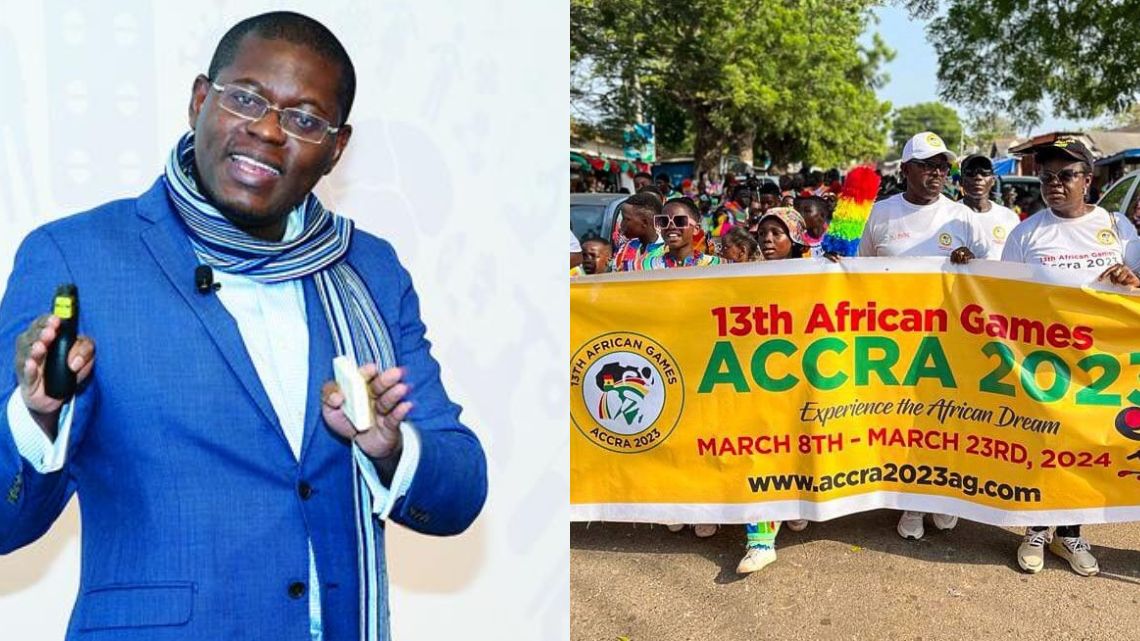
Despite offering such enhancements, Bornan’s system cost less than half of what Ghana paid Atos for the 2023 African Games.The 2023 African Games, held from March 8 to March 23 under the theme “Experience the African Dream,” attracted over 5,000 athletes and officials competing in 22 sporting disciplines.
Mr Simons’ post has sparked a debate about whether Ghana’s procurement process was based on a competitive tender and whether the country received value for money.
“If the Parliamentary inquiry at the Public Accounts Committee is serious, MPs should request all contracts & publish them for all of us to scrutinize,” he urged.
These concerns align with recent statements from Kobena Mensah Woyome, Chairman of Parliament’s Select Committee for Youth, Sports, and Tourism.
Woyome, in an interview with JoySports, revealed that Ghana spent over $4 million on the Games Management System for the African Games.
He questioned the high cost and expressed doubts about what was delivered, stating that the accreditation process and overall system performance did not reflect the value of such a large expenditure.
“Even the games management system itself…the cost of putting it together and the standard we know at continental events—it just doesn’t add up,” said the South Tongu MP.
He added, “For instance, the accreditation process and the tags given…we did not see anything extraordinary. But do you know how much we spent? As we are told, it was $4.5 million for that. So, what actually went into it?”
Woyome further disclosed that he had written to Atos Information Technology, the company responsible for providing the system, seeking clarification on how the funds were utilized. Six months after the event concluded, neither the Local Organizing Committee nor the Sports Ministry has provided a detailed breakdown of the expenditure, despite repeated assurances to do so.
As pressure mounts, Ghanaians are eagerly awaiting more details on the allocation of funds and whether the contract awarded truly represented value for money.
Ghana rented a Games Management System from Atos, the French ICT consulting giant, for $4.5m when it hosted the Africa Games.
Was this based on a competitive tender?
Atos bid to provide a similar system for the Mediterranean Games. It offered more than just accreditation.… pic.twitter.com/eUutugGoUl
IMANI Africa’s Honorary Vice President, Bright Simons, has revealed that the government now faces an additional $112 million payment to a subsidiary of Swiss energy trading giant, Trafigura, due to mounting interest on an unresolved judgment debt.
“Despite paying nearly $100 million of the original judgment debt, which was less than $140 million, the outstanding balance remains over $112 million today and continues to rise daily,” Mr Simons wrote.
He criticized the government’s approach, noting that the decision to stretch out the payment schedule is exacerbated by the high interest rate.
“The interest at that time was about 6.2%. Today, it would have been more than 11%,” Mr Simons revealed.
The judgment debt stems from a dispute between the Ghanaian government and the Ghana Power Generation Company (GPGC), a subsidiary of Trafigura, over a power purchase agreement that Ghana unilaterally terminated in 2018.
In 2015, the government entered an agreement with an Italian-owned company, Ghana Power Generation Company (GPGC), with the goal of producing 107 megawatts of electricity between two plants.
GPGC proceeded to court and in January 2021, an arbitration panel in London ruled in favour of GPGC, ordering Ghana to pay $134,348,661 in damages. Despite partial payments, Ghana still owes over $111 million, with interest continuing to accumulate.
Mr Simons pointed out that Ghana’s failure to meet critical deadlines to appeal the UK tribunal’s ruling has worsened the situation.
The District of Columbia Court in the U.S. recently ordered Ghana to pay the outstanding amount plus post-judgment interest after GPGC sought enforcement of the judgment.
IMANI’s Vice President also emphasized that the events leading to the termination of the contract and the government’s subsequent handling of the arbitration raise serious concerns about governance and accountability in Ghana.
“The chain of events… raises critical concerns about the quality of governance and accountability in Ghana,” he stated in his article.
Ghana’s Attorney General and Minister of Justice, Godfred Yeboah Dame, has clarified the situation, stating that no new judgment has been made against Ghana by a U.S. court.
During an interview on Citi FM on August 21, 2024, Mr. Dame explained that the $134 million award was given in 2021, and the government has been working to meet its payment obligations since then.
“It is the failure to exhaust payment which has led the company to seek enforcement orders in other jurisdictions,” Dame clarified, adding that there has been no fresh judgment against Ghana.
“It is only an enforcement order… due to a failure to pay a judgment debt that accrued way back in January 2021,” he said.
Bright Simons, Honorary Vice President of IMANI Africa, has claimed that the Royal Ghana Gold Refinery celebrated as a significant milestone in Ghana’s efforts to add value to its mineral resources, is a “hoax” designed to revive the controversial Agyapa royalties deal, which was previously shelved due to public outcry.
The refinery, a joint venture between Rosy Royal Minerals of India and the Bank of Ghana—with the latter holding a 20% stake—boasts the capacity to refine 400 kilograms of gold per day. Initially, it will source gold dore from small-scale and artisanal miners, with plans to secure licenses for processing gold from large-scale mining operations in the future.
However, Simons has raised significant concerns, questioning the financial capacity and expertise of Rosy Royal Minerals, the supposed investor partnering with the Bank of Ghana.
Simons revealed that Rosy Royal Minerals, a company that operates small quarries in a few states in India, is financially unstable and not equipped for such an ambitious venture.
He pointed out that the company’s latest financial statements show meagre revenues of just $3,000, alongside losses amounting to $250,000. Given this financial backdrop, Simons questioned how such a company could afford to invest the $20 million claimed to be involved in the refinery.
Moreover, Simons alleged that the Bank of Ghana, rather than the investor, would likely bear the financial burden for the refinery, as Rosy Royal Minerals lacks the necessary capacity.
He also expressed suspicion that the Royal Ghana Gold Refinery could be a front to control Ghana’s gold resources through the Bank of Ghana’s Domestic Gold Purchase Programme.
According to him, this program might be unfairly channelled through the new refinery, despite the existence of other established facilities in the country, which raises further questions.
Drawing a connection to the Agyapa deal, Simons warned that the government might be using this new venture to indirectly capture a significant portion of Ghana’s gold resources.
In an interview on JoyNews, he explained: “Initially, it was supposed to be a PPMC refinery through a public-private partnership. The refinery actually based in Diamond House. What we subsequently learnt is that Bank of Ghana is picking up PPMC’s role and they are linking the whole programme to the Gold Purchasing Programme.
Initially, it was all about this PR doesn’t make sense. There are existing refineries. Why are you step-siding all of those refineries to go for this new one?
That made me pause and think. If you have all these refineries in Ghana, why select this specific new one which is not even the biggest or sophisticated one in Ghana? That got us digging. We learnt that the Bank of Ghana is going to shift the Gold Purchasing Programme to this…that is a huge advantage to be given to a brand new refinery with no track record when there are others who have been trying to make this work in this country for a while.
We then realised that the company that it says is coming to partner with the Bank for Ghana to do this refinery work does not have the capacity at all. They run some quarries in a few states in India. It is a pretty small country. We also find out that they actually don’t have any personnel at the Royal Ghana Gold refinery.
Who has that? It turns out it is a small consultancy…in India based in New York called Rare Tech. This is basically a one-man shop, owned by Sandeep Chadha. Sandeep Chadha is the technical person actually doing it but he has nothing to do with the company said to be handling this since we are partnering with the government.
That raises a lot of fascinating issues. Some independent consultant running this. As you know, PPMC is chaired by the Eastern Region Chairman of the ruling party and he chairs this new venture. So we said let’s find out more about Rosy. So we commissioned an inquiry by IMANI and we got huge amount of information.
Apart from what is publicly known which is, it is a quarry and not even a gold mining company or even talk of a gold refinery. It is also a company struggling financially and given that all our refineries are struggling. The smaller ones are doing well and the bigger ones are struggling.
Its last audited financial statement The company made 3,000 dollars in revenue and made 250,000 dollars in losses. How would such a company want to invest 20 million dollars? We examined the company’s book in grid details. The company has never made any investment overseas, worth any amount to be interesting. And because as you know, you cannot lie to your auditors if you are investing money overseas, either in a joint venture or subsidiary, you have to tell your auditors.
We searched all the audited books for the last 6 years in which this refinery has been under reconstruction. This refinery started reconstruction in 2018. So during that period if this company had made any investment in this local refinery, it would be in its books. It is not. We are confident to say Rosy Royal is not the investor.
In what way does it get the 80 per cent? We did a forensic audit, commissioned by the government to explain two things. One is how did Rosy Royal come to own 80 per cent and number 2, to audit the actual investment. We have inside reports saying the 20 million or 25 million dollars is not true. So that means that far less has been invested in this upfront refinery.
This is beginning to look a bit scandal now. It looks like somebody had an intention to position this refinery as grand so they can put the Ghana Gold programme under it and use this as a mechanism to control the Purchasing Programme.
If all of a sudden, every Gold miner has to now sell, I mean the small scale refinery as the beginning and the large-scale refineries are being asked to sell 20 per cent to the Bank of Ghana. If all of it is to go to this refinery and they take delivery of it, that is capturing Ghana’s Gold.
So the first question to ask is why not the other refineries? Then you begin to fear this refinery could be the front through which somebody captures mandatory of a portion of Ghana’s Gold when we have been fighting a battle against Agyapa for several years now. It looks like this is a back door to create another Agyapa.”
According to him, since the company does not have the financial capacity, the onus will lie on the Bank of Ghana to engage in the necessary investment for the mining and refining of the Gold.
I spoke to Bright Simons (@BBSimons) earlier about IMANI's concerns about the new refinery, earlier falsely touted as the only in the country. Interesting revelations and claims that this is Agyapa through the backdoor.
Asap Vasa, Sahara Royal Gold Refinery, and Gold Coast Refinery are the known gold refineries existent in the country.
During the commissioning ceremony of the Royal Ghana Gold Refinery, Vice President Bawumia emphasized the potential of the refinery to boost local job creation, retain more economic value within Ghana, and strengthen the national currency.
He also highlighted the Bank of Ghana’s Domestic Gold Purchase Programme (DGPP), launched in 2021, as part of the government’s broader strategy to position Ghana as Africa’s gold hub.
In June 2022, the Deputy Minister for Lands and Natural Resources, responsible for Mines, George Mireku Duker disclosed that Ghana’s newly constructed Gold Refinery, Royal Gold Ghana is set and ready to be commissioned by August 2022 by the President of the Republic, Nana Addo Dankwa Akufo-Addo.
The Deputy Minister made this known when he paid a working visit on behalf of the Sector Minister, Hon. Samuel A. Jinapor to inspect the Refinery at the Precious Minerals Marketing Company (PMMC) premises in Accra, on Tuesday, 28th June, 2022.
The reason for the two-year delay is yet to be made public.
The Agyapa royalties deal
The government deemed this as an “innovative financing solution” to help ease the country’s debt crisis, but it valued the gold rights at far less than they could be worth. The opposition party and civil society groups criticised the deal.
In November 2020, the special prosecutor publicly released a report outlining suspected incidences of rigging and corruption, including opening doors for illicit financial flows and money laundering. Furthermore, the report found that millions of dollars were already paid out to companies without legally required approvals.
Later that month, in response to the special prosecutor’s report, Ghana’s President Nana Akufo-Addo instructed authorities to review the transaction documents and return the proposal back to the parliament for approval. After this, the Agyapa deal stalled as the public turned against the deal in the lead-up to the December 2020 general elections, and the incumbent government then lost their majority. The current government alluded to a reconsideration of the Agyapa deal in its 2022 budget presentation to the parliament. Without any public consultation to date, it’s not clear if concerns will be addressed in the next iteration of the deal.
In December 2020, the Ghana Integrity Initiative, the Ghana Anti-Corruption Coalition and Transparency International brought the case before the ECOWAS Court of Justice, arguing that the deal is in violation of Article 21 of the African Charter on Human and Peoples’ Rights, which states that all peoples are entitled to determine how their wealth and natural resources are disposed. Co-applicants also argued that the process disregarded the rights of the people of Ghana to consult and have their concerns addressed prior to execution.
President Akufo-Addo ordered the suspension of the Agyapa deal following a public outcry in 2021.
After more than a year since first hearing the case brought by the Ghana Integrity Initiative, the Ghana Anti-Corruption Coalition and Transparency International, the judges in 2023 ruled in favour of the government of Ghana.
Despite the ECOWAS court’s ruling, the deal remains suspended.
In February 2024, it emerged that the government spent $12 million on the suspended Agyapa royalties deal. The CEO of the Minerals Income Investment Fund, Edward Nana Yaw Koranteng, disclosed this at a Public Accounts Committee (PAC) Sitting.
The CEO of the Minerals Income Investment Fund said the money was expended on the processes to issue the initial public offering on the London Stock Exchange before the suspension.
Earlier on, Bright Simons raised critical concerns about the recently commissioned Royal Ghana Gold Refinery in Accra, arguing that refining gold into 24-carat bars does not constitute true value addition, contrary to claims by Vice President Dr. Mahamudu Bawumia.
Mr Simons asserts that the real value addition in the gold industry lies in creating finished products like jewelry, rather than simply refining raw gold into bullion.
In a post on X, Simons expressed skepticism about the promises made by the government regarding the economic benefits of the new refinery.
“I was surprised to read in the international press news that Ghana was launching its ‘first commercial gold refinery.’ I was even more surprised to hear the Vice President argue that this new refinery will enable ‘value addition,’ which in turn will lead to hundreds of jobs, and the strengthening of the Cedi,” Simons wrote.
Reuters reported that Ghana has launched its first commercial gold refinery in Accra, marking a significant step in the country’s effort to add value to its gold production and increase national revenue.
Simons pointed out that this is not the first time such promises have been made. He recalled similar claims made when other gold refineries were launched in Ghana, including Asap Vasa in 2013, Sahara Royal Gold Refinery in 2015, and Gold Coast Refinery in 2016. Despite these earlier initiatives, the country continues to grapple with the same challenges in achieving real value addition in the gold sector.
He emphasized that gold refining, as it is currently practiced in Ghana, is a low-margin and high-volume business, which is inherently unprofitable when confined to converting mined gold into bullion.
Citing the example of one of the world’s largest refineries in Perth, Australia, Mr Simons noted that such operations make a margin of just 0.17%. In Ghana, where the cost of capital is high, even achieving a 10% operating profit margin is difficult.
Moreover, he highlighted the structural challenges facing Ghana’s gold refining industry, such as the long-standing relationships between large-scale miners and international refineries, which make it difficult for local refineries to secure significant volumes of raw gold. As a result, these refineries often rely on small-scale miners, leading to lower-quality dore (raw) gold that requires additional processing.
He also warned about the environmental and financial pitfalls associated with refining operations in Ghana. Citing the example of Sahara Royal Gold Refinery, Mr Simons mentioned the environmental disputes it faced with nearby residents and the financial difficulties it encountered, which led to the issuance of dud cheques.
Another significant hurdle for Ghana’s refineries is the lack of certification from bodies like the London Bullion Market Association (LBMA). Without such certification, the refined gold must be sold at a discount to less rigorous buyers, further squeezing profit margins. Simons explained that achieving and maintaining LBMA certification is a costly and time-consuming process, with insurance and security costs further eroding profitability.
Bright Simons, Honorary Vice President of IMANI Africa, has revealed startling details about the Royal Ghana Gold Refinery, a project touted as a major step in Ghana’s efforts to add value to its mineral resources.
Simons claims that the technical aspects of the refinery are being managed by a small, independent consultancy, Rare Tech, owned by Dr Sandeep Chadha, rather than the primary partner, Rosy Royal Minerals of India, raising significant concerns about the project’s legitimacy and operational capacity.
The Royal Ghana Gold Refinery, a joint venture between Rosy Royal Minerals and the Bank of Ghana—with the latter holding a 20% stake—has the capacity to refine 400 kilograms of gold per day.
However, in an interview with JoyNews’ Kwaku Asante, Simons disclosed that the company allegedly responsible for partnering with the Ghanaian government does not have the technical or financial capacity to run such an operation.
According to Simons, “The company that it says is coming to partner with the Bank of Ghana to do this refinery work does not have the capacity at all. They run some quarries in a few states in India. It is a pretty small company.”
Upon further investigation, Simons and his team at IMANI discovered that the actual technical work for the refinery is being conducted by a small consultancy based in New York and not by Rosy Royal Minerals itself.
“It turns out it is a small consultancy in India based in New York called Rare Tech. This is basically a one-man shop, owned by Sandeep Chadha,” Simons explained.
This revelation suggests that the core technical operations of the refinery are in the hands of a single individual, raising concerns about the project’s sustainability and the expertise being brought to the table.
On its website, the Royal Ghana Gold Limited says Dr Chadha is “responsible for running all facets of the business” and not Rare Tech. Dr Sandeep is referred to as the Chief Executive Officer (CEO) of the company.
Simons also pointed out that Rosy Royal Minerals, the supposed main partner in the venture, has no personnel directly involved in the operations of the refinery.
This further supports the notion that the actual technical and operational work is outsourced to an external party with minimal resources.
“We also find out that they actually don’t have any personnel at the Royal Ghana Gold refinery,” Simons said, highlighting the disconnect between the company’s supposed role and its actual involvement.
The implications of this arrangement are troubling, particularly given the high stakes involved in managing Ghana’s gold resources.
Simons expressed concern that this setup could be part of a larger scheme to exert control over the Bank of Ghana’s Domestic Gold Purchase Programme.
“This is beginning to look like a scandal now. It looks like somebody had an intention to position this refinery as grand so they can put the Ghana Gold programme under it and use this as a mechanism to control the Purchasing Programme,” he warned.
In light of these revelations, Simons urged the public and relevant stakeholders to scrutinize the Royal Ghana Gold Refinery project more closely. He emphasized the need for transparency and accountability, especially given the questionable nature of the technical and operational arrangements surrounding the refinery.
In conclusion, Simons’ revelations cast significant doubt on the legitimacy and effectiveness of the Royal Ghana Gold Refinery, calling into question whether the project can truly deliver on its promises of adding value to Ghana’s mineral resources and boosting the national economy.
I spoke to Bright Simons (@BBSimons) earlier about IMANI's concerns about the new refinery, earlier falsely touted as the only in the country. Interesting revelations and claims that this is Agyapa through the backdoor.
Per checks by The Independent Ghana, Sandeep Chadha is a member of the Rosy Royal Company Board, per the company’s website, indicating some connection to Rosy Royal Minerals.
It is imperative to note that Sandeep Chadha has a tie with the Rosy Royal Company Board and not Rare Tech.
Profile of Sandeep per Rosy Royal Minerals
Sandeep is an MBA (Masters In Business Administration) degree from UNITED KINGDOM. He has a total work experience of 24 years in International business.
Mr. Chadha has also worked as Senior Trade Analyst cum Deputy Trade Commissioner for more than Eighteen years in New Delhi office of the ITALIAN TRADE COMMISSION (www.ice.it). He has a very rich experience in Corporate Affairs & International Business. He has a very deep and rich experience in the Italian Trade Commission, the trade promotion body of the Italian Government.
He has initiated and implemented various large projects in the field of Stone Sector, Automobile components, Leather, Textiles, Ceramics, Power & Infrastructure industries. The international experience helps Sandeep to work strategically on International and specially large sized Indo-European projects.
Rare Tech
Rare Tech, per its website, is one of India’s leading consulting firms with 28 years of excellence in strategy and management Consulting. We serve clients across India, Europe and Africa. We are a dynamic group of 15+ professionals led by Mr. Sandeep Chadha (MD) who has been with firm since inception, making it the India’s boutique consulting practice.
“Our sector expertise spans Precious metals (Gold Refineries); Mechanical Engineering, Automobiles, Pharmaceuticals/Chemicals, Consumer Goods and Retail, Infrastructure, Engineering, Metals, Building Industry (including Ceramics & Stone sector) and Healthcare.”
A click on the latest update however shows a dead link.
Also, clicks on “About Us”, “Services”, “Consultancy“, show dead links.
Vice President of IMANI Africa, Bright Simons, has raised critical concerns about the recently commissioned Royal Ghana Gold Refinery in Accra, arguing that refining gold into 24-carat bars does not constitute true value addition, contrary to claims by Vice President Dr. Mahamudu Bawumia.
Mr Simons asserts that the real value addition in the gold industry lies in creating finished products like jewelry, rather than simply refining raw gold into bullion.
In a post on X, Simons expressed skepticism about the promises made by the government regarding the economic benefits of the new refinery.
“I was surprised to read in the international press news that Ghana was launching its ‘first commercial gold refinery.’ I was even more surprised to hear the Vice President argue that this new refinery will enable ‘value addition,’ which in turn will lead to hundreds of jobs, and the strengthening of the Cedi,” Simons wrote.
Reuters reported that Ghana has launched its first commercial gold refinery in Accra, marking a significant step in the country’s effort to add value to its gold production and increase national revenue.
Simons pointed out that this is not the first time such promises have been made. He recalled similar claims made when other gold refineries were launched in Ghana, including Asap Vasa in 2013, Sahara Royal Gold Refinery in 2015, and Gold Coast Refinery in 2016. Despite these earlier initiatives, the country continues to grapple with the same challenges in achieving real value addition in the gold sector.
He emphasized that gold refining, as it is currently practiced in Ghana, is a low-margin and high-volume business, which is inherently unprofitable when confined to converting mined gold into bullion.
Citing the example of one of the world’s largest refineries in Perth, Australia, Mr Simons noted that such operations make a margin of just 0.17%. In Ghana, where the cost of capital is high, even achieving a 10% operating profit margin is difficult.
Moreover, he highlighted the structural challenges facing Ghana’s gold refining industry, such as the long-standing relationships between large-scale miners and international refineries, which make it difficult for local refineries to secure significant volumes of raw gold. As a result, these refineries often rely on small-scale miners, leading to lower-quality dore (raw) gold that requires additional processing.
He also warned about the environmental and financial pitfalls associated with refining operations in Ghana. Citing the example of Sahara Royal Gold Refinery, Mr Simons mentioned the environmental disputes it faced with nearby residents and the financial difficulties it encountered, which led to the issuance of dud cheques.
Another significant hurdle for Ghana’s refineries is the lack of certification from bodies like the London Bullion Market Association (LBMA). Without such certification, the refined gold must be sold at a discount to less rigorous buyers, further squeezing profit margins. Simons explained that achieving and maintaining LBMA certification is a costly and time-consuming process, with insurance and security costs further eroding profitability.
Additionally, small-scale miners are often reluctant to sell their gold at a discount to local refineries when they can obtain better prices from international aggregators in countries like India and Dubai, where tax incentives make the import of raw gold more profitable.
Mr Simons argued that rather than focusing on refining gold into 24-carat bars, Ghana’s policymakers should prioritize real value addition by supporting the production of finished products like jewellery.
“For gold, the really serious value-addition play is jewellery, not refining into 24-carat bars,” Simons stated.
He also pointed out that the Precious Minerals Marketing Company (PMMC) was originally established in Ghana to lead such initiatives and suggested that government policy should focus on helping PMMC succeed in this area.
Despite the concerns raised by Simons, the government has celebrated the opening of the Royal Ghana Gold Refinery as a significant milestone in its efforts to add value to the country’s mineral resources. The refinery, which can process 400 kilograms of gold per day, is a joint venture between Rosy Royal Minerals of India and Ghana’s central bank, which holds a 20% stake.
During the commissioning ceremony, Vice President Bawumia emphasized the potential of the refinery to boost local job creation, retain more economic value within Ghana, and strengthen the national currency. He also highlighted the Bank of Ghana’s Domestic Gold Purchase Programme (DGPP), launched in 2021, as part of the government’s broader strategy to position Ghana as Africa’s gold hub.
However, Simons’ critique suggests that achieving these goals will require more than just refining gold. It will demand a shift in focus toward higher-value products and a concerted effort to address the structural challenges facing Ghana’s gold industry.
I was surprised to read in the international press news that Ghana was launching its "first commercial gold refinery".
I was even more surprised to hear the Vice President (Veep) argue that this new refinery will enable "value addition", which in turn will lead to hundreds of… pic.twitter.com/303yEzNBH0
Vice President of IMANI Africa, Bright Simons, has responded to the findings of the Office of the Special Prosecutor’s (OSP) investigation into the Airbus bribery scandal, a case that has attracted widespread public attention.
The OSP, led by Special Prosecutor Kissi Agyebeng, recently concluded its probe, determining that former President John Dramani Mahama, who was identified as “Government Official 1” in the UK court and “Individual 1” in the US court, did not engage in any corrupt activities related to the Airbus case.
During a media briefing, Mr. Agyebeng confirmed that while Mahama was closely involved in the transactions under scrutiny, the investigation did not uncover any evidence of direct bribery by Airbus involving the former president through his close relative.
The Special Prosecutor emphasized that although Mahama’s role in the matter might raise suspicions due to his supervisory and oversight responsibilities, the four-year investigation found no grounds for criminal charges within Ghana’s jurisdiction.
Reacting to these findings, Bright Simons took to social media to summarize the outcome.
He noted that the OSP’s conclusion aligns with earlier reports by the British press, which identified the key figures in the Airbus saga but found no evidence of criminal wrongdoing by the former president.
Mr Simons highlighted that the OSP’s efforts were hampered by limited cooperation from British authorities and unsuccessful attempts to engage Interpol in apprehending certain collaborators.
“Airbus’ acceptance of liability for corruption cannot extend to the individuals cited in the British and American investigations,” Simons wrote, underscoring the OSP’s conclusion that there is no basis for criminal prosecution in Ghana.
He concluded that with no evidence of bribery and corruption, the Airbus scandal is effectively closed as far as the OSP is concerned.
“In short, the Airbus issue is closed. There is no evidence of bribery and corruption,” he wrote.
Ghana's Special Prosecutor (OSP) says that it is in the public interest to disclose that Ghana's immediate past President & his close relative are the key actors in the famous Airbus saga.
However, the OSP did not find that the former President’s actions constituted corruption,…
Vice President of IMANI Africa, Bright Simons, has emphasised that the trial of Dr. Cassiel Ato Forson, former Deputy Finance Minister and Minority Leader, over the ambulance issue is a blatant example of political persecution.
Simons argued that the trial aims to weaken democratic accountability and, in his article “Ghana’s Ambulance Saga is Crazier Than You Think,” he suggested that Dr. Forson has been unfairly targeted.
“Coming in the wake of the government’s biggest second-term crisis in the newly split parliament, the prosecution was immediately condemned by some independent analysts, myself included, as pure political persecution and an attempt to undermine democratic accountability,” he stated.
He further stated, “It was apparent then, as it is now, that the MP had been unfairly targeted, and some of us said so.”
On Tuesday, July 30, the Court of Appeal acquitted and discharged Dr Forson, thereby overturning the trial Court’s order for him to present his defence in the case.
The ambulance case involving Dr. Cassiel Ato Forson, former Deputy Finance Minister, and businessman Richard Jakpa centers on allegations of financial misconduct in the procurement of ambulances for Ghana’s Ministry of Health.
The case dates back to 2014, when the Ministry of Health signed a contract with Big Sea General Trading Limited for the supply of 200 ambulances. Dr. Forson, who was then the Deputy Finance Minister, authorised the release of €2.37 million for the purchase of the first 30 ambulances.
The prosecution claims that these ambulances were defective and did not meet the required specifications, leading to financial loss to the state.
Richard Jakpa, involved in facilitating the transaction, is also accused of playing a role in the procurement process that allegedly led to the delivery of substandard vehicles.
Both Dr. Forson and Jakpa face charges, including wilfully causing financial loss to the state, and their trial has sparked debates over whether it is a legitimate pursuit of accountability or a case of political persecution.
Bright Simons, Honorary Vice President of IMANI Africa, has highlighted the untapped potential of street hawkers as a powerful yet undervalued marketing and distribution channel.
In a recent post on X, Simons emphasized that street hawkers have emerged as a cost-effective advertising medium for new brands navigating highly competitive markets.
He stated, “I once wrote about why I feel that itinerant traders (aka hawkers) are a seriously underrated & underutilised marketing & distribution channel. Now, they’ve become a low-cost advertising channel for new brands in competitive cutthroat markets like insurance too.”
Mr Simons referred to an article titled “Profit-making Idea: Converting Street Hawkers into Powerful Marketing Activators.” He was asked by How we made it in Africa, to identify an untapped business opportunity in Africa and responded with his vision for leveraging street hawkers.
“Someone has to build a solution that turns hawkers into a far more productive activation force for businesses. Such a solution shall blend micro-incentives, biometrics, peer-to-peer meshes and similar tools to create a much more generalised agency platform, than is the case with the various [multi-level marketing] schemes milling about in urban Africa,” Simons suggested.
He elaborated on the challenges faced by African business models that rely on large teams for door-to-door activations, noting that these approaches are often costly and inefficient. Simons proposed that companies could benefit from collaborating with an extensive network of experienced micro-entrepreneurs, such as street hawkers, to reduce costs and share risks.
“The best way out is for companies to share the costs and risks by using an organically formed network of micro-entrepreneurs hardened by experience and relatively skilled in customer interfacing. Converting the teeming hawkers on the streets of Accra, Nairobi, and Lagos into powerful brigades of marketing activators can seriously disrupt many industries, including banking, private health/education, hospitality, insurance, and more, that are currently struggling for their next infusion of animal spirits,” he concluded.
I once wrote about why I feel that itinerant traders (aka hawkers) are a seriously underrated & underutilised marketing & distribution channel. Now, they've become a low-cost advertising channel for new brands in competitive cutthroat markets like insurance too. 😉🏃🏾🏃🏾#Smirkingpic.twitter.com/sDfORXDZul
Bright Simons, Honourary Vice President for IMANI Africa, has voiced his profound disappointment with Ghana’s Attorney General, Godfred Dame, following the Court of Appeal’s decision to acquit Minority Leader Dr. Cassiel Ato Forson and businessman Richard Jakpa in the €2.3 million ambulance case.
Mr Simons expressed his discontent in a candid post on X, reflecting on his previously high regard for Dame’s legal tenacity when he served as Deputy Attorney General. He wrote:
“I will be humble & admit it. I was one of the people who were mesmerised by Ghana’s Attorney General when he was the Deputy. It was his dogged determination in pursuing the retrieval of the Woyome funds that earned my respect. I thought it was principle & national interest. Now I know better: he is driven by pure partisanship! National interest be damned. So disappointed,” he wrote.
I will be humble & admit it. I was one of the people who were mesmerised by Ghana's Attorney General when he was the Deputy. It was his dogged determination in pursuing the retrieval of the Woyome funds that earned my respect. I thought it was principle & national interest. Now I… pic.twitter.com/whqAggEGLa
The Court of Appeal recently overturned a High Court ruling that had required Dr. Forson and Jakpa to present their defenses in connection with charges of causing financial loss to the state through the procurement of unsuitable ambulances between 2014 and 2016. The appeal court’s verdict declared that the prosecution had failed to present sufficient evidence and criticized the trial judge’s decision as erroneous.
The three-judge panel concluded that any financial loss associated with the ambulance procurement should be attributed to the Ministry of Health’s recklessness, rather than the accused individuals. They noted, “If there is any financial loss, that was based on the Health Ministry’s recklessness and should be blamed on the Ministry of Health. If they worked in the interest of the state, the whole ambulance issue would have been dealt with. Both appellants have made a case for them to be acquitted and discharged.”
In response, Attorney General Godfred Dame condemned the appellate court’s decision as undermining public accountability and the rule of law. He criticized the ruling as “perverse” and “grossly unfair to the nation,” and vowed to file an appeal to counteract what he termed as an erroneous decision.
Meanwhile, the High Court has announced that it will not continue with the case involving Dr. Forson and Jakpa, following the Court of Appeal’s ruling.
IMANI Africa Vice President, Bright Simons, has recently taken to social media to criticize the prevailing attitude among many business leaders in Africa regarding advocacy and activism.
His comments follow a statement by Aliko Dangote, Africa’s richest man, who has vowed to expose malfeasance in government if necessary.
Mr Simons reacted to Dangote‘s claim that some oil traders are supplying substandard products. In a post on X (formerly Twitter), Simons highlighted a widespread reluctance among African business elites to engage in advocacy for good governance, even when such actions are crucial for societal progress.
“Africa’s richest man says he won’t keep quiet any longer & will expose malfeasance in govt if necessary. Most business folks in Africa think that supporting advocacy & activism for good governance is unwise. Okay. When things go off the rails, just step into the fray yourself,” Mr Simons wrote.
His remarks highlight a broader issue in African business circles, where a significant number of business leaders prefer to avoid involvement in political and social advocacy, fearing potential backlash or harm to their interests.
By contrast, Simons advocates for active participation in governance and transparency efforts, arguing that silence or detachment can lead to unchecked corruption and inefficiency.
Africa's richest man says he won't keep quiet any longer & will expose malfeasance in govt if necessary. Most business folks in Africa think that supporting advocacy & activism for good governance is unwise. Okay. When things go off the rails, just step into the fray yourself. pic.twitter.com/EsKfTz3fHQ
IMANI Africa’s Vice President, Bright Simons, has called on the government to clarify how they plan to transport Basic Education Certificate Examinations (B ECE) papers back to the West African Examinations Council (WAEC) once students have completed their exams.
His inquiry follows the government’s strategy of using drones to deliver examination materials to remote areas in the Ashanti Region.
Hence, the Vice President of IMANI Africa seeks to know how the government intends to return the completed exam papers to WAEC after the exams comes to an end.
“This year’s version of “drones were used to carry exam papers to cut-off areas in Ghana. Question: after the students finished writing the exams, how were the papers sent to WAEC? By Obinimic angels?,” Mr Simons quizzed govt in a post on X.
Examination materials were sent to hard-to-reach areas in the Ashanti Region using drones to prevent delays, specifically to Sekyere Afram Plains.
This was announced by the Regional Education Directorate as an initiative aimed at guaranteeing that all candidates, no matter their location, begin their exams promptly.
This year's version of "drones were used to carry exam papers to cut-off areas in Ghana". Question: after the students finished writing the exams, how were the papers sent to WAEC? By Obinimic angels? 😁 Meanwhile, the arrears from last year haven't been fully cleared. 🤦🏽♂️ pic.twitter.com/8EE4oaDZnc
Accra High Court’s ruling on Friday, July 5, denied Fidelity Bank’s request to dismiss allegations inBright Simons’ defense related to procurement irregularities in their ongoing defamation case.
The court’s decision allows Simons to continue with his counter-claim against the bank in their legal dispute.
The conflict arose when Bright Simons echoed claims by energy expert Benjamin Boakye on social media platform X (formerly Twitter), suggesting improprieties in forex transactions between Fidelity Bank and the Electricity Company of Ghana (ECG).
In response, Fidelity Bank filed a defamation lawsuit against Simons.
In a surprising twist, Simons not only defended his statements but also countersued Fidelity Bank, arguing that the transactions in question breached the Public Procurement Act and other national policies.
He contended that Fidelity Bank should not profit from such transactions, particularly given the alleged conflicts of interest involving a senior bank executive who sits on ECG’s board and holds political influence.
Fidelity Bank attempted to have these procurement-related allegations excluded from the case, arguing they were criminal matters unsuitable for a civil defamation trial.
However, the presiding Judge disagreed with Fidelity’s argument, citing legal precedents supporting Simons’ right to raise these issues in his defense and pursue a public interest lawsuit.
The Judge referenced several legal cases to support her decision, affirming that Simons’ approach and his counter-claim against Fidelity Bank were legally sound. As a result of rejecting Fidelity’s application, she ordered the bank to pay costs totaling GHS 3,000.
AudreyGrey Legal, Tax, and Professional Services Firm in Accra represent Bright Simons, while Fidelity Bank is represented by the chambers of Dominic Ayine, the NDC MP for Bolgatanga East.
While the Judge did not issue further directives, the ruling sets the stage for a complex legal battle between Fidelity Bank and Bright Simons, with both parties preparing for the next phase of litigation.
Background
Fidelity Bank initiated alawsuit against Bright Simons of IMANI Africa on March 25, 2024, following a tweet where he alleged that the bank conducted a dubious foreign exchange transaction with ECG, potentially resulting in financial losses.
Represented by Dominic Ayine, the NDC MP for Bolgatanga East, Fidelity Bank claimed in its amended suit that Simons’ tweet contained false and misleading information, fabricated to tarnish the bank’s reputation.
Simons, who entered his appearance on March 28, 2024, and is represented by the corporate law firm Audrey Grey in Accra, staunchly defended his statements.
He argued that the figures cited in his tweet, as well as those from Benjamin Boakye’s tweet, were sourced from financial documents provided by ECG’s own financial department to the Cash Waterfall Mechanism committee at the PURC.
In a preliminary hearing on May 20, 2024, Simons refuted all allegations made by Fidelity Bank, maintaining that his statements were based on credible sources and were not intended to defame the bank.
Bright Simons, the Honorary Vice President of IMANI-Africa, has stated that NextGen Infraco holds an exclusive license to provide 5G services in Ghana for the next ten years.
He elaborated that this would grant NextGen Infraco a monopoly in the telecommunication sector. During his appearance on JoyNews’ Newsfile, Mr Simons revealed that in 2021, MTN applied for a 5G license but was denied access.
As such, he said “We are working very carefully and diabolically to construct a new monopoly that controls multiple telecom access, that for us is very dangerous.”
Bright Simons further noted that this development would further fragment the telecommunications sector. Additionally, he pointed out that shares of NextGen Infraco are owned by companies involved in a questionable deal.
Vice President of IMANI Africa, Bright Simons,revealed that Vice President Mahamudu Bawumia’s recent announcement to launch an e-gate project at Ghana’s main airport would amount to blatant misappropriation of donor cash.
He claims that the project has twice received funding from the World Bank and has been declared “complete & successful.”
Dr. Bawumia announced the remark while outlining planned technical developments meant to expedite immigration procedures during a speech to clergy in Cape Coast at the beginning of his regional trip.
“In fact, before the end of this year, if you arrive in Ghana at Kotoka Airport, you don’t even need to go to an immigration officer. We are putting together the e-gates.
“You put your Ghana Card; it will open for you, and you’ll pass and enter. The e-gates will come into service in Ghana before the end of this year. In Ghana, before the end of this year,” Dr. Bawumia stressed.
In a post on X (June 3) addressing the development, Simons wrote: “If this new e-gate project uses a single pesewa of Ghanaian money, then it will be the most brazen abuse of @WorldBank money ever in the history of the world.
The truth is that the World Bank has paid TWICE for this same project. And recorded the project as complete & successful.”
He posted a link to an article he wrote in April 2024 under the heading, ‘Is the World Bank saving or harming Ghana?’ to back his claims.
A portion under e-immigration read as follows: “Of the different e-Transform modules, the e-Immigration system presents the most bewildering account.
It was envisaged to deliver automated immigration clearance at the airport (using biometrically-enabled e-gates), digital visa processing, and the phasing out of paper-based procedures across all borders (including land and sea).
“In short, a big deal. The e-gates submodule alone was budgeted at nearly $20 million.
Central to all this was a Secure Border Management System (SBMS) meant to replace a US-donated platform on the grounds of enhanced data security.
“6 years after SBMS was expected to launch, the web version of the US-donated system continues to be the primary immigration clearance solution in use at Ghana’s sole international airport.
“Despite claims to the contrary in the official World Bank recordsabout the project, the fact on the ground is that no SBMS was rolled out.
The $16.3 million e-gates that the official records claim were already functional and just needed to be transferred from terminal 2 to terminal 3 of the international airport, at the cost of an extra $2.9 million, have not been deployed to automate immigration clearance five years on.
“The multi-million-dollar electronic visa management system launched, according to World Bank records, in February 2019, failed to deploy to most of Ghana’s diplomatic missions abroad.
The individual missions have had to engage service providers to build and manage separate systems at their own cost,” he added.
Vice President of IMANI Africa, Bright Simons has voiced concerns over the recent 5G internet service procurement in Ghana.
He highlighted a potential conflict of interest involving Next Gen Infraco, the company awarded the contract, and Integrated Legal Consultants, a law firm implicated in previous contentious tenders.
Simons stated, “The company awarded this juicy contract – Next Gen Infraco – is fronted by Integrated Legal Consultants, the same law firm that fronted for bidders in the murky Kelni GVG tender.”
Ghana's Ministry of Comms has come up with some twisted scheme to foist a 5G monopoly on Ghana. The company awarded this juicy contract – Next Gen Infraco – is fronted by Integrated Legal Consultants, the same law firm that fronted for bidders in the murky Kelni GVG tender. 😡 pic.twitter.com/w6C6OL1NfF
This comment comes amid investigative journalist Manasseh Azure Awuni’s inquiries into the government’s decision to grant Next Gen Infraco Ltd. the contract for Ghana’s 5G infrastructure project.
Awuni’s skepticism stems from the lack of competitive bidding and the timing of the company’s formation, which occurred just a week before receiving presidential approval.
President Akufo-Akufo-Addo "granted Executive Approval on 22nd August 2023". The company handed the deal was formed less than a week before the president's approval. The 5G technology, according to industry experts can be worth hundreds of millions of dollars. pic.twitter.com/2YPkxvVkRw
— Manasseh Azure Awuni (@Manasseh_Azure) May 30, 2024
Awuni questioned, “The company that has been handed the deal was formed less than a week before the president’s approval. The 5G technology, according to industry experts, can be worth hundreds of millions of dollars. Why is it being handed to one company without an auction? Why were different companies not allowed to bid for the contract?”
In contrast, Communications and Digitalisation Minister Ursula Owusu-Ekuful defended the transaction, stating that Next Gen Infraco Ltd. was specifically created to manage the 5G rollout due to a lack of existing companies capable of the task.
Owusu-Ekuful clarified, “This is a special purpose vehicle, and once the government took the decision that we will use a neutral infrastructure company to deliver this service, there is no existing neutral infrastructure company that can deliver it at the moment.”
The situation raises questions about transparency and fairness in the procurement process and the relationship between Next Gen Infraco and entities involved in prior controversial contracts.
Bright Simons, Vice President of IMANI Africa, has responded to the recently released KPMG audit report on the controversial contracts and transactions between the Ghana Revenue Authority (GRA) and Strategic Mobilisation Limited (SML).
The over 300-page report was made public on May 22, 2024, after weeks of the presidency withholding its release, citing provisions of the Right to Information (RTI) law.
Mr Simons, who has been vocal about the need for the full report to be disclosed, highlighted major findings that revealed the deal to be even worse than initially reported based on the documentary that first brought the matter to light.
In a series of posts on X, Simons noted that the earlier summary by the Presidency had major gaps while outlining bombshell findings from his initial analysis of the report.
a. SML received close to 1.5 Billion cedis in payments not 1 Billion per the presidency.
b. KPMG saw the impact of taxes on increasing revenue. Clearly, that wasn’t SML’s work.
c. SML’s magical flowmeters never worked as specified throughout anyway.
d. SML refused to pay taxes on its fees from GRA.
e. Ministry of Finance deliberately refused to do Value for Money evaluation
1/ In the midst of a tense debate about the propriety of a cabinet minister buying majority state-owned hotels, the famous KPMG report on SML is finally released. As suspected, Ghana's Prez's earlier summary has major gaps. A. SML received ~1.5 BILLION GHS not ~1 BILLION GHS. pic.twitter.com/o0CMczLqPt
On April 24, 2024, President Akufo-Addo received a request from the Media Foundation for West Africa (MFWA) under section 18 of the Right to Information Act, 2019 (Act 989) (RTI Act), for a copy of the KPMG report.
The President had commissioned KPMG on December 29, 2023, to conduct an inquiry to gain a clear understanding of the matters in controversy and to be properly advised in making necessary decisions.
Initially, the presidency refused to release the report, citing that the KPMG report contained opinions, advice, deliberations, and recommendations integral to the President’s deliberative process, and thus qualified as exempt information under section 5 (1) (a) and (b) (i) of the RTI Act.
However, a detailed press statement outlining KPMG’s findings and recommendations, as well as the President’s directives to the Ministry of Finance and GRA, was published at the time.
After initially deciding not to release the full audit report by KPMG, the presidency announced in a statement dated May 22 that the report had been released despite earlier exemptions raised under the Right to Information (RTI) Act.
“The President, in the interest of full transparency in governance, openness, and honesty with the public, has decided to waive the privilege under section 5 of the RTI Act and has directed the publication of the KPMG report in full,” the statement signed by Communications Director, Eugene Arhin read in part.
Vice President of IMANI Africa, Bright Simons, has revealed that the government paid Strategic Mobilisation Limited (SML) $4 million annually to verify prices of imported goods when the same service could have been obtained for as little as $5,000.
External Price Verification involves validating the prices for goods, services, or assets by leveraging globally recognised standard databases.
The recently released KPMG audit report on the contract between the Ghana Revenue Authority (GRA) and SML highlighted several discrepancies and inefficiencies in the pricing structure of these services.
In assessing the fairness of SML’s pricing, KPMG compared the contract with leading practice firms offering similar services in other jurisdictions. Their observations include:
Comparators typically operate a subscription model with fees structured annually or monthly, rather than a fixed percentage of the overall transaction value per month (0.07% of the monthly CIF value).
The fee paid under External Price Verification from November 1, 2019, to December 31, 2023, totaled GHC 131,589,863.41 (US$ 15,952,367.59), averaging GHC 2,631,797.27 (US$ 319,047.35) per month.
SML’s variable pricing structure and the inclusion of data collection significantly influenced the service’s cost. KPMG recommended that GRA consider alternative options, such as subscribing directly to databases, which may offer more favorable terms.
Alternatively, renegotiating the payment terms with SML to ensure the pricing structure is equitable and reflects the value received from the Transaction Value Assessment System (TVAS) was also suggested.
GRA is advised to conduct a thorough cost-benefit analysis to determine the most economically viable and efficient approach to external price verification, ensuring fiscal responsibility and maintaining the integrity of the pricing validation process.
SML’s role in external price verification required them to provide an external pricing database and conduct market research to assist the GRA in accessing current prices of imported goods. SML claimed to have granted access to TVAS and stationed two staff members at the Customs Technical Services Bureau (CTSB) in January 2020.
However, due to COVID-19, these staff members were withdrawn in April 2020. Concerns were raised regarding the reliability of SML’s pricing information, which was perceived as inflated or deflated by CTSB.
In May 2020, GRA implemented the Integrated Customs Management System (ICUMS), which includes external price verification capabilities. This created a duplication of the services provided by SML. From April 1, 2019, to December 31, 2019, and April 2020 to January 2, 2024, there was no evidence of external price verification services being offered or utilized by SML and GRA, respectively.
On May 23, 2023, SML provided TVAS system training for CTSB officials and delivered computers in December 2023 to aid GRA’s external price verification activities.
Based on KPMG’s analysis, SML partially delivered on the service requirements, and GRA may not have obtained all the expected benefits from the service. The audit report underscores the need for the government to review and optimize its contracts to ensure value for money and effective service delivery.
Bright Simons, Vice President of IMANI Africa, has responded to the recently released KPMG audit report on the controversial contracts and transactions between the Ghana Revenue Authority (GRA) and Strategic Mobilisation Limited (SML).
The over 300-page report was made public on May 22, 2024, after weeks of the presidency withholding its release, citing provisions of the Right to Information (RTI) law.
Mr Simons, who has been vocal about the need for the full report to be disclosed, highlighted major findings that revealed the deal to be even worse than initially reported based on the documentary that first brought the matter to light.
In a series of posts on X, Simons noted that the earlier summary by the Presidency had major gaps while outlining bombshell findings from his initial analysis of the report.
a. SML received close to 1.5 Billion cedis in payments not 1 Billion per the presidency.
b. KPMG saw the impact of taxes on increasing revenue. Clearly, that wasn’t SML’s work.
c. SML’s magical flowmeters never worked as specified throughout anyway.
d. SML refused to pay taxes on its fees from GRA.
e. Ministry of Finance deliberately refused to do Value for Money evaluation
1/ In the midst of a tense debate about the propriety of a cabinet minister buying majority state-owned hotels, the famous KPMG report on SML is finally released. As suspected, Ghana's Prez's earlier summary has major gaps. A. SML received ~1.5 BILLION GHS not ~1 BILLION GHS. pic.twitter.com/o0CMczLqPt
On April 24, 2024, President Akufo-Addo received a request from the Media Foundation for West Africa (MFWA) under section 18 of the Right to Information Act, 2019 (Act 989) (RTI Act), for a copy of the KPMG report.
The President had commissioned KPMG on December 29, 2023, to conduct an inquiry to gain a clear understanding of the matters in controversy and to be properly advised in making necessary decisions.
Initially, the presidency refused to release the report, citing that the KPMG report contained opinions, advice, deliberations, and recommendations integral to the President’s deliberative process, and thus qualified as exempt information under section 5 (1) (a) and (b) (i) of the RTI Act.
However, a detailed press statement outlining KPMG’s findings and recommendations, as well as the President’s directives to the Ministry of Finance and GRA, was published at the time.
After initially deciding not to release the full audit report by KPMG, the presidency announced in a statement dated May 22 that the report had been released despite earlier exemptions raised under the Right to Information (RTI) Act.
“The President, in the interest of full transparency in governance, openness, and honesty with the public, has decided to waive the privilege under section 5 of the RTI Act and has directed the publication of the KPMG report in full,” the statement signed by Communications Director, Eugene Arhin read in part.
An Accra High Court has adjourned the case between Fidelity Bank and Bright Simons, Vice President of IMANI Africa, to July 4, 2024.
Fidelity Bank’s counsel, Dr. Dominic Ayine, was expected to move a motion to strike out some of Simons’ pleadings. However, the defense lawyer, Samuel Alesu, stated that they had not filed an affidavit in opposition due to the suit’s nature.
Lawyers representing Dr. Ayine requested additional time to file further documents in support of their motion. Justice Ellen Mireku, presiding judge, instructed Fidelity Bank’s lawyers to submit their documents by June 3. Simons’ lawyers must file their corresponding documents by June 20, with the hearing set to continue on July 4, 2024.
Background
Fidelity Bank sued Bright Simons on March 25, 2024, following a tweet in which Simons claimed the bank sold dollars in a sweetheart deal to the Electricity Company of Ghana (ECG), potentially causing losses. Represented by Dominic Ayine, a National Democratic Congress (NDC) MP for Bolgatanga East, Fidelity Bank accused Simons of disseminating false and misleading information.
Simons’ comments were based on a tweet by Benjamin Boakye of the Africa Center for Energy Policy (ACEP), stating that the sale rate was 13.95, whereas the Bank of Ghana’s reference rate was below 11.5 at the time of the transaction in October 2023. Simons, represented by Audrey Grey, a corporate law firm in Accra, entered his appearance on March 28, 2024, and filed his defense the following month.
Fidelity Bank’s amended suit claims that Simons’ tweet was false, mischievous, and disparaging. In his defense, Simons rejected these allegations, insisting that the figures used in his and Boakye’s tweets were derived from ECG’s financial department and submitted to the Cash Waterfall Mechanism committee at the Public Utilities Regulatory Commission (PURC).
The ECG acknowledged the figures but described them as estimates. Simons’ representatives countered that the document continued to be used months after the transaction, with data labeled as “actuals.”
Fidelity Bank’s amended writ included what it stated were the accurate exchange rates used, which were lower than 13.95. In response, Simons counter-sued, asking the court to declare the deal a sweetheart deal, alleging it violated the Public Procurement Act and Ghana’s energy policies. He claimed a conflict of interest involving Fidelity Bank’s Board Secretary, who also sits on ECG’s Board.
Fidelity Bank moved to dismiss Simons’ counter-suit, arguing it lacked reasonable cause and was an abuse of judicial process. Simons’ lawyers opposed this, asserting that the counter-claims were directly linked to his defense and were in the public interest to expose irregular deals. They urged the court to declare the deals illegal and compel Fidelity Bank to refund profits above the Bank of Ghana reference rate.
Dr. Ayine opposed Simons’ counter-suit, arguing it was intended to waste the court’s time. The substantive issues could not be heard on May 20, 2024, due to incomplete affidavits, leading to the adjournment to July 4, 2024.
Vice President of IMANI Africa, Bright Simons, has reacted to a bribery allegation against two Ghanaian politicians by a South African media house.
An investigative report by a prominent news portal in South Africa, News24, outlines various instances where substantial sums of money were allegedly transferred to Tamale South MP, Mr Haruna Iddrisu through intermediaries from 2015 to 2020, with some funds purportedly used to finance projects associated with him.
The Member of Parliament for Tamale South, Haruna Iddrisu, has denied taking a bribe worth $2.5 million to see to the operations of Ghana Infrastructure Company (GIC), owned by the Singh siblings, Rushil and Nishani.
Member of Parliament (MP) for Tamale South, Haruna Iddrisu
Reacting to this, Mr Simons asserts that these individuals are likely to be under attack by the government.
“In an explosive piece of investigative journalism, News24 is accusing two top politicians in Ghana from both major parties of receiving kickbacks from a South African owned company, GIC. Curiously, both politicians have recently been a thorn in the flesh of the ruling party,” he wrote in a post on X platform.
An excerpt of a statement from Mr Iddrisu, which debunks this claim, reads, “To be clear, and for the avoidance of doubt, I have never at any point in time, received personally, directed to be paid to, benefited from, or been aware of, any unlawful, illegal or immoral payments made by either GIC or the Singhs. Also, I have never brokered any deals to benefit GIC and/or the Singhs.”
The five-year operation of Ghana Infrastructure Company (GIC) began from 2017 to 2022, and according to Mr Iddrisu he has neither been a director nor a shareholder of GIC, and is not involved in its management.
In view of this, Mr Iddrisu has demanded that News24 provide concrete evidence to support their accusations.
Presently, the Tamale South MP has referred the matter to his lawyers and eagerly await their advice on the next steps to be taken.
The report also mentioned a former MP for Ejisu, Kwabena Owusu Aduom, who contested in the recently held Ejisu-by election, but did not drill into details of how he benefitted.
Kwabena Owusu Aduomi’s involvement was largely linked to some road subcontracts that GIC got.
Former New Patriotic Party (NPP) Member of Parliament for Ejisu, Kwabena Owusu Aduomi
“Aduomi is not a signatory to the contracts but in his capacity as deputy roads minister, he was in charge of the departments responsible for the administration of the bids — most of the deals were awarded on a sole source basis.
“But it appears that Haruna was their main go-to person to secure contracts in the Ashanti Region, from where Aduomi hails, and in Tamale, Haruna’s constituency,” the report added.
Vice President of IMANI Africa, Bright Simons,has filed a Right to Information (RTI) request with the Kumasi Metropolitan Assembly (KMA) to obtain detailed information about the use of GH¢3.6 million and its dealings with Fidelity Bank Ghana.
He aims to bring transparency to what he perceives as a lack of clarity in the interactions between the bank and KMA.
In a tweet, Simons mentioned his request to KMA for complete disclosure of all transactions with the bank. He believes that the current stance of the institution indicates potential financial impropriety, highlighting the necessity for full transparency.
“Having followed the confusing back & forth between Fidelity Bank Ghana & the KMA, we have sent an RTI request to the KMA to disclose all its transactions with the bank.
There is a murkiness about what is going on that raises concerns about financial propriety. Full transparency is needed,” he tweeted on May 14, 2024.
The issue stems from a GH¢8 million loan obtained from Fidelity Bank for the redevelopment of the KMA-Krofrom Market Project. Reports indicate that only GH¢5 million was utilized for project execution, leaving GH¢3.6 million unaccounted for.
However, Fidelity Bank has refuted any wrongdoing, clarifying that the entire GH¢8.6 million disbursed for Phase 1 of the project comprised GH¢4 million from Fidelity Bank’s approved facility and KMA’s own funds of GH¢4.6 million.
Bright Simons’ RTI request aims to gain comprehensive insight into the arrangements between Fidelity Bank and KMA, aiding in factual analysis and pursuit of public interest objectives.
His legal representatives stress the imperative of complete disclosure, citing statutory and public policy considerations.
This situation underscores concerns regarding financial integrity, prompting the RTI request to illuminate the transactions and ensure transparency and accountability in public fund utilization.
It is anticipated that both KMA and Fidelity Bank will fully cooperate to address the matter and provide requisite information to the public.
Lawyers representing Vice President of IMANI Africa, Bright Simons, have submitted a Right to Information (RTI) request under Act 989, seeking detailed information on the use of GH¢3.6 million belonging to the Kumasi Metropolitan Assembly (KMA).
The funds, reportedly held by Fidelity Bank Ghana, have sparked controversy amid allegations of the bank’s inability to account for the money.
According to reports, KMA raised concerns regarding the GH¢3.6 million, which is said to be part of an GH¢8 million loan obtained from Fidelity Bank for the redevelopment of the KMA-Krofrom Market Project.
The report indicates that only GH¢5 million was disbursed for the project, leaving the whereabouts of the remaining amount unknown.
Fidelity Bank came out in a statement to deny any foul play and clarified that: “there is no missing or unaccounted for amount of GH¢3.6 million as indicated in KMA’s release. The entire amount of GH¢ 8.6 million disbursed for Phase 1 of the project comprised GH¢4 million disbursed from Fidelity Bank’s approved facility of GH¢5 million and the KMA’s own funds of GH¢4.6 million disbursed from their contribution of GH¢5million towards the project.”
But lawyers for Bright Simons, Gratia Law Consult, in their request indicated that the applicant demands “a detailed and thorough understanding of these arrangements [between Fidelity Bank and KMA] to assist his further factual deductions and to pursue his public interest objectives.”
The lawyers added that they expect the KMA to fully cooperate and grant the request devoid of supposed delays because “for the avoidance of doubt, we believe, on careful consideration of the statute and the circumstances at hand, that Fidelity Bank, because of its dealings with KMA and other state-owned institutions, qualifies to be listed as a “relevant private body” within the meaning of the term in Act 989 and, at any rate, is a quasi-public institution in view of its receipt of public resources through KMA and others.
“There are, therefore, ample statutory and public policy grounds for the requested information to be disclosed in full, without exception or exemption, and without any regard to commercial secrecy.”
Having followed the confusing back & forth btwn Fidelity Bank Ghana & the KMA, we have sent an RTI request to KMA to disclose all its transactions with the bank. There is a murkiness about what is going on that raises concerns about financial propriety. Full transparency needed. pic.twitter.com/griGMhl3Eh
Bright Simons, Vice President of IMANI Africa, has raised concerns about the appointment of Mr. Tweneboa Kodua Fokuo as Managing Director of the National Investment Bank (NIB).
Mr. Fokuo, who is the New Patriotic Party’s Parliamentary Candidate for the Manso Nkwanta Constituency in the Ashanti Region, will assume the role on Monday, May 13, replacing Mr. Samuel Sarpong.
Mr Simons questioned the decision to appoint a parliamentary candidate for the 2024 election to lead a financially troubled state institution like NIB.
He expressed surprise that the Bank of Ghana would approve the appointment of a parliamentary candidate as CEO of a struggling state bank during an election year.
“You have a state-owned bank that has been struggling for years. It does not have enough capital & could have been shut down if it was private. Instead of bringing a turnaround specialist to fix it, Ghana govt promotes an MP aspirant who will be campaigning in 2024 as the new CEO!” he wrote in a post on X platform.
He added, “I am very curious to know what the @thebankofghana thought when they were informed & asked to approve a request that a VERY BUSY parliamentary aspirant for the ruling party should be the CEO of a struggling state-owned bank.”
You have a state-owned bank that has been struggling for years. It does not have enough capital & could have been shut down if it was private. Instead of bringing a turnaround specialist to fix it, Ghana govt promotes an MP aspirant who will be campaigning in 2024 as the new CEO! pic.twitter.com/7rmirFVhHO
Mr. Fokuo emerged victorious in the party’s parliamentary primary, defeating four other contenders. His appointment was announced in a memo to the bank’s staff, stating that he was appointed by “the majority shareholder.”
Vice President of IMANI Africa, Bright Simons, has reacted to a controversial issue between the Kumasi Metropolitan Assembly (KMA) and Fidelity Bank.
The Kumasi Metropolitan Assembly (KMA) has taken Fidelity Bank to task over a payment discrepancy of GHC3.6 million for the Krofrom Market project.
This move comes in response to a newspaper publication, notably on the front page of the Ghanaian Times, published on Friday, May 10, 2024.
In a statement addressing the issue, the KMA clarified several key points. Firstly, the Assembly asserted that it had never reported or stated anywhere that there was a missing GHC3 million from any project fund.
Secondly, the General Assembly had approved a loan facility of GHC5 million from Fidelity Bank for the continuation of the Krofrom Market project back in 2020.
However, the Assembly expressed concerns over Fidelity Bank’s handling of the additional GHC3,622,347.56 added to the initial loan amount.
Despite multiple attempts to seek clarification or accountability from the bank, the KMA stated that their efforts had proven futile.
Reacting to this, Mr Simons noted that it is absurd for a bank to act based on its own decision, disregarding the request agreed on.
In an X post, he wrote, “Oh, yes, Ghana now has certain “imperial” banks that do things their own way in their own style. You borrow GHS 5 million from them to pay a contractor. Somehow, they pay GHS 3.6m more to that contractor. AND SEND YOU THE BILL. And won’t explain to you or anyone how or why.”
Meanwhile, the GHC5 million facility from Fidelity Bank has been fully repaid by the Assembly, along with the interest charged by the Bank.
Notably, Fidelity Bank did not charge interest on the additional amount in question.
A user on the X platform, @CallmeAlfredo, has criticized Fidelity Bank for taking legal action against Vice President of IMANI Africa, Bright Simons, over inquiries into the bank’s foreign exchange transactions with the Electricity Company of Ghana (ECG).
According to the X user, this move aims to suppress criticism and stifle public discourse on crucial matters.
The involvement of a lawyer representing Fidelity Bank, who is also a Member of Parliament, raises concerns about ethical conflicts.
The user emphasized that such actions undermine the principles of democracy.
“Fidelity Bank is suing Bright Simons for asking public interest and accountability questions related to its forex dealings with ECG. Fidelity is represented in this case by a lawyer, who’s also an MP paid by taxpayers. This shouldn’t be happening in any serious democracy,” he wrote.
Fidelity Bank has reportedly initiated legal action against Bright Simons, following his allegation that the Electricity Company of Ghana (ECG) engaged in sweetheart exchange rate deals with the bank, amounting to approximately GHC80 million.
Executive Director for Africa Centre for Energy Policy (ACEP), Ben Boakye, disclosed this information, citing Bright Simons’ lawyers as his source.
In a tweet, Mr. Simons confirmed the story but mentioned that he has not yet been officially served.
He expressed his willingness to confront the bank in court and provide evidence for his claims.
Mr. Simons emphasized that Ghanaian citizens are suffering from erratic power supply due to such financial decisions made by ECG, which he considers as “financial mismanagement.”
“The dumsor that the people experience recurrently stems from financial mismanagement. We will probe anything that allows that to happen. Including ECG FX deals. The courts support sound public policy & public interest. For the people till we die,” he wrote.
On March 2, 2024, Ben Boakye emphasized that ECG purchased the US dollar at GHC13.95, exceeding the prevailing market rate, resulting in over GHC80 million in losses in one month for acquiring $43 million.
Mr. Simons contends that ECG must promptly clarify its involvement in such currency exchange transactions, as it prompts inquiries about the utility’s comprehension of the actual worth of the Ghanaian Cedi in contrast to the broader market.
Reportedly, in October 2023, the exchange rate for commercial banks was below GHC11.5 per dollar, but ECG purportedly procured dollars at a substantially higher rate, leading to considerable exchange deficits.
Yes, we await service 1. The dumsor that the people experience recurrently stems from financial mismanagement 2. We will probe anything that allows that to happen. Including ECG FX deals 3. The courts support sound public policy & public interest 4. For the people till we die.🙇🏽♂️ https://t.co/VgkrAGBlky
Vice President of Imani Ghana, Bright Simons has voiced his challenges in ensuring public accountability within Ghana’s electoral processes.
The founder of IMANI Africa, Franklin Cudjoe, took to Twitter to expose the Electoral Commission’s lack of transparency to Ghanaians over the past four years managing electoral services in the country.
In support of Franklin Cudjoe’s assertion, Bright Simons shared his post, underscoring the difficulty of holding the EC accountable.
“It has been a tiresome & frankly frustrating few years of trying to hold Ghana’s Electoral Commission to account! But IMANI is not giving up yet. It has enlisted a body that has the powers to tackle the EC’s impunity. Public accountability is a marathon!”
The organization has remained steadfast in its efforts. Despite setbacks, IMANI has recently taken a new approach by enlisting the support of a regulatory body with the authority to address the EC’s alleged impunity.
This move signals IMANI’s continued commitment to ensuring transparency and accountability within the EC, which plays a crucial role in Ghana’s democratic processes.
The organization’s determination reflects its belief that public accountability is not a short-term goal but a long-term endeavor, often likened to a marathon.
Read the post below:
It has been a tiresome & frankly frustrating few years of trying to hold Ghana's Electoral Commission to account! But IMANI is not giving up yet. It has enlisted a body that has the powers to tackle the EC's impunity. Public accountability is a marathon!#SaveGhanaElectionshttps://t.co/bfOe41y2sw
In a recent series of posts, Bright Simons, Vice President of IMANI Africa, has highlighted the use of “forensic ethnography” by some Ghanaian think tanks to uncover the use of borrowed funds, particularly the billions of dollars Ghana owes to foreign entities.
The focus is on tracing how these funds were spent, particularly through private companies.
Mr Simons emphasizes that this scrutiny is not motivated by malice or a desire to embarrass anyone, but rather to ensure transparency, especially when private businesses and profits are involved.
He also alludes to the potential future use of Artificial Intelligence (AI) and machine learning tools to predict and prevent wasteful spending.
Mr Simons’ overarching goal, as he explains, is to increase trust in governance and combat the factors that contribute to mistrust in governance.
We would like to see a "research ecosystem" develop around this. But one that is more policy-focused. Visualisation & story-telling, & of course AI, would be very welcome.
Vice-president, in charge of research at IMANI Centre for Policy and Education, Bright Simons, has raised concerns regarding the disbursement of funds borrowed by the Ministry of Agriculture from the International Fund for Agricultural Development (IFAD) aimed at supporting farmers across the country.
Taking to the X platform, Mr Simons urged the Agriculture Ministry to provide clarity on whether the intended beneficiaries, the farmers, are indeed receiving the financial assistance allocated through the $46 million IFAD loan.
“Ghana has been borrowing millions of dollars from a UN agency called IFAD to help farmers. But is the money reaching farmers? The current & former Agric Ministers &…Fidelity Bank should kindly tell Ghanaians. #MercyForThePoor,” he wrote.
The inquiry stems from a recent report that suggests that in April 2014, the government secured a $46 million loan from IFAD.
IFAD, a UN agency specializing in addressing agricultural challenges, channels its loans to support projects aimed at agro-processing, food security, enhanced smallholder farmer productivity, and similar objectives.
Specifically in Ghana, this funding was allocated for the Ghana Agricultural Sector Investment Program (GASIP), a project valued at approximately $78 million and officially launched in May 2015.
GASIP’s primary objective was to boost the productivity, output, and income of smallholder farmers by injecting funds into cooperatives through intermediaries known as “value chain cluster drivers (VCDs).”
These VCDs, acting as intermediaries, were tasked with accessing funds from GASIP, procuring bulk inputs such as seeds and fertilizer, ensuring their distribution to cooperative farmers, overseeing planting and harvesting activities, aggregating farm outputs, and collaborating with traders to secure favorable selling prices.
GASIP also sought the involvement of corporate bulk buyers such as Nestle, the Ghana Commodities Exchange, providers of tractor and mechanized services, and various other stakeholders within Ghana’s agricultural value chain.
By 2020, GASIP claimed to have facilitated the cultivation of nearly 100,000 acres of land and positively impacted the lives of 50,000 farmers.
In a moment of enthusiasm, the Minister of Agriculture appealed to IFAD for further support, requesting an additional $105 million to demonstrate greater confidence in Ghana’s agricultural initiatives.
Ghana has been borrowing millions of dollars from a UN agency called IFAD to help farmers. But is the money reaching farmers? The current & former Agric Ministers &…Fidelity Bank should kindly tell Ghanaians. 🙏🏽#MercyForThePoorhttps://t.co/0F84Gjmkxj
Vice President of IMANI Africa, Bright Simons, has made a striking assertion regarding the revenue assurance contract between the Ghana Revenue Authority (GRA)and Strategic Mobilisation Ghana Ltd (SML).
He contends that this contract represents an evolved version of the failed Agyapa Royalties deal.
According to Simons, following the Nana Addo Dankwa Akufo-Addo government’s inability to execute the Agyapa deal, which aimed to leverage Ghana’s mineral resources as collateral, they broadened the scope of the SML agreement. Initially focused on revenue assurance for oil production, the contract was expanded to encompass minerals as well, as reported by myjoyonline.com.
During a comprehensive presentation on the responsibilities of SML on Joy FM’s Newsfile program on April 27, 2024, Simons highlighted that despite the questionable nature of the contract, the government tasked the company with extending its services to cover Ghana’s mineral production.
“We are completely certain that when you try to expand this SML service to cover the minerals and petroleum it was simply Agyapa [deal] in suit and tie.
“When Agyapa failed, somebody suggested that if we cannot get the percentage of the royalties that we wanted from every ounce of gold sold in Ghana, then we will do even more, we will add the oil as well and we will create a mechanism to get a certain percentage out of that,” he is quoted to have said.
Simons pointed out several irregularities in the SML deal, notably the challenges in accurately determining oil production and calculating royalties. These concerns are compounded by doubts regarding the reliability of data provided by oil companies.
He criticized the Ghana Revenue Authority (GRA) for depending on mechanisms that struggle to establish royalty payments, emphasizing the inherent difficulties in monitoring and regulating petroleum extraction and sales.
“It doesn’t make any sense to try and claim that because the Tullow and other companies are lying about the oil produced, you will use some mechanism to try and establish that.
“And for every barrel of oil produced, you will then be entitled to a percentage. What logic is that?” he quizzed.
Background:
President Akufo-Addo,in a press statement issued by the Presidency’s Communications Director, Eugene Arhin, directed the Ghana Revenue Authority (GRA)and the Ministry of Finance to engage in renegotiating the SML contract. He stressed the importance of closely monitoring and periodically evaluating the renegotiation process to ensure it aligns with expectations.
“There is a clear need for the downstream petroleum audit services provided by SML. GRA and the State have benefited from these services since SML commenced providing them. There has been an increase in volumes of 1.7 billion litres and an increase in tax revenue to the State of GHS 2.45 billion. KPMG also observed that there were qualitative benefits, including a 24/7 electronic real-time monitoring of outflow and partial monitoring of inflows of petroleum products at depots where SML had installed flowmeters and six levels of reconciliation done by SML.
“This minimises the occurrence of under-declarations. However, it is important to review the contract for downstream petroleum audit services, particularly the fee structure.
Given the experience and proficiency of SML over the last four years of providing this service, the President has directed that the fee structure be changed from a variable to a fixed fee structure.
Other provisions of the contract worth reviewing include clauses on intellectual property rights, termination, and service delivery expectations,” he wrote.
The decision to renegotiate the contract follows the president’s acceptance of the recommendation by KPMG after its audit of the deal.
The audit findings prompted the need for a review of the revenue assurance contract, highlighting areas where improvements are necessary to enhance its effectiveness.
On January 2, 2024,President Nana Akufo-Addo commissioned KPMG to investigate the contract between SML and GRA, prompted by an exposé by media outfit, the Fourth Estate.
President Nana Addo Dankwa Akufo-Addo has since received the KPMG audit report regarding the revenue mobilisation contract between GRA and SML.
The report was delivered to him on Wednesday, March 27, as announced in a Facebook post by Eugene Arhin, the Director of Communications at the Presidency, on Wednesday, April 3.
The Honourary Vice President for IMANI Africa, Bright Simons, has compared the contract between the Ghana Revenue Authority (GRA) and Strategic Mobilisation Ghana Ltd (SML) to a reincarnation of the controversial Agyapa deal.
During a detailed presentation on the expectations of SML’s role on Joy FM’s Newsfile, he highlighted that the SML task was expanded to include minerals and petroleum, despite the contract being questionable.
“We are completely certain that when you try to expand this SML service to cover the minerals and petroleum it was simply Agyapa [deal] in suit and tie.
“When Agyapa failed, somebody suggested that if we cannot get the percentage of the royalties that we wanted from every ounce of gold sold in Ghana, then we will do even more, we will add the oil as well and we will create a mechanism to get a certain percentage out of that,” he said on Saturday, April 27.
Mr. Simons questioned the feasibility of accurately determining oil production and calculating royalties, especially considering concerns about the reliability of data provided by oil companies.
He criticized the GRA’s reliance on mechanisms to establish royalty payments, highlighting the inherent challenges associated with monitoring and regulating the extraction and sale of petroleum.
“It doesn’t make any sense to try and claim that because the Tullow and other companies are lying about the oil produced, you will use some mechanism to try and establish that.
“And for every barrel of oil produced, you will then be entitled to a percentage. what logic is that?” he quizzed.
Bright Simons, the Vice President of IMANI Africa, has raised concerns about the Electoral Commission’s disposal of Biometric Verification Devices (BVDs), claiming that the devices were sold for recycling at a loss to the state.
Mr Simons in a series of posts on X platform criticized the EC’s assertion that the devices were obsolete, arguing that they were only used during elections and therefore could not be considered scrap.
In a series of tweets, Simons shared documents from Parliament, the Auditor-General, and the Ministry of Finance, which he claims expose the EC’s actions.
He pointed out that millions of dollars were spent on the devices, which are now being sold for scrap at significantly lower prices. He also highlighted that thousands of devices purchased in 2016 and 2018 could not have been obsolete as they are only used during elections.
2/ Study the documents carefully. A. You will see that millions of $ were spent on these gadgets. They are now being sold for scrap at few 1000s of GHS. B. 1000s of gadgets were bought in 2016 & 2018 & could not have been obsolete as they are used only during elections. #SHAMEpic.twitter.com/0JNIXdozQs
However, the Electoral Commission has denied these allegations, stating that the 10 BVDs discovered at a recycling company in Madina, Accra, were outdated devices that had been legally auctioned.
The Commission clarified that the devices were acquired before the 2012 elections and were used in the 2019 District Level Elections (DLE).
Despite a previous administration’s plan to refurbish the devices, the current Commission decided to procure new equipment instead, citing the advice of its Biometric Infrastructure managers that the equipment was obsolete and no longer useful.
The Commission emphasized that the auction of the devices was conducted transparently, with the proceeds duly deposited into the Consolidated Fund. It rejected any claims of wrongdoing and criticized IMANI Africa for allegedly misinforming the public.
Vice President of IMANI Africa, Bright Simons, has expressed concerns regarding President Akufo-Addo’s comments on the audit report conducted by KPMG on the revenue mobilisation transaction between the Ghana Revenue Authority (GRA) and Strategic Mobilisation Ghana Limited (SML).
Per the audit report, the collaboration between the GRA and SML resulted in the government earning GHC2.45 billion from the downstream petroleum sector.
In reaction, Mr Simons disputed “their claim that any increase in petroleum consumption should be attributed to SML.”
“We demand an open forum to show that the weight of expert opinion in Ghana is against any such claim,” he added.
Mr Simons stressed the significance of the President acknowledging the infractions in awarding the SML contracts, particularly in light of the observations made in the press statement issued by the Presidency concerning the audit.
He further called for the President to make the full audit report by KPMG public.
“We insist on seeing the full KPMG report.”
Re KPMG Report "whitepaper" from the Presidency of Ghana. 1. Release the full report. 2. Any increase in tax or petrol sales was not due to SML. 3. Not a single pesewa more should go to SML. 4. We challenge the President to accept pro bono services for a value for money audit. pic.twitter.com/livVsNVr2s
President Akufo-Addo endorsed KPMG’s recommendation to discontinue the upstream petroleum and minerals audit services previously provided to the GRA by SML, as communicated by Eugene Arhin, the Communications Director at the Presidency, in a press statement on Wednesday, April 24.
The statement also revealed that SML received a total payment of GH¢1,061,054,778.00 from 2018 to the present.
Vice President of IMANI Africa, Bright Simons, has expressed concerns regarding President Akufo-Addo’s comments on the audit report conducted by KPMG on the revenue mobilisation transaction between the Ghana Revenue Authority (GRA) and Strategic Mobilisation Ghana Limited (SML).
Mr Simons stressed the significance of the President acknowledging the infractions in awarding the SML contracts, particularly in light of the observations made in the press statement issued by the Presidency concerning the audit.
He further called for the President to make the full audit report by KPMG public.
“We insist on seeing the full KPMG report.”
Per the audit report, the collaboration between the GRA and SML resulted in the government earning GHC2.45 billion from the downstream petroleum sector.
In reaction, Mr Simons disputed “their claim that any increase in petroleum consumption should be attributed to SML.”
“We demand an open forum to show that the weight of expert opinion in Ghana is against any such claim,” he added.
Re KPMG Report "whitepaper" from the Presidency of Ghana. 1. Release the full report. 2. Any increase in tax or petrol sales was not due to SML. 3. Not a single pesewa more should go to SML. 4. We challenge the President to accept pro bono services for a value for money audit. pic.twitter.com/livVsNVr2s
President Akufo-Addo endorsed KPMG’s recommendation to discontinue the upstream petroleum and minerals audit services previously provided to the GRA by SML, as communicated by Eugene Arhin, the Communications Director at the Presidency, in a press statement on Wednesday, April 24.
The statement also revealed that SML received a total payment of GH¢1,061,054,778.00 from 2018 to the present.
Vice President of IMANI, Bright Simons, has taken a jab at Ghanaian actress, Yvonne Nelson, after she called for the think tank to join her in organizing another ‘dumsor’ demonstration.
Yvonne Nelson’s call comes amidst recent intermittent power outages, with many Ghanaians clamouring for a load-shedding timetable from the Electricity Company of Ghana (ECG).
In her post on X on Monday, April 22, Ms. Nelson expressed her readiness for IMANI’s outreach for the vigil, citing the organization’s involvement in a similar event in 2015.
She criticized President Akufo-Addo and the New Patriotic Party (NPP), accusing them of taking the country for granted and emphasizing that such neglect should no longer be tolerated.
In response, Mr Simons in a post on X, called out the actress for only wanting to partner with them when it favours her.
Mr Simons said IMANI has been chasing ECG and pursuing other energy-related matters but they have “never seen Ms Nelson amplify any of that work. Ever. Not even a retweet.”
A vice president of IMANI Africa, Bright Simons, has leveled accusations against the Electoral Commission (EC) of Ghana (EC), alleging that it is discarding election equipment valued at over $150 million.
According to Simons, the equipment, which includes biometric devices, is still in excellent condition but is being discarded to facilitate the procurement of new ones by the EC.
Making these claims through a series of posts shared on X on Sunday, April 21, 2024, the IMANI vice president noted that his organization previously raised concerns about the EC’s intention to procure new equipment with the decision to compile a new voters register, but these concerns were disregarded.
“The Auditor General REFUSED to conduct an asset audit of the existing EC biometric voting equipment to settle the issue of whether the country needed to spend $150m on new devices given the 1000s in stock of good condition. Finally, those devices have surfaced!
“After waiting for us to ‘forget’ about the issue, the EC has quietly sneaked out the 1000s of devices purchased from 2016 to 2020 to a plant to “recycle” for cheap plastics & metals at a massive loss of millions of dollars! The IMF & World Bank subsidise this conduct!.
“To throw away $150 million or so of equipment, many in perfect working condition, without a proper asset audit, just so you can push through fresh procurement is SHAMEFUL & the clear reason why Ghana eventually went bankrupt & went to the IMF, which seems happy condoning this,” he added.
Mr Simons revealed that the EC has relocated the equipment used during the 2020 election to a warehouse, where they will be processed as scraps after the Auditor General failed to conduct an asset audit to determine the necessity of procuring new equipment.
He further criticized the EC’s actions, labeling them as emblematic of the wastefulness within Ghana’s political system, which he finds alarming.
Mr Simons also shared images of the purported equipment stored in a warehouse.
3/ After waiting for us to "forget" about the issue, the EC has quietly sneaked out the 1000s of devices purchased from 2016 to 2020 to a plant to "recycle" for cheap plastics & metals at a massive loss of millions of dollars! The IMF & World Bank subsidise this conduct! pic.twitter.com/mq1uIBPGVl