The trial for a Langley man who is charged with killing his wife started on Monday as planned. He decided to use a French interpreter. The prosecutor shared some alarming facts that both the Crown and the defense agreed on.
Obnes Regis is accused of causing the death of his wife, Naomi Onotera, in August 2021. He is also charged with mistreating her body. He sat in a special seat for a person accused of a crime while someone translated the court proceedings for him. Madam Justice Martha Devlin will make a decision on the case by herself, without a jury.
Crown prosecutor Crichton Pike said the first thing that Regis was hired by the BC Courts as an interpreter, but it’s not clear if he actually worked on a trial.
Pike made a list of what happened when Onotera went missing, and Regis acted strangely as her family and friends got worried and called the police. The police found 40 pieces of evidence, like bone pieces and hair, on a saw in the front yard of the couple’s house. They also saw video of Regis with their young daughter and a black backpack, taking buses and a taxi from Surrey to Maple Ridge to Fort Langley.
Regis is said to have taken police officers to where he left Onotera’s bones along the Fraser River in Fort Langley. He also said that some small pieces fell into the water and some fell in the bushes. The Crown says he took his daughter with him and used buses and a taxi to go from Maple Ridge to Langley, then to Fort Langley.
Pike asked the first witness for the prosecution to come forward. The witness was a teacher from BCIT named Steen Hartsen. Devlin said he is an expert in DNA and forensic investigations.
The trial will start again on Tuesday and is likely to continue for the whole month. According to the law, Regis is considered innocent unless a court decides he is guilty.
Tag: British Columbia
-

Trial for British Columbian man charged with murdering and mutilating wife starts
-

4 Indian nationals to appear in court after being accused of killing Sikh activist in British Columbia
Four people from India who are accused of killing a Sikh activist from British Columbia named Hardeep Singh Nijjar, will all be appearing in court on Tuesday.
Twenty-two-year-old Amandeep Singh appeared in a Surrey, B.C court last week through a video call for the first time, and the case has been moved to today.
Singh was accused of planning and carrying out a serious crime, and of working with others to do the same. This happened earlier this month while he was already in jail for different charges related to guns.
Karan Brar, Kamalpreet Singh and Karanpreet Singh were arrested in Edmonton and now they are going to court in Surrey. They are facing the same charges.
Nijjar played an important role in helping Sikhs living abroad vote for an independent Sikh state in India. He was shot and killed in the parking lot of the temple in Surrey where he was president in June 2023.
Prime Minister Justin Trudeau said that there is believable information connecting Nijjar‘s death to the Indian government, but India says they were not involved. -

Pipeline company in British Columbia claims that its “haulers” are not trucks for tax purposes
A contractor working on the Coastal GasLink pipeline wanted to get $333,000 in tax rebates, but they were denied. They bought some equipment and said it wasn’t trucks, but the court decided that it was similar enough to trucks.
Ledcor Pipeline Limited is the main company building the part of the Coastal GasLink pipeline that will carry natural gas from northern BC to an export terminal in Kitimat.
The company said it should have gotten more than $333,000 in PST rebates for 11 pieces of equipment it called “haulers. ”
The B.C government said yes to giving back more than $2.2 million for equipment the company bought for the project. But they said no to giving back money for 11 items that the company asked about.
The province said that the machines are either trucks or vehicles that are “like trucks,” and these types of machines cannot get PST rebates. These rules are supposed to encourage investment in infrastructure after COVID-19.
Earlier this week, a judge named Warren B. made a decision in the BC Supreme Court. Milman agreed with the province, saying that the things in question are most likely trucks and cannot get the rebates.
‘Haulers’ are trucks or other vehicles used for transporting goods.
LPL took their case to court because the Ministry of Finance said no to their request for a rebate for the haulers. The company told the court that the ministry was mistaken to call the equipment “vehicles” because they were never used on public roads and were not allowed to be used on them.
The company used the provincial Motor Vehicle Act’s definition of “vehicles” to back up its argument. The definition says that a vehicle is something that can transport or move a person or thing on a road.
LPL argued that if the only requirement for a vehicle is that it can be used to transport something on a road, even things like toy cars, wagons, or refrigerators could be seen as vehicles.
Milman agreed that “may” was unclear in the Motor Vehicle Act, but the judge still made a difference between LPL’s truck drivers and the less common items.
The judge decided that when deciding if something is a vehicle, the important questions are whether it was made to carry things or people, and whether it can be used that way on a road.
“In the disputed items situation, the answer to both questions is definitely ‘yes’,” according to Milman’s decision.
“They have wheels, axles, tires, a frame, a driver’s seat, a container for carrying things, a door at the back, brakes, and parts to turn them. ” They are used to move things from one place to another. Toys and refrigerators are not the same in this way.
‘Almost definitely’ trucks
Some vehicles can get money back from the government, but trucks can’t. The company said their trucks should count as vehicles, not trucks.
The company said the vehicles were more like bulldozers, excavators, forklifts, or paving machines, which can get rebates in BC’s program.
Milman still wasn’t sure.
The judge threw out LPL’s case because the rebate program rules say it only applies to trucks and vehicles used for transporting things.
The decision says we just need to look at the plain meaning of the words used, and we don’t need any special tools to understand it. “If the items in question are not really trucks, then they are definitely similar to trucks in some way, in my opinion. “ -

British Columbia provides $30K bonuses to entice and keep nurses
“The British Columbia government is offering extra rewards to attract new nurses to the province. Nurses who are willing to work in the north will get the highest bonuses.
Nurses can get $30,000 for working for at least two years in the northern parts of the province, or $20,000 for working in other rural and faraway places.
Even in big cities, nurses who apply for jobs that are hard to fill or in high demand could get bonuses as high as $15,000.
The government will give $15,000 to nurses who work for two years in the GoHealth BC travel nurse program.
Health Minister Adrian Dix revealed the rewards at a press conference on Friday. He also talked about other ways the government is trying to solve the problem of not having enough nurses in the province.
“Dix said we need to practice more. ” “We need more ways for nurses trained in other countries to work here, and we’re working on making that happen. ”
One part of the plan is to make the Provincial Rural Retention Incentive bigger. Nurses can make up to $8,000 a year if they choose to work in one of 63 communities that qualify for the program.
Also, the government is getting ready to put in place rules about how many nurses there must be for each patient in different places where people get medical care.
This means there is one nurse for every four patients in regular hospital units, one nurse for every three patients in palliative care, and one nurse for every patient in intensive care.
British Columbia is starting to use ratios like Australia and California. “will be the first place in Canada to do it. ”
“Having enough nurses for each patient not only benefits the patients, but also helps the nurses,” stated Adriane Grear, who is the president of the BC Nurses’ Union. “But they help get new employees, keep them, and I think other places will copy what we’re doing. ” What we are doing here is very important for history. What we are doing here shows our beliefs about health-care workplaces.
New benefits have been added for people who are learning to become nurses in B.C. This means that students studying Nursing or Psychiatric Nursing can get $2,000 off their tuition fees each year. Indigenous students in a BSN program can get an extra $5,000 off their tuition.
The province will spend $237. 6-million on hiring, keeping, and training employees. -
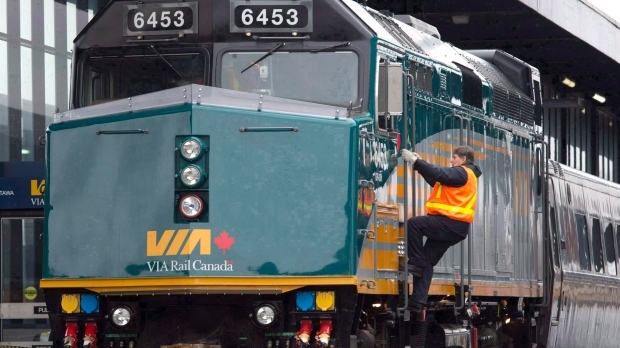
121 passengers escape death after train strikes debris on tracks near Agassiz, British Columbia
Almost 121 passengers skip death after a train collided with an object on the tracks near Agassiz, B.C. which caused a fuel leak, according to VIA Rail.
The event happened at around 6:15 in the evening. On a Friday, a train was supposed to go from Vancouver to Toronto. An email from the company said that the crash damaged the engine and some train cars.
“No one on the train got hurt, but the train got damaged and there was a fuel leak. The train couldn’t keep going after that. ”
VIA Rail made sure the area was safe and took all the passengers on buses to Vancouver, Kamloops or Jasper.
The Canadian Pacific Kansas City railroad police and the RCMP are looking into the incident.
The Canadian Pacific Kansas City railroad sent an email confirming that they have sent a team to check the situation and they are investigating the incident.
TIG Post has asked the police for more information and will share an update very soon. -

Military evacuates hundreds from Canada wildfire by air
Michel Labine, a longtime resident of Fort Smith, Canada, is frequently the one putting out fires or helping evacuees in his neighbourhood.
It was the 63-year-old’s first time being on the other side, but he was forced to flee last weekend as a nearby forest fire drew closer and closer to his neighbourhood.
The skies were hazy on that Saturday morning, but by noon the flames had turned the sky entirely black.
Then, according to Mr. Labine’s account to the BBC, “it broke up a little and there was just a red, amber sky.” He then observed fire trucks driving between homes, pleading the inhabitants to vacate.
Later, the military flew Mr. Labine and his family 365 kilometres (226 miles) to Fort McMurray, Alberta. The airlift is the largest rescue effort in the history of the territory.
The Labines were able to escape with nothing but the necessities.
“We had no luggage,” Mr. Labine said. “I just had my bag, which contained my medical supplies. We were in the dark.
He is one of around 6,500 people who have been told to leave certain areas of the Northwest Territories because there are currently 236 wildfires burning nearby.
The government proclaimed a state of emergency for the entire territory on Tuesday, and the mayor of the little town of Hay River issued an evacuation alert to her residents.
At a news conference, Kandis Jameson stated, “It is life-threatening to be here,” adding that the fire is roughly 15 miles from the town. 500 people, according to Ms. Jameson, have not yet left the area.
This is the second evacuation of Hay River this summer. Additionally, the municipality provided housing for Fort Smith evacuees who had to leave again on Sunday.
Over 5,000 people were present at Hay River when it was evacuated, according to Mr. Labine. “There would normally be 3,500, but a lot of people came from Fort Smith.”
According to Enterprise’s mayor on Tuesday, one of the fires nearly completely destroyed the hamlet, which is home to 120 people.
Michael St Amour told the CBC, “I think there are seven or eight houses and three or four businesses left.” “Around 85 to 90 percent of the community is gone.”
One mile from Fort Smith, according to Mr. Labine, there is another fire.
We might be saved if the wind is on our side, he replied. However, if the wind changes to the south, the settlement will be gone.
All we can do right now is pray and hope that the man upstairs decides to let us go this year, said Mr. Labine, who is currently taking refuge in a hotel with a lot of other evacuees.
Due to a drier than usual summer, Canada is experiencing its worst wildfire season on record, with roughly 1,100 active flames throughout the nation as of Tuesday.
Approximately the size of Greece, or 13.2 million hectares (32.6 million acres), have burned thus far.
To assist in putting out fires and organising evacuations, the Canadian government has sent members of the armed forces to the Northwest Territories.
In the meantime, the “imminent threat” of wildfires prompted Yellowknife, the territorial capital, to announce a local state of emergency on Monday night. The proclamation enables the city to respond in advance and get its citizens ready to flee at a moment’s notice.
The wildfire season this year, according to Mr. Labine, a former renewable resources officer whose duties included sending fire firefighters in his neighbourhood, is unlike any other he has seen.
This summer, the earth has been so dry that it has seemed like walking on broken glass.
It just crunched as you stepped on it, according to Mr. Labine. I’ve never noticed it to be so dry. There hasn’t been much rain.
Just before he and his family left for safety outside of Fort Smith, Northwest Territories, Michel Labine captured this photo of the sky outside his house.
This July, Fort Good Hope in the Northwest Territories experienced its warmest July on record, with a high of 37.4C.
British Columbia, where multiple heat advisories are in effect this week owing to record-high temperatures, is also experiencing wildfires.
According to scientists, the hot, dry weather that is likely to start wildfires is more likely as a result of climate change.
Extreme heat that lasts for a long time dries out the soil and vegetation more and more.
Since the start of the industrial age, the world has already warmed by around 1.1C, and temperatures will continue to rise unless governments drastically reduce emissions.
-
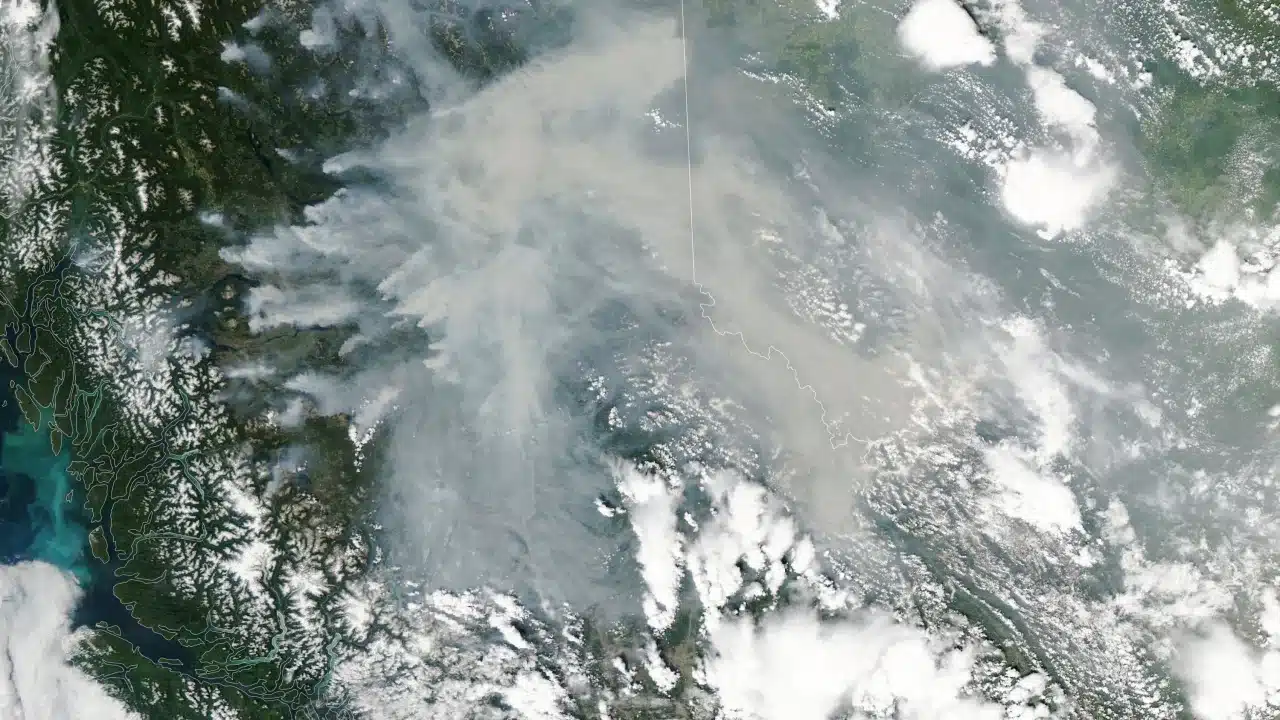
9-year-old Canadian boy dies from asthma attack made worse by wildfire smoke
In British Columbia, a 9-year-old kid passed away last week after suffering an asthma attack while watching the continuing wildfires in Canada.
Carter Vigh’s parents, James and Amber Vigh, told CNN’s Canadian partner, CBC, that their son has had asthma his entire life and has always carried an inhaler.
According to Carter’s parents, their kid passed away on July 11 after going to the emergency department for an asthma attack.
While his cause of death has not been determined yet, the BC Coroners Service said in a Monday afternoon bulletin that it is investigating his death as “related to an existing medical condition aggravated by wildfire smoke.”
“The sudden and unexpected death of this young boy is a heartbreaking loss for his family and community,” the coroner’s service said.
Carter was at a water park with friends earlier in the day when the air was clearer and then went to a birthday party, his parents told CBC. “He had a great day,” said Amber Vigh. “I had no indication he was struggling in any way.”
Carter began coughing in the evening, and his parents gave him his inhaler and advised him to concentrate on his breathing.
The coughing worsened, so they took Carter to the hospital where they said he later lost consciousness.
“I’m hoping that people realize how quickly it can turn because we had his asthma under control. We were so diligent,” his parents told CBC.
“They tried everything,” Amber told CBC. “I just stood there and just told him that I loved him and just to breathe.”
His parents described Carter as “perfect” and the “most loving boy.”
“Our communities are now becoming more aware of the risks presented by wildfire smoke and the measures that can be taken to reduce those risks,” the coroner’s service said.
Children can have a harder time breathing when the air quality is bad due to how small their airways are, CNN previously reported. The lungs in children are not fully developed either, which adds to the difficulty.
As of Tuesday, more than 900 wildfires are burning across Canada, according to the Canadian Interagency Forest Fire Centre’s website. So far, at least two firefighters have died battling the wildfires.
The Canadian government put out a special air quality statement for British Columbia on Monday that will carry over to Tuesday. The statement says that smoky conditions will be “intensified” by Tuesday morning in the 100 Mile and Williams Lake area.
While his cause of death has not been determined yet, the BC Coroners Service said in a Monday afternoon bulletin that it is investigating his death as “related to an existing medical condition aggravated by wildfire smoke.”
“The sudden and unexpected death of this young boy is a heartbreaking loss for his family and community,” the coroner’s service said.
Carter was at a water park with friends earlier in the day when the air was clearer and then went to a birthday party, his parents told CBC. “He had a great day,” said Amber Vigh. “I had no indication he was struggling in any way.”
Carter began coughing in the evening, and his parents gave him his inhaler and advised him to concentrate on his breathing.
The coughing worsened, so they took Carter to the hospital where they said he later lost consciousness.
“I’m hoping that people realize how quickly it can turn because we had his asthma under control. We were so diligent,” his parents told CBC.
“They tried everything,” Amber told CBC. “I just stood there and just told him that I loved him and just to breathe.”
His parents described Carter as “perfect” and the “most loving boy.”
“Our communities are now becoming more aware of the risks presented by wildfire smoke and the measures that can be taken to reduce those risks,” the coroner’s service said.
Children can have a harder time breathing when the air quality is bad due to how small their airways are, CNN previously reported. The lungs in children are not fully developed either, which adds to the difficulty.
As of Tuesday, more than 900 wildfires are burning across Canada, according to the Canadian Interagency Forest Fire Centre’s website. So far, at least two firefighters have died battling the wildfires.
The Canadian government put out a special air quality statement for British Columbia on Monday that will carry over to Tuesday. The statement says that smoky conditions will be “intensified” by Tuesday morning in the 100 Mile and Williams Lake area.
-
Marriage annulment cancelled after ex-wife was found to be an “imposter”
A judge in British Columbia has cancelled a marriage annulment after discovering the ex-wife who appeared before the court was an imposter.
In an attempt to get his marriage annulled, the husband used a woman to pose as his wife over a “remote audio connection” in court to deny his ex-wife his pension benefits, according to a report by CBC News.
Warren Zant, a 76-year-old Kamloops resident, married his wife, Gina Zant in the Cook Islands in 1999 and the two separated two decades later. They filed an agreement that stated that Gina Zant would receive survivor benefits with Warren Zant’s Operating Engineers’ Pension Plan.
In Nov. 2021, Warren participated in a virtual court hearing where he appeared by telephone claiming that his ex-wife was also in the room with him. Warren Zant explained to Justice Dennis Hori that their marriage in 1999 could not have been done legally due to Gina Zant not having been divorced from her ex-husband.
Hori accepted these terms after viewing documents that had Gina Zant’s signature on them consenting to the annulment. He had not requested further proof that Gina Zant was indeed the woman on the phone.
Warren Zant then sent a copy of the annulment order to the Operating Engineers’ Pension Plan. After the decision, Gina Zant got wind of the annulment after the administrator of the pension plan called her to update her. Gina Zant said she “was unaware of any court proceedings.”
He scrutinized the original documents Warren Zant had given him and verified emails that stated that Warren Zant’s marriage to Gina was fraudulent. Hori then determined that the papers from Chetumal, Mexico were also fradulent, later confirmed by the Canadian embassy.
David Paul, the lawyer for the Pension Plan stated that the real Gina Zant was “very pleased” with Hori’s decision.
According to Info News, Warren claimed he was mentally incompetent in 2012, but in 2022 on social media there are pictures of him and his new wife happily sightseeing in Mexico.
The parties will return to court in Jan. 2023.
Source: Complex.com