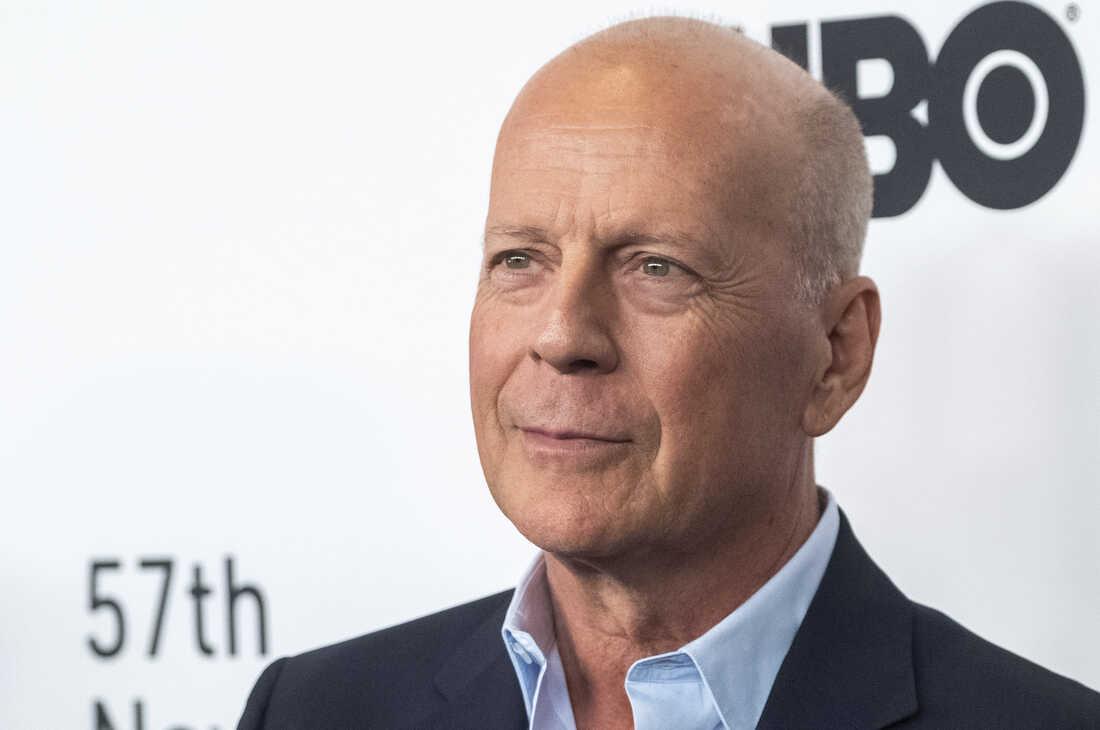
Emma Heming admitted to feeling extreme anxiety when she initially learned about her husband Bruce Willis’ symptoms as he continues to contend with dementia. She has been providing care for the “Die Hard” actor since his diagnosis of aphasia, a condition affecting language processing and communication, in March 2022.
By February, Willis’ condition had deteriorated to Frontotemporal dementia, which can lead to reduced mobility, rigidity, balance issues, and alterations in behavior or speech.
“I didn’t know where to go, what to look up, I’m looking things up and it’s freaking me out,” Heming said on Sunday’s episode of her “Make Time To Connect” YouTube series.
“There wasn’t a lot [of information about FTD] but you guys popped up,” she told the “Remember Me” podcast’s founders Maria Kent Beers and Rachael Martinez.
“I started listening and I felt like, ‘Oh my gosh I’m so grateful to hear other people’s stories.’”
Heming last month admitted that it’s “hard to know” whether the actor is aware of his condition and deteriorating health.
“Dementia is hard,” she said on the “Today” show. “It’s hard on the person diagnosed, it’s also hard on the family. And that is no different for Bruce, or myself, or our girls. When they say this is a family disease, it really is.”
Heming, who proudly calls herself Willis’ “care partner,” said learning of her husband’s diagnosis “was the blessing and the curse.”
“To finally understand what was happening, so that I could be into the acceptance of what is. It doesn’t make it any less painful, but just being … in the know of what is happening to Bruce makes it a little easier.”
Emma Heming Willis, the wife of actor Bruce Willis, has spoken about the “grief and sadness” she feels over her husband’s dementia, as they celebrated his 68th birthday.
“I have started the morning by crying, as you can see by my swollen eyes,” she said in an Instagram video.
“It’s important that you see all sides of this,” she said, as she continues to raise awareness about his condition.
Willis was diagnosed with frontotemporal dementia in February.
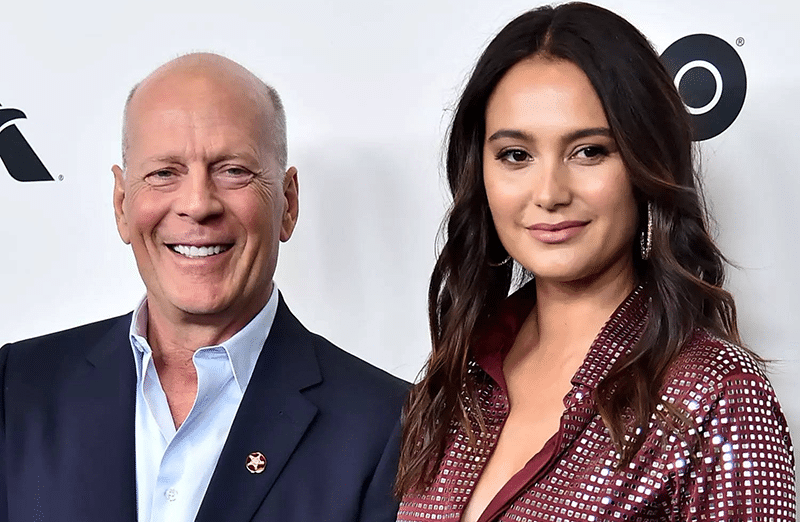
Emma Heming Willis and Bruce Willis have two daughters together
Bruce Willis’s wife speaks of her grief at his dementia on his 68th birthday
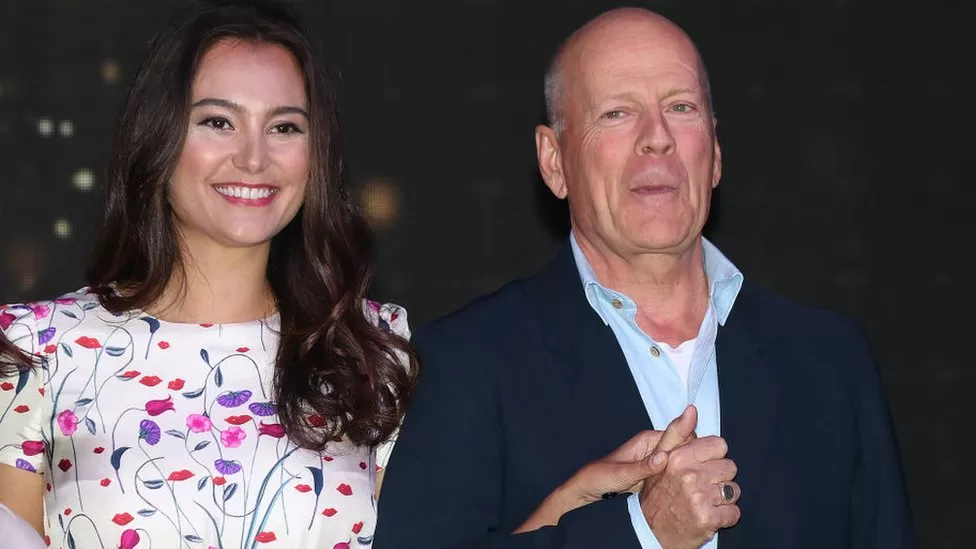
Emma Heming Willis and Bruce Willis have two daughters together
This came after he was diagnosed with aphasia, which causes difficulties with speech, last year.
His family said last year that he was giving up acting as the condition was affecting his cognitive abilities.
The actor’s dementia diagnosis affects language as well as behaviour and the ability to plan. There is no cure or intervention that can slow down the progress, so his symptoms will continue to worsen.
In her post, Heming Willis addressed the loss she feels as she cares for her husband.
“I always get this message where people always tell me, ‘Oh you’re so strong. I don’t know how you do it’,” she said.
“I’m not given a choice. I wish I was but I’m also raising two kids in this.
“Sometimes in our lives, we have to put our big girl panties on and get to it, and that’s what I’m doing. But I do have times of sadness every day, grief every day and I’m really feeling it today on his birthday.”
She is going public with her experiences, she said, as the “silver lining or flip side” is that she and the family are appreciative of the “warmth and love” of fans.
“As much as I do it for myself, I do it for you because I know how much you love my husband.”
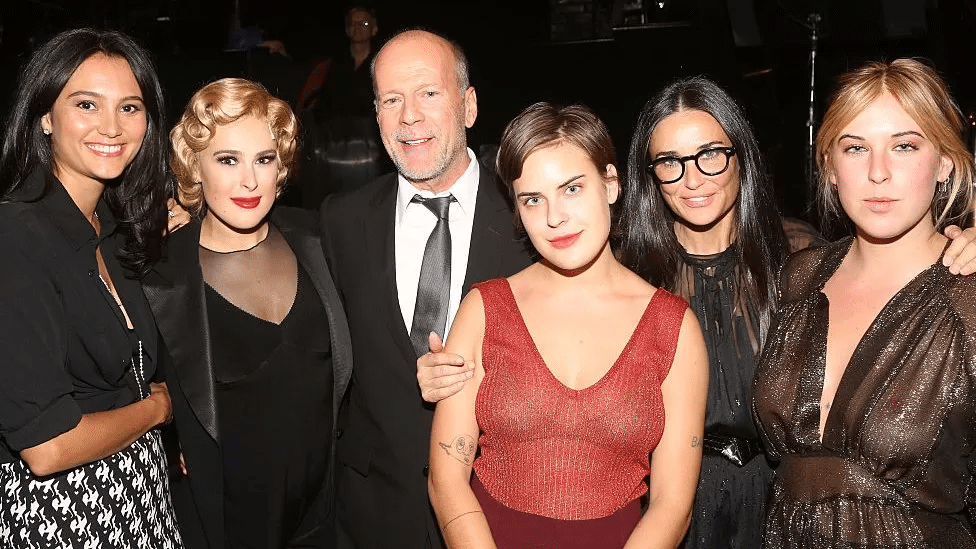
Emma Heming Willis [L], Bruce Willis and Demi Moore [second R] are pictured with his eldest three daughters in 2015
Bruce Willis’s wife speaks of her grief at his dementia on his 68th birthday Emma Heming Willis [L], Bruce Willis and Demi Moore [second R] are pictured with his eldest three daughters in 2015
In another post featuring footage of Willis playing with their children, she called her husband “pure love”.
Willis’s former wife, actress Demi Moore was also part of his birthday celebrations. She and Willis have three daughters together.
She posted footage of him singing with his family as they wished him happy birthday and give him a birthday pie.
He was seen smiling and joining in the celebrations, and stumbling slightly after blowing out his candles.
Moore said: “So glad we could celebrate you today. Love you and love our family. Thank you to everyone for the love and warm wishes – we all feel them.”
I’ve got dementia – dementia hasn’t got me
Lifestyle changes that could lower your dementia risk
Willis became a household name in the 1980s and 90s after starring in blockbuster films such as Die Hard, The Sixth Sense, Armageddon and Pulp Fiction, along with the hit TV series Moonlighting.
He has also been nominated for five Golden Globes – winning one for Moonlighting – and three Emmys, where he won two.
The actor walked with his two friends after a coffee run.
Bruce Willis, 67, was publicly seen for the first time after his family revealed he was diagnosed with frontotemporal dementia.
In photos and video obtained by the Daily Mail, the “Die Hard” actor had a day out with two friends in Santa Monica, Calif. on Thursday.
During the outing, the actor sported a grey beanie, blue sweatshirt and black pants, which he paired with a black watch.
The “Sixth Sense” star’s day out comes two weeks after his family announced he had been diagnosed with the “cruel disease,” which can cause slowed movement, stiffness, balance problems and changes in behavior or language.
“While this is painful, it is a relief to finally have a clear diagnosis,” his wife, Emma Heming, ex-wife Demi Moore and five daughters said on the Association for Frontotemporal Degeneration website on Feb. 16.
Bruce Willis was publicly seen for the first time since his family announced his frontotemporal dementia diagnosis. Boaz / BACKGRIDThe actor walked with his two friends after a coffee run. Instagram / demimoore
“FTD is a cruel disease that many of us have never heard of and can strike anyone. For people under 60, FTD is the most common form of dementia, and because getting the diagnosis can take years, FTD is likely much more prevalent than we know,” the family continued.
While Willis’ family said there are “no treatments” for the disease, they hope “any media attention” can shed light on the illness “that needs more awareness and research.”
“Bruce has always found joy in life — and has helped everyone he knows to do the same. It has meant the world to see that sense of care echoed back to him and to all of us,” the statement concluded.
“We have been so moved by the love you have all shared for our dear husband, father, and friend during this difficult time. Your continued compassion, understanding, and respect will enable us to help Bruce live as full a life as possible.”
Wiliis’ wife, Emma Heming, ex-wife Demi Moore and five daughters announced his new diagnosis to the public last month. Instagram/@demimoore
Last March, the action star’s family initially announced that he had aphasia — a medical condition that can affect a person’s ability to speak, write and understand verbal and written language — and would be stepping away from acting.
Since then, Willis’ relatives have given fans updates on his health. Most recently, Heming, 44, shared that she met with dementia specialist Teepa Snow to learn more about how to care for her husband.
Last year, the “Die Hard” actor’s family announced that he would be stepping away from acting. WireImage
“I’m grateful I had the opportunity to work with @teepasnows_pac who has helped me add to my dementia care toolbox,” she shared on Instagram on Feb. 27 alongside a photo with Snow.
“She’s a loving, compassionate and skilled leader in this space who navigates herself with pure empathy. She’s a gift,” the model wrote, adding that Snow has “a wealth of caregiving information” on her website.
After receiving a diagnosis of aphasia, which affects speech and language, the actor, 67, ended his 40-year career in March.
His ex-wife Demi Moore, wife Emma Heming Willis, daughters Rumer, Scout, Tallulah, Mabel, and Evelyn have all released a joint statement on Instagram providing “an update” on his health.
“Our family wanted to start by expressing our deepest gratitude for the incredible outpouring of love, support, and wonderful stories we have all received since sharing Bruce’s original diagnosis,” the caption reads.
“In the spirit of that, we wanted to give you an update about our beloved husband, father and friend since we now have a deeper understanding of what he is experiencing.
“Since we announced Bruce’s diagnosis of aphasia in spring 2022, Bruce’s condition has progressed and we now have a more specific diagnosis: frontotemporal dementia (known as FTD).
“Unfortunately, challenges with communication are just one symptom of the disease Bruce faces.” “While this is painful, it is a relief to finally have a clear diagnosis.”
The family also explained on the Association for Frontotemporal Degeneration website, “FTD is a cruel disease that many of us have never heard of and can strike anyone. For people under 60, FTD is the most common form of dementia, and because getting the diagnosis can take years, FTD is likely much more prevalent than we know.
“Today there are no treatments for the disease, a reality that we hope can change in the years ahead.”
With them keen to “shine a light on this disease”, here’s what we know about the signs and symptoms of different types of dementia, including frontotemporal.
Watch: Bruce Willis diagnosed with frontotemporal dementia
What is dementia?
Dementia is a syndrome (a group of related symptoms) associated with an ongoing decline of brain function, according to the NHS. There are many different types, with many different causes, and it is not a natural part of ageing.
For example, Alzheimer’s disease and vascular dementia are two different types, with both of them making up the majority of cases. Other types include frontotemporal dementia, dementia with Lewy bodies (DLB), young-onset, as well as mixed dementia (more than one at the same time).
The condition can affect memory, as well as the way you speak, think, feel and behave.
There are currently around 900,000 people with dementia in the UK, projected to rise to 1.6 million by 2040, according to the Alzheimer’s Society.
The likelihood of developing dementia increases significantly with age. One in 14 people aged over 65 has the condition, which rises to one in six for those aged over 80. However, it can affect younger people too.
Alzheimer’s disease
The first signs of Alzheimer’s disease are usually minor memory problems. (Getty Images)
Alzheimer’s disease is the most common cause of dementia in the UK. It is a progressive condition, meaning symptoms develop gradually over many years, slowly becoming more severe.
The exact cause isn’t yet fully understood, though factors that can potentially increase your risk include age, a family history, untreated depression and lifestyle factors associated with cardiovascular disease.
The first sign is usually minor memory problems, such as forgetting about recent conversations or events, or forgetting the names of places and objects.
As the condition develops and symptoms become more severe, as listed by the NHS, these include:
Confusion, disorientation and getting lost in familiar places
Difficulty planning or making decisions
Problems with speech and language
Problems moving around without assistance or performing self-care tasks
Personality changes, such as becoming aggressive, demanding and suspicious of others
Hallucinations (seeing or hearing things that are not there) and delusions (believing things that are untrue)
Low mood or anxiety
Vascular dementia
Vascular dementia can make you feel disorientated. (Getty Images)
Symptoms of Alzheimer’s disease, such as problems with memory and language (many people with vascular dementia also have Alzheimer’s disease)
This can make daily life increasingly hard for someone with the condition, eventually preventing them from being able to look after themselves.
Dementia with Lewy bodies (DLB)
DLB can make you feel sleepy or disturb your sleep. (Getty Images)
DLB, also known as Lewy body dementia, is another common type of dementia. It is caused by the Lewy bodies, which are clumps of protein that appear in the nerve cells of the brain. As it shares symptoms with Alzheimer’s disease and Parkinson’s disease, it is often wrongly diagnosed.
Symptoms listed by the NHS include:
Hallucinations – seeing, hearing or smelling things that are not there
Problems with understanding, thinking, memory and judgement – this is similar to Alzheimer’s disease, although memory may be less affected in people with dementia with Lewy bodies
Confusion or sleepiness – this can change over minutes or hours
Slow movement, stiff limbs and tremors (uncontrollable shaking)
Disturbed sleep, often with violent movements and shouting out
Fainting spells, unsteadiness and falls
Frontotemporal dementia
Frontotemporal dementia can affect your motivation. (Getty Images)
Generally speaking, frontotemporal dementia is an uncommon type of dementia.While dementia generally mostly affects people over 65, this type typically starts at a younger age. Most cases are diagnosed in people aged 45-65, though it can also present in younger or older people.
Frontotemporal dementia affects the front and sides of the brain, and causes problems with behaviour and language. Similar to other types of dementia, it usually develops slowly and gets gradually worse over a long period of time.
Symptoms listed by the NHS include:
Personality and behaviour changes – acting inappropriately or impulsively, appearing selfish or unsympathetic, neglecting personal hygiene, overeating, or loss of motivation
Language problems – speaking slowly, struggling to make the right sounds when saying a word, getting words in the wrong order, or using words incorrectly
Problems with mental abilities – getting distracted easily, struggling with planning and organisation
Memory problems – these only tend to occur later on, unlike more common forms of dementia, such as Alzheimer’s disease
As well as mental symptoms, there may be physical ones too, such as slow or stiff movements, loss of bladder or bowel control, muscle weakness or difficulty swallowing. Frontotemporal dementia can also lead to someone being unable to care for themselves.
Rumer said the family has been able to discover the true nature of the actor’s disease after he was diagnosed with aphasia last year.
“Our family wanted to start by expressing our deepest gratitude for the incredible outpouring of love, support, and wonderful stories we have all received since sharing Bruce’s original diagnosis,” the statement reads.
“In the spirit of that, we wanted to give you an update about our beloved husband, father, and friend since we now have a deeper understanding of what he is experiencing.
“Since we announced Bruce’s diagnosis of aphasia in spring 2022, Bruce’s condition has progressed and we now have a more specific diagnosis: frontotemporal dementia (known as FTD). Unfortunately, challenges with communication are just one symptom of the disease Bruce faces. While this is painful, it is a relief to finally have a clear diagnosis.”
In the statement, the family added that Bruce would have also wanted to also raise awareness of the disease if he was able to.
“Bruce always believed in using his voice in the world to help others and to raise awareness about important issues both publicly and privately. We know in our hearts that – if he could today — he would want to respond by bringing global attention and a connectedness with those who are also dealing with this debilitating disease and how it impacts so many individuals and their families,” the family added.
“Ours is just one family with a loved one who suffers from FTD, and we encourage others facing it to seek out the wealth of information and support available through AFTD (@theaftd, theaftd.org).
The family further appreciated people who have been showing support for the actor since his diagnosis.
“We have been so moved by the love you have all shared for our dear husband, father, and friend during this difficult time. Your continued compassion, understanding, and respect will enable us to help Bruce live as full a life as possible.”
It was widely rumoured last week that Willis had sold his face to a deepfake startup called Deepcake in the first deal of its sort.
However, a spokesperson for the actor told the BBC that he had “no partnership or agreement” with the company.
And a representative of Deepcake said only Willis had the right to his face.
Willis announced his retirement from acting in March after being diagnosed with aphasia, a disorder that affects speech.
Deepfakes use artificial intelligence (AI) and machine learning technology to create realistic videos – often of celebrities or politicians. For actors that can no longer act, the technology has the potential to be game-changing.
On 27 September, the Daily Mail reported that a deal had been struck between Willis and Deepcake.
“Two-time Emmy winner Bruce Willis can still appear in movies after selling his image rights to Deepcake,” the story reads.
The story was picked up by the Telegraph and a series of other media outlets.
“Bruce Willis has become the first Hollywood star to sell his rights to allow a ‘digital twin’ of himself to be created for use on screen.” said the Telegraph.
But that doesn’t appear to be the case.
What is true is that a deepfake of Bruce Willis was used to create an advert for Megafon, a Russian telecoms company, last year.
Russian firm Deepcake used an authorized deepfake of the Bruce Willis in the commercial for telecoms company Megafon. The company uses an artificial neural network to impose Willis’ image onto the face of a Russian actor pic.twitter.com/7bizoLsk2S
The tech used in the advert was created by Deepcake, which describes itself as an AI company specializing in deepfakes.
Deepcake told the BBC it had worked closely with Willis’ team on the advert.
“What he definitely did is that he gave us his consent (and a lot of materials) to make his Digital Twin,” they said.
The company says it has a unique library of high-resolution celebrities, influencers and historical figures.
On its website, Deepcake promotes its work with an apparent quote from Mr Willis: “I liked the precision of my character. It’s a great opportunity for me to go back in time.
“The neural network was trained on content of Die Hard and Fifth Element, so my character is similar to the images of that time.”
However, Willis’s agent told the BBC, “Please know that Bruce has no partnership or agreement with this Deepcake company.”
The BBC asked Willis’s agent whether he had ever worked with Deepcake, or whether the quote used by the company was accurate.
The BBC has not yet received a response.
In a statement from Deepcake, the company said reports that it had bought the rights to Bruce Willis’s face were inaccurate.
“The wording about rights is wrong… Bruce couldn’t sell anyone any rights, they are his by default,” a representative for the company said.
The confusion highlights just how new this technology is – and the lack of clear rules around it.
AI replacement appears to be a growing trend. Darth Vader actor James Earl Jones has recently retired from playing the famous character, but his voice has carried on. Respeecher, another AI firm, has reportedly used archival materials and a proprietary algorithm to replicate the Vader vocals.
This summer, Disney released its latest Star Wars spinoff, Obi-Wan Kenobi. The show used Respeecher’s technology to reproduce Vader’s speech and even make him sound younger.
AI replacement, however, is controversial.
In April, Equity, the UK’s performing arts workers union, launched the campaign, Stop AI Stealing The Show. Some are concerned AI deep fakes could take work away from actors.
There are also concerns that actors could lose control of their faces and voices.
You can follow Ben Derico and James Clayton on Twitter @ben_derico & @jamesclayton5