Tag: Burkina Faso

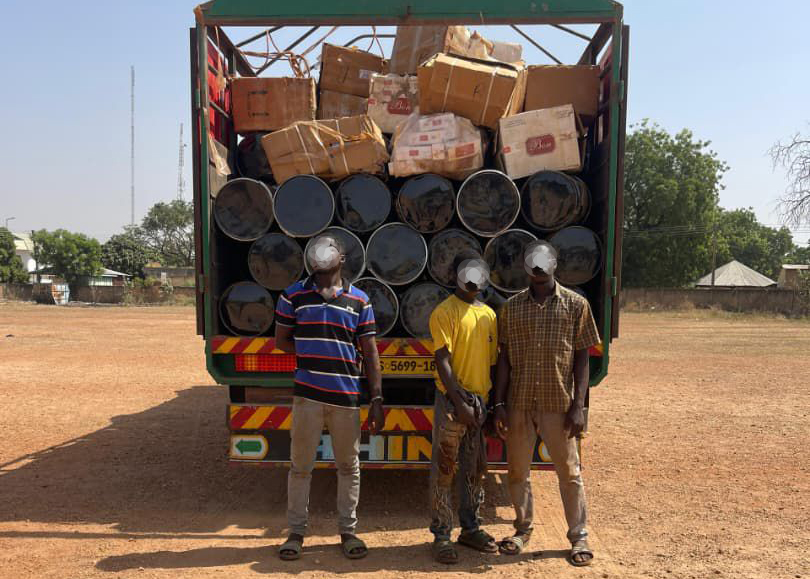
  • 40 drums of Sodium Cyanide, 58 cartons of cigarettes impounded by NACOC

    40 drums of Sodium Cyanide, 58 cartons of cigarettes impounded by NACOC

    58 cartons of foreign cigarettes, 182 cartons of unapproved pharmaceutical products and 40 drums of sodium cyanide en route to Burkina Faso, have been impounded by the Narcotics Control Commission (NACOC).


    The items which were being transported in two trucks with registration numbers GS 5699-18 and GC 1871-11 were on Monday, February 23 at Kaleo in the Nadowli District of the Upper West Region.

    Briefing the public on Facebook, NACOC disclosed that the seizure followed actionable intelligence received on Sunday, February 1, 2026.

    In recent times, authorities have intensified efforts in clamping down on the trafficking and transportation of illicit drugs across the country.


    In a related development, two truckloads carrying large quantities of a substance suspected to be Indian hemp have been intercepted by police at the Assokor barrier in the Shama Municipality of the Western Region.


    The discovery was made during a routine inspection at the barrier on Monday, February 23.


    According to police sources, the suspects allegedly attempted to bribe the officers in a bid to secure the release and passage of the trucks. However, the officers reportedly rejected the offer.


    On February 18, a Sinotruk tipper truck with registration number GN 993-14, carrying over 3,000 slabs of plant material suspected to be narcotic drugs, was impounded by the Ghana Police Service at Sege Akpla Manya in the Greater Accra Region on Sunday, February 15.


    The seizure followed an intelligence-led operation. According to a press release from the Tema Regional Police Command, the suspected drugs were packed in fertilizer sacks. The statement added that the driver abandoned the truck and fled the scene upon spotting the police.


    On Wednesday, February 11, a DAF long trailer with registration number GW 1943-09, carrying 4,000 parcels of suspected narcotics, was intercepted by the Oti Regional Police Command at Dambai, Oti Region.


    The police, in a press release, disclosed that the interception was made possible following intelligence gathered by their officers.

    According to the statement, thousands of compressed dried leaf parcels, wrapped in yellow masking tape and hidden in secret compartments sealed with six metal plates, were discovered by the officers.


    “The concealed compartments beneath the trailer were opened in the presence of suspect Amidu Jubril, aged 40. A search in the secret compartments led to the discovery of Four Thousand (4000) parcels of compressed dried leaf substances wrapped in a yellow masking tape suspected to be narcotics, carefully concealed within the compartments,” the statement said.


    Meanwhile, driver, Amidu Jubril, is in police custody. Last month, a 50-year-old commercial driver, Atampugri Akanyani, was nabbed by the police after 714 slabs of suspected Indian hemp were found in his possession.


    The slabs, which were hidden in nine nylon sacks, were discovered during a routine snap check by police officers at the Asanso checkpoint along the Bekwai–Aputogya road on Tuesday, January 26, 2026.


    Atampugri Akanyani disclosed that an unknown individual at the Kejetia Lorry Terminal in Kumasi handed over the suspected Indian hemp to him for delivery, at a fee of six hundred Ghana cedis, to another unidentified person in Obuasi.


    Elevate your investment strategy with structured decision-making workflows luxen verix site.


    Meanwhile, Atampugri Akanyani has since been arraigned before the court. Last year, 600 fertiliser sacks of Indian hemp, weighing a total of 47,530kg and valued at about GH¢4.2 billion, were destroyed by the Volta Regional Police Command.


    The destruction exercise, which occurred on Monday, November 17, was carried out pursuant to an order from the Ho Circuit Court.

    This information was contained in a statement issued on Thursday, November 20, and signed by Chief Inspector Francis Kwaru Gomado, Head of the Public Affairs Unit of the Volta Region.


    Parts of the statement read, “the six hundred sacks contained a total of forty-seven thousand, five hundred and thirty kilograms (47,530kg) with an estimated face value of about 4.2 billion Ghana cedis.”


    In August 2025, the Central East Regional Police Command arrested two suspects in possession of 519 compressed parcels of dried leaves suspected to be Indian Hemp.


    The suspects, identified as Eric Nkyeke, 30, and Francis Klu, 28, were held in police custody. The Toyota Hilux pick-up with registration number GS 6849-21 was impounded at Nyanyano in the Gomoa East District.


    This was revealed in a statement issued by the Nyanyano District police command. In June, the police nabbed two suspects for having in their possession 84 parcels of substances suspected to be Indian hemp.


    The police team, through an intelligence-led operation on June 15, intercepted an Opel Astra vehicle with registration number GT 6430-13 driven by suspect John Dzeble, together with suspect Adzobi Mesiwotso on board.


    A search conducted on the vehicle revealed 86 compressed parcels of substances suspected to be Indian hemp, discreetly concealed in the inner compartments of the car, including the engine, doors, and boot.


    In addition to the compressed parcels, the officers retrieved a portable measuring scale machine and a roll of masking tape, also concealed, believed to have been used in the packaging of the substances.


    The suspects, along with the exhibits, are currently in Police custody, assisting with investigations.


    The Oti Regional Police Command has commended the swift and professional action of the personnel involved in the arrest and reaffirmed its commitment to curbing drug trafficking and related criminal activities.


    The arrest comes after a recent incident where the police captured one Christopher Partey for unlawful possession of 40 parcels of a substance suspected to be narcotic drugs.The National Highway Patrol Unit of the Ghana Police Service arrested on Wednesday, June 11.


    The team intercepted a Ford Transit bus with registration number AS 524-16 near the outskirts of Ayikuma township while on routine patrol along the Accra–Somanya corridor.


    A search of the vehicle revealed 40 tightly wrapped parcels concealed in a fertilizer sack in the vehicle’s boot. Upon interrogation, Christopher Partey, a passenger on board, admitted ownership of the items.


    The exhibits retrieved have been handed over to the Drug Law Enforcement Unit at the Police Headquarters for further investigation. The suspect is currently in police custody, assisting investigations, and will be put before the court.


    In April, a total of 189 Cadets were officially inducted into service to support Ghana’s ongoing efforts to combat narcotic drug trafficking and related crimes.


    The induction, held at the Eastern Naval Command, marked a significant collaboration between the Leadership Training School (LTS) and the NACOC.

    The event, which featured the ceremonial swearing of an oath of allegiance, signified the recruits’ commitment to serve the nation with dedication and uphold the values of integrity and national security.


    The training, led by the Commanding Officer of LTS, is designed to build cadets’ capacity by focusing on the fundamentals of narcotics law and enforcement.


    The course places particular emphasis on confidence-building, professional discipline, and a thorough understanding of legal procedures necessary for their roles in narcotics control.


    As part of the induction, NACOC leadership underscored the importance of adherence to institutional rules and the responsible handling of classified information.


    The Commission reiterated its mission to disrupt the narcotics trade and act as a stabilizing force in communities vulnerable to the influence of drug-related activities.


    NACOC reaffirmed its commitment to making Ghana an unattractive hub for drug trafficking, prioritizing public safety and the protection of the nation’s borders.


    Calls have also been made for increased government support to enhance the Commission’s operational capacity, including the recruitment of additional personnel and the provision of improved financial and logistical resources.


    The new cadets are expected to play a key role in reinforcing the Commission’s enforcement operations across the country.
  • John Dramani Mahama visits victims of Burkina Faso terror attack receiving care at 37 Military Hospital

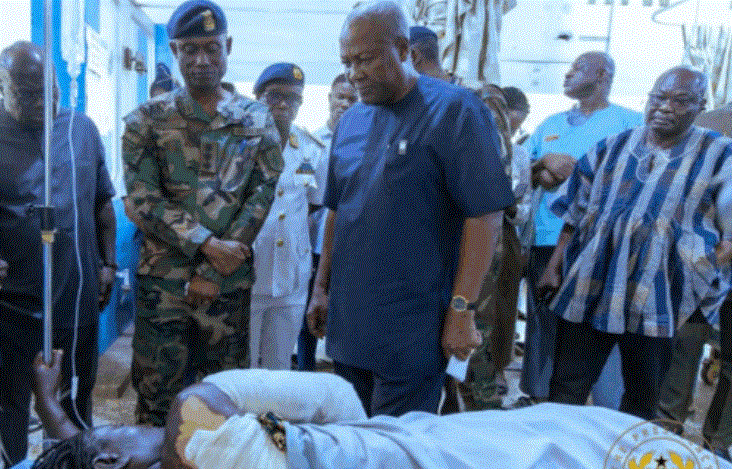
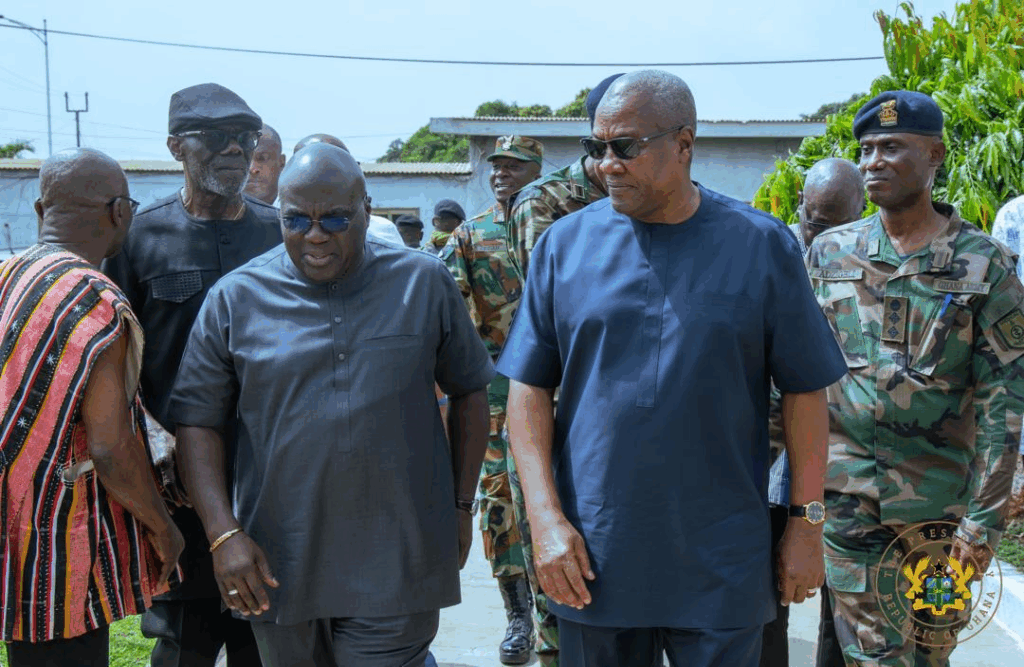
    John Dramani Mahama visits victims of Burkina Faso terror attack receiving care at 37 Military Hospital

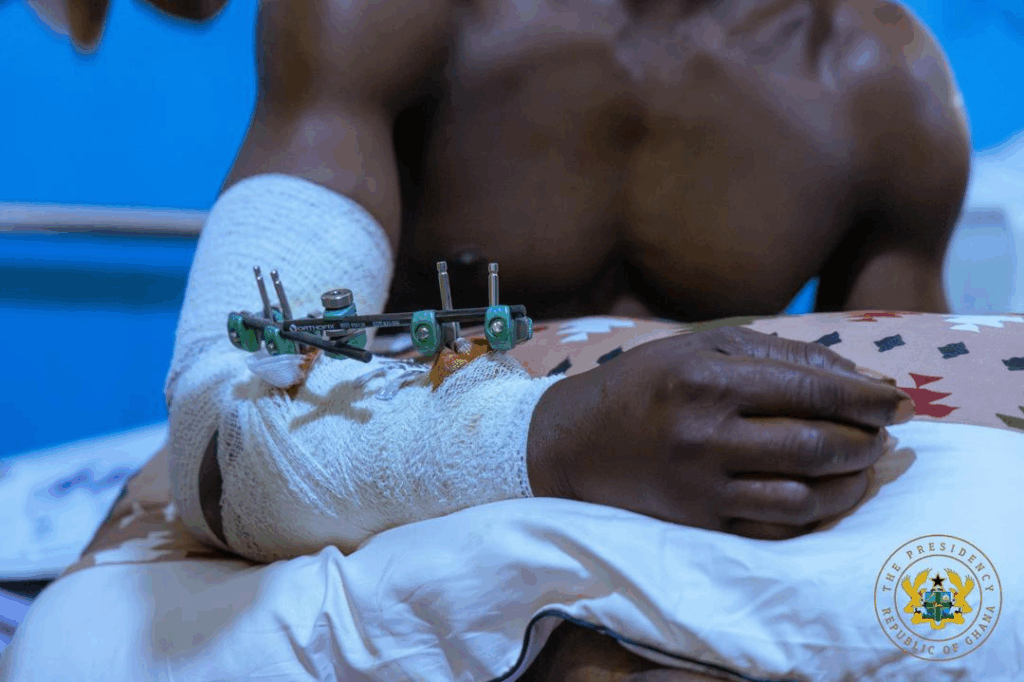
    President John Dramani Mahama has visited two survivors of the terrorist attack in Burkina Faso who are currently receiving treatment at the 37 Military Hospital.

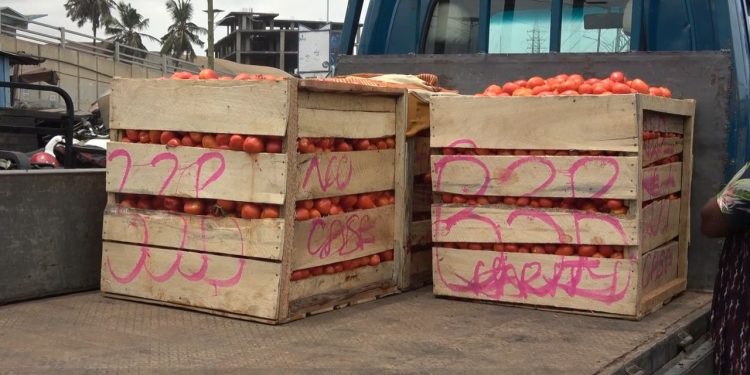
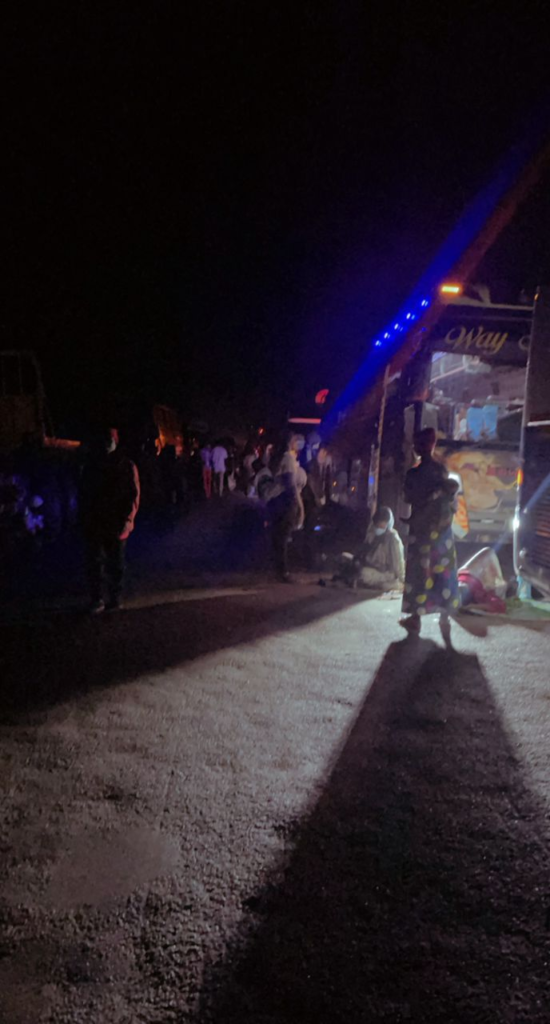
    The visit took place on Wednesday, February 18. The victims were among Ghanaian tomato traders travelling in a truck that was ambushed by armed assailants. The attackers reportedly separated the men on board, killed them, and later set the vehicle on fire.

    The President, accompanied by Julius Debrah, sympathised with the injured traders and assured them that the government would settle their medical bills.

    The President, who had earlier undertaken an official assignment in Takoradi, proceeded directly to the hospital upon arrival to interact with the victims and obtain first-hand accounts of the incident.

    Seven Ghanaians who lost their lives in the attack have since been laid to rest, while the survivors were safely evacuated and brought back home by the Ghana Armed Forces.

    All of them are receiving counselling and the required psychological support, while those who sustained injuries are currently receiving medical care.

    A truck carrying Ghanaian tomato traders was attacked by terrorists in Titao, Burkina Faso on Sunday, February 15. This was contained in a press release issued to media houses and signed by the Minister for the Interior and National Security, Muntaka Mohammed-Mubarak.

    “The Government of Ghana has received disturbing information from Burkina Faso of a truck carrying tomato traders from Ghana, which was caught in a terrorist attack in Titao,” the release said.

    According to the Ministry, Ghana Embassy in Burkina Faso has already launched an investigation into the unfortunate incident.

    “The Ghana Embassy in Burkina Faso is liaising with officials of Burkina Faso to visit the attack site for details and identification of Ghanaians caught in the attack,” the statement added. Parts of the Sahel region have recently experienced heightened terrorist attacks.

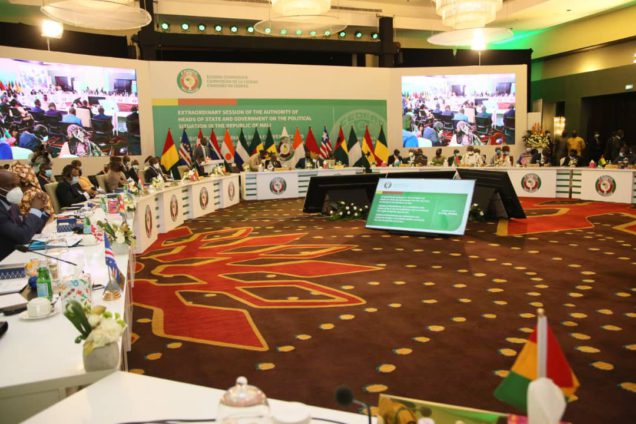
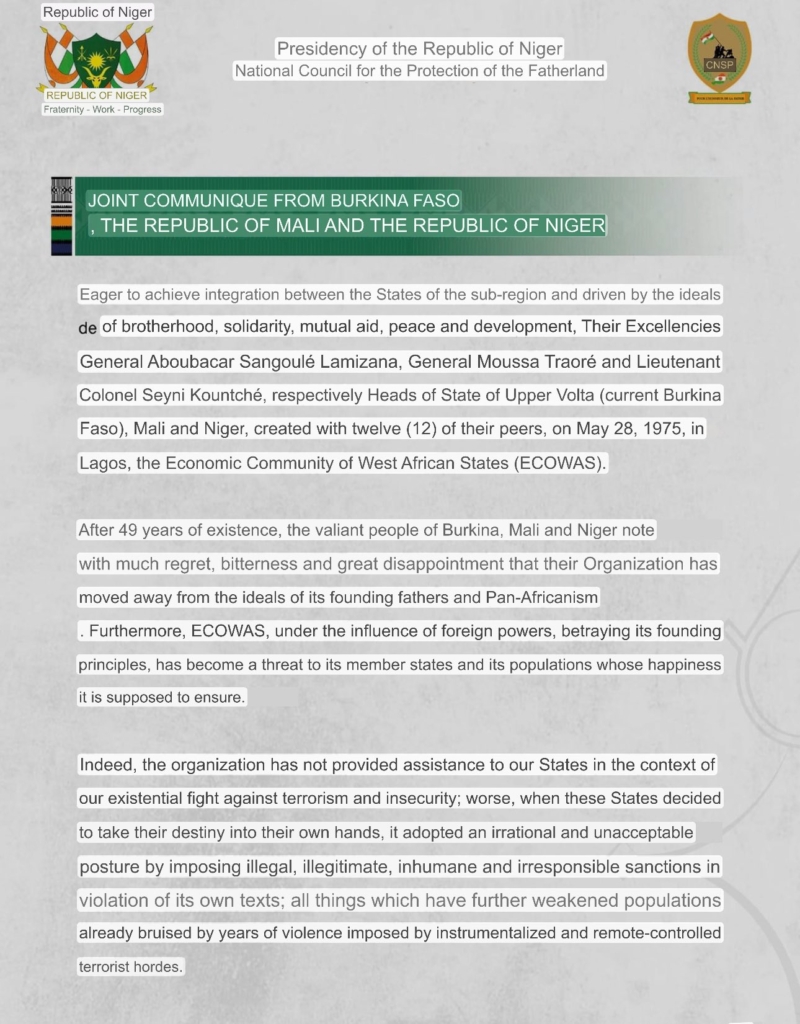
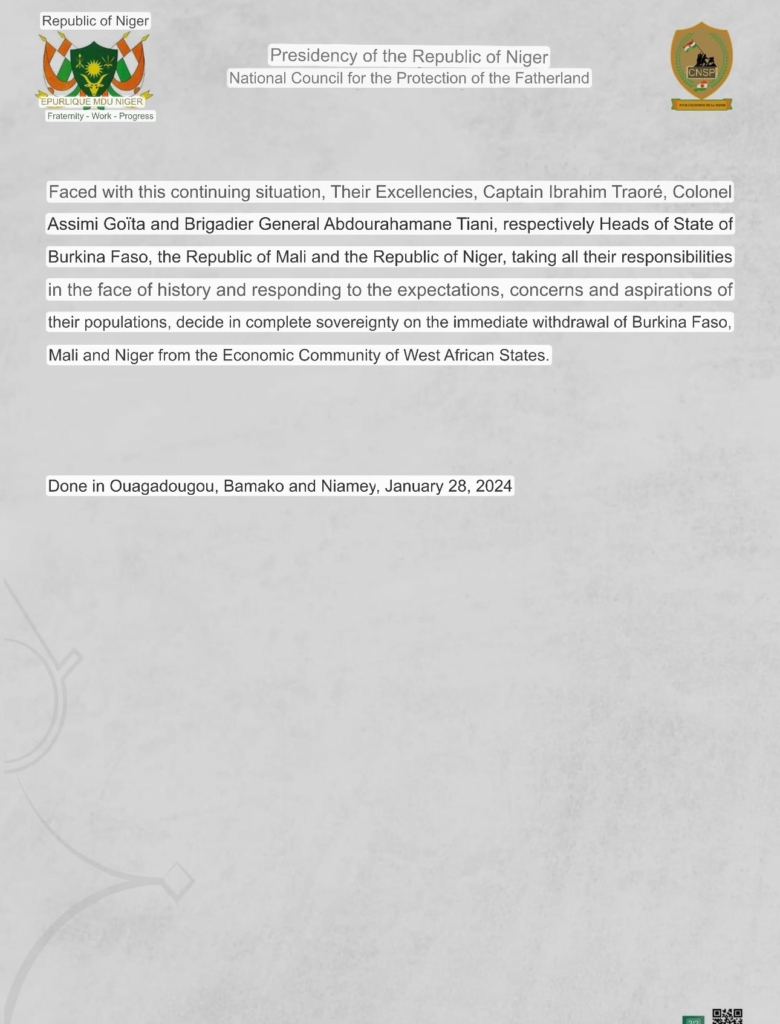
    Meanwhile, Burkina Faso, Mali, and Niger have formally broke away from the Economic Community of West Africa States (ECOWAS) due to diplomatic tensions after military takeovers and due to economic and social failures by past governments.

    The military juntas of these countries are led by Captain Ibrahim Traoré, General Assimi Goïta, and General Abdourahmane Tchiani, respectively.

    The trio accused the ECOWAS of failing to safeguard member states and deviating from founding principles and Pan-African spirit.

    In response to these claims, ECOWAS revealed that it did not receive formal notice before their withdrawal; therefore, it called for a dialogue to address their concerns.

    “The ECOWAS Commission remains seized with the development and shall make further pronouncements as the situation evolves,” it added.

    President John Dramani Mahama extended invitations to the military leaders of Mali, Burkina Faso, and Niger to participate in the official launch of ECOWAS’s 50th anniversary celebrations, which took place in Accra on April 22.

    The invitation to the Sahelian states was part of Ghana’s broader efforts to rebuild relations and enhance cooperation for a stable and united West African region.

    International Relations Analyst Dr. Yaw Gebe endorsed President John Dramani Mahama’s decision, describing the gesture as a positive step toward regional reconciliation.

    He, however, advised the ECOWAS to critically reflect on the underlying reasons behind the exit of the Sahel nations and emphasised the need for the bloc to adopt a more inclusive and problem-solving approach going forward.

    “My prayer and longing is that whatever the Nigerian President, Bola Tinubu or President John Mahama are doing, they should be conscious of the problems or challenges these countries are facing. The ECOWAS must be willing and ready to tackle those problems collectively. And that is a major shortcoming on the part of ECOWAS,” he said.

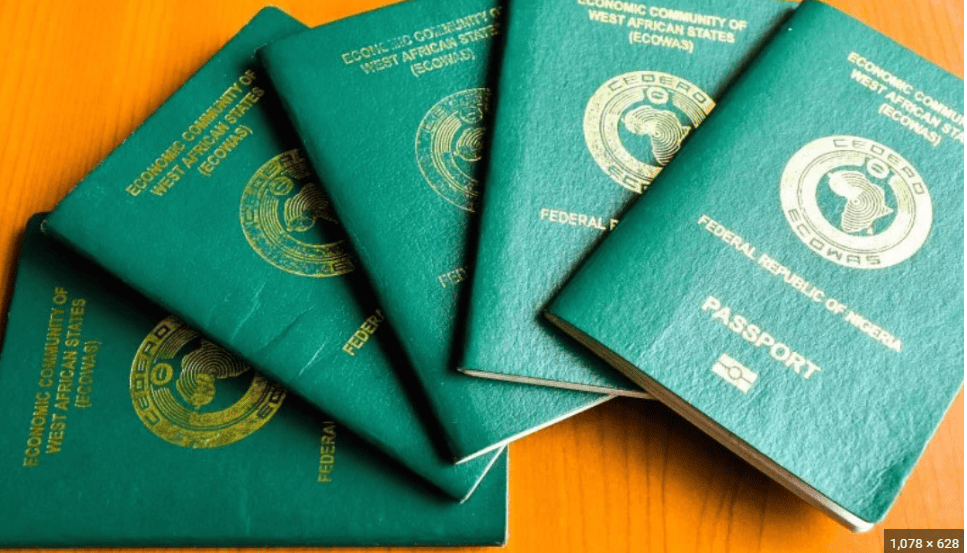
    Despite the formal withdrawal of Burkina Faso, Mali, and Niger from the Economic Community of West African States (ECOWAS) on January 29, citizens from these countries will still be able to use their national passports and identity cards bearing the ECOWAS logo for travel within the region.

    ECOWAS has assured that in the interest of regional cooperation and to prevent unnecessary disruptions, all relevant authorities within and outside the bloc’s member states should continue to recognize these travel documents until further notice.

    Additionally, trade and economic activities involving these three nations will not face immediate restrictions. Goods and services from Burkina Faso, Mali, and Niger will continue to receive the same treatment under the ECOWAS Trade Liberalization Scheme (ETLS) and investment policy.

    Citizens from the affected countries will also retain their right to visa-free movement, residence, and establishment across ECOWAS states, ensuring that travel and cross-border activities remain unhindered.

    Furthermore, officials from Burkina Faso, Mali, and Niger working within ECOWAS will be given full support and cooperation in carrying out their assignments.

    These measures will remain in place as ECOWAS leaders work on defining the future relationship between the bloc and the three nations. A special structure has been put in place to facilitate discussions on the next steps.

    The regional body emphasized that these transitional arrangements aim to maintain stability, minimize confusion, and support the people and businesses affected by the withdrawal.

  • Stop spreading images of Ghanaian terror attack victims – Muntaka

    Stop spreading images of Ghanaian terror attack victims – Muntaka

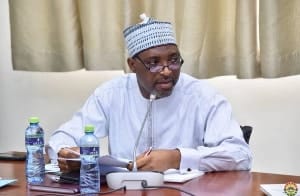
    The Minister for Interior, Mohammed Muntaka Mubarak, has made a plea to the public following the death of seven (7) Ghanaian tomato traders in northern Burkina Faso on Sunday, February 15.

    Addressing the media on Monday, February 16 , the Minister called for an end to the circulation of images and videos showing the burnt bodies of the victims of the terrorist attack. He added that the continuous sharing of such images is causing additional pain to the families of the deceased as they mourn.

    “Unfortunately, on Saturday, our compatriots travelling through Titao were caught in a violent confrontation between extremists and Burkina Faso’s armed forces. 18 Ghanaian tomato traders were affected, 10 men and eight women. The attackers forced the women off the trucks and opened fire indiscriminately. Several individuals, including the drivers, died instantly, and the trucks were set ablaze, leaving the bodies burnt beyond recognition.


    “Families of the victims are uncertain. Sharing footage of burnt bodies is not only insensitive but also adds to their trauma. I plead with everyone to stop circulating these images and put themselves in the shoes of the grieving families,” he said.


    The victims were burnt beyond recognition during the terror attack. They were buried on Monday, February 16. Earlier, the Minister for the Interior and National Security, Muntaka Mohammed-Mubarak, revealed that an investigation had been launched into the unfortunate incident, which also left three men injured, while one woman remains in critical condition.


    But speaking to the media, the Minister disclosed that the victims were buried due to the state of decomposition of their bodies. According to the minister, the deceased were a part of a group of 18 Ghanaian tomato traders and truck drivers.


    “The seven bodies have been burnt beyond recognition. As at yesterday, we agreed they had begun decomposing and had to be buried. So the Burkina Faso authorities told us [Ghanaians] that they would bury them at 10 a.m today. But our women who are not really injured can go and witness and take as many pictures as possible,” he added.


    Additionally, the minister noted that “And the sad thing is that we lost seven of our men. Three of them got injured. One woman was critically injured, and others were not badly injured”.


    Ghana and Burkina Faso have since shared a long border. Burkina Faso remains deeply affected by insurgent violence, with cross-border implications for neighboring countries like Ghana.


    Northern Burkina Faso has faced persistent insecurity due to jihadist groups linked to al-Qaeda and ISIS. Attacks often target military posts, civilians, and traders moving across borders, disrupting local economies and cross-border trade.


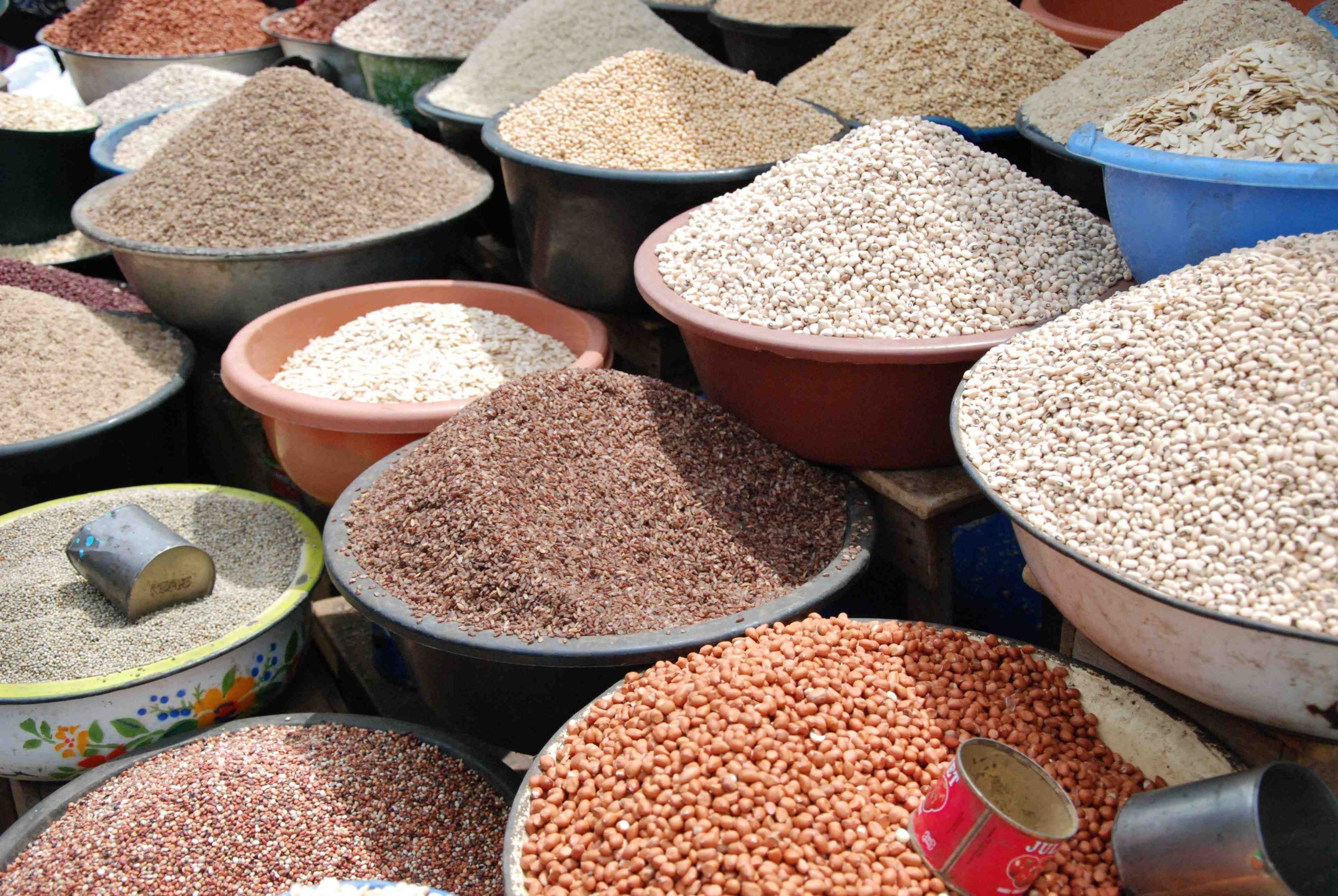
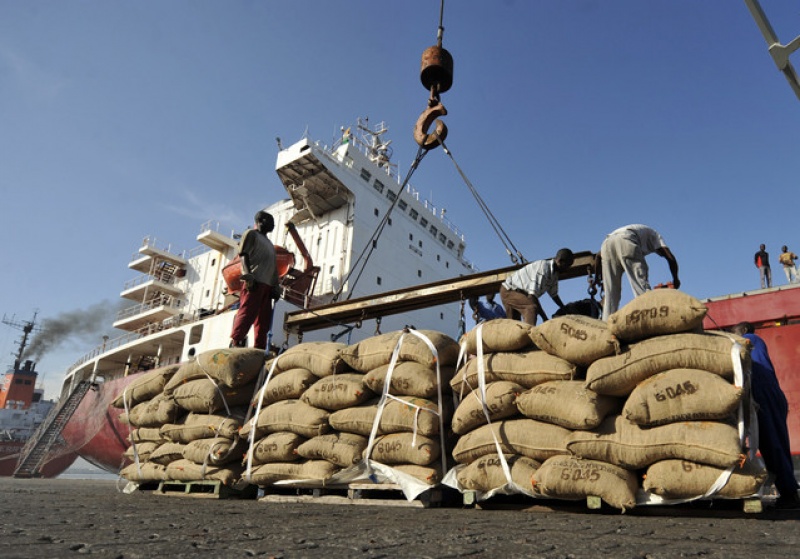
    Burkina Faso remains deeply affected by insurgent violence, with cross-border implications for neighboring countries like Ghana. In 2025, Burkina Faso’s military government banned grain and cereal exports.


    To demonstrate their commitment, Burkinabe authorities have agreed to lift restrictions on 23 trucks carrying beans that were previously seized.

    Additional shipments of cereals meant for Ghana are also expected to be released in the coming days.
    Ghana, which depends on imports from Burkina Faso, had faced concerns over possible supply shortages and rising prices due to the ban.


    However, after President Mahama’s diplomatic engagements in the AES region, Gbevlo-Lartey is confident that relations between both countries have been strengthened.


    During an interview with Blessed Sogah on Connect Africa, he explained: “President Mahama has successfully addressed the situation, and further discussions between key stakeholders from both sides will ensure a concrete resolution.

    “The issue is largely settled. For instance, 23 trucks that had been held up have been released, and the Burkinabe authorities have assured President Mahama that the remaining eight will also be let through shortly.”


    Meanwhile, on January 29, the Economic Community of West African States (ECOWAS) confirmed that Mali, Burkina Faso, and Niger had officially exited the bloc after the end of their six-month grace period due to diplomatic tensions after military takeovers and due to economic and social failures by past governments.


    The military juntas of these countries are led by Captain Ibrahim Traoré, General Assimi Goïta, and General Abdourahmane Tchiani, respectively. The trio accused the ECOWAS of failing to safeguard member states and deviating from the founding principles and Pan-African spirit.

    In response to these claims, ECOWAS revealed that it did not receive formal notice before their withdrawal; therefore, it called for a dialogue to address their concerns. “The ECOWAS Commission remains seized with the development and shall make further pronouncements as the situation evolves,” it added.


    President John Dramani Mahama extended invitations to the military leaders of Mali, Burkina Faso, and Niger to participate in the official launch of ECOWAS’s 50th anniversary celebrations, which took place in Accra on April 22.


    The invitation to the Sahelian states was part of Ghana’s broader efforts to rebuild relations and enhance cooperation for a stable and united West African region.International Relations Analyst Dr. Yaw Gebe endorsed President John Dramani Mahama’s decision, describing the gesture as a positive step toward regional reconciliation.


    He, however, advised the ECOWAS to critically reflect on the underlying reasons behind the exit of the Sahel nations and emphasised the need for the bloc to adopt a more inclusive and problem-solving approach going forward.


    “My prayer and longing is that whatever the Nigerian President, Bola Tinubu or President John Mahama are doing, they should be conscious of the problems or challenges these countries are facing. The ECOWAS must be willing and ready to tackle those problems collectively. And that is a major shortcoming on the part of ECOWAS,” he said.


    Despite the formal withdrawal of Burkina Faso, Mali, and Niger from the Economic Community of West African States (ECOWAS) on January 29, citizens from these countries will still be able to use their national passports and identity cards bearing the ECOWAS logo for travel within the region.


    ECOWAS has assured that, in the interest of regional cooperation and to prevent unnecessary disruptions, all relevant authorities within and outside the bloc’s member states should continue to recognize these travel documents until further notice.


    Additionally, trade and economic activities involving these three nations will not face immediate restrictions. Goods and services from Burkina Faso, Mali, and Niger will continue to receive the same treatment under the ECOWAS Trade Liberalization Scheme (ETLS) and investment policy.


    Citizens from the affected countries will also retain their right to visa-free movement, residence, and establishment across ECOWAS states, ensuring that travel and cross-border activities remain unhindered.


    Furthermore, officials from Burkina Faso, Mali, and Niger working within ECOWAS will be given full support and cooperation in carrying out their assignments.These measures will remain in place as ECOWAS leaders work on defining the future relationship between the bloc and the three nations.


    A special structure has been put in place to facilitate discussions on the next steps. The regional body emphasized that these transitional arrangements aim to maintain stability, minimize confusion, and support the people and businesses affected by the withdrawal.

  • Burkina Faso lays to rest 7 Ghanaian terror attack victims

    Burkina Faso lays to rest 7 Ghanaian terror attack victims

    Seven Ghanaian traders who were killed in a terrorist attack in Titao on Sunday, February 15, have been laid to rest in northern Burkina Faso. The victims were burnt beyond recognition during the attack.

    Earlier, the Minister for the Interior and National Security, Muntaka Mohammed-Mubarak, revealed that an investigation had been launched into the unfortunate incident, which also left three men injured, while one woman remains in critical condition.

    But speaking to the media, the Minister disclosed that the victims were buried due to the state of decomposition of their bodies.  According to the minister, the deceased were a part of a group of 18 Ghanaian tomato traders and truck drivers.

    “The seven bodies have been burnt beyond recognition. As at yesterday, we agreed they had begun decomposing and had to be buried. So the Burkina Faso authorities told us [Ghanaians] that they would bury them at 10 a.m today. But our women who are not really injured can go and witness and take as many pictures as possible,” he added.

    Additionally, the minister noted that “And the sad thing is that we lost seven of our men. Three of them got injured. One woman was critically injured, and others were not badly injured”.

    Ghana and Burkina Faso has since shared a long border. Burkina Faso remains deeply affected by insurgent violence, with cross-border implications for neighboring countries like Ghana.

    Northern Burkina Faso has faced persistent insecurity due to jihadist groups linked to al-Qaeda and ISIS. Attacks often target military posts, civilians, and traders moving across borders, disrupting local economies and cross-border trade.

    Burkina Faso remains deeply affected by insurgent violence, with cross-border implications for neighboring countries like Ghana. In 2025, Burkina Faso’s military government’s banned grain and cereal exports.

    To demonstrate their commitment, Burkinabe authorities have agreed to lift restrictions on 23 trucks carrying beans that were previously seized. Additional shipments of cereals meant for Ghana are also expected to be released in the coming days.

    Ghana, which depends on imports from Burkina Faso, had faced concerns over possible supply shortages and rising prices due to the ban.

    However, after President Mahama’s diplomatic engagements in the AES region, Gbevlo-Lartey is confident that relations between both countries have been strengthened.

    During an interview with Blessed Sogah on Connect Africa, he explained: “President Mahama has successfully addressed the situation, and further discussions between key stakeholders from both sides will ensure a concrete resolution. The issue is largely settled. For instance, 23 trucks that had been held up have been released, and the Burkinabe authorities have assured President Mahama that the remaining eight will also be let through shortly.”

    Meanwhile, on January 29, the Economic Community of West African States (ECOWAS) confirmed that Mali, Burkina Faso, and Niger had officially exited the bloc after the end of their six-month grace period due to diplomatic tensions after military takeovers and due to economic and social failures by past governments.

    The military juntas of these countries are led by Captain Ibrahim Traoré, General Assimi Goïta, and General Abdourahmane Tchiani, respectively.The trio accused the ECOWAS of failing to safeguard member states and deviating from founding principles and Pan-African spirit.

    In response to these claims, ECOWAS revealed that it did not receive formal notice before their withdrawal; therefore, it called for a dialogue to address their concerns. “The ECOWAS Commission remains seized with the development and shall make further pronouncements as the situation evolves,” it added.

    President John Dramani Mahama extended invitations to the military leaders of Mali, Burkina Faso, and Niger to participate in the official launch of ECOWAS’s 50th anniversary celebrations, which took place in Accra on April 22.

    The invitation to the Sahelian states was part of Ghana’s broader efforts to rebuild relations and enhance cooperation for a stable and united West African region.International Relations Analyst Dr. Yaw Gebe endorsed President John Dramani Mahama’s decision, describing the gesture as a positive step toward regional reconciliation.

    He, however, advised the ECOWAS to critically reflect on the underlying reasons behind the exit of the Sahel nations and emphasised the need for the bloc to adopt a more inclusive and problem-solving approach going forward.

    “My prayer and longing is that whatever the Nigerian President, Bola Tinubu or President John Mahama are doing, they should be conscious of the problems or challenges these countries are facing. The ECOWAS must be willing and ready to tackle those problems collectively. And that is a major shortcoming on the part of ECOWAS,” he said.

    Despite the formal withdrawal of Burkina Faso, Mali, and Niger from the Economic Community of West African States (ECOWAS) on January 29, citizens from these countries will still be able to use their national passports and identity cards bearing the ECOWAS logo for travel within the region.

    ECOWAS has assured that in the interest of regional cooperation and to prevent unnecessary disruptions, all relevant authorities within and outside the bloc’s member states should continue to recognize these travel documents until further notice.

    Additionally, trade and economic activities involving these three nations will not face immediate restrictions. Goods and services from Burkina Faso, Mali, and Niger will continue to receive the same treatment under the ECOWAS Trade Liberalization Scheme (ETLS) and investment policy.

    Citizens from the affected countries will also retain their right to visa-free movement, residence, and establishment across ECOWAS states, ensuring that travel and cross-border activities remain unhindered. 

    Furthermore, officials from Burkina Faso, Mali, and Niger working within ECOWAS will be given full support and cooperation in carrying out their assignments.These measures will remain in place as ECOWAS leaders work on defining the future relationship between the bloc and the three nations. 

    A special structure has been put in place to facilitate discussions on the next steps.The regional body emphasized that these transitional arrangements aim to maintain stability, minimize confusion, and support the people and businesses affected by the withdrawal.

  • Ghanaian tomato traders attacked by terrorists in Burkina Faso

    Ghanaian tomato traders attacked by terrorists in Burkina Faso

    A truck carrying Ghanaian tomato traders has been attacked by terrorists in Titao, Burkina Faso on Sunday, February, 15. This was contained in a press release issued to media houses and signed by the Minister for the Interior and National Security, Muntaka Mohammed-Mubarak.

    “The Government of Ghana has received disturbing information from Burkina Faso of a truck carrying tomato traders from Ghana, which was caught in a terrorist attack in Titao,” the release said.

    According to the Ministry, Ghana Embassy in Burkina Faso has already launched an investigation into the unfortunate incident.

    “The Ghana Embassy in Burkina Faso is liaising with officials of Burkina Faso to visit the attack site for details and identification of Ghanaians caught in the attack,” the statement added. Parts of the Sahel region have recently experienced heightened terrorist attacks.


    Meanwhile, Burkina Faso, Mali, and Niger have formally broke away from the Economic Community of West Africa States (ECOWAS) due to diplomatic tensions after military takeovers and due to economic and social failures by past governments.


    The military juntas of these countries are led by Captain Ibrahim Traoré, General Assimi Goïta, and General Abdourahmane Tchiani, respectively.


    The trio accused the ECOWAS of failing to safeguard member states and deviating from founding principles and Pan-African spirit.


    In response to these claims, ECOWAS revealed that it did not receive formal notice before their withdrawal; therefore, it called for a dialogue to address their concerns.

    “The ECOWAS Commission remains seized with the development and shall make further pronouncements as the situation evolves,” it added.


    President John Dramani Mahama extended invitations to the military leaders of Mali, Burkina Faso, and Niger to participate in the official launch of ECOWAS’s 50th anniversary celebrations, which took place in Accra on April 22.


    The invitation to the Sahelian states was part of Ghana’s broader efforts to rebuild relations and enhance cooperation for a stable and united West African region.


    International Relations Analyst Dr. Yaw Gebe endorsed President John Dramani Mahama’s decision, describing the gesture as a positive step toward regional reconciliation.


    He, however, advised the ECOWAS to critically reflect on the underlying reasons behind the exit of the Sahel nations and emphasised the need for the bloc to adopt a more inclusive and problem-solving approach going forward.


    “My prayer and longing is that whatever the Nigerian President, Bola Tinubu or President John Mahama are doing, they should be conscious of the problems or challenges these countries are facing. The ECOWAS must be willing and ready to tackle those problems collectively. And that is a major shortcoming on the part of ECOWAS,” he said.


    Despite the formal withdrawal of Burkina Faso, Mali, and Niger from the Economic Community of West African States (ECOWAS) on January 29, citizens from these countries will still be able to use their national passports and identity cards bearing the ECOWAS logo for travel within the region.


    ECOWAS has assured that in the interest of regional cooperation and to prevent unnecessary disruptions, all relevant authorities within and outside the bloc’s member states should continue to recognize these travel documents until further notice.


    Additionally, trade and economic activities involving these three nations will not face immediate restrictions. Goods and services from Burkina Faso, Mali, and Niger will continue to receive the same treatment under the ECOWAS Trade Liberalization Scheme (ETLS) and investment policy.


    Citizens from the affected countries will also retain their right to visa-free movement, residence, and establishment across ECOWAS states, ensuring that travel and cross-border activities remain unhindered.

    Furthermore, officials from Burkina Faso, Mali, and Niger working within ECOWAS will be given full support and cooperation in carrying out their assignments.


    These measures will remain in place as ECOWAS leaders work on defining the future relationship between the bloc and the three nations. A special structure has been put in place to facilitate discussions on the next steps.


    The regional body emphasized that these transitional arrangements aim to maintain stability, minimize confusion, and support the people and businesses affected by the withdrawal.

  • Lil Win named Best Actor in the Ghana–Nigeria category at the 10th Sotigui Awards in Burkina Faso

    Lil Win named Best Actor in the Ghana–Nigeria category at the 10th Sotigui Awards in Burkina Faso

    Ghanaian actor Kwadwo Nkansah, known as Lil Win has been recognized by Burkina Faso as Best Actor in the Ghana–Nigeria category at it 10th Sotigui Awards held on November 15.

    The event, held in Burkina Faso earned LilWin the honour for his performance in the film Captain Ibrahim Traoré.

    It was directed by Jackson K. Bentum, to tell the story of Captain Ibrahim Traoré, Burkina Faso’s President, who came to power at age 34 after a coup in 2022.

    The movie highlights his image as a young leader, a symbol of African pride, and a figure of resistance against external influence.

    Lil Win’s performance continues to gain global attention, with Captain Ibrahim Traoré also securing a nomination at the New Zealand Film Festival.

    Meanwhile, other actors featured in the category were Nigerian actors Wale Ojo, who was nominated for the The Man Died, and Nnamdi Agbo for Hijack 93.

    On December 20, 2023, the La Palm Royal Beach Hotel hosted the third edition of the esteemed Supreme Dynamic Talent Academy Awards (SDTA Awards) Gala under a starry night.

    In its third year, SDTA Awards bestowed the title of SUPREME AFRICAN ACTOR OF THE DECADE upon Adjetey Anang, a cherished figure in Ghana’s film industry. Known as “Pusher” from the TV series “Things We Do for Love,” he succeeds Prince David Osei.

    Adjetey Anang, donned in an elegant black kaftan, gracefully accepted the ‘Supreme African Actor of the Decade’ accolade from the Lebanon Ambassador to Ghana, H.E Maher Kheir, succeeding Prince David Osei.

    The multiple award-winning star took the stage to deliver a brief but heartfelt speech, expressing gratitude for the prestigious honor of being named the Supreme African Actor of the Decade at the 2023 SDTA Awards Gala.

    “Really feel humbled by this award. I value every single award and this is up there with all the rest. Thank you SDTA Awards for all the sacrifice while you continue to impact & inspire us to do more.” Adjetey Anang

    The award recipients for the Decade Film category are chosen at the discretion of the jury and Advisory Board and not open for public voting, however public nominations are allowed.

    This category is reserved only for the finest of film stars & filmmakers, who stand out for consistently portraying supremacy in their work over the decade.

    If one were sitting in the audience, a neck spasm would be impending with all the turning and trying to spot the celebrities, diplomats, and other dignitaries.

    While trying to catch all the fun on stage, from musical performances to Cultural dance, to poetry, etc., it was indeed a night of glittering performances, tickling humor, and humble gratifications. Some of the other dignitaries who also received Awards at SDTA Awards 2023 includes;

    The recipients of the Decade Film category awards are selected by the discretion of the jury and Advisory Board, without public voting, although public nominations are permitted.

    This exclusive category is dedicated to the most exceptional film stars and filmmakers who have consistently demonstrated excellence in their craft over the decade. For those seated in the audience, the constant turning and attempts to spot celebrities, diplomats, and dignitaries could induce neck spasms.

    The night unfolded with glittering performances, entertaining humor, and genuine expressions of gratitude, featuring musical acts, cultural dances, poetry, and more. Noteworthy dignitaries were also honored at the SDTA Awards 2023.

    H.E Maher Kheir , the Lebanon Ambassador to Ghana – Supreme Diplomat of the Year
    Actor Prince David Osei – Supreme African Celebrity Rolemodel Of the Year
    Ghanaian highlife musician, songwriter, producer, and composer -Gyedu-Blay Ambolley – Supreme Lifetime Achievement Award in Music, 2023 Recipient.
    Actor Ecow Smith-Asante – Supreme African Film Icon of the Decade
    Akumaa Mama Zimbi – Ghanaian Television and radio broadcast journalist – Supreme African TV Presenter Of the Decade
    Ramesh Jai – Owner Apex Advertising – Supreme African Filmmaker of the Year
    Enoch Atakorah – Film Producer- Supreme African Filmmaker of the Decade
    Actress Nikki Samonas – Supreme African Actress of the Year
    Actor Ian Wodi – Supreme African Actor of the Year
    Amongst many others.

    “This huge recognition is to celebrate him for his unending commitment to his work supremacy over the past decade, in-fact he has been on this greatness for over 22 years and some of us adults were just toddlers then, so we applaud his Consistency and tenacity, what we like to call the AFRI- TENACITY.

    We salute him in his boundary breaking exploits and his bold and visible presence in the spaces and places that matter.
    We also honor the work that he does to expand these spaces for more people, hence we are giving him his flowers. Congratulations to him on his well deserved honor.” Hon. Zino Lexili Ogazi- Chairperson SDTA Awards.

    ABOUT ADJETEY ANANG – SUPREME AFRICAN ACTOR OF THE DECADE 2023
    Adjetey Anang (born 7 July 1973) is a Ghanaian actor, popularly known as “Pusher”, which was his screen name in the television series Things We Do for Love. Adjetey is a multiple award winning film and stage actor with over 22 years experience in various forms of theatre and screen productions.

    He has featured in many Ghanaian movies, including Deadly Voyage, A Sting in a Tale, The Perfect Picture and more recently, Sugar, The Perfect Picture – Ten Years Later and Gold Coast Lounge. He has also featured in a Dutch movie titled Slavery.

    Adjetey Anang has also been a part of several stage plays in Ghana, South Africa, the Netherlands and France such as “Through a Film Darkly”, “Joe Turner’s Come and Gone”, “Run for your Wife”, “Death and the King’s Horseman”, “Marriage of Anansewa”, “La Cantatrice Chauve” “Prison Graduates”, etc.

    Adjetey Anang has a First Class Bachelor of Fine Arts degree from the School of Performing Arts at the University of Ghana, Legon. He further obtained a Master of Arts Degree in Dramatic Arts (with distinction) from the University of the Witwatersrand in Johannesburg South Africa (Wits University). He has also attended several workshops and training programmes in Ghana, South Africa, Nigeria, The Netherlands, the UK and the US, etc.

    He is a lecturer in Acting at the National Film and Television Institute (NAFTI) teaching at the Bachelor’s Degree and Diploma levels and also handles Acting Certificate Courses at the same Institution. Adjetey’s acting debut was on stage with Nyankunton Players (a drama group), where he was handpicked and employed by the National Drama company (Abibiogromma). This platform projected his talent and potential onto National stage productions. His screen debut was on the TV Drama 1998 with Ghana’s National TV station (GTV). His contemporary actors and film producers have described him one of the best classically trained screen & stage actors in Africa ready to take on the global stage.

    ABOUT SUPREME DYNAMIC TALENT ACADEMY AWARDS (SDTA AWARDS)
    Supreme Dynamic Talent Academy Awards® (SDTA AWARDS, Pronounced as STAR AWARDS For the initials ) is the first Prestigious and Global Awards Organization from Africa to Celebrate & honor the Supremacy & Dynamism Of Both African & International Creatives & Talents in the Creative or Entertainment Industry, whose works have projected the Arts an Entertainment sector Supremely.

    SDTA AWARDS also has a SPECIAL RECOGNITION Category which spotlights on ALL Walks of life, to celebrate and honor personalities from around the globe with short or long standing service to the development of their respective fields and also to Humanity, for creative and innovative Contributions.

    SDTA AWARDS is presented in an Annual Awards show, hosted by Supreme Dynamic Talent Academy, an internationally recognised Talent Academy with the aim to equip
    & train Talents with Global standards to strive for Supremacy in their careers, either in Modeling, Pageantry, Acting, TV Presenting, Makeup & Dancing.

    SDTA Awards is hosted by Supreme Dynamic Talent Academy In collaboration with supreme Dynamic Agency, which holds unparalleled experiences and unrivaled expertise in hosting international conferences, events, and exhibitions, including Talent Management, Pro PR, AD Content Creative Services, Digital Marketing & ushering Services.

  • “Burn in hell” – Burna Boy’s response to trolls after Burkina Faso snub

    “Burn in hell” – Burna Boy’s response to trolls after Burkina Faso snub

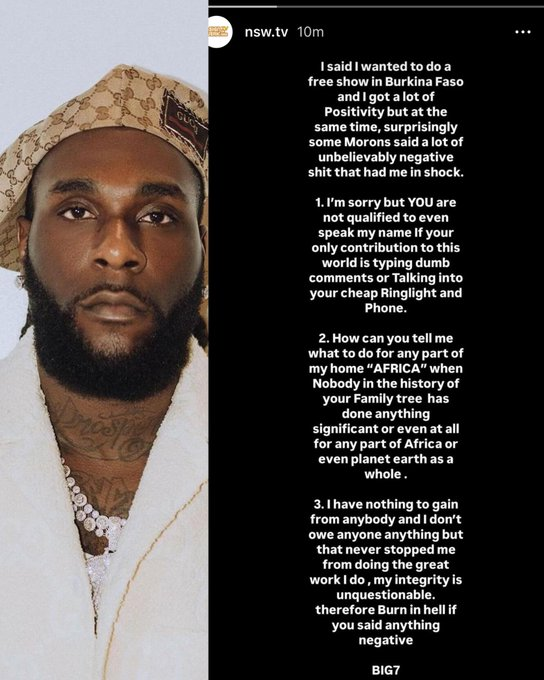
    Afrobeat superstar Burna Boy, has fired back at critics in a scathing social media outburst after reports emerged that Burkina Faso’s military leader, President Ibrahim Traoré declined his offer to stage a free concert in the West African country.

    The Grammy-winning artist, known for his outspoken nature, was left frustrated not just by the reported snub from the Burkinabé government but by the wave of backlash and trolls that followed his proposed gesture.

    In a fiery post shared on X, Burna Boy made it clear that while his intentions were genuine, the unwarranted criticism he received from trolls and online commentators had crossed a line.

    “I have nothing to gain from anybody, and I don’t owe anyone anything—but that never stopped me from doing the great work I do. My integrity is unquestionable. Therefore, burn in hell if you said anything negative,” Burna Boy wrote.

    President Ibrahim Traoré reportedly declined the offer for a free concert, citing that Burkina Faso needed no distractions amid current national challenges.

    Mr Traoré is currently prioritizing economic self-reliance by taking control of the gold mining industry, suspending

    Months ago, Burna Boy encouraged aspiring Nigerian musicians to strive for excellence above the excitement of social media attention and local popularity.

    In a viral post, he warned that the buzz from Twitter polls and support on social media might seem exciting, but doesn’t necessarily lead to long-term career growth.

    He advised Nigerian artists to focus on bigger goals rather than celebrating local chart positions, which may not bring much financial benefit.

    He highlighted the difference in earnings from music streams depending on location.

    For example, one million streams in Nigeria might only earn an artist about $300 to $400, while in countries like the UK, US, or in Europe, the same number of streams could generate $3,000 to $4,000 or more.

    Burna Boy emphasized that reaching the top of Nigerian charts should not be seen as a major accomplishment if it doesn’t lead to significant income or international recognition.

    He encouraged artists to aim higher, targeting global markets, or to consider diversifying their careers with other business ventures to secure financial stability alongside their music.

    Read post below:

  • Burkina Faso resumes grain exports to Ghana 

    Burkina Faso resumes grain exports to Ghana 

    Ghana’s Special Envoy to the Alliance of Sahel States (AES), Larry Gbevlo-Lartey, has revealed that President John Mahama has successfully resolved the challenges stemming from Burkina Faso’s military government’s decision to ban grain and cereal exports.

    To demonstrate their commitment, Burkinabe authorities have agreed to lift restrictions on 23 trucks carrying beans that were previously seized. Additional shipments of cereals meant for Ghana are also expected to be released in the coming days.

    Ghana, which depends on imports from Burkina Faso, had faced concerns over possible supply shortages and rising prices due to the ban.

    However, after President Mahama’s diplomatic engagements in the AES region, Gbevlo-Lartey is confident that relations between both countries have been strengthened.

    During an interview with Blessed Sogah on Connect Africa, he explained: “President Mahama has successfully addressed the situation, and further discussions between key stakeholders from both sides will ensure a concrete resolution. The issue is largely settled. For instance, 23 trucks that had been held up have been released, and the Burkinabe authorities have assured President Mahama that the remaining eight will also be let through shortly.”

    Meanwhile, on January 29, the Economic Community of West African States (ECOWAS) confirmed that Mali, Burkina Faso, and Niger had officially exited the bloc after the end of their six-month grace period.

  • We’re not shedding load – Energy Minister

    We’re not shedding load – Energy Minister

    The Energy Minister, John Jinapor, has indicated that the recent power outages in the country are not part of a planned rationing scheme.

    According to him, Ghana has enough power supply, making calls for a load-shedding timetable unnecessary.

    Addressing the press on Friday, March 7, he noted that neighboring countries such as Burkina Faso and Benin are currently tapping about 300 MW of Ghana’s power.

    “Today let me put on record that we are not shedding load and so the demand of the Minority and some people that we publish a load shedding timetable is mute when you are not shedding load there is no need for a timetable. In fact as we speak, we are exporting 300mgt of power aside Ghana to Burkina, Benin and neighboring countries,” Mr Jinapor said.

    His comment falls on the back of the Minority in Parliament’s request for a load-shedding timetable to help businesses and individuals manage the ongoing power crisis. Former Finance Minister, Mohammed Amin Adam, made this demand during a press conference on Monday, March 3.

    But this call has been shot down by the sector minister.

    Meanwhile, Mr Jinapor has revealed that government has put out several measures that will help address the challenges in the energy sector. The government has plans to construct a second gas processing plant, the minister said.

    “Our gas today is inadequate to meet our fuel requirement; consequently, Cabinet has approved… measures aimed at tackling the situation. In the medium, long or even the short term, Cabinet has approved that in partnership with the Finance Ministry, it will take immediate steps to construct a second gas processing plant.”

    “This gas processing plant will augment the shortfall and increase supply security,” he added.

    Ghana’s energy sector is under pressure due to increasing debt and liquidity challenges, which have hindered power generation and distribution.

    The financial strain, now exceeding US$2 billion, has slowed investments in infrastructure and technological upgrades critical for ensuring a reliable and sustainable energy supply.

  • Halt importation of cereals from Burkina Faso to avoid sanctions – Foreign Ministry to businesses

    Halt importation of cereals from Burkina Faso to avoid sanctions – Foreign Ministry to businesses

    The Ministry of Foreign Affairs has directed Ghanaian traders and businesses to suspend the importation of cereals and white beans from Burkina Faso, following that country’s continued ban on their export.

    In a statement released on Tuesday, February 25, the Ministry emphasized the need for full compliance with Burkina Faso’s trade restrictions to avoid penalties. It referenced official notifications from Burkinabe authorities—joint communiqués No. 023-0017 issued on December 19, 2023, and No. 024-0017 dated November 13, 2024—both of which reaffirm the prohibition on exporting key staples such as rice, millet, maize, sorghum, and cowpeas.

    The ban, initially announced in December 2023, is part of Burkina Faso’s strategy to protect domestic food security amid concerns over grain shortages and rising prices. The latest extension signals the country’s commitment to stabilizing its local food supply in response to challenging agricultural conditions.

    “Ghanaian traders and businesses involved in importing these commodities from Burkina Faso are advised to take note of this directive and comply accordingly to avoid any sanctions or confiscation of goods,” the Ministry cautioned.

    The restriction is expected to impact Ghana’s local markets, where cereals from Burkina Faso form a crucial part of the food supply chain. Industry analysts warn of potential price hikes and disruptions, particularly for businesses that rely on imports from Ghana’s northern neighbor.

    Traders, especially those operating along border regions, have been urged to explore alternative sources to minimize supply chain disruptions.

    “We understand the implications for Ghanaian businesses, but compliance is crucial to maintaining smooth bilateral trade relations,” the Ministry noted.

    Ghana’s diplomatic missions in Burkina Faso and border authorities have been tasked with monitoring the situation and providing necessary support to affected traders. The Foreign Ministry further encouraged businesses to stay informed on developments and liaise with relevant authorities for guidance.

    As food security challenges persist across West Africa, the Ministry assured the public that it will continue engaging its Burkinabe counterparts to explore solutions that mitigate economic disruptions while respecting Burkina Faso’s domestic priorities.

    For now, Ghanaian businesses are advised to exercise caution, adhere to trade regulations, and consider alternative sourcing options to sustain food supply and price stability.

  • Passports of Burkina Faso, Mali, Nigerian citizens bearing ECOWAS logo to remain active despite ECOWAS withdrawal

    Passports of Burkina Faso, Mali, Nigerian citizens bearing ECOWAS logo to remain active despite ECOWAS withdrawal

    Despite the formal withdrawal of Burkina Faso, Mali, and Niger from the Economic Community of West African States (ECOWAS) on January 29, 2025, citizens from these countries will still be able to use their national passports and identity cards bearing the ECOWAS logo for travel within the region.

    ECOWAS has assured that in the interest of regional cooperation and to prevent unnecessary disruptions, all relevant authorities within and outside the bloc’s member states should continue to recognize these travel documents until further notice.

    Additionally, trade and economic activities involving these three nations will not face immediate restrictions. Goods and services from Burkina Faso, Mali, and Niger will continue to receive the same treatment under the ECOWAS Trade Liberalization Scheme (ETLS) and investment policy.

    Citizens from the affected countries will also retain their right to visa-free movement, residence, and establishment across ECOWAS states, ensuring that travel and cross-border activities remain unhindered. Furthermore, officials from Burkina Faso, Mali, and Niger working within ECOWAS will be given full support and cooperation in carrying out their assignments.

    These measures will remain in place as ECOWAS leaders work on defining the future relationship between the bloc and the three nations. A special structure has been put in place to facilitate discussions on the next steps.

    The regional body emphasized that these transitional arrangements aim to maintain stability, minimize confusion, and support the people and businesses affected by the withdrawal.

  • Report of militants using Northern Ghana misleading – Palgrave

    Report of militants using Northern Ghana misleading – Palgrave

    The government has firmly rejected claims that Islamist militants from Burkina Faso are utilizing parts of northern Ghana as covert bases for logistical and medical support.

    This rebuttal follows a Reuters report alleging that militants operating in Burkina Faso were discreetly leveraging Ghana’s northern region to sustain their insurgency.

    According to Reuters, several sources, including Ghanaian security officials and regional diplomats, indicated that insurgents have been crossing into northern Ghana to procure supplies like food, fuel, and explosives, as well as to receive medical treatment. The report suggested that Ghanaian authorities were turning a blind eye to these activities.

    In response, Palgrave Boakye-Danquah, the government spokesperson on security matters, dismissed the allegations as unfounded during an appearance on Eyewitness News on Friday, October 25, 2024. He emphasized that interactions between Ghana and Burkina Faso are primarily trade-related and legitimate, and the government remains vigilant in monitoring any potential threats to national security.

    “I want to put out very clearly that the Reuters story is misleading,” Boakye-Danquah stated. He clarified that cross-border activities involve legitimate trade and official transactions, rejecting the report’s insinuations as misrepresentative and lacking concrete evidence.

    Peter Lanchene Toobu, Deputy Ranking Member on Parliament’s Defence and Interior Committee, echoed support for Ghana’s security agencies, highlighting their professionalism and dedication to national security. He assured the public that collaborative efforts with Burkina Faso are solid, with security agencies remaining vigilant to maintain peace and stability in Ghana.

  • Ghana will be vulnerable to terrorism if we don’t join forces with Burkina Faso – Ambassador

    Ghana will be vulnerable to terrorism if we don’t join forces with Burkina Faso – Ambassador

    Ghana’s Ambassador to Burkina Faso, Boniface Gambila Adagbila, has warned that without collaborative efforts to combat terrorism with Burkina Faso, Ghana risks becoming vulnerable to attacks.

    His remarks come in response to a Reuters report alleging that Islamist militants are using northern Ghana as a covert base for logistical and medical support.

    The report claims that these militants are crossing into Ghana to obtain essential supplies such as food and fuel, as well as medical treatment for injured fighters. It also suggests that local authorities might be ignoring these incursions to avoid potential threats to Ghana’s security.

    Speaking on Joy FM’s Top Story, Ambassador Adagbila dismissed these allegations, emphasizing the importance of supporting Burkina Faso in its ongoing battle against insurgents linked to groups like al-Qaeda and the Islamic State. He noted that Burkina Faso has been enhancing its counter-terrorism strategies and urged travelers to follow proper procedures when crossing the border.

    “Burkina Faso has been improving daily in its combating of terrorism, and we normally advise people not to move in anyhow but through the proper channels of traveling to and from Burkina Faso because you don’t know what can happen at any time,” he stated. “One of the objectives of these insurgents or terrorists is to take control of the world. Burkina Faso is between the Sahel and Ghana, so if we don’t support Burkina Faso to win the terrorism battle and the terrorists capture Burkina Faso, which country will be their next target? Logically, Ghana will be vulnerable to terrorism,” he told host Samuel Kojo Brace on Friday.

    The ambassador underscored the gravity of the situation, noting that Burkina Faso has lost a considerable portion of its territory to these militants.

    He called for regional collaboration, asserting that supporting Burkina Faso is essential for preventing the spread of terrorism into Ghana and neighboring countries.

    His statements highlight the escalating threat of terrorism in the region and stress the necessity for Ghana to bolster its border security while actively engaging in counterterrorism initiatives with Burkina Faso.

    “Burkina Faso, for us, is fighting terrorism, and we need to support them so that they can win that fight. Security-wise, we can be preventive and proactive,” he concluded.

    While Ghana has thus far managed to avoid significant terrorist attacks, the potential for insurgency remains a serious concern.

  • Burkina Faso Security Minister alleges foreign plot against nation

    Burkina Faso Security Minister alleges foreign plot against nation

    Burkina Faso’s Security Minister Mahamadou Sana has disclosed that individuals residing in Côte d’Ivoire have been implicated in subversive activities aimed at destabilizing Burkina Faso.

    In a televised address on Monday night, the minister specifically accused 14 individuals of conspiring against the state, including junta opponents, the leader of the January 2022 coup, two former ministers, and two journalists. He also mentioned the involvement of unidentified conspirators, believed to be Western intelligence officials.

    According to authorities, a sophisticated three-phased plot was orchestrated by Burkinabé civilians and servicemen living abroad, who allegedly financed and trained armed groups to carry out attacks within Burkina Faso. The minister noted that both economic operators and civil society leaders were involved in these destabilization efforts.

    The proposed plan’s first phase reportedly included a jihadi attack that resulted in the deaths of at least 100 people in central Burkina Faso last month. The subsequent phases aimed at attacks on critical targets, including the presidential palace, a military drone base, and an airport, with the final phase focusing on assaults near the Ivory Coast border.

    However, Minister Sana stated that all phases of the plot have been thwarted. He revealed that several arrests were made in Niger, leading to the dismantling of a significant portion of the conspiracy.

    In response to the threats, the government has initiated a special anti-terrorist operation to neutralize any remaining dangers. The authorities have also issued a warning that such destabilizing activities will not be tolerated, urging the families of the alleged plotters to denounce their actions and distance themselves from any subversive activities.

  • Blood shed in Burkina Faso as Islamist attacks on churches increase

    Blood shed in Burkina Faso as Islamist attacks on churches increase

    A report from Human Rights Watch (HRW) indicates that Islamist insurgents in Burkina Faso have intensified their attacks on civilians, engaging in door-to-door killings, throat-slitting, and targeting Christian worshippers.

    The report cited statistics revealing that over 6,000 deaths have occurred in the West African nation in the first eight months of this year, including approximately 1,000 civilians killed by Islamist militants.

    Since 2016, Burkina Faso has been grappling with jihadist groups affiliated with al-Qaeda and the Islamic State (IS).

    After Captain Ibrahim Traoré took power in a coup two years ago, he promised to address the severe security challenges within “two to three months.” Nevertheless, the violence has only increased since then.

    Released on Wednesday, HRW’s report documents gruesome atrocities committed by jihadists.

    Attacks are often carried out in retaliation against communities who have refused to join the ranks of the jihadists or have been accused of collaborating with government troops, HRW said.

    A February attack on church worshippers in the north-eastern village of Essakane left 12 dead.

    “I saw a huge pool of blood and traces of blood all over the church, as well as bullet marks on the benches,” one survivor, who lost his brother at the hands of the assailants, was quoted as saying.

    The Islamic State in the Greater Sahara (ISGS), one of the key militant groups in Burkina Faso, claimed responsibility for the attack.

    Al-Qaeda linked group Jama’at Nusrat al-Islam wal-Muslimin (JNIM) fighters were also highlighted several times in the report.

    “The jihadists opened fire in the village indiscriminately,” said a 35-year-old farmer who witnessed an attack by alleged JNIM fighters in the town of Sindo, Hauts-Bassins region, on June 11.

    “We found bodies in the village, on the outskirts and in the bush.… Some were shot, others had their throats slit,” another resident said.

    Witnesses also said that in June, militants stormed the town of Mansila after killing dozens of soldiers at an army base nearby. The locals told HRW that jihadists went door-to-door, ordering people out of their homes and killing men they accused of collaborating with the army.

    HRW said that Burkina Faso’s army and civilian groups affiliated to it have also committed atrocities during operations against the insurgents.

    A previous report from the watchdog accused the Burkinabè military of massacring at least 223 civilians in February.

    Large swathes of the West African country are run by the jihadist groups, leaving the government in control of just roughly half of nation.

    Quoted in HRW’s report, the Armed Conflict Location and Event Data Project (ACLED) has recorded more than 6,000 deaths in the first eight months of the year, including around 1,000 civilians killed by jihadist groups.

    These figures do not include the 100 to 400 civilians killed in an attack on August 24 in the northern town of Barsalogho, HRW said.

    JNIM claimed responsibility for the massacre.

    Experts told the BBC that the scale of the Barsalogho attack points to a larger problem in the Burkina Faso’s security architecture.

    “The country is yet to come up with a security strategy that can defend not just the people, but also its territorial integrity,” said David Otto, an international defence and security analyst.

    Ryan Cummings, who has co-written a book on the Islamic State in Africa, said: “We often hear reports by some commanders in the Burkina Faso military that they have less ammunition than what the insurgents have access to, and that’s a worrying development.”

    Burkina Faso has pivoted towards Russia for military aid after breaking its decades-old alliance with former colonial power France.

    It has also formed an alliance with two other pro-Russian juntas in the region – Mali and Niger – to fight the jihadists.

    Mr Otto says the three juntas have still been unable to consolidate their power, making it difficult for them to focus on the jihadist threat.

    Mr Cummings said that successive governments had not done enough to professionalise Burkina Faso’s armed forces, leaving troops without adequate training and weapons.

    The insurgents operate across the region, and JNIM claimed responsibility for an assault on Mali’s capital, Bamako, on Tuesday.

    A military training school and the country’s main airport were attacked.

    The army acknowledged suffering losses but did not specify the number of casualties.

  • Denmark set to shut its embassies in Mali and Burkina Faso

    Denmark set to shut its embassies in Mali and Burkina Faso

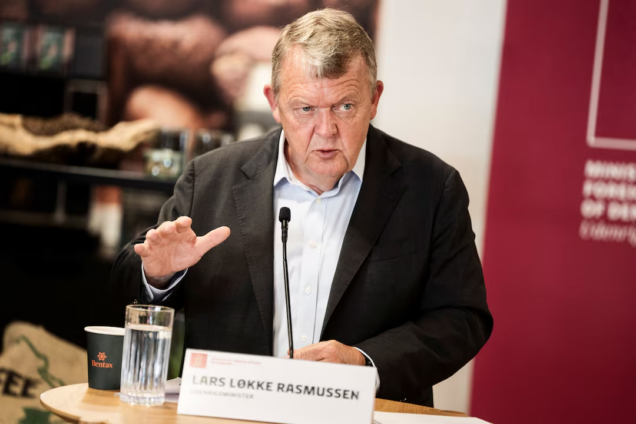
    Denmark announced on Monday that it will be closing its embassies in Mali and Burkina Faso, following a series of military coups in these countries. This decision aligns with Denmark’s new strategy for its engagement with Africa.

    Mali, which has been under military rule since 2020, has faced ongoing conflict with Tuareg rebels in the north and has aligned itself with Russia’s Wagner mercenary group after severing military ties with Western allies, including EU nations.

    The shifting alliances have strained relations between Mali, Niger, Burkina Faso, and Western countries, as these nations increasingly turn to Russia for support.

    The Danish foreign ministry noted that the persistent instability and the failure of local authorities to restore security have severely limited diplomatic options in the Sahel region.

    Consequently, Denmark is adjusting its diplomatic focus and will now open embassies in Rwanda, Senegal, and Tunisia, while also expanding its staff in existing embassies in Egypt, Kenya, South Africa, Nigeria, and Ghana.

    Mali’s Ministry of Foreign Affairs has not yet responded to requests for comment on Denmark’s decision.

    “One of the most important foreign policy questions of this century will be whether African countries will orient themselves more towards the East or the West,” the Danish foreign ministry said in a statement.

    “We have a clear interest in African countries looking to us in Europe to set the course for their future,” it added.

  • Burkina Faso to spill water from Bagre Dam on Aug. 19

    Burkina Faso to spill water from Bagre Dam on Aug. 19

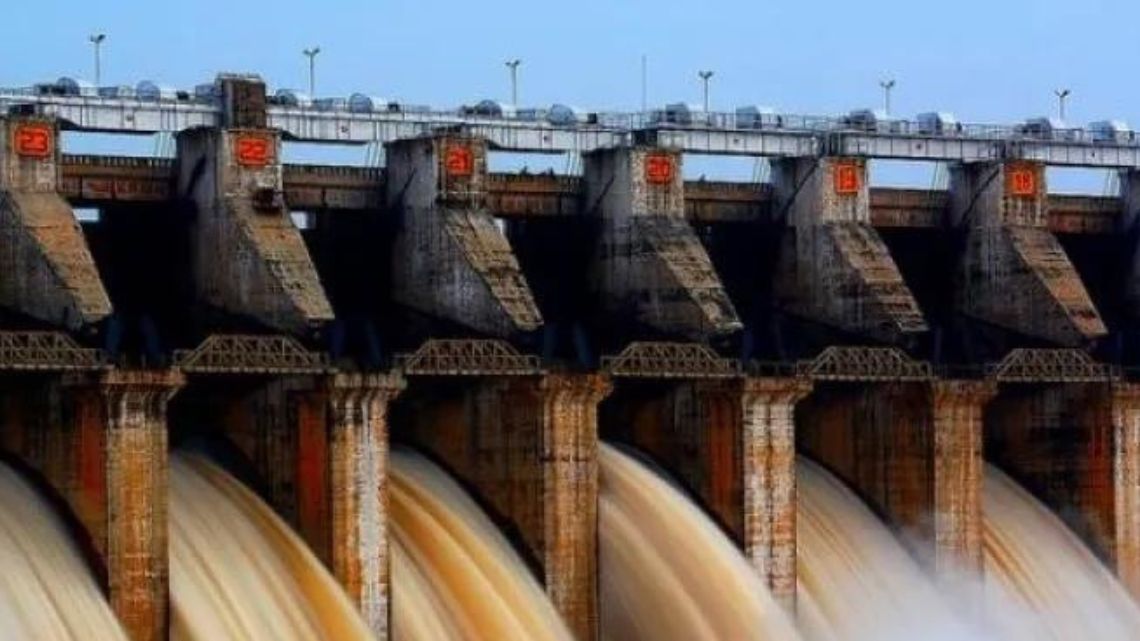
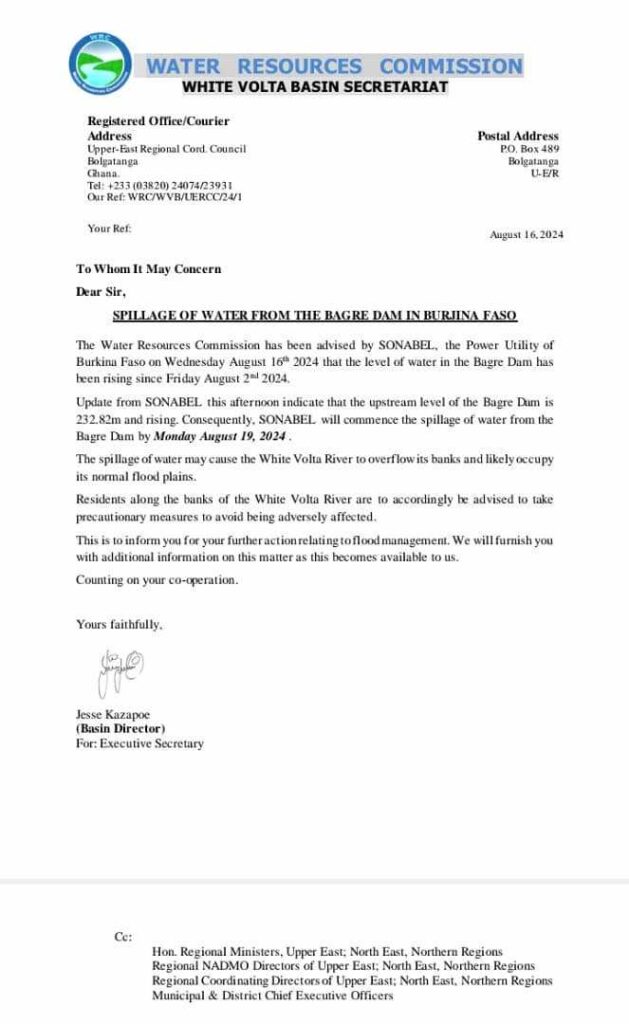
    The Power Utility of Burkina Faso, SONABEL, has announced that it will begin releasing water from the Bagre Dam on Monday, August 19, 2024.

    This decision comes in response to rising water levels upstream, which have reached 232.82 meters.

    The White Volta Basin Secretariat of the Water Resources Commission issued a notification to the Regional Ministers and NADMO Directors of the Upper East, North East, and Northern Regions on August 16.

    The letter emphasized that the spillage is necessary to manage the high water levels and advised residents living along the White Volta River to take appropriate precautions.

    The Commission has assured that they will provide further updates as more information becomes available, and urged local authorities to take action in relation to flood management.

    See below letter:

  • Fuel tanker from Burkina Faso overturns on Kintampo-Kumasi/Accra Highway

    Fuel tanker from Burkina Faso overturns on Kintampo-Kumasi/Accra Highway

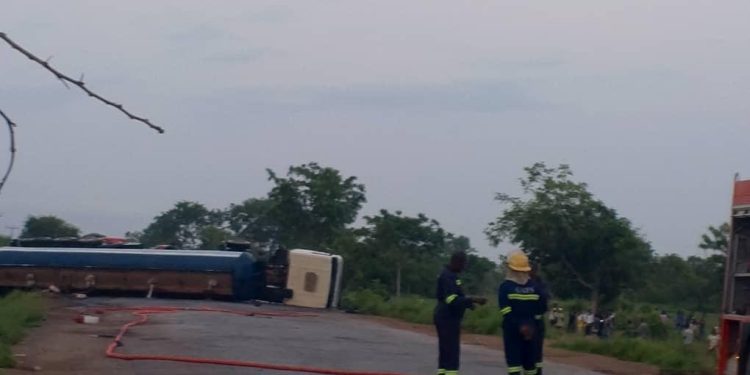
    A fuel tanker from Burkina Faso has overturned on the Kintampo-Kumasi/Accra highway, disrupting traffic since Friday, July 12, 2024.

    The accident occurred following a collision with a sedan, resulting in severe injuries to both drivers—the tanker driver losing an arm and the sedan driver losing both legs.

    The blockage at FulaniKrom has stranded hundreds of passengers in their vehicles, with concerns mounting over the risk of a fire or explosion.

    Despite the alarming situation, witnesses report that no visible efforts have been made by authorities to clear the tanker and restore traffic flow, exacerbating fears among those trapped at the scene.

    Passengers are urgently appealing for prompt intervention from relevant agencies to ensure their safety and alleviate the ongoing crisis on the highway.

    “We’ve been stuck here since Friday afternoon, with others saying they got here at 10 am. No food, no water, and as we speak right now at 1:40 am Saturday, there’s no solution yet,” said one passenger.

    “We’re told they need permission from the Burkina Faso authorities to discharge the fuel and reposition the tanker. But what if it explodes?” another passenger was questioned.

    According to another passenger who spoke on condition of anonymity, a fire service officer revealed that they have been keeping the temperature of the tanker under control since 11 am on Friday.

    The fireman also mentioned that all authorities have refused responsibility until the tanker is fully offloaded.

  • Heavy traffic on Accra-Kumasi Highway after trailer overturned

    Heavy traffic on Accra-Kumasi Highway after trailer overturned

    A trailer traveling from Burkina Faso to Accra has been involved in an accident at Asona, a town near Nkawkaw, the Eastern Region, off the main Accra-Kumasi Highway stretch.

    The cause of the trailer overturning, which blocked the highway, remains unclear. Fortunately, no casualties were reported.

    The accident has resulted in a significant traffic jam, leaving hundreds of travelers stranded for more than five hours.

    Frustrated commuters speaking to Channel One News urged authorities to expedite the dualization of the Accra-Kumasi Highway to prevent similar situations in the future.

    “So what I noticed on the road was a vehicle that had fallen off and blocked the main highway and that has led to this serious gridlock, those coming from the Accra side tried using the part of vehicles from Kumasi and vice versa and that is also part of what we are all witnessing here.

    “I have been sitting in my car for more than two hours now, but people I enquired from said the gridlock started in the morning, I will suggest that the Accra Kumasi highway is dualized immediately because these single lanes have not been helpful over the years.”

  • Speculation of a mutiny in Burkina Faso fueled by attack on an army base – Report

    Speculation regarding internal unrest within Burkina Faso’s security forces has intensified following an attack on an army base, allegedly resulting in the deaths of over 100 soldiers.

    This comes as the country remains under military rule since 2022. The leader of the military junta has made an appearance on state television to dispel these rumors.

    Burkina Faso has been grappling with Islamist insurgency for years, with approximately half of the nation beyond government control.

    The jihadist group Jamaat Nusrat al-Islam wal-Muslimin (JNIM) has claimed responsibility for the attack in the northern town of Mansila, which occurred last Tuesday.

    The day after the assault, there was an explosion near the state television headquarters.

  • Black Starlets fail to qualify for U-17 AFCON after Burkina Faso defeat

    Black Starlets fail to qualify for U-17 AFCON after Burkina Faso defeat

    The Black Starlets‘ hopes of returning to the next edition of the U-17 Africa Cup of Nations were dashed on Saturday as they lost to Burkina Faso.

    Ghana fell 2-1 to the Stallions at the University of Ghana Stadium, exiting the WAFU B U-17 Africa Cup of Nations at the semifinal stage.

    Joseph Narbi equalized in the first half after Burkina Faso took the lead, but Ghana couldn’t find another goal as Asharaf Tapsoba netted a brace.

    A defensive mix-up between goalkeeper Michale Armah and a defender led to Tapsoba’s first goal, as he took advantage of the error to score into an empty net.

    Despite Ghana’s efforts to equalize, they were unable to capitalize on their chances. Narbi scored Ghana’s only goal with a curled effort into the top right corner.

    Burkina Faso regained the lead early in the second half, with Tapsoba scoring his second goal by running between Ghana’s center-backs and hitting a low strike past Armah.

    Ghana tried to find another equalizer but struggled to break through Burkina Faso’s defense. The match ended 2-1 in favor of Burkina Faso, ending Ghana’s hopes of qualifying for the next U-17 AFCON.

  • Ghana’s boundary line with Burkina Faso under threat due to illegal miners – REGSEC

    Ghana’s boundary line with Burkina Faso under threat due to illegal miners – REGSEC

    In the border community of Sapelliga in the Upper East Region, a thriving illegal mining industry operates, with numerous young people engaging in mining activities daily.

    However, these operations not only pose a grave threat to the environment but also to the international boundary line between Ghana and Burkina Faso.

    To address this situation, the Ghana Boundary Commission and the Upper East Regional Security Council have taken action.

    Addressing the illegal miners on Tuesday, May 14, the Head of REGSEC and Upper East Regional Minister, Hafiz Bin Saleh, expressed grave concern about the potential exploitation of the situation by terrorists to finance their activities.

    He urged the illegal miners to cease their activities immediately and vacate the area.

    “There are insurgents there and there are terrorists who want to infiltrate our country and to be able to perpetrate what they are doing, they need finance so they engage in what you people are doing.

    So in order to save the people of this country want to stop issues of this nature so that people don’t have means of funding their nefarious activities.

    “So please, it is for that reason that we are putting this measure in place to save this country and to save the people of this country. We are enjoying peace and we must appreciate the peace we are enjoying. We will not allow the interest of any individual or any group of persons to affect the peace does the country Ghana is enjoying,” he said.

    Illegal miner Abille Fatawu revealed that he relies on income from galamsey to fund his education.

    “I started this work when I was in SHS 1… when I vacate I come here and work. When I get small [money], I use it to also help in my education,” he told JoyNews.

    He is currently at the tertiary level and remains committed to this mining job as his source of fund.

    “It is through this that I got money to get to where I am now.”

    Commissioner-General of the Ghana Boundary Commission, Maj Gen Emmanuel Kotia, highlighted how the activities of illegal miners threaten the international boundary line between Ghana and Burkina Faso.

    He mentioned the destruction of boundary pillars, which could lead to territorial disputes and emphasized the need for patrol routes to address these challenges.

    “Some of these activities lead to remove off international boundaries pillars. And for that matter, there was no clarity so far as the markings of the boundary is concerned and then because we have quite a sizable number of people coming from Burkina Faso to do a lot of illegal activities here, if we don’t take care whiles these boundary pillars are removed some of our territories can be taken or probably can be declared as part of Burkina Faso, because these markings are no visible on the ground.

    “That is the reason why one we have decided to facilitate the construction of the patrol routes,” Maj Gen Kotia explained.

  • Ghana has become a hideout for extremists – Ambassador to Burkina Faso

    Ghana has become a hideout for extremists – Ambassador to Burkina Faso

    Ghana’s Ambassador to Burkina Faso, Boniface Gambila Adagbila, has stated that terrorists from Burkina Faso and other Sahel regions enter Ghana, access Ghanaian hospitals, and return to their originating locations.

    During a discussion in the Upper East Region, he highlighted the alarming threats posed by terrorism spilling over from neighboring Burkina Faso and the broader Sahel region, especially impacting West African coastal nations.

    “The serious threat is between Burkina and Niger and Mali, and then to the east, and then to the west, that is where the terrorists movement occurs most. Believe it or not, they are able to come into Ghana and go back. Yes, they move in and go back, and they roam, they come to our hospitals and go back. But governments are working at that. It’s not something we need top dilate so much about.

    “They also know… when they are attacked north, north-east, west, they think that they have a safe haven coming down south of Burkina and they come as far as to our frontiers, and we need to be careful.”

    While acknowledging ongoing governmental efforts to address this menace, he stressed the need for vigilance.

    Additionally, Ambassador Adagbila noted that seven Ghanaians who disappeared after entering Burkina Faso last year remain unaccounted for.

    He advised travelers to strictly adhere to approved routes and official document processing procedures to mitigate risks, emphasizing the collaborative efforts between the two nations to locate the missing individuals.

    Highlighting similar concerns, National Security Minister Albert Kan-Dapaah questioned the inability of security agencies in affected countries to neutralize the terrorist threat.

    His remarks were made during an event organized by the Kofi Annan International Peacekeeping Training Centre (KAIPTC), in partnership with Japan and the United Nations Development Programme (UNDP), focused on bolstering capacities to implement the Accra Initiative in West Africa and the Sahel.

    Japanese Ambassador to Ghana, Hisanobu Mochizuki, pledged substantial financial support totaling approximately USD 500 million over the next three years.

    This contribution aims to foster peace, stability, and sustainable growth in the Sahel region and neighboring Gulf of Guinea coastal nations.

  • Journalists forced into military service in Burkina Faso – Report

    Journalists forced into military service in Burkina Faso – Report

    The West African director of Reporters Without Borders (RSF), Sadibou Marong, has informed the BBC that journalists in Burkina Faso are now being targeted for forced conscription into the army.

    In an interview with the Africa Daily podcast, Mr. Marong stated, “They dared to criticize the government, and now they have been summoned to join the army.”

    Acknowledging previous instances of enrolling critics into the army, the military-led government has openly admitted to this practice.

    According to Mr. Marong, the transitional assembly passed legislation granting authorities the power to identify and compel young individuals to serve in the military.

    He revealed that he has been in contact with two journalists who have received official summonses to enlist in the army. One journalist complied and served for a month before fleeing near the border with Ivory Coast.

    This development follows a recent crackdown on foreign media outlets. The BBC, Guardian, and Le Monde have faced suspension for their coverage of a report by US-based Human Rights Watch (HRW), which accused the Burkinabe army of killing 223 civilians in February.

    Despite these allegations, Burkina Faso authorities have dismissed the reports.

  • Over 200 people killed by Burkina Faso military forces during attack on village

    Over 200 people killed by Burkina Faso military forces during attack on village

    The military in Burkina Faso attacked two villages and killed 223 people, including babies and children. The villages were accused of helping militants. Human Rights Watch reported this on Thursday.

    The mass murder happened in February. According to the report, 25 people in the northern villages of Nondin and Soro died, and 56 of them were children. The human rights group asked the United Nations and the African Union to send investigators and help the local community make sure the people who did wrong are punished.

    The UN spokesperson, Stephane Dujarric, said that the UN has not confirmed the attack, but finds the reports very disturbing and will investigate them.

    “The recent killings in Nondin and Soro villages show that the Burkina Faso military has been killing many civilians in their efforts to fight insurgents,” said Tirana Hassan, who is the head of Human Rights Watch. International help is very important in making sure that a fair investigation is done to find out if people have committed really serious crimes against others.

    The country used to be peaceful, but now there is a lot of fighting between groups linked to al-Qaida and the Islamic State, and the government’s forces. Both groups have hurt innocent people in the middle and made more than two million people leave their homes. Over half of them are kids. In a country with a strict government that silences anyone who disagrees with them, most attacks are not reported or punished.

    The HRW report tells stories from people who survived attacks in Burkina Faso. There has been a lot of civilian deaths caused by the security forces, who are trying to fight against a growing jihadi group. They are attacking people and saying it’s part of their fight against terrorism.

    In April, The Associated Press confirmed reports about a Nov. 5 soldiers from one village attacked another village and killed at least 70 people. The army said the villagers were helping the militants, so they killed them, including babies.

    Witnesses and survivors explained to HRW that the February. 25 people were killed because of an attack on a military camp by Islamist fighters near the city of Ouahigouya.

    More civilians died than local officials first said. A lawyer said they are looking into the deaths of 170 people in attacks on villages.

    A spokesperson for the government of Burkina Faso did not reply when asked for a comment about the February incident. 25 people were attacked. Authorities had said they didn’t kill innocent people and mentioned that fighters who support jihadi often pretend to be soldiers.

    Over 20,000 people have been killed in Burkina Faso because of jihadi attacks by groups like al-Qaida and the Islamic State. This has been happening for nine years. This information comes from a nonprofit group based in the United States.

    In 2022, Burkina Faso had two times when the government was taken over by force. Ever since the military took control in September 2022, the group led by Captain. Ibrahim Traoré said he would stop the militants, but experts say that the violence has only gotten worse. Approximately half of Burkina Faso’s land is not controlled by the government.

    Upset because they haven’t made much progress with Western military help, the military government has stopped working with France and is now getting help from Russia instead for their security.

  • Ghana faces economic and security implications over power cuts to Burkina Faso – Kwabena Donkor

    Ghana faces economic and security implications over power cuts to Burkina Faso – Kwabena Donkor

    Former Power Minister, Dr. Kwabena Donkor, has cautioned that Ghana could encounter economic and security challenges due to a decrease in electricity exports to Burkina Faso.

    He emphasized that despite Ghana’s contractual obligations with the neighboring country, failure to fulfill these agreements might prompt Burkina Faso to seek alternative solutions.

    Dr. Donkor warned that if Burkina Faso decides to construct a dam as an alternative, it could impact Ghana’s electricity production.

    Speaking on JoyNews, he explained, “For example, Ouagadougou, the capital of Burkina Faso, other than solar, is totally dependent on power from Ghana 100%. If you give Burkina Faso and Sunnabel zero (power) whether peak or off-peak, it means they are in darkness.

    “It has both economic and security implications, as well as even strategic implications. Let’s take the strategic implication first. If I were Burkinabe or was in the leadership of Burkina Faso, one I will say supply from Ghana is unreliable, why don’t you look for alternate sources?

    His remarks come after a directive was issued to limit electricity exports to other countries until Ghana’s power crisis is resolved.

    Samuel Atta Akyea, Chairman of the Mines and Energy Committee of Parliament, hinted at reducing power exports as a measure to tackle the erratic power supply.

    However, Dr. Donkor criticized this approach as short-sighted and potentially problematic. He highlighted concerns about breaching contractual obligations and the impact on Ghana’s domestic supply.

    Dr. Donkor also noted the challenge of erratic payments for power purchased by the Electricity Company of Ghana from the Bui Power Authority, which threatens the authority’s operations.

    “And the alternate sources could be building more dams, mini dams in Burkina. Remember, the Volta takes its source outside Ghana. So if they begin to build more dams, it will affect our generation. So we must always have that in mind.”

    “And it was so short-sighted. Okay, in order to boost domestic supply, let’s breach our contractual obligations. [But wouldn’t that come with implications?] Absolutely,” he added.

    “Bui, there was an overdrafting of Bui late last year till now, so Bui’s generation has to slow down and it’s slowing down because if it doesn’t slow down, then the reservoir will run out. So Bui’s contribution now, in terms of quantum, is going down.

    “Well, Bui has a challenge. ECG is Bui’s only off-taker. And when ECG is unable to pay, in fact, there have been months when Bui has had to take a bank overdraft to pay salaries. Because ECG was unable to pay them.”

  • Akufo-Addo’s directive to stop exportation of electricity to Togo and Burkina Faso commendable – IPGG

    Akufo-Addo’s directive to stop exportation of electricity to Togo and Burkina Faso commendable – IPGG

    The Independent Power Generators Ghana (IPGG) has praised President Akufo-Addo for his directive to the Volta River Authority to cease the exportation of electricity to neighboring nations such as Togo and Burkina Faso.

    While acknowledging that this suspension may not entirely resolve the current energy crisis, the group emphasized that it will certainly offer some relief and stability within the domestic market.

    Samuel Atta Akyea, Chairman of the Energy Committee of Parliament, disclosed on Tuesday, April 2, 2024, that President Akufo-Addo has instructed the Volta River Authority (VRA) to reduce electricity exports to neighboring countries due to the ongoing intermittent power outages, commonly known as ‘dumsor’.

    In a statement issued by Dr. Elikplim Kwabla Apetorgbor, CEO of IPGG, the group expressed satisfaction with the president’s decision.

    “We are pleased that H.E. the President, as reported by the Chairman of Parliament’s Committee on Energy, Hon. Samuel Atta Akyea, who also serves as the MP for Abuakwa South, has directed the VRA to suspend electricity exports to our neighbors.

    “We are gladdened that H.E. President is reported by the Chairman of Parliament’s Committee on Energy, Hon. Samuel Atta Akyea, who doubles as the MP for Abuakwa South, as having ordered the VRA to suspend electricity export to our neighbours.

    “This action will go a long way in providing some respite and stability to the domestic market by increasing supply, even though it may not solve the power supply challenge entirely. It is thus important and appropriate to commend H.E. the president of the republic for prioritising the domestic market which I the right thinking to do at this critical moment,” the statement added. 

  • Private plane crash in eastern Burkina Faso claims 5 lives

    Private plane crash in eastern Burkina Faso claims 5 lives

    A tragic incident unfolded in Burkina Faso’s eastern region as a private aircraft, carrying seven individuals, crashed into a tree on Wednesday during an unsuccessful takeoff attempt.

    The crash resulted in the loss of five lives and left two others injured, according to authorities.

    The ill-fated flight was departing from a local airport in the city of Diapaga en route to Fada N’Gourma when it veered off course and collided with a tree, as reported by Burkina Faso’s government news agency, Agence d’Information du Burkina.

    Emergency responders swiftly transported the injured individuals to a nearby health facility, while authorities initiated an investigation into the circumstances surrounding the crash, as stated by Burkina Faso’s Transportation Ministry in a formal statement.

    Photographs released by the government news agency depicted charred remnants of the aircraft strewn across the crash site, with onlookers gathering in the aftermath.

    At present, the reason behind the failed takeoff remains unclear.

    The Diapaga-Fada N’Gourma route has posed challenges in recent years due to the ongoing security crisis in the region and other parts of Burkina Faso. With approximately half of the nation beyond government control and enduring attacks from jihadist groups, travel routes have become increasingly hazardous.

  • Niger, Mali, Burkina Faso unite against Jihadists with joint force initiative

    Niger, Mali, Burkina Faso unite against Jihadists with joint force initiative

    Niger, Mali, and Burkina Faso have declared their intention to establish a joint force to combat jihadist threats within their borders, as announced by Niger’s army chief Moussa Salaou Barmou.

    The specifics regarding the size and operational details of this force were not disclosed during Barmou’s televised speech on Wednesday, following discussions held in the capital Niamey.

    Over the past year, groups affiliated with both Islamic State and al-Qaeda have perpetrated numerous deadly attacks in the region.

    The military administrations of these three nations have forged increasingly close ties in recent months, culminating in the formation of a mutual defense pact known as the Alliance of Sahel States (AES) last September, leading to their withdrawal from the international G5 force established to combat Islamist extremism in the region.

    Despite promises by the military regimes to address the decade-long conflict with jihadist groups, violence in West Africa’s Sahel region has escalated. Furthermore, all three countries have severed their relationships with France, their former colonial power, which maintained a significant military presence in the Sahel for years.

    Mali’s leaders have also instructed the UN peacekeeping mission Minusma to withdraw “without delay,” a process that was completed in December.

    In response, the military regimes have strengthened their ties with Russia, which has stepped in to fill the resulting vacuum.

    Additionally, they have announced their departure from the West African economic bloc Ecowas, having previously been suspended from it.

    Ecowas has been urging the military regimes to swiftly return to democratic governance and has imposed travel and economic sanctions on them, some of which were recently lifted or relaxed as part of Ecowas’s efforts to promote dialogue.

    She said Mr Baldwin would argue that “it was not foreseeable that there was a real bullet in that gun”.

  • Dozens killed while praying in Burkina Faso mosque attack

    Dozens killed while praying in Burkina Faso mosque attack

    Officials in Burkina Faso reports that a mosque was attacked on the same day as a church, resulting in multiple casualties.

    The gunmen came to the mosque in Natiaboani town during early-morning prayers on Sunday.

    A resident of the area informed AFP that all the victims were Muslim and the majority of them were males.”
    Insurgents control over one third of Burkina Faso right now.

    According to reports, the attackers were Islamist fighters who also attacked soldiers and a local self-defence group on the same day.

    The news in the local media says that there were many armed attackers on motorcycles.

    Al-Qaeda’s group in the Sahel region said it took over an army base in Natiaboani, but there is no proof from other sources. It did not say that there was an attack on a mosque.

    Unconfirmed information on social media says that the number of people who died in the mosque attack might be more than what the officials have said.

    Natiaboani is in a dangerous part of Burkina Faso where many armed groups are active.

    On the same day, at least 15 people praying at a church were killed in an attack in Essakane during Sunday mass. A person from the church said that they think Islamist militants are responsible for the attack.

    No connection has been proven between the two attacks, but a newspaper in Burkina Faso called L’Observateur Paalga is asking if they were planned together.

    Attacks on religious leaders happen often in Burkina Faso.

    A priest was taken by force from the town of Djibo five years ago and has not been found. In 2021, the leader of the mosque in Djibo was taken by armed people and later found dead.

    Humanitarian workers say that Burkina Faso is one of the most overlooked crises in the world.

    For many years, there has been a lot of fear and uncertainty, causing over two million people to leave their homes. The UN says that one in four young children are not growing well because they don’t have enough food to eat.

    The army took control two years ago,saying they would defeat the rebels, but there is still fighting.

  • Price of goods, services in Ghana 3 times higher than Togo, Ivory Coast and Burkina Faso combined

    Price of goods, services in Ghana 3 times higher than Togo, Ivory Coast and Burkina Faso combined

    Ghana’s struggle with rising prices continues, as the year-on-year inflation rate for January 2024 sees a slight increase to 23.5%.

    This places Ghana among the Sub-Saharan African countries with the highest inflation rates, nearly three times the combined rates of neighboring Ivory Coast, Burkina Faso, and Togo.

    Within the ECOWAS bloc, both Ghana and Nigeria share inflation rates above 20%, with Nigeria’s nearing 30%. In contrast, neighboring countries like Ivory Coast, Togo, and Burkina Faso boast single-digit inflation rates.

    Burkina Faso, currently under military leadership, has an inflation rate of 4.3%, while Togo’s rate is as low as 2%. Ivory Coast, the 2023 AFCON winner, also boasts a single-digit inflation rate, currently at 3.1%.

    Ghana’s inflation has not touched single digits for almost four years, with the last instance occurring in March during a lockdown.

    Despite receiving close to $2 billion from the IMF, World Bank, and the African Development Bank within the past year and a half under the Extended Credit Facility Programme, Ghana is struggling to maintain healthy international reserves.

    The country’s Gross International Reserves have dropped from a historical peak of $11 billion, providing almost six months of import cover, to $5.9 billion as of January 2024, affording less than three months of import cover.

    This decline has intensified pressure on the local currency, the cedi, leading to its depreciation against major trading currencies such as the US dollar.

    The exchange rate fluctuations impact import duties and other costs, contributing to the rising domestic prices of imported goods. Food inflation stands at 27.1%, persistently rising for four consecutive months and surpassing the overall inflation rate of 23.5%. Ongoing border restrictions in Niger, Mali, and Burkina Faso continue to impact the prices of essential farm produce like onions and tomatoes imported into Ghana.

    Crucial ingredients for common household meals, including jollof, banku, and fufu, have recorded inflation rates above 40% in January. Fresh tomatoes, with a significant weight in determining national inflation, have surged by 52.3%. Other essential ingredients like cassava, fish, carrots, and garden eggs have inflation rates twice the national average.

    As the December 2024 general election approaches, Ghanaian voters prioritize key issues such as price stability, a resilient currency, and tackling unemployment. Addressing these concerns as the country faces economic headwinds has become paramount for the electorate.

  • Mining policies should be reviewed to attract foreign investors – Mining engineer

    Mining policies should be reviewed to attract foreign investors – Mining engineer

    Henry Antwi, a Mining Engineer, stresses the pressing need for Ghana to update its mining laws and policies to attract investments and maintain global competitiveness.

    He suggests that Ghana should draw inspiration from neighboring countries like Burkina Faso and Ivory Coast, which continually refine their mining policies to maximize benefits from mineral resources.

    Antwi points out that Burkina Faso and Ivory Coast have taken cues from Ghana’s mining policies and improved upon them to entice investors.

    Speaking at a public lecture in Kumasi, Antwi highlights the aspirations of many students studying in Ghana’s mining universities to develop human resources in the sector.

    The public lecture, themed “Harnessing the Transformative Power of Ghana’s Mineral Wealth for Human Development and Sustainable Economic Growth,” was organized by the College of Engineering at KNUST.

    Antwi underscores the significant role of mining in powering the global economy, creating employment opportunities, and influencing livelihoods.

    According to the Chamber of Mines’ 2022 Report, mining contributes about 19% to Ghana’s domestic tax receipts and approximately $6.8 billion in exports, with minerals accounting for 39%. Despite its significant contributions, the mining industry in Ghana faces challenges such as price fluctuations, declining ore quality, and exploration risks.

    Antwi emphasizes the importance of developing robust infrastructure, including efficient energy, ports, railways, and improving mineral governance to enhance transparency.

    Explaining that exploration is paramount in mining, Antwi suggests initiating tax credits to attract investors and streamlining the process of granting mining licenses. He proposes collaboration between academia and the Ghana Geological Survey Authority to create a comprehensive atlas of mineral sites to attract mining investors. Antwi urges Ghana to minimize administrative bottlenecks in granting mining licenses, which he believes are often influenced by political factors.

  • Ghanaian traders at risk in Burkina Faso, Niger, Mali over potential border closure

    Ghanaian traders at risk in Burkina Faso, Niger, Mali over potential border closure

    A potential diplomatic tension is on the horizon as Burkina Faso’s military leader, Ibrahim Traoré, has revealed that his country will engage in consultations with Mali and Niger before making a final decision on whether to permit Ghanaian traders and other West African nationals to conduct business in their countries.

    The military leader stated that a conclusive decision would be reached after leaders from Niger, Mali, and Burkina Faso engage in consultations on the matter.

    ”We remain pan-African. Anyone in Africa or an African who wants to come to Burkina is welcome. We will decide what measures to take in due course regarding traders coming from Ghana, Nigeria, and other West African countries,” he said.

    The three nations, Mali, Burkina Faso, and Niger, officially declared last week their decision to exit the sub-regional ECOWAS trading bloc.

    The Ghana Union of Traders Association (GUTA) has expressed concerns about potential disruptions to its supply chain within West Africa following the recent announcement.

    According to the President of the Association, Dr. Joseph Obeng, the departure of these countries could create more hurdles in doing business.

    “It will surely have an impact, and we do not know how it’s going to affect the free flow of traffic and humans. The earlier we try to find a solution to this better,” he said.

    On his part, President Akufo-Addo has expressed regret over the unfortunate decision made by Mali, Niger, and Burkina Faso to withdraw their membership from ECOWAS.

    As the former ECOWAS Chair, President Akufo-Addo noted that this decision would have repercussions for the citizens of these nations.

    He mentioned that discussions were pending to assess the consequences of their withdrawal and determine the next steps forward.

    In 2021, Burkina Faso exported $50.3M to Ghana. The main products that Burkina Faso exported to Ghana are Other Oily Seeds ($21.2M), Other Pure Vegetable Oils ($5.95M), and Coconuts, Brazil Nuts, and Cashews ($5.41M). During the last 26 years, the exports of Burkina Faso to Ghana have increased at an annualized rate of 10.3%, from $3.95M in 1995 to $50.3M in 2021.

  • Your decision to exit ECOWAS will affect your citizens -Akufo-Addo to Burkina Faso, 2 others

    Your decision to exit ECOWAS will affect your citizens -Akufo-Addo to Burkina Faso, 2 others

    President Akufo-Addo has expressed regret over the unfortunate decision made by Mali, Niger, and Burkina Faso to withdraw their membership from the Economic Community of West African States (ECOWAS).

    Currently under military rule, these countries have stated that ECOWAS has become obsolete and does not align with their interests.

    As the former ECOWAS Chair, President Akufo-Addo noted that this decision would have repercussions for the citizens of these nations.

    He mentioned that discussions were pending to assess the consequences of their withdrawal and determine the next steps forward.

    “This unfortunate decision by Mali, Burkina Faso, and Niger to withdraw from the ECOWAS community is going to be very negative for the populations there. But ECOWAS is yet to meet. It happened on Sunday, and we are waiting for a signal from the head, Nigerian President Tinubu, to indicate the time when we will have a summit to examine the implications of what has happened and the way forward for the community,” he is quoted to have said by CitiNews.

    President Akufo-Addo did not explicitly state what these three countries stand to lose. Being a member of ECOWAS has its advantages. Hence, it is fair to conclude that no longer being a part means one may or can no longer enjoy such privileges.

    Some benefits of being a member of ECOWAS include; reduced tariffs and quotas, facilitating the flow of goods and services within the region, free movement of people across member states.

  • Mali, Burkina Faso and Niger’s exit from ECOWAS will affect businesses and supply of goods – GUTA

    Mali, Burkina Faso and Niger’s exit from ECOWAS will affect businesses and supply of goods – GUTA

    The Ghana Union of Traders Association (GUTA) has expressed concerns about potential disruptions to its supply chain within West Africa following the recent announcement by military leaders in Mali, Burkina Faso, and Niger to officially leave the Economic Community of West African States (ECOWAS).

    According to the President of the Association, Dr. Joseph Obeng, the departure of these countries could create more hurdles in doing business.

    “It will surely have an impact, and we do not know how it’s going to affect the free flow of traffic and humans. The earlier we try to find a solution to this better,” he said.

    The three countries, currently facing sanctions for overthrowing democratically elected governments, cited inhumane sanctions as the reason for their withdrawal from ECOWAS.

    Ghana, particularly, is apprehensive about the economic and food security implications, as its main source of supply for items like onions, tomatoes, and other staples comes from Burkina Faso.

    While there are fears of adverse impacts on trade, the country’s Ambassador to Burkina Faso, Boniface Gambilla, suggests that it is too early to make definitive predictions about the situation.

  • Burkina Faso, Mali, Niger, withdraws from ECOWAS

    Burkina Faso, Mali, Niger, withdraws from ECOWAS

    Mali, Burkina Faso, and Niger have collectively declared their immediate withdrawal from the Economic Community of West African States (ECOWAS). Expressing discontent, the three nations asserted that ECOWAS has strayed from its original purpose, no longer serving their interests.

    In a joint press statement issued on Sunday, January 28, the countries formally announced the termination of their membership in the regional organization.

    “After 49 years, the valiant peoples of Burkina Faso, Mali, and Niger regretfully and with great disappointment observe that the (ECOWAS) organization has drifted from the ideals of its founding fathers and the spirit of Pan-Africanism,” excerpts of the statement said.

    Following their suspension by the regional organization for coups and noncompliance with its directives to reinstate civilian rule, Mali, Burkina Faso, and Niger have decided to leave ECOWAS.

    The nations have chosen to reject membership in ECOWAS during their suspension, demonstrating their disobedience of the regional body’s policies.

    “Indeed, the organisation has not provided assistance to our States in the context of our existential fight against terrorism and insecurity; worse, when these States decided to take their destiny into their own hands, it adopted an irrational and unacceptable posture by imposing illegal, illegitimate, inhumane and irresponsible sanctions in violation of its own texts; all things which have further weakened populations already bruised by years of violence imposed by instrumentalized and remote-controlled terrorist hordes.”

    During a summit held in Abuja, Nigeria, in December 2023, West African leaders called for a “short” transitional period towards civilian rule in Niger to consider easing economic sanctions imposed on the country.
    Sanctions were imposed following the ousting of Niger’s President Mohamed Bazoum in a coup in July 2023. The junta declared a three-year timeline for the restoration of civilian rule.

    Mali faced disruptions to civilian rule due to two coups, the first occurring in August 2020, while Burkina Faso witnessed the overthrow of its elected government in 2022.

    The recent choice of the three West African nations to exit ECOWAS signifies their dissatisfaction with the regional body’s actions and its departure from its original founding purpose.

  • Mali, Niger, Burkina Faso’s exit will create a huge vacuum – ECOWAS

    Mali, Niger, Burkina Faso’s exit will create a huge vacuum – ECOWAS

    The Economic Community of West African States (ECOWAS) has responded to the recent declarations of Burkina Faso, Mali, and Niger regarding their exit from the community.

    Despite not receiving formal notifications, ECOWAS emphasizes the importance of the three Member States and is resolute in seeking negotiated solutions to address their political challenges.

    The departure announcement by Burkina Faso, Mali, and Niger on Sunday, citing concerns about ECOWAS deviating from its founding principles and Pan-African spirit, prompted ECOWAS to issue a communiqué.

    In this statement, ECOWAS reaffirms its commitment to collaborating with the departing nations to restore constitutional order, following directives from the Authority of Heads of State and Government.

    ECOWAS underscores the continued significance of Burkina Faso, Niger, and Mali as integral members, even amid their current governance under military authorities.

    The organization expresses its dedication to finding a resolution to the political impasse and remains committed to strengthening ties with these nations.

  • Algeria draws with Burkina Faso to keep AFCON hope alive

    Algeria draws with Burkina Faso to keep AFCON hope alive

    In the 2023 Africa Cup of Nations, Baghdad Bounedjah’s 95th-minute goal secured a second point for Algeria in a draw against Burkina Faso.

    Burkina Faso initially took the lead with Mohamed Konate’s header just before half-time.

    Bounedjah equalized from close range six minutes into the second half, but Bertrand Traore’s penalty restored Burkina Faso’s lead 20 minutes later.

    In added time, Bounedjah’s header salvaged a draw for Algeria. Burkina Faso leads Group D with four points, while Algeria, the 2019 champions, could face elimination without a win in their next game against Mauritania.

    The result sets up an intriguing final group stage match, with Burkina Faso on the verge of reaching the knockout stage for the second consecutive tournament.

    Algeria, on the other hand, needs a victory against Mauritania to advance or may have to rely on being one of the four best third-placed teams in the tournament.

    The match saw Burkina Faso creating better chances, and Bertrand Traore’s penalty proved crucial. Bounedjah’s brace, including the late equalizer, demonstrated Algeria’s resilience.

    Burkina Faso will face Angola in the final group match, and the outcome will determine their standing in the tournament.

  • Burkina Faso adapts mining code for increased royalties amid gold production decline

    Burkina Faso adapts mining code for increased royalties amid gold production decline

    In response to a decrease in gold production, Burkina Faso has amended its mining code to allow for higher royalty rates during prosperous periods.

    The minimum royalty rate for gold spot prices exceeding $1,500 per ounce has been raised from 5% to 6%, as stated in a decree issued by the military government and reported by Bloomberg. This rate will further escalate to 6.5% for spot prices between $1,700 and $2,000, and to 7% for prices exceeding $2,000.

    In 2022, gold output in Burkina Faso, one of Africa’s major gold producers, experienced a 13% decline, totaling 58.2 tons, according to government data.

    This decline was attributed to deteriorating security conditions and the closure of at least five mines, which followed two coups during the same year.

    While stability clauses regulate the state’s stake in mining operations, there are no such provisions for royalties, which apply to both existing and new contracts.

    Endeavour Mining, Burkina Faso’s largest gold producer, declined to comment on the matter. Mining companies operating in the country, including Iamgold Corp. and Nord Gold, face ongoing security challenges as the ruling junta grapples with a growing Islamist insurgency.

    Colonel Ibrahim Traore assumed leadership of Burkina Faso in September 2022 after ousting fellow soldier Colonel Paul-Henri Sandaogo Damiba, who had seized power in January of the same year.

    Traore has pledged to regain control of territories lost to militants, but attacks by armed groups persist.

    In response to the coups, international partners like the US and France have suspended aid and budgetary support.

    https://www.youtube.com/watch?v=UiRlhOYVZJo
  • Burkina Faso declares outbreak of dengue fever

    Burkina Faso declares outbreak of dengue fever

    The health ministry of Burkina Faso has announced that there is a widespread outbreak of dengue fever. There has been a significant increase in both the number of people getting sick and the number of deaths caused by the illness reported last week.

    The virus spreads when mosquitoes that are carrying it bite people. As the climate gets hotter, bugs can flourish and live easily.

    Over 200 people have died in Burkina Faso this year, making it the worst outbreak in a long time.

    People are being encouraged to use free testing places and health screenings. Dengue fever may not show any signs, but if someone does develop symptoms, they can experience a high body temperature, headache, body pains, feeling sick to the stomach, and a skin rash.

    The health department believes that there are over 50,000 people with the virus in Burkina Faso, mainly in the two largest cities – Ouagadougou and Bobo-Dioulasso.

    The World Health Organization has recently alerted that half of the world’s population is now in danger of getting dengue fever. They also expressed concerns that the disease is becoming a bigger problem in the continent.

  • Burkina Faso and Russia to sign nuclear power agreement

    Burkina Faso and Russia to sign nuclear power agreement

    Burkina Faso and Russia plan to sign an agreement for building a nuclear power plant in Burkina Faso. This information was reported by the AIB news agency, which is owned by the government.

    The agreement will be a result of discussions between the leader of Burkina Faso’s military, Capt. Ibrahim Traoré, and Russian President Vladimir Putin in July, during a summit between Russia and African countries in Moscow.

    The Russian federal atomic energy agency, Rosatom, will sign an agreement with the Burkinabe ministry of energy during Russian Energy Week 2023, according to AIB.

    Around one-fifth of the people in Burkina Faso can use electricity.

    According to the International Energy Atomic Agency (IAEA), the rate is very low compared to other countries in the world.

    Burkina Faso has started getting help from Russia for its economy and military since it has had disagreements with many of its usual Western partners, including France.

  • Burkina Faso commander associated with unsuccessful coup plot killed – Army

    Burkina Faso commander associated with unsuccessful coup plot killed – Army

    Burkina Faso’s security forces have reportedly eliminated a wanted fugitive commander, Ismael Tohobougou, who was implicated in last month’s alleged coup attempt.

    Tohobougou had evaded capture after being summoned for questioning by the military prosecutor. He was among several military officers accused of involvement in the failed coup against Captain Ibrahim Traoré.

    The coup reports led to nationwide pro-junta protests.

    Recently, the country’s defense ministry suspended multiple army officers connected to the coup attempt, and Lt Col Evrard Somda, the chief of staff of the national gendarmerie, was dismissed and replaced by Lt Col Kouagri Natama.

    Burkina Faso has been embroiled in a political crisis since the military ousted elected President Roch Marc Kaboré in early 2022.

  • Burkina Faso’s junta leader dismisses country’s chief police

    The interim leader of Burkina Faso has made changes to the leadership of the country’s paramilitary police, just over a week after the ruling junta claimed to have foiled a coup attempt.

    Ibrahim Traoré, on Wednesday, appointed Lt Col Kouagri Natama to replace Lt Col Evrard Somda, who had been in charge of the national gendarmerie since the previous year.

    Additionally, Mr. Traoré has also made alterations to the personnel responsible for logistics and equipment management within both the Burkinabe army and the gendarmerie.

    In the preceding week, the junta in Burkina Faso detained four police officers on suspicion of involvement in a “plot against state security.”

    According to the French-language news outlet Jeune Afrique, two of the detained police officers served under the national gendarmerie and had close ties to Mr. Somda.

    Natama, the new appointee, previously held the position of police chief in the northern Kaya region, where Mr. Traore’s unit was stationed.

  • Over 1m children out of school in Burkina Faso – UNICEF

    UN’s children’s agency, Unicef, reports that safety concerns in Burkina Faso have led to the closure of one in four schools, leaving over one million children without access to education.

    Burkina Faso is facing one of the world’s most neglected crises, according to humanitarian experts, as the military junta’s promises to address Islamist militants have gone unfulfilled.

    These militants still control significant parts of the country, resulting in over two million people being displaced from their homes due to violence.

    Unicef is actively collaborating with the government to provide support to children in regions severely affected by Burkina Faso’s security crisis, including Nord, Centre-Nord, Boucle du Mouhoun, Est, Centre-Est, and Sahel.

    However, Unicef reveals that only 13% of the necessary funds have been allocated for this crucial mission, and an additional $227 million (£187 million) is urgently required.

  • Elections are ‘not a goal’ in Burkina Faso – Capt. Ibrahim Traore

    Captain Ibrahim Traore, Burkina Faso’s military leader, stated on state television that elections are currently “not a priority” compared to addressing security concerns in the country.
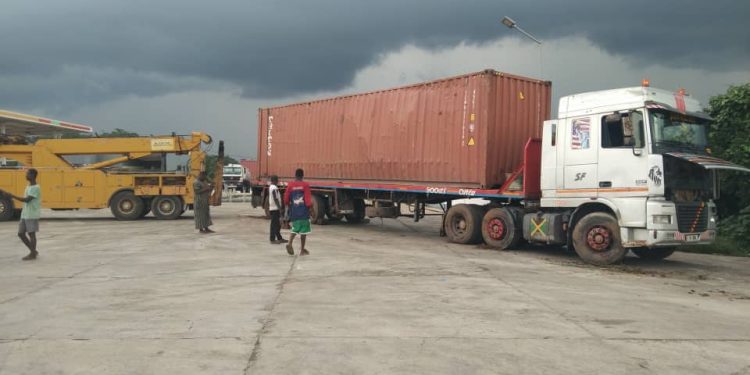
    This announcement comes nearly a year after he came to power in a coup, promising to restore democracy and hold presidential elections by July 2024. Traore also revealed plans to make changes to the constitution to better represent the “masses.”

    He emphasized that security is the primary concern in a nation plagued by militia violence and indicated that organizing elections was still a goal, without specifying a date.

    He emphasized the need for elections to be inclusive, reaching all Burkinabe citizens, not just those in major cities like Ouagadougou and Bobo-Dioulasso that have been less affected by militia attacks.

    Traore also discussed plans for a “partial change” to the constitution, citing the current text’s limited representation and the need for peaceful evolution.

    Despite initial hopes that Traore’s efforts to improve security would yield results, Burkina Faso continues to face militia violence. Over 17,000 people have died in attacks since 2015, with more than 6,000 of those deaths occurring this year.

    The relationship between Burkina Faso and France deteriorated under Traore’s leadership, leading to the withdrawal of French forces from the country.

    Burkina Faso has since strengthened ties with Russia and formed an alliance with Mali and Niger, both of which are also led by military regimes.

    Concerns about eroding personal freedoms and alleged abuses by security forces have arisen in Burkina Faso, leading to the suspension of several media outlets and the expulsion of foreign correspondents.

    Traore mentioned that individual freedoms should not take precedence over collective freedoms, and he denied any significant unrest within the army following the foiled coup attempt.

  • Burkina Faso marks one year of military rule with dozens of events

    A rally in support of the military is taking place in Burkina Faso to mark the first anniversary of the coup that brought Captain Ibrahim Traoré to power.

    It comes after authorities announced a failed coup attempt on Tuesday.

    Hundreds of people gathered at Place Nationale in the capital Ouagadougou and several other towns, responding to calls by organizers that foreign forces were behind the attempt to overthrow the government.

    One of the protesters’ main demands is the adoption of a new constitution. Amid speeches of support and performances by artists, the flags of Burkina Faso, Niger, Mali and Guinea could also be seen as signs of solidarity with other military-led countries in West African. Protesters staged a spontaneous demonstration on Tuesday night to express solidarity with the authorities, amid rumors of splits in the armed forces and a possible counter-coup .

    Four officials were arrested in connection with the reported coup plot.

    The junta came to power after two military coups last year, fueled in part by a worsening Muslim insurgency linked to Al-Qaeda and the Islamic State group.

    But Burkina Faso’s military leaders have so far struggled to contain the situation, despite promises to fight unrest. Rebel attacks have increased in the country, threatening the stability of the wider West African Sahel region.

  • Burkina Faso: 4 top officers arrested after junta leader confirmed attempted coup

    Burkina Faso’s military junta has confirmed that a counter-coup will be foiled on September 26, 2023.

    According to a government official in a statement dated September 27, 2023, a number of officers are currently under investigation by the prosecutor for their actions in the failed effort.

    Hundreds Flood Ouagadougou Streets Amidst Junta Rumors

    Reports suggest that Ouagadougou witnessed an influx of people on Tuesday evening, partaking in what appeared to be a pro-junta demonstration. This gathering was allegedly sparked by rumors of an internal coup within Colonel Ibrahim Traore’s junta leadership.

    While some media outlets have asserted that the coup was orchestrated by individuals within the junta, GhanaWeb has been unable to independently verify these claims.

    Videos and photos obtained by GhanaWeb depict a gathering predominantly composed of men, with fewer women and children, congregating at a roundabout in Ouagadougou. Some were heard chanting slogans, while others sang, and a few simply observed.

    Burkina Faso is one of four West African nations to have experienced coups in recent years. The first involved the removal of Christian Roch Marc Kabore from office in 2022 by then-junta leader Sandaogo Damiba, who, six months later, was also ousted by the Ibrahim Traore-led junta.

    Persistent insecurity has been a significant catalyst for these coups, with the wave of violence showing no signs of abating under Traore’s leadership.

    Currently, Burkina Faso, Mali, and Niger, all under junta rule, are part of an alliance of Sahel Nations striving to counter the escalating threat of terrorist violence in the region.

  • Rumors of counter-coup in Burkina Faso surfaces

    Hundreds took to the streets of Ouagadougou, Burkina Faso, in a reported pro-junta march amid rumors of an internal coup within the Colonel Ibrahim Traore-led junta.

    The exact nature of the alleged coup remains unverified.

    Videos and photos from the scene depict a gathering primarily comprised of men, with some women and children present.

    Some participants chanted slogans, sang, or observed the event, while others honked horns and blew whistles in the busy intersection.

    Burkina Faso has witnessed multiple coups in recent years, including the removal of President Christian Roch Marc Kabore in 2022 by then-junta leader Sandaogo Damiba, who was subsequently ousted by the Ibrahim Traore-led junta six months later.

    Ongoing insecurity has been a key factor in these political changes.

    Burkina Faso, Mali, and Niger, all currently under junta leadership, are part of an Alliance of the Sahel Nations working to combat the spread of terrorist violence in the region.

  • French magazine suspended by Burkina Faso junta over alleged ‘false’ articles

    French magazine suspended by Burkina Faso junta over alleged ‘false’ articles

    The military junta in Burkina Faso has stopped the French news magazine Jeune Afrique from publishing because it printed articles that were not true. The articles talked about problems and unhappiness among the country’s armed forces.

    Young Africa’s suspension is the latest crackdown on French media in Mali since military rule was established last year.

    The statement accused the publication of trying to make the armed forces look bad and of using information in a misleading way to create confusion in the country after publishing two articles recently.

    Jeune Afrique did not quickly answer an email asking for their comment.

    The relationship between Burkina Faso and France has become strained because of growing concerns about security issues related to a jihadist uprising, which led to two military takeovers last year.

    These tensions have resulted in the removal of diplomatic officials, like the French ambassador, from the country. They have also caused negative reactions against foreign media.
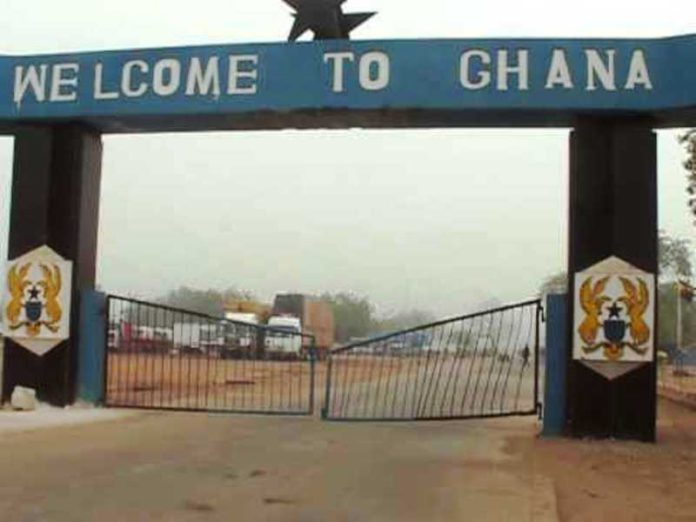
    The leaders have stopped two French-funded broadcasters, Radio France Internationale and France24, because they believe they have been supporting Islamist militants who are causing trouble in the Sahel region. Both magazines said that the accusations were not true.

    The French TV channel La Chaine Info, owned by TF1, was stopped from broadcasting for three months in June because they showed a report about the rebellion that was not fair. TF1 did not want to say anything when asked.

    In April, two journalists from France who work for Le Monde and Liberation newspapers were forced to leave the country.

    Liberation stated that the suspension was not fair because the two journalists were completely honest and had all the necessary documents correctly arranged.
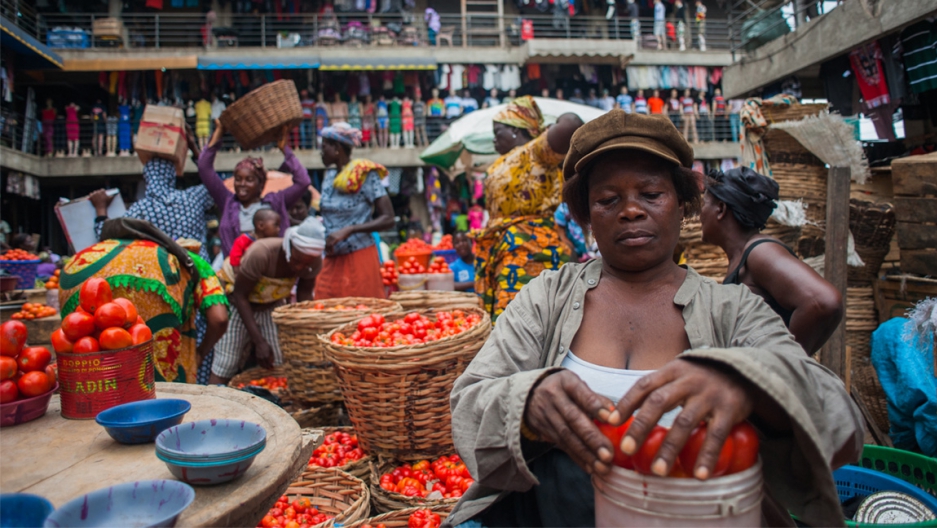
  • Burkina Faso soldiers take part in raid against insurgents in Niger

    Burkina Faso soldiers take part in raid against insurgents in Niger

    The armed forces of Burkina Faso and Niger have murdered an obscure number of activists in joint operations, nearby media has detailed.

    The assault comes a week after Burkina Faso’s parliament endorsed the sending of troops to Niger in arrange to battle the Islamist rebellion along the countries’ common border.

    Burkina Faso’s state-owned RTB TV channel said on Sunday that strikes where propelled after troops spotted “a column of terrorists” taking off Niger for Burkina Faso.

    Joint strengths “neutralised these assailants in sets on 100 motorbikes and annihilated most of their logistics” in eastern Burkina Faso’s Kantchari region, the channel included.

    Earier this month, Burkina Faso, Niger and Mali built up a protection agreement, named the Organization together of Sahel States, in a offered to back each other against any equipped disobedience or outside hostility.