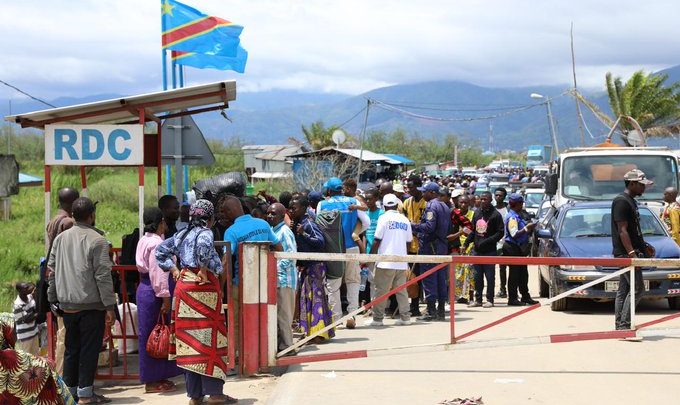
A growing number of Congolese nationals are seeking refuge in Burundi as the M23 advances.
Since late last week, Burundian authorities have recorded an estimated 10,000 Congolese arrivals, according to Interior Minister Martin Niteretse.
“Burundi has already welcomed approximately ten thousand people fleeing from the neighboring DRC.”
Government reports indicate that refugees are entering through the official Gatumba border crossing or using unauthorized routes via the Rusizi River.
Currently, they are housed in temporary shelters, including a transit camp in Gihanga, Bubanza province, in western Burundi.
Overcrowding has made conditions dire, with food shortages worsening the situation. While some mattresses have been provided, many are struggling with hunger.
The visible distress among the refugees has raised concerns for the Burundian government, which has committed to working with partners to address the crisis.
“Since this is an unforeseen situation, Burundi is collaborating with the UNHCR to ensure that the challenges arising from hosting these fleeing neighbors are addressed appropriately.”
With M23 forces escalating attacks in South Kivu province, Burundi has become a key destination for those fleeing the violence.
As mpox cases rise among young people in Burundi, United Nations International Children’s Emergency Fund (UNICEF) highlights that individuals aged 5 to 19 now represent 33 percent of reported infections.
This alarming statistic is prompting schools and parents to take proactive measures as the new academic year begins.
At a school in western Burundi, staff members are implementing protective strategies for both students and themselves.
The director of ‘Les petits trésors’ stated, “When they line up in front of the flag, they have to keep their distance to avoid touching their friends. And they have to wash their hands.”
In recent weeks, the country has witnessed a more than 40 percent increase in mpox cases, with hundreds reported since July.
Similarly, the neighboring Democratic Republic of Congo is also experiencing a surge in mpox infections.
According to the World Health Organisation (WHO), suspected cases in the DRC account for the majority of nearly 30,000 cases recorded across Africa since the start of the year.
In August, the WHO declared the outbreak in parts of Africa a public health emergency. Outside of Africa, a few cases have been confirmed in countries such as Sweden and Pakistan.
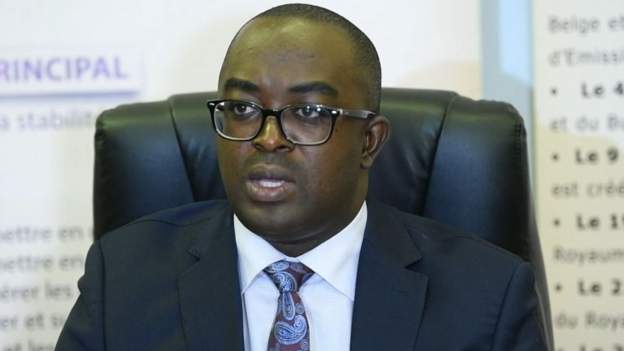
The former head of Burundi’s central bank has been arrested on suspicions of corruption.
Dieudonné Murengerantwari has been accused by the justice ministry of causing trouble for the national economy, being involved in corruption, hiding money, and taking public assets for personal use.
He hasn’t replied to the accusations made against him.
On Sunday, the President of Burundi, Évariste Ndayishimiye, removed Mr. Murengerantwari from his position and appointed Édouard Normand Bigendako as the replacement.
Mr Murengerantwari was chosen to be in charge of Burundi’s central bank for a period of five years starting in August of the previous year.
Attorney General Leonard Manirakiza said on Tuesday that the accusations against Mr. Murengerantwari are not yet confirmed, and the investigation is still ongoing.
He also mentioned that Mr. Murengerantwari is being treated in line with the law while he is still in custody.
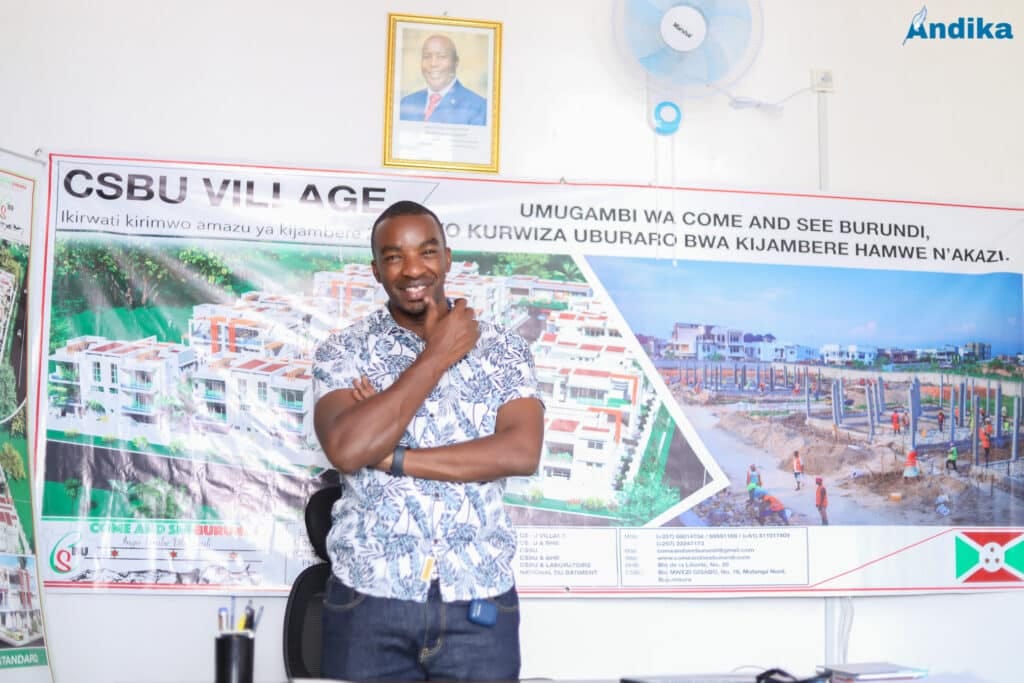
Many return home from the diaspora for various reasons. Some, to visit family, others to learn about their African heritage. But for 31-year-old Fablice Manirakiza, it was to significantly contribute to the infrastructural development of his home country, Burundi.
An unusual vision some may think, but Fablice who had lived most of his life in Australia saw an opportunity to leverage his skills and experiences gained abroad to make a tangible difference in Burundi’s infrastructural landscape.
The young African is changing the narrative by transforming Burundi, an East African country which for many years has been tagged as the poorest country in the world, with innovative solutions and groundbreaking initiatives in the real estate/ housing landscape.
Fablice is the face behind Burundi’s first gated community.
The prestigious gated estate, constructed under a company called ‘Come and See Burundi’ owned by Fablice, comprises meticulously designed homes and modern amenities tailored to meet the needs of its residents.
Speaking on the motivation for the incident, he said: “I wanted to prove to the world that Burundians are just amazing and Burundi is capable of doing everything.”
He recalled that the whole initiative started in 2015 when he had no plans of returning to his homeland.
“I was doing so well in Australia because me and my diaspora from Australia had been there for more than 15 years and I remember, I was going to perform because I am a musician and I requested them to pull out the Burundi flag before I perform. So as I looked at the flag raising, I felt like God told me, ‘Go and do what you are doing for this country for your country.”
And I came here after 2015 when there were demonstrations here and there so people did not believe that I was coming but I came, and started a company called ‘Come and See Burundi. As you can hear from the name, I wanted the world to come and see the beauty of Burundi because this is a hidden paradise,” he said.
Having grown up as an orphan in a warring country, Fablice faced numerous obstacles throughout his life. He lived in a refugee camp during his childhood days, however, he did not allow his circumstances to set him back. He defied all odds to realize his dream in life.
This extraordinary accomplishment in the real estate sector stands as a testament to the determination and perseverance of one individual with a vision to transform lives and uplift communities.
Not only has the project addressed the pressing need for quality housing in Burundi but it also provides employment for hundreds of Burundi nationals.
“I employ between 300 to 500 people in a day during a project,” he told renowned blogger, Wode Maya.
Aside, his remarkable achievement in the Housing sector, Fablice is a professional musician.
Fablice is a keen advocate of Africa’s development, passionate about promoting economic independence of the continent and also fostering self-reliance because he holds the belief that it’s time Africans took control of their own affairs.
“We Africans have to support each other. When Africans support each other, without any doubt, we are going to colonise the whole world,” he said, further calling on all Africans in the diaspora to return to their home country to ensure its development.
“Come home and build Africa to showcase what Africa is capable of. In history, Africa used to be the Superpower but then where did we go wrong? So let’s wake up,” he added.
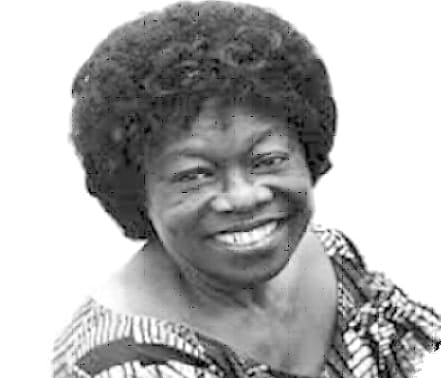
She achieved everything that there was to achieve and more. It is her work with the Volta Lake that is my abiding memory.
In paying my last respects to Dr Letitia Obeng, Ghana’s first female PhD holder in Science, I have gone back to her seminal autobiography, A Silent Heritage, and selected some passages from the book on different subjects to show what a thoroughly dynamic and forward-looking woman she has been.
Here she is, describing the home she lived in as a child in Afidwase:
The roof was of corrugated iron sheets.
All “respectable” houses were roofed with corrugated iron sheets.
The iron sheets had been introduced, (no doubt as part of a foreign export drive during colonial days) as an alternative to the African grass-thatch roof which was considered “primitive”.
The promotion had been vigorous, in spite of the fact that, in the climate of the country, the grass thatch roofs made rooms cool.
Granted, the corrugated iron sheets made rainwater harvesting feasible but they also heated rooms up and, with the rains, they soon became rusty, leaving roofs disgustingly ugly.
As I have travelled around the world, I have seen cottages and houses in several places including Europe, roofed with grass and they are highly rated.
I have seen attractive homes and hotels in Kenya, Lesotho, Burundi, as well as in Britain, France and other places, with safe, protective grass thatched roofs.
They were neither rusty nor disgustingly ugly.
Who knows what effective and pleasing roofing may have evolved from our kind of roofing if we had not been brainwashed into accepting that the grass-thatch roof was primitive?
And could the colonial masters not have organized the making of roofing tiles? We had the raw material and abundant labour.
But then, that might have caused the business of the foreign exporters and importers of the corrugated iron sheets to collapse!
Here she describes her Ntama Campaign.
I might add for the sake of the young people that back in those days, if you were an “educated” woman, you were not to be seen in cloth, “ntama”, you had to wear European dress:
I was still fired with nationalism and I continued to use ntama as my standard attire.
I remember we went in a group one evening to a popular night club in Kumasi.
At the entrance, although I had bought a ticket, the doorman would not let me in because I was wearing ntama.
The others in the group had European attire and they were let in.
George and I were left standing outside.
Just as my fury began to build up, the Proprietor happened to be visiting the club and when he saw what was happening, he apologized and invited us in.
I was the only one inside wearing ntama.
Thereafter, others wearing the traditional attire were also allowed in the club.
That strengthened my resolve to make the ntama acceptable and I started designing and sewing my kabas to look so attractive and different that at social functions, I stood out in my ntama.
The more conservative among the campus wives did not approve of me being in ntama at serious functions.
In fact one of them said to George, “Why does your fiancé continue to disgrace herself by wearing cloth all the time as if she does not know how to wear a dress.”
I decided to organize an Ntama Fashion Show to demonstrate how to be proud of wearing ntama for various occasions.
I had no problem with finding willing models from the Women’s Hall where I was Warden and had friends among the students.
I designed the ntama styles and sewed a variety of nicely fitted kaba for many occasions: sleeveless kaba with a little collar as a secretary’s outfit, a smart one with little straps, for early evening social events, an off-the-shoulder, strapless “will-power” for formal evenings, and others with overlapping peplum, short and long flared out sleeves.
All of them were designed to fit and show the curves of my lovely models.
The show took place in the College Assembly Hall and it was well applauded.
I followed the show-up with articles in a daily newspaper about how to sew and wear zip-fitted kabas and feel good in them.
Of course, I was only addressing a minority of literate women.
It was not the done thing to be a “cloth lady” at formal functions and there certainly were those ladies who, at that time, wouldn’t be caught dead in ntama in public!
Here she is on the subject of food:
Mama was an excellent cook.
Her local traditional dishes were really great.
Using vegetables, she would make a variety of soups and stews.
Then, there were all the dishes from ripe plantain and sweet potato and maize and yams that I hardly hear spoken about these days.
Obrodokono was a popular dish made from ripe plantain and ground, roasted maize.
The mixture, suitably seasoned with peppers and ginger and blended with a little palm oil was wrapped in green plantain leaves and steamed in a pot.
Then there were the rich and tasty soups, there was always a variety of them: palm soup, groundnut soup, garden egg soup and even plain soup – and they were all delicious.
There would be in the soups, a variety of meats including venison and smoked freshwater fish.
Papa was a hunter and quite often he would return from night hunting with large game.
Palm oil-based dishes were made with finely chopped spinach, garden eggs or different kinds of beans.
They were eaten with yam, plantain, cocoyam, cassava, cooked powdered maize and sometimes but rarely, rice.
l am glad that as a people, we in Ghana, even now, have a large stock of recipes and different ways of making delicious dishes from the same ingredients.
It is no exaggeration to say that there are enough varieties of local dishes for one to eat for many days without repeating a recipe.
Meal times when I was young were always great.
As I grew up, I used to hear quite a lot about how Africans do not eat “balanced diets”.
Thinking back, in my home, at any rate, I think the meals were reasonably balanced.
And here she is, reporting on her first trip to China in 1975 on a favourite subject, always the scientist, ever the pragmatist:
The safe management of human waste was strictly observed.
Traditionally, human waste had been used as manure on the farms.
The Chinese had devised a special three-chamber latrine which rendered parasite eggs infertile by the time the waste was scooped out to be used as manure.
They could also produce biogas from the latrine.
When we visited a house to inspect one of the latrines, there was a plastic hose through which biogas was being evacuated.
We followed the hose and it led us to a kitchen where the biogas was fed into a stove and used to boil water to make tea for us!
I was so impressed by this direct, no-nonsense utilization of human waste that I passionately rendered an account of it to my sister when I returned home.
Imagine my surprise when, instead of catching my excitement and showing the enthusiastic interest that I expected, her face went funny, as she asked, “And you drank the tea?” I got a similar reaction from other people, not only in Ghana, but also elsewhere, whenever I told my story.
Fare thee well, Dr Letitia Obeng, you were special, we haven’t got anyone like you.
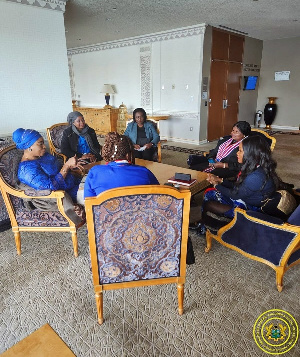
In order to improve their close cooperation in promoting gender equality and women’s empowerment in each of their individual countries, Ghana, Liberia, and Burundi have held bilateral meetings.
The meeting also discussed gender and violence issues across the African Continent.
It was held between the Minister for Gender, Children and Social Protection, Madam Hajia Lariba Abuduand her colleague Gender Ministers from Liberia and Burundi at the sidelines of the ongoing 67th session of the United Nations Commission on the Status of Women(CSW) in New York.
Also, High-Level Panel discussions were held on issues and challenges of financing socio-economic development programmes for women and girls through the Geo-Extractive Sector in West Africa as part of the event.
Every year, representatives of Member States gather at United Nations Headquarters in New York to evaluate progress made concerning gender equality, identify challenges, set global standards and formulate concrete policies to promote gender equality and the advancement of women worldwide.
The number of Burundian asylum seekers arriving in Belgium through Serbia have drastically increased, overwhelming reception centres, authorities say.
Hundreds of Burundians are reportedly sleeping on roads and public parks in Brussels as they wait to be processed.
Josephine Nkunzimana is one of Belgium’s residents from Burundi who are offering basic needs for her compatriots “after an exhausting journey that takes them to cross more than five countries to arrive here”, she tells BBC Great Lakes.
Belgian authorities recorded 263 asylum seekers from Burundi in July, up from just 34 in May and 112 in June. This is eight times more than the previous three months, the Belgian newspaper La Libre Belgique reports.
The paper quotes Dirk Van den Bulck, the Belgian commissioner for refugees, as saying that Burundian nationals do not need a visa to enter Serbia and once there, “they enter European territory via Romania”.
In June, the Burundian parliament ratified agreements on different sectors with the Serbian government.
Burundi, a former Belgian colony, is the poorest country in the world according to the World Bank’s GDP per capita report.
Most travellers are young people seeking a better life abroad with Belgium giving them hope as 96% of the Burundian asylum cases were accepted last year.
“But it is hard this time as many can be denied, [because] refugees from Ukraine are prioritised,” Mrs Nkunzimana says.
Media in Burundi cite ONLCT, a local anti-illegal migrant organisation, urging the government to manage its deal with Serbia so “it doesn’t cause problems” for Europe.
Burundi’s ministry of culture has expressed displeasure over what it describes as the “misuse of Burundian sacred drum” at the Nyege Nyege music festival which concludes on Monday in neighbouring Uganda.
The ministry posted its message on Twitter alongside widely shared pictures of two male performers dancing suggestively with female revellers near the venerated drum.
They called the image an “exploitation” of Burundi’s royal drumming heritage, which was recognised by Unesco in 2017.
“We will never tolerate anyone who violates Burundian culture and customs… any offender will be prosecuted for penalties provided by law,” the post said.
Ritual drumming in Burundi is performed during national or local feasts and to welcome important visitors, and is said to awaken the spirits of the ancestors and drive out evil spirits, according to Unesco.
Its performers are recruited from across the country, many of whom are the descendants of drum sanctuary guards.
It is not yet clear whether the government of Burundi will sue the drum performers at the Nyege Nyege festival.
It is however not the first time that Burundi authorities have issued similar warnings to drum performers in foreign countries.
It is also not the first time that the Nyege Nyege festival has attracted controversy.
Uganda’s authorities threatened to ban the four-day festival before it opened claiming that it was a “breeding ground for sexual immorality” and “homosexuality”.
Some 12,000, including 5,000 foreign tourists, have attended the event which is being held at the scenic Itanda Falls on the banks of the River Nile, AFP news agency reports.
Burundi has told the United Nations secretary general that the office of the organisation’s special envoy must shut by the end of the year.
UN Secretary General Antonio Guterres recently asked that the office remain in operation for one more year owing to a “fragile” situation in the country.
The envoy’s office was established in 2016 to track tension in Burundi, which had plunged into a political crisis a year earlier when then President Pierre Nkurunziza ran for a disputed third term.
In a notice seen by AFP and confirmed by a senior Burundian diplomat, the foreign affairs ministry notified Guterres of “the formal closure and liquidation of the office of the special envoy to Burundi on December 31, 2020.”
UN officials in New York said the body did not intend to comment immediately.
The UN sought to extend the envoy’s mission by a year despite a positive change on the part of new President Evariste Ndayishimiye, who took office after Nkurunziza died in June, describing the situation in Burundi as still “fragile”.
The foreign affairs ministry replied by commenting that a UN “political presence” was no longer “pertinent” given that the situation was now “calm and stable” and a recent election had led to a “historic political transition”.
“Our decision is sovereign and irrevocable, we no longer need an office that fosters the idea of a crisis that exists only in the minds of certain foreign powers,” a ministry source said.
The source was likely referring to the European Union and western countries.
A UN diplomat said on condition of anonymity that Burundi’s decision was possibly aimed at “negotiating a more flexible political relation with the UN.”
In its note, the Burundi foreign ministry said that “socio-economic development is the only leading domain that requires assistance” from the UN.
Former Burundian President Pierre Buyoya, who is the current High Representative of the African Union for Mali and the Sahel, “rejected” Wednesday his conviction in absentia in Burundi to life imprisonment for the murder of his predecessor Melchior Ndadaye in 1993.
“We reject these judgements, which can in no way commit us,” a statement from him signed by co-defendants says.
“Following in the footsteps of its predecessor, the new government has just proved to the world that it follows this line of lawlessness,” they said.
Melchior Ndadaye, Burundi’s first democratically elected president and the first Hutu to come to power, was assassinated in October 1993 in a military coup that would lead the country into a civil war between the army, dominated by the Tutsi minority, and Hutu rebel groups. It will result in 300,000 deaths until 2006.
Mr. Ndadaye had succeeded Mr. Buyoya, carried by the army in power in 1987 and who became president again in a new coup between 1996 and 2003, before handing over power to Domitien Ndayizeye, a Hutu, under a peace agreement signed in 2000 in Arusha (Tanzania).
Mr. Buyoya was convicted of “attack against the head of state, attack against the authority of the state and attack tending to bring about massacre and devastation”, according to the text which only contains the operative part (conviction and sentence) of the decision handed down by the Supreme Court.
The name of Pierre Buyoya had already been cited in connection with this assassination, without the beginning of any proof being provided.
Eighteen senior military and civilian officials close to the former head of state were sentenced to the same sentence, three others to 20 years in prison for “complicity” in the same crimes and only one, the former transitional Prime Minister, Antoine Nduwayo, was acquitted.
Only five defendants, four retired Tutsi high-ranking officers and a serving police general, Ildephonse Mushwabure, were present at the trial.
According to Mr. Buyoya, the trial was conducted “in violation of the Arusha Accords” and was neither “fair” nor “equitable” as the rights of the defence were allegedly violated.
Former Burundian MP Fabien Banciryanino has been charged with rebellion and uttering slanderous statements against late President Pierre Nkurunziza.
Mr Banciryanino was arrested by intelligence officers last Friday near his home in Bujumbura.
He was taken to court on Thursday and charged with “rebellion, an attempt on national security and slanderous denunciationâ€, according to his lawyer.
Mr Banciryanino had earlier in the year said in parliament that President Nkurunziza “should be prosecuted for rights violations and killings done when he was in powerâ€.
He later lost his seat during the May elections.
His lawyer Christophe Nkeringanji told the BBC that MPs should not be charged for statements uttered in parliament.
The charges have elicited mixed reactions in Burundi with some people saying he was speaking for many, while others felt he disrespected the former president.
Former Burundian MP Fabien Banciryanino is in police detention for what the authorities said was an attempt to overthrow the government, according to his family.
Mr Banciryanino was arrested on Friday after a press conference that he had called for that day was cancelled, a close family member told the BBC.
He was taken by police from his home in the commercial capital, Bujumbura, the family member added.
Police have not commented on the claims.
The former lawmaker was a critic of ex-President Pierre Nkurunziza, who died in June. He opposed a law that created a number of retirement perks for Mr Nkurunziza, including giving him the title of “supreme guide to patriotism”.
His press conference on Friday was to comment on accusations carried by a local YouTube channel that he had insulted the new President, Evariste Ndayishimiye, according to the family member.
At least 15 people are reported to have been killed when gunmen carried out an attack in southern Burundi.
The fighting in Bugarama District in Rumonge province began on Sunday and continued into Monday, forcing people to flee their homes and hide in the bush.
In a post on social media a rebel group based in neighbouring Democratic Republic of Congo said it had carried out the attack.
A senior government official said the violence was potentially linked to the imminent repatriation of refugees who fled to Rwanda after fleeing violence in Burundi in 2017.
A court in northern Burundi has sentenced two men and a woman to 30 years in prison for attempting to assassinate new President Evariste Ndayishimiye after they threw stones at his convoy.
The prosecutor requested the court in Kayanza province to jail the three to seven years for causing insecurity for the president, but the court decided to convict them of trying to kill him and sentenced each of them to 30 years in prison, local radio station Isanganiro reported.
The three, who were employed at Engen petrol station in Kayanza town, were accused of stoning the convoy from their work place when Mr Ndayishimiye visited the area last Wednesday.
They denied the charge.
“Many people were arrested after the incident, some were released afterwards but a woman and two men who work at a petrol station remained in jail and were sentenced this Sunday,†a resident in Kayanza told BBC Great Lakes.
President Ndayishimiye was due to take power on 20 August after he won elections in May. However, he was inaugurated in June after the sudden death of his predecessor Pierre Nkurunziza.
A letter written by a group of Burundian refugees living in a camp in Rwanda asks their president to cooperate with Rwanda and the UN refugee agency, UNHCR, to repatriate them. However, there is not yet an agreement between the two countries and the UNHCR on how to carry it out.
More than 60,000 Burundian refugees have been living in Mahama camp, in eastern Rwanda, since the 2015 political crisis over the late former President Pierre Nkurunziza’s bid for a third term.
More than 300 Mahama residents signed the letter to their president accusing some exiled Burundian politicians of “wanting them to stay in the camp for their own interests”.
Emmanuel Bizimana, one of the signatories told the BBC that “now it is time now to return home”, adding:
Quote Message: We know our country is safe now, that’s why we wrote to our president.”
We know our country is safe now, that’s why we wrote to our president.”
In his inaugural speech in June, President Evariste Ndayishimiye pleaded for refugees to return and since then nearly 2,000 have come back from Tanzania, UN figures show.
But there is not yet an agreement between Rwanda, Burundi and the UNHCR to allow the refugees in Rwanda to come back.
Burundi’s parliament has approved Alain Guillaume Bunyoni as prime minister, the first person to take on the role in 22 years.
The position has been restored by newly elected President Evariste Ndayishimiye, who was sworn into office last week – two months sooner than planned as his predecessor, Pierre Nkurunziza, died earlier this month.
MPs also approved Prosper Bazombanza as the new vice-president.
The 60-year-old has served as vice-president before – under Mr. Nkurunziza between 2014 and 2015.
For the last five year, Mr. Bunyoni has been security minister and is a very influential figure in the ruling CNDD-FDD party.
The 48-year-old, who will be in charge of the cabinet, was a close ally of Mr Nkurunziza during his 15 years in power.
The new prime minister is under US government sanctions for his suspected role in violence and human rights violations during political unrest in 2015.
Burundi pulled out of the International Criminal Court (ICC) in 2017 amid ongoing investigations into the unrest that followed a failed coup attempt.
Burundi’s newly-elected president Evariste Ndayishimiye will be sworn in on Thursday, the foreign ministry announced, in a ceremony fast-tracked by the sudden death of the incumbent, Pierre Nkurunziza.
Nkurunziza died on June 8 aged 55, of what authorities said was heart failure.
His death came less than two weeks after his wife had been flown to a Nairobi hospital for treatment.
The foreign ministry invited diplomats and foreign organisations to “take part in the inauguration ceremony” in the capital Gitega, in a letter sent out on Monday.
Ndayishimiye, 52, a former army general and Hutu rebel like his predecessor, had been handpicked by the powerful ruling CNDD-FDD to run in a May 20 presidential election.
He won the vote with 68.7 percent, and an opposition bid to have the results overturned due to alleged fraud was overturned just days before Nkurunziza’s death.
Normally, following the death of a president, the speaker of Burundi’s parliament would step in as head of state.
But as the country already had a president-elect, the constitutional court ruled last week he should be sworn in immediately, instead of in August as planned.
Nkurunziza, a devout evangelical who believed he was chosen by God to lead Burundi, leaves behind a deeply isolated country in political and economic turmoil after his divisive 15-year rule.
His 2015 run for a third term in office sparked protests and a failed coup, with violence leaving at least 1,200 dead while some 400,000 fled the country.
United Nations human rights investigators have said the period since 2015 has been marked by likely crimes against humanity committed by state forces, citing extrajudicial executions, arbitrary arrests, disappearances, torture and sexual violence.
Nkurunziza’s decision not to run in the May 20 election stunned many, as it came after the constitution was changed to allow him to do so.
The government has yet to announce a date for Nkurunziza’s funeral.
Suspicions are high that the president had contracted the new coronavirus, after months of assuring Burundi it was being protected by God from the pandemic, and taking few measures to combat it.
Officially the country has recorded only 104 cases and one death.
Nkurunziza’s wife Denise Bucumi was hospitalised at the end of May with the virus. A medical document seen by AFP said she had tested positive for the virus and suffered “respiratory distress”.
A medical source at the Karusi hospital where Nkurunziza died, told AFP he had also been in “respiratory distress” before his death.
A medical source at the Kamenge university hospital in Bujumbura told AFP that the head of the institute of public health “came to requisition our hospital’s only ventilator” last Monday.
Both were flown to the hospital in Karusi, but it was “too late, president Nkurunziza was already dead,” a medical source in Karusi said.
President Akufo-Addo has extended his condolences to the Government and people of Burundi following the death of President Pierre Nkurunziza.
In a tweet on Wednesday, June 10, President Akufo-Addo said, “The Ghanaian people and I extend our deepest condolences to the Government and people of the Republic of Burundi, on the sad news of the death of their President, His Excellency Pierre Nkurunziza. May his soul rest in perfect peace.â€
President Nkurunziza, 55, died on Tuesday, June 9, 2020 at a hospital in Karuzi, eastern Burundi after a sudden cardiac arrest.
A Government statement announcing his death declared a 7 day fasting for all Burundians for Mr Nkurunziza who has been President for 15 years and was due to step down for President-elect Evariste Ndayishimiye, who was declared earlier this month the winner of the vote.
Apart from President Akufo-Addo, other African leaders have sent messages of condolence to the Government and people of Burundi.
Ethiopian Prime Minister Abiy Ahmed wrote on Twitter, “I would like to express my condolences on the sudden passing of President Pierre Nkurunziza Deepest sympathies to his family and the people of Burundi.â€
Somali President Mohamed Abdullahi Farmajo also shared his message of condolence with Burundians.
“I hereby extend my sincere condolences to the Government and people of the Republic of Burundi. On behalf of the Citizens of the Federal Republic of Somalia and on my own behalf, we mourn the death of HE Pierre Nkurunziza. He was a great friend and ally of the Somalia,†he said.
Former Nigerian President Goodluck Jonathan also condoled with Burundians, wishing a peaceful transition in the country that had just come from a presidential election.
“I extend my deepest condolences to the Government and people of Burundi over the passing on of their President H.E. Pierre Nkurunziza who died suddenly on Tuesday,†he said.
Burundi’s President Pierre Nkurunziza, aged 55, has died after suffering a cardiac arrest, the government says.
He was admitted to hospital on Saturday after feeling unwell, his condition improved but on Monday he had a cardiac arrest and efforts to revive him were unsuccessful, officials say.
After 15 years in power, Mr Nkurunziza was due to step down in August.
In 2015, the announcement that he would run for a third term plunged the country into chaos.
It sparked anger as some questioned the legality of a third-term bid.
There was a failed coup attempt, hundreds of people died in clashes and tens of thousands fled the country.
After a change in the constitution, he was able to run for a further term in last month’s election but he decided to retire and was to be known as the “supreme guide to patriotism”.
Polling stations in Burundi opened at 06:00 local time (04:00GMT) with around five million voters expected to participate in the elections.
Voters will be electing their president, members of parliament and communal council members.
Polling stations will close at 16:00 local time.
Seven candidates are seeking to replace President Pierre Nkurunzinza, with the main contenders being Agathon Rwasa of the opposition CNL party and Evariste Ndayishimiye from the ruling CNDD-FDD party.
Voters in the diaspora will not cast their ballot because of coronavirus.
Preliminary results are expected to be out on 25 May.
The electoral commission announced that there will be 53 international observers who include personnel for the embassies of Tanzania, Egypt, China, Kenya, South Africa, Democratic Republic of Congo, Nigeria, Russia and Africa Union mission in Burundi.
The commission has banned the use of mobile phones and cameras by observers and poll agents inside polling stations.
Burundi has expelled the World Health Organization (WHO) representative in the country and three other health experts.
An unsigned letter from the foreign affairs ministry declares the WHO representative Dr Walter Kazadi Mulombo and three others as “persona non grata” and gives them 48 hours to leave the country.
The others are Prof Tarzy Daniel, Dr Ruhana Mirindi Bisimwa and Dr Jean Pierre Murunda.
Burundi Foreign Affairs Minister Ezechiel Nibigira did not deny or confirm the letter in a phone interview, but a source at the ministry confirmed its authenticity to the BBC.
The ministry has not given reasons for the expulsion of the officials.
Burundi government is facing criticism for organising elections amid the coronavirus pandemic.
Campaign rallies by candidates for the presidency are taking place across the nation ahead of the 20 May election and no measures to contain the virus are being observed – sparking fears of its imminent spread.
In a press briefing on Wednesday, the International Crisis Group said the Burundi government is working in denial, questioning the number of coronavirus cases the country has announced.
The country has reported 15 cases so far including one death.
Burundi’s police says it has arrested 64 supporters of the main opposition party, the National Freedom Council (CNL), who are blamed for violent clashes with ruling party supporters during the current general election campaign.
Burundians are due to go to the polls for presidential and parliamentary elections on 20 May.
The latest person to be arrested Cathy Kezimana, an outspoken CNL parliamentary candidate. She was detained on Tuesday during a campaign tour in the south of the country.
Police spokesperson Pierre Nkurikiye told the state broadcaster that “most cases of violence and crimes in the campaigns are committed by CNL members” against members of the ruling CNDD-FDD party.
Mr Nkurikiye said the clashes had so far led to the deaths of two people.
He accused opposition leaders of encouraging the violence.
Opposition spokesperson Terence Manirambona told the BBC they were shocked by the comments
“Since the campaigns started many of our members have been arrested under false charges, two have gone missing and many injured in clashes caused by the ruling party members who invade our activities,†he said.
Seven candidates are vying to replace President Pierre Nkurunziza who is stepping down after being in power for 15 years.
Rwanda’s President Paul Kagame has accused Burundi’s army of fighting in eastern Democratic Republic of Congo, as he denied claims of deploying his own troops to the region.
Tens of thousands of residents have been displaced in the South Kivu province of DR Congo in a conflict that has escalated in the past few days.
Rwandan and Burundian troops have been accused by locals and foreign non-governmental organisations of fighting alongside rival militia groups in eastern DR Congo.
In a video press conference on Monday, Mr Kagame told journalists that NGOs and observers “don’t look at what is happening there, but want to see Rwandan army presence”.
“Our intelligence collection tells us [that] we have forces from Burundi, government forces, operating in that region.
“There is not a single soldier of Rwandan Defense Force that has gone to that territory…[and] the government of DRC knows the fact that not a single soldier of RDF is there,” Mr Kagame said.
Burundi’s president spokesperson Jean Claude Karerwa denied Mr Kagame claims on Burundi army.
He told the BBC that: “Unless requested by AU or UN, Burundi can’t deploy troops to another country.”
The East African neighbours fell out in May 2015 when a coup attempt against President Pierre Nkurunziza of Burundi failed, amid claims that some of the plotters fled to Rwanda.
Burundi’s political parties are set to launch campaigns on Monday for next month’s general elections to replace President Pierre Nkurunziza, who has been in power since 2005.
Seven candidates, including two independents, are in the race for the top job.
The ruling CNDD-FDD party’s candidate, Major General Evariste Ndayishimiye, and Agathon Rwasa of the main opposition party, the National Congress for Liberty (CNL), are considered the front runners.
The campaigns start amid the coronavirus pandemic and fears by the opposition of repression.
Mjr Ndayishimiye is expected to start his campaign in the new political capital, Gitega, while Mr Rwasa will be in Ngozi province in the north.
Despite not vying for the elections, President Nkurunziza may retain considerable power after the poll because under a controversial new law he is due to be given the title of “supreme leader”.
The rights monitoring group, Human Rights Watch, has released a report that warned about a crackdown on opposition politicians and independent media.
Last week, the CNL said more than 10 of its members were killed in recent months and 200 have been jailed.
The oarty has accused security forces and members of the ruling party’s youth wing, Imbonerakure, for the attacks against opposition members. But the government has strongly refuted the claims.
Burundi has so far recorded 14 cases of Covid-19, four recoveries and one death.
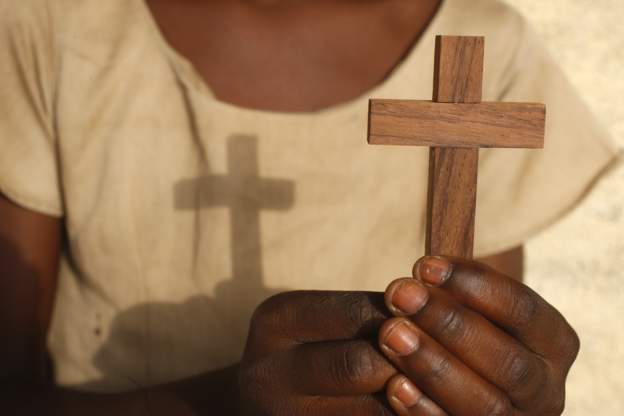
Catholic bishops in Burundi came under fire from authorities for “spitting venomous hatred” over a message read out in churches denouncing intolerance and political violence in the run-up to elections next year.
The message issued by the Conference of Catholic Bishops of Burundi and read out in churches on Sunday expressed their “concern” eight months before the May 20 presidential election, which comes five years after President Pierre Nkurunziza’s bid for a third term plunged the country into crisis.
In the letter, seen by AFP news agency, the bishops raised the alarm over efforts to “suffocate and assault certain political parties and to persecute their members”.
“Criminal acts go as far as murders with political motives … perpetuated against those with different opinions of the government,” it said.
They also said the ruling party’s youth league – the feared Imbonerakure that the United Nations has accused of committing atrocities – had “taken the place of security forces”.
Presidential spokesman Willy Nyamitwe lashed out at the bishops on Twitter after the message was leaked on social media before church services.
“Some bishops should be defrocked because it is becoming a habit: on the eve of elections they spit their venomous hatred through incendiary messages”, he wrote on Sunday.
The secretary-general of the ruling CNDD-FDD Evariste Ndayishimiye, meanwhile, accused the bishops of “sowing division”.
“It is shameful to spread hatred among the faithful,” he told a political gathering.
Murders, rape, disappearances
A team of UN investigators earlier this month warned of a climate of fear in Burundi before the elections, with crimes against humanity and other serious violations continuing with impunity.
“The commission found that the eight common risk factors for criminal atrocities are present in Burundi,” it said, insisting “the evolving situation must be monitored with the greatest vigilance”.
The Imbonerakure especially have carried out killings, disappearances, arbitrary arrests and detentions, acts of torture and rape against actual or alleged political opposition members, investigators said.
At least 1,200 people were killed in violence in the wake of the 2015 election and more than 400,000 displaced.
In a surprise development, Nkurunziza announced in June last year he would not stand for election in 2020, confounding critics who accused him of working to extend his grip on power.
Relations soured between the government of Nkurunziza, a devout evangelical, and the Catholic Church after it opposed his third-term bid in 2015.