The Bank of Ghana (BoG) has revealed that investment firms managing funds on behalf of individuals and institutions recorded strong growth in 2024, with a significant rise in the total value of assets under their management, estimated at GH₵71.97 billion.
According to its 2024 Financial Stability Review, funds under management rose by nearly a third (31%) from GH₵55.05 billion in 2023.
“The Funds Management sector witnessed robust growth. Underpinned by a strong performance in several key segments, total AUM on a MTM basis reached GH₵71.97 billion by the end of the year—an impressive 31 per cent year-on-year growth from GH₵55.05 billion at the end of 2023,” parts of the report read.
The Bank of Ghana attributed the significant gains to the strong performance of key segments within the financial sector. It revealed that pension funds played the biggest role in increasing the total value of investments, as they continue to dominate the market. Out of the total money managed by investment firms, pension funds accounted for about 72%, which equals GH₵51.96 billion.
The report noted that this figure represents a 32% year-on-year increase, reflecting a rise in overall investment activity. It also added that Collective Investment Schemes such as mutual funds and unit trusts bounced back strongly in 2024 by 25 per cent, reaching a marked-to-market value of GH₵6.58 billion, compared to a one per cent decline in 2023.
“A major contributor to this expansion was the pension fund segment, which continued to dominate the market. Pension funds accounted for 72.0 per cent of the total AUM, amounting to GH₵51.96 billion, based on marked-to-market values and adjusted data from custodians. This represents a 32.0 percent year-on-year increase, highlighting the resilience and sustained growth of pension investments in the current economic climate.
“Collective Investment Schemes (CIS) also demonstrated a notable turnaround from the 1 per cent year-on-year decline in 2023, rebounding by 25.0 per cent year-on-year, to reach marked-to-market values of GH₵6.58 billion for the year under review,” it added.
Additionally, discretionary funds expanded by 24% compared to the previous year, reaching GH₵12.08 billion in assets. The Real Estate Investment Trusts (REITs) segment, described in the report as a new market category, recorded a total market value of GH₵545.56 million in 2024. Furthermore, private funds ended the year at GH₵802.94 million, reflecting a 5.9% increase compared to 2023.
“Discretionary funds managed by fund managers similarly expanded by 24.0 per cent year-on-year to settle at GH₵12.08 billion. The Real Estate Investment Trusts (REITs) segment (new market segment) ended the year with a marked-to-market value of GH₵545.56 million, while Private funds experienced a gain of 5.9 per cent to end the year with AUM on a marked-to-market basis of GH₵802.94 million,” it added.
The total value of assets managed in the investment industry measured on a Held-to-Maturity (HTM) basis—covering bonds and securities—increased by 26.9%, reaching GH₵85.62 billion. The report emphasised that these results highlight the industry’s capacity to attract investors despite economic challenges such as inflation, currency depreciation, and sluggish growth.
“The AUM on Held-to-Maturity (HTM) basis expanded by 26.9 per cent to GH₵85.62 billion in 2024. Based on adjusted data from custodians, the pensions sector posted an HTM AUM of GH₵62.47 billion, discretionary and non-discretionary funds of GH₵13.83 billion, CIS of GH₵7.97 billion, REITs of GH₵0.55 billion, and Private Funds of GH₵0.80 billion. This broader growth on both the marked-to-market and HTM basis underscores the industry’s capacity to attract and retain capital, even when faced with macroeconomic headwinds,” it noted.
Collective Investment Schemes also experienced a boost, driven by increased subscriptions. The report emphasised that this outcome reflects renewed investor confidence and early signs of market recovery.
“The CIS industry experienced some recovery, with subscriptions rising sharply, signalling renewed investor confidence and improved market conditions. This contrasts with 2023, when both subscriptions and redemptions reached their lowest levels, reflecting a period of subdued market activity. Redemption payouts increased in 2024 after a sharp decline in the previous year, suggesting that improved liquidity facilitated greater investor payouts. The redemption percentage of Net Asset Value (NAV), which was at its lowest in 2023, also saw a modest increase in 2024, though it remained below historical levels,” it noted.
The report further revealed that in 2024, major commodities such as maize, sesame, rice, and soybeans were actively traded compared to 2023. Maize transaction volumes, which stood at 2,311.78 metric tonnes in 2023, surged by 99.2% to 4,604.38 metric tonnes in 2024 due to increased demand, greater market access, and favourable pricing.
“Trading volumes for major commodities recovered strongly partly due to increased demand and favourable pricing. Maize trading volumes grew by 99.2 per cent to 4,604.38 metric tonnes in 2024 from 2,311.78 metric tonnes in 2023, driven by increased demand, improved market access, and favourable pricing,” it noted.
In 2024, maize prices rose by 34.2%, selling at GH₵4,396.00 compared to GH₵3,276.50 in 2023. Soybean prices surged by 107.1% to GH₵8,311.00 per metric tonne, up from GH₵4,012.50. Meanwhile, prices for sorghum, sesame, and rice remained stable within the same period.
“During the period, commodities exhibited varying price trends compared to 2023. Maize prices increased by 34.2 per cent to GH₵4,396.00 from GH₵3,276.50. Soybean prices experienced the sharpest rise, surging by 107.1 per cent to GH₵8,311.00 per metric tonne from GH₵4,012.50 due to increased export demand and rising input costs. Sorghum, sesame, and rice prices remained unchanged, pointing towards stable supply and demand dynamics in those segments of the market,” it explained.
Daniel McKorley, CEO of McDan Group of Companies, has shared that launching and sustaining a business in Ghana requires extraordinary courage, as the country’s business environment provides minimal support to local entrepreneurs.
Speaking at the Ghana CEO-Presidential Summit in Accra, McKorley described the challenges he faced while building his company and emphasized the importance of resilience in the face of obstacles.
“Being a Ghanaian to do business in Ghana, you have to be brave; many times we don’t support our own,” McKorley stated. “I have tasted it, I have slept with it, and I am living with it, and it’s quite dangerous and difficult,” he said, underlining the hurdles he had to overcome.
McKorley argued that if Ghana could develop ten businesses generating around $3.2 billion annually, the nation might eliminate the need for International Monetary Fund (IMF) assistance to support its economy. He stressed that the solution lies not in political manifestos but in creating a unified national agenda for economic growth.
“If we can all work towards a single national agenda and implement a straightforward policy to build the greatest businesses in the country for the next four, five, or ten years, we have everything we need,” he asserted. McKorley suggested that Ghanaians must embrace a collective approach to achieve sustainable economic success and strengthen the nation’s industries.
Finally, he urged citizens to remain committed to supporting the country’s progress, adding, “We shouldn’t seek refuge in other countries; Ghana is our only home.”
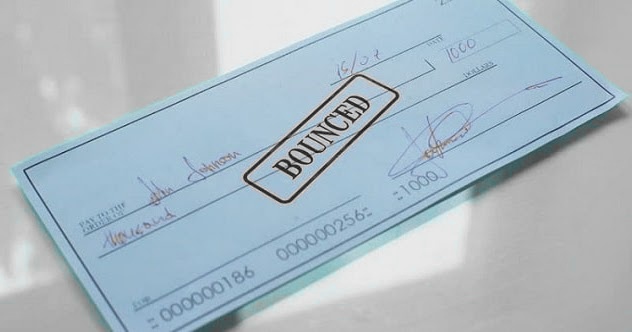
The Bank of Ghana has sanctioned 47 individuals and 245 businesses for issuing fraudulent cheques.
According to a BoG statement dated August 6, 2024, these parties violated a directive that was issued in March 2021.
“The affected bank customers issued dud cheques on at least three occasions between January 2022 and January 2024, despite warnings about the consequences of their actions”.
“The offenders are accordingly banned from issuing cheques in Ghana for three years, effective 28th June 2024” it said adding that the offenders will also not be able to access new credit facilities from the banking system for three years with effect from 28th June 2024.
The statement made it clear that these penalties do not exclude any legal measures that might be taken against the violators under Ghana’s criminal code.
The BoG mentioned that banks and Specialised Deposit-Taking Institutions (SDIs) whose clients are involved in these infractions have been directed to notify the offenders of the ban and collect all unused cheque books from them.
“They shall not issue new cheque books to the affected customers until the sanctions are lifted. The public is by this Notice, cautioned to desist from issuing dud cheques as the offence has both legal and regulatory consequences. Bank of Ghana will continue to monitor the payment system space closely and is committed to the promotion of the integrity and soundness of the financial system”, the statement concluded.
Chief Executive Officer of the Ghana National Chamber of Commerce and Industry (GNCCI), Mark Badu-Aboagye, has expressed concern over Ghana’s diminishing appeal as a favourable business destination in the West African Sub-region.
According to him, the purchasing power of the average Ghanaian has declined over time, leading to reduced patronage of goods and services. This economic trend has contributed to the closure or exit of some small-margin businesses from the Ghanaian market.
Speaking on Joy FM, Badu-Aboagye attributed the rising cost of living in Ghana to these economic conditions, which have resulted in businesses folding up and frequent employee layoffs, worsening the unemployment situation.
According to him, the exit of multinational companies from Ghana is “sending a signal that there’s something fundamentally wrong with the business environment.”
“If you take for instance, Jumia and also Glovo, in a situation as we find ourselves with a high operational cost, high interest rates and the rest, you realized that the companies that will fall quickly and earlier are those with the smallest margin, because their business model depends on the ability of the Ghanaian to purchase a product.”
“If Ghanaians are not buying it means Glovo and Jumia will not be there to distribute. And of course Ghanaians are not buying because sales have gone down, purchasing power has gone down and the businesses that are supposed to make profit to take care of employees are also closing down,” he added.
He therefore noted that Ghana is “gradually losing our position as a favourable investment destination in West Africa.”
In late April, the delivery service platform Glovo announced its intention to cease operations in Ghana from May 10, 2024. Additionally, there were media reports in early May suggesting that French bank Société Générale (SG) Ghana planned to exit the country’s banking sector.
However, at SG-Ghana’s 44th Annual General Meeting in Accra, Managing Director Hakim Ouzzani refuted these reports, stating that they were mere rumors and did not originate from the bank.
Professor Kojo Yankah, founder of the Pan African Heritage Museum (PAHM), has urged support for indigenous businesses following reports of expatriate companies exiting Ghana.
He views the departure of foreign companies as an opportunity for local entrepreneurs.
Dangote Cement Plc., the multinational cement powerhouse predominantly owned by Africa’s wealthiest individual, Aliko Dangote, has unveiled robust financial outcomes for the fiscal year 2023.
Despite navigating a challenging macroeconomic and operational climate with widespread earnings impacts, the company achieved a noteworthy 19 percent surge in profits, exceeding $280 million.
Dangote Cement’s financial report highlighted an impressive profit escalation, escalating from N382.31 billion ($236.3 million) in 2022 to N455.58 billion ($282 million) in 2023.
This reaffirms the company’s dominant market position in Nigeria and the broader African landscape.
The substantial profit growth primarily stemmed from a remarkable 36.4 percent surge in revenue, ascending from N1.61 trillion ($995.4 million) in 2022 to N2.21 trillion ($1.37 billion) in 2023.
The company’s revenue surge was a testament to strategic initiatives and market dominance.
Additionally, Dangote Cement enjoyed a lower tax expense in 2023, with a total tax payment of N97.5 billion ($60.3 million), marking a notable decrease from the N141.7 billion ($87.6 million) paid in the preceding year.
This robust performance is reflected in the company’s strengthened balance sheet, with total assets surging from N2.61 trillion ($1.61 billion) as of December 31, 2022, to N3.94 trillion ($2.44 billion) as of December 31, 2023.
Retained earnings also witnessed an uptick from N969.48 billion ($599.4 million) to N1.098 trillion ($678.9 million), underscoring Dangote Cement’s financial resilience.
As the foremost cement producer in Sub-Saharan Africa, Dangote Cement boasts an annual production capacity of 55 million tonnes spanning 10 countries.
The recent establishment of a six-million-tonne plant in Itori, Ogun State, underscores the company’s commitment to enhancing export capabilities and contributing to Nigeria’s economic diversification efforts.
Aliko Dangote, with over 50 percent of his wealth tied to an 86.6-percent stake in Dangote Cement, is poised to benefit substantially.
In line with the company’s strategic growth objectives, the board recommended a dividend of N30 ($0.0185) per share at the conclusion of the 2023 fiscal year.
This represents a noteworthy increase from the N20 ($0.0124) final dividend paid in 2022, aligning with the company’s commitment to significant shareholder returns, including Aliko Dangote, who stands to receive substantial dividends from his stake.
In 2023, Ghana experienced the loss of notable figures across various sectors, marking the departure of individuals who had made significant contributions to the nation. Among those remembered are:
Dr. Anthony Akoto Osei: The former Deputy Finance Minister and Member of Parliament for Tafo Pankrono passed away on March 20, 2023, following a brief illness. Dr. Akoto Osei, who served as Minister of Monitoring and Evaluation during President Akufo-Addo’s first term, had a distinguished career in public service.
Andrew Clocanas: Andrew Clocanas, known for his involvement in the Saglemi Housing Project, was found dead in his Airport Residential Apartment on October 20, 2023. Despite his passing, Clocanas was still on trial in connection with the Saglemi project. His legacy is tied to both construction and ongoing legal proceedings.
Bennet Adomah Agyekum (Kikibees): A businessman and owner of Kikibees Restaurant and Lounge, Bennet Adomah Agyekum, popularly known as Kikibees, passed away amidst controversies. His girlfriend faced accusations surrounding his death, leading to legal proceedings. Agyekum was laid to rest on December 10, 2023.
Daniel Okyem Aboagye: Former Member of Parliament for Bantama Constituency, Daniel Okyem Aboagye, departed on September 23, 2023. Aboagye, who had served as an MP for four years, was a member of the Finance Committee. His contributions extended beyond politics, as he led the well-known transport company 2M Express.
These individuals, though no longer with us, leave behind legacies that have impacted Ghana in various ways. May their memories be a source of inspiration and reflection for the nation.
Registering a business in Ghana is a straightforward process designed to accommodate small businesses and aspiring entrepreneurs seeking legal operation within the country.
This registration can be accomplished through two methods: in-person or online.
The Registrar-General’s Department is the authoritative body responsible for business registration in Ghana.
For the in-person registration process, business proprietors are required to present three potential business or company names for a name availability search. This step ensures that the chosen business name is unique and not already in use.
Following a successful name search, entrepreneurs are expected to either purchase or download the requisite Entity Registration form.
Next, complete the Entity Form, obtain a ticket based on the Entity Type, and wait for your ticket number to be called.
Submit the completed form, along with all necessary supporting documents, for verification by the inspector.
A payment slip will be generated for the required fee.
Once payment is made, the documents are left at the in-house bank for further processing. During this stage, a decision is made to either Approve, Query, or Reject the registration.
If the application is approved, a certificate and other relevant documents will be issued to complete the registration process.
For online business registration in Ghana, follow these simple steps:
Conduct a Name Search to check the availability of your desired Business Name by clicking on the “Name Search” option.
Download the registration forms corresponding to the Entity Type you intend to register.
Print out the forms, complete them, sign, and scan both the forms and any required supporting documents.
Create a user account on the portal by registering with your details. Once registered, log in using the provided username and password generated during account creation.
On the welcome page, select the “Entity Registration” link. Then, click on the “Entity Registration” link once more on the left pane.
If the name has not been reserved previously, click the “Create New” button. If the business name has been reserved, select “Create from Name Reservation.”
Choose the entity type from the dropdown menu, enter the business name under “Entity Name,” and click the “Proceed” button.
Follow the provided instructions to input data and upload the scanned and signed documents.
Make the required payment online by clicking on the “Make Payment Online” link.
The status of your registration will be communicated via SMS.
After approval is granted, click on the “Certificate” link to either save or print the certificate and other associated documents.
By following these steps, you can complete your business registration process conveniently and efficiently online.
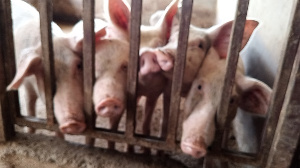
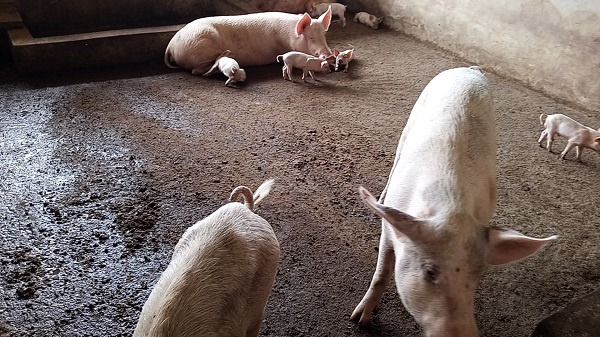
The D’yeki Eco Village, situated in Odumase-Krobo in the Eastern Region, houses a swine-producing farm with a herd size of approximately 170 pigs.
Over the past year and a half, the farm owners have diligently established and managed the piggery, with ongoing expansion efforts aimed at tripling its current capacity within the upcoming years.
Despite the fortunate absence of any cases of notorious swine diseases, the facility’s managers continue to exercise utmost care to prevent any potential losses.
Starting with a modest group of 15 sows and 2 boars, the piggery has impressively grown to encompass a population of 170 pigs, including 38 sows and three boars, all within a mere year and a half.
Emphasizing the remarkable profitability of pig farming, Mr. Worlali Martin, the farm manager at D’yeki Eco Village, which also engages in fish farming, poultry rearing, goat production, and crop cultivation, referred to pig farming as a goldmine. He highlighted how a farmer has the opportunity to witness rapid multiplication of their animals within a relatively short timeframe, leading to substantial rewards.
“Piggery is very profitable; I think we’re sitting on a goldmine. As a farmer who does pigs, you can earn quite a lot from the piggery,” said the farm manager, attributing the profitability to the high birth rate and high cost of pork.
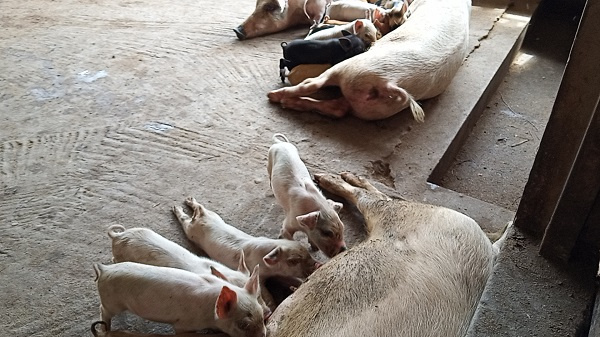
With sows reaching maturity for breeding between 6 to 7 months of age and giving birth to an average of ten piglets per litter, up to three times per year, the population increases rapidly within a short span.
The farm offers the option of selling the pigs either as live animals or processed meat. Operating its own slaughterhouse, it efficiently fulfills orders from customers seeking pork for various purposes.
In the face of continuously escalating feeding costs, this particular farm formulates its own animal feed. The mixture includes ingredients like maize, soya bean, palm kernel cake (PKC), limestone, wheat, rice bran, and additional concentrates tailored for optimal nutrition.
Acknowledging the substantial initial costs involving feeding, medical care, infrastructure, power, and other necessary expenses for initiating pig farming, Mr. Worlali characterizes starting a piggery as “moderately capital-intensive.”
This assessment is largely due to the fact that after the initial setup, the primary ongoing cost is feeding, which is supplemented by cost-free food sources.
While occasional challenges such as births, dysentery, worm infestations, and minor injuries do arise among the animals, these occurrences do not significantly jeopardize production, as they are relatively infrequent.
Presently, the farm employs one full-time worker responsible for maintaining cleanliness and feeding the animals.
However, as expansion endeavors continue, the farm is likely to expand its workforce to accommodate the growth.
While characterizing pig farming as a highly profitable endeavor, the farm manager emphasized the importance of the youth considering this trade as a reliable avenue for employment. He conveyed, “Pig farming can be incredibly lucrative… if you initiate with just a single sow and a single boar, productivity could escalate rapidly.”
According to Mr. Worlali, the valuation of a pig hinges on its carcass weight (the weight post-slaughter), leading to an average market price range of GH₵2000 to GH₵2,500 for fully grown pigs.
Discussing the piggery’s future goals, the farm manager elaborated on plans to generate approximately 500 pigs annually for the market, drawing from its existing brooder stock.
On Thursday, the Office of the Registrar of Companies (ORC) launched a public engagement initiative to emphasize the importance of registering and renewing businesses.
The campaign commenced around 0940 hours at the Registrar General’s Department premises, involving 70 ORC staff, some on a trailer and others on foot, accompanied by music and police escort.
The campaigners made their way through targeted market areas in Accra, including Makola, Tudu, Kantamanto, Agbogbloshie, Abossey Okai, Kaneshie, and Odorkor, reaching out to the business community.
Previously operating as part of the Registrar General’s Department, the ORC is now an autonomous entity, established by an Act of Parliament under Section 351 of the Companies Act, 2019 (Act 992).
While it shares premises with the Registrar General’s Department, the campaign sought to create awareness that the ORC now functions independently and is responsible for registering and regulating business entities in Ghana.
On the other hand, the Registrar General’s Department continues to carry out other functions, such as registering marriages, intellectual property rights, estate administration, among others.
Mr Nicholas Ofori Obeng-Twum, Head, Public Relations, ORC, indicated that: “As a new institution, there is the need to do public sensitisation not only on the brand and the institution, but to drum home the need for the public to register their businesses, the consequences of not registering their business and the opportunity they have when they register their businesses.”
During the campaign, a portion of the campaigners addressed the crowds using loudspeakers, while the majority engaged in one-on-one interactions with the audiences. They also handed out flyers containing valuable information about the services offered by the ORC.
The campaigners actively communicated with both small and medium-scale business owners, emphasizing the importance of registering their businesses if they hadn’t already done so, and encouraging those whose businesses required renewal to take immediate action.
Ms. Catherine Gbikpi Benissan, a State Attorney representing the Office of the Registrar of Companies, highlighted the benefits of business registration. She explained that registering a business grants it a legal identity, enabling it to avail itself of various privileges such as access to loans and the ability to enter into contracts.
“We realised there are business entities that had registered, but not complying with the regulations of filing their annual returns and renewal,” she noted.
“We are hoping that with this sensitisation, companies and businesses will know the requirements and the obligation to file their returns and stay viable on our books. And companies that have already registered will come to renew annually,” she added.
Ms Benissan said the ORC offered online services and so businesses and companies could go online to register.
“We want every company to comply with the law so that we can grow businesses and make Ghana rank high on the ease of doing business,” she said.
The CEO of Ghana Investment Promotion Centre (GIPC), Mr. Yofi Grant, has emphasized the pivotal role played by Ghana’s private sector in driving sustainable economic growth and development.
Despite facing challenges, primarily from external factors, the government is committed to partnering with the private sector to address the economic issues.
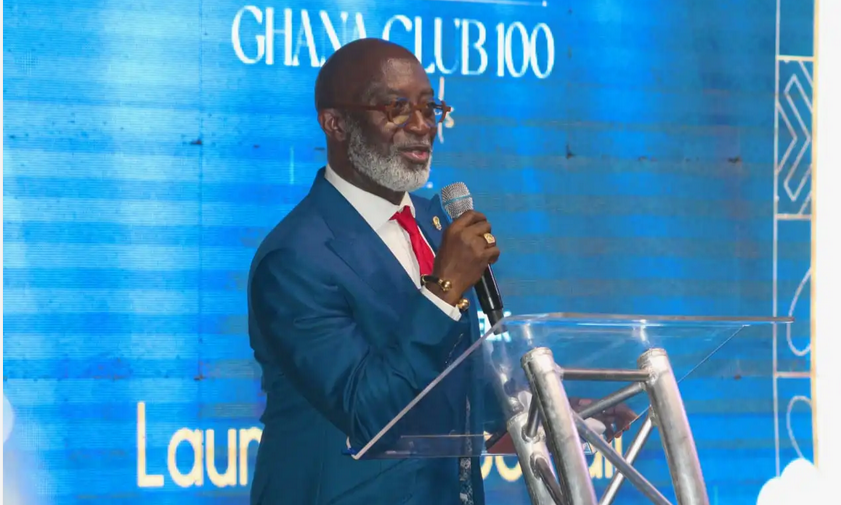
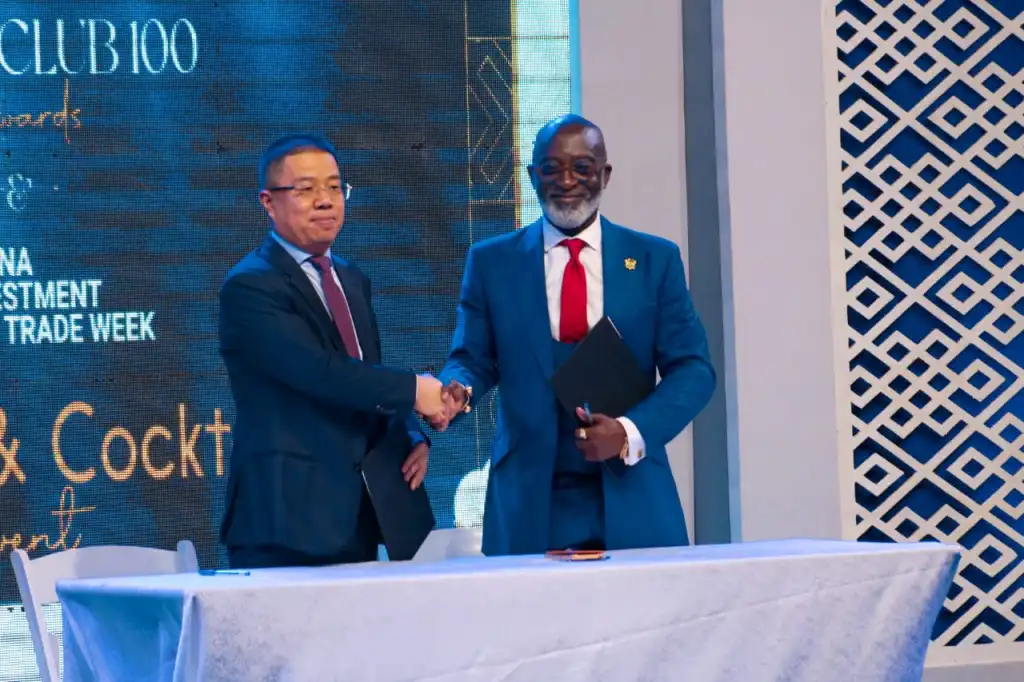
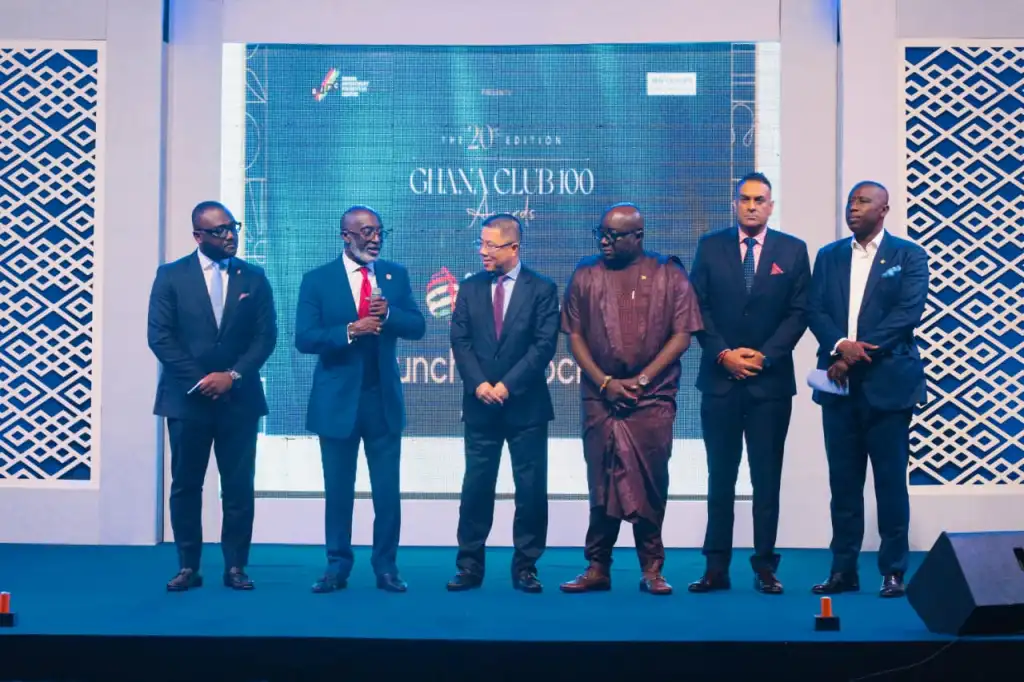
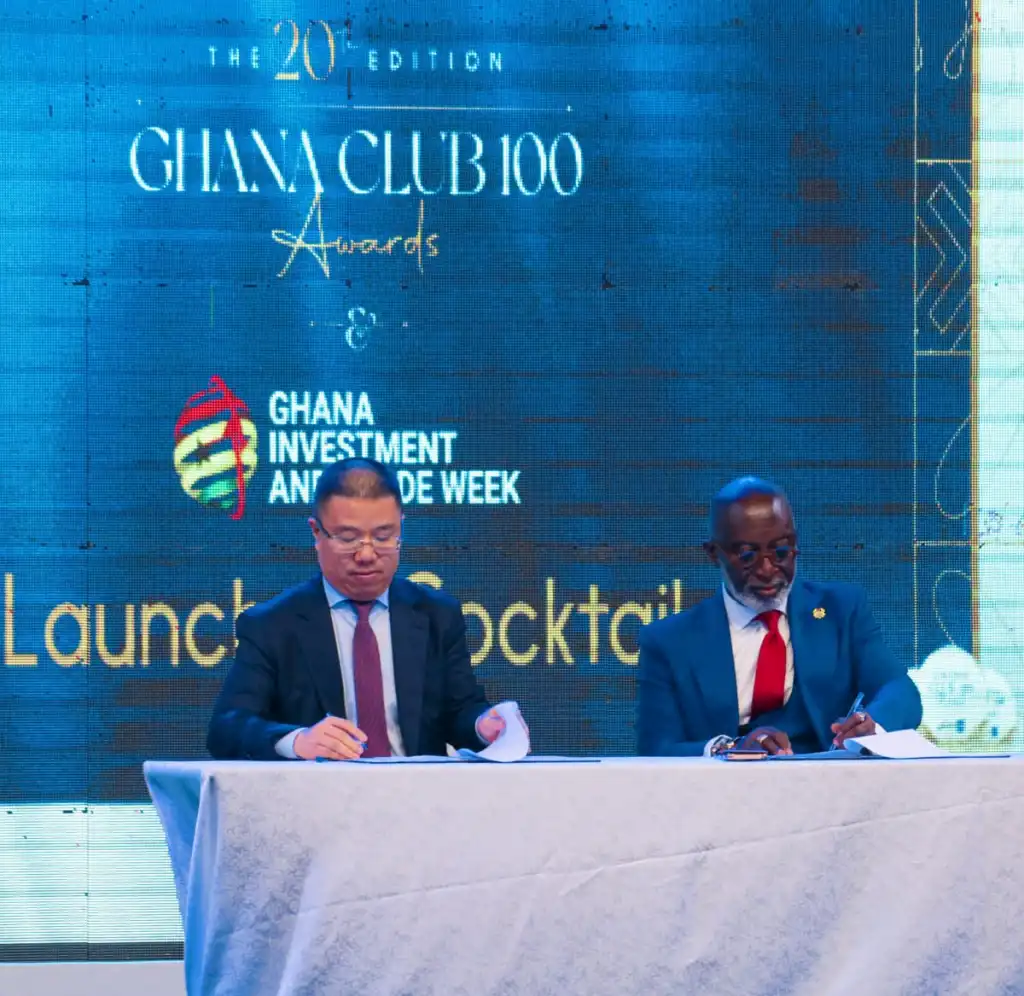
Speaking at the launch of the Centre’s Ghana Club 100 Awards and the inaugural Ghana Investment and Trade Week in Accra, Mr. Grant highlighted the importance of establishing a strong foundation for the private sector to thrive in an investment-friendly environment.
He expressed confidence that through a robust partnership, the economy would exceed expectations.
This year’s Ghana Club 100, themed “Accelerating Economic Growth: Amplifying Ghana’s Global Market Footprint through AFCFTA,” aims to provide a significant platform for promoting investment, trade, and knowledge exchange.
The event includes a series of exhibitions and an investment summit, culminating in the highly anticipated Ghana Club 100 Awards ceremony on Friday, 27th October 2023, all hosted at the Accra International Conference Centre.
Mr. Grant stressed the significance of private sector companies in international trade and investment, as their involvement can boost economic growth by creating export opportunities and attracting Foreign Direct Investment (FDI).
He lauded the collaboration with the MIE Group, organizers of the Ghana Investment and Trade Week, as it would help showcase Ghana and Africa’s potential to a wider audience of potential investors from around the world, fostering valuable partnerships to accelerate development and economic growth in the country.
Regarding the government’s efforts, Mr. Grant mentioned the Ghana Cares (Obaatampa) Programme, aimed at revitalizing enterprises with a capital injection of GH₵100 billion, 70 per cent of which comes from the private sector.
Despite the challenges posed by the pandemic and the Russia-Ukraine war, he applauded the private sector’s commitment and the expected investment it would bring to the economy.
Mr. Joshua Mortoti, the Executive Vice President and Head of the West Africa Region of Goldfields, praised the GIPC’s initiative and aligned Goldfields with Ghana Club 100 and other activities to promote Ghana as an investment destination of choice.
He also commended the introduction of the Ghana Investment and Trade Week, emphasizing its role in fostering strategic partnerships, promoting investment opportunities, and showcasing Ghana’s potential for trade and investment.
Mr. Mortoti emphasized the need for GIPC to intensify its advocacy efforts to ensure robust protection for both local and foreign investments in the country.
He recognized the importance of a stable macroeconomic environment and predictable fiscal regime for businesses to thrive.
Additionally, he urged the GIPC to advocate actively for safeguarding businesses that have already invested in Ghana, particularly in industries like mining that significantly contribute to the country’s economic development.
In conclusion, Mr. Mortoti hoped that future Ghana Club 100 rankings would come with physical and other incentives to encourage flourishing businesses and further contribute to the nation’s development.
“There should be more intentional efforts to give fuller expression to Ghana’s more friendly business accolade and I hope in future a Ghana Club 100 ranking will come with physical and other incentives to make business flourish and continue to contribute towards the building of our nation Ghana. ”
In 1934, Haj Bashir Elnefeidi, the patriarch of the Elnefeidi family, embarked on an entrepreneurial journey by selling soap in Khartoum, Sudan.
Over the years, his venture, the Elnefeidi Group, grew into a multinational conglomerate with diverse interests.
The family business, now led by Amin Bashir Elnefeidi as the Group President, spans across logistics, trade, real estate, industrial development, banking, agriculture, aviation, food processing, and more.
The Elnefeidi Group has established a strong presence in Africa, Europe, the Middle East, and North America, making it a significant player in various sectors worldwide.
Haj Bashir Elnefeidi’s legacy as a visionary leader continued until his passing in 2005.
Today, the family’s business empire stands as a testament to his enduring success. With their accomplishments shining brightly, the Elnefeidi family is among the wealthiest and most influential families in Africa, recognized as one of the key economic drivers in the world.
Here are the ten businesses owned by the Elnefeidi family of Sudan, showcasing their remarkable achievements and wide-ranging interests:
LogisticsTrade, Real Estate, Industrial Development, Banking, Agriculture, Aviation, Food Processing, Additional Businesses and Additional Businesses.
Through persistent hard work and a commitment to excellence, the Elnefeidi family has carved out a prominent place in the global business landscape, leaving an indelible mark on various industries.
Bashir Motors
Bashir Motors was established in 2005 as the sole and exclusive agent of Nissan Motors Ltd. in Sudan. It is the exclusive distributor of Scania products and services in the North-East African nation, providing the Sudanese market with transport solutions – heavy trucks, buses, and generator sets, high-quality genuine spare parts, and after-sales services that strictly comply with Scania’s unparalleled standards.
Elnefeidi Tires Retreading And Rehabilitation Factory
The Elnefeidi Group established the NTRRF tire retreading center in Khartoum North on August 6, 1994. NTRRF retreads used tires and places them back into full service, allowing as many kilometers of use as the original tires. Used tires are retreaded at an estimated cost of about 40% of the price of a new tire, saving customers 60% of the value of a new tire.
7 Rent A Car
7 Rent a Car was established in May 2006 as a subsidiary of Elnefeidi Group to provide high-standard vehicles on long and short-term lease contracts, with a fleet of more than 250 vehicles of different models and types.
FlyDubai
FlyDubai is a low-cost airline owned by the Dubai Government. Its operations in Sudan are administered and managed by the Elnefeidi Group.
AFISA Food
The Elnefeidi Group Ventured into the food business through AFISA Food, a subsidiary of the Group, Trans Afrique General Trading FZCO. AFISA Food is a food-processing company founded in 2015, focusing on the production of wheat flour as its primary activity.
Logistics Division
Elnefeidi Group started commercial land transportation in 1973. In August 2022, Raiba Land Transport was established as the flagship company of the Group. The combined efforts of the four companies under the Logistics Division – Raiba Trans (Sudan), Delta Logistics (Sudan), Trans Afrique (Cameroon), and Shift Logistics (UAE) positions Elnefeidi Group as the leading logistics provider in the region.
Elnourus Real Estate Investment Co.
Established in 2000, Elnourse Real Estate Investment CO. Ltd. executes comprehensive housing projects and harnesses the prevailing opportunities in the real estate sector in Sudan. Elnefeidi Group owns a wealth of real estate: land, buildings, villas, offices, stores, and warehouses in strategic and attractive locations.
Inmaa Poultry and Feed Production Company
In 2005, Elnefeidi Group partnered with Egypt’s Al Wadi Holding Group to establish Inmaa Poultry and Feed Production Company. Ventures operating under the partnership include Inmaa Poultry & Feed, Inmaa Agriculture, Inmaa Trading, and Inmaa Engineering.
Khartoum Land Terminal
In 2003, the Sudan Ministry of Public Works, the National Social Insurance Fund, and the Elnefeidi Group joined their combined experiences in different fields to provide cost-efficient, safe, on-time, reliable, convenient, and clean transportation services. As a result, Khartoum Land Terminal was brought into being and formally commenced its operations on October 24, 2004.
Sahil Electronic Services Co.
Sahil Electronic Services Co. is a limited liability company headquartered in Sudan. It was established in 2009 as a joint venture between Tawasul Electronic Network Solutions – Oman, a leading expert in the IT sector, and RAIBA Land Trans Ltd, a subsidiary of Elnefeidi Group, with a vision to be the leading electronic payment distribution and collection solutions company in Sudan and Africa.
Stakeholders in the business community have called on the government to introduce tax relief measures during the upcoming mid-year budget review.
As per Section 28 of the Public Financial Management Act, the Finance Minister is required by law to present this review to Parliament within six months of the financial year’s commencement.
The presentation for this year is scheduled for July 27.
The business community highlights the importance of addressing taxation concerns and creating a favorable environment for businesses to flourish.
The CEO of the Ghana National Chamber of Commerce and Industry, Mark Badu Aboagye, suggests that the government should focus on broadening the tax base instead of burdening a few individuals with taxes.
“Let us find more innovative ways to increase revenue without necessarily burdening the private sector and businesses. Increasing your tax revenue is not about introducing new taxes or increasing the rate of existing taxes. It’s about how efficient you are.”
“We have gotten to a level where businesses are at the peak of stress. If you are introducing a new tax, you are in a way killing all the businesses. Let us be efficient in the collection of taxes to improve. The more you increase tax rates, the less your tax revenue,” Mr. Aboagye said.
CEO of Zeepay, Andrew Takyi-Appiah, has advocated for a nationalistic approach to support for Ghanaian start-ups.
Mr. Takyi-Appiah opined that the various financial institutions in the country should be willing to give loans to local enterprises to boost their businesses, which will also have a positive impact on the Ghanaian economy.
Contributing to a panel discussion on the Citi Business Festival Forum moderated by the Head of News at Citi TV/Citi FM, Vivian Kai Lokko, dubbed ‘Reimagining the Digital Economy’, the Chief Executive Officer of Zeepay observed that most people struggle to acquire the necessary capital to start their businesses.
He further suggested thatbanksshould open their doors for start-ups to access loans and push their businesses forward.
“It will be good if we have a nationalistic pride that, for the first time, we are also going to lift the local companies up and give them those opportunities and teach them the efficiency to reach their goals. I also think that one of the enabling conversations is the fact that we desperately need to redefine start-ups,” Mr. Takyi-Appiah posited further.
“Our part of the world is such that you cannot even get a bank loan, let alone get private equity to support you. But if we start to redefine the start-up conversation, maybe even banks will start to look at start-ups differently and provide them with hand-holding support, so that they will have the resources to support the infrastructure,” he added.
He also charged local enterprises to ensure that they deliver quality services, which will attract more customers to their businesses.
“We need to start looking at aspects like fulfillment because we cannot have a digital economy without fulfillment. Fulfillment is the reason why you buy on Amazon and receive your goods. The backend is the infrastructure, which includes human beings and logistics that bring it to your doorstep. It would be great if local entities also understand the local economy and come up with fulfillment platforms,” the Zeepay CEO admonished.
The former CEO of Cevital Group, Rebrab, who announced his resignation from the management of Cevital Group in June 2022 and who handed over the torch to his son, Malik, will not be able to manage a business until further notice.
Rebrab was kept under judicial control by the public prosecutor on May 18 at the Sidi M’Hamed court.
However, the businessman’s troubles do not end there.
According to an official document from Algeria’s judiciary dated May 23, 2023, Rebrab is banned from any commercial or management activity within his company, Cevital.
This document, widely shared on social networks, is signed by the investigating judge of the economic and financial center at the Sidi M’hamed court.
It is addressed to the presidents of the regional chambers of notaries.
It stipulates that Rebrab “is prohibited from exercising any commercial activity or any other mission in his capacity as a director or member of the Board of Directors or from any management activity within the company.”
The decision comes a little over a week after the placement of the former CEO of Cevital under judicial control. Rebrab is under trial for engaging in “questionable financial transactions” with foreign-based entities. He was charged on May 18.
As a result, Rebrab, who had announced his retirement from Cevital Group, is again caught up in a court case.
Remember that the richest man in Algeria was sentenced by the Sidi M’Hamed court on Dec. 31, 2019, to 18 months in prison, including six months and a $9.5-million fine.
The Algerian Justice Department has accused the former CEO of overcharging for water purification equipment imported by its subsidiary, EvCon.
Local businesses across the country have been advised to pursue partnerships and joint ventures to increase their chances of excelling in their various industries.
The General Manager in Charge of Business at Tecno Mobile Ghana, Daniel Glover, said pursuing partnerships allowed all parties involved to fully explore areas where they had the most competitive advantages, pool them together and make more profits than they would have individually.
“There is a lesson that I want us to learn from this and it is that in Ghana and Africa, we can also trust one another and be transparent with one another and if we do, we can also attain great heights and make giant strides in the world of industry,” he added.
Mr Glover said that at the launch of the company’s new line of smartphones; the “Camon 20 Series” in Accra in collaboration with telecommunication giants MTN.
Present at the event were a Deputy Minister of Trade and Industry, Michael Okyere Baafi; Musician and Brand Ambassador of the Tecno, Stonbwoy and the Chairman of the Mobile Phones Dealers Association, Joseph Osei Agyemang, among other industry players.
A Senior Manager for commercial planning and analytics at MTN, Guido Sopiimeh, commended the company for continuing to develop products aimed at improving the lives and addressing the device needs of Ghanaians.
Mr Sopiimeh, therefore, reaffirmed MTN’s position to continue its partnership with Tecno to develop devices to connect Ghana and Africa to the world by increasing smartphone penetration in the country and across the continent.
“MTN’s partnership with original smartphone manufacturers like Tecno is anchored on its strategic vision to lead digital solutions for Africa’s great and rooted in our belief that everyone deserves the benefits of a modern connected life”, he stressed.
As part of the launch, Stonebwoy, Mr Agyemang and 38 Tecno dealer companies were honoured with citations and a Camon 20 mobile phone for their commitment to the brand over the years.
The Camon 20 series of phones boast a sleek, modern design and a buttery-soft texture, which is easy to clean with waterproof, heat, cold, stain and abrasion-resistant benefits among a range of advanced features.
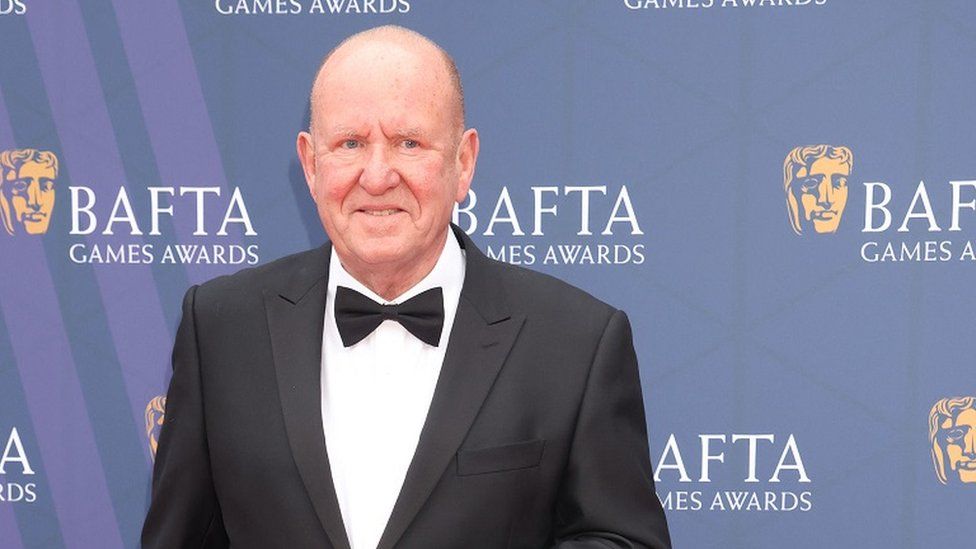
CEO of the business that created Tomb Raider, Sir Ian Livingstone, has indicated that the UK video game industry supported Microsoft’s acquisition of Activision.
He also co-founder of Games Workshop, said it would be “odd” if the UK was the only place to object.
The blocking of the deal by the UK regulator provoked a furious response from Microsoft, with its president saying the move was “bad for Britain”.
The UK’s move means the multi-billion dollar deal cannot go ahead globally.
The planned $68.7bn (£55bn) deal would have been the gaming industry’s biggest ever takeover, and Microsoft would have taken ownership of popular games titles such as Call of Duty, Candy Crush and World of Warcraft.
US and EU regulators have yet to decide on whether to approve the deal, but on Wednesday the UK’s Competition and Markets Authority (CMA) blocked it, saying it was concerned the deal would offer reduced innovation and less choice for gamers in the fast-growing cloud gaming business.
Both Microsoft and Activision have said they will appeal against the CMA’s decision.
On Thursday, Microsoft president Brad Smith launched a fierce attack on the judgement, telling the BBC that it marked Microsoft’s “darkest day” in its four decades of working in the UK.
“People are shocked, people are disappointed, and people’s confidence in technology in the UK has been severely shaken,” he said, adding that the European Union was a better place to start a business.
A spokesman for Prime Minister Rishi Sunak said Mr Smith’s claims were “not borne out by the facts”, adding that the UK games sector had doubled in size over the past 10 years.
Sir Ian, who is now co-founding partner of gaming investment group Hiro Capita, told the BBC’s Today programme: “I think the sentiment of the games industry itself in the UK is for it to go ahead.
Image caption,Sir Ian said the UK’s games industry was “a great British success story”
“It would be odd if the UK was the only region to object to this acquisition going forward,” he added.
“I would hope that they can sit down and perhaps negotiate a settlement which might be in everybody’s interest over time.”
Sir Ian said the UK’s games industry was “a great British success story”, having developed some of the biggest franchises in the world including Tomb Raider and Grand Theft Auto.
“It’s always been overdelivering in content but always underserved by capital and recognition,” he added.
“This is a highly competitive market and any negative sentiment is not good for the industry or indeed the UK economy.”
The CMA is the first regulator to announce its decision, but last year the US Federal Trade Commission began a legal challenge to block the takeover.
In March, EU regulators delayed their decision after Microsoft proposed concessions to get the deal over the line.
Sir Ian said “it’s somewhat come as a surprise that they [the CMA] said no at this time”.
However, Gareth Sutcliffe, senior games analyst at Enders Analysis, said the deal “has been in trouble for a while”.
He added that Microsoft “simply didn’t do the necessary regulator outreach to get this deal over the line”.
The new and updated taxes that were announced in the 2023 Budget will go into effect on May 1, 2023, this is according to the Ghana Revenue Authority (GRA).
The implementation date was captured in a notice issued by the authority.
The new and revised taxes include three key tax measures – the Excise Amendment Act, 2023; Income Tax Amendment Act, 2023 and the Growth and Sustainability Levy Act, 2023.
The GRA noticed indicated that businesses have been given enough time to configure their systems for the taxes to be implemented since the law was passed.
Excise Duty Amendment Tax
On the Excise Duty Amendment Act, the authority added that the tax has been expanded to cover some items and commodities that was previously not captured.
The development may result in the prices of some processed fruit juice, cigar, mineral water, spirits and wines including sparkling wine, going up.
However, the Ghana Union of Traders Association, maintains that it will not hesitate to pass on the cost to consumers as it might be difficult for it members to absorb these taxes.
Income Amendment Tax
On the Income Tax Amendment Tax, the GRA said it will be charging a minimum of 5% on firms that will be declaring loses for 5 years.
However, income earned beyond ¢500 will attract some taxes.
Those earning an extra ¢100 will attract a tax rate of 5%, while ¢100 only will attract a rate of 10%.
Based on the schedule sighted by Joy Business, the more one earns the more one would be paying taxes to the state.
For persons in the game of betting, they will pay 10% of their earnings to the state, which will be deducted when monies are being paid them by the respective companies.
Firms that are into lottery and gaming will also pay 20% on their gross revenue.
Based on revised taxes, individuals who receive, gains from realization of investment assets or liabilities as well as other than gifts received in respect of business or employment may have to pay 25% of the value to the state.
Growth and Sustainability Levy
For banks, non-bank financial institutions, telecom companies and firms working in the oil sector will pay 5% of their profit before tax to the state.
Mining firms, oil and gas companies are however expected to pay 1.0% of their gross production, while all other firms will pay 2.5% of their profit before tax to the GRA.
Traders Advocacy Group (TAG) has said price increases on the market are not the fault of traders because the expense of doing business has escalated to astronomical proportions.
According to the group, traders are unable to travel or import goods because of capital losses.
The group noted that policymakers are not doing enough to put the appropriate policies in place to assist trade facilitation in the country.
In a statement, the group explained that as far as the commodity market is concerned, importation is necessary because some goods cannot be produced in Ghana. It said imports provide over 60 percent of the nation’s needs but the cost of importation has escalated.
It, therefore, called on Ghanaian traders to disregard groups that issue orders without taking into account the traders’ perspective on the facts.
It noted that retailers do not need to reduce their prices and run the danger of capital loss because the inflation rate is declining while adding that there are many factors, not just one, influencing the drop in pricing.
For Ghanaians to be safeguarded from price hikes, TAG called on the government to listen to their plea for a decrease in the cost of doing business in the country.
This statement comes on the back of a call by the leadership of some traders for their members to reduce prices in the market because inflation rate was declining.
Ghana’s inflation declined marginally to 53.6% in January 2023, from 54.1% recorded in December 2022, latest data from the Ghana Statistical Service (GSS) has revealed.
This is the first time in 19 months that inflation has dropped.
According to the figures, the rising food prices pushed the Consumer Price Index (CPI) up.
However, transport inflation fell for the first time in several months due to the reduction in fuel prices during the period. Prices of non-food items also declined during the period.
According to the figures, five divisions registered inflation higher than the national average.
They are Furnishings, household equipment (71.7%); Housing, water, electricity, gas and other (71.1%); Transport (68.8%); Personal care, social protection and miscellaneous services (63.1%) and Food and non-alcoholic beverages (61.0%).
The high inflation will keep lending rates still high at an average of about 35%. This means the cost of borrowing will still remain elevated.
Food inflation inched up to 61.0% in January 2023, from 59.7% recorded in December 2022.
Non-food Inflation declined to 47.9% in January 2023, from 49.9 % recorded in December 2022.
While, inflation for locally produced items was 50.0%, inflation for imported items was 62.5%.
With regard to the regions, Eastern region recorded the highest year-on-year inflation of 66.2%.
Greater Accra followed suit with an inflation of 65%.
Volta region however recorded the lowever inflation of 34.7%.
Illegal mining, known commonly as ‘Galamsey‘ has been a major challenge facing Ghana with its dire effects on the country’s environment.
The serious threat posed by this phenomenon to Ghana’s environment including water bodies has compelled the government of Ghana to initiate a fight against it.
While a section of the population are blatantly against galamsey and have vehemently expressed their dissent to the development, quite a few individuals seem to be on the fence with respect to the menace.
A young man by name Kobby has narrated how his life ‘got better’ through galamsey as well as losing his best friend in the process.
According to him, he was working as a vulcaniser but the money he was earning from it was inadequate to cater for his basic needs. He then decided to venture into the galamsey business.
On his first day at the mining site, he realised the work was not easy but he had no option than to persevere through it.
He learnt on the job, the various types of galamsey including ‘bowhewe’ which literally means ‘dig and search’ in the Akan language, which is the one that involved excavators degrading the land.
“I did a couple of it but I mostly do the ‘bowhehwe’, the excavator one. I followed a friend but it didn’t work because it was dangerous for me and it was mostly owned by wicked Chinese with less money”, he said.
He revealed that on his first day, he earned only GH¢30 but was assured by some of his colleagues that his remuneration would increase with time and that encouraged him to put much effort into his work.
The highest amount of money he has earned from the business was GH¢1000 a day, which he said he saved it to further his education.
He also added that the galamsey business was a “dangerous” one that comes with a lot of problems including drowning and loss of lives especially those who engaged in underground mining as on some occasions, the top of the soil can break and cover your back.
Explaining how risky the underground mining was, Kobby recounted how he lost his best friend through it.
“He was my best friend. used to go underground with him. A very hardworking guy. We went underground for gold. I took the lead. When I got back, I was waiting for him at the entrance of the pit not knowing the soil collapsed n covered the middle way of the pit. I couldn’t find him afterwards. That was when I realized that my friend had lost his life” Kobby painfully recounted.
Kobby said that was when he advised himself to stay away from such a job and went into different ventures.
He pleaded with people having the intention of engaging in galamsey to stay away because it destroys the nature of the land and the loss of lives is terrible.
Ghanaians say the government and ordinary citizens share responsibility for fighting climate change, the latest Afrobarometer survey shows. While fewer than half of citizens have heard of climate change, a majority of those who are aware of the phenomenon say it is making life in the country worse and requires urgent government action.
Citizens also call on other key stakeholders – including business and industry, developed countries, and ordinary citizens – to do a lot more to limit climate change.
Key findings
▪In Ghana, 44% of adults say they have heard of climate change (Figure 1).
▪ Among Ghanaians who are aware of climate change:
o Six out of 10 (60%) say it is making life worse, a 12-percentage-point increase since 2020 (Figure 2).
o More than three-fourths say that ordinary citizens can help curb climate change (77%) and believe that the government needs to take immediate action to limit climate change, even if it causes some job losses or other harm to the economy (87%) (Figure 3).
o Views are divided as to whether the government (43%) or ordinary citizens (42%) have the primary responsibility for fighting climate change and limiting its impact.
Far fewer place this responsibility mainly on business and industry (9%), rich or developed countries (3%), and traditional leaders (2%) (Figure 4).
o But a slim majority (53%) say the government is performing “fairly badly” or “very badly” in handling climate change (Figure 5).
o Strong majorities say the government (81%), business and industry (74%), developed countries (69%), and citizens (67%) “need to do a lot more” to limit climate change (Figure 6).
Afrobarometer surveys
Afrobarometer is a pan-African, non-partisan survey research network that provides reliable data on African experiences and evaluations of democracy, governance, and quality of life.
Eight survey rounds in up to 39 countries have been completed since 1999. Round 9 surveys (2021/2022) are currently underway. Afrobarometer’s national partners conduct face-to-face interviews in the language of the respondent’s choice.
The Afrobarometer team in Ghana, led by the Ghana Center for Democratic Development, interviewed a nationally representative sample of 2,369 adult Ghanaians in April 2022. A sample of this size yields country-level results with a margin of error of +/-2 percentage points at a 95% confidence level.
Previous surveys were conducted in Ghana in 1999, 2002, 2005, 2008, 2012, 2014, 2017, and 2019.
The Office of the Registrar of Companies (ORC) has announced an upward adjustment in the cost of the renewal of business names from GHȼ25 to GHȼ30 from December 31, 2022.
It also stated that a penalty fee for Companies and Partnerships in default will also increase from GHȼ450 to GHȼ600.
A statement issued by the Office of the Registrar said: “This increment in fees would apply to all Sole Proprietorships and Subsidiary Business Names as well as Companies in default including Churches, Associations, Unions, Foundations, Schools, Fun Clubs, External Companies, and Professional Bodies.”
It also urged companies to file their Financial Statements together with their Annual Returns at a cost of GHȼ60 per year to renew their Companies.
External Companies are to submit their Group Accounts to the ORC at a cost of $690.00 per year or in default pay a penalty of $750.00 in addition to fees for all the years in default. Partnerships are to renew their Partnerships at GHȼ60.00 per year.
The Registrar, therefore, added that some 2584 companies in default whose names had been earmarked for strike off from the Companies Register during the clean-up exercise can still be in good standing by filing their Annual Returns by the end of the year.
Also, “all Business Entities (Companies, Partnerships, and Sole Proprietorships) yet to migrate their business records onto the e-Registrar application dubbed ‘Re-Registration’ have up to 31st January 2023 to do so and be in good standing to avoid sanctions.”
See the full release below
The Office of the Registrar of Companies (ORC) wishes to inform its Stakeholders, Company Officials, Business Owners, cherished Clients and the General Public that there will be an increase in the renewal fee for Business Names from GHȼ25.00 to GHȼ30.00 and a penalty fee for Companies and Partnerships in default from GHȼ450.00 to GHȼ600.00 effective 31st December, 2022.
This increment in fees would apply to all Sole Proprietorships and Subsidiary Business Names as well as Companies in default including Churches, Associations, Unions, Foundations, Schools, Fun Clubs, External Companies and Professional Bodies. Companies are to file their Financial Statements together with their Annual Returns at a cost of GHȼ60.00 per year to renew their Companies. External Companies are to submit their Group Accounts to the ORC at a cost of $690.00 per year or in default pay a penalty of $750.00 in addition to fees for all the years in default. Partnerships are to renew their Partnerships at GHȼ60.00 per year.
Further to the above, the 2,584 Companies in default whose names had been earmarked for strike off from the Companies Register during the clean-up exercise can still be in good standing by filing their Annual Returns by end of year, 2022.
All Business Entities (Companies, Partnerships, and Sole Proprietorships) yet to migrate their business records onto the e-Registrar application dubbed ‘Re-Registration’ have up to 31st January, 2023 to do so and be in good standing to avoid sanctions.
In compliance with the provisions of the Companies Act, 2019 (Act 992), the Company Secretary is to submit a Special Resolution for a change of their Company Name if they have not complied as yet to our directive, by the addition of an appropriate ‘suffix’ to the end of their Company’s Name by 31st December, 2022. All Companies who have not as yet adopted a Registered Constitution reflecting the changed name in place of their Company’s Regulations are also being reminded to do so before the end of the year, 2022.
The Office entreats our cherished clients to make payments on transactions at our in-house Fidelity Bank or any Fidelity Bank branch across the country. We kindly bring to the attention of our clients and issue a caution to ignore any calls from fraudsters, for mobile money (MOMO) transfers in the name of ORC/RGD or persons claiming to be Lawyers or Staff of the Office of the Registrar of Companies(ORC). The ORC does not operate a MOBILE MONEY NUMBER and any Company Official who pays out monies to these calls do so at their own risk.
For further enquiries please contact the Public Relations Unit on 055-765-3130 (Telegram/WhatsApp) or 030-266-6081. Follow us on our social media handles on Facebook, Twitter, LinkedIn and Instagram @ORC Ghana.
Access to affordable housing remains one of the critical socio-economic challenges facing many developing countries. A huge gap between housing demand and supply of affordable housing units persists, compounded further by ever-increasing home prices beyond the reach of workers’ wages.
The homeownership journey for many is long, complicated, and sometimes overwhelming with many resulting to unconventional means of securing housing. Land acquisition, finding the right professionals for construction, and obtaining financing often present huge challenges. The myriad of activities involved in the traditional home acquisition process can be confusing and opaque, sometimes leading to financial loss.
Due to these difficulties, many low- and middle-income earners retire without achieving their homeownership dream.
Financing Ghana’s Housing Deficit
Ghana’s 2021 population and housing census puts the national housing deficit at 1.8 million units. Estimates indicate that the annual housing demand is between 70,000 to 120,000 housing units with only about 30% of the annual demand supplied. With average cost of constructing a two-bedroom house in the urban areas estimated at about GHS 267,000, affordability remains at the core of the housing challenge, as majority of working-class Ghanaians would not be able to afford a home due to low-income levels.
With average interest rates on cedi-denominated mortgages from commercial banks ranging between 19.00% and 31.7%, majority of people within the low- and middle-income bracket would not qualify for a mortgage. This creates a situation where potential homeowners are left with the choice of building their homes incrementally which, in most cases, can take anywhere from 10 to 20 years or, in some cases, one’s entire working life.
The Ghanaian Worker’s Pathway to Homeownership
The average Ghanaian worker has three main pathway options in the homeownership journey: self-build, outright purchase, and mortgage acquisition. The homeownership journey for many starts when they receive their first pay cheques. Bank-financed options to achieve homeownership remain limited due to low incomes and high mortgage costs. Mortgages from commercial banks are sometimes priced in US Dollars, completely unaffordable for low- and middle-income workers earning Ghana Cedis. Similarly, houses offered by developers for outright purchase are often priced in US Dollars.
Therefore, for a segment of workers who cannot afford to access mortgage from the commercial banks, they start saving towards buying land to build their future homes as soon as they start to earn an income. Many prospective homeowners make initial down payments for land and pay the outstanding balance over time, while some secure loans to pay for the land and repay the loan over time. Owing to the challenges associated with land acquisition especially in the urban areas with its attendant litigations and loss of investments, some would-be homeowners are forced to end their homeownership journey when they fail to acquire a piece of land.
For prospective homeowners who overcome the land acquisition challenges, the remaining journey can extend for many years characterized by difficulties with finding qualified artisans, raising needed financing, loss of building materials to theft, and long exposure of uncompleted buildings to adverse weather conditions resulting in compromised structural integrity, before they finally get to occupy the homes. In many instances, people move into their uncompleted homes after retirement due to reduced income. In the interim, most live in rented accommodation and may pay rent for their entire working Lives.
A typical homeownership path for a Ghanaian worker
The Rent-to-Own Model
In urban areas, data from the Ghana Statistical Service suggests that majority of occupants in residential properties are non-owners and are typically involved in some form of rental arrangement.
In most instances in Ghana, a first-time tenant is required to pay two- or three-years’ rent in advance, and subsequently one year’s rent advance upon each renewal of tenancy. The huge financial burden that rent payment places on tenants for many years in the traditional rental arrangement does not in any way provide for ownership opportunities, regardless of how long they rent the home.
A significant shift from the traditional rental arrangement is the concept of rent-to-own. Imagine a rental arrangement where the tenant can eventually own the home at the end of a defined period; a rent-to-own arrangement offers tenants this opportunity. A rent-to-own arrangement allows tenants to rent a home with an option to buy the home at the end of a defined rental period. In the rent-to-own model, the tenant pays an additional deposit with each monthly rent payment which goes towards the purchase price of the home at the end of the rental period.
Types of Rent-to-Own Schemes
There are two main types of rent-to-own arrangements: the lease-option and lease-purchase arrangements. In lease-option arrangement, the tenant pays an upfront fee of about 5% of the value of the home. The upfront payment gives the tenant an option to buy the home at the end of the rental period at a value to be agreed on by the buyer and the seller. The upfront fee paid by the tenant is applied to the final cost of the home. The tenant agrees to make monthly payments a little above the market rent rate for the property. The excess payments above market rent goes towards the down payment for the purchase of the property. On the option exercise date, the rent credit serves as down payment to enable the tenant purchase the home. The tenant retains the right to opt out of the agreement if s/he decides not to buy the property.
On the other hand, the lease-purchase is a type of rent-to-own arrangement where the tenant and property owner agree on the price of the property upfront. The tenant makes monthly payments above market rent rate and the excess goes towards down payment of the home. In a lease-purchase agreement, the tenant is obliged to purchase the home at the end of the lease period and loses the down payment if tenant fails to provide funding to purchase the home. Furthermore, the property owner can sue for breach of contract if the tenant fails to purchase the home at the end of the lease period.
While the lease-option agreement gives the tenant more flexibility in the home acquisition process, this arrangement presents uncertainty in the final home price as the price is determined at the end of the lease period and may be above the tenant’s budget. The lease-purchase, on the other hand, lacks flexibility for the tenant in cases where tenants decide to change their mind, but the risk of property price increasing above tenant’s income is minimized.
Home Maintenance and Insurance
In a rent-to-own arrangement, the prospective homeowner is both a tenant and a buyer. Prospective homeowners therefore have more responsibilities in a rent-to-own scheme than they would in a traditional rental arrangement. Unless the agreement states otherwise, the tenant is responsible for some maintenance works in the home. Some rent-to-own agreements make major maintenance such as changing of roofing and other structural works the responsibility of the seller. However, maintenance works such as house painting, replacement of sinks and landscaping are usually the responsibility of the prospective homeowner under rent-to-own arrangement.
There are different types of home insurance available to protect residential properties and contents. A renter’s insurance is meant to protect the personal belongings of the tenant; a landlord insurance offers homeowners protection for rented properties; and homeowners’ insurance which is taken by the owner of the property. Since tenants build up equity in a home over a period of time albeit on paper, it is important to ensure that the property has an insurance cover to protect the tenant’s investment under a rent-to-own arrangement. Because the seller owns the property during the rent-to-own tenor, the seller usually carries homeowner’s insurance while the parties agree on how to share the insurance cost. The tenant on the other hand may acquire a renter’s insurance to protect belongings in the home.
The Ideal Rent-to-Own Candidate
Rent-to-own arrangements could offer an ideal solution for both tenants and landlords. Rent-to-own is a good choice for tenants who would like to buy a home but do not have the initial down payment or qualify for a mortgage. Tenants get the opportunity to move into a home and start enjoying the benefits of a homeowner while building up equity over time.
The Benefits
In addition to giving tenants the opportunity to build equity in the home over a period, tenants have the flexibility to walk away from the arrangement if their financial situations change or if they lose interest in purchasing the home. The rent-to-own arrangements also increase the chances of property owners, who are experiencing difficulties in selling their properties, to find buyers while gaining rental income in the interim. Additionally, property owners enjoy a long-term reliable tenants and lower home maintenance cost.
Increasing Homeownership Rate Through Rent -to-Own Scheme
As previously indicated, affordability remains a major hindrance to housing delivery in Ghana as a huge mismatch persists between the cost of houses and mortgages on the one hand, and the income levels of potential homeowners on the other hand.
Due to the relative flexibility offered, rent-to-own schemes have the potential to move many potential homeowners up the property ladder, thereby increasing the homeownership rate substantially.
Creating the Enabling Environment for Effective Rent-to-Own Schemes
A fundamental logic behind rent-to-own is to provide a cheaper, more affordable alternative path to homeownership for persons who cannot afford conventional mortgages from banks.
However, the high cost of housing units – even those labelled ‘affordable’ – presents a strong challenge to the rollout of rent-to-own schemes, as the property costs impact the rental charges. Higher house prices translate into high monthly rent-to-own payments, pricing out target candidates.
Currently, at the typical prices of ‘affordable’ houses, the difference between monthly rent-to-own rates and typical monthly mortgage obligations tends to be quite narrow. In effect, many low-income potential homeowners for whom the rent-to-own path should have been beneficial, i.e., a cheaper alternative to mortgages, end up unable to afford this alternative route as well.
For rent-to-own schemes to achieve the intended purpose of increasing the homeownership rate especially among low- and middle-income earners, a supportive cost and regulatory environment must exist, to underpin affordability and sustainability of house prices. Invariably, government intervention is necessary for the creation of this supportive environment.
The specific government interventions below are sine qua non to ensure stable, affordable house prices, and by extension, affordable rent-to-own rates:
provision of low-cost land banks, eliminating the excessive costs of private land acquisition and the associated costs of multiple payments for same piece of land, the menace of ‘land guards’, etc.;
provision of communal infrastructure (access roads, drainage, electricity, water), the costs of which are presently borne by private estate developers and thus built into house prices;
provision of construction financing at concessionary rates, as the burden of expensive bank loans also adds to the unsustainable cost build-up of even the houses that are intended to be affordable.
Additionally, rent laws and regulations must be updated to accommodate the rent-to-own concept. This is essential to protect both rent-to-own providers and subscribers. The rights and responsibilities of parties under rent-to-own schemes must be duly covered in the regulations to prevent scheme providers from taking advantage of vulnerable subscribers and vice versa, as well as providing a regulatory framework for transfer of title and dispute resolution.
Beyond government intervention, estate developers also ought to explore lower cost construction technologies and materials, without compromising quality, of course.
Conclusion
With majority of residents in urban areas engaged in some form of rental arrangement, a scheme that will enable tenants transition into homeowners will have a positive impact on homeownership rates in Ghana.
The rent-to-own model presents a huge potential not only to increase homeownership but also the delivery of affordable housing to meet increasing demand as the scheme holds the potential to move people who would otherwise not qualify, onto the homeownership ladder. The resultant increased demand for affordable housing will spur developments to satisfy the demand.
Governments and non-governmental organizations have initiated several interventions to increase the delivery of housing and uptake of same especially among middle- and lower-income earners. For these interventions to achieve the intended impact, challenges surrounding housing affordability must be addressed critically, especially in the current environment where a huge disparity exists between income levels and home prices.
Successful implementation of rent-to-own schemes would hinge on supportive inputs of stakeholders, especially government. Government must facilitate the enabling environment through regulation, provision of affordable landbanks, provision of necessary infrastructure as well as funding for research into the use of local materials for development of high-quality low-cost affordable houses. Proper implementation of the rent-to-own model will fill a very critical gap in the housing market, facilitating ownership access for the segment of the market that cannot afford traditional mortgages.
Tre’shawn Pittard is an 11-year-old who has taken an unorthodox path to achieve his dream as an entrepreneur.
For an 11-year-old, it is fair to say that running a lawn care business is a tedious job but Pittard is enjoying it while it lasts.
A student at Riverside Elementary School in north Toledo, Pittard’s work begins as soon as the bell rings for a break or leisure time. For the last couple of years, he has been cutting grass in his mother’s yard and that of some neighbors, according to WTOL.
He got into mowing by simply asking questions, typically of young kids. “I had started when I was in the house and I asked my mom’s boyfriend, ‘could I cut grass?’” Pittard said. “He said yes.”
Related stories
He was given the mower to cut the grass and it was smooth sailing for him. He enjoyed what he did, adding that it lets him focus on nothing but his singular goal.
“I just have to get this yard perfect,” he said about his experience cutting grass. What started from a simple question soon became a passion. He mowed the lawns of people he had never met and from there, he turned it into a business.
“I start with the front and then go slowly to the back,” Pittard said of his lawn-mowing process.
Ambitious and intelligent as he is, Pittard decided to rebrand his services and one of the first things he did was to take his business to the big leagues and also made professional business cards at the nearby LaGrange Branch Library to spread the word of his services.
“We were thrilled,” library spokesperson Kelsey Rader said. “We want people to know about our resources, we want them to come in and use them. We were so happy he was doing it in such a positive way too.”
According to Pittard, when he first posted his services on Facebook, he had only 7 requests but this has now gone up by 11 to 12.
The sun doesn’t always shine, Pittard is aware of this fact. In relation to this, he is already making arrangements to welcome the snow.
Traders in the Ashanti regional capital – Kumasi – have called on government to take all revenues at the point of entry of goods and desist from harassing traders with other taxes.
According to the Executive Secretary of the Ashanti Business Community, Charles Kusi Appiah-Kubi, the business community was poised to pay corporate income tax and Pay As You Earn.
However, traders can no longer pay Value Added Tax (VAT) to government.
Mr Appiah-Kubi added that it is about time government finds more innovative ways to collect taxes for the betterment of the country.
Speaking at a press conference in Kumasi on Wednesday, October 12, 2022, he said, “Government should take all its revenue from the points of entry. Take all the charges you want to charge at the point of entry or at the manufacturing and leave us alone.”
“We are ready to pay our corporate income tax and our Pay As You Earn (PAYE), but we can’t pay the VAT again,” the Executive Secretary of Ashanti Business Community stressed.
On Monday, October 10, 2022, some traders in Kumasi locked up their shops in protest of the frequent depreciation of the cedi.
They also cited the high cost of doing business and the collection of exorbitant taxes by the government as some reasons for the protest against the government.
According to the traders within the central business district, the demonstration will last for three days.
They explained that the protest also aims to kick against the decision by the Ghana Revenue Authority (GRA) to station their officers at each shop to record Value Added Tax (VAT) on products they sell.
Some traders in Kumasi have called on the government to adopt more sustainable and business-friendly tax policies that would help the government to optimise its revenue mobilisation while promoting business growth.
According to them, the current Value Added Tax (VAT) policy being implemented by the Ghana Revenue Authority (GRA) “does not support our system.”
“The tax structure and its administration do not support the features of our market. The policy introduced taxation for each item as it travels along the distribution channel,” the Executive Secretary of the Ashanti Business Community, Charles Kusi Appiah-Kubi said at a media briefing in Kumasi today (October 12, 2022).
He said the current system where the tax was applied to every single item along the distribution line was making the cost of items more expensive and beyond the reach of customers.
Point of entries
Mr Appiah-Kubi proposed that the government should collect all tax at the point of entry of the goods into the country and allow those in the value chain to operate free of intimidation and harassment.
He said the current practice where the same item was charged from the key distributor down to the last consumer, was overburdening the consumer and making goods more expensive.
He said the tax should be collected just once at the point of entry, either at the ports or at the factories, thereby allowing the businesses to operate freely.
“Government should take all its revenue from the points of entry. Take all the charges you want to charge at the point of entry or at the manufacturing and leave us alone,” he said.
“We are ready to pay our corporate income tax and our Pay As You Earn (PAYE), but we can’t pay the VAT again,” he said.
The VAT Invigilation taskforce inspecting the receipt and sales books of one of the businesses.
Operators of eight cold stores at the Takyi Yard Cold Stores Enclave in Tema on Friday closed their stores and absconded before officials of the Ghana Revenue Authority (GRA), undertaking a Value Added Tax (VAT) inspection exercise, arrived at the premises.
The VAT invigilation taskforce was in the area to conduct the exercise following an intel that the operators, although registered to issue VAT receipts, were not issuing to customers.
The very busy enclave, usually characterised by brisk business on Fridays, turned into a ghost town when news went round that the GRA taskforce was conducting a VAT invigilation exercise.
Earlier, the Taskforce locked up The Underbridge, a popular event centre at East Legon, Accra, for failing to register and issue VAT invoices to customers.
Also, the operators of Josnartey Ventures, Isaac Glavi Trading Enterprise, Perez Frozen Foods, all at Tema, were arrested and taken to the head office of the GRA to answer why they failed to issue VAT invoices to their customers.
Sales and receipt books belonging to the operators were also confiscated for VAT assessment.
Mr Joseph Annan, Area Enforcement Manager of Accra Central, GRA, who led the exercise, said the taskforce would review its invigilation strategy at areas where business operators absconded to ensure they all complied with the VAT provisions.
He said the arrested business operators would be investigated and charged for their actions.
Mr Annan stated that they would be assessed preemptively and investigated to pay the taxes lost before a full audit was undertaken to determine the full impact of their actions on other levies they were expected to pay.
He noted that they would then be prosecuted by the GRA legal unit for failing to comply with the tax law.
“Once VAT is under-declared, other taxes will be affected. The investigations will help to determine the impact of their actions so the expected sanctions are applied,” Mr Annan added.
He urged businesses registered for VAT to issue the VAT invoice at all times as required by law to avoid facing the sanctions and prosecutions.
“We are in town enforcing the issuance of VAT invoices. I urge all businesses to do the right thing as expected of them. We will continue the exercise until all businesses comply with the law,” he stated.
Mr Annan further advised the public to demand the VAT invoice whenever they make purchases to support government’s efforts to raise revenue.
14 ladies, 7 groups, 7 novel business ideas all on “The EmeraldSeason”.
The delegates have one task; to develop an Online Business and demonstrate how to recoup invested capital within a year. They are required to use Vodafone’s newly introduced digital service platform called “Your Business Online”. The platform aims at driving SME business growth and is thus idealfor the delegates’ New business.
Becoming an entrepreneur is nurturing a commercially viable idea, creating the business, bearing the risks and solving a problem or providing a need and subsequently enjoying rewards(profits).
However, the journey between the first and final step can be long and rough especially for a “Gen Z”. In view of these challenges the “Big Pitch’ has successful business executives serving as judges and potential investors.
Let’s watch who is prepared enough to grab the opportunitieslined up. Here is the future as props lay in one hand and business ideas on the other, elegantly styled with GTP, the delegates are all set for the Big Pitch.
Our Business Gurus are; Kweku Darteh Anane –Appiah – Marketing Communications Strategist, Edwin Kwasi Seglah – SME Regional Sales Manager – Vodafone and Trudy Boateng, Owner of Studio 7 Beauty Lounge and 2nd Runner up Miss Malaika 2015.
“I really believe these ladies are really on to something great. As young people it is easy to get ‘lost’ in youthful shenanigans and lose focus on the big picture. I am extremely encouraged for a brighter future for the youth through platforms like Miss Malaika who offer young ladies the opportunity to learn and build themselves to become better in society” – Kweku Darteh, one of the judges.
Do you have a business idea? Are you an entrepreneur or hope to be one? This episode is specially designed for you and yours. Prepare to learn, adjust an idea, be encouraged to do and be more on this episode. Grab a pen and a notepad!
Catch this educational episode TONIGHT on GHOne TV and Mx24 at 9pm and streaming live on all Miss Malaika socials.
To vote your favorite to ensure their continuous stay in the competition and subsequently becoming the next Miss Malaika Queen, simply dial *711*80# and enter the delegates code as provided above to vote. Visit Miss Malaika Ghana official pages on all socials for more.
Miss Malaika Ghana is a Charterhouse production and is proudly sponsored by GTP, Club Shandy, and Vodafone with support from Lux, Pepsodent, Vaseline, Tasty Tom and Garnier.
Ten youth entrepreneurs from Zongo communities across Ghana have been awarded prizes in the first season of a business reality programme for young people in Zongo communities dubbed Zongo Shark Tank.
Zongo Shark Tank, which is being spearheaded by ZongoVation Hub and ZongoVation Capital, seeks to encourage business development among the Zongo youth as part of efforts to help resolve the growing unemployment rate in the country.
Under the initiative, three brilliant and sustainable ideas will be selected to receive a cash grant of GH¢10,000 and other business support opportunities, including mentorship from some of the top business experts and entrepreneurs in Ghana.
The winners are to be selected from Zongo youth across the country with the best business pitches on how they can expand their businesses.
Jibril Yakubu, the Chief Executive Officer (CEO) of Tanko’s Enterprise in Attakrom, a small community in the Oti Region, was adjudged the winner of the first season of Zongo Shark Tank.
Jibril Yakubu, while receiving the award, could not hold back his happiness and shed some tears of joy.
In an interview with GhanaWeb, Yakubu said that he shed tears because of the magnitude of responsibility that had been bestowed on him.
He added that he will be using the GH¢10,000 he has won to expand his business, which will help him save more money for his education.
Aside from the CEO of Tanko’s Enterprise, the other top three winners were the representatives of Eco Period and Oskhalim Food Processing.
The seven remaining finalists were given GH¢5,000 each, a certificate plus other items.
PresidentAkufo-Addo has called on the mining investor community to take advantage of Ghana’s adherence to principles of democratic accountability, rule of law, respect for the sanctity of contracts, stable regulatory environment, and favourable fiscal regime, to invest in the mining industry in Ghana.
He reassured the investor community that Ghanawas not only the best place to dobusiness in Africa but also one of the continent’s fastest-growing economies.
The President said this during an investor Roundtable organised by the Ministry of Lands and Natural Resources, in partnership with AngloGold Ashanti and JP Morgan on the sidelines of the 77th United Nations General Assembly on Thursday, in New York.
In addition to the traditional minerals, he asserted that Ghana has numerous untapped deposits of green minerals like lithium.
He said despite the government’s efforts to develop the full value chain for the country’s mineral resources and add value, there were still tremendous investment opportunities, particularly in the mining sector.
The President, who was the keynote speaker at the event, used the occasion to articulate his vision to construct a progressive and prosperous Ghana, and the fundamental role of the private sector in Ghana’s economic recovery programme, in response to the COVID-19 pandemic and the Russia-Ukraine war.
The Minister for Lands and Natural Resources, Mr. Samuel Abu Jinapor, indicated that the Government of Ghana was putting in measures to make Ghana a mining hub of Africa.
The Roundtable, which included major international mining companies as well as bond and equity investors, gave the Government of Ghana a chance to directly interact with the investor community about investment opportunities in Ghana’s mining sector.
The Minister, who is representing President Nana Addo Dankwa Akufo-Addo, is leading a Ghana team that includes Hon. Alan Kwadwo Kyeremanten, Minister for Trade and Industry, Hon. John Kumah, Deputy Minister for Finance and senior officials from the Ministries of Foreign Affairs and Regional Integration, Finance, Trade and Industry and Roads and Highways.
TICAD 8 will address Sustainable and inclusive growth, realizing sustainable and resilient society, and Building sustainable peace and stability.
A Business Forum involving business executives from Africa and Japan is expected to provide opportunities for investments and trade cooperation. Ghanaian executives are participating in the Forum.
As part of the visit, theGhana delegation will sign with Japanese officials two grant agreements for infrastructure projects to be funded by Japan. In addition, bilateral talks will be held with JETRO and JICA as well as with a number of leading Japanese firms.
The Foreign Minister will also hold bilateral talks with a number of Foreign Ministers and other officials.
In a statement, Hon. Ayorkor Botchwey noted the timeliness of the TICAD conference as African countries rededicate to efforts to build resilient economies beyond aid. She stressed the need to forge a new development cooperation consistent with the ambitions of the African people for peace and prosperity.
Ghana is expected to take the opportunity to advocate for the required higher-quality collaboration with Japan and other development partners.
According to the Executive Director of the NBSSI Kosi Yankey-Ayeh, more applicants will also benefit from the package.
The government in April this year announced it would roll out a GH¢600 million stimulus packaged targeted at Small and Medium Scale Enterprises.
The partner banks are supporting the fund with additional GH¢400 million, bringing the total amount targeted at small businesses to GH¢1 billion.
The facility is being managed by the National Board for Small Scale Industries (NBSSI) and has KPMG as its technical partner.
According to NBSSI, beneficiaries of the facility would pay an interest of three percent.
Speaking about the disbursed loans, the Executive Director stated that the funds were disbursed using two models; the Adom Loan Scheme and the Anidasuwuo loan scheme.
The Adom Loan Scheme went out to micro-segment businesses whereas the Anidasuwuo loan scheme went out to those needing more than GH¢300,000 to sustain their businesses.
According to Kosi Yankey-Ayeh, this was done to help the Board roll out the funds quickly to applicants.
“So to be able to disburse quickly and to be able to get a grip of what has happened because we had a lot of applications coming in, we decided to put a system in place to be able to do these disbursements.
â€So we started with the Adom applicants and also initiated the Anidasuwuo applicants which would also roll out quickly, and with the Adom based on the numbers and the requests we were able to roll out the 102,361 applicants,†she said.
Head potters and women engaged in small businesses have been advised to keep proper records and to manage their activities well to ensure a continuous stay in business.
They should build their capacities to improve their economic status and livelihoods.
Madam Esther Matey, the Project Coordinator for ‘No Business as Usual’ Project, who made the call, said the economic empowerment of women help in poverty reduction and improvement in the socio-economic lives of people.
She was speaking at a capacity building workshop for head potters and women engaged in small businesses in Kumasi.
The workshop which was under the theme “Promoting equal rights and economic empowerment for women in Ghana,” was organized by the Commonwealth Human Rights Initiative (CHRI) in collaboration with Africa Centre for Human Rights and Sustainable Development.
It aimed at advocating for equal rights and economic empowerment for women, especially head potters and those engaged in small businesses.
It also created a platform for the participants to acquire administrative and management skills that would help them manage their businesses effectively and increase their incomes.
Madam Matey said empowering women economically was critical, especially in the era of COVID-19, which had posed serious economic challenges to all businesses, making women in small businesses and head potters more vulnerable.
She advised the women to take advantage of every problem, tap into their talents and build opportunities out of them.
Madam Matey also appealed to women to desist from unnecessary expenditures and save money to expand their businesses.
The President Nana Addo Dankwa Akufo-Addo said, the commissioning of a Business Resource Centre is to give the private sector a new strength and create opportunities for new jobs in Asuogyaman and its environs.
He advised the managers of the centre to take good care of the project to ensure that the right benefits were derived.
The President was speaking at the commissioning of a National Board for Small Scale Industries (NBSSI) Business Resource Centre at Kotropei-Senchi as part of his three-day working visit to the Eastern Region.
The Business Resource Centre in the Asuogyaman District in the Eastern Region for now will serve three other Municipalities and Districts including; Lower Manya, Upper Manya and Yilo Krobo.
President Akufo-Addo said all the advanced countries in the world benefited from the private sector for their development and Ghana was not an exception.
He said the project would afford the private sector with the requisite knowledge and ideas they needed to enhance their business to create more job opportunities.
The Minister for Trade and Industry, Mr Alan Kyeremanteng said, government had secured funds to construct 67 Business Resource Centres across the country, but for now, paperwork had been completed for 37 to be constructed.
He said the coronavirus pandemic created the awareness that a time would come when importation of goods and services could be limited, therefore, it was important to enhance the production capacity of local industries to produce goods for the country.
Mr Kyeremanteng said there was the need for establishment of an enabling environment to be created for the private sector to thrive to produce abundantly for the country.
Mr Kyeremanteng encouraged the private sector to patronize the Business Resource Centre to achieve its full benefit.
He commended the African Development Bank and International Fund for Agricultural Development (IFAD) for the support to ensure the completion of the project.
The outbreak of coronavirus pandemic has driven many businesses to the brim.
However, other businesses have managed to salvage the situation and continue their operations as usual.
With the rapid change in the Ghanaian economy these past few months due to the Covid-19 crisis, many companies have laid off workers and reduced their services, while others have shut down completely.
Some companies, nonetheless, have inventively adapted to the effects of the pandemic. One of such companies is Itrade Commercial Limited.
Itrade Commercial Limited is a leading provider of vehicle hire-purchase services and car rentals in Ghana.
The CEO, Zubair Mustapha, has assured that despite the economic effects of Covid-19, Itrade Commercial Limited remains committed to its original mission:Â Serving the ordinary people.
He also revealed that the company has relaxed its payment packages to allow clients to acquire the luxuries they desire, especially in a time like this.
Mr Zubair, however, admonished clients and all Ghanaians to adhere to all the necessary hygiene and social distancing protocols laid out by the government whenever they visit their office.
Sharing a word of advice to entrepreneurs, he noted that although the emergence of the pandemic is a challenge, a business-minded person will only be apt to find innovative ways to keep up with the work.
Itrade Commercial Limited, previously known as Itrade Commercial Enterprise, provides various kinds of services such as hire purchase, car rentals, real estates and other transport services.
The rebranding included a new logo, website, positioning and expanded services which better reflected the quality of services the company provided its clients.
The company was awarded the Emerging Brand of the Year at the NiBS Ghana Innovation Awards in 2019.
About 85,000 businesses in Ghana are still closed down due to the Coronavirus Pandemic.
This was featured in the Covid-19 Rapid Surveys Business Tracker Highlights by the Ghana Statistical Service.
In all 115,000 businesses have either permanently or temporarily closed down across the country.
The tracker also reveals that more than 45,000 workers lost their jobs during the partial lockdown with those in the Accommodation and food sector badly hit.
So, more than half a million workers had their wages reduced.
Despite some respite granted businesses by government with the ¢600 million stimulus package, close to 131,000 businesses revealed they still had challenges accessing finance with over 60 per cent calling for subsidised interest rates.
The sample for the research were extracted from the Ghana Business Register, Non-farm establishments from Ghana Living Standards Survey and National Board for Small Scale Industries.
Data was collected between May 26 to June 17, 2020, with a targeted sample size of 4,248 businesses.
The National Board for Small Scale Industries, managers of the Government stimulus package, has announced a six-day extension of the deadline for applications from June 20 to June 26, 2020.
The decision, taken in consultation with the Coronavirus Alleviation Programme (CAP) Business Support Steering Committee, was to give trade and business associations more time for members with specific challenges who are yet to submit applications to do so.
At a media briefing in Accra on Friday, Mrs Kosi Yankey-Aryeh, the Executive Director of NBSSI, said the grace period would present an opportunity to rectify complaints and errors of applicants with wrong credentials recorded on the digitised application portal.
The extension will also provide eligible businesses the chance to acquire the Tax Identification Number to complete their applications and allow for mop up of paper applications from communities and rural areas with no internet for processing into the digitised system.
“We are currently analysing the data to get a better understanding of the challenges,†Mrs Yankey-Aryeh said.
As at June 18, more than 450,000 applicants, representing micro, small and medium enterprises had registered on the programme of which 337,000 had successfully completed their applications.
Applicants who registered via the USSD Code on the various mobile networks represent 58.8 per cent while the remaining 41.2 per cent registered directly on the portal.
Mrs Yankey-Aryeh said so far 66 per cent females and 34 per cent males had submitted applications.
She said the online portal had also detected over 5,200 fraud alerts such as multiple applications with same mobile money or bank details.
She said to ensure that the six-day extension was well utilised, the NBSSI had intensified collaboration with the Ghana Revenue Authority to facilitate TIN acquisition for applicants.
Also, the NBSSI had undertaken to train IT personnel engaged by the Business and Trade Associations to facilitate data entry for members into the digitised system.
In addition, the NBSSI was deploying additional IT personnel to support applicants with wrong credentials based on specific needs.
The Coronavirus Alleviation Programme Business Support Scheme was instituted by government to provide support to MSMEs negatively impacted by the pandemic.
It was launched on May 19, 2020 by President Nana Addo Dankwa Akufo-Addo to ensure the MSMEs access the fund to sustain their businesses.
“In the world of digital communication tools, email has become the kingâ€.
According to Statistica, there were about 293 billion emails sent daily in 2019 and the number is expected to hit about 347 billion by 2023. (Statisica.com)
Electronic mails referred to as emails, one of the earliest digital marketing tools, (and)have become so powerful over the years. Emails have become a primary communication tool on the internet.
One cannot afford not to have an email address.
Importance of Having Email Address
Emails have become part of one’s daily virtual life. It’s therefore imperative to make the most of it. Here are a couple of reasons why you need to have an email address.
• Your email serves as a form of digital identification tool. It is one of the primary ways to register for almost any digital service. Social media sites require an email address for registration.
• It’s your address to receive Digital goods. For eCommerce purposes, emails are required for translations. Even if you’re purchasing products that would be delivered physically. The address is used to receive product details, receipts, and tracking information in some instances.
• In purchasing digital goods, most often the products are delivered via emails. Without an email address, you virtually become handicapped. You can do very little online without an address.
• Emails addresses reveal your identity to an extent and also speaks volumes about the personality behind it.
• Email addresses are used to confirm your virtual identity. Most often activating subscription services, are sent via emails.
• Businesses are transacted via emails; it eases transactions and makes it easier tracking with emails.
• Families, friends, and loved ones keep in touch via email communications; one of the most used means of sending and receiving information among friends
The Role of a Branded Email address
Majority of internet users do create email addresses using mail services by yahoo or Gmail, the latter being more popular and widely used. These providers help with free email address creation, a good way to begin with.
However, to step up the game for your brand, requires that you get an email in your personal or company’s domain name, an example would be: cynthia@cynthiaclive.org, john@javenturecapital.com
The branded Email address has numerous benefits including:
• Trust Building: emails would be more trusted than that from a generic email service provider
• Establishes authenticity: Many digital service providers would prefer emails activated from branded domains than that of the generic provider.
• Brand promotion: since mails are used more often, the more people see the address the more brand visibility gained and chances for them visiting your website would be very high.
• Mark of professionalism: not only is it nice to have a branded email address, but it also speaks to your profession. Your firm would be seen as more professional having its domain email address.
• Privacy control: having a self-hosted email addresses limits the fear of compromised emails, as it offers you full control over the privacy of your mails
Using Email Signature for Branding & Marketing
One of the underutilized features of emails has been the footer section. The Footer is the bottom part of an email that allows you to input content that will automatically accompany every mail sent.
You may enter details such as; company brief, contact numbers, social media handles, official website, etc. The goal is to enter relevant information that stands the chance of promoting your brand. Don’t ever leave your email footer blank, especially for your brand/company.
You can use it to advertise an upcoming product, service, a newly released product, events, etc.
Quick tips:
• Stick to a particular font style
• Font and style should be legible
• Use company brand colors
• Don’t make it clumsy by overloading it with content
• If you need to use HTML codes, get it done professionally
• Have a standard one for all your company emails for every staff.
• Showcase your expertise
• Be brief, fewer lines the better
• Have a Call-to-action message/button
How to create your email signature/footer
Mostly the button can be found in the “settings” menu in the mail, either using self-hosted, webmail, or a third-party mail provider.
For example, if you use Gmail or Yahoo mail.
• Log in to your mail.
• Locate the settings icon at the top right of your mail
• Click the settings, scroll down to the Signature Section, a text box displayed below it.
• Type your signature message or copy and paste your content.
• Clive Save. You are done!
• Go back to Compose mail then look at the bottom of your mail to see your signature
You can save yourself some stress by using a third-party app to have the footer created for you with ease.
• Design Hall signatures https://www.designhill.com/email-signature-generator
• Free HTML Signatures https://si.gnatu.re/
Now, it’s your turn, let your emails do the speaking for you!
Bernard Kelvin Clive is an Author, Speaker and Corporate Trainer. Ghana’s foremost authority on Personal Branding and Digital Book Publishing. An Amazon bestselling author of over 40 published books. As a speaker & trainer he has been known to simplify complex ideas about branding and life and present them to audiences in clear, actionable steps. He has over a decade experience in digital publishing and has globally consulted for entrepreneurs, pastors, and people like you to write books and build brands. He hosts the number one ranked Career & Business Podcast in Ghana. Bernard is a brand strategist at BKC consulting and runs the monthly Branding & Publishing Masterclass. visit www.BKC.name
The whole point of restaurants, bars, clubs and live entertainment venues is to reduce social distance but they are uniquely hammered by continued measures, with the prospect of the shutdown continuing well into next year.
For those who work in the sector – many of them young – the question is whether to think about a complete change of direction.
If we cannot socialise in public, indoor spaces, what does it do to us as social beings?
The hospitality business is all about reducing social distance – people getting together to eat, drink and enjoy entertainment.
That is the point of it. And that’s exactly what we’re not being allowed to do, probably into next year.
The pathway to recovery, as set out by the Scottish government, looks like a long and potentially bumpy road, particularly for hospitality.
It tells business leaders it will try to support them, but it’s also up to business to adapt to changes in markets, and to redesign workplaces to fit in with social distancing requirements.
That is a big ask of offices, where one calculation is that only 40% of office workers will be able to return to work, if they are to fit with the constraints of social distance and avoid hot-desking.
For restaurants, bars, clubs, concert venues, theatres and cinemas, it’s hard to see how they could comply with the rules of social distancing, and still have enough customers to make each business viable.
Christmas 2021
These firms are burning through cash. The majority have less than three months before they run out. The vast majority have less than six months.
That time horizon can be extended by government support, but that doesn’t pay for fixed costs. And the longer the lockdown or disruption to business, the harder it is for companies to rebuild.
The most likely timing for a new vaccine to be ready is the second half of next year. That makes it a serious prospect that the next time you have a meal with friends, family or colleagues could be to celebrate Christmas of next year.
Industry body UK Hospitality said on Thursday that there could be a million job losses if governments (it mainly had the UK one in mind) don’t plan adequately. Planning for necessary equipment has not been a feature of the crisis so far.
So the lobby group has these suggestions:
Extend the furlough scheme beyond the end of June, at least for hospitality.
Legislative intervention to reduce demands for rent payment (the UK has gone some way towards that today, with measures to stop aggressive rent collection).
Improved access to capital with help from government through banks.
Tax incentives and government spending aimed at stimulation of demand as we emerge from crisis.
Overhaul business regulation
Guaranteeing “a functioning and responsive insurance market”.
Scarring effects
What about the workers? Will government support be sufficient to sustain the needs and hopes of all the people who work in the sector?
In this week’s State of the Economy report by the chief economist at the Scottish government, he pointed out that they are disproportionately aged under 25.
That’s the age at which a recession has previously been shown to have the maximum “scarring” effect on future job prospects. If you don’t make a good start, it can still have effects on work stability and earnings many decades later.
There is a comment in the Scottish government’s Pathway to Recovery document that it is government’s role to support people into changes that will take place in the labour market as we come out of this.
So the question for such workers is whether they need to look to new roles with new skills in different sectors, rather than wait and hope, perhaps well into next year, to get their old roles back.
Relationships
Apart from the workers and those running businesses, there’s another important group affected by the nightmare facing the hospitality industry – us, the customers.
If we can’t meet friends in a restaurant or bar, see live entertainment or live sport, and for that to remain the case for nine months, a year, perhaps 18 months until there’s a vaccine available, what does that do to us?
This is not a financial calculation. It’s about our sense of ourselves: our social lives as social beings: and the quality of our relationships with other people.
The Asantehene, Otumfuo Osei-Tutu II, has urged businesses and trade associations to use dialogue and negotiations to resolve issues with government, regulators and other policy makers involved in their business operations.
This, he said, was in line with the tenets of the country’s democratic dispensation and demands of the 21st century, which called for innovative partnership models in policy engagement.
Otumfuo Osei-Tutu said this in an address read for him at the inauguration of the Trucks and Spare Parts Importers Association (TRUSPIA) in Kumasi.
He said building partnerships and cooperation for policy and compliance instead of antagonism, mistrust and extortions, were crucial to ensuring the state derived the required resources from industry to promote national development.
He commended the TRUSPIA for the initiative to become a formidable force to gain the necessary recognition and influence policies that would be beneficial to their business operations.
The Asantehene said choosing the path of partnership with the Government, the Customs Division of the Ghana Revenue Authority and all relevant regulatory and enforcement agencies to build cooperation and compliance to improve the trucks and spare parts trade was a good step by the Association’s leadership.
He appealed to the Government and other key stakeholders in the truck and spare parts trade to respond favourably to ensure a win-win situation to define a new regime of cooperation as partners in national development.
Mr Adade Mensah, the Chairman of the Association, said the trucks and spare parts industry, aside the revenues and employment generated in the country, was the pivot of the transport sector, which also drove all other sectors of the Ghanaian economy.
He said the inauguration of the Association signalled a new relationship with the state, regulators and enforcement agencies as it shifted its policy philosophy from that of confrontational to cooperation, dialogue and partnerships with policy makers and other relevant agencies.
Mr Mensah said the Association was going to institute an annual policy week to dialogue with all relevant government agencies involved in their business operations on all issues that might be affecting their business operations.
It would also be used as a platform to engage political parties to interact and factor into their manifestoes issues confronting businesses in the trucks and spare parts industry.