The President of South Africa, Cyril Ramaphosa, is going to a meeting in Cairo to talk about ways to stop the fighting between Israel and Gaza.
Egypt’s president invited him to participate in discussions. The talks will focus on the growing conflict in Israel and the Gaza Strip, the immediate need for humanitarian aid, and the request to restart the peace process. These details were mentioned in a statement released by the South African presidency.
It was reported that Mr. Ramaphosa is very worried about the attacks on innocent people, the forcing of people out of their homes, and the severe problems faced by people in the Gaza Strip.
The South African leader previously stated that he was willing to help resolve the disagreement between Israel and the Palestinian territories.
He said his country could use its knowledge of solving problems in Africa and other places.
Tag: Cairo
-

President of South Africa to attend Cairo Gaza conflict summit
-
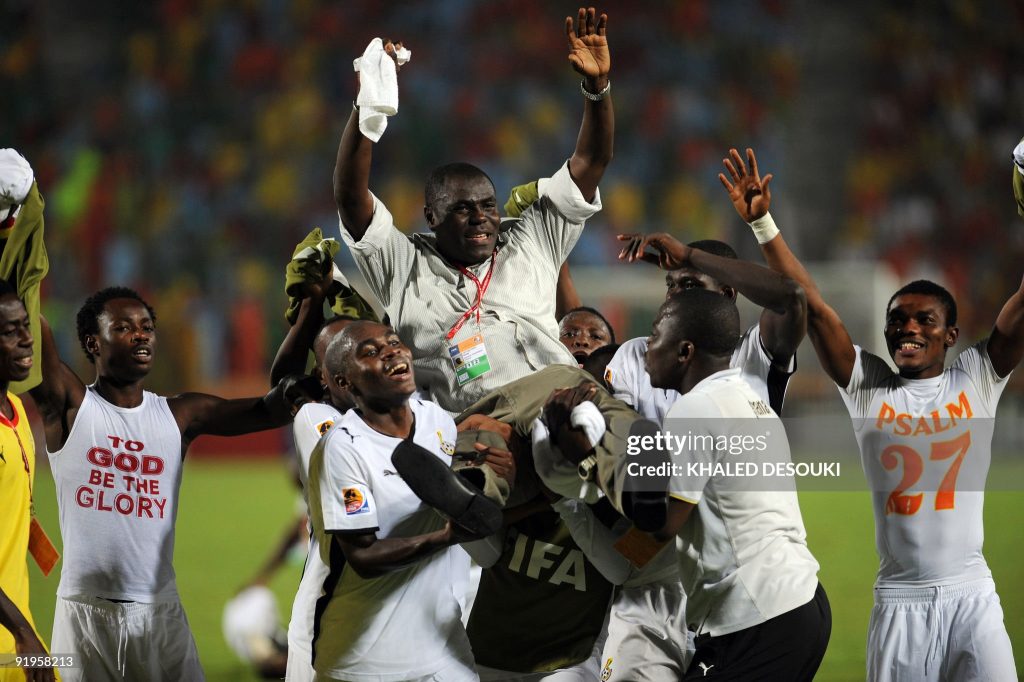
Kigali to Cairo: U-20 champions’ unforgettable journey, 14 years on
2009 was a year that heralded a time of optimism and the joy of feeling like global winners.
In 2009, the “golden team” swept to victory, first dominating Africa and then the entire world before defeating Brazil in the championship game.
In Cairo, Egypt, Andre Dede Ayew emerged from the shadow of his illustrious father, Abedi Pele, to help Ghana win its sole U-20 World Cup championship.
The team’s adventure began with the preliminary qualifications, where they defeated Angola and the Gambia to qualify for the 2009 Africa Youth Championship in Rwanda.
Stunning Rwanda and qualifying to the semi-finals
The Black Satellites needed a victory to clinch first place and advance to the tournament’s second round after defeating Mali in the first game and drawing 1-1 with Cameroon on the first day.
Ransford Osei beat Rwanda admirably to secure a date with South Africa in the semifinals.
Ransford Osei of Ghana led the competition in goals scored at this stage with three.
Goal Frenzy vs South Africa
One of the team’s standout assets was its offensive threat; prior to the semifinal match, they had scored five goals.
Ghana prevailed in the goal-fest contest, with the score ending 4-3 in favor of the West Africans.
Osei scored twice, while Dominic Adiyah and Andre Ayew both scored one.
South Africa battled back from a 3-1 deficit to nearly force extra time, giving the Satellites a tense finale to the encounter.
Rematch against the Young Lions
Cameroon saw off Nigeria in the other semi-final clash with a 2-0 victory to set up a rematch with Ghana after both teams drew 1-1 in the group stages.
Striker Ransford Osei was again the difference as Ghana lifted their third Africa Youth Championship title.
His brace ensured a 2-0 victory against the Central Africans in Kigali, which put them through to the FIFA U-20 World Cup as champions of Africa.
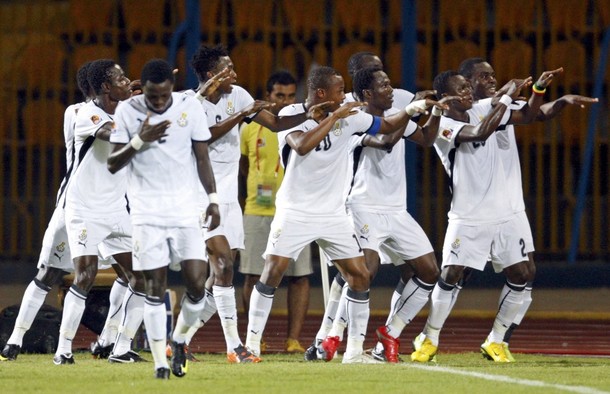
Dominic Adiyiah of Ghana (2nd L) celebrates his goal against England with team mates during their FIFA U-20 World Cup group D soccer match in Ismailia September 29, 2009. REUTERS/Marko Djurica (EGYPT SPORT SOCCER) The World Cup, Egypt 2009
The third FIFA U-20 globe Cup, which was created in Africa for the rest of the globe, was held there in 2009.
As champions from the six confederations, the United Arab Emirates, Costa Rica, Ghana, Brazil, Tahiti, and Germany took part in the competition.
A total of 24 nations traveled to Egypt to compete for honor and glory.
Group D and the clash with Uruguay
On the back of their success in Rwanda, the Black Satellites were placed in Group D to face the likes of Uzbekistan, who entered the championship as runners-up in the Asian U-19 Championship.
England and then Uruguay completed the group.
Ghana kick-started the tournament with a 2-1 victory against Uzbekistan and then went on to demolish the Young Three Lions by 4-0, with Dominic Adiyiah stealing the show with his brace.
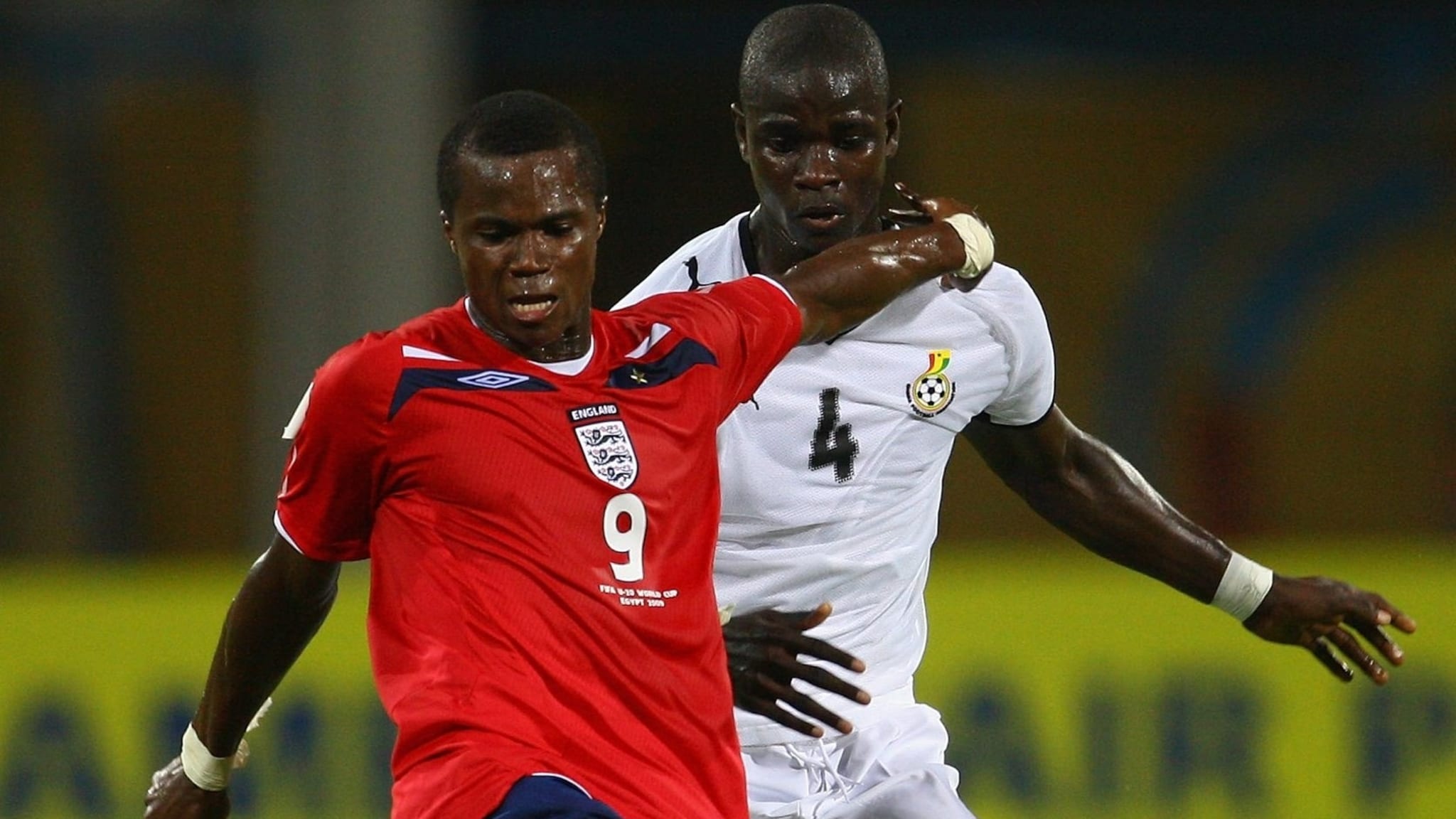
A draw or win against Uruguay was all Ghana needed to top the group, but a defeat would have meant a tougher opponent in the round of 16.
The Black Satellites took a two-goal lead, but a spirited Uruguayan side fired two goals to salvage a draw.
South Africa again and the challenge from Asia
Topping Group D, Ghana was drawn against African compatriots, South Africa, a team they beat 4-3 in the African Youth Championship months earlier in Rwanda.SUEZ, EGYPT – OCTOBER 09: Dominic Adiyiah of Ghana scores the opening goal past Kim Seung Gyu of Korea Republic during the FIFA U20 World Cup Quarter Final match between Korea Republic and Ghana at the Mubarak Stadium on October 9, 2009 in Suez, Egypt. (Photo by Alex Livesey – FIFA/FIFA via Getty Images)
The West African side emerged victorious yet again, with Adiyiah on the mark, netting his fourth goal of the competition in extra time after the game ended 1-1 in regular time.
Ghana then dispatched South Korea 3-2, highlighted by another brace from Adiyiah. The then Heart of Lions striker was on fire.
The clash with Hungary
Ghana now had only the European side, Hungary, between them and the final game.
The Black Satellites beat Hungary 3-2, with Dominic Adiyiah again hitting a brace, his third of the campaign and his eighth goal overall.
The dramatic finale against Brazil
Thirty-seven minutes into the game, Daniel Addo was sent off, giving Brazil a man advantage.
Ghana repelled the Brazilians and their sharp attack and held on to a goalless game in regular time and subsequently in extra time.
The game was settled on penalties as Ghana triumphed against the South American giants.
Andre Ayew and Samuel Inkoom converted their spot-kicks before Jonathan Mensah and Bright Addae missed theirs.
Although Alan Kardec, Douglas Costa, and Giuliano made the most of their penalties, Daniel Adjei saved from Souza and Alex Teixeira, with Maicon missing his as well.
Ghana had the advantage now after the top scorer of the tournament, Dominic Adiyiah scored his penalty kick, and it was down to Emmanuel Agyemang Badu to settle the match.
And he did with a calm head amidst enormous pressure from a packed-to-capacity crowd inside the Cairo International Stadium.
With a jog, a stutter, and a clean stroke of the ball past a rooted Rafael in goal for Brazil, Agyemang Badu gave Ghana and the rest of Africa boundless joy.CAIRO, EGYPT – OCTOBER 16: Emmanuel Agyemang-Badu of Ghana scores the winning penalty during a penalty shoot out against Brazil in the FIFA U20 World Cup Final between Ghana and Brazil at the Cairo International Stadium on October 16, 2009 in Cairo, Egypt. (Photo by Alex Livesey – FIFA/FIFA via Getty Images)
The Black Satellites were the new kings of youth football in the world, and the trophy completed a unique treble that included the West African and African titles won earlier that year.
The Dominic Adiyiah World Cup
Ghanaian striker Dominic Adiyiah had an amazing World Cup, scoring eight goals in the tournament.
He picked up both the Golden Boot and Golden Ball Awards, the awards given to the top scorer and the best player in the competition.CAIRO, EGYPT – OCTOBER 16: Dominic Adiyiah of Ghana wins the adidas Golden Ball Award for outstanding player of the competition, Alex Teixeira of Brazil wins the adidas Silver Ball and Giuliano of Brazil wins the adidas Bronze Ball after the FIFA U20 World Cup Final between Ghana and Brazil at the Cairo International Stadium on October 16, 2009 in Cairo, Egypt. (Photo by Alex Livesey – FIFA/FIFA via Getty Images)
The triumph fourteen years ago, to this day, remains the only time an African team has ever won the FIFA U-20 World Cup. It’s a special achievement that Ghana, befittingly, has beautifully etched into the history books.
-
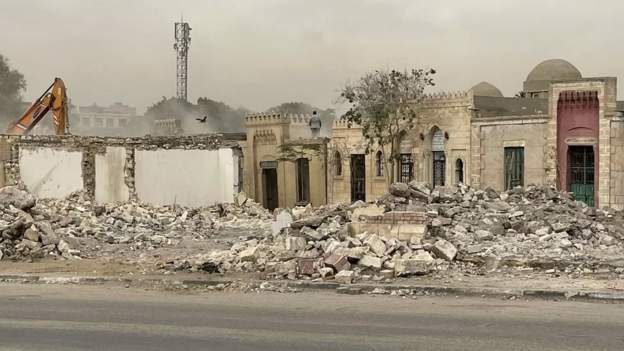
Cairo cemetery damage results in furious resignation
A government official in Egypt has quit his job because some old cemeteries in Cairo were damaged, including some very old buildings.
Dr Ayman Wanas, who is an urban design professor, has said that his job of documenting important buildings in the capital city of Egypt has become pointless.
He said that the government‘s actions to improve the cemetery areas were a waste of Egypt’s valuable and unique history.
Many Egyptians on social media are very angry and upset about the campaign.
However, the government claims that its campaign is focused on repairing and building, rather than causing harm. -
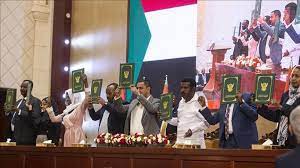
Pro-democracy group in Sudan talks about ways to end conflict
On Tuesday (July 25), a group of Sudanese who support democracy demanded an end to the country’s strife and opposed the deployment of different militaries there.
The group, known as the Forces for the Declaration of Freedom and Change, expressed their hope that a solution to the conflict would result in the establishment of a “Sudanese state free from wars and the building of an armed forces that serve the Sudanese people based on principles and values” in a press conference with reporters in Cairo, the capital of Egypt.
Yasir Arman, a member of the bloc’s executive office, declared: “We are against the multiple armies.”
Arman added that the bloc has no issues with the arrival of IGAD and other international forces to oversee any cease-fire and an end to hostilities.
As part of the process to end the war, he emphasised, “there should be preparation for the deployment of these forces to monitor the final ceasefire, not to occupy Sudan.”
Since the beginning of April, when months-long tensions between the military and its competitor, the paramilitary Rapid Support Forces, erupted into open combat in Khartoum, the capital, and other parts of the country in northeastern Africa, the country of Sudan has been in a state of turmoil.
Over 2 million people have been displaced by the battle between the leader of the RSF paramilitary group and the general of the Sudanese army.
The horrors of the conflict include assaults on hospitals and rapes.
Accountability was demanded by representatives of the FFC, a coalition of militants and many political parties.
According to Sediq al Sadik al- Mahdi, a member of the Sudan Forces for the Declaration of Freedom and Change’s executive office, “in this context, we affirm that we deal with violations as a matter of human rights and ethics.”
“We demand that any infractions stop right away, and that an independent inquiry be carried out to find the offenders and hold them accountable. Adopting efficient processes is necessary to provide victims justice, hold offenders accountable, offer restitution, and pay those who have been harmed.
The fighting dashed Sudanese expectations of resuming the nation’s democratic transition, which had started with the overthrow of longtime tyrant Al-Bashir. The transition was halted in October 2021 by a coup that was organised by the military and RSF.
-
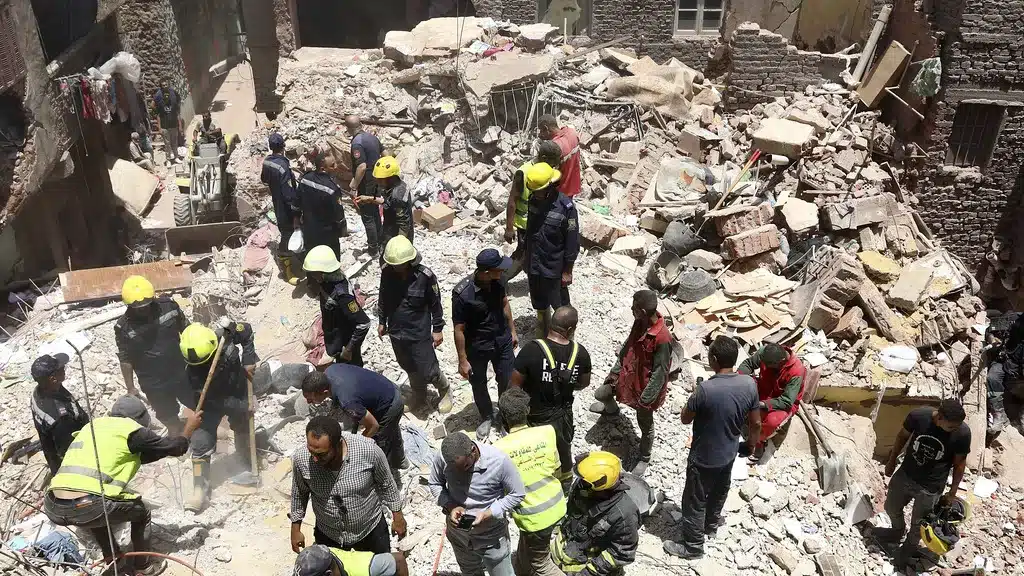
Egypt: 9 people killed after building collapses in Cairo
Authorities have reported that a five-storey building in Cairo, the capital of Egypt, collapsed on Monday, resulting in the tragic loss of at least nine lives. Rescue efforts are underway as teams diligently search through the debris.Building collapses are unfortunately common in Egypt, largely due to substandard construction practices and a lack of maintenance prevalent in slums, urban areas, and rural regions.
According to the state-run MENA news agency, rescue teams have recovered the bodies of nine individuals from beneath the rubble in Cairo’s Hadaeq el-Qubbah district, situated approximately 3.2 kilometers away from the city center. Additionally, four survivors have been transported to the hospital, and authorities have evacuated a neighboring building.
Preliminary investigations conducted by Cairo’s deputy governor, Hossam Fawzi, have revealed that the collapse was caused by a ground-floor resident who had removed several walls during previous maintenance work. The individual has been apprehended and will undergo further scrutiny.
The Ministry of Social Solidarity in Egypt has announced its intention to donate 60,000 Egyptian pounds ($1,940) to the families of the nine victims. The ministry is also providing assistance to the injured individuals and monitoring the extent of damage to nearby properties.
Local reports indicate that the area has been cordoned off by the police, while rescue teams continue their search for any possible survivors.
In recent years, the Egyptian government has made efforts to combat illegal construction and enforce stricter regulations, following a long history of lax enforcement. Additionally, authorities are constructing new towns and neighborhoods to relocate individuals living in high-risk areas.
-
Ukraine declines the offer from Iraq to facilitate talks with Russia
Cairo authorities claim that since fighting broke out between different military factions on Saturday, they have been working around the clock to ensure the safety of Egyptian people who live, work, and study in the neighboring Sudan.
The two generals who took control of Sudan in a coup in 2021—the army head, Abdel Fattah Al-Burhan, and his deputy, Mohamed Hamdan Dagalo, who is in charge of the potent paramilitary Rapid Support Forces—had been engaged in power conflicts for weeks before the violence broke out.
As of Monday, the conflict has claimed the lives of at least 97 civilians, according to medics who spoke to the AFP news agency. Authorities in Cairo say they are alert to the deteriorating situation and the safety of their citizens caught up in the violence.
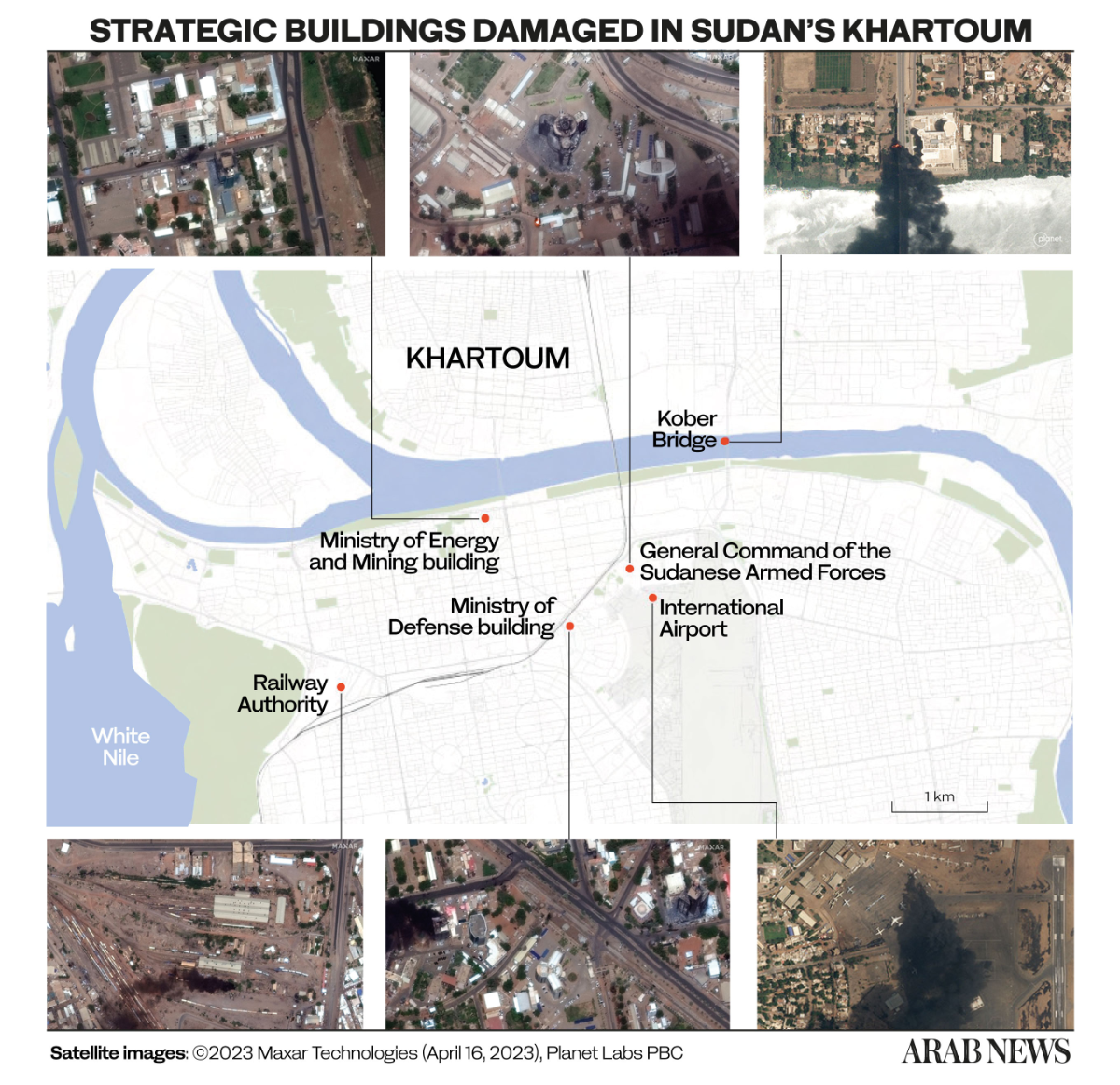
There are an estimated 10,000 Egyptian citizens currently in Sudan, including around 5,000 students, most of whom live in the capital, Khartoum, which has witnessed significant clashes in recent days.
In a statement, Soha Gendy, Egypt’s minister of emigration and expatriate affairs, said it was difficult to provide an accurate figure for the number of Egyptians currently in Sudan as many do not register upon arrival.
Nevertheless, the presence of such a large Egyptian community in Sudan represents a serious diplomatic challenge for Cairo, which is striving to achieve stability for its crisis-stricken neighbor while at the same time looking out for the safety of its citizens.
Among those based in the county are a large number of Egyptian engineers developing water management infrastructure and irrigation systems on the Nile River in cooperation with their Sudanese counterparts.
Hani Sewilam, Egypt’s minister of water resources and irrigation, says he and his colleagues have been in constant contact with his ministry’s mission in Sudan to check on the condition of its workforce, particularly those operating in areas of conflict.
Sewilam confirmed in a statement that he is following up around the clock on the situation of the mission’s personnel in Sudan and is coordinating with the relevant ministries to provide all necessary care and support.
“The Egyptian irrigation mission in Sudan includes a number of Egyptian experts, engineers, and workers,” Ahmed Abdel Moaty, an Egyptian commentator, told Arab News.
“It is a mission that has existed for years, especially with the increase in cooperation between the two countries in the field of irrigation and water resources.”
Of particular concern are the many Egyptian students studying at Sudanese universities.
Ayman Ashour, Egypt’s minister of higher education and scientific research, said his department is in regular contact with the Egyptian Ministry of Foreign Affairs to help ensure their safety.
“The cultural affairs and missions’ sector in the ministry will send emails to Egyptian students studying in Sudanese universities to check on their safety,” he said in a statement.
“The Egyptian Embassy in Khartoum confirmed the stability of the conditions of Egyptian students and that it is in constant contact with our students around the clock until the end of the current situation.”
The minister urged Egyptian students in Sudan to communicate with the embassy if they are in need of support or if they are exposed to threats to their safety.
Since the uptick in violence began over the weekend, Khartoum and other cities across Sudan have witnessed air strikes, tanks on the streets, artillery fire and heavy gunfire in crowded neighborhoods, triggering international calls for an immediate ceasefire.
On Monday, UN Secretary-General Antonio Guterres called on Sudan’s warring parties to “immediately cease hostilities, restore calm, and begin a dialogue to resolve the crisis.”
Guterres said “any further escalation” of the conflict between the army and paramilitary forces led by rival generals “could be devastating for the country and the region.”
Meanwhile, Egyptian officials have been working behind the scenes to help reduce tensions.
In a statement, Obaida ElDandarawy, head of the Egyptian delegation participating in a meeting of the Council of the League of Arab States to address the crisis, stressed the necessity of “coordinating Arab positions to restore stability in Sudan, as Sudan is an integral part of Egyptian and Arab national security.”
ElDandarawy called on the Sudanese parties to exercise restraint.
In a statement to Arab News, he said: “The Egyptian missions in Sudan, including the educational missions, Al-Azhar, the Egyptian Irrigation Mission, the National Bank of Egypt, the Egyptian consulates in Port Sudan and Wadi Halfa, as well as the Egyptian private sector companies, EgyptAir, and the Middle East News Agency, are all safe.
“Sudan represents the strategic depth of Egypt, as the fate of the people of the Nile Valley is a common destiny, and I affirm Egypt’s support for stability in Sudan and the need to settle contentious points to get out of the current crisis.”
In a phone call on Monday, Ahmed Aboul Gheit, secretary-general of the Arab League, spoke to Abdalla Hamdok, the former prime minister of Sudan removed in the 2021 coup, during which they exchanged views on the current crisis and ways to stop military confrontations in the country.
According to his spokesperson, Aboul Gheit told Hamdok that escaping the current crisis will require all components of the political spectrum, whether civilians or military, to unite and work together in the public interest.
Aboul Gheit agreed with Hamdok on the priority of de-escalation, the immediate cessation of armed clashes, ensuring the security of the civilian population, and restoring calm, and emphasizing that all problems can be addressed through dialogue.
On Sunday, Aboul Gheit also spoke to Guterres, during which he discussed ways of coordination between the Arab League and the UN in dealing with the ongoing crisis in Sudan.
The RSF was created under Sudan’s former ruler Omar Al-Bashir in 2013. It emerged from the Janjaweed militia that his government unleashed against non-Arab ethnic minorities in Darfur a decade earlier, drawing accusations of war crimes.
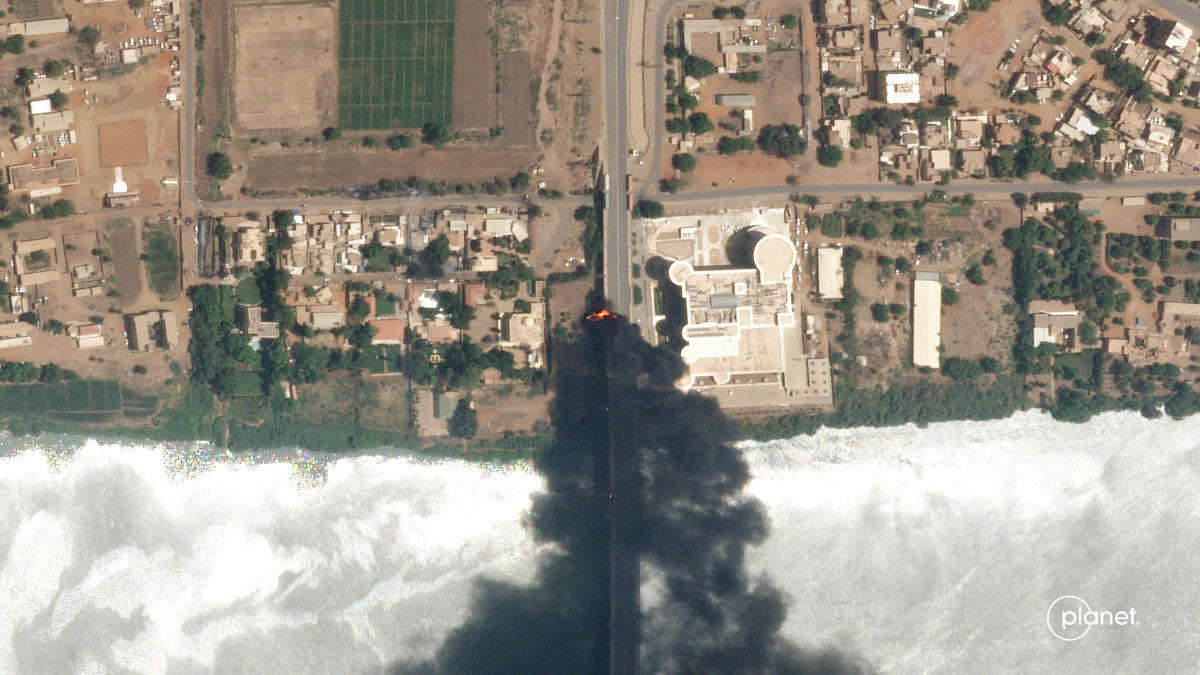
The latest fighting broke out after disagreements between Burhan and Dagalo over the planned integration of the RSF into the regular army — a key condition for a final deal aimed at ending a crisis since the 2021 coup.
The coup derailed a transition to civilian rule following the 2019 ouster of Al-Bashir, triggering international aid cuts and sparked near-weekly protests met by a deadly crackdown.
Burhan, who rose through the ranks under the three-decade rule of now-jailed Al-Bashir, has said the coup “necessary” to include more factions in politics.
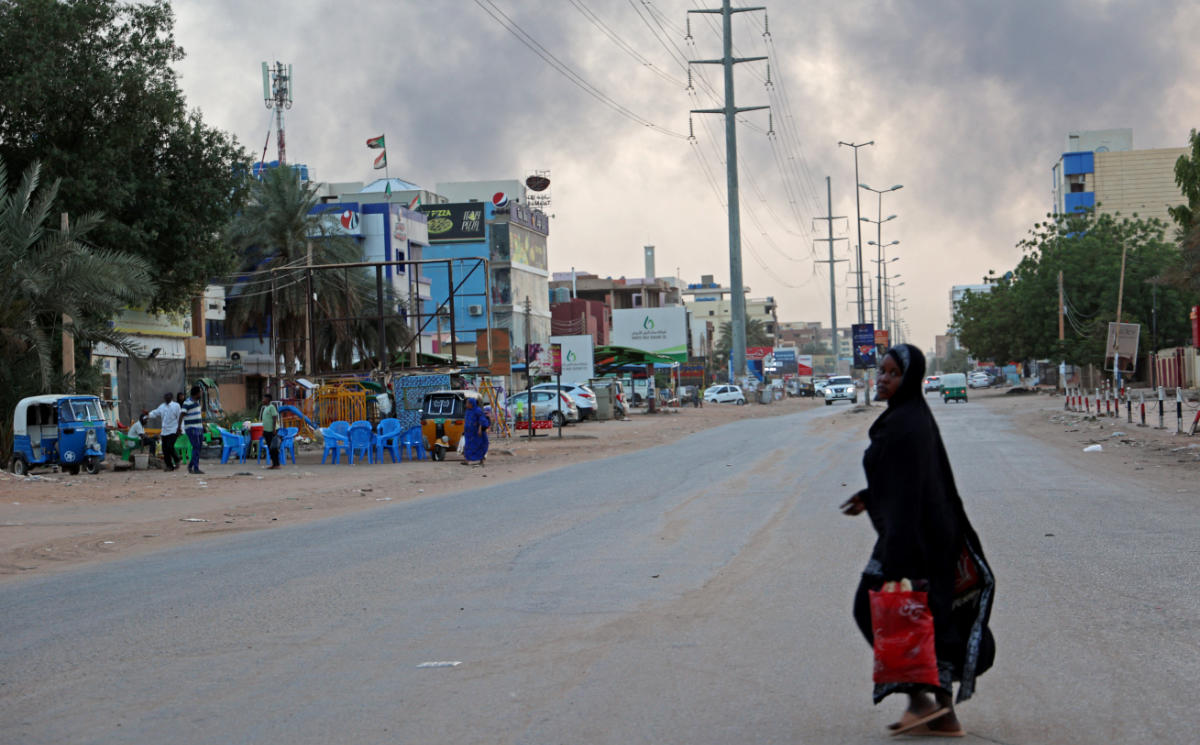
Dagalo later called the coup a “mistake” that failed to bring about change and reinvigorated remnants of Al-Bashir’s regime ousted by the army in 2019 following mass protests.
The two sides accuse each other of starting the fighting, and both claim to be in control of key sites, including the airport and the presidential palace.
On Monday, the RSF claimed on its social media accounts to have taken control of Merowe Airport, about 350 km north of Khartoum.
“The strategic goal of the Rapid Support Forces in Merowe is not the airport, but rather the Merowe Dam,” Hassan Al-Saouri, a Sudanese political expert and professor of political science, said in a statement circulated by activists on social media.
“It is true that Merowe Airport is the alternative to Khartoum International Airport, but the Rapid Support Forces seem to be targeting the Merowe Dam specifically, given that it works to guard it and therefore can control it, stop it, and form an economic blockade by striking energy as it controls water in the northern region of Sudan, which is an important, vital, and strategic area for Sudan.”
-
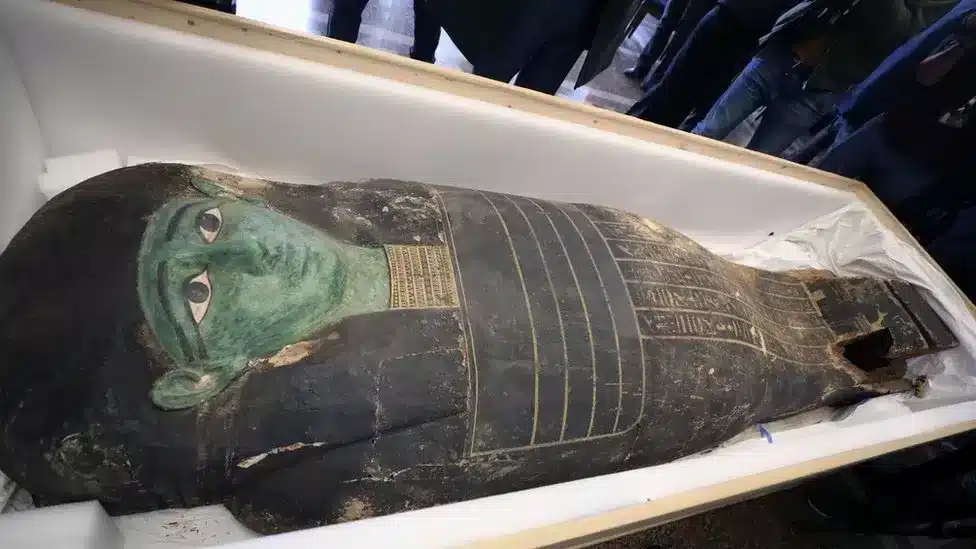
US returns Ancient Egyptian ‘Green Coffin’ to Cairo
Egypt has received a looted ancient Egyptian sarcophagus that was previously on display in a US museum.
The 2.9-meter (9.5-foot)-long “Green Coffin” belonged to a priest by the name of Ankhenmaat and is from the Late Dynastic Period, which lasted from 664 BC to 332 BC.
An international network of art smugglers stole it from the Abu Sir Necropolis in northern Egypt and smuggled it into the US in 2008.
A collector loaned it to the Houston Museum of Natural Science in 2013.
The sarcophagus was repatriated after an investigation that lasted several years and was formally handed over by US diplomats at a ceremony in Cairo on Monday. The event was attended by Egypt’s Foreign Minister Sameh Shoukry and Tourism and Antiquities Minister Ahmed Issa.
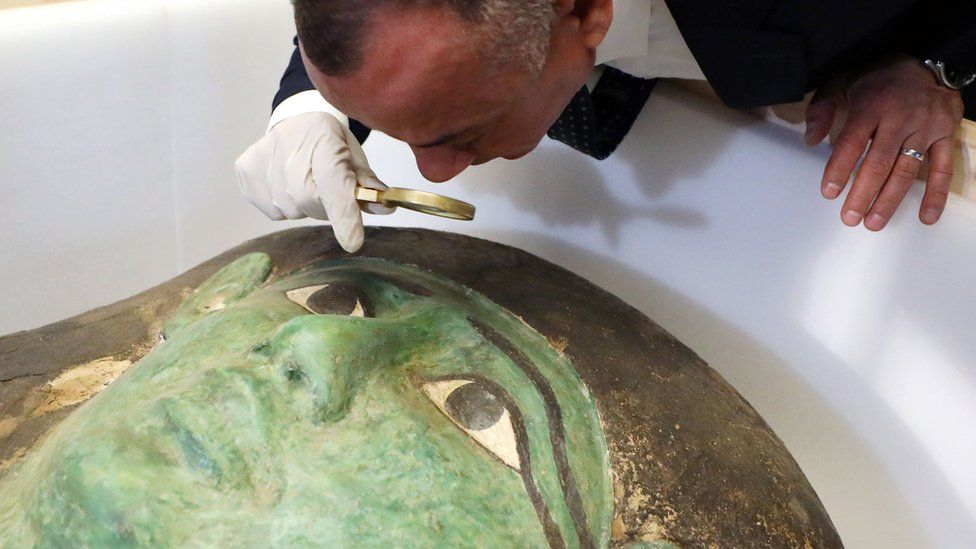
Image caption,Mostafa Waziri, the top official at the Supreme Council of Antiquities, inspected the sarcophagus “Today’s ceremony is emblematic of the long history of co-operation between the United States and Egypt on antiquities protection and cultural heritage preservation,” said US chargé d’affaires in Egypt, Daniel Rubinstein.
Mr Issa said the return of the sarcophagus showed Egypt’s strenuous efforts to recover smuggled artefacts.
In September, Manhattan District Attorney Alvin Bragg said the Green Coffin, which was valued at over $1m (£830,000), was illegally trafficked out of Egypt by a multinational network of antiquities smugglers.
The network was also responsible for trafficking the “Gold Coffin”, which was which was returned to Egypt in 2019, the Stele of Pa-di-Sena, which is also from the Late Dynastic Period and was handed over in 2020, and five pieces seized from New York’s Metropolitan Museum of Art last year.
The US is not the only country to have returned antiquities to Egypt recently.
In 2021, Israel handed over 95 relics which had been smuggled into the country or found for sale in Jerusalem.
Last month, a university in the Republic of Ireland said it was planning to repatriate a sarcophagus, mummified human remains and canopic jars.
Source: BBC.com -
The choking pollution of Egypt’s capital
The World Health Organization has said that 99% of the planet’s population breaths air that threatens their health.
It’s a shocking statistic, and nowhere is that more apparent than the Egyptian capital, Cairo. With the eyes of the world on the country as it hosts COP27, Egyptians don’t have to look far for the devastating effects of pollution.
This greater area of this sprawling metropolis is home to 21 million people, one of the biggest cities in Africa. For years though, its residents have been breathing air that contains high levels of some of the most poisonous pollution particles.
The government admits two million people seek treatment nationwide for respiratory problems caused by bad air, with the World Bank saying there are around 2,600 premature deaths in Cairo alone annually because of it.
You certainly notice it as soon as you step out of your door.
In several neighbourhoods in the city, you can feel the soot at the back of your throat, and you feel conscious of the taste of the air. On several occasions, despite the heat, I found myself sneezing, a visceral reminder of the fumes around me.
The city’s streets are a constant throng of congestion, with vehicles, some modern, others battered relics of the 70s and 80s, battling their way through the traffic. They are not the only cause of the problem though. Cairo is heavily industrialised and also sits in a valley, which can trap bad air. Sand and desert dust can also add to the air pollution.
Authorities here know there is a problem. An official from the Ministry of Environment tells me that tackling air pollution is one of their main priorities, and that they have introduced 116 air monitoring stations across the country.
One of the main factors of the issue used to be farmers burning rice straw at the end of their harvest, which would create an annual black cloud over the city. This has now been mainly stopped and recycling encouraged.
Someone looking upwards for a solution to the problem is 18-year-old Maha Abdalla Ahmed.
I meet her on the roof of a dilapidated block of apartments in a working class part of the Arab al-Maadi district. It’s a maze of crumbling buildings, with the sounds of traffic and crowing cockerels filling the air. I can taste the dust and pollution as we speak.
She and her friend are using these rice husks as a compost to place plants and foliage on the flat roofs of buildings across Cairo. She tells me that for every one square metre she plants, it removes 100 grammes of pollutants a year.
When I ask if she is worried for the future of the planet, a concerned look crosses her face. “Of course I am. We need to start applying the sustainable development goals so that we can have a sustainable and green planet. Everyone can make a difference.”
There is no doubt that the lungs of the city are choking, but with schemes like Maha’s and governmental action, the residents of Cairo will be hoping it’s not too late to save their hometown’s environment.
Source: BBC
-
Some exciting African cities that never sleep
As a continent with diverse cultures and landscapes, Africa is blessed with many cities that prospective tourists should definitely keep on their ‘bucket list’.
There’s no better experience in life than traveling and exploring several unique and exciting destinations.
But if you have your mind set on heading to a location that is always buzzing, then you might want to pick from one of these cities that never sleeps.
From the flashing lights to blazing hangouts, there are so many options worth checking out and definitely a lot of packed activities that come with it.
Let’s take a look at some exciting African cities that tourists should consider
Osu (Accra)
Experience the Osu Night Market, where for over 125 years, people have been coming for food, drink and household items, sharing stories and laughs among friends, and listening to local music blaring in the streets.

There is an amazing feast for the eyes and ears and the mouth. Come hungry for local foods and feel the life of this unique market.

Osu is popular for carnivals, live band displays, art fairs, and lots more. These events ultimately drive traffic to the night market.

Kampala
Located in the heart of Uganda, East Africa, Kampala is packed with fun activities all day and all night.

Ever heard of the “famous Kampala nightlife”?
Well, asides from the city’s incredible safari parks and lake tours, there are tons of Casinos and nightclubs that keep buzzing from dusk till dawn.

Interestingly they are noted for their insatiable cravings for “flavored beers” and you might find these at almost every pub.
Nairobi
Situated in the capital of Kenya, Nairobi has also been touted as a hub for real entertainment.

Nairobi gathers Kenya’s diverse cultures, cuisines, and people into one city.
There is always so much to see and do, such that it’s hard to know where to start.
One gets to experience more adventure that includes Safari parks, free cultural dances, crafts, music, and so on.
Also, Nairobi has carved a great niche for itself on the nightlife front.

Locals, expats, and visitors mingle at various venues that range from exclusive champagne bars to nightclubs that are flooded with the sounds of electrifying African beats.
Cairo
While many plan to do little in Egypt like just visiting the pyramids, those with more time will find this city possibly even more enchanting.

There are around-the-clock activities including romantic dinners and belly dancing shows on the legendary river Nile.
Also, there are tons of mind-blowing rooftop bars and night tours at some of its wonderful places.

Cairo asides from being noted for sightseeing also offers good fun.
Marakesh (Morroco)
Being the fourth largest city in Morrocco, Marrakech promises all sorts of wild sensations.

Horse-drawn carriage rides, Architectural tours, sunny terraces, desert rides, and other activities give a taste of a wishful comeback.

When the sun sets, Marrakech offers a “stress-free” experience.
The city overwhelmingly offers a good taste of food, dance, and music every day after sunset.
Disclaimer: This is subject to the writer’s discretion, research, and views from travelers. Readers might have their own favorites outside the list
Source:Ghanaweb.com