Tag: Cambridge University

  • Stormzy awarded honorary doctorate by Cambridge University

    Stormzy awarded honorary doctorate by Cambridge University

    British Ghanaian rapper and philanthropist Michael Ebenezer Kwadjo Omari Owuo Jr, popularly known as Stormzy, has been awarded an honorary doctorate by the University of Cambridge in recognition of his outstanding contribution to music and his unwavering commitment to educational equity and social justice.

    Rapper Stomzy was among eight public figures to receive the honorary degree.

    The 31-year-old  launched a scholarship fund in 2018 which has been funding black UK students to study at the university.

    This earned him a Doctorate in Laws degree in recognition of his initiation of a “transformative” scholarship programme.

    Vice-chancellor at the university, Prof Deborah Prentice, said, “Stormzy’s scholarship programme has had a transformative impact and we are proud to recognise his work with this degree.”

    Since the introduction of the fund, 56 undergraduates are reported to have benefited from full tuition and maintenance support, backed by his #Merky Foundation and HSBC UK.

    In the month of May this year, Movie star Juliet Ibrahim graduated from Berkeley College in the United States, proudly joining the Class of 2025 as a Bachelor’s degree holder in Marketing Communications.

    Celebrating her achievement, she took to Facebook yesterday to express her joy and gratitude as she reflected on the toil that led her to this moment.

    “From red carpets to research papers, late-night shoots to late-night study sessions… I DID IT!,” she wrote on Facebook, adding photos of herself beaming with joy and adorned in her graduation gown.

    She encouraged her fans that it is never too late to achieve any dream, despite juggling them with other demands of life.

    “This is your reminder: You’re never too old to reinvent yourself,” she added. “Cheers to new beginnings, bigger dreams, and breaking every limit.”

    Her fans did not hesitate to share in her joy as they flooded her comment session with congratulatory messages, cheering her on to keep advancing in her endeavours.

    Juliet Ibrahim is one of the outstanding actresses in Ghallywood and Nollywood.

    She is currently featuring in some new movies such as Where Love Ends,” “Ayele, saved by love,” “Deeper than pain,” among others.
  • A man who was illiterate until age 18 becomes the youngest black professor in Cambridge history

    A man who was illiterate until age 18 becomes the youngest black professor in Cambridge history

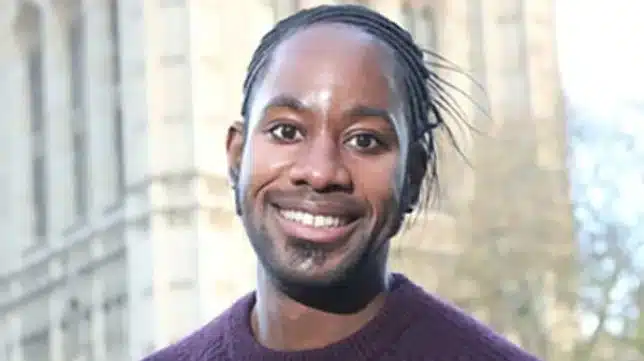
    A man who wasn’t able to read or write until he was 18 is going to become the youngest-ever black professor at Cambridge University.

    After being diagnosed with autism and being rendered silent until the age of 11, Professor Jason Arday was informed that he would likely spend the most of his adult life in assisted living.

    The 37-year-old Londoner from Clapham spent years being “violently rejected” when he initially began writing for academic purposes.

    Professor Jason Arday was told he would likely spend his adult life in assisted living after being diagnosed with autism and remaining speechless until he was 11.

    The 37-year-old, from Clapham in London, spent years getting ‘violently rejected’ when he first started writing academically.

    Now, he is now an acclaimed professor who will take up one of the most prestigious professorship posts in the world – professor of sociology of education at Cambridge.

    He will be one of just five black professors at the institution and one of 155 black university professors in the UK from a total of 23,000.

    ‘My work focuses primarily on how we can open doors to more people from disadvantaged backgrounds and truly democratise higher education’, he has said.

    ‘Hopefully being in a place like Cambridge will provide me with the leverage to lead that agenda nationally and globally.’

    Latest London news

    Professor Arday was diagnosed with global developmental delay when he was a child, but says that didn’t make him question the world around him any less.

    Professor of Sociology of Education at University of Cambridge Jason Arday. See SWNS story SWLNprof. An Autistic man who could not read or write until he was 18 has become Cambridge University's youngest-ever Black professor. Professor Arday, 37, has spoken out over his struggle with Autism and learning delays that left him speechless till he was age 11. He has now taken up one of the most prestigious professorship posts in one of the world's leading top universities and is the youngest Black person to do it. He joins just five other Black professors in the institution and will become one of just 155 Black university professors in the UK, out of a total of 23,000.
    He is hoping to inspire people from under-represented backgrounds into higher education (Picture: University of Cambridge Faculty/ SWNS)

    He says he remembers thinking ‘Why are some people homeless? Why is there war?’ as a youngster.

    ‘I remember thinking if I don’t make it as a football player or a professional snooker player, then I want to save the world’, he added.

    After learning to read and write as a teenager, he became a PE teacher, which gave him an insight into the systemic inequalities that children can face in education.

    He knew he wanted to study further, but felt lost as he had no guidance on how to create his own path.

    Aged 27, he wrote on his bedroom wall at his parents’ house: ‘One day I will work at Oxford or Cambridge.’

    He remembers his college mentor, Sandro Sandi, telling him, ‘I think you can do this – I think we can take on the world and win’.

    This was the first time he ‘really believed in himself’ and he became ‘determined and focused’ after this talk.

    Still working as a PE teacher during the day, he wrote papers and studied by night.

    ‘When I started writing academic papers, I had no idea what I was doing’, he said.

    ‘I did not have a mentor and no one ever showed me how to write. Everything I submitted got violently rejected.

    ‘The peer review process was so cruel, it was almost funny, but I treated it as a learning experience and, perversely, began to enjoy it.’

    After years of relentless hard work, Professor Arday has two master’s degrees and a PhD in educational studies.

    He has had roles at the University of Glasgow and the University of Durham, and is an adjunct professor at the Nelson Mandela University.

    Looking back at his inspiring story, he says he knows ‘this is what I meant to do’.

    He will start at the University of Cambridge on March 6 as Professor of Sociology of Education in the Faculty of Education.

  • UK museums willing to return skulls to Zimbabwe

    London’s Natural History Museum and Cambridge University have said that they are ready to co-operate with Zimbabwe to return human remains that were taken in the colonial era.

    The fresh statements come after a delegation from Zimbabwe held talks with officials from both institutions.

    The Zimbabweans are looking for the skulls of late-19th Century anti-colonial heroes, which they believe could be in the UK.

    But these have not yet been found.

    The authorities in Zimbabwe have long suspected that the remains of some of the leaders of an uprising against British rule in the 1890s – known as the First Chimurenga – were taken to the UK as trophies.

    The most significant among them was a woman who became known as Mbuya Nehanda. She was executed in what is now the capital, Harare and is revered as a national heroine.

    In doing a search of its archive, the Natural History Museum did uncover 11 remains “that appear to be originally from Zimbabwe” – but its records do not connect them with Nehanda. These include three skulls taken in 1893, thought to be from Zimbabwe’s second city, Bulawayo, as well as remains uncovered in mineshafts and archaeological digs and later donated.

    Cambridge University’s Duckworth Laboratory has not been so specific, simply saying it has “a small number of human remains from Zimbabwe”, but in a statement sent to the BBC it said it had not identified any of these as belonging to First Chimurenga figures.

    The Natural History Museum, with 25,000 human remains, and the Duckworth Laboratory, with 18,000, have some of the largest such archives in the world.

    These have come from a variety of sources including archaeological excavations of ancient sites, but for many the exact origins have been obscured by time.

    During the colonial era, body parts were sometimes removed from battlefields or dug up from graves either as trophies or for research into a now-discredited scientific field.

    In the 19th Century, phrenology, which investigated the idea that human characteristics could be determined by the shape of the skull, was very popular in the UK and other parts of Europe. Phrenological societies would collect skulls to help develop the theory, which for some extended to racial classification.

    Some researchers set out to show that skull shape indicated that people from different parts of the world were inherently inferior.

    Some of the archives that now exist in the UK are amalgamations of what had been amassed by defunct phrenological societies as well as private collectors.

    Zimbabwe’s government believes that somehow the skulls of the country’s heroes ended up in the archives of a British museum.

    Chief among them were spiritual leaders, including Charwe Nyakasikana, who became known as Mbuya (Grandmother) Nehanda as she was the medium of the revered ancestral spirit Nehanda. She was arrested after being accused of murdering a British official.

    Nehanda was then hanged and her body decapitated, it is believed. What happened next is not clear, but in recent years, Zimbabwean officials have made several public statements saying it ended up in the Natural History Museum.

    With a death cry of “my bones will surely rise”, Nehanda became an increasingly potent symbol for those fighting against white-minority rule in what was then known as Rhodesia from the late 1960s.

    Zimbabwe gained independence in 1980.

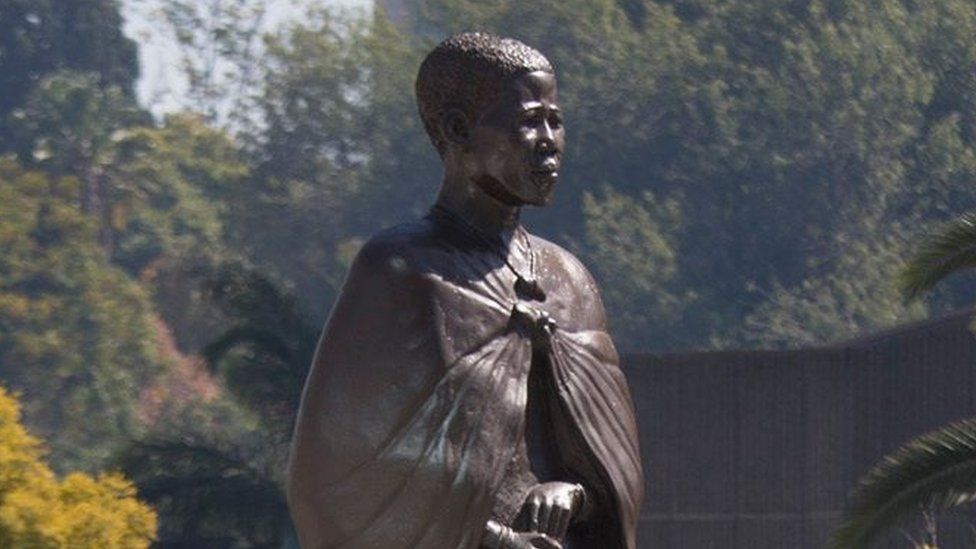
    Statue of Mbuya NehandaImage source, Shutterstock
    The Mbuya Nehanda statue in Harare was put up in 2021

    A three-metre statue of Nehanda now stands over a major road in the centre of Harare. At its unveiling in 2021, President Emmerson Mnangagwa pledged to continue to call for the return of her skull and others from the Natural History Museum.

    For Zimbabweans, the removal of the head “means that you have literally punished the person beyond the grave”, Godfrey Mahachi, who led the delegation to the UK, told the BBC in 2020 when the visit was being planned.

    “If the head is separated, that means that the spirit of that person will forever linger and never settle.”

    Despite not finding what the Zimbabwean delegation was looking for, both the Natural History Museum and Cambridge University say they are committed to working with the Zimbabwean government to repatriate what was found.

    As part of its policy of repatriation, earlier this year, the Natural History Museum returned ancestral Moriori and Maori remains.

    In a press statement following a recent cabinet meeting, Zimbabwe’s government said that the delegation that went to the UK was satisfied that “there are indeed human remains of Zimbabwean origin in the UK”.

    “Government will spare no effort to ensure the repatriation of our ancestors,” it added.

    The Zimbabwean delegation also held talks with the British Museum, Oxford University’s Pitt Rivers Museum, the University of Manchester Museum and the UK’s National Archives. But no details are given about what was discussed.

    Despite the lack of success in this trip to the UK, the historical significance to Zimbabwe of the remains of Nehanda and others means that the search will continue.

  • Museums in the United Kingdom are willing to return skulls to Zimbabwe

    The Natural History Museum in London and Cambridge University have stated their willingness to work with Zimbabwe to return human remains taken during the colonial era.

    The new statements come after a Zimbabwean delegation met with officials from both institutions.

    Zimbabweans are looking for the skulls of late-nineteenth-century anti-colonial heroes, which they believe are in the United Kingdom.

    But these have not yet been found.

    The authorities in Zimbabwe have long suspected that the remains of some of the leaders of an uprising against British rule in the 1890s – known as the First Chimurenga – were taken to the UK as trophies.

    The most significant among them was a woman who became known as Mbuya Nehanda. She was executed in what is now the capital, Harare, and is revered as a national heroine.

    In doing a search of its archive, the Natural History Museum did uncover 11 remains “that appear to be originally from Zimbabwe” – but its records do not connect them with Nehanda. These include three skulls taken in 1893, thought to be from Zimbabwe’s second city, Bulawayo, as well as remains uncovered in mineshafts and archaeological digs and later donated.

    Cambridge University’s Duckworth Laboratory has not been so specific, simply saying it has “a small number of human remains from Zimbabwe”, but in a statement sent to the BBC, it said it had not identified any of these as belonging to First Chimurenga figures.

    The Natural History Museum, with 25,000 human remains, and the Duckworth Laboratory, with 18,000, have some of the largest such archives in the world.

    These have come from a variety of sources including archaeological excavations of ancient sites, but for many, the exact origins have been obscured by time.

    During the colonial era, body parts were sometimes removed from battlefields or dug up from graves either as trophies or for research into a now-discredited scientific field.

    In the 19th Century, phrenology, which investigated the idea that human characteristics could be determined by the shape of the skull, was very popular in the UK and other parts of Europe. Phrenological societies would collect skulls to help develop the theory, which for some extended to racial classification.

    Some researchers set out to show that skull shape indicated that people from different parts of the world were inherently inferior.

    Some of the archives that now exist in the UK are amalgamations of what had been amassed by defunct phrenological societies as well as private collectors.

    Zimbabwe’s government believes that somehow the skulls of the country’s heroes ended up in the archives of a British museum.

    Chief among them were spiritual leaders, including Charwe Nyakasikana, who became known as Mbuya (Grandmother) Nehanda as she was the medium of the revered ancestral spirit Nehanda. She was arrested after being accused of murdering a British official.

    Nehanda was then hanged and her body decapitated, it is believed. What happened next is not clear, but in recent years, Zimbabwean officials have made several public statements saying it ended up in the Natural History Museum.

    With a death cry of “my bones will surely rise”, Nehanda became an increasingly potent symbol for those fighting against white-minority rule in what was then known as Rhodesia in the late 1960s.

    Zimbabwe gained independence in 1980.

    Statue of Mbuya Nehanda
    IMAGE SOURCE, SHUTTERSTOCK Image caption, The Mbuya Nehanda statue in Harare was put up in 2021

    A three-meter statue of Nehanda now stands over a major road in the centre of Harare. At its unveiling in 2021, President Emmerson Mnangagwa pledged to continue to call for the return of her skull and others from the Natural History Museum.

    For Zimbabweans, the removal of the head “means that you have literally punished the person beyond the grave”, Godfrey Mahachi, who led the delegation to the UK, told the BBC in 2020 when the visit was being planned.

    “If the head is separated, that means that the spirit of that person will forever linger and never settle.”

    Despite not finding what the Zimbabwean delegation was looking for, both the Natural History Museum and Cambridge University say they are committed to working with the Zimbabwean government to repatriate what was found.

    As part of its policy of repatriation, earlier this year, the Natural History Museum returned ancestral Moriori and Maori remains.

    In a press statement following a recent cabinet meeting, Zimbabwe’s government said that the delegation that went to the UK was satisfied that “there are indeed human remains of Zimbabwean origin in the UK”.

    “Government will spare no effort to ensure the repatriation of our ancestors,” it added.

    The Zimbabwean delegation also held talks with the British Museum, Oxford University’s Pitt Rivers Museum, the University of Manchester Museum, and the UK’s National Archives. But no details are given about what was discussed.

    Despite the lack of success in this trip to the UK, the historical significance to Zimbabwe of the remains of Nehanda and others means that the search will continue.


  • University of Cambridge admits to profiting from slavery

    The prestigious Cambridge University in Britain has acknowledged that it benefited from the trans-Atlantic slave trade, which took place from the 16th to the 19th Century and involved the forcible removal of African people from their homes and forcing them to work for European landowners in the Americas.

    Cambridge’s own Advisory Group of Legacies of Enslavement found that families connected to the trade sent their children to the university, that many colleges funded their operations through investment in companies connected to colonialism and slavery, and that some intellectuals at Cambridge defended slavery.

    Vice-Chancellor Professor Stephen J Toope explained the reason why the report was commissioned: “The inquiry set out to add to the sum of our historical knowledge, working on the principle that as a mature, research-driven university, Cambridge is better off knowing than not knowing about its past.”

    “The report and its recommendations are not ends in themselves. Instead, I hope they will enable some of the conversations and decisions needed to make the Cambridge of tomorrow more self-reflective, more equitable, and more open to all talent,” Prof Toope continued.

    The university said it will try to address the findings of the report including being more inclusive, by expanding access to black students.

  • Eddie Butler: Former Wales rugby captain and renowned broadcaster passes away at age 65

    Former captain of the Wales rugby union and a renowned broadcaster and pundit, Eddie Butler passed away at the age of 65.

    Butler played 16 times for Wales between 1980 and 1984 after becoming well-known with the local team Pontypool. He captained the team six times and scored two tries.

    The British and Irish Lions team that toured New Zealand in 1983 called up the number eight.

    He rose to prominence as a rugby broadcaster after retiring.

    On a charitable excursion in Peru, Butler passed away in his sleep.

    He was a pivotal part of the Pontypool side that was created by Ray Prosser and dominated Welsh club rugby in the late 1970s and early 1980s, captaining the side between 1982 and 1985.

    Butler had also played for Cambridge University from 1976-1978 while studying French and Spanish at Fitzwilliam College.

    Butler’s first cap came in Wales’ 18-9 Five Nations win against France in January 1980.

    He retired from international rugby in 1985 aged 27 and has worked as a teacher in Cheltenham for three years, Butler then joined Radio Wales as a press and publicity officer in 1984.

    While still playing for his beloved Pontypool, Butler went on to work for a property development company.

    Eddie Butler played in three consecutive Varsity matches for Cambridge University against Oxford University – 1976-78

    He started his newspaper journalism career with the Sunday Correspondent in 1988 before stints with Observer and the Guardian and returned to BBC Wales in 1990 after being brought back in by the new head of sport Gareth Davies.

    Current BBC Director-General Tim Davie paid tribute to “a wonderful wordsmith” who had shaped so much of the organization’s output.

    “Everyone at the BBC is shocked and saddened by this very sad news,” Davie said. “Eddie was a brilliantly gifted commentator, writer, and reporter whose passion for the game of rugby union shone through every broadcast.

    “A wonderful wordsmith with a rich, iconic voice, he provided the definitive soundtrack to some of the greatest moments in rugby’s history. He will be much missed by all of us and our thoughts are with his family at this sad time.”

    Welsh Rugby Union chairman Rob Butcher said of Butler: “He proudly represented his country as a player, was a mainstay in press boxes around the world long after he retired from the game, and has been prolific in the way in which he has served Welsh rugby in both the written and spoken word over decades.

    “Our thoughts and prayers go to his family, who we also know well and cherish, and his close friends and colleagues at this incredibly difficult time.

    “He was a unique individual and the game in Wales owes him a debt of gratitude for his contributions both on and off the pitch.”

    Butler started his commentary career alongside the great Bill McLaren.

    After McLaren’s retirement, Butler became the BBC rugby lead commentator where he formed a notable partnership with the likes of former England hooker Brian Moore and ex-Wales fly-half Jonathan Davies.

    Butler will be remembered for his brilliant prose that accompanied montages of major sporting and political events, with the final one marking the death of Queen Elizabeth II.

    He also commentated on Olympic sports and the Invictus Games, as well as lending his voice to stirring montages for the BBC’s NFL highlights programmes.

    In 2010, Butler joined a host of former Wales captains who climbed Mount Kilimanjaro in Tanzania to raise funds for Velindre Hospital, Cardiff’s specialist cancer treatment centre.

    Butler presented history series on the BBC including Wales and the History of the World, Hidden Histories, Welsh Towns at War in 2014, and two series of Welsh Towns in 2015.

    He was also an author after publishing three novels and two non-fiction books.

    Away from rugby and broadcasting, Butler campaigned for Welsh independence in recent years.

    His passing prompted tributes and condolences from inside and outside rugby union.