Prime Minister Justin Trudeauhas said that invoking never-before-used emergency powers to end last winter’s truck protests, he “absolutely made the right choice.”
Mr Trudeau made the remarks during a Friday appearance before an inquiry into Canada’s use of the Emergencies Act.
He stated that he did not believe police had a proper plan in place to put an end to the anti-vaccine mandate protests.
For weeks, protests had paralysed Ottawa and shut down key border crossings.
The Act, in place between 14 February and 23 February, helped bring an end to three weeks of “Freedom Convoy” protests in Ottawa and elsewhere in Canada.
It allowed the government to impose bans on public assembly, to prohibit travel to protest zones, and gave it the ability to freeze bank accounts, among other measures.
Critics say Mr Trudeau’s invocation of the Emergencies Act was an overreach of government power and could set a precedent for its use to quell future protests.
The Public Order Emergency Commission, which is examining whether the Trudeau government was justified in invoking those powers, has been hearing from a series of witnesses, including police, intelligence officials and protesters, for the last six weeks.
Mr Trudeau is the final person to testify.
He told the inquiry he was concerned the protests posed a threat of violence, and his goal was to keep both protesters and the public safe.
As the Ottawa protests continued into February, and grew to include blockades at the Ambassador Bridge and Coutts border crossings, he said it became clear events were not “dissipating”.
In a mid-February raid, police found a cache of weapons among a small organised group within the larger Coutts protest, among the things Mr Trudeau cited as a specific concern.
“We were seeing things escalate, not things get under control,” he said.
The inquiry also heard that Mr Trudeau spoke with President Joe Biden during the protests, seeking to reassure his US counterpart that Canada remained a “reliable partner” and a “safe neighbour” in spite of the blockades.
On Thursday, Canadian Finance Minister Chrystia Freeland told the inquiry that the White House had expressed alarm when protesters blocked the Ambassador Bridge, a border point vital to North America automakers.
An independent inquiry after the Act’s use is required under the law, and a final report on the findings will be tabled next February.
Kevin De Bruyne was named player of the match in Belgium’s 1-0 win against Canada in their World Cup opener on Wednesday, but he was unsure why.
Belgium were second-best for large parts of the Group F contest at Ahmad Bin Ali Stadium, with Thibaut Courtois having to save a penalty from Alphonso Davies before Michy Batshuayi scored what proved to be the winner.
De Bruyne cut a frustrated figure as little came off for him on the night, and he was as confused as anyone as to why he had been awarded player of the match.
“I don’t think I played a great game, I don’t know why I got the trophy – maybe because of my name,” he said at a post-match press conference.
“We just didn’t play well as a team, especially in the first half.
“We started really badly, the momentum was with Canada and we couldn’t break through the press. I think there was more space than we thought.
“I don’t think we played a good game, me included, but we found a way to win.”
De Bruyne completed just 23 of his 33 passes (70 per cent), though did still create four chances, three more than any of his team-mates.
“When I saw the way we played I thought we were playing long too much, there was more space,” he added when asked about a confrontation with Toby Alderweireld immediately after the goal in the first half.
“You have to attract the pressing, play short and cross that line, but I don’t think we were brave enough to find that position.
“At half-time we cleared it up and things are OK, no hard feelings with Toby.”
Belgium head coach Roberto Martinez also acknowledged his team had not played well, but praised them for getting the three points.
Belgium “need to improve” if they are to stand a realistic chance of going deep at the 2022 World Cup, according to defender Toby Alderweireld.
It was Alderweireld’s long pass that created the only goal of the game for Michy Batshuayi as Belgium struggled to make much headway against an athletic and well-drilled Canada team.
Alphonso Davies saw an early penalty saved by Red Devils goalkeeper Thibaut Courtois and Canada also squandered a host of first-half chances as Belgium held on to a precious win to take an early lead at the top of Group F.
Alderweireld said: “We didn’t play our best game, but we fought hard, especially in the second half and it’s better to improve things with three points in the bag than no points.
“We weren’t good enough on the ball, we didn’t create the right spaces and in the second half we could have hurt them a lot more. Our last pass has to be a lot better.
“The first step is to get through but we need to improve.”
Alderweireld’s sentiments were shared by fellow defender Timothy Castagne, who felt Canada’s no-fear approach made them tricky opponents.
The Leicester City full-back said: “We were expecting that, it’s not easy to play against.
“We tried to play through them but we could not find the free men. When we did, we had some good opportunities but couldn’t finish them.
“We can thank Thibaut for keeping us in the game first half. After that we defended pretty strong together, which hasn’t always been our strongest suit so that’s good.”
With Argentina and Germany having already lost in Qatar to unheralded opponents, Castagne was just pleased Belgium avoided joining the ranks of beaten favourites, adding: “If you get the win, you get confidence even if it wasn’t our best game.
“Some big teams have lost so it’s good to get off to a good start points-wise.”
While Belgium were relieved, it was a night of pride and frustration for Canada. They emerged with enormous credit, inspired by the shrewd leadership of head coach John Herdman, but will rue their profligacy in front of goal.
Defender Steven Vitoria said: “We deserved more against a world-class side. When we play like that we’ll be a lot closer to winning than anything else. It was a fantastic performance but at this level you have to get the win.
“The intention is to be fearless on the biggest stage, this is a new Canada and we gave that statement to the world. But no excuses, we’re here to win and we’re not satisfied.”
Alphonso Davies has been declared fit by head coach John Herdman for Canada’s clash with Belgium on their return to the World Cup stage.
The Bayern Munich left-back’s participation in Qatar was in doubt after he sustained a hamstring injury against Hertha Berlin on November 5.
Davies sat out Bayern’s final two matches prior to the mid-season break and Herdman said at the weekend he was unsure exactly when the 22-year-old would return.
However, in a huge boost for Canada ahead of Wednesday’s Group F showdown with Belgium at Ahmed bin Ali Stadium, Herdman has confirmed Davies is ready to feature.
“You’ve just got to go through the algorithms they put in front of you to progress to hit top speed, which he’s hit,” Herdman said at Tuesday’s pre-match press conference.
“He’s been clear he wanted to play. He’s been in full training and got that big smile on his face, so that’s great.
“I don’t think there’d be any doubt we’d be starting him, but you’ve got to follow the medical advice. Our goal first and foremost is always the safety of the players.
“As a coach you’re always frustrated when you get the reports in and all the algorithms on returning to play, what they can and can’t do and loadings, et cetera.
“But when you speak to the player you have to look into their eyes and get a sense of what they want, how far they’re willing to push, and you’ve got to ask the questions.
“If not the first game, then what’s the risk for the second game? At the end of the day, he’s fit now, he’s hit his markers, he’s ready to go. He was flying in training yesterday.”
Canada are back at the World Cup following a 36-year absence – the second-longest gap between participations of any nation at this year’s tournament behind only Wales (64 years).
The Reds topped their CONCACAF qualifying group while scoring the most goals in the final round (23) and conceding the fewest (seven).
Herdman also provided positive updates on the fitness of Stephen Eustaquio and Milan Borjan ahead of facing a Belgium side ranked second in FIFA’s world rankings.
“I think we’re in a position now where we can field our strongest team,” he said. “Everyone’s come through training.
“It’s exciting times for us now – the dark clouds have shifted. This is our last training session together and we’ll all be 100 per cent.”
Canada lost their only previous meeting with Belgium 2-0 in an Ottawa friendly 33 years ago.
Canada is betting big on immigration to fill the gap in its economy left by aging Baby Boomers leaving the workforce – but not everyone is on board with bringing in so many people from abroad.
Earlier this month, the federal government announced an aggressive plan to take in 500,000 immigrants a year by 2025, with almost 1.5 million new immigrants coming to the country over the next three years.
This plan would see Canada welcome about eight-times the number of permanent residents each year – per population – than the UK, and four-times more than its southern neighbour, the United States.
But a recent poll shows that there is also anxiety about welcoming in so many newcomers.
Canada bets big
For many years, Canada has tried to attract permanent residents – landed immigrants who have the right to stay in the country indefinitely but who are not citizens – to keep the population and the economy growing. Last year, the country took in 405,000 permanent residents – the most in its entire history.
The reasons are in, some ways, about simple math. Like many western nations, Canada has an aging population with a lower birth rate. What that means is that if the country wants to grow, instead of shrink, it will have to bring in immigrants.
Immigration already accounts for practically all of the country’s labour force growth, and by 2032, it is expected to account for all of the country’s population growth too, according to a government news release.
Earlier this month, the government announced that by 2025, they hope to bring in 500,000 new immigrants a year, up about 25% from 2021 numbers.
A unique place in the world
Today, about one in four Canadians have come to the country as an immigrant, the highest among G7 nations. Compare that to the US, known colloquially as the world’s melting pot, where only 14% are an immigrant.
The UK also has an immigrant population of about 14%.
Madeleine Sumption, director of the Migration Observatory at Oxford University, said these numbers do not mean the UK is behind in immigration, but rather than Canada is a bit of an “outlier”.
The UK, a small island with twice the population of Canada, already has high population density, while Canada, which has a population of just over 38 million and one of the largest land masses in the world, has room to grow.
“Generally the UK has not had an objective of increasing population in the same way that Canada (has) done,” she said.
Geoffrey Cameron, a political scientist at McMaster University, said that while many countries, like Canada, face lower birth rates and an aging population, the success of any immigration system relies on popular support.
“The limiting factor for most countries is public opinion,” he said.
In the US, where the number of migrants entering the country through the southern border has reached an all-time high, there is overall a concern about having more immigrants than there are jobs.
Pre-Brexit, a wave of European Union migrants from eastern Europe moving to the UK created a backlash against migration. But over the past several years, Ms Sumption said, popular opinion for immigration has risen, in part because people believe the country has better control over who comes in than they did before.
Canada, meanwhile, has historically had very high support for immigration.
“I think part of the reason for that is that there is a degree of public trust that immigration to Canada is well-managed by the government and also is managed in a way that serves Canada’s interests,” Mr Cameron said.
But that does not mean that there are no immigration concerns.
In recent years, an influx of migrants at the US border has caused some controversy, and the emergence of a new fringe right-wing party in 2018, the People’s Party of Canada, kept the topic in the national conversation in the lead-up to the 2019 federal election.
Different parts of Canada also have different attitudes towards immigration.
When the government announced its aggressive targets of up to 500,000 new immigrants a year, the province of Quebec, which gets to set its own immigration limits, said it would not take in more than 50,000 a year. That would mean that Quebec, which has 23% of the country’s population, would only be taking in 10% of the country’s immigrants.
Quebec Premier Francois Legault said he is concerned more immigrants would weaken the French language in the province.
“Already at 50,000 it is difficult to stop the decline of French,” he said.
And while it’s true that Canada may have more room to grow, some places are still feeling the crunch. Major cities like Toronto and Vancouver – where about 10% of the population currently lives – have affordable housing crises.
In a poll of 1,537 Canadians conducted by Leger and the Association of Canadian Studies, three out of four said they were somewhat or very concerned about the affect the new plan would have on housing and social services. Almost half, 49%, said the targets were too high, while 31% said that they were the right number.
The Canadian approach
Another way that Canada is unique in the western world is its emphasis on economic immigration – about half of Canada’s permanent residents are welcomed because of their skills, not under family reunification.
By 2025, the government hopes to make that 60%.
This is partly because of how the Canadian system was designed, said Mr Cameron. In the 1960s, Canada shifted from a system of quotas, where different countries were assigned different targets, to a points-based system that gave preference to highly-skilled immigrants who would more easily contribute to Canada’s economy.
“The same kind of principles guide the system today,” he told the BBC.
Globally, this is unique, although Australia and New Zealand have similar systems in place.
Image source, Getty Images
In the UK, a bit over one in four permanent residents are welcomed through the economic stream. In the US, only about 20% of green cards are issued for economic reasons. Both countries have signalled they hope to increase the proportion of economic immigrants entering their respective countries, but a big difference for both countries is that most economic immigrants must be sponsored by their employers.
In Canada, a job offer can count towards your total points, but it is not necessary.
While the UK recently switched to a points-based system, Ms Sumption said that in effect, it remains similar to their old system, which gave preference to immigrants who had job offers in place.
Can Canada meet its targets?
Not only does Canada take in more economic-class immigrants than other major nations, the country is also one of the top for refugee resettlement, accepting 20,428 refugees in 2021.
But while the country has set ambitious targets for the future, history has shown it does not always meet its own expectations. In 2021, Canada had a target of resettling about 59,000 refugees – almost three times as many as the country took in.
In an interview with the CBC, immigration minister Sean Fraser said the gap was largely due to Covid-related border closures both in Canada and around the globe.
By 2023, Canada aims to help resettle 76,000 refugees.
Precious Kolawole, a young woman from Nigeria, posted a video of her showing her excitement at witnessing snow for the first time in her life.
The young lady was bubbling with euphoria while revealing on her Twitter page that it was a historic event for her to witness snow falling in Canada.
Apparently, prior to her recent move to Canada,Precious had never actually seen snow before except, of course in movies and storybooks, both fictional and non-fictional.
As deduced from the accompanying video shared herein, Precious could not contain her joy as she displayed her room’s view of other buildings’ snow-covered roofs in the video she posted.
Because heaven is an unimaginable reality, Precious asked God in a rhetorical manner if she was there.
“I am excited. God, is this heaven? This is heaven on earth.It’s so cute”, she said in the clip. She also captioned her post; ”I cannot contain my excitement I saw snow for the first time today”.
Police accuse 51-year-oldof planning ‘armed revolution’ to seize power from ex-President Jovenel Moise.
Canadian federal police have charged a man in the province of Quebec with “terrorism” over an alleged plot to overthrow slain Haitian President Jovenel Moise’s government.
The Royal Canadian Mounted Police said on Thursday that Gerald Nicolas, 51, from the town of Levis near Quebec City “planned to stage an armed revolution in Haiti and ultimately seize power”.
“It is alleged that he took concrete actions, including travelling to Haiti to coordinate a group of individuals whose intention was to take part in a coup against the established authority,” a police statement said.
The police force did not say exactly when the suspect travelled to Haiti or when the alleged plot took place, but it did say its investigation, which began in July 2021, was unrelated to Moise’s assassination that same month.
The Haitian leader was killed on July 7, 2021, by a gang of mercenaries who stormed his home in Haiti’s capital, Port-au-Prince. The killing sent shockwaves around the world and thrust the Caribbean nation, which was already facing political turmoil, into deeper instability.
More than a year later, Haiti is reeling from surging violence as armed gangs have battled for control of key areas in the political vacuum created by Moise’s assassination.
Meanwhile, Haiti’s investigation into the killing appears to have stalled.
Dozens of people have been arrested in the ongoing inquiry, including several Colombian nationals, but the process has been slow-moving and many questions – and theories – remain as to why Moise was killed.
The United States Department of Justice alleges that a group of about 20 Colombians and a group of Haitian Americans participated in a plot that, while initially focused on kidnapping Moise in a purported arrest operation, “ultimately resulted in a plot to kill the president”.
The US has charged three men in relation to the assassination, accusing them of being members of the plot.
Former Haitian Senator John Joel Joseph was extradited to the US from Jamaica and charged in May. The other men charged are Mario Antonio Palacios, a former member of the Colombian military, and Rodolphe Jaar, a dual Haitian-Chilean citizen.
In a report (PDF) ordered by the US Congress on Moise’s assassination, theDepartment of State said it “continues to assist Haitian authorities as they proceed with their investigation” into the president’s killing.
“Embassy Port-au-Prince estimates Haitian authorities have detained around 74 suspects during the investigation; approximately 42 remain in pre-trial detention,” said the report, which was released this month.
The State Department said a fifth judge was appointed to head the Haitian investigation in May but “investigative judges assigned to the case and related figures have reported threats to their safety for working on the case”.
Canadian police has announced that , a Hydro-Quebecemployee has been arrested for spying for China.
Yuesheng Wang, 35, was arrested and charged with espionage by the Royal Canadian Mounted Police (RCMP) on Monday.
According to police, Mr Wang “obtained trade secrets to benefit the People’s Republic of China, to the detriment of Canada’s economic interests.”
On Tuesday, he will appear in court in Longueuil, Quebec, to face four criminal charges.
The resident of Candiac, a suburb south of Montreal, is accused of obtaining trade secrets, unauthorised use of a computer, breach of trust by a public officer and fraud for obtaining trade secrets.
The crimes allegedly occurred between February 2018 and October 2022.
A company statement said that Mr Wang worked on batteries for the utility’s Center of Excellence in Transportation Electrification and Energy Storage (CETEES), which develops technology for electric vehicles.
He allegedly published scientific articles and submitted patents in “association [with] this foreign actor rather than with Hydro-Quebec”, he said.
An investigation was launched into Mr Wang in August 2022 after the company’s internal security branch filed a complaint.
“Our detection and intervention mechanisms allowed our investigators to bring this matter to the attention of the RCMP, with whom we have worked closely ever since,”a security official at Hydro-Quebec said in a statement, adding that “no organisation is safe from a situation like this one”.
The public utility company handles electricity generation, transmission and storage for the Canadian province, and exports power to parts of the US as well.
It is the largest power utility in Canada, according to a company website.
The RCMP statement called it a priority for them and other law enforcement and intelligence agencies worldwide to “detect and disrupt foreign interference attempts”.
“Hydro-Quebec is considered a critical infrastructure and a strategic interest to be protected,” investigators said.
“The RCMP and its partners are working together with at-risk sectors to improve Canada’s response and resiliency to this threat.”
In the coming weeks, Canada is expected to announce a new Indo-Pacific strategy. Earlier this month, Foreign Affairs Minister Melanie Joly said the country would seek to deepen ties with other partners in Asia.
Canada will provide another $500 million in military assistance to Ukraine, in addition to sanctions against nearly two dozen Russians, Prime Minister Justin Trudeau’s office announced.
The additional funding, which will help fund military, surveillance and communications equipment, fuel, and medical supplies, will be added to the $3.4 billion in Canadian assistance to Kyiv for its defence against Russia’s invasion, according to Trudeau’s office.
Monday’s sanctions target 23 Russian individuals “involved in gross and systematic human rights violations against Russian opposition leaders,” including police officers, prosecutors, judges and prison officials, the statement added.
A new poll says 25 percentof Canadians have begun stockpiling food to cope with inflation prices.
According to a Nanos Research poll for CTV News that surveyed over 1,000 Canadians, many individuals are resorting to cost-saving options when it comes to their grocery shopping behaviours.
While the most common answer among 61 percent of those surveyed was that they were purchasing less expensive food than usual, a quarter of respondents said that they had resorted to stockpiling food in the past month.
Younger Canadians aged 18-34 have been especially hit by rising food prices, as they were more likely than older Canadians to have switched to buying less expensive food.
One of the more troublesome responses that arose was 17 percent of Canadians reporting that they were eating less food as a coping mechanism to higher prices. Accused of “greedflation,” Canadian grocery items have seen some of the biggest rises in price over the year.
The survey also found that women were more likely to change their grocery purchasing habits over men, with 64 percent of women saying they were buying less expensive food compared to 57 percent of men.
Prime Minister Justin Trudeau of Canada has accused China of attempting tomeddle in the country’s elections.
Mr. Trudeau accused China of engaging in “aggressive games” with democracies and targeting Canadian institutions.
It comes as local media reports that Canadian intelligence discovered a “secret network” of Beijing-backed candidates in recent elections.
China reportedly supported at least 11 candidates in the 2019 federal elections, according to officials who spoke with Mr Trudeau.
A Chinese foreign ministry spokesman said it has “no interest” in Canada’s internal affairs.
Citing unnamed intelligence officials, local broadcaster Global News reported that Beijing had directed funds to the candidates and that Chinese operatives had acted as campaign advisers to many candidates.
In one case, funding of C$250,000 (£160,000) was directed through the office of an Ontario-based provincial MP.
The operation, which was reportedly directed from China’s consulate in Toronto, also sought to place operatives within the offices of serving MPs in an attempt to influence policy, the outlet alleged.
And efforts were also made to “co-opt and corrupt” former Canadian officials in a bid to gain influence within political circles.
The attempted interference is believed to have targeted both major political parties – Mr Trudeau’s Liberal party and the opposition Conservative party. However, it is unclear whether the operation was successful.
“We have taken significant measures to strengthen the integrity of our elections processes and our systems, and will continue to invest in the fight against election interference, against foreign interference of our democracies and institutions,” Mr Trudeau told reporters on Monday.
“Unfortunately, we’re seeing countries, state actors from around the world, whether it’s China or others, are continuing to play aggressive games with our institutions, with our democracies,” he added.
Chinese foreign ministry spokesman Zhao Lijian said China has no interest in meddling in Canadian elections.
“State-to-state relations can only be built on mutual respect, equality and mutual benefit,” he told a press briefing.
“Canada should stop making remarks that hurt China-Canada relations,” he added.
The reports come after authorities said they were investigating accusations that China had opened unofficial “police” stations on Canadian soil.
Last month, Royal Canadian Mounted Police said they were investigating reports of “criminal activity in relation to so-called ‘police’ stations”, which have also been reported in a number of European countries.
Several EU states, including Ireland and the Netherlands, have already ordered China to close the police posts, which have reportedly been used to pressure opponents of the government to return to China and face criminal charges.
Dutch media found evidence that the so-called overseas service stations, which promise to provide diplomatic services, were being used to try to silence Chinese dissidents in Europe.
In October, Canadaadded ten times the number of jobs expected, as the government set aside millions to assist low-income workers.
Official data show that the Canadian economy posted a bumper job gain in October, coming in 10 times higher than forecasts, with the jobless rate holding steady, with the big beat upping market calls for another oversized interest rate hike.
According to data released on Friday, the economy added a net 108,300 jobs last month, easily exceeding forecasts of 10,000 new jobs, while the unemployment rate remained unchanged at 5.2 percent. The entire blowout gain was in full-time work, and it was spread across both the goods and services sectors.
“It seems Bank of Canada Governor [Tiff] Macklem zigged when he should have zagged, judging by these numbers. They’re very strong. I’m surprised actually,” said Derek Holt, vice president of capital markets economics at Scotiabank.
While other data will be coming before the next Bank of Canada (BoC) rate meeting in December, the jobs surge suggests another 50 basis points increase may be coming, he added.
The BoC raised its policy rate by 50 basis points to 3.75 percent last week and said while more increases would still be needed, it was nearing the end of its tightening campaign.
The employment report bolstered money market bets of another outsized hike in December, with a nearly 70 percent chance of a 50-basis-point increase and the policy rate now seen peaking at 4.5 percent early next year.
The average hourly wage for permanent employees rose 5.5 percent in October on a year-over-year basis, up from 5.2 percent in September. Total employment edged just above May 2022 levels.
Canada’s core-age workers continued to lead gains. The core-age unemployment rate stands at 4.2 percent, slightly above July’s record low, but in a historically tight range last seen in the 1970s.
Prime Minister Justin Trudeau’s government on Thursday set out billions in new spending to support low-income workers among other things.
The Canadian dollar was trading 1.6 percent higher at 1.3525 to the greenback, or 73.94 US cents.
When protesters descended onthe city last winter, Ottawa police did their best under “inhuman circumstances,” according to the force’s former chief.
On Friday, Peter Sloly testified at an inquiry into Canada’s use of the Emergencies Act to end the ‘Freedom Convoy’ protests, saying that police were under enormous pressure at the time.
The protests began on January 29 and lasted three weeks.
Prime Minister Justin Trudeau invoked the Emergencies Act on 14 February.
Mr Sloly resigned as chief of Ottawa police on 15 February amid criticism of his force’s response to the protests.
Testimony presented before the Public Order Emergency Commission so far has suggested the force was dealing with power struggles, communication gaps and infighting as it scrambled to control the anti-vaccine mandate and anti-government protests.
In an emotional defence of police actions on Friday, Mr Sloly said his force tried to deal with the protests while facing a lack of resources and staffing issues.
“It was too cold and it was too much. But they did their very best. And I am grateful to them,” he said.
The Public Order Emergency Commission began six weeks of hearings on 13 October, and in other recent developments:
Some police forces were weighing bringing in military assistance in early February to help with the protests, according to tabled documents, though Mr Trudeau was saying publicly at the time he was wary of such a move.
Canadian intelligence services believed the protests to be driven largely by domestic concerns and did not see signs of funding from “foreign actors” despite money flowing in from Canada and elsewhere to online fundraising platforms in support of the protesters.
The inquiry has summoned Ontario Premier Doug Ford to testify, believing he has relevant evidence to share as his provincial government worked to end the protests with Mr Trudeau and Ottawa. Mr Ford has challenged the summons in court.
The winter protests paralysed much of Ottawa’s city centre with hundreds of heavy trucks, while smaller, shorter-lived protests elsewhere blocked two key US-Canada border crossings.
The protests in Ottawa – deemed an illegal blockade by police and the federal government – were eventually cleared by police on the weekend of 18 February.
The public inquiry, which is required under law when the Emergencies Act is invoked, will hear from more witnesses over the coming weeks, including Mr Trudeau.
His government has said that the use of the Emergencies Act – for the first time since it became law in 1988 – was a necessary “last resort” to deal with unprecedented protests.
Canada announced on Fridaythat it will sell a five-year government-backed bond to raise funds for Ukraine.
It will also impose new sanctions on 35 Russian individuals, including executives from Gazprom.
“Canadians will now be able to go to major banks to purchase their sovereignty bonds, which will mature with interest after five years,” Prime Minister Justin Trudeau said.
“These funds will go to support the government of Ukraine so they can continue to support the Ukrainian people.”
The proceeds will “help the (Ukrainian) government continue operations, including providing essential services to Ukrainians, like pensions, and purchasing fuel before winter,” a statement added.
The equivalent of the income raised will be channelled “directly to Ukraine” through an International Monetary Fund-administered account.
Mr Trudeau also announced new sanctions on 35 senior officials of energy sector entities, including Gazprom “and its subsidiaries,” according to a statement, plus six other “energy sector entities.”
“We will continue to tighten the screws on anyone abetting this illegal invasion,” he said.
The Canadian province of Quebec is bringing back a debate about the country’s ties to the British monarchy in light of King Charles III’s upcoming coronation.
Following the introduction of a motion by Bloc Quebecois leader Yves-Francois Blanchet that compelled a discussion about the Crown in the House of Commons, parliamentarians will vote on whether Canada should sever ties with the monarchy on Wednesday.
His move follows the refusal of 14 recently-elected Quebec politicians to recite an oath of allegiance to the King during their swearing-in to the provincial legislature, as required by Canadian law.
Speaking to reporters, Mr Blanchet admitted that his motion is likely to fail, but he said the failure will show Quebecers that federal politicians “prefer to support the King than the people”.
In Canada, the monarch – now King Charles – is the head of state. The monarchy serves a mainly symbolic role, with the power to govern entrusted to the Canadian government.
Changing the current system would need approval from both the House of Commons and the Senate in parliament, as well as the unanimous consent of all 10 provinces
Members of Canada’s governing Liberal party have already said they will oppose the motion.
While Mr Blanchet’s motion may fail, the future of Quebec politicians who refused to swear the oath to the Crown remains uncertain.
Their refusal could lead to a bill that seeks to redefine the requirement to take the oath of allegiance in the province – if they are able to sit in Quebec’s legislature at all – and political watchers say they are eager to see how the dispute unfolds.
Quebecers have long opposed the Crown
Quebec’s relationship with the monarchy is complex.
Many Quebecers are in favour of Canada being a republic rather than a constitutional monarchy– a sentiment that is tied to the province’s history of being a French-speaking region that was once under British colonial rule.
The province has twice voted against independence in referendums, and the push for Quebec sovereignty has weakened over the years. But Quebec politicians have continued to put forward policies that seek to define the province as distinct from English Canada.
When tabling his motion on Tuesday, Mr Blanchet said he believes Canada’s tie to the British Crown is “archaic.”
“It is a thing of the past, it is almost archaeological, it is humiliating,” he said.
Frustration with the oath of allegiance to the Crown isn’t new. As early as 1970, members of the sovereigntist Parti Quebecois, a separatist provincial political party in Quebec, had openly opposed it.
Their opposition led to the creation of a second, supplementary oath in 1982 that also pledges loyalty to the people of Quebec.
Since then, politicians in that province have had to recite both oaths before taking office. In 2018, some recited the oath to the Crown behind closed doors in protest.
Mr Blanchet, whose party represents Quebec interests in the federal House of Commons, said many recite the oath only because they have to.
“We are a conquered people that still have to swear allegiance to a conquering King,” he said.
This sentiment was echoed by the 14 members of Quebec’s National Assembly, who have not yet recited the oath ahead of the assembly’s commencement in November – an unprecedented number of politicians to do so.
“What’s happening now is really dramatic,” said Daniel Beland, a political science professor at McGill University in Montreal, who added that politicians may not be able to sit or receive their salary without reciting the oath.
“The Constitution Act of 1867 clearly states that to become a member of a provincial legislature, you need to perform the oath of allegiance,” Beland said.
“There is quite a bit of suspense about what will happen.”
Ewan Suaves, the spokesperson for Quebec Premier Francois Legault, said the law is clear that politicians must recite the oath in order to sit. But added that the premier, too, opposes it.
“We agree that it’s time to end the obligation to swear allegiance to King Charles III, but it takes a Bill in order to do so. And to present or pass a Bill, the [members] must sit,” Mr Suaves said.
How does the rest of Canada feel about the Crown?
Opinion polls suggest Canada as a whole remains divided on the monarchy. In an Ipsos survey conducted following the death of Queen Elizabeth II, half of the Canadian respondents – around 54% – said their country should sever its ties with the Crown.
That sentiment is strongest in Quebec, where 79% agreed.
Prime Minister Justin Trudeau, however, has said the monarchy offers his country “extraordinary stability”.
In response to Mr Blanchet’s motion asking Canada to sever its ties to the Crown, Mr Trudeau said “there is not one Quebecer who wants the [Canadian] constitution reopened.”
Mr Beland said that at a time when Quebec’s independence movement has weakened, there has been more emphasis on symbolic assertions of sovereignty – like refusing to take the oath of allegiance.
He added the refusal to take the oath could be a way to seize political momentum by the Parti Quebecois, who lost seats in the recent election.
“This is about broad principles, but this is also a lot about political posturing,” Mr Beland said.
Amending the oath requirement is also a complicated task, and there is disagreement among experts on how it can be done.
Some believe a bill passed by the Quebec National Assembly would be enough to replace or amend the oath of allegiance. Others, however, believe any changes to the oath would require an amendment to Canada’sconstitution.
The latter, “of course, is much more difficult to do,” said
Award-winning Ghanaian singer, Bertha Bridget Kankam, popularly known as Yaa Yaa, has graduated from the University of Waterloo, Canada with Masters of Business, Entrepreneurship and Technology.
Yaa Yaa posted a picture in her graduation gown with a caption expressing how overwhelmed she is by the achievement.
“See what the Lord has done! Master of Business, Entrepreneurship and Technology program, done and dusted! I am overwhelmed with emotions right now. I’ll come back later with my speech but for now, help me thank the Lord ,” she said.
The “Kae” hitmaker prior to this feat completed a four-year degree programme at the University of Ghana.
A Dutchman was condemned to 13 years in prison for sexually extorting a teenage Canadian girl who later committed suicide.
Prosecutors in British Columbia said that Aydin Coban, 44, will serve his sentence in the Netherlands.
In August, he was found guilty of child luring, child pornography, extortion, and harassment of Amanda Todd.
Amanda, who was 15 at the time, produced a video in 2012 documenting her ordeal with the cyber-stalker.
Warning: This article contains details that some readers may find upsetting.
The YouTube video was watched millions of times and sparked a national debate about online bullying.
Coban was sentenced to 11 years in prison by a Dutch court in 2017 for blackmailing and harassing dozens of young women on the internet, some as far away as Britain, Canada, and the United States.
He was later extradited to Canada where he faced additional charges. He was not, however, charged with Amanda’s death.
The 13-year sentence handed down on Friday will begin after the term imposed by the Dutch court has expired, said the British Columbia Prosecution Service.
Coban showed no remorse in court in New Westminster as he learned his fate.
Amanda killed herself five weeks after uploading her widely watched YouTube video, and after explicit photos of her were leaked online.
Coban harassed the girl for nearly three years online using 22 separate fake social media accounts.
He sent messages to her between 2009, starting when she was 13 and 2012. In some, he threatened to send explicit images of her to her friends, family, and school staff if she didn’t agree to give him a webcam “show”.
Cobanhid his IP address, so police were not able to trace the messages back to him at the time.
During Coban’s sentencing hearing this week, prosecutors argued for a 12-year prison term to protect other young people from his “repugnant” abuse. They said they believed Coban was at high risk of offending again.
Coban’s defence lawyers had pushed for a two-year sentence, arguing a longer punishment would be “disproportionate” to the crimes he committed.
British Columbia Supreme Court Justice Martha Devlin read the sentence in court on Friday.
She said that although Coban’s behaviour was not the “dominating factor” in the girl’s suicide, she did find that the “profound harm” he caused her aggravated mental health and substance abuse issues, according to CBC News.
“Ruining Amanda’s life was Mr Coban’s expressly stated goal and was, sadly, one that he achieved,” she said.
His sentencing hearing in Canada began shortly after the 10th anniversary of Amanda’s death. Her mother, Carol, has since become an outspoken advocate against online bullying and sex extortion.
“We need to talk about it,” she said. “We need to make sure there is justicefor Amanda.”
Netflix will introduce a new streaming alternative with advertisements in November, introducing a less expensive service as it battles to retain subscribers.
The plan will be offered in 12 countries, including the United Kingdom, the United States, Canada, Mexico, and Australia.
The service will cost £4.99 per month in the UK and $6.99 in the US, according to the company.
Netflix has been losing customers as competition and cost of living pressures mount.
The company lost more than 1 million subscribers in the first half of this year. It is due to provide an update of that figure to investors next week.
‘Price for every fan’
Netflix’s move into advertising is a big change for the company, which pioneered the idea of subscription-based streaming.
But as more entertainment companies roll out online streaming platforms, it has had a harder time retaining subscribers, especially as households concerned about the rising cost-of-living look for ways to cut back.
In the UK, the least expensive plan without commercials starts at £6.99 a month.
“We’re confident that … we now have a price and plan for every fan,” the company said in a press release.
“While it’s still very early days, we’re pleased with the interest from both consumers and the advertising community and couldn’t be more excited about what’s ahead.”
Subscribers to the new offering should expect to see an average of four to five minutes of adverts per hour, the company said.
Some films and TV series also will not be available due to licensing restrictions.
The company said it planned to expand the offering to more countries over time.
Many of Netflix’s competitors already combine streaming with adverts or have plans to.
Disney, for example, is due to roll out an advert-supported service in December in the US. That plan will start at $7.99 a month.
Jeremi Gorman, Netflix’s president of worldwide advertising, said it had nearly sold out all the available ad time for the launch, a sign of the interest from advertisers in reaching younger audiences that are increasingly turning away from traditional television.
Netflixis asking people who sign up for the ad service for gender and birth date information as part of efforts to target ads.
80% of Canadian remote workers would prefer to look for a new job rather than be forced to return to their offices full time, according to a survey conducted by financial website HardBacon.
The survey asked Canadians who work from home or remotely how often they do so and how they would react if their employers forced them to return to the office for the entire work week.
One of the main reasons why most Canadians wouldn’t consider a full return to in-person workspaces is due to financial constraints. The estimated cost for an employee returning to the office full time equates to nearly $6800 in travel expenses including gas and public transportation.
The survey notes inflation as another reason why Canadians prefer to stay home. Gas prices rose from $1.41/L to $1.75/L between April 2021 and April 2022. The cost of food in that same time period rose 9.7%. With the cost of living getting more expensive and salaries stagnating, workers are becoming more concerned about their financial situations.
The survey adds that both men and women want a significant pay increase if that means they must return to the office more full time. Men wanted an approximately 29% increase while women asked for 25% more.
Since the beginning of 2021, 32% of Canadian employees ages 15 to 69 worked the majority of their weeks from home. Comparatively, this number was only at 4% in 2016.
The police say, the suspect in a shocking mass stabbing in Canada acted alone, and one of the victims was his own brother.
After being arrested on an interstate on September 7, 32-year-old Myles Sanderson passed away.
His brother, 31-year-old Damien, was found dead several days earlier.
Ten other people were killed in the attack, including nine from the James Smith Cree Nation, an indigenous community.
The rampage shocked Canada – where mass killings are rare – and many questions remain about the motive and timeline of events.
The killings, which unfolded on 4 September over Canada’s Labour Day weekend, sparked a massive manhunt for the Sanderson brothers.
In a news conference on Thursday, the Saskatchewan Royal Canadian Mounted Police (RCMP) said that “we will never really know why” the incident took place.
Rhonda Blackmore, commander of the Saskatchewan RCMP, said that both brothers were actively dealing drugs in the community on the eve of the attack, 3 September, and had been involved in three violent altercations on the same day. None of these were reported to authorities, she said.
According to Ms Blackmore, both brothers were involved in “the initial planning and preparations” for the killings. For reasons that remain unclear, however, “Damien was killed by Myles Sanderson”.
“We know that to be true,” she said. “And he [Damien] was not involved in these homicides.”
Police did not clarify whether Damien’s death took place before or after the other killings, or whether he was responsible for any of the injuries sustained by the attack’s survivors.
On 3 September, police responded to a call about a vehicle believed to have been stolen by Damien Sanderson in James Smith Cree Nation. At the suggestion of the vehicle’s owner, officers visited a nearby residence where they found the car keys and three men – one of whom, they afterward learned, was Damien Sanderson.
“We later confirmed that Damien provided a false name to officers – he was in that original residence,” Ms Blackmore said. At the time, she said, police only had a 2014 photograph of him available.
It remains unclear how Myles Sanderson died. He was in police custody at the time. Chief coroner Clive Weighill has said the official cause of death is unlikely to be released until early 2023, after the culmination of two separate inquests.
The remaining mysteries about the killings and police response have prompted Senator Denise Batters to urge the federal government to press the RCMP for answers.
On Thursday, Ms Blackmore said it would be “pure speculation” to respond to questions about whether the killings could have been prevented.
It wasn’t quite the asteroid that wiped out humanity in Don’t Look Up, but Canadian Julie Bellerose was at the controls of a NASA space probe that deflected an asteroid during a planetary defence test.
On Sept. 26, a space probe called Dart hit an asteroid moving faster than 22,500 km/h, millions of kilometres away from the planet.
In an interview with The Canadian Press, Bellerose said she said she “shed a tear” and was “relieved to see that everything went well.”
The NASA Jet Propulsion Laboratory said the goal of the mission was to hit the Dimorphos asteroid and change its trajectory. While this asteroid caused no immediate danger to Earth, they conducted the test to see how its direction would change in case an asteroid one day threatened to hit the Earth.
Bellerose is from Sainte-Julie, Quebec and developed an interest in space during her teens. She’s also a big Star Wars fan. She completed her Bachelor’s degree in Mechanical Engineering at McGill University and got her Ph.D. in Aerospace Engineering at the University of Michigan.
The probe was launched last November. The $325 million USD mission was NASA’s first attempt to move an asteroid in space.
As of 1 October, travellers will also no longer need to provide proof of Covid vaccination, undergo any testing, or isolate and quarantine.
The mask mandate on planes and trains will also be lifted.
The ArriveCan app – used to upload health documents when entering Canada – will become optional.
Federal health minister Jean-Yves Duclos said in an announcement on Monday that Canada is “in a much better position” than it was earlier in the pandemic, in part due to the availability of Covid-19 vaccines and treatment options.
The country’s high vaccination rate – with around 82% of the population having received two doses – and a falling death rate are also factors.
Around 32 Canadians are currently dying each day from the virus.
Covid-19 cases are slowly rising in Canada and signs point to a resurgence ahead of autumn, Mr Duclos said, but he added this is “largely explained by the domestic transmission of the virus”.
He said Ottawa is open to reintroducing measures, especially if a new, highly-transmissible variant emerges.
Vaccine mandates for travellers entering the US remain in place, and some American lawmakers have urged President Joe Biden to drop the remaining restrictions.
Other countries, including the United Kingdom, dropped Covid entry requirements earlier this year.
Covid-19 mandates were opposed by some in Canada and were the subject of the ‘Freedom Convoy’ protests in Ottawa, which were held in support of truckers who refused to get vaccinated to cross the US-Canada border.
The February protests gridlocked Canada’s capital for two weeks.
The protests were eventually cleared after Prime Minister Justin Trudeau invoked the never before used Emergencies Act, which gives the government additional powers in times of national crisis.
The World Health Organisation declared in early September that Covid-19 deaths have hit their lowest point but experts have warned about the ongoing threat of the virus, especially if new variants emerge.
Despite the end of the restrictions, Mr Duclos urged people to get their booster shots and encouraged people to continue wearing masks in public.
Residents in Canada’s eastern provinces have been cautioned by officials to get ready for coastal flooding and power outages.
Fiona is expected to hit Canada’s shores by Saturday morning.
Florida also faces a hurricane threat after a separate tropical cyclone formed in the Caribbean Sea.
Tropical Depression Nine is in its early stages and is moving on a path that could bring it to Florida next week as Hurricane Hermine, according to the National Hurricane Center.
Hurricane Fiona, now a Category 3 storm, had already wreaked havoc on Puerto Rico and the Dominican Republic earlier this week, and many are still left with no power or running water.
Five people have died across the Caribbean: one in Guadeloupe, two in Puerto Rico, and two in the Dominican Republic.
In Bermuda, Hurricane Fiona forced schools and offices to close.
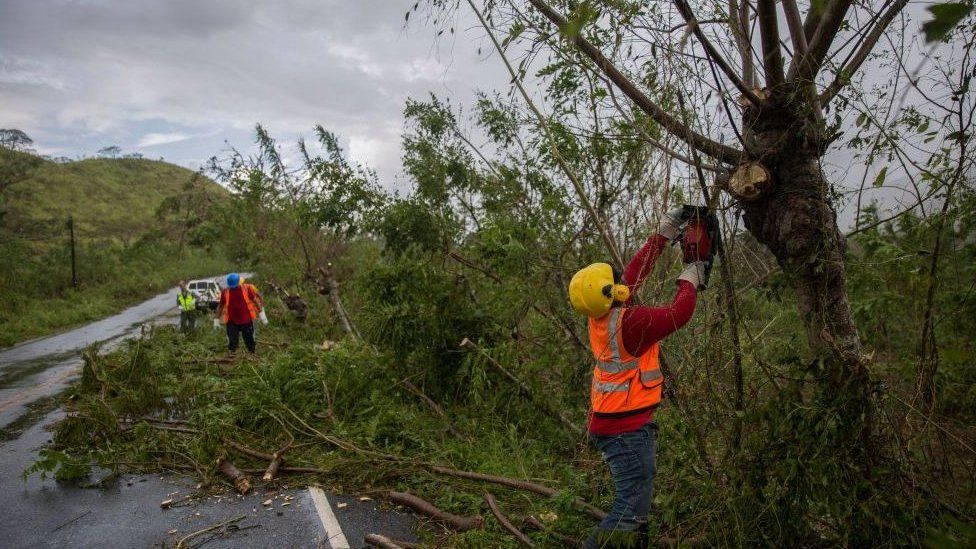
IMAGE SOURCE,GETTY IMAGES Image caption, Workers remove fallen trees from the highway in the northeast of the Dominican Republic after Hurricane Fiona on 21 September
The National Hurricane Center has said Fiona’s maximum sustained winds could hit 130 mph (215 kph).
Canadian officials and meteorologists are urging residents to brace themselves for the storm’s impact as it reaches the Atlantic provinces of Nova Scotia, Prince Edward Island and Newfoundland.
The region could receive up to six to 10 inches of rain, increasing the risk of flash flooding.
Shelters have been prepared in Halifax and Cape Breton in Nova Scotia for people to take cover ahead of the storm.
“Every Nova Scotian should be preparing,” said John Lohr, the minister responsible for emergencypreparedness in the province, in a Thursday press conference.
Mr Lohr added the storm may be “very dangerous”.
“The storm is expected to bring severe and damaging wind gusts, very high waves, coastal storm surges, intense and dangerous rainfall rates, and prolonged power outages,” Mr Lohr said.
Severe hurricanes in Canada are rare, as storms lose their energy once they hit colder waters in the north and become post-tropical instead. But the pressure in the region is predicted to be historically low as Hurricane Fiona hits, making way for a heavier storm.
Nova Scotia was last battered by a tropical cyclone in 2003 with Hurricane Juan, a Category 2 storm that killed two people and heavily damaged structures and vegetation.
The news comes amid growing fears that families in the EU will not be able to afford the cost of heating this winter.
Energy prices have soared since Russia invaded Ukraine and scarce supplies could push up the cost even further.
Europe is attempting to wean itself off Russian energy in an effort to reduce Moscow’s ability to finance the war, but the transition may not come quickly enough.
EU Council President Charles Michel said the Russian move was “sadly no surprise”.
“Use of gas as a weapon will not change the resolve of the EU. We will accelerate our path towards energy independence. Our duty is to protect our citizens and support the freedom of Ukraine,” he tweeted.
It has blamed the sanctions for holding up routine maintenance of Nord Stream 1, but the EU says this is a pretext.
Germany’s network regulator, the Bundesnetzagentur, said the country was now better prepared for Russian gas supplies to cease, but it urged citizens and companies to cut consumption.
Gazprom’s announcement came shortly after the G7 nations agreed to cap the price of Russian oil in support of Ukraine.
The G7 (Group of Seven) consists of the UK, US, Canada, France, Germany, Italy, and Japan.
Their introduction of a price cap means countries that sign up to the policy will be permitted to purchase only Russian oil and petroleum products transported via sea that are sold at or below the price cap.
However, Russia says it will not export to countries that participate in the cap.
The gas pipeline stretches from the Russian coast near St Petersburg to north-easternGermany and can carry up to170 million cubic metres of gas a day.
It is owned and operated by Nord Stream AG, whose majority shareholder is Gazprom.
Germany had also previously supported the construction of a parallel pipeline – Nord Stream 2 – but the project was halted after Russia invaded Ukraine.
Gazprom said the fault had been detected at the Portovaya compressor station, with the inspection carried out alongside workers from Siemens, the German firm that maintains the turbine.
It said that fixing oil leaks in key engines was only possible in specialized workshops, which had been hindered by Western sanctions.
However, Siemens itself said: “Such leaks do not normally affect the operation of a turbine and can be sealed on site. It is a routine procedure within the scope of maintenance work.”
This is not the first time since the invasion that the Nord Stream 1 pipeline has been closed.
In July, Gazprom cut off supplies completely for 10 days, citing “a maintenance break”. It restarted again 10 days later, but at a much-reduced level.
Speaking to the BBC from the Swiss capital Bern, an economist and energy analyst, Cornelia Meyer, said the gas shutdown would have a major impact on employment and prices.
“That really has huge ramifications for gas in Europe which is about four times more expensive than it was a year ago and this cost of living crisis will really soar because it’s not just gas,” she said. “Gas becomes fertilizer and it’s used in many industrial processes, so that will affect jobs, and it will affect costs.”
The flow of gas through Nord Stream 1 had already been reduced to a relative trickle. Now, once again, it has been halted completely.
An oil leak, claims Gazprom – which has previously attributed reduced flows through the pipeline to technical issues related to sanctions.
Europe, though, believes President Putin is weaponizing gas supplies – deliberately limiting flows through the pipeline to push up prices, in order to test the resolve of Russia’s critics.
The result, as we’ve already seen, is soaring energy costs – with businesses and consumers paying a heavy price.
The timing of Gazprom’smove is certainly interesting. It comes on the same day the G7 announced moves to cap the price of Russia’s oil exports.
But it also comes shortly after Germany – which is heavily reliant on Russian gas – revealed that its winter storage was filling up faster than expected.
A cynic might say this was the last opportunity to tighten the screw, in order to inflict maximum damage over the colder months.
A Canadian intelligence agent helped Shamima Begum get into Syria after she escaped the UK and joined the Islamic State.
According to documents obtained by the BBC, he claimed to have smuggled other Britons to fight for IS and given Canada Ms. Begum’s passport information.
The loss of Ms. Begum’s citizenship is being contested by her attorneys on the grounds that she was a victim of trafficking.
Ms Begum was 15 when she and two other east London schoolgirls – Kadiza Sultana, 16, and 15-year-old Amira Abase – traveled to Syria to join the IS group in 2015.
At the main Istanbul bus station, the girls met Mohammed Al Rasheed, who would facilitate their journey to IS-controlled Syria.
A senior intelligence officer, at an agency that is part of the global coalition against IS, has confirmed to the BBC that Rasheed was providing information to Canadian intelligence while smuggling people to IS.
He told authorities that he had gathered information on the people he helped into Syria because he was passing it to the Canadian embassy in Jordan.
Rasheed, who was arrested in Turkey within days of smuggling Ms Begum to IS, told authorities he had shared a photo of the passport the British schoolgirl was using.
The dossier shows that Ms Begum was moved to Syria through a substantial IS people-smuggling network that was controlled from the group’s de-facto capital in Raqqa.
Rasheed was in charge of the Turkish side of this network and facilitated the travel of British men, women, and children to IS for at least eight months before he helped Ms Begum and her two friends.
Ms Begum told the BBC’s forthcoming I’m Not A Monster podcast: “He organized the entire trip from Turkey to Syria… I don’t think anyone would have been able to make it to Syria without the help of smugglers.
“He had helped a lot of people come in… We were just doing everything he was telling us to do because he knew everything, we didn’t know anything.”
Rasheed kept information about the people he helped, often photographing their ID documents or secretly filming them on his phone.
One recording shows Ms Begum and her friends getting out of a taxi and into a waiting car not far from the Syrian border.
The father of a Kenyan woman who drowned in a swimming pool in Canada while livestreaming onFacebook has spoken of his family’s loss.
Hellen Wendy Nyabuto could be seen in a video struggling to stay afloat after diving into the deep end of the pool last week.
The 23-year-old health worker, who lived in Toronto, had earlier responded tocomments from viewers before resuming her swim.
Her body was spotted hours later at the bottom of the pool.
According to her brother, she drowned in Collingwood, Ontario, the town where she worked.
Her father Nyabuto John Kiyondi, 56 told CNN from his home in Kenya: “I watched that video. I cried. It is terrible.”
“She communicated with me two days before she perished. She sounded very fine and I was very happy. She promised me a phone. I didn’t feel anything abnormal,” he said.
Nyabuto lived with her younger brother Enock in an apartment in Toronto and worked part-time as a health worker while studying nursing, her family said.
“She has been in Canada for about three years,” Enock, who is one of her five sibling said.
“All the financial responsibilities (of their family in Kenya) were on her,” he added.
‘Back to square one’
Wendy’s father, a smallholder farmer in Kisii, southwest Kenya, said he is “back to square one” now that his daughter is gone.
“She was assisting me financially to educate her siblings, particularly in terms of school fees and other expenses. I’m stuck now and back to square one. I’m wondering how her younger siblings will continue schooling,” Kiyondi told CNN.
All he now wants is his daughter’s body returned to Kenya.
“According to our tradition, one is supposed to be buried where he or she was born. I’ll not feel comfortable, psychologically, if my daughter is buried away from Kenya,” he said.
Repatriating Wendy’s body will take a toll on her family’s meager resources and Enock said they’ve started a GoFundMe campaign to raise 50,000 Canadian dollars (around $38,000) to help with her burial costs.
“The family is going through a rough time now. All we want is for her body to be transported back home for burial,” he said.
Canada should introduce a total ban on the buying and selling of all handguns, Prime Minister Justin Trudeau has said.
His government is proposing a new law that would freeze private ownership of all short-barrelled firearms.
The legislation would not ban the ownership of handguns outright – but would make it illegal to buy them.
Mr Trudeau’s proposal comes days after a deadly shooting at a Texas primary school, in the neighbouring US, killed 21 people.
The bill, which was presented to Canada’s parliament on Monday, makes it impossible to buy, sell, transfer or import handguns anywhere in the country.
“Other than using firearms for sport shooting and hunting, there is no reason anyone in Canada should need guns in their everyday lives,” Mr Trudeau told reporters.
“As we see gun violence continue to rise, it is our duty to keep taking action,” he said.
It marks the most ambitious attempt yet by his government to restrict access to firearms.
The bill would also require rifle magazines to be reconfigured so they can hold no more than five rounds at a time.
And it would take away firearms licences from gun owners involved in domestic violence or criminal harassment.
Unlike in the US, gun ownership is not enshrined in Canada’s constitution, but firearms are still popular, especially in rural parts of the country.
Canada already has stricter rules on gun ownership than its southern neighbour and records fewer firearm incidents every year.
For example, all guns must be kept locked and unloaded and anyone wishing to buy a firearm must undergo extensive background checks.
But there have been calls in recent years to tighten gun legislation there even further, especially following a number of deadly shootings.
In April 2020, a gunman posing as a police officer killed 22 people during a shooting spree in Nova Scotia – the deadliest in Canada’s history.
Within days, Mr Trudeau announced an immediate ban on 1,500 different kinds of military-grade and assault-style weapons.
The new bill would effectively limit the number of legally-owned handguns in Canada to present levels.
The Criminal case where four persons are standing trial for allegedly kidnapping two Canadian girls, has been put on hold.
This was after presiding judge, Justice Lydia Osei Marfo, gave an order for a mini trial to be conducted.
The order for the mini trial came after lawyers for the accused persons objected to the tendering of some documents by prosecution.
The 11th Prosecution Witness, Detective Corporal Augustine Dery, being led in evidence told the court he was tendering in statements allegedly endorsed by the accused persons in evidence.
Lawyers for the accused persons however, objected to the request.
According to the lawyers, the accused persons were forced to endorse the documents as their statements.
“They were threatened, beaten and waterboarded to endorse the witness statement. They could not identify the signature and thumb prints on the statement. It is left with prosecution to prove whether the statements were taken freely and voluntarily.†Lawyer Yaw Dankwah emphasised.
He also insisted the accused were refused lawyers of their choices to advice them when their statements were allegedly being taken.
According to prosecution, “the statements were given in the presence of an independent witness, after which they thumb printed so for them to turn around and make allegations that they were tortured by way of waterboarding surprises us.â€
Principal State Attorney, Winnifred Sarpong, added; “under the law, the court can conduct a mini trial in respect of the matter.â€
The court in its ruling said, “the statements from the BNI allegedly made by the accused persons which the witness intended to tender have been impugned by counsel for the accused persons.
“Not only that, they have also raised issues with similar statements coming from the CID also said to have been made by the accused persons. I hereby order for a mini trial in respect of all statements allegedly made by the accused persons herein (being it from the CID or the Bni) allegedly made and put the main trial on hold. Mouth of PW11 is hereby sealed.â€
BACKGROUND
On June 4, 2019, three Nigerians and one Ghanaian, allegedly kidnapped two Canadian girls who were volunteers in Kumasi in the Ashanti Region.
According to the facts presented to the court, they touched the girls inappropriately and smeared their bodies with blood of a fowl and forwarded pictures to their families and demanded money from their families. The girls were later rescued by joint police and National Security team during a shootout.
The case has been adjourned to July 26 2021 for the commencement of the mini trial.
Ghana international, Kevin Prince Boateng agreed to join Serie B side, AC Monza this summer. Boateng after returning to AFC Fiorentina from Besiktas on loan struggled to break into the team.
He was linked to several European clubs before signing for AC Monza.
Speaking to Gazzetta.it Adriano Galliani revealed that Kevin Prince Boateng wanted to play in Canada and he sent him text messages to get him to sign for the Serie B club.
“Boateng wanted Canada. I told him that he can play for us in Monza,” he said.
“It was not easy, in the end, he cut his salary to come to us. I convinced him with text messages and love songs,” Galliani added.
Kevin Prince Boateng has played eight games, scoring twice with one assist in Serie B this season.
Obesity should be defined by a person’s health – not just their weight, says a new Canadian clinical guideline.
It also advises doctors to go beyond simply recommending diet and exercise.
Instead, they should focus on the root causes of weight gain and take a holistic approach to health.
The guideline, which was published in the Canadian Medical Association Journal on Tuesday, specifically admonished weight-related stigma against patients in the health system.
“The dominant cultural narrative regarding obesity fuels assumptions about personal irresponsibility and lack of willpower and casts blame and shame upon people living with obesity,” the guideline, which is intended to be used by primary care physicians in diagnosing and treating obesity in their daily practice, states.
Ximena Ramos-Salas, the director of research and policy at Obesity Canada and one of the guideline’s authors, said research shows many doctors discriminate against obese patients, and that can lead to worse health outcomes irrespective of their weight.
“Weight bias is not just about believing the wrong thing about obesity,” she told the BBC. “Weight bias actually has an effect on the behaviour of healthcare practitioners.”
The rate of obesity has tripled over the past three decades in Canada, and now about one in four Canadians is obese according to Statistics Canada.
The guideline had not been updated since 2006. The new version was funded by Obesity Canada, the Canadian Association of Bariatric Physicians and Surgeons and the Canadian Institutes of Health Research through a Strategy for Patient-Oriented Research grant.
Although the latest advice still recommends using diagnostic criteria like the body mass index (BMI) and waist circumference, it acknowledges their clinical limitations and says doctors should focus more on how weight impacts a person’s health.
Small reductions in weight, of about 3-5%, can lead to health improvements and an obese person’s “best weight” might not be their “ideal weight” according to BMI, the guideline says.
It emphasises that obesity is a complex, chronic condition that needs lifelong management.
“For a long time we’ve associated obesity as a lifestyle behaviour… It’s been a lot of shame and blame before,” Ms Ramos-Salas says.
“People living with obesity need support like people living with any other chronic disease.”
But instead of simply advising patients to “eat less, move more”, the guideline encourages doctors to provide supports along the lines of psychological therapy, medication and bariatric surgery like gastric-bypass surgery.
The guideline doesn’t completely do away with standard weight-loss advice.
“All individuals, regardless of body size or composition, would benefit from adopting a healthy, well-balanced eating pattern and engaging in regular physical activity,” it says.
However, it notes that keeping the weight off is often difficult because the brain will compensate by feeling more hungry, thus encouraging people to eat more.
Many studies have shown that most people who lose weight on a diet gain it back.
“Diets don’t work,” Ms Ramos-Salas says.
Physicians should also ask permission before discussing a patient’s weight, and work with them to focus on health goals that matter to them, instead of just telling them to cut calories.
At least one person has died after an aerobatic Canadian air force jet crashed into a residential neighbourhood.
Another crew member was injured when the plane hit a house in the city of Kamloops, British Columbia.
One pilot was able to eject before the crash on Sunday, video showed.
The Snowbirds jet had been on a tour “to salute Canadians doing their part to fight the spread of Covid-19”, according to the team’s website.
The Snowbirds perform aerobatic stunts for the public, similar to Red Arrows in the UK or the US Blue Angels.
The crash happened on Sunday morning, shortly after the jet took off.
“It is with heavy hearts that we announce that one member of the CF Snowbirds team has died and one has sustained serious injuries,” the Royal Canadian Air Force said in a tweet.
The Air Force later said that the crew member’s injuries were not thought to be life threatening.
Video posted on Twitter showed two jets climbing into the air from what is believed to be the Kamloops Airport before one catches on fire.
Witness Annette Schonewille told CBC News: “The one plane continued and the other one, there was two puffs, it looked like puffs of smoke and one… was a ball of fire,” she said.
“No noise, it was strange, and then the plane just did a cartwheel and fell right out of the sky. Just boom, straight down, and then a burst of black, black smoke.”
After it hit the front garden of a home in Kamloops, residents ran outside in an attempt to put out the fire.
“I just started running down the street. And I got there maybe a minute after it crashed and there was a couple of residents that had their hoses out and they were trying to put the flames out because it hit a house,” neighbour Kenny Hinds told the Associated Press.
“It looked like most of it landed in the front yard, but maybe a wing or something went through the roof.”
Meanwhile, resident Nolyn McLeod told CBC he saw the plane curve into the street and hit the bedroom window of his neighbour’s house.
Photos published in Canadian media appeared to show a parachute on the roof of the house.
The city of Kamloops is around 200 miles (320km) northeast of Vancouver in the West Coast Canadian province. It has a population of 90,000.
In October, a Snowbirds jet crashed into an uninhabited area before an air show in the US city of Atlanta, after the pilot ejected.
At least one person has died after an aerobatic Canadian air force jet crashed into a residential neighbourhood while doing a flyover.
Another crew member was seriously injured when the plane hit a house in the city of Kamloops, British Columbia.
One pilot was able to eject before the crash on Sunday, video showed.
The Snowbirds jet had been on a tour “to salute Canadians doing their part to fight the spread of Covid-19”, according to the team’s website.
The Snowbirds perform aerobatic stunts for the public, similar to Red Arrows in the UK or the US Blue Angels.
The crash happened on Sunday morning, shortly after the jet took off.
“It is with heavy hearts that we announce that one member of the CF Snowbirds team has died and one has sustained serious injuries,” the Royal Canadian Air Force said in a tweet.
Video posted on Twitter showed two jets climbing into the air from what is believed to be the Kamloops Airport before one catches on fire.
Witness Annette Schonewille told CBC News: “The one plane continued and the other one, there was two puffs, it looked like puffs of smoke and one… was a ball of fire,” she said.
“No noise, it was strange, and then the plane just did a cartwheel and fell right out of the sky. Just boom, straight down, and then a burst of black, black smoke.”
After it hit the front garden of a home in Kamloops, residents ran outside in an attempt to put out the fire.
“I just started running down the street. And I got there maybe a minute after it crashed and there was a couple of residents that had their hoses out and they were trying to put the flames out because it hit a house,” neighbour Kenny Hinds told the Associated Press.
“It looked like most of it landed in the front yard, but maybe a wing or something went through the roof.”
Meanwhile, resident Nolyn McLeod told CBC he saw the plane curve into the street and hit the bedroom window of his neighbour’s house.
Photos published in Canadian media appeared to show a parachute on the roof of the house.
The city of Kamloops is around 200 miles (320km) northeast of Vancouver in the West Coast Canadian province. It has a population of 90,000.
In October, a Snowbirds jet crashed into an uninhabited area before an air show in the US city of Atlanta, after the pilot ejected.
Canada shed three million jobs in the last two months due to the coronavirus lockdown, causing the unemployment rate to shoot up to 13% in April, the government reported Friday.
That rate more than doubled, following a relatively small increase the previous month when restrictions started to be put in place, its statistical agency said.
The new rate is second only to the 13.1% observed during a recession in 1982, but lower than analysts had forecast.
Statistics Canada said the figure would have been much higher had it included a large number of people who wanted to work but could not job-hunt “presumably due to ongoing business closures and very limited opportunities to find new work.”
Many also worked fewer hours, the agency said.
All of this has led to 6.7 million Canadians applying for unemployment benefits or government aid, and just over one in five Canadian households reporting difficulties meeting financial obligations.
“These numbers tell us what we already know: Canadians are hurting because of this pandemic. Everyone has their own story. But it all boils down to a very difficult time for a lot of people,” Prime Minister Justin Trudeau told a daily briefing.
He also announced an extension beyond June of an emergency wage subsidy “to help kickstart our economic reopening and boost jobs.” Specific details are to follow next week.
‘Nothing to cheer about’
Although worst-case projections failed to materialise, “when you’re rounding the number of jobs lost to the nearest million, there’s nothing to cheer about,” commented CIBC analyst Avery Shenfeld.
The employment declines over the past two months were observed in all provinces, but Quebec – which has recorded the highest number of COVID-19 infections and fatalities – led all of them with 821 000 jobs lost.
Employment also dropped sharply in Canada’s three largest cities – Montreal, Toronto and Vancouver.
Youths aged 15-24, recent immigrants, low-wage workers and those with the least job security – temporary or non-unionised, for example – suffered the most job losses.
Statistics Canada noted, however, that most of the newly unemployed were temporarily laid off, meaning they could return to work when restrictions are lifted.
In March, it said, almost all job losses were observed in the services sector, whereas the following month goods-producing industries saw proportionally larger losses, led by construction and manufacturing.
Within the services sector, employment losses continued, led by wholesale and retail trade, and accommodation and food services.
Some sectors managed to avoid the carnage. Utilities, public administration, and finance, insurance and real estate, for example, were “relatively less affected by the COVID-19 economic shutdown,” said Statistics Canada.
Large firms and institutions appeared to have been able to keep workers on the job better than small businesses.
An additional 3.3 million Canadians also worked from home.
After previous downturns, services jobs returned “relatively quickly,” or within four months, to pre-downturn levels.
Workers in goods-producing industries were not as lucky, with recoveries from recessions in 1981-1982 and 1990-1992, and the 2008-2009 global financial crisis, taking more than six and 10 years, respectively.
This time, said Statistic Canada, “as economic activity resumes industry by industry following the Covid-19 economic shutdown, the time required for recovery will be a critical question.”
Canada Prime Minister Justin Trudeau has introduced a long-promised ban on assault-style weapons following the country’s worst gun massacre in April.
New rules would make it illegal to sell, transport, import or use 1,500 varieties of assault weapons.
The ban is effective immediately but there will be a two-year amnesty period for law-abiding gun owners to comply.
Mr Trudeau also said he would introduce legislation, which has yet to pass, to offer a buy-back programme.
Unlike the US, gun ownership is not enshrined in Canada’s constitution, but gun ownership is still popular, especially in rural parts of the country.
Mr Trudeau made a point of saying that most gun owners are law-abiding citizens, but argued that assault-weapons serve no beneficial purpose.
“These weapons were designed for one purpose and one purpose only — only to kill the largest amount of people in the shortest amount of time,” he said in a press conference on Friday.
“You don’t need an AR-15 to bring down a deer.”
The call to ban assault weapons was heightened after a number of high-profile shootings — in 2017, at a mosque in Quebec, in 2018 on a commercial street in Toronto and most recently, in a rampage across the province of Nova Scotia that became the deadliest shooting in Canada’s history.
RCMP have said that the shooter was not licensed to own firearms, but had what appeared to be an assault-style weapon, as well as other guns. The RCMP did not specify which kind, so it is unknown if it will be covered by the ban.
Mr Trudeau campaigned on the ban ahead of last November’s election, and he said he was planning on introducing the ban in March, but it was delayed because of coronavirus.
His government had already expanded background check requirements and made it tougher to transport handguns, prior to November’s election.
More than 80,000 of these weapons are registered with the Royal Canadian Mounted Police.
The government is able to ban the weapons immediately through current regulation, but a buy-back programme would require multi-party support in parliament and would likely cost the government hundreds of millions of dollars.
The ban is controversial politically. A petition against the ban started by Conservative MP Glen Motz in December has more than 175,000 e-signatures.
Many of the weapons used in violent crime in Canada were not obtained legally, and Conservative leader Andrew Scheer said Mr Trudeau would do better to focus on stopping guns from coming across the boarder than on banning law-abiding gun owners.
The Globe and Mail reported that leaked documents show the buy-back programme would be voluntary, and licensed owners would have their guns grandfathered. Mr Trudeau had previously promised the programme would be mandatory.
On Friday, Mr Trudeau would not confirm whether buy-backs would be voluntary, but reiterated the buy-back programme would have to be supported by other parties, and be fair to everyone.
Bernard Ayeh, a 41-year-old Ghanaian, has been arrested by the Ghana Military Police for allegedly posing as a Canadian Army Officer.
The suspect, a resident of Adjiriganor, was picked up around Adentan Barrier, wearing a camouflage uniform while driving a Mazda saloon car with registration number GR1406-20.
At the time of arrest he had in possession two pistol holsters, two handcuffs with keys, a jackknife, a baton, two fake Canadian Army identity cards, bearing the name Lieutenant Colonel Bernard Ayeh, three mobile phones, and an amount of GHC 13,470.
According to a statement from the Army, Bernard Ayeh explained that he got the Canadian Army camouflage uniform whilst working as a contractor for personnel of the Canadian army.
He also allegedly disclosed that one of the pistols found on him was for his late Uncle and the other, he purchased from an official of the Ghana Police Service.
The Military Police says that it has processed the suspect for a referral to the Police Headquarters for further investigation and possible prosecution.
The 2020 Olympic and Paralympic Games in Tokyo have been thrown into further doubt after Canada became the first major country to withdraw.
Their announcement came shortly after the Japanese Prime Minister, Shinzo Abe, admitted for the first time that the games could be postponed.
Meanwhile, the Australian team has said it was “clear” the games could not go ahead, and told its athletes to prepare for a 2021 games.
The games are due to begin on 24 July.
What did Canada say?
The country’s Olympic and Paralympic committee said it had taken “the difficult decision” to withdraw after consulting athletes, sports groups, and the Canadian government.
It then “urgently called” on the International Olympic Committee, International Paralympic Committee, and World Health Organization, to postpone the games for a year.
“While we recognise the inherent complexities around a postponement, nothing is more important than the health and safety of our athletes and the world community,” their statement said.
The Canadian later posted a message on Twitter saying: “Postpone today. Conquer tomorrow.”
What did Shinzo Abe say?
For weeks, Japanese officials have said the games will go ahead as planned.
But, speaking in parliament on Monday, Mr Abe admitted for the first time that Tokyo 2020 may have to be delayed.
“If it is difficult to hold (the games) in a complete way, a decision of postponement would be unavoidable as we think the athletes’ safety is paramount,” he said.
But he insisted the games would not be cancelled altogether.
The Olympics have never been postponed or cancelled in peacetime. The 1940 Olympics – which were called off because of World War Two – were due to be held in Tokyo.
What is the International Olympic Committee’s position?
On Sunday, the IOC said it had given itself a deadline of four weeks to make a decision on the 2020 games.
It said postponement was one “scenario”, but insisted that cancellation “would not solve any of the problems or help anybody”.
In a letter to athletes, IOC president Thomas Bach said: “Human lives take precedence over everything, including the staging of the games…
“At the end of this dark tunnel we are all going through together, not knowing how long it is, the Olympic flame will be a light at the end of this tunnel.”
What do other countries and athletes say?
On Monday, Australia told its athletes to prepare for an Olympics and Paralympics in the northern summer of 2021.
“It’s clear the games can’t be held in July,” Australian chef-de-mission Ian Chesterman said.
On Sunday, the head of World Athletics, Sebastian Coe, wrote to Mr Bach to say holding the games in July was “neither feasible nor desirable”.
USA Track and Field has called for a postponement, as has the competitors’ group Global Athlete.
“As the pandemic gets worse and worse and there are more and more societal restrictions put in place, I think the call needs to be made now,” said British cyclist Callum Skinner, who fronts the Global Athlete.
This latest reading was taken at a monitoring station on Seymour Island, part of a chain of islands off the same peninsula, at the northernmost point of the continent.
Although the temperature is a record high, Mr Schaefer emphasized that the reading was not part of a wider study and so, in itself, could not be used to predict a trend.
“We can’t use this to anticipate climatic changes in the future. It’s a data point,” he said. “It’s simply a signal that something different is happening in that area.”
How fast is Antarctica warming?
According to the UN’s World Meteorological Organisation (WMO), temperatures on the Antarctic continent have risen by almost 3C over the past 50 years, and that about 87% of the glaciers along its west coast have “retreated” in that time.
Over the past 12 years the glaciers have shown an “accelerated retreat” due to global warming, it adds.
Last month was also Antarctica’s warmest January on record.
Image copyrightGETTY IMAGESImage captionTemperatures on the continent have risen by almost 3C in 50 years
Scientists have warned that global warming is causing so much melting at the South Pole, it will eventually disintegrate – causing the global sea level to rise by at least three metres (10ft) over the coming centuries.
The previous record for the entire Antarctic region – which includes the continent, islands and ocean that are in the Antarctic climatic zone – was 19.8C, logged in January 1982.
Last July, the Arctic region hit its own record temperature of 21C, logged by a base at the northern tip of Ellesmere Island in the Canadian Arctic.
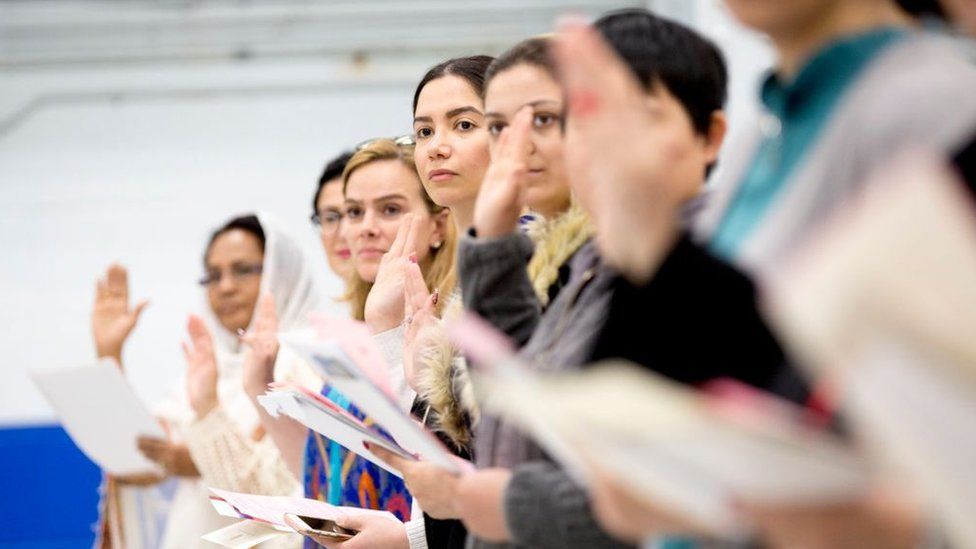
 I saw snow for the first time today”.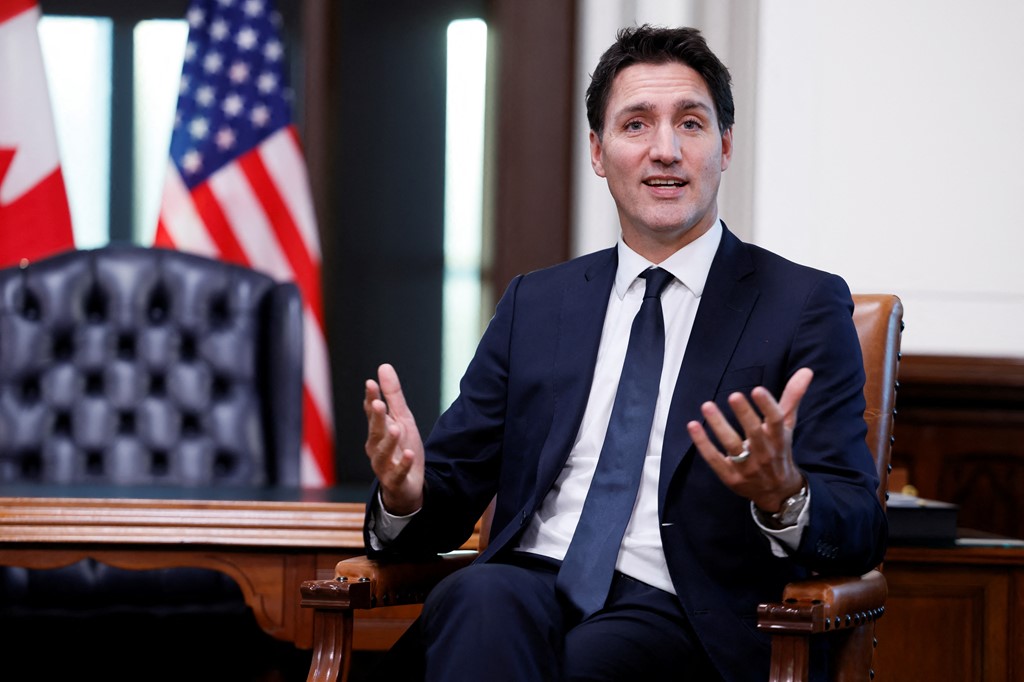
 Master of Business, Entrepreneurship and Technology program, done and dusted!

 ,” she said.