Tag: Carbon

  • Africa now emits as much carbon as it stores: landmark new study

    Africa now emits as much carbon as it stores: landmark new study

    landmark new study has found that, in the last decade, the African continent has started emitting more carbon than it stores. When the total amount of carbon that is sequestered by natural ecosystems (such as the soil and plants in grasslands, savannas and forests) exceeds the amount of total carbon emissions within a system, it’s referred to as a net sink of carbon.

    But, the study found, as natural ecosystems are converted for agricultural purposes, the carbon storage capacity is decreasing – while the rate of emissions is increasing.

    Yolandi Ernst of the University of the Witwatersrand (Wits) in South Africa led the international research team that calculated the flows of carbon dioxide, methane and nitrous oxide through Africa’s terrestrial and aquatic ecosystems. She and one of the study co-authors, Sally Archibald – also from Wits and the lead of the Future Ecosystems for Africa Programme – unpacked their findings for The Conversation Africa.

    What did you set out to calculate, how did you do it, and why?

    We wanted to know both the amount of greenhouse gases being produced by the African continent and the amount being taken up. This helped us to develop a greenhouse gas budget, quantifying the net amount of outgoing and incoming greenhouse gases. In this way we’re better able to understand how the continent is contributing to global climate change (by releasing greenhouse gases) and how, through taking up greenhouse gases, it’s helping to mitigate global climate change.

    This study formed part of a global effort by the Regional Carbon Cycle Assessment and Processes Phase 2 (RECCAP2) project. It aims to establish improved greenhouse gas budgets for large regions covering the entire globe at the scale of continents (or large countries) and large ocean basins.

    We collated data from a variety of sources and created models to calculate the amount of carbon dioxide, methane and nitrous oxide (collectively called greenhouse gases) being released into the atmosphere from several different sources. Some are human sources, like agriculture and fossil fuel emissions. Other sources, like wildfires and termites, are natural.

    Then we calculated the amount of carbon that’s drawn down from the atmosphere and stored in what are called carbon sinks: the soils and plants in grassland, savanna and forest ecosystems.

    The net budget estimate was the result of adding all the sources and sinks, just like balancing a household budget, where you don’t want to be spending more than you are earning.

    This information is crucial for policy making. If scientists, land managers and NGOs know which activities produce the most greenhouse gases they can work with governments and policymakers to minimise this. And knowing which parts of Africa best help to store carbon means funding and policy efforts can be directed to protecting and increasing this carbon “land sink”.

    What are the biggest sources of carbon emissions on the African continent?

    It’s important to distinguish between anthropogenic and natural emissions here. Fossil fuel burning and agriculture are the biggest sources of carbon emissions; both are anthropogenic (caused by humans). Other emissions are part of the ecosystem functioning but they can also be affected by human activities. Examples include fire, methane emissions from herbivores, and inland and coastal water bodies. These all represent quite large emissions, but they’re only somewhat affected by human activities.

    In Africa’s case, our budget shows that when people transform natural landscapes for agricultural and other purposes, the emissions from fire decrease, but emissions from herbivores increase.

    There are also some important natural processes that draw carbon and greenhouse gases back into the land surface. These include the growth of vegetation and soil carbon storage, as well as weathering of rocks (which turns atmospheric CO₂ into carbonate minerals), and burial of carbon in the ocean.

    The previous African carbon budget (1985-2009) showed the processes drawing carbon into Africa were higher than the natural emissions and the anthropogenic emissions. The continent was a carbon sink even though it emitted some anthropogenic greenhouse gases: Africa was providing a climate service to the globe.

    Globally the anthropogenic emissions of CO₂ are 11.21 gigatons of carbon per year (GtC/yr), but the land takes up about 3.5 GtC/year, so it is helping to slow the growth rate. The African land sink is about 0.8 GtC, representing about 20% of the world’s total land sink.
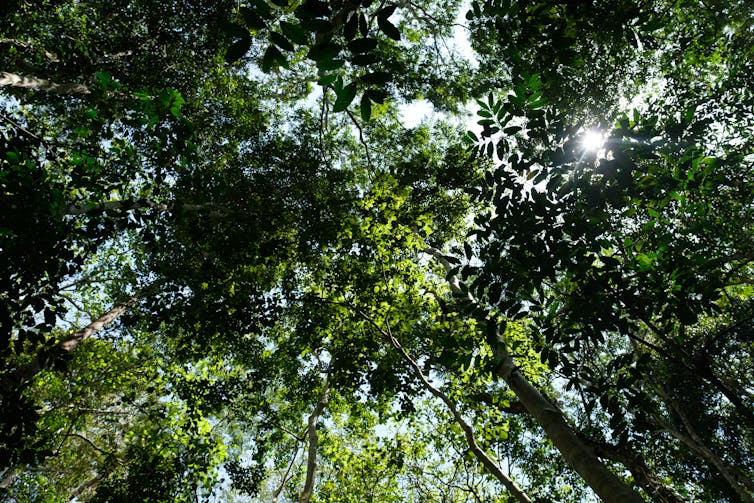
    Small patches of blue sky are seen through a towering canopy of lush green trees
    The continent’s forests, like this Ugandan rain forest, are crucial carbon sinks. Camille Delbos/Art In All of Us/Corbis via Getty Images

    Now, although the sink capacity hasn’t decreased – Africa is still taking up just as many greenhouse gases as it did in the past – the amount of anthropogenic sources has increased so much that the net effect is to be releasing greenhouse gases. In short, the continent has become as much of a carbon source as it is a carbon sink over the study period (2010-2019).

    What can be done to reverse the trend you’ve identified?

    Finding ways for Africa to develop in a way that is carbon neutral is a big challenge. Investment in carbon-neutral energy sources and reducing reliance on fossil fuels would be a start.

    But this has never been done – all developed countries have grown their economies on the back of massive fossil fuel use. If African countries are to become carbon-neutral and also grow their economies, global support and funding will be required.

    However, fossil fuels are only part of the problem in Africa as less than half the continent’s greenhouse gases currently come from fossil fuels; land use change and agricultural expansion are the leading cause of its emissions. There are many innovative approaches to producing food in ways that emit fewer greenhouse gases – again, the challenge is to find ways to roll these out at scale.

    Protecting, managing and restoring the landscapes that are helping to take up the excess carbon dioxide can also help a lot. But there are challenges here, too. Making carbon storage the main goal of conservation can conflict with biodiversity and water provision.

    Mixed cattle-wildlife systems and novel livestock management methods show promise for reducing climate impacts and improving landscape functioning.

    Source: The Conversation
  • Poilievre’s attempt to topple Trudeau minority over carbon pricing unsuccessful

    Poilievre’s attempt to topple Trudeau minority over carbon pricing unsuccessful

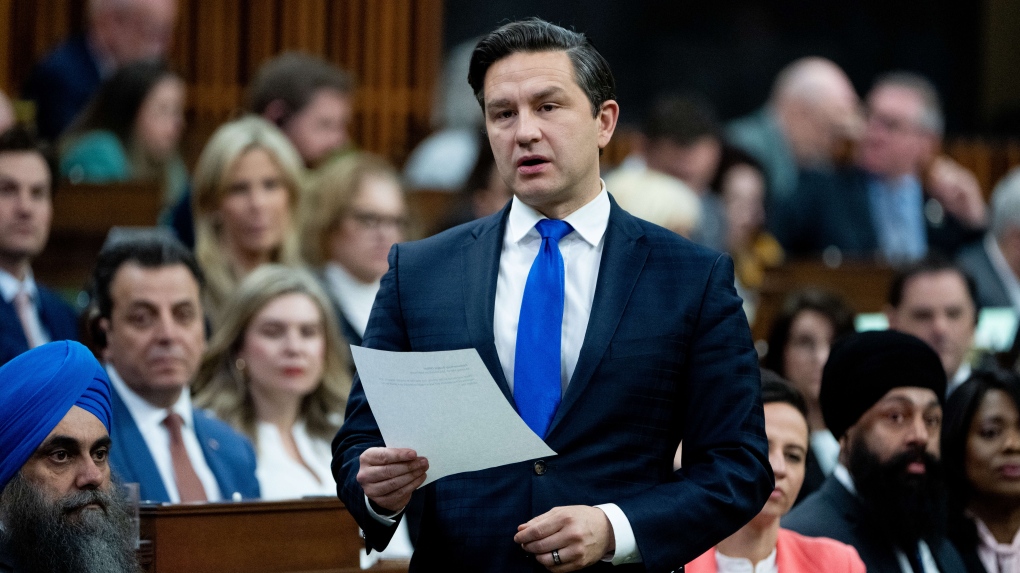
    Conservative Leader Pierre Poilievre tried to make a vote to kick out Prime Minister Justin Trudeau‘s Liberal government because of the carbon tax, but it didn’t work.

    After a long argument where MPs talked about their problems with the climate policy and how the political discussion around it, Trudeau won and got most of the support to reject the motion of non-confidence.

    The official opposition tried to stop the government’s plan to increase the carbon price to $80 from $65 per tonne. They did this because people all across Canada are against the price increase.

    Starting a long discussion in the House of Commons before going to a fundraiser in Toronto, Poilievre wanted Parliament to end and for an election to be held.

    After eight years, it is obvious that this prime minister from the NDP-Liberal party is not good enough, because of the high cost, crime, and corruption. “We cannot just watch while this prime minister makes the Canadian people suffer more. “

    The leader of the main opposing party voted for a special parliamentary rule using a virtual system.

    NDP MP Charlie Angus asked why Poilievre was leaving his MPs to bring down the government while he was off fundraising with his lobbyist friends.

    The federal NDP, Bloc Quebecois, and Green MPs supported the Liberals, while the Conservatives and Independent MP Kevin Vuong lost confidence in the prime minister. They criticized Poilievre’s tactics as political maneuvering.

    The final count was 204 people saying no and 116 people saying yes.

    It was very unlikely that the government would lose power over this motion because the Liberals have an agreement with the federal New Democrats to support each other until June 2025.

    The vote happened on Thursday, just one day before the two-year anniversary of the agreement between the two political parties.

    The agreement says that the NDP has to vote with the Liberals on important votes about money and confidence in the government.

    Thursday’s motion is about saying that the House doesn’t trust the prime minister and his expensive government. and ask for the Parliament to be closed so Canadians can vote on a carbon tax.

    Rejecting the attempt to end his time as Canada’s leader early, Trudeau said he would be willing to have an election about the carbon tax. He pointed out that his party has won the last three elections with the carbon tax as an important part of their plan to fight climate change.

    In a fundraising email to party supporters on Thursday, the Liberal campaign director Jeremy Broadhurst emphasized the importance of the party’s efforts to keep fighting climate change. He said that the upcoming vote is a crucial moment for the party.

    During question time, government officials criticized their opponents and praised the Canada Carbon Rebate for its economic benefits. They also accused the Conservatives of not caring about the environment or affordability.

    The Conservatives should stop telling lies. The PBO says that 8 out of 10 Canadian families receive more money. It is true now, and it will still be true in 2030. The minister said that taking away the rebate will make people with lower incomes even poorer.

    “He said it’s shameful, and Poilievre’s climate plan is basically to let the planet burn. ”

    Right after the vote, the Conservatives said that the Bloc and NDP are not supporting the people they represent. They are helping the Liberal prime minister who is not popular and has a bad government.

  • Kenya wagers on carbon credits as it holds first-ever climate summit in Africa

    Kenya wagers on carbon credits as it holds first-ever climate summit in Africa

    Deep within the rugged landscape of Kasigau, a sprawling wilderness inhabited by elephants, a team equipped with clipboards and measuring tapes is diligently examining an unassuming tree. Despite its gnarled and leafless appearance, this tree holds significant value: it serves as a carbon store. The team’s mission is to precisely quantify the amount of carbon locked within this semi-arid, 200,000-hectare woodland in southern Kenya.

    “We want to make absolutely sure we account for every single tree,” asserts Geoffrey Mwangi, the lead scientist at the US-based company Wildlife Works, as the “carbon samplers” gather data from another thorny specimen.

    This data translates into carbon credits, and these credits have become a valuable commodity, fetching millions of dollars when sold to corporate giants like Netflix and Shell. These companies purchase these credits to offset their greenhouse gas emissions, enhancing their environmental credentials.

    With climate change intensifying and mounting pressure on companies and nations to address their environmental impact, the demand for carbon credits has surged, despite facing scrutiny over their effectiveness.

    Cash-strapped African countries are now seeking a larger share of the $2-billion carbon credits market, which is projected to grow five-fold by 2030. Africa is home to the planet’s second-largest rainforest and extensive carbon-absorbing ecosystems, such as mangroves and peatlands, yet it only produces 11 percent of the world’s carbon offsets.

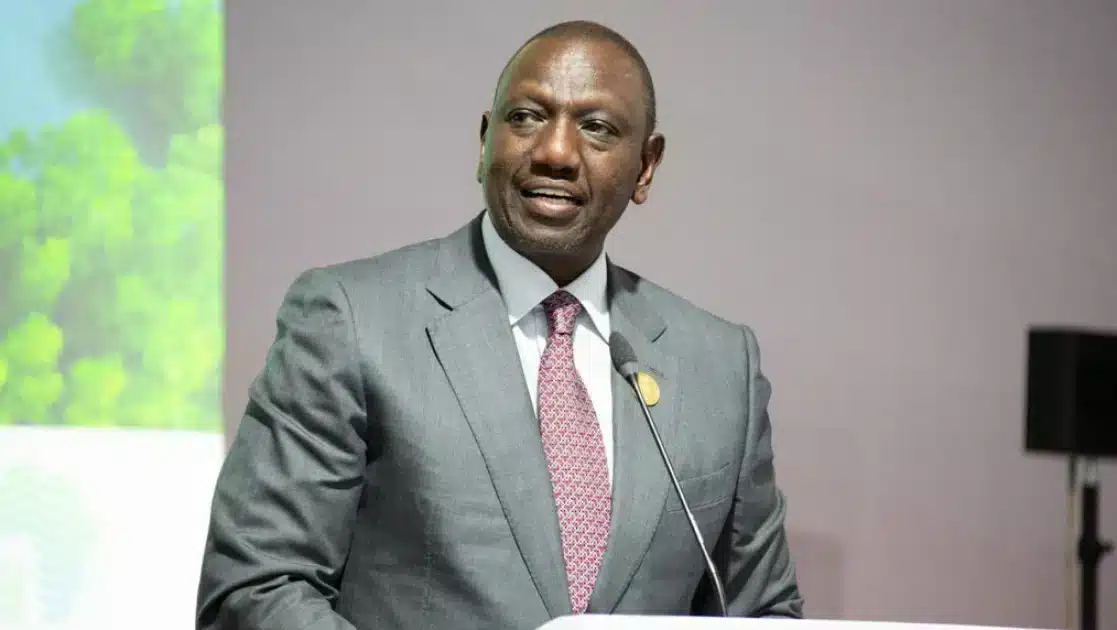
    Kenyan President William Ruto, who is hosting a climate summit in Nairobi, expressed the view that Africa’s carbon sinks represent an “unparalleled economic goldmine” with the potential to absorb millions of tons of CO2 annually, translating into billions of dollars.

    A single carbon credit represents one tonne of carbon dioxide removed or reduced from the atmosphere. Companies acquire these credits through activities such as renewable energy projects, tree planting initiatives, or forest protection programs.

    Carbon markets operate with minimal regulation, and accusations have arisen that certain carbon offsets, particularly those tied to forests, yield limited environmental benefits or exploit local communities, leading to a drop in prices.

    Kenya already leads Africa in generating carbon offsets and envisions a substantially larger domestic industry capable of creating jobs and driving economic growth, despite the market’s uncertainties.

    “We have massive interest. We currently hold 25 percent of the African carbon credits market in Kenya, and we aim to expand this,” says Ali Mohamed, the president’s special envoy for climate change.

    In Kasigau, Wildlife Works runs a flagship carbon credit project, compensating landowners and communities for preserving the forest. Revenue from the project has supported approximately 400 jobs and funded essential infrastructure, including water, education, and healthcare, in an underserved area of Kenya.

    Wildlife Works founder Mike Korchinsky affirms that over half of the revenue goes to these communities. The protected forests were previously cleared for firewood and charcoal, leading to the degradation of a vital carbon sink and critical wildlife habitat. Preventing deforestation helps achieve climate goals by retaining carbon in the soil and trees, preventing its release into the atmosphere.

    The Kasigau Corridor REDD+ Project was the world’s first to generate certified credits in this manner, with independent verification conducted nine times since 2011, preventing roughly 22 million tonnes of CO2 emissions.

    While Kenya emits approximately 70 million tonnes of CO2 annually, projections suggest that Africa could generate 300 million carbon credits annually by 2030, a 19-fold increase from current levels. For Kenya, this would equate to over 600,000 jobs and $600 million in annual revenue.

    However, these projections rely on carbon prices significantly higher than current levels and a substantial increase in financing. Carbon markets are grappling with trust and integrity issues in an environment characterized by volatility.

    Ahead of the Africa Climate Summit in Nairobi, over 500 civil society organizations called on President Ruto to steer the conference away from carbon markets and “false solutions” driven by Western interests. They argue that these approaches will allow wealthy nations and large corporations to continue polluting while undermining Africa’s interests.

    Joseph Nganga, Ruto’s appointee to lead the summit, contends that carbon markets should act as a means of ensuring accountability rather than an excuse for emissions. He believes that the cost should be borne by wealthy polluting nations.

    Countries are moving to regulate the carbon credit sector. Zimbabwe, for instance, announced plans to appropriate half of all revenue generated from carbon credits on its land, sending ripples through the markets. Kenya is also finalizing its own legislation to ensure transparency and a fair share for communities without discouraging investors.

  • How Tanzania’s Sh46.9 trillion carbon market is about to cause a revolution

    How Tanzania’s Sh46.9 trillion carbon market is about to cause a revolution

    Tanzania’s carbon offset market has garnered significant attention, attracting more than 20 corporations, including international investors, with a total investment value surpassing $20 billion (equivalent to Sh46.9 trillion).

    This influx of investments is a result of the adoption of regulations and guidelines on carbon trading in Tanzania, which has facilitated an annual investment of over $1 billion (Sh2.3 trillion).

    These investments align with Tanzania’s commitment to reducing greenhouse gas emissions by 30-35 percent by 2030.

    The country’s extensive protected forests, covering an area of 48 million hectares, present a lucrative market for carbon trading.

    This provides a unique opportunity for Tanzania to leverage its natural resources, drive sustainable economic growth, and capitalize on the growing demand for carbon offsets.

    The government’s success in attracting more than 20 corporations and their substantial investments in excess of $20 billion (Sh46.9 trillion) indicate that the production and sale of carbon offsets have become profitable in Tanzania.

    Since the regulations and guidelines on carbon trading were adopted last October, according to Dr. Selemani Jafo, Minister of State in the Vice President’s Office (Union and Environment), investment has attracted more than $1 billion (Sh2.3 trillion), which will be mobilized annually through carbon trading throughout the country.

    He was addressing yesterday at the Tanzania Private Sector Foundation’s (TPSF) High-Level Inter-Ministerial Dialogue on Carbon Trading.

    Tanzania is on the cusp of a new age, one in which the carbon market may produce considerable benefits for the environment, local people, and the National Treasury, even if carbon offsets are intended to alleviate the consequences of climate change.

    One metric ton of carbon or another GHG is equal to one carbon offset, which costs $65 (or around Sh152,100). According to Dr. Jafo, carbon trading would help the nation’s Nationally Determined Contributions (NDCs), which aim to reduce GHG emissions by 30-35 percent by 2030.

    “We need to establish further cooperation between Tanzania and carbon credit investors and partners for our economy and future generations,” said Dr Jafo. “We are committed to supporting all investors and stakeholders in carbon trading in our country,” he added.

    According to Tanzania Forest Service Agency (TFS), Tanzania Wildlife Management Authority (Tawa), Tanzania National Parks Authority (Tanapa), and Ngorongoro Conservation Area Authority (NCAA) deputy minister for natural resources and tourism Mary Masanja, over 20 companies had submitted applications.

    The investors are from Kenya, Russia, Singapore, the United States, Canada, the United Arab Emirates (UAE), Switzerland, Estonia, and Italy, according to Ms. Masanja. She stated, “We have already entered into a Memorandum of Understanding with some companies, and talks with others under the coordination of the National Carbon Monitoring Centre, are in progress.”

    She said that the businesses planned to make investments in the central government’s game reserves, village woods, community-based wildlife management areas, tree planting programs, reserve forests, and more.

    According to Ms. Masanja, Tanzania has 48 million hectares of protected forests, creating a market for carbon. “With the introduction of the carbon trade regulations, we are optimistic that citizens will stop cutting down trees, and instead capitalize on the available potential,” Ms. Masanja highlighted.

    In this time of swift global change, according to TPSF Executive Director Raphael Maganga, it is critical for Tanzania to take a strategic position in the carbon market.

    “With over 51 percent of the land covered with forests, Tanzania has a unique opportunity to capitalize on our rich natural resources,” said Mr Maganga. “We need to embrace renewable energy solutions and implement environmentally friendly projects that will attract investment, create jobs and contribute to our economic growth,” he added.