Tag: Caribbean

  • Hurricane Melissa disrupts schooling for children across the Caribbean

    Hurricane Melissa disrupts schooling for children across the Caribbean

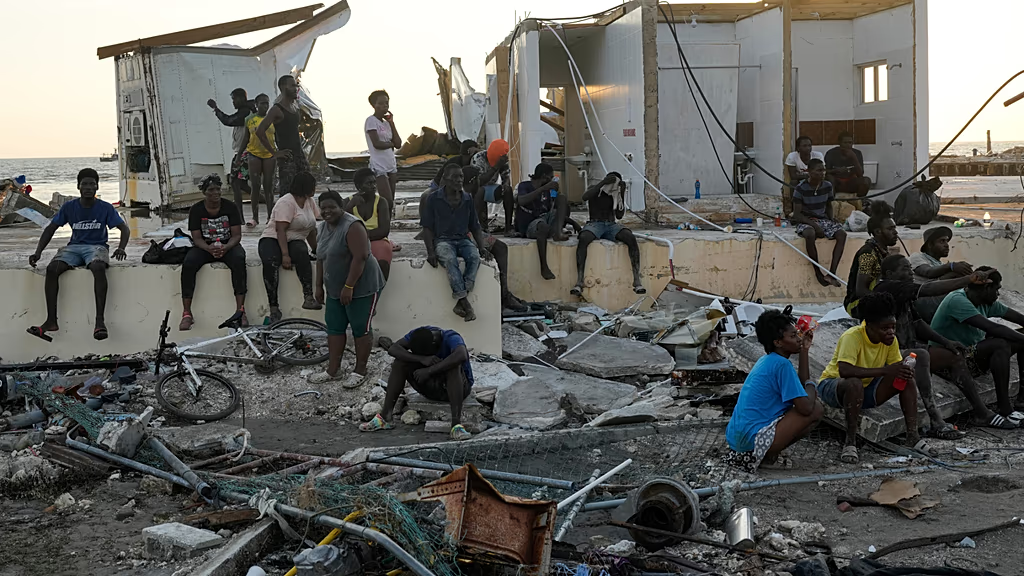
    Nearly 477,000 children across Cuba, Haiti and Jamaica continue to face major disruptions to their education nearly three weeks after Hurricane Melissa swept through the Caribbean and caused widespread devastation.

    The storm, which moved across the region late last month, destroyed homes, damaged essential infrastructure and forced thousands of families into temporary shelters.

    One of the most significant and lingering impacts of the hurricane is the strain it has placed on already fragile education systems in the affected countries.

    A spokesperson for the United Nations explained that many schools in these countries are still damaged, unsafe or completely unable to hold classes. Some buildings remain flooded while others have lost roofs or have weakened structural elements that make them unsuitable for students. In many communities debris has blocked access routes to schools and some compounds require major repairs before children can return safely.

    As a result, thousands of students are missing classes or are learning in temporary locations that offer little stability or comfort. In some rural areas families are reluctant to send their children back because the facilities available do not meet basic safety standards.

    This situation means that close to half a million children are now learning in improvised spaces such as tents, churches, community centres or open areas that have been hastily arranged for lessons. These spaces generally lack chairs, tables, clean water, electricity or basic learning materials.

    Teachers are trying their best to keep lessons going but many say the absence of proper classrooms, books and equipment is making it extremely difficult. For younger children the lack of routine is also affecting their emotional well-being since the hurricane has already caused significant stress and uncertainty.

    UNICEF has begun working with the affected governments and local partners to assist children and teachers. The organisation is focusing on restoring education services, providing learning materials and identifying the areas that require the most urgent attention. These actions form part of a wider emergency response to ensure that the disruption caused by the hurricane does not evolve into a long-term learning crisis.

    In Cuba, UNICEF teams are preparing to distribute educational kits to about 21,000 students. The kits include writing materials, books and other basic supplies needed to support learning in temporary spaces. Many families lost most of their belongings during the storm, so the assistance is helping children who would otherwise have no materials to continue their education.

    In Haiti, the situation is more complicated. The country was already dealing with instability, economic challenges and previous disasters. UNICEF has managed to distribute nearly 3,000 school kits in the Sud and Nippes regions. These areas were hit hard by Hurricane Melissa and the kits have become an essential resource for families trying to keep their children engaged in learning. UNICEF says that more distributions are planned as assessments continue and more needs are identified.

    In Jamaica, flooding and infrastructure damage have made many schools unusable. UNICEF has worked with local authorities to set up around 100 temporary learning spaces. These spaces are supporting more than 10,000 children who cannot return to their regular classrooms. Education officials in the country describe the temporary structures as an important step toward restoring normal routines for children who are still dealing with the emotional impact of the disaster.

    The United Nations estimates that more than 5 million people across the three countries were affected by the hurricane. Many communities are still struggling with limited access to clean water, healthcare and electricity. Families who lost their homes are living in shelters or staying with relatives. For many children school is not only a place of learning but a place of safety and support. Returning to class provides them with structure, emotional comfort and access to services they cannot receive elsewhere.

    Experts warn that continued school closures could have long-lasting consequences on children’s learning. Previous studies have shown that extended interruptions often lead to poor academic performance, increased dropout rates and emotional stress. If the affected countries do not receive adequate support the consequences may follow children into adulthood and reduce their opportunities later in life.

    UNICEF emphasises that education is an essential part of disaster recovery. Schools represent more than buildings because they play a central role in children’s emotional and intellectual development. In many communities schools provide meals, counselling and supervised care. All of these services become even more important after a major emergency.

    Education officials in Cuba are working with humanitarian groups to restore school buildings, assess structural damage and prioritise repairs. Community members have also joined cleanup efforts to help clear debris from school compounds. Some schools may reopen soon but others will require more time depending on the severity of the damage.

    In Haiti rebuilding is more difficult due to insecurity and limited resources. Humanitarian organisations stress the importance of international support to ensure that learning does not stall. They also emphasise the need for coordinated planning to ensure safety for children and teachers.

    In Jamaica the recovery process has moved faster in some areas. Authorities are working to replace damaged learning materials, repair classrooms and support teachers affected by the storm. Counselling services have been added in several communities to help children who are still coping with trauma.

    As the region focuses on recovery the United Nations is urging global partners not to overlook the urgent needs of children. Although infrastructure rebuilding is essential, restoring education is equally critical because it affects the future of entire communities.

    UNICEF and other humanitarian groups say they will continue assisting affected communities over the coming months. They intend to support both immediate needs and long-term rebuilding efforts.

    For the hundreds of thousands of children who are still waiting for normal classes to resume these efforts may determine how quickly they can return to stable learning environments and how well they recover from the emotional and academic losses caused by Hurricane Melissa.

  • McDan Group set on expanding operations to the Caribbean

    McDan Group set on expanding operations to the Caribbean

    The McDan Group, under the leadership of Executive Chairman Dr. Daniel Mckorley, is set to expand its operations into the Caribbean by the end of 2024.

    This strategic move aims to enter new markets and strengthen the group’s resilience against future economic shocks.

    Dr. Mckorley revealed that Grenada is likely to be chosen as the base for this expansion into the Caribbean region.

    This announcement came after a high-level meeting with Grenada’s Prime Minister, Dickon Thomas Mitchell, during the AFREXIM Annual Meetings in Nassau, Bahamas.

    Dr. Mckorley expressed enthusiasm about the initial discussions with Grenadian government officials, noting, “Our expansion drive has also been influenced by requests coming from some of these countries outside Ghana, looking at the good work that we are doing in Ghana.”

    The expansion will focus on key areas such as logistics, shipping, aviation services, and the salt business. Dr. Mckorley highlighted the opportunities available in the Caribbean and mentioned that thorough feasibility studies have been conducted to ensure successful partnerships and synergies for the McDan Group.

    Furthermore, Dr. Mckorley plans to include other Ghanaian businesses in this expansion initiative. He mentioned that several small and medium-sized enterprises (SMEs) from Ghana are accompanying him on this trip to explore business opportunities in the Caribbean.

    “I have already engaged some Ghanaian businesses and even some of the businesses, especially the SMEs, are with me on this trip to the Caribbean,” he stated. He emphasized the importance of supporting Ghanaian businesses to help grow the economy, adding, “I have a real estate developer with me, as well as a major player in the FINTECH industry with me here at the AFREXIM meetings.”

    As part of the expansion drive, Dr. Mckorley also visited St. Lucia to engage with senior government officials, including those from Trade, Commerce, and Investment Promotion, as well as the Deputy Prime Minister.

    Following visits to port areas and other strategic locations in St. Lucia, the decision was made to participate in the Port and Logistics sector of the country.

    Minister of Commerce, Manufacturing, Business Development, Corporate and Consumer Affairs, Hon. Emma Hippolyte, expressed her government’s commitment to facilitating the McDan Group’s investments.

    “We will take up this issue at the cabinet level because we are having a cabinet meeting today. This shows you how serious we are about the situation at the government level,” she said. Hippolyte also suggested that St. Lucia could become the hub for McDan Group’s operations in the Caribbean.

    With these developments, the McDan Group is poised to expand its footprint and influence in the Caribbean, leveraging the region’s opportunities to drive growth and success.

  • Team to select Haiti’s future leader as gang violence envelops Caribbean nation

    Team to select Haiti’s future leader as gang violence envelops Caribbean nation

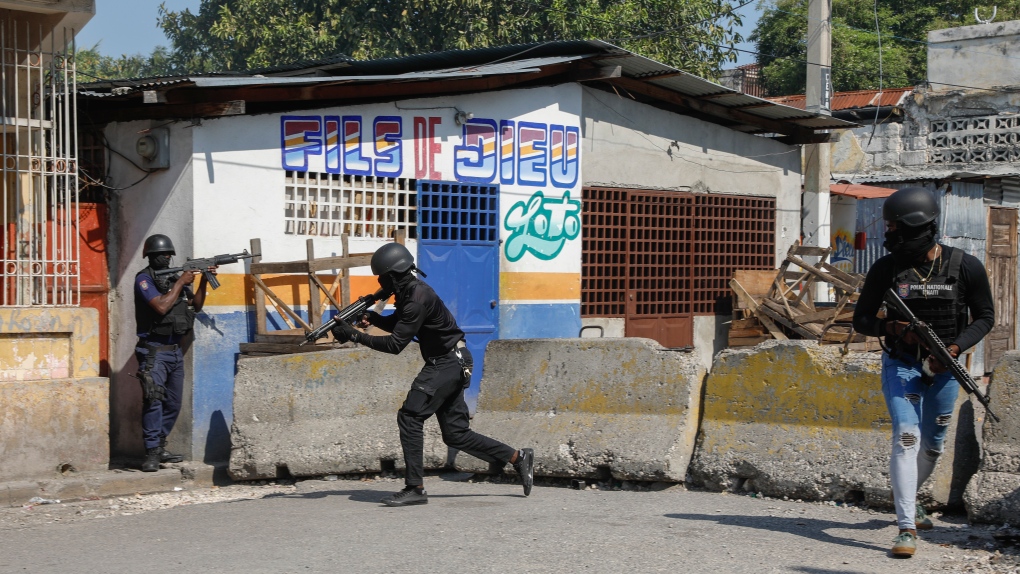
    Caribbean leaders have announced on Tuesday that almost all groups and political parties have put forward people to be part of a temporary council to choose a new prime minister for Haiti. The country is still dealing with a lot of gang violence.

    The first nine-member council now has only eight members because the Pitit Desalin party, led by Jean-Charles Moïse, who used to be a senator and ran for president, chose not to take a seat last week. Moise is working with Guy Philippe, a former police officer and rebel leader who went to prison in the US for admitting to moving illegally obtained money.

    The December21 group, who supports Prime Minister Ariel Henry, was one of the last to send a name to the Caricom group on Monday. The nomination was delayed because the group leaders argued about who should be chosen.

    Henry cannot go back to Haiti because there is too much fighting. He said he will quit when a new council is made. He went to Kenya for work. He wanted the UN to send Kenyan police to help fight gangs in Haiti. But then, armed men attacked in February. In the city capital, Port-au-Prince, there are still problems that are happening. The sending out of something has been postponed.

    UN deputy spokesman Farhan Haq said on Tuesday that Kenya is worried about how the government is organized in the region.

    “We really hope they can start working as soon as they can,” he said. “But they are worried. ” We want to make sure that the new government plans can be put into action.

    Criminal groups burned police buildings, shot at the main airport and broke into Haiti’s two largest prisons, letting more than 4,000 prisoners escape. On Monday, they broke into and stole things from houses in two wealthy neighborhoods that had been calm before, and they killed at least twelve people during the attack.

    The UN says things in Port-au-Prince are still not good. Schools, hospitals, and government buildings are being attacked. Many of them are not working like they should.

    He said that the health sector is still having a hard time because there are not enough medical supplies, healthcare workers, and blood.

    Many people died in the attacks, and about 17,000 people have no home. Most of them went to the calmer southern part of Haiti. The UN Office for the Coordination of Humanitarian Affairs reported this.

    “We are very worried about the fighting,” said President Irfaan Ali of Guyana, who is also the leader of Caricom.

    He said to the news reporters on Monday night that time was important because of the situation. He also said that officials are still hopeful for progress.

    “We’ve been having lots of meetings every night because the Haitians need to set up the presidential council,” he said. We have made progress.

    The council will choose a temporary prime minister and also pick ministers, a temporary electoral council, and a national security council. All members of the council need to support the use of a foreign armed force.

    The EDE/RED party, led by former prime minister Claude Joseph, the Montana Accord, which includes civil society leaders and political parties, Fanmi Lavalas, the party of former president Jean-Bertrand Aristide, and the Jan party have all been given spots on the council. The 30 Collective represents groups that include former President Michel Martelly’s party and businesses.

    One person from Haiti’s civil society and another person from its religious sector will get the remaining two nonvoting positions.

    Caribbean officials have not shared all the names nominated for the council.

  • Prigozhin, said to be ‘hiding in Caribbean, ‘managed to avoid death’

    Prigozhin, said to be ‘hiding in Caribbean, ‘managed to avoid death’

    A person from Russia says that it is not true that Yevgeny Prigozhin, who is a warlord called Wagner, died in a plane crash last month. Instead, the person says that he is living a fancy life on an island in the Caribbean.

    Dr Valery Solovey thinks that Prigozhin was told about the upcoming airplane crash on August 23rd and managed to avoid dying.

    Russia says that all 10 individuals on the plane were killed and they have confirmed this by conducting genetic tests.

    However, Ukrainian military intelligence recently mentioned that there is a chance that Prigozhin is still alive. They also mentioned that they could not verify if he has actually passed away.

    Dr Solovey, who some people think is a conspiracy theorist, thinks he is hiding on an island called Margarita, near Venezuela.

    He has also said before that Vladimir Putin is very sick and all of the times we see him recently are actually impersonators.

    Both Putin and Prigozhin are thought to use look-alikes and costumes.

    Dr Solovey claimed that Prigozhin made a deal with Nikolai Patrushev to escape from his trick, but he did not provide any proof for his claims.
    He told me “I promised to say where Yevgeny Prigozhin is. ”

    ‘He is currently in Venezuela. ‘ From what I know, he is on an island called Margarita.

    Yevgeny Prigozhin was given a warning that someone might try to kill him by destroying his airplane.

    ‘They figured out the clever method that we saw. ‘

    ‘After Wagner’s main leaders passed away in the airplane accident, Yevgeny Prigozhin was still alive and in good health. ‘

    Dr Solovey believes that Prigozhin may have around 5,000 hired soldiers who follow his orders. If Putin were to pass away, Prigozhin could potentially employ these troops to compete for authority in Russia.

    Dr Solovey, who used to be a professor at MGIMO, a well-known school for spies and diplomats in Moscow, stated that Prigozhin is currently having a great time at a luxurious vacation destination.

    Ukraine’s military intelligence agency, GUR, said it can confirm that military commander Dmitry Utkin and other members of a mercenary army died in a plane crash. However, they did not mention anything about Prigozhin.

    A person speaking for the group said: “We need to make decisions based on true information, so we have to be patient and wait. ”

    I will just talk about how we know for sure that Utkin and some people who work with Prigozhin have died.

  • Angola hosts 10th summit of the OACPS which represents 79 states

    The city of Angola, Luanda, hosted the penultimate summit of the 79-member Organization of African, Caribbean, and Pacific States on Friday.

    It’s the tenth heads of state summit that the OACPS has held and the first of three that Angola will hold as the rotating presidency.

    The theme for this year’s meeting is titled “Three Continents, Three Oceans, a Common Destiny: Building a Resilient and Sustainable OACPS.”

    Angola decided that it should focus on the pressing issues of climate change and good governance, including combatting corruption.

    For the Maldives climate change is a threat to its very existence.

    According to the World Bank, with “future sea levels projected to increase in the range of 10 to 100 centimetres by the year 2100, the entire country could be submerged”.

    The island state joined the OACPS only this year but is desperate to gain international support to counter the threat.

    The President of the European Union Charles Michel and UN Secretary-General Antonio Guterres were also expected to attend the summit.

    It’s due to end on Saturday with all the heads of state expecting to sign a summit declaration.

    Source: Africa News