Tag: Catholic

  • Freemasonry does not conflict with my Catholic beliefs – Afenyo-Markin

    Freemasonry does not conflict with my Catholic beliefs – Afenyo-Markin

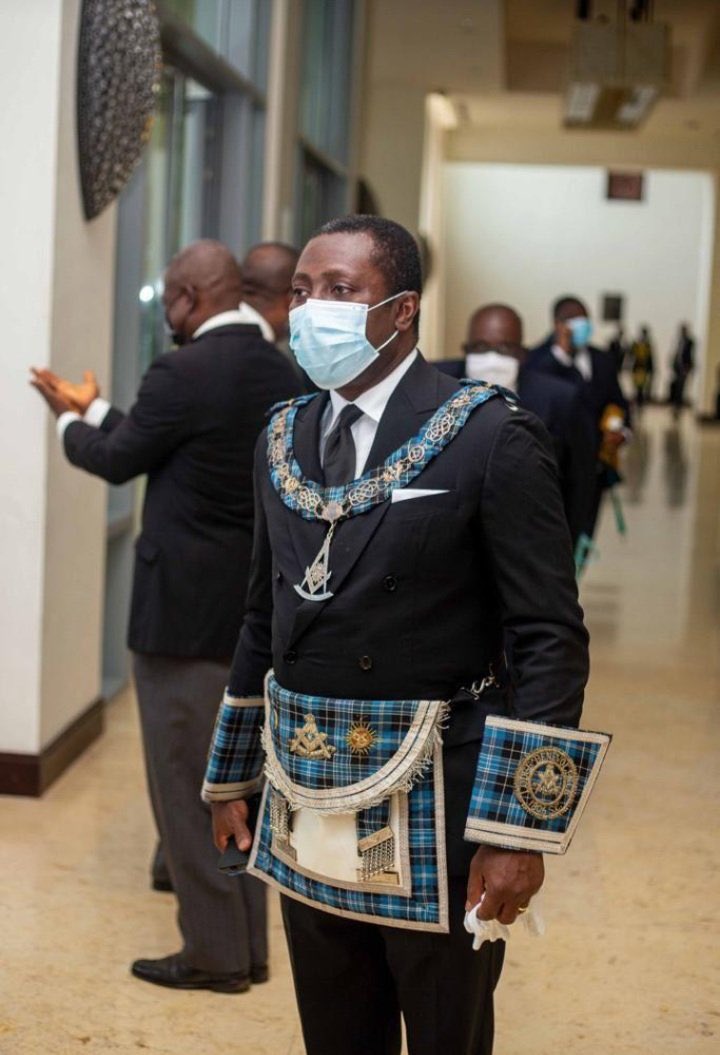
    Minority Leader Alexander Afenyo-Markin has rejected claims that Freemasonry opposes Christian values, asserting that its teachings are in harmony with Christian doctrines.

    In an interview with Channel One TV on Wednesday, January 29, he defended his association with the fraternity, insisting that it does not conflict with his Catholic beliefs.

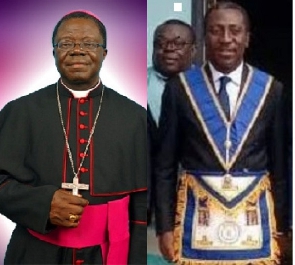
    His remarks come in response to concerns expressed by the Ghana Catholic Bishops’ Conference after he openly stated during a parliamentary vetting that he is both a Catholic and a Freemason.

    A statement signed by Most Rev. Matthew Kwasi Gyamfi, President of the Ghana Catholic Bishops’ Conference, reaffirmed the Church’s position that Catholicism and Freemasonry are fundamentally incompatible.

    Nevertheless, Afenyo-Markin has rejected these concerns, affirming that “Freemasonry is not anti-Christ. If nothing at all, at the highest level of Masonry, you must profess Christ. People don’t know and people say things. But I’m ready for that debate.”

    The Minority Leader underscored his strong dedication to Catholicism and expressed his openness to conversations with Church officials.

    “I’m a committed Catholic. I’m ready to discuss the fraternities that I join. If I was afraid, I wouldn’t have brought it up. There are many Catholics who are Freemasons and are afraid to talk about it.”

  • Be transparent in handling electoral issues – Catholic Bishops to judiciary

    Be transparent in handling electoral issues – Catholic Bishops to judiciary

    As Ghana’s general elections on December 7 draw near, the Ghana Catholic Bishops’ Conference has issued a strong appeal for the judiciary to uphold its integrity and fairness in resolving electoral disputes.

    The call came from the president of the conference, Most Rev. Matthew Kwasi Gyamfi, who underscored the critical role that the judiciary plays in safeguarding democracy, particularly amid the intense political climate and potential for legal challenges during elections.

    This appeal is especially relevant in light of recent electoral conflicts that have tested the judicial system’s impartiality.

    The 2012 presidential race saw then-opposition leader Nana Addo Dankwa Akufo-Addo challenge the results, alleging irregularities and seeking to overturn John Dramani Mahama’s victory. The Supreme Court ultimately upheld Mahama’s win, a significant moment for judicial credibility.

    In 2020, the situation reversed with Mahama contesting Akufo-Addo’s re-election, again alleging malpractice. The judiciary was once more called upon to adjudicate these claims.

    Most Rev. Gyamfi stressed the importance of the judiciary maintaining the highest standards of integrity and adherence to the rule of law in future disputes.

    He highlighted that public confidence in the judiciary is crucial, particularly during times of electoral uncertainty, as court decisions have profound implications for national peace, stability, and the country’s future.

    “We appeal to the judiciary to continue upholding justice with fairness and impartiality. In the event of electoral disputes, we trust that the judiciary will address them with the utmost integrity and adherence to the rule of law. The judiciary’s role in maintaining public confidence in the electoral process cannot be overstated.”

  • Help fight galamsey crisis – CYNESA urges Catholic MPs and bishops

    Help fight galamsey crisis – CYNESA urges Catholic MPs and bishops

    The Ghana chapter of the Catholic Youth Network for Environmental Sustainability in Africa (CYNESA) has expressed deep frustration over the government’s lack of action in addressing the illegal mining crisis that is ravaging the country.

    CYNESA has voiced concerns about the environmental and social damage inflicted by illegal mining, which Pope Francis has criticized in his encyclical Laudato Si. The group points out that this crisis is causing widespread devastation to ecosystems and exploiting vulnerable communities, with a troubling lack of response from many observers.

    In a statement released on September 6, 2024, CYNESA called on key stakeholders to escalate their efforts to confront this pressing issue.

    “We urgently call on Catholic Members of Parliament to speak out and take decisive action now,” the statement said.

    The group is also calling on the Ghana Catholic Bishops’ Conference to rally Catholics and other concerned citizens to demand immediate and effective action against illegal mining, including through peaceful demonstrations.

    Additionally, CYNESA is encouraging the faithful, including the Knights and Ladies of Marshall, St. John International, and the Ladies Auxiliary, to actively support justice and environmental advocacy.

    Francisca Dommetieru Ziniel, CYNESA’s Country Director and Coordinator for West Africa, criticized the inaction of political, religious, and traditional leaders as “deafening and unacceptable.”

    “Every day, our youth suffer due to the failure of those in power to address this crisis,” the statement added.

    CYNESA’s call for action follows similar appeals from the Ghana Medical Association (GMA) and other health organizations for President Nana Addo Dankwa Akufo-Addo to impose an immediate ban on all small-scale mining operations, whether legal or illegal. This call reflects growing alarm over the destruction of Ghana’s forests and water bodies, and the serious public health threats posed by illegal mining, or galamsey.

    Illegal mining has become a major national crisis, leading to the widespread destruction of natural resources and farmlands. Despite various government initiatives, including the Mining (Amendment) Act, 2019 (Act 995) that imposed severe penalties on offenders, the problem persists.

    President Akufo-Addo’s administration, which promised to tackle illegal mining from the outset, established the Inter-Ministerial Committee on Illegal Mining and launched Operation Vanguard, a security task force aimed at curbing these activities.

    Yet, accusations of corruption and involvement by politically connected individuals in illegal mining have plagued the effort. As the general elections approach, galamsey has become a significant political issue, with parties engaging in blame-shifting while the country continues to suffer.

    The effects of illegal mining are evident, with the Ghana Cocoa Board (COCOBOD) attributing lower cocoa yields to galamsey and the Ghana Water Company facing difficulties in supplying clean water due to contamination of water bodies.

    The Ghana Water Company Limited has warned that it may need to shut down major treatment plants in the Ashanti Region due to high levels of turbidity and escalating production costs resulting from illegal mining.

    Below is the full statement by CYNESA

    The Catholic Youth Network for Environmental Sustainability in Africa (CYNESA) expresses its profound outrage at the government’s continued inaction on the illegal mining crisis, also known as galamsey.

    This environmental and social disaster, which Pope Francis explicitly condemned in Laudato Si, is not only destroying ecosystems but also exploiting vulnerable communities with impunity.

    We urgently call on Catholic Members of Parliament to speak out and take decisive action now. The Ghana Catholic Bishops’ Conference must mobilize Catholics across the nation, together with well-meaning Ghanaians, to demand immediate and concrete steps to end galamsey through peaceful protests.

    It is time for the Knights and Ladies of Marshall and St. John International, along with the Ladies Auxiliary, to step forward as the true defenders of justice and faith, speaking boldly and acting decisively against this national calamity.

    The silence of our political, religious, and traditional leaders is both deafening and unacceptable. Every day, our young people suffer as a result of the neglect and failure of those in power. We call on all people of faith to denounce these violations, using all available platforms to demand immediate action.

    We urge the government, civil society, and international organizations to treat this crisis with the urgency it deserves. Strengthen environmental regulations, rigorously enforce laws, and hold perpetrators accountable with severe penalties.

    Moreover, it provides genuine economic alternatives for communities that have become dependent on illegal mining activities for survival.

    CYNESA is resolutely committed to the pursuit of a just and sustainable future. We invite all concerned citizens to join us in defending the environment, advocating for human dignity, and ensuring a brighter future for generations to come.

    As Pope Francis reminds us, “The environment is God’s gift to everyone; we must respect the rights of others in its use.” Let us rise to meet this challenge, standing in solidarity for the preservation of our common home.

    For further information, contact:
    Francisca Dommetieru Ziniel
    Country Director and Coordinator for West Africa
    Catholic Youth Network for Environmental Sustainability in Africa (CYNESA-Ghana)

  • No classes for Catholic, Presby Schools as GES declares May 9 a holiday

    No classes for Catholic, Presby Schools as GES declares May 9 a holiday

    The Ghana Education Service (GES) has declared Thursday, May 9, 2024, as a public holiday for all Catholic and Presbyterian Schools nationwide.

    This decision aligns with the observance of Ascension Day for the year.

    In a joint statement, Ms. Araba Ahima Bentum, General Manager of the Ghana Catholic Education Unit, and Daniel Yeboah Hienno, General Manager of Presbyterian Schools, confirmed that this decision is in accordance with the celebration of Ascension Day.

    “I wish to inform you that all Catholic Schools and offices of the Catholic Education Unit throughout the country will observe Thursday 09th May 2024 as Ascension Day and Obligatory Holy day. All Catholic Schools across the country will therefore be on holiday for the observation of the Ascension Day,” It announced.

    Catholic Schools holiday

    The statement further urged all regional managers of the Catholic Education Unit, as well as chaplains in Senior High Schools and tertiary institutions, to ensure the observance of the day.

    Similarly, all Presbyterian Schools and offices of the Presbyterian Education Unit nationwide are required to observe the Ascension Day Celebration, with all schools and offices closed for the day.

    Presby Schools holiday

    “It is our hope that Presbytery Chairpersons will encourage their District Ministers to fully participate in this celebration,” the statement added.

  • Alexander Afenyo-Markin risks being excommunicated for being a Freemason

    Alexander Afenyo-Markin risks being excommunicated for being a Freemason

    Catholic Bishop Most Rev. Joseph Osei-Bonsu, has noted that Catholics cannot join the Freemasons following reports of Effutu MP, Alexander Afenyo-Markin being a freemason.

    He added that in many instances, some Catholics join such fraternities because they are not aware of the church’s doctrines and rules regarding it.

    In response to revelations by Hon. Alexander Kwamena Afenyo-Markin that he is a Catholic and a member of the Freemasons, Bishop Osei-Bonsu stated that, according to Catholic rules, a member of the church cannot be a member of the Freemasons and enjoy the rights and privileges of the church.

    The Effutu Member of Parliament (MP) was criticized by Most Rev. Joseph Osei-Bonsu for stating that Catholics are allowed to become Freemasons. Afenyo-Markin claimed that the organization’s ideals and values do not conflict with his Catholic background and upbringing.

    According to Afenyo-Markin, who has openly admitted to being a Freemason, the organization educates its members about God and life concepts, which he believes aligns with his Catholic beliefs.

    “I am a mason, and I have not been sanctioned by the Catholic Church. Freemasonry is a fraternal society that believes in God Almighty and follows certain principles that guide a man’s life, and it does not run counter with my beliefs as a Catholic. President Kufuor is a Mason and a Catholic,” he stated.

    In an article in the Catholic Standard, Most Rev. Joseph Osei-Bonsu reacted to the MP’s views, stating that they are unfortunate. According to the bishop, the Catholic Church has frowned upon Freemasonry since the fraternal society’s inception in 1717.

    “In recent times, the Member of Parliament for Effutu in the Central Region, Hon. Alexander Afenyo-Markin, in a live radio interview, stated that he is a proud member of the Lodge, and his church, the Catholic Church, does not frown on its members joining the Brotherhood.

    According to the Bishop, the Member of Parliament is to be punished with an interdict (cf. Canon 1347), that is:

    a. He is not allowed to receive Holy Communion and other sacraments (cf. Canon 1332).

    b. He is prohibited to act as sponsor in Baptism and Confirmation.

    c. He is not to be admitted as a member of parish or diocesan structures.

    d. He is to be denied funeral rites, unless he shows some signs of repentance before death (Canon 1184 §1, no. 3).

    e. Where funeral rites are allowed by the bishop, no Masonic service shall be allowed in the Church or cemetery immediately before or after the Church rites in order to avoid public scandal (cf. Canon 1184, §1, no. 3, and Canon 1374)

    “It is unfortunate that the Honourable Member of Parliament does not know the teaching of his Church on this matter. Contrary to what Honourable Alexander Afenyo Markin believes, Freemasonry is not approved by the Catholic Church. Indeed, Catholics are forbidden to become Freemasons.

    “The Catholic Church has opposed the Lodge nearly since the birth of modern Freemasonry in 1717. Since the founding of the Grand Lodge of England, eleven popes have explicitly condemned Freemasonry or Masonic principles,” excerpts from the bishops’ article read.

    Read the article below:

    EXCERPTS FROM CAN A CATHOLIC BE A FREEMASON BY MOST REV. JOSEPH OSEI-BONSU BISHOP OF KONONGO-MAMPONG

    INTRODUCTION
    Many people regard Freemasonry as a benevolent and charitable organization, somehow similar to the Rotary and Lions Clubs, the Knights of Marshall, the Knights of St. John International or the Knights of Columbus. Undoubtedly, it is for this reason that some Catholics join this fraternity.

    In recent times, the Member of Parliament for Effutu in the Central Region, Hon. Alexander Afenyo-Markin, on a live radio interview stated that he is a proud member of the Lodge, and his church, the Catholic Church, does not frown on its members joining the Brotherhood. He added, “I am a mason and I have not been sanctioned by the Catholic Church. Freemasonry is a fraternal society that believes in God Almighty and follows certain principles that guide a man’s life and it does not run counter with my beliefs as a Catholic” (https://newsghana.com.gh/is-afenyo-markin-a-true-catholic/)

    It is unfortunate that the Honourable Member of Parliament does not know the teaching of his Church on this matter. Contrary to what Honourable Alexander Afenyo Markin believes, Freemasonry is not approved by the Catholic Church. Indeed, Catholics are forbidden to become Freemasons.

    Catholics cannot join the Freemasons – FREEMASONRY AND THE CATHOLIC CHURCH


    The Catholic Church has opposed the Lodge nearly since the birth of modern
    Freemasonry in 1717. Since the founding of the Grand Lodge of England, eleven
    popes have explicitly condemned Freemasonry or Masonic principles. These popes are: Pope Clement XII (28 April 1738); Pope Benedict XIV (18 May, 1751); Pius VII (13 September 1821); Pope Leo XII (13 March 1825); Pope Pius VIII (24 May 1829); Pope Gregory XVI (15 August 1832); Pius IX (between 1846 and 1873); Leo XIII (15 February 1882; 20 April 1884; 1887; 15 October 1890; 18 December 1892; 20 June 1894); Pope Pius IX (1907); Pope Pius X (1907); Pope Pius XI (1924).

    A recent condemnation of Freemasonry is contained in the “Declaration on
    Masonic Associations” issued by the Congregation for the Doctrine of the Faith on 26 November 1983, declared that Masonic principles are irreconcilable with the doctrine of Church, and that Catholic membership in Freemasonry remains forbidden.

    The Church’s position is that Freemasonry is a religion in its own right with its own doctrines, which are not compatible with Christian beliefs. For this reason, one cannot simultaneously be a Christian and be a Freemason. What it teaches about the following cannot be reconciled with Christian beliefs, i.e., God, Christ, the denial of the role of grace and Christ in salvation, morality, its attitude towards the Bible, eschatology, the masonic oaths and the notion of rebirth and enlightenment. For this reason, one cannot simultaneously be a Catholic and a Freemason, just as one cannot be a Catholic and be Muslim, a Hindu, a Shintoist or a practitioner of African Traditional Religion. One will have to make a choice between Catholicism and Freemasonry.

    CONCLUSION
    Let me conclude by drawing attention to the DECLARATION OF THE GHANA CATHOLIC BISHOPS’ CONFERENCE ON SANCTIONS FOR CATHOLICS WHO JOIN MASONIC ASSOCIATIONS, issued on 7 May 2009. Among other things, it says:

    1) Any Catholic who is a member of any Masonic Association and participates in its programmes, or promotes its views, or holds any office therein, and refuses to renounce such membership despite at least one warning (cf. Canon 1347) is to be punished with an interdict (cf. Canon 1347), that is:

    a. He is not allowed to receive Holy Communion and other sacraments (cf. Canon 1332).

    b. He is prohibited to act as sponsor in Baptism and Confirmation.

    c. He is not to be admitted as a member of parish or diocesan structures.

    d. He is to be denied funeral rites, unless he shows some signs of repentance before death (Canon 1184 §1, no. 3).

    e. Where funeral rites are allowed by the bishop, no Masonic service shall be allowed in the Church or cemetery immediately before or after the Church rites in order to avoid public scandal (cf. Canon 1184, §1, no. 3, and Canon 1374)

    Any Catholic who is a convinced member of a Masonic Association and notoriously adheres to the Masonic vision is already considered to have incurred automatic excommunication (cf. Canon 1364). This means that the censures described in Canon 1331 automatically take full effect on this person. According to Canon 1331 §1, an excommunicated person is forbidden:

    1. To have any ministerial participation in the celebration of the Eucharist or in any other ceremonies whatsoever of public worship.
    2. II. To celebrate the sacraments and sacramentals and to receive the sacraments.
    3. III. To discharge any ecclesiastical offices, ministries, or functions whatsoever, or to place acts of governance.
    4. It is possible that some Catholics joined Freemasonry without knowing that it is forbidden to Catholics. Such people are advised to see their priests or their bishops who will assist them to renounce Freemasonry and avoid incurring the sanctions that will be imposed on them if they do not renounce Freemasonry.
  • You cannot be Catholic and Freemason at the same time – Catholic Bishop tells Afenyo-Markin

    You cannot be Catholic and Freemason at the same time – Catholic Bishop tells Afenyo-Markin

    Catholic Bishop Most Rev. Joseph Osei-Bonsu, has noted that Catholics cannot join the Freemasons following reports of Effutu MP, Alexander Afenyo-Markin being a freemason.

    He added that in many instances, some Catholics join such fraternities because they are not aware of the church’s doctrines and rules regarding it.

    In response to revelations by Hon. Alexander Kwamena Afenyo-Markin that he is a Catholic and a member of the Freemasons, Bishop Osei-Bonsu stated that, according to Catholic rules, a member of the church cannot be a member of the Freemasons and enjoy the rights and privileges of the church.

    The Effutu Member of Parliament (MP) was criticized by Most Rev. Joseph Osei-Bonsu for stating that Catholics are allowed to become Freemasons. Afenyo-Markin claimed that the organization’s ideals and values do not conflict with his Catholic background and upbringing.

    According to Afenyo-Markin, who has openly admitted to being a Freemason, the organization educates its members about God and life concepts, which he believes aligns with his Catholic beliefs.

    “I am a mason, and I have not been sanctioned by the Catholic Church. Freemasonry is a fraternal society that believes in God Almighty and follows certain principles that guide a man’s life, and it does not run counter with my beliefs as a Catholic. President Kufuor is a Mason and a Catholic,” he stated.

    In an article in the Catholic Standard, Most Rev. Joseph Osei-Bonsu reacted to the MP’s views, stating that they are unfortunate. According to the bishop, the Catholic Church has frowned upon Freemasonry since the fraternal society’s inception in 1717.

    “In recent times, the Member of Parliament for Effutu in the Central Region, Hon. Alexander Afenyo-Markin, in a live radio interview, stated that he is a proud member of the Lodge, and his church, the Catholic Church, does not frown on its members joining the Brotherhood.

    According to the Bishop, the Member of Parliament is to be punished with an interdict (cf. Canon 1347), that is:

    a. He is not allowed to receive Holy Communion and other sacraments (cf. Canon 1332).

    b. He is prohibited to act as sponsor in Baptism and Confirmation.

    c. He is not to be admitted as a member of parish or diocesan structures.

    d. He is to be denied funeral rites, unless he shows some signs of repentance before death (Canon 1184 §1, no. 3).

    e. Where funeral rites are allowed by the bishop, no Masonic service shall be allowed in the Church or cemetery immediately before or after the Church rites in order to avoid public scandal (cf. Canon 1184, §1, no. 3, and Canon 1374)

    “It is unfortunate that the Honourable Member of Parliament does not know the teaching of his Church on this matter. Contrary to what Honourable Alexander Afenyo Markin believes, Freemasonry is not approved by the Catholic Church. Indeed, Catholics are forbidden to become Freemasons.

    “The Catholic Church has opposed the Lodge nearly since the birth of modern Freemasonry in 1717. Since the founding of the Grand Lodge of England, eleven popes have explicitly condemned Freemasonry or Masonic principles,” excerpts from the bishops’ article read.

    Read the article below:

    EXCERPTS FROM CAN A CATHOLIC BE A FREEMASON BY MOST REV. JOSEPH OSEI-BONSU BISHOP OF KONONGO-MAMPONG

    INTRODUCTION
    Many people regard Freemasonry as a benevolent and charitable organization, somehow similar to the Rotary and Lions Clubs, the Knights of Marshall, the Knights of St. John International or the Knights of Columbus. Undoubtedly, it is for this reason that some Catholics join this fraternity.

    In recent times, the Member of Parliament for Effutu in the Central Region, Hon. Alexander Afenyo-Markin, on a live radio interview stated that he is a proud member of the Lodge, and his church, the Catholic Church, does not frown on its members joining the Brotherhood. He added, “I am a mason and I have not been sanctioned by the Catholic Church. Freemasonry is a fraternal society that believes in God Almighty and follows certain principles that guide a man’s life and it does not run counter with my beliefs as a Catholic” (https://newsghana.com.gh/is-afenyo-markin-a-true-catholic/)

    It is unfortunate that the Honourable Member of Parliament does not know the teaching of his Church on this matter. Contrary to what Honourable Alexander Afenyo Markin believes, Freemasonry is not approved by the Catholic Church. Indeed, Catholics are forbidden to become Freemasons.

    Catholics cannot join the Freemasons – FREEMASONRY AND THE CATHOLIC CHURCH


    The Catholic Church has opposed the Lodge nearly since the birth of modern
    Freemasonry in 1717. Since the founding of the Grand Lodge of England, eleven
    popes have explicitly condemned Freemasonry or Masonic principles. These popes are: Pope Clement XII (28 April 1738); Pope Benedict XIV (18 May, 1751); Pius VII (13 September 1821); Pope Leo XII (13 March 1825); Pope Pius VIII (24 May 1829); Pope Gregory XVI (15 August 1832); Pius IX (between 1846 and 1873); Leo XIII (15 February 1882; 20 April 1884; 1887; 15 October 1890; 18 December 1892; 20 June 1894); Pope Pius IX (1907); Pope Pius X (1907); Pope Pius XI (1924).

    A recent condemnation of Freemasonry is contained in the “Declaration on
    Masonic Associations” issued by the Congregation for the Doctrine of the Faith on 26 November 1983, declared that Masonic principles are irreconcilable with the doctrine of Church, and that Catholic membership in Freemasonry remains forbidden.

    The Church’s position is that Freemasonry is a religion in its own right with its own doctrines, which are not compatible with Christian beliefs. For this reason, one
    cannot simultaneously be a Christian and be a Freemason. What it teaches about the following cannot be reconciled with Christian beliefs, i.e., God, Christ, the denial of the role of grace and Christ in salvation, morality, its attitude towards the Bible, eschatology, the masonic oaths and the notion of rebirth and enlightenment. For this reason, one cannot simultaneously be a Catholic and a Freemason, just as one cannot be a Catholic and be Muslim, a Hindu, a Shintoist or a practitioner of African Traditional Religion. One will have to make a choice between Catholicism and Freemasonry.

    CONCLUSION
    Let me conclude by drawing attention to the DECLARATION OF THE GHANA CATHOLIC BISHOPS’ CONFERENCE ON SANCTIONS FOR CATHOLICS WHO JOIN MASONIC ASSOCIATIONS, issued on 7 May 2009. Among other things, it says:

    1) Any Catholic who is a member of any Masonic Association and participates in its programmes, or promotes its views, or holds any office therein, and refuses to renounce such membership despite at least one warning (cf. Canon 1347) is to be punished with an interdict (cf. Canon 1347), that is:

    a. He is not allowed to receive Holy Communion and other sacraments (cf. Canon 1332).

    b. He is prohibited to act as sponsor in Baptism and Confirmation.

    c. He is not to be admitted as a member of parish or diocesan structures.

    d. He is to be denied funeral rites, unless he shows some signs of repentance before death (Canon 1184 §1, no. 3).

    e. Where funeral rites are allowed by the bishop, no Masonic service shall be allowed in the Church or cemetery immediately before or after the Church rites in order to avoid public scandal (cf. Canon 1184, §1, no. 3, and Canon 1374)

    Any Catholic who is a convinced member of a Masonic Association and notoriously adheres to the Masonic vision is already considered to have incurred automatic excommunication (cf. Canon 1364). This means that the censures described in Canon 1331 automatically take full effect on this person. According to Canon 1331 §1, an excommunicated person is forbidden:

    1. To have any ministerial participation in the celebration of the Eucharist or in any other ceremonies whatsoever of public worship.
    2. II. To celebrate the sacraments and sacramentals and to receive the sacraments.
    3. III. To discharge any ecclesiastical offices, ministries, or functions whatsoever, or to place acts of governance.
    4. It is possible that some Catholics joined Freemasonry without knowing that it is forbidden to Catholics. Such people are advised to see their priests or their bishops who will assist them to renounce Freemasonry and avoid incurring the sanctions that will be imposed on them if they do not renounce Freemasonry.
  • Catholics cannot join the Freemasons – Catholic Bishop to Afenyo-Markin

    The Bishop of the Konongo-Mampong Diocese of the Catholic Church in Ghana, Most Rev. Joseph Osei-Bonsu, has berated the Member of Parliament (MP) for Effutu, Alexander Kwamena Afenyo-Markin, for saying that Catholics are free to join the Freemasons.

    Alexander Afenyo Markin, who revealed that he is a member of the fraternal society, the Freemasons, said that the teachings and values of the organisation do not conflict with his Catholic principles and upbringing.

    Speaking to Bola Ray on Starr Chat, the legislator said that freemasonry teaches its followers about God and the principles of life.

    “I am a mason, and I have not been sanctioned by the Catholic Church. Freemasonry is a fraternal society that believes in God Almighty and follows certain principles that guide a man’s life, and it does not run counter with my beliefs as a Catholic. President Kufuor is a Mason and a Catholic,” he stated.

    Reacting to this in an article in the Catholic Standard, Most Rev Joseph Osei-Bonsu, said that the MP’s views on the Catholic Church and the Freemasons are unfortunate.

    According to the bishop, the Catholic Church’s teaching frowns on freemasonry since the fraternal society started in 1717.

    “In recent times, the Member of Parliament for Effutu in the Central Region, Hon. Alexander Afenyo-Markin, in a live radio interview, stated that he is a proud member of the Lodge, and his church, the Catholic Church, does not frown on its members joining the Brotherhood.

    “It is unfortunate that the Honourable Member of Parliament does not know the teaching of his Church on this matter. Contrary to what Honourable Alexander Afenyo Markin believes, Freemasonry is not approved by the Catholic Church. Indeed, Catholics are forbidden to become Freemasons.

    “The Catholic Church has opposed the Lodge nearly since the birth of modern Freemasonry in 1717. Since the founding of the Grand Lodge of England, eleven popes have explicitly condemned Freemasonry or Masonic principles,” excerpts from the bishops’ article read.

    Read the article below:

    EXCERPTS FROM CAN A CATHOLIC BE A FREEMASON BY MOST REV. JOSEPH OSEI-BONSU BISHOP OF KONONGO-MAMPONG

    INTRODUCTION
    Many people regard Freemasonry as a benevolent and charitable organization, somehow similar to the Rotary and Lions Clubs, the Knights of Marshall, the Knights of St. John International or the Knights of Columbus. Undoubtedly, it is for this reason that some Catholics join this fraternity.

    In recent times, the Member of Parliament for Effutu in the Central Region, Hon. Alexander Afenyo-Markin, on a live radio interview stated that he is a proud member of the Lodge, and his church, the Catholic Church, does not frown on its members joining the Brotherhood. He added, “I am a mason and I have not been sanctioned by the Catholic Church. Freemasonry is a fraternal society that believes in God Almighty and follows certain principles that guide a man’s life and it does not run counter with my beliefs as a Catholic” (https://newsghana.com.gh/is-afenyo-markin-a-true-catholic/)

    It is unfortunate that the Honourable Member of Parliament does not know the teaching of his Church on this matter. Contrary to what Honourable Alexander Afenyo Markin believes, Freemasonry is not approved by the Catholic Church. Indeed, Catholics are forbidden to become Freemasons.

    FREEMASONRY AND THE CATHOLIC CHURCH
    The Catholic Church has opposed the Lodge nearly since the birth of modern
    Freemasonry in 1717. Since the founding of the Grand Lodge of England, eleven
    popes have explicitly condemned Freemasonry or Masonic principles. These popes are: Pope Clement XII (28 April 1738); Pope Benedict XIV (18 May, 1751); Pius VII (13 September 1821); Pope Leo XII (13 March 1825); Pope Pius VIII (24 May 1829); Pope Gregory XVI (15 August 1832); Pius IX (between 1846 and 1873); Leo XIII (15 February 1882; 20 April 1884; 1887; 15 October 1890; 18 December 1892; 20 June 1894); Pope Pius IX (1907); Pope Pius X (1907); Pope Pius XI (1924).

    A recent condemnation of Freemasonry is contained in the “Declaration on
    Masonic Associations” issued by the Congregation for the Doctrine of the Faith on 26 November 1983, declared that Masonic principles are irreconcilable with the doctrine of Church, and that Catholic membership in Freemasonry remains forbidden.

    The Church’s position is that Freemasonry is a religion in its own right with its own doctrines, which are not compatible with Christian beliefs. For this reason, one
    cannot simultaneously be a Christian and be a Freemason. What it teaches about the following cannot be reconciled with Christian beliefs, i.e., God, Christ, the denial of the role of grace and Christ in salvation, morality, its attitude towards the Bible, eschatology, the masonic oaths and the notion of rebirth and enlightenment. For this reason, one cannot simultaneously be a Catholic and a Freemason, just as one cannot be a Catholic and be Muslim, a Hindu, a Shintoist or a practitioner of African Traditional Religion. One will have to make a choice between Catholicism and Freemasonry.

    CONCLUSION
    Let me conclude by drawing attention to the DECLARATION OF THE GHANA CATHOLIC BISHOPS’ CONFERENCE ON SANCTIONS FOR CATHOLICS WHO JOIN MASONIC ASSOCIATIONS, issued on 7 May 2009. Among other things, it says:

    1) Any Catholic who is a member of any Masonic Association and participates in its programmes, or promotes its views, or holds any office therein, and refuses to renounce such membership despite at least one warning (cf. Canon 1347) is to be punished with an interdict (cf. Canon 1347), that is:

    a. He is not allowed to receive Holy Communion and other sacraments (cf. Canon 1332).

    b. He is prohibited to act as sponsor in Baptism and Confirmation.

    c. He is not to be admitted as a member of parish or diocesan structures.

    d. He is to be denied funeral rites, unless he shows some signs of repentance before death (Canon 1184 §1, no. 3).

    e. Where funeral rites are allowed by the bishop, no Masonic service shall be allowed in the Church or cemetery immediately before or after the Church rites in order to avoid public scandal (cf. Canon 1184, §1, no. 3, and Canon 1374)

    Any Catholic who is a convinced member of a Masonic Association and notoriously adheres to the Masonic vision is already considered to have incurred automatic excommunication (cf. Canon 1364). This means that the censures described in Canon 1331 automatically take full effect on this person. According to Canon 1331 §1, an excommunicated person is forbidden:
    I. To have any ministerial participation in the celebration of the Eucharist or in any other ceremonies whatsoever of public worship.

    II. To celebrate the sacraments and sacramentals and to receive the sacraments.

    III. To discharge any ecclesiastical offices, ministries, or functions whatsoever, or to place acts of governance.

    It is possible that some Catholics joined Freemasonry without knowing that it is forbidden to Catholics. Such people are advised to see their priests or their bishops who will assist them to renounce Freemasonry and avoid incurring the sanctions that will be imposed on them if they do not renounce Freemasonry.

  • Dabozesi chief: I won’t allow new buildings without toilet facility

    Naa Mankwa Salifu Baba, the chief of Dabozesi in the Mamprugu Moaduri District has said going forward the traditional council will not allow anyone to put up a new building without a toilet facility.

    The chief, who was enskinned in 2021, has charged all landlords in the community without toilet facilities in their homes to consider having one and to also ensure that the Dabozesi community is open defecation free.

    “I want my community to be open defecation free,” Baba told Asaase News on the sidelines of a sanitation durbar in the community organised by the Catholic Relief Services (CRS).

    “So, if you intend to build a new house in this community and you are not ready to add a toilet facility, I will not allow you to build the house. I don’t want my community to look dirty. I don’t want sanitation-related diseases in this community,” the chief said.

    Baba expressed gratitude to his elders for their support in getting all households to have a toilet facility.

    “If you intend to do something with people, the first thing you need to do is to have that kind of patience and tolerance in you. When I first started the sanitation campaign in the Dabozesi community, they didn’t want to take it but I pursue them with patience. I will continue to push to ensure that children don’t get sick anyhow,” he added.

    The Dabozesi community was adjudged the cleanest community in the Mamprugu Moaduri District by the Catholic Relief Services (CRS) in collaboration with the environmental health and sanitation agency in the North East Region.

  • Hong Kong’s Cardinal Zen stands trial over protest fund

    Cardinal Joseph Zen, a 90-year-old former bishop of Hong Kong and outspoken critic of China’s ruling Communist Party, went on trial Monday over his role in a relief fund for the city’s pro-democracy protests in 2019.

    The high-profile case has brought renewed focus on the warming ties between Beijing and the Vatican, which has seen the latter appear to avoid remarks that could risk upsetting China.

    Zen, one of Asia’s most senior Catholic clerics, was arrested by Hong Kong’s national security police in May along with three other leading democracy activists, including Cantopop star Denis Ho.

    The four trustees of the fund were initially arrested on suspicion of “collusion with foreign forces,” a charge under a sweeping national security law that carries a maximum punishment of life imprisonment.

    A fifth trustee, former legislator Cyd Ho, was already in jail for illegal assembly over a separate case. Ho was arrested the following day on national security grounds, too.

    All five have since been charged with a lesser offense for failing to register the 612 Humanitarian Relief Fund, set up in June 2019 to help pay the legal and medical fees for protesters under arrest. The fund ceased operations last year following an investigation by the national security police.

    The charge under the Societies Ordinance, a century-old colonial-era law, carries a fine of up to HK$10,000 (US$1,274) but not jail time. All defendants have pleaded not guilty.

    On Monday morning, Zen arrived at the West Kowloon court leaning on a walking stick. He did not speak to reporters.

    The court heard that the legal fund raised HK$270 million (US$34.4 million) of donations, made over 100,000 deposits. In addition to providing financial aid to protesters, the fund was also used to sponsor pro-democracy rallies such as paying for audio equipments.

    The Vatican has remained largely muted over Zen’s case apart from a statement in May, which said it learned of Zen’s arrest with “concern” and was “following the evolution of the situation with extreme attention.”

    On September 14, on a return flight from Kazakhstan, Pope Francis was asked whether he considered the looming trial against Zen a violation of religious freedom.

    In a convoluted answer, the Pope repeatedly stressed his support for “the path of dialogue” and the importance to respect “the Chinese mentality.” He also refused to qualify China as undemocratic “because it’s such a complex country,” according to the Vatican News.

    “Yes, it is true that there are things that seem undemocratic to us, that is true,” the Pope said. “Cardinal Zen is going to trial these days, I think. And he says what he feels, and you can see that there are limitations there.”

    Zen’s trial comes at a sensitive time for the Vatican, which is preparing to renew a controversial deal with Beijing over the appointment of bishops in China. Under the original deal struck in 2018, the Vatican recognized the legitimacy of seven bishops appointed by the Chinese government. The deal came at a time when China was doubling down its crackdown on underground Christian groups as part of leader Xi Jinping’s campaign to bring religion under the absolute control of the Communist Party.

    Zen has openly criticized the deal, calling it an “incredible betrayal” and accusing the Vatican of “giving the flock into the mouths of the wolves.”

    In 2020, the Vatican said the deal was extended for another two years.

    ‘Conscience of Hong Kong’

    Born in Catholic parents in Shanghai in 1932, Zen fled to Kong Kong with his family to escape looming Communist rule as a teenager. He was ordained as a priest in 1961 and made Bishop of Hong Kong in 2002, before retiring in 2009.

    Known as the “conscience of Hong Kong” among his supporters, Zen has long been a prominent advocate for democracy, human rights and religious freedom. He has been on the front lines of some of the city’s most important protests, from the mass rally against national security legislation in 2003 to the “Umbrella Movement” demanding universal suffrage in 2014.

    Zen’s prosecution is the latest in an ongoing crackdown on Hong Kong’s pro-democracy movement, which saw the Asian financial hub rocked by street protests through much of 2019 in resistance of Beijing’s tightening grip.

    Beijing responded by imposing a controversial national security law in 2020, which critics say has been used to crush the city’s opposition movement, overhaul its electoral system, silence its outspoken media and cripple its once-vibrant civil society. Most of Hong Kong’s prominent pro-democracy figures have either been thrown in jail or gone into exile.

    The Hong Kong government has repeatedly denied the national security law is suppressing freedoms. Instead, it insists the law has ended chaos and restored stability to the city.

    CNN’s Delia Gallagher contributed to this report.

  • Burundi accuses Catholic bishops of spreading ‘hatred’

    Catholic bishops in Burundi came under fire from authorities for “spitting venomous hatred” over a message read out in churches denouncing intolerance and political violence in the run-up to elections next year.

    The message issued by the Conference of Catholic Bishops of Burundi and read out in churches on Sunday expressed their “concern” eight months before the May 20 presidential election, which comes five years after President Pierre Nkurunziza’s bid for a third term plunged the country into crisis.

    In the letter, seen by AFP news agency, the bishops raised the alarm over efforts to “suffocate and assault certain political parties and to persecute their members”.

    “Criminal acts go as far as murders with political motives … perpetuated against those with different opinions of the government,” it said.

    They also said the ruling party’s youth league – the feared Imbonerakure that the United Nations has accused of committing atrocities – had “taken the place of security forces”.

    Presidential spokesman Willy Nyamitwe lashed out at the bishops on Twitter after the message was leaked on social media before church services.

    “Some bishops should be defrocked because it is becoming a habit: on the eve of elections they spit their venomous hatred through incendiary messages”, he wrote on Sunday.

    The secretary-general of the ruling CNDD-FDD Evariste Ndayishimiye, meanwhile, accused the bishops of “sowing division”.

    “It is shameful to spread hatred among the faithful,” he told a political gathering.

    Murders, rape, disappearances

    A team of UN investigators earlier this month warned of a climate of fear in Burundi before the elections, with crimes against humanity and other serious violations continuing with impunity.

    “The commission found that the eight common risk factors for criminal atrocities are present in Burundi,” it said, insisting “the evolving situation must be monitored with the greatest vigilance”.

    The Imbonerakure especially have carried out killings, disappearances, arbitrary arrests and detentions, acts of torture and rape against actual or alleged political opposition members, investigators said.

    At least 1,200 people were killed in violence in the wake of the 2015 election and more than 400,000 displaced.

    In a surprise development, Nkurunziza announced in June last year he would not stand for election in 2020, confounding critics who accused him of working to extend his grip on power.

    Relations soured between the government of Nkurunziza, a devout evangelical, and the Catholic Church after it opposed his third-term bid in 2015.

    Source: aljazeera.com