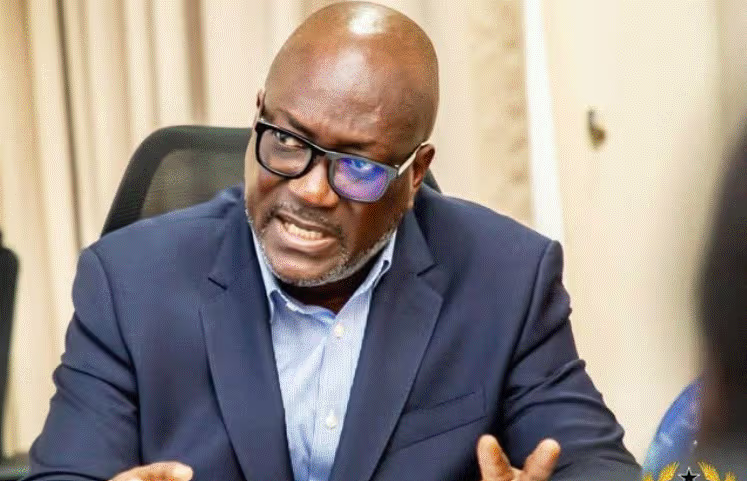
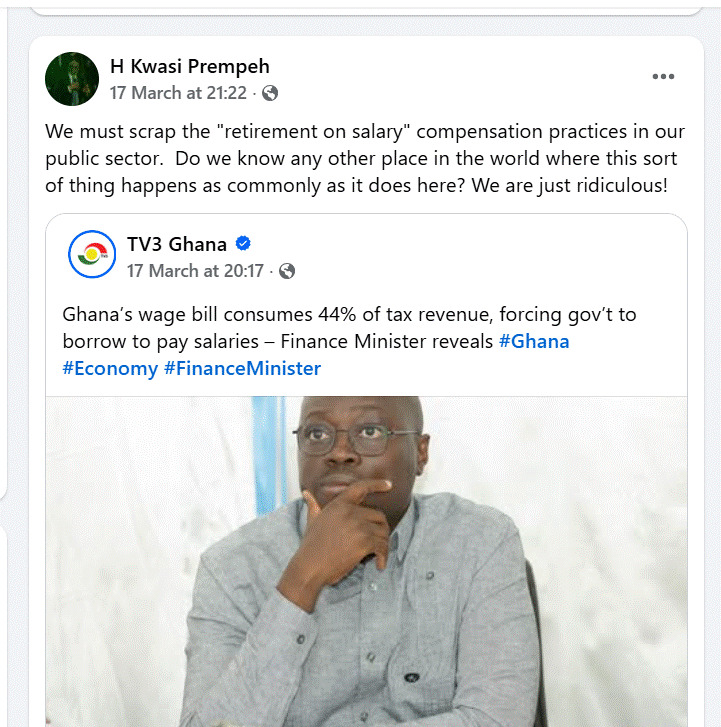
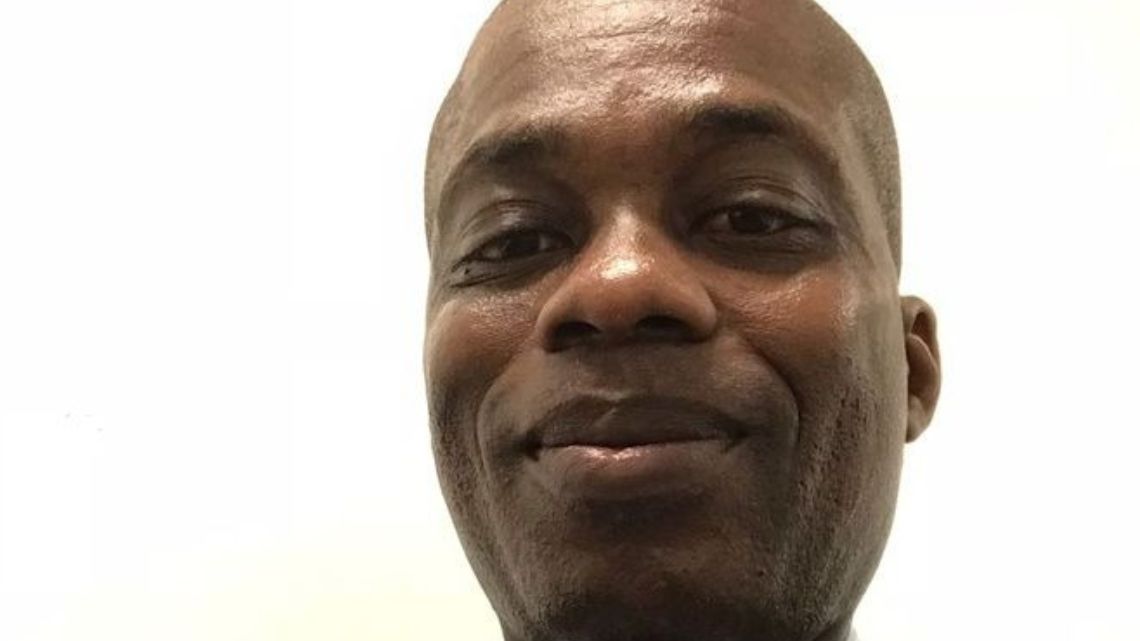
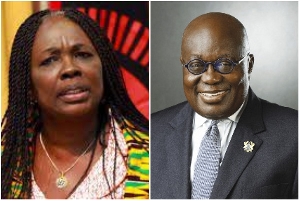
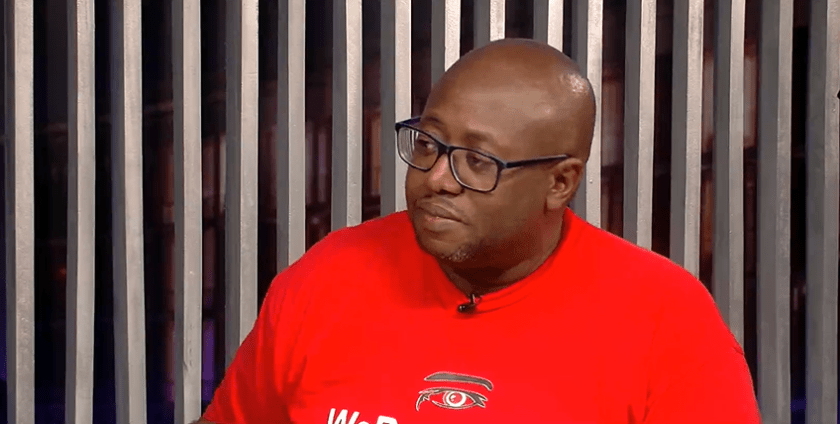
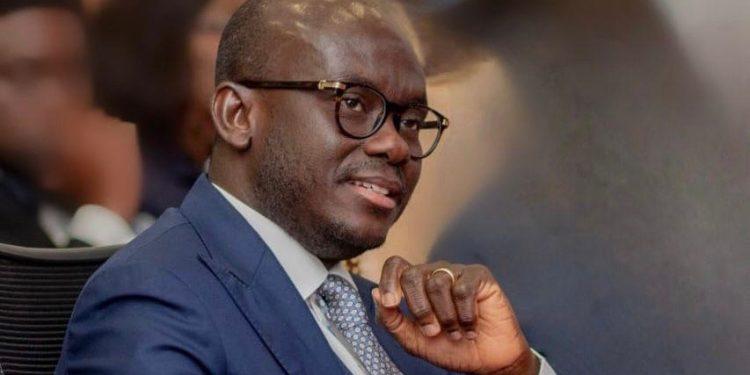
Executive Director of the Ghana Centre for Democratic Development (CDD-Ghana), Professor H. Kwasi Prempeh, has called for the abolition of “retirement on salary” payments in the public sector, describing the practice as unique to Ghana and unsustainable.
“We must scrap the ‘retirement on salary’ compensation practices in our public sector. Do we know any other place in the world where this sort of thing happens as commonly as it does here? We are just ridiculous!” Prof. Prempeh wrote on Facebook.
His comments came in reaction to figures disclosed by Finance Minister Dr. Cassiel Ato Forson, showing that Ghana spent 44 percent of its total tax revenue on public sector wages in 2025—far above the ECOWAS-recommended ceiling of 35 percent.
At a high-level meeting between President John Mahama and organised labour, Dr. Forson explained the growing pressure of the wage bill on government finances. Out of a total tax revenue of GH¢183 billion, statutory obligations—including transfers to DACF, GETFund, NHIL, and debt servicing—consumed GH¢122.1 billion, leaving only GH¢61.9 billion for other government operations.
The Minister further revealed that the wage bill alone reached GH¢78.9 billion, forcing the government to borrow roughly GH¢17 billion just to meet salary obligations. He emphasised that the combined burden of wages, debt, and statutory transfers exceeds total tax revenue, crowding out spending on critical infrastructure such as schools, hospitals, and roads.
While noting that fair remuneration remains a constitutional obligation, Dr. Forson cautioned that the current trajectory of public sector compensation represents a structural risk to fiscal sustainability and service delivery.
He stressed the importance of careful management of wage growth alongside broader fiscal reforms to restore balance and create room for development spending.
Prof. Prempeh’s call to end the practice of paying retirees as if they were active employees aligns with concerns about Ghana’s ballooning wage bill and the pressure it places on the nation’s finances.
In 2024, a Ghanaian think tank, Solidaire Ghana, opposed the government’s practice of renewing contracts for public officials approaching retirement.
This criticism arose in response to the Akufo-Addo administration’s decision to extend the tenure of Auditor-General Johnson Asiedu, despite his nearing retirement age.
Additionally, the government extended contracts for other key figures such as Police Chief Mr. James Oppong Boanu, former Commissioner General of the Ghana Revenue Authority Rev. Amishaddai Owusu-Amoah, and the then Commissioner General Ms. Julie Essiam.
These actions sparked controversy within the affected state institutions, raising concerns about nepotism and the potential for increased corruption.
Alexander Twum-Barimah Esq., Director for Policy and Planning at Solidaire Ghana, has condemned these extensions, arguing that they could detrimentally impact institutional dynamics.
Mr Twum-Barimah emphasized that allowing retiring officials to depart as scheduled would open opportunities for fresh perspectives and innovative leadership, essential for organizational growth and effectiveness.
According to the legal practitioner, allowing officers due for retirement to leave “provides an opportunity to introduce fresh perspectives and innovative ideas into the organization.”
“New leaders can bring different approaches and strategies, fostering a culture of creativity and progress in institutions such as the Ghana Revenue Authority and the Ghana Police Service, among others,” he added.
He urged the Akufo-Addo government to prioritize effective succession planning, which he believes is crucial for ensuring the long-term sustainability of public institutions.
Mr Twum-Barimah stressed that ending contract extensions would foster a culture of advancement for younger employees, enabling them to contribute meaningfully to organizational success.
Last year, John Dramani Mahama stated that 33 former government appointees implicated in corruption-related cases in the Operation Recover All Loot (ORAL) Team report would, in due course, face prosecution.
Addressing the African Union Advisory Board Against Corruption at the Jubilee House on Tuesday, June 3, he noted that the Attorney-General and Minister for Justice, Dominic Ayine, was preparing the cases for judicial proceedings.
“We set up the ORAL Committee, and they identified 33 cases, which were handed over to the Attorney-General. We created special investigative teams to handle each of them,” he said.
He added that some of the cases had uncovered significant evidence, including the acquisition of properties through illicit wealth, with several at advanced stages of prosecution while others were being prepared.
Operation Recover All Loot (ORAL) was an initiative established by the President to gather information on corruption and channel it to the appropriate state institutions for further investigation.
The committee was chaired by Samuel Okudzeto Ablakwa and included former Auditor-General Daniel Domelevo, retired Police Commissioner Nathaniel Kofi Boakye, legal practitioner Martin Kpebu, and investigative journalist Raymond Archer.
At the time, the numerous cases submitted by the ORAL team to President Mahama were being investigated by the Attorney-General, Dr Ayine.
The committee’s work also increased public awareness about the need to safeguard state resources.
Its report further revealed that about $21.19 billion could potentially be recovered from misappropriated state assets and undervalued land transactions.
ORAL Chairman Ablakwa indicated that if the recovery efforts were successful, the state could retrieve as much as $20.49 billion.
Key cases cited in the report included the National Cathedral project, the PDS deal, and the Saltpond decommissioning project.
Meanwhile, President Mahama dismissed claims that ORAL was being used for political vendettas, maintaining that the initiative was aimed solely at strengthening Ghana’s anti-corruption drive.
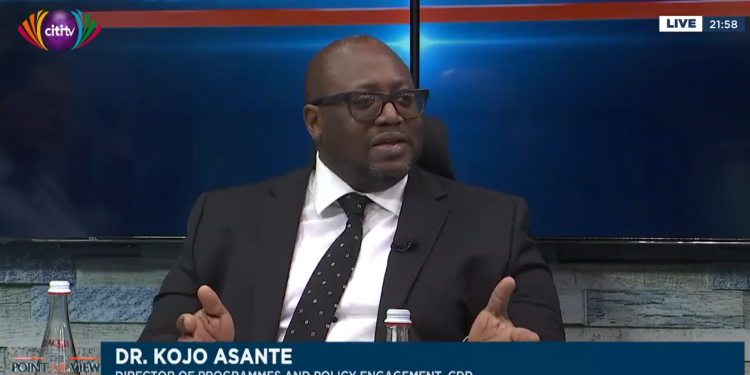
Director of Policy, Advocacy and Engagement at the Ghana Center for Democratic Development, CDD-Ghana, Dr. Kojo Asante, has criticized parents for their contribution to the recurring decline in WASSCE performance by students.
Speaking on Channel One TV’s Big Issue on Saturday, December 6, Dr. Asante said the country cannot fix the recurring problem without first addressing a culture that normalises examination malpractice.
“The integrity of WASSCE is one of the biggest challenges in the country. It has become so widespread that parents themselves have become major perpetrators, working through schools in certain areas to support students to cheat in order to pass their exams. There has to be active engagement with PTAs and the entire education system to reorient people on the importance of examination integrity,” he said.
Adding his voice to the matter, Executive Director of Eduwatch, Kofi Asare, also revealed that deliberate efforts to ban the use of phones can help reduce poor academic performance and indiscipline in schools.
According to him, research has proven that students failed their West Africa Examination Council (WAEC) 2025 examinations, particularly in Mathematics, due to the overwhelming us of devices meant to aid academic research
“So, if we are deliberate in banning the use of mobile phones… it will also lead to much more discipline in our schools,” he spoke on TV3’s The Key Points on December 6, 2025
National Coordinator for the District Road Improvement Programme (DRIP), Nii Lante Vanderpuye, has attributed the decline in students’ performance in the 2025 West African Senior School Certificate Examination (WASSCE) to addiction to social media and poor reading culture.
Speaking to the media on Thursday, December 4, Nii Lante Vanderpuye noted that reading culture and study habits among students have been compromised by the growing obsession with digital platforms.
“I am not surprised by the result. As a nation, as parents and guardians, we have been taken in by modern trends and the technical innovations in our lives. Our children are not focusing enough on what will help them concentrate on their education. One of the things we must look at critically is how to reconcentrate their focus away from tablets and media, because it is making the children lazy,” he cautioned.
The comments comes after this year’s WASSCE results showed a significant decline, raising concerns among education stakeholders. According to the provisional results released by WAEC, the percentage of students who failed Social Studies increased steeply from 9.55% in 2024 to 27.50% in 2025, representing a 188% increase.
The other core subjects, that is, Integrated Science and English Language, also saw a doubling of their previous failure rate. For Integrated Science, the failure rate increased by 8.93%; that is, the 2024 rate was 7.12%, and in 2025 it increased to 16.05%.
The failure rate for English Language also rose from 5.88% in 2024 to 12.86% in 2025. Core Mathematics recorded the sharpest decline, with the proportion of candidates who failed rising from 6.10% in 2024 to an alarming 26.77% in 2025, more than four times higher.
Consequently, only 48.73% of candidates achieved grades A1 to C6, a steep drop from the 66.86% recorded in 2024. In absolute terms, 209,068 candidates passed Core Maths, while 114,872 (26.77%) failed outright with an F9. Put simply, for every four students who sat for the exam, one failed Core Mathematics.
The core subjects are foundational: English, Mathematics, Integrated Science, and Social Studies are the backbone of Ghana’s education system. Failure in these means students lack the basic skills needed for higher education or employment.
The failure of core subjects by candidates this year comes with several major concerns career opportunities, social consequences, and the impact it is likely to have on the country’s economy.
Students with F9 grades or who failed in any of the core subjects now have their dreams of pursuing higher education, whether in Ghana or abroad, truncated. They will also be limited in securing many formal jobs, which will, in turn, create long-term barriers to social mobility.
However, the University of Ghana’s (UG) decision not to adjust its admission requirements for the 2025/2026 academic year has been criticized by Hamza Suhuyini, a member of the National Democratic Congress (NDC) communication team.
Speaking to the media on Wednesday, December 3, Hamza Suhuyini described the decision as “unacceptable,” noting that the 2025 West African Senior School Certificate Examination (WASSCE) results show a sharp rise in Grade F9 failures across all four core subjects compared to 2024.
“The UG’s decision not to increase their cut-off point is extremely unacceptable. I think the universities need to be flexible. It is possible that this failure could be due to factors beyond the students themselves,” he said.
Just after the West African Examinations Council (WAEC) released the provisional 2025 WASSCE results, the University of Ghana, through a statement, directed its prospective applicants to check and update their records on its admission portal until December 5 at 5 pm.
The statement, dated November 29 and signed by the institution’s Director of Academic Affairs, Lydia Anowa Nyako-Danquah, advised applicants to revisit the portal and upload and do a final check for accuracy, particularly of their full names and date of birth, before the formal admission process begins.
The statement read, “Following the release of the 2025 West African Senior School Certificate Examination (WASSCE) results, applicants for undergraduate admission to the University of Ghana (UG) are advised to log in again to the UG applications portal to: 1. Review the accuracy of entries, particularly: Full Name and Date of Birth; Examination records (Index Number, Exam Month, Exam Year)”.
UG advised students to be guided in their selection of programmes so they do not choose options they don’t qualify for. It also added that admissions are still open for applicants who wish to apply.
“Refer to the UG 2024/2025 entry cut-off aggregates for various programmes at and make realistic choices. Please note that applications for 2025/2026 admissions are still open, and interested persons may purchase e-vouchers at designated banks or through the USSD code 8879# on all mobile telecommunication networks”, UG noted.
After the WASSCE, some students buy admission forms before their WASSCE results are released. They apply using “awaiting results,” meaning they submit their details but leave the grades section blank.
Meanwhile, the Ghana Education Service (GES) has indicated that the results obtained by candidates who sat for the 2025 WASSCE reflect their true abilities. Speaking to the media on Monday, December 1, Daniel Fenyi of the GES Public Relations Unit noted that the West African Examinations Council (WAEC) cannot be blamed for the results, as they only assess what the candidates produce.
According to him, “Indeed, we perfectly agree, and not that we just agree, but we work closely with WAEC. We monitor, we supervise, we collaborate with them to conduct these examinations. And so it is not that we agree, that is actually the case, that the results you see are a true reflection of the competencies of our learners.
“You wouldn’t train your learners for three good years, take them through all the lessons, teach them, expose them to all the necessary books and content they have to be exposed to, only for them to churn out these results.”
Electoral Commission (EC) has firmly dismissed claims that public confidence in its operations is declining as the December 7 general elections approach.
In response to concerns raised by an Afrobarometer report from the Ghana Center for Democratic Development (CDD-Ghana), which highlighted growing skepticism among Ghanaians regarding the EC’s impartiality, the Commission reassured the public that it is fully equipped to conduct free, fair, and transparent elections.
The CDD-Ghana report revealed that a significant portion of the population questions the EC’s independence and neutrality.
However, Dr. Eric Bossman Asare, the EC’s Deputy Chairperson, addressed these concerns in a media interview, calling them baseless and reaffirming the Commission’s commitment to upholding electoral integrity.
He emphasized that the EC has implemented a range of measures to improve the credibility of the election process, including the use of advanced biometric systems, comprehensive training for polling staff, and enhanced monitoring protocols at all voting locations.
“You talk about the quality of elections in Africa, Ghana is one of the best in the continent. Ghana is one of the best in the business.
“So regarding this forensic audit issue you just mentioned, you remember as soon as we had a meeting publicly, which was televised nationally, all Ghanaians saw that the EC had nothing to hide.”
He encouraged the public to focus on the EC’s track record of organizing previous successful elections and assured that their votes will be accurately counted and transparently reported.
The Center for Democratic Development (CDD-Ghana) has restated its call for an increase in mineral royalties allocated to mining districts.
Despite Ghana’s abundant resources, communities where minerals are extracted are notably underdeveloped.
According to Emmanuel Yeboah, a Research Analyst at CDD-Ghana, the current allocation of mineral royalties to mining communities is insufficient, leading to development gaps.
Speaking at a stakeholders’ meeting in Obuasi to review the CDD report on the Mining Districts Development Scorecard, Mr. Yeboah noted that the 20 percent royalties paid, combined with delays in fund disbursement, hindered meaningful development projects in affected districts.
He urged the Government, the Ministry of Lands and Natural Resources, the Minerals Commission, the Ghana Revenue Authority, and other stakeholders to consider increasing the share of mineral royalties allocated to these districts to address the development disparities in mining communities.
According to the CDD, the Obuasi Municipal ranked sixth in the latest 2023 Mining District Development Scorecard (MDDS) league table, scoring 35.4 out of 100 points, below the MDDS overall score of 38.4 points.
This indicates significant governance issues in the Municipality’s management and utilization of mineral royalties.
The Mining District Development Scorecard, supported by the Ford Foundation, aims to monitor mineral revenue utilization in mining districts in Ghana, promoting transparency, accountability, and better social and human development outcomes.
The project seeks to empower communities and enhance their involvement in natural resource governance for improved sub-national development in Ghana.
Obuasi’s score was only higher than Asutifi North District and Prestea-Huni Valley Municipal in the MDDS ranking.
Mr. Yeboah highlighted that the Municipality performed poorly in two key MDDS areas: the effectiveness of local management committees and the efficiency of mineral development fund utilization.
He said, “across all the five major components of the MDDS, the Obuasi Municipal scored an average of ‘ very good’ in 10 out of 12 subcomponents that were assessed and scored using administrative data sources prepared by the Assembly.”
He further noted that the study identified inadequate fiscal transparency as one of the obstacles facing the Assembly and the local mining committee.
Dr. Amina Achiaa Asiedu Amoah, Chairperson of the Local Mining Committee of the Obuasi Municipality, assured that the committee would enhance its efforts to raise awareness among the public regarding its activities.
She also advocated for an increase in mineral royalties allocated to the districts to accelerate development in mining communities and fund the operations of the LMC, including public outreach programs.
Mr. Ali Tanti Robert, Executive Director of the Center for Social Impact Studies, urged the Obuasi Municipal Assembly to expand its public engagement initiatives to provide an account of the utilization of mineral royalties to the public.
A Pharmacist and Research Fellow at the Ghana Centre for Democratic Development (CDD-Ghana), Kwame Sarpong Asiedu, has warned the Akufo-Addo government about the imminent danger of continuing to divert funds allocated to the National Health Insurance Authority (NHIA) into the consolidated fund.
In an interview on Joy FM’s Super Morning Show, Asiedu stated that this diversion threatens the sustainability of healthcare services in Ghana, as hospitals require these funds to operate effectively.
“We know from parliamentary documents that they [NHIA] had only 6% of releases in a particular year. We also know that this government has capped the funding they can receive even though citizens are making the statutory payment. When you go and buy anything, you pay for your NHIS levy among the taxes but they are not receiving the money so they also can’t pay.
“Our health system is 75 to 80% dependent on forex because a lot of the consumables are imported whether they are being used in hospitals, pharmacies, and medical laboratories. So they are losing money, because if you’ve not been paid since October of last year what was the dollar then and what is the dollar now? The true value of whatever service you [hospitals] gave has reduced,” he said on Wednesday.
Mr. Asiedu further indicated that this financial strain on health facilities threatens Ghana’s commitment to achieving universal health coverage by 2030, a key component of the Sustainable Development Goals (SDGs).
He warned that health facilities may be compelled to refuse patients who present NHIA cards, instead requiring upfront payment before providing care. Asiedu believes this move would undermine the efforts invested in attaining universal health coverage.
“Ghana has signed up to provide universal health coverage to all citizens by 2030 as part of the SDG. The key thing about this universal health coverage is that finance should not be a barrier to the obtaining of healthcare. It doesn’t mean that healthcare shouldn’t be paid for, but it means, at the point of need, you shouldn’t be denied access because of lack of funds.
“So the worst case scenario is that Ghana wouldn’t be able to achieve this goal because that fundamental requirement that money should not be a barrier is not being met. So, basically we are paying lip service. With the way things are going with the NHIS, in a while, you’ll go to private hospitals and healthcare providers won’t be able to provide healthcare when you come with NHIA card,” he projected.
The CDD-Ghana fellow also noted that citizens’ plight would worsen, given the current high inflation and cedi depreciation, if they are forced to resort to out-of-pocket payments for healthcare.
Mr. Asiedu called for an immediate cessation of the fund capping, arguing that the government should prioritize healthcare funding over the consolidated fund, especially in an election year.
“Government has been collecting the NHIS taxes. This has nothing to do with the IMF because when we buy something, we pay the NHIS tax, so all what government needs to do is to send the money back to where it belongs which is the NHIA.
“Give the money back to NHIA so that they can use it to do what they are supposed to. It is a very easy fix, but the complication is that, if they do that there will be a massive hole in the consolidated fund and they are prioritising the consolidated fund in an election year at the expense of our health and expected life span.”
The Project Director of the Democracy Project and a Fellow at CDD-Ghana has contended that impeaching Special Prosecutor Kissi Agyebeng could erode public trust in anti-corruption endeavors.
Dr. John Osae-Kwapong proposed exploring alternative administrative solutions to address the allegations against Mr. Agyebeng instead of immediately resorting to his removal.
He argued that such actions could set a negative precedent and further diminish public confidence in anti-corruption efforts. Dr. Osae-Kwapong expressed these views during a televised discussion in Accra on Saturday, following a petition filed by Martin Amidu, the former Special Prosecutor, seeking Mr. Agyebeng’s impeachment.
Mr. Amidu’s petition alleged various breaches by the Special Prosecutor, including procurement irregularities, abuse of judicial processes, violations of citizens’ rights, and inappropriate personnel appointments.
Dr. Osae-Kwapong questioned whether these allegations constituted sufficient grounds for impeachment. Madam Amanda Akuokor Clinton, a legal practitioner, concurred with Dr. Osae-Kwapong, stating that, except for the procurement issues, the other accusations lacked merit under the Special Prosecution Act 2017.
She specifically dismissed claims of judicial abuse, labeling Mr. Agyebeng’s remarks as measured and academic. Ms. Clinton warned against politicizing the office of the Special Prosecutor and cautioned that removing Mr. Agyebeng based on such accusations could establish a dangerous precedent.
Mr. Alhassan S. Suhuyini, a Member of Parliament, characterized Mr. Amidu’s petition as an attempt to impose his standards on Mr. Agyebeng. He deemed the petition unrealistic and advocated for addressing the issues through alternative means.
“To remove the Special Prosecutor from office, it has to be egregious enough but if there are other administrative remedies to address some of the allegations levelled against him, let’s use them rather than first resorting to his removal from office.
“It doesn’t set a good precedent for the fight against corruption and deepens the already eroding public confidence in the fight against corruption,” he said.
“…as I look at some of the basis, I keep asking myself, do these rise to the level of an impeachable offence for which he must be removed from office?” he quizzed.
“I think aside from the issue of procurement, Mr Amidu’s other allegations do not stand. According to the Special Prosecution Act 2017, the Special prosecutor can be removed for misconduct, incompetence, or actions that bring the office into disrepute,” she said.
The Advocacy and Policy Engagement Director at the Ghana Center for Democratic Development (CDD-Ghana), Dr. Kojo Pumpuni Asante, has urged Ghanaians to transcend the traditional two-party narrative and make well-informed voting choices.
He emphasizes the importance of supporting candidates who present tangible solutions to the nation’s pressing issues.
During a Point of View interview on Citi TV with Bernard Avle, Dr. Asante highlighted the current economic crisis in Ghana, likening it to the challenges faced in the 1980s.
He expressed concern over the lack of clear plans from candidates on how to address these critical issues, noting that some are making vague promises that don’t align with the nation’s realities.
Dr. Asante called on Ghanaians to boldly make informed decisions to avoid future hardships. He urged voters to move away from conventional two-party rhetoric and scrutinize candidates’ proposals more critically.
He emphasized the need for courage in this election cycle, cautioning that empty promises without viable solutions will only exacerbate the country’s challenges.
“I really hope that Ghanaians tackle this business as usual two-party kind of sloganeering. We are in an election year. Already you will hear people putting out very empty promises that have nothing to do with the problems that we are facing.
“We have an economic crisis that we haven’t seen since the 80s and nobody is coming to tell us how are they going to fix that problem.”
“So I am hoping that in this election we would have lot more courage because if people will go and throw these things about and then they get into government, we are the ones that are going to pick up the pieces because then they cannot offer any solutions,” he stated.
The Ghana Center for Democratic Development (CDD-Ghana) has called on the media to hold politicians accountable for their statements and actions as the December elections approach.
The Center has urged the media to question politicians about their plans to address the country’s current challenges, rather than allowing them to evade responsibility for their statements.
Advocacy and Policy Engagement Director at CDD-Ghana, Dr. Kojo Pumpuni Asante, emphasized this during an interview on the Point of View on Citi TV with Bernard Avle on Wednesday.
He highlighted that the nation is at a critical juncture and that the media should not promote mere sloganeering and campaigning, but rather focus on substantive issues.
“I think that the media has to be bold and courageous to really call people out and say what exactly do you want to do to solve the problems and not let people get away with it. To hold people accountable. Because we haven’t really renegotiated our external debts as of now.”
“So we are really in a bad state and we shouldn’t let it get worse and get drowned in this fanfare of a campaign,” he said.
Renowned Ghanaian human rights activist and member of the Ghana Centre for Democratic Development (CDD-Ghana), Emerita Prof. Takyiwaa Manuh, has issued a stern warning of potential legal action against the Government of Ghana if the Promotion of Human Sexual Rights and Family Values Bill (anti-gay bill) is passed into law through presidential assent.
In an interview with GhanaWeb on Thursday, February 29, 2024, Emerita Prof Manuh asserted that her group had implored President Nana Addo Dankwa Akufo-Addo not to assent to the bill, highlighting concerns that it would lead to the oppression of Ghanaians and tarnish the country’s international reputation.
According to Prof. Manuh, the bill, if enacted, would not only violate the rights of citizens but also cast Ghana in a negative light as a democratic and law-abiding society. She expressed alarm at the global backlash and public health implications, as well as the heightened fear and anxiety among the LGBT+ community in Ghana.
“We have asked the president not to assent to this bill because it does not advance the rights of anybody in Ghana. And it actually makes Ghana’s reputation as a democratic, law-abiding society worse,” Prof Manuh emphasized.
Furthermore, Prof. Manuh declared that if the government proceeds to approve the anti-gay bill into law, her group would seek legal recourse. She underscored the supremacy of the constitution, stating, “If the president assents to the bill, we would go to court. The constitution is the final law of this land; no law can be inconsistent with the constitution.”
The passage of the Promotion of Human Sexual Rights and Family Values Bill by the Parliament of Ghana on Wednesday, February 28, 2024, marked a significant development in the legislative process. The bill, awaiting presidential assent, aims to outlaw and criminalize LGBT+ activities, including their promotion, advocacy, and funding.
Under the proposed legislation, individuals engaged in such acts could face imprisonment ranging from six months to three years, while promoters and sponsors could be subject to three to five years’ imprisonment.
The fate of the bill now rests on President Akufo-Addo’s decision to either assent to it or reject it. If the president declines to assent, parliamentary approval by a two-thirds majority vote could facilitate its enactment into law.
Board Chair of the Ghana Center for Democratic Development (CDD-Ghana), Professor Audrey Gadzekpo, has accused Member of Parliament for Ningo Prampram, Sam George, of political opportunism rather than genuine concern for societal values.
The bill, which has stirred widespread controversy, has come under scrutiny for its potential infringement on human rights and liberties.
In an interview with Umaru Sanda Amadu on Citi FM, Professor Gadzekpo voiced skepticism regarding the motives driving the passage of the bill, particularly singling out Sam George for his role in advocating for its approval. She alleged that George’s stance on LGBTQ+ rights had shifted opportunistically, pointing to his previous defense of such rights during accusations against former President John Dramani Mahama in 2015.
“I am telling you that they have passed it not for any reason but for political reasons. Mr. Sam George, the chief proponent of the bill in 2015 when his candidate John Mahama was accused of having a friend who was a homosexual sponsoring him, etc. Sam George is on record saying that the constitution protects those rights,” citinewsroom.com quoted her as stating.
Professor Gadzekpo questioned the inconsistency in George’s position over the years, highlighting his apparent shift from advocating for LGBTQ+ rights to championing the Anti-Gay Bill. She pointedly asked, “So I have to wonder why he changed his mind… What has changed? 10 years ago did he have a different morality from today, from 2021 when he proposed the bill.”
According to Professor Gadzekpo, the passage of the bill reflects political maneuvering rather than a genuine commitment to protecting societal values. She criticized the opportunistic nature of the legislation, asserting, “That is why I am saying there is politics. They are walking over the bodies of vulnerable people.”
The Anti-Gay Bill, which proscribes lesbian, gay, bisexual, and transgender (LGBT) activities and criminalizes their promotion, advocacy, and funding, has faced staunch opposition from human rights advocates and members of the LGBTQ+ community. Persons found engaging in same-sex relations could face imprisonment ranging from six months to three years, with promoters and sponsors of such acts subject to even harsher penalties.
The Board Chair of the Center for Democratic Development (CDD-Ghana), Professor Audrey Gadzekpo, has condemned the Anti-Gay Bill, deeming it detrimental to societal well-being.
Ghana’s parliament approved the stringent legislation on February 28, prescribing a maximum of five years imprisonment for forming or financing LGBTQ+ groups.
The bill, supported by both major political parties, awaits President Akufo-Addo’s approval to become law.
According to the bill, individuals engaged in prohibited activities could face jail terms ranging from 6 months to 3 years, while sponsors and promoters may be imprisoned for 3 to 5 years.
In an interview on Citi FM’s Eyewitness News, Prof. Gadzekpo stressed the crucial importance of upholding rights and freedoms in a constitutional democracy.
When asked if she found the bill unwholesome, she responded unequivocally, stating, “Absolutely and without any question in my mind.” She also expressed skepticism about the quorum during the bill’s approval, stating, “I don’t even think they had a quorum. It was an empty chamber that I was seeing from my TV.”
Center for Democratic Development (CDD-Ghana) has urged authorities to take decisive action against the menace of vote buying and selling ahead of the upcoming elections.
Speaking to the media, the organization emphasized the need for an “aggressive attack” on these practices to safeguard the integrity of the electoral process.
Director of Programmes and Policy Engagement at the Centre for Democratic Development-Ghana (CDD-Ghana), Dr Kojo Pumpuni Asante, in an interview on January 10, 2024 said: “I think that the sooner we jail both the sellers and the buyers of votes, the better it will be for us. Everybody can tell now that people just do it with impunity.
“They do it in the open, there are a lot of willing takers, people willing to sell their votes, and I think if we don’t stop this behaviour, we’re continuously trying to de-legitimize the democratic process.”
Dr. Kojo Pumpuni Asante added that an aggressive approach is needed to deal with the menace.
“When something is tainted and corrupted, it’s obvious. So, we have to attack it with all the aggression that we need. I am hoping that at least somebody gets jailed; not just the political actors but also the people who are receiving the money; because if that doesn’t happen then people will still think that there’s no accountability; you can do it with impunity and get away.”
In a recent development, the Office of the Special Prosecutor, already investigating allegations against public officials, reportedly arrested Kofi Ofosu Nkansah, the Chief Executive of the National Entrepreneurship and Innovation Programme (NEIP), for allegedly distributing money to delegates ahead of the New Patriotic Party’s Parliamentary primaries.
Director of Advocacy and Policy Engagement, CDD-Ghana, Dr. Kojo Pumpuni Asante, has vowed to resist any attempt by the Attorney-General to amend the Audit Service Act.
This follows the Attorney-General, Godfred Yeboah Dame, describing the publication of the COVID-19 audit report as premature and unconstitutional.
He argues that the report should have been discussed by parliament or a committee of it before being released to the general public.
He had thus advised the Auditor-General, Johnson Akuamoah to unpublish the document.
In reaction, civil society organisations had described the A-G’s advice as tantamount to interference in the work of the Auditor-General and further stated that his interpretation of the law is egregious and inimical to holding the executive accountable.
Speaking on JoyNews’ PM Express, the Deputy Attorney General, Alfred Tuah-Yeboah noted that the Office of the Attorney General is convinced the Audit Service Act – which permits the Auditor-General to publish reports immediately after presenting it to the Speaker – is inconsistent with the provision of the 1992 constitution and thus an amendment will be in the right direction.
“We will be looking at it and take the necessary steps. If you take that provision, you may have to look at all the other laws, look at the constitutional provision and see how best it could be…because if you look at that section, it’s not saying it cannot be published but it should be published after parliament so there’s the need for an amendment in fact, just to make sure that it’s in tune with the constitutional provision,” he said.
However, reacting to this, Dr. Pumpuni Asante noted that if that is the case, then CDD Ghana will resist the move with all it has got.
“We will equally resist it with everything that we can to resist it because the more we get into the challenges that we have gotten into, we have to work very hard to strengthen accountability systems. This is not a welcome intervention, and if the Attorney General insists that he wants to go this way then we’ll all work very hard to resist it,” he said.
Attorney General, Godfred Yeboah Dame has refuted accusations that his counsel to the Auditor General interferes with the institution’s independence.
Mr Dame had earlier urged the Auditor General to unpublish his audit findings into the use of Covid-19 funds.
He pointed out the report ought not to be published till Parliament’s Public Accounts Committee probes the matter.
Pressure group Occupy Ghana, the think tank Centre for Democratic Development (CDD) Ghana and the opposition NDC have all questioned the AG’s concern, describing it as contrary to law.
Mr Dame argues his advice is consistent with law.
Read the full statement below;
RE: CDD-GHANA statement titled “The Akuffo Addo Government must cease its continuous assault on the Office of the Auditor-General”
The attention of the Office of the Attorney-General and Ministry of Justice has been drawn to a press statement issued by the Ghana Center for Democratic Development (CDD-Ghana) dated February 10, 2023, and entitled “The Akuffo Addo (sic) Government must cease its continuous assault on the Office of the Auditor-General”. In the said press statement, CDD-Ghana takes issue with an opinion by the Attorney-General and Minister for Justice regarding the publication on the website of the Auditor Service of an audit into the Government’s Covid-19 transactions before the said audit report has been debated by Parliament and referred to an appropriate committee of Parliament in accordance with article 187(6) of the Constitution.
In addition to various wrong propositions of law, CDD-Ghana characterises the opinion of the Attorney-General as part of “a domineering superior posture that the Akuffo-Addo (sic) administration has adopted in dealing with the constitutionally independent office of the Auditor-General”. CDD-Ghana perceives the Attorney-General’s letter as an effort to “undermine the independence of the office of the Auditor-General and other independent constitutional bodies”. Quite bizarrely and in tune with the fundamentally incorrect constitutional theories bandied about by CDD-Ghana, a Vice-chair of the Board of CDD-Ghana stated on a radio programme, “Newsfile” on Joy FM, that, the Auditor-General is not part of the Audit Service of Ghana but a separate creation.
The Attorney-General considers it imperative to correct the palpable errors contained in and implied by the press release of CDD-Ghana, as same distort the relationship between the Attorney-General and the Auditor-General in the constitutional architecture of the Republic and have far-reaching implications for Ghana’s record in rooting out corruption.
Contrary to the strange view of CDD-Ghana, the letter and spirit of laws governing the work of the Auditor-General make him part of the Audit Service of Ghana and, therefore, a regular member of the public services of Ghana to whom the Attorney-General can give advice pursuant to his mandate under article 88 of the Constitution. Article 189(2) of the Constitution provides a clue when it stipulates thus “The appointment of officers and other employees in the Audit Service, other than the Auditor-General, shall be made by the Audit Service Board, acting in consultation with the Public Services Commission”. This provision deals with the appointment of officers and all employees in the Audit Service, including the Auditor-General, and clearly provides that, with the exception of the Auditor-General, all have to be appointed by the Audit Service Board acting in consultation with the Public Services Commission. With the clear cue provided by Article 189(2), a contention that the Auditor-General is not part of the Audit Service or a member of the Public Services is pointless and absurd.
2. Section 2 of the Audit Service Act, 2000 (Act 584) lays the issue to rest when it lists the Auditor-General as the first member of the Audit Service in these terms: “The members of the Audit Service are (a) the Auditor-General, and (b) the other persons employed in the Service.”
It is thus clear that the propositions of CDD-Ghana and its board members can only result from an inadequate reading of the laws of Ghana, including the Constitution and the Audit Service Act.
Can the Attorney-General advise a member of the Public Services of Ghana, including the Auditor-General?
3. It is astonishing that CDD-Ghana disputes the propriety of the Attorney-General rendering legal advice to the Auditor-General, and construes same as “an interference with the independence of the Auditor-General”. A proper reading of the Constitution, especially the provisions on the Public Services of Ghana, leads to the inescapable conclusion that the Attorney-General is fully vested with the constitutional function of giving legal advice to all the Public Services specifically listed in article 190(1) of the Constitution, including the Audit Service, and such other public services as will be established by law. Article 295 indicates that the public services listed in article 190 and other public services established by Parliament pursuant to its legislative powers, are part of the civil offices of Government. In the face of the explicit constitutional mandate of the Attorney-General under article 88 of the Constitution as principal legal adviser to the Government, it is incomprehensible and rather illogical how an assertion may be made that the Attorney-General has no capacity to render legal advice to the Auditor-General. Such an assertion can only be as a result of a simplistic and limited view of relevant provisions of the Constitution of Ghana.
Does rendering legal advice amount to interference with the independence of the Auditor-General?
4. It ought to be pointed out that the functional independence of the Auditor-General under Article 187(7)(a) of the Constitution does not confer immunity from legal advice. Legal advice to a constitutional body cannot under any circumstance be construed to amount to interference with the performance of its constitutional functions. A view to the contrary implies that an “independent constitutional body” has absolute freedom to act in any manner it desires, except when a court of law has ordered, even when its legal adviser (whether public or private) is of the opinion that its actions are in conflict with the law. This sounds like absurdity and is the product of unbridled sensationalism.
5. The imputation conveyed by the third paragraph of CDD-Ghana’s press release that Parliament has no power to deliberate on findings contained in the Auditor-General’s reports and that such an effort “offends the general principle of auditing”, does violence to the letter and spirit of Article 187(6) of the Constitution, which provides that “Parliament shall debate the report of the Auditor-General and appoint where necessary, in the public interest, a committee to deal with any matters arising from it”. Implicit in the constitutional duty of Parliament to debate the Auditor-General’s reports and appoint a committee to deal with any matters arising from it is the duty to deliberate and probe the reports. This constitutional function of Parliament cannot be wished away by a narrow, simplistic and erroneous reading of the Constitution by CDD-Ghana or any civil society organisation.
6. The Office of the Attorney-General and Ministry of Justice implores civil society organisations to carefully examine the position of Ghana law on a relevant matter before raising unjustified public alarm over a violation by the Attorney-General or any public institution at all. The default in doing so affects the image of the nation in the eyes of the international community, particularly its anti-corruption ratings.
The Board of Directors of the Ghana Center for Democratic Development (CDD-Ghana) has elected Mrs. Clara Kowlaga Beeri Kasser-Tee as the new Vice-Chair of the Board.
This took place at the Board’s 72nd meeting on December 14, 2022. Mrs. Kasser-Tee has been serving on the Board since January 2019.
CDD-Ghana has benefited from the valuable insights acquired from her diverse experiences as a private legal practitioner, an academic, a consultant, an advocate, and a regular panelist on various national current affairs programs on radio and television.
Since joining the Board, Mrs. Kasser-Tee has been an active member of the Board and Governance, Human Resource and Compensation sub-committee. Additionally, she has been involved in several of the Center’s programs and day-to-day public events as a resource person or moderator.
Mrs. Clara Beeri Kasser-Tee is the Founder and Head of Chambers of Kasser Law Firm, and a Lecturer at the University of Ghana Law School.
As a private legal practitioner, she has advised, researched, and written legal briefs on corporate and commercial law, taxation, corporate finance, corporate restructuring, mergers and acquisitions, etc. in Ghana for several multinational companies and international law firms.
Mrs. Kasser-Tee has contributed immensely to legal education, and the development of public institutions through several engagements with the media and the Ghana Revenue Authority on relevant national issues.
Among other things, she developed a concept to improve tax collection in Ghana, using existing facilities such as the courts. This has been approved by the Ghana Judicial Service and the Ghana Revenue Authority.
She attended the Bolgatanga Girls Secondary School for her secondary education. She holds a BA (Philosophy and English), an LLB and LLM from the University of Ghana. She also holds a BL from the Ghana School of Law, where she graduated top of her class, and was a recipient of the prestigious John Mensah Sarbah Prize given to the best overall (all round) graduating lawyer. She is a member of the Ghana Bar Association.
Mrs. Kasser-Tee has published articles on oil and gas law, environmental law and regulation in Ghana, and taxation. She is currently an editor for the Legon Journal of International Affairs and Diplomacy.
CDD-Ghana’s Governing Board is composed of Chairperson, Prof. Audrey Gadzekpo, an academic and media practitioner; Secretary Mr. James Sraha, a practicing accountant and tax consultant; Prof. E. Gyimah-Boadi, Chairman of the Board of Afrobarometer Network, Co-founder and Former Executive Director of the Center; Dr. Baffour Agyeman-Duah, Co-Founder of the Center and currently Chief Executive Officer at the John A. Kufuor (JAK) Foundation; Mrs. Sadia Chinery-Hesse, an experienced lawyer and governance practitioner; Mr. Kweku A. Awotwi, an experienced international business executive; Mr. Felix Biga, Chief Operating Officer with the Afrobarometer Network; Prof. H. Kwasi Prempeh, Executive Director of the Center; Dr. Edem Selormey, Director of Research at the Center and Dr. Kojo P. Asante, Director of Advocacy and Policy Engagement at the Center.
According to Professor H. Kwasi Prempeh, Executive Director of the Ghana Center for Democratic Development (CDD-Ghana), the Fiscal Responsibility Advisory Council is not powerful enough to serve as “a domestic substitute” for the International Monetary Fund (IMF), preventing Ghana from turning to the Bretton Woods organization for a bailout.
The President, in the exercise of his constitutional powers (Article 58), on 28 December 2018 (Ghana Gazette No. 173), established two major Councils that will offer independent advice on fiscal responsibility and ensure the stability of the entire financial system (across all the sub-sectors, from banking through pensions & fund/asset management to insurance etc.) respectively.
They are the Fiscal Responsibility Advisory Council (Fiscal Council) and the Financial Stability Advisory Council (Financial Stability Council).
Both Councils are made up of 7 members each, the latter’s members being institutional representatives.
The term of the members of each Council shall lapse with the term of the President under whom s/he is appointed unless s/he resigns or is otherwise terminated/terminates before then.
Among its many functions, the FSC, which brings together all the different regulatory agencies in the financial services sector, will “identify and evaluate the threats, vulnerabilities, and risks to the stability of the financial sector,” ensuring, especially, that we receive early-warning of cross-industry exposures that pose systemic risks and deploy appropriate measures in managing them.
The FC also has, as one of its functions, a mandate to “develop and recommend to the President fiscal responsibility policies for the maintenance of prudent and sustainable levels of public debt, ensuring that the fiscal balance is maintained at a sustainable level, and the management of fiscal risks in a prudent manner, to achieve efficiency, effectiveness and value for money in public expenditure.”
The members of the Fiscal Council as of the time it was first established include Dr. Paul Acquah, Mr. Abdallah Ali-Nakyea, Prof. Eugenia Amporfu, Dr. Nii Noi Ashong, Prof. Augustine Fosu, Dr. Robert Osei, and Dr. Nii Kwaku Sowa.
The institutional representatives of the Financial Stability Council as of the time it was first established include Dr. Ernest Addison (BoG), Elsie Addo Awadzi (BoG), Charles Adu Boahen (who was recently fired by the President, represented the Ministry of Finance), Justice Yaw Ofori (NIC), Daniel Ogbarmey Tetteh (SEC), Hayford Atta Krufi (NPRA), and Ignatius Wilson (DPC).
Speaking at a roundtable organised by the Citizen’s Coalition in Accra on “Interrogating Ghana’s 2023 budget and Economic Policy as a pathway to Economic recovery”, Prof Prempeh said a stronger Fiscal Council could do Ghana a lot of good.
“Part of what I think has gotten us to this problem is that when we started off the Eurobond thing, it was good”, he observed, adding: “But I think that given the nature of our politics and our governance, it should have been very clear to us that we need a domestic IMF substitute”.
“That is, if IMF is not there, you need, yourself, to put in certain guard rails and certain institutional frameworks so that you will be more fiscally responsible and not have to go back to the IMF,” he said.
“We have an IMF substitute on paper called the Fiscal Council and even the one that was on paper was really not that strong. If you want to go to the IMF and you are still not fiscally disciplined, it won’t work,” he said.
At the same event, Prof Prempeh said the National Cathedral is not a sensible project to undertake in the midst of an economic crisis.
In his view, the government could use the site for the project, for a more sensible venture.
“When you are in a crisis, you can do exceptional things, I don’t see anything in the budget to suggest that this is a crisis and that this is being done as an emergency measure,” Professor Prempeh said.
“This is not the time for vanity projects but we have preserved a vanity project in the form of the cathedral. I was expecting that this being a crisis period, we will reflect on that decision and say: ‘even if this is sensible to do at all’ – and I do not think so – that it will not be the appropriate period or we will change the idea to something else”.
“There is a lot that we can still do with that site which can make sense”.
“So, generally it is a missed opportunity in terms of seeing this as a crisis moment and seeing it as a moment to reset the button”, Prof Prempeh noted.
“I think we have not quite done that”, he stressed.
“It looks to me that it is purely an emergency thing targeted at the IMF to approve a loan, as opposed to something that is going deep into the structure and our governance,” Professor H. Kwasi Prempeh admonished in his assessment.
Prof Prempeh is in good company with pressure group OccupyGhana which recently recommended that the government suspend all public expenditure on the National Cathedral considering that the country is going through an economic crisis.
“Whatever arguments there might have been to support spending now-non-existent money on the proposed National Cathedral, have been eroded by the dire straits that the nation faces”, the group said in a statement.
“Our current situation makes the continued commitment in the budget to spend GHS80m on the cathedral, look like a vanity project”, it noted.
OG said: “We lose nothing by suspending expenditure on that project until the economy recovers”.
The National Cathedral was a personal promise made to God by then-presidential candidate Nana Akufo-Addo if he won the 2016 election.
Read OccupyGhana’s full statement below:
Our ref: OG/2022/054
OCCUPYGHANA PRESS STATEMENT
Accra, 7 December 2022
GHANA’S CURRENT ECONOMIC SITUATION – OUR FURTHER THOUGHTS AND PROPOSALS
OccupyGhana has noted, with considerable concern, the Finance Minister’s announcements on restructuring portfolio investments.
While IMF support depends on the proposed ‘haircuts,’ they are extremely painful to the many Ghanaians who have participated in these investments.
Simply, under this government’s watch, Ghana has become broke under circumstances that were avoidable and are inexcusable and unpardonable.
As we stated in our press release dated 28 October 2022 (Our ref: OG/2022/050) and titled GHANA’S CURRENT ECONOMIC SITUATION – OUR THOUGHTS AND PROPOSALS, the nation would not be in this situation but for the government’s failed, risky economic strategy that borrowed heavily from the international market to fund expenditure, pay maturing debt, support the cedi and possibly control the effect of the depreciation on inflation.
This risky strategy effectively relied on good fortune and extremely astute economic management, both of which failed.
Thus, although the government would seek to blame the pandemic and the Russia-Ukraine war for this disaster, it cannot evade or avoid the fact that our debt was unsustainable even before these external factors kicked in and compounded an already precarious situation.
TWO BROAD COMMENTS
We have two broad comments on the announcements that request Ghanaians to forego legitimately earned funds to help the government out of the disaster it has created.
First, we consider the finance minister’s announcements as nothing more than an offer from the government to institutional portfolio investors to accept new terms that vary the terms under which the latter acquired the government’s securities.
We think that the government has no power under the law and the Constitution to unilaterally impose fresh terms on portfolio investors; negotiation and the mutual consent of all parties will be required.
Second, notwithstanding the claims that individual investors are insulated from the proposed ‘haircuts,’ the millions of Ghanaians whose funds (pension or otherwise) have been invested by institutional fund managers in government securities, will be the ultimate losers in this new offer.
That is because those fund managers will simply pass the cuts on to their clients and customers.
There is simply no way to understate the terrible consequences that this state of affairs has caused and will cause to Ghanaians.
That is why we believe that any offer to the citizens, who are already hit with the multiple effects of inflation and cedi depreciation, to essentially bail the government out of its self-afflicted disaster, must come with an acceptance of failures and a firm commitment to do better.
TEN RECOMMENDATIONS
We, therefore, recommend 10 things that the government may act upon.
First, reduce the number of government appointees by at least fifty per cent.
This may be achieved by consolidating several ministries and slashing the number of political appointees (ministerial and otherwise), such as all deputies and the like, and entrusting public servant-technocrats with the responsibility of supporting substantive heads.
This will send a powerful message in these tough and painful times that the government is serious about its commitment to doing better while requesting sacrifices from the general public.
Second, let the president pay income taxes, too.
We should remove the tax exemption granted to the president under article 68(5) of the Constitution.
While the actual savings from this might not be much, it is hugely significant and relevantly symbolic.
The president must lead by example.
When he pays his taxes, then he can demand that the rest of us pay taxes too.
Third, it is time to rationalise the so-called ‘article 71 benefits.’
Ghana needs to end the three-decade-old grand conspiracy among the political class that milks Ghana under the false argument that article 71 authorises so-called ‘ex gratia payments.’
We must eradicate the multiple claims of ex gratia; the multiple claims over different administrative/government terms do not make sense and are difficult to sustain.
We must also immediately end the false scheme by which successive governments deliberately delay the setting up of the emoluments committee till the end of their terms, so that salaries and emoluments are agreed upon and calculated literally at the ‘midnight’ of the outgoing government, considered and adopted in secrecy to precious little debate, and then applied retrospectively.
Ghanaians only get to find out the huge pay-outs to the executive and legislators after the fact.
We demand that the committees are established at the start of each government so that we know what and how much the political actors are entitled to when they assume office.
The current government must establish the committees NOW.
Fourth, revise all tax exemptions, especially those granted to incomes and gains from portfolio investments.
The government must, as a matter of urgency, amend section 7(1)(p) to (v) of the Income Tax Act, 2015 (Act 896) to remove all or some of the exemptions on incomes and gains from portfolio investments.
These are not normal times, and we propose imposing a specific, time-bound withholding income tax regime on such earnings.
Ghana may consider re-granting the exemptions when we have recovered.
Fifth, intensify and institutionalise GRA’s invigilation activities.
In addition, the legal sanctions for under-reporting and tax evasion must be drastically applied.
Sixth, explain the source of funding of the proposed Financial Stability Fund (FSF).
Extreme transparency of the proposed programme and its implementation is required.
If the government is broke and requires an IMF bailout, where will the monies for the FSF come from?
Seventh, pursue the Auditor-General’s disallowances and surcharges.
The government must show some seriousness in pursuing those the Auditor-General has found to have caused loss to Ghana.
To the best of our knowledge, the government is doing nothing to enforce the Auditor-General’s disallowances and surcharges.
The president issued a terribly belated instruction to heads of institutions to provide to him the names of all persons identified to have caused losses to the state in the Auditor-General’s reports.
The president’s deadline has come and gone with no communication or indication on whether the names were indeed supplied to the president, and what the president is going to do with them.
Eighth, end galamsey.
The government has to address the galamsey menace as a matter of urgency, as our natural resources are plundered and the ecosystem destroyed.
The much-publicised Kumasi meetings do not appear to have borne fruit.
We have written to the president, at least, 9 times in the past six weeks, in addition to several other previous statements on this, challenging the government to properly regulate artisanal mining in a way that benefits the nation.
They have all been ignored.
Our current efforts will come to nothing if this canker is allowed to overcome any future economic recovery.
Ninth, slash all non-critical government expenditures. Implement a ruthless focus on prioritising government projects and expenditures, and ensure a strict relationship to GDP growth going forward.
And, the government must provide monthly reports on how much money all announced cost-saving measures have delivered.
We specifically recommend the suspension of all fees and allowances paid to persons appointed by the government to serve on various boards.
We also recommend suspending all expenditures on the proposed National Cathedral.
Whatever arguments there might have been to support spending now-non-existent money on the proposed National Cathedral, have been eroded by the dire straits that the nation faces.
Our current situation makes the continued commitment in the budget to spend GHS80M on the cathedral, look like a vanity project.
We lose nothing by suspending expenditure on that project until the economy recovers.
Tenth, rationalise the president’s flagship programmes.
This includes the Free SHS scheme.
Every Ghanaian who can pay fees should pay.
Limit the scheme to only those who can prove that they are not capable of paying fees.
In conclusion, a government that is pleading with Ghanaians to bail it out of a self-afflicted disaster, must ‘bear fruits worthy of repentance.’
President of Ghana Nana Addo Dankwa Akufo-Addo waits to speak during the UN Climate Change Conference COP26 in Glasgow, Scotland, Tuesday, Nov. 2, 2021.
Director of Advocacy and Policy Engagement at the Centre for Democratic Development Ghana (CDD-Ghana), Dr. Kojo Pumpuni Asante, has bemoaned President Akufo-Addo’s refusal to remove his Finance Minister.
According to him, had the President heeded to calls for a Ministerial reshuffle or simply gone ahead to remove the Finance Minister, Parliament would not be locked up in a censure motion proceeding; further derailing the business of government.
He stated that the country is in a crucial situation where a Finance Minister is expected to be drawing a budget while leading the Ghana team in the IMF negotiations, however, currently all of that has been put on hold while the incumbent Minister is being ‘tried’ by an ad hoc committee.
The Minority in Parliament has filed a motion of censure against the Finance Minister, Ken Ofori-Atta, accusing him of corruption and gross incompetence.
In proceedings currently ongoing in Parliament, the Finance Minister is expected to answer to these charges before an eight member ad hoc committee evenly constituted by members from both sides of the political divide.
With both sides polarized on the matter, Dr. Kojo Pumpuni has noted that such polarization is not what a country in crisis needs to resolve its issues.
“I don’t understand why the President has ground his teeth on this matter. Because now we’re in a process, the Finance Minister was supposed to go and present the budget next week. Now the Finance Minister is spending his time in a court room trying to respond to charges against him and so on and so forth when he should be, if indeed he’s the one preparing this budget for our consideration, he should be doing that work.
“Some of these steps should have been taken by the President a long time ago and I don’t know why he’s not seeing the bigger picture that we’re going to diffuse a lot of the tension. Because in a country where you have crisis, the last thing you need is more polarization and more time spent on this kind of actions rather than focus on the business of actually dealing with the problems that Ghanaians are facing,” he said.
Prof Henry Kwasi Prempeh, Executive Director of Ghana Center for Democratic Development (CDD-Ghana), has advised the General Legal Council, GLC, not to embarrass itself following a directive demanding the social media handles of law students as part of disciplinary measures.
According to him, the body that regulates the legal profession in Ghana should also desist from embarrassing the entire profession, and the country at large, with its actions.
In a Facebook post on Wednesday, November 9, the lawyer and educationalist stated that the GCL can do things right without resorting to was he calls “nonsense.”
“The General Legal Council should stop embarrassing itself, the entire legal profession, and the country. We can do without such nonsense at this time,” H Kwasi Prempeh wrote.
Meanwhile, Elorm Ababio, a student who just completed the Ghana School of Law (GSL) will not be called to the Ghana Bar due to a petition filed against her by a “concerned citizen”.
Known popularly on YouTube as Ama Governor, the complaint, according to a letter signed by Justice Cynthia Pamela A. Addo JA, Secretary, Ghana Legal Council (GLC), stated that Ama Governor is seen in widely circulated videos engaging in what it describes as “conduct unbecoming of an applicant to be called to the Bar”.
The Complainant, the GLC Secretary indicated, also submitted a flash drive [pen drive] which contains selected video files and hyperlinks of Ama Governor to relevant website publications.
Ama Governor’s conduct is said to violate Regulation 21(c) of the Legal Profession (Professional and Post-call Law Course) Regulations, 2018 L.I. 2355.
The said Regulation states: “A student of the school qualifies to be called to the Bar, if that student has […] (c) satisfied the Council that the student is of good character.”
Also, The school mandated to train legal practitioners on Wednesday, November 9, 2020, directed students to submit their social media handles for monitoring to ensure that they maintain a character befitting the legal profession.
Yaw Oppong, Director of the School who is also a member of the GLC, speaking during the swearing-in ceremony of the School of Law Students’ Representative Council (SRC) executives explained that the request for social media handles will help many students willing to be called to the bar to maintain a good character.
“Everybody will have to provide their social media handles. We are going to look at it and you will be monitored in terms of conduct. We are required by law to make recommendations. We don’t want to stampede you.
“You are going to reapply beyond the pass and submit yourselves for all legitimate checks,” he said.
The Centre for Democratic Development (CDD-Ghana) has launched a trans-national democracy solidarity network to mobilise, coordinate and leverage the collective power of civil society and other pro-democracy actors to defend and advance inclusive democracy in the West African region.
Named the West Africa Democracy Solidarity Network (WADEMOS), it is in response to signs of democratic backsliding and a reversion to autocracy in the region.
The network was launched in Accra last Thursday on the theme “Countering Threats to Democracy in West Africa”.
WADEMOS
It seeks to, among other things, build solidarity, mobilise and facilitate collective action among West Africa’s diverse pro-democracy civil society organisations and other civic actors.
It will also produce and disseminate data and analyses to support evidence-driven pro-democracy advocacy and activism in the region.
Democratic backslide
The Executive Director of CDD-Ghana, Prof. H. Kwasi Prempeh, who also doubles as the Project Director for the WADEMOS, noted that democratic backsliding in West Africa represents a major setback for the region and was a source of grave concern for its peoples. Already, he said, the region was faced with severe security and national cohesion challenges from the activities of jihadists and other violent extremists, notably in Mali, Niger, Burkina Faso and Nigeria.
He indicated that continuing democratic decline, with the risk of democratic breakdown in a few more countries, would spell disaster for the region.
Prof. Prempeh said stemming the democratic backsliding and reviving the region’s leadership in advancing democratic norms would require determined and sustained effort and commitment, not only by national and regional authorities, but importantly by civil society actors.
He, therefore, indicated that the network would engage the Economic Community of West African States (ECOWAS) to address emerging and current challenges and threats to democracy in the region.
Timely and appropriate
For his part, the Deputy Minister of Foreign Affairs and Regional Integration, Thomas Mbomba, said the launch of the network was timely and appropriate in the light of recent developments in West Africa, which involved the breach of constitutional rule in some countries within the region.
He said Ghana, as an active member of ECOWAS and a member of the United Nations Security Council, was committed to the principles of democracy, peace and security, rule of law and economic development.
Those shared values, he said, were prerequisites for equitable and inclusive development.
With such an initiative, Mr Mbomba expressed optimism that the members had capacity and the resources to mobilise, coordinate and leverage on the collective power of pro-democracy actors including engagements with organisations within the region in the hope and expectation that democracy could be defended, reinvigorated and enhanced.
He, therefore, commended the CDD-Ghana for taking the bold step in bringing the initiative into fruition.
The Center for Democratic Development (CDD) Ghana, has said that the Interior Minister, Ambrose Dery, as well as other pertinent state authorities need to be questioned over the issue involving galamsey bigwig, Aisha Huang.
In an interview with Starr News, Senior Programs Manager for CDD-Ghana, Paul Yaw Abrampah, said the case’s twists and turns raise the question of whether the president receives routine security briefings.
“The President is our leader, and he makes appointments and swears in all executive positions in the country, and he is aware of people’s duties. The president can call his Minister in charge of the Interior or National Security and get facts on these issues easily.
“The National Security Coordinator, the National Security Minister, the Interior Minister, and the Ghana Immigration Service is under the Ministry of Interior. So this should not be an issue that the president should go on air and say he is confused as to what actually happened. Are we saying that the president is not getting detailed security briefings in the country,” Mr. Abrampah quizzed.
He added that: “Now that it has become a big issue that you are supporting the Attorney General to take up the issue, you should definitely be getting a briefing on it. So I expect the president to summon the Interior Minister under whose jurisdiction issues of migration falls to give a full fact and briefing to him.”
Mr. Abrampah added that given the current legal status of the matter, it might be an error for the president to fire any of his appointees in connection with the Aisha Huang scandal.
“Definitely, with the judicial service, if the case should travel the length of the law. They will call for witnesses and call for facts of the case. That is where we are going to get the full facts of the case.
“I got a hint that the Minority caucus is planning to summon people to come and give them facts or wanting to establish an independent investigation into the issue. All of these will complement the process to unravel the actual truth in the case. If it happens that there were compromises on the way, then the law must take its course,” the Programs Manager added.
Anti-corruption crusader, Vitus Azeem has attributed the increasing rate of corruption in institutions to the lack of commitment on the part of government to ensure the prosecution of offenders.
According to him, institutions including the Office of the Auditor General have consistently released reports which expose corrupt practices by some officials.
These officials are however not tried in a court of law.
His comments follow a survey conducted by the Center for Democratic Development (CDD-Ghana) which revealed the ranking of top 10 state institutions perceived to be corrupt.
In an interview with Citi News, Vitus Azeem said government must show dedication by ensuring that corrupt officials face legal action.
“From 2020 to 2022, how many cases are before the courts from the Office of the Special Prosecutor? How much money has the Office recovered from corrupt practices? It is just not about the setting up of the institutions and claiming to be giving them money.â€
“Every year, the Auditor General comes out with its report, and it ends there. How many people have been prosecuted from the audit report? Government has set up institutions and is financing them, and so if we are not seeing the results, it cannot boast that it has resourced them.â€
According to the Afrobarometer study undertaken by the CDD-Ghana, police are believed to be the most corrupt people in Ghana.
The Office of the Presidency followed in second place on the corruption perception.
For the police service, 65 percent of Ghanaians believe most police are corrupt, while 31 percent believe only some police are corrupt.
At the Presidency, 55 percent of Ghanaians said it was mostly corrupt, while 40 percent said it was partly corrupt.
Legislators, judges and magistrates and tax officials rounded up the top five perceived corrupt institutions.
At the bottom of the list, Non-governmental organisations, Private media and public media were viewed more favourably as being the least corrupt.
Per the report, 77 percent of Ghanaians believe corruption has increased.
This figure has risen from 53 percent of Ghanaians in 2019.
Only 6 percent of Ghanaians currently believe corruption is reducing.
In line with this, the most recent Corruption Perception Index released by Transparency International showed that Ghana has failed to make significant progress in its fight against corruption.
Between 2020 and 2021, Ghana maintained its score of 43, which is still below the average, with countries scoring higher viewed as less corrupt and those with the least scores being more corrupt.
As far as fighting corruption is concerned, fewer than 30 percent of Ghanaians believe that people can
report corruption without fear of retaliation, which is a decline of 4 percentage points compared to 2019.
Among key public institutions, the Ghana Armed Forces, religious leaders, traditional leaders, and the courts are the most trusted.
In general, trust in institutions declined between 2019 and 2022, with trust in the presidency declining by 25 percentage points.