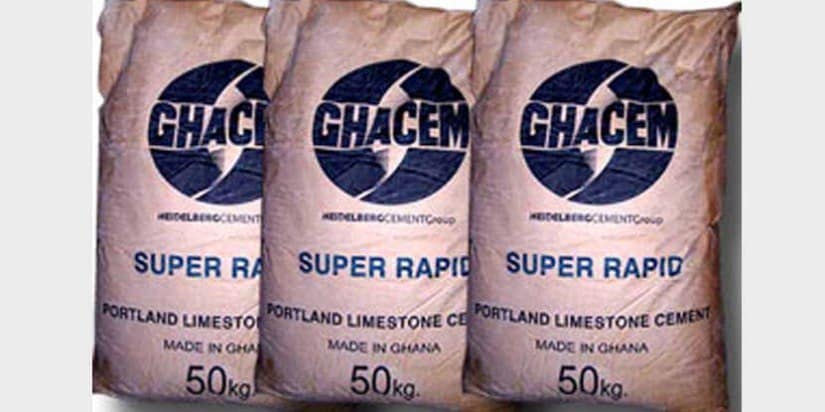
Tag: cement

  • Trade Minister orders closure of factories producing substandard cement

    Trade Minister orders closure of factories producing substandard cement

    Trade Minister Elizabeth Ofosu-Adjare has directed the Ghana Standards Authority (GSA) to immediately shut down cement manufacturers producing substandard products for the local market.

    She stressed that this measure is crucial to preventing the distribution of unsafe products that endanger consumers, industry professionals, and property owners.

    “Close down companies that are defaulting with substandard products to stop production until they can prove they can consistently produce quality products,” she said.

    At a stakeholder meeting on March 5, 2025, the Ghana Standards Authority (GSA) shared worrying data showing that some cement companies were making products that did not meet national standards.

    According to the Cement Manufacturers Development Committee Regulation (L.I. 2480) and the Ghana Standards Authority Act, 2022 (Act 1,078), the minister and the GSA have the power to revoke licenses and stop the sale of poor-quality cement.

    Minister Elizabeth Ofosu-Adjare stressed that safety must come first and that low prices should not be an excuse for selling substandard products.

    “Substandard products, particularly building materials, put everyone at risk,” she added. She also pointed out the potential dangers posed by poor-quality cement in public buildings such as hotels and guesthouses.

    At the meeting, led by Minister Elizabeth Ofosu-Adjare, concerns were raised about the recent increase in cement prices, which was done without approval from the proper authorities. The Cement Manufacturing Development Committee (CMDC), responsible for monitoring the cement industry, has now been tasked with ensuring fair pricing and quality production.

    Industry representatives admitted to raising prices without consulting the CMDC and agreed to reduce them. They also promised to follow the law when setting future prices.

    The minister stressed that while reasonable pricing is necessary, cement quality must not be compromised. She also vowed to conduct regular inspections of factories to prevent the production of substandard cement.

    “We will ensure the industry is well-regulated to protect everyone, including professionals, engineers, homeowners, and consumers,” she assured.

    Regarding price increases, the minister reiterated that cement prices must be declared by the CMDC, and the committee is responsible for publishing the maximum ex-factory prices of cement on a monthly basis. Companies that fail to have their prices approved by the committee will not be allowed to sell.

    Prof. Dodoo, chair of the CMDC, stated that the committee has given all cement companies until the 8th of each month to declare their prices.

    These prices will then be published to consumers by the 15th. While acknowledging that exchange rate fluctuations affect cement prices, the committee reminded companies to be mindful of the economic challenges faced by Ghanaians.
  • Cement prices up effective today, retailers to pay GHS 120 as manufacturers blame import costs

    Cement prices up effective today, retailers to pay GHS 120 as manufacturers blame import costs

    Cement prices in Ghana are about to go up significantly, with retailers planning to increase the cost by around GHC 9 per bag starting Thursday, February 27th. Some retailers have already started charging the new prices.

    Samuel Azu, a cement retailer, confirmed the impending price adjustment, “We have not yet increased the price, but this will take effect starting Thursday. From then on, any customer purchasing a bag of cement will need to pay GHC 120.00.

    “This price hike is essential because, without it, we won’t be able to restock. If you don’t have that amount, you won’t be able to buy cement in Tema or anywhere else in the country. The factories have explained that the government has raised port tariffs,” Azu explained.

    Azu elaborated on the dependency on imported materials, stating “Since most materials used in cement production are imported, any increase in costs from the source directly impacts the final price.”

    Bismark Owusu Tetteh, a retailer, is frustrated with how prices keep changing and believes that stricter regulations are needed.

    Meanwhile, the Ghana Chamber of Construction Industry (GhCCI) has asked the government to step in and fix the situation before it gets worse. Emmanuel Cherry, the CEO of GhCCI, emphasized the government’s responsibility in addressing the problem.

    “The best person to assist us is the government, as they are the ones with the power. The mandate lies with them. We can only talk or advise, but it is their decision to act or not.”

    Last year, cement prices became a hot topic, leading to a disagreement between the Cement Manufacturers Association of Ghana and former Trade and Industry Minister, K.T. Hammond. The dispute was over a new law he proposed to control cement prices.

    The minister’s plan received mixed reactions from those involved in the cement business.

    This year, cement prices are still going up. Some sellers blame the increase on higher port charges.

  • Guidelines on cement use for construction according to GSA

    Guidelines on cement use for construction according to GSA

    The Ghana Standards Authority (GSA) has issued clear guidelines on the appropriate cement types for various construction purposes to enhance structural integrity and durability in the building sector.

    This initiative is part of a public education campaign spearheaded by the Cement Manufacturing Development Committee (CMDC) under the Ghana Standards Authority (Manufacture of Cement) Regulations, 2023 (L.I. 2480).

    The goal is to help builders, contractors, and the general public make informed choices regarding cement application to prevent structural weaknesses and ensure long-lasting buildings.

    The GSA has categorized cement into specific grades based on their strength and application in construction projects:

    • Portland Limestone Cement (32.5R) & Portland Composite Cement (32.5R): Best suited for plastering, masonry work, and screeding in general construction.
    • Portland Limestone Cement (42.5R): Recommended for manufacturing concrete products, including pavement slabs and building blocks.
    • Portland Limestone Cement (42.5N): Ideal for ready-mix concrete production and high-rise building construction.
    • Portland Limestone Cement (52.5N): Designed for structural elements in high-rise buildings, such as columns, beams, and suspended slabs.
    • Masonry Cement (MC 12.5/22.5): Specially formulated for plastering, tiling, block laying, and screeding, ensuring high-quality finishes and long-term durability.
  • Cement sales drop despite indications of economic recovery – Report

    Cement sales drop despite indications of economic recovery – Report

    Even though the economy is beginning to recover, cement sales have yet to see an increase. Recent data from the Bank of Ghana shows that the demand for cement remains far below expectations.

    In January 2022, cement sales in the country were about 300,000 metric tonnes. By May 2024, this number had fallen to roughly 235,000 metric tonnes, as reported by the Bank of Ghana.

    This significant decline over the past two years raises serious questions about the contributing factors, particularly in light of ongoing discussions about rising product costs.

    The specific reasons for this drop are still not fully understood.

    Investigations by Citi Business News at various retail outlets reveal that sales have noticeably decreased in recent months, with traders expressing their concerns about the situation.

    Some industry analysts attribute this decline to a reduction in construction activities, which has been worsened by delays in government projects linked to the state’s debt restructuring efforts.

    The government is actively seeking to control cement prices. The Minister of Trade has stated his commitment to withdrawing the Legislative Instrument currently before Parliament, despite opposition from certain industry groups.

    Additionally, industry stakeholders point to the depreciation of the cedi as a major factor behind the price increases, adding more complexity to the situation.

  • Efforts to stop cement L.I. will be ineffective – K.T. Hammond

    Efforts to stop cement L.I. will be ineffective – K.T. Hammond

    Trade and Industry Minister K.T. Hammond has confidently stated that efforts to prevent the Legislative Instrument (L.I.) for regulating cement pricing will ultimately fail.

    Introduced to Parliament on Tuesday, July 9, by K.T. Hammond, the L.I. has encountered significant resistance from cement manufacturers.

    During a recent stakeholder meeting with the Ghana Chamber of Construction Industry, Hammond disclosed that attempts to block the L.I. from becoming law were underway. He emphasized that such attempts would not be successful.

    Hammond stressed that the L.I. aims to address excessive profiteering by some cement producers and promote greater transparency in cement pricing within the country.

    “Those who are not happy with it, they themselves and their agents are going all over the place asking some leading Members of Parliament to ensure that it is blocked. It is an exercise in futility. You can’t do that. When it is laid, it is laid.

    “What is important that I want you to take away from here is that the L.I does not seek to control prices. It doesn’t control. We can only continue to use the word regulation.

    “I think we have taken some trouble to explain what we mean by regulation… to get the perfect balance between the two – the production end and the purchase end,” K.T Hammond said.

  • Leave or I leave – K.T. Hammond tells cement manufacturers at a round table meeting

    Leave or I leave – K.T. Hammond tells cement manufacturers at a round table meeting

    Trade and Industry Minister Kobina Tahir Hammond dismissed representatives of the Cement Manufacturers Association from a scheduled meeting with the Ghana Chamber of Construction Industry (GCCI) at the Christ the King in Accra last Friday.

    This unexpected move has ignited discussions about the evolving dynamics between the Ministry, the Cement Manufacturers Association, and the Chamber of Construction.

    Captured in a video from the event, Minister Hammond is seen firmly requesting the cement manufacturers to vacate the room before the meeting could proceed.

    “I was invited by the Chamber of Construction. I wasn’t invited by the Association of Cement Manufacturers. I wasn’t invited by them. Can they leave?” he asserted.

    Minister Hammond justified his decision by stating that he had already conducted discussions with the cement manufacturers, and therefore, further dialogue at this meeting was unnecessary. He emphasized that his engagement was exclusively with the Chamber of Construction.

    Faced with the presence of the cement manufacturers, Hammond offered a stark ultimatum: “Two options, that I leave or they leave,” rebuffing attempts by Chamber representatives to validate the manufacturers’ attendance.

    Chairman of the Ghana Chamber of Construction Industries, Emmanuel Tettey Martey, responded to the Minister’s ultimatum by requesting the cement manufacturers to exit.

    “Respectfully, our manufacturers, our minister has stated clearly that he has already met you and you have articulated your issues to him so he thought that he was meeting only the chamber. So that is where we stand. We don’t want a situation where the minister will leave, then we wouldn’t have achieved the purpose for which the meeting was called,” Martey explained.

    Despite additional intervention from Nana Opare Kwafo, Vice Chairman of the Ghana Chamber of Construction and Kyidomhene of Aburi, Minister Hammond remained resolute, insisting on the manufacturers’ departure.

    A source at the meeting confirmed to CitiNewsroom that the cement manufacturers eventually left, allowing the meeting to continue as planned.

    This incident follows a previous altercation on July 1, 2024, when the Cement Manufacturers opted out of a meeting with Minister Hammond due to his insistence on having the media present during the discussions.

    The Trade Minister’s unwavering stance and the subsequent ejection of the manufacturers have sparked widespread debate about the necessity for clear communication and coordination in addressing industry concerns.

    Central to these disagreements is the Minister’s proposed Legislative Instrument aimed at regulating cement pricing, a measure that has met with significant opposition from the manufacturers.

    @woodrhymes #GHANAPOLITICS #germanytiktok #ghanatiktok #foryoupage#fyp #foryoupage #germany#foryoupage #foryoupage#fyp #arroganceofpower npp never again #votendc#fyp #foryoupage #voteJohn mahama #foryoupage #fyp#foryoupage #trending #foryoupage #trending ♬ original sound – RHYMES
  • An analysis on price controls on cement

    An analysis on price controls on cement

    A battle over cement pricing in Ghana reached a new stage this week when the Chamber of Cement Manufacturers (COCMAG) hit back at proposed government regulation. Frédéric Albrecht, the chair of the association, told a meeting that about 80% of local production costs linked to cement manufacture are related to the local currency exchange rate. So fixing the price would do little to address the main cause behind rises.

    Albrecht was speaking at a stakeholders’ forum organised by the Ghana Chamber of Construction. The group was convened to discuss the government’s proposed Ghana Standards Authority (Pricing of Cement) Regulations 2024 that were formally presented in the country’s parliament in early July 2024.

    The association argues that the cement sector has not been consulted properly over the proposal and that introducing it could have negative consequences for the construction sector as a whole. It says that imported clinker is subject to numerous taxes and that the average price of cement has actually lagged behind the rate of inflation.

    The government is dealing with an economic crisis that forced it to default on its external debts in 2022 and ask the International Monetary Fund for support. This has led to depreciation of the local currency and high inflation.

    Around the same time the authorities have also been attempting to regulate the cement sector more closely. In 2022 the Ghana Standards Authority (GSA) took action against a brand of cement, Empire Cement, that appeared to be on sale without any of the required permits.

    Then in the autumn of 2023 the Ghana Revenue Authority (GRA) shut down Wan Heng Ghana’s grinding plant in Tema after the company failed to pay a major tax bill. Action by the GSA followed when it shut down three more plants in the Ashanti Region – Xin An Safe Cement Ghana, Kumasi Cement Ghana and Unicem Cement Ghana – for using inferior materials in cement production.

    In April 2024 a nine-member committee was established to monitor and coordinate the local cement industry. Notably, cement producers have been required to register with the committee in order to secure a licence to manufacture cement.

    Kobina Tahir Hammond, the Trade and Indus¬try Minister, then said in late June 2024 that the government wanted to intervene in cement pricing to protect consumers from what he described as the ‘haphazard’ increment in cement prices by manufacturers.

    A legislative instrument doing just that was presented in parliament on 2 July 2024. Around the same time the GSA reportedly threatened to close down ‘several’ more cement plants for non-compliance.

    The cement industry in Ghana is particularly vulnerable to currency exchange effects as it is dominated by grinding plants. One integrated cement plant, Savanna Diamond Cement, was launched in the north of the country in the mid 2010s.

    However, this compares to 14 licensed grinding plants in the country reported in the local media. This includes units run by Ciments de l’Afrique (CIMAF), Dangote Cement, Diamond Cement (WACEM) and Heidelberg Materials subsidiary Ghacem and its CBI Ghana joint-venture amongst others.

    This makes it one of the countries in Sub-Saharan Africa with the most grinding plants, along with places such as Mozambique and South Africa. When the Ministry of Trade and Industry started a consultation on regulating the cement sector in late 2023 it calculated that the country produced 7.2Mt of cement in 2021 and that the country had an overcapacity of 3.5Mt. This gives the country an estimated cement production capacity of just below 11Mt/yr.

    Some sense of the growing costs that the cement sector in Ghana is facing can be seen in the Ghana Statistical Trade Report for 2023. Clinker was the country’s third biggest import by value at US$206m. It was only exceeded by diesel and other automotive oil products.

    The Ghana Statistical Service reported that most of the country’s imported clinker in 2023 came from Egypt, South Africa and its neighbours in West Africa. Both Dangote Cement and Heidelberg Materials flagged up the country’s economy as being hyperinflationary in their respective annual reports for 2023.

    Argument and counter-argument over cement pricing is prevalent around the world especially in Africa. Fellow West African country Nigeria, for example, has endured plenty of very public dialogue and debate about the price of cement.

    In Ghana’s case it seems more likely than not that factors beyond the control of the local cement companies are driving the prices given the grinding-dominated nature of the sector with lots of different companies involved.

    Negative currency effects and inflation look more likely to be driving cement prices than anything else, although one should always be wary of the potential for cartel-like behaviour by cement producers. The economic crisis in Ghana certainly fits the bill for the conventional introduction of price controls on selected commodities but getting the fine tuning right could be difficult in practice.

    Fixed prices will reassure consumers in the short term provided supplies hold. Beyond this the actual causes of the high cement prices should emerge in time.

    Source: globalcement.com

  • CUTS urges Trade Minister to withdraw cement pricing regulation L.I.

    A prominent research and public policy think tank, CUTS International Accra, is urging the Minister for Trade and Industry, K.T. Hammond, to withdraw the Ghana Standards Authority (Pricing of Cement) Regulations 2024 from Parliament.

    Instead, they recommend advancing the Competition and Fair-Trade Practices Bill of 2022, which they believe will address both sector-specific and broader market issues related to unfair and anti-competitive practices.

    In a statement signed by Appiah Kusi Adomako Esq., the West African Regional Director of CUTS International, the consumer protection organization expressed their appreciation for the Minister’s efforts to reduce cement prices.

    However, they emphasized that any measures taken should be based on solid evidence and should avoid causing market distortions.

    “Whilst in the short term, consumers in the country may be able to see cement prices stabilizing or plummeting because of the tsarist effort by the government. We must equally be concerned about the medium and long-term implications of such an approach. When the government intervenes in a deregulated market and comes with price controls, it has the potential to scare industry players as well as potential investors.” the statement explained.

    It further stated that “in the long run, some of the cement players may decide to exit the market because they do not find it profitable, deterring potential new entrants. If care is not taken the fourteen cement companies in the country could be reduced to one or two or they may be emboldened to form a cartel or price-fixing gang. This can take us back to the antediluvian days of the GHACEM monopoly or the GHACEM-Diamond duopoly”.

    CUTS International is concerned about the way regulations are developed in Ghana without thorough regulatory impact assessments by ministries and agencies to gauge potential unintended consequences. This approach has previously led to issues such as the financial sector cleanup, which resulted in the collapse of many local banks and savings and loans institutions.

    The consumer protection organization further pointed out that most of the major banks in the country are now foreign-owned. These foreign banks repatriate their profits and dividends, contributing to the depreciation of the cedi.

    The Problem of the Cement Industry

    Minister K.T Hammond in an interview said that the total installed capacity of the local cement producers in the country is about 11 million metric tonnes and the demand is not up to the supply limit. The Minister believes that there could cement cartels in the country. But far from the issue of demand and supply, the Minister failed to admit macroeconomic factors like inflation, interest and exchange rates that conspire against cement producers. It is not only cement that the prices have gone up. The prices of almost all goods in the country have gone up: iron rods, nails, paint, used and brand-new cars, roofing sheets, clothing, and even plot of land.

    The statement emphasized that “everywhere in the world, standards authorities like the Ghana Standard Authority (GSA) has a duty to set and enforce technical standards as contained in Act 1078. Nowhere in the world is a standard agency involved in price setting and price control. The Cement Price Committee comprises six scientists headed by the Director General of the GSA Professor Alex Dodoo. Price regulations fall within the competencies of economists and mathematicians. Take for instance, the Energy Commission is a technical regulator of the energy sector whilst economic regulation of electricity falls under the competencies of the Public Utility Regulatory Commission (PURC).”

    It further stated that whilst the LI may succeed in the short run to tame cement prices, the LI cannot resolve the issue of cartels, if any in the cement industry. Cartels can connive to control the supply of essential goods just to cause the prices to go up. The LI cannot resolve the issue of price fixing in the industry, if any. Currently, price fixing in Ghana is not an offense with the exception of Section 44 of the National Petroleum Act 2005, Act 691 which criminalizes the conduct of price fixing, cartels, market sharing and other restrictive trade conducts within the petroleum downstream sector.

    CUTS hinted that there are lots of businesses and trade associations engaging in restrictive trade and anti-competitive conducts that tend to harm consumers and other businesses. All of these conducts cannot be prosecuted because Article 19 (11) of the 1992 Constitution mandates that “no person shall be convicted of a criminal offense unless the offense is defined and the penalty for it is prescribed in a written law.”

    CUTS advocates for the implementation of a Competition and Fair-Trade law as the most effective solution to this issue. Once enacted, this law will encourage fair competition, safeguard consumers, create a level playing field for businesses, and drive innovation and economic efficiency. It will also prevent monopolies and curb the abuse of dominant market positions, ensuring no single entity can dominate the market to the disadvantage of competitors and consumers. Since 2006, Ghana has had a draft National Competition and Fair-Trade Practices Bill, along with the Consumer Protection Bill, pending with the Ministry of Trade and Industry.

    “It is through a functional competition regime that will safeguard the free market against the tyranny of unfair trading practices and to bring efficiency to the market.” the statement added.

  • Proposed legislative price controls on cement could lead to shortage – Manufacturers

    Proposed legislative price controls on cement could lead to shortage – Manufacturers

    The CEO of the Chamber of Cement Manufacturers have warned that a proposed Legislative Instrument (LI) aimed at controlling cement prices, if approved, could severely reduce production.

    Dr. George Dawson-Amoah said, “If you force a producer to sell at that price, and it’s not profitable, there’s market distortion.

    “He/she would not produce, and if they don’t produce, then there will be a shortage. Is Ghana ready for a cement shortage?”

    In an interview with George Wiafe on PM Express Business, he underscored the capital-intensive nature of the cement sector, suggesting that enforced price reductions could deter future investments.

    “If you’re going to force me to sell at a price that is not profitable, investment will be curtailed. Don’t forget, we have workers and other costs, so the workers will be affected,” he explained.

    Dr. Dawson-Amoah criticized the government, accusing it of prioritizing political expediency over economic prudence in an election year.

    “The thought that went into regulating cement prices is more politically motivated than economic. But we need to ask if Ghana is ready for it. Economically, Ghana is not ready for it,” he stated.

    He also questioned the timing of the proposal, wondering why it wasn’t initiated earlier, rather than during an election season.

    These remarks follow prolonged disagreements between the Chamber and the sector ministry regarding the proposed LI.

    Manufacturers have expressed concerns that the instrument fails to address the underlying factors driving up cement prices.

    While the Trade Minister has presented the LI to Parliament for consideration, the Chamber CEO expressed disappointment over inadequate consultation with stakeholders.

    In contrast, Prof. Alex Dodoo, Director General of the Ghana Standards Board, advocated for regulation in the industry.

    He disputed claims that the directive was politically motivated, emphasizing the need for industry oversight.

    “We have an industry that was never regulated. You begin to regulate it, and players who have been calling the shots to Ghanaians begin to present a different face,” he said.

  • We have altered cement L.I. to suit your demands, why still oppose it – Afenyo-Markin asks NDC MPs

    Majority Leader and Member of Parliament for the Effutu Constituency, Alexander Afenyo-Markin, has accused the National Democratic Congress (NDC) legislators of acting in bad faith regarding a new Legislative Instrument (L.I) intended to regulate cement pricing.

    This follows a recent directive from Speaker Alban Bagbin, advising Trade and Industry Minister K.T. Hammond to withdraw the L.I. after NDC MPs raised new concerns despite previously agreeing to its introduction.

    Expressing his frustration, Afenyo-Markin questioned the motives behind the NDC’s actions.

    “When the L.I. was first proposed, our colleagues suggested it undergo a pre-laying process, which we accepted. The Subsidiary Legislative Committee of Parliament, led by Dr. Dominic Ayine, reviewed the L.I. and recommended amendments. K.T. Hammond incorporated every proposed amendment into the new L.I. before it was laid again,” he explained.

    “Despite this, the next day, members of the Minority attacked the government over the same L.I.”

    Afenyo-Markin clarified that the L.I.’s primary goal is to foster competition in the cement industry rather than directly regulate prices.

    “This is not an attempt to reintroduce price controls. Our government supports free market principles but believes in regulating to ensure fairness,” he stated.

    The Cement Manufacturing Development Committee has also taken a firm stance, warning manufacturers to comply with the new pricing regulations. Professor Alex Dodoo, Chairman of the Committee, emphasized on Joy FM’s Super Morning Show that manufacturers’ licenses could be revoked if they fail to adhere to the ex-factory price reporting requirements.

    “While retailers also have reporting obligations, the penalties are less severe compared to those for manufacturers,” he noted.

  • We believe in a free market enterprise, not price control system – Majority Leader on cement L.I

    We believe in a free market enterprise, not price control system – Majority Leader on cement L.I

    Majority Leader and Member of Parliament for the Effutu Constituency, Alexander Afenyo-Markin, has accused the National Democratic Congress (NDC) legislators of acting in bad faith regarding a new Legislative Instrument (L.I) intended to regulate cement pricing.

    This follows a recent directive from Speaker Alban Bagbin, advising Trade and Industry Minister K.T. Hammond to withdraw the L.I. after NDC MPs raised new concerns despite previously agreeing to its introduction.

    Expressing his frustration, Afenyo-Markin questioned the motives behind the NDC’s actions.

    “When the L.I. was first proposed, our colleagues suggested it undergo a pre-laying process, which we accepted. The Subsidiary Legislative Committee of Parliament, led by Dr. Dominic Ayine, reviewed the L.I. and recommended amendments. K.T. Hammond incorporated every proposed amendment into the new L.I. before it was laid again,” he explained.

    “Despite this, the next day, members of the Minority attacked the government over the same L.I.”

    Afenyo-Markin clarified that the L.I.’s primary goal is to foster competition in the cement industry rather than directly regulate prices.

    “This is not an attempt to reintroduce price controls. Our government supports free market principles but believes in regulating to ensure fairness,” he stated.

    The Cement Manufacturing Development Committee has also taken a firm stance, warning manufacturers to comply with the new pricing regulations. Professor Alex Dodoo, Chairman of the Committee, emphasized on Joy FM’s Super Morning Show that manufacturers’ licenses could be revoked if they fail to adhere to the ex-factory price reporting requirements.

    “While retailers also have reporting obligations, the penalties are less severe compared to those for manufacturers,” he noted.

  • Adding fake materials to produce cement is criminal – GSA boss

    Adding fake materials to produce cement is criminal – GSA boss

    Professor Alex Dodoo, Director General of the Ghana Standards Authority (GSA) and Chairman of the Cement Manufacturing Development Committee, issued a strong caution to cement manufacturers involved in hazardous practices.

    He emphasized the serious dangers and possible legal ramifications of incorporating unacceptable materials into cement production.

    During an interview on the Joy FM Super Morning Show, Prof Dodoo estimated that around 70 percent of cement manufacturers comply with standard protocols.

    He therefore described the actions of the remaining 30 percent of manufacturers as “deliberately criminal” due to the dangers they pose by compromising the integrity and safety of the cement

    “I stay awake at night panicking about some of the practices of some cement manufacturers. And we are duty-bound to stop it. People are putting unacceptable things in the making of cement,” he said on Wednesday.

    To preemptively tackle these issues, the GSA has procured state-of-the-art equipment capable of swiftly analyzing cement products.

    “Thankfully, we have acquired equipment that can at quick notice do an ‘x-ray’ of the products and tell you the unacceptable products both for cement and subsequently, the iron rods so that consumers get the quality they need,” he added.

    However, the GSA leader emphasized that manufacturers bear the responsibility to uphold stringent standards and refrain from taking shortcuts that jeopardize public safety.

    “Once you manufacture a product, especially cement, you must be an expert in the field. Being an expert in the field presumes that you know the risk of adding things that will give you a strong product today but will fall like a pack of cards tomorrow,” he said.

    He emphasized once more that the GSA remains dedicated to ensuring strict adherence to standards among all cement manufacturers to prevent potential disasters.

    “We don’t want to see any more buildings collapsing,” he stated.

  • Trade Minister’s cement L.I. laid before Parliament

    Trade Minister’s cement L.I. laid before Parliament

    The Trade Minister, K.T. Hammond, has sparked debates in Parliament with a proposed Legislative Instrument (L.I) aimed at regulating the price of cement, which has now been laid for consideration.

    Initially intended to enforce price controls on cement, the L.I. has undergone amendments following criticisms from various stakeholders, including the Minority Chief Whip, Kwame Governs Agbodza.

    Agbodza expressed cautious approval after clarifying that the revised L.I. focuses on requiring cement manufacturers to regularly report pricing decisions to the government rather than imposing direct price controls.

    “We (Minority) are okay to support it. The price control element has been taken out. It is now about price reporting to the committee,” Agbodza stated during deliberations on the floor of Parliament.

    The Minority’s acceptance of the revised L.I. hinges on its new provisions, which they believe mitigate concerns about government overreach into market pricing dynamics.

    Meanwhile, tensions have risen among cement manufacturers, prompting discussions about seeking intervention from the Economic Management Team (EMT).

    Dr. Dawson Amoah, President of the Cement Manufacturers Association, emphasized the significance of the issue for both producers and consumers.

    “We’re exploring options beyond the Ministry of Trade and Industry, including engaging with the Economic Management Team,” Dr. Amoah disclosed, highlighting ongoing efforts to address industry concerns during the 21-day period the L.I. is before Parliament.

    The proposal has stirred broader discussions about government intervention in pricing policies and its implications for market dynamics and consumer affordability.

    Stakeholders await further developments as Parliament deliberates on the future of cement pricing regulations in Ghana.

    As the debate unfolds, both proponents and critics of the L.I. are expected to present their arguments, shaping the final decision on whether the amended instrument will become law or face annulment by Parliament.

  • Cement manufacturers withholding information on cost structures – Prof. Alex Dodoo

    Cement manufacturers withholding information on cost structures – Prof. Alex Dodoo

    The chairman of a committee tasked by Ghana’s Trade Minister to address rising cement prices, Prof. Alex Dodoo, has accused cement manufacturers of withholding critical information needed to resolve the issue effectively.

    Prof. Alex Dodoo, who is the Director General of the Ghana Standards Authority, revealed that in five separate meetings, manufacturers failed to disclose their cost structures and other factors influencing product pricing.

    The committee, convened to formulate plans to tackle soaring cement prices, aimed to enforce transparency within the industry. Prof. Dodoo emphasized the importance of transparency in cement pricing, stating that consumers should have access to information about extraction costs at factory gates.

    “The question is, are we being charged too much for cement as it comes to the factory? At the committee meetings, the manufacturers were asked to declare their extraction prices, but this crucial information was not forthcoming,” Prof. Dodoo explained to JoyNews.

    He highlighted that the proposed legislative instrument seeks to promote openness and fairness in cement pricing, ensuring that Ghanaian consumers receive a fair deal and manufacturers obtain a reasonable return on investment.

    Responding to concerns, Dr. Dawson Amoah, CEO of the Cement Manufacturers Association, acknowledged the challenges but stressed the necessity of dialogue to stabilize prices rather than imposing price regulations.

    “It is not a decision taken lightly when manufacturers increase prices. There is reluctance because they understand the impact on consumers,” Dr. Amoah stated, advocating for collaborative efforts to maintain price stability.

    Meanwhile, amidst efforts to regulate prices, the Ghana Standards Authority has intensified measures to uphold cement quality standards. Prof. Dodoo announced plans to shut down cement companies producing substandard products to safeguard quality and maintain consumer confidence.

    “We have identified some players resorting to compromising on quality to compete. We closed down three such companies and intend to shut more in the coming days. Quality is non-negotiable,” Prof. Dodoo affirmed.

    Currently, Ghana hosts 14 licensed cement factories, each playing a crucial role in the country’s construction sector. The ongoing discussions in Parliament aim to strike a balance between regulatory measures and market dynamics, ensuring that regulations support fair competition while upholding Ghana’s reputation as a promoter of free markets.

    The dialogue between stakeholders continues as Ghana seeks effective strategies to mitigate the impact of rising cement prices on consumers while fostering sustainable growth in the construction industry.

  • Cement manufacturers producing low-quality products will face shutdown – GSA

    Cement manufacturers producing low-quality products will face shutdown – GSA

    The Ghana Standards Authority (GSA) is set to shut down certain cement manufacturing companies producing low-quality products.

    This initiative aims to tackle substandard cement production nationwide and safeguard consumers, aligning with the Ghana Standards Authority Act 2022.

    Presently, only 14 licensed cement factories are operating within the country.

    However, in an interview with JoyNews, the Director General of the Authority, Prof. Alex Dodoo, stated that some factories are utilizing poor-quality materials in their production processes.

    He emphasized that this situation is unacceptable.

    “The Standard Authority has done a research and we have noticed that some particular players believe that the only way to compete is to reduce the quality of cement.

    “We have closed up three of them and I can assure you that in the coming days a lot more will be closed down because if there is one thing we will not compromise on, that is quality,” he stressed.

    Prof. Dodoo, who also chairs the Cement Manufacturing Development Committee responsible for creating a framework to regulate product pricing, explained that the newly proposed legislation aims to ensure industry transparency.

    “Indeed, all players have agreed and we know the cost build up; clinker is key, energy is key and exchange rate is key.

    “I believe that the whole purpose of the legislation is to promote openness and transparency in cement prices and cement manufacturers have indicated that there are some taxes that must be reviewed.”

    The Chief Executive Officer of the Cement Manufacturers Association, Dr. Dawson Amoah, stated that the Association’s members are prepared for a dialogue.

    “I am a consumer myself and it is not out of fun that manufactures get up and increase prices. Anytime there is price increase, it is really with reluctance because they feel the effect.

    “But they don’t have any other option but to do so.. so rather, I will reiterate that whatever efforts the minister wants to put in regulating the prices, be put on hold and I will rather suggest that there should be a dialogue to see how we can stabilize cement prices.”

  • GSA manhunts cement factories using inferior materials

    GSA manhunts cement factories using inferior materials

    The Ghana Standards Authority (GSA) is set to take decisive action against cement manufacturing firms producing substandard products, aiming to safeguard consumers under the Ghana Standards Authority Act 2022.

    Currently, Ghana hosts only 14 licensed cement factories, but concerns over quality have prompted the GSA to intensify its scrutiny.

    Director General Prof. Alex Dodoo highlighted that some manufacturers have resorted to using inferior materials to cut costs, a practice deemed unacceptable by the authority.

    “Our research indicates that certain manufacturers are compromising on cement quality to gain a competitive edge,” Prof. Dodoo emphasized in an interview with JoyNews.

    “We have already shut down three such operations, and more closures are imminent. Quality is non-negotiable for us.”

    Prof. Dodoo, who also chairs the Cement Manufacturing Development Committee tasked with regulating pricing frameworks, underscored the need for transparency in the industry.

    He explained that proposed legislation aims to ensure openness in cement pricing, addressing key cost components like clinker, energy, and exchange rates.

    “All stakeholders agree on the importance of transparency,” Prof. Dodoo stated. “Our goal is to promote fairness in pricing, and cement manufacturers have signaled their readiness to engage constructively on necessary tax reviews.”

    Meanwhile, Dr. Dawson Amoah, CEO of the Cement Manufacturers Association, expressed readiness for dialogue on pricing regulations. He acknowledged the impact of price increases on consumers and urged for collaborative efforts to stabilize cement prices.

    “As manufacturers, we understand the consumer’s perspective and the challenges of price adjustments,” Dr. Amoah remarked. “We advocate for dialogue over immediate regulatory actions, aiming to achieve price stability through mutual understanding.”

  • Move to regulate cement prices perfect – PNP to K.T. Hammond

    Move to regulate cement prices perfect – PNP to K.T. Hammond

    The People’s National Party (PNP) has praised the Minister for Trade and Industry, K.T. Hammond, for proposing a bill in Parliament aimed at regulating cement prices.

    In a statement issued by National Chairman and Leader the PNP, Janet Asana Nablah, expressed confidence that this move would enhance affordability of cement for ordinary Ghanaians.

    The party asserted that opposition to the bill stems from those seeking to undermine its positive impact on Ghanaian society.

    “Only those seeking to undermine this positive effort would oppose this commendable piece of legislation.”

    “It is evident that some Members of Parliament prioritize the interests of the businessmen and women who funded their campaigns over those of their constituents.

    It pointed out that some Members of Parliament prioritize the interests of their campaign financiers over those of their constituents, often opposing policies beneficial to Ghanaian families due to their obligations to sponsors.

    Additionally, the statement urged the Ministries of Trade, Works and Housing, and Agriculture to expand this initiative by introducing further legislative measures to regulate food and rent prices, which are increasingly burdening many Ghanaian households.

    “We call on all Ghanaian families to vote against any political party in the 2024 elections that puts the interests of businesses ahead of the wellbeing of ordinary citizens like yourselves.”

    “Be vigilant and oppose any parties that support business practices that are detrimental to the everyday Ghanaian household. Your families deserve leaders who will prioritize your welfare over corporate profits,” the statement added.

  • Cement prices to surge by GHC12 from July 1 – Reports

    Cement prices to surge by GHC12 from July 1 – Reports

    Cement manufacturers in Ghana are said to have announced plans to raise prices, marking the second increase this year.

    Dr. Stephen Debrah-Ablormeti, former Vice Chair of the Ghana Real Estate Developers Association, revealed that the price of cement, which had already gone up by GH₵10.00 in May, will see an additional increase of GH₵12.00 starting July 1.

    Dr. Debrah-Ablormeti explained that cement manufacturers communicated their decision to hike prices just days ago.

    “Effective July 1, the price of cement will rise once again,” he said.

    He emphasized the significant impact this increase will have on construction costs.

    “Given that cement accounts for approximately 70% of building materials, an increase in cement prices leads to a corresponding rise in the cost of blocks, concrete, and plastering materials,” he noted.

    “A project that starts in January can experience a 30-45% cost increase by December due to these price hikes.”

    In addition to the rising cement prices, Dr. Debrah-Ablormeti highlighted that the cost of iron rods has also surged by 28% over the past two months.

    This further exacerbates the financial burden on developers.

    “Managing costs as developers is becoming increasingly challenging. We support the efforts of the Honorable Minister to address this issue and create a fair competitive environment in the market,” he stated.

    In response to the situation, Trade and Industry Minister K.T. Hammond has announced his intention to proceed with the implementation of a legislative instrument (L.I.) designed to regulate cement prices in Ghana.

    Despite a petition from the Chamber of Cement Manufacturers to delay the law, K.T. Hammond remains steadfast. He stressed the importance of the law in preventing exploitation by a cartel of manufacturers. A

    ccording to the proposed L.I., violations by cement manufacturers could result in up to three years of imprisonment.

    The move has faced opposition from the Minority in Parliament and various interest groups. Nevertheless, K.T. Hammond is determined to enforce the regulation to ensure fair pricing and protect consumers.

  • It’s pretty insulting to write to parliament against me – K.T. Hammond to Cement Manufacturers CEO

    It’s pretty insulting to write to parliament against me – K.T. Hammond to Cement Manufacturers CEO

    Trade Minister K.T. Hammond has criticized CEO of the Chamber of Cement Manufacturers, Ghana, Dr. George Dawson-Ahmoah, for submitting a petition to Parliament urging the rejection of a proposed legislative instrument aimed at regulating cement pricing.

    The Chamber of Cement Manufacturers, Ghana, voiced serious apprehension about the proposed L.I, contending that it undermines fairness, transparency, and inclusive decision-making while neglecting the intricate factors behind rising cement prices.

    Speaking to journalists, K.T. Hammond affirmed the government’s steadfast commitment to safeguarding Ghanaian consumers from unfair practices in the cement market.

    “I think there’s something fundamentally wrong with the pricing of our cement in the country. It was about the same issue that we tackled when we were at the Ministry of Energy. I believe that there has to be some sanity in the system… And so today, I have received a copy of a petition written by the Association of Chamber of Cement Manufacturers, whatever.

    “Pretty insulting, Dr. George Dawson-Ahmoah, he’s been a person I have known for many years when he was at GHACEM. We have been very good friends.

    “When we started all this cement manufacturing, whatever, he was part of it. He has been in consultation with us. He has been on board with respect to all that we have undertaken. Now he arrives in parliament and tells parliament to order me to take back my documents and to consult with him because what I have done is not right or respectful or something because I hadn’t told him. You know, sometimes you have to be careful when some of these things come about.

    “But he has a PhD, he’s a doctor, so reading and comprehension shouldn’t be a problem for him. He should go and read the constitution and he will see that by Article 11 thereof, Parliament doesn’t tell me to go and consult with him. I mean, the procedures that he’s talking about, if he understands, I don’t know,” the minister told the media.

  • Prices of Cement: We tried to engage cement manufacturers morally but they did not listen – Trade Minister

    Prices of Cement: We tried to engage cement manufacturers morally but they did not listen – Trade Minister

    Trade Minister KT Hammond has stated that before the Legislative Instrument (L.I.) to regulate cement prices was introduced, he had urged cement producers to lower their prices.

    However, he noted that the producers did not respond to his appeals, which led to the introduction of the L.I. to enforce price reductions.

    Speaking to journalists in Parliament on Wednesday, June 26, he said “So I asked them to ensure that something was done about it. In my absence I was told that the minister was not going to be able to do anything. They would not listen. They would not do it. They will go the way they want. Well, I have only one other avenue. I mean encouraging them to do it is a moral persuasion.”

    “If moral persuasion fails, there is a system in the country. There is a constitution in the country. We all play by rule of law. You come to parliament and you make sure that there are laws. We have the constitution. So if the constitution mandates me to bring an airline, I bring an airline to ensure that somebody abides by…err..errm…If we don’t accept the moral principle, at least some sort of economic principle. The good people of Ghana must benefit,” Mr Hammond expressed.

    His comments come after the Executive Secretary of the  Cement Manufacturers Association of Ghana (CMAG) Rev. Dr. George Dawson-Ahmoah said that  Mr K T Hammond did not engage them the Legislative Instrument.

    “Why is the Minister avoiding or just running away from this discussion? Previously, our position has been that these prices of  cement, the increase of prices of  cement, it is not done in a vacuum. It is not done just because we wake up in the morning and do it,”  he said.

  • Bill to check prices of cement will be passed before Parliament adjourns – K.T. Hammond

    Bill to check prices of cement will be passed before Parliament adjourns – K.T. Hammond

    Trade and Industry Minister K.T. Hammond has declared his intention to disregard a petition from the Chamber of Cement Manufacturers, which sought to delay the implementation of a legislative instrument (L.I.) aimed at regulating cement prices in Ghana.

    K.T. Hammond emphasized that the law is crucial to prevent exploitation by a cartel of manufacturers.

    According to the proposed L.I., cement manufacturers could face up to three years in prison for violations. Despite opposition from the Minority in Parliament and various interest groups, K.T. Hammond remains resolute in his decision.

    In an interview with Evans Mensah on JoyNews’ PM Express, K.T. Hammond explained that he has made multiple attempts to engage the manufacturers in good faith. However, these efforts were unsuccessful, leading to his decision to enforce the law to ensure fair pricing for consumers.

    “I intend to ignore the petition. I am working in the interest of the good people of Ghana and not in the interest of cement manufacturing companies,” he asserted.

    Hammond noted that although the manufacturers were not consulted during the drafting of the L.I., he has consistently communicated with them about the need for transparency in pricing.

    “I didn’t have to consult them in drafting the L.I. I warned them consistently that they couldn’t do what they’re doing—raising prices. I consulted with them several times in my office, I told them what I wanted. I wanted them to be transparent, for there to be a reduction,” he said.

    He mentioned that the manufacturers had dismissed his warnings, leading to his decision to move forward with the legislative process.

    “On a simple matter of price publication and self-regularisation, I have been going on and on… it gets to a point when something has to be done, and what has to be done for me within the law is to go to Parliament,” the Trade Minister stated.

    K.T. Hammond expressed hope that the bill to regulate cement prices will be passed soon. He aims to lay the legislative instrument in Parliament and secure its passage before the current session expires.

    “I have given the bill to my leader, the Majority Leader, to get it laid, and I expect that within 21 days it should become law. By Thursday or Friday, it should be laid. I have a funny feeling that on this occasion they won’t battle me because if you battle me on this, you are battling the good people of Ghana,” he concluded.

  • I didn’t consult cement manufacturers in drafting L.I, I warned them! – K.T. Hammond

    I didn’t consult cement manufacturers in drafting L.I, I warned them! – K.T. Hammond

    Trade Minister Kobina Tahir Hammond has dismissed calls from cement manufacturers for stakeholder discussions before presenting a legislative instrument (L.I.) aimed at regulating cement prices to Parliament.

    Speaking on JoyNews’ PM Express, Hammond explained that although manufacturers were not consulted during the drafting of the L.I., he had ongoing conversations with them about pricing transparency.

    “I didn’t have to consult them in drafting the L.I. I warned them consistently that they couldn’t do what they’re doing [raising prices]. I consulted with them several times in my office, I told them what I wanted. I wanted them to be transparent, there to be a reduction, I wanted us to understand the basis and the publication,” he said.

    Hammond stated that he had urged cement manufacturers to self-regulate their pricing to prevent prices from skyrocketing, but his efforts were ignored. He believes the proposed L.I. will push manufacturers to be transparent about production costs and create a beneficial price ceiling.

    “The reality is very clear, the cedi hasn’t been performing greatly of late, we accept that there is a difficulty. But, let’s understand the pricing mechanism just as the petroleum sector is regulated by the NPA, so everyone knows the basis,” he explained.

    Hammond added that the price ceiling would be determined after considering all factors, including production costs, profit margins, and currency depreciation. He emphasized the need for the L.I. to prevent the exploitation of the public by cement manufacturers.

    This move follows a petition by the Chamber of Cement Manufacturers to Parliament, rejecting the proposed L.I. due to a lack of prior consultation with key stakeholders. They argued that addressing the issues behind cement price hikes requires a collaborative effort from all relevant parties.

    “We firmly believe that the issues leading to the escalation of cement prices are complex and multifaceted, primarily driven by the rapid and consistent depreciation of the Ghanaian cedi against the US dollar. Addressing these challenges requires a comprehensive understanding and collaborative effort from all relevant parties,” their letter stated.

    Background

    In May 2024, Hammond instructed the Cement Manufacturing Development Committee (CMDC) to reverse the recent price hikes. However, the Cement Manufacturers Association (CMA) rejected this directive, citing production costs and free market principles.

    On June 25, Hammond presented the L.I. titled ‘The Ghana Standard Authority Pricing of Cement Regulations 2024’ to Parliament, facing fierce opposition. NDC MPs demanded that the L.I. undergo pre-laying procedures before being formally presented.

    Under the proposed L.I., cement manufacturers could face up to three years in jail for violating price regulations. The document sets a maximum allowable retail price for cement and imposes stiff penalties on violators, including corporate directors and officers.

    “In the case of a body corporate, every director and officer of that body corporate is deemed to have committed that offence,” Hammond explained.

    “If you violate this, and you sell above the price ceiling, the directors of the company, the officers of that body corporate will be thrown into jail if indeed you’re found guilty up to three years in jail.”

  • Proposed L.I. could impose 3-year jail terms on cement manufacturers

    Proposed L.I. could impose 3-year jail terms on cement manufacturers

    Manufacturers of cement products face the possibility of up to three years’ imprisonment for violating specific provisions outlined in the proposed Legislative Instrument (L.I.) spearheaded by Trade Minister K.T. Hammond.

    The stringent penalty is outlined in the draft document that the Trade Minister intends to introduce to Parliament, as reported by JoyNews.

    Trade Minister K.T. Hammond defends his decision to present the instrument to Parliament, underscoring that extensive consultations with stakeholders have informed its formulation.

    Executive Secretary of the Cement Manufacturers Association of Ghana (CMAG), Rev. Dr. George Dawson-Ahmoah, criticized the Minister’s strategy to lower prices, likening it to a case of misplaced priorities.

    He pointed out that manufacturers were not consulted prior to the proposal, leaving them unaware of the specifics outlined in the draft document.

    “We don’t know anything about it. And with my common knowledge in legislative instruments, don’t you involve stakeholders before it gets to Parliament? Don’t you involve stakeholders in the process?” he quizzed on Tuesday.

    However, addressing journalists today, K.T. Hammond emphasized that cement prices have been steadily rising, necessitating action.

    He stressed that the Legislative Instrument (L.I.) is essential to prevent a cartel of cement manufacturers from exploiting the public.

    “At a point in time, we are not producing so much cement in the country. Now we have an installed capacity of over 11 million tons in the country. Our demand is nothing like 11 million, so it must be a very profitable enterprise.

    “But I think it behoves those in responsible positions in authority to ensure that the good people of Ghana are not fleeced. I am not comfortable, I don’t believe that we’re getting good prizes for all that it’s worth,” he said.

    The Trade Minister asserted that there are fundamental issues with cement pricing in the country, highlighting its essential role in every sector of the economy.

    “Now I take the view that it’s about time that the country was better served by those who are selling this product to us.

    “You have a kind of arbitrariness in the pricing of cement. It’s been so haphazard, I strongly believe that there must be some sanity in the system,” K.T. Hammond said.

  • Cement manufacturers slam K.T. Hammond over use of L.I instrument to regulate cement price hike

    Executive Secretary of the Cement Manufacturers Association of Ghana (CMAG) is taken aback by the move by the Trade Ministry to introduce a Legislative Instrument (L.I) to regulate the price of cement products.

    Rev. Dr. George Dawson-Ahmoah argues that the Minister’s approach to reducing prices is like putting the cart before the horse.

    He asserts that his organization was not consulted about the proposal and is unaware of the contents of the draft document.

    “We don’t know anything about it. And with my common knowledge in legislative instruments, don’t you involve stakeholders before it gets to Parliament? Don’t you involve stakeholders in the process?” he quizzed on Tuesday.

    This development follows public outcry over the rising prices of the commodity. In response, the Minister introduced a new legislative instrument, which faced strong opposition from the Minority.

    The NDC MPs are insisting that the legislative instrument (LI) undergo pre-laying procedures before being formally presented.

    During a media engagement Dr. Dawson-Ahmoah criticized the Minister’s approach, arguing that the government should prioritize addressing the underlying economic challenges instead.

    He pointed out that the price hike is primarily driven by the depreciation of the local currency.

    “Why is the Minister avoiding or just running away from this discussion? Previously, our position has been that these prices of cement, the increase of prices of cement, it is not done in a vacuum. It is not done just because we wake up in the morning and do it.

    It is as a result of a negative trend in the economy, which is warranting such increases, and that is the issue. And like I said, what is happening now with cement prices is just because of the rapid and consistent depreciation of the cedi against the foreign currencies” he added.

  • Minority in parliament halts introduction of legislation for cement pricing

    Minority in parliament halts introduction of legislation for cement pricing

    The laying of a legislative instrument from the Trade and Industry Ministry, intended to regulate the pricing of cement products in Ghana, has been halted by the Minority in Parliament.

    Trade Minister KT Hammond had instructed cement manufacturers to retract their decision to increase prices several weeks ago.

    Manufacturers and the Association of Ghana Industries (AGI) turned down this decision.

    The Minister’s attempt to secure legal support is now encountering strong resistance in Parliament.

    NDC MPs are insisting on pre-laying procedures for the legislative instrument (LI) before its formal introduction.

    According to the Majority Leader, Alexander Afenyo-Markin, the NDC’s demand for pre-laying each L.I. contradicts the constitution.

    “It adds up to nothing. In any event, any matter arising there too can still be resolved and when the document is properly before the committee. The Committee will be seized with jurisdiction only if we lay it and a referral made,” he said on the floor.

  • Journalists earn less than my cement shop attendant – Bridget Otoo

    Journalists earn less than my cement shop attendant – Bridget Otoo

    Award-winning broadcaster, Bridget Otoo, has shed light on the financial struggles faced by Ghanaian journalists, revealing that many receive meager salaries at the end of each month.

    As an anchor for Metro TV, Otoo lamented the significant decline in the quality of journalism in the country, attributing it to the inadequate compensation received by media professionals.

    Otoo urged media house owners to recognize the value of quality journalism by offering competitive salaries that motivate their employees to excel.

    In a candid admission, Madam Otoo revealed that she pays her cement shop attendant a higher wage than what many journalists earn from their respective media organizations.

    “In 2024, offering a journalist a basic salary of GH₵3,000 would be considered reasonable. However, the reality is far from that. I can personally attest that I pay my cement shop staff even more generously than what some journalists receive,” Otoo emphasized, underscoring the critical role of financial remuneration in the journalism profession.

    She stressed the importance of fair compensation in motivating journalists to perform at their best, highlighting the need for media organizations to prioritize the financial well-being of their employees to ensure a vibrant and high-quality journalistic landscape in Ghana.

  • Cement prices hit GH¢108 as manufacturers defy Trade Minister’s directive

    Despite the ministerial directive to the Cement Manufacturing Development Committee in Ghana, cement prices continue to rise, causing significant disruption in the real estate industry and driving rents in Accra to unprecedented levels.

    According to GBC Ghana Online, there has been a noticeable increase in cement prices from last week to this week, leaving many buyers puzzled.

    In May 2024, cement prices ranged from GH¢85 to GH¢90, depending on the brand and mix ratio. However, as of June 4, 2024, prices have surged to approximately GH¢110, according to dealers in Pokuase.

    One dealer reported that Dzata cement (42R) is now priced at GH¢108, Cimaf (42R) at GH¢107, Cimaf (32R) at GH¢87, and Ghacem leads the market with Ghacem (42R) at GH¢110.

    Further inquiries revealed that Diamond cement is selling between GH¢75 and GH¢85, while Dangote cement is priced between GH¢92 and GH¢94.

    Less than a month ago, Minister of Trade and Industry Kobina Tahir Hammond called for an immediate reversal of recent cement price hikes to alleviate the burden on Ghanaians.

    However, it appears this directive has been ignored, possibly due to the underlying causes of the price increases being overlooked.

    In a statement released on Tuesday, May 15, the Ministry instructed the Cement Manufacturing Development Committee (CMDC) to enforce the directive without exception.

    The statement reiterated the Minister’s demand for the Committee to collaborate with cement companies to ensure uniform pricing nationwide.

    The CMDC, established under the Ghana Standards Authority (Manufacture of Cement) Regulations, 2023 (LI 2480), regulates cement manufacturing in the country.

    It is tasked with promoting the manufacturing, wholesale, and retail of cement and its components.

    The Committee’s membership includes representatives from cement manufacturers, the Association of Ghana Industries (AGI), the Environmental Protection Agency, the Ghana Institution of Engineers, the Ministry of Trade and Industry, and the Ministry of Environment, Science, Technology and Innovation.

  • It will be difficult to implement Trade Minister’s directive on cement price – GREDA

    It will be difficult to implement Trade Minister’s directive on cement price – GREDA

    The Executive Secretary of the Ghana Real Estate Development Association (GREDA), Sammy Amegayibor, has downplayed the likelihood of the government’s directive to the Cement Manufacturing Development Committee (CMDC) to reverse the recent cement price hike.

    Expressing his surprise at the significant price increase, Mr. Amegayibor stated that this will negatively impact builders, ultimately leading to higher housing prices.

    In an interview with Nathan Quao on the Citi Breakfast Show on Citi FM, he pointed out that the price difference between various cement brands was just GH¢1 when the starting price was GH¢45. However, the difference has now risen to between GH¢8 and GH¢10.

    “Just yesterday [Thursday], cement prices went up by about GH¢10 and GH¢12 and the starting price of cement is now GH¢85 upwards,” Mr Amegayibor added.

    On May 8, during the inauguration of the Cement Manufacturing Development Committee (CMDC), Trade and Industry Minister K. T. Hammond directed that cement prices be regulated and halted. He also requested that all cement manufacturers publish their retail prices to prevent arbitrary price increases.

    However, Mr. Sammy Amegayibor, in an interview with Nathan Quao, expressed skepticism about the feasibility of this directive, citing the challenges of implementing such measures in a free market economy like Ghana’s.

    “If my minister issues a statement that there is a concern with cement prices, I agree with him. However, I don’t know how that will work because we are in a free market economy and it will be difficult to achieve that but the request must be fair.

    “The manufacturer struggled to produce the product and we would have wished to know the government’s contribution toward helping to bring down the price.”

  • Cement price hits GHC110 per bag

    Cement price hits GHC110 per bag

    Ghanaian journalist and businesswoman Bridget Otoo has revealed in a tweet on May 13, 2024, that the price of cement is set to see an increase.

    Her tweet includes an image resembling a screenshot from a WhatsApp conversation among cement wholesalers, discussing the new price adjustments.

    Previously, cement was priced at GHS 95.5, sometimes sold at GHS 100 in retail shops. However, the new price stands at GHS 102, excluding GHACEM.

    It’s expected that GHACEM will be sold at a higher price, varying depending on the customer’s location.

    The tweet read:
    “The price you are seeing is exclusive of transportation and offloading. then the retailer would add his/her profit. 95.5+3.5=99 plus profit of 3 cedis 102 … and I used the least amount in doing the calculation; depending on your location, it could go higher. This is not even GHACEM so imagine when GHACEM goes up! Wow!”

    Over the years, cement prices in Ghana have undergone notable fluctuations, driven by various factors such as energy costs, transportation costs, exchange rates and raw material availability, among others.

  • Building materials prices shoot up

    Building materials prices shoot up


    The market prices of iron rods and cement have notably surged in the first quarter of the year, contrasting with other building materials such as roofing sheets and paints.

    A survey conducted by the Ghana News Agency (GNA) revealed a consistent uptick in cement prices among traders, even amidst stable or slightly decreasing fuel prices.

    Mr. Selasi Pomenaya, a building materials trader, highlighted that all three grades of cement from Ghana Cement (GHACEM) have witnessed price hikes.

    For instance, Super Cool, previously priced at GH¢82, now stands at GH¢88; Super Rapid, formerly GH¢87, now retails at GH¢95; and Super Strong, previously GH¢95, is now GH¢105.

    However, Mr. Pomenaya noted a decrease in roofing sheet prices since December 2023, with stability observed since then. Similarly, paint brands have shown no price fluctuations this year.

    For instance, a packet of rough aluminum sheet now sells at GH¢2,300, down from GH¢2,500, while smooth aluminum sheets are priced at GH¢2,100, up from GH¢1,900.

    Shield paint in 20-liter and 10-liter containers sells at GH¢650 and GH¢350 respectively, while Leyland paint in 10-liter containers retails at GH¢220.

    Mr. Pomenaya expressed uncertainty regarding the causes of price changes, stating that fluctuations occur even when dealing directly with producers.

    “I don’t know what is causing the changes in prices, when we go to the producers and prices have increased or decreased, we buy and also increase or decrease the prices,” he said.

    Despite sluggish business, Mr. Pomenaya emphasized the need to remain active rather than staying idle at home.

    Additionally, the GNA discovered a surge in the price of iron rods, which were previously sold at GH¢6,500 per tonne but now exceed GH¢7,000. Iron rod traders highlighted the high volatility of prices, making it challenging to determine specific selling prices.

    Meanwhile, the Ghana cedi has continued to depreciate against major currencies like the US Dollar. For instance, in January 2024, GH¢1 equated to $11.91, whereas by April 2024, the same amount was approximately $14.42.

    The Ghana Statistical Service reported fluctuations in the country’s inflation rate, which rose from 23.5% in January 2024 to 25.8% in March 2024, amidst a brief dip to 23.2% in February 2024.

    These factors, including inflation and currency depreciation, have fueled the rising prices of goods and services in the country. Additionally, unstable fuel prices have led to increased transportation fares, contributing to a higher cost of living.

  • Surge in building material prices deeply affects  iron rods and cements

    Surge in building material prices deeply affects iron rods and cements

    Market prices for iron rods and cement have notably risen in the first quarter of the year compared to other construction materials like roofing sheets and paints.

    A survey conducted by the Ghana News Agency (GNA) found that cement traders consistently faced price increases, even amid stable or slightly declining fuel costs.

    According to Mr. Selasi Pomenaya, a building materials trader, prices for all three grades of cement from Ghana Cement (GHACEM) have gone up.

    Previously, Super Cool was sold at GH¢82 but now costs GH¢88; Super Rapid, previously GH¢87, now stands at GH¢95; and Super Strong, formerly GH¢95, is now GH¢105.

    However, Mr. Pomenaya noted that roofing sheet prices had decreased since December 2023 and remained stable since then.

    He added that paint prices had not fluctuated this year, with a packet of rough aluminum sheets now priced at GH¢2,300, down from GH¢2,500, while smooth aluminum sheets increased to GH¢2,100 from GH¢1,900.

    Moreover, a 20-liter shield paint is currently sold at GH¢650, with a 10-liter variant at GH¢350, and a 10-liter Leyland paint at GH¢220.

    “I don’t know what is causing the changes in prices, when we go to the producers and prices have increased or decreased, we buy and also increase or decrease the prices,” he said.

    Mr. Pomenaya emphasized that despite slow business, he couldn’t afford to remain idle at home.

    The GNA uncovered that the price of a tonne of iron rods, formerly at GH¢6,500, had surged to GH¢7,000 and above.

    Several iron rod traders mentioned that the price exhibited high volatility, making it challenging to set a specific selling price for potential buyers.

    Meanwhile, the Ghana cedi continued its decline against the US Dollar and other major trading currencies.

    In January of this year, GH¢1 equaled $11.91; however, by April 2024, the same cedi was valued at approximately $14.42.

    According to the Ghana Statistical Service, Ghana’s inflation rate experienced fluctuations, starting at 23.5 per cent in January 2024, dropping slightly to 23.2 per cent in February, then rising to 25.8 per cent in March.

    These factors – inflation and currency depreciation – contributed to the rising prices of goods and services in the country, alongside increased transportation fares due to unstable fuel prices, resulting in a higher cost of living.

  • Bag of cement reportedly selling at GHC104

    Bag of cement reportedly selling at GHC104

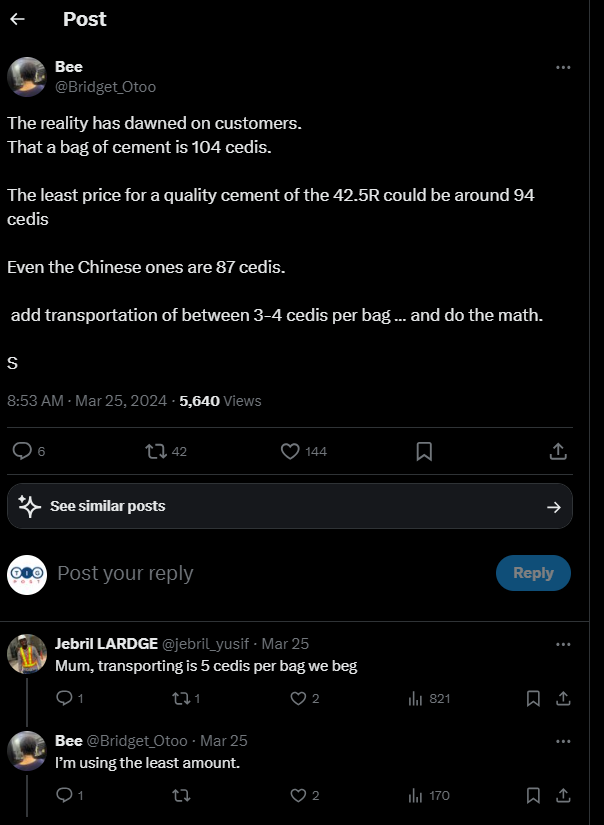
    Ghanaian businesswoman and media personality, Bridget Otoo, has noted that there has been a surge in the cost of a bag of cement, which is currently going for GHC104.

    At the beginning of the year, a bag of cement was selling at ¢95.00 in certain regions, including the Accra/Tema Municipalities.

    In a post on X platform, Bridget Otoo gave a view of how the cement industry is faring and what may be leading to the surge in price.

    She wrote: “The reality has dawned on customers. That a bag of cement is 104 cedis. The least price for a quality cement of the 42.5R could be around 94 cedis. Even the Chinese ones are 87 cedis. Add transportation of between 3-4 cedis per bag … and do the math.”

    Three months ago, Trade Minister K.T. Hammond expressed shock over the cost of the building material.

    The Minister urged the industry to recognize the widespread effects of price escalation.

    He emphasized the need to closely monitor and control the recommended ex-factory price margins of distributors and retailers across the country.

    To stabilize prices, key measures were agreed upon, including individual companies publishing recommended distribution and retail prices for various grades of products in their respective distribution zones.

  • Aliko Dangote’s enterprises hit $280m profit mark in 2023

    Aliko Dangote’s enterprises hit $280m profit mark in 2023

    Dangote Cement Plc., the multinational cement powerhouse predominantly owned by Africa’s wealthiest individual, Aliko Dangote, has unveiled robust financial outcomes for the fiscal year 2023.

    Despite navigating a challenging macroeconomic and operational climate with widespread earnings impacts, the company achieved a noteworthy 19 percent surge in profits, exceeding $280 million.

    Dangote Cement’s financial report highlighted an impressive profit escalation, escalating from N382.31 billion ($236.3 million) in 2022 to N455.58 billion ($282 million) in 2023.

    This reaffirms the company’s dominant market position in Nigeria and the broader African landscape.

    The substantial profit growth primarily stemmed from a remarkable 36.4 percent surge in revenue, ascending from N1.61 trillion ($995.4 million) in 2022 to N2.21 trillion ($1.37 billion) in 2023.

    The company’s revenue surge was a testament to strategic initiatives and market dominance.

    Additionally, Dangote Cement enjoyed a lower tax expense in 2023, with a total tax payment of N97.5 billion ($60.3 million), marking a notable decrease from the N141.7 billion ($87.6 million) paid in the preceding year.

    This robust performance is reflected in the company’s strengthened balance sheet, with total assets surging from N2.61 trillion ($1.61 billion) as of December 31, 2022, to N3.94 trillion ($2.44 billion) as of December 31, 2023.

    Retained earnings also witnessed an uptick from N969.48 billion ($599.4 million) to N1.098 trillion ($678.9 million), underscoring Dangote Cement’s financial resilience.

    As the foremost cement producer in Sub-Saharan Africa, Dangote Cement boasts an annual production capacity of 55 million tonnes spanning 10 countries.

    The recent establishment of a six-million-tonne plant in Itori, Ogun State, underscores the company’s commitment to enhancing export capabilities and contributing to Nigeria’s economic diversification efforts.

    Aliko Dangote, with over 50 percent of his wealth tied to an 86.6-percent stake in Dangote Cement, is poised to benefit substantially.

    In line with the company’s strategic growth objectives, the board recommended a dividend of N30 ($0.0185) per share at the conclusion of the 2023 fiscal year.

    This represents a noteworthy increase from the N20 ($0.0124) final dividend paid in 2022, aligning with the company’s commitment to significant shareholder returns, including Aliko Dangote, who stands to receive substantial dividends from his stake.

  • GSA approves new cement type for Ghanaian market

    GSA approves new cement type for Ghanaian market

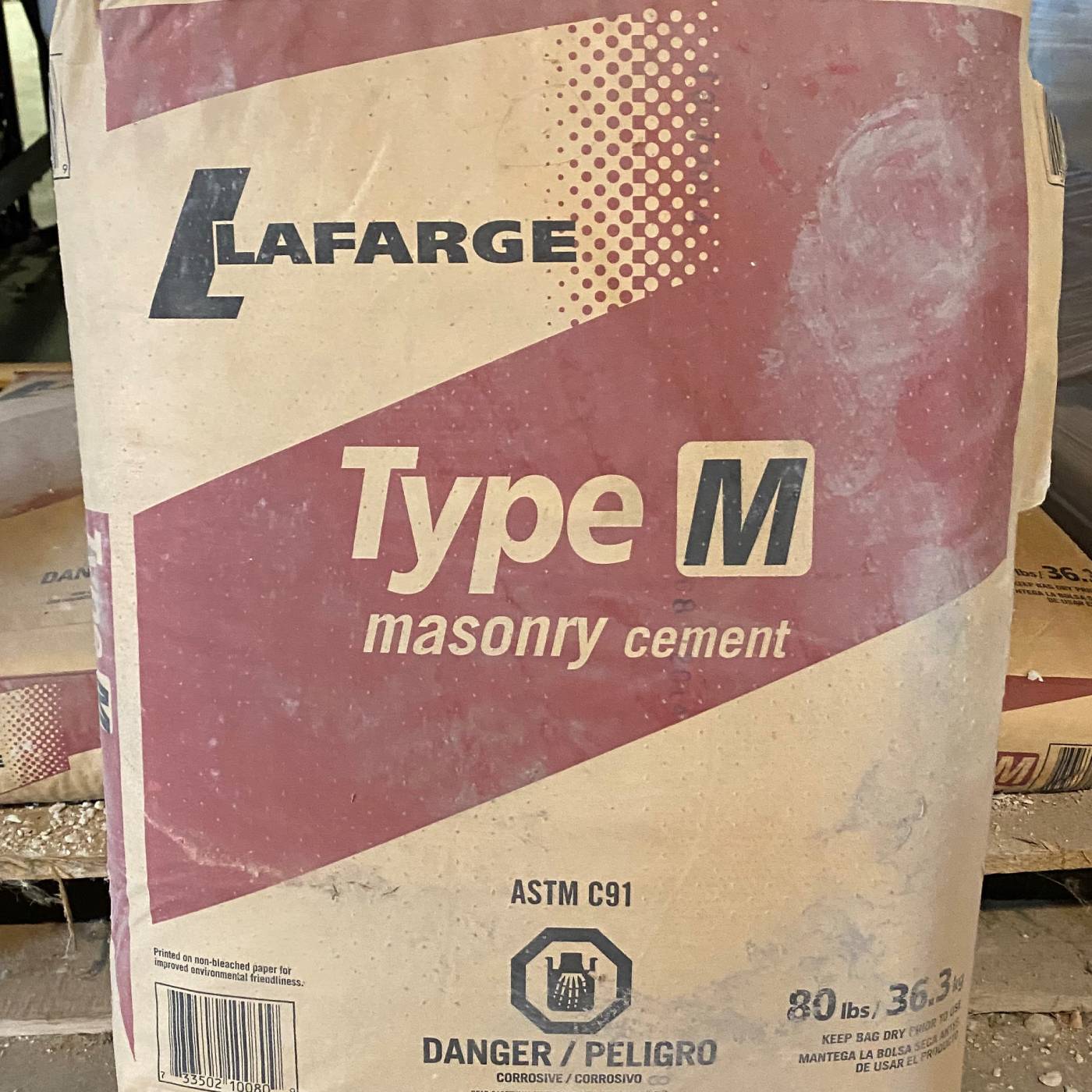
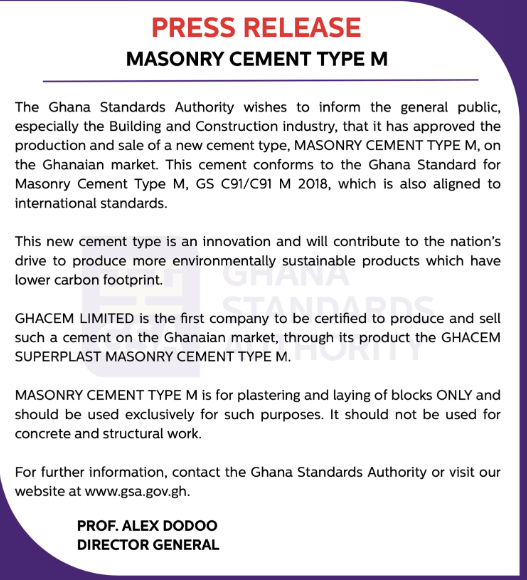
    The Ghana Standards Authority (GSA) has approved the production and sale of a new cement type, MASONRY CEMENT TYPE M, for the Ghanaian market.

    This approval, aligned with international standards, aims to enhance the nation’s production of environmentally sustainable products with a lower carbon footprint.

    GHACEM LIMITED is the first company to be certified to produce and sell this new cement type, known as GHACEM SUPERPLAST MASONRY CEMENT TYPE M.

    However, it is important to note that MASONRY CEMENT TYPE M is specifically designed for plastering and laying of blocks and should not be used for concrete and structural work.

    The GSA encourages the Building and Construction industry to adhere to the specified usage of MASONRY CEMENT TYPE M. For further information, interested parties can contact the Ghana Standards Authority or visit their website at www.gsa.gov.gh.

    Director General of the Ghana Standards Authority, Professor Alex Dodoo, expressed optimism about the impact of this new cement type on the construction sector in Ghana.

  • 95GHC price of cement bag shocks K.T. Hammond


    The Ministry of Trade and Industry (MoTI) and the Chamber of Cement Manufacturers, Ghana (COCMAG), have entered into an agreement to conduct periodic consultative meetings with industry stakeholders.

    These meetings will focus on addressing key developments in cement manufacturing, bagging, and distribution.

    The primary objective is to tackle crucial issues within the sector, particularly before any announcements of ex-factory price changes by individual companies.

    Initiated by Minister K.T. Hammond, the meeting aimed to address concerns about the rising cost of cement at the retail level and its adverse economic impact.

    Expressing worry over the sale of a bag of cement at ¢95.00 in certain regions, including the Accra/Tema Municipalities, the Minister urged the industry to recognize the widespread effects of price escalation.

    He emphasized the need to closely monitor and control the recommended ex-factory price margins of distributors and retailers across the country.

    To stabilize prices, key measures were agreed upon, including individual companies publishing recommended distribution and retail prices for various grades of products in their respective distribution zones.

    Additionally, companies are mandated to enforce quality standards and weights of cement products to counter the production and distribution of substandard items.

    Stakeholders will collaborate on exploring the possibility of introducing a uniform cement pricing formula, ensuring consistency in retail pricing nationwide, and considering key cost variables.

    The MoTI assured the public that these measures, among others deemed necessary, will be implemented in collaboration with the Chamber of Cement Manufacturers, Ghana, to ensure justifiable and reasonable adjustments in prices.

  • GHC 95 for a bag of cement, how? – K.T. Hammond fumes at manufacturers during meeting

    GHC 95 for a bag of cement, how? – K.T. Hammond fumes at manufacturers during meeting

    Ministry of Trade and Industry (MoTI) and the Chamber of Cement Manufacturers, Ghana (COCMAG) have agreed to hold regular consultative meetings with industry stakeholders, focusing on developments in cement manufacturing, bagging, and distribution.

    The objective is to tackle crucial issues in the sector, particularly before any announcements of changes in ex-factory prices by individual companies.

    Minister K.T. Hammond initiated the meeting to express concerns about the rising cost of cement at the retail level and its adverse economic impact. He raised questions about the sale of a bag of cement at ¢95.00 in certain regions, including the Accra and Tema Municipalities.

    “The Minister entreated the industry to take cognizance of the widespread effects of price escalation and the need to closely monitor and exercise control over the recommended ex-factory price margins of distributors and retailers of their respective grades of products across the country,” stated the MoTI.

    https://www.youtube.com/watch?v=xKA_9rBcf04

    Crucial measures have been unanimously agreed upon for immediate implementation to stabilise prices in the cement industry. These measures include the obligation for individual companies to publish recommended distribution and retail prices for various product grades within their respective distribution zones.

    Furthermore, companies are now mandated to rigorously enforce quality standards and specified weights for cement products, aiming to counter the production and distribution of substandard items.

    Stakeholders are also anticipated to collaborate on exploring the feasibility of introducing a standardised cement pricing formula. This initiative aims to ensure consistency in retail pricing across the country, taking into account essential cost variables.

    The Ministry of Trade and Industry (MoTI) has assured the public that these measures, deemed necessary among others, will be implemented in partnership with the Chamber of Cement Manufacturers, Ghana. The ultimate goal is to facilitate justifiable and reasonable adjustments in prices.

  • K.T. Hammond engages cement manufacturers to address surging prices

    The Ministry of Trade and Industry (MoTI) and the Chamber of Cement Manufacturers, Ghana (COCMAG) have reached an agreement to conduct periodic consultative meetings with industry players.

    These meetings aim to address developments in cement manufacturing, bagging, and distribution, particularly before the announcement of ex-factory price changes by individual companies.

    According to a statement from the MoTI, the Minister, K.T. Hammond, convened the meeting to express concern about the increasing cost of cement at the retail end and its potential adverse economic impact.

    The minister questioned the reasons behind the high retail prices, citing instances where a bag of cement was selling for ¢95.00 in certain parts of the country, including the Accra/Tema Municipalities.

    “The Minister entreated the industry to take cognisance of the widespread effects of price escalation and the need to closely monitor and exercise control over the recommended ex-factory price margins of distributors and retailers of their respective grades of products across the country”. 

    According to the statement, the stakeholders have agreed on several measures for urgent implementation to stabilize cement prices in Ghana. These measures include:

    Publication of Recommended Prices: Individual companies are required to publish the recommended distribution and retail prices for various grades of products sold in each of their respective distribution zones.

    Enforcement of Quality Standards: Companies are urged to vigorously enforce quality standards and weights of cement products in the market to curb the production and distribution of substandard cement products.

    Exploring Uniform Pricing Formula: Stakeholders are expected to collaborate on exploring the possibility of introducing a uniform cement pricing formula. This formula aims to ensure uniformity and consistency in retail pricing across the country, taking into account key cost variables.

    “The Ministry would like to assure the consuming public that these and any other measures necessary will be implemented in collaboration with the Chamber of Cement Manufacturers, Ghana, to ensure price adjustments are justifiable and within reasonable limits”, the statement ended.

  • KT Hammond accuses cement producers and importers of deliberate hike in price of commodity

    KT Hammond accuses cement producers and importers of deliberate hike in price of commodity

    The Minister of Trade and Industry, KT Hammond, has voiced his dismay at the recent uptick in cement prices orchestrated by cement producers and importers.

    He said it was unfair and unacceptable, describing it as a “conspiracy of a cabal of cement producers and importers,” an act he condemned.

    “During the festivities, I learned in the constituency that the cabal of the cement producers and importers have again conspired and decided to increase the prices of cement, by a considerable figure. I don’t think that that is right. I do not accept that that is right,” he said, as quoted by citinewsroom.com.

    According to KT Hammond, the government has created an enabling atmosphere for businesses to thrive, therefore, cement producers must be fair to Ghanaians.

    “The government has provided the necessary ambience and regulatory framework, the proper environment for these companies to operate and do their businesses profitably. I expect that they make their reasonable profits, but what I don’t accept is for them to take the people of Ghana for granted. I can’t understand the basis for the increase,” he added.

  • Falling prices of cement, rice, iron rods reflect economic success – Bawumia

    Falling prices of cement, rice, iron rods reflect economic success – Bawumia


    The New Patriotic Party’s Flagbearer, Dr. Mahamudu Bawumia, has asserted that recent governmental measures have played a crucial role in achieving macroeconomic stability.

    Dr. Bawumia pointed out the significant decrease in inflation and the reduction in the prices of goods and services as clear indicators of the government’s commitment to revitalizing the Ghanaian economy.

    Speaking at a National Thanksgiving service held at the NPP Headquarters in Accra, Dr. Bawumia expressed optimism about the economic trajectory.

    Acknowledging the challenges posed by the post-Covid-19 era globally, Dr. Bawumia underscored Ghana’s resilience amid the economic and social shocks of the pandemic.

    He emphasized the need for concerted efforts to alleviate the burdens carried into 2023, praising the progress made with gratitude to God.

    “We are already aware that the post-Covid-19 era remains a difficult era in the history of the world and many countries across the globe are still recovering from the economic and social shock the pandemic created, Ghana has been no exception. As a party in power at such a difficult period in our global history, we can only thank God almighty for how far he has brought us.

    “We have to work extra hard to lessen the burden that crossed 2023 with us. We started the year with an inflation rate of 56. 3 percent in January. As we speak the rate for November is 26.4 per cent. A significant drop and when you look at inflation, it has come down.

    Highlighting specific economic achievements, Dr. Bawumia said,“But what is remarkable is that prices of items that we normally buy are falling, cement prices are falling, fuel prices have fallen, cooking oil prices are falling, iron rod prices, rice prices are falling, maize prices are falling and this is telling us that something is happening because normally we see increases but we are seeing a decline in pricing.”

  • 3 cement firms shut down for producing substandard products sign undertaking with GSA

    3 cement firms shut down for producing substandard products sign undertaking with GSA

    Three cement factories, namely Xin An Safe Cement Ghana Ltd, Kumasi Cement Ghana Ltd, and Uniceme Cement Ghana Ltd, which were recently shut down by the Ghana Standards Authority (GSA)  on November 13, 2023, have signed an undertaking.

    In this undertaking, the companies pledge to adhere to industry standards and refrain from producing substandard cement.

    The Director-General of the GSA, Professor Alex Dodoo, disclosed this information, noting that the factories were closed down due to their failure to comply with repeated warnings regarding quality standards.

    “It’s something we have been questioning, that letter was issued after repeated instructions and we had to act for the sake of our country. Thankfully, this time, the companies have all admitted their wrongs, we have stopped their operations completely and we are supervising them, and we want more drastic actions,” he told the media.

    Prior to this, these three cement manufacturers were caught operating despite a ban on their operations by the Ghana Standards Authority (GSA).

    As part of its commitment to quality control, the Ghana Standards Authority (GSA) has announced plans to introduce legislation to regulate the production and sale of electrical cables and iron rods.

    Professor Alex Dodoo emphasized the organization’s dedication to enforcing national standards and protecting consumers from substandard products.

    In the implementation of this legislation, Professor Dodoo warned that companies found to be flouting the rules would face strict penalties.

    “Before the L.I is laid and passed, we are going to take action not just against these companies, but companies in the cement, electrical cables and the iron rod industry. We chose these three because they represent areas of biggest risk and challenges at the moment.

    “Our actions should speak to the fact that we want them to produce according to national standards and meet national needs. Because much as we want factories, allowing them to make sub-standards products will only make our associations worse.”


    In addition to enforcing regulations, the Ghana Standards Authority (GSA) is actively involved in public education campaigns to raise awareness about the importance of purchasing high-quality construction materials.

    “For the past three weeks, we have been distributing leaflets educating Ghanaians. You can be rest assured of more and more of carrying out actions and ensuring that offending individuals and organizations pay the necessary administrative penalty or fines as demanded by law.”

  • Dangote cement’s operations in Nigeria generate N933b in revenue within 9 months

    Dangote cement’s operations in Nigeria generate N933b in revenue within 9 months

    Dangote Cement has posted impressive earnings of nearly N1tn from its Nigerian operations in the first nine months of this year. The unaudited interim financial statements for the period ending September 2023, filed with the Nigerian Exchange Limited, reveal that Dangote Cement recorded N933.08 billion in earnings during this period, representing a significant 4.76% increase compared to N890.65 billion for the same period in 2022.

    During this period, the company’s Pan-African operations generated N588.24 billion in revenue, reflecting an extraordinary 103.89% increase over the N288.51 billion in revenue recorded in 2022.

    Profit from Dangote Cement’s Nigerian operations surged to N856.45 billion by the end of September 2023, compared to N336.25 billion in 2022. However, its Pan-African operations reported a loss of N54.35 billion, an improvement from the N127.67 billion loss recorded in 2022.

    Overall, the cement group experienced a substantial 28.63% increase in its revenue, totaling N1.51 trillion for the period ending September 2023, compared to N1.18 trillion in September 2022.

    With a finance cost of N20.67 billion, a loss on foreign-denominated transactions at N99.02 billion, and an income tax expense of N127.34 billion, the group’s profit for the period reached N277.55 billion, marking a 30.24% increase from N213.10 billion recorded in 2022.

    For the third quarter, Dangote Cement reported revenue of N563.77 billion, an increase from the N369.22 billion reported in Q3 2022. Profit for Q3 2023 reached N98.95 billion, reflecting a substantial 141% increase from N40.99 billion.

    Earnings per share increased by 29.6%, reaching N16.08, and the company’s net debt amounted to N507.7 billion.

    Dangote Cement attributed its net exchange loss on foreign-denominated transactions to the significant devaluation of the Nigerian Naira in June 2023, with the Naira falling from N465 per dollar at the end of May 2023 to N756/$ in June 2023, leading to a net exchange loss of N116.1 billion from third-party loans and payables in the Nigerian entities.

    The company also mentioned that its cash and cash equivalents included restricted cash used for unclaimed dividends, letters of credit, and debt service reserve accounts.

    As of September 2023, Dangote had publicly issued bonds amounting to N266 billion, with coupon rates ranging from 11.25% to 13.5%, with tenures between 3 and 10 years. Additionally, commercial papers were issued under a program with a face value of N170 billion, with tenures ranging from 176 days to 267 days and discounts ranging from 10% to 13%.

    Speaking on the results, Chief Executive Officer, Arvind Pathak, said “This positive nine-month result is a combination of our strong value proposition, improved operational efficiency and a sustained drive to contain cost amidst an accelerating inflationary environment. We achieved double-digit growth in Group revenue at N1.514.6bn, while EBITDA rose to an all-time high of N662.8bn, up 28.5 per cent. Again, we continue to show the strength in the diversity of our operations. Our pan-African operations generated a record revenue and EBITDA growth of 103.9 per cent and 255.4 per cent, respectively, contributing 41.9 per cent to Group volumes. This unprecedented growth was driven by sustained demand across our countries of operation.

    “We will continue to explore emerging opportunities and export strategies around the region to further consolidate the Group performance. Albeit the current inflationary environment and its impact on operating costs, we have flagged off the ‘distributors promo’ across various regions in Nigeria. This, we believe would support our customers by creating a positive income effect for purchasers of Dangote Cement.”

    In terms of outlook, Pathak, said, “Looking ahead, we are at the final stage in the completion of our 1.5Mta grinding plant in Cote d’Ivoire, having commissioned our 0.45Mta Takoradi plant in the first half of the year. We are focused on improving our value proposition, anchored on our promise to deliver strong and superior cement to our unwavering customers. I am very pleased with the direction of our business and confident we will finish the year strong.”

    Dangote Cement is Africa’s leading cement producer with 52.0Mta capacity across Africa.

  • Prices of cement to fall – GSA

    Prices of cement to fall – GSA

    Ghana Standard Authority (GSA) has projected a decline in the prices of cement in the country.

    The Authority says the price of the commodity is expected to fall in the near future as manufacturers submit proposals for the usage of local materials for cement production.

    Director-General of the Ghana Standards Authority, Prof. Alex Dodoo reveals two cement companies in Ghana want to replace clinker, a vital ingredient in the manufacture of cement.

    Ghana spends over half a billion dollars annually importing clinker and according to Prof. Alex Dodoo, the move will reduce Ghana’s dependence on clinker, thereby boosting economic growth.

    “Two major players have submitted proposals to the Ghana Standards Authority to have cement not made from 100 per cent clinker. The companies intend to supply raw materials other than cement producers.

    “No longer will clinker be seen as the only ingredient that will be used for cement but there will be other locally-available substitutes so that the price of cement will fall, creating jobs, thereby reducing our dependence on clinker,” he said.

    He was speaking at a public workshop in Kumasi under the theme: “Facilitating the implementation of science-based sustainable construction technologies.”

    The workshop came about as a result of a discussion between the Ministry of Trade and Industry and the German government in 2018 and it seeks to strengthen the capacity for Ghanaian construction laboratories and institutions to test Ghana’s buildings and develop new sustainable construction materials.

    Also present at the meeting were cement manufacturers, a delegation from the Building and Road Research Institute of Ghana (CSIR-BRRI) and technical universities in Ghana.

    The workshop was organised by the Technology Consultancy Centre UNESCO Centre of Excellence in collaboration with the Ministry of Trade and Industry, Ghana Standards Authority, Federal Ministry of Economic Affairs and Climate Action and Federal Institute for Materials Research and Testing (BAM) Germany.

    Dr. Wolfram Schmidt, a senior researcher at the Federal Institute for Materials Research and Testing (BAM) Germany emphasised Africa’s role in testing out local materials for the manufacture of cement.

    He however, believes a standardisation of these materials will ensure its usage in concrete technology.

    “The future of concrete technology will be invented in Africa. The continent is very rich in resources but we’ve never considered it in the past for concrete technology.

    “We need to find ways to bring these resources to standards because they’re the same materials which are already standardized,” he is optimistic.

    “We’re trying to develop researches that can create businesses,” he added.

    The Director-General of the Technology Consultancy Centre (TCC) UNESCO Centre of Excellence, Prof. Francis Davis asked industry to reach out to academia with their needs.

    He believes it will help in proper uptake of the outputs.

    “Industry would have to reach out to academia with their needs. Once academia is equipped with needs of the industry, they go into research in trying to find solutions to their needs. Once those solutions are found, industry because they’re interested in the research, they’ll take the solutions and continue from there,” he said.

    “Once we find interest and need in the research academia has done, government and industry should fund the development,” he said.

    Prof. Davis also noted TCC UNESCO’s aim at reaching out to industrial partners to solve their needs.

    “Our major stakeholders of we go to them, engage them, know their needs and then come and deal with it. By this, we’ll be able to stop the research work that we finish and only end up on the shelves. We really want our research to impact society,” he said.

  • Cement prices will go up by GHS12 from Friday – Bridget Otoo

    Cement prices will go up by GHS12 from Friday – Bridget Otoo

    Ghanaian journalist turned cement dealer, Bridget Otoo, has entreated Ghanaians to brace themselves for tougher conditions in the construction industry.

    This comes after a notice by Kumasi Cement Ghana Limited (KCG) to the 31-year-old entrepreneur and other cement dealers indicating that effective Friday, March 31, 2023, the prices of cement bags would be adjusted by GHS12.

    “Dear customers, as high inflation persists, the price of cement will be increased by 12 cedis on Friday 31sy March 2023. Cement bought at the old rate must be taken within a month. KCG counts your usual cooperation,” the notice read.

    Cement prices in Ghana have risen on the back of rapid depreciation of the cedi against the dollar. The depreciation has triggered massive inflation, causing the price of cement to increase.

    Ghana’s inflation rate according to the Statistical Service as of February 2023 stands at 52.8%.

    As of January 2022, a 50kg bag of cement was going for GH¢50, but as it stands now, the price has almost doubled (GH¢ 95 – GH¢ 97). This means a 50kg bag of cement will not be going for less than GH¢100.

    The cedi in January 2022 was trading at GH¢6 for a dollar but it is currently trading at about GHS12 at the forex. Since manufacturers have to import some of the raw materials at the current dollar rate, the rise in the cost of importation would have to be borne by the final consumer.

    The yet-to-be realised development may impact the prices of houses in the short term and the personal budget of many individuals who are currently putting up houses in the country.

    It could also affect the cost of ongoing construction projects.

    Below are the current prices of cement bags sold by some cement manufacturing companies:

    Price per 50Kg bag (Ghacem Super Strong 42.5R)- GH¢ 95 – GH¢ 97.

    Price per 50Kg bag (Ghacem Super Rapid 32.5R) – GH¢ 87 – GH¢ 90.

    Price per 50Kg bag (Ghacem Extra 42.5) – GH¢ 72 – GH¢ 95

    Dangote Cement Price- GH¢ 80 – GH¢ 94

    Diamond Cement Price: GH¢ 85 – GH¢ 90

    Cimaf Cement Prices

    Smart Classic – 32.5R – GH¢ 65 – GH¢ 89

    Smart Superior – 42.5R – GH¢ 75 – GH¢ 95

    Ultimate – 42.5N – GH¢ 75 – GH¢ 95

    Source: The Independent Ghana

  • Bridget Otoo goes after Nana Addo as price of cement hits GH¢95

    Broadcaster Bridget Otoo has brought to the attention of President Nana Addo Dankwa Akufo-Addo the exorbitant price of a bag of cement selling at GH¢95.00 in the first week of November.

    According to Bridget who buys and sells cement, there has been an increase in price up to GH¢30.00 in the last three months.

    A host of Ghanaian businesses fear closing down amidst the current economic hardship that has witnessed a hike in price.

    Also, the lack of price control has led to overpricing by some manufacturers and distributors in our market space.

    The tweet sighted by GhanaWeb read: “Are you people not tired? How can you increase cement again to 95 cedis? @NAkufoAddo pretend to be in charge and let things work. Our businesses are collapsing! How can cement price go up by more than 30 cedis since August? how?”

    Meanwhile, Nana Addo has assured citizens that plans are underway to revive the economy.

    Speaking in his national address on Sunday, October 30, he referenced how the New Patriotic Party managed to properly handle the COVID-19 pandemic in Ghana at a time when developed nations were struggling to contain it.

    “When I said, at the height of the COVID pandemic, that we knew what to do to bring the economy back to life, but not how to bring people back to life, it was not said in jest.”

    He further assured: “We had done it before, and we were on course to doing it again. Ghana’s economy grew by a remarkable 5.4% in 2021, signifying a strong recovery from the 0.5% growth recorded the previous year due to the COVID-19 pandemic.”

    Read the post below:

    Source:ghanaweb.com

  • Lafarge, a cement company, has pleaded guilty to helping ISIS

    Lafarge, a French cement company, has pled guilty in the United States to aid the Islamic State and other terrorist organisations.

    The company agreed to pay a $777.8 million (£687.2 million) penalty for payments made to keep a factory operational in Syria after the crisis broke out in 2011.

    Prosecutors said it was the first time a firm in the United States pled guilty to aiding terrorists.

    Lafarge said it “deeply regretted” the events and “accepted responsibility for the individual executives involved”.

    The cement manufacturer, which was bought by Switzerland’s Holcim in 2015, said their behaviour had been in “flagrant violation” of Lafarge’s code of conduct.

    The firm opened its plant in Jalabiya near the Turkish border in 2010 following a $680m investment.

    US prosecutors said that Lafarge’s Syrian subsidiary had paid Islamic State and another terror group, al Nusra Front, the equivalent of $5.92m to protect staff at the plant as the country’s civil war intensified. Executives likened the arrangements to pay “taxes”, they said.

    Lafarge eventually evacuated the plant in September 2014, when Islamic State took control of the town and the factory. But before its departure, the deals helped the company do $70.3m in sales, prosecutors said.

    Lafarge had previously admitted bribes were paid after an internal investigation. But US Deputy Attorney General Lisa Monaco said on Tuesday that the company’s actions “reflect corporate crime that has reached a new low and a very dark place.”

    “Business with terrorists cannot be business as usual,” she added.

    In a statement, Lafarge’s new owner Holcim said none of the conduct involved Holcim, “which has never operated in Syria”.

    It added that former Lafarge executives involved in the bribery had concealed it from Holcim, as well as external auditors.

    Eric Olsen, who ran Lafarge and Holcim until 2017, stepped down from his role following an investigation into Lafarge’s activities in Syria.

    At the time, Mr Olsen said he had not been involved in any wrongdoing and was standing down to bring “serenity” to the company.

    The Department of Justice said that senior executives at Lafarge were involved in the arrangements and aware they risked running afoul of authorities.

    Logo on a plant of French cement company Lafarge on 7 April 2014 in Paris
    IMAGE SOURCE, AFP Image caption, The dealings with armed groups took place before Lafarge merged with Holcim

    Executives had attempted to require Islamic State not to include the name “Lafarge” on documents memorializing and implementing their agreements and many involved in the scheme also used personal email addresses, rather than their corporate email addresses, to carry out the conspiracy, the Department said.

    Lafarge executives also backdated the termination agreement to Aug. 18, 2014, a date shortly after the United Nations Security Council had issued a resolution calling on member states to prohibit doing business with Islamic State, to falsely suggest that negotiations with Islamic State had not occurred after the UN resolution, the Department said.

    The dealings by Lafarge were eventually made public in 2016 on a website run by a Syrian opposition group.

    Breon Peace, US Attorney for the Eastern District of New York – where the case was brought – said the conduct “by a Western corporation was appalling and has no precedent or justification”.

    “The defendants paid millions of dollars [to Islamic State], a terrorist group that otherwise operated on a shoestring budget, millions of dollars that [Islamic State] could use to recruit members, wage war against governments, and conduct brutal terrorist attacks worldwide, including against U.S. citizens,” he said at a press conference announcing the guilty plea.

    Lafarge also faces charges of complicity in crimes against humanity in France over its activities in Syria, but the company denies the claims.


  • A bag of cement now selling at GHC90

    The price for a 50-kilogram bag of cement has been increased by manufacturers.

    Checks by myinfogh revealed that all the major manufacturers have adjusted their prices upward.

    Its Super Strong brand is however selling at ¢78 per bag, while the GHACEM Extra is going for GHC90.

     Why the increase?

    Some of the manufacturers say the increase has been influenced by a sudden rise in the cost of operations, from July 2022, due to the sharp depreciation of the cedi over the past months.

    Officials at one of the manufacturing firms told Joy Business on condition of anonymity that, “when the factory price (wholesale price) of a 50 kilogramme was about ¢59.00, it was based on an exchange rate of about ¢7.60 in June 2022.

    Some of the manufacturers also said customers should expect about ¢8 to ¢15 increase per bag on the market.

    This will, however, be influenced by the location as Accra may have a different price from the other regional capitals due to transportation.

    The rising cost of operations

    “Based on the fact that most of the manufacturers have to import some of the raw materials at a dollar rate of more than ¢9, someone has to take care of this sudden increase in cost”, a manufacturer said.

    Some of the manufacturers also told Joy Business that t it has been very difficult to absorb all the rising costs of operations, and therefore there is a need to share some of the burdens with consumers.

    This might be the second time in less than three months that the price of the product has gone up due to what the manufacturers described as the rising cost of production

    Impact on the housing industry

    The development may impact the prices of houses in the short term and the personal budget of many individuals who are currently putting up houses in the country.

    It could also affect the cost of ongoing construction projects.

    Reducing cement prices

    Manufacturers had in recent times pushed for the government to take a second look at the taxes on the inputs and charges at Ghana’s Ports.

    They had hoped the government will take an action to help reduce the price of cement.

    It is the hope that these manufacturers will see review taxes/levies at the ports, a move that could help slow down the hikes in the price of cement recorded in recent times.

    Source: myinfogh.com


  • Price of 50 kg cement bag jumps to GH¢73

    Some cement producers have raised cement prices to approximately GH73.

    In some significant industrial shops, a 50 kg bag of cement that cost GH 50 in November 2021 now costs GH 73.

    GhanaWeb discovered the price list of GHACEM, a well-known cement producer, whose costs have increased as of August 30, 2022.

    According to the list, a 50-kilogram bag of cement from Super Rapid costs GHC 64.59, a bag from Super Strong costs GHC 68, and a bag from GHACEM Extra costs GHC 72.91.

    According to myjoyonline reports, the increase has been attributed to the rapid depreciation of the cedi which has resulted in the increase in the cost of operations in the past few months.

    “When the factory price (wholesale price) of a 50 kilogram was about ¢59.00, it was based on an exchange rate of around ¢7.60 in June this year,” a manufacturer whose name is withheld is quoted by myjoyonline.com.

    However, the prices are slightly different in Accra from prices in other regions.

    “Based on the fact that most of the manufacturers have to import some of the raw materials at a dollar rate of more than ¢9, someone has to take care of this sudden increase in cost”, another manufacturer stated.

    Check out a list of GHACEM’s prices:


  • Cement prices to hit ¢66 per bag from today

    The price of a 50-kilogram bag of Cement is expected to be increased by more than ¢5 from today to hit ¢66.

    This is what JoyBusiness has picked up from some of the major manufacturers of the product in the country. Sources say the expected increase may hit consumers in Accra the hardest.

    This is because some manufacturers are looking to offset parts of the cost of products being transported outside the metropolis to other regions in the country.

    One of the manufacturers told JoyBusiness; “we can control the factory price, but we are not sure about the  retail price in the markets in other regions.”

    However, we will try out best to take some of the cost of reducing the margin of increase after the transport charges and other related costs are added to the product.

    Reasons

    According to the manufacturers, the increment can be attributed to a myriad of issues most of which they have tried to manage for a long time.

    They argue that the increment has been influenced by the recent depreciation of the Ghana cedi, hikes in prices of petroleum products, and transport fares.

    They also maintained that their situation has been compounded by supply challenges for their production inputs and difficulties with importing some raw materials due to developments in Russia and Ukraine.

    The manufacturers have also raised issues with some of the port charges, which they say leave them with no choice but to pass down to consumers.

    Impact on the economy

    The development may impact the prices of houses in the short term and the personal budget of many individuals who are currently putting up houses in the country.

    It could also impact on the cost of some of the ongoing construction projects in the county. The adjustments may also increase the cost of doing business and influence the rising inflation rate in the country.

    Source: MyJoyOnline

  • Ghanas total cement sales decline by 3.9%

    The total cement sales as measured by the volume of the product decreased by 3.9% during the first quarter of 2020.

    The volume of cement sales during first quarter of this year amounted to 814,979.29 tonnes as compared to 848,258.76 tonnes sold during 4th quarter of 2019.

    Year on year, economic activities in the construction sub-sector as measured by the volume of cement sales declined by 12.0 percent as 925,612.99 tonnes of the product was recorded on 1st quarter of 2019.

    This is contained in a recent quarterly bulletin released by the Bank of Ghana (BoG).

    According to the report, the relative dip in total cement sales was due to a slowdown in construction activities during the review period.

    The slowdown of economic activities early this year could largely be attributed to anticipation of the arrival of the novel Coronavirus Disease (COVID-19).

    The pandemic has impacted global business activities whereas recovery in the business space remains dim as re- infections of the disease rages on.

    Multiple factors are changing the dynamics in Ghana, including the ongoing fiscal and energy crises confronting the country. Cement prices have been adversely impacted by the rather sharp fluctuations of the Ghanaian cedi in comparison to the US dollar.

    Though limestone reserves exist in Ghana, volumes are limited; hence the cement industry continues to rely largely on clinker imports. Furthermore, investments in capacity have capped compared to the previous three years, although two new cement manufacturers are preparing to enter the market.

    Source: goldstreetbusiness.com

  • Number of cement companies in Ghana up Government

    There has been an upsurge of cement companies in Ghana, Kwaku Asomah- Cheremeh, Minister of Lands and Natural Resources, has revealed.

    This, he said, has resulted in high demand for limestone in the country to produce clinker to make production and supply of cement affordable to Ghanaians.

    Speaking at a press conference in Accra, Mr Asomah-Cheremeh said the Government through the Ghana Geological Survey Authority (GGSA) is intensifying limestone exploration in order to feed the cement industry.

    He said: “The upsurge of cement factories in recent times, has led to the high demand for limestone in the Country to produce clinker to make production and supply of cement affordable to Ghanaians.

    “In view of this, the Government through GGSA continues to intensify limestone exploration activities in the Mamprusi West District in order to feed the cement industry.

    “Geological pitting by Ghana Geological Survey Authority in the Mamprusi West district has identified large limestone deposits in an area of about 15,000 acres suitable for clinker production.”

    He added: “The exploration companies continue to depend on the Government for up to date regional geoscience information for effective exploration activities and efficiency as well as in decision making in acquisition of mineral concession.

    “In order to promote efficiency in mineral exploration in the country and attract more investors into the mining sub-sector, the Government through Ghana Geological Survey Authority has completed regional soil geochemical sampling covering an area of about 180,000 acres in Tumu to aid and enhance mineral exploration activities in the Upper West Region.”

    Source: laudbusiness.com