Tag: Central African Republic

  • 2026 WCQ: Otto Addo releases 26-man squad for CAR clash

    2026 WCQ: Otto Addo releases 26-man squad for CAR clash

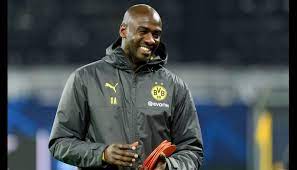
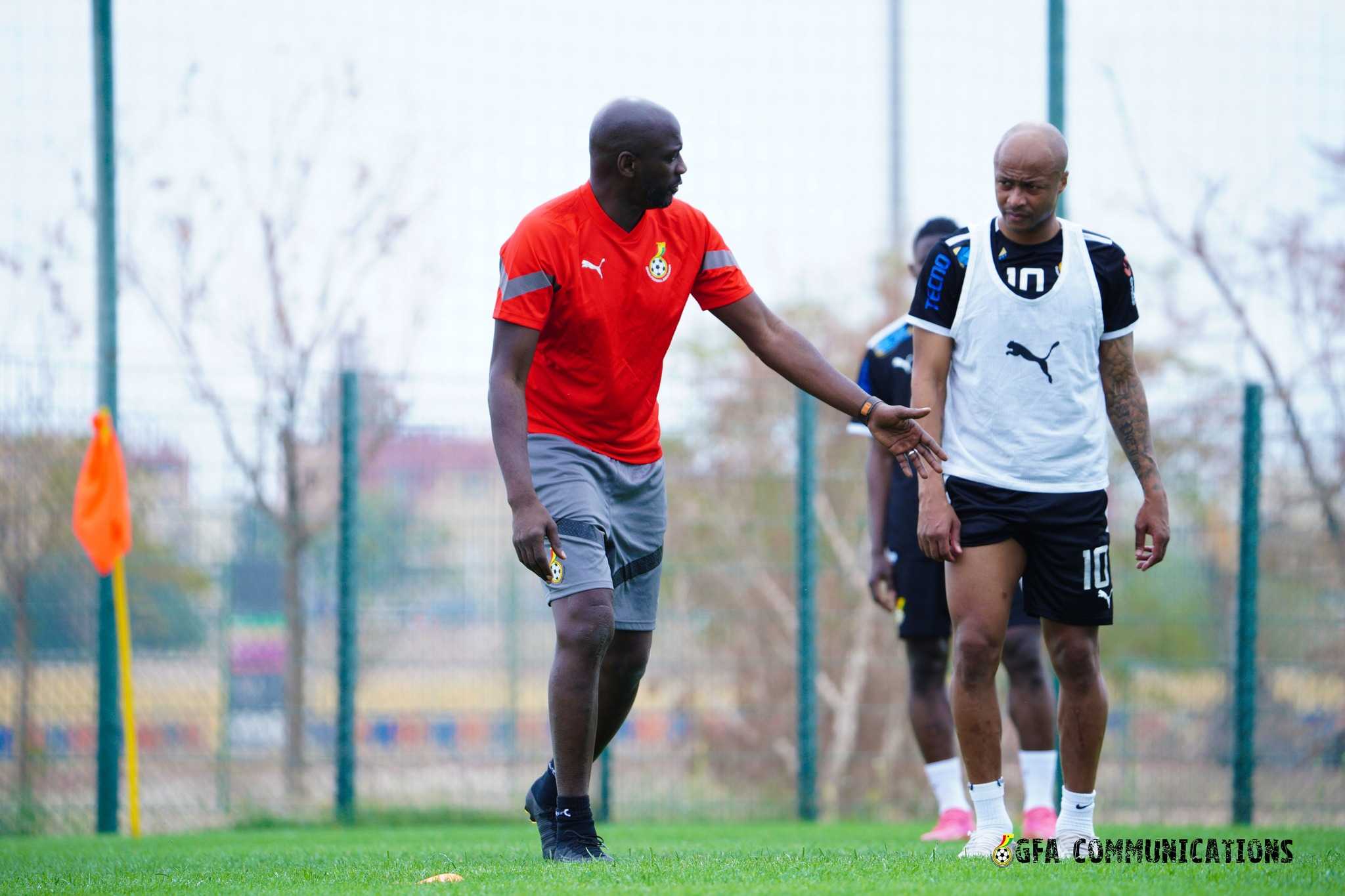
    Black Stars coach, Otto Addo, has announced his squad for the final FIFA World Cup qualifiers against the Central African Republic and the Comoros.

    Ghana currently have two more matches to determine their place in the 2026 FIFA World Cup. Their next clash is on Wednesday, October 8, at the Stade d’Honneur de Meknes, Morocco, at 16:00 GMT.

    Consequently, Otto Addo on October 2 released a twenty-six-man squad (26) which includes 3 goalkeepers, 8 defenders, 5 midfielders, and 10 forwards.

    The squad has a debutant, Medeama SC midfielder Prince Owusu, who has earned a call-up after his brilliant start to the 2025/2026 Ghana Premier League.

    Leicester City winger Abdul Fatawu Issahaku and Alidu Seidu of OGC Nice have both been included in the squad following their missing out on the previous lineup for both the Chad and Mali games.

    The duo were left out of the September squad by head coach Otto Addo as a precaution, given that they are still in recovery from different injuries.

    Abdul Fatawu Issahaku returns to the squad after a stellar performance for Leicester City in the English Championship, having been sidelined since November due to an Anterior Cruciate Ligament injury.

    Alidu Seidu also makes a return after recovering from a long-standing knee injury that kept him out of the squad since November last year.

    See the full squad overview:

    Goalkeepers: Lawrence Ati Zigi (St. Gallen), Benjamin Asare (Hearts of Oak), Joseph Anang (St. Patrick’s Athletic)

    Defenders: Alexander Djiku (Spartak Moscow), Mohammed Salisu (AS Monaco), Gideon Mensah (Auxerre), Alidu Seidu (Clermont Foot), Caleb Yirenkyi (FC Nordsjælland), Kojo Peprah Oppong (OGC Nice)

    Midfielders: Thomas Partey (Villarreal CF), Mohammed Kudus (Tottenham Hotspur), Elisha Owusu (Auxerre), Kwasi Sibo (Real Oviedo), Prince Owusu (Medeama SC)

    Forwards: Inaki Williams (Athletic Club), Antoine Semenyo (AFC Bournemouth), Joseph Paintsil (LA Galaxy), Kamaldeen Sulemana (Atalanta), Abdul Fatawu Issahaku (Leicester City), Jordan Ayew (Leicester City), Christopher Bonsu Baah (Al-Qadsiah)

    The Black Stars on matchday 9 will face the Central African Republic at Stade d’Honneur de Meknes on Wednesday, October 8, before hosting Comoros on matchday 10 at the Accra Sports Stadium on Sunday, October 12, 2025.

    The Black Stars are currently on top of Group I with 19 points and will need at least 3 points in their final two games to secure Ghana’s 5th FIFA World Cup qualification.

    Meanwhile, the Communications Director of the Ghana Football Association (GFA), Henry Asante Twum, has announced a change in the Black Stars’ camping arrangements.

    Black Stars, who were originally scheduled to assemble and camp in Accra, will now head straight to Morocco to camp for their 2026 FIFA World Cup qualifier against the Central African Republic (CAR).

    The change in plans, according to the Communications Director of the Ghana Football Association (GFA), Henry Asante Twum, during an appearance on Woezor TV, is to allow the players more recovery time and to avoid logistical challenges.

    In the interview, he explained that the decision to camp directly in Morocco was taken after consultations to ensure players had adequate rest and to avoid the logistical strain of flying from Accra just days before the match

    “Various discussions have been held, and I can confirm that there is a proposal that the players will report to Morocco instead of Accra because we don’t have enough time to prepare for the game,” he said.

    He explained that since most of the players will be in action for their clubs over the weekend, they are expected to report to camp on Sunday, with the last group arriving on Monday.

    “These players will play for their respective clubs this weekend, so we are expecting that the players will report to camp on Sunday and then the last badge of players are expected on Monday since the game is on a Wednesday so if they reports to Accra, they will have to be flown to Morocco either on Monday or Tuesday which will be a lot of work because the players will not have enough time and space to rest in between the period and some of the players will be coming from a far disctance so the last meeting we had, we proposed that we will meet in Morocco instead of meeting in Accra before flying to Morocco and that what is being firmed up,” he added.

    Ghana currently lead Group I with 19 points and require a victory to confirm their fifth World Cup appearance.

    The Ghana Black Stars have moved a rank higher in the latest FIFA ranking. This comes after their recent performances in the 2026 World Cup qualifiers.

    The team have climbed from 76th to 75th. The Black Stars, after two matches with Chad and Mali, respectively, still sit atop Group 1 with 19 points, despite drawing with Chad on September 4 at the Stade Olympique Maréchal Idriss Déby Itno in N’Djamena.

    However, they had a win in their clash with Mali. Black Stars led by a goal, securing for themselves three (3) extra points and a point from Chad’s draw.

    Despite the global improvement, their standing in Africa remains unchanged, with the four-time African champions still ranked 14th on the continent.

    In July, Ghana’s Black Stars fell about six places in FIFA’s rankings at the time.

    This was after their loss to Angola and a 1-1 draw with Niger during the 2025 Africa Cup of Nations (AFCON) qualifiers in September during the international break.

    In the ranking released on July 10, Ghana ranked 76th in the FIFA World Rankings. This leaves the former African giant out of the top 10 national teams as they continue the push to rejoin the continent’s elite.

    According to the July ranking, Argentina still held its spot as number one, followed by Spain, France, and then England, with Brazil taking the fifth spot.

    In Africa, Morocco sat on top with its 12th position on the global level with 1,698.72 points. Senegal also moved a spot up from its 19th position last year. Egypt dropped to 34 on the global scale but remained 3rd in Africa despite its slight dip from the 32nd position, which was caused by a quiet international window with no matches played since March.

    Meanwhile, other teams gained points through qualifiers and friendlies, allowing them to climb higher in the rankings.

    Algeria (36th), Nigeria (44th) and the Ivory Coast (45th) follow closely, despite the latter’s recent AFCON success.

    Tunisia (49th), Cameroon (51st), Mali (54th) and South Africa (57th) round out the African top ten, with Ghana sitting just outside the group.
  • Saddick Adams schools Kudus following row with critics on social media

    Saddick Adams schools Kudus following row with critics on social media

    Award-winning sports broadcaster Saddick Adams has observed that Black Stars talisman Mohammed Kudus was not subjected to abuse on social media during Ghana’s game against the Central African Republic.

    Kudus responded to some criticism from Ghanaians regarding his performance in the game with a social media rant.

    Although some considered the comments directed at the West Ham player to be abusive, Saddick Adams argued that they were simply criticisms.

    “Fans are like that; they are fickle. What is not abuse is when somebody says you should have played this pass earlier. Don’t do that; this is not something a professional footballer of your calibre should do. That is not abuse to me.

    “The fans are making fair comments…They may be ignorant about the game, but that is what they think. So many players have come under this, even Ronaldo and Messi. I don’t think it is abuse,” he said on his YouTube channel, Saddick Adams TV.

    He acknowledged that social media has given fans a platform to express their emotions and opinions about every action during the game, which can sometimes result in harsh comments.

    “Also, when some of these things happen, it happens in the heat of the moment. Your heart is following the game intensely. When the game is ongoing, a big game of that nature is like a marketplace.

    Everybody is shouting; some of them are criticising, some of them are giving praises, some of them are being vocal about something, and some are being controversial because everyone has a phone,” he added.

    Kudus, in his response to the fans, urged them to be quiet and not talk about his game.

    One of the criticisms sighted online reads, “You people should tell Kudus the truth. He’s not Messi, nor is he Ronaldo. He should stop doing too much and release the ball quickly.”

    The West Ham United star replied, “Masa, be quiet!”

    Despite the critical online comments, Kudus delivered a solid performance as Ghana secured a 4-3 victory in their fourth match of the 2026 World Cup qualifiers.

    Ghana’s win was propelled by a hat-trick from Jordan Ayew and a goal from Fatawu Issahaku, while the Central African Republic’s star forward, Mafouta, also netted a hat-trick.

  • CAR team captain slaps Jordan Ayew during a post match argument

    CAR team captain slaps Jordan Ayew during a post match argument

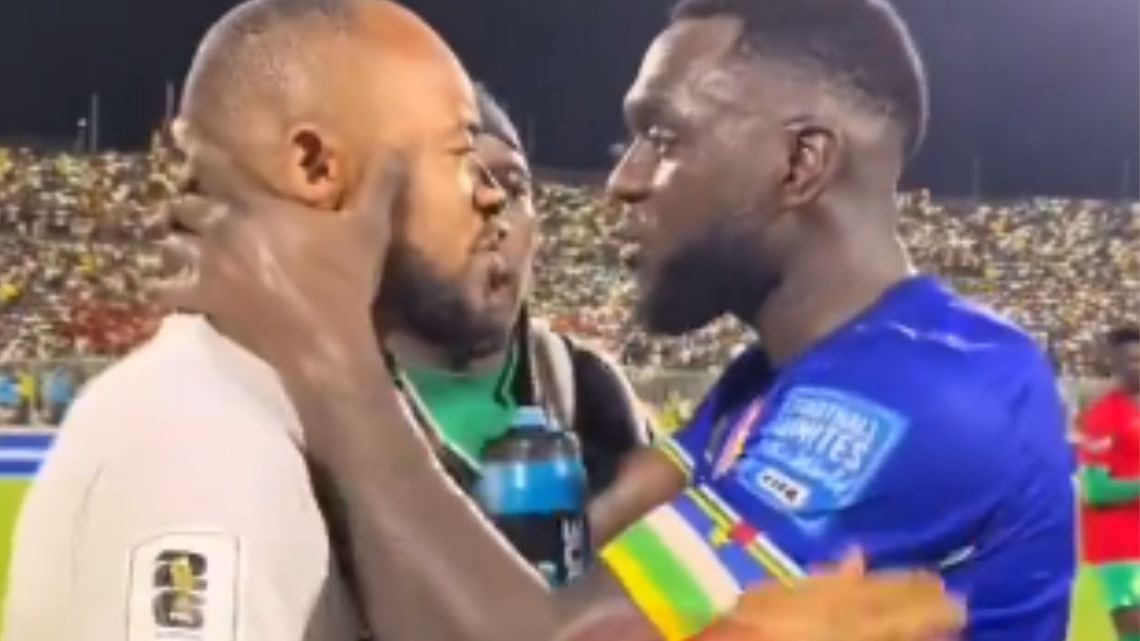
    Jordan Ayew and the captain of the Central African Republic, Amos Youga, have been captured in a viral video after the 2026 World Cup qualifiers between the two teams at the Baba Yara Sports Stadium on June 10, 2024.

    Initially perceived to be a harmless exchange, it escalated into a fight between the duo, where the captain of CAR slapped Ayew on the neck as he held on to his head with both hands, after which, in a retaliatory move, pushed the CAR captain Black Stars goalkeeper Ati-Zigi in to separate and calm the two.

    More players from both teams later rushed back to the park.

    Antoine Semenyo, on the other hand, tried to defend Jordan Ayew while Thomas Partey exchanged pleasantries with teammates of the Central African Republic.

    The exact reasons behind the altercation remain unclear, leaving fans and pundits speculating about the cause of the conflict.

  • “Thank you to God for letting it rain” – Otto Addo attributes win to rains in CAR-Ghana clash

    “Thank you to God for letting it rain” – Otto Addo attributes win to rains in CAR-Ghana clash

    Ghana coach Otto Addo acknowledged that the rainy weather significantly impacted the Black Stars’ thrilling 4-3 victory over the Central African Republic (CAR) on Monday.

    This crucial win propelled Ghana to the top of Group I in the 2026 World Cup qualifiers.

    Held at the Baba Yara Stadium, the match featured a hat-trick from Jordan Ayew and a goal from Fatawu Issahaku, securing a hard-fought victory for the Black Stars.

    The game was exciting and goal-filled, with rain playing a pivotal role in Ghana’s performance, according to Addo.

    The match began with Ghana in control, as Ayew converted a penalty in the sixth minute.

    However, CAR quickly responded with two goals from Louis Mafouta, giving the visitors a first-half lead.

    Ghana returned stronger in the second half, with Ayew scoring two more goals and Issahaku adding a sensational strike.

    Speaking after the game, Otto Addo revealed that the rain contributed to their improved performance in the second half.

    “The rain helped us play better and move the ball faster. Thank you to God for letting it rain,” Addo stated. “The support from the start was massive. Even though we were down, they stayed by our side. Thank you very much, Kumasi, for coming out again.”

    He also acknowledged that the first half was challenging for Ghana as they struggled to control the game and create opportunities upfront.

    “We had problems in the first half controlling the ball and finding solutions upfront. I take the blame. Maybe I wanted us to do too much, though we had a few days of training. We adjusted in the second half and deserved to win,” Addo admitted.

    The victory places Ghana at the top of Group I with nine points as they await the outcomes of the matches between Madagascar and Mali and Chad and Comoros.

    The Black Stars are now in a strong position to continue their campaign for a place in the 2026 World Cup.

  • Official : GFA releases squad list for Mali, Central African Republic

    Official : GFA releases squad list for Mali, Central African Republic

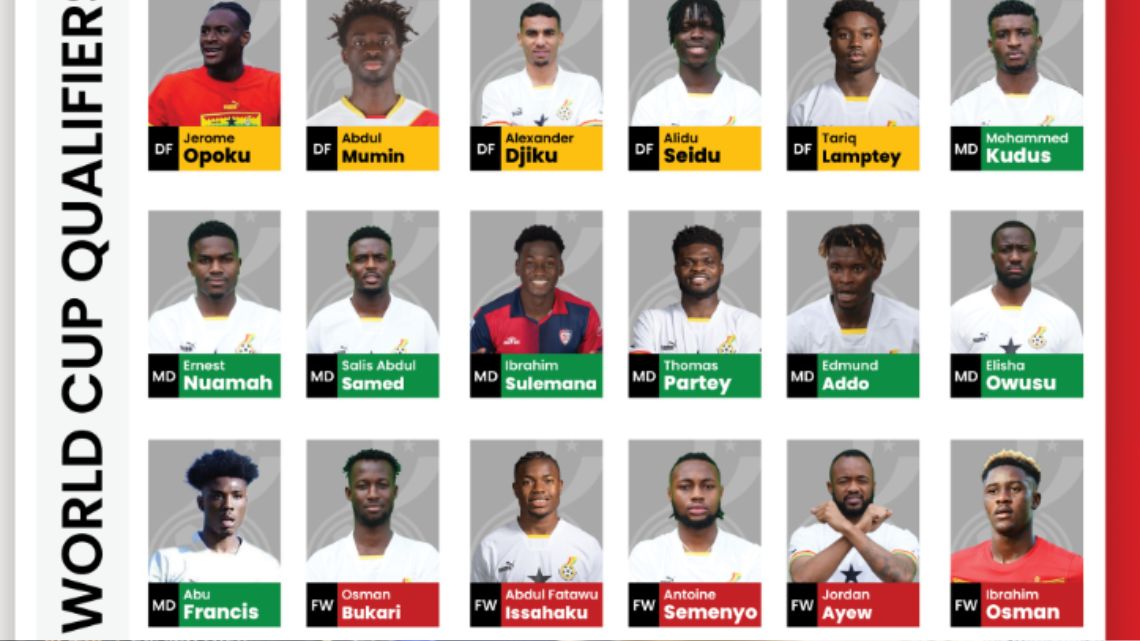
    Otto Addo has announced Ghana’s 26-man squad for the crucial 2026 World Cup qualifiers against Mali and the Central African Republic (CAR) in June.

    The Black Stars will first travel to Bamako to face the Eagles on June 6, followed by a home match against CAR in Kumasi on June 10.

    Notably, the squad includes debut call-ups for Cagliari midfielder Ibrahim Sulemana and West Bromwich forward Brandon Thomas-Asante.

    Asante Kotoko goalkeeper Frederick Asare is the only home-based player included in the selection.

    Addo has also retained many of his key players, demonstrating confidence in his established squad for the must-win encounter against Mali on June 6 in Bamako.

    Fit-again Arsenal midfielder Thomas Partey returns to the squad, alongside Mohammed Kudus (West Ham United), Jordan Ayew (Crystal Palace), Alexander Djiku (Fenerbahce Istanbul), Alidu Seidu (Stade Rennes), Tariq Lamptey (Brighton & Hove Albion), Salis Abdul Samed (RC Lens) and Mohammed Salisu (AS Monaco).

    Striker Antoine Semenyo (Bournemouth), wingers Kamaldeen Sulemana (FC Southampton), Issahaku Abdul Fatawu (Leicester City), Ernest Nuamah (Olympique Lyon) and Osman Bukari (RS Belgrade) have been named in the 26-man squad

    There are also places for Ebenezer Annan (FK Novi Pazar), Ibrahim Osman (FC Nordsjaelland), Jerome Opoku (Istanbul Basaksehir), Abdul Mumin (Rayo Vallecano), Abu Francis (Cercle Brugge) and Brandon Thomas-Asante (West Bromwich) in the squad.

    Seven players have been ruled out due to injuries for the upcoming double-header next month.

    The injured players include Baba Iddrisu, Majeed Ashimeru, Inaki Williams, Joseph Paintsil, Nathaniel Adjei, Dennis Odoi, and Daniel Amartey.

    Additionally, Daniel Kofi Kyere and Joseph Aidoo are confirmed to be sidelined with long-term injuries.

    Otto Addo’s 26-man squad will assemble on Thursday morning to commence preparations for the qualifiers for the 2026 FIFA World Cup in USA, Mexico, and Canada.

    The Black Stars will undergo training at the University of Ghana Stadium for six days before departing for Bamako on Tuesday, June 4, 2024.

    The squad

    Goalkeepers: Lawrence Ati-Zigi (St Gallen), Jojo Wollacot (Hibernian FC), Frederick Asare (Asante Kotoko)

    Defenders: Gideon Mensah (AJ Auxerre),Ebenezer Annan (FK Novi Pazar), Mohammed Salisu (AS Monaco), Jerome Opoku (Istanbul Basaksehir), Abdul Mumin (Rayo Vallecano), Alexander Djiku (Fenerbahce Istanbul), Alidu Seidu (Stade Rennes), Tariq Lamptey (Brighton & Hove Albion).

    Midfielders: Mohammed Kudus (West Ham United), Ernest Nuamah (Olympique Lyon), Salis Abdul Samed (RC Lens), Ibrahim Sulemana (Cagliari Calcio), Edmund Addo (FK Radnicki Nis), Thomas Partey (FC Arsenal), Elisha Owusu ( AJ Auxerre), Abu Francis (Cercle Brugge).

    Forwards: Osman Bukari (RS Belgrade), Issahaku Abdul Fatawu (Leicester City, loan from  Sporting CP), Antoine Semenyo (Bournemouth), Jordan Ayew (Crystal Palace), Ibrahim Osman (FC Nordsjaelland), Kamaldeen Sulemana (FC Southampton), Brandon Thomas-Asante (West Bromwich).

  • Central African Republic and France agree to boost bilateral cooperation

    Central African Republic and France agree to boost bilateral cooperation

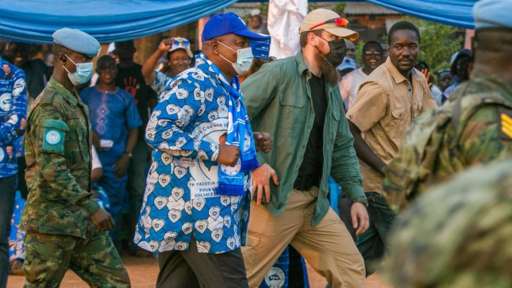
    The Central African Republic and France have agreed upon a roadmap to enhance bilateral cooperation, seeking to mend strained ties.

    This agreement follows a meeting held in Paris on Wednesday between CAR President Faustin-Archange Touadera and French President Emmanuel Macron.

    President Touadera’s visit to France, his second in over six months, signifies increasing efforts from both nations to improve relations.

    These ties had been strained when the CAR government began heavily relying on military and political support from Russia.

    Although the specifics of the agreement are yet to be fully disclosed, the roadmap aims to establish a constructive partnership framework that upholds the state’s sovereignty, as stated in a joint announcement by both countries.

    Additionally, it aims to contribute to stability, foster national unity, and promote the economic and social progress of the CAR.

    Despite France’s condemnation of alleged human rights violations by the Russian paramilitary group Wagner in its former colony, French influence in the CAR has diminished.

    This cooperation opportunity might offer France a chance to repair its reputation in the CAR, where anti-French sentiments have grown in recent years.

  • CAR and Total-Centrafrique reach an agreement to resolve fuel issue

    CAR and Total-Centrafrique reach an agreement to resolve fuel issue

    Officials in the Central African Republic has made a deal with Rochefort International, the owner of Total-Centrafrique, to solve the recent fuel shortage crisis in the country.

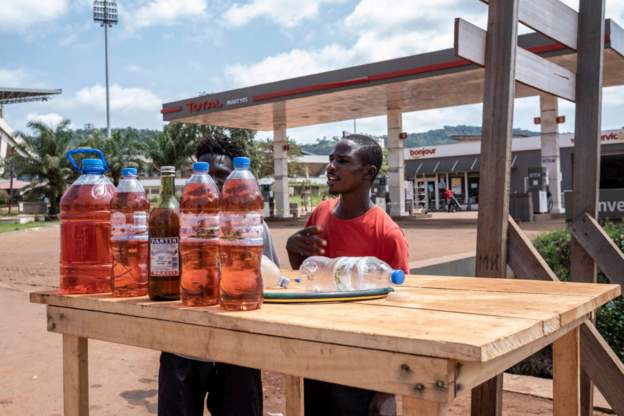
    Total-Centrafrique’s customs operations were stopped because the government claimed it owed more than $3. 3 million in oil taxes. The closure of its gas stations for around two weeks created a problem with fuel availability. This caused long lines at the remaining open gas stations.

    Energy Minister Bertrand Arthur Piri said “we talked about everything and agreed on everything”.

    He said that Rochefort International will keep doing Total’s fuel import work and also talk to the Ministry of Finance about how to pay its taxes.

    A person from the energy company said they were happy with the agreements they made with the government.

    However, a taxi driver from the area informed the BBC that the lack of fuel availability forced them to resort to purchasing fuel from illegal sources.

    Total-Centrafrique, a company that supplies fuel in the CAR, has been recently bought by Rochefort International.

  • Former president of Central African Republic banished and given life sentence

    Former president of Central African Republic banished and given life sentence

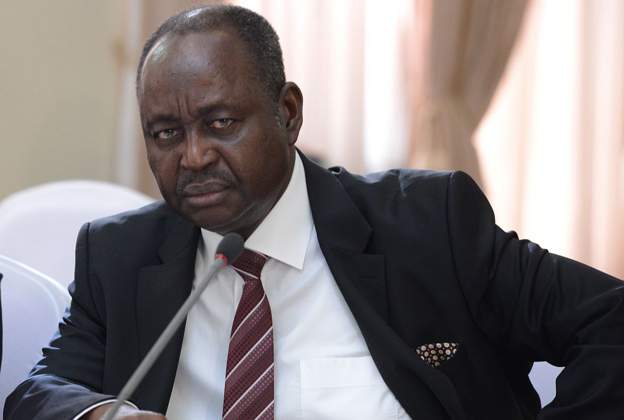
    Francois Bozizé, who used to be the president of the Central African Republic but was forced to leave the country, has been given the punishment of spending the rest of his life in prison by a court in the capital city, Bangui.

    The person who is currently in charge of a group of rebels, and who is 76 years old, was found guilty of crimes like rebellion and making security weaker, even though they were not there for the trial.

    On Thursday, a decision was made, but it did not mention any specific information about when or what crimes were involved.

    More than 20 other people, including two of Mr. Bozizé’s sons, were found guilty even though they were not present during the trial.

    In 2003, Mr. Bozizé took control of the Central African Republic. He was removed from power ten years later, which caused another war that has resulted in the deaths of thousands of people.

    He currently resides in Guinea-Bissau.

  • MSF suspends operations in Central African Republic town due to attacks

    MSF suspends operations in Central African Republic town due to attacks

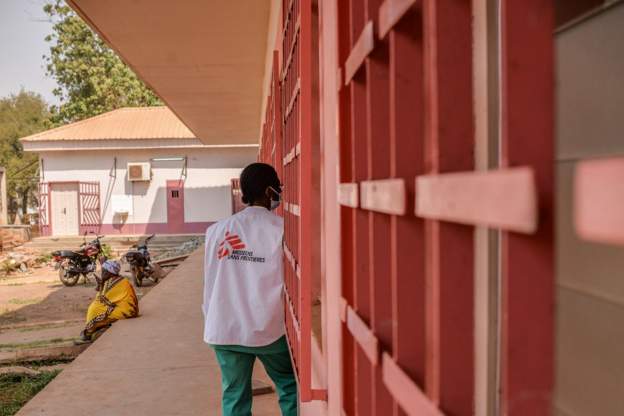
    Medical charity Médecins Sans Frontières (MSF) has stopped temporarily going to health centers in the northern part of the Central African Republic (CAR).

    It says that people who help others, sick people, and the people who take care of them are experiencing a lot of violence from local armed groups when they go around the town of Batangafo in the northern Central African Republic.

    Gisa Kohler, who is in charge of operations for MSF in the country, says that we are very upset about any violence that happens to patients, their caretakers, our staff, or the bike riders who deliver supplies for our humanitarian organization.

    The charity says it can’t keep giving healthcare in the area where two really terrible attacks happened in less than a week, from August 26 to 30.

    This year, Batangafo has experienced at least 16 attacks. These incidents mostly involve groups of armed men committing violent robberies.

    The people who were hurt include motorbike riders who take patients from one place to another, community health workers who give care in rural areas, and groups of vehicles with workers who travel to local communities for activities.

    Moreover, there were two incidents where a worker from MSF and people taking care of patients were victims of sexual violence.

    MSF has asked all armed groups to treat healthcare staff, humanitarian workers, patients, and their caretakers with kindness and make sure they are safe.

    The organization has been in the location since 2006.

  • Ghana, Central African Republic match ticket prices released

    Ghana, Central African Republic match ticket prices released

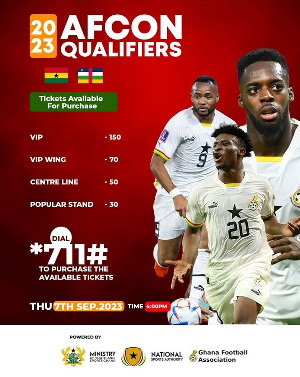
    The Ministry of Youth and Sports (MOYS) has released the ticket prices for the upcoming Africa Cup of Nations qualifier between Ghana and the Central African Republic, scheduled for Thursday, September 7, 2023.

    As per the official MOYS Twitter account, the VIP section tickets are priced at GH₵150, while VIP wing tickets will be available for GH₵70 each.

    For those seeking seats along the Centre Line, tickets are priced at GH₵70, and fans on a tighter budget can opt for the popular stand tickets, which are available for just GH₵30.

    Additionally, for the convenience of e-ticketing, fans can purchase their tickets online by dialling *711#.

    The Black Stars of Ghana are set to face the Central African Republic in their final African Cup of Nations (AFCON) qualifier at the Baba Yara Sports Stadium on Thursday, September 7, 2023.

    Ghana currently leads Group E with nine points, and a victory in this match will secure their spot in the 2024 AFCON, scheduled to be held in Ivory Coast from January 13 to February 11, 2024.

    Before the game on Thursday, September 7, eleven players have already arrived at the Black Stars camp in preparation for the clash.

  • Daniel Amartey ruled out of Central African Republic game over hamstring injury

    Daniel Amartey ruled out of Central African Republic game over hamstring injury

    Besiktas center-back Daniel Amartey will be unavailable for Ghana’s last 2023 Africa Cup of Nations qualifier against the Central African Republic due to a hamstring injury.

    The 28-year-old has been a vital component of the Black Stars squad. With his absence, adjustments will be necessary in the central defense.

    “[Amartey] sustained a hamstring injury on Sunday, August 27, 2023 during training and is currently on the sidelines. Club Doctors predict he will be out for two weeks,” Dr Prince Pambo said, according to a GFA statement.

    Chris Hughton, the Black Stars’ head coach, has unveiled the squad for Sunday’s match, and notably absent from the list is former Leicester City defender Daniel Amartey.

    Ghana is set to host the Central African Republic in their final Group E clash at the Baba Yara Sports Stadium on Thursday, September 7, 2023.

    Hughton’s team currently tops Group E with nine points, leading by a single point over Angola and two over the Central African Republic. Meanwhile, Madagascar occupies the bottom position in the group with two points.

    The Black Stars merely require a single point from the match to secure their qualification for the tournament scheduled to take place in Ivory Coast next January.

  • Central Africa Republic court affirms lifting of presidential term limits

    Central Africa Republic court affirms lifting of presidential term limits

    The highest court in the Central African Republic has given its approval for a decision made in July to increase the amount of time a president can serve to seven years and remove the limit on how many terms they can have.

    The court said that 95% of people agreed with the vote, and about 57% of people participated.

    The new law makes a few changes. First, it creates a new position called the vice-president, who is chosen by the president. Second, it gets rid of the senate and replaces it with a single parliament.

    It also says that people who have citizenship in two countries cannot be president. And it makes the number of supreme court judges go up from nine to 11.

    In simpler words: Last September, the highest court got rid of the group in charge of creating a new law. This happened before the court’s leader, Daniele Darlan, was made to leave against his will.

    The main rival parties and non-governmental organizations in the country had suggested not supporting or participating in the law changes. They believed that the changes were made to help President Faustin-Archange Touadéra stay in power forever.

    They said that the group in charge of going over the constitution was being told what to do by Russia.

    President Touadera has support from Russian mercenaries called Wagner. More fighters came before the vote to keep things safe.

    The country, which has a lot of diamonds and gold but is surrounded by land and doesn’t have any access to the sea, has been affected by fighting and problems with its government for a long time since it became independent from France in 1960.

  • Wagner backed African central leader to win key votes

    Wagner backed African central leader to win key votes

    Critics have denounced the recent referendum in the Central African Republic (CAR), which sought to allow the president to seek re-election without term limits, as a sham.

    According to provisional results, 95% of voters supported amendments to the constitution, but detractors argue that the voter turnout was as low as 10%.

    CAR remains entrenched in a civil war that has displaced a significant portion of its population from their homes.

    President Faustin-Archange Touadéra is backed by the Russian private military group Wagner, whose presence has raised concerns.

    Additional Wagner fighters were deployed ahead of the referendum to ensure security.

    Wagner forces have faced allegations of committing war crimes while supporting President Touadéra’s efforts against rebel factions that still control sizable portions of the nation.

    Reports indicate their involvement in the mineral and timber industries.

    The proposed new legislation aims to eliminate the existing two-term limit and extend the presidential term from five to seven years.

    Furthermore, the law would prohibit politicians with dual citizenship from running for the presidency unless they renounce their second citizenship.

    Campaign group Human Rights Watch says this stirs up memories of anti-Balaka militias who targeted Muslims for their perceived association with Séléka rebels in the 2013 conflict, which saw hundreds killed in a civil conflict that continues to this day.

    Opposition parties and some civil society groups boycotted the referendum vote on 30 July, calling it a “constitutional coup” designed to keep President Touadéra in power for life.

    They also say the election process lacked transparency and there was not enough consultation beforehand.

    Under the changes, a new post of vice-president would be created, who would be appointed by the president. The Senate would be scrapped and parliament would be transformed into a single chamber.

    The president and members of his United Hearts Party say they are following the “will of the people”.

  • Preparations underway for Sunday’s referendum in Central African Republic

    Preparations underway for Sunday’s referendum in Central African Republic

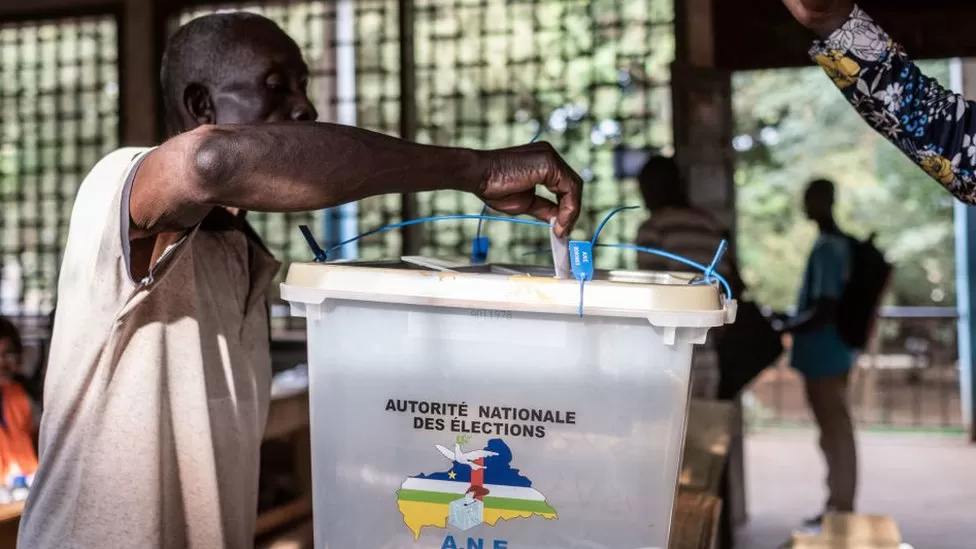
    On Sunday, voters in the Central African Republic, a country known for its ongoing conflicts and economic struggles, will participate in a crucial election. The election centers around a contentious proposal to amend the constitution, potentially paving the way for President Faustin Archange Touadera to serve a third term.

    Having faced a tumultuous period lasting over a decade, the land-locked nation remains one of the poorest and most unstable countries globally. It endured a civil war marked by sectarian divisions following a coup, during which France and the United Nations offered assistance to help stabilize the situation.

    Despite some decrease in violence in recent times, pockets of territory are still under the control of rebel groups, and President Touadera continues to hold power with the support of Russian paramilitary forces.

    Touadera was initially elected in 2016, amid the country’s post-war recovery. His re-election in 2020, however, was marred by accusations of fraud and a low voter turnout. Many citizens, particularly in rebel-held areas, were discouraged from casting their ballots due to intimidation.

    The proposed constitutional amendment aims to extend the presidential term from five to seven years while eliminating the two-term limit. Proponents of the change argue that this would reset Touadera’s tenure, enabling him to run for the presidency once more.

    “The will of the people” forms the basis of this constitution, as expressed in a public dialogue held in March 2022, according to Evariste Ngamana, the deputy parliamentary speaker and spokesperson for the pro-Touadera majority in parliament. The aim is to establish institutional stability and create favorable conditions for development.

    However, the main opposition parties and civil society groups are calling for a boycott of the upcoming poll, citing an incomplete electoral roll and electoral overseers lacking independence, thereby branding it flawed. Martin Ziguele, the president of the Central African People’s Liberation Movement (MLPC), accuses the government of attempting a constitutional coup d’etat with the goal of allowing unlimited presidential terms, thereby seeking to hold on to power indefinitely.

    In Bangui, citizens are voicing concerns that the focus should be on addressing poverty, corruption, and violence rather than pursuing a third term for the president. Some feel that critical issues, such as insurgencies, theft, and loss of lives, are being neglected in favor of extending the president’s tenure.

    While there have been some protests against the referendum, they have been relatively muted, with reports of opponents facing threats and harassment. The judiciary also dealt a blow to President Touadera by scrapping the establishment of a committee tasked with drafting the new constitution.

    Despite approximately 1.9 million eligible voters, intimidation in rebel-held areas raises questions about their ability to participate in the upcoming vote. President Touadera has stated that both Russia and Rwanda will provide support for the vote’s security.

    The revision of constitutions to justify extending presidential terms has become a growing trend in Africa, seen in countries like Guinea and Ivory Coast in 2020. This trend also emerged as a possibility in Senegal, but the incumbent, Macky Sall, announced he would step down at the end of his second term. Mali, with the support of Wagner-linked forces, recently pushed through a new constitution following a controversial referendum, with the promise that it would guide the country’s return to civilian rule next year.

  • Wagner chief Prigozhin spotted in Russia first time since uprising

    Wagner chief Prigozhin spotted in Russia first time since uprising

    The founder of the Wagner private military firm, Yevgeny Prigozhin, was last seen inside Russia last month when he oversaw an armed uprising against the Russian military.

    Prigozhin was reportedly seen in St. Petersburg meeting with an African dignitary outside of the Russia Africa summit, according to reports from the mercenary organisation.

    The representative from the Central African Republic is a summit participant. As previously reported by CNN, Wagner has a presence in the Central African Republic.

    The image of Prigozhin with the dignitary was geolocated to the Trezzini Palace Hotel in St. Petersburg, which is where, according to Russian media, the founder of Wagner has maintained an office. On July 6, following the uprising, Russian officials searched a number of places, including the hotel.

    Since then, Prigozhin has only been captured on camera once, on July 19, when he appears to be in Belarus and appears to be introducing Wagner warriors at a facility in Asipovichy.

    Longtime ally of Russian President Vladimir, Belarusian President Alexander Lukashenko, claimed to have persuaded Putin not to “destroy” Wagner and Prigozhin during the uprising.

    In a video, Prigozhin appears to be out in public for the first time since the revolt.

    One of Putin’s long-lasting obstacles came from Prigozhin’s uprising.

    Prigozhin, who typically prefers to work in the shadows, was propelled into the public eye after Russia’s invasion of Ukraine last year, with Wagner mercenaries playing a crucial part in numerous fights.

    Since the 1990s, Prigozhin and Putin have been friends. By gaining large catering contracts with the Kremlin, Prigozhin amassed fortune and earned the title of “Putin’s chef.”

    It was after the 2014 Russian-backed separatist struggle in the Donbas in eastern Ukraine that he allegedly changed into a vicious warlord.

    Wagner was established by Prigozhin as a shady mercenary group that fought in Ukraine and, increasingly, for causes supported by Russia throughout the world.

    In the Central African Republic, Sudan, Libya, Mozambique, Ukraine, and Syria, CNN has traced Wagner mercenaries. They have established a terrible reputation through time and have been connected to several violations of human rights.

    Wagner soldiers played a significant role in capturing the Ukrainian cities of Soledar and Bakhmut following Russia’s invasion of Ukraine in 2022.

    The Wagner forces occasionally appeared to be the only ones defeating the Ukrainians on the Russian side.

    However, Prigozhin frequently criticised the support the Russian military establishment provided for his forces.

    In one particularly gruesome video from the beginning of May, Prigozhin pointed a gun directly at Sergei Shoigu, the Russian defence minister, and Gen. Valery Gerasimov, the head of the Russian armed forces.

    As he gestures towards the bodies behind him and remarks, “The blood is still fresh,” They are perishing so you can sit like fat cats in your opulent offices because they came here as volunteers.

  • Hundreds of Wagner mercenaries in CAR

    Hundreds of Wagner mercenaries in CAR

    Russian security firm Wagner confirmed on Sunday that hundreds of its fighters had arrived in the Central African Republic (CAR) in a statement on the messaging app Telegram.

    This development comes amidst ongoing uncertainty surrounding the future of Wagner following a brief mutiny in June.

    Since 2018, at least 1,000 Wagner mercenaries have been stationed in the CAR. However, recent reports suggest that approximately 600 mercenaries have departed from the country.

    A company connected to the Wagner group has stated that the newly arrived fighters will assist in providing security during a forthcoming referendum in the CAR.

    The referendum, scheduled for later this month, will determine whether President Faustin-Archange Touadéra can seek a third term in office.

  • Floods in Central African Republic leave fishermen stranded

    Dawn is just breaking over the Central African Republic’s capital Bangui as Pacome Koyeke glides his dugout canoe over the silent misty waters of the River Ubangui.The tributary of the mighty Congo often floods during the rainy season, but this year the water levels have been catastrophic for the nation at the heart of the African continent.And communities that eke a livelihood from fishing have been among the worst affected.Seemingly endless civil wars have raged since 2013 and the United Nations lists Central Africa Republic (CAR) as the second least developed country in the world. Natural disasters only make things worse.

    Koyeke, 29, has been casting his net and pulling it in since 3am, hoping for a good catch.

    But after several hours all he has to show for his efforts are two small red fish.

    Fishermen struggling

    “At the moment all the fishermen are struggling”, he says, his gaze fixed on the horizon.

    With the flooding, “the very high pressure of the water makes the fish flee their usual places,” says the 29-year-old.

    “They go and hide under the roots of trees, where the pressure is lower but we can’t go there.”

    “Before, I could earn 180,000 CFA francs ($276) a day, now we are lucky to get even 10,000 francs,” explains Koyeke, the head of Bangui’s fishing development association One for All.


    In the distance, a group of fishermen is caught silhouetted on the edge of the thick mist as they roll out a 300-metre long net before casting it into the river, in vain.

    ‘A lottery’

    There is a shortage of fish and equipment to make the nets which usually come from Europe, Cameroon or Nigeria, but supplies have dried up.

    “Fishing’s like a lottery today, you may win one day and the next day you lose,” spits Edouard Franck, who guards canoes after having to give up fishing when he could not afford a new net.

    “I no longer have the money. For a fishing net you need a minimum of 50,000 CFA francs ($75),” Franck explains.

    The local catch includes eels, carp and captain fish, but fewer and fewer are on sale at the market at Ouango, a fishing community nearby the river.

    For want of enough fish to sell, the women behind the stalls sing and dance to try to pull in passers-by and sell their meagre display.

    “In normal times I could make 150,000 CFA francs ($229) a day, but now I can’t get even 10,000,” says Nina-Marie Zougouroupou, a 28-year-old fishmonger at a port in the capital.

    “It’s difficult for us at the moment,” admits Eveline Binguimale.

    Twice the price

    According to the World Bank, CAR produced 29,000 tonnes of fish in 2020.

    Much of the population has traditionally relied on the availability of large quantities of fish at cheap prices.

    But those days appear to be passed.

    “We can’t eat fish the way we want to any more,” says Sandra Liki wandering round the market looking to buy fish to feed her family.

    “What we used to buy for 2,000 (CFA) francs costs 5,000 today.”

    The World Bank estimates 71 percent of the nation’s six million people live below the international poverty line of $2.15 a day.

    Food insecurity

    The floods have hit at a time when nearly half the population is suffering from food insecurity and relies on international aid, the UN says.

    Since June, about 85,000 people have been affected by the floods across 12 of CAR’s 17 prefectures, according to the UN.

    Vakaga, in the north, has been hardest hit with 24,000 affected and more than 20,000 in the capital.

    In 2019, the last time such severe floods struck, the United Nations said 100,000 people lost their homes.


    Source: theeastafrican.co.ke

  • Emerging markets lead uptake of cryptocurrency despite bear market

    Emerging markets are embracing the technology quickly despite global financial challenges and huge drops in the value of cryptocurrencies this year.

    According to the Global Crypto Adoption Index released by US blockchain analysis company Chainanalysis, the first two quarters of this year saw a greater global adoption of cryptocurrencies than the same period in 2019 and 2020.

    The Chainanalysis index was dominated by emerging economies, with the top four adopters being Vietnam, the Philippines, Ukraine, and India. Pakistan came in sixth, Brazil came in seventh, and Thailand came in eighth.

    According to the research, demand has held steady in emerging areas despite a deterioration in public opinion toward cryptocurrencies in industrialized nations during the current bear market.

    Adoption drivers

    With rising US interest rates and inflation weakening many fiat currencies around the world, cryptocurrencies and the decentralised exchanges on which they are traded allow users in emerging markets to limit exposure to macroeconomic pressures and ease transaction flows.

    Long touted as a hedge against inflation, cryptocurrencies as an asset class have seen one of the largest declines since the second half of 2021 when inflation ramped up globally, prompting many banks and financial institutions to question this premise.

    The COVID-19 pandemic spurred the growth and adoption of new e-commerce solutions as many citizens sought innovative ways of gaining access to financial services.

    The number of unbanked citizens – those without access to checking or savings accounts, credit cards, loans, mortgages or other traditional financial products – fell from 1.7bn in 2017 to 1.4bn in 2021, according to the World Bank.

    In Morocco, Vietnam, Egypt and the Philippines, more than 65% of the population is unbanked, according to data from UK research platform Merchant Machine. Three of these countries were among the top-15 on the Chainanalysis index.

    Regionally, 50% of citizens in the Middle East and Africa are unbanked, while South and Central America average 38%, Eastern Europe 33% and Asia Pacific 24%. Meanwhile, 94% of citizens in Western and Central Europe are considered banked.

    Given these disparities in financial inclusion, it is unsurprising that citizens in emerging markets are driving the adoption of cryptocurrencies and decentralised exchanges – which Chainanalysis maintains is more important than the overall volume of holdings, trades or even price.

    Weighing risk and reward

    Last year, El Salvador became the first country to accept Bitcoin as legal tender; President Nayib Bukele pledged to build a ‘Bitcoin City’ as a tax haven for crypto investors, including an airport and residential and commercial areas.

    However, Bitcoin’s subsequent price crash – it fell from US$47,000 to less than US$20,000 in the 12 months after El Salvador adopted it as legal tender – has raised questions about these plans and El Salvador’s ability to cover US$1.6bn worth of sovereign bonds due in 2023 and 2025.

    Nonetheless, several African nations are continuing to encourage the use of cryptocurrencies to drive financial inclusion.

    The Central African Republic adopted Bitcoin as legal tender in April, and the continent’s four largest economies – Egypt, Kenya, Nigeria and South Africa – also have the largest number of cryptocurrency holders in Africa.

    Zimbabwe, for its part, has installed a Bitcoin ATM managed by Golix, the country’s first and largest cryptocurrency exchange – and the only place in the country where citizens can buy or sell US dollars for Bitcoin.

    Citizens skirt government bans

    One major risk to the long-term viability of cryptocurrencies is the potential for governments to curtail trading because of their use for illicit payments.

    Last year, China instituted a ban on cryptocurrency mining and trading. Eight other countries, including Egypt and Morocco, have similar bans in place, while 42 countries have implicit bans on these activities.

    Even so, China was the 10th-largest adopter of crypto and Morocco the 14th, according to the Chainanalysis index. In the case of China, many citizens are skirting the ban and government, reportedly, is not enforcing it strictly.

    The country has however encouraged the use of non-fungible tokens (NFTs) that leverage blockchain technologies, as long as they are traded on regulated exchanges.

    Most NFTs are bought and sold with cryptocurrencies, driving adoption in Central and South Asia as well as Oceania.

    NFT marketplaces were cited as a major reason for India’s big jump in the Chainanalysis rankings, including FanCraze – a platform that sells cricket NFTs and has financial backing from US venture capital firm Sequoia Capital.

    Blockchain-backed, play-to-earn (P2E) gaming is another major draw for new cryptocurrency adopters, most notably in top-ranked Vietnam.

    Despite the high-profile hacking and subsequent collapse earlier this year of the NFT online video game Axie Infinity, which was created by the Vietnamese studio Sky Mavis, many in South-east Asia are turning to new, locally developed P2E options.

    More sustainable mining

    Another fundamental concern about cryptocurrencies – the energy cost of mining – has become more acute in the light of recent energy shortages and supply chain disruptions due to Russia’s ongoing invasion of Ukraine.

    The energy required to power the Bitcoin network varies according to volume of mining and transactions; but at the time of writing its annualised electricity consumption was estimated at 92.7 TWh according to the Cambridge Bitcoin Electricity Consumption Index, which is roughly equal to the annual electricity consumption of Pakistan.

    There are however developments underway to make cryptocurrency mining more sustainable by using renewable energy. These have coalesced this year around the so-called regenerative finance movement, an effort to merge the growth of Web3 technologies like blockchain with measures addressing the climate crisis.

    In September, the White House Office of Science and Technology Policy released a report about the climate and energy implications of cryptocurrency in the US, which identifies Web3’s capacity to support technologies that monitor or mitigate climate impact.

    Cryptocurrency miners themselves are also innovating to reduce the environmental impact of their activities. For instance, while Norway is already able to mine cryptocurrency using renewable energy due to its surplus of hydropower generation, Norwegian company Kryptovault is recycling excess heat from Bitcoin mining rigs to dry chopped timber.

  • I am not bothered with Black Stars performance – Coach Otto Addo

    Black stars head coach, Otto Addo, says he is not worried about the poor record of the team.

    Addo has won just 1 of his 7 games in charge of the national team.

    The Borussia Dortmund assistant coach led the Black Stars to secure qualification for the World Cup against Nigeria in March.

    The two-legged games ended in a draw but Ghana qualified on the away goal rule.

    Since then, Ghana has only managed to beat Madagascar, a 3-0 win in Cape Coast in a 2023 Africa Cup of Nations qualifier.


    The run has included 2 defeats to Japan (4-1) in the Kirin Cup and Brazil (3-0) and draws against the Central African Republic (1-1) and Chile (0-0).

    As part of the preparations for the global showpiece in November, Ghana will face Nicaragua in Spain later today in another international friendly.

    Asked if the Nicaragua game is a must-win for his team, Addo said: “We are using these matches to try a lot of things, not only on the players but also for my side on systems, so we have to find that together. This is very important for us as a team.

    “We have new players in each position we need to integrate and a whole a lot of things and we also want to use these games for everyone to show themselves at the training and also in the games and I am not worried.

    “We have to take the right conclusions out of every match and prepare ourselves for the World Cup.”

    Kick-off for Ghana vs Nicaragua is 18:00GMT.


  • Former CAR top rebel leader’s trial starts at ICC

    The International Criminal Court has begun hearing the trial of a former senior rebel commander in the Central African Republic.

    Mahamat Said Abdel Kani has pleaded not guilty to charges of war crimes and crimes against humanity.

    He is accused of being in charge of a police compound in the capital Bangui in 2013, where supporters of the deposed President François Bozizé were brutally tortured.

    The trial is expected to last several months and the prosecutor will rely on the evidence of 43 witnesses.

    Mr Said’s defence team dispute the reliability of the evidence against him.

  • CAR top court blocks crypto-for-citizenship plan

    A plan by the government of the Central African Republic to allow foreigners to acquire citizenship and land using a new cryptocurrency has been ruled as “unconstitutional” by the country’s top court.

    Last month the government launched Sango Coin amid a sharp fall in Bitcoin prices and doubts over the project’s viability in a country with poor internet connection and destabilised by conflict.

    Sales of the initial $21m (£17m) on offer have been slow, with just over 5% of the target bought in the hours after its launch on 21 July.

    According to the Sango website.

    , foreign investors could obtain citizenship for $60,000 worth of crypto – with the equivalent Sango Coins held as collateral for five years – and “e-residency” for $6,000, held for three years.

    Investors would also be able to by a 250 sq m plot of land for $10,000, with the Sango Coins locked away for a decade.

    The constitutional court ruled that nationality did not have a market value and that residency required a physical stay in the country.

    A government spokesman had no response on Monday and the impact of the ruling on ambitious crypto project is not clear, Reuters news agency reports.

    Source: BBC

  • Central African Republic launches Bitcoin hub

    The Central African Republic has launched its government-backed cryptocurrency hub called Sango – named after one of the country’s official languages.

    President Faustin Archange Touadéra launched the hub on Sunday in a live announcement on social networks.

    It follows the country’s adoption of Bitcoin as legal tender in May, only the second country after El Salvador, to adopt Bitcoin as legal tender.

    “Sango means the language of money and wealth. Cryptocurrency helps the poor gain control over their investment,” President Touadéra said.

    He likened the project to “digital gold”:

    The specifics are not yet clear, but the project will help people invest in the country’s significant mining resources among other things, according to Mining Minister Rufin Benam Beltoungou.

    The project’s website also says that an island dedicated to cryptocurrency will be created on the Oubangui River where investors can invest without paying taxes and have a digital residence.

    Many concerns remain about the adoption of cryptocurrency in the country, especially after the collapse of Bitcoin by more than 20% last month.

    About 90% of the Central African population does not have access to the internet, although the country has signed an agreement with neighbouring Cameroon to share its fibre optic network in 2023.

    The government estimates Central Africa Republic’s natural resources to be worth more than $3 trillion (£2.4 trillion).

    But the country has been torn apart by a succession of civil wars for nearly a decade and is one of the poorest in the world.

    Source: BBC

  • Thirteen die in Central African Republic clashes

    At least 13 people have been killed during clashes between rival armed groups in the Central African Republic.

    A UN official said the fighting began on Wednesday morning after a faction of the Popular Front for the Rebirth of Central Africa (FPRC) attacked the town of Ndélé, in the northern province of Bamingui-Bangoran.

    A civil war that began in 2013 has displaced more than four million people in the country.

    A year ago a peace deal was signed between the government and 14 armed groups, but there have been frequent outbreaks of violence since then as rival groups compete for control of mineral resources.

  • Exhausted Central Africans leave exile for unknowns at home

    Under the tarpaulin shading the back of the lorry, the heat is still stifling on a rough road for some 30 refugees travelling home to the strife-weary Central African Republic.

    Potholes rattle spines and send up fine grit that sticks to the sweaty bodies of exhausted adults and small children and animals, almost hidden in a tangle of limbs.

    Yet the men and women look relieved.

    They are glad to be homeward bound after tough years spent in the Republic of Congo, following agreements signed with neighbouring countries by the government and the UN High Commissioner for Refugees in July and August.

    Albert Bekpa, a fisherman from the capital Bangui, made the most of the journey despite the discomfort.

    Read:Over 40 killed in attack on refugee base in Central African Republic

    “This is a feast day!” he proclaimed, brandishing an elegantly carved walking stick, a treasure he has kept close since exile in 2014.

    His cries found echoes from outside.

    All along the track from the Congolese border to a UNHCR transit camp at Mongoumba, villagers turned out to hail their returning compatriots. Children waved palm branches and the elders stood up from their seats.

    The United Nations estimates that more than a quarter of the 4.7 million inhabitants in the deeply poor and landlocked CAR fled abroad in the turmoil after an armed movement drawn from the Muslim minority ousted President Francois Bozize in 2013.

    Since then, the CAR has been ravaged by conflicts pitting a range of armed movements against the security forces and each other in a ragged civil war fuelled by ethnic factors, religious faith and a struggle to control resources.

    – ‘A legal framework’ –

    The UNHCR estimates that more than 600,000 of the uprooted civilians still live abroad, mainly in Cameroon, the Republic of Congo and the Democratic Republic of Congo.

    Many refugees have returned on their own, particularly since the Bangui government, which is supported by a UN peacekeeping mission, signed peace pacts in February with 14 of the armed groups staking territorial claims.

    For the past seven months, several provinces have seen relative calm.

    “Those who returned in spontaneous fashion had no support,” said Stella Fatime, communications official with the UNHCR. “We needed to set a legal framework to guarantee that volunteers could return in dignity and safety.”

    According to available figures, 4,983 refugees in the Republic of Congo have asked to be taken home since August 1 under one of the signed agreements.

    Read:Three things you did not know about Nescafé in Central & West Africa

    Valerie, a Christian trader from the mainly Muslim PK5 district of Bangui, wants to forget the clashes between communities that forced her to flee in 2013.

    “In the camps, we lived together very well,” she said as the lorry arrived at Mongoumba. “We’ll do the same at home.”

    Communal ties may have been fine in the Congo camps, but everybody agreed that life was grim.

    Food rations and medical supplies were inadequate, schooling was difficult and the chances of employment were hopeless.

    – ‘Life of a slave’ –

    “Some people managed to get jobs as hired daily labourers in the fields. Me, I had to wait for nightfall to go out to fish in hiding, find something to eat. It was the life of a slave!” Albert said.

    “Depending on the WFP (World Food Programme) and the UNHCR is no kind of life,” said Youssouf, another trader from PK5.

    Among the 365 “voluntary” repatriated people of the day, many expressed similar sentiments to Albert and Youssouf, saying that they felt compelled to return to be able to feed their families.

    The UNHCR gives each adult 150,000 CFA francs (229 euros / $252) to help them make a fresh start. Abdelaziz had no illusions that he would have to use the money for temporary housing in Bangui.

    “Our house was destroyed in 2013. But we’ll manage,” he said, planning to rent as long as it takes him to hustle up the means to live — or survive — in one of the world’s poorest countries.

    Those with property still standing also faced the unknown and were warned as soon as they reached the transit camp.

    “If your house is occupied by somebody, do not chase them out. You must speak to the district chief,” an organiser warned by megaphone.

    With another four hours of rough riding ahead to reach the capital, Albert and his family listened to the announcement with concern. “I had plots of land in Bangui and I just don’t know what has happened to them.”

    Source: France24