Tag: Central Bank

  • Former Finance Minister petitions IMF, raises alarm over fiscal risks in BoG audit

    Former Finance Minister petitions IMF, raises alarm over fiscal risks in BoG audit

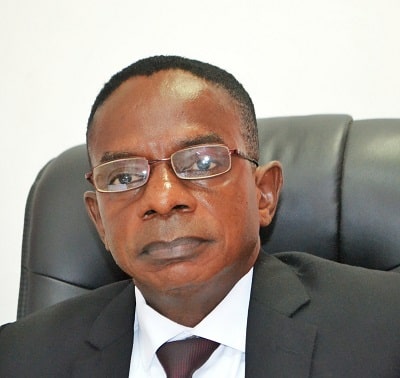
    Former Finance Minister and Ranking Member on Parliament’s Finance Committee, Dr Mohammed Amin Adam, has formally written to the International Monetary Fund (IMF) on the heavy loss incurred by the Bank of Ghana (BoG).

    This comes after the Central Bank released its audited 2025 financial statements on May 1, which revealed a GH¢15.3 billion net loss and the negative equity of about GH¢93.8 billion, sparking wild reactions from Parliament, civil society, and analysts.

    In a detailed letter to the International Monetary Fund Ghana Mission Chief under the Extended Credit Facility (ECF) programme in Washington, D.C., Mohammed Amin Adam raised concerns about the heavy implications the Bank of Ghana’s losses could have on the country’s fiscal stability, warning of what he described as “material implications” for Ghana’s “macroeconomic stability, fiscal outlook, and post-programme policy credibility.”

    He highlighted concerns, their implications, and suggested recommendations the IMF  should consider in its engagements with the Government of Ghana and the Bank of Ghana.

    As the IMF’s ECF programme with Ghana nears its end, Mr Amin Adam highlighted the need to sustain the gains from the programme; however, suggesting that the BoG’s recent report appears to suggest otherwise, hence the need for recommendations offered in the letter to the global lender.

    “As the programme comes to an end, it is imperative that greater attention is paid to safeguarding the durability of these gains. However, the publication of the 2025 financial statements of the Bank of Ghana has raised deep concerns, and I would like to draw the Fund’s attention to significant fiscal, monetary, and governance risks arising from the statements, and to propose recommendations for strengthening fiscal-risk management, central bank balance sheet repair, and post-programme policy sustainability”, parts of the statement read.

    Analysis of Bank’s statements

    Dr Adam, in seven itemised points, drew the IMF’s attention to key concerns in the Central Bank’s audit statements.

    Firstly, it addressed BoG’s deepening negative equity (BoG’s liabilities are greater than its assets) and the worsening of the country’s already weak balance sheet.

    “First, the Bank of Ghana remains in a severe negative equity position. Group negative equity increased from GH¢58.62 billion in 2024 to GH¢93.82 billion in 2025, while the Bank’s own negative equity increased from GH¢61.32 billion to GH¢96.28 billion. This indicates that meaningful balance sheet repair has not yet commenced in substance, and that the Government remains exposed to a large and growing recapitalisation obligation”.

    He also addressed BoG’s rising loss despite an increase in its operating income, citing that “the Bank’s reported loss worsened despite increased operating income. The Bank recorded a loss of GH¢15.63 billion in 2025, compared with GH¢9.49 billion in 2024. This deterioration occurred even though operating income increased, largely because operating expenses, particularly open market operation costs, revaluation losses, exchange losses, and gold-related losses, remained elevated. It should also be noted that an analysis based on comprehensive income suggests that the full impact on the Bank’s capital position is more severe than what is reflected in the profit and loss account alone.

    While the Bank recorded a loss of GH¢9.49 billion in 2024, this was offset by GH¢13.5 billion of positive other comprehensive income, resulting in a net comprehensive gain of GH¢4.02 billion. In contrast, in 2025, the Bank recorded both a larger loss and a significant negative reserve movement, resulting in a total comprehensive loss of GH¢34.95 billion. This gets to GH¢44 billion when net gains from the sale of gold are added”.

    Another concern addressed by Mr Adam is the surge in Open Market Operation costs, which nearly doubled from GH¢8.60 billion in 2024 to GH¢16.73 billion in 2025. He believes that “This implies that monetary policy implementation continues to carry a very high quasi-fiscal cost, with OMO expenses constituting a substantial share of operating income. Without the one-off gain from the sale of gold reserves, OMO costs would have exceeded the Bank’s operating income, raising serious questions about the sustainability of current policy operations”.

    Policy solvency issues were also highlighted as the former Minister raised questions about the Bank’s positive policy solvency position of GH¢5.5 billion. This figure requires careful interpretation, suggesting that underlying risks may still exist, citing that “…this calculation includes a GH¢9.57 billion net gain from the sale of refined gold. Without this one-off gain, the underlying policy solvency position appears materially weaker and potentially negative. This raises concerns that the apparent improvement in policy solvency may not reflect a fundamental strengthening of operations, but rather the impact of non-recurring income”.

    Gold-related activities raise volatility concerns after recording mixed results, GH¢9.57 billion in gains from refined gold sales against GH¢9.05 billion in net losses on gold deals.

    “Fifth, gold-related activities introduce volatility and transparency risks. The Bank recorded a GH¢9.57 billion gain from the sale of refined gold, while also recording GH¢9.05 billion in net losses on gold deals. The accounts further show a sharp increase in gold-related receivables and liabilities, suggesting complex and potentially recurring operational exposures. These developments warrant careful scrutiny to determine whether they reflect temporary transactions, structural policy tools, or quasi-fiscal operations with broader fiscal implications. The economic net benefit of the gold programme is therefore significantly smaller than the headline gains suggest,” parts of the letter highlighted.

    Recommendations

    Dr Amin Adam is urging the IMF to ensure a transparent and structured recapitalisation plan for the Bank of Ghana, with clear details on funding, timelines, and a path to restoring positive equity, backed by parliamentary oversight. He also calls for the Bank’s financial position to be fully integrated into government fiscal-risk planning, recognising its negative equity as a potential burden on public finances.

    He further recommends improving transparency and accountability, including clearer reporting on quasi-fiscal operations, gold transactions, and a consistent policy solvency measure that excludes one-off gains. In addition, he stresses the need to resolve outstanding issues such as the treatment of the Domestic Debt Exchange Programme in official accounts and to conduct an independent review of non-standard accounting practices.

    Dr Amin Adam also emphasises the importance of maintaining strict limits on central bank financing of government, warning against policies that could undermine economic stability. Finally, he proposes the creation of a post-programme fiscal-risk dashboard, to be published regularly, to track key financial risks and improve transparency in economic management.

  • Ghana records 39% drop in total credit to GHS8.6bn in August 2025

    Ghana records 39% drop in total credit to GHS8.6bn in August 2025

    Ghana has recorded a 39% decline in total credit flows, falling to GHS8.6 billion in August 2025 from GHS14.2 billion in the same month last year.

    The drop, highlighted in the Bank of Ghana’s September 2025 Monetary Policy Report, was mainly attributed to reduced lending to the public sector and a slowdown in private sector credit as banks redirected their portfolios toward government and Bank of Ghana securities.

    Private sector credit flows stood at GHS10.7 billion in August 2025, down from GHS14.3 billion a year earlier. Despite the decline, the private sector remained the dominant recipient of credit, accounting for 95.5% of total outstanding loans compared to 92.7% in August 2024.

    Credit distribution was concentrated in the services sector, which absorbed 68.2% of total loans, followed by commerce and finance with 23.8% and manufacturing with 23.0%.

    Outstanding private sector credit increased to GHS91.0 billion at the end of August 2025, up from GHS80.3 billion a year earlier. In real terms, private sector credit grew by 1.7%, reversing the 1.1% contraction recorded over the same period in 2024.

    According to the central bank, the growth in real private sector credit was slightly above the long-term trend, with the deviation from trend widening marginally in August 2025.

    On the contrary, Ghana’s year-on-year Producer Price Inflation (PPI) for all goods and services saw a slight increase in September, marking a 0.2 percentage point rise from the 3.0% recorded in August 2025, the Ghana Statistical Service has reported.

    The Statistics Authority said the September PPI stood at 3.2%. Despite the slight increase, it marks a sharp decline of 27.3 percentage points compared to September 2024, when producer inflation was significantly higher.

    On a month-on-month basis, producer prices rose by 0.9% between August and September 2025, meaning that, on average, producers received 0.9% more for their goods and services than they did the previous month.

    The Mining and Quarrying sector, which forms the largest part of the index with 43.7%, saw a modest uptick in its inflation rate from 4.9% in August to 5.0% in September.

    Similarly, Manufacturing, which accounts for 35% of the PPI weights, recorded a modest increase from 1.6% to 1.7% over the same period, marking a 6.25% rise.

    However, Transport and Storage prices continued to decline, with inflation in the sector dropping by 8.2% in September compared to a fall of 8.0% in August 2025.

    The GSS urged businesses to cut waste, improve efficiency, and reinvest savings in technology and skills development to stay competitive amid fluctuating prices. It further encouraged firms to transform inflationary pressures into productivity gains.

    The agency also advised the government to prioritise tax reliefs, address energy and transport bottlenecks, and strengthen local supply chains to make production cheaper and more efficient.

    For households, the GSS recommended smart spending habits, urging consumers to compare prices, buy wisely, and support businesses that pass on cost savings.

    “Spend with intention to stretch income and reward fair pricing,” the Service advised.

    Meanwhile, Ghana’s Producer Price Inflation (PPI) for June 2025 saw a sharp decline of 5.9%, marking the lowest level since November 2023, according to the Ghana Statistical Service (GSS).

    Presenting the data in a press briefing held on Wednesday, July 16, in Accra, Government Statistician Dr. Alhassan Iddrisu indicated that for June alone, there was a deflation of 1.4%, meaning that, on average, producers earned less money for their products than they did in May.

    This comes after a drop of 4.2 percentage points, given the 10.1% rate recorded in May, indicating a significant decrease of 19.7 percentage points compared to June 2024, when it stood at 25.6%. This marked the fifth consecutive month that the PPI had gone down.

    “Ghana Producer Price inflation fell sharply to 5.9% in June 2025, down from 10.1% in May, a 42 percentage point dip in just a month, marking the fifth straight month of decline and the lowest rate since November 2023,” he announced.

    Dr. Alhassan Iddrisu attributed the decline to the mining and manufacturing sectors, along with the transport and hospitality sectors.

    The mining and quarrying sector, Ghana’s largest contributor to the PPI with a 43.7% weight, saw inflation fall from 13.7% in May to 6.5% in June. Manufacturing, which contributes about 35% of the PPI basket, dipped from 9.8% to 7.6%.

    Meanwhile, inflation for September 2025 dropped to 9.4% from 11.5% in August this year, according to the Ghana Statistical Service (GSS).

    This marks the ninth consecutive month of decline since October 2021. The GSS attributed the latest development to the slowdown in food price increases. As of June, the country recorded a 13.7% rate, a 4.7 percentage point decline from the 18.4% rate reported in May.

    Food inflation fell by 6.5 percentage points to 16.3%, down from 22.8% in May, whereas non-food inflation dropped by 3 percentage points to 11.4%.

    The Upper West Region recorded the highest regional inflation of 32.3%, largely due to food inflation and utilities. The Bono Region recorded the lowest at 8.4%.

    On a regional level, the Upper West Region once again recorded the highest inflation at 24.8%, though this was down from 32.3% in June. This figure is more than twice the national average of 12.1%. In contrast, the Central Region posted the lowest rate at 7.7%.

    Before the release of the GSS’s recent data, an economic research firm, IC Research, projected that Ghana’s inflation rate would experience a significant decline, dropping to 16% by the end of June. According to IC Research, the projected improvement is partly driven by the appreciation of the local currency and a reduction in fuel prices, both of which are easing inflationary pressures.

    “The June 2025 CPI data window recorded a 29.5% month-on-month and 35.3% year-on-year appreciation of the Ghanaian cedi against the US dollar. This exerted downward pressure on prices of imported items, with notable declines in petroleum prices and transport fares. The announced 15.0% reduction in commercial transport fares will continue to restrain transport inflation with downside spillovers for other items.

    “Additionally, we estimate that the lower transport cost likely eased the month-on-month pressure observed for vegetables and tubers last month, potentially sustaining food disinflation in June 2025. Consequently, we forecast a 240 basis point decline in the June 2025 annual inflation to 16.0%, with the month-on-month rate at 0.8%,” IC Research added.

    Ghana ended the year 2024 with 23.8% inflation. In January 2025, inflation slightly declined to 23.5%, and since then, it has continued to ease. In February, inflation declined to 23.1%; it saw another decrease in March to 22.4%, and declined again in April to 21.2%.

    Due to the consistent decline in the inflation rate and recorded progress with other macroeconomic variables, the Bank of Ghana’s (BoG) Monetary Policy Committee has reduced the monetary policy rate from 28% to 25%.

    Governor of the Bank of Ghana, Dr. Johnson Asiama, noted that the deceleration was underpinned by the tight monetary policy stance, fiscal consolidation, easing food supply constraints, as well as the strong recovery of the cedi.

    The Bank of Ghana has projected that headline inflation will fall within its medium-term target of 8 ± 2% by the end of 2025.

    The Central Bank attributed this expected decline to tighter monetary policy, the strengthening of the cedi, and continued fiscal consolidation efforts.

    It added that supply-side pressures have eased, resulting in lower food and overall inflation, with risks now tilted to the downside.

    Nonetheless, the Bank warned that some upward risks persist, including supply chain disruptions, global trade tensions, a 2.5% increase in utility tariffs, and a new 1.0% energy levy on ex-pump prices, which could push inflation up.

  • Inflation expected to hit 8% target by December – BoG

    Inflation expected to hit 8% target by December – BoG

    The Bank of Ghana has projected that headline inflation will fall within its medium-term target of 8 ± 2% by the end of 2025.

    The Central Bank attributed this expected decline to tighter monetary policy, the strengthening of the cedi, and continued fiscal consolidation efforts.

    It added that supply-side pressures have eased, resulting in lower food and overall inflation, with risks now tilted to the downside.

    Nonetheless, the Bank warned that some upward risks persist, including supply chain disruptions, global trade tensions, a 2.5% increase in utility tariffs, and a new 1.0% energy levy on ex-pump prices, which could push inflation up.

    Looking ahead, the Bank expects exchange rate stability to continue, supported by a stronger external sector and a buildup of international reserves that have exceeded program targets under the IMF’s Extended Credit Facility.

    It noted that a tight monetary policy stance, fiscal discipline, and stable crude oil prices are likely to cushion the economy against inflationary pressures.

    Meanwhile, Inflation dropped to 9.4% in September 2025, marking the ninth consecutive monthly decline, driven mainly by a fall in food prices.

    Ghana Statistical Service attributed the development to the slowdown in food price increases. As of June, the country recorded a 13.7 percent rate, a 4.7 percent decline from the 18.4 percent rate reported in May.

    Food inflation fell by 6.5 percentage points to 16.3 percent, down from 22.8 percent in May, whereas non-food inflation dropped by 3 percentage points to 11.4 percent.

    The Upper West Region recorded the highest regional inflation of 32.3%, largely due to food inflation and utilities. The Bono region recorded the lowest of 8.4%.

    On a regional level, the Upper West Region once again recorded the highest inflation at 24.8%, though this was down from 32.3% in June. This figure is more than twice the national average of 12.1%. In contrast, the Central Region posted the lowest rate at 7.7%.

    Before the release of GSS’s recent data, an economic research firm, IC Research, projected that Ghana’s inflation rate would experience a significant decline, dropping to 16% by the end of June.According to IC Research, the projected improvement is partly driven by the appreciation of the local currency and a reduction in fuel prices, both of which are easing inflationary pressures.

    “The June 2025 CP [Consumer Price Index]I data window recorded a 29.5% month-on-month and 35.3% year-on-year appreciation of the Ghanaian cedi against the US dollar. This exerted downward pressure on prices of imported items, with notable declines in petroleum prices and transport fares.The announced 15.0% reduction in commercial transport fares will continue to restrain transport inflation with downside spillovers for other items.

    “Additionally, we estimate that the lower transport cost likely eased the month-on-month pressure observed for vegetables & tubers last month, potentially sustaining food disinflation in June [2025]. Consequently, we forecast a 240 basis points decline in the June 2025 annual inflation to 16.0% with the month-on-month rate at 0.8%”, IC Research added.

    Ghana ended the year 2024 with 23.8% inflation. In January 2025, inflation slightly declined to 23.5%. And since then, it has continued to ease. In February, inflation declined to 23.1%; it saw another decrease in March to 22.4% and declined again in April to 21.2%.

    Due to the consistent decline in the inflation rate and recorded progress with other macroeconomic variables, the Bank of Ghana’s (BoG) Monetary Policy Committee has reduced the monetary policy rate from 28 percent to 25 percent.

    Governor of the Bank of Ghana, Dr Johnson Asiama, noted that the deceleration was underpinned by the tight monetary policy stance, fiscal consolidation, easing food supply constraints, as well as the strong recovery of the cedi.

    In line with the easing underlying inflation pressures, the Bank’s main core inflation measure, which excludes energy and utility items, has declined markedly.

    “Similarly, inflation expectations by banks, consumers, and businesses are broadly anchored,” he added.

    He further revealed that “growth in monetary aggregates remained subdued during the first half of the year, primarily due to the tight monetary policy stance, strong liquidity management, and reduced government borrowing.”

    “In line with the disinflation process and easing inflation expectations, interest rates at the short end of the money market have declined sharply, and in turn, reduced the cost of government borrowing”.

    According to Dr Asiama, data on budget execution indicated a strong commitment to fiscal consolidation as expenditures adjusted within set targets to accommodate the revenue shortfalls during the first half of 2025.

    As a result, the overall fiscal deficit on a commitment basis was 0.7 percent of GDP, outperforming the budget target of 1.8 percent of GDP.

    “The external sector has improved markedly, with a record current account surplus of US$3.4 billion in the first half of 2025, supported mainly by higher prices and increased production volumes of gold and cocoa.

    “The current account surplus, together with the outturns in the capital and financial accounts, culminated in an overall balance of payment surplus of US$2.2 billion, significantly higher than the US$588.5 million recorded in June 2024. On this score, Gross International Reserves stood at US$11.1 billion at end-June 2025, equivalent to 4.8 months of import of goods and services, compared to US$8.9 billion (4.0 months of import cover) as at end-December 2024,” he added.

    Overall, the Committee noted that macroeconomic conditions have significantly improved, “inflation expectations are broadly anchored, external buffers have strengthened, and confidence in the economy is returning.”

    The cedi has rebounded strongly against the major trading currencies. The cedi has recorded a remarkable turnaround in the first six months of 2025, appreciating by 42.6% against the US dollar.

    The cedi also appreciated by 30.3% against the British pound and 25.6% against the euro during the same period. Meanwhile, the Bank of Ghana has projected that inflation is likely to decline further and fall within the medium-term target range of 6 to 10 percent during the third quarter of 2025, ahead of earlier expectations.

    “The July forecast also shows that headline inflation is expected to decline further in the third quarter of 2025 and trend within the medium-term target of 8±2 percent by the end of 2025, earlier than initial projections,” the Governor noted.

  • IEA urges BoG to implement currency board instead of Central Bank system

    IEA urges BoG to implement currency board instead of Central Bank system

    The Institute of Economic Affairs (IEA) suggests that the Bank of Ghana (BoG) should consider adopting a currency board instead of the current central bank system.

    According to the IEA, this change would help ensure the stability of the Cedi as a legal tender by ensuring that circulating Cedis are fully supported by Forex reserves.

    In a statement issued on Monday, May 20, the IEA put forward several proposals for the government to address the declining value of the Cedi.

    One of these proposals from the IEA is that the currency board should refrain from providing loans to the government or banks.

    The IEA is hopeful that implementing these measures will lead to a reduction in Cedi depreciation and inflation.

    “An alternative to full dollarization is to adopt a currency board system in place of the central bank system. In that case, the cedi would be maintained as legal tender. However, the currency board would ensure that cedis in circulation are fully backed by FX. The cedi would also be pegged to the dollar at a fixed rate. Further, the currency board would not lend to the Government or banks.

    “With these conditions in place, cedi depreciation and inflation would be minimised. However, the currency board has limitations, including the potential loss of independent monetary policy and loss of lender-of-last-resort function.”

    The IEA emphasized that stabilizing the Cedi is a multifaceted endeavor, necessitating unified efforts to accomplish this formidable objective.

    “Some of the measures may reinforce others while some may preclude others. We are proposing them for consideration by our economic managers and to prompt debate on what is obviously one of the most important national challenges.

    “We do not believe that stabilising the cedi is rocket science. We only need to take concerted actions to achieve that ever-elusive goal. Not acting while the cedi continues to bleed is not an option!.”

  • Measures in place by Central Bank to stabilize cedi – Governor

    Measures in place by Central Bank to stabilize cedi – Governor


    Governor of the Bank of Ghana, Dr. Ernest Addison, remains hopeful that the ongoing challenges concerning the cedi’s performance against the US dollar will soon be rectified.

    Over the past few weeks, the Ghana cedi has experienced consistent depreciation vis-à-vis the US dollar. Bloomberg estimates reveal a depreciation of 13.7% of the local currency against the greenback thus far this year.

    Nevertheless, the Central Bank Governor assures that requisite measures are being implemented to tackle the issue and restore stability to the local currency.

    “The exchange rate stability will be sustained because it is not possible to continue with the disinflation process with exchange rates that are not stable. So, implicit in that statement is to give assurance to you all about the stability of the cedi going forward.

    “I’m aware that every commercial bank in the country has received some FX from the Central Bank, and apparently, there are one or two that didn’t need it, and we are keeping a very keen eye on developments,” Dr. Addison said.

    In the meantime, Ghana’s inflation rate experienced a slight reduction, dropping from 25.8% in March of this year to 25.0% in April.

    This signifies a decrease of 0.8 percentage points in April compared to the previous month’s figure recorded in March 2024.

    The Central Bank’s decision on whether to maintain or increase its monetary policy rate, which has stayed steady at 29% since its last meeting in March 2024, remains uncertain.

  • BOG considers handing Gold for Oil implementation policy to commercial banks

    BOG considers handing Gold for Oil implementation policy to commercial banks

    The Bank of Ghana (BoG) is contemplating a shift in strategy by potentially entrusting commercial banks with the implementation of the Gold for Oil Policy.

    This move comes as the Central Bank reevaluates its role, aiming to prioritize core functions such as monetary policy and price stability maintenance.

    Dr. Ernest Addison, Governor of the Central Bank, emphasized the strategic value of the Gold for Oil Policy in bolstering the country’s reserves.

    “It is a programme that we recommend to continue because it helped us in the period of crisis. We only want to make sure that this is done by a commercial bank so that we can have time to focus on our operations as a central bank. So this is the discussion that we are holding going forward but the ability to be able to exchange our natural resource directly for oil when oil prices get out of hand, we think that it is a very innovative programme.”

    He reiterated the long-term benefits of the initiative, asserting its positive contribution to Ghana’s economic stability and development.

    “So it is really about the central bank spreading itself too thin by trying to add gold for oil also into our business but we are fully focused on buying gold to build our reserves”, the Governor said to the Public Accounts Committee in Parliament.

    Speaking before the Public Accounts Committee in Parliament, Dr. Addison articulated the rationale behind the potential transition.

    He stressed the importance of streamlining the central bank’s focus while ensuring the continuity of a program that proved valuable during crises.

    Despite acknowledging the limitations, Dr. Addison reaffirmed the Central Bank’s support for the government’s Gold4Oil policy, citing its instrumental role during economic challenges.

    “This is an intervention which was very critical in the heat of the crisis, yes the foreign exchange market is functioning better than it was in 2022. Oil prices have come down much better than they were in 2022. The situation is much better now than it was in 2022 when the Gold4Oil policy was introduced.

    “However, we think that it’s still an important programme for the government to have that option and to be able to empower commercial banks to undertake their activities. Should market sentiments change, which do every day, we don’t know what will happen tomorrow. And we will wake up and if we find ourselves in a situation where the prices are driving the pumps to where they were again. The government has an option to fall on. It’s a very innovative instrument.”

    He highlighted the program’s effectiveness in managing oil price fluctuations and hinted at potential enhancements to Ghana’s gold reserves.

    “There is going to be a big jump in gold holdings for Ghana,” he assured.

    The envisaged handover to commercial banks signifies a strategic realignment aimed at optimizing operational efficiency within the banking sector while maintaining a robust economic safeguard for Ghana’s energy needs.

  • Ex Nigerian Central Bank Governor Godwin Emefiele pleads not guilty to fresh charges

    Ex Nigerian Central Bank Governor Godwin Emefiele pleads not guilty to fresh charges


    Godwin Emefiele, Nigeria’s former Central Bank Governor, pleaded not guilty to 26 new charges filed against him by the country’s financial watchdog.

    The Economic and Financial Crimes Commission (EFCC) accused Mr. Emefiele of violating exchange rate regulations during his tenure as the head of the central bank.

    He stands accused of improperly allocating $2 billion (£1.5 billion) in foreign exchange without adhering to proper procedures.

    On Monday, the court in Lagos directed that Mr. Emefiele be held in the custody of the watchdog until the case resumes on Thursday.

    Mr. Emefiele is already facing trial on 20 separate charges in a court in the capital Abuja, which include allegations of unlawfully withdrawing $6.2 million from the Central Bank.

    He is the most prominent former official to face corruption charges since President Bola Tinubu assumed office last May.

    His suspension came shortly after Mr. Tinubu criticized a major policy led by Mr. Emefiele during his presidential inauguration address in May, which involved the redesign of the currency, the naira.

  • Nigeria’s Central Bank increases interest rates as part of efforts to mitigate soaring inflation

    Nigeria’s Central Bank increases interest rates as part of efforts to mitigate soaring inflation

    Amid widespread protests against the government’s economic policies, Nigeria’s Central Bank has opted to increase interest rates as part of efforts to mitigate soaring inflation.

    With inflation nearing 30%, the cost of living has become increasingly burdensome for millions, particularly regarding food affordability.

    President Bola Tinubu’s decision to eliminate a costly subsidy and devalue the national currency, the naira, last year has sparked considerable discontent.

    The resulting tripling of fuel prices and inflationary pressures have fueled public outrage.

    Nigeria’s Finance Minister, Wale Edun, emphasized the necessity of patience, asserting that these reforms will ultimately yield positive economic outcomes for the nation.

  • Cedi weakens against major currencies despite inflation dip, Central Bank intervention

    Cedi weakens against major currencies despite inflation dip, Central Bank intervention

    Last week, the Ghanaian cedi experienced a 1.22% depreciation against the US dollar in the retail market, alongside losses of 0.65% to the pound and 0.19% against the euro, despite a cooling inflation rate of 23.2% in December 2023.

    Despite the Central Bank’s auction of $20 million for Bulk Oil Distribution Companies in its first 2024 sale, corporate demand continued unabated.

    The retail market or forex bureaus closed trades with the cedi at GH¢12.33/$, compared to GH¢12.18/$ the previous week.

    Analysts are optimistic about the potential positive impact of the expected $600 million inflows from the International Monetary Fund (IMF) following the board’s approval of Ghana’s program review on January 19, 2024.

    This is anticipated to enhance market sentiments, bolster foreign exchange reserves, and strengthen supply-side interventions.

    On January 12, 2024, the government reached debt restructuring agreements with official creditors, signaling a positive step in Ghana’s economic recovery.

    Year-to-date, the local currency has depreciated approximately 1.50% against the dollar in the retail market.

  • Aliko Dangote fingered in Nigeria’s probe of the dismissed ex-Central Bank governor

    Aliko Dangote fingered in Nigeria’s probe of the dismissed ex-Central Bank governor

    Officials from the Nigerian anti-graft agency, the Economic and Financial Crimes Commission (EFCC), conducted a visit to the offices of Dangote Industries Ltd, owned by billionaire Aliko Dangote.

    The visit is part of an ongoing investigation into Godwin Emefiele, the former head of Nigeria’s central bank.

    The EFCC is examining foreign exchange dealings with the central bank during Emefiele’s tenure. Emefiele, who was arrested in June on charges including fraud, has denied any wrongdoing.

    The investigation alleges unauthorised offshore bank accounts, including one in the UK with £543 million ($690 million), and accuses Emefiele of manipulating the naira.

    Dangote Industries Ltd. officials have not responded to requests for comment.

    Under Godwin Emefiele’s leadership from 2015 until its discontinuation in June, the Nigerian central bank operated a complex foreign exchange regime.

    The system aimed to strengthen the naira by restricting the availability of dollars from official sources, creating a disparity between the official and parallel markets.

    President Bola Tinubu, who took office in May, criticised the policy for encouraging arbitrage in his inaugural speech.

    The arrangement allowed entities obtaining dollars at the official rate to profit significantly through a “round trip” by converting into naira at a rate providing a 70% or higher return in local currency.

    President Tinubu suspended Emefiele in June, leading to the former central bank chief’s subsequent arrest and release on bail last month.

  • Ghanaians should rather applaud BoG for being resilient during economic crisis in 2022 – Governor

    Ghanaians should rather applaud BoG for being resilient during economic crisis in 2022 – Governor

    Governor Ernest Addison of the Bank of Ghana has lauded the central bank, describing it as deserving of “applause” for its resilience in bolstering the economy amid the challenges of the 2022 crisis.

    During the Governor’s Day event at the Chartered Institute of Bankers, Dr. Addison commended the central bank’s commendable role in ensuring that the economy remained stable in the face of the crisis.

    He pointed out that central banks worldwide have undergone a reassessment of their mandates since the global financial crisis of 2007/2008.

    Dr. Addison also highlighted the global trend where central banks have collaborated with fiscal policies to fulfill a countercyclical role in stabilizing economies.

    Consequently, Dr. Addison explained, “Central banking has never been the same”.

    “Before the financial crisis, the quintessential task of central banks was straightforward: keeping inflation within a tight range through the control of short-term interest rates”.

    However, he pointed out that “in a world of polycrisis, central banks have found themselves broadening monetary policy formulation beyond interest rates to include the deployment of balance sheets in a variety of unconventional monetary policies”.

    “Thus, the crisis exposed a chasm between theory and practice”, he underscored.

    Indeed, he noted, “all that Bank of Ghana did as various shocks hit the economy was consistent with prudent crisis management.”

    He claimed that during the 2020 pandemic, the central bank backed budget financing to safeguard lives and means of subsistence.

    Again, he recalled, “In the 2022 economic and liquidity crisis, the central bank would not have acted differently but played its role as an automatic stabilizer to avoid pushing the economy to a tipping point which possibly could have spilled into social upheavals as was the case in Sri Lanka”.

    “It is very clear that only a central bank that has been prudently running, built buffers, and well-positioned, can step in to support an economy from collapse”.

    “It is, therefore, most appropriate, I believe, to state that Ghanaians should rather applaud and commend the resilience of the Bank of Ghana”, he said.

    The minority caucus organized a protest in October of this year, urging the Governor and his two deputies to resign for mismanaging the central bank.

  • Burundi’s former central bank governor detained

    Burundi’s former central bank governor detained

    The former head of Burundi’s central bank has been arrested on suspicions of corruption.

    Dieudonné Murengerantwari has been accused by the justice ministry of causing trouble for the national economy, being involved in corruption, hiding money, and taking public assets for personal use.

    He hasn’t replied to the accusations made against him.

    On Sunday, the President of Burundi, Évariste Ndayishimiye, removed Mr. Murengerantwari from his position and appointed Édouard Normand Bigendako as the replacement.

    Mr Murengerantwari was chosen to be in charge of Burundi’s central bank for a period of five years starting in August of the previous year.

    Attorney General Leonard Manirakiza said on Tuesday that the accusations against Mr. Murengerantwari are not yet confirmed, and the investigation is still ongoing.

    He also mentioned that Mr. Murengerantwari is being treated in line with the law while he is still in custody.

  • Economist laments on poor state of Ghana’s economy

    Economist laments on poor state of Ghana’s economy

    Faculty member at the University of Ghana Business School, Professor Godfred Bokpin, has expressed concerns that the nation is on a perilous course under the current leadership managing the Central Bank.

    He pointed out that despite the clear economic warning signs in 2019, the Bank of Ghana, under the leadership of Governor Dr. Ernest Addison, failed to caution the government about the impending economic risks.

    He emphasized that the decisions made by Dr. Ernest Addison and his team during this period, while ignoring these warning signs, are indicative of the challenges that lie ahead for the country.

    Professor Bokpin urged Ghanaians to be deeply concerned about the state of their nation.

    He made these remarks during an appearance on TV3’s The Keypoints program on Saturday, September 7, 2023.

    “If as at 2019, Bank of Ghana’s own projections and the rest of them could not have warned us that this is where we were heading towards, then I feel we should feel sorry for this country.”

    His remarks were prompted by a recent protest organized by the Minority in Parliament, demanding the resignation of the Governor of the Bank of Ghana (BoG) and his two deputies.

    The demonstrators alleged that Dr. Ernest Addison mismanaged the central bank, leading it into financial distress.

    They also criticized him for overseeing extravagant spending, including the construction of the new $250 million Bank of Ghana headquarters.

    Despite the calls for his resignation, Dr. Addison firmly stated that he had no intention of stepping down and referred to the protesters as troublemakers.

  • Ghanaians angry at central bank during protests

    The protestors were angry about spending over $250 million on building a new central bank headquarters while people in Ghana were struggling economically.

    The country in West Africa is going through its worst economic difficulties in a long time. There is a big problem with prices going up a lot, making it expensive to live there. The country also owes a lot of money to the public.

    The government made some strict changes, such as raising prices for services and taxes, to make more money within the country.

    In May of last year, a country with a lot of cocoa and gold obtained a $3 billion loan from the IMF to try to solve its economic issues.

  • 12-member BoG board contributed to Akufo Addo’s failed govt – Afaglo

    12-member BoG board contributed to Akufo Addo’s failed govt – Afaglo

    The CEO of Marrer Ghana Limited, Susatgad Boat Building and Fishing Industries, Novihoho Afaglo, has joined the chorus of Ghanaian citizens and the Parliamentary Minority in urging for the prompt departure of the Governor of the Bank of Ghana (BoG) and his deputy officials.

    He contends that the BoG’s entire structure, including the Governor, should be overthrown because it allegedly enabled corruption.

    Speaking to the Republic Press, Mr Afaglo said the Governor and his deputies alone could not have achieved this distasteful act but were under the watch of the entire 12-member board.

    He said, it will not be out of place if the board members and their chairman are immediately dissolved for allegedly watching and supervising incompetence and corrupt practices.

    Mr Afaglo said the 12-member BoG board has also contributed to the failed Nana Addo Dankwa Akufo-Addo’s regime for failing to whip management of the bank along on matters of principles and banking.

    “What I’m saying is that if three years ago the BoG has the power to supervise the collapse of some banks in Ghana over what they described as mismanagement, what will Ghanaians now described the Central Bank and its board members?” he quizzed.

    The CEO said the BoG’s staggering loss of GHS 60.8 billion, twice of what the country is now seeking from International Monetary Fund is disgraceful and unacceptable.

    “One thing the National Democratic Congress (NDC) is promising the good people of Ghana is that once former President John Mahama is sworn into office come 2025, they should have hope that all these criminals will face the law,” Mr Afaglo stated.

    He said what is more troubling and disturbing is after bringing the BoG under his knees, the Board, Governor, deputies and entire management now find it expedient to invest GHS 2.8 million on a new head office building without any recourse to the huge financial burden on Ghana.

    He called on all meaningful Ghanaians to join the Minority’s call to occupy Bank of Ghana to save it from further financial collapse.

  • Financial analyst debunks claims of $8,000 salary paid to BoG independent directors

    Financial analyst debunks claims of $8,000 salary paid to BoG independent directors

    On the back of a press reports on purported monthly salary allegedly received by Independent Board Directors of the Central Bank, financial analyst Dr. Micheal Dawson has urged the Ghanaian public to exercise caution.

    The External Board Directors would not be paid in dollars, he claims, adding that they are not even entitled to salaries but rather allowances. He further claims that rumors concerning the US$8,000 payment for the Central Banks’ Directors are inaccurate.

    “I’m not sure how that figure came about in the first place as the Board Members are not even entitled to salaries but rather allowances for their services which is standard practice,” he told GhanaWeb Business in an interview.

    “I think the BoG statement capturing the expenses of External Directors has clarified the issues raised as they pointed out that the expenditure line for External Directors is made up of logistics to run the Board secretariat, Board training and others,” he explained.

    In an interview with GhanaWeb Business, he noted that the expense shown under the external directors’ column from the report is not the sum appropriated by a single person, “but cost of running the secretariat, trainings organised and the Central Bank has said in their statement that price pressures, inflationary pressures all impacted on these rising costs.”

    Dr. Dawson made the comments in response to stories that claimed Central Bank independent board members were entitled to compensation.

    Thus, he once again urged the general people to exercise caution and to carefully confirm such claims.

  • This is how much BoG spent on money printing last year

    This is how much BoG spent on money printing last year

    In 2022, the Bank of Ghana utilized an amount of GH¢325 million for the printing of currency notes. Comparatively, as indicated in the Bank of Ghana’s Annual Report and Financial Statements for 2022, GH¢174 million was allocated for this purpose in the preceding year, 2021.

    The Bank of Ghana encountered substantial losses in 2022, predominantly attributable to the Domestic Debt Exchange Programme (DDEP).

    As outlined in the report, the central bank restructured its holdings of government debt, which encompassed non-marketable holdings of Government of Ghana instruments including long-term stocks, a Covid-19 Bond, and overdrafts that were subjected to a 50 percent reduction in value.

    Furthermore, the Bank of Ghana’s other claims, comprising holdings of marketable instruments, underwent a similar exchange in terms as other financial institutions under the DDEP.

    This culminated in an impairment of GH¢48.40 billion during 2022. Simultaneously, the Central Bank faced revaluation losses on its foreign assets and liabilities due to the depreciation of the exchange rate.

    These combined factors resulted in a negative equity position of GH¢55.12 billion for the fiscal year 2022.

    The report also highlighted that despite a favorable trade surplus, the balance of payments registered a deficit of US$3.64 billion, largely due to considerable net outflows in the capital and financial account.

    Consequently, Gross International Reserves underwent a drawdown of US$3.46 billion, decreasing from US$9.70 billion at the conclusion of December 2021 to US$6.24 billion at the end of December 2022, thereby providing import cover for 2.7 months.

    The substantial reduction in reserves gave rise to heightened currency pressures and led to a decline in the Common Equity Tier 1 capital ratio, from 6.5 percent to 5.5 percent. Additionally, there was an elevation in the maximum Tier 2 capital ratio, rising from 2.0 percent to 3.0 percent of total risk-weighted assets.

  • The Central Bank intentionally sold it birthright to govt – Prof Bokpin

    The Central Bank intentionally sold it birthright to govt – Prof Bokpin

    One of the institutions that needs to be safeguarded is the Bank of Ghana (BoG), according to Godfred Bokpin, a lecturer at the University of Ghana Business School.

    “One of the institutions we want to protect is the Bank of Ghana, you don’t do politics with the Bank of Ghana,” he said, speaking at the 3Business Ghana’s Economic Forum Agenda held on Wednesday, August 9.

    Previously, he accused the BoG of deliberately relinquishing its autonomy and surrendering its core principles to the government through excessive involvement in extending financial aid to the government.
    Professor Bokpin attributed the central bank’s present financial challenges to its excessive engagement with the government.
    He asserted that these financial difficulties are eroding trust in the financial sector.

    In his view, Dr. Ernest Addison, the Governor, should have considered stepping down by now.

    “We are undermining confidence in our financial system. Remember the central bank could become solvent but that doesn’t restore total confidence in our system. If you look at what has happened to the banks, many of them have had to revise their line of credit in terms of consumer banking.”

    “In any serious society, I believe that maybe the Governor would have advised himself and resigned by now. Even though they find themselves in the situation, I think the central bank intentionally compromised its independence, sold its birthright to the government,” he said in an earlier recorded interview with Alfred Ocansey which was aired on the Ghana Tonight show on TV3 on Tuesday, August 8.

    The resignation of the Governor and his two appointees, Dr. Maxwell Opoku-Afari and Elsie Addo Awadzi, has also been asked by the minority in parliament.
    This came after Minority Leader Dr. Cassiel Ato Forson said that Dr. Addison was spending $250 million to construct a new central bank headquarters at a time when the Bank was having financial issues.

    Due to the lack of funds at the BoG, Dr. Forson charged that the Governor had printed money to fund this endeavor.

    “The Bank of Ghana does not have money but spending GHS250million for a new head office, which means he is printing additional money to finance this project,” Dr Forson said.

    After stating that the governor merely prints money to sustain the government’s expenditures, he further granted the Governor and his two deputies up to 21 days beginning today, Tuesday, August 8, to quit.

    “We have to get this Governor out and let us have a new Governor. If we allow him to stay in the office, we will set bad precedence for future managers to do the same,” he said at a press conference in Accra on Tuesday, August 8.
    Dr Forson stressed, “He has messed us so much that we cannot wait to see his back.”

    “We demand the immediate resignation of the Governor and his deputies within 21 days. We will march to occupy the central bank to save the Bank of Ghana if he fails to reign. The March will ensure accountability,” he said.

    Dr. Forson’s remarks are a response to the GHS60.8 billion loss incurred by the Bank of Ghana.

    This loss can be attributed to factors like the impairment of the Government of Ghana’s securities holdings amounting to ¢48.45 billion, the impairment of loans and advances granted to quasi-government and financial institutions totaling ¢6.12 billion, and the depreciation of the local currency resulting in a net exchange loss of ¢5.27 billion.

    The root of this loss lies in the implementation of the Government of Ghana Domestic Debt Exchange Programme.

    The Bank of Ghana has shared that its Board of Directors and Management conducted a thorough evaluation of the potential policy solvency implications arising from the negative net worth position.

    This assessment encompassed the bank’s ability to continue generating sufficient income to cover monetary policy operations and operational costs.

    According to the directors’ perspective, the Central Bank is expected to operate as a going concern, with expectations of an improved macroeconomic situation supported by policy actions directed at enhancing the bank’s balance sheet.

    Outlined in its Annual Report, the Central Bank has outlined strategies believed to contribute to its recovery.

    These measures include retaining profits to facilitate capital restoration until equity returns to a positive region, refraining from monetary financing of the Government of Ghana’s budget (a Memorandum of Understanding for zero financing was signed between the Bank of Ghana and the Ministry of Finance on April 26, 2023), implementing immediate measures to optimize the bank’s investment portfolio and operating cost structure to enhance efficiency and profitability, and assessing the potential need for government-initiated recapitalization support in the medium-to-long term.

    It furthered that the Board of Directors and Management are of the view that, “continued efforts at restoring macroeconomic stability and debt sustainability in addition to long-term efforts at building reserves, provide enough basis for continued operational policy efficiency existence for the foreseeable future”.

  • We endured DDEP shocks and a 50% salary cut to keep the economy from crashing – BoG

    We endured DDEP shocks and a 50% salary cut to keep the economy from crashing – BoG

    The Bank of Ghana’s choice to cut government debt by 50% has been hailed as a vital step that saved the economy and won over allies abroad.

    The bank’s action provides a favorable signal to international observers, who were closely following the situation before committing to their own debt remedies, Dr. Philip Abradu-Otoo, Director of Research at BoG, emphasized.

    “With BoG being the absorber, the external partners are also watching. Remember they also need to go through some debt treatment but before that they needed to see what will happen to the Bank of Ghana and now that they’ve seen that, it will send a signal to them”, the GNA quotes him as saying.

    “With this, I’m sure it will make the process go faster because the biggest policy institution has taken a haircut”, Dr. Abradu-Otoo added.

    The BoG’s absorption of losses is likely to hasten the process of resolving debts.

    In the year 2022, BoG faced a substantial loss amounting to GHS55.12 billion. This was primarily attributed to the Domestic Exchange Programme (DDEP), which entailed a 50 percent reduction in non-marketable government instruments held by the bank. A similar approach was adopted for marketable instruments held by other financial institutions, resulting in an impairment of GHS48.40 billion.

    Further losses were incurred due to fluctuations in exchange rates leading to revaluations of foreign assets.

    In spite of these challenges, the Central Bank has expressed its unwavering commitment to upholding policy solvency, effectively managing inflation, and ensuring the stability of the financial sector.

    Various measures, including government assistance for recapitalization, are expected to restore equity by the conclusion of 2027.

  • GHS11.52m unearned salaries recovered by Auditor-General

    GHS11.52m unearned salaries recovered by Auditor-General

    The Auditor-General has managed to accrue more than GH¢11.52 million in disallowed unearned salaries and allowances in a special account at the Bank of Ghana (BoG) as of June 2023.

    Out of the total amount, GH¢10 million has been transferred from the ‘Auditor-General’s Recoveries Account,’ which was established in June of the previous year, into the Consolidated Fund.

    This sum constitutes expenditure disallowances related to unearned salaries and other recoveries that were reported to Parliament through various Auditors-General reports.

    The Auditor-General, Johnson Akuamoah Asiedu, disclosed this information in an exclusive interview with the Daily Graphic in Accra.

    He mentioned that the specialized account was created with the specific purpose of safeguarding the public purse by closely monitoring the progress of recoveries made through expenditure disallowances in real-time.

    Additionally, he clarified that the account was opened at the central bank primarily to receive the funds recovered from unearned salaries and allowances.

    “The specialised account we set up to receive unearned salaries and other recoveries has yielded GH¢11.52 million in just a year.

    Consequently, GH¢10 million has been transferred from the account into the Consolidated Fund,” he said.

    The context

    Until June last year, the Auditor-General’s recommendations for recoveries of unearned salaries had always been directed into the Controller and Accountant-General’s Suspense Account (CAGSA).

    However, the CAGSA could not provide real-time information on those recoveries, making efforts of enforcing the rules on surcharging and disallowances appear to be yielding less positive result.

    “It is in the light of this that the Auditor-General’s Recoveries Account was opened to track and report on recoveries made in implementing audit recommendations with regard to unearned salaries and allowances,” Mr Asiedu said.

    Issues on infractions

    Mr Asiedu observed that every year, the Auditors-General reports to Parliament were replete with issues of infractions in the use of public funds.

    He explained that article 187(7)(b) of the 1992 Constitution provided that in the performance of its functions, the Auditor-General might disallow any item of expenditure which was contrary to law and surcharge the amount of any expenditure disallowed upon the person responsible for incurring or authorising the expenditure.

    Mr Asiedu added that the enforcement of the law had not been without challenges because in the expectation of the public, all amounts reported in the Auditor-General’s reports should necessarily be recovered to the state and the persons involved surcharged.

    He said so far, some surcharges had been successful while the majority of them were yet to yield the expected results.

    Disallowances, surcharges

    Differentiating disallowances from surcharges, the Auditor-General stated that disallowance of expenditure normally led to the Auditor-General recommending recovery from individuals, public officers and institutions who committed infractions.

    An example was found under paragraph five of the Special Audit Report on Disallowance and Surcharge as at November 30, 2018 and issued on December 19, 2018 in which the Audit Service recovered GH¢67.32 million from public officers, individuals and institutions that committed financial infractions in the course of performing their duties, Mr Asiedu said.

    He said it was through the same process of disallowing expenditure contrary to law that the service recovered over GH¢2.2 billion between 2017 and 2020.

    He noted that surcharges, on the other hand, often ended up in court.

    “Any audit infraction that has the potential of surcharge is flagged and subjected to a thorough forensic examination to gather evidence that may be admissible by the courts.

    “Thereafter, a notice of intention to surcharge is issued to the affected person and the person is given 14 days to respond.

    On the expiration of the 14 days, if the person is unable to respond satisfactorily, a surcharge certificate is issued, and the person is again given 60 days to challenge the certificate,” Mr Asiedu explained.

    He said after the expiration of the 60 days, the case was then forwarded to the Attorney-General for prosecution.

    “If within the periods, the affected person is able to provide sufficient, appropriate and satisfactory evidence to the Auditor-General, the intention to surcharge and the surcharge certificate, as the case may be, becomes irrelevant for purposes of further lawsuit,” he added.

    Staff training

    The Auditor-General reiterated the resolve of his office to continue to train staff of the service in gathering audit evidence that would be acceptable by the courts to enable more recoveries.

    Mr Asiedu said that other avenues had also been adopted to retrieve all recoverable disallowed expenditures, including unearned salaries and unearned allowances.

    He said all other recoveries were made to the audited entities and the Ghana Revenue Authority as recommended in the various A-G’s reports.

    Audit reports

    Mr Asiedu indicated that his office on June 27, this year furnished Parliament with 15 audit reports for the 2022 financial year in compliance with the constitutional requirement.

    He commended the government and the Ministry of Finance for the timely release of funds to the service to enable it to fulfil its mandate.

    “The service will continue to perform its functions to promote good governance, transparency, accountability and probity in the country’s public financial management system,” the Auditor-General stated.

  • Central Bank implements strict measures for gold sales to address destructive artisanal mining

    Central Bank has implemented stricter regulations for the sale of gold in order to tackle the negative impacts of artisanal mining activities

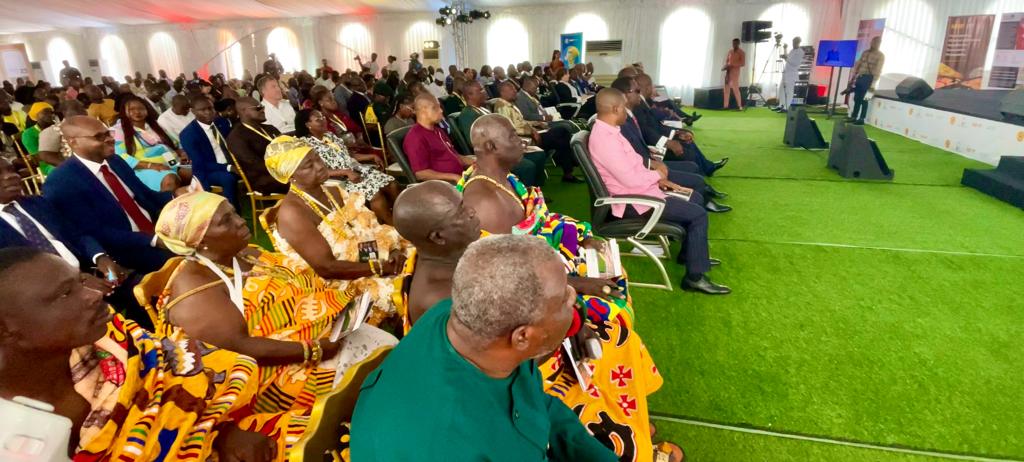
    During the opening of the 4th Ghana Mining Expo in Takoradi, Dr. Ernest Addison, the Governor of the Bank of Ghana, revealed that the central bank, in collaboration with the Ministry of Lands and Natural Resources, has implemented stringent measures to combat environmentally harmful artisanal small-scale gold mining and its associated trade.

    He commended the Lands and Natural Resources Ministry and the organizers of the expo for their efforts to promote responsible and sustainable mining.

    He also urged the Precious Minerals Marketing Company (PMMC) to ensure that its purchases are guided by the measures to prevent unapproved mining practices and operation of unlicensed miners.

    “The Bank of Ghana has put into place a rigorous due diligence process for aggregators, including checking for criminal records and site visitation to ensure that registered mines are complying with the relevant environmental standards,” Dr. Addison said. “It is our expectation that purchases by the PMMC will also be guided by a similar rigorous process.”

    He added that the Bank of Ghana will work closely with the PMMC to adopt and integrate its Responsible Sourcing and Due Diligence Framework in their operations. The Bank will also work with key stakeholders and the mining regulator to improve the standards of community mines to be an important gold supplier. Finally, the Bank will lend support to the current efforts towards LBMA certifications for local refineries.

    Dr. Addison also re-emphasized the benefits of the Gold for Gold Programme to the Ghanaian economy.

    “Since its inception, the Gold for Oil has yielded significant results,” he said. “Specifically, it has provided foreign exchange resources to meet petroleum products importation, led to increased competition among market players and lower ex-pump petroleum prices, and provided some stability in the FX markets. These positive developments have contributed to easing price pressures and thereby supporting the central bank’s efforts to bring down the high inflation levels.”

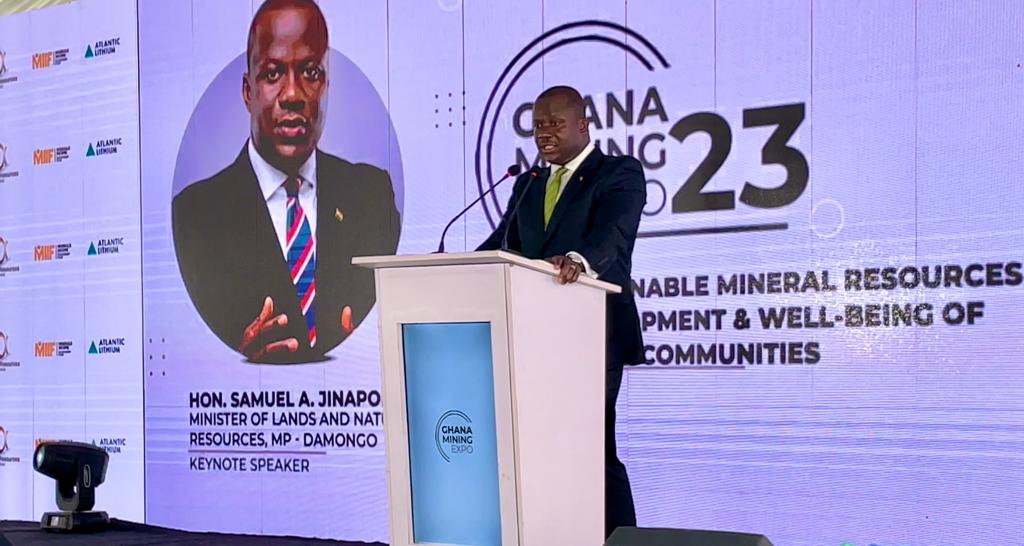
    The Lands and Natural Resources Minister, Samuel Abu Jinapor, who officially launched the expo, said that it has become a critical platform for strategic discussion for the growth of the extractive sector.

    “It is fast establishing itself as one of the most important mining conferences in the West African Region, providing a multi-sectoral platform for the exchange of ideas on investment opportunities and challenges in the African mining sector, with the aim of implementing strategies for accelerated growth in mining, while ensuring resilience on all fronts, and at all times, as Africa’s economic bedrock,” he said.

    The minister said that the theme of this year’s expo, “Sustainable Mineral Resources Development and Well-Being of Mining Communities,” is particularly important, as it highlights the need for responsible and sustainable mining practices.

    “The mining sector has the potential to contribute significantly to Ghana’s economic development,” he said. “However, this can only be achieved if we ensure that mining is done in a sustainable manner that does not harm the environment or the communities in which it takes place.”

    The minister outlined a number of government initiatives to promote sustainable mining, including the establishment of a Gold Refinery and the Ghana Integrated Aluminium Development Corporation (GIADEC). He also said that the government is working to secure a London Bullion Market Association (LBMA) Certification for the Ghana Gold Refinery.

    The Western Regional Minister, Kwabena Okyere Darko Mensah, said that the recovery of the Ghanaian economy is highly dependent on the mining sector. He called for a doubling of production in the mining sector, saying that this is the only way to create wealth and reduce poverty.

    The 2023 Ghana Mining Expo will come to a close on Saturday, July 15th. Several mining sector players are expected to speak and exhibit at the expo.

  • T-bills: Government meets target with slight oversubscription as interest rates soar to 29.25%

    The recent treasury bill auction conducted by the government achieved a marginal oversubscription of GH¢97.32 million, surpassing its initial target of GH¢2.20 billion.

    It recorded a total of GH¢2.29 billion from the 91-day, 182-day, and 364-day bills.

    Interest rates have been increasing for the past few months after it dropped to 18%.

    Currently, the interest rates range between 22.97% to 29.25%.

    The rates for the 91-day bill increased from 21.69% to 22.97%, and for the 182-day bill, it increased from 24.97% to 25.44%.

    For the 364-day bills, it increased from 28.91% to 29.25%.
    According to the auction results from the Central Bank, the government secured GH¢1.86 billion from the 91-day bill, GH¢304.16 million from the 182-day bill, and GH¢112.60 million from the 364-day bill.

  • BoG must penalize banks, employees found responsible for scamming clients – Dr Atuahene

    BoG must penalize banks, employees found responsible for scamming clients – Dr Atuahene

    It has been requested that the Central Bank punish commercial banks, financial institutions, and their employees who are found accountable for scamming clients.

    This is the view of a banking consultant, Richmond Atuahene who believes that the banking sector regulator must be proactive in addressing these infractions which keep occurring.

    Speaking in an interview on Accra-based Asaase Radio, Dr Atuahene said, “I believe Bank of Ghana should be very proactive and sanction some of these banks and must make sure that all these incidents are reported because I have an experience.”

    “In my case, they suppressed it, and these three guys who caused this mess were able to get onto a new institution,” he disclosed.

    Dr Atuahene warned that these fraud-related incidents, if not addressed, will continue to cause vulnerabilities in the banking sector.

    Meanwhile, Ghana’s banking sector and Specialised Deposit-Taking Institutions (SDI) lost approximately, GH¢56 million in 2022, representing a 7.88 percent reduction compared to the GH¢61 million recorded in 2021.

    However, the number of attempted fraud cases for the banking and SDI sectors in 2022 increased to 2,998, as compared to 2,347 cases in 2021, which is a 27.74 percent rise.

    This was contained in the 2022 trends and statistics of the Bank of Ghana (BoG) Banks, SDIs and Payment Service Providers (PSPs) fraud report, covering January 1 to December 31, 2022.

    It was observed that forgery and manipulation of documents, fraudulent withdrawals, cheque fraud, cyber/email and cash theft (cash suppression), were the major drivers (top five) fraud typologies that impacted most of the financial institutions.

    Forgery and manipulation of documents also emerged as the prominent fraud typology, recording the highest loss of GH¢33 million.

    In addition, money fraudulently withdrawn from customers’ accounts resulted in GH¢7 million losses, most of which the Central Bank observed involved staff of banks and SDIs, while cheque fraud, arising from cloned cheques accounted for a loss value of GH¢5 million.

    The report however indicated that the fraud cases involving staff decreased to 188 in 2022, as compared to 278 in 2021.

  • Nigeria: Security forces detain suspended central bank chief

    Nigeria: Security forces detain suspended central bank chief

    As part of an inquiry into his position, Nigeria’s security forces have detained the central bank’s suspended head, according to a statement from the national internal security agency on Saturday.

    The arrest of Central Bank of Nigeria governor Godwin Emefiele came shortly after new President Bola Ahmed Tinubu’s government suspended him following nearly a decade in the post.

    Tinubu, who came to power at the end of last month following a highly contested February presidential election, had promised reforms to help Africa’s largest economy emerge from financial troubles.

    “The Department of State Services (DSS) hereby confirms that Mr Godwin Emefiele, the suspended Governor of the Central Bank of Nigeria (CBN) is now in its custody for some investigative reasons,” the DSS internal security agency said in a statement.

    The DSS did not give any further details, but one of Tinubu’s government spokesmen earlier said that Emefiele had been suspended immediately as part of an “ongoing investigation of his office and the planned reforms in the financial sector”.

    The bank’s deputy governor will step into the director’s role pending the conclusion of investigations, the statement said.

    The central bank did not immediately return calls seeking comment.

    Emefiele was under fire recently, including over a policy by former president Muhammadu Buhari to replace old naira currency notes with new ones to prevent corruption during this year’s election and curtail cash ransom payments after kidnappings.

    The policy led to a huge naira cash shortage across Nigeria, Africa’s most populous country, where many people rely on cash payments in the informal economy to survive.

    Emefiele had also attempted to run against Tinubu in the ruling All Progressives Congress or APC party primaries to be the party candidate for the presidency. He eventually stepped aside.

    A former Lagos governor, Tinubu already stoked controversy on his May 29 inauguration day by immediately calling for an end to long-standing government subsidies to keep petrol prices artificially low.

    Fuel prices almost tripled across Nigeria, after Tinubu announced that subsidies were “gone” on the day he took office.

    Most analysts say the subsidies needed to end to help the government save billions of dollars in expenses at a time when it has already been struggling to keep up vital oil production.

    But the subsidy removal triggered a rapid spike in transportation costs, sending food prices soaring, while electricity has become more costly for those using generators for power at home and business.

    The subsidy issue is one of a host of issues facing Nigeria’s new leader, including a security crisis with the armed forces battling jihadists, heavily armed criminal gangs and separatist militants in different parts of the country.

  • Eurobonds surge in Nigeria after Central Bank Governor’s suspension

    Eurobonds surge in Nigeria after Central Bank Governor’s suspension

    As foreign investors rejoiced at the Central Bank governor Godwin Emefiele’s suspension late last week after overseeing various exchange rates that failed to maintain the naira strong, Nigeria’s sovereign dollar-denominated bonds gained substantially.

    The price of the West African oil producer’s eurobonds rose on Monday as much as 2.6 cents in the dollar before moderating slightly with many issues reaching their highest prices since late January, according to the Reuters news agency.

    Longer-dated maturities saw the biggest gains with the 2049 maturity up 2.353 cents to 80.231 at 07:46 GMT, according to Tradeweb data.

    Nigeria is facing severe dollar shortages, forcing many people to seek out foreign currency on the black market, where the naira trades much lower than its official exchange rate.

    “We believe the changes signal a new era of focused, predictable monetary policy and a shift towards non-interventionism in the foreign-exchange regime,” Barclays economist Michael Kafe said in a note to clients on Monday about the suspension of the Central Bank chief.

    President Bola Tinubu had criticised Emefiele’s handling of the naira and monetary policy at his inauguration two weeks ago.

    Tinubu, who has promised to reset Nigeria’s ailing economy, has also removed a fuel subsidy and promised to consolidate the multiple exchange rates.

    “The haste with which the newly appointed president has begun to tackle the country’s economic challenges (e.g. the immediate removal of the fuel subsidy…) suggests that he is keen to pursue all the difficult reforms at the early stages of his term,” Kafe wrote.

    Folashodun Shonubi, a deputy governor, was named acting head of the Central Bank.

    The suspended governor is now in custody and under investigation, police said on Saturday.

  • Police arrest Head of Nigerian Central Bank recently suspended

    Police arrest Head of Nigerian Central Bank recently suspended


    The governor of Nigeria’s Central Bank, Godwin Emefiele, has been arrested by authorities shortly after being suspended from his position by the country’s new president, Bola Tinubu.

    The Nigerian secret police confirmed Emefiele’s custody, stating it was for “investigative reasons,” although no further details were provided.

    Emefiele had served as the governor of the Central Bank of Nigeria for nine years, overseeing the monetary policy affairs of Africa’s largest economy and most populous country.

    However, following his suspension by President Tinubu on Friday night, his tenure was abruptly halted.

    Emefiele’s suspension “is sequel to the ongoing investigation of his office and the planned reforms in the financial sector of the economy,” according to a statement from the Secretary to the Government of the Federation. Folashodun Adebisi Shonubi, a deputy governor at the bank, immediately took over as acting governor.

    The arrest of Emefiele concludes several months of investigation into his position by Nigeria’s Department of State Services (DSS), which previously attempted to arrest him in December but was denied by a local court. The secret police had accused him of terrorism financing and economic crimes; however, a judge ruled that there was insufficient evidence to support these allegations. It remains unclear if any new findings have emerged from the ongoing investigation.

    Financial analysts noted that Emefiele’s removal from office did not come as a surprise, citing certain controversial policies he implemented in recent months. These policies included the bank’s currency swap program and its decision to engage in continuous money printing and lending to the Nigerian government. Abiola Gbemisola, a financial analyst based in Lagos, highlighted these policies as contributing factors to the perceived controversy surrounding Emefiele’s tenure.

    “The central bank governor was very powerful” in office, Gbemisola said.

    “I wasn’t expecting him to stay under the new administration, especially given the fact that he was not so kind in his policies leading up to the (February presidential) election. Rather than focusing on reducing inflation, he contributed to Nigeria’s high inflation by giving money to the federal government, printing money essentially to give loans,” added Gbemisola.

    Under Emefiele, Nigeria’s economy struggled with a weakened currency caused by the foreign exchange crisis as well as a surging inflation rate, which was at a near-two-decade high of 22.2% in April.

    The bank’s move to replace the local naira currency with newly designed ones caused economic hardship for so many Nigerians that it affected the turnout in the February election while authorities were forced to reintroduce the old bank notes being replaced.

    “The fact that he has been removed is a positive thing for the (financial) market and we can now expect to see something different,” Gbemisola said.

  • Banking sector still strong and liquid despite economic hiccups – BoG

    Banking sector still strong and liquid despite economic hiccups – BoG

    The banking industry’s stakeholders have been reassured by the Central Bank’s second deputy governor, Elsie Addo Awadzi, that the industry is still strong, liquid, and solvent despite the current economic challenges and debt restructuring measures.

    According to her, prior to the onset of the Coronavirus pandemic, banking sector clean-up exercise and recapitalisation of banks ensured that the industry had the required capital and liquidity to contain macroeconomic shocks.

    “Indeed, our banking sector remains solvent and liquid even after the pandemic, in the face of recent macroeconomic challenges, and in particular the Government debt restructuring efforts.

    It is worth mentioning that the banking sector clean-up and recapitalisation efforts before the onset of the pandemic, provided the industry with the necessary capital and liquidity buffers to withstand the pandemic and the recent macroeconomic challenges.”

    She made this known at an event to launch the ABSA SME Loan at 10% proposition to Small and Medium Enterprises operating in the country.

    Despite the ongoing challenges, the Second Deputy BoG Governor noted the banking sector must not become complacent and therefore called for stringent measures by banks aimed at rebuilding buffers to secure long-term resilience.

    She however maintained that SMEs in the country continue to play a vital role in the economic development which requires inclusive financial systems to support their growth and resilience.

    “While regulating and supervising banks to promote their safety and soundness, the Bank of Ghana expects banks to be more inclusive in their product and service offerings to ensure that all economic actors in Ghana are able to access much-needed finance to grow their businesses and contribute to the growth of our economy”

    “We also expect banks to deploy the funding available to them into more lending to the private sector especially to SMEs, within the framework of robust credit underwriting and risk management,” she concluded.

  • Use eCedi to enhance financial inclusion in rural areas– Dr. Opoku Afari

    Use eCedi to enhance financial inclusion in rural areas– Dr. Opoku Afari

    Dr. Maxwell Opoku Afari, the First Deputy Governor of the Central Bank, is hopeful that the introduction of eCedi in Ghana will enhance financial inclusion, particularly in rural parts of the country.

    According to him, the implementation of the Central Bank Digital Currency (CBDC) will help create a transaction history that commercial players can also use.

    Speaking at the Payments Canada Summit 2023, Dr Opoku Afari said central banks must remember that the CBDC is a currency first and foremost, not a wallet for channel with a human-centered design.

    He added the design must be within a country’s context with the user-process being resource intensive.

    The first deputy Central Bank Governor further stressed on the importance of the CBDC implementation in some African countries and its potential impact on the economy and fintech development.

    “Nigeria went straight to CBDC implementation. And I love them for doing that – but we can’t do that. Any currency has to work for all Ghanaians, no matter where they are located. And, while Ghana has seen the percentage of people with formal bank accounts soar in the last decade, nearly a third of the population is still unbanked.”

    He concluded that the Bank of Ghana’s cash lite agenda will continue to be an ongoing effort aimed at implementing the Central Bank Digital Currency in a well-conducted manner.

    In 2022, Ghana began piloting a retail central bank digital currency, exploring both an online and an offline version of the eCedi.

    The eCedi project carried pilots in three locations; Accra, Tarkwa and Sefwi Asafo while the first two locations explored several use cases for online payments and Sefwi Asafo saw the offline experiment.

  • US Central Bank admits to failing to monitor collapsed SVB

    US Central Bank admits to failing to monitor collapsed SVB

    The biggest bank failure in the nation since 2008 occurred last month when Silicon Valley Bank fell, and the US central bank has claimed that it did not act with “sufficient force and urgency” in its supervision of the institution.

    One of the primary conclusions from the Federal Reserve’s study into the occurrence is the conclusion.

    It raised concerns about the state of the banking sector throughout the world.

    First Republic, another US lender, is still having problems as of the time of the assessment.

    According to reports, US regulators are preparing a potential rescue plan for the troubled company, which was the country’s 14th-largest bank at the end of the previous year.

    Michael Barr, the Federal Reserve‘s vice chair for supervision, who led the review, said the US central bank should toughen its rules in response to what it had learned from SVB’s demise.

    “Federal Reserve supervisors failed to take forceful enough action,” he said, pointing to regulatory standards that were “too low”, supervision that did not work with urgency, and risks to the wider system posed by troubles at a mid-size bank that Fed policies had missed.

    “Following SVB’s failure, we must strengthen the Federal Reserve’s supervision and regulation,” he said.

    Jerome Powell
    Image caption,Jerome Powell said he was confident the recommendations would lead to a more resilient banking system

    The head of the Federal Reserve, chairman Jerome Powell, said he welcomed the “thorough and self-critical report”.

    “I agree with and support his recommendations to address our rules and supervisory practices, and I am confident they will lead to a stronger and more resilient banking system,” he said.

    The report from the Fed was one of three published by US officials on Friday, detailing regulatory lapses that contributed to the failures of SVB and Signature Bank last month.

    Both banks catered to business customers and ran into trouble after the US central bank raised interest rates sharply last year which is when customers started to withdraw money.

    SVB’s subsequent announcement that it needed to raise funds last month prompted panic and billions of dollars were withdrawn overnight, forcing regulators to step in.

    A pedestrian walks by a First Republic Bank office in San Francisco, California.

    The fears then spread to other firms, including Signature Bank and First Republic, which suffered $100bn in outflows last month.

    Shares in First Republic, worth more than $120 apiece at the beginning of March, fell more than 40% on Friday to below $4, as questions swirled about its future.

  • Central bank details  extent of economic problems in Sri Lanka

    Central bank details extent of economic problems in Sri Lanka

    The greatest economic catastrophe to hit Sri Lanka in more than 70 years has been detailed by the central bank of the island nation

    In its annual report, the bank outlined how last year wages failed to keep up with the soaring cost of everything from food to fuel.

    “Several inherent weaknesses” and “policy lapses” helped to trigger the severe economic problems that engulfed the South Asian nation, the bank says.

    The bank now expects the economy to return to growth next year.

    The Central Bank of Sri Lanka forecast the economy will shrink by 2% this year, but expand by 3.3% in 2024.

    The prediction is more optimistic than the International Monetary Fund (IMF), which forecast a contraction in 2023 of around 3% and growth of 1.5% next year.

    The central bank’s report also outlined how headline inflation reached almost 70% in September as prices of fresh fruit, wheat and eggs more than doubled.

    At the same time the cost of transportation and essential utilities such as electricity and water rose even faster.

    Last year, the economy shrank by 7.8% and the country defaulted on its foreign debt for the first time since independence from the UK in 1948.

    Defaults happen when governments are unable to meet some or all of their debt payments to creditors.

    This damaged its reputation with lenders, making it even harder to borrow money on the international markets.

    “The Sri Lankan economy faced its most onerous year in its post-independence history,” the report said.

    An “unsustainable” economic model “steered the country towards a multifaceted disaster,” it added.

    Sri Lanka owes about $7bn (£5.7bn) to China and around $1bn to India. In February, both countries agreed to restructure their loans, giving Sri Lanka more time to repay them.

    Last month, the IMF agreed to lend Sri Lanka $3bn. That was on top of a $600m loan from the World Bank last year.

    Sri Lanka’s government is currently negotiating its debt repayments with bondholders and creditors before the IMF reviews the situation in September.

  • Govt receives GHS1.79bn from treasury bills auction

    Govt receives GHS1.79bn from treasury bills auction

    Government secured GH¢1.79 billion from the sale of treasury bills in its latest auction held on April 17, 2023.

    The auction saw an oversubscription of GH¢125.58 million even though interest rates have been rising.

    The target for this week’s auction was GH¢1.66 billion.

    Also, interest rates have increased slightly to an average of between 19.74% to 26.9%.

    According to the auction results from the Central Bank, the government secured GH¢1.48 billion from the 91-day bill, GH¢227.11 million from the 182-day bill, and GH¢87.81 million from the 364-day bill.

    Interest rates however increased slightly to 19.74% for the 91-day bill, 22.47% for the 182-day bill, and 26.9% for the 364-day bill.

    Deputy Finance Minister John Kumah has assured that interest rates will come down in the next few months.

    According to him, the government is putting up measures to ensure that the rates drop further than it has in recent times.

    “At the moment T-Bill rate in January was at about 35%, today it is below 20%, and we are still forcing it down.”

    “So that in the end once we tackle inflation and it also comes down, we are now going to see the cost of borrowing coming down within reasonable limits for businesses to have the liquidity to operate,” he was quoted by asaasenews.com.

    He added, “So if you don’t have a solid macro-economic environment, businesses will suffer and we are working to restore a healthy macro-economic environment so that businesses will do well.”

  • BoG reduces US dollar supply to bulk oil distribution companies in exchange for gold

    BoG reduces US dollar supply to bulk oil distribution companies in exchange for gold

    The Central Bank plans to reduce in its U.S dollar supply to Bulk Oil Distribution Companies (BDCs) operating in Ghana’s downstream oil and gas sector.

    The development comes on the back of the implementation of government’s Gold-for-policy which it believes is already yielding results, according to President Akufo-Addo.

    The Bank of Ghana in its quarterly announcement of forex forward rates auction said it plans to sell about US$120 million in the second quarter of 2023 to authorized foreign exchange dealers and BDCs.

    This however represents US$80 million lower than the US$200 million auctioned in the first quarter of 2023.

  • Interest rates rise slightly as the government receives GH1.6 billion from T-bills

    Interest rates rise slightly as the government receives GH1.6 billion from T-bills

    The sale of treasury bills saw an oversubscription of about GH¢300 million from an auction held on March 31, 2023.

    The government secured GH¢1.59 billion from the auction after it set a target of GH¢1.34 billion.

    Last week, the government saw an under-subscription of about GH¢764 million after it set the target at about GH¢3.21 billion.

    Meanwhile, interest rates have increased slightly from an average of 18.87 percent to 19. 38%.

    According to the auction results from the Central Bank, the government secured GH¢1.24 billion from the 91-day bill and GH¢355.13 million from the 182-day bill.

    Interest rates however increased slightly to 19.38 percent for the 91-day bill, and 21.85 percent for the 182-day bill.

  • Money bouquet for birthday, wedding celebration is illegal – BoG

    Money bouquet for birthday, wedding celebration is illegal – BoG

    The Bank of Ghana has warned Ghanaians to refrain from sending gifts to others in the form of cedi bouquets and hampers.

    It said the currency was issued to be used as a medium of exchange for the purchase of goods and services.

    The Director of the Currency Department at the central bank, Mr. Dominic Owusu, told journalists today (Thursday, March 30, 2023) that any other use of the currency was illegal and subject to prosecution.

    He said the bank had noticed that some people were using the cedi notes as bouquets and hampers as gifts during weddings, birthdays and other celebrations, a practice he said must be stopped.

    He said beyond being illegal, such acts made it easier for the notes to spoil or get defaced.

    Given that spoilt and worn-out notes are replaced at a cost, he said such acts affected the operations of the central bank.

    Mr Owusu was speaking to journalists on how to preserve the currency as part of events marking Ghana month in March.

    He said the local currency was a great symbol of the country and efforts to preserve its quality and cleanliness must be prioritised by all.

  • Treasury bills have a GH705 million oversubscription and a 36% interest rate

    Treasury bills have a GH705 million oversubscription and a 36% interest rate

    Last week, there was a significant oversubscription of Treasury bills because the government didn’t reach its goal at the prior auction.

    The government obtained GHc1.98 billion from the 91, 182, and 364-day Treasury bills, according to the Central Bank‘s auction data.

    The GHc1.278 billion goal has been missed by GHc705.1 million.

    The 91-day bill, which secured GHc1.357.48 billion and GHc491.45 million from the 182-day bill, attracted the majority of subscriptions.

    The 365-day bill, on the other hand, was acquired for GHc135.17 million at a 34%–36% interest rate.

    The increase in subscriptions is an indication of investor confidence, as the government has made some significant progress in the debt exchange programme.

    The government reached an agreement with banks to pay a 5% coupon rate in 2023, a development that has made the government’s aim of attaining an 80% participation rate in the program.

    Individual bondholders are still calling on the government to exclude them from the programme, however, as the deadline for the invitation draws nigh government is yet to announce their exclusion or otherwise.

    Meanwhile, the government expects to raise GHc1.423 billion in its next auction.

  • Ethiopia replaces central bank boss amid high inflation

    Ethiopia replaces central bank boss amid high inflation

    Head of Ethiopia’s central bank, Yinager Dessie has been sacked as the nation struggles with high inflation rate.

    He has been replaced by the Prime Minister’s previous economic advisor, Mamo Mihretu.

    Mr. Dessie was appointed governor of the National Bank of Ethiopia (NBE), in 2018 shortly after Prime Minister Abiy Ahmed took office.

    Since 2020, annual inflation has stayed above 20%, peaking at over 33% in 2018.

    Ethiopia’s currency, bar, was devalued against the dollar during the time of the outgoing governor.

    In Mr. Mihretu’s  portfolio, he ran the Ethiopian Investment Holdings, a sovereign wealth fund with large state-owned corporations like Ethiopian Airlines and Ethio Telecom.

    Source: BBC

  • BoG plans to sell $200 million to BDCs in FX auction for Q1 2023

    BoG plans to sell $200 million to BDCs in FX auction for Q1 2023

    The Bank of Ghana plans to sell about $200 million to Bulk Oil Distribution Companies (BDCs) in the first quarter of 2023.

    The intended sale is according to the auction calendar of the Central Bank and will take place under the Forex Forward Auctions.

    The amount of $220 million, is however lower than that which was sold in the last quarter of 2022 where the Central Bank sold a total of $420 million to BDCs through commercial banks within the period.

    Although it remains unclear whether the intended $200 million sale would be sufficient to sustain the FX needs of BDCs in the country, the BoG plans to sell $80 million in January 2023.

    This will be followed by an amount of $60 million each sold to BDCs also taking placing take in February 2023 and March 2023 respectively.

    Meanwhile, the BoG auction calendar notes that there will be a bi-monthly sale of $40 million in January 2023 and a bi-monthly sale of $30 million in February 2023 and March 2023 respectively.

    The BoG has also extended an invitation for bids due to the prescribed format to purchase the US dollars against the cedi notes separately on each auction date.

    This auction of the American ‘greenback’ will also take place from January 12, 2023, to March 29, 2023.

    “Receipts of bids will be made from 9:30 am to 10:30 am on each auction day with the announcement of the auction results made at 3pm on each auction date,” the BoG noted.

    Source: Ghanaweb

  • A $150 billion spending binge begins the year of the bond

    A $150 billion spending binge begins the year of the bond

    In just four days, borrowers raised more than $150 billion (R2.56 trillion) in new debt after weeks of rising confidence that 2023 might finally provide respite for the world’s battered bond purchasers.

    The sales blitz took place around the globe, with Mexico selling $4 billion of dollar bonds and Credit Suisse Group AG divisions issuing a combined $4.3 billion in US dollars and sterling. Hong Kong raised $5.8 billion through the sale of its largest-ever green bond, raising that amount from investors.

    It was a fresh beginning for a market that suffered a whopping 16.25% loss last year. And while investors are off to a quick start in making back some of that money, the pace of this week’s bond rush shows that issuers are bracing for something that’s still very 2022: volatile markets where the opportunity to borrow can slam shut faster than you can say consumer price index.

    Barclays Capital’s investment-grade debt syndicate co-head, Meghan Graper, explained the situation last month at a Bloomberg Intelligence event in New York. With so much uncertainty around inflation and the direction of the economy, investor appetite can be easily ruined by any number of data points or policy discussions — CPI, consumer confidence, central bank meetings or speeches.

    The extra premium demanded on the days of such events tends to scare away borrowers, leaving them all trying to cram their offerings into days where the chance of a big surprise seems low, she said.

    “Three quarters of supply in any given month this year came in a matter of five business days,” Graper said at the 15 December event. “We’ve had a record setting zero-volume days in the primary market. And then everybody running through the same narrow window.”

    The trend is likely to continue this year, she said. Which means companies that need to borrow will not only have to navigate higher interest rates but also the risks of getting the timing wrong. Even on those all-in days, bond buyers can test the market’s limits. After a $53 billion, 48-hour sales binge in the US corporate bond market, investors started demanding larger concessions to buy the debt, Bloomberg’s Brian Smith noted.

    China relief

    China’s embattled property developers got more good news this week. Beijing is planning to relax the so-called three red lines restrictions it had placed on the sector, which exacerbated one of the biggest real estate meltdowns in history, Bloomberg News reported this week.

    The move could be the most significant of a string of measures that China has put in place to bolster the industry, which accounts for about a quarter of the nation’s economy. The nation’s developers defaulted on more than 140 bonds last year, missing payments on a combined $50 billion in domestic and international debt issues.

    Elsewhere:

    China Evergrande Group, the developer at the epicenter of the nation’s property crisis, is planning its first in-person meeting with members of a major offshore bondholder group.

    Retailer Bed Bath & Beyond has started preparing for a bankruptcy filing after a worse-than-expected holiday season and a failed debt exchange proposal. The company’s turnaround plans will mainly revolve around the fate of its prized Buybuy Baby brand, Bloomberg’s Eliza Ronalds-Hannon wrote.

    Party supply chain Party City is also headed toward a Chapter 11 filing in a deal that could hand the keys to creditors.

    Bankrupt crypto exchange FTX’s caretakers reached a deal with liquidators in the Bahamas that settles most of the disputes that had threatened to disrupt the cleanup of Sam Bankman-Fried’s failed digital asset empire.

    The asset management arm of Goldman Sachs led one of Italy’s biggest ever deals in the private credit market, a €700 million loan to support the private equity investment in pharmaceutical firm Neopharmed Gentili SpA.

  • Persons with no immediate use for dollar should be barred from buying them – Economist

    Professor William Baah-Boateng, an economist at the University of Ghana, has asked the Bank of Ghana to make sure that people who do not require dollars for trade or the payment of fees are denied access to the market.

    He claims that these people are also responsible for the cedi’s depreciation.

    And that is how it should be since the dollar is not accepted as payment in Ghana.
    Dollars are kept by people as a store of value.

    “And therefore, if the Bank of Ghana is able to strengthen that part and say that if you don’t have any dollar account, you don’t have anything about dollars and then you have your cedis and say I want to change my cedis into dollar when we know that you’re not an importer when we know that you’re not travelling, when we know that you’re not using it to pay fees, Central Bank should not allow that,” he is quoted by myjoonline.com.

    He re-echoed that a unique means of identification must be enforced to reduce the speculative aspect of the cedi’s depreciation.

    “And I think they can also go further as we have always said that going forward, the Central Bank should also make sure that people will not just walk into forex bureau and just change money as it were.

    “They need to identify themselves with the Ghana card, with their passport, and that is the regulation that we talked about so that we don’t allow the market forces to determine anything as we have in the tomato market,” he said.

  • Inflation to ease by end of 2023 around 25% – BoG report

    The Bank of Ghana has projected that inflation will continue to peak in the first quarter of 2023 and ease to around 25 percent by the end of 2023.

    This is according to the Central Bank’s November 2022 Monetary Policy Report.

    The report explained that the projection is based on the tightness of the monetary policy as well as the adoption of measures to address liquidity issues in the Ghanaian economy.

    “There are, however, upside risks to the outlook, emanating from the persistent upward adjustments in ex-pump petroleum products and transport fares with associated second-round effects on the pricing of goods and services”.

    “Additionally, the proposed VAT increase and currency pressures may exert upward pressures on headline inflation. Amid these concerns, however, it is expected that the continued tight monetary policy stance would moderate the spillover effects,” the report noted.

    The BoG also indicated that sustained observance of the development of these potential price pressures in the outlook will be vital.

    In November 2022, the Central increased the monetary policy rate by 250 basis points from 24.5 to 27 percent in a bid to stem inflationary pressures.

    “In the outlook, significant upside risks remain arising from both domestic and foreign sources. Global inflation remains high and persistent, driven largely by food and energy prices. Central banks’ concerted efforts to contain price pressures globally have led to aggressive policy tightening across advanced economies”.

    “On the transmission of monetary policy changes to inflation, the Central Bank said there is evidence that the policy rate increases in the past few months have helped dampen the pace of monthly price increases.

    “Between May and August 2022, the monthly inflation numbers eased from a peak of 5.1% to 1.9%. However, this was reversed in September and October 2022 on account of additional shocks from upward adjustment in ex-pump petroleum prices, utility tariff adjustments, and transport fare increases”, it added.

    Source: Ghanaweb

  • BoG warns against taking loans from these 19 institutions

    Ghanaians have been warned by the Central Bank not to borrow money from 19 unauthorised institutions.

    On August 22, 2022, it issued a statement that read, “The Bank of Ghana has noted that certain unlicensed organisations are giving loans to Ghanaians in violation of the 2016 Banks and Specialized Deposit-Taking Institutions Act (Act 930).
    These criminal organisations mostly use social media and mobile technologies in their operations.”

    The BoG claims that the actions of these illegal businesses amount to a violation of consumer protection rules and a violation of laws governing client data and privacy.

    Among the entities providing loan services without a license from the Bank of Ghana include the following:

    1. SikaPurse Quick Online loan

    2. 4Cedi Instant Mobile loan application

    3. Zidisha Online Loans

    4. GhanaLending Application

    5. ChasteLoan Application

    6. LoanClub-Ghana Instant Loan

    7. AdamfoPa Loan

    8. MetaLending- Instant Cash Loan

    9. Wohiasika Loan (Ghanaloan.net)

    10. Boseafie – Bosea Micro-Credit

    11. SikaKasa Online Lending

    12. LoanPro – digital and instant loan

    13. SikaWura Loan Application

    14. BegyeBosea Loan

    15. LendingPapa – Online Loans

    16. CrestCash Loan

    17. Credxter – Loans and Hire- Purchase

    18. MobiLoan Application

    19. Cedi Now – Cash Loans Application

  • US partly to blame for Ghana’s economic strain – BoG

    The Central Bank has attributed some of Ghana’s current economic crisis to external factors that arose as a result of the United States of America’s (U.S.A.) efforts to stabilise their economy.

    This was stated in a report issued by the Bank of Ghana (BoG) following its 109th Monetary Policy Committee meeting on November 28.

    The BoG, in its report, made sure to emphasise the US’s role in escalating economic conditions for several countries around the world, including Ghana, while citing a number of factors that have contributed to Ghana’s current economic situation.

    According to the Central Bank, when the US Federal Reserve revised some of its policies, it resulted in “tight global financing conditions and a stronger US dollar against major international currencies.”

    In September 2022, the Federal Reserve raised its benchmark interest rate by 0.75 percentage points, the third increase in a row, bringing the Fed rate to 3%-3.25% By doing so, the US central bank, as part of efforts to check its inflation (8.2% as of September), increased demand for the dollar from foreign investors attracted by the higher returns available in the country.

    Since the US dollar is the existing currency for global trade, emerging markets faced a rise in the cost of imports.

    According to the Bank of Ghana, these external shocks have had severe consequences on the Ghanaian economy, reflected in high and rising inflation and depreciation of the local currency.

    “These developments have spilled over into currency pressures and imported inflation, complicated access to external capital markets, and resulted in acute capital outflows, especially in emerging markets and frontier economies,” the Central Bank added.

    Per the Bank’s report, the foreign exchange market witnessed increased volatility, with intense pressure on the local currency, especially in September and October 2022.

    Other external factors that led to the significant drop in the value of the cedi include; the sovereign downgrades, the de facto closure of the international capital market, portfolio reversals, and increased demand for foreign exchange amid supply constraints.

    As of November 24, 2022, the Ghana Cedi cumulatively depreciated by 54.2 percent against the US dollar.

    The local currency lost 48.9 percent and 49.9 percent of its value to the Pound and Euro, respectively.

    In comparison with the same period of last year, the Ghana Cedi was much stronger.

    It depreciated by 2.6 percent and 0.2 percent against the US dollar and the Pound, respectively, and appreciated by 6.6 percent against Euro.

    Since revising the interest rate, the US has seen its inflation rate drop to 7.7% as of October 2022.

  • BoG will ensure banks remain solvent – Dr Addison

    The governor of the Bank of Ghana (BoG), Dr. Ernest Addison, has raised concern regarding the solvency of some Ghanaian institutions.

    He claims that the Central Bank will take action to ensure that banks maintain their financial stability.
    He claimed that this is the Central Bank’s most significant responsibility.

    The BoG’s decision comes as the government gets ready to restructure its debt in order to clear the way for an IMF bailout.
    Bondholder haircuts will be part of this.

    At a press conference, Dr. Ernest Addison stated: “The good news is that we believe there are appropriate buffers.
    However, the Central Bank will implement measures to guarantee the banks’ continued viability.

    On the subject of Ghana’s galloping inflation, the Governor said, “The inflation forecast shows that inflation will likely peak in the first quarter of 2023 and settle around 25% by the end of 2023. This forecast is conditioned on the continued maintenance of the tight monetary policy stance and the deployment of tools to contain excess liquidity in the economy.”

    He noted that there are some risks associated with inflation such as additional pressures from the proposed VAT increase in the exchange rate have to be monitored.

    Dr. Addison added that “to continue to anchor inflation expectations, the committee, therefore, decided to increase the policy rate by 250 basis points to 27%.”

  • Gold for oil scheme will deplete Ghana’s forest reserves – ASEPA warns

    The government has been asked by the Alliance for Social Equality and Public Accountability (ASEPA) to reverse its decision to buy oil on the international market using gold.

    Instead, it urged the government to take steps to support the local currency, which had fallen 50% versus the US dollar this year.

    The call was placed by Mr. Mensah Thompson, Executive Director of ASEPA, who said that bartering oil for gold would destroy the nation’s forest reserve.

    He made this statement on Monday in Accra while speaking at a press conference about the government’s economic policy and budget statement for 2023.

    The government last week disclosed that it intends to purchase oil from the world market using gold instead of the dollar due to the depreciation of the cedi against the US dollars.

    Official data also shows that Ghana’s gross international reserves have fallen from $9.7 billion at the end of 2021 to around $6.6 billion at the end of September 2022.

    Mr Thompson explained that gold was a commodity which had an extremely high price volatility on the world market and indicated that should the value of the commodity (gold) decline on the world market, government would require more gold to make the purchase.

    “The sad situation about this is that Ghana has an oil refinery which has been abandoned since 2017.”

    He added: “The volatility of gold prices set another stage for the fast depletion of the mineral resources the country has if the prices of the commodity fall.”

    Mr Mensah Thompson also urged the government to revise the 2.5 per cent VAT rate as maintaining the current rate would worsen the already precarious economic situation of Ghanaians.

    He said: “Inflation is currently at 40.4 per cent, Producer Price Index sits at 61.7 per cent, the 2.5 per cent increase in VAT would skyrocket prices even further in such a precarious situation which would fuel inflation to unprecedented levels.”

    “In response to the skyrocketed inflation in 2023, the Central Bank would automatically increase the Policy Rate to curb inflation, this would worsen cost of borrowing in 2023, people would not be able to borrow due to the high interest costs, those who would be able to borrow risk falling into a debt trap, NPL sitting on the books of banks would skyrocket leading this country into a recession.”

    He also emphasised the need for the government to cut down on expenditure to avoid incurring more debt.

    The government, among other things, froze recruitment, purchasing vehicles and printing calendars to cut down on its expenditure.

    A few days ago, Vice President Mahamudu Bawumia said Ghana’s intention to use gold to buy oil should not be misinterpreted as being against the use of the US dollar.

    He said it is just a measure to help strengthen the cedi.

    At the AGI Awards night in Accra, Dr Bawumia explained: “To address this fundamental challenge that we all face of depreciation and its impact on fuel and utility prices and food and so on, the government has opted to implement a policy of using our gold to buy oil products”

    “If we implement it as we have envisioned, it will fundamentally change our balance of payment and significantly reduce the persistent deprecation of our currency,” he added.

    “This has been misrepresented as Ghana being against the use of the US dollars in International transactions. This is not the case. We are not on any mission against the use of the dollars in international transactions, far from it. In fact, we want to accommodate all US dollars in our reserves. But we have a specific issue to deal with oil imports and the prices of fuel, food and transport and utilities that’s essentially what we are targeting,” Dr Bwumia notedhe.

    The vice president recently announced the gold-for-oil via Facebook.

    “As part of measures to operationalise the government’s use of gold to purchase oil products, the Minister of Lands and Natural Resources, Mr Samuel A. Jinapor has just issued the following directives”, wrote theh Vice President.

    The directives include:

    1. Effective 1 January 2023, all large-scale mining companies (as agreed with the Bank of Ghana) shall sell twenty per cent (20%) of all refined gold at their refineries to the Bank of Ghana (in Ghana cedis) before the export of the gold. The Bank of Ghana and the Precious Minerals Marketing Company (PMMC) will coordinate with the large-scale mining companies to ensure compliance with this directive.

    2. Effective 1 January 2023, all Community Mining Schemes (CMS) shall sell their gold outputs to the government through PMMC. All mining licences for CMS shall include a clause mandating licencees to sell their gold output to the government.

    3. Effective 1 January 2023, all licensed small-scale gold miners shall sell their gold to the government through PMMC. All small-scale gold mining licences shall include a clause mandating licencees to sell their gold to the government.

    4. The gold to be purchased by the Bank of Ghana and the PMMC will be in cedis at a spot price with no discounts.

    The directives, according to the Vice President, would also help local gold refineries obtain gold supplies from PMMC to support their operations, as they work toward obtaining the required London Bullion Market (LBMA) certification.

    The cedi has, so far, lost 53.8% in value since the beginning of the year 2022, Finance Minister Ken Ofori-Atta told parliament when he read the 2023 budget on Thursday, 24 November 2022.

    “The demand for foreign exchange to support our unbridled demand for imports undermines and weakens the value of the cedi”, he told the house.

    “This contributed to the depreciation of the cedi which has lost about 53.8% of its value since the beginning of this year, compared to the average 7% annual depreciation of the cedi between 2017 and 2021”, Mr Ofori-Atta noted.

    The minister also said external sector performance in the outlook will “depend largely on the quick resolution of the Russia–Ukraine war and the outcome of recession fears in advanced economies”.

    “The thrust of the external sector will focus on rebuilding external buffers enough to cover, at least, three-and-a-half months of imports of goods and services to cushion the economy against adverse external shocks”.

    “This will be underpinned by, among others, bilateral support, and strong remittance inflows”, he noted.

    The finance minister also revealed that Ghana’s debt stock shot up by GH¢93 billion this year as a result of the depreciation of the cedi.

    “Mr. Speaker, provisional debt data as at the end of September 2022 shows a significant increase in Ghana’s public debt largely due to exogenous factors”.

    “The end–September 2022 provisional figures indicate that total gross public debt stood at GH¢467,371.31 million (US$48,871.34 million), representing approximately 75.9 percent of GDP.”

    “The domestic debt component is GH¢195,657.60 million, which is 31.79 percent of GDP, whilst external debt is GH¢271,713.71 million, representing 44.15 percent of GDP”. “The increase in the domestic debt is largely on account of rising interest costs”.

    “Domestic debt as a share of total public debt reduced from 51.6 percent in 2021 to 41.9 percent as at end of September 2022”.

    “Mr. Speaker, the external debt as a percentage of the total debt stock is 58.1 per cent as at end of September 2022”.

    “The sharp growth in the external debt stock is largely driven by the depreciation of the local currency”. “The depreciation of the Ghana cedi added GH¢93,855.15 million to the external debt stock.”

  • Senyo Hosi proposes ‘Rice Development Levy’ to increase rice production

    Senyo Hosi, a financial and economic policy analyst, has advised the government to enact a “Rice Development Levy” in an effort to boost the nation’s rice production.

    After the Bank of Ghana decided to stop providing foreign exchange assistance to importers of certain goods, including rice, he made the comment.

    Trade unions and stakeholders, meanwhile, have criticized the Central Bank’s action.

    They claim that if the BoG discontinues the support, importers may find other ways to import these necessary goods, which would raise the price of the impacted products.

    But Senyo Hosi is of the view that if Ghana moves to support local production, dependence on rice importation will be curtailed.

    “Rather than withdrawing FX support from importers, the Government could have created the Rice Development Levy or Tax, and monies gotten from this levy will come with a clear structured framework from seed production to land tenure management, irrigation to paddy production and milling and all the banks will follow with capital to support it,” he is quoted by norvanreports.com

    The Central Bank earlier this month, announced the withdrawal of FX support for importers of rice, chicken, cooking oil, ceramic, bottled water, fruit juice, and other goods.

    A message from the Central Bank to Commercial Banks said “In accordance with the President [Akufo-Addo] directive issued at his recent address to the nation on the Ghanaian economy, on Sunday 30th October 2022, the Bank of Ghana will no longer provide FX support for the imports of rice, poultry, vegetable oils, toothpicks, pasta, fruit juice, bottled water, ceramic tiles and other non-critical goods”.

    “The government will, in May 2023, that is six (6) months from now, review the situation. We must, as a matter of urgent national security, reduce our dependence on imported goods, and enhance our self-reliance, as demanded by our overarching goal of creating a Ghana Beyond Aid.

    “Much as we believe in free trade, we must work to ensure that the majority of goods in our shops and marketplaces are those we produce and grow here in Ghana.

    “That is why we have to support our farmers and domestic industries, including those created under the 1-District-1-Factory initiative, to help reduce our dependence on imports, and allow us the opportunity to export more and more of our products and guarantee a stable currency that will present a high level of predictability for citizens and the business community,” the notice read.

  • Today in History: BoG won’t disclose your MoMo details – Governor assures

    Mobile money users are protected, according to Dr. Ernest Addison, Governor of the Bank of Ghana, because the Central Bank will not disclose their personal information to any outside parties.

    “The central bank will make sure that the proper things are done by the various stakeholders in the industry, as it is the only regulator of the Mobile Money sector,” he said.
    We’ll keep controlling and observing what happens there and making sure everyone follows the rules.

    The Bank of Ghana has a key responsibility to safeguard the financial system’s integrity to underscore the trust that is central to financial deepening and development. It is therefore critical to ensure the confidentiality of transactions, privacy of data collected by operators in this space (including personal and financial data), the security of transactions, and smooth operations of all stakeholders and regulators providing complementary services in this space,’’ he added.

    Read the full story originally published on November 28, 2018, by thebftonline

    The central bank will not disclose details of customers’ mobile money transactions to any other party, its Governor Dr. Ernest Addison has said – affirming that customers’ privacy remains a fundamental right that must be protected.

    The central bank’s position could throw a spanner in the works for the National Communications Authority, which is seeking to monitor telecoms sector revenues through its controversial Common Monitoring Platform.

    Speaking at the launch of the second phase of the mobile money interoperability project, Dr. Addison said the Bank of Ghana remains sole regulator of the mobile money industry and as such will not volunteer details of customers’ transactions – as this would constitute a breach of privacy.

    The Ministry of Communications, which has the telecoms regulator NCA under its supervision, gave an ultimatum to the mobile money companies (MTN Mobile Money, AirtelTIgo and Vodafone Cash) to allow their systems to be connected to by KelniGVG which manages the Common Monitoring Platform.

    However, the latest remarks by the Governor not only reaffirm the Bank’s position as regulator of the mobile money industry but also shreds assertions made by the Communications Ministry to the effect that the mobile money industry comes under the NCA.

    “As sole regulator of the Mobile Money sector, the central bank will ensure that right things are done by the various players in the sector. We will continue to regulate and monitor activities within the space, and ensure that all participants play by the rules,” the Governor said.

    The Bank of Ghana has a key responsibility to safeguard the financial system’s integrity to underscore the trust that is central to financial deepening and development. It is therefore critical to ensure the confidentiality of transactions, privacy of data collected by operators in this space (including personal and financial data), the security of transactions, and smooth operations of all stakeholders and regulators providing complementary services in this space,’’ the Governor said.

    Second phase

    The first phase of the mobile money interoperability was launched in May this year, allowing mobile money transactions to be completed across different networks.

    The second phase, which was launched yesterday by Vice-President Dr. Mahamud Bawumia, will enable interconnection between Mobile Money and the e-zwich Payment Systems.

    Speaking at the launch, the Vice-President said interconnection of mobile money and e-zwich platforms to the gh-link platform means customers can conveniently move funds across all three platforms – bank accounts, Mobile Money wallets and the e-zwich payment systems.

    “This is the universal interoperability that we call a Financial Inclusion Triangle, because it interconnects three payment platforms: mobile money, bank accounts and e-zwich…

    “This should make us more efficient and enable us to accomplish more within the time available to us. All of these important initiatives are in sync with other programmes by President Nana Addo Dankwa Akufo-Addo’s government to quicken the digitisation of the economy,” the Vice-President said.

    According to Dr. Bawumia, it has become necessary for industry players to take a second look at the ceiling placed on the amount of money that can be transferred daily via mobile money – in a way that ensures the security of the system is not compromised.

    The Vice-President also proposed that the Ghana Interbank Payment and Settlement Systems (GhIPSS) should consider deploying a third phase of the project, which would ensure mobile money operator/agent/or merchant interoperability.

    “By this, I mean that it should be possible for an operator, agent or merchant with one phone and SIM to be able to load electronic funds onto the wallet of the customer regardless of the network. I know the capability of GhIPSS, the Telcos, Bank of Ghana, fintechs, and the Financial Institutions, and I have no doubt that this Phase-3 request will equally be executed with excellence,” he argued.

    The interoperability platform’s performance has been impressive, based on the key pillars of convenience, accessibility, and value for money.

    Total transaction value and volume have increased from GH¢8.3million and 96,907 respectively in May 2018 to GH¢32.6million and 319,094 respectively in September 2018, representing 292.8 percent and 229.3 percent growth in value and volume respectively.

    This growth trend is expected to increase further when the second phase becomes fully operational, and other innovative products and services become available.

  • BoG will ensure banks remain solvent – Dr Addison

    Dr. Ernest Addison, the governor of the Bank of Ghana (BoG), has expressed worry about the solvency of some Ghanaian banks.

    According to him, the Central Bank will put in measures to ensure that banks remain solvent. This, he said is the most important task of the Central Bank.

    The decision by the BoG comes as the government prepares to restructure its debt to pave way for an International Monetary Fund (IMF) bailout. This will include haircuts to bondholders.

    Dr. Ernest Addison explained at a media briefing that: “The good thing is that we think that there are adequate buffers. Nevertheless, the Central Bank will put in measures that will ensure that the banks remain solvent.”

    On the subject of Ghana’s galloping inflation, the Governor said, “The inflation forecast shows that inflation will likely peak in the first quarter of 2023 and settle around 25% by the end of 2023. This forecast is conditioned on the continued maintenance of the tight monetary policy stance and the deployment of tools to contain excess liquidity in the economy.”

    He noted that there are some risks associated with inflation such as additional pressures from the proposed VAT increase in the exchange rate have to be monitored.

    Dr Addison added that “to continue to anchor inflation expectations, the committee, therefore, decided to increase the policy rate by 250 basis points to 27%.”

  • Policy rate hits 27%; cost of borrowing to go up further

    Ghana’s Central Bank has increased the benchmark interest rate as the significant upside risks to inflation outlook remain.

    To continue to contain inflationary pressures, the Monetary Policy Committee on Monday, November 28, 2022 decided to increase the policy rate by 250 basis points to 27.0 percent.

    This means cost of borrowing is expected to go up further.

    The inflation forecast shows that in the outlook, inflation will likely peak in the first quarter of 2023 and settle at around 25% by the end of 2023.

    “This forecast is conditioned on the continued maintenance of tight monetary policy stance and the deployment of tools to contain excess liquidity in the economy. There are however some risks to this forecast that would have to be monitored, including additional pressures from the proposed VAT increase, and exchange rate pressures. Continued vigilance to the evolution of these potential price pressures in the outlook will be key”, Dr. Ernest Addison, Governor of the Bank of Ghana stated.


  • BoG increases Monetary Policy Rate from 24.5% to 27%

    The Monetary Policy Committee (MPC) of the Bank of Ghana (BoG) has increased the Monetary Policy Rate by 250 basis points to 27 percent.

    The prime rate, which is of keen interest to businesses, signals the rate at which the Central Bank will lend to commercial banks.

    It also subsequently influences average lending rates on loans to individuals and businesses.

    In his address to the media, Governor of the Bank of Ghana, Dr. Ernest Addison, noted that the increase forms part of efforts to address current inflationary pressures.

    “The inflation forecast shows that in the outlook, inflation will likely peak in the first quarter of 2023 and settle at around 25 percent by the end of 2023. This forecast is conditioned on the continued maintenance of tight monetary policy stance and the deployment of tools to contain excess liquidity in the economy. There are however some risks to this forecast that would have to be monitored, including additional pressures from the proposed VAT increase, and exchange rate pressures.”

    “Continued vigilance to the evolution of these potential price pressures in the outlook will be key. The Committee is of the view that significant upside risks to the inflation outlook remain. To continue to anchor inflation expectations, the Committee therefore decided to increase the policy rate by 250 basis points to 27.0 percent,” he said.

    Following the increase in the policy rate, his means cost of borrowing is expected to go up further.

  • FLASHBACK: Banking crisis: Government had no choice but to protect depositors – Osafo Maafo

    Former Senior Minister Yaw Osafo-Maafo defended the government‘s choice to borrow GH12.7 billion to compensate impacted banking sector depositors.

    There has been much uproar about the government’s decision to borrow 9.6 billion Ghana cedis to help banks that were unable to become operational. Was this a wise decision? There is discussion. It is not in dispute in my mind.

    “There is a law that governs the establishment of banks and there’s an authority that provides a license for people to establish banks, and that authority is the Central Bank. So when the Central Bank gives license to Company A to act as a bank, it means they can take deposits of the public…. The public doesn’t know the rules and regulations that go into granting a license…,” he added.

    Senior Minister Yaw Osafo Marfo has justified the government’s decision to borrow some GHC12.7 billion to support banks that failed in order to pay off affected depositors.

    He explained that the government had no choice in the matter since it was the duty of the Central Bank; Bank of Ghana to issue licenses to legitimate companies or firms to accept deposits of clients.

    Mr. Osafo Marfo stressed that the decision was not debatable because the situation imploded as a result of a lack of accountability.

    “…there has been a lot of hue and cry about the government arranged to borrow some 9.6billion Ghana Cedis to support those banks who failed to make them operational; was it right or not? People are debating. To me, it is not debatable.” He told some finance professionals during a workshop on Public Financial Management organised by Trust Consult at

    “There is a law that governs the establishment of banks and there’s an authority that provides license for people to establish banks, and that authority is the Central Bank. So when the Central Bank gives license to Company A to act as a bank, it means they can take deposit of the public…. The public doesn’t know the rules and regulations that goes into granting a license…

    Once somebody announces that I’m Bank XYZ it is assumed that the bank of Ghana who granted the license would have taken them through the rigmarole of the law and therefore the depositor is protected to put his money there..” he indicated.

    The Former Finance Minister under the Kufuor regime noted that the problems of the various banks with issues would have been detected long ago if supervision was top notch. He stressed that government’s choice to protect the depositors was the right call since they had three years to prevent the outcome.

    “..Government’s choice is to protect the depositor, and I don’t think the government has a choice. What’s your choice, that you did not supervise properly; did not detect something which you should have done three years ago… and some innocent man whose sweat and money is been put there should suffer as a result of it, the answer is no!”, he added.

    Background

    Government intervened with GH¢12.7 billion of public funds, made up of a GH¢8 billion bond issued by the Ministry of Finance, and GH¢4.7 billion of liquidity support from the Bank of Ghana, to be injected into the seven banks that failed.

    The Bank of Ghana collapsed five banks into a Consolidated Bank of Ghana Limited citing insolvency after investigations by the Central Bank.

    The banks were BEIGE, Sovereign, Construction, UniBank, and Royal Bank.