Tag: Central Narcotics Bureau

  • Singapore kills woman over drug trafficking for first time in almost 20 years

    Human rights organisations have denounced Singapore‘s Friday execution of a woman for trying to trade an ounce of heroin, calling it a “grim milestone” for the city-state and its infamously harsh anti-drug laws. It had been almost two decades since a woman had been put to death.

    In a statement issued a few hours after Singaporean Saridewi Djamani, 45, was hanged on Friday in Changi Prison, the Central Narcotics Bureau (CNB) made the announcement.

    She received the obligatory death sentence in 2018 after being found guilty of transporting 31 grammes of heroin.

    The CNB stated that she received “full due process under the law and was represented by legal counsel throughout the process,” noting that Singapore’s rules allow for the death penalty to be applied to trafficking offences involving amounts of heroin greater than 15 grammes.

    Since the 36-year-old hairstylist Yen May Woen was hanged in 2004 for drug trafficking, Saridewi is the only woman to have been executed by hanging in Singapore.

    Singapore continues to have some of the strictest drug regulations in the world, and its government is adamant that the death penalty is effective at discouraging drug traffickers and preserving public safety.

    The mandatory death penalty is imposed on anyone found guilty of trafficking, importing, or exporting a particular amount of illegal substances including methamphetamine, heroin, cocaine, or cannabis products.

    Since beginning executions for drug convictions last year, Singapore has now hanged 15 individuals, including foreigners and a man with intellectual disabilities. Activists claim this is an accelerated pace after the country took a two-year break due to the pandemic.

    According to the CNB, “capital punishment is only used for the most serious crimes, such as the trafficking of significant amounts of drugs that cause very serious harm, not only to individual drug users but also to their families and the larger society.”

    Rights organisations expressed additional outrage following Saridewi’s execution.

    The creator of the nonprofit organisation Responsible Business Initiative for Justice, Celia Ouellette, claimed that by insisting on taking extreme and irreversible action as opposed to believing in human redemption and the ability for rehabilitation.

    Singapore is putting its financial future at stake in addition to its reputation abroad. It is now time to permanently abolish the death penalty.

    The execution of Saridewi was referred to as a “grim milestone” by the secretary general of the French-based NGO International Federation for Human Rights, Adilur Rahman Khan, who also reinforced calls for an end to executions in Singapore.

    Chiara Sangiorgio, an expert on the death penalty for Amnesty International, stated that the most recent execution “defied international safeguards on the use of the death penalty.”

    “There is no proof that the death penalty deters crime in a special way or that it has any bearing on drug usage and accessibility. Singapore’s authorities are adopting neither drug policy reform nor the abolition of the death penalty, she claimed in a statement.

    According to information provided to CNN by the Ministry of Home Affairs in 2022, there were roughly 50 persons on death row, the bulk of them were men. There are unknown numbers of female death row inmates.

    Joshua Tong, a criminal defence attorney, stated that although drug traffickers are typically men, he has met “his fair share” of female offenders.

    Tong stated that there was generally “no distinction between men and women for criminal punishments” when it came to drug offences.

    He continued, “The only distinction made would be on whether caning is to be imposed,” noting that Singaporean law only allows men to be caned.

    The killing of Saridewi was the second execution this week in Singapore.

    Mohd Aziz bin Hussain, 57, was executed on Wednesday for distributing about 50 grammes (1.7 ounces) of heroin.

    A growing number of prisoners are being executed, but according to rights groups, Singapore’s drug enforcement is incredibly opaque because a complete list of prisoners on death row is not made public.

    Tangaraju Suppiah, a Singaporean, was executed in May after being found guilty of attempting to traffic 2.2 pounds of cannabis. This execution drew particularly vociferous international criticism, in part because an increasing number of countries have either legalised or decriminalised the drug.

    Following psychologists’ assessments that Nagaenthran K. Dharmalingam, 34, was mentally retarded, his hanging last year provoked widespread outrage.

    In this case, rights activists argued that Singapore’s zero-tolerance drug policies should be reexamined because the obligatory death penalty for drug trafficking is a harsh punishment.

    According to activists, the region’s illicit drug trade has not been significantly reduced by the death penalty.

    According to a report released in June by the United Nations Office on Drugs and Crime (UNODC), the illegal drug traffic in Asia grew to “extreme levels.” According to the research, methamphetamine prices had dropped to new lows and criminal organisations were building new trafficking routes to avoid law enforcement crackdowns.

    According to the report, pre-Covid meth seizures in East and Southeast Asia resumed last year after reaching record highs during the epidemic as traffickers resorted to larger and riskier bulk shipments.
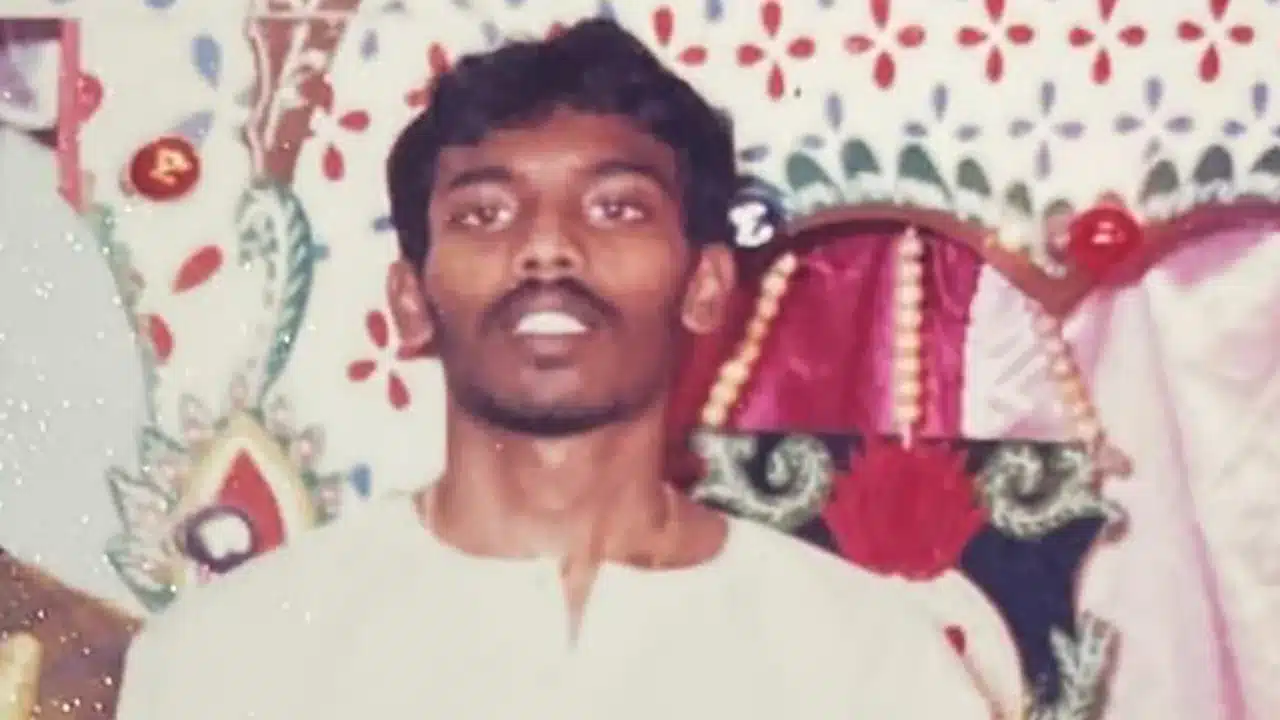
  • Man executed in Singapore for trafficking two pounds of marijuana

    Man executed in Singapore for trafficking two pounds of marijuana

    On Wednesday, a Singaporean man who had been found guilty of trying to smuggle about 2.2 pounds of marijuana was put to death. This sentence, which was harsh compared to many other countries, including those in the region, was criticized by rights groups and campaigners.

    Despite the legalization of cannabis in an increasing number of countries around the world, Singapore still retains some of the strictest drug laws in existence. The country’s administration is determined that the death penalty deters drug traffickers and must thus continue to be used in order to protect the public.

    Tangaraju Suppiah, a 46-year-old Singaporean, was put to death on Wednesday in Changi Prison, Singapore Prison Service said in a brief statement.

    His sister Leelavathy Suppiah told CNN that her brother had been hanged and that the family had received a death certificate. It was Singapore’s first execution in six months.

    In the days leading up to Tangaraju being sent to the gallows, family members and activists made public appeals for clemency and questioned the safety of his conviction. The European Union’s office in the city state and a United Nations’ rights office had also called for Singapore not to carry out his hanging.

    Tangaraju was sentenced to death in 2018 for “abetting the trafficking of more than one kilogram of cannabis (1,017.9 grams),” according to a statement from the Central Narcotics Bureau (CNB). The court found he was in phone communication with two other men caught trying to smuggle cannabis into Singapore.

    Previous appeals against his conviction and death sentence were dismissed by the courts in 2019 while petitions for presidential clemency were also unsuccessful, CNB added.

    “Tangaraju was accorded full due process under the law and had access to legal counsel throughout the process,” CNB’s statement said while describing capital punishment as “part of Singapore’s comprehensive harm prevention strategy.”

    Family members and rights groups who took up Tangaraju’s cause rejected the government’s claims and detailed why they believed his death sentence conviction was unsafe.

    “Tangaraju’s conviction relied mainly on statements from his police interrogation – taken without a lawyer and interpreter present – and the testimony of his two co-accused, one of which had his charges dismissed,” Amnesty International said.

    “In countries that have not yet abolished this punishment, international safeguards require that the death penalty be imposed only when the guilt of the person charged is based upon clear and convincing evidence leaving no room for an alternative explanation of the facts – and after a legal process which gives all possible safeguards to ensure a fair trial,” Amnesty added.

    Tangaraju’s sister Leelavathy spoke of her brother’s anguish and determination before his death sentence was carried out.

    “Even from inside prison, he wanted to fight for his innocence,” she told CNN. “He believed that there would be a fair trial and wanted to prove his innocence – every step of the way.”

    The Transformative Justice Collective (TJC), a local abolitionist movement, highlighted what they said were “serious problems” with evidence used to convict Tangaraju, describing it as “shockingly thin.”

    “The case against Tangaraju is largely circumstantial and based on inferences,” TJC said in a series of statements.

    “He never touched the cannabis he was accused of attempting to traffic. He was tied to the offense by two phone numbers found on the mobile phones of two men arrested by the CNB – one of which had been used to coordinate the cannabis delivery.”

    “Tangaraju was already in remand for a separate offense by the time he was linked to this case – and his mobile phones were never recovered for analysis,” the group added.

    Last year Thailand became the first country in Asia to decriminalize cannabis following years of campaigning by activists on the ground.

    Meanwhile Malaysia, Singapore’s closest neighbor, passed sweeping legal reforms earlier this month to remove the mandatory death penalty and trimmed the number of offenses, including drug crimes, punishable by death – a move welcomed by rights defenders.

    CNN reporter calls Biden’s marijuana pardon a ‘significant step’ (October 2022)

    02:57 – Source: CNN

    “It’s particularly outrageous that Tangaraju was arrested, convicted and executed for a cannabis related offense when much of the world is moving forward with cannabis legalization based on medical assessments,” Phil Robertson, Asia deputy director of Human Rights Watch, told CNN.

    “Putting him to death also shows just how far Singapore has fallen behind Malaysia – its leaders like to claim that their country is more modern and developed but in the case of criminal justice and the death penalty, Singapore is clearly the laggard,” Robertson added.

    “Once again, Singapore shows how completely out of step they are with the basic concepts of human rights, proportionality in criminal punishments and justice,” Robertson said.

    But the Singapore government has continued to resist calls for reform, carrying out eleven executions last year alone, all for drug related trafficking offenses.

    Under the law, anyone caught trafficking, importing or exporting certain quantities of illegal drugs like methamphetamine, heroin, cocaine or cannabis products receives the mandatory death sentence.

    “Singapore adopts a zero-tolerance stance against drugs and applies a multi-pronged approach to combat drugs,” the Ministry of Home Affairs said in a statement responding to international criticism of Tangaraju’s execution.

    “The death penalty is an essential component of Singapore’s criminal justice system and has been effective in keeping Singapore safe and secure.”

    The Ministry of Home Affairs also rejected the criticisms made by rights groups, arguing the case against Tangaraju had been “proven beyond a reasonable doubt” and that the evidence “clearly showed that he was the person coordinating the delivery of drugs, for the purpose of trafficking.”

    The ministry’s statement was published in response to overseas criticism of Tangaraju’s imminent execution, including from British billionaire Richard Branson, an outspoken opponent of capital punishment.

    “Killing people for allegedly smuggling cannabis is particularly cruel and misguided, given that more countries are now introducing sensible drug policy by decriminalizing and regulating both medicinal and recreational cannabis,” Branson wrote on a blog on his company’s website.

    Australian lawmaker Graham Perrett also said Tangaraju’s execution “violated international law standards.” “Imagine being hanged by the neck until you are dead because of a bit of weed,” Perrett, a member of the Labor Party, wrote on Facebook.

    “As is the case for many people currently on death row in Singapore, Tangaraju was forced to represent himself to seek a review of the Court of Appeal’s decision to uphold his conviction. Singapore has a strong reputation as a rule of law country so this concerning omission is not normal,” Perrett added.

    The European Union’s delegation to Singapore also called on authorities to halt the execution.

    “The EU and our countries strongly oppose the use of capital punishment at all times and in all circumstances, which can never be justified – and advocate for Singapore to adopt a moratorium on all executions as a positive first step towards its abolition,” the block said in a statement.
    The UN’s rights office said it had “concerns around due process and respect for fair trial guarantees”.
    “The death penalty is still being used in a small number of countries, largely because of the myth that it deters crime. Increasing evidence, however, shows it is ineffective as a deterrent,” spokesperson Ravina Shamdasani said in a statement.