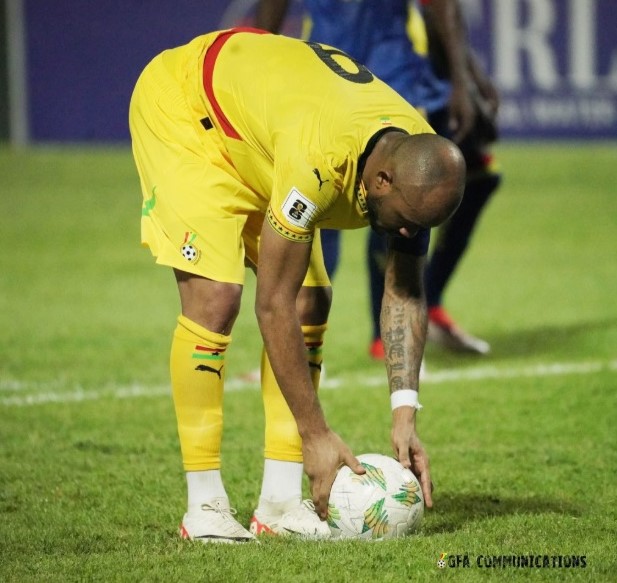
Four-time African champions Ghana Black Stars stirred excitement among fans when Jordan Ayew found the back of the net at the 17th minute. However, at the eleventh hour, just three minutes before the final whistle blew, Célestin Ecua notched an equaliser for his side, securing for Chad a point.
Black Stars head coach Otto Addo has admitted that Ghana’s performance was below par following the squad’s draw with Chad in yesterday’s clash at N’Djamena.
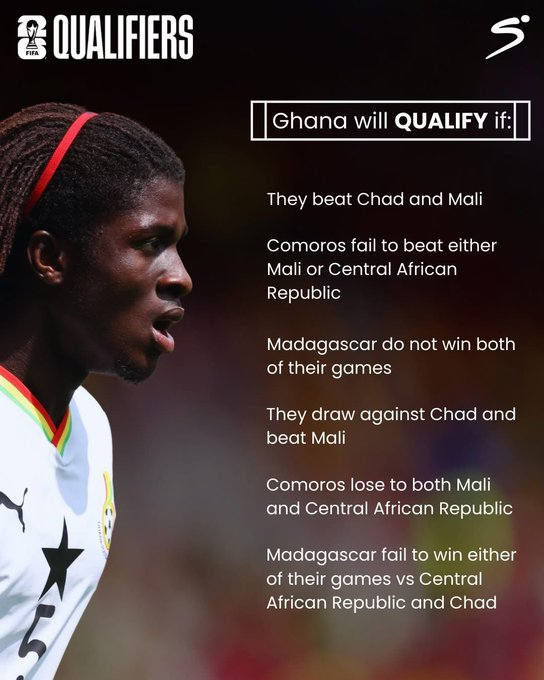
However, Otto Addo’s side faces mounting pressure ahead of their final fixtures. To secure their ticket to the global level, the Black Stars would have to win their match against Mali. They will qualify if Comoros fails to beat either Mali or the Central African Republic. Also, Madagascar must not win both of their remaining games.
Speaking during the post-match press conference, the head coach slammed his side for their wastefulness despite dominating play in the 2026 FIFA World Cup qualifiers. According to him, the team wasted opportunities they got from their several dead-ball situations.
“I can’t say we played excellently, or we played well, because it was a draw. The result is everything; we had a lot of corners, we did nothing out of that…We had a lot of shots, goal attempts, we had a lot of ball possession, and normally we have to win this game. This, in the end, surely, is not good enough, and we have to improve, especially on our execution,” Otto Addo said.
He blamed the poor condition of the pitch in N’Djamena for slowing down Ghana’s tempo and limiting their ability to break down Chad’s defence.
“It’s very difficult to play on this terrain when it’s not watered. We can’t play fast, so it’s a disadvantage for us,” he continued.
He then went on to applaud Chad for their defensive effort and late equaliser, which earned them their late goal.
A few hours before the clash with Chad, Otto Addo expressed his discontent with the state of the pitch set to host the 2026 FIFA World Cup qualifiers clash between the Ghana Black Stars and Chad today.
During a pre-match interview, Otto Addo questioned how FIFA could approve such a deteriorating pitch for the game, describing it as being as hard as concrete and raising concerns about players’ comfort and ability to perform at their best.
“Yeah, so, yeah, I’m really surprised that they have allowed this pitch for an international match. The pitch is really, really not good. It’s very, very hard for the players; it’s like playing on concrete. But yeah, what can we do? We have to take it as it comes, and we are prepared,” he assured.
He continued that his outfit discovered the sorry state of the pitch today, September 4, a few hours ahead of the clash with Chad, stressing that several better options could have been chosen.
“We observed everything today. Like I said, it’s not a good AstroTurf, to be honest. Nowadays, there are far better Astroturfs, which are also much healthier for the players,” Coach Otto Addo shared as quoted on the ghanafa.org,” he added.
Even after the match, he still insisted that the poor state of the field affected his side’s tempo on the pitch.
“It was difficult playing on the pitch because when it’s not watered, we can’t play fast, so it’s a disadvantage for us. The boys play in Europe, so when the pitch is right, they can play fast.” “The pitch is very slow; it made it difficult for us to outplay the defenders.”
Addo expressed disappointment that the Black Stars will have little time to regroup as they prepare to host Mali in a crucial Matchday 8 encounter at the Accra Sports Stadium on Monday, September 8, with kick-off at 19:00 GMT.
Despite the setback, Ghana remain top of Group I with 16 points.
Ghana’s starting lineup against Chad featured Benjamin Asare in goal (Hearts of Oak); a back four of Tariq Lamptey (Fiorentina), Gideon Mensah (Auxerre), Mohammed Salisu (AS Monaco), and Jerome Opoku (İstanbul Başakşehir); midfielders Thomas Partey (Villarreal) and Elisha Owusu (Auxerre); Mohammed Kudus (Tottenham Hotspur) in the attacking midfield role; Antoine Semenyo (Bournemouth) and Caleb Yirenkyi (FC Nordsjaelland) on the wings; with Jordan Ayew (Crystal Palace) leading the line as captain.
Also, all twenty-four invited players were reported to travel to N’Djamena with Otto Addo. The Black Stars will wrap up their qualifiers against the Central African Republic and Comoros in October.
Coach Otto Addo formally announced the Black Stars squad for Ghana’s upcoming 2026 FIFA World Cup qualifiers against Chad and Mali on the evening of Tuesday, August 26.
The release included a full list of 24 players, featuring both returning stars and debutants. Some players were rewarded for their stellar performances in the Unity Cup and also in their respective clubs.
Out of the twenty-four-man squad, four of them are debutants for the senior national team.
Union Berlin forward, Derrick Arthur Köhn, secured a call-up after an outstanding season in Germany, and Caleb Yirenkyi of FC Nordsjaelland was also called up again following his display of maturity and excellent form during the Unity Cup and at the club level.
Christopher Bonsu Baah of Al-Qadsiah was also included in Otto Addo’s squad. Following his giant strides in the Saudi.
Goalkeeper Joseph Anang of St. Patrick’s Athletic, based in Ireland, also got his first senior nod.
Players like Tariq Lamptey, who has been away following an injury, have also been called back.
According to Otto Addo’s list, the goalkeepers include Lawrence Ati Zigi, Joseph Anang and popular Hearts of Oak keeper Benjamin Asare, who earned admiration of many following his impressive display in his last call-up.
Chairman of the Parliamentary Select Committee for Youth & Sports has announced that Sports Minister Kofi Adams will soon update the media on the Black Stars’ budget for their recent World Cup qualifiersagainst Chad and Madagascar.
This statement comes after public concerns about the delay in disclosing the costs for these matches.
President John Mahama had earlier promised to make the budgets for national teams available to the public.
In an interview with Citi Sports, Norgbey assured the public that there was no need for worry.
“The sports minister is prepping to brief the media very soon on the Black Stars budget for the Chad and Madagascar games. I am not sure there should be any cause for alarm.”
Ghana achieved strong victories over Chad and Madagascar in March, providing a much-needed lift after recent struggles.
The Black Stars’ dominant 5-0 win against Chad and a 3-0 triumph over Madagascar have put them at the top of Group I with 15 points, leading Comoros by three points.
Ghana will return to World Cup qualifying action in June 2025, with matches against Chad and Mali.
Before that, they will compete in the 2025 Unity Cup in May, where they will face Nigeria, Jamaica, and Trinidad and Tobago.
Former Ghana Football Association (GFA) chairman, Dr. Nyaho Nyaho-Tamakloe, has applauded the Black Stars for their strong performances against Chad and Madagascar in the 2026 World Cup qualifiers.
The team had a tough 2024, winning only two out of ten matches and missing out on the 2025 Africa Cup of Nations (AFCON). However, they have started 2025 in great form.
Ghana delivered a commanding 5-0 win over Chad at the Accra Sports Stadium in their fifth qualifier. They followed up with another solid display, defeating Madagascar 3-0 at the Al Hoceima Grand Stadium in Morocco on Monday night.
In an interview with Graphic Sports, Dr. Nyaho-Tamakloe praised the team for their improvement, emphasizing their teamwork and discipline.
“The overall performance was better than what I’ve seen before,” the Hearts of Oak Board Member noted. “They demonstrated commitment and teamwork more than they used to. No player was trying to play to the gallery.”
With two consecutive wins, the Black Stars now lead Group I with 15 points.
Otto Addo’s team will continue their World Cup qualification campaign in September, playing against Chad away before taking on Mali at home in Matchdays 7 and 8.
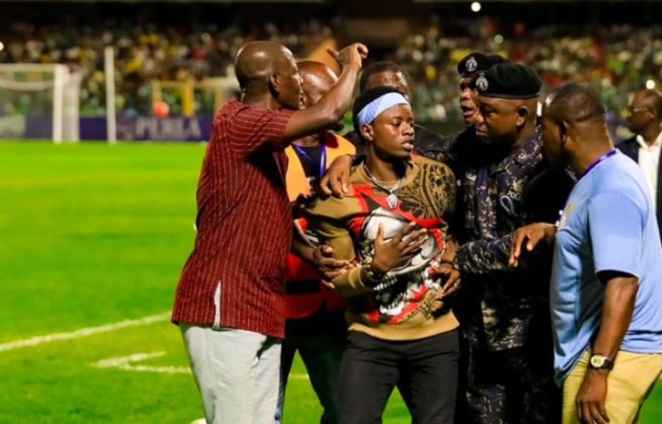
Mohammed Huzeinu, the 21-year-old who disrupted Ghana’s 2026 World Cup qualifier against Chad by storming onto the pitch, has been sentenced to 100 days in prison.
His actions, deemed a security breach under CAF regulations, could result in financial sanctions against the Ghana Football Association (GFA).
Authorities have described the sentence as a deterrent to prevent similar incidents in future matches.
“The FA has consistently urged fans to refrain from such actions, emphasising the importance of discipline and adherence to match day protocols to avoid fines and maintain Ghana’s reputation in international football,” the GFA stated.
Ghana has previously faced penalties for pitch invasions. In 2020, the country was fined $10,000 after a similar incident occurred during an AFCON 2021 qualifier against South Africa in Cape Coast in November 2019.
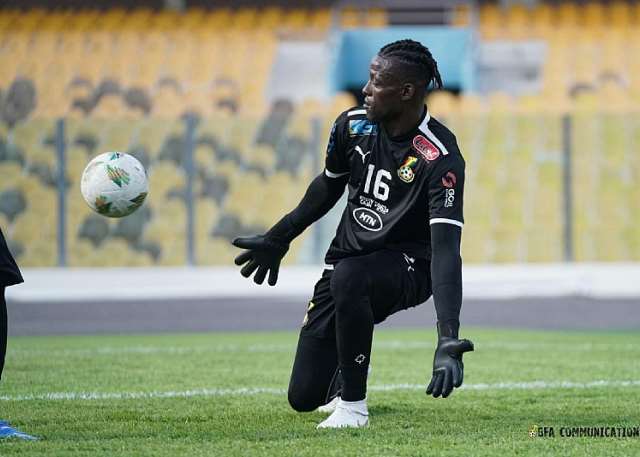
Some football fans have praised Black Stars goalkeeper Benjamin Asare for his outstanding performances in Ghana’s big wins against Madagascar and Chad.
Asare played a key role in both matches, making important saves and helping his team maintain clean sheets.
After six games, Ghana sits at the top of Group I with 15 points, followed by Madagascar with 10 points, while Mali is in third place with 9 points.
Although he did not have to make many saves, fans admired his calmness, ability to distribute the ball from the back, and confidence in organizing the defense.
His impressive displays earned him loud cheers from supporters, and he has now secured the position of Ghana’s first-choice goalkeeper.
Many fans also encouraged him to stay focused and continue performing well in future Black Stars games.
Ghana dominated Chad with a 5-0 victory on March 21, 2025, before securing a 3-0 win over Madagascar on March 25, 2025.
Madagascar’s coach, Corentin Martins, says his team is training intensively for their important World Cup qualifier against Ghana.
He mentioned that the Barea are focusing on their best strategies to handle the challenge posed by the Black Stars.
Martins recognized Ghana’s strong form, especially after their impressive 5-0 win over Chad, with several key players from major European clubs.
Despite this, he emphasized that the result of this match won’t determine their World Cup qualification, as there are still more games ahead.
“We’re going to play our way. We’re going to try to annoy them [Black Stars] as much as possible. Ghana have great players who play in major European leagues.
“We have to play a similar kind of game to stand a chance of winning points from Ghana. This game is not decisive because there are four other games still to be played,” he said as reported by ghanasoccernet.com.
Madagascar enters the match with confidence after a solid 4-1 win over the Central African Republic.
The Black Stars will face Madagascar at the Mimoun Al Arsi Stadium in Morocco, which has a capacity of 12,000, on March 24, 2025.
Ghana leads Group I with 12 points, while Madagascar is right behind with 10 points.
Ghana’s Black Stars have climbed to the top of Group I in the 2026 FIFA World Cup qualifiers after a resounding 5-0 victory over Chad at the Accra Sports Stadium on Friday, March 21.
The dominant win saw Ghana leap from second place to first, securing their fourth victory in five matches. Goals from Antoine Semenyo, Inaki Williams, Jordan Ayew, Mohammed Salisu, and Ernest Nuamah ensured a comfortable result for the Black Stars.
With this triumph, Ghana now boasts 12 points and a goal difference of seven, edging past Madagascar, who sit second with 10 points and a goal difference of six. The two teams will face off in a crucial encounter on Monday, March 24, in Morocco at 19:00 GMT.
Only the top team in the group will earn an automatic spot at the 2026 FIFA World Cup, set to take place in the United States, Mexico, and Canada.
Ghana is determined to secure a fifth World Cup appearance but is also looking to bounce back from a disappointing 2025 AFCON qualification campaign, where they failed to qualify for the tournament for the first time in two decades.
President John Dramani Mahama has urged the Black Stars to remain focused despite their dominant 5-0 win over Chad in the 2026 World Cup qualifiers.
Celebrating the team’s performance, Mahama acknowledged their impressive display but cautioned against overconfidence as they continue their campaign.
“Let this victory not make us complacent. This should be the beginning of bringing back the love,” he stated in a social media post.
The Black Stars delivered a commanding performance at the Accra Sports Stadium, with goals from Inaki Williams, Jordan Ayew, Mohamed Salifu, and Ernest Nuamah securing the crucial win.
Expressing his excitement, Mahama also shared how the victory had a personal effect on him, humorously noting, “I had a good appetite for dinner after the Black Stars’ 5-0 victory. Congrats, guys!”
The win puts Ghana at the top of Group I with 12 points, two points ahead of Madagascar, their next opponents in a crucial clash set for Monday, March 24, in Morocco.
I had a good appetite for dinner after the Black Stars’ 5-0 victory. Congrats guys!
Let this victory not make us complacent. This should be the beginning of bringing back the LOVE.
Ghana Black Stars are set to take onChadtoday, Friday, March 21, 2025, in a crucial World Cup qualifying match. The encounter, scheduled to take place at the Accra Sports Stadium, is expected to draw thousands of fans eager to see the national team in action.
Ghana, under the leadership of newly appointed captain Jordan Ayew, will be looking to secure a vital win to boost their chances of qualifying for the 2026 FIFA World Cup.
The team has faced mixed results in recent matches, and head coach Otto Addo has emphasized the importance of a strong performance against Chad.
In a pre-match press conference, Ayew expressed confidence in the squad’s ability to deliver. “We are fully prepared and motivated. Every game is important, and we will give our best to make the nation proud,” he said.
Chad, regarded as underdogs in this fixture, will be aiming to cause an upset. Their coach, Mahamat Allamine, has promised a tough contest, insisting his team is ready to challenge Ghana.
Kick-off is scheduled for 7:00 PM GMT, with live coverage available on major sports networks. Fans are hopeful that the Black Stars will secure a convincing victory to strengthen their qualification bid.
President John Dramani Mahama has assured the Black Stars that he will be watching their crucial 2026 FIFA World Cup qualifier against Chad, despite acknowledging the emotional strain that live football puts on him.
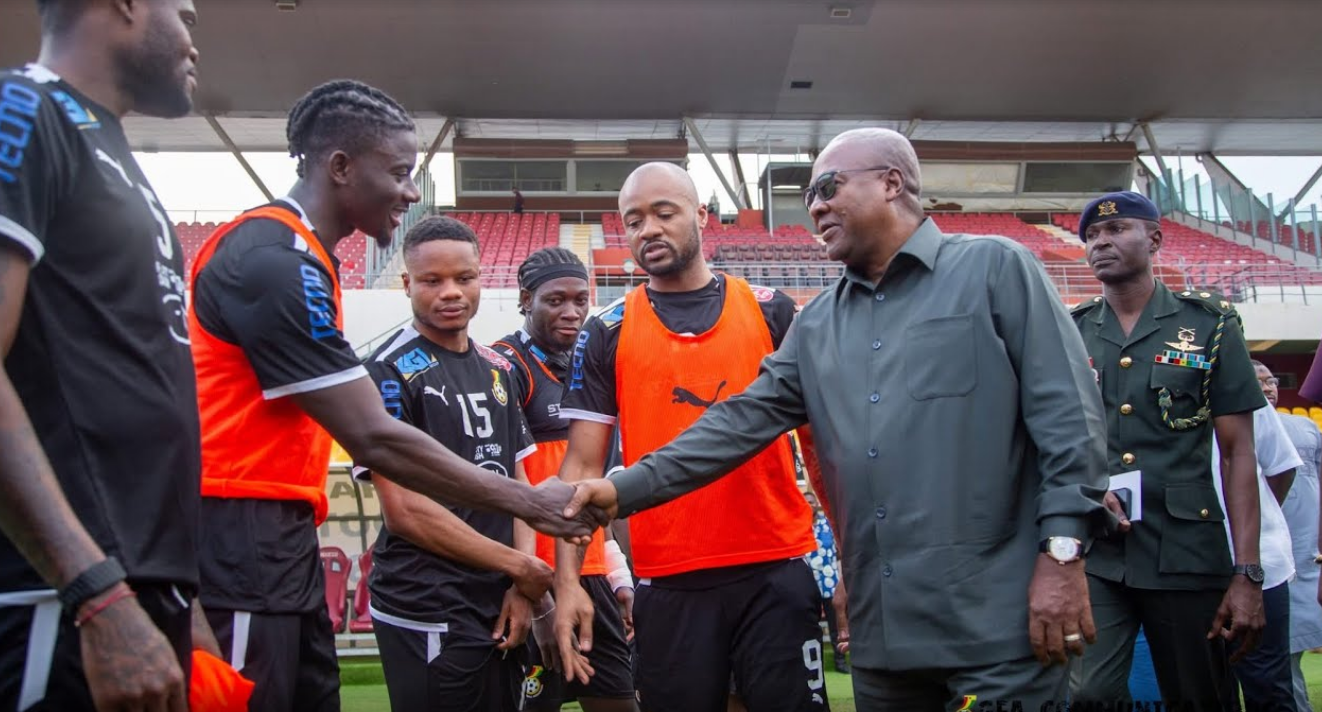
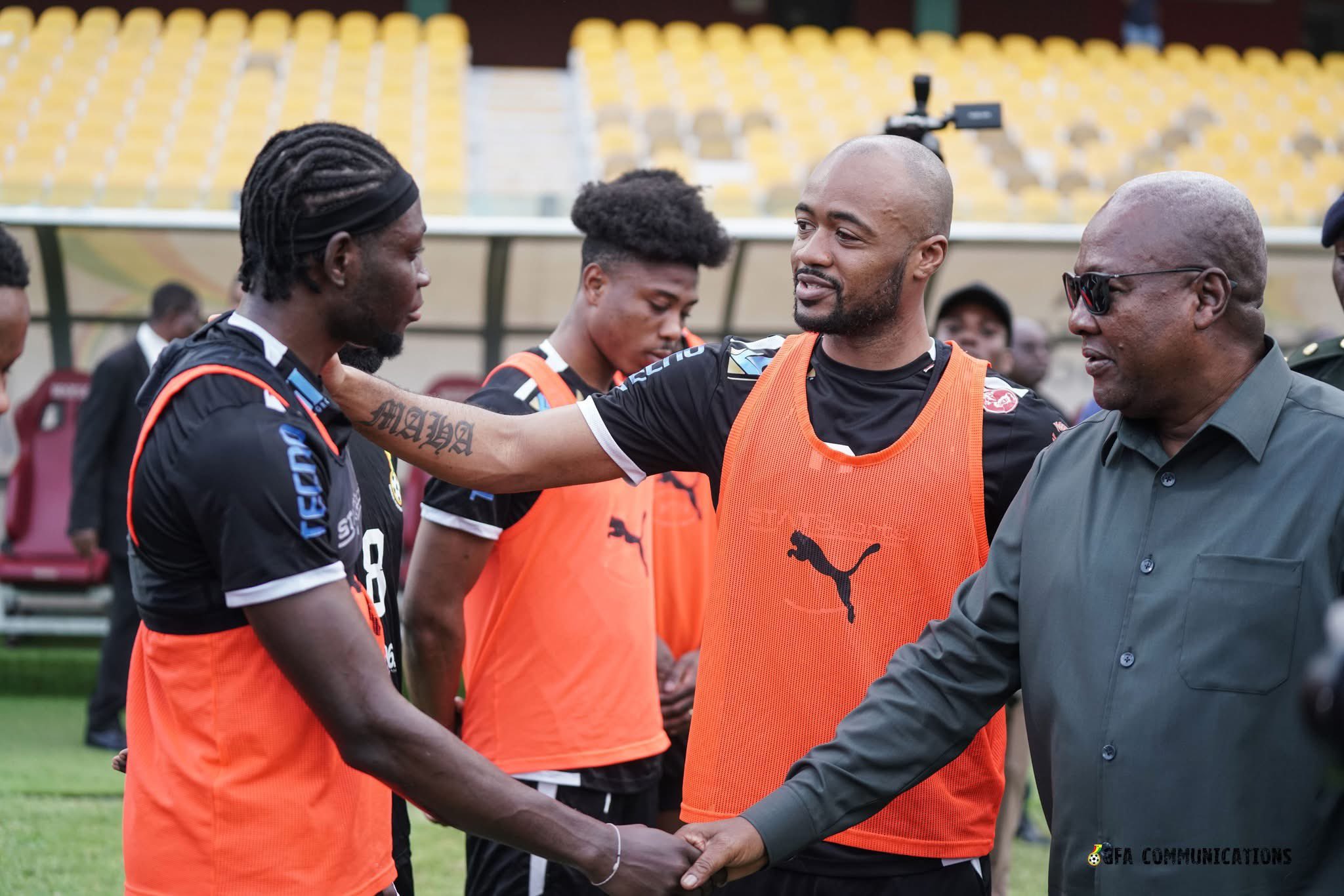
Mahama made this revelation during a visit to the team’s training session at the Accra Sports Stadium on Wednesday, ahead of their upcoming fixtures against Chad and Madagascar.
“I will take time off and watch the game myself. Even though my heart is not very good at watching soccer, I will brave it [to watch you on Friday],” he told the players.
The Black Stars are under pressure to redeem themselves following their disappointing Africa Cup of Nations (AFCON) 2025 qualification campaign, where they failed to secure a single win in six matches. As expectations mount, Mahama humorously disclosed that he had received advice on how to prepare himself for the game.
“They said I should eat before I go and sit down, and my hope is that you’ll justify my sitting and watching you guys,” he added, drawing laughter from the team.
Despite recent setbacks, the former President expressed confidence in the squad, urging them to give their best and make the nation proud.
“The whole of Ghana is going to be behind you, and I am sure you’re going to make us proud,” he encouraged.
Ghana is set to host Chad on March 21 at the Accra Sports Stadium before traveling to Morocco to face Madagascar on March 24. The matches are crucial in the Black Stars’ quest to qualify for the 2026 FIFA World Cup.
“If you win these two games, I’m sure Ghanaians will be ready to put the disappointment of the Afcon behind them and rally behind you.”
President Mahama spoke to the Black Stars players ahead of the Chad and Madagascar World Cup qualifiers. pic.twitter.com/oELW0xx4pl
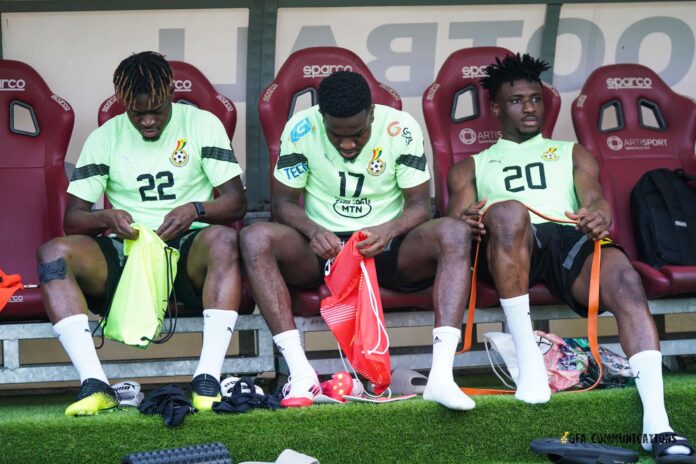
The Black Stars held their second training session on Tuesday, with all 23 invited players now in camp as they prepare for their 2026 World Cup qualifier against Chad.
Training began on Monday with an initial group of nine players, including Mohammed Salisu, Kamaldeen Sulemana, Razak Simpson, Gideon Mensah, Jojo Wollacott, Antoine Semenyo, Benjamin Asare, Lawrence Ati-Zigi, and Kamaradini Mamudu.
Since then, 14 more players have joined the squad, including Thomas Partey, Jordan Ayew, Lawrence Agyekum, Alexander Djiku, Jonas Adjetey, Bonsu Baah, Francis Abu, Jerry Afriyie, Jerome Opoku, Ebenezer Annan, Ernest Nuamah, Inaki Williams, Mohammed Kudus, and Kingsley Schindler.
The team will continue training on Wednesday and complete their final preparations on Thursday.
Ghana will take on Chad at the Accra Sports Stadium on Friday, March 21, with the match set to kick off at 19:00 GMT.
After that, the Black Stars will travel to Morocco to face Madagascar on Monday, March 24, as they push for a spot in the 2026 World Cup, which will be hosted in the USA, Canada, and Mexico.
Black Stars have started training for their 2026 FIFA World Cup qualifiers, but only about half of the team is present.
So far, 13 out of the 23 players called up have arrived in Ghana, while the remaining 10 are expected to join soon.
Head coach Otto Addo held the first training session on Monday, March 17, with just nine players available. Later that day, Inaki Williams, Jordan Ayew, Jerry Afriyie, and Lawrence Agyekum arrived, increasing the number to 13.
Some key players, including Thomas Partey and Alexander Djiku, are yet to arrive. Mohammed Kudus, who landed in Ghana on Sunday, March 16, has not yet joined the camp.
The coach hopes to have the full squad ready by Wednesday for his third training session as the team prepares for their upcoming match.
As per the schedule, the Black Stars will train four times before facing Chad.
Check out the full list below:
Benjamin Asare (Accra Hearts of Oak) Lawrence Ati-Zigi (St. Gallen) Joseph Wollacott (Crawley Town) Kamaradini Mamoud (Medeama SC) Mohammed Salisu (AS Monaco) Gideon Mensah (Auxerre) Razak Simpson (Nations FC) Kamaldeen Sulemana (Southampton FC) Antoine Semenyo (AFC Bournemouth) Lawrence Agyekum (Cercle Brugge) Inaki Williams (Athletic Club)
The Black Starswill be without twelve key players for their upcoming 2026 World Cup qualifiers against Chad and Madagascar due to injuries, the Ghana Football Association (GFA) has confirmed.
The sidelined players include Alidu Seidu, Tariq Lamptey, Brandon Thomas Asante, Abdul Mumin, Joseph Aidoo, Abdul Manaf Nurudeen, Abdul Fatawu Issahaku, Baba Idrissu, Ibrahim Sulemana, Daniel Kofi Kyereh, Majeed Ashimeru, and Joseph Paintsil.
The extent of their injuries varies, with several players still recovering or undergoing rehabilitation:
Alidu Seidu – ACL injury Tariq Lamptey – Ankle ligament injury Brandon Thomas Asante – Muscle tear Abdul Mumin – ACL injury Joseph Aidoo – Muscle injury Abdul Manaf Nurudeen – Ankle injury Abdul Fatawu Issahaku – Recovering from ACL injury Baba Idrissu – Undisclosed injury Ibrahim Sulemana – Adductor tendonitis Daniel Kofi Kyereh – Knee injury Majeed Ashimeru – Rebuilding fitness after injury layoff Joseph Paintsil – Quadriceps injury Despite these setbacks, Ghana is set to face Chad at the Accra Sports Stadium on Friday, March 21, 2025. They will then travel to Morocco to take on Madagascar in another Group I fixture on Monday, March 24, 2025.
The Black Stars will commence their training camp on Monday, March 17, 2025, as they prepare for these crucial qualifiers.
Black Stars of Ghana will start training on Monday, March 17, in Accra as they prepare for their upcoming World Cup qualifiers in Group I.
Their first training session will be open to fans at 5:00 PM on Monday, giving supporters a chance to watch their favorite players. On Tuesday, training will also be partially open, starting at 5:30 PM.
Wednesday’s session will be closed to the public, while Thursday’s training will allow media access for only the first 15 minutes. A pre-match press conference is also scheduled for Thursday at 4:50 PM.
The team will train at the Accra Sports Stadium for four days before facing Chad in a crucial Matchday 5 fixture on Friday, March 21, 2025. After this home game, the team will travel to Morocco to play against Madagascar on Monday, March 24, 2025, for Matchday 6.
Head coach Otto Addo has called up a strong squad for these matches, including Thomas Partey, who is returning after missing the Africa Cup of Nations (AFCON) in Ivory Coast.
Ghana is currently second in Group I with nine points after four games and is determined to strengthen its chances of qualifying for the World Cup.
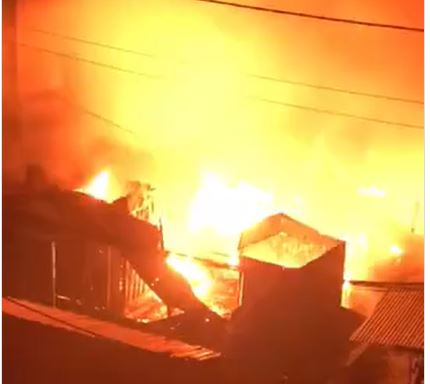
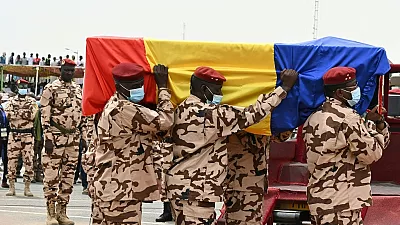
A fire erupted at a military ammunition depot in N’Djamena, the capital of Chad, leading to a sequence of explosions on Tuesday night, according to Foreign Affairs Minister Koulamallah Abderaman.
Witnesses reported at least one fatality and several injuries.
A local resident near the depot mentioned witnessing three injured individuals on the street, with two of them swiftly transported to the hospital on motorcycles.
Media outlets shared visuals showing expended artillery shells that landed in residential areas.
Another resident recounted the tragic death of a shopkeeper neighbor, struck by a shell during the incident.
“Loud blasts woke us up,” resident Moustapha Adoum Mahamat told Reuters via telephone.
“Our house was shaking as if someone were shooting at us. Then we saw a big fire at the military camp and smoke and things exploding in the air,” he said. “We could see artillery fly over us.”
According to a Reuters witness, flames and explosions persisted for approximately an hour, with smoke spreading throughout the city.
Chad’s interim Prime Minister, Succès Masra, has submitted a petition to the Constitutional Council disputing the initial outcomes of the recent presidential election.
Despite General Mahamat Déby being announced as the winner with 61% of the vote, Mr. Masra asserts himself as the rightful victor.
“With the help of our lawyers, today we submitted a request to the Constitutional Council to reveal the truth of the ballot boxes,” Mr Masra announced in a social media post on Sunday.
The opposition leader and his party, the Transformers, have called for the nullification of the results, claiming that certain ballot boxes were tampered with and others were relocated by soldiers for counting elsewhere.
According to the party, several opposition members have been detained, and Mr. Masra along with his supporters have faced threats.
However, Mr Masra reiterated that his followers remain “peaceful for the love of our country”, insisting that “the change you want to see cannot happen in a destroyed country”.
Shortly before the announcement of the election results, Mr. Masra called on his supporters to mobilize for peaceful demonstrations to defend their votes.
The Constitutional Council is expected to make a decision in the coming days regarding whether to uphold the preliminary results or annul them, as requested by Mr. Masra and another candidate, Yacine Abdramane Sakine, who lost the election.
Although the council has not yet confirmed Mr. Déby as Chad’s new president, some heads of state, such as Nigeria’s Bola Tinubu and Guinea Bissau’s Umaro Sissoco Embalo, have already congratulated the military leader.
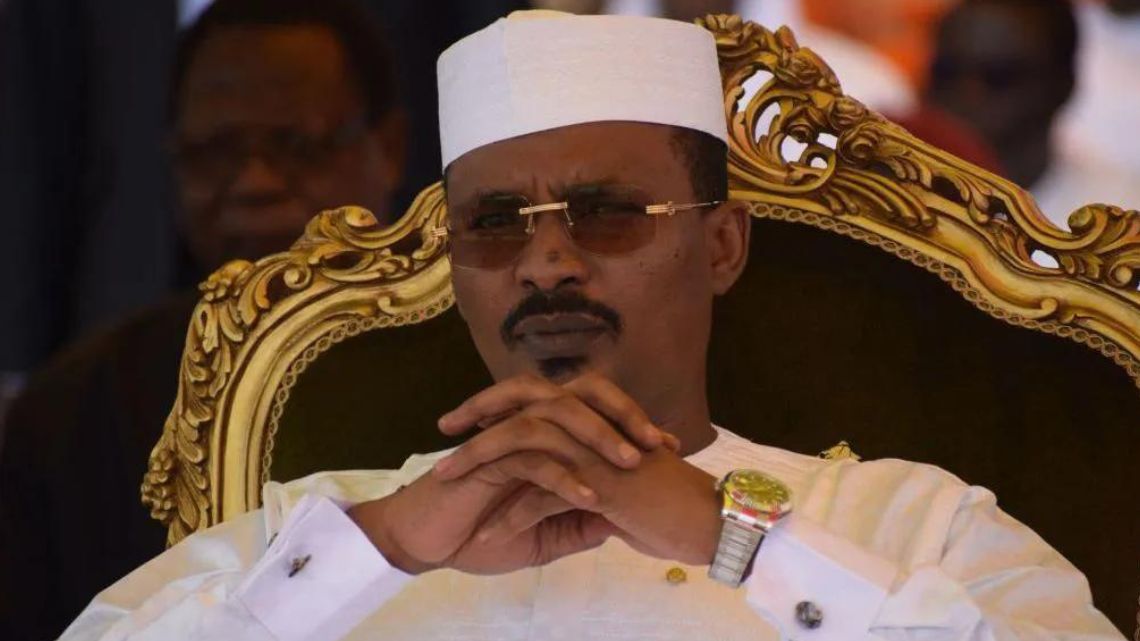
Chad’s military ruler, Mahamat Déby, has been officially declared the winner of the presidential elections, consolidating his grip on power.
According to provisional results announced by the state’s election body, Gen Déby secured 61.3% of the vote. His closest rival, Prime Minister Succes Masra, garnered 18.53% of the vote.
Mr Masra had previously claimed a “resounding victory” in the first round of voting and alleged that the election process was marred by fraud.
Gen Déby assumed power following the death of his father, Idriss Déby Itno, who was killed in combat with rebel forces in April 2021. With this victory, the Déby family’s 34-year rule will continue.
In response to the announcement of the results, supporters of the ruling coalition took to the streets of N’Djamena to celebrate Gen Déby’s win.
In his victory speech posted on social media, he promised to serve all Chadians – “those who voted for me and president for those who made other choices”.
“I have a special thought for the unfortunate candidates who have lost the competition.”
Just before the election results were announced, Prime Minister Masra claimed victory in a live broadcast on Facebook, and called on his supporters and security forces to oppose what he said was an attempt by Gen Déby to “steal the victory from the people”.
“A small number of individuals believe they can make people believe that the election was won by the same system that has been ruling Chad for decades,” he said.
“To all Chadians who voted for change, who voted for me, I say: mobilise. Do it calmly, with a spirit of peace,” he added.
The results of Monday’s election were announced two weeks earlier than anticipated but are still subject to confirmation by the Constitutional Council.
Chad has become the first country in West and Central Africa, where the military seized power in recent years, to hold elections and restore civilian rule. However, critics argue that little has changed with the election of Gen Déby.
While Monday’s voting was largely peaceful, there were reports of at least one voter being killed, and some opposition groups reported irregularities on polling day. Additionally, ten politicians were excluded from running by the constitutional council due to “irregularities,” leading to allegations of political motivations behind the exclusions.
Furthermore, Yaya Dillo, a potential opponent and cousin of Gen Déby, was killed by security forces in February during an alleged attack on the National Security Agency in the capital, N’Djamena.
Activists had called for a boycott of the election, and many remain in exile following a deadly crackdown on opponents after protests in October 2022.
Chad, an oil-exporting country with nearly 18 million people, has not experienced a free and fair transfer of power since gaining independence from France in 1960. Idriss Déby seized power from Hissène Habré in 1990 and remained in control for three decades until his death on the battlefield in April 2021 at the age of 68.
Initially pledging to serve as interim leader for only 18 months, Gen Déby later extended his tenure. He also initially stated that he would not run for president.
Deby Itno became the new leader after his father, who was in charge of the country for over 30 years, was killed while fighting against rebels in 2021. Last year, the government said it was giving more time for the transition period by two years, which made people protest everywhere in the country.
There are 10 people running for election, and one of them is a woman. Around 8 million people in a country with over 17 million people, which is one of the poorest in the world, can vote. Experts believe that Deby Itno will likely win the election. Yaya Dillo, a top opponent of the current president, who is also his cousin, was killed in February in a way that is still not understood.
The country, which exports oil and has about 18 million people, hasn’t had a fair change of government since it gained independence in 1960 from French rule.
Earlier this year, Niger’s military rulers told all US soldiers to leave. This means that the US will no longer be able to use its important base in Agadez for fighting terrorism in the region. The US and France have soldiers in Chad and think it’s a very important place to work together.
The West is also worried that if Chad becomes unstable, it could cause more people to leave and try to go to Europe.
Ulf Laessing, who leads the Sahel program at the Konrad Adenauer Foundation, says these are the reasons why the West is not saying much about Chad’s move toward democracy. “Everyone wants the vote to pass so Deby Itno can be elected, and they can keep working with him to maintain stability in the region,” he said.
Chad is facing high food prices because of the war in Ukraine and the threat of Boko Haram coming from Nigeria. They also have refugees from Sudan to take care of.
In March, a group called Boko Haram attacked and killed seven soldiers. This made people worried about violence in the Lake Chad area again, even though there had been peace after the Chadian army stopped the group in 2020. Schools, mosques and churches opened again and humanitarian groups came back.
“Jean, a teacher at a school in Moyen-Chari province, said that for many years we have struggled with the expensive cost of living and have not found a solution. ” “We want things to be different this year by choosing new leaders in the election,” he said.
Human rights organizations want officials to look into the death of Chad’s top opposition leader, Dillo. The government said that Dillo was killed when his group, The Socialist Party Without Borders, attacked the National State Security Agency. But a picture of Dillo showed that he was shot and killed with just one bullet to the head.
Human Rights Watch said they are very worried about the election’s safety because of the killing.
Votes will be counted at the polling stations after they close at 5pm. We will know the preliminary results on May 21st, three weeks later. If no candidate wins, there will be another election on June 5.
The Socialist Party Without Borders (PSF) members were taken into custody and will face legal action.
The attack in the capital city, N’Djamena, happened just a few hours after the announcement that Chad will have a presidential election on May 6th.
The government said that anyone who tries to disrupt the democratic process in the country will be punished.
The Communication Minister, Abderaman Koulamallah, said that the leader of the PSF, Yaya Dillo, was behind the attack on the national security agency. He has not said anything yet.
It’s not sure if Mr. Dillo was arrested, but he posted on Facebook that the military came for him on Wednesday morning. The government also said the PSF was part of a recent “attempt to kill” the president of the Supreme Court.
Mr Dillo said he wasn’t involved in the attack and called it a setup, according to AFP.
Since the transition began, France, which used to have colonies in the area, has been supporting Mr. This has surprised and concerned people both inside and outside the country. France has around 1,000 soldiers in Chad to fight against extremist groups in West Africa.
Chad’s authorities have announced that the long-awaited presidential elections will occur in May, marking the culmination of a political transition initiated in 2021 following the passing of former President Idriss Déby after his three-decade rule.
Despite constitutional defiance, Gen Mahamat Déby, the late president’s son, was designated as his successor, pledging to restore civilian governance to the nation.
However, the transition process faced delays, with Mr. Déby anticipated to contest in the upcoming elections.
Concerns arise as analysts note the lack of impartiality within the electoral commission, fueling opposition fears of an extended reign of the Déby dynasty in Chad.
Opposition leader Succès Masra from Chad met with Transitional President Mahamat Deby to help bring peace and unity to the country.
They had a meeting on Monday at the president’s office with a representative of the Democratic Republic of Congo President Felix Tshisekedi. He helped both sides reach an agreement last month in Kinshasa.
Mr Masra told the BBC that the first meeting is just the beginning. There will be more meetings to make sure we follow the agreement. He also said that they will come up with more ideas to make the transition smooth and fair for everyone, and to have elections where people can share their plans for society.
He met with the military leader the day after telling his supporters to make peace with the government and not to seek revenge for the violent protests in October 2022.
“We want to make Chad a better place for everyone. To do that, we need to understand the difference between fairness and retaliation,” said Mr. Masra in an interview with the BBC.
The leader of the Transformers party said he wants Chad to be modern and democratic for the country’s future to be secure.
Mr Masra is trying to calm things down before a vote on December 17th. Chadians will decide on the country’s new constitution. The referendum will help to have elections and bring the country back to civilian rule instead of being ruled by the military.
However, some people who disagree with the government want to not participate in the referendum. They are also upset with the government for offering forgiveness to those who were involved in the violence on October 20th last year, which resulted in about 50 people getting killed, according to the government.
Incensed demonstrators in Chad attempted to breach a French military base in response to the fatal shooting of a Chadian soldier.
The soldier had reportedly visited the Faya-Largeau base in the northern region of the country on Tuesday, seeking medical treatment.
French troops are stationed there as part of their involvement in anti-terror operations in the area.
According to statements from Chadian and French authorities, the soldier then assaulted a nurse with a scalpel.
“The Chadian soldier, who was not in a normal state, went to the French army base seeking medical attention, seized a scalpel, and attacked a French military nurse,” explained General Ali Maide Kebir, the region’s governor, to the AFP news agency.
“In response, the nurse used his firearm and fatally shot the soldier.”
A senior officer from the French forces stated that the military nurse acted in self-defense, adding, “We don’t yet know the motives behind the attack. The nurse sustained three scalpel injuries to the throat, head, and neck, but his condition has stabilized.”
The incident has led to joint investigations by both the Chadian and French militaries. Nonetheless, the news has deeply unsettled the local community, sparking protests outside the military base.
Chadian soldiers guarding the base successfully prevented the demonstrators from gaining access.
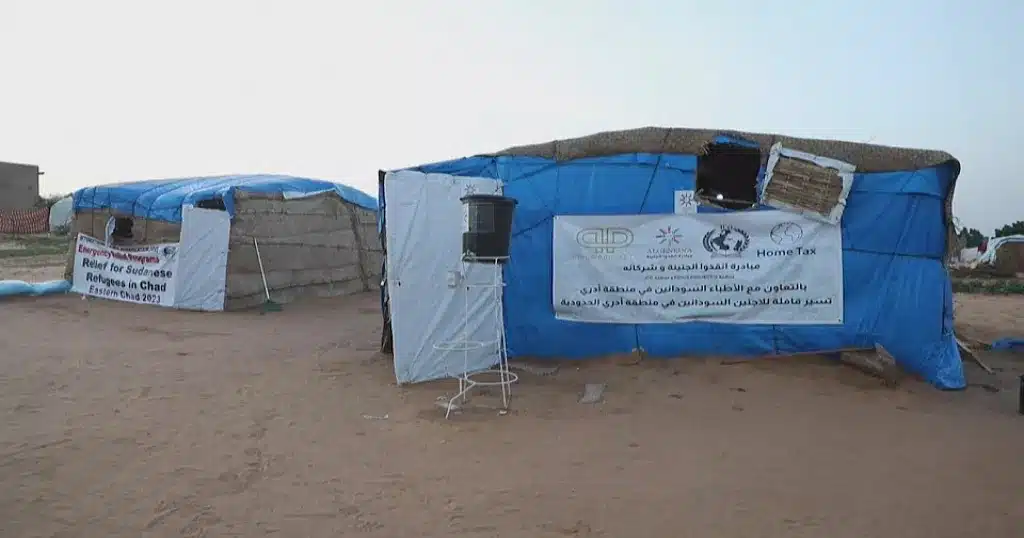
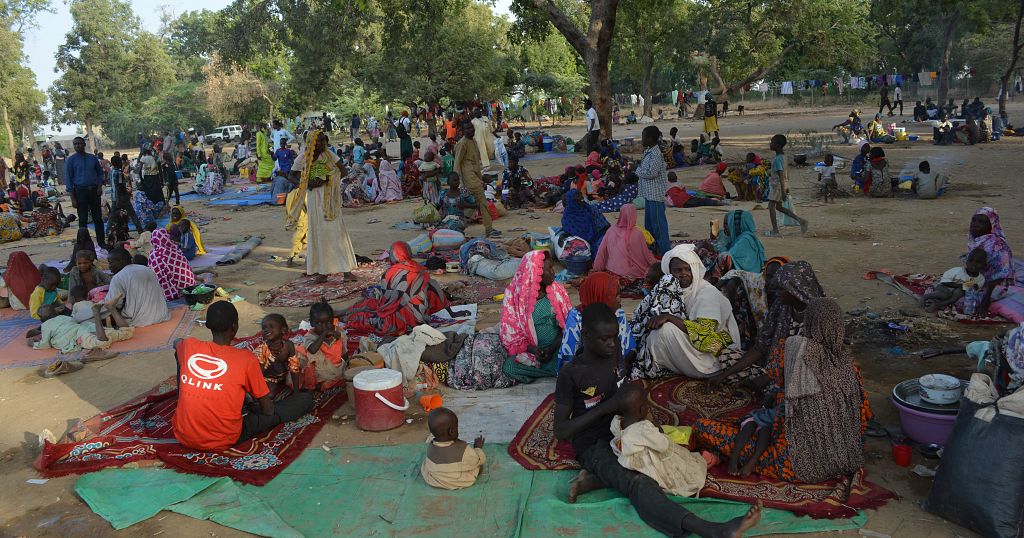
A multitude of individuals escaping the conflict in Sudan have crossed into Chad, where many find themselves in densely populated camps located in the eastern town of Adré.
These camps are grappling with severe challenges, including shortages of food, water, sanitary facilities, shelter, and medical care.
In Adré’s improvised field hospital, volunteer physicians are working tirelessly to provide care. Dr. Nour al-Sham reports, “The majority of our patients are suffering from malaria, eye infections, respiratory illnesses, and malnutrition. The field hospital we operate in is quite small, and we need to expand the space.”
The overcrowded living conditions in the camp, coupled with Chad’s rainy season and inadequate access to water and sanitation, create an environment ripe for the spread of diseases.
🔴 A major humanitarian emergency is happening now in eastern Chad, where people are desperately waiting for food rations. Some have gone 5 weeks without receiving food.
❗️People are feeding their children on insects, grass and leaves. They have much less water than they need..
Adam Bakht, an old man, and the other 200,000 refugees in the community have been awaiting medical attention in agony.
“I have diabetes, asthma, and allergies. They only gave me an injection to ease the pain. My diabetes medication is supposed to arrive in three days, but for my asthma they told me to buy an inhaler from outside the camp, ” he said.
Chad is making preparations for the scheduled referendum on 17th December, which aims to adopt a new constitution aimed at transitioning the country back to civilian rule. To facilitate the process, the government initiated a campaign on Monday to revise and update the electoral register from the 2021 biometric file.
A team, led by the Minister of Territorial Administration, who also serves as the chairman of the national committee responsible for organizing the referendum, along with other government officials, launched this initiative in the Moyen-Chari region.
The publication of the new electoral register is anticipated on 12th November, paving the way for campaign activities in the lead-up to the referendum.
The provisional results of the referendum are scheduled to be announced on 26th December, after which they will be transmitted to the Constitutional Court for validation.
It’s worth noting that on 27th June, the majority of the members of the Transitional National Council approved the new constitution aimed at returning Chad to civilian rule. However, the process has faced challenges due to significant divisions among the government, opposition, and civil society groups over some provisions of the new constitution.
Currently, Chad is under the leadership of transitional President General Mahamat Idriss Déby Itno, who assumed office in April 2021 following the passing of his father, President Idriss Déby, during a military operation.
Despite being only 22 years old, Mastiura Ishakh Yousouff has spent the majority of her life in the Darfur region of Sudan. But even for someone who has never known a permanent home, this is unfamiliar territory: a refugee camp in eastern Chad, one of the world’s poorest nations.
After conflict in West Darfur grew more intense, she was compelled to cross the border with just her newborn and the few personal belongings she could fit.
“I’m concerned about everyone who was left behind, especially my mother, who was unable to cross the border because she was in too poor of health to do so. She spoke to CNN at the Gaga Refugee Camp in the Ouadda region of the central African nation. “I keep asking myself how I can get her to Chad,” she said.
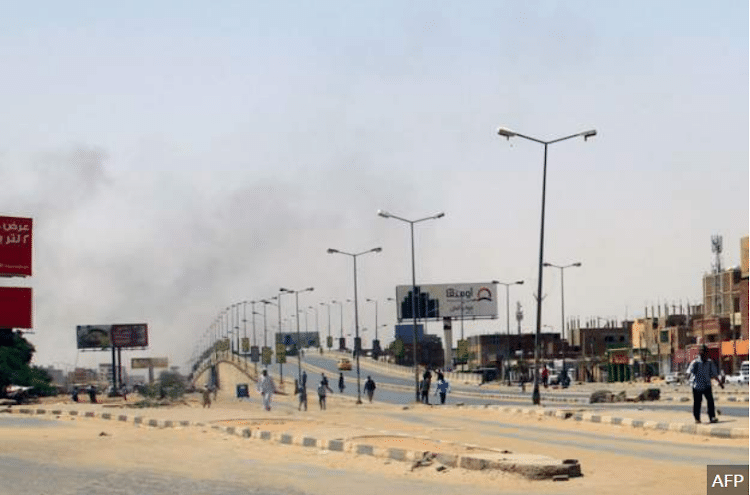
Hundreds of people have died in West Darfur, as fighting escalated between the country’s two rival military factions locked in a deadly power struggle. At least 60,000 Sudanese have crossed into Chad since fighting broke out in mid-April, UN figures show.
Even before the fighting intensified, years of political instability meant Sudan had several millions of people internally displaced; the country also hosted 1.13 million refugees from other conflict-ridden countries, including South Sudan, Eritrea and Syria, according to UNHCR data.
The new outbreak of violence forced nearly 850,000 more civilians so far to leave their homes and move elsewhere in Sudan, while more than 250,000 people left the country in search of safety, UNHCR data shows.
Chad is feeling the strain of the displacement on its resources and was already home to 400,000 Sudanese refugees before this latest conflict.
The current surge has humanitarian workers scrambling to provide services to new arrivals, relocate them away from border towns and deliver aid to mushrooming refugee cities in a remote part of a poor nation that has its own security challenges.
Money is tight to take care of all of them but the people keep coming, afraid that they will be killed if they stay in Sudan.
Close to 90% of the new arrivals at the Gaga Camp are women and children, UNHCR, the United Nations’ Refugee Agency, told CNN.
“The young and the men told us to take the children and cross the border for now so that they can stay behind to defend themselves and our property, if necessary,” Yousouff explained.
They may have escaped the conflict back home, but some are so traumatized that even the guns that police and security carry around the camp trigger painful memories, humanitarian workers say. They’re scared of men in military fatigues, a reminder of the horrors they witnessed back home.
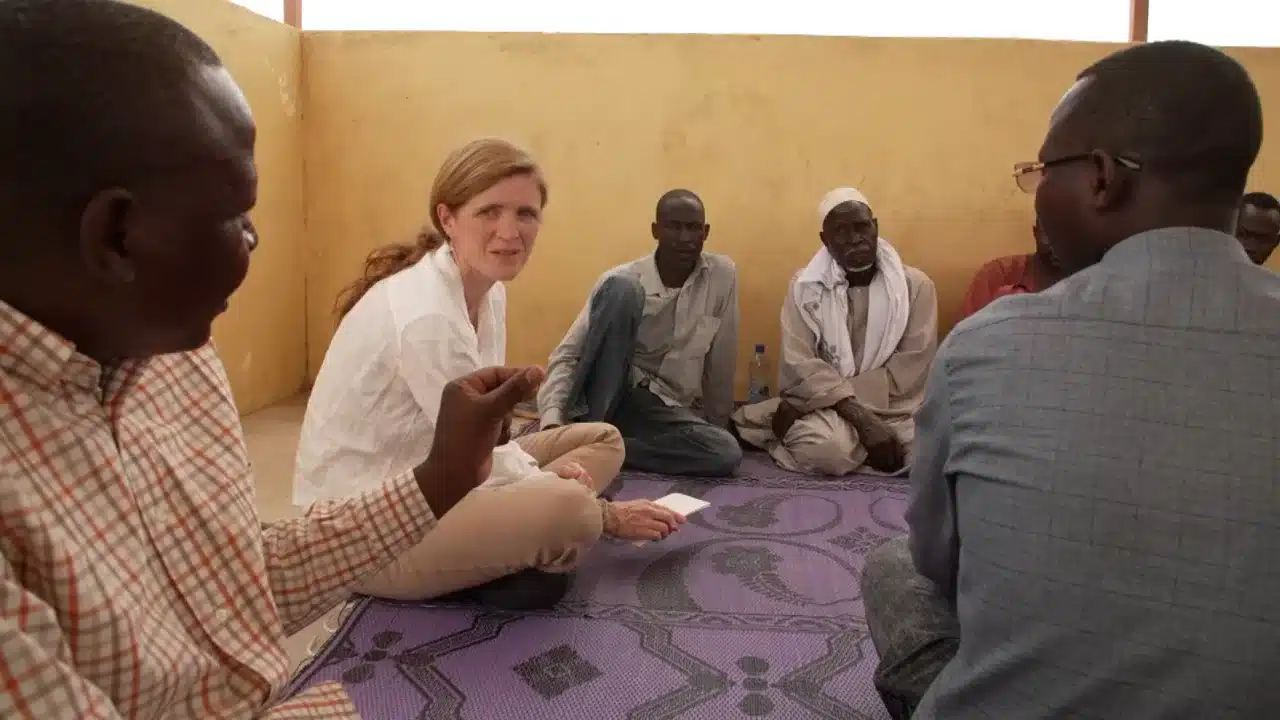
CNN traveled to eastern Chad with USAID Administrator Samantha Power, who announced $103 million to support the over 1 million people who have been displaced in Sudan and neighboring countries since the conflict broke out.
It was a full-circle moment for the US official, who is a former journalist who reported from Chad in 2004 as Sudanese civilians fled from the Janjaweed Arab militias who were accused of major human rights violations and atrocities in Darfur.
On this latest trip, she heard harrowing stories from refugees who were forced to cross over into Chad in the face of unprecedented violence.
One group of nearly 200 families left at 3 a.m. as they feared that they would get attacked imminently.
“You talk to them, you feel like you’re in a time warp, because they’re describing Janjaweed coming in with their knives and their machetes, killing people, raping women. We met one woman whose eye had been gouged basically, with somebody just attacking her,” Power told CNN.
General Mohamed Hamdan Dagalo, known as Hemedti, was a commander of the Janjaweed during the bloody years of the Darfur conflict.
Hundreds of thousands of people were killed during the violence two decades ago by Janjaweed fighters who murdered, raped and tortured the people of Darfur in what is widely recognized as a genocide.
Hemedti now leads the Rapid Support Forces, the paramilitary group battling the Sudanese Armed Forces in this latest conflict. Their representatives signed a seven-day humanitarian ceasefire agreement in Jeddah, Saudi Arabia, over the weekend that begins on Monday night local time. But the two sides have violated each of the previous truces they agreed to since they started fighting on April 15.
“Nowhere in the world, is there a humanitarian solution for a political problem. Nowhere in the world, is there a humanitarian fix for generals who are willing to destroy their country in the interests of seizing power, or consolidating power,” Power told CNN.
As she spoke, some children gathered behind her, curious about the scene and likely bored in a newly built camp with no recreational facilities.
Countries that “might be tempted” to support one faction or the other should keep their faces in mind, she said. The ambassador wants the generals isolated and pressured to end the conflict.
Koubra Abdallah, 23, told CNN she left Geneina in West Darfur so suddenly that she got separated from her young son, who got lost in the chaos.
“My brother is still back there, I heard he was injured. I was forced to come to Chad to seek safety,” she said as she sorted vegetables for lunch in the Gaga camp. She stressed that she wouldn’t go back to Sudan except to bring her son and brother back to safety.
“There has been too much insecurity for too long,” she said in a mixture of the Masalit and Arabic dialects spoken in western Sudan.
Like Yousouff, many of the refugees were already internally displaced thanks to decades of conflict in Sudan. “Some of them have been in a cycle of displacement,” explained Patrice Ahouansou, the Deputy Representative in Chad of the UNHCR.
“So they were living in Internally Displaced Persons camps in Sudan and have now crossed into Chad to seek asylum.”
Chadian law requires refugees to be housed at reasonable distances from border towns, the UN official says. So they are moved to camps like Gaga further away from the border to begin the difficult process of figuring out the rest of their lives.
About 1,000 people had been relocated when CNN visited. Tens of small one-room iron sheet structures wrapped in UNHCR logos had sprung out of the desert.
The women and their toddlers sat or slept under trees to escape the 45 degree heat while some children played near a tap as water flowed. It’s basic, no piped water or power in the dwellings that host one family each, but they feel safe in this refugee city.
The people crossing into Chad are the poorest, most vulnerable victims of Sudan’s instability.
They’re mostly farmers, village folk with simple lives who yearn for the chance to build a safe future. Unlike the thousands who have been evacuated through Port Sudan or flown out of the country, they don’t have dual nationalities or foreign visas. “I’ll go back for any leader that brings peace to Sudan,” one of the men told USAID’s Power.
They don’t care about which general wins in this power struggle.
“What’s sad is that while there was hope for a civilian-led transitional government, and while there was hope for a time that the military and these militia would recede, for many of these individuals, it’s just proof that the militia will never go away in their minds,” she told CNN.
To quell the damage of Sudan’s power struggle from reaching other territories, the central African country of Chad has closed its 872-mile (1,403 km) eastern border with Sudan “until further notice”.
“Chad appeals to the regional and international community as well as to all friendly countries to prioritise a return to peace,” the government said in a statement.
This comes after Moussa Faki Mahamat, chairman of the African Union Commission, has released a statement on the unfolding situation in Sudan.
The statement says the leader of the bloc is urging “political and military parties to find a fair political solution to the crisis that arose after the 25 October 2021 coup and its disastrous consequences”.
Mahamat is referring to the day the Sudanese military, led by General Abdel Fattah al-Burhan, took control of the government in Sudan.
Mr Mahamat’s statement appeals to the army and the RSF to: “immediately stop the destruction of the country, the terrorisation of its population, and the bloodshed during the last 10 days of Ramadan.”
The United Nationswarned Friday that it would no longer be able to feed 600,000 refugees in Chad within weeks unless it receives urgent international funding.
The UN’s World Food Programme said Chad was hosting the biggest refugee population in west and central Africa, with the numbers rising due to unrest in neighbouring Sudan.
The WFP said that despite refugees being a priority, it had to reduce its plans to support 455,600 refugees down to only around 270,000 in April.
“We have already done a drastic targeting to ensure that the poorest among the poor will be assisted,” WFP’s Chad country director Pierre Honnorat told reporters in Geneva via video-link from the capital N’Djamena.
However, “we have absolutely no funding from May onwards for the refugees and displaced people. It’s really catastrophic.”
WFP wants $142.7 million for the next six months to feed all crisis-affected populations in Chad, including refugees, the 380,000 internally displaced, and other Chadians who have been hit by extreme weather in recent years.
“If no further funding is received, food assistance will come to a 100 percent halt in May 2023 for both refugees and internally displaced,” the agency said in a statement.
Chad is facing its fourth consecutive year of very high severe food insecurity.
The country suffered the worst lean season in a decade last year, plus the most devastating floods in 30 years. WFP said there were 1.9 million people in Chad who are food insecure.
Meanwhile, the UN refugee agency said it was looking to raise $172.5 million to provide protection and relief assistance to one million forcibly displaced people and their hosts in Chad.
“That is just 15 percent funded so we desperately need money for that country,” UNHCR spokesman Matthew Saltmarsh told reporters.
He said the agency was encouraging Nigeria and Chad to look at voluntary returns of refugees.
“The numbers envisaged might be relatively modest but we think this is an important signal in terms of finding solutions for the displaced in Chad but also for the region.”
The death of the last king of Chad, Idriss Deby Itno, has led more than 400 rebels to life imprisonment according to the state prosecutor.
They were found guilty in a large-scale trial of “acts of terrorism, mercenarism, recruiting young soldiers, and assaulting the head of state,” according to Mahamat El-Hadj Abba Nana, the prosecutor for the nation’s capital N’Djamena.
While 24 other suspects were found not guilty, he did not provide an exact number of those who were imprisoned, merely stating that “more than 400 were sentenced” to life in prison.
The trial opened last month behind closed doors at Klessoum prison, 20 kilometres (12 miles) southeast of the capital.
In early 2021, the country’s main rebel group, the Front for Change and Concord in Chad (FACT), launched an offensive on the north of the country from bases in Libya.
On April 20, the army announced that Marshal Deby, Chad’s iron-fisted ruler for the previous three decades, had died from wounds sustained in the fighting.
Deby died just after being declared winner of a presidential election that gave him his sixth term.
His death was announced just a day after he had been declared victor of a presidential election that gave him a sixth term in office.
He was immediately succeeded by one of his sons, General Mahamat Idriss Deby Itno, who took the helm at the head of a 15-member military junta.
‘A masquerade’ –
Several defendants were also ordered to pay damages of more than $32 million to the state and $1.6 million to the ex-president’s family, said FACT lawyer Francis Lokoulde, who suggested there would be an appeal.
“It’s a masquerade that follows no law, no convention”, said FACT leader Mahamat Mahdi Ali.
“All that comes from a willingness to criminalise our struggle. The verdict is a non-event,” he said.
Defence lawyers had protested at the very short notice after the mass trial had been announced just days before it started on February 13.
Mahamat Idriss Deby Itno had promised to hold free elections within 18 months, but that deadline was extended for another two years.
Protests last October to mark the initially promised end to military rule met with a deadly crackdown.
The Chadian authorities first put the death toll in the capital at around 50, before updating that figure to 73 deaths. Opposition groups say the number is higher.
The Geneva-based World Organization against Torture (OMCT) accused the Chadian authorities of summary executions and torture.
A total of 262 people were then handed terms of between two and three years after a trial in the notorious Koro Toro prison, isolated in the desert 600 kilometres from N’Djamena.
The remote location and proceedings drew condemnation from international human rights groups.
Human Rights Watch not only denounced the mass trial but also the murders, forced disappearances and torture that preceded it.
The main leaders of Chad’s opposition now live in hiding or in exile, even though the junta lifted a suspension of several opposition parties in January.
Despite criticism of his authoritarian rule, the elder Deby was a key ally in the West’s anti-jihadist campaign in the unstable Sahel, particularly due to the relative strength of Chad’s military.
TheHarmattan situation in the country is likely to get worse this week, according to a report from theGhana Meteorological Agency (GMA).
The agency in a statement noted that meteorological satellites have detected that dust lifted around Chad, Sudan, and Niger have been transported into Ghana.
“This dust was transported into the country by strong winds at lower levels of the atmosphere. As a result, an intensification of dry and dusty weather conditions was expected to be experienced in Ghana during the week as issued in the GMet weekly and daily forecasts.”
“Furtherance to the above, this has resulted in dryness and decreased visibility, which may take some time to clear completely. Relative humidity, over the period, has ranged between 15% and 50% with a visibility range of 200 meters to 5,000 meters. These conditions are expected to persist at varying intensities over the next few days.
It however expects that there will be a relaxation in the intensity during the week and consequently.
GMA further advised that the general public take some precautions.
“Keep hydrated, Follow fire safety precautions, Cover foods/water to prevent dust from settling on them, Wash fruits thoroughly before taking them, and people allergic to dust are to wear nose masks to reduce the effect on them.”
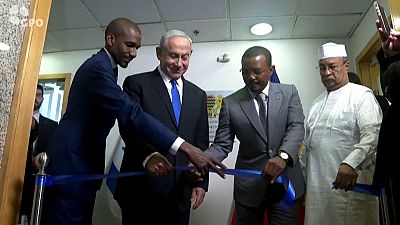
An Israeli statement noted that on Thursday, four years after the nations’ connections were restored after a decades-long break, Chadian President Mahamat Idriss Deby Itno officially opened his majority-Muslim nation’s first embassy in Israel.
The opening of the embassy in Ramat Gan, close to Tel Aviv, was hailed as “a historic occasion” by Prime Minister Benjamin Netanyahu’s administration.
With a Chadian group, Netanyahu claimed to have discussed “the potential of building an embassy in Jerusalem” in 2020.
That would have been a victory for the right-winger who, since then-president Donald Trump moved the US embassy in 2018, has been pressuring international governments to establish their embassies in the city.
“We are strengthening our friendship and our common interests in pursuing peace, security and prosperity,” Netanyahu said Thursday.
Israel granted recognition to Chad after it separated from France in 1960, and by 1962, it had established an embassy there.
In response to pressure from Muslim African nations, relations between Israel and Chad were severed in 1972.
Following the 1967 and 1973 Arab-Israeli conflicts, several African nations severed ties with Israel.
However, in order to strengthen connections on the continent, Israel has recently highlighted areas of collaboration ranging from security to technology and agriculture.
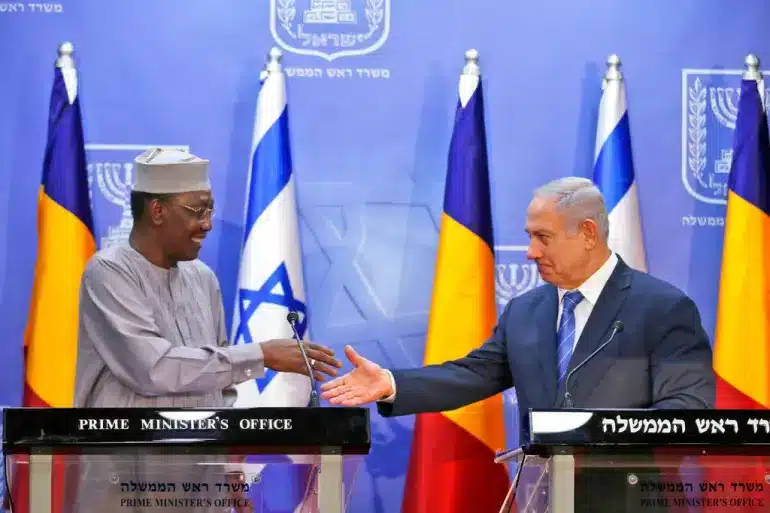
Netanyahu and Deby declared the reopening of diplomatic ties during a trip to Chad in 2019.
After his arrival on Tuesday, Deby met the head of Israel’s Mossad spy agency, David Barnea.
The Mossad “has played a central role in formulating the agreement and strengthening relations between the two countries,” a statement from the Israeli prime minister’s office said.
One of the world’s poorest countries, Chad is not an Arab League member state but belongs to the Organization of Islamic Cooperation (OIC).
Netanyahu has made broadening Israelis ties across the Arab and Muslim world a foreign policy
Following a trip to Jerusalem by Prime Minister Benjamin Netanyahu and then-President Idriss Deby, diplomatic relations betweenIsrael and Chad were restored in 2018.
Building on bilateral ties that were established five years ago, Chad will open an embassy in Israel on Thursday, according to the office of Israeli Prime Minister Benjamin Netanyahu.
The announcement was made on Wednesday as Chadian President Mahamat Deby’s office announced that he was visiting Israel for a 48-hour state visit but gave no other information.
The Chadian president would preside over the opening of the embassy, according to Netanyahu’s office.
Chad cut diplomatic ties with Israel in 1972 after the Organization of African Unity, the forerunner of the present-day African Union, ordered its member states to do so in support of the Palestinians.
But in November 2018, former Chadian President Idriss Deby, the late father of the current leader, paid a historic visit to Israel during which he spoke of the two countries committing to a new era of cooperation.
Netanyahu then visited Chad in January 2019, while the following year Israel signed normalisation agreements with Morocco, Bahrain, Sudan and the United Arab Emirates as part of a broader diplomatic push by the United States under President Donald Trump.
The agreements enraged Palestinians who condemned them as a “stab in the back” amid fears that they will weaken a long-standing pan-Arab position calling for Israeli withdrawal from territories it occupies illegally and acceptance of Palestinian statehood in return for normal ties with Arab countries.
It was not immediately clear where the Chadian embassy would be located. Most countries keep embassies in Tel Aviv.
Trump in 2017 provoked controversy by announcing he would relocate the US embassy from Tel Aviv to Jerusalem and officially did so a year later. The move infuriated Palestinians and spurred international condemnation.
Previous US presidents and the leaders of nearly every other country have refrained from opening embassies in Jerusalem until the city’s final status is resolved through Israeli-Palestinian negotiations. Palestinian leaders see occupied East Jerusalem as the capital of their future state.
Netanyahu, who returned to office last month, has cast the upgrade of relations with Chad as part of his outreach to Arab and Muslim countries, which he wants to expand.
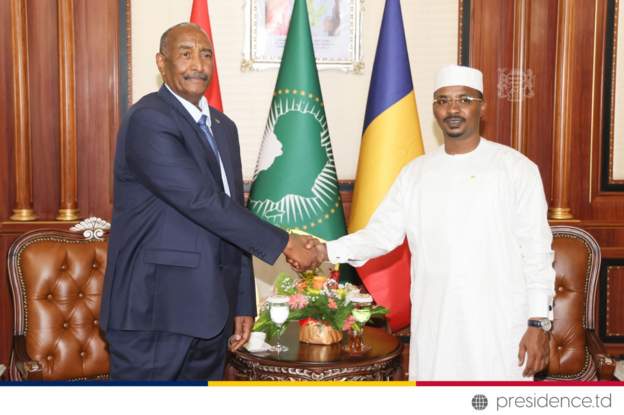
Head of the Sudanese military, Abdel Fattah al-Burhan, visited the neighboring Chad on Sunday for talks aimed at strengthening ties between the two nations, according to the state-run Suna news agency.
Gen Burhan and Chadian interim military leader Mahamat Idriss Déby met in N’Djamena and renewed their commitment to implement a 2018 bilateral agreement, the news agency said.
They also expressed their concern over communal violence in their countries and agreed to form a joint force to handle insecurity along their border.
Gen Burhan and Mr Déby also agreed to take the necessary steps to tackle irregular immigration and weapons smuggling.
They also agreed to bolster joint patrols along the tri-border area with the Central African Republic (CAR).
The border region has been the focus of intense manoeuvring in recent weeks involving forces loyal to Sudanese deputy military leader Mohamed Hamdan Dagalo, CAR and Chadian rebels as well as the Russian Wagner mercenary group.
An attempt to undermine constitutional order in Chad by a handful of army officers was thwarted, according to the Central African nation’s administration.
A statement released on January 5, 2022 read: “This plan was devised by a restricted group of conspirators composed of 11 army officers.”
It cited one Baradine Berdei Targuio, president of the Chadian Human Rights Organization, as the head of the coupists.
Security services have been arresting people linked to the plot since Dec. 8 and have seized military equipment, the statement said.
Chad is currently under a transitional government led by Mahamat Idris Deby Itno who was made president after his father died in 2021 whiles fighting terrorists on the frontline.
Authorities have cracked down on dissent in recent months as demonstrators took to the streets to demand a quicker transition to democratic rule, a Reuters report stated.
Since at least 2013, when it conducted a secret, illegal abduction programme for women and girls in the northeast, the Nigerian military has aborted at least 10,000 pregnancies.
According to Reuters, many of the women and girls were abducted and raped by Islamist militants.
Fati recounted her ordeal after being kidnapped by terrorists and later rescued by the military.
During an insurgent attack on Monguno, she lost contact with her family one night. She was later kidnapped by terrorists and thrown into one of two pickup trucks with the other women, she claimed. They drove through the night to the vast Lake Chad’s shores, where fighters loaded the women into canoes.
Captives were hauled out to the lake’s numerous islands as the sun rose.
Fati was four months pregnant when liberated from the insurgents. Soon after, she says, soldiers medically aborted the pregnancy without telling her. And she was warned: “If you share this with anyone, you will be seriously beaten.”
Fati said she was married off three times, forced to take a new husband whenever the previous one didn’t return from the war. The third, who impregnated her, “was the worst out of all of them,” she said. “He would hit me with the butt of his gun … He would beat me until I was sick.”
Now in her 20s, Fati said shortly after being rescued with four months of pregnancy, uniformed men gave her and five other women mysterious injections and pills in a dim room at a military barracks in Maiduguri, the Borno state capital.
After about four hours, Fati, who said she was about four months pregnant, felt a searing pain in her stomach and black blood seeped out of her. The other women were bleeding as well, and writhing on the floor. “The soldiers want to kill us,” she thought.
According to her, the soldiers aborted the pregnancies without telling them. And she was warned: “If you share this with anyone, you will be seriously beaten.”
The abortions mostly were carried out without the person’s consent – and often without their prior knowledge, according to the witness accounts. The women and girls ranged from a few weeks to eight months pregnant, and some were as young as 12 years old, interviews and records showed.
This investigation is based on interviews with 33 women and girls who say they underwent abortions while in the custody of the Nigerian Army. Just one said she freely gave consent. Reporters also interviewed five civilian healthcare workers and nine security personnel involved in the programme, including soldiers and other government employees such as armed guards engaged in escorting pregnant women to abortion sites. In addition, Reuters reviewed copies of military documents and civilian hospital records describing or tallying thousands of abortion procedures.
Three soldiers and a guard said they commonly assured women, who often were debilitated from captivity in the bush, that the pills and injections given to them were to restore their health and fight diseases such as malaria. In some instances, women who resisted were beaten, caned, held at gunpoint or drugged into compliance. Others were tied or pinned down, as abortion drugs were inserted inside them, said a guard and a health worker.
Bintu Ibrahim, now in her late 20s, recounted how soldiers gave her two injections without her consent after picking her up with a group of other women who fled the insurgents about three years ago. When the blood came, and the terrifying pain, she knew she and the others had undergone abortions. The women protested and demanded to know why, she said, until the soldiers threatened to kill them.
“If they had left me with the baby, I would have wanted it,” said Ibrahim, whose account was confirmed by a fellow former captive, Yagana Bukar.
At military facilities and in the field, some abortions proved fatal. Although Reuters could not determine the full scope of the deaths in nearly 10 years of the programme, four soldiers and two security officers said they witnessed women die from abortions, or saw their corpses afterward.
“That woman was more pregnant than the rest of us, almost six or seven months,” Ibrahim said. “She was crying, yelling, rolling around, and at long last she stopped rolling and shouting. She became so weak and traumatised, and then she stopped breathing.
“They just dug a hole, and they put sand over it and buried her.”
Reuters was unable to establish who created the abortion programme or determine who in the military or government ran it.
Nigerian military leaders denied the programme has ever existed and said Reuters reporting was part of a foreign effort to undermine the country’s fight against the insurgents.
“Not in Nigeria, not in Nigeria,” said Major General Christopher Musa, who heads the military’s counterinsurgency campaign in the northeast, in a November 24 interview with Reuters that addressed the abortion programme.
“Everybody respects life. We respect families. We respect women and children. We respect every living soul.”
General Lucky Irabor, Nigeria’s chief of defence staff, did not respond to requests for comment from Reuters. On December 2, a week after Reuters sought an interview with Irabor and shared detailed findings and questions with his office, the military’s director of defence information released a five-page statement to reporters, and later posted it on Facebook and Twitter. Major General Jimmy Akpor said Reuters was motivated by “wickedness” and a “bullying” mentality, according to the statement.
“The fictitious series of stories actually constitute a body of insults on the Nigerian peoples and culture,” Akpor added. “Nigerian military personnel have been raised, bred and further trained to protect lives, even at their own risk, especially when it concerns the lives of children, women and the elderly.”
Central to the abortion programme is a notion widely held within the military and among some civilians in the northeast: that the children of insurgents are predestined, by the blood in their veins, to one day take up arms against the Nigerian government and society. Four soldiers and one guard said they were told by superiors that the programme was needed to destroy insurgent fighters before they could be born.
“It’s just like sanitising the society,” said a civilian health worker, one of seven people who acknowledged performing abortions under army orders.
Four of the health workers interviewed by Reuters also said that the programme was for the good of the women and any children they might bear, who would face the stigma of being associated with an insurgent father.
The army-run abortion programme has been in place since at least 2013, and procedures were being performed through at least November of last year, according to accounts from soldiers.
The procedures have occurred in at least five military facilities and five civilian hospitals in the region, according to witness accounts and documentation reviewed by Reuters. Many occurred in Maiduguri, the largest city in Nigeria’s northeast and the command centre of the government’s war on Islamist extremists.
The Maiduguri sites include the detention centre at Giwa Barracks, where Fati said she was forced to have an abortion. Other sites include the Maimalari Barracks, which is the city’s main military base, and two civilian hospitals – State Specialist and Umaru Shehu. The two hospitals did not comment on this story.
Forced abortions may amount to war crimes and crimes against humanity, according to four legal experts briefed by Reuters on its findings. Although forced abortions are not specifically criminalised under the Rome Statute of the International Criminal Court, the experts said, they could be construed as torture or other inhumane treatment and be prosecuted as such.
The International Criminal Court’s prosecutor found in 2020 that grounds existed to investigate possible war crimes and crimes against humanity by both Nigerian security forces and insurgents. But the court has not opened a probe.
The ICC’s Office of the Prosecutor declined to comment on Reuters’ findings.
SaharaReporters had reported how in April 2014, Boko Haram terrorists kidnapped 276 schoolgirls in Chibok town in Borno, prompting the #BringBackOurGirls campaign. About 98 of the kidnapped girls are still missing.
Two young women, Felerin and Aisha, described undergoing abortions after being taken into custody by the Nigerian military.
Other women interviewed by Reuters offered similar accounts of captivity and rescue – including being raped by insurgents and escaping with the help of soldiers who took them into custody and transported them under armed guard to military facilities or civilian hospitals. Many said they were made to give urine or blood samples before receiving unspecified injections and pills.
Nigerian facilities often used misoprostol, which helps induce labour or contractions, according to the documentation reviewed by Reuters. The drug is also used to treat ulcers and post-partum hemorrhaging, and is widely available in Nigerian cities, including through unofficial abortion-drug distribution networks. Women sometimes were also given the progesterone-blocker called mifepristone, which in many countries is used in conjunction with misoprostol in medication abortions.
Also given was the drug oxytocin, which is widely used during labour to stimulate contractions and safe to use when under medical supervision. Though experts say it is not recommended for abortions, it was sometimes given at military bases to trigger terminations, said two soldiers who performed the procedures.
Using oxytocin to induce abortion is dangerous, several international medical experts told Reuters, particularly if it is injected intramuscularly, as soldiers involved in the Nigerian programme said it was. If the drug is administered too quickly, the results can be fatal, the experts said.
The medications misoprostol and mifepristone are considered safe for abortions when the standard medical protocol is used, according to the World Health Organization and other authorities.
Among those forced to undergo an abortion was a girl named Hafsat.
The soldier said he and other troops injected Hafsat and three others with oxytocin while they lay on the ground outside the army clinic.
Within an hour, the soldier said, he heard cries and turned to see Hafsat bleeding heavily from between her legs. He grabbed her a cloth to stanch the blood.
Hafsat began crying out for a man named Ali, and for her mother. “Half an hour later, maybe, she just went quiet,” he said. “She died.”
The soldier said he and his comrades wrapped her in her turquoise dress and buried her. The memory haunts him.
“I can’t forget her name,” he said.
The details of the soldier’s account were corroborated by a second soldier at the base, who said he also witnessed the girl’s abortion and death.
In all, eight sources, including four soldiers, said they witnessed deaths or saw corpses of women who died from abortions performed at military barracks or administered in the field.
A court in a high-security desert prison in Chad has sentenced 262 people arrested during a bloody anti-regime protest in October to two to three years in prison after a mass trial behind closed doors with no lawyers and no independent media.
Some 80 others, out of 401 people on trial – mostly young demonstrators – were given one to two years’ suspended prison sentences, and 59 were acquitted, N’Djamena’s public prosecutor, Moussa Wade Djibrine, told reporters on Monday.
The trial lasted four days and ended on Friday, but as only state television was allowed to attend, in the absence of any other media, the prosecutor did not make the judgment public until three days later, on his return to the capital on Monday.
On 20 October 2022, around fifty people – mostly young demonstrators shot dead – died, mainly in N’Djamena, when the police opened fire on the slightest attempt at a rally.
They were responding to the call of the opposition against the extension of General Mahamat Idriss Déby Itno’s rule for two years. He had been proclaimed head of state by the military on 20 April 2021 following the death of his father, President Idriss Déby Itno, who was killed at the front by rebels after ruling Chad with an iron fist for 30 years.
– Mass trial –
The government had acknowledged the arrest of 601 people in N’Djamena alone – including 83 minors – and their transfer to the high-security prison of Koro Toro. The transitional president Mahamat Déby had accused them of having wanted to lead an “insurrection” and an attempted “coup d’état”.
Those convicted on Friday were found guilty of “unauthorised assembly, destruction of property, arson, violence and assault and disturbance of public order”, according to the prosecutor.
The mass trial took place in the prison of Koro Toro, 600 km northeast of the capital, an “illegal” procedure according to the lawyers who decided not to attend.
Amnesty International had denounced on Friday “a trial behind closed doors which raises serious concerns about respect for the right to a fair trial (…) the right to prepare one’s defence (…) the right to a public trial (…) and the right to information” of the public, “rights enshrined in the African Charter on Human and Peoples’ Rights, to which Chad is a party”.
– Excessive use of violence” –
The Bar Association went on strike throughout the country before the opening and for the duration of the trial, denouncing the “arbitrariness and injustice” of a “parody of a trial”. He announced on Monday a resumption of the pleadings from Tuesday and their intention to appeal.
Of the 600 people arrested during and after the demonstration in N’Djamena, the cases of more than 200 are still under investigation by investigating judges, including 80 minors repatriated from Koro Toro to N’Djamena, the prosecutor said Monday.
After the bloody demonstrations, the opposition – whose main leaders are now in hiding or in exile -, local and international NGOs, as well as part of the international community, led by the European Union (EU) and the African Union (AU), strongly condemned the excessive use of violence “against civilians”.
On Monday, the government announced the lifting of the state of emergency declared in N’Djamena and some other cities on the evening of 20 October.
On 20 April 2021, Mahamat Déby, a young 37-year-old general, was proclaimed President of the Republic at the head of a junta of 15 generals and had promised to hand over power to civilians through elections after a “transition” of 18 months.
But he extended his presidency on the recommendation of a “National Reconciliation Dialogue” boycotted by the vast majority of the political opposition and several of the most important armed rebel groups.
A “dozen soldiers” were killed Tuesday by jihadists who attacked an army post in western Chad, a presidential spokesman told AFP.
The attack also caused “injuries”, said in a statement Brah Mahamat.
It was perpetrated “in the early morning” near Ngouboua, in the Lake Chad region, on the borders of Chad, Niger, Cameroon and Nigeria, where the jihadist groups Boko Haram and its dissident branch Islamic State in West Africa (Iswap) regularly attack armies and civilians in the four countries.
An army unit, “dispatched as a precursor to set up an outpost on the island of Bouka-Toullorom,” was “attacked by elements of the Boko Haram sect,” Mahamat said. The Chadian authorities indiscriminately call “Boko Haram” the group of the same name or the Iswap.
“The ten dead and wounded are all elements of the defense forces,” the spokesman told AFP.
Lake Chad is a vast expanse of water and swamps dotted with hundreds of islets, some of which serve as hideouts for Boko Haram and Iswap jihadists.
“Today, Boko Haram no longer has the strength to attack the barracks” in the lake area and is now targeting “the population and their property,” said Chadian President General Mahamat Idriss Déby Itno 10 days ago while traveling in the area.
His transitional government has vowed to more than double the size of its army by the end of 2022 to deal with security challenges, including threats from Islamist militants linked to al Qaeda and the Islamic State.
The Boko Haram insurgency, which erupted in northeast Nigeria in 2009, has killed more than 350,000 people and forced millions to flee their homes.
The two leaders of the main politicalopposition movements in Chad, Succès Masra and Max Loalngar have gone into hiding for their safety, three weeks after a bloody demonstration by their movements.
They both told the AFP on Wednesday that the repression continued with arrests and “deportations” and “extra-judicial executions”.
Mr. Masra, president of the Transformers party, assured AFP by telephone that he had to “cross” the land border illegally to “another country” because he was wanted by “the presidential guard”.
Mr. Loalngar, coordinator and spokesman of the main opposition platform Wakit Tamma, said he “went underground somewhere in the country” to avoid arrest.
On October 20, some 50 people were shot dead and more than 300 injured in N’Djamena and several other cities, according to the authorities, but many more according to the opposition, when the police violently repressed rallies organized by Les Transformateurs and Wakit Tamma to protest the two-year extension of General Mahamat Idriss Déby Itno’s term as president.
On April 20, 2021, following the death of Marshal Déby, who was killed by rebels on his way to the front, the army proclaimed his son, Mahamat Déby, a 37-year-old general, president of the republic at the head of a junta of 15 generals, for a transitional period of 18 months, at the end of which the army promised to hand over power to civilians through “free and democratic” elections.
But in early October, on the recommendations of a national reconciliation dialogue boycotted by the opposition but also by two of the three main armed rebel movements, who denounced it as a “charade,” the transition was extended for two years, as was General Déby as transitional president.
The Chadian Convention on Human Rights (CTDH) says more than 600 people have been arrested since October 20, most of them “deported” to two high-security prisons far from the capital.
More than 2,000 people have been arrested, according to the World Organization Against Torture (OMCT).
The government claims that the demonstrators, with the support of “foreign powers” that it did not name, had planned an “insurrection” to overthrow the government and that they had begun to violently attack and ransack institutions before the forces of order began to repress.
On Tuesday, Prime Minister Saleh Kebzabo, an ex-opposition leader appointed by President Déby, told AFP that his country accepted the principle of an “international investigation” under the aegis of Chad’s “partners.
In a report made public Wednesday, the chairman of the African Union (AU) commission, Chadian Moussa Faki Mahamat, stressed “the urgency of a serious and credible investigation” to bring those responsible to justice.
Mr. Masra and Mr. Loalngar assured AFP that a real “manhunt” had been going on for three weeks, particularly in N’Djamena, targeting supporters of their organizations.
“On October 21, soldiers of the presidential guard came to look for me at our headquarters. When they did not find me, they arrested 27 members of my team,” Mr. Masra told AFP from a country he did not wish to name, adding: “Only four of them are still alive, and they are being interrogated, the others are dead, some of those who were with them told me, even if we do not have the bodies.
“The manhunt continues throughout the country, targeting our cadres and activists, specifically those from my community, the Sara,” said the 39-year-old opponent, who accuses the authorities of “extrajudicial executions.
“The police go from house to house, they arrest people for anything, like all our activists, I had to go into hiding,” said Loalngar in a WhatsApp conversation from a location he did not wish to reveal but assured that he is “still in Chad.
Asked by AFP, various government officials would not say how many people had been arrested since October 20, promising to comment on the ongoing investigation and the upcoming international inquiry at a press conference “in the coming days.
In Paris on Wednesday, the lawyers for Mr. Masra and the Transformers, Vincent Brengarth and William Bourdon announced that they had sent the ICC a “report of facts likely to qualify as crimes against humanity.
General Mahamat Idriss Deby Itno on Monday appointed by decree 104 more members of his “parliament” as he leads Chad’s two-year transitional government after taking power on the death of his father.
In early October, a national reconciliation dialogue (DNIS), which gave him an additional 24 months as transitional president, recommended increasing the number of “deputies” in the National Transitional Council (CNT), which has acted as parliament since Mr Déby was first proclaimed head of state on 20 April 2021, at the head of a junta of 15 generals, from 93 to 197.
The enlargement of the CNT aims to integrate personalities from parties, civil society organisations and rebel movements that joined the national dialogue, which was boycotted by a large part of the opposition and some of the most powerful armed groups.
The latter denounce a “dynastic succession” in Chad, ruled for 30 years with an iron fist by Idriss Déby Itno, Mahamat’s father, who was killed on the front line against rebels a year and a half ago.
In a decree consulted by AFP, General Déby named 104 “additional members of the CNT” on Monday, including representatives of the former opposition that rallied to the regime during the DNIS and rebel groups that signed a peace agreement in August.
On 20 April 2021, a junta of 15 generals announced the death of Marshal Idriss Déby and proclaimed his son Mahamat, a 37-year-old general at the time, “President of the Republic” for a “transitional” period that should lead to “free and democratic elections” after 18 months, renewable once.
The generals immediately abrogated the Constitution, dismissed the government and dissolved parliament, only to replace it five months later with a 93-member CNT appointed by the new strongman of N’Djamena. This transitional “parliament” is in charge of drafting a new constitution and preparing elections.
Mahamat Déby immediately received the support of the international community – led by France, the European Union (EU) and the African Union (AU) – which nevertheless demanded that the transition not exceed 18 months, and also ensured that General Déby would not stand in future elections.
Eighteen months later, the DNIS not only reappointed him for two years as head of Chad but also authorised him to run for the supreme magistracy in two years’ time.
On 20 October last, opposition demonstrations were violently repressed, resulting in about fifty deaths in the country’s major cities, more than 300 injured and hundreds of people arrested.
The EU “strongly” condemned the “excessive use of force” and “serious violations of freedom of expression”.
Violentclashes have erupted in Chad between police and protestors in the capital N’Djamena.
Reports say there have been a number of fatalities, and that dozens of people have been injured.
The demonstrations are against Chad’s transitional military government, with protestors calling for a return to civilian rule.
Policeused gunfire and tear gas to disperse the protestors and some parts of the city have been cordoned off.
Angry protesters attacked the party headquarters of the recently appointed Prime Minister Saleh Kebzabo in the capital, pro-government news website Alwihda reported.
It said the protesters set fire to the main entrance of the premises.
Chad’s prime minister, Albert Pahimi Padacke, has resigned to pave the way for a new government after the Central African country pushed back elections by two years.
His resignation was announced by the presidency on Tuesday.
Padacke, a civilian politician, was named prime minister of a transitional military government last year after President Mahamat Idriss Deby seized power following his father’s death.
The military council, led by Deby, was originally meant to rule for 18 months, but this month, the country announced it would push back democratic elections until around October 2024.
Deby was sworn in on Monday as president and is expected to appoint a new premier.
Padacke also served as prime minister from 2016 to 2018 and was seen as an ally of former President Idriss Deby, who ruled Chad for 30 years until his death in 2021.
The elder Deby’s death paved the way for talks between rebel groups, some headed by relatives of the former president, and the military council.
Hundreds of rebel groups met in Doha for talks this year at the request of the Qatari government. The talks dragged on for months due to bickering between the groups who at some point accused the government of insincerity, but they paved the way for negotiations to be held in Chad next year.
General Mahamat Déby, who is Chad’s military ruler, will today, Monday, be sworn-in as the country’s transitional president.
This means he will be extending his stay in power by two years following recommendations from a contentious national inclusive dialogue process that concluded last week.
Gen Mahamat has pledged to ensure institutional reforms, including adopting a new constitution, an electoral code and creating a new election commission.
Various opposition groups, the Catholic church and rebels responsible for last year’s killing of Gen Mahamat’s father, Idriss Déby, boycotted the talks aimed at determining Chad’s political future.
The US warned it would impose sanctions on the ruling junta if it extended the transition. The African Union similarly warned Chad against extending the transition.
Lack of consensus over the transition could worsen political tensions and a long-running rebellion.
Chad’s national forum, announced Saturday, that Mahamat Idriss Itno, who took over in April last year after his father demise would remain in power during the 2-year transition to elections.
At a ceremony boycotted by opposition members, leading armed rebel groups and civil society organisations, the “Transitional Military Council which had ruled the country for the past 18 months”was formally dissolved”.
Despite calls urging the 38-old general not to extend the transition, and not to run for president in upcoming elections, the forum, among a raft of resolutions adopted under a revised transition charter, ratified Deby’s right to vye for the presidency after the transition.
The national talks which were wrapped in N’Djamena hab been launched 7 weeks earlier, on August 20.
Chad has adopted resolutions that push back democratic elections by two years and allow interim leader Mahamat Idriss Deby to stay in power and be eligible to run for president in the eventual vote.
The decisions have dismayed some opposition forces and defy repeated warnings from the African Union, the United States and other foreign powers that the junta must not monopolise power by extending the transition or fielding presidential candidates.
The military authorities originally promised an 18-month transition to elections when Deby seized power in April 2021 after his father, President Idriss Deby, was killed on the battlefield during a conflict with insurgents.
Under the new plan, approved on Saturday, the transition that was due to end this October has been extended by two years, meaning elections would take place around October 2024.
It also allows Deby to remain in power until the vote, although his Transitional Military Council will dissolve and be replaced with a transitional government, appointed by Deby.
Mali, Burkina Faso and Guinea have also seen coups since 2020, raising fears of a backslide towards military rule in a region that had made democratic progress over the past decade.
Riven by conflict and drought, Chad is one of the poorest countries in the world and also has some of the highest levels of hunger. Around 2 million people face severe food shortages there this year, according to the World Food Programme.
Opposition leader Brice Mbaimong Guedmabaye said the resolutions were forced through during ongoing national talks that the junta had promised would be an inclusive forum to negotiate the path back to democracy.
“There are lobbies that are doing everything to keep the junta in power against the will of the people,” said Guedmabaye, who is president of the Movement of Chadian Patriots for the Republic party.
The national dialogue was billed as a route to a political consensus between the authorities, the political opposition, civil society representatives, and rebel groups, but many have boycotted, including the most powerful insurgent group, the Front for Change and Concord in Chad (FACT) that threatened to march on the capital last year.
Some participants in talks are concerned about the likely international backlash that could isolate Chad and hamper economic development of the oil-producing country, where around 42% of the population live below the poverty line, according to the World Bank.
“We fear sanctions from the African Union and the international community, which will just worsen the suffering of the Chadian people,” said Daouda Elhadj, who is participating in the talks as head of a consumer protection organisation.
Officials in Chad have extended the transition period towards democratic elections and say they will keep Mahamat Idriss Deby Itno on as head of state in the interim.
Delegates also agreed for the military leader to be eligible to run for the presidency when elections are held.
The decisions were made by a national reconciliation dialogue forum.
In announcing the move Ahmat Barchire, Rapporteur of the National Sovereign Inclusive Dialogue (DNIS) said: “On the transition, the commission noted that there was a broad consensus to set it at a maximum of 24 months.”
“The second point concerns ineligibility or eligibility. A consensus was reached that any Chadian who fulfils the conditions set by the law should be eligible to vote and be elected.”
The national reconciliation dialogue forum has been boycotted by most opposition members, two out of three key armed rebel groups and civil society organisations.
These decisions will face “resistance from political parties, civil society and the African Union,” said Chadian political scientist Evariste Ngarlem.
“Neither the European Union nor the United States would accept Deby’s eligibility to run or the extended transition period,” he added.
“These partners will take sanctions against Chad and the Transitional Military Council’s back will be up against a wall.”
Chad, one of the world’s poorest countries, has endured repeated uprisings and unrest since gaining independence from France in 1960.
A rights advocate fromChad, Nodjigoto Charbonnel, has received the 2022 Rafto Prize in recognition of his efforts on behalf of torture victims.
His Youth for Peace organization (AJPNV), which works to prevent torture in Chad and care for its victims, received a commendation from the Norwegian fund for its efforts.
Last year his organization treated 575 survivors of torture.
Mr Charbonnel, who’s been imprisoned three times by the Chadian authorities, began his work in 2000 after his father was tortured.
The Rafto Foundation lamented the high rates of such abuse in Chadand urged the self-proclaimed head of state, Mahamat Idriss Déby Itno, the son of the previous leader, Idriss Déby to prosecute those responsibly.
Four previous winners of the Rafto Prize have subsequently been awarded the Nobel Peace Prize; its 2022 winner will be announced next month.
Twenty people were found dead in the Libyan desert following a vehicle breakdown near the border with Chad and were presumed to have died of thirst, rescuers said Wednesday.
A team “recovered 20 bodies found in the desert after their vehicle broke down,” rescue services in the southeastern region of Kufra said in a statement.
The vehicle had come from neighbouring Chad and reached some 120 kilometres (75 miles) into Libyan territory before breaking down, the statement added.
“They all died of thirst,” it said.
The service published a video on Facebook showing decomposing bodies in the desert sand near a pick-up truck.
The sparsely populated region regularly sees summer temperatures above 40 degrees Celsius (104 Fahrenheit).
Libya was plunged into lawlessness following the 2011 uprising that toppled and killed dictator Moamer Kadhafi, and its southern borders with Chad, Niger and Sudan have become notorious for people trafficking and smuggling.
Thousands of people cross them every year in attempts to reach the Mediterranean coast and ultimately Europe, but many die en route, including in the harsh Sahara desert.
On Tuesday, the World Food Program warned that one in 10 Chadian children suffer from malnutrition. In June, the president of the transitional military council declared a food emergency in the country.
Torrential rains in southern Chad since April have left nearly 6,000 people homeless, the UN said Monday.
A joint evaluation mission of the UN agencies, non-profit groups and national authorities visited the affected provinces of Maingama and Moyen-Chari from April 27 to 29, the UN Office for the Coordination of Humanitarian Affairs (OCHA) said in a statement.
“The delegation reported that 5,920 people (1,184 households) out of 9,486 returnees on the site have been affected, including 61 wounded and one death,” the statement added.
More than 62% houses have been totally or partially destroyed, forcing many families to find shelter with a relative or neighbor.
Of the more than 2,000 people now homeless, most are women and children.
“The delegation stressed the need for immediate action as the rainy season is approaching. This risks placing the site and its inhabitants in even more dire living conditions. Already under pressure from increased needs related to COVID-19,” OCHA urged.
Climate change has being markedly felt in Somalia, Chad and the Sahel region, according to remarks by Head of the UN Environment Liaison Office Samba Harouna Thiam in September of last year.
Rising temperatures and unpredictable rainfall caused by climate change have lowered crop yields. It is poor communities that often face greater exposure to climate hazards, because they have fewer resources to cope.