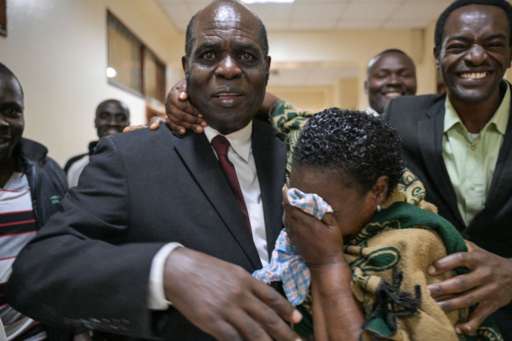
A self-proclaimed preacher, Gilbert Deya, who had been accused of abducting five children, has been acquitted by a court in Kenya.
Prosecutors had alleged that Deya used the children to support his claim of being able to assist infertile couples in conceiving babies through prayer.
However, the magistrate ruled that the prosecution had not presented sufficient evidence to support the charges.
Deya had resided in the United Kingdom for many years, where he established several Pentecostal churches. Following a lengthy legal battle, he was extradited to Kenya in 2017 to face the charges.
Notably, over a decade ago, Deya’s former wife, Mary Deya, was convicted and sentenced to three years in prison for stealing a baby from a Nairobi hospital and falsely claiming to have given birth to the child.
More than a decade ago his then-wife Mary Deya was given a three-year sentence for stealing a baby from a Nairobi hospital and pretending she had given birth to the child.
The International Justice Mission (IJM) office in Ghana has issued a response following the release of a documentary by BBC Africa Eye.
The documentary alleges that certain Ghanaian children have been removed from their homes in an operation supported by a prominent anti-slavery organization.
Published on Monday, July 10, 2023, the investigative report by BBC Africa Eye made these claims.
According to IJM, the BBC’s allegations are “incredibly concerning”.
“We conducted a detailed internal investigation into the BBC’s claims. We will take on board any refinements to our processes, but – crucially – the findings revealed material inaccuracies in the BBC’s allegations, a statement from IJM noted.
In the ‘Hilltop’ case referred to by the BBC, IJM said it was fully transparent with police, providing them with the facts of the case, including that there was one likely case of child trafficking and three that were not clear (including Fatima’s).
The police are said to have conducted their own investigations determining there was sufficient evidence before proceeding with the operation and – following information gathered on the operation – police filed trafficking charges against the suspects.
“In this case, the Department of Social Welfare (DSW) determined that the three girls were not safe with their grandmother. Families were told by police what was happening and where the children were being taken. The IJM team who were supporting the authorities on the operation did not witness the police using guns in the manner described by BBC,” the statement added.
According to the statement, DSW decided to place the children with other family members in a different area where they were able to go to school.
“IJM Ghana in no way misled the authorities on the facts of this case. Protecting children’s welfare is at the core of IJM’s work in Ghana and we’re always looking to evaluate any ways to improve policies and practices,” portions of the statement further alluded.
In relation to “Operation Freedom”, the BBC claimed that Ms. Mawusi did not know the whereabouts of her children after they were removed by the authorities.
This is not accurate, according to IJM, as the institution in partnership with government social workers, facilitated and supervised phone communication between Ms. Mawusi and her children while she served her term, to assure her of the children’s safety and whereabouts.
IJM and DSW say they provided economic support in the form of business start- up equipment to the family to help ensure a safe return for the children.
Upon monitoring the home to ensure that Mawusi’s sister Mavis was thriving economically with her business, DSW reintegrated the children with her.
A recent investigation by BBC Africa Eye has raised concerns about the practices of the US-based anti-human trafficking organization, International Justice Mission (IJM), in Ghana. The documentary titled “The Night They Came for Our Children” alleges that IJM may be involved in falsely separating children from their families as part of their operations.
According to the BBC investigation, there were two specific cases where IJM collaborated with the Ghana Police Service and the social service department in anti-trafficking operations. However, the documentary claims that there was little to no evidence of trafficking in both cases. Despite this, children were taken away from their homes, and their relatives faced prosecution, leading to some of them being imprisoned.
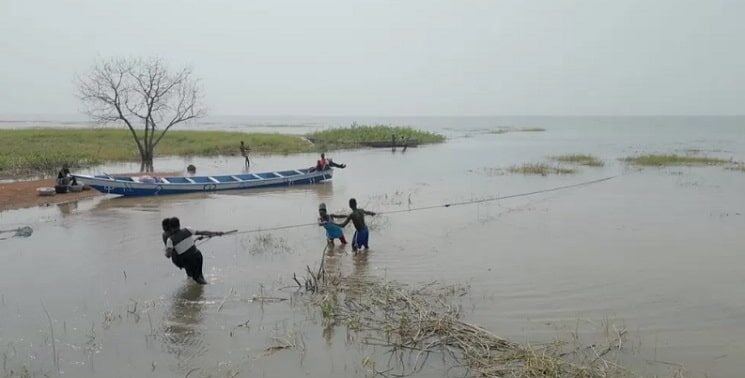
One operation took place in Mogyigna, a community in Northern Ghana, in September 2022. During the operation, four children were forcibly removed from their beds, and two of their uncles were arrested at gunpoint by the police. The children’s grandmother was left with unanswered questions. The BBC investigation suggests that the aggressive nature of the operation was fueled by a target-driven culture within IJM.
The documentary uncovered internal messages within IJM that indicated a different conclusion had been drawn by the charity compared to what was communicated to the police and social services. A legal officer within IJM noted in a message that there were “no elements of trafficking” in the case of one of the children, named Fatima, and two of the other children taken from Mogyigna. However, the organization proceeded with the belief that all four children, aged between five and 11, were at risk of being used for child labor.
The children were separated from their families for four months before an investigation by Ghanaian social services concluded that they had not been trafficked. The children were eventually reunited with their families. Another case highlighted by the BBC investigation involved the removal of a boy and his sibling from their family in 2019, which resulted in their mother, Mawusi Amlade, being sentenced to five years in prison for child trafficking. Her conviction was later overturned after intervention from another US NGO, the Sudreau Global Justice Institute.
The documentary also includes conversations with IJM staff members, where they discuss the pressure to achieve a certain number of rescues and prosecutions each year. The undercover reporter was told that staff members could be denied pay raises or face the risk of dismissal if they did not meet these targets. IJM has denied the allegations of practicing a target-driven culture and maintains that its approach prioritizes the welfare of the child.
The investigation raises significant concerns about the procedures and decision-making processes of IJM in Ghana. The allegations of unjustly separating children from their families and the potential impact on innocent individuals who were prosecuted are deeply troubling. The documentary calls into question the accountability and effectiveness of anti-trafficking operations carried out by IJM and highlights the importance of thorough scrutiny and oversight in such sensitive and complex endeavors.
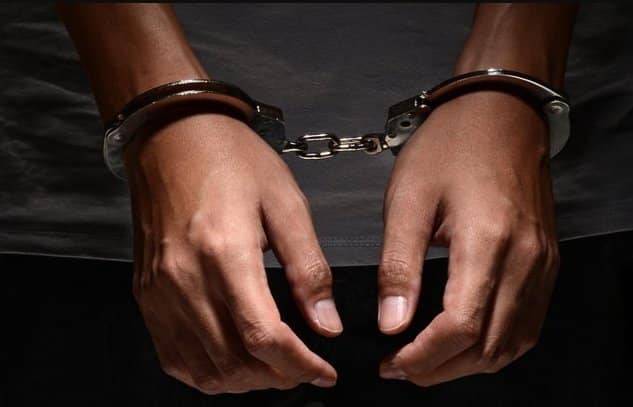
A 35-year-old woman has been arrested for alleged child trafficking at Biriwa in the Mfantseman Municipality of the Central Region.
Information gathered by Kasapa News Yaw Boagyan indicates that the suspect believed to be a sex worker who lives in Accra went to Bankyea in the Secondi Takoradi Metropolis in the Western Region for the Child.
The victim, Abigail, who is fifteen years and a Junior High School student in an interview with Kasapa News Yaw Boagyan said, she was home when the suspect came and told her that she has bought materials for her so she should follow her to the seamstress for measurement only for her to realise that she is in Cape Coast.
The victim later asked some of the passengers in a Toyota Hiace with registration number GE-3474-21 where she was and was told she was at Mankessim.
The passengers then handed the suspect together with the victim to the police who were on duty at the Police Checkpoint at Biriwa after the girl kept on crying uncontrollably that she wants to go back home.
The incident happened Wednesday, March 29, 2022, around 8:30 PM.
Meanwhile, when the aunty of the victim, Barbara at Secondi Takoradi was called on the phone, she said, she did not know the victim’s whereabouts and is looking for her.
The Aunty said she knows the suspect to be a prostitute who has lived in Nigeria for many years and is now into prostitution in Accra.
She suspects the suspect was sending her niece to Accra for Prostitution.
The suspect has been put in police custody to assist investigation.
Four infants from the neighbouring Democratic Republic of the Congo are allegedly being tried for trafficking by the four Croatian couples.
Following their rearrest last week while attempting to flee the country of Southern Africa, eight Croatians charged with child trafficking in Zambia were granted bail on Tuesday.
The four couples allegedly conspired with a Zambian immigration official on December 7 of last year to attempt to smuggle four kids out of the neighbouring Democratic Republic of the Congo.
The group claimed that they had legally adopted the one- to three-year-olds, but Zambian authorities have charged them with trafficking in children.
The prosecution had opposed the bail application, arguing that the eight were flight risks.
But magistrate Jennipher Bwalya said nothing excluded them from seeking bail if all conditions were met.
“I am inclined to grant the application as there is nothing in the law that stops foreigners from being granted bail,” Bwalya said on Tuesday in the northern city of Ndola, 300 kilometres (180 miles) north of the capital Lusaka.
They were ordered to pay 20,000 kwacha (about $1,000) each in bail fees and offer two sureties from reputable organisations.
The trial is set to commence on March 1. Nothing has been said in court about the whereabouts or status of the children.
The Croatians facing charges include Zoran Subosic, 52, a guitarist in a well-known band Hladno Pivo, or Cold Beer, Immovic Subosic, 41, an administrator, Damir Magic, 44, an electrical technician, Nadic Magic, 45, a technician, Ladislav Persic, 42, a medical doctor, Aleksandra Persic, 43, a hair salon attendant, Noah Kraljevic, 40, a programme director, and Uvona Kraljevic, 36, a dog handler. Zambian immigration official Gloria Sakulenga, 36, is also facing the charges.
The case has sparked a fierce public debate in Croatia and thrust international adoption into the spotlight in the Balkan nation, where potential adopters vastly outnumber eligible children.
State Commissioner of Police, Friday Eboka, said investigations revealed that some had been abducted years ago, including a nine-year-old boy who had been taken from a market in 2020.
He said some of the children had recounted to the police their experiences of torture and mistreatment.
He said a further probe into the incident was ongoing with a view to arresting other suspects linked to the crimes.
Lu Ke, a Chinese national behind racist videos involving Malawian children has been charged with five counts of child trafficking by a court in the country.
He was extradited over the weekend to Malawi from neighbouring Zambia after he fled in the wake of a BBC documentary that exposed his racist trade.
Lu Ke was a Malawi resident when he was exposed by BBC Africa Eye, which reported he had used local children to film personalised greetings videos, some of which included racist content, the BBC Africa LIVE page reported.
The videos could be bought for up to $70 (£55) on Chinese social media and internet platforms. Mr Ke has denied making derogatory videos, the report added.
The Chinese man has since been denied bail by a judge citing safety concerns and fear that he was a flight risk.
Kenya’s director of public prosecution has vowed to take action after a BBC Africa Eye report revealed the organised smuggling of disabled children from Tanzania to Kenya for profit.
“I am actually ashamed and not trying to give an excuse, I promise to pick it up myself but the best thing is for us to have a conversation as East Africans”, Noordin Haji said on Tuesday.
“Lobbying is going to be one of the best things, let us engage politicians, civil servants – if we can agree and have a focus, I can assure you I will be part of that and also include my colleagues in the criminal justice system,” he added.
Tanzania meanwhile has also spoken of its “disappointment” at the BBC’s findings, and says it is already “working closely” with Kenya to tackle the scourge of child trafficking.
Many victims in these cases are taken from their parents with the promise of a better life. But once in Nairobi they are forced to beg on the streets with the proceeds going to their captors.