In what is believed to be the largest mass grave discovered since Sudan was plunged into war, numerous bodies have been found, allegedly victims of a Sudanese paramilitary group.
According to the United Nations Human Rights Office, there is “credible information” indicating that last month, 87 bodies, including women and children, were buried in a shallow grave in West Darfur.
The victims include members of the Masalit tribe, an ethnic African group that has become a target in the escalating conflict between rival military factions, resulting in ethnically motivated massacres.
These revelations come as Egypt initiates a new mediation effort between the warring factions. Previous attempts at truces and ceasefires have proven unsuccessful, leading to ongoing violence.
Since clashes between Sudan’s army and the Rapid Support Forces (RSF) paramilitary group erupted in the capital city of Khartoum in April, the conflict has spread to the fragile regions of Darfur and Kordofan.
History repeating itself
More than three million people have left their homes, while basic services such as healthcare have broken down. The UN said the first 37 bodies were buried in the grave outside Geneina on June 20. Another 50 were dumped the following day.
Darfur has become a centre for the conflict as the violence has spread, with RSF troops and allied Arab militias accused of rampaging through the area and attacking African ethnic groups.
The killings have raised fears of a repeat of mass killings two decades ago, when the Sudanese government was accused of genocide crushing a rebellion by mainly non-Arab groups in Darfur, killing some 300,000 people.
The RSF denied involvement in the mass grave. A senior official in the force told Reuters it “completely denies any connection to the events in West Darfur as we are not party to it, and we did not get involved in a conflict as the conflict is a tribal one”.
Volker Turk, UN High Commissioner for Human Rights, said: “I condemn in the strongest terms the killing of civilians and hors de combat individuals, and I am further appalled by the callous and disrespectful way the dead, along with their families and communities, were treated.”
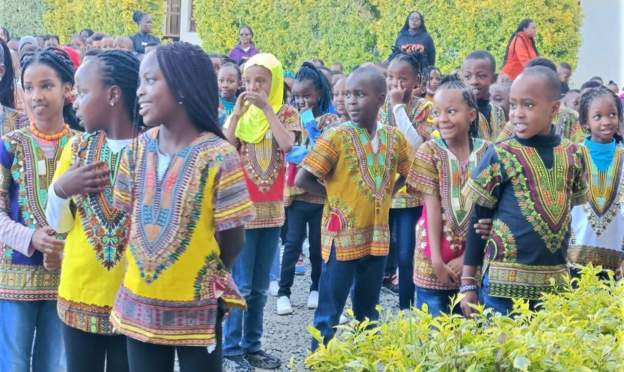
Education in many parts of Africa predominantly relies on post-colonial Eurocentric or American curricula, which offer limited insights into African history and culture. Moreover, the existing curriculum often presents a distorted view of African heritage.
However, there is a noteworthy exception in Kenya known as Children in Freedom School. This institution takes a distinct approach to learning by adopting an Afrocentric curriculum. Its primary goal is to guide children in embracing their identities and embracing their African heritage.
“We’ll tell them, for example, about Mali emperor Mansa Musa who has been dead for roughly 700 or 800 years and yet is still the richest man that has ever lived,” said founder Dr Utheri Kanayo.
The idea for the school was sparked when Dr Kanayo decided to focus on the education of children after a brief teaching stint, at the University of Cambridge in the UK, saw her base her educational research on the African continent.
In 2013, Dr Kanayo and her husband quit their jobs in the UK and moved to Kenya.
The school originally started as a charity but slowly morphed into a scholarship and mentorship programme. Now, they focus on teaching African history, culture and literature alongside basic education like mathematics.
“If we can start teaching children from when they are small, then we don’t have to decolonize minds in the future,” Dr Kanayo.
They were recently shortlisted for the World’s Best School Prize, putting them among the top 10 schools worldwide in the Overcoming Adversity category.
Womanizing and rapid unplanned child birth has been cited as part of reasons majority of Ghanaian businesses fail, according to the founder of the A&C mall Andrew Asamoah.
He claims that because business owners typically don’t plan well, their companies don’t survive their deaths.
Mr. Asamoah asserted that having children with numerous women frequently jeopardizes the viability of businesses.
Speaking in an interview on Odana TV, he said: “Because we don’t plan, you must have a vision, you must have a plan. You go some places, someone is a top-class tailor in England, and he makes sure that his son who went to a top-class school comes in, it’s planning.”
“We don’t plan. And then you are doing business, and you start making money then you start doing women, too many women, having too many children then when you die it becomes a contention. I’ve seen it so much.”
Business owners should make sure that their families or other relatives are actively involved in their companies, advised Dr. Asamoah.
Adding that, this will keep businesses should they pass away or become physically unable to manage the affairs of the organization.
In the South African city of Johannesburg, two children, aged five and seven, perished in a fire that started in a residential building where they had been left unattended and locked inside an apartment.
The blaze, in the inner city area of Hillbrow, began on Wednesday afternoon.
A reporter from South Africa’s Times Live has recently tweeted a video from the scene filmed after firefighters arrived:
Squatters often move into old and abandoned buildings in the area – which colloquially are said to have been “hijacked”.
Mayor Kabelo Gwamanda visited the scene later in the evening, commending firefighters for their efforts and saying Hillbrow’s old buildings did not meet health and safety standards.
“This particular property has been at the centre of the City [of Johannesburg’s] efforts to reclaim hijacked buildings from illegal occupants and crime syndicates,” New24 quoted him as saying.
The city’s emergency services say the children appear to have died from smoke inhalation and their bodies were later found “burnt beyond recognition”.
The cause of the fire is not yet known and the police are conducting investigations.
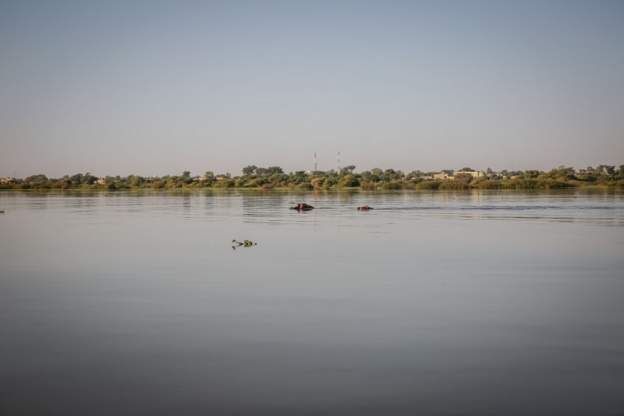
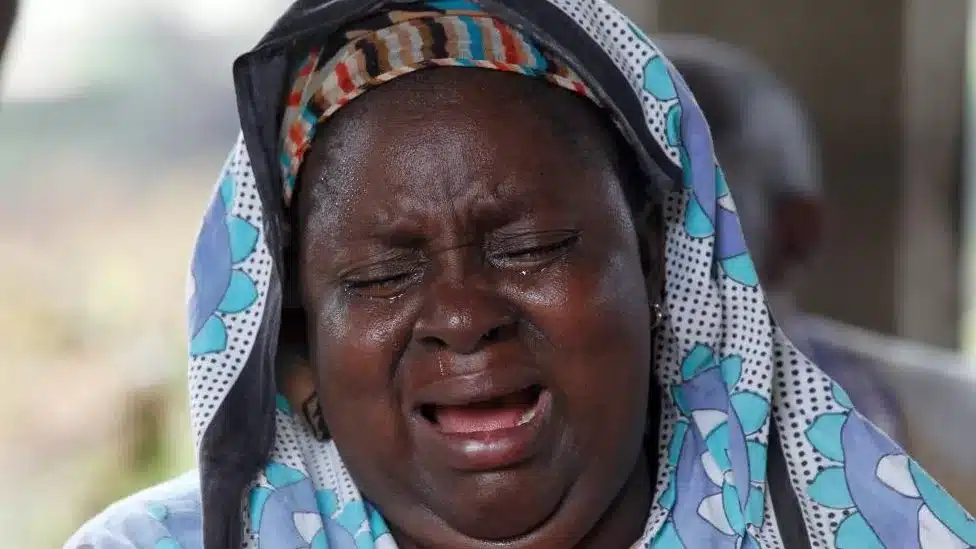
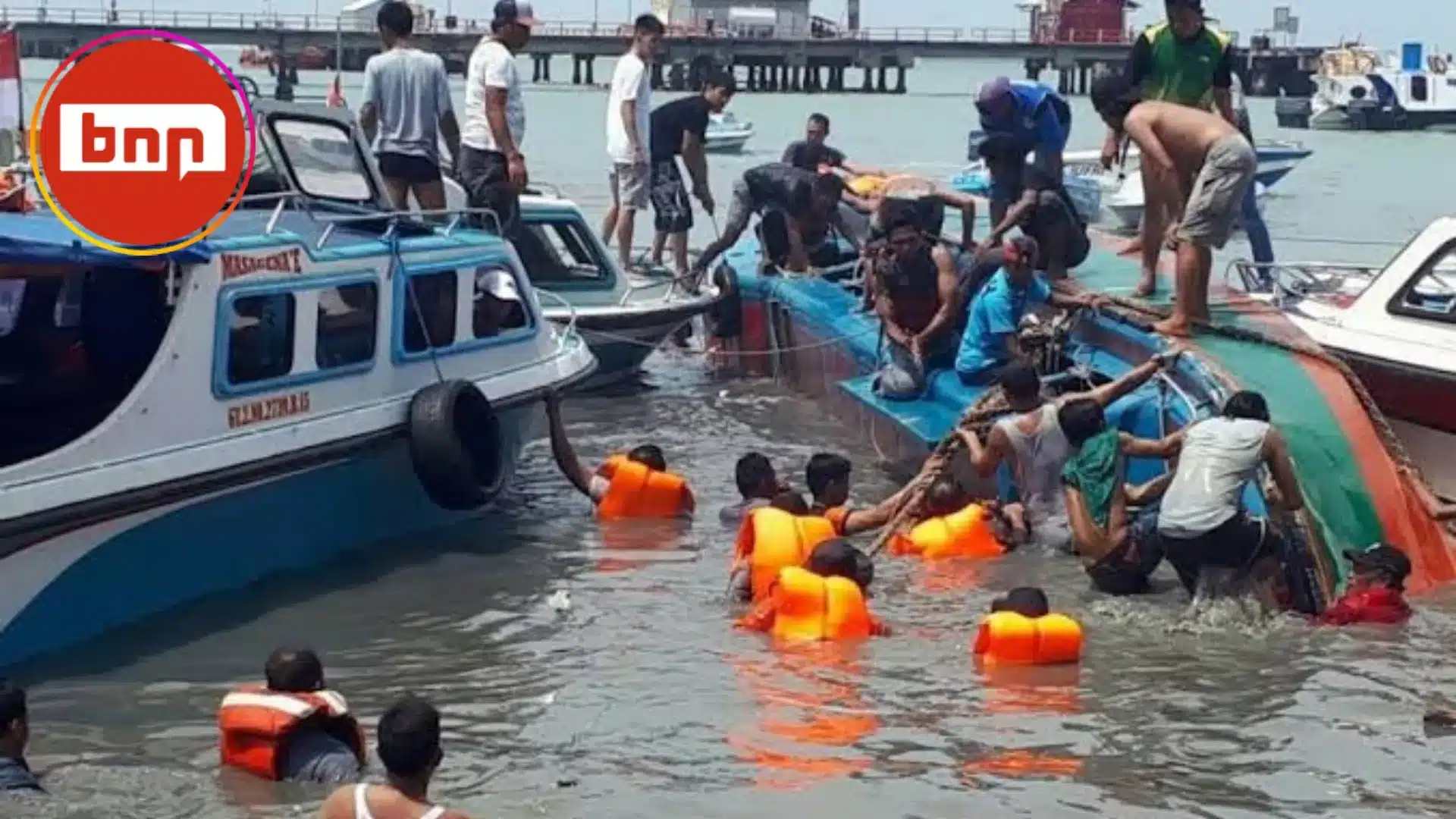
A witness of the boat tragedy in the River Niger has said that killed 106 people and many ladies lost their life trying to save their children.
The boat capsized after part of the vessel collapsed, causing water to flood the boat, police said.
Figures provided by local rescuers indicate that 144 people survived the boat accident.
One village in the Patigi local government area of Kwara state, where the incident occurred, had the highest number of casualties. Locals there say 61 died, mostly women and children.
Mohammed Alhassan, a survivor, said the women would not leave their children and so they drowned together.
“My sister was with us on the boat,” he told the BBC. “She survived but her seven-year-old son died”.
Aisha Mohammed, another woman who lost her three grown daughters in the accident said the girls were soon to be married.
Other survivors also described how many fathers hung on to some of their children while those they could not bring to shore died.
Some young men were however able to swim to safety after the boat broke in half.
Safety is one of the major concerns raised as many people did not have life jackets. Overloaded boats are common and travellers often don’t take safety precautions.
A disclosure by the the Ghana Statistical Services (GSS) indicates that over 75,000 children in Ghana partake in economic activities.
According to the GSS, nearly 38000 of the children between 5 to 9 years who engage in economic activities, have never been to school.
The service, in Monthly Press Release for June 2023, added that the 2021 Population and Housing Census showed that in all 419,254 children aged 5 to 17 years in Ghana are engaged in economic activities.
“Children aged 5 to 17 years worked on average 29.2 hours in the seven days preceding Census Night. Children 15 to 17 years worked an average of 35.2 hours, children 10 to 14 years worked an average of 26.5 hours (about 5 hours per weekday), and children 5 to 9 years worked an average of 19.8 hours (about 4 hours per weekday).
“Children engaged as paid apprentices worked the highest number of hours on average (48.4), almost twice that of those engaged as contributing family workers who worked the lowest hours on average (25.0). Children in the service sector worked 36.8 hours on average, while those in the agricultural sector worked an average of 25.6 hours.
“Nationally, 153,773 children aged 5 to 17 years engaged in economic activity had never attended school. Out of this number, 37,963 children were 5 to 9 years. In all, 94,748 children aged 5 to 17 years engaged in economic activity were also attending school during the census,” parts of the release.
The GSS also stated that more than 80 per cent of children between the ages of 5 and 9 years in six out of the 16 regions in Ghana, including the Northern, North East, Upper West, Savanah and Upper East Region, engage in economic activities.
Four youngsters have been recovered alive after surviving an aircraft crash and weeks of survival in Colombia’s Amazon rainforest.
Colombia’s president said the rescue of the siblings, aged 13, nine, four and one, was “a joy for the whole country”.
The children’s mother and two pilots were killed when their light aircraft crashed in the jungle on 1 May.
The missing children became the focus of a huge rescue operation involving dozens of soldiers and local people.
President Gustavo Petro said finding the group was a “magical day”, adding: “They were alone, they themselves achieved an example of total survival which will remain in history.
“These children are today the children of peace and the children of Colombia.”
Mr Petro shared a photograph of several members of the military and Indigenous community caring for the siblings, who had been missing for 40 days. One of the rescuers held a bottle up to the mouth of the smallest child, while another fed one of the other children from a mug with a spoon.
A video shared by Colombia’s ministry of defence showed the children being air-lifted into a helicopter in the dark above the tall trees of the jungle.
Mr Petro said the siblings were receiving medical attention – and that he had spoken to their grandfather, who told him “the mother jungle returned them”.
The children have been flown to the nation’s capital Bogota, where ambulances have taken them to hospital for further medical treatment.
The Cessna 206 aircraft the children and their mother had been travelling on before the crash was flying from Araracuara, in Amazonas province, to San José del Guaviare, when it issued a mayday alert due to engine failure.
The bodies of the three adults were found at the crash site by the army, but it appeared that the children had escaped the wreckage and wandered into the rainforest to find help.
A massive search began and in May, rescuers recovered items left behind by the children, including a child’s drinking bottle, a pair of scissors, a hair tie and a makeshift shelter.
Small footprints were also discovered, which led search teams to believe the children were still alive in the rainforest, which is home to jaguars, snakes and other predators.
The children belong to the Huitoto indigenous group and members of their community hoped that their knowledge of fruits and jungle survival skills would give them a better chance of remaining alive.
Indigenous people joined the search and helicopters broadcast a message from the children’s grandmother, recorded in the Huitoto language, urging them to stop moving to make them easier to locate.
Colombia’s president came under criticism last month when a tweet published on his account mistakenly announced that the children had been found.
He erased the tweet the next day saying that the information – which his office had been given by Colombia’s child welfare agency – could not be confirmed.
The Chamber of Independent Power Producers (IPPs) has stated that unless the government accepts their requests to clear all outstanding debt, its members would shut down their facilities in three weeks.
The shutdown potentially could create a huge power shortfall as the IPPs control over 65% of the available thermal generation capacity in the country.
They are owed at least 1.4 billion dollars and government has so far been working around the clock to get them to agree to have these debts restructured.
The Chief Executive Officer of the Chamber, Elikplim Apetorgbor says members are struggling to keep their businesses afloat.
As a result, he reiterated that their June 30th ultimatum given to Child hanging from government truck angers the Dominican Republicans to settle its debt still holds.
According to him, the IPPs cannot stretch themselves beyond the June 30 deadline.
“Our conditions or severity of our situation is something that cannot be negotiated. We have done everything possible to manage the situation but it has gone beyond our control. So really, nothing has changed our ultimatum to government, that is the June 30th is still standing,” he said.
Touching on the International Monetary Fund (IMF) asking government to undertake an audit of the power plants to ensure it is actually paying the right amount, Mr. Apetorgbor suspects the move is a strategy to delay payment although they have the right to audit.
According to him, the issue with the delay is that “the consequences of any further delay cannot be averted if that is a strategy to delay payment to us.”
“We are open to any kind of audit. I can tell you that this thing has happened time and again – auditing of our invoices. Let me tell you it is just a strategy to buy time,” he said.
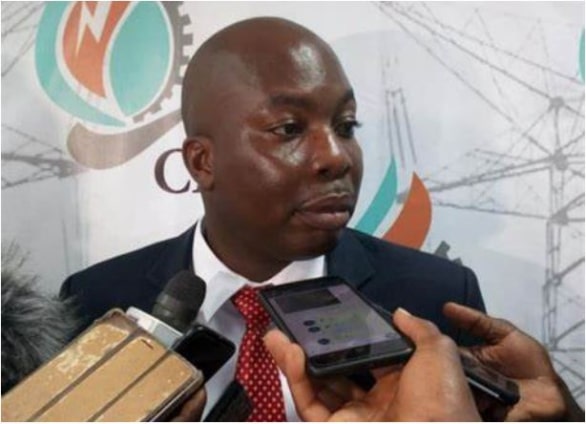
Meanwhile, the Electricity Company of Ghana is leading the talks with the IPPs. Managing Director Samuel Dubik Mahama insists an agreement will be reached.
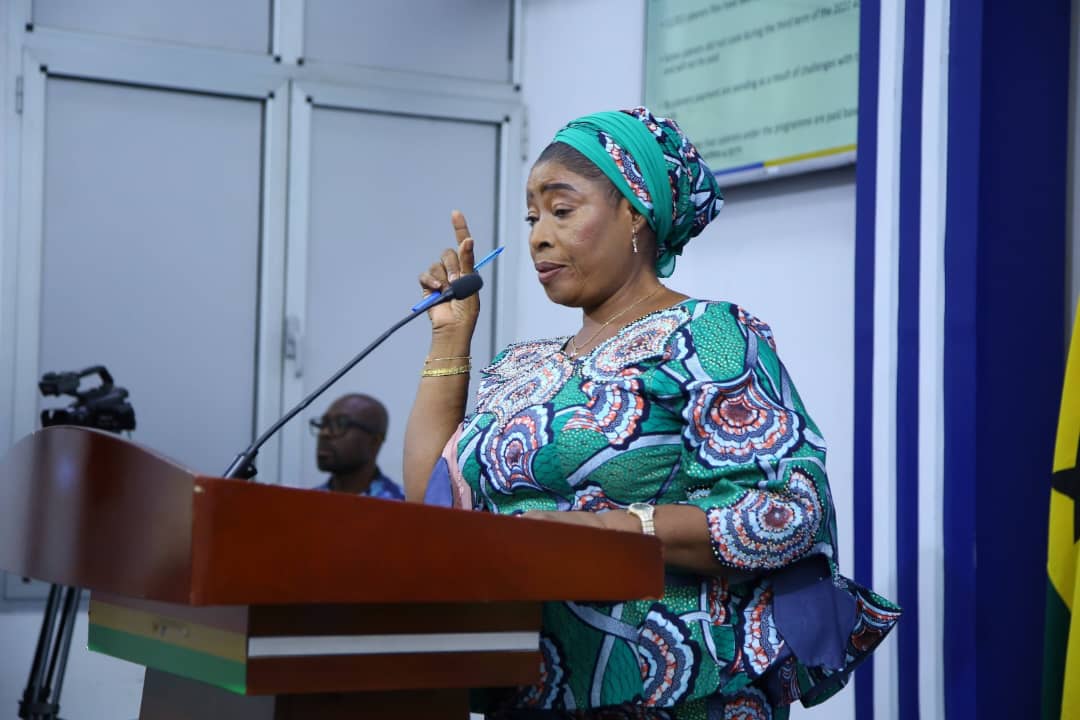
The Minister of Gender, Children, and Social Protection, Lariba Zuweira Abudu has reiterated the importance of refraining from giving money to child beggars.
The minister during a Minister’s Press Briefing at the Ministry of Information office on Sunday, June 4, 2023, emphasized that this action would discourage children from returning to the streets, where they often face dangerous and harsh conditions.
“If you don’t give them today and I don’t give them tomorrow, next week they will be forced to leave the streets and move away,” the minister said.
In recounting the measures put in place to reduce the number of child beggars on the streets, the minister added that the government repatriated about 400 foreign child beggars but they still find a way to return in their numbers. Hence, the only way will be to stop giving them money.
“We have done a lot to take them from the streets but somehow they find themselves back, we even repatriated 400 of them and engaged the embassies here but they find ways to come back so we have to stop giving money to minors on the streets because as adults I don’t see why we should be giving monies to six-year-olds on the streets,” Lariba said.
The minister addressed the public to provide updates on the progress and implementation of various initiatives, programs, and policies within the gender ministry.
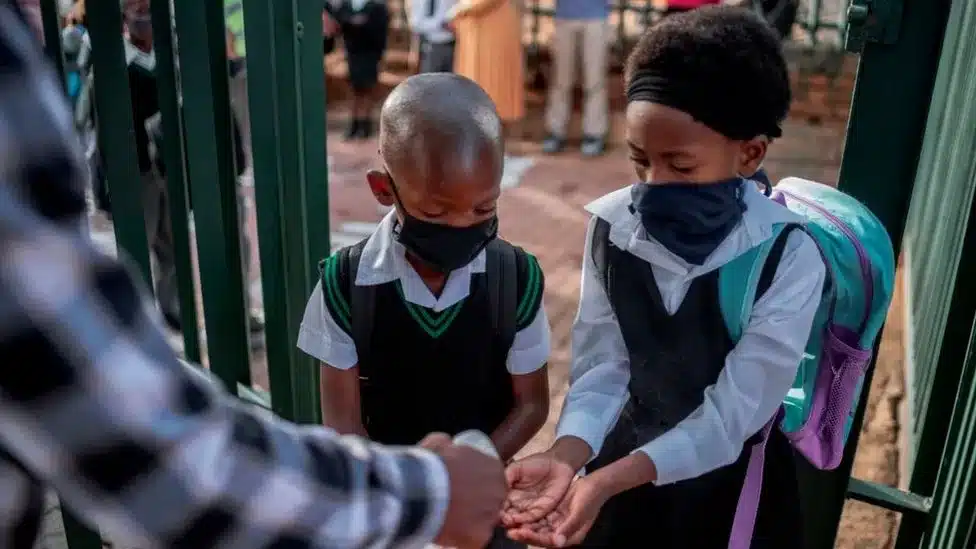
An international research has revealed that eight out of ten South African schoolchildren struggle to read by the age of ten.
South Africa ranked last out of 57 countries assessed in the Progress in International Reading Literacy Study, which tested the reading ability of 400,000 students globally in 2021.
Illiteracy among South African children rose from from 78% in 2016 to 81%.The country’s education minister blamed the results on school closures during the Covid-19 pandemic.
Describing the results as “disappointingly low”, Angie Motshekga also said the country’s education system was faced with significant historical challenges, including poverty, inequality and inadequate infrastructure.
In many primary schools “reading instruction often focuses solely on oral performance, neglecting reading comprehension and making sense of written words”, she added.
The study showed that 81% of South African children could not read for comprehension in any of the country’s 11 official languages.Alongside Morocco and Egypt, South Africa was one of only three African countries which participated in the assessments to monitor trends in literacy and reading comprehension of nine- and 10-year-olds.
Based on tests taken every five years at the end of the school year, the new study places countries in a global education league table.
Singapore secured top spot in the rankings with an average score of 587, while South Africa ranked last on 288 points – below second-last Egypt’s average of 378.
The scores are benchmarked against an international average of 500.The study also showed that overall, girls were ahead of boys in their reading achievement in nearly all of the assessed countries, but the gender gap has narrowed in the most recent testing round.
South Africa’s struggles with its education system are longstanding, with significant inequality between black and white students a consequence of the segregation of children under apartheid.
Education is one the single biggest budget expenses for the government, which can lead to disappointment over poor performance in studies like this.A lack of suitable reading materials and inadequate infrastructure in schools, often things like toilets, have contributed to the crisis.
Recent reports has revealed that children were the first to starve to death during the final days of a Christian doomsday cult in Kenya.
Police investigating an apparent mass suicide have so far exhumed 201 bodies in a forest in the nation’s southeast.
A former deputy preacher of the cult told the New York Times that children were killed first, ordered “to fast in the sun so they would die faster.”
Women and men were next to follow the suicide plan, Titus Katana said.
Mr Katana – who is helping police with the investigation – also described to the Sunday Times the alleged brutal treatment of the children, saying they were shut in huts for five days without food or water.
“Then they wrapped them in blankets and buried them, even the ones still breathing,” he was quoted as saying.
It is alleged that the cult followers were told they would reach heaven faster if they starved to death.
Official autopsies of some of the bodies in the expansive Shakahola farm, near the coastal town of Malindi, found signs of starvation, suffocation and beatings.
More than 600 people who are reported to be members of the doomsday cult allegedly led by Pastor Paul Mackenzie are still missing.
Pastor Mackenzie, who is currently in police custody, said he closed down his Good News International Church four years ago after nearly two decades of operation.
But the BBC had uncovered hundreds of his sermons still available online, some of which appeared to have been recorded after this date.
In an interview with Kenya’s Daily Nation newspaper a few weeks ago, Pastor Mackenzie also denied he had forced his followers to starve themselves.
But Pastor Mackenzie preached against education, saying that it was satanic, after receiving a “revelation from God”, Mr Katana told the New York Times.
Explaining his reasoning for leaving the cult, Mr Katana, who is also assisting in a police investigation against the pastor, said his teachings had become too “strange”.
Pastor Mackenzie also encouraged mothers to avoid seeking medical attention during childbirth and not to vaccinate their children.
Much of Pastor Mackenzie’s preaching relates to the fulfilment of Biblical prophecies about Judgement Day.
The church’s online content also features posts about the end of the world, impending doom and the supposed dangers of science.
And there are frequent warnings of an omnipotent satanic force that has supposedly infiltrated the highest echelons of power around the world.
Nine pupils died after the canoe carrying them from school collapsed in a canal last Wednesday afternoon in Faanaa-Bortianor in the Ga South Municipality.
Eight of the bodies of the children aged between one-and-half and 12 years were recovered at about 6 p.m. that same day of the incident, while the last one, a female named only as Victoria, was retrieved yesterday at about 11:30 a.m.
The deceased — three males and six females — were part of a group of 12 children who were on board the canoe when it capsized.
However, the remaining three, including the paddler of the canoe, survived the disaster.
Residency
The children, who lived with their parents and guardians at Faanaa, Bortianor (in Ga South), are pupils of a private school at Wiaboman behind Pambros (in Weija-Gbawe).
The children were crossing a canal which separates Faanaa from Wiaboman, after school when the incident occurred.
The Weija-Gbawe Municipal Director of the National Disaster Management Organisation (NADMO), Emmanuel Adu-Boahen, who confirmed the incident to the Daily Graphic yesterday, said the victims had been identified and the bodies had been deposited at the Korle Bu Teaching Hospital Morgue for further investigations.
Identification, devastation
Mr Adu-Boahen also indicated that the Weija-Gbawe Municipal Chief Executive, Patrick Kumor; the Member of Parliament for Weija-Gbawe, Tina Mensah; the Ga South Municipal Chief Executive, Joseph Yarni Stephen; the Weija Polie Commander, Freeman Kumashie, and NADMO officials had also gone to the scene of the disaster and visited the affected families to commiserate with them.
“We just returned from the scene and so we are waiting for the next line of action from the MCE,” he said.
The Assemblyman for the Bortianor Electoral Area, Dan Bright Abayateye, described the situation as devastating and heartbreaking, adding that the incident was something that had never happened in the area.
Following the incident, he said, the people in the community were devastated.
Survivor
One of the three survivors, Enyonam Ekpe, among other things, alleged that the paddler, a 12-year-old, ignored suggestions for the number of persons on board the canoe to be divided since it was overloaded.
She said they did not have a choice but to join it since that was the only one available.
She explained that shortly after the canoe had moved, they were hit by a tidal wave causing it to capsize.
The police have since commenced investigations into the matter.
In response to “exactions” by armed men in the areas of the Tillabéri region (west), where skirmishes between communities have left several dead, more than 13,000 women and children have evacuated the islands of the Niger River, according to a report released on Tuesday by the Nigerien public radio station Voix du Sahel.
“In Ayorou, it’s desolation (…) More than 13,000 women and children from 46 islands (in the Niger River) have fled the abuses of armed bandits” to take refuge in this town located 200 km from Niamey, according to the radio.
The communes of Dessa and Kandadji, where the site of the country’s first hydroelectric dam is located, “have been facing abuses” committed by “armed bandits” (an expression used in Niger to designate suspected jihadists ) for several days, added the radio.
During the night from Saturday to Sunday, four civilians were killed and another injured in an attack in Dessa, she said.
A dozen parliamentarians from the Tillabéri region went to the three localities on Monday “to provide support and comfort” to the “upset population” and “calm people’s minds”, according to the Voice of the Sahel. One of the deputies, Hassoumi Tahirou Mayaki , described “very bruised populations” by this violence.
According to local sources, “violent clashes” had opposed in late April and early May sedentary Djerma and nomadic Fulani herders in villages and hamlets bordering the Niger River, causing ” several deaths, injuries” and “many displaced” towards Ayorou.
A local journalist explained that these clashes followed “several assassinations” of villagers by suspected jihadists who also steal cattle and “demand taxes”.
Elected officials from Ayorou and Dessa confirmed the clashes, without establishing a precise toll of the victims. “Before the clashes, armed men on motorbikes issued an ultimatum to sedentary people to leave their homes,” said the elected official of Ayorou.
The Nigerien government has not confirmed this community violence in these areas, where cohabitation is generally peaceful. The Tillabéri region, with an area of 100,000 km2, is located in the so-called “three borders” zone between Niger, Burkina Faso and Mali.
Several ethnic groups – Djerma, Fulani, Tuareg and Hausa – live in this region. Niger has launched several large-scale operations there against the jihadists, with the recent support, within the framework of a “combat partnership” , of French soldiers.
Tragically, 15 children have drowned and 25 others went missing after an overcrowded boat capsized on the Shagari river in Nigeria’s Sokoto state.
The boat was carrying children who were on their way to collect firewood in the bush on Tuesday morning. According to Aliyu Abubakar, the political administrator of Shagari district, the incident happened on the other side of the river.
Eyewitness accounts reveal that the boat was overloaded with over 40 girls onboard, leading to the capsizing of the boat. Although 15 corpses have been recovered, local divers are still searching for the other victims.
Local authorities confirm the incident, prepare for burials
The chairman of Shagari Local Government Area, Aliyu Abubakar, confirmed the incident and expressed deep condolences to the families of the victims. He stated that the bodies of the victims have been recovered and are being prepared for burial.
At the time of filing this report, local divers and authorities have not confirmed any survivors. The boat, which was carrying over 40 girls, resulted in the recovery of only 15 dead bodies with 25 still missing. The divers are currently conducting search and rescue operations to locate the missing girls.
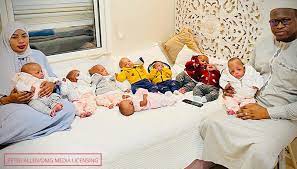
The nonuplets Fatouma, Kadidia, Hawa, Adama, Oumou, Bah, Mohammed, Oumar, and Elhadji, who two years ago broke the Guinness World Record for the most live births at once, celebrated their birthdays at home in Mali on Saturday as they clock 2.
Relatives, friends and even the paediatrician of the nonuplets attended the celebration.
The children chose “Miraculous” as the theme of their second birthday, “it’s their favourite” said their mother, Hailma Cisse.
A poster featuring a picture from the cartoon “Miraculous” and the name of the children welcomed guests to the party inside the family’s house, as well as decorative little boxes with pictures of the different characters.
“I thank God for allowing me to celebrate my children’s two-year birthdays at home, in Mali,” said 27-year-old Cisse.
Cisse was expecting seven babies, and due to the complexity and special care needed for that exceptional multiple pregnancy, the doctors in Mali – under government orders – decided to transfer her to a clinic in Casablanca, Morocco, where on May 5th 2021 the young mother gave birth to nine instead of seven kids: five girls and four boys.
On Saturday, it seemed impossible to keep the nine sisters and brothers together for a family picture, someone was always missing, even during the cutting of the cake.
Cisse and her husband Abdel Kader Arby, already had a 4-year-old daughter, and never thought the family was going to change so much and so quickly.
“Usually, the organisation of the birthday is for only one child, but in this case, we end up with nine children,” said Arby with a smile.
The parents of the nonuplets receive aid from their families, from the Malian government and from an NGO to provide food, education and general care of the kids.
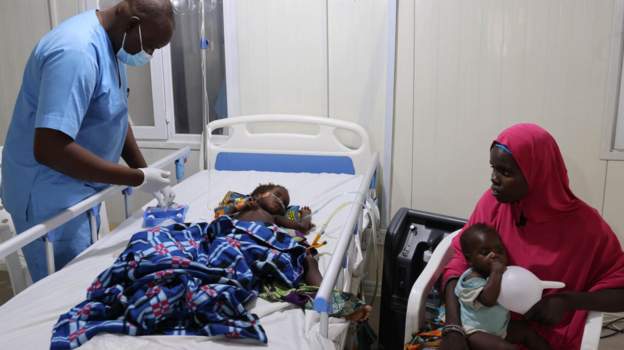
Médecins Sans Frontières (MSF) has revealed that feeding centers in Maiduguri, in northeastern Nigeria, are receiving an unprecedented number of malnourished children in need of life-saving care.
According to the medical organization, approximately 1,300 kids have been admitted to intensive care units since the year began, which is the most for this time period ever seen in Borno state.
Per the report, by April, the number of severely malnourished youngsters admitted each week had doubled from January’s average of 75.
The living conditions in some of the children’s previous detention camps—which are run by armed opposition groups—are quite terrible.
MSF is warning of an impending catastrophe if urgent action is not taken.
A currency crisis and a fire which destroyed the main market in Maiduguri have made things worse.
An ongoing insurgency in the region by the Islamist militant group, Boko Haram, has left thousands dead, forced many more from their homes and resulted in a humanitarian crisis.
Children in Botswana are subjected to the worst forms of child labour, including in commercial sexual exploitation, sometimes as a result of human trafficking, and forced labour in cattle herding and domestic service, according to the latest Botswana Child Labour and Forced Labour Reports.
The report is a US Department of State initiative. “Research indicates that some children residing in the Dukwi Refugee Camp are subjected to commercial sexual exploitation as they await decisions regarding their refugee status,” states the report.
The report seems to be corroborated by Botswana Police Service statistics of offences involving children (2020-2022). According to official figures from Botswana Police Service issued on 6th April 2023, between 2020 and 2022, the Botswana Police Service (BPS) said it dealt with more than 2 300 abuse cases of children below the age of 15.
‘The police have, in recent times, been inundated with cases of child negligence and ill-treatment by their parents. In worst scenarios, children were left without proper arrangement, in the custody of relatives, guardians or institutions for a considerable period of time,” the BPS said. The Police warned that “As a result of the increase in such cases, we would like to caution members of the public that we intend to intensify operations on defaulters of this crime” adding that it commits to fully upholding children’s rights and ensuring their protection.”
The US Department of State report says key gaps remain in the country’s legal framework, including the lack of a minimum age for compulsory education and a list of hazardous work activities for children.
The report says legal protections for children from commercial sexual exploitation do not meet international standards because the use of children for prostitution is not criminally prohibited.
It says some parents in poor rural communities send their children to work as domestic servants in cities, or at farms or cattle posts, increasing their vulnerability to forced labour. According to the report, children, particularly children from the San minority ethnic group, work on commercial farms in the Ghanzi Region, tending to and herding cattle.
The report says on some farms, employers may withhold food rations unless children perform work.
“Children working in domestic service settings are exposed to various conditions that are indicative of forced labor including confinement, denial of promised educational opportunities and basic necessities, and physical, verbal, and sexual abuse,” the report says.
It says labor inspectors are not authorized to inspect domestic households, and some labor inspectors have faced obstacles in accessing large farms, such as locked gates or denial of entry, inhibiting their ability to identify underage workers.
The report says during the reporting period (2020-2021), Botswana courts convicted a Zimbabwean woman for bringing a 16 year-old child into Botswana for forced domestic servitude. The court imposed a 10-year sentence, marking the first conviction and imposed penalty for human trafficking in 2 years.
The report says although the government convicted four other individuals and initiated two new prosecutions under the trafficking in persons law during the reporting period, the ages of the victims and whether the cases pertained to the worst forms of child labor are unknown.
The report says research indicates that the government is not actively supporting implementation of key national policies for the prevention and elimination of child labor. (
“Child labor elimination and prevention strategies are not included in relevant national policies, including the Education and Training Sector Strategic Plan and the Botswana National Youth Policy,” the report says.
It says there are no government-run shelters that cater to child survivors of human trafficking. “While the government funds and contracts with NGO-run shelters that serve this population, it does not directly provide such services,” the report says.
It says An NGO reported that established shelters lack resources to attend to the needs of older children.
“Although Botswana has programs that target child labor, the design and implementation of these programs are insufficient to fully address the scope of the problem, especially in commercial sexual exploitation, cattle herding, and domestic work,” states the report.
A lady, Bogpoka Banga is said to have murdered her 39-year-old husband, Agyei Abanga in their bedroom at Logre, Nabdam District,Upper East Region.
A report by the Chronicles newspaper on April 18, 2023, stated that the deceased’s body was found by family members after his first child (daughter), who escaped from her mother, informed her grandmother and the rest of the family about the issue.
The culprit is said to have run to nearbyWalewalewith three of their children.
The newspaper reported that the daughter informed the extended family that her father was hit with an object, locked up and asked to leave for Walewale.
Bawa Dagal-Kurug, head of the bereaved family, said, shortly after they received the news, they searched for her whereabouts.
He gave an account of the issue to the newspaper.
“He lives in his house with his wife alone, though he used to live in the extended family with us. He still has a room here. His name is Agyei, a contractor. He has four kids; the eldest among them came to the extended family to report that their mother woke them up early at dawn with them (the kids). The kids told her grandmother that she has seen the mother lock up their father in a room, with blood all over the place,” he said.
He added that when she is found, she will be made to face justice for the crime committed.
The police command in the Nabdam district, Inspector Amado Zakaria, said his outfit will work hand-in-hand with the family to ensure the culprit is arrested.
A woman in a video cited on social media has shared a painful story of a dad who recently learned that four of his five children are not biologically his.
The married couple, whose oldest child is 17 years old, had been together for a long.
He had worked hard to provide for them and had been actively involved in their lives.
However, things started to unravel during the family’s recent visit to the hospital.
An incident at the hospital when one of them was sick prompted him to carry out a DNA test on the children without his wife’s knowledge.
It was gathered that one of the five children was severely ill and needed a blood transfusion and been worried after several unsuccessful attempts, he decided to speak to the doctor who advised him to do a DNA test for the child to ascertain the paternity.
The man then decided to do the paternity test for all five of his children, and the results were shocking. Four of his five children, including his 17-year-old daughter, are not his biological offsprings.
The woman who narrated the story in a video she posted on TikTok said the man was devastated, feeling betrayed and hurt by the woman he had loved and trusted for about twenty years.
It turned out that only the last child, who is just 7 months old, is his child among the 5 children
“For the millions living amidst the chaos of armed conflicts, especially women and children, every step can put them in danger’s path, UN Secretary-General António Guterres said, in a message for the International Day for Mine Awareness and Assistance in Mine Action, observed on 4 April.
Why mine action cannot wait
The international day’s theme – Mine Action Cannot Wait – highlights decades of contamination in Cambodia, the Lao People’s Democratic Republic (Laos) and Viet Nam, while drawing attention to recent explosive ordnance contamination.
“Even after the fighting stops, conflicts often leave behind a terrifying legacy: landmines and explosive ordnance that litter communities,” Mr. Guterres said.
“Peace brings no assurance of safety when roads and fields are mined, when unexploded ordnance threatens the return of displaced populations, and when children find and play with shiny objects that explode,” he said.
Taking action
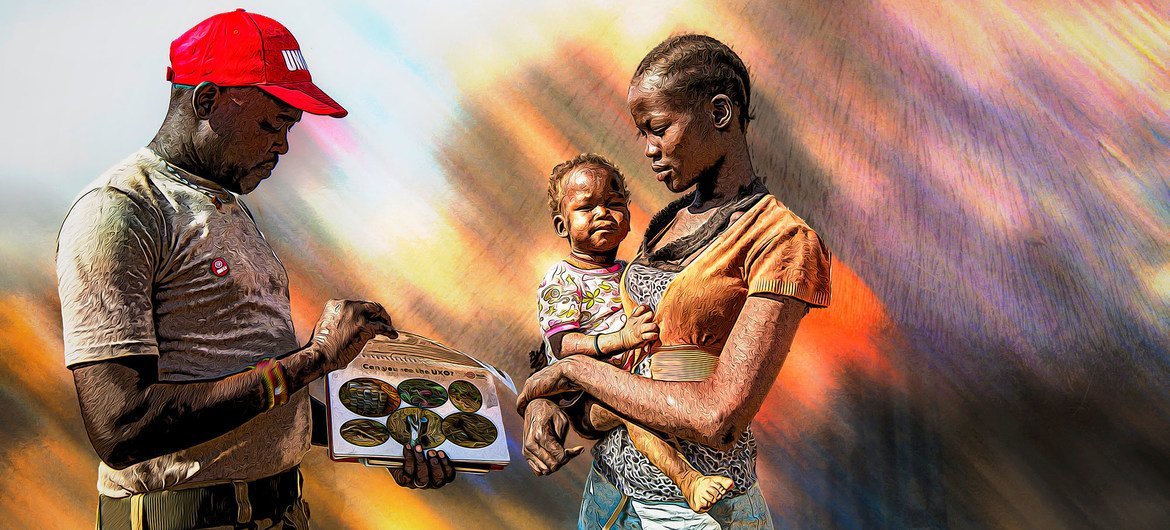
The UN Mine Action Service (UNMAS) brings partners together to remove these deadly weapons, support national authorities, and ensure safe access to homes, schools, hospitals, and farmland. Today, 164 nations have signed on to the Anti-Personnel Mine Ban Convention, known as the Ottawa Treaty.
UNMAS also supported the Black Sea Grain Initiative which offers ships a safe pathway through mined seaways during wartime, ensuring the safe export of grain and fertilizer from Ukrainian ports.
While millions of mines have been destroyed and thousands of square kilometres of land cleared, millions remain, in Colombia, Laos, Libya, and dozens of other countries plagued by these deadly remnants of war.
“Broader global efforts are essential to safeguard people from mines,” Mr. Guterres said, urging Member States to ratify and fully implement the Ottawa Treaty, Convention on Cluster Munitions, and the Convention on Certain Conventional Weapons.”
‘End the threat’
“On this international day, let’s take action to end the threat of these devices of death, support communities as they heal, and help people return and re-build their lives in safety and security,” he said.
Jean-Pierre Lacroix, Under-Secretary-General for Peace Operations reiterated that call.
“Mine action is needed more than ever in the face of global challenges,” he said. “The threats posed by explosive hazards perpetuates humanitarian crisis and hinders responses and effective peace operations.”
NO MORE WARThis video is part on the online UN exhibit “Safe Ground. Safe Steps. Safe Home”
‘Safe Ground. Safe Steps. Safe Home’
Launched by the UN Secretary-General in 2019, “Safe Ground” is a global campaign centred on “turning minefields into playing fields”, cementing the concept of clearing the Earth of landmines and other explosive hazards to make it safe for development.
A UN digital exhibit captures the stories of survivors such as Walter Casto Morales, who lost his left foot after stepping on a landmine in Colombia, and Sapolo, who had both legs amputated after touching a rusting lump of metal that turned out to be an explosive warhead from a rocket-propelled grenade, in Angola, which continues to face the aftermath of a 27-year-long conflict that ended in 2002.
War affects ‘my whole life’
“My whole life has been affected by war,” said Vanthy So. Ratanakiri, who lost both his hands in Cambodia, after a cluster munition exploded while he was clearing land, long after the violence ended. “I have to do everything; it just takes me more time and is more difficult. I will survive for my family.”
He is one of over 64,000 people killed or injured by unexploded ordnance in Cambodia since 1979.
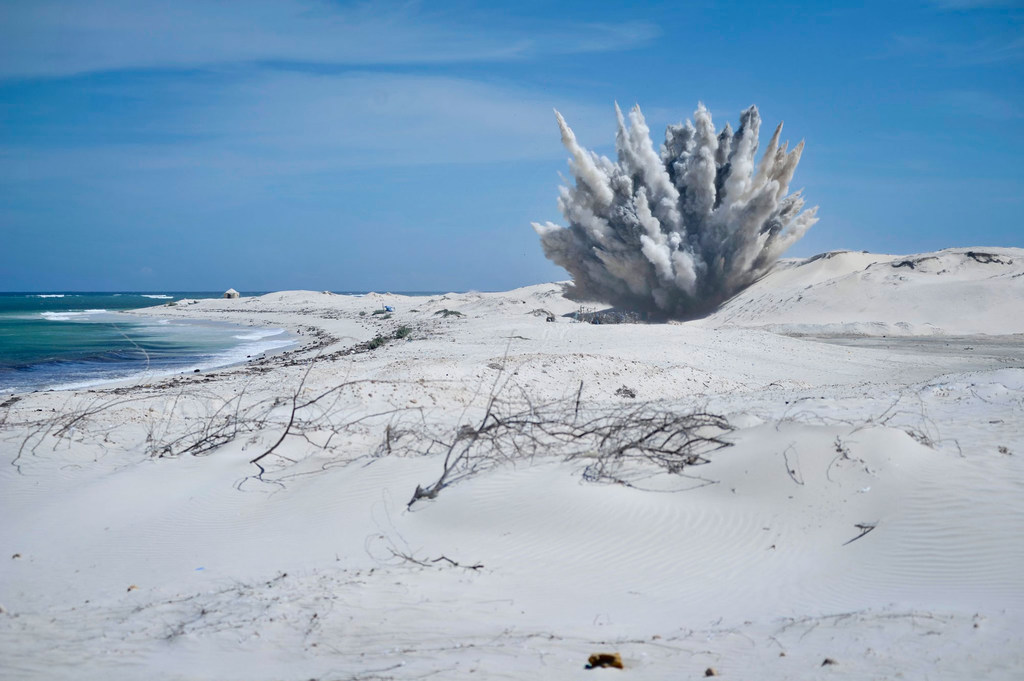
A joint African Union Mission in Somalia (AMISOM) team detonates a weapon at a safe location outside Mogadishu. (May 2013)
New symposium and exhibit
Focusing on the international day’s theme, UNMAS will hold a symposium at UN Headquarters in New York on Tuesday to raise awareness and to seek assistance for continued mine action work and will open a multimedia exhibit in the UN Visitors’ Lobby.
The exhibit will include photographs, graphics, and film clips illustrating work that has been completed in Cambodia, Laos, and Viet Nam, as well as what remains to be done.
It will also highlight new contamination in Cambodia, Myanmar, Ukraine, and Yemen, and show how people across the world continue to be affected.
Learn more about the history of mine action, the UN’s E-MINE action, and the work of UNMAS here.
Couples who are waiting for a child after years of marriage have shared stories of how friends and family sometimes disturb their peace with the question of when they plan to have children.
Right after marriage, a woman is expected to take seed and bear a child for her family. Such high expectations tend to be a burden for couples suffering from medical conditions that hinder them from bringing forth children.
Media consultant Smart Takyi Nixon has encouraged couples facing childlessness in their marriages to keep up the faith and live their best lives even in the case where they never get to hear the cry of a child in their home.
“One of the fascinating things I’ve heard is that marriage without a child is still a marriage. Couples who are going into marriage should have this at the back of their mind. A marriage without a child doesn’t nullify the status of the marriage. That is one of the things people do not come to accept in our part of the world,” he told GhanaWeb.
Sharing his view on how couples can best handle childlessness on Moans & Cuddles with Paula Amma Broni, he admonished couples to take charge of their home in a world where people are quick to project their views on others.
“When you marry an individual, you are marrying the family not just the person…you will see expectations of people being projected on you…some in-laws will pass very funny comments during visits. It’s been a year since you got married, what is happening?” he added.
The United Nations Children’s Fund (UNICEF) have assessed that , no fewer than 78 million children in Nigeria are at the greatest risk from a confluence of three water-related risks.
One-third of children in Nigeria do not have access to at least basic water at home, and two-thirds do not have basic sanitation services, according to Dr. Jane Bevan, Chief of Water, Sanitation and Hygiene for UNICEF Nigeria, who made this known in a statement on Monday in Abuja.
Also, just a quarter of kids can wash their hands at home because there isn’t enough water or soap, she said, citing other issues with hand hygiene.
She disclosed further that as a result, Nigeria is one of the 10 countries that carry the heaviest burden of child deaths from diseases caused by inadequate WASH, such as diarrhoeal diseases.
The statement read in part: “Nigeria also ranks second out of 163 countries globally with the highest risk of exposure to climate and environmental threats.
“Groundwater levels are also dropping, requiring some communities to dig wells twice as deep as just a decade ago. At the same time, rainfall has become more erratic and intense, leading to floods that contaminate scarce water supplies.
“I believe we need to rapidly scale up investment in the sector, including from global climate financing, strengthen climate resilience in the WASH sector and communities, increase effective and accountable systems, coordination, and capacities to provide water and sanitation services and implement the UN-Water SDG6 Global Acceleration Framework.
“If we continue at the current pace, it will take 16 years to achieve access to safe water for all in Nigeria. We cannot wait that long, and the time to move quickly is now. Investing in climate-resilient water, sanitation, and hygiene services is not only a matter of protecting children’s health today but also ensuring a sustainable future for generations to come.”
The statement was released ahead of the UN 2023 Water Conference in New York, from March 22-24, 2023, co-hosted by Tajikistan and the Netherlands, called for urgent action to address the water crisis in Nigeria.
The UN 2023 Water Conference, formally known as the 2023 Conference for the Midterm Comprehensive Review of Implementation of the UN Decade for Action on Water and Sanitation (2018-2028), will result in a summary of proceedings from the UN General Assembly President, Csaba Korosi, that will feed into the 2023 session of the UN High-level Political Forum on Sustainable Development.
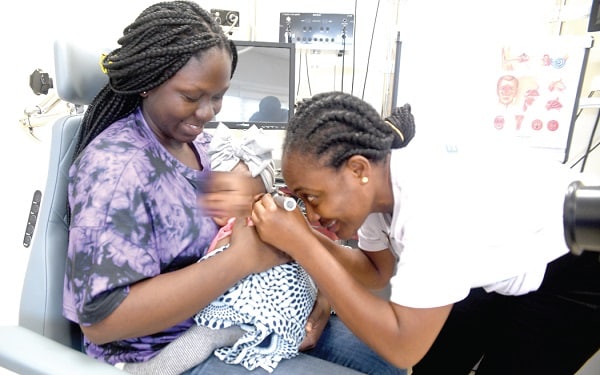
One out of two cases of hearing impairment (HI) in babies in the country is due to genetic causes.
Also, one out of three babies with genetic HI has a syndrome, which means they have other conditions in addition to hearing impairment, while one out of four cases of HI in babies is also due to maternal infections acquired during pregnancy, complications after birth and head trauma.
This is contained in a study conducted on hearing impairment dubbed: Hearing impairment genetics studies in Africa (HI-GENES Africa).
The Lead researcher for the study, Elvis Twumasi Aboagye, made this known at the commemoration of this year’s World Hearing Day in Accra yesterday.
The ceremony was organised by the West African Centre for Cell Biology of Infectious Pathogens (WACCBIP) on the theme: “Ear and hearing care for all! Let’s make it a reality”.
Causes
According to Mr Aboagye, HI was generally caused by environmental, genetic or hereditary factors, which consisted of syndromic and non-syndromic hearing impairment (NSHI).
He said genetic factors significantly contributed to the burden of HI in the country, adding that there was a high carrier frequency found in healthy persons during their study.
Mr Aboagye also said that some adult carriers of the gene had no idea about their status and, therefore, called for HI genetic screening to be conducted on people to know their status.
He also said that meningitis had been identified to be the common cause of HI for which effective interventions such as screening at an early stage of a person’s life were crucial.
Mr Aboagye further said that it was medically necessary for NSHI genetic testing and carrier screening to be considered in pre-marital counselling, as well as individuals with a family history diagnosis of HI.
He said the centre had developed and submitted a policy brief to the government to ensure that the majority of the population was screened for HI.
The Communications Manager at WACCBIP, Andrew Muniru Nantogmah, launched an HI resource pack to educate parents and caretakers on signs to look out for in their children for early detection.
He mentioned some of the signs to include delayed speech, frequent turning up of the TV volume and not following directions.
Others are not startled by loud noises, not turning to the source of a sound after six months of age and not saying a single word by age one.
“Such children are sometimes being mistaken for not paying attention or just ignoring, but it could be as a result of a partial or complete hearing loss,” Mr Nantogmah added.
A Public Engagement Officer at WACCBIP, Kyerewa Akuamoah Boateng, also said education was crucial to change existing traditional beliefs and myths, some of which claimed that HI was spiritual.
Reading to your children can be a great way of nurturing your child’s imagination, building their confidenceand improving their vocabulary. More than that, it’s an activity that you can enjoy together, creating happy memories for you both. So how can you make sure that your child gets the most out of story time?
Start early You don’t even have to wait until your baby is born! Babies still in the womb can hear sounds from 18 weeks, and if you read to your bump, they will recognise your voice and find it comforting once they’re out in the world. At the age of about three months, babies start enjoying the experience of board books and cloth books. Some of these are designed to be a multisensory experience – as well as looking at the pictures, your baby can press buttons to hear squeaks or animal noises, or feel the different textures in the cloth.
Make reading a story part of the bedtime routine It’s a lovely way to finish the day together, and something children can look forward to. For older children who are going to school and leading busy lives, a bedtime story can be an opportunity to wind down and relax. Mum Jess Day says that reading books before naptime or bedtime meant that for her children, reading “was always associated with cuddles, warmth and togetherness. The children grasped that bringing a book and asking to be read to was a surefire way to get a cuddle and a parent’s full attention.”
Have a comfortable space in which to enjoy reading together “Make it cosy, somewhere they want to retreat and curl up in,” says Liz Thomas, mum of three and founder of the charity It Tastes Like Love. “It doesn’t have to be fancy, but we have a little reading nook with cushions, blankets, cuddly toys and a small shelf of ‘this week’s books’, which are rotated. If I’ve got the energy, then hot chocolate too.”
Use the book to start a conversation Stories can be a great way of introducing children to what can sometimes feel like a bewildering and complex world. One way of doing that is through Save the Children’s Wonderbooks series. Through stories based on the lives of real children the charity works with around the world – from Mexico to Syria, India and the Pacific Islands – Wonderbooks introduces young readers to themes such as the effects of poverty and climate breakdown, the global displacement crisis, as well as cultural diversity. By signing up to a monthly donation, you’ll get a new Wonderbook, Grown-Up’s Guide and a fun facts postcard each month.
Don’t just focus on the words … Ask your child about what’s going on in the pictures. Is something happening that isn’t in the story? Has the illustrator put in any little jokes, or running motifs? Then once your child is old enough (say from about the age of seven or eight), you can look at art books together and make up the story behind the painting.
Bring the story to life by using your face, your body and your voice You can use facial expressions to show surprise or anticipation, or use your arms to indicate size. Vary your reading tone from quiet to loud – or experiment with voices. Mum Rebecca Kiernan likes to adopt different accents for various characters: “Pigeons are scouse. Dogs are Brummies, for instance,” she says.
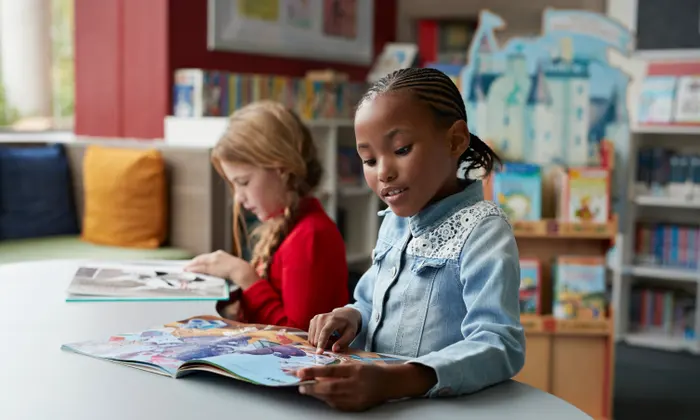
By introducing your children to libraries and bookshops, they can choose what they want to read. Photograph: Klaus Vedfelt/Getty Images
Let your child choose the books, and don’t worry too much about what they want to read … If they prefer nonfiction to fiction, then go with it. For younger children (those under the age of five, roughly speaking), poems, counting songs and nursery rhymes can be a lot of fun, especially if they have repeated lines that the child can memorise and say along with you. Some children love graphic novels. It’s all about nurturing a love of reading, so let them choose what they enjoy, not what you’d like to read.
Don’t worry if they become obsessed with a single book Some children choose the same book 10 days in a row, and that’s fine. Novelist Catherine Cooper says that when her son was little, he’d want the same story about a giant every night and would always warn her: “Don’t laugh when his trousers fall down.” The memory stayed with her, she says, and she even put it in one of her books.
Introduce your child to the pleasure of bookshops and libraries Jaime Cox says that her three children always loved weekly visits to the library, and being able to choose their own books for her to read to them. “It really helps to get them invested in reading for life,” she says. Many libraries have regular story times, so a library outing can be a great way to combine the fun of choosing a new book with the quiet time of sitting and listening to a story. Similarly, bookshop visits can be wonderful in terms of inspiring kids to branch out more in what they’re reading, thanks to colourful and enticing displays of the newest titles, and well-recommended picks from staff.
Don’t feel restricted by the story in front of you You can invent a subplot, or add the child as a character to the story, asking them what they would have done in the same situation. You can even include real-life friends and relatives too. One mum, Catrin Davies, remembers turning her own daughter into a character, Firefighter Kirsten. A child who had wronged her at nursery would get stuck up a pipe while the other firefighters had cake. Or you can ask what they think happened after the story ended – and create an afterlife for the characters.
Source: Yahoo.com
DISCLAIMER: Independentghana.com will not be liable for any inaccuracies contained in this article. The views expressed in the article are solely those of the author’s, and do not reflect those of The Independent Ghana
It also urged the Government to strive to attain the World Health Organisation’s target of 5 mcg/m3 of PM2.5 (minute particulate matter in air from combustion, organic matter and metals).
The PSG said this in a communique issued at the end of its 2023 Annual General and Scientific Meeting (AGSM) held in Kumasi from February 2 to 4, after extensive deliberations.
It was on the theme: “Environmental Health and Children’s Well-Being: A Shared Responsibility.”
The communique, jointly signed by Dr John Adabie Appiah, President, and Dr Angela Osei-Bonsu, the General Secretary, of PSG, said locally relevant research was urgently needed on air pollution issues and their effect on children.
“While awaiting the conduct of these studies, work must commence to improve public transport, reduce dust from our roads and incorporate pollution prevention measures in the planning of urban areas,” it stated.
“Reducing the exposure of children to air pollutants is necessary at home, at schools, and in the general environment.”
The communique reiterated the UN Convention on the rights of the child, Article 24, which states that: “Children have the right to the best healthcare possible, clean water to drink, healthy food and a clean and safe environment to live in.”
The Society added its voice to calls to curb the ‘galamsey’ menace, which was destroying the country’s forests, land, and water bodies and contributing significantly to the deaths of children exposed to chemicals used in mining.
Children also fell into abandoned mine pits, among other dangers, it said.
“This canker must not be allowed to fester, or we will have ourselves to blame and posterity will not forgive us. Time is running out, we must act now, and we must act together in a concerted manner,” the communique said.
“Half-hearted solutions will certainly fail. In conclusion, we would like to point out that time is not on our side, we must act now, and we must act together.”
Children are being exposed to online pornography from as young as nine years, according to a study for the children’s commissioner for England.
A quarter of 16-21-year-olds first saw pornography on the internet while still at primary school, it suggests. By the age of 13, 50% had been exposed to it.
The findings have been linked to low self-esteem among young people and harmful views of sex and relationships.
Commissioner Dame Rachel de Souza said it was “deeply concerning”.
In a nationally representative survey of more than 1,000 of 16-21-year-olds, 38% had found pornographic content accidentally.
Joanne Schneider’s son stumbled across a pornography website, aged eight after typing swear words he had heard at school into a search engine.
“We’d put all the normal safety features in place and had removed apps such as YouTube but didn’t for one second think that my son could find himself on adult-entertainment sites within a few seconds,” Ms Schneider, from London, said.
“As soon as I saw what was happening, I closed the site – but both him and I were left in shock at what he had seen. I felt so terrible about the whole thing.
“All of a sudden I was having to explain it all, including the fact that what he saw was artificial and far from what real people look like.”
‘Strangling’ seen as normal
Of the 18-21-year-olds, 79% had seen pornography involving sexual violence as children.
Almost half of young people say girls expect sex to involve physical aggression, such as airway restriction, the commissioner’s report says.
One 12-year-old told Dame Rachel her boyfriend had “strangled” her during their first kiss. He had seen it in pornography “and thought it normal”.
The commissioner urges “every adult in a responsible position” to take the findings seriously.
The Online Safety Bill, going through the House of Lords, should be used to protect children from internet pornography, she says.
“It should not be the case that young children are stumbling across violent and misogynistic pornography on social-media sites,” Dame Rachel says.
“I truly believe we will look back in 20 years and be horrified by the content to which children were being exposed.
“Let me be absolutely clear – online pornography is not equivalent to a ‘top-shelf’ magazine.
“The adult content which parents may have accessed in their youth could be considered ‘quaint’ in comparison to today’s world of online pornography.”
Twitter is the primary source of pornography for young people, the study suggests, with 41% saying they had accessed it there.
Dedicated pornography sites came next, followed closely by Instagram, Snapchat and search engines.
‘Extreme material’
The National Society for the Prevention of Cruelty to Children charity has long been urging the government to implement strong measures in the Online Safety Bill to protect minors.
Policy lead Richard Collard said the impact pornography could have was “deeply worrying”.
“Ofcom must be given the powers to set minimum standards which ensure the rollout of robust age-assurance measures on platforms where pornographic material can be viewed,” he said.
“This will ensure children are protected from immediate and future harm.”
Andy Lulham, from safety-technology provider VerifyMy, said the report was “extremely worrying but sadly not surprising”.
“As it stands, there is nothing to stop children from easily accessing pornographic and other extreme material online,” he said.
“This issue has existed for far too long – it’s time for politicians, regulators and the private sector to finally come together and help safeguard children, the most vulnerable section of society.”
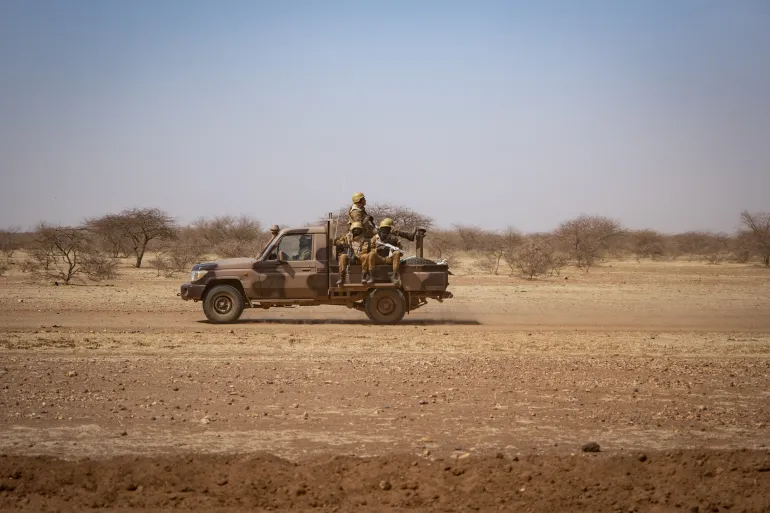
Security forces have rescued 66 women and children who were kidnapped by armed fighters in northern Burkina Faso last week.
Armed men seized the women and their children on January 12 and 13 outside two villages in the district of Arbinda, in the Sahel region’s Soum province.
Security forces conducted a rescue operation and freed 27 women and 39 babies, children and young girls in the adjacent Centre-Nord region, national broadcaster Radiodiffusion Television du Burkina (RTP) said on Friday.
“They have found freedom after eight long days in the hands of their kidnappers,” an RTP presenter said.
In its main evening news bulletin, RTB, referring to the army “operation”, showed images of the women freed and brought to the capital, Ouagadougou.
Several government and security officials confirmed the news, Reuters and AFP news agencies reported.
The abduction prompted alarm from the United Nations, while the country’s military government warned of a rise in attacks on civilians.
Burkina Faso is one of several countries in West Africa battling a rampant armed uprising with links to al-Qaeda and ISIL (ISIS).
Armed rebels have occupied territory in the country’s arid and mainly rural north, executing hundreds of villagers and displacing thousands more in the process.
They have also blockaded certain areas in recent months and made it increasingly dangerous to deliver supplies to trapped citizens.
Faced with acute food shortages, many villagers have resorted to picking wild fruit, leaves and seeds to feed their families. They say venturing into the bush makes them vulnerable to attacks.
On Thursday, two suspected attacks in the country’s north and northwest killed at least 18 people, including 16 vigilantes supporting the army.
Captain Ibrahim Traore, leader of the military government that seized power last September, said in December that his aim was to take back territory occupied by “hordes of terrorists”.
Last week, he said the armed rebels were switching tactics to “focus on civilians”.
Many children cut off contact with their parents due to conflict. It’s less common for parents to sever ties with their kids – but it happens, and can be incredibly lonely.
Helen hasn’t spoken with her son in more than a year. The last she heard, he was in prison. Now aged 31, he’s been addicted to opioids for more than a decade.
“He’s tried to call me, probably to ask for money, and I have not been picking up,” explains Helen, who lives in England. “Right now, that’s the right decision for my safety and sanity.” As the primary caregiver for her son’s young daughter, Helen’s focus is providing a loving and secure environment for her to grow up in.
Helen remembers her son as an impulsive and destructive child, but with a wicked sense of humour and a kind heart. So, she was confused when, as a teenager, “his behaviour turned hostile and he started locking himself in the toilet for hours at a time”, she recalls. “When I confronted him, he’d tell me I was the mad one, the one on drugs. Sometimes, I wanted to laugh, it was so ridiculous.”
When Helen found out he was using heroin, she didn’t know where to turn. He would disappear for days, returning with all kinds of injuries. When he was at home, he was difficult to be around. “He never hit me, but would often destroy the flat in anger – there’s still a hole in the corridor where he kneed it,” she explains.
At work, she was paid in cash, which she says her son began taking from her wallet. Not wanting to say anything in case he got violent, she began keeping the money in a belt around her waist. “I said my earnings were going straight into an account so I could get a better credit rating,” she says. She ultimately felt unsafe living with someone deep in an addiction, and cut contact with him.
The relationship between a parent and their child is expected to be lifelong – a fruitful, loving bond that can survive any highs and lows. However, for some parents, maintaining this connection can be difficult. Eventually, a parent might feel they have reached a point of no return, and so choose to step away from their role.
Some parents who decide to sever ties say they do so for their own health and safety (Credit: Getty Images)
In an increasingly polarised world, conversations about children who stop speaking to their parents have become common. Yet it also happens the other way around, even if the discourse is less frequent. This may be in part because data indicates parents severing ties with their children is rarer: a 2015 study conducted by the British estrangement charity Stand Alone showed that 5% of estranged parents had initiated it themselves.
The decision is already difficult and painful, and those who experience this estrangement say its relative rarity makes it especially isolating, and can add to stigma for those who choose to pursue this path.
‘Unconditional love can be problematic’
“In both research and popular culture, we rarely hear from parents who estrange themselves from their children because it’s so taboo, and there are very few non-judgemental places to speak openly about the experience,” explains Lucy Blake, a senior lecturer in psychology at University of the West England, Bristol, who specialises in estrangement.
The reasons parents end relationships with their children are similar to the reasons kids cut off their parents: according to Blake, among the most common cited are family conflict, differences in personal values (such as religious beliefs), substance abuse and other toxic behaviour. The Stand Alone research showed that for relationship breakdowns with sons, issues linked to divorce, in-laws and marriage were the most widely reported drivers; while with daughters, mental-health problems and emotional abuse were more common.
Yet this decision to fracture with children tends to be far more trying and ultimately difficult. Societally, parents are expected to cherish and care for offspring without exception. “We have very high, almost godlike expectations of a parent, where we want them to be unconditionally loving,” explains Blake. “This can be quite problematic, as it suggests they should accept any kind of treatment, including all kinds of psychological and financial abuse.”
This is perhaps why, even when their children are hurting them, parents struggle to let go. Jennifer Storey, a psychology lecturer at the University of Kent, UK, who specialises in interpersonal violence, finds that in most of her interviews with victims of elder abuse, parents are still worried and sad for their children. “I am struggling to remember one parent who really wanted to cut their child off – they almost always wanted the relationship to continue, but the abuse to end,” she explains.
It can also be hard for both them and the people around them to accept the reality of what’s happening. “Parents are assumed to have all the power, but as the child grows older, that power dynamic shifts,” says Amanda Holt, author of the book Adolescent-to-Parent Abuse: Current Understandings in Research, Policy and Practice. “The lack of belief that child-parent abuse can happen, or that it can be so bad a parent needs to leave, is another reason that it’s so difficult to walk away.”
The “intergenerational stake hypothesis” may also be at work. This theory suggests that parents are typically more invested – emotionally, financially and physically – in the parent-child relationship than their children. Greater positive ties with children are associated with a parent’s improved wellbeing, a greater quality of life and lower depressive symptoms; greater positive ties with a parent do not guarantee the same benefits. This means that the parent’s choice to sever contact with a child, whether abruptly or gradually, doesn’t just come with the weight of failure.
“Parenthood is a role and identity that’s respected and admired – it’s also life-changing and lifelong,” explains Blake. “When a parent does not have an active relationship with their child, they might feel they have failed in this role, bringing feelings of intense pain and shame, changing or challenging how parents think about themselves and who they are.”
Given these elements, it can be more challenging for parents to sever ties than it is for children. “It could certainly be a different kind of pain, because for parents, there’s the possibility that their life seems emptier or less meaningful,” says Blake. Many will lose friendships and relationships with other family members as a result. “The loss and pain that accompanies estrangement ripples out to touch many different aspects of people’s lives,” says Blake.
Estrangement from a child can be an extremely lonely ordeal, and damage relationships with friends and family alike (Credit: Getty Images)
Murky and muddled
In some cases, like Helen’s, the decision to cut off contact is clearly made by one party. But the source of estrangement between parents and children can often be more muddled.
Jack, who lives in the US, was married to his wife for nearly two decades, during which time they had four children together. At the time of the divorce, their youngest daughter was a year old. When his ex-wife remarried, he says, his youngest child gravitated more towards her stepfather than him – and as she grew older, seemed not to enjoy spending time with Jack.
Jack says he reached a breaking point during a visitation when his daughter was aged 14. After a disagreement about curfew, she told Jack she hated her weekends with him, and called her mother for a ride to the event she had planned to attend. “I emailed my ex to say it appeared [my daughter] no longer wanted to spend every other weekend’s visitation with me, and if that were to change in the future, she would be welcomed back with open arms,” says Jack. He doesn’t blame his daughter for acting as she did, but hasn’t heard from or seen her since.
Although his daughter cut off contact initially, Jack hasn’t felt the need to re-kindle contact with her directly. “The longer it has drawn out, it’s lessened my need to re-establish this relationship. It feels similar to a death to me, and I have moved on,” he says. “At this stage of my life, with the comfort level I enjoy in the relationships I have, I doubt I would be interested in the time needed to invest in building a meaningful relationship with her, not to mention the drama from her that would come with that,” he explains.
Jack’s story reflects the murky reality of parent-child estrangement, which is that it’s not always cut-and-dried who drops whom. His daughter made her disinterest in him apparent, but he was the one to actually suggest they stop seeing one another.
This isn’t an uncommon situation, say experts: “For some estranged parents, there’s no one clear answer on who initiated it, and it’s quite messy,” says Blake. When asked who initiated the estrangement (with the options of “they did”, “I did”, “we cut contact with one another” and “I’m not sure”), 10% of respondents in Stand Alone’s community study chose one or more responses, showing that the direction is not always clear.
Estrangement is also not always a permanent or static state. Moving through periods of estrangement and reunification is common, especially, as Stand Alone found, for mothers and daughters.
This is also the case for many parents whose child has an addiction. A 2020 Swedish study showed parents of adult drug addicts remained hopeful about an eventual reconciliation, in part because they were able to see their child as two different people: one sober, and one under the influence. If the latter were to leave, as it were, the relationship could continue.
Helen, for her part, has severed contact with her son several times – they have cycled through periods of estrangement and reconciliation for years. But for now, she is out of touch with him – and unsure what will come next. “If he could show me he was committed to staying clean and out of jail, perhaps I’d want him back in our life,” she explains. “But I don’t know how I could ever trust him again, and certainly not to care for his little one.”
‘A lonely ordeal’
Even for the parents who are steadfast in their reasoning for initiating a break-up, the day-to-day reality of their decision is far from easy. “Configured through biological, legal and social bonds, there is an attachment with one’s child that is very profound,” explains Holt. “Such that if parents do walk away, the relationship may be gone but those bonds persist. It can be very difficult to leave all of that behind.”
Many parents who initiate estrangement find that the shame and blame surrounding their decision also leads to acute isolation, and ruptures with their established support network even beyond blood relatives. “Parents who have initiated estrangement have very few [people] they can talk to who will show compassion and understanding,” explains Blake. “There might be some room for talking about feelings of grief and loss, but it’s as if it runs out and people are expected to get over it and get on with life.”
Jack has fielded discussions with friends who don’t understand his non-relationship with his daughter and say they could never turn their back on a blood relation. “To me, just because someone is ‘blood’ does not give them the right to treat [you] poorly,” he explains.
Compassion and a space to talk may be particularly important at specific moments throughout the calendar year – and this time frame is different for every parent. Wounds feel rawer during the holidays in particular: according to Stand Alone, 90% of people estranged from a family member find holiday seasons challenging, while 85% struggle with the passing of birthdays and 81% find it difficult to be around other families.
For her part, Helen is feeling particularly reflective as Christmas approaches and she shows her granddaughter the Christmas lights. It was something she often did with her son, and she wishes they could share this together.
“I was the only lifeline he had, and dealing with my choice to step away never gets easier,” she says. She feels lucky that her daughter has been so supportive, and six months ago, Helen moved closer to her place so they could see one another regularly. “Without the help and understanding of my daughter, I don’t know where I’d be, as this has been a very lonely ordeal,” she says. “The best I can do is keep myself well so I can do the same for others – I’m trying to take it day by day.”
UNICEF has made an appeal for $2.6 billion on Tuesday December, 13, 2022, to help children in the Middle East and North Africa with their expanding needs.
These funds are intended to provide lifesaving assistance to more than 52.7 million children in need in the Middle East and North Africa in 2023.
“With nearly half of the countries in the region in crisis or experiencing the ripple effects of conflict and war, children remain the most affected and in dire need of assistance,” said Adele Khodr, Regional Director of UNICEF for the Middle East and North Africa, quoted in the press release on Tuesday.
Kenya’s health ministry is set to launch a two-week measles vaccination campaign targeting 1.2 million children aged nine months to five years.
This comes after an outbreak in seven counties in which 90% of children under the age of five did not receive the two-dose vaccine.
Due to the movement of people from one location to another in search of food and water, health workers have found it difficult to administer this life-saving vaccine to children.
The ministry has not disclosed how many cases and deaths have been reported, but is urging parents and guardians to ensure their children get vaccinated to contain the outbreak.
Measles is a highly contagious disease characterised by a high fever and a rash. The vaccination coverage has steadily declined globally since the beginning of the Covid-19 pandemic.
The government should make social media firms enforce age limits to help tackle their impact on children’s mental health,actress Kate Winslet has said.
Speaking to the BBC’s Sunday with Laura Kuenssberg, she said parents feel “utterly powerless” about how to help their children navigate social media.
Winslet said security checks could be more rigorous and those in power “should step up” to protect children.
She was speaking ahead of the launch of her new Channel 4 film I Am Ruth.
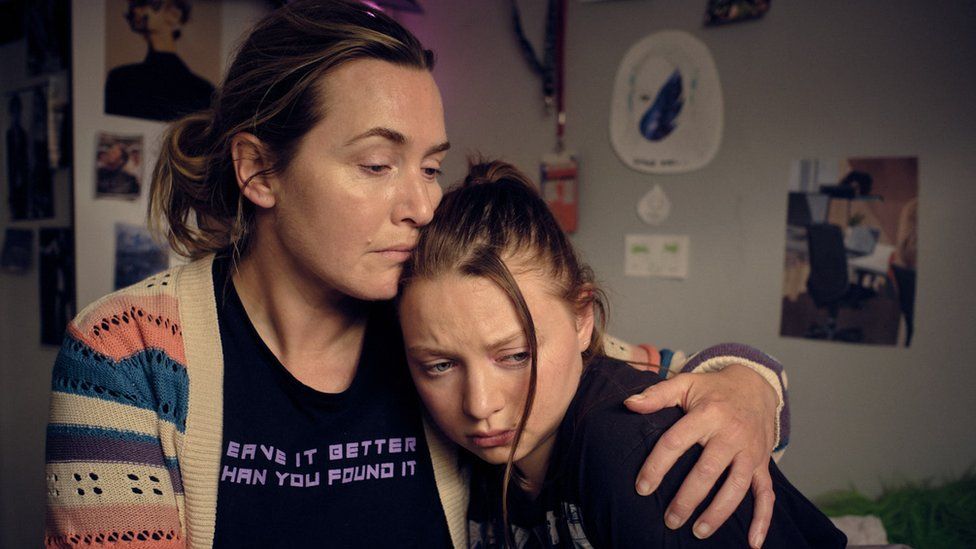
The feature-length drama sees Winslet playing opposite her real-life daughter Mia Threapleton as the mother of a teenager whose mental health begins to suffer as she becomes increasingly consumed by the pressures of social media.
Winslet said the decision to focus on children’s mental health followed a conversation with the film’s creator Dominic Savage about how parents can help “when they can clearly see there’s a problem”.
But she said that the drama had to be about more than a child obsessed with their phone.
It had to cover “what’s actually going on with that phone, how it impacts on their self-esteem, how it impacts on eating habits, their mental state in terms of thinking about things like self-harm,” Winslet said.
In the two-hour drama, to be shown on Channel 4 on Thursday 8 December, Winslet plays Ruth who is a single mother of two, including 17-year-old Freya.
The film shows Freya becoming less communicative and falling behind at school as she retreats further into herself as her relationship with social media becomes increasingly destructive.
The world of social media is “frightening to parents because we don’t really know what’s there”, Winslet said.
“We don’t know really what’s going on in their friendship groups anymore because so much of it is actually built on phones, inside phones.
“This world that you can burrow deeper and deeper into it, and it becomes darker and trickier and much, much harder for children to navigate.
“I think because people, young children, are having phones at a much earlier age, they’re able to access things that emotionally they’re just not equipped or sophisticated enough to know how to process.”
IMAGE SOURCE,JOSS BARRETT /ME+YOU PRODUCTIONS/CHANNEL 4 Image caption, Mia Threapleton, Winslet’s real-life daughter, plays teenager Freya
Asked whether she thought there should be more legal regulation of social media, Winslet said she struggled with social media and its impact on teenage mental health.
“I do wish that our government would crack down on it. I do wish that there would be certain platforms that were banned before a certain age. I wish that security checks would be much more rigorous,” she said.
She said there should be “more protection and accountability” because parents “are left flailing”.
“I just think that the people who know that they could do better to protect our children should just be doing that. Whoever those people are, they know who they are, they should just step up and do better,” she said.
Winslet’s comment come as the government is accused of watering down legislation aimed at regulating internet content.
In the past week, ministers have dropped plans from the Online Safety Bill which would require technology firms to take down legal but harmful material.
Ian Russell, the father of teenager Molly Russell, who ended her life after viewing suicide and self-harm content online, said the bill had been watered down and the decision might have been made for political reasons to help it pass more quickly.
In a statement, Culture Secretary Michelle Donelan told BBC News that “unregulated social media is hurting our children and it must end”.
She added that the “strengthened Online Safety Bill” she is bringing back to Parliament “will allow parents to see and act on the dangers sites pose to young people”.
“Young people will be safeguarded, criminality stamped out and adults givencontrol over what they see and engage with online,” Ms Donelan said.
Afghans are giving their hungry children medicines to sedate them – others have sold their daughters and organs to survive. In the second winter since the Taliban took over and foreign funds were frozen, millions are a step away from famine.
“Our children keep crying, and they don’t sleep. We have no food,” Abdul Wahab said.
“So we go to the pharmacy, get tablets and give them to our children so that they feel drowsy.”
He lives just outside Herat, the country’s third largest city, in a settlement of thousands of little mud houses that has grown over decades, filled with people displaced and battered by war and natural disasters.
Abdul is among a group of nearly a dozen men who gathered around us. We asked, how many were giving drugs to their children to sedate them?
“A lot of us, all of us,” they replied.
Ghulam Hazrat felt in the pocket of his tunic and pulled out a strip of tablets. They were alprazolam – tranquilisers usually prescribed to treat anxiety disorders.
Image caption, Five alprazolam pills now cost the same as a piece of bread
Ghulam has six children, the youngest a year old. “I even give it to him,” he said.
Others showed us strips of escilatopram and sertraline tablets they said they were giving their children. They are usually prescribed to treat depression and anxiety.
Doctors say that when given to young children who do not get adequate nutrition, drugs such as these can cause liver damage, along with a host of other problems like chronic fatigue, sleep and behaviour disorders.
Image caption, The men in this area outside Herat are struggling to find work
At a local pharmacy, we found that you can buy five tablets of the drugs being used for 10 Afghanis (about 10 US cents), or the price of a piece of bread.
Most families we met were sharing a few pieces of bread between them each day. One woman told us they ate dry bread in the morning, and at night they dipped it in water to make it moist.
The UN has said a humanitarian “catastrophe” is now unfolding in Afghanistan.
A majority of the men in the area outside Herat work as daily wage labourers. They have been leading difficult lives for years.
But when the Taliban took over last August, with no international recognition for the new de-facto government, foreign funds flowing into Afghanistan were frozen, triggering an economic collapse which left the men with no work on most days.
On the rare day they do find work, they make roughly 100 Afghanis, or just over $1 (£0.83).
Everywhere we went, we found people being forced to take extreme steps to save their families from hunger.
Ammar (not his real name) said he had surgery to remove his kidney three months ago and showed us a nine-inch scar – stitch marks still a bit pink – running across his abdomen from the front of his body to the back.
He’s in his twenties, in what should have been the prime of his life. We’re hiding his identity to protect him.
“There was no way out. I had heard you could sell a kidney at a local hospital. I went there and told them I wanted to. Some weeks later I got a phone call asking me to come to the hospital,” he said.
“They did some tests, then they injected me with something that made me unconscious. I was scared but I had no option.”
Image caption, Ammar said he had his kidney removed for payment three months ago
Ammar was paid about 270,000 Afghanis ($3,100) for it, most of which went into repaying money he had borrowed to buy food for his family.
“If we eat one night, we don’t the next. After selling my kidney, I feel like I’m half a person. I feel hopeless. If life continues like this, I feel I might die,” he said.
Selling organs for money is not unheard of in Afghanistan. It used to happen even before the Taliban takeover. But now, even after making such a painful choice, people are finding that they still cannot find the means to survive.
In a bare, cold home we met a young mother who said she sold her kidney seven months ago. They also had to repay debt – money they had borrowed to buy a flock of sheep. The animals died in a flood a few years ago and they lost their means of earning a living.
The 240,000 Afghanis ($2,700) she got for the kidney are not enough.
“Now we are being forced to sell our two-year-old daughter. The people we have borrowed from harass us every day, saying give us your daughter if you can’t repay us,” she said.
“I feel so ashamed of our situation. Sometimes I feel it’s better to die than to live like this,” her husband said.
Over and over again, we heard of people selling their daughters.
“I sold my five-year-old daughter for 100,000 Afghanis,” Nizamuddin said. That’s less than half what a kidney goes for, according to what we found on the ground. He bit his lip, and his eyes welled up.
The dignity that people here led their lives with has been broken by hunger.
“We understand it’s against Islamic laws, and that we’re putting our children’s lives in danger, but there’s no other way,” Abdul Ghafar, one of the heads of the community, said.
Image caption, Nazia is still living with her family but has been sold to be married when she is 14
In one home we met four-year-old Nazia, a cheerful little girl who made funny faces as she played with her 18-month-old brother Shamshullah.
“We have no money to buy food, so I announced at the local mosque that I want to sell my daughter,” her father Hazratullah said.
Nazia has been sold to be married to a boy from a family in the southern province of Kandahar. At 14, she will be sent away. So far Hazratullah has received two payments for her.
“I used most of it to buy food, and some for medicine for my younger son. Look at him, he’s malnourished,” Hazratullah said, pulling up Shamsullah’s shirt to show us his bloated belly.
The staggering rise in malnutrition rates is evidence of the impact that hunger is already having on children under the age of five in Afghanistan.
Médecins Sans Frontières (MSF) has seen the rate of admissions at their facilities treating malnutrition across the country increase by as much as 47% this year over the last.
MSF’s feeding centre in Herat is the only well-equipped malnutrition facility catering not just to Herat, but also to the neighbouring provinces of Ghor and Badghis, where malnutrition rates have gone up by 55% over the last year.
Since last year, they’ve increased the number of beds they have to cope with the number of sick children they’re having to admit. But even so, the facility is almost always more than full. Increasingly the children arriving have to be treated for more than one disease.
Omid is malnourished, and has hernia and sepsis. At 14 months, he weighs just 4kg (9lb). Doctors told us a normal baby at that age would weigh at least 6.6kg. His mother Aamna had to borrow money to make the journey to the hospital when he began to vomit profusely.
Image caption, Omid is 14 months old but weighs much the same as a newborn baby
We asked Hameedullah Motawakil, spokesman of the Taliban’s provincial government in Herat, what they were doing to tackle hunger.
“The situation is a result of international sanctions on Afghanistan and the freezing of Afghan assets. Our government is trying to identify how many are in need. Many are lying about their conditions because they think they can get help,” he said. It’s a stance he persisted with despite being told that we have seen overwhelming evidence of how bad the situation is.
He also said the Taliban were trying to create jobs. “We are looking to open iron ore mines and a gas pipeline project.”
It’s unlikely that will happen soon.
People told us they felt abandoned, by the Taliban government and the international community.
Hunger is a slow and silent killer, its effects not always immediately visible.
Away from the attention of the world, the scale of the crisis in Afghanistan might never truly come to light, because no one is counting.
The Norwegian Refugee Council (NRC) has said that nearly 150,000 children displaced by the conflict in Mali do not have birth certificates and are at risk of exclusion and disenfranchisement because they cannot prove their identity.
“Thousands of children are excluded from society when they should be in school,” said Maclean Natugasha, NRC’s director for Mali, in a statement released by the NGO to AFP.
These 148,000 children are among the 422,620 people displaced by the war in Mali, according to August figures from a joint UN and Malian monitoring tool.
In this country of about 20 million people, 7.5 million people are in need of emergency humanitarian assistance, according to the UN.
These 148,000 children have either lost their birth certificates when they fled their homes or “never had them because of the limited functioning of civil registry services in some regions”, says the NRC.
Since 2012, Mali has been in the grip of a security crisis that has left thousands dead and of which civilians are the main victims. The state has only a limited presence in the vast bush where jihadist fighters affiliated to Al-Qaedaand the Islamic State, bandits and traffickers of all kinds, armed militias and politico-military groups that have signed a peace agreement are active.
If this problem of civil status “is not resolved before these children reach adulthood”, the NRC warns, “they risk being deprived of their freedom of movement, the right to vote and the possibility to own or rent property”.
The UK government has paid out for at least four times the number of Afghan children killed than it previously admitted.
In addition to the 16 publicly acknowledged children, compensation payments have been made to 64 others.
Between 2006 and 2014, all were killed in fighting involving UK forces.
The new figures are the result of Freedom of Information Act requests made by the charity Action on Armed Violence (AOAV).
The most common causes of death listed were airstrikes and being caught in crossfire.
According to AOAV, the number of civilian deaths caused by British forces is likely to be underestimated.
Of those deaths that have been recorded, the actual number of children killed could actually be as high as 135, because some of the fatalities are described in Ministry of Defence (MoD) documents merely as sons and daughters – with ages and circumstances of deaths not always included.
AOAV says it is possible some of those 135 were adults, but the likelihood of them having been under 18 is high because of the very young average age in Afghanistan.
Most of the 881 fatality claims made to the British were rejected and only a quarter received compensation.
Among those which were successful was one for eight members of the same Afghan family, killed in a coalition airstrike on a village in the Nawa district of Helmand in May 2009.
A man asked for compensation for the deaths of his nephew, his nephew’s two wives and their five children.
It took 144 days to settle the claim, for which he was awarded £7,205 ($8,260 using current exchange rate).
In total, the MoD paid out £688,000 for 289 Afghan civilian deaths between 2006-14.
AOAV says claimants were often required to provide photos, birth certificates as well as supporting letters before being paid and many were formally interviewed by British personnel to confirm they had no Taliban affiliation.
Previous Freedom of Information requests show UK payments for deaths in Afghanistanhave varied widely. In some cases, individuals received more for the loss of property or livestock than family members.
In a statement, the MoD said: “Any civilian death during conflict is a tragedy, more so when children and family members are involved.”
It said although its forces try to minimise injury to civilians, “regrettably it can never be entirely eliminated”.
But Iain Overton, director of charity AOAV, criticised the lack of transparency over the deaths – with it having taken researchers years to obtain the information from the MoD.
He also said the lack of debate around the deaths raised questions as to whether lessons had been learned.
IMAGE SOURCE,PA MEDIA Image caption, UK soldier in southern Afghanistan, August 2007
Human rights groups and charities have repeatedly criticised both the US and UK over the way they investigate and report civilian casualties in military operations.
The MoD admits to just one civilian death caused by an RAF airstrike during its bombing campaign against the Islamic State group in Iraq and Syria.
In contrast, US Defence Secretary Lloyd Austin recently ordered a major review of the way the Pentagon investigates civilian casualties. It came after a US airstrike during the withdrawal from Kabul last year – which killed 10 civilians.
At first, the US claimed it had been targeting extremists, but journalists on the ground found evidence that all those killed were civilians.
The US Civilian Harm Mitigation and Response Action Plan includes hiring more than 150 military staff to focus on mitigating harm to civilians, as well as better reporting and data collection of such incidents.
The MoD said it was following the progress of the US review,but has not committed to any changes in the way it investigates or reports civilian deaths.
Wicks has also pledged to walk 30 miles in an ultra-marathon challenge for the charity on Friday 18 November.
Image source, Food Envy PhotographyImage caption, Joe Wicks MBE will also be taking on an ultra-marathon walking challenge for BBC Children in Need this year
The fitness coach rose to fame with his online workouts during the Covid-19 pandemic and was awarded an MBE for his work.
“One of the things I really connected with during lockdown was walking, getting outside,” he said.
“Before that I didn’t have much time for it – but what I realised was when you get outside and you’re with your friends, your family, having a chat – it’s almost like you’re walking your stress away.
“Being in nature is so good for your mood and your energy. I always say you never regret a workout and going for a walk is a great time to connect and actually communicate and talk about things that you might have on your mind.”
The events are all in partnership with Parkrun, and Wicks said he hoped to meet as many people as possible at the events across the UK.
Image caption, Hundreds of people turned up for the event, with some at the start line running the parkrun route and other walking with family and friends
Claire Hoyle, from BBC Children in Need, added: “We know times are really uncertain for everyone, which is why now more than ever it’s so important that we all pull together to support one another.
“Walk with Joe gives people a really easy way to do this, and at the same time, make a life-changing difference to children.”
Image caption, The fitness coach had some help from Pudsey to take people through a warm-up before the walk
Wicks’ ultra-marathon walking challenge will see him set off from MediaCityUK and aim to finish in ten hours to reach the BBC Children in Need Great Spotacular Appeal Show.
Conflict Related Sexual Violence (CRSV) has been a problem in South Sudan. In 2021, the United Nations Office for Coordination of Humanitarian Affairs estimated at least 3,414 civilian deaths, injuries, abductions, or sexual violence related to the CRSV in South Sudan. A report published by the United Nations Mission in South Sudan (UNMISS) and the Office of the United Nations High Commissioner for Human Rights (OHCHR) stated that 87 per cent of rape survivors experienced rape from multiple perpetrators.
South Sudan needs to improve the assessment and treatment of CRSV victims. It is also imperative that a free and fair justice system exists. In addition, there needs to be public education campaign about sexual violence.
Government and military leaders instrumentalize CRSV against women as a weapon of war. Military men, warring parties, and small armed groups carry out sexual violence to mete out retribution against perceived enemies and their people. Over time, the usage of CSRV as a weapon of war has served to destroy the fabric of personal relationships, families, and communities. Measures targeted against the vices have failed due to bad leadership.
An inclusive meeting is the first step in the right direction. A national conference involving government officials, civil society representatives, traditional rulers, and religious leaders is necessary. In this meeting, the purpose should be to identify the root causes of CRSV, such as systemic impunity and inefficient legislation. Understanding South Sudan’s root causes of sexual violence, therefore, can provide insight into why it has lasted so long. The leaders can, then, determine what course to take based on understanding the origins of the problem. Moreso, such a conference would strengthen the momentum for action.
Access to a free and fair justice system is critical. There is a need for a fairer justice system since many CRSV perpetrators get away with punishment for their crimes. The South Sudanese government needs to amend its legislation to meet international law standards against sexual violence. Currently, in the South Sudan constitution, there is a lack of clarity in the definition of rape and a lack of specific rules on consent for rape. There also exists a lack of protection for rape victims. The amendment needs to, therefore, target these areas and prioritize zero tolerance for sexual violence crimes.
Education is key to curbing the long-standing sexual violence against women and children in South Sudan. South Sudan’s Ministry of General Education and Instruction can set up schemes to educate children, teenagers, and young adults. Information campaigns about CRSV, especially in conflict areas, will further sensitize the people in South Sudan. Such an educational scheme will encourage more sexual violence victims to speak out. Furthermore, security personnel needs to undergo second-level education on how to tackle sexual violence. Specialized investigative training on health-related cases needs to follow too.
According to Borgenproject, in South Sudan, less than half of the population has access to health care. There is an urgency to tackle the latter since women in this country have severe post-traumatic stress disorder (PTSD) due to sexual violence. The provision of rapid medical assessment and treatment of sexual violence victims can adequately alleviate this health crisis. Rapid medical assessment can be done by setting up an emergency health system, including mobile hospitals and clinics near localities. Such medical intervention will allow victims to receive swift and adequate medical care. Quick treatment for CRSV victims in the early stages will prevent not only primary health issues but also Sexually Transmitted Infections (STIs).
In South Sudan, CSRV against women and children now sits alongside the uncertainties of everyday life. Over time, sexual violence has become increasingly damaging to the right of every human. It will take a concerted effort from all sectors to end this epidemic of violence. However, it is achievable with commitment and determination.
Muyiwa Adekojede is a writing fellow at the African Liberty.
Source: face2faceafrica
DISCLAIMER: Independentghana.com will not be liable for any inaccuracies contained in this article. The views expressed in the article are solely those of the author’s, and do not reflect those of The Independent Ghana
Raising your children to be polite, respectful, and well-behaved has its challenges as any parent will tell you. And everyone seems to have an opinion on it, even if it is uninvited. But if there’s one thing that many can agree on, it’s that smacking children is a big no-no.
However, as parenting styles have changed over the years, there’s now another thing that some want to add to the list of disciplinary methods that should be left in the past, as they feel it’s just as bad as smacking.
Navit Schechter, 43, a cognitive behavioural therapist and mum-of-one maintain she would never call her six-year-old daughter, ‘naughty’ as she believes it’s as bad as any sort of physical punishment and there can be only one outcome if it is used: an upset child.
Chastising children with words like ‘naughty’ will ultimately produce a generation eager to please and nothing else, the expert claims – and she’s urged fellow parents to stop doing so.
The businesswoman, who runs a range of parenting courses near her home in Cornwall, said: “In the world that I am in, among my friends and in my work world, most people that I’m surrounded by would see the word ‘naughty’ as quite a dated parenting style, much in the same way as smacking.
“We’re choosing not to smack our own children because we would see it as physically abusive.
“Similarly, there’s that same kind of idea around using the word ‘naughty’. We want to bring our children up to be compliant, because, of course, it makes our lives easier – but we don’t actually want our children to be compliant people.
“If you’re saying, ‘don’t do that, that’s naughty’ because you don’t like their actions – there’s this kind of implicit assumption that you have to do things the way that we want them done.
“You then see the pattern that we see in adults, appeasing people and not being able to say no in case their actions upset people.”
The mum says it can have a big impact on kids (stock photo) ( Image: Getty Images/iStockphoto)
And it’s not just negative terms like naughty that Navit has taken issue with, as the mum thinks that even describing young people’s behavior as ‘good’ can have detrimental effects on their self-worth and cause issues in later life.
She explained: “I also feel really uncomfortable when family members call my daughter a ‘good girl’.
“So many adults today feel the need to be good, to be liked, and for other people to accept them.
“It’s that black-and-white way of thinking and not looking at the context around it, because we’re inherently kind of good, but sometimes we’re not.
“If we hold ourselves to standards of thinking we can never make mistakes, we can never let other people down, we can never do things that other people don’t want us to do – that can keep us stuck in really unhelpful patterns that create a lot of anxiety and low self-esteem.”
A number of fellow parenting experts also agree with Navit’s ‘naughty ban’, with Jo Mitchell-Hill, 46, a parenting coach from Maidstone, Kent, telling how the word “impacts on kids’ self-esteem and shames them”.
“The word is used to describe the child and not their behaviour. If you want the best out of your children the more positive and encouraging you are, you’re going to build that self-esteem.
“You’re going to build that positivity and build up how they feel about themselves.”
Foster carer and former teacher Jo added: “With my daughter, my pupils and the kids that lived with us the expectation is you’re going to try your best, and if you’re not, you’re struggling – so come and speak to me.
“Kids aren’t born wanting to be naughty or wanting to misbehave, their misbehaviour is communication.
“Kids don’t understand the difference between positive and negative attention.
“Children live in a very traumatic world, we’ve got to be aware as parents that we are the biggest influence in our children’s lives, and what we say and do matters.”
However, Dr Samantha Madohsingh, 54, said ousting the world is a load of rubbish.
The clinical psychologist said it’s ‘madness’ to suggest calling a child ‘naughty’ is akin to smacking.
The doc, who is originally from the States but now lives in Richmond with her 16-year-old daughter, said: “Words have power when we use words like ‘good’ and ‘bad’, ‘right’ and ‘wrong’, that is binary thinking.
“People will think to themselves, ‘no one can be perfect, and I’m not pure and angelic and always good’ – so the only other option is to be bad.
“So what we need to focus on is the behaviour – the child isn’t naughty, that behaviour is naughty and naughty behaviour is not acceptable or appropriate.
“The word ‘naughty’ is not abusive – it just struck me as extreme, honestly.
“I feel sometimes that we’re going in the completely wrong direction.
“As a parent of a teenager in this country, what I’m seeing with kids is terrifying.
In recent times, government appointees have not been spared for either their poor performance or involvement in corrupt acts.
Even though there have been several dismissals by Akufo-Addo since he assumed office, Ghanaweb compiles a list of some government appointees who have been sacked in the last quarter of 2022.
Sarah Adwoa Safo
In July, 2022, Akufo-Addo relieved Dome-Kwabenya Member of Parliament, Sarah Adwoa Safo, of her position as Minister for Gender, Children and Social Protection.
Director of Communications at the Office of the President, Eugene Arhin, in a July 28, 2022 statement, indicated that the termination of her appointment was in accordance with Article 81 (a) of the Constitution.
“In accordance with Article 81 (a) of the Constitution, the President of the Republic, Nana Addo Dankwa Akufo-Addo, has revoked the appointment of Hon. Sarah Adwoa Safo, Member of Parliament for Dome Kwabena, as Minister for Gender, Children and Social Protection, with immediate effect.
“The Minister for Sanitation and Water Resources, Madam Cecilia Abena Dapaah, will continue to act as caretaker Minster for the Ministry of Gender, Children and Social Protection, until such a time that President Akufo-Addo appoints a substantive Minister,” the statement read.
Her dismissal came at a time when Parliament was debating her continuous stay in the house after absenting herself for more than 15 sitting days without approval from the Speaker of Parliament.
Aside from the above, she was absent in her role as the Gender Minister as she was out of the office for a very long time after she requested an extended leave of duty.
Customs boss, Col. Damoah
On August, 2022, president Akufo-Addo asked the Commissioner of the Customs Division of the Ghana Revenue Authority (GRA), Colonel Kwadwo Damoah (rtd), to hand over his duties to the acting deputy commissioner.
In a letter signed by the Secretary to the president, Nana Bediatuo Asante, the notice of handing over was due to the expiration of his contract on October 13, 2021.
The dismissal of Colonel Kwadwo Damoah (rtd) came at the time he was being investigated by the Office of the Special Prosecutor, for his role in corruption-related acts involving Labianca Company Limited.
A finding from the Office of the Special Prosecutor dated August 3, 2022, and titled: “Report of Investigation into Alleged Commission of Corruption and Corruption Related Offences involving Labianca Group of Companies and the Customs Division of the Ghana Revenue Authority indicated among other things that the frozen foods company owner used her position to evade taxes.
Initially, while reacting to the report, the customs boss said any attempts by the Special Prosecutor to bring him down will not work.
“Three days ago a report purported to be coming from the Office of the Special Prosecutor trying to indict the Deputy Commissioner of Operations and myself [but] anybody who has read that report very well will know the basis of that,” he said while addressing some Senior Customs officers at a retreat in Kumasi.
“And luckily for Me, God is always on my side, before that report came that person had made a comment to some people who had come to tell me [that] he [Special Prosecutor] was going to publish that will discredit me…and I sent people to go and tell him that he is a small boy and I am older than him, I have lived a meaningful life and if he attempts to destroy me it won’t be easy for him. People have tried and I have survived and this one too I will survive it,” Col Damoah added.
Prof Kwasi Opoku-Amankwa
Prof Kwasi Opoku-Amankwa, The Director General of Ghana Education Service is the latest victim of the sacked appointees.
Prof Kwasi Opoku-Amankwa was sacked by the President on October 17, 2022.
In a letter dated October 17, 2022, and signed by the Secretary to the President, Nana Bediatuo Asante, President Nana Addo Dankwa Akufo-Addo terminated the appointment of the Director-General of the Ghana Education Service, Prof. Kwasi Opoku-Amankwa.
This brought the appointment of the GES boss, who was appointed in 2017, to an end.
According to ges.gov.gh, Prof. Kwasi Opoku-Amankwa was appointed as Acting Director-General by President Akufo-Addo in April 2017, and he assumed office on May 15, 2017.
He was subsequently confirmed as Director-General in October 2017.
Once again, the month of October is here with us. This month is Dyslexia Awareness month and we, the team at Africa Dyslexia Organisation (ADO), wish to bring the attention of the general Ghanaian populace that dyslexia is a common learning disorder of concern, and it is worth the attention of all.
This condition called dyslexia is a learning disability characterised by difficulty in processing, producing and using language. Thus, it is a language-based learning disorder that makes it extremely hard for its sufferers to express their language skills as others easily do.
Some of the most common problems dyslexics experience is the inability to read, write, spell and speak.
In Ghana, it is estimated that about 10-15 percent of the Ghanaian population is suffering from dyslexia. According to a report by Dyslexia Ghana, 4 percent of Ghanaians have severe forms of dyslexia. Sadly, many Ghanaians, including parents and teachers are not aware of this learning condition or disability; hence, are unable to offer any form of support to dyslexics where necessary.
As a result of this, dyslexic children of school-going age are faced with the challenge of not receiving the needed attention and assistance to do well in their learning. These dyslexic children, therefore, often go through emotional and mental health challenges in class as they are labelled by teachers and classmates as dumb and lazy learners.
According to International Dyslexia Association’s Dyslexia Fact Sheet (2008), dyslexia is essentially a disorder of phoneme processing: feasibly in visual and hearing. The condition predisposes dyslexics to see and hear things differently. Dyslexics, therefore, only process information and learn things differently, hence, being dyslexic is not synonymous to being unintelligent.
Dyslexics do not lack intelligence or the desire to learn, they are only differently intelligent and learn differently as well. When dyslexics are taught by teachers using the appropriate learning methods, they will enjoy and experience learning successfully.
There is, therefore, the need for teachers, especially those at the basic levels in our educational system, to receive the needed training to equip and empower them to help pupils who are dyslexic or have other forms of learning disabilities.
Given that over 10 percent of the Ghanaian population has dyslexia, we are calling on the Government of Ghana to make it mandatory for Teacher Training Colleges to incorporate dyslexia training in their curriculum. There is no doubt that this will equip the trainee teachers to be well-educated and empowered to support all students with varying learning needs.
A recent research study by two Ghanaian researchers have revealed that a greater percentage of Ghanaian teachers have average knowledge and awareness on dyslexia, as well as any form of available support services for children with learning difficulties (Abraham, 2014; Akyeampong et al., 2019). The findings of these studies show that Ghanaian teachers need to get proper professional training on learning disorders, especially dyslexia.
When teachers get trained properly, it will go a long way to support dyslexic students while boosting the confidence of teachers in their various classrooms. Every teacher needs to have some basic knowledge and training on how to handle children with various forms of learning disabilities.
In this month of Dyslexia Awareness, we deem it important to let Ghanaians know that there are a group of learners in every class who are unable to read, write or spell because of dyslexia; and these learners deserve some attention too. We cannot have an inclusive educational system where some learners are neglected due to a condition they have no control over. It is only fair that we give each learner a fair chance to advance in their learning, regardless of their condition.
Besides teachers not being adequately educated and knowledgeable on the subject of dyslexia, there is also the challenge of large class sizes, making identification of dyslexic students difficult; hence, a teacher cannot pay particular attention to learners with dyslexia. This also makes it challenging for the teacher to make time to prepare and develop instructions tailored to meet the needs of dyslexic learners.
At the national level, we currently have only one training centre in the country’s capital city, Accra. And it is unfortunate to know that this centre is in a deplorable state, needing some retooling and resourcing. It is about time the Government of Ghana took interest in this, and channelled resources into creating a befitting centre for learners in all sixteen regions of the country. The establishment of such learning centres will help in the screening and identification of students with dyslexia. It will also help in getting such students the needed available support services, so they get to make the most of their learning experiences.
We, at ADO, believe that it is time to set up a task force on special education needs, and one specifically for children with dyslexia, so that they get support when needed. We are, therefore, calling on all stakeholders in the Ghanaian Educational sector to ensure that we get a well-resourced facility for such interventions.
To deal with the issues raised, we are advocating for a mandatory dyslexia training for teachers in Ghana, especially those assigned to learners at the primary and secondary levels of our educational system. Some other interventions we would like to recommend in order to enhance the teaching and learning experience of dyslexic students in our schools are:
Schools, especially the public schools, should carefully plan and reduce class sizes to enable teachers pay attention to all learners in each class.
Ghana Education Service should consider revising the Education Curriculum in order to incorporate the needs of learners with learning disabilities.
The government should invest more into inclusive education, and make it more accessible for all, especially children with learning disabilities such as dyslexia.
The government should also establish Dyslexia Assessment Centres in all regions in Ghana; and if possible, have screening centres at the district levels as well where students screened are set up with individual learning plans for their personal studies.
We can do more for Ghanaian learners, especially those with learning disabilities such as dyslexia. The Government of Ghana should commit to investing in our learners as we create awareness of dyslexia this month. Teacher training on dyslexia must be made mandatory. It should be a core element of their training. Every learner deserves the best, and our teachers should be in a good place to give them just that. Let’s do more for today’s learners because they are our tomorrow’s leaders!
Hundreds of mourners thronged the forecourt of the State House yesterday for the funeral service for the late legendary Highlife musician, Nana Kwame Ampadu, who died on September 28, 2021 at the age of 76.
The burial and final funeral rites of the highlife icon will be held today (Saturday) in his hometown, Obo Kwahu, in the Eastern Region.
In attendance were President Nana Addo Dankwa Akufo-Addo; the Speaker of Parliament, Alban Bagbin; the Chief of Staff, Akosua Frema Osei Opare; Ministers of State; Members of Parliament; a former First Lady, Nana Konadu Agyeman-Rawlings, and the clergy.
Others were members of the Musicians Union of Ghana (MUSIGA), members of the Obra Drama Group, family, friends and the general public.
Grief
The atmosphere was one of grief, as many mourners shed tears as they filed past the remains which lay in state in a coffin.
Red and black colours dominated the premises. Many others were in customised cloth made for the late musician.
The Police Band treated mourners to some inspiring tunes.
Tributes were read by the widow, children, family, Musicians Union of Ghana (MUSIGA), the Obra Drama Group , among others.
President eulogises him
In a glowing tribute, President Akufo-Addo said: ‘’Talk of the commencement and growth of Highlife music and one of the people whose name would be on the lips of every Ghanaian would be Nana Kwame Ampadu.
‘’Indeed, the outpouring of grief by many Ghanaians following the news of his death, is an appreciation of the impact his music had on successive generations of Ghanaians. He was one of Ghana’s music icons and undoubtedly, a legendary Highlife artiste whose music transcended our national borders.”
The President said Nana Ampadu believed in his (President’s) vision for the transformation of the country and assisted him tremendously on the campaign trail in the run-up to the victory of the New Patriotic Party(Party (NPP)) in the 2016 elections.
For that, President Akufo-Addo said, he and the NPP would remain eternally grateful to the departed musician.
‘’His was a life well-lived, and he will be sorely missed by all who had the opportunity and privilege of knowing and meeting him,’’ he concluded.
MUSIGA praises
In their tribute, MUSIGA praised Nana Ampadu for his immense contribution to the growth of the union over the years, especially his role in the establishment of the Ageing Musicians Trust Fund.
Wreaths were laid by the Government and People of Ghana, the widow, children, family, church, MUSIGA and traditional authorities.
Profile
Born on March 31, 1945, Nana Ampadu composed over 800 songs.
He formed the African Brothers Band in 1963 with Eddie Donkor as one of the founding members. Other members of the band were Kwasi Boahene, Yaw Owusu, Kwame Anim, Yaw Asante and Nana Nyarko.
His hit song, ‘Ebi te yie’ literally meaning some are well seated, attacked the inequality in society
The song, however, was seen as politically motivated and angered some people within the political circles.
As a result, the National Liberation Council banned the song, and Ampadu had to explain to the military rulers the meaning of the song.
However, after the end of military rule, the song made a return to the airwaves.
In 1973, he won a nationwide musical competition and was named ‘Nwontofohene’, meaning the King of music.
The Ashanti Regional Minister, Simon Osei-Mensah and the Ashanti Regional Coordinating Council have signed up to sponsor 2000 children below the age of 18 years in the Ashanti Region unto the National Health Insurance scheme.
The gesture was in support of an initiative of the Ashanti Regional Office of the NHIA dubbed, “the 1000k for Health Project,”
meant to court the support of well-meaning Ghanaians, whose donations would pay for the NHIS registration fees of at least 1,000 vulnerable children below the age of 18, in the Ashanti Region. Speaking to the media after CEO of the NHIA, Dr. Bernard Okoe-Boye, paid him a courtesy visit, Hon. Simon Osei-Mensah
remarked that the project is a significant milestone that will aid in addressing a significant problem with access to healthcare in the region and the country as a
whole.
The Regional Minister stated that he is aware of the various policies and strategies the NHIA management is putting together for a successful NHIS because he
served on the Health Committee for eight years while serving as a Member of Parliament. Mr. Simon Osei-Mensah, Ashanti Regional Minister, personally paid GH¢6,000 to register the first 1000 children, while the Ashanti Regional Coordinating Council also paid GH¢6,000 to help register more children in the region into the scheme.
He said the intervention was not only a formidable initiative to improve NHIS and increase the numbers, but also marked a milestone in the success story of the scheme in seeking good health for all citizens in the country.
Mr. Osei-Mensah assured the support of the Regional Coordinating Council and called on all stakeholders to get on board to transform the health sector and build a healthier nation. Dr. Okoe-Boye revealed that the 1,000 for health project is an initiative to augment the government’s support for vulnerable children, of which the enrollment of children with childhood cancer onto the NHIS is key.
70 years and above to get instant access after registering for NHIS The CEO of the NHIA, Dr. Bernard Oko Boye, also announced to the
Ashanti Regional Minister that people 70 years old and above who register with the NHIS can access health care on the same day.
This, according to the CEO, has become necessary due to the frustration some elderly people go through in the bid to access health care.
The waiting period of 30 days has therefore been waived for subscribers who are 70 years old and above, just as pregnant women. The National Health Insurance Scheme (NHIS) was established by the government of Ghana in 2003. The program is a form of national health insurance established to provide equitable access and financial coverage for basic health care services to Ghanaian citizens.
A member of parliament representing Ketu South, Dzifa Gomashie, has urged the police to conduct a thorough inquiry into the most recent drowning tragedy at the Laklevikope lagoon.
On September 18, a mother and her three children drowned in a dyke that was purportedly built in a lagoon by a salt mining firm in Laklevikope, Ketu South Municipality of the Volta Region.
Due to this, the locals felt obligated to ask the government to make sure the business adheres to safety protocols to avoid similar incidents in the future.
They are also calling on the mining company to put safety signposts along the lagoon.
Reacting to the incident in a Facebook post, the legislator extended her condolences to the bereaved family and demanded an investigation into the matter.
Dzifa Gomashie in the Facebook post said “While I commiserate with the affected communities, I also want to urge the Ministry in charge, the Minerals Commission, and the Municipal Assembly to take the extremely urgent steps necessary to avert any more tragic deaths.“
“Indeed, I demand a full-scale Police investigation into the present case and the publication of the report, as well as the full disclosure of the efforts to ensure the lives and property of the people are protected.”
“We are a peaceful and law-abiding people and will support the state in the discharge of their duty but we will not sit aloof whilst foreign entities imperil the lives of our people die,” she added.
According to the Ministry, the number ofprosecutions grew from 13 in 2020 as compared to 22 last year, while the number of investigations increased from 87 in 2020 to 108 in 2021.
The sector Deputy Minister, Madam Lariba Zuleira Abudu, who was speaking at the commencement of a capacity-building training program at Fumesua, in the Ashanti Region’s Ejisu Municipality, said government’s aim is to end the problem.
Human trafficking, she said, was a global canker, therefore, stakeholders ought to work together to identify and deal with the issue head-on.
The three-day programme has been put together by the Ministry in collaboration with the European Union (EU) and Expertise France, an international agency, to deepen the knowledge of security agencies on human trafficking and irregular migration.
It would discuss topics on human rights issues, victim identification, rescue operations, victim protection and investigations, amongst others.
Madam Abudu, who is also the Minister-designate for Gender, Children and Social protection, said the training had been designed to equip the law enforcement agencies to effectively implement the Human Trafficking Act 2005 (Act 694).
She indicated that a National Plan of Action had been launched to deal decisively with human trafficking issues in all their forms.
The Plan, according to her, had been structured in a way to whip up public understanding of the complexity of human trafficking and irregular migration.
This is expected to improve the detections, investigations and prosecutions of suspected human traffickers and smugglers.
Mr. Serge Akpalou, an official of Expertise France, said the COVID-19 pandemic and global economic recession had further exacerbated human trafficking.
Therefore, the French International Agency would not relent working with stakeholders to address the issue.
Chief Superintendent Mike Baah, of the National Headquarters, Ghana Police Service, urged the participants to take the training programme seriously to reduce to the barest minimum the incidence of human trafficking.
As many as 40 million children are “one disease” from catastrophe as the Horn of Africa and Sahel experience the worst drought in four decades, according to UNICEF.The United Nations International Children’s Emergency Fund (UNICEF) has warned that children in the Horn of Africa and Sahel regions “could die in devastating numbers unless urgent support is provided.”
That’s as the number of drought-stricken people in Ethiopia, Kenya and Somalia — without access to adequate supplies of water — rose from 9.5 million to 16.2 million in the space of just five months, according to the relief agency.
“When water either isn’t available or is unsafe, the risks to children multiply exponentially,” UNICEF Executive Director Catherine Russell said. “Across the Horn of Africa and the Sahel, millions of children are just one disease away from catastrophe,” she added.
Twin threat of drought and conflict
UNICEF said drought and conflict in Burkina Faso, Chad, Mali, Niger and Nigeria were driving up water insecurity, resulting in 40 million children facing high to extremely high levels of water vulnerability.
According to UNICEF’s figures, 2.8 million children in the Horn of Africa and Sahel regions are already suffering from severe acute malnutrition, meaning that they are at risk of dying from waterborne diseases at a rate 11 times higher than well-nourished children.
Nearly two-thirds of children affected are under the age of 5. The organization said that as natural water sources dried up, the knock-on effect was significant increases in the price of water. In parts of Kenya prices had risen by as much as 400% while in parts of Somalia increases of up to 85% were reported.
The worst drought in decades
Climate change and extreme weather events have increased natural disasters over the past 50 years, according to the World Meteorological Organization and the UN Office for Disaster Risk Reduction.
The rainy season for much of sub-Saharan Africa is April through June. Not enough rain fell during that period.
This year would be the third consecutive year where the East African and Horn of Africa regions have not received enough rain.
Although droughts are common in this region, they have become more severe. There is growing scientific evidence that climate change has exacerbated the effects of droughts.
Almost 13,000 people were evacuated from several campsites on Thursday evening and sheltered in public buildings, ahead of more expected damage. But authorities said on Friday morning that the night had passed without any major incidents.
Extreme storms have become more frequent recently because of climate change.
Witnesses to the storms said they had been completely unexpected and no warning was given.
“We have never seen such huge storms as this, you would think it was a tropical storm,” restaurant owner Cedric Boell told Reuters news agency.
On the French mainland, some southern areas were hit by power cuts and streets were flooded in the country’s second city, Marseille.
In Austria two girls aged four and eight were killed by a falling tree near a lake in Carinthia.
Later, three women were reported to have died in Lower Austria province, also as a result of a falling tree.
Officials said 13 people had been injured, including five children.
Many children are returning to schools while coronavirus case numbers are high in most of the United States. Parentsand caregivers have a lot of questions about what precautions they should take for their children. Do their kids need to wear masks again? How often should they test their kids? Do they need to hold back on any extracurriculars? What happens if their kids contract Covid-19 — how long should they stay out of school? And should families get their children vaccinated if they haven’t already?
To guide us through this back-to-school refresher, I spoke with CNN Medical Analyst Dr. Leana Wen, an emergency physician and professor of health policy and management at the George Washington University Milken Institute School of Public Health. She is also author of “Lifelines: A Doctor’s Journey in the Fight for Public Health” and the mother of two young children who will both be returning back to school soon.
Dr. Leana Wen: No, although I respect other parents and caregivers who are making a different decision from us based on how they view the risk of Covid-19 versus the downside of masking for their children.
Masks, especially well-fitting, high-quality masks, can reduce coronavirus transmission. The US Centers for Disease Control and Prevention recommends indoor masking based on the Covid-19 community level. I think it’s reasonable for parents and caregivers to follow the CDC guidelines and decide that if the Covid-19 level is high in their area, they will ask their children to mask indoors at school. Masking will reduce their children’s risk of contracting the coronavirus and remains advisable for families for whom avoiding Covid-19 is a top priority, such as those with immunocompromised household members.
I also think it’s reasonable for parents and caregivers to make a different risk calculus. Children are already at low risk for severe illness from Covid-19. Vaccination further reduces that risk. In addition, the currently circulating variants are so contagious that it’s quite hard to avoid infection. Some families could decide that they are not prioritizing avoiding infection anymore, and therefore are choosing not to mask their children at school.
That’s what my family has decided. Our views have changed a lot since the beginning of the pandemic, when there was much unknown about the impact of Covid-19 on children. At that time, we followed extremely strict precautions, including masking at all times indoors and only associating with others outdoors. For us, the turning point was after Omicron came to dominate, because it became even more difficult to avoid Covid-19 despite precautions. Getting our children vaccinated also gave us even more reassurance that we could replace masking with the protection that vaccination provides. We know our children could still get Covid-19, but the risk of severe illness is very low.
There is also the question of the perceived cost of masking to our children. Our kids’ school is not requiring masks and based on our conversations with other families, very few parents are going to choose to mask their kids. My almost 5-year-old, who is starting kindergarten, has speech delays that have improved since his schools went mask-optional in the spring. My 2-year-old, who is just starting preschool, does not consistently wear masks anyway. For us, the benefit of requiring our kids to mask does not outweigh the downside at the moment. That could change if a more dangerous variant were to emerge in the future.
CNN: Are there circumstances where you’d advise parents and caregivers to mask their kids at school?
Wen: It all comes down to how much the family wants to avoid Covid-19. Let’s say that there is a medically vulnerable member of the household who could become very sick if they contracted the coronavirus. It would make sense for everyone in that household to be extra cautious in order to not infect that person.
Families could also decide to mask before visiting vulnerable loved ones. For example, if a grandparent who is immunocompromised is coming to stay for a week, the kids can mask in school the week before and during that visit. I’d further advise that the kids take rapid tests right before the grandparent arrives, and that everyone — including the adults — avoid indoor gatherings for the week before and during the visit.
CNN: Speaking of testing, how often should families be testing their kids?
Wen: Some schools may have a regular testing cadence or a random testing protocol to evaluate the level of Covid-19 in their student body. Others may just ask that kids be tested if they are symptomatic or have a known exposure. Again, how much families want to test their kids will depend on the degree to which they want to avoid the coronavirus. Many families see Covid-19 as they do any other viral illness, while some are still very cautious to try to avoid it for a number of reasons, including the unknown future risk of long Covid.
CNN: Should parents and caregivers hold back on any extracurriculars or playdates for their kids?
Wen: Any decision-making needs to weigh the desire to avoid Covid-19 versus the downside of keeping children away from activities that they would enjoy. Given our family’s risk calculus, I am not holding back on activities for my children. My son is playing soccer, which sometimes happens indoors. My daughter is in a music class with lots of singing, which is mostly indoors. We are going on playdates, both outdoors and indoors.
Households with vulnerable family members may decide to focus on outdoor activities for kids as a precaution. Kids play at the Betty Price Playground in Worcester, Massachusetts, on October 19, 2021.
By the way, this is not to say that my family isn’t following any precautions. My husband and I mask at airports and on trains. We are not taking our kids to the aquarium or science center when it’s super crowded, with tons of people packed together. We are not trying to contract Covid-19 — but we are also not going to change our lives as we have for most of the pandemic to try to avoid it. And we fully understand if other parents may decide to be more cautious and stick with primarily outdoor activities.
CNN: What happens if kids contract Covid-19 — how long should they stay out of school? What if someone in their family gets Covid?
Wen: The CDC guidelines say that people who contract Covid-19 should isolate for five days and then can return to public settings with a well-fitting mask for the next five days. People exposed to Covid-19, if they are up to date with vaccines, do not need to quarantine and can return to public settings as long as they are masked for 10 days, test after five days and remain asymptomatic. That’s what our family will do if we get infected again.
Some schools have different protocols than this, so make sure to check with your school to make sure you are following their rules.
CNN: Should families get their children vaccinated if they haven’t already?
Wen: Yes. A recent large study, just published in The New England Journal of Medicine, found that during a time of Omicron predominance, two doses of the Pfizer/BioNTech vaccine reduced hospitalizations by 83% among children 5 to 11. Vaccination also reduced infection by 65%. This and multiple other studies demonstrate how vaccination is crucial in reducing the likelihood of severe infection and symptomatic illness in children.
Both of my kids got their vaccines as soon as they were eligible. (My kids are both younger than 5; children 5 and older are eligible for boosters, though most have not gotten them.) For me, the calculation came down to this. I knew that even without vaccines, their chance of severe illness is very low. But if I can reduce the chance of something bad happening even more, I would want to do that. And now, with vaccination, I am comfortable with my children resuming pre-pandemic normal activities, even during a surge of Covid-19.
The pandemic has led to a sharp fall in the number of children around the world being vaccinated, the UN says.
The decline in immunisation against diphtheria, tetanus and whooping cough over the first four months of the year is the first in nearly three decades.
World Health Organization head Dr Tedros Ghebreyesus said vaccines were a hugely powerful public health tool.
He said the suffering and death caused by children missing out on vaccines could dwarf that caused by the virus.
Immunisation programmes in three-quarters of the more than 80 countries that responded to a UN survey have been disrupted, Unicef and the World Bank said.
They said the disruptions were linked to a lack of personal protective equipment for health workers, travel restrictions, low health worker staffing levels and a reluctance to leave home, all of which saw programmes curbed or shut down.
By May this year at least 30 measles vaccinations campaigns had been cancelled or were at risk.
Measles outbreaks were already rising before the pandemic struck, with 10 million people infected in 2018 and 140,000 deaths, most of whom were children, according to UN data.
Unicef head Henriette Fore said the coronavirus had made routine vaccinations a “daunting challenge”.
“We must prevent a further deterioration in vaccine coverage… before children’s lives are threatened by other diseases, she said, adding: “We cannot trade one health crisis for another.”
Professor Naana Jane Opoku-Agyemang, has embraced a more relaxed lifestyle, sharing more of her personal life with Ghanaians through social media.
Well, one of the thing that has eluded Ghanaians are the children of the good old academic-turned-politician.
Adomonline.com has sighted photos of Prof. Opoku-Agyemang and her three children, all of who hold Ph.Ds in various disciplines.
The children are Kweku Opoku-Agyemang, holder of Ph.D. in Economics from the University of Wisconsin, Madison; Kwabena Opoku-Agyemang, holder of PhD from West Virginia University, and Adwoa Opoku-Agyemang, also with a PhD from the University of Toronto in English Literature and Comparative Literature respectively.
Below are photos of Prof Naana Opoku-Agyemang and her children:
Media mogul and multi millionaire, Osei Kwame Despite is widely known in Ghana for his successful media empire and philanthropic deeds.
Despite is rated among top 50 rich businessmen in Ghana and during his eldest son’s wedding (Kennedy Osei’s marriage to Tracey) in February this year we all witnessed a full display of opulence and royalty.
The former music executive producer owns a number of successful businesses including Despite Media (UTV, Peace FM, Neat FM, Okay FM, Hello FM and Peacefmonline.com), Best Point Savings and Loans, Best Assurance Company, U2 Salts, Atona Food Investment (This Way Chocolate Drink and Neat Foods) and Real Estates.
Despite aside the luxury homes he has built in Accra, Kumasi, his hometown, Agona Wiamoase and other parts of Ghana also spends his money on luxury cars like Rolls Royce Phantom, Ferrari, Mercedes AMG Star Trooper, Brabus, Bentley, Aston Martin and Range Rover Evoque.
So far 9 of his kids are known to the media, with some of them based in United States of America and Canada.
Now let’s take a look at some of the photos of 9 of Despite’s kids made up of 5 handsome boys and 4 pretty looking girls.
1. Kennedy Asante Osei
He is the eldest of all the kids. He is 31 years and is the current General Manager of Despite Media. He became an instant celebrity when he got married to Tracey Ameyaw in pure royalty this year.
2. Henrietta Adwoa Osei
She is the eldest daughter. She got married to Kwaku Shrink in 2017. She is currently one of the managers at Best Point Savings and Loans.
3. Anita Osei
She is another daughter of Despite. She got married in January this year in a colourful ceremony in Accra.
4. Kwame Jnr
Another son of Despite. He was one of the groomsmen at Kency 2020.
5. Nana Ama Osei
She is based in the US. The media got to know of her when she celebrated her birthday this year.
6. Saahene Osei
This is another son of Despite. He is very fashionable and very active on Instagram. He normally posts pictures of himself chilling on IG.
7. Damon Osei
Another son of Despite. He was not really seen at Kennedy’s wedding. He probably lives abroad.
8. Akosua Serwaa Nyarko
She is one of the daughters of Despite. She recently celebrated her birthday.
9. Osei
The boy on the right with dark sunglasses is another son of Despite. He really resembles Saahene. Unfortunately, we don’t have single photos of him. He was seen at Kennedy’s wedding as one of the groomsmen.
Police investigating the disappearance of two children in Idaho last year have found what they believe to be human remains.
Joshua “JJ” Vallow, who was then seven, and his sister Tylee Ryan, 17, have not been seen since September 2019.
Their mother, Lori Daybell, was arrested in Hawaii in February.
The remains were discovered at the home of Mrs Daybell’s current husband, Chad Daybell, but have not yet been identified.
Mr Daybell was taken into custody on Tuesday in Rexburg, Idaho, police said.
He is an author who has written several apocalyptic novels loosely based on Mormon religious teachings, and the couple have been involved in a group that promotes preparing for the apocalypse. The organisation, Preparing A People, has denied being a “cult”.
Three suspicious deaths have also been linked to the case.
US mother held in bizarre missing children case
The children’s mother Lori moved to Idaho from Arizona in late August 2019 after her then-husband, Charles Vallow, was shot dead by her brother, Alex Cox.
Cox claimed the shooting had been in self-defence. He died of unknown causes in December.
Lori then married Chad Daybell in October, just two weeks after the death of Chad Daybell’s wife Tammy.
According to her obituary, Tammy Daybell died of natural causes, but police ordered that her body be exhumed after Mr Daybell’s quick remarriage.
In November, police were called by the grandparents of one of the children to check on the family at their home in Rexburg. Officials say they later learned that Joshua “JJ” Vallow and Tylee Ryan had not been seen for months.
Authorities say Mrs Daybell gave misleading answers to investigators’ questions and outright lied about their whereabouts and even their existence. She left town the following day. Authorities searched a nearby storage unit, and found clothes and toys that appeared to belong to her children.
She was arrested in Hawaii on charges including child abandonment and contempt of court in February, after missing a January deadline to deliver her children to authorities. Police at the time warned that the children were in danger.
According to divorce documents filed by her late husband, Charles Vallow, before his death, Mrs Daybell believes she is “a god assigned to carry out the work of the 144,000 at Christ’s second coming in July 2020”.
She also allegedly threatened to kill him if he got in her way, claiming she had “an angel there to help her dispose of the body”. He took out a protection order following the threat, court documents show.
He described her as “infatuated and, at times, obsessive about near-death experiences and spiritual visions”, and said she refused to see a therapist because “they would discover that she is a translated being”.