Tag: China and Russia

  • Russia, China, and North Korea celebrate victory that occurred 70 years ago together

    Russia, China, and North Korea celebrate victory that occurred 70 years ago together

    Delegations from China and Russia, North Korea‘s main allies in the Korean War, gathered in Pyongyang this week to commemorate North Korea’s “Victory Day” in that conflict, which ravaged the Korean Peninsula seven decades ago, as they also united over Russia’s destructive invasion of Ukraine, another very modern conflict.

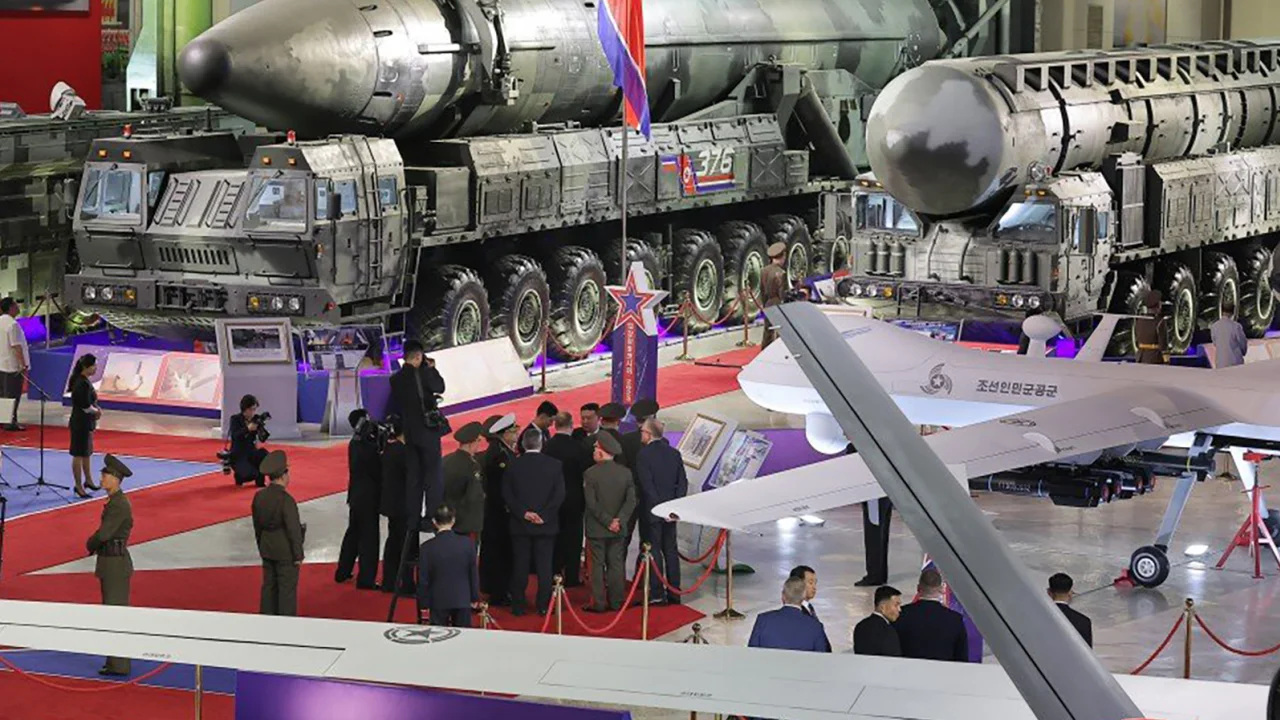
    On Wednesday, North Korean leader Kim Jong Un gave Russian Defence Minister Sergei Shoigu a tour of a defence exhibition in Pyongyang. Images from North Korean media show them passing a variety of weapons, from Pyongyang’s nuclear-capable ballistic missiles to its newest drones. Shoigu was a key architect of Moscow’s assault on Ukraine.

    According to a report from the state-run Korean Central News Agency (KCNA), North Korean Defence Minister Kang Sun Nam expressed Pyongyang’s full support “for the just struggle of the Russian army and people to defend the sovereignty and security of the country” at a state reception for Shoigu and the Russian delegation in a reference to the conflict in Ukraine.

    Shoigu then made his own comments, claiming that the Korean People’s Army (KPA) has “become the strongest army in the world” and promising to continue working together to maintain this status.

    Senior North Korean official Kim Song Nam expressed gratitude to Chinese forces for participating in the Korean War on Wednesday at a reception for the delegation led by Politburo member Li Hongzhong, saying North Korea “would not forget forever the heroic feats and merits of the bravery soldiers who recorded a brilliant page in history.”

    The attendance of the Chinese and Russian delegations at the armistice anniversary, according to Ankit Panda, Stanton Senior Fellow in the Nuclear Policy Programme at the Carnegie Endowment for International Peace, “underscores the importance Pyongyang attaches to its relationships with both countries.”

    Shoigu’s presence stands out in particular because it demonstrates how close Pyongyang and Moscow have grown since Russia’s invasion of Ukraine last year, according to Panda.

    The Korean War, which lasted from 1950 to 1953 and was one of the first global hostilities of the Cold War era, came to a conclusion on Thursday, marking its 70th anniversary.

    In the autumn of 1950, China dispatched a quarter of a million soldiers onto the Korean Peninsula to help its ally North Korea and drive out the combined forces of South Korea, the United States, and other nations fighting under the United Nations Command.

    In the Korean War, also known in Beijing as the War to Resist US Aggression and Aid Korea, more than 180,000 Chinese soldiers lost their lives.

    The Soviet Union, which preceded Russia, also helped North Korea during the conflict by supplying heavy weapons like tanks and providing military assistance by sending Soviet aircraft to engage US fighters.

    Despite Pyongyang’s claims of victory, the conflict it started in 1950 ended in a standoff, leaving the demilitarised zone that exists today along the 38th parallel largely where it did before the conflict.

    Although a genuine peace agreement has never been signed, the Korean War armistice that was signed on July 27, 1953, put an end to hostilities.

    After the war, the US, which served as the focal point of the UN Command that supported South Korea, had a sizable number of soldiers stationed at several army and air sites in the South. The largest US military base abroad is Camp Humphreys, located in Pyeongtaek, south of Seoul.

    In the meantime, Moscow has consistently supported North Korea throughout the years, particularly given their shared hostility to the West. The same is true of the Chinese Communist Party, particularly under the leadership of Xi Jinping, the country’s current president.

    Panda emphasised how Pyongyang’s interests have been upheld before the UN Security Council by both Moscow and Beijing, permanent members of the organisation, as Western nations led by the US have attempted to impose additional sanctions on North Korea.

    With regard to Ukraine, a former Soviet state that Russia invaded in February 2022 after declaring it to be historically Russian territory, the three authoritarian nuclear powers are now putting up a united front.

    That invasion quickly came to a halt as the Ukrainians mounted a valiant defence of their country and Western powers hurried to transfer arms and ammunition to Kiev as Moscow depleted its own supplies and turned to friends like Iran and North Korea for reinforcements.

    Last year, US officials claimed that North Korea was supplying Russia with millions of rockets and artillery shells for use in the conflict in Ukraine.

    And as the war in Ukraine enters its 18th month, China, although not giving Russia any arms, has remained solidly in Moscow’s camp, with Xi expanding his connection with Putin and mirroring the Kremlin’s rhetoric on the war.

    Following the Wagner mercenary group’s brief mutiny in Russia last month, a spokeswoman for the Chinese Foreign Ministry declared support for the Putin administration.

    An online statement read, “China supports Russia in maintaining national stability and achieving development and prosperity as its friendly neighbour and comprehensive strategic partner of coordination for the new era.”

    The People’s Liberation Army’s English website states that the militaries of China and Russia have been active in the waters off the Korean Peninsula. Their most recent joint exercise, Northern/Interaction-2023, brought together naval and air forces from both nations in drills aiming to “strengthen both sides’ capabilities of jointly safeguarding regional peace and stability and responding to various security challenges.”

    The US Navy’s nuclear-capable ballistic missile submarine made its first port call in South Korea in forty years during those manoeuvres in the waters between the Korean Peninsula and Japan, which also coincided with military demonstrations by South Korea and the US.

    A military parade in the city’s centre was scheduled to take place on Thursday as part of Pyongyang’s commemorations of the armistice. North Korea frequently exhibits its newest weapons at significant points in its history.

    The Hwasong-18 ICBM, a solid-fueled, nuclear-capable missile that North Korea claims could target any location in the United States, is one such weapon that could be on show. Two times this year, most recently earlier this month, it has tested the missile.

  • Countries that have ‘stopped’ using the US dollar for trade

    Countries that have ‘stopped’ using the US dollar for trade

    One of the strongest currencies in the world has long been the US dollar.

    But in recent times, some countries have made the decision to de-dollarize.

    De-dollarisation refers to countries reducing their dependence on the U.S. dollar as a reserve currency, medium of exchange, or as a unit of account.

    Developed economies like China and Russia currently trade in their own currencies.

    Also, Brazil has dropped the dollar in bilateral trade.

    According to geopoliticaleconomy.com, the UAE is selling China its gas in yuan through a French company.

    On the other hand, Southeast Asian nations in ASEAN are de-dollarizing their trade and promoting local payment systems.

    Currently, an African country, Kenya, is buying Persian Gulf oil with its own currency.

    With Ghana in perspective, how long could it take for Ghana to follow this path?

    Ghana’s current economic crisis is largely due to the fact that it has been shut out of the international capital market.

    This means that the inflow of foreign currency, especially the dollar, has reduced significantly. The government has, however, been relying heavily on Treasury bills.

    De-dollarization could be a solution to the depreciation of Ghana’s currency in the long run.

    This is because trading in one’s own currency reduces one’s exposure to currency risks and external global shocks.

  • South Africa to engage in military training with China and Russia

    South Africa to engage in military training with China and Russia

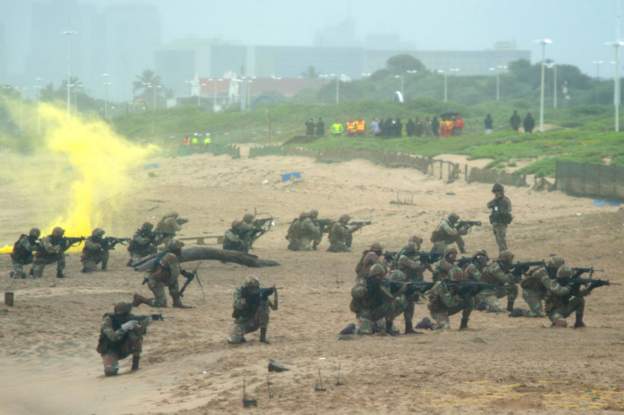
    The South African military has announced that it will conduct joint military exercises with China and Russia off its coast the following month.

    The drills will run for 10 days from 17 February to 27 February in the port city of Durban and Richards Bay.

    The aim is sharing operational skills and knowledge, the South African National Defence Force (SANDF) said.

    South Africa was among African countries that abstained from taking sides in Russia’s invasion of Ukraine. The country assumed the chairmanship of the Brics group of nations – which brings together Brazil, Russia, India and China – last month.

    This will be the second time such a military drill is taking place. The first was held in November 2019 in Cape Town.

    “This year’s exercise will see over 350 SANDF personnel from various arms of services and divisions participating,” said SANDF.

    Source: BBC

  • New China export regulations hit US chip manufacturers

    Concerns over new US limitations on the selling of artificial intelligence chips to China have caused shares of major chipmakers Nvidia and AMD to decline.

    To address the possibility of chips being “used in, or diverted to a’ military end use’… in China and Russia,” according to Nvidia, the US government needs a new license, starting immediately.

    There are worries that the rule will result in millions of dollars in revenue being lost.

    Shares of both chipmakers slipped in after-hours trading in New York.

    Nvidia’s shares were down by 6.6% while AMD slipped by 3.7%.

    The new restrictions are a “gut punch for Nvidia”, Dan Ives of Wedbush Securities told the BBC.

    Chinese officials have firmly opposed the latest move. According to state media, “actions from the United States deviated from the principle of fair competition and violated international economic and trade rules”.

    In a statement, Beijing said, “The US side should immediately stop its wrongdoing, treat companies from all over the world including Chinese companies fairly, and do more things that are conducive to the stability of the world economy.”

    The US Commerce Department told the BBC it was “not in a position to outline specific policy changes at this time”.

    “We are taking a comprehensive approach to implementing additional actions necessary related to technologies, end-uses, and end-users to protect US national security and foreign policy interests,” a Commerce Department spokesperson said.

    “This includes preventing China’s acquisition and use of US technology in the context of its military-civil fusion program to fuel its military modernization efforts, conduct human rights abuses, and enable other malign activities.”

    In a US regulatory filing on Wednesday, Nvidia said the new license requirement would hit exports of its A100 and H100 chips, which are designed to speed up machine learning tasks, and the systems which include them.

    Around $400m (£345.2m) in sales to China could be affected, Nvidia added, “if customers do not want to purchase the company’s alternative product offerings or if the (US government) does not grant licenses in a timely manner or denies licenses to significant customers”.

    An Nvidia spokesperson told BBC it was liaising with customers in China “to satisfy their planned or future purchases with alternative products”.

    Meanwhile, an AMD spokesperson said the rules, which would prevent the shipment of its MI250 chips to China, were not expected to have “a material impact” on business.

    Both Nvidia and AMD halted sales to Russia after the invasion of Ukraine in February.

    Analysts said the US requirements could make it more difficult for China to acquire chips for advanced computing.

    It could also affect the earnings of US manufacturers such as Nvidia and AMD, said Mario Morales, a California-based analyst at market intelligence firm IDC.

    “Both companies have a large exposure to China and could see more impact going forward, especially if China chooses to retaliate,” Mr Morales said.

    Rising tensions

    Last week, Nvidia reported revenue of $6.7bn in the second quarter, which was significantly lower than forecasts.

    However, it said revenue from its data center business – which produces computer chips – surged by 61% from a year earlier.

    “This is really a shot across the bow at China and it’s really going to fan those flames in terms of geopolitical (tensions). Nvidia’s caught in the crossfire,” Mr Ives said.

    US and China have been locked in a long-running dispute over trade and technology.

    Tensions between the world’s two biggest economies rose earlier this month after US politician Nancy Pelosi made a controversial visit to Taiwan.

    China sees the self-ruled island as a part of its territory and insists it should be unified with the mainland, by force if necessary.

  • China sends warships, jets close to Taiwan as tensions rise in strait

    As tensions grew in the area following US House Speaker Nancy Pelosi’s visit to the island this week, Chinese warships and aircraft carried out military drills in the vicinity of Taiwan on Friday, according to the island’s Defense Ministry.

    The ministry said Chinese People’s Liberation Army (PLA) forces crossed the median line — the halfway point between the island and mainland China — in a move it called a “highly provocative act.”
    The line has previously been an informal but largely respected border of control between Beijing and Taipei.
    Taiwan’s military responded with radio warnings and put air patrol forces, naval ships and shore-based missile systems on alert, the ministry added.
    On Friday, Taiwan’s Premier Su Tseng-chang said the island represented “freedom and democracy,” and that “the evil neighbor next door flexed its muscles on our doorstep and arbitrarily sabotaged (one of) the busiest waterways in the world with military exercises.”
    The skies and waters around Taiwan have become a focal point as Beijing ramps up tensions not only with Taiwan, but with neighboring Japan, which lodged a formal protest with China after five projectiles landed in Japan’s Exclusive Economic Zone (EEZ).
    The missiles were among a number launched by Beijing Thursday — some of which flew over Taiwan — as Pelosi made her way to Tokyo where she met with Japanese Prime Minister Fumio Kishida on Friday.
    China has previously fired missiles into waters surrounding Taiwan — a democratic island of 24 million that the Chinese Communist Party regards as its territory, despite having never controlled it — most notably during the Taiwan Strait Crisis in the 1990s.
    But missiles flying over the island marked a significant escalation, with US officials warning there may be more to come.
    “We anticipated that China might take steps like this — in fact, I described them for you in quite some detail just the other day,” John Kirby, a spokesperson for the US National Security Council, told reporters at the White House on Thursday. “We also expect that these actions will continue and that the Chinese will continue to react in the coming days.”
    A US aircraft carrier will stay in the area around Taiwan for several more days to “monitor the situation,” Kirby added.
    On Friday, Kishida said the Chinese military drills were “a serious issue concerning the security of our country and its people” and called for an immediate halt to the exercises.
    Japan and the US would “work together to maintain stability in the Taiwan Strait,” he added.
    Speaking in Tokyo on Friday, Pelosi accused China of trying “to isolate Taiwan,” pointing to the island’s exclusion from international groups like the World Health Organization.
    “They may try to keep Taiwan from visiting or participating in other places, but they will not isolate Taiwan by preventing us to travel there,” she said.
    She added that her visit to Taiwan had been about maintaining the status quo, not changing it.
    Later on Friday, China’s Foreign Ministry said it was imposing sanctions on Pelosi and her immediate family for “seriously interfering in China’s internal affairs (and) seriously undermining China’s sovereignty and territorial integrity.”

    Missiles posed ‘no risk’

    China started military drills around the island on Thursday, firing multiple missiles toward waters near northeastern and southwestern Taiwan the day after Pelosi’s departure.
    A Chinese military expert confirmed on state broadcaster CCTV that the conventional missiles flew over Taiwan’s main island, including airspace covered by Taiwanese defense missiles.
    “We hit the targets under the observation of US Aegis combat system, which means the Chinese military has solved the difficulties of hitting long-range targets on waters,” said Maj. Gen. Meng Xiangqing, a professor of strategy at the National Defense University in Beijing.
    In a statement late Thursday, Taiwan’s Defense Ministry said the missiles had traveled above the atmosphere and therefore posed no risk to the island.
    Authorities did not trigger air raid alerts because they predicted the missiles would land in waters east of Taiwan, the ministry said.
    The ministry added it would not release further information about the missiles’ trajectory to protect its intelligence-gathering capabilities.

    China fires missiles near Taiwan in live-fire drills as PLA encircles island

    China fires missiles near Taiwan in live-fire drills as PLA encircles island
    Five ballistic missiles are believed to have landed within Japan’s EEZ, including four believed to have flown over Taiwan, said Japan’s Defense Ministry on Thursday.
    “This is a serious problem that concerns Japan’s security and the safety of its citizens. We strongly condemn it,” Japan’s Defense Minister Nobuo Kishi told reporters during a news conference.
    China also sent 22 warplanes into Taiwan’s air defense identification zone (ADIZ) on Thursday — all of which crossed the median line.
    It follows similar Chinese incursions a day earlier across the median line.
    Thursday’s incursions were made by 12 Su-30 fighter jets, eight J-11 fighter jets, and two J-16 fighter jets, Taiwan’s Defense Ministry said in a statement.
    Later Thursday, the ministry said it detected four drones flying over “restricted waters” around the Taiwan-controlled Kinmen islands near mainland China.
    The ministry said Taiwan’s military fired flares to warn the drones away, but did not specify the type or origin of the devices.

    China's People's Liberation Army (PLA) conducts missile tests into the waters off the eastern coast of Taiwan, from an undisclosed location on August 4, 2022.

    On Friday, a spokesperson from Taiwan’s Foreign Ministry said the government’s English website and the ministry website had both detected a large number of attacks on Tuesday — the day Pelosi landed in Taiwan.
    The IP addresses behind the attacks came from China and Russia, among other locations, with the intention of paralyzing the government sites, said the spokesperson.
    She added that the websites were back to normal after emergency repair work, but “massive attacks with malicious intent .. by overseas hostile forces” continued on Thursday and Friday.

    Disruptions to trade

    In a speech on Thursday, Taiwan’s President Tsai Ing-wen condemned China’s military drills as “irresponsible,” saying they marked a “deliberate and continuous escalation of military threats.”
    “I must emphasize that, we do not seek to escalate conflicts or provoke disputes, but we will firmly defend our sovereignty and national safety, as well as safeguarding democracy and freedom,” she added.
    She also thanked the Group of Seven, comprised of the world’s largest economies, which released a statement on Wednesday voicing concern over China’s live-fire exercises and urging Beijing not to change the status quo in the region.
    The exercises have also caused disruption to flight and ship schedules, with some international flights canceled and vessels urged to use alternative routes for several ports around the island.
    On Tuesday, the Chinese Defense Ministry said it would hold its exercises in six zones around Taiwan, warning ships and aircraft to stay out of the areas during the drills.
    The Taiwan Strait is a key trade route for vessels carrying goods between major economies in northeast Asia such as China, Japan, and South Korea, and the rest of world.

    Source : cnn.com