Tag: china virus

  • Coronavirus: China bars foreign visitors as imported cases rise

    China has announced a temporary ban on all foreign visitors, even if they have visas or residence permits.

    The country is also limiting Chinese and foreign airlines to one flight per week, and flights must not be more than 75% full.

    Although China reported its first locally-transmitted coronavirus case for three days on Friday, almost all its new cases now come from abroad.

    There were 55 new cases across China on Thursday – 54 of them from overseas.

    The Chinese Foreign Ministry said it was “suspending the entry of foreign nationals” because of the “rapid spread of Covid-19 across the world”.

    The suspension applies to people with visas and residence passes, but not to diplomats or those with C visas (usually aircraft crew).

    People with “emergency humanitarian needs” or those working in certain fields can apply for exceptions.

    Although the rules seem dramatic, many foreign airlines had already stopped flying to China – and a number of cities already had restrictions for arrivals.

    Last month, for example, Beijing ordered everyone returning to the city into a 14-day quarantine.

    Although the virus emerged in China, it now has fewer cases than the US and fewer deaths than Italy and Spain.

    There have been 81,340 confirmed cases in China and 3,292 deaths, the National Health Commission said on Friday.

    In total, 565 of those confirmed cases were classed as “imported” – either foreigners coming into China, or returning Chinese nationals.

    In Hubei – the province where the outbreak began – there were no new confirmed or suspected cases on Thursday.

    The lockdown in provincial capital Wuhan, which began in January, will be eased on 8 April.

    Source: bbc.com

  • China reports rise in imported virus cases

    China reported on Tuesday an increase in cases of the new coronavirus coming from abroad, as the country where the disease first emerged now worries about importing infections.

    In total there have been 13 confirmed cases of the virus being imported into the mainland — all Chinese nationals returning from overseas.

    More than 3,100 people have died and over 90,000 have been infected worldwide.

    The vast majority of cases are in China but South Korea, Italy and Iran have emerged as the countries with the most cases outside the epicentre.

    Eight Chinese nationals who worked in the same restaurant in Italy’s northern Lombardy region have tested positive for the virus in eastern Zhejiang province, according to the local government.

    They flew back into China from Italy last week.

    There have also been four confirmed cases travelling back from Iran — two in Beijing and two in the northern Ningxia region — plus one case in the southern city of Shenzhen who had travelled from the UK via Hong Kong.

    Beijing has been implementing a series of measures to try and prevent its containment efforts being undone by imported cases carried into the country.

    Hundreds of passengers from South Korea arriving in eastern China were placed in isolation after people on two flights were discovered to have fevers last week.

    No infections have been confirmed so far.

    Those arriving in the capital city from virus-hit areas are being made to self-quarantine for 14 days.

    On Tuesday officials in the city of Dandong, which borders North Korea, announced that everyone coming into the city from overseas will have to be tested for the coronavirus.

    Source: AFP

  • Coronavirus outbreak: Death toll surpasses total from SARS outbreak

    Another 89 people died in China’s Hubei province on Saturday, bringing the total death toll around the world to at least 813.

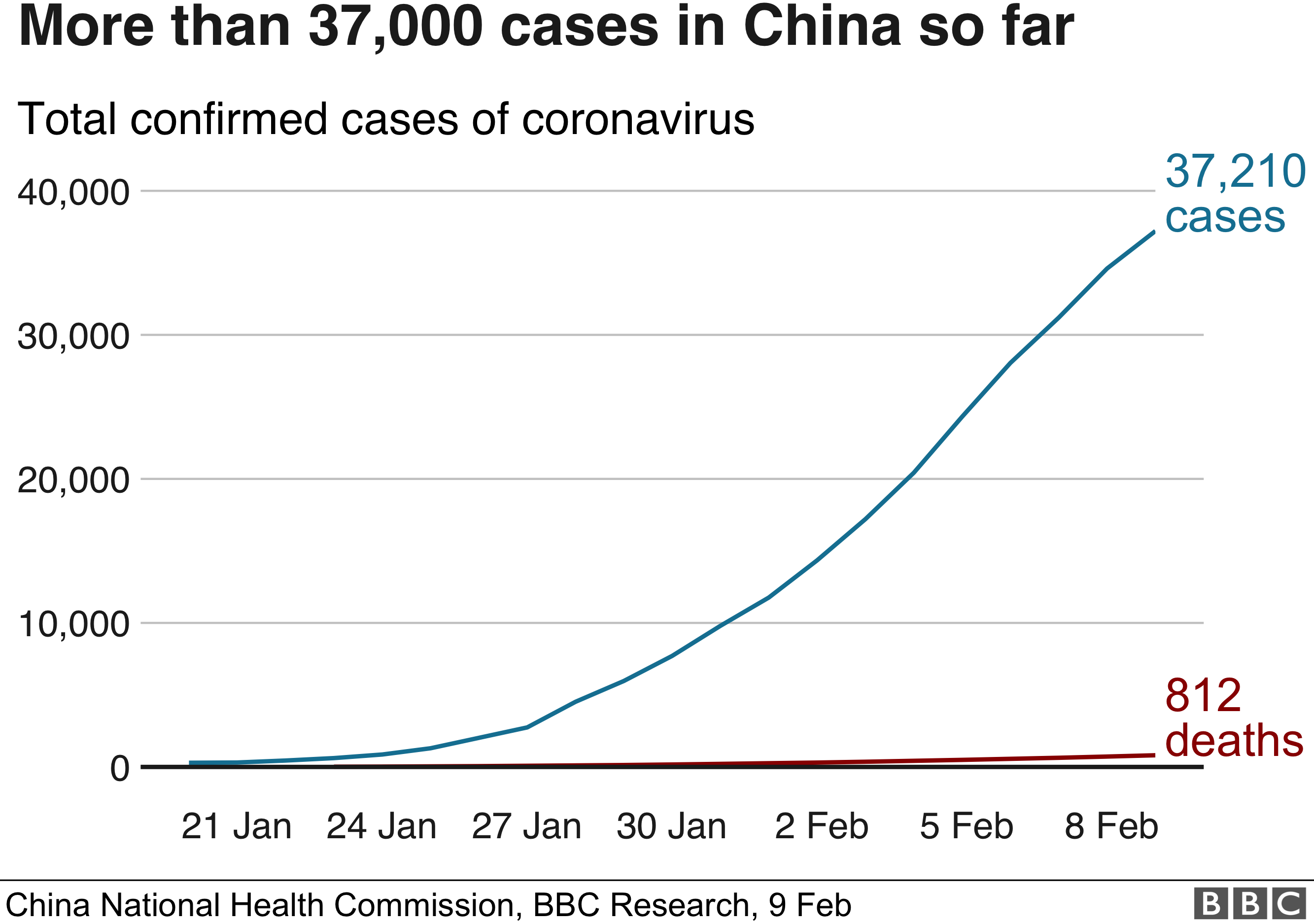
    The number of confirmed cases has risen to at least 27,100 in Hubei province alone, with the global number of infected now at more than 37,000 — the vast majority in mainland China.

    The number of people killed by the novel coronavirus globally has now overtaken the total death toll for the SARS outbreak in 2003, which killed a total of 774 people across the world.

    The World Health Organization has announced it will be sending a team to China to investigate the outbreak of the deadly virus, with the team leader leaving for the country on Monday or Tuesday.

    A total of 16 people have tested positive for Wuhan coronavirus in Malaysia, according to a report from state news agency Bernama today.

    Out of those, 12 of the 16 cases are Chinese nationals, while the four others are Malaysians.

    On Friday, Malaysia announced it would extend its temporary travel ban from only Hubei — the epicenter of the outbreak — to all provinces in China under lockdown due to the virus, according to state media.

    The government also said it would make arrangements to repatriate 212 Malaysian embassy and consulate staff in China, and 34 citizens currently in Wuhan.

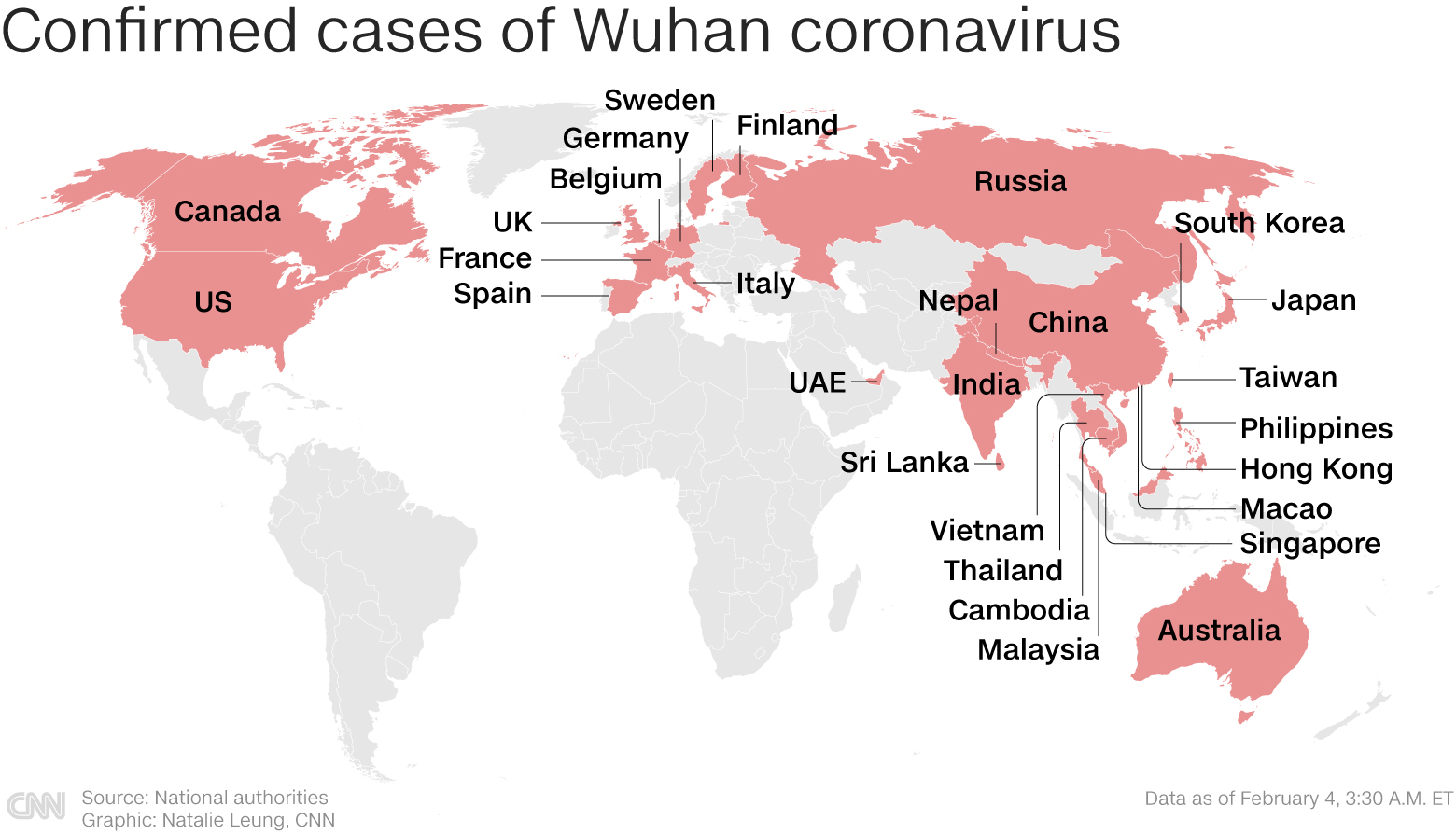
    This is where coronavirus cases have been confirmed worldwide

    The new coronavirus has now spread to more than 25 countries and territories outside of mainland China, with over 350 people infected as of today.

    In response, the World Health Organization (WHO) has declared the outbreak a public health emergency of international concern.

    With Malaysia, South Korea and Singapore all announcing new cases today, here is where the numbers currently stand:

    • Australia (at least 15 cases)
    • Belgium (at least 1 case)
    • Cambodia (at least 1 case)
    • Canada (at least 7 cases)
    • Finland (at least 1 case)
    • France (at least 11 cases)
    • Germany (at least 13 cases)
    • Hong Kong (at least 26 cases, 1 death)
    • India (at least 3 cases)
    • Italy (at least 3 cases)
    • Japan (at least 90 cases, including 64 in cruise ship quarantine)
    • Macao (at least 10 cases)
    • Malaysia (at least 16 cases)
    • Nepal (at least 1 case)
    • Philippines (at least 3 cases, 1 death)
    • Russia (at least 2 cases)
    • Singapore (at least 40 cases)
    • South Korea (at least 25 cases)
    • Spain (at least 1 case)
    • Sri Lanka (at least 1 case)
    • Sweden (at least 1 case)
    • Taiwan (at least 17 cases)
    • Thailand (at least 32 cases)
    • United Arab Emirates (at least 7 cases)
    • United Kingdom (at least 3 cases)
    • United States (at least 12 cases)
    • Vietnam (at least 13 cases)

    Source: myjoyonline.com

  • He spoke out about the Wuhan virus. Now his family and friends fear he’s been silenced

    As people across China mourned the death of a whistleblower doctor in an almost unprecedented outpouring of grief and anger on Thursday, little did they know that another truth-teller of the coronavirus outbreak was being silenced, according to friends and family.

    Chen Qiushi, a citizen journalist who had been doing critical reporting from Wuhan, the central Chinese city at the epicenter of the outbreak, went missing on Thursday evening, just as hundreds of thousands of people in China began demanding freedom of speech online.
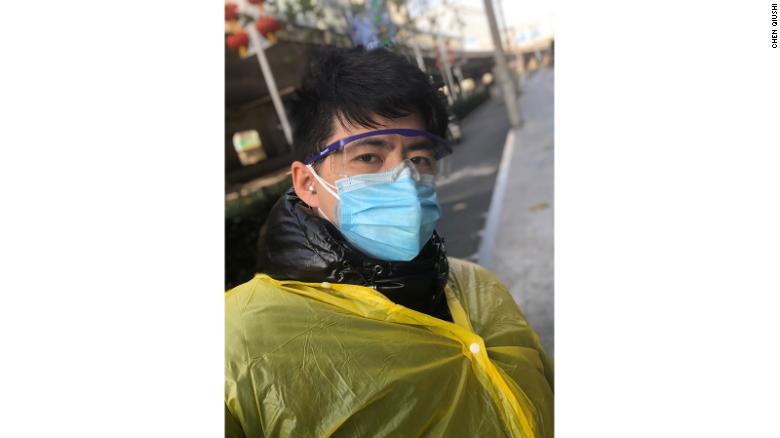
    Chen Qiushi, a citizen journalist who had been reporting on the coronavirus outbreak in Wuhan, could no longer be reached by friends and family since Thursday.
    Chen Qiushi, a citizen journalist who had been reporting on the coronavirus outbreak in Wuhan, could no longer be reached by friends and family since Thursday.

    Li Wenliang, a 34-year-old ophthalmologist in Wuhan, died of the same virus he had tried to warn others about early on in the outbreak, which has now killed more than 800 people mostly in mainland China. Rather than being listened to, he was punished by the police for “spreading rumors,” and later contracted the virus from a patient.

    Li’s passing ignited a storm of outrage across China, with an intensity and scope rarely seen in its tightly-controled online sphere. People called for an official apology from the government and flooded social media with the hashtag “I want freedom of speech,” a fundamental right supposedly protected under the country’s constitution.

    In an apparent refute of their demand, the hashtag was censored by the next morning.

    And Chen, also aged 34 and from northeast China, like Li, remained missing.

    Friends and family later found out from the police that he had been forced into quarantine. By Sunday, Chen’s disappearance had started to gain traction on Weibo, China’s Twitter-like platform, with many pleading for his release.

    “Hope the government can treat Chen Qiushi in a fair and just way,” one user wrote on Sunday morning. “We can no longer afford a second Li Wenliang!”

    Detained in the name of quarantine

    Chen arrived in Wuhan on January 24, a day after the city was placed under a state-imposed lockdown, designed to stop citizens from leaving to stem the spread of the virus. He visited overflowing hospitals, funeral parlors and makeshift isolation wards and uploaded videos of what he saw online, offering the world a glimpse into the often grim reality at the heart of the crisis.

    Friends said they had been checking in with Chen multiple times a day, fearing he could be taken by the authorities at any time for his reporting. When he stopped answering calls early Thursday evening, they grew increasingly concerned.

    In the small hours of Friday, Chen’s friend posted a video message of Chen’s mother on his Twitter page saying her son had disappeared. His close friends say Chen had left them his login details to the platform, in case he was taken by the authorities.

    “I’m here to beg everyone online, especially friends in Wuhan to help find Qiushi, find out what’s going on with him,” she said.

    Xu Xiaodong, a mixed martial artist wrestler and friend of Chen, quoted Chen's mother as saying Chen had been forcefully quarantined.
    Xu Xiaodong, a mixed martial artist wrestler and friend of Chen, quoted Chen’s mother as saying Chen had been forcefully quarantined.

    Later that evening in a live broadcast on YouTube, Xu Xiaodong, an outspoken mixed martial artist and friend of Chen, played a message from the journalist’s mother saying he had been forcibly quarantined.


    “In the last few hours the Qingdao public security officers and state security officers … notified Qiushi’s parents that Qiushi has already been detained in the name of quarantine. Qiushi’s mother immediately asked them where and when he was taken away, they declined to say,” said Xu.

    Xu stressed that, based on his interactions with Chen and the testimony of those on the ground, Chen had been in good health prior to his disappearance.

    Both the Wuhan and Qingdao city police said they had no information about Chen when contacted by CNN.

    “We’re worried for his physical safety but also worried that while he’s missing he might get infected by the virus,” a friend who had been authorized by Chen to take over his Twitter account should he disappear told CNN. The individual requested anonymity for fear of reprisals by the government.

    ‘I’m not afraid of dying, why should I be afraid of you’

    It is not the first time Chen, a former lawyer, has been silenced by the authorities.

    In August, he visited Hong Kong to report on the semi-autonomous Chinese city’s pro-democracy protests. In his broadcasts on Weibo, he challenged China’s official narrative that protesters were “rioters” and “separatists.” Most of those involved were peaceful, he said in a video, “not all of them are rioters.”

    Chen’s trip ended abruptly with him being called back to Beijing by mainland authorities. Upon his return, he was repeatedly called in for questioning by different government departments, he said in a later video.

    All of Chen’s Chinese social media accounts were subsequently deleted. His 740,000 followers on Weibo, and previously posted video broadcasts, were lost.
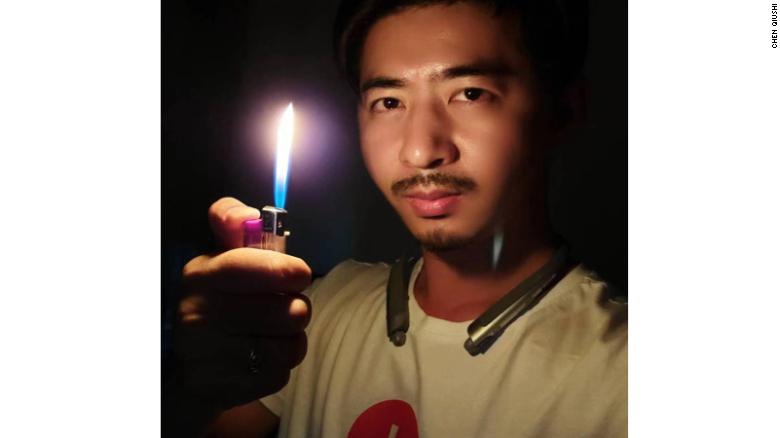
    Chen Qiushi was silenced by authorities last year after reporting on Hong Kong's pro-democracy protests
    Chen Qiushi was silenced by authorities last year after reporting on Hong Kong’s pro-democracy protests

    But Chen was not out of the public eye for long. In early October, he made his comeback in a YouTube video, vowing to continue to speak out. His channel now has 433,000 subscribers. He also has a Twitter account with 246,000 followers. Both platforms are blocked in China, but many citizens use virtual private networks to hop the Great Firewall and access them.

    “Since freedom of speech is a basic citizen’s right written into article 35 of the Chinese constitution, I need to persist because I think this is the right thing to do, no matter how much pressure and obstruction (I) encounter,” he said in the October video.

    And continue to speak out he did. On Lunar New Year’s Eve, when most Chinese people were home for family reunions, Chen hopped on a high-speed train from Beijing to Wuhan.

    “I’ve said before that I’m a citizen journalist. What kind of journalist am I if I don’t rush to the front line when there is a disaster?” he said in his first video in Wuhan, standing in front of the Hankou Railway Station, where he just disembarked from the train, holding a selfie-stick.

    “I will use my camera to witness and document what is really happening under Wuhan’s efforts to contain the outbreak. And I’m willing to help spread the voice of Wuhan people to the outside world,” he said.

    “While I’m here, I promise I won’t start or spread rumors. I won’t create fear or panic, nor would I cover up the truth.”

    Since then, he has served as the eyes and ears for many outsiders who wanted to follow the reality of life on the ground in Wuhan.

    His camera did not shy from the agony and desperation of people suffering from the virus: A person with fever broke down outside a hospital after days of futile attempt to get admitted; patients on oxygen support lay on temporary hospital beds lining crowded hallways; in a hospital corner, a woman in a face mask held tightly onto the ashen body of her deceased relative in a wheelchair, desperately making calls to the morgue.

    “I’m scared, I have the virus in front of me and behind me China’s law enforcement,” Chen said in an emotional video recorded in his hotel room on January 30.

    For protection, Chen only had basic gear — a mask and a pair of goggles. His parents back in Qingdao, on the eastern coast of China, had already been harassed by authorities, he said.

    “But I will keep my spirits up, as long as I’m alive and in this city I will continue my reports,” he said. “I’m not afraid of dying. Why should I be afraid of you, Communist Party?”

    “He is a hero. And he has gone missing”

    In that video, Chen also spoke of the eight “rumormongers” who were punished by Wuhan police for spreading false information about the outbreak. In reality, they were health care workers trying to sound the alarm, and several of them have now come forward in the media. Li is believed by some to be one of the eight.

    “As of now, the Wuhan police has not even offered any apology,” Chen said, his voice raised with indignation.

    A week later, Li died of the coronavirus in the intensive care ward of the hospital where he worked. He was hailed as a hero by millions of heartsick and indignant Chinese people, prompting a remarkable torrent of calls online for freedom of speech rarely seen — or permitted — in China.

    Amid deep and boiling anger, China announced on Friday that the National Supervisory Commission — the Communist Party’s much-feared disciplinary watchdog which operates in secrecy — is dispatching a team to Wuhan to conduct a “full investigation” into Li’s case.

    Chen, meanwhile, remained out of reach by his family, friends and hundreds of thousands of followers. Chinese media has not reported on his disappearance — Chen’s name has long become a sensitive topic in China, as he joked about in one of his videos, joining a growing list of topics that Chinese people are banned from talking about.

    Yet some Chinese social media users have managed to find out about it regardless.

    “There has never been any superhero descending into this world, only ordinary people who throw themselves into the breach,” read a Weibo post under the hashtag of Chen’s name.

    “Because [authorities] don’t agree with his views, he’s not only deprived of the right to speak, but also deprived of his personal freedom?” another user asked.

    Some of those who had not heard of Chen before are now starting to ask about him.

    “Who is Chen Qiushi? Why are there so many people looking for him? Why does the media censor his name?” asked user Li Zhengda, a Weibo “Big V” — the name given to a user with a large followership — verified as a private equity executive.

    “He is a lawyer. He is a journalist. He is someone who dares to go to Wuhan to report the truest conditions when the outbreak is at its most severe stage. He is a hero. And he has gone missing,” read the top reply.

    Source: myjoyonline.com
  • Coronavirus: Thousands on cruise ship allowed to disembark after tests

    Thousands of people stuck on a cruise ship in Hong Kong for four days have been allowed to disembark after tests for coronavirus came back negative.

    Some 3,600 passengers and crew on the World Dream ship were quarantined amid fears some staff could have contracted the virus on a previous voyage.

    Another cruise ship where dozens of cases have been confirmed remains in quarantine off Japan.

    The outbreak has killed 813 people, all but two in mainland China.

    The coronavirus has now killed more people than Sars (severe acute respiratory syndrome). In 2003, that epidemic killed 774 people in more than two dozen countries.

    In the Chinese province of Hubei alone, the epicentre of the coronavirus outbreak, at least 780 people have died, according to regional health officials. More than 34,800 people have been infected worldwide, the vast majority in China.

    Why was the ship quarantined?

    The World Dream was put in quarantine on Wednesday after it emerged that three passengers who had sailed on a previous voyage were later found to have contracted the virus.

    Chief port health officer Leng Yiu-Hong said all crew members – some 1,800 people – had tested negative for coronavirus, and that everyone would be allowed to disembark without the need to self-quarantine after leaving.

    On Sunday, Hong Kong’s health minister said 468 people had been ordered to stay at home, in hotel rooms or government-run centres, one day after officials implemented a mandatory two-week quarantine period for anyone arriving from mainland China.

    “I feel so happy,” says passenger after leaving quarantined cruise ship

    In mainland China, millions of people were preparing to return to work after an extended Lunar New Year break, imposed in an attempt to stop the spread of the virus. However, a high number of companies and businesses will remain closed and many people are expected to work from home.

    In Hebei province, which surrounds the capital Beijing, state media reported schools would remain shut until at least 1 March, while many parts of Hubei province remain on lockdown. Other areas are under severe travel and gathering restrictions.

    What else is happening?

    Several more cases were confirmed on the Diamond Princess cruise ship, which has been in quarantine in the Japanese city of Yokohama for nearly a week, the Kyodo news agency reports. Authorities said on Saturday 64 people had been infected on the ship, which is carrying some 3,700 passengers and crew.

    On Saturday, the chief of the World Health Organization (WHO), Tedros Adhanom Ghebreyesus, said the virus was still concentrated in Hubei, and that it appeared that the number of cases had stabilised slightly over the previous four days.


    Dr Tedros, who previously praised the Chinese government for its measures at the epicentre of the outbreak, reiterated that the slowdown was “an opportunity” to contain the virus.

    Speaking on the BBC’s Andrew Marr Show, China’s ambassador to the UK said it was still “very difficult to predict when we’re going to have an inflection point”, but that the “isolation and quarantine measures have been very effective”.

    Liu Xiaoming called the disease “the enemy of mankind”, but said it was “controllable, preventable, curable” and told people not to panic.

    The BBC’s online health editor on what we know about the virus

    Meanwhile, concerns were growing about the whereabouts of Chinese lawyer and blogger Chen Qiushi, who had posted online videos including of conditions inside hospitals and people queuing up for masks in Wuhan, in Hubei province. Mr Chen, whose content was being widely shared, has been missing since Thursday.

    There are unconfirmed reports that he may have been forced into quarantine. In an interview with the BBC last week, he said he was not sure how long he would be allowed to continue to report on the outbreak, saying: “The censorship is so strict, people’s accounts are being closed down if they share my content”.

    His disappearance comes amid widespread anger and grief across China over the death of Li Wenliang, a doctor who tried to warn fellow medics about the virus in December but was told by police to “stop making false comments” and investigated for “spreading rumours”.

    China has been criticised for its initial handling of the outbreak and accused of trying, in some cases, to keep news of it secret. But Ambassador Liu put the blame of Dr Li’s case on local authorities, saying: “[Dr Li] will be remembered as a hero… and for his brave contribution”.

    Last month, the WHO declared a global health emergency over the new outbreak. Of the two deaths reported outside China, one was in Hong Kong and the other in the Philippines.

    Graph showing total confirmed cases at 9 February 2020: 812 deaths and 37,210 cases


    SOurce: myjoyonline.com

  • Coronavirus kills 97 in deadliest day so far

    The number of people killed by the new coronavirus rose by 97 on Sunday, the highest number of casualties in a day.

    The total number of deaths in China is now 908 – but the number of newly-infected people per day has stabilised.

    Across China, 40,171 people are infected while 187,518 are under medical observation.

    The World Health Organization (WHO) has sent a team of experts to Beijing to help investigate the new virus.

    According to Chinese data, 3,281 patients have been cured and discharged from hospital.

    On Monday, millions of people returned to work after the Lunar New Year break, which was extended from 31 January to curb the spread of the virus.

    But precautionary measures remain in place, including the staggering of working hours, and the selective reopening of workplaces.

    Over the weekend, the number of coronavirus deaths overtook that of the Sars epidemic in 2003 which also originated in China and killed 774 people worldwide.

    The WHO on Saturday said the number of new cases in China was “stabilising” – but warned it was too early to say if the virus had peaked.

    On Sunday evening, the organisation sent an international mission to help coordinate a response to the outbreak.

    The new virus was first reported in Wuhan, the capital of Hubei province. The city of 11 million has been in lockdown for weeks.

    The outbreak was declared a global emergency by the WHO on 30 January.

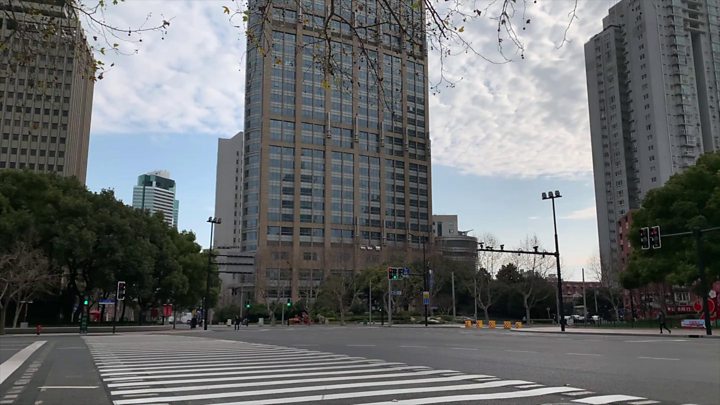
    Coronavirus: Shanghai’s deserted streets and metro

    It has spread to at least 27 other countries and territories, but so far there have only been two deaths outside of mainland China, in the Philippines and Hong Kong.


    Meanwhile in Hong Kong, passengers on a quarantined cruise ship have been allowed to disembark after tests showed no infection among them or its crew.

    The World Dream had been held in isolation after eight passengers from a previous cruise had caught the virus.

    Another cruise ship off Japan remains in quarantine after dozens of cases were confirmed on board.

    South Korea has issued a temporary ban on cruise ships entering its ports due to fears of spreading the virus.

    Source: myjoyonline.com