Tag: Chinese Foreign Ministry

  • China not happy as Taiwan’s vice president intends to visit New York

    China not happy as Taiwan’s vice president intends to visit New York

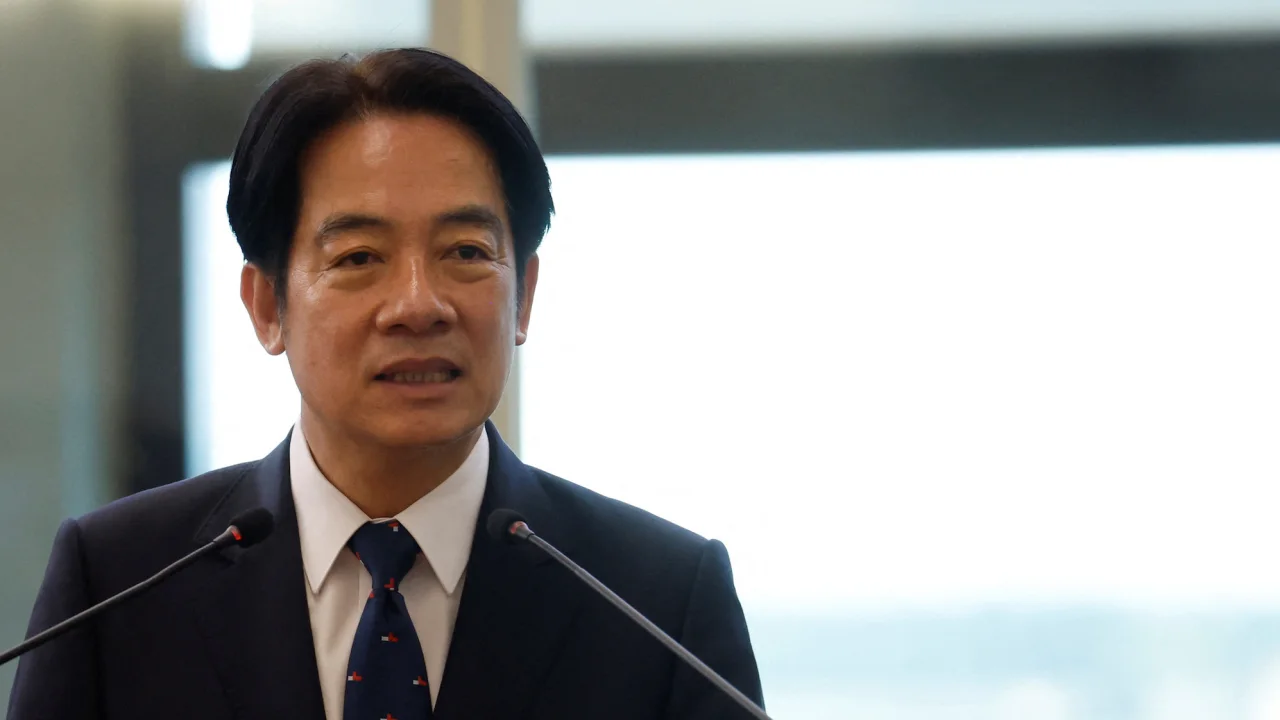
    Taiwan’s vice president and presidential candidate William Lai‘s passage through the United States was denounced by China’s foreign ministry on Sunday, branding him a “troublemaker through and through.”

    Lai arrived in New York on Saturday before travelling to Paraguay, where he will be present for Santiago Pena’s inauguration as president on August 15. The only diplomatic ally of Taiwan in South America is Paraguay.

    Lai claimed in a statement posted on X (formerly known as Twitter) that he was “happy to arrive” in New York, calling it a “icon of liberty, democracy, and opportunities.”

    Officials from the US government stated that they anticipated Lai’s arrival to go “without incident.”

    A senior administration source told CNN on July 16 that such transits were “fairly common” and that they were “unofficial, in keeping with our US One China policy.”

    In January 2022, Lai last travelled via the US.

    Despite never having had authority over it, Taiwan is nevertheless claimed by China’s ruling Communist Party, which has also maintained its intention to seize the autonomous island by force.

    The Chinese foreign ministry quickly after Lai’s arrival declared that it “firmly opposes” any formal contact between the US and Taiwan as well as any “‘Taiwan independence’ separatists to the US.”

    China issued a statement saying, “China regrets and strongly condemns the US decision to organise the so-called’stopover.

    Lai obstinately maintains his separatist stance for “Taiwan independence.” He is a troublemaker from the inside out,” it went on.

    Additionally, the ministry stated that Taiwan was the “core of the core interests of China” and encouraged the US to uphold the one-China concept, adding that it was “closely following” developments and “would take resolute and strong measures to safeguard its sovereignty and territorial integrity.”

    Since the US and the government of Taiwan do not have formal diplomatic relations, travel by Taiwanese officials to the US is referred to as “transits” rather than “visits” because the stopovers are part of an unofficial trip en route to another location.

    According to Taiwan’s vice foreign minister Alexander Yui, Lai is scheduled to pass through San Francisco on August 16 on his way back to Taipei.
  • China says relations with the US are on ‘cold ice,’ but mending relations is a ‘top priority’

    China says relations with the US are on ‘cold ice,’ but mending relations is a ‘top priority’

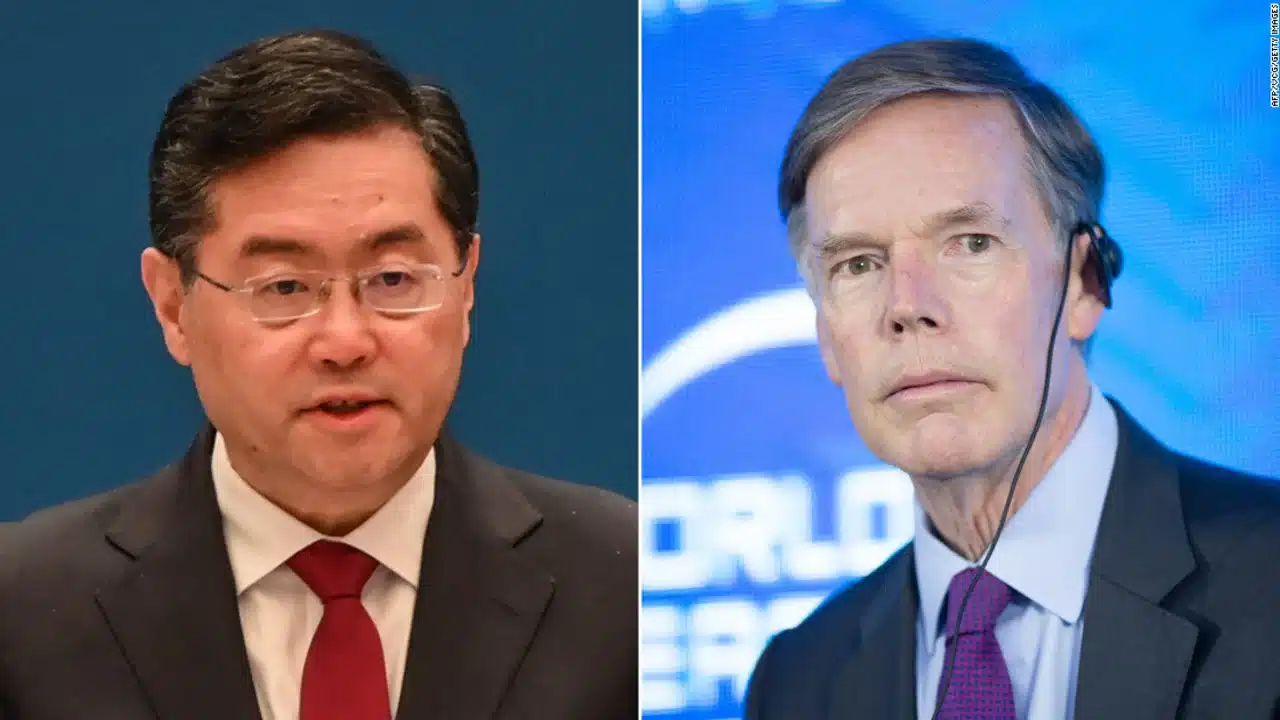
    The stabilization of relations is a “top priority,” according to China‘s foreign minister, who said that the United States has put relations between the two countries on “cold ice” due to a “series of incorrect words and deeds.”

    The exchange took place during Qin Gang’s first encounter with US ambassador Nicholas Burns since an argument over a Chinese balloon derailed efforts to improve relations earlier this year.

    Following Chinese President Xi Jinping’s meeting with US President Joe Biden in Indonesia last year, Qin claimed that US words and actions had damaged “hard-won positive momentum.”

    “The agenda of dialogue and cooperation agreed by the two sides has been disrupted, and the relationship between the two countries has once again hit the cold ice,” he said according to a Chinese Foreign Ministry statement.

    In a brief post on Twitter, Burns said he and Qin discussed “challenges in the US-China relationship and the necessity of stabilizing ties and expanding high-level communication.”

    Tensions between the world’s two biggest economies soared in February after a suspected Chinese spy balloon flew over the continental US and was subsequently shot down by the American military.

    The incident prompted US Secretary of State Antony Blinken to postpone a planned trip to Beijing – a visit seen as an important step in repairing fraught diplomatic ties that are at their worst in decades. There has been no indication whether the trip will be rescheduled.

    “The top priority now is to stabilize Sino-US relations, avoid a downward spiral and prevent any accidents between China and the US,” Qin told Burns, according to the Chinese readout. “This should be the most fundamental consensus between China and the US.”

    Qin urged the US to “reflect deeply” and “meet China halfway” to push bilateral relations out of their current predicament.

    “(The US) can’t talk about communication on the one hand, but keep suppressing and containing China on the other hand,” he said, adding that Washington must respect China’s bottom lines and stop undermining its sovereignty, security and development interests – in particular on the issue of Taiwan, a self-governing democracy Beijing claims as its own.

    Reiterating Beijing’s talking points, Qin urged the US to stop the hollowing out of the “one China” principle and end support for “Taiwan independent” forces.

    Under Washington’s longstanding “one China” policy, the US acknowledges Beijing’s position that Taiwan is part of China, but has never officially recognized the Chinese Communist Party’s claim to the democratic island of more than 23 million. Under the Taiwan Relations Act, Washington is also bound by law to provide Taiwan with the means to defend itself.

    Under Xi, China has ramped up economic, diplomatic and military pressure on Taiwan in recent years, increasing fears he may one day make an attempt to follow through on his goal of “reunifying” the island with the mainland.

    Monday’s meeting was Qin’s first with Burns since the former Chinese ambassador to the US was promoted to foreign minister in December.

    It also followed Burns’ comments last week that the US is “ready to talk” to China.

    “Our view is we need better channels between the two governments and deeper channels, and we are ready to talk,” Burns said at an event at the Stimson Center, which he attended virtually.

    “We’ve never been shy of talking, and we hope the Chinese will meet us halfway on this,” he said.

    Beijing cut off talks with Washington on major issues, from climate change to military relations, in August last year in response to then US House Speaker Nancy Pelosi’s high-profile visit to Taipei.

    The two sides resumed climate talks following Xi and Biden’s meeting on the sidelines of the G20 summit in Bali, Indonesia last November.

    Burns told the Stimson Center event that the US has been calling on China to open all of the channels suspended following Pelosi’s Taiwan trip. He reiterated Blinken’s visit to China would be rescheduled “when conditions are appropriate.”