Tag: Chinese President Xi Jinping

  • Blinken and Xi Jinping’s crucial meeting in China coming to an end

    Blinken and Xi Jinping’s crucial meeting in China coming to an end

    Meeting between Chinese President Xi Jinping and top American diplomat Antony Blinken on Monday in Beijing might be a key step towards mending US-China relations, which broke down earlier this year after a dispute over a Chinese surveillance balloon.

    Blinken is the first US Secretary of State to travel to Beijing in five years, and his discussions with senior Chinese officials are regarded as a crucial litmus test for whether a detente can be established during a period of persistent mistrust.

    Uncertainty around whether Xi and Blinken would meet during the two-day visit further highlighted the fraught US-China relations and a failure to schedule a face to face would have been seen by Washington as a slight, breaking with a number of previous visits from top American diplomats.

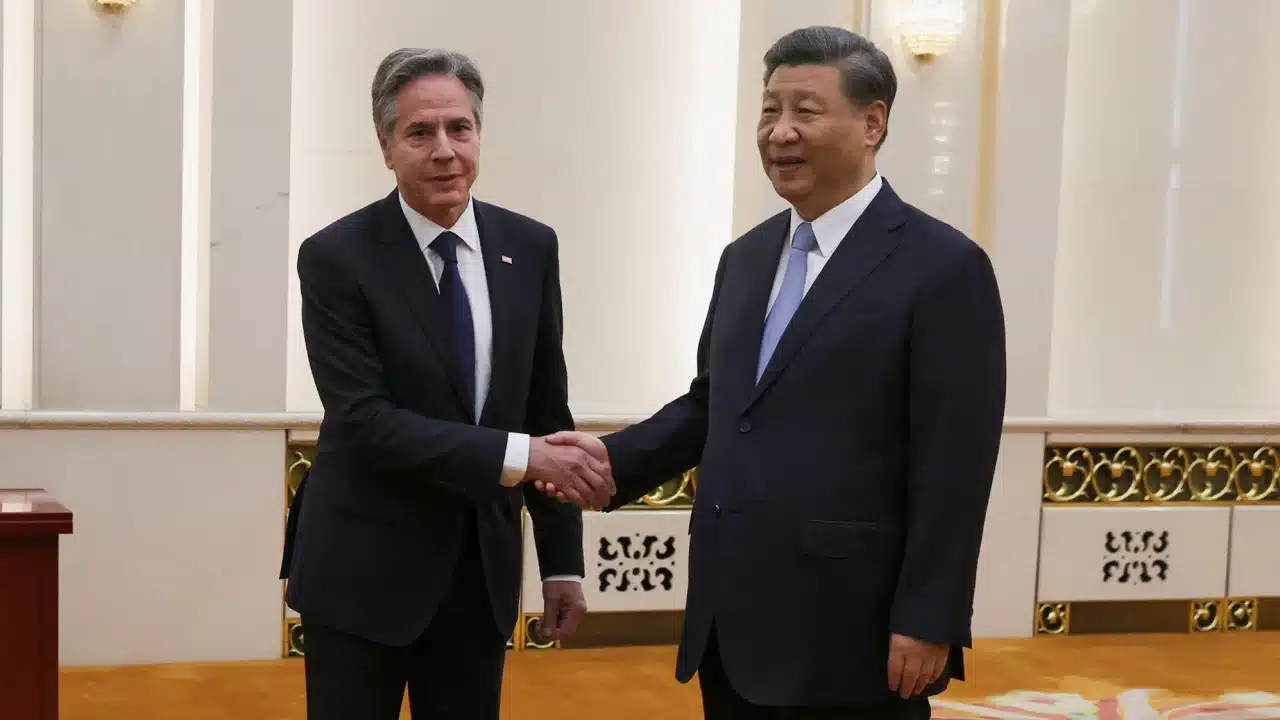
    The meeting, which took place at Beijing’s cavernous Great Hall of the People, was only publicly announced by the US about an hour before it went ahead. It lasted roughly half an hour, beginning at 4:34 p.m. local time and ended at 5:09 p.m., a State Department official said.

    “The world needs an overall stable Sino-US relationship, and whether China and the United States can get along has a bearing on the future and destiny of mankind,” Xi told Blinken according to a Chinese readout of the meeting.

    “China respects the interests of the United States and will not challenge or replace the United States. Similarly, the United States must also respect China and not harm China’s legitimate rights and interests,” Xi added.

    The two global powers have been increasingly at loggerheads over a host of issues ranging from Beijing’s close ties with Moscow to American efforts to limit the sale of advanced technologies to China.

    Key among those concerns has been repairing fractured lines of communication, which have broken down over the past year, especially when it comes to high-level military exchanges – raising concerns in Washington that a mistake or accident could quickly spin into conflict.

    Earlier this year a Chinese surveillance balloon – detected floating across the US and hovering over sensitive military sites before ultimately being shot down by an American fighter plane – sent relations plunging to a new low and resulted in Blinken scrapping an earlier Beijing visit.

    This time, the diplomatic mission went forward.

    A roughly three-hour meeting between Blinken and China’s top foreign affairs adviser Wang Yi earlier Monday underscored the deep challenges in overcoming the mistrust and friction that has come to characterize the relationship.

    The Chinese government’s growing clout internationally and increasingly authoritarian controls at home have pushed the US to reframe how it manages its relations with the power in recent years.

    Repeating Beijing’s typical rhetoric, Wang blamed Washington’s “wrong perception” of China as the “root cause” of the decline in the two sides’ relations and demanded the US stop “suppressing” China’s technological development and hyping the “China threat,” according to a readout from Chinese state broadcaster CCTV.

    “We must reverse the downward spiral of China-US relations, promote a return to a healthy and stable track, and jointly find the right way for China and the United States to co-exist in the new era,” Wang said, adding that Blinken’s visit came at “a critical juncture in US-China relations, where a choice needs to be made between dialogue or confrontation, cooperation or conflict.”

    Wang also reiterated that Taiwan is one of one of China’s “core interests,” over which it “has no room for compromise or backdown.”

    The self-ruling democratic island, which China’s ruling Communist Party claims but has never controlled, has increasingly been another flashpoint in the US-China relationship.

    During the meeting, Blinken underscored the need for the countries to “responsibly” manage their competition through “open channels of communication” to ensure it “does not veer into conflict,” State Department spokesperson Matthew Miller said in a statement.

    The US would continue to use its diplomacy to “stand up for the interests and values of the American people,” Blinken said, according to the statement, which described the talks as “candid and productive” and said they including discussion of potential cooperation on shared transnational challenges.

    Overall, Wang’s comments took a more combative tone than those of China’s Foreign Minister Qin Gang, who met with Blinken the previous day. Qin said both sides agreed to “advance dialogue, exchanges and cooperation” and “maintain high-level interactions,” according to a readout from Beijing.

    Blinken’s Sunday meeting with Qin, which stretched more than five hours and then wrapped with a working dinner, resulted in progress “on a number of fronts,” with both sides showing a “desire to reduce tensions,” a senior State Department official told reporters Sunday.

    “Profound differences” between the US and China, however, were also clear during the meeting, the official added.

    Neither side have mentioned concrete agreements so far.

    While Qin holds the title of Foreign Minister, he wields less power than Wang, who directs the country’s foreign policy through his position among party’s core leadership.

    Blinken’s original scheduled visit in early February had been agreed on as a follow-up to an amicable face-to-face between US President Joe Biden and China’s Xi on the sidelines of the G20 in Bali in November.

    That meeting – the first in person between the two leaders as presidents – was seen a pivotal step in restoring certain lines of communication, which Beijing last year severed last year following a visit from then-US House Speaker Nancy Pelosi to Taiwan.

    Both the US and China have played down expectations of a major breakthrough during Blinken’s visit.

    Ahead of the meeting, Washington was careful to manage expectations, with a senior State Department official last week telling reporters that he does not expect “a long list of deliverables.”

    Meanwhile, both sides are also navigating how the meetings play to their respective domestic audiences.

    In the US, how strongly to counter China has become the topic of heated political debate – with some lawmakers slamming the Biden administration for sitting down with Beijing.

    China views Washington as actively trying to thwart its development, and is also very much aware the US is headed into a presidential election cycle, where hawkish rhetoric against it may intensify further.

    Its officials also meet Blinken in an environment where China’s state media and official rhetoric have long portrayed Washington as a bad-faith actor responsible for destabilizing ties.
  • China to engage Central Asia as conflict in  Ukraine reduces Russian dominance

    China to engage Central Asia as conflict in Ukraine reduces Russian dominance

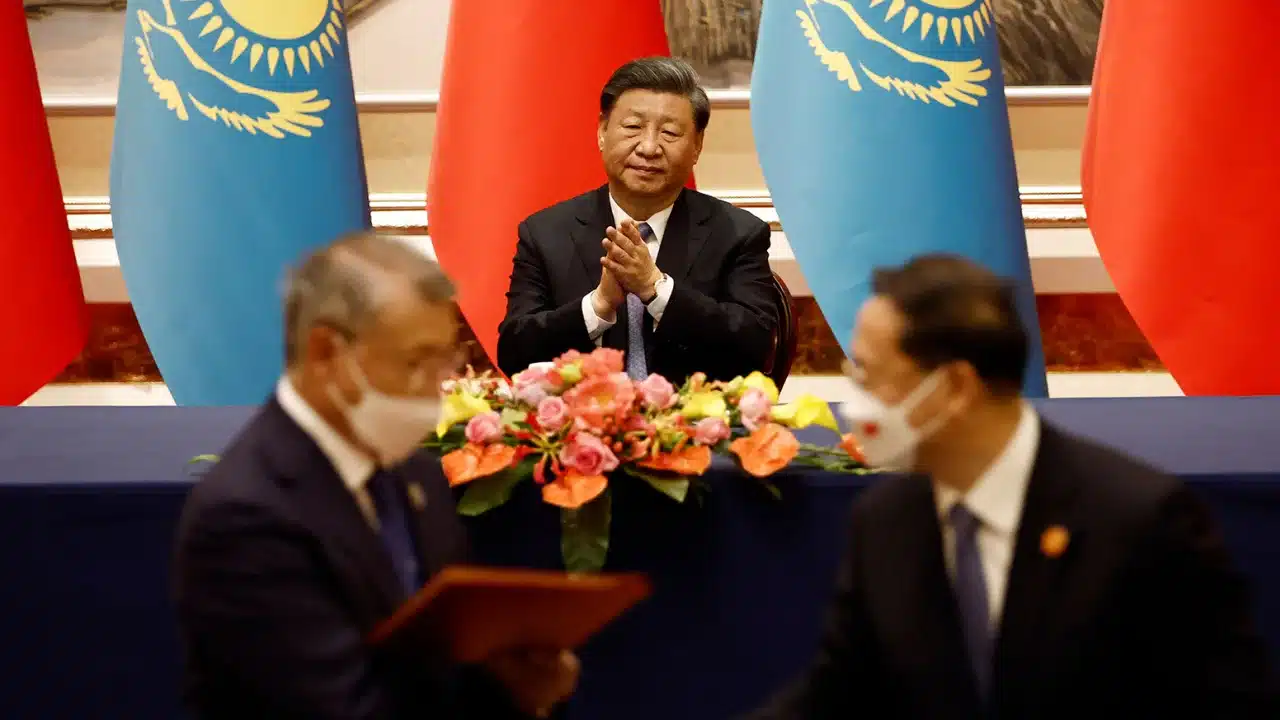
    This week, Chinese President Xi Jinping is extending the red carpet to Central Asian countries in an effort to enlarge Beijing’s power in a region that has long been seen as Russia’s sphere of influence.

    A meeting that started on Thursday has brought together the leaders of Kazakhstan, Kyrgyzstan, Tajikistan, Turkmenistan, and Uzbekistan in the city of Xi’an in central China.

    According to China’s state media, it takes place as the area struggles with the economic fallout from neighbouring Russia’s conflict in Ukraine. It is the first time the chiefs of state of China and other countries have met in person since their diplomatic ties were formed following the demise of the Soviet Union.

    China has billed the meeting as the “first major diplomatic activity” it’s hosted this year and an opportunity to draw a “new blueprint” with the sprawling bloc of post-Soviet states that lie between between its western borders, Europe and the Middle East.

    The two-day event is also a play from Beijing to expand its influence in Central Asia, where Russia – now distracted by its debilitating and unsuccessful invasion of Ukraine – has long been the dominant great power partner.

    “The most important context of this summit is the Ukraine war and the region’s uncertainty with Russia’s future commitment, influence and role in the region,” said Yun Sun, director of the China Program at the Stimson Center think tank in Washington.

    “Central Asia is always seen as Russia’s backyard, and China has been expanding its influence in the region … and there are new aspirations and directions for China-Central Asia relations – opportunities that were not present or available in the past,” she said.

    Visiting leaders include Kazakhstan’s President Kassym-Jomart Tokayev, Kyrgyzstan’s President Sadyr Japarov, Tajikistan’s President Emomali Rahmon, Turkmenistan’s President Serdar Berdimuhamedov and President Shavkat Mirziyoyev of Uzbekistan, China has said.

    The two day meeting overlaps with the start of the Group of Seven (G7) summit in Hiroshima, Japan, where United States, Japan, Germany, the United Kingdom, France, Canada and Italy are expected to affirm their solidarity against Russia.

    The gathering in Xi’an comes as China is seeking to craft a profile as a keeper of regional stability – including in a bid to act as a deal broker on the conflict in Ukraine, even as its has given no sign of abandoning its staunch Kremlin ties.

    For Beijing, the Central Asian states represent key potential allies in forums like the United Nations, fertile ground for China-financed railways, pipelines and transport routes into its borders or toward Europe – and a key buffer against what it has long seen as security threats from areas like Afghanistan.

    Xi will present visiting Central Asian leaders with “a series of proposals” on the long-term development of ties and sign agreements, Chinese officials said this week.

    Among those are likely to be new pledges for economic cooperation – now more needed than ever by the region, which is feeling the sting of Russia’s war.

    “The war disrupted many links between Russia and Central Asia, especially trade, especially transportation, transit, investments, and migration,” said Azimzhan Khitakhunov, a senior research fellow at the Eurasian Research Institute in Almaty, Kazakhstan.

    It is “of great interest to Central Asia nowadays to cooperate with China as one of its important alternative markets,” he added.

    However, Khitakhunov said, Central Asian leaders would be just as keen to have discussions about trade, investment and joint projects with Western players like the European Union.

    Other major economies have sent high level officials to the region following the Russian invasion Ukraine.

    US Secretary of State Antony Blinken visited Kazakhstan and Uzbekistan earlier this year, while European Council President Charles Michel made stops in those countries in October 2022.

    But China is widely seen as having been more active in cultivating connections and influence in the region, where it first launched its expansive Belt and Road connectivity initiative nearly 10 years ago.

    The two-day summit in Xi’an will also likely see a push from China for more security cooperation.

    Beijing holds longstanding concerns about unrest in Central Asia fueling potential militancy in its northwestern region of Xinjiang.

    Chinese officials in recent years unleashed a campaign against Muslim minority groups in Xinjiang, which the United Nations’ top human rights office said constituted could amount to “crimes against humanity” – in the name of cracking down on perceived threats of extremism and terrorism.

    When it comes to its rapport with Central Asia, “really what is driving China is security and stability,” said Jennifer Brick Murtazashvili, a regional expert and director of the Center for Governance and Markets at the University of Pittsburgh in the US, pointing in particular to its concerns about instability in Afghanistan spilling into China.

    Previously Russia played a key role in security in Central Asia as part of regional cooperation. Beijing may now be concerned about how strong a role a “distracted Russia,” could play there, she added.

    Observers say Beijing may not be interested in or welcome to take up Russia’s broader regional security role, but Chinese officials have stressed increasing cooperation in areas like countering “terrorism, separatism and extremism,” and strengthening coordination on Afghanistan, which shares a border with several Central Asian states.

    Central Asian countries have also seen and cracked down on popular protests and unrest in recent years. Their leaders may be interested in accessing the surveillance technologies that Beijing uses to monitor its own public, Murtazashvili said.

    The on-going war in Ukraine, and China’s perceived support of Russia, will also loom over the gathering.

    Beijing has recently ramped up efforts to deflect criticism that it has not acted to help end the war, while lending diplomatic and economic support to Russia.

    This week Beijing dispatched its Special Representative on Eurasian Affairs Li Hui on a tour to Ukraine, Russia and several European countries to promote peace talks.

    It has also attempted to portray the US and its allies as fueling the conflict through their support of Ukraine, echoing the Kremlin’s own stance.

    The summit is “a good opportunity for China (to try to) win support from these countries on China’s approach in terms of mediating the war between Russia and Ukraine,” said Li Mingjiang, an associate professor of international relations at Singapore’s Nanyang Technological University.

    “Their support of China’s initiative would be quite significant,” according to Li amid China’s push to expand its international influence.

    Like China, Central Asia leaders have typically avoided condemning Russia in forums like the UN, for example abstaining on major General Assembly resolutions calling for the withdrawal of Russian troops.

    But there are concerns in the region about being the next target of Russia’s aggression, analysts say, given Ukraine is also a former Soviet state and has seen swathes of its territory annexed by Moscow’s forces.

    Central Asian leaders may be open to signing on to allowing China more expansive economic access, inroads in the form of physical infrastructure, or technical security support.

    But they may be hesitant to endorse any specific Chinese proposals on the conflict in Ukraine, beyond general calls for peace or targeted comments about its knock-on effects, analysts say.

    “What would happen if these countries (endorse China as peacemaker on Ukraine) without the blessing of the West would be that they give away their ‘trump card,’” said regional expert Murtazashvili.

    “The West (is) an important third party they can leverage against China and Russia in small ways … I don’t think they want to be seen … as towing China’s line on this.”

  • Brazilian President Lula visits China in the pursuit of trade and peace

    Brazilian President Lula visits China in the pursuit of trade and peace

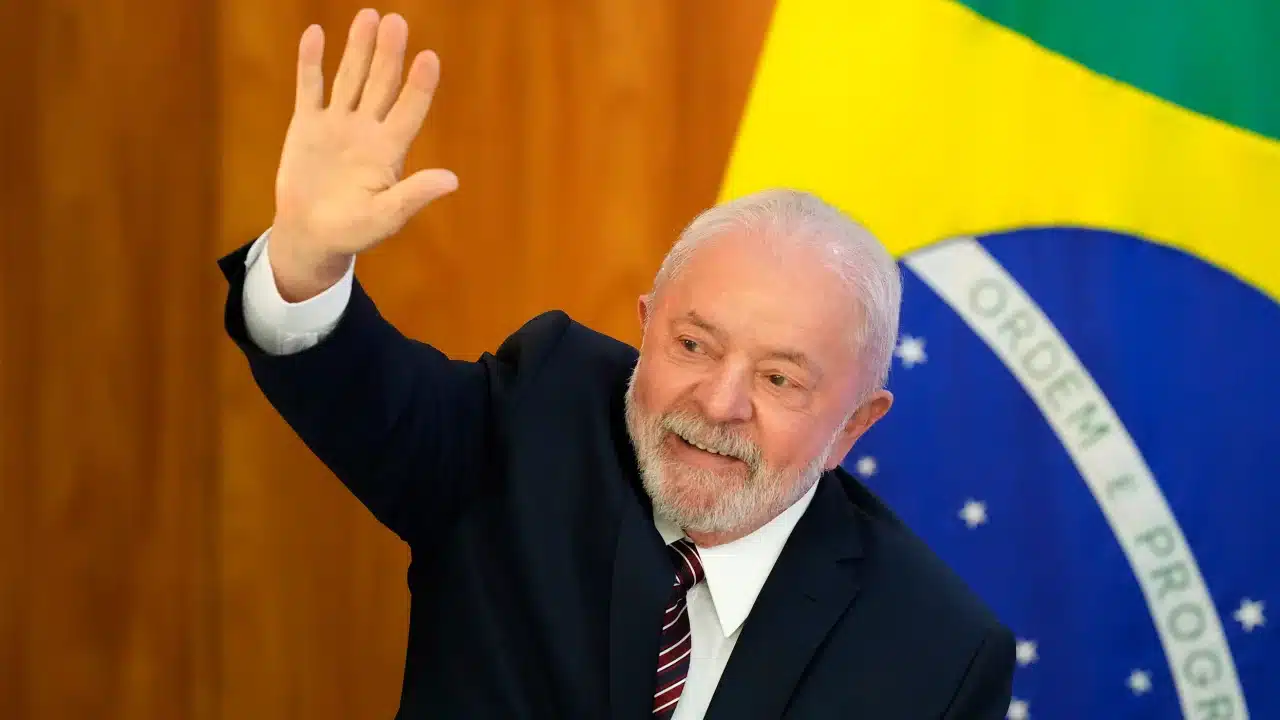
    Brazil’s President Luiz Inacio Lula da Silva is traveling to China this week on a state visit, and it is anticipated that his discussions with Chinese President Xi Jinping would mostly center on trade and the conflict in Ukraine.

    Originally scheduled to travel to Beijing last month, 77-year-old Lula was instead admitted to the hospital with pneumonia.
    The trip was reinstated, according to a Monday announcement from his office, with Brazil’s goal being “to renew its relations with the country that has been its main commercial partner since 2009.”

    Businessmen, state governors, congressmen, and ministers are among the Brazilian team that Lula is traveling with as they attempt to sign over 20 bilateral agreements with China on topics including travel, tourism, IT, and agriculture.

    Government figures show that China imported the equivalent of over US$89.7 billion in Brazilian products last year, and exported almost US$60.7 billion to Brazil, setting the trade value between the two countries at US$150.4 billion.

    According to the Brazilian presidency, trade between the two countries has “increased 21 times since Lula’s first visit to China in 2004.” Lula previously served two terms as Brazilian president, and has already made two official visits to the country.

    Among the dozens of accords expected to be finalized during the visit is one regarding the joint Brazilian-Chinese construction of CBERS-6 satellites, a model that “has improved technology that allows for efficient monitoring of biomes such as the Amazon Rainforest even on cloudy days,” according to a handout from the Brazilian government published Monday.

    While in China, Lula will also attend former Brazilian President Dilma Rousseff’s inauguration in Shanghai as head of BRICS’s New Development Bank, a commercial bloc formed by the emerging economies of Brazil, Russia, India, China and South Africa.

    Xi and Lula are also expected to discuss the war in Ukraine, with both leaders having previously positioned their countries as potential mediators for the conflict.

    Like many leaders in middle income and developing countries, Lula has adopted a policy of non-intervention over the war in Ukraine, rebuffing efforts led by US President Joe Biden to unite the global community in opposition to Russia’s invasion.

    In a February interview with CNN’s Christiane Amanpour, Lula – who in his previous term played an important role during nuclear discussions between the US and Iran – predicted that he would “talk a lot with President Xi Jinping about the role that China has to play on the peace issues (in Ukraine).

    “This is my work. This is the work that I have to do. I started with the German Chancellor (Olaf Scholz). I talked with (French President Emmanuel) Macron on the phone. I’ll talk with President Biden now. I’ll talk to Xi Jinping, with the Indians, with the – with all the countries. We have to have a group of people and countries that talk about peace.”

    Brazilian Foreign Minister Mauro Vieira hinted at hopes for a potential consensus among some countries emerging from Lula’s trip, AFP reported earlier this week.

    “By the time Lula returns home, a group of mediator countries will have been created,” Vieira reportedly said.

    His visit to China comes amid wider efforts to booster Brazil’s international relations, including a recent trip to Argentina for a meeting of CELAC – a bloc of Latin American and Caribbean states – that also included a delegation from the United States.

    The trip will “usher in a new era and a new future for China-Brazil relations,” China’s foreign ministry spokesperson, Wang Wenbin, said.

    After his visit to China, Lula is scheduled to go to the United Arab Emirates for a state visit as well.

  • Emmanuel Macron in China: President  calls on Xi Jinping to convince Russia for negotiations over Ukraine

    Emmanuel Macron in China: President calls on Xi Jinping to convince Russia for negotiations over Ukraine

    The French president is in Beijing to encourage Xi Jinping to urge Moscow to stop its military invasion of Ukraine.

    A decade-long period of peace in the country has been shattered by the war in Ukraine, according to Emmanuel Macron’s message to Chinese President Xi Jinping.

    In an effort to exploit Xi’s influence over Russia to advance a peace agreement, the French president is in Beijing along with European Commission President Ursula von der Leyen.

    Mr Macron said “Russian aggression in Ukraine has dealt a blow to [international] stability. I know I can count on you … to bring Russia to its senses and bring everyone back to the negotiating table,” Macron told Xi.

    “We need to find a lasting peace,” Macron said. “I believe that this is also an important issue for China, as much as it is for France and for Europe.”

    The French president would “try to build, and somehow engage China toward a shared responsibility for peace and stability on international issues”, including Ukraine, Iran and North Korea.

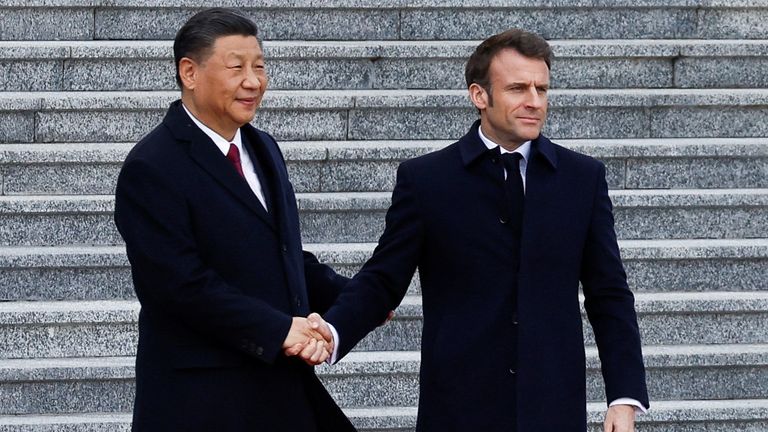
    Chinese President Xi Jinping welcomes French President Emmanuel Macron at the Great Hall of the People, in Beijing, China, April 6, 2023. REUTERS/Gonzalo Fuentes
    Image:Xi Jinping welcomes French President Emmanuel Macron at the Great Hall of the People

    The Chinese leader didn’t mention Ukraine or Russia, but welcomed relations with France. He said Beijing and Paris are “staunch promoters of multipolarisation of the world,” a reference to reducing U.S. dominance in economic and political affairs.

    Xi and Russian president Vladimir Putin declared a “no-limits friendship” before the February 2022 invasion of Ukraine, and China has refused to directly criticise the Kremlin. Beijing has called for a cease-fire and peace talks.

    China has become the biggest buyer of Russian oil and gas, helping to prop up the country’s revenue in the face of Western sanctions. This has made China increasingly influential over Putin, though Xi appears reluctant to jeopardise that partnership.

    “China has always adhered to an objective and fair position on the issue of the Ukraine crisis,” said a foreign ministry spokesperson. “We have been an advocate of a political solution to the crisis and a promoter of peace talks.”

    Mr Macron said during a meeting with Xi’s number two, Premier Li Qiang, that he wanted to talk about “Ukraine, but also about all the major conflicts and the difficult situations around the world.”

    “The ability to share a common analysis and build a common path is essential,” he added.

    Li said there was likely to be “broad consensus” between Mr Macron and Xi but did not say whether China would lobby Moscow to make peace.

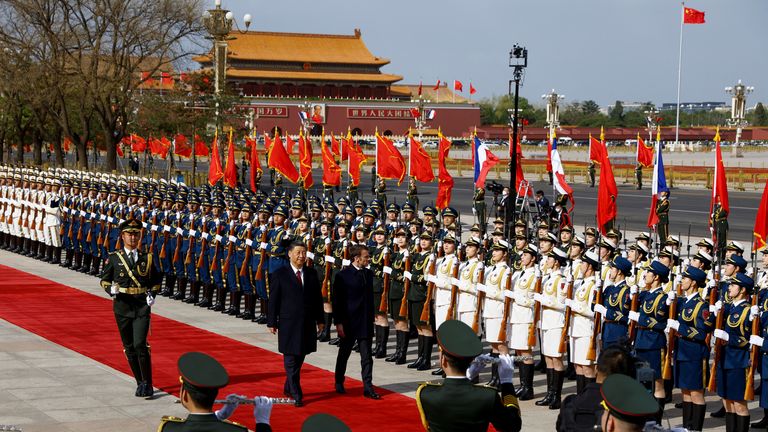
    Chinese President Xi Jinping and French President Emmanuel Macron review troops during an official ceremony at the Great Hall of the People, in Beijing, China, April 6, 2023. REUTERS/Gonzalo Fuentes
    Image:Relations between the two countries have maintained a positive and steady momentum, Xi said

    Xi said that China and France had the ability and responsibility to transcend “differences” and “restraints” as the world undergoes profound historical changes, Chinese state media reported.

    Relations between the two countries have maintained a positive and steady momentum, Xi told Macron.

  • Putin loyalist Lukashenko meets Xi Jinping in Beijing

    Putin loyalist Lukashenko meets Xi Jinping in Beijing

    Wednesday’s meeting between Chinese President Xi Jinping and his Belarusian counterpart Alexander Lukashenko, a strong ally of Vladimir Putin, took place during a state visit. The West has warned Beijing against supporting Putin’s conflict in Ukraine with military aid.

    According to Belarusian state media agency Belta, Xi welcomed Lukashenko before the two started official discussions on Wednesday in Beijing’s Great Hall of the People.
    No one has yet made information about the negotiations public.

    It is their first face-to-face meeting since the two presidents decided in September, outside the Shanghai Cooperation Organization (SCO) summit in Uzbekistan, which Putin also attended, to upgrade their nations’ relations to a “all-weather comprehensive strategic alliance.”

    The visit from the Belarusian leader – who allowed Russian troops to use Belarus to stage their initial incursion into Ukraine last year – comes as tensions between the US and China have intensified in recent weeks, including over concerns from Washington that Beijing is considering sending lethal aid to the Kremlin’s struggling war effort. Beijing has denied those claims.

    The meeting came a day after US Secretary of State Antony Blinken on Tuesday made some of the most direct comments to date about how the US would respond to any lethal support China supplied to Russia.

    Blinken warned Washington would target Chinese firms or citizens involved in any effort to send lethal aid to Russia for its war in Ukraine, while speaking during a visit to Kazakhstan.

    Beijing – which claims to be a neutral party in the conflict – has pushed back on the US implication it is considering sending lethal aid. Its Foreign Ministry on Monday said China was “actively promoting peace talks and the political settlement of the crisis,” while the US was “pouring lethal weapons into the battlefield in Ukraine.”

    Beijing last week released a 12-point position on the “political solution” to the crisis in a document calling for peace talks to end the year-long war. Its release, however, was criticized by Western leaders, who accused China of already having taken Russia’s side.

    Lukashenko also met with Chinese Premier Li Keqiang on Wednesday and called for the two countries to “intensify” their relations, according to a readout from the Belarusian government.

    “We have no closed topics for cooperation. We cooperate in all avenues. Most importantly, we have never set ourselves the task of being friends or working against third countries,” Lukashenko told Li per the readout.

    The tightening of ties between Minsk and Beijing comes alongside a years-long decline in Belarus’ relations with the European Union and as it may seek to diversify its Russia-dependent economy.

    The former Soviet state was targeted by sweeping sanctions from the US and its allies in response to Moscow’s aggression after Lukashenko allowed Russian troops to invade Ukraine through the 1,000-kilometer (621-mile) Ukrainian-Belarusian border north of Kyiv.

    The European Union also does not recognize the results of Lukashenko’s 2020 election win – which sparked mass pro-democracy protests in the country and were followed by a brutal government crackdown.

    There have been fears throughout the conflict in Ukraine that Belarus will again be used as a launching ground for another Russian offensive, or that Lukashenko’s own troops would join the war. Before visiting Moscow earlier this month, Lukashenko claimed there is “no way” his country would send troops into Ukraine unless it is attacked.

    Both China and Belarus have previously implied that the US does not want to see an end to the conflict.

    In comments to reporters earlier this month before heading to Moscow to meet with Putin, Lukashenko maintained he wanted to see “peaceful negotiations” and accused the United States of preventing Ukrainian President Volodymyr Zelensky from negotiating.

    “The US are the only ones who need this slaughter, only they want it,” he said.

    Beijing has made similar assertions, with China’s top diplomat Wang Yi saying at a security conference in Munich earlier this month that China does not “add fuel to the fire,” and is “against reaping benefits from this crisis,” alluding to regular Chinese propaganda messaging that the US is intentionally prolonging the war to advance its own geopolitical interests and increase the profits of its arms manufacturers.

  • Taiwan reports the largest-ever incursion by Chinese bombers

    Taiwan’s Defense Ministry announced Tuesday that China has sent a record 18 nuclear-capable H-6 bomber aircraft into Taiwan’s air defence zone as Beijing continues to increase strain on the autonomous island.

    According to Taiwan’s Defense Ministry, a total of 21 Chinese warplanes were sent into Taiwan’s southwest air defence identification zone (also known as an ADIZ) in the 24-hour period between Monday morning and Tuesday morning.

    According to the ministry, it kept an eye on the situation and tracked the Chinese aircraft using both its fighter jets and land-based missile systems.

    Since Taipei started publishing daily data on Chinese fighter incursions in 2020, the flights mark the highest number of H-6 sorties in a 24-hour period.

    An ADIZ is unilaterally imposed and distinct from sovereign airspace, which is defined under international law as extending 12 nautical miles from a territory’s shoreline.

    China’s ruling Chinese Communist Party views Taiwan – a democratically governed island of 24 million – as part of its territory, despite having never controlled it. It has long vowed to “reunify” the island with the Chinese mainland, by force if necessary.

    Tensions surrounding Taiwan have increased markedly this year. A visit to the island by United States House Speaker Nancy Pelosi in August prompted Chinese fury and an immediate flurry of military exercises.

    Since then, Beijing has stepped up military pressure tactics on the island, sending fighter jets across the median line of the Taiwan Strait, the body of water separating Taiwan and China.

    For decades, the median line had served as an informal demarcation line between the two, with military incursions across it being rare.

    In November, US President Joe Biden met Chinese leader Xi Jinping in-person for the first time during his presidency at the G20 summit in Indonesia. Afterward, Biden described the three-hour meeting as “open and candid,” and cast doubt on an imminent invasion of Taiwan.

    Formal bilateral talks on climate cooperation are expected to resume as well as part of a broader set of agreements between Biden and Xi – with China having previously halted talks as part of retaliation for Pelosi’s visit to Taiwan.

    Source: CNN.com 

  • China wishes to cooperate with North Korea for peace, Xi tells Kim – KCNA

    Kim receives a message from Xi as North Korea conducts an unprecedented number of missile launches.

    According to the official Korean Central News Agency, Chinese President Xi Jinping has informed North Korean leader Kim Jong Un that Beijing is eager to cooperate with Pyongyang for world peace and stability (KCNA).

    The revelation on Saturday came days after North Korea conducted one of its most powerful ICBM tests, saying it would use its own nuclear weapons to counter any perceived nuclear threats from the United States.

    North Korea has conducted a record-breaking blitz of missile launches in recent weeks and fears have grown that it is building up to a seventh nuclear test, its first since 2017.

    In his message to Kim, Xi said Beijing was ready to work together for “peace, stability, development, and prosperity of the region and the world”, KCNA reported.

    Xi said he was willing to collaborate with Pyongyang as “changes in the world, times, and history are taking place in unprecedented ways”, KCNA said, quoting from the message it said was received in response to congratulations from Kim after the Chinese Communist Party Congress last month handed Xi a third term.

    Days before North Korea’s ICBM launch, Xi met on the sidelines of a G20 summit in Bali with US President Joe Biden, who voiced confidence that Beijing does not want to see a further escalation by Pyongyang.

    Washington has said it wants China, Pyongyang’s most important ally and economic benefactor, to use its influence to help rein in North Korea.

    The November 18 missile launch appeared to be Pyongyang’s newest ICBM with the potential range to hit the US mainland.

    The United Nations Security Council convened an open meeting over the launch, with the US, the United Kingdom, France, and India among 14 nations to “strongly condemn” Pyongyang’s actions.

    But a Western diplomat told the AFP news agency that China and Russia had chosen not to put their names to Monday’s statement.

    Earlier this month, the US had accused Beijing and Moscow of protecting Pyongyang from further punishment.

    Pyongyang is already under multiple sets of international sanctions over its nuclear and ballistic missile programmes, and China accounts for more than 90 percent of the impoverished country’s bilateral trade.


  • Moving the flags into place

    The Melia hotel, where Biden and Xi will have their first face-to-face meeting in about two hours, is starting to fill with reporters from across the world.

    While a row of flags is being positioned, images of the meeting room’s setup are purportedly being shown on Chinese official media.


    Source: BBC