Nigerian DJ and billionaire Aliko Dangote’s daughter, DJ Cuppy, has revealed her shift to exclusively playing gospel music.
The artist, who was recently baptized, admitted that she initially felt nervous about curating a list of entirely Christian songs, but felt guided by divine support throughout the process.
Cuppy posted on her Instagram, sharing images from one of her performances and expressing gratitude to God for allowing her to use her music as a form of worship.
She wrote: “I had the RARE opportunity to do the two things I love most: DJing AND Serving God. What a blessing! Thank you for having me @HTBfocus”.
DJ Cuppy clarified that, contrary to popular belief, Christian music is both upbeat and positive.
She added, “I was really nervous about curating a performance with ONLY Christian music, but God challenged and guided me through it. And please DO NOT get it twisted— Christian music is LIT! Genuinely grateful for this journey and for the chance to share my faith through music!”
A man living in the United States of America (USA) recently got fired from his job.
The Christian man said to be a former homosexual, believes he was relieved of his duties for posting recordings that focused on Jesus Christ at the workplace.
In a video on Instagram, he recounted the events that led to his sacking and the probable reasons.
“So I just got fired from my job for my social media. Like I am not crying or mad or upset. I am just like this is wild and this is expected and there is nothing I talk about on my social media except for Jesus and so obviously that has to be the only reason.”
“Now they talked about me recording some things in the conference rooms and my mindset was this is a big place, it’s not that serious. I’m gonna try to really not have the logo be in anything. They said the logo was in one of my videos. I don’t recall but they said in general overall. It’s against their social media policy which is very interesting.”
He continued, “I know places and occupations and jobs, they have, you know take the videos like if there’s like educational purposes but obviously don’t have kids there or whatever. This only happens when you stand in truth and here is what I’m gonna do.”
According to the black man, “I know the Lord is gonna provide for me but I just wanted y’all to know. This is what happens when you love Jesus and I’m not gonna stop loving Jesus and I’m gonna bless them. I hope they do well but this means my time here is up and there is something else that the Lord needs me to do. So give me your prayers.”
Meanwhile, his story has received divided opinions from users.
A user wrote: “You were not fired for these reasons. You were fired because you did your recordings in company and probably had their logo on as they say. Your personality, sexuality and personal religious beliefs have nothing to do with your company. If you have proof then you can sue else move along. Every work place has their own policy. Some allow you to record some don’t.”
Another said, “Normally you will get a better job …Anything you give up for Jesus ❤️🩹, be rest assured he pays you back in double … lived by the faith for years now , it works ! Just put Jesus ❤️🩹 first.”
The esteemed gospel artist and producer Nana Osei, popularly called Nacee, recently shared his inspiring journey of survival and overcoming adversity after being diagnosed with sickle cell disease as a child.
Speaking on Hitz FM, Nacee recounted how doctors had once forecasted a short lifespan for him, foreseeing that he wouldn’t live past his early twenties due to the severity of his condition.
Reflecting on his early years, Nacee revealed, “The doctor’s prognosis was that I wouldn’t see past 20 or 22 due to my sickle cell diagnosis at such a young age.”
Despite being raised in a Christian household, Nacee underwent a profound spiritual transformation later in life, renewing his dedication to Christ and seeking healing through prayer.
“I experienced a divine intervention in church one day,” Nacee shared. “During an altar call after the sermon, I felt compelled to step forward, questioning why I remained ill when God promised to heal. Through the pastor’s prayers and anointing, I’ve been free of medication and illness ever since.”
Nacee, renowned for his song ‘Mpaebo’ (Prayer), firmly believes in the power of steadfast faith, attributing answered prayers to unwavering belief.
He encourages fellow Christians to lean on faith as their primary resource in challenging times, drawing from his personal journey.
Having faced his own trials, Nacee is dedicated to aiding those in need, driven by gratitude for surpassing the doctor’s dire prediction. Now in his 50s, he remains thankful to God for his resilience and health.
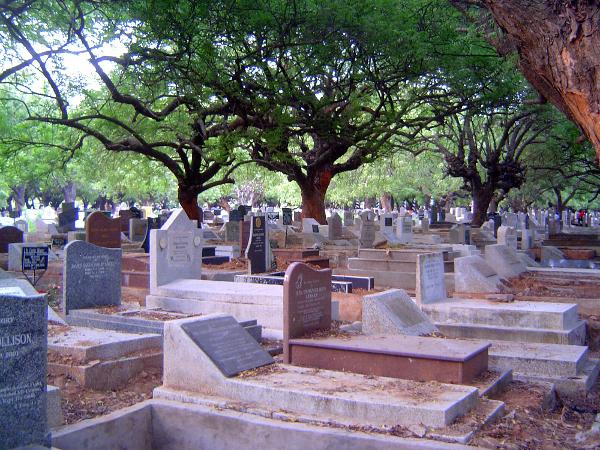
Concerns have been raised by residents over the inadequate lighting systems and careless security measures at Tafo cemetery, which are facilitating criminal activities by unscrupulous individuals invading the enclave.
Residents in the area are increasingly worried about the ongoing threat to the sanctity of graves, with reports of grave looting and ritualistic activities becoming more frequent.
Mohammed Rabiu, alongside his colleagues, regularly dig graves at Tafo cemetery and are witness to the disturbing trend.
Located on expansive grounds, Tafo cemetery is the largest in the region, with separate sections for Muslim and Christian burials.
In addition to grave digging, Mohammed Rabiu and his team are responsible for the upkeep of the cemetery.
Mr. Rabiu told Citi News in an interview on Monday that “The individuals perpetrating illegal activities here are those who come to perform rituals at the cemetery. We have not caught anyone picking body parts from the graves. Some visit their fetish priest or other soothsayers and are instructed to bury items at the cemetery; we have caught several of them. Some bring in fowls and slaughter them on the graves, which is not helpful.”
“Even if they had prepared those things at home for their children, it would have been better. We cover up such things when we find them at the graves. Some kill and take body parts, while others are instructed to come and collect parts here because the evildoers are everywhere, and they carry out these crimes on our blind side.”
Rabiu emphasized the need for enhanced vigilance, especially at night, as grave looters and ritualists often target the cemetery under the cover of darkness.
He highlighted incidents of ritualistic activities, including the defacement of graves and the removal of human remains for illicit purposes.
While Rabiu denies any involvement in such acts, he acknowledges the challenges faced in maintaining security at the cemetery.
“It is not possible to come to us and request a body part at this cemetery. Even if people come, the boys will inform the elders here, and we will hand over such individuals to the police. When they are taken to the police station, they will be questioned if this is an abattoir where meat is sold. We bury people here, and we do not entertain requests for body parts,” he said.
He stressed the importance of improved lighting to deter wrongdoers and protect the sanctity of the graves.
“The initiative to enhance the lighting situation at the cemetery will help address these concerns and ward off people with evil intentions. The public should come and help so that their relatives who are brought here for burial will also have a safe resting place. The wrongdoers are everywhere, and they search for body parts to use for money rituals. These individuals must understand that what they do to others will be done to them too, one day.
“When there is enhanced lighting, it will help to brighten up the places. Our Muslim brothers in collaboration with the traditional authorities have constantly cleared the bushy area and that results in the reduction of some negative activities at the cemetery,” he stated.
Efforts are being made to address these concerns, with calls from residents and workers near the cemetery for enhanced security measures.
The public is urged to support initiatives aimed at safeguarding the resting place of their loved ones and deterring those with malicious intentions.
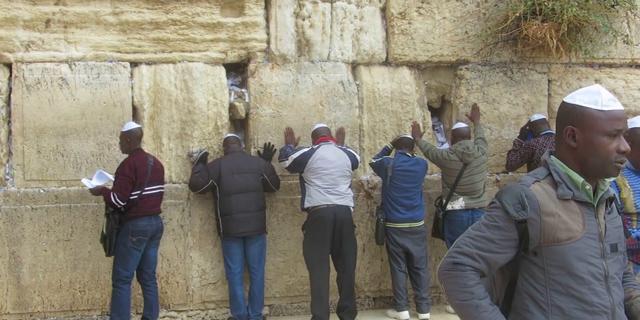
Nigeria has declared the suspension of all pilgrimages to Israel in response to the recent outbreak of deadly violence over the weekend.
An organized group of Easter pilgrims, initially scheduled to travel to Israel and Jordan on Tuesday, had their trip canceled until further notice, as stated by the government’s Christian Pilgrim Commission.
Sunny Udeh, the commission’s director for mobilization and sensitization, expressed concerns about the ongoing war creating uncertainties regarding the main pilgrimage planned for December, hoping that hostilities would cease by the end of the year.
On average, approximately 18,000 Christian pilgrims from Nigeria embark on journeys to religious sites in Israel and Jordan each year.
The commission also emphasized its commitment to closely monitor the situation in Israel, with the safety of Nigerian pilgrims being a top priority.
The recent violence emerged when the Palestinian militant group Hamas launched an attack on Israel. During the ongoing hostilities, at least 1,200 Israelis lost their lives, while at least 1,000 Palestinians perished due to retaliatory strikes in the Gaza Strip by Tel Aviv.
The Nigerian government has called for the de-escalation of hostilities and a ceasefire between Israeli forces and Hamas fighters, advocating for a peaceful resolution of the conflict through dialogue.
Remarkably, despite the chaos, commercial flights between Nigeria and Tel Aviv have remained uninterrupted.
The Ministry of Chieftaincy and Religious Affairs has announced that the 2023 Christian Pilgrimage to Israel will be fully self-funded and will not impose any financial burden on the government.
In an interview with the media on Wednesday, August 23, Richard Obeng Boafo, Deputy Director and Head of the Religious Affairs Unit at the Ministry, emphasized that the intention of the government is for participants in the pilgrimage to cover their own expenses, including travel and accommodations costs.
“For now, we are not sponsoring anybody,” he said.
He added “we want the pilgrims to pay for their fares and accommodation, it will not cost the government any money.”
Furthermore, an internal circular has been issued by the Ministry of Foreign Affairs and Regional Integration to communicate details about the 2023 Christian Pilgrimage to Israel.
The pilgrimage will be divided into three segments spanning from September 22 to November 30, 2023.
The circular contains the following information:
“I have the honour to inform members of staff that the Ministry of Chieftaincy and Religious Affairs has resumed its Christian Pilgrimage Programme to Israel. The provisional dates for the 2023 Pilgrimage are as follows:
“First Pilgrimage: 22nd-30th September, 2023 (Deadline for submission of registration forms 31st August, 2023); Second Pilgrimage: 21st-29th October, 2023 (Deadline for submission of forms 22nd September 2023); and Third Pilgrimage: 22nd-30th November, 2023 (Deadline for submission of forms 20th October, 2023),” it stated.
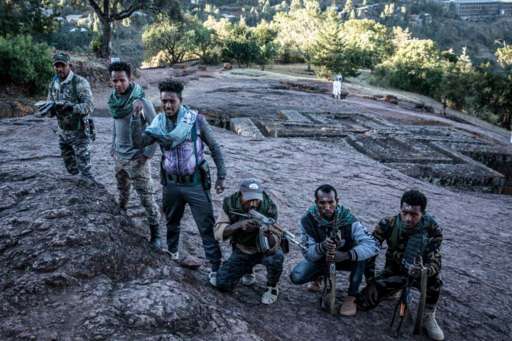
Ethiopia’s Amhara region is witnessing renewed fighting between the army and local militias in multiple areas.
The security situation in Amhara has been deteriorating since April, following the decision to disband the region’s state-backed paramilitary group. While some paramilitary members were integrated into the army and police, others are believed to have joined local militias that now feel Amhara is vulnerable to attacks from other regions.
Clashes on Tuesday led to flight cancellations in the historic town of Lalibela, a UNESCO World Heritage site, with residents describing the violence as “intense.”
Reports suggest that Amhara militias, known as Fano, have taken control of the airport, though this has not been independently verified.
Fighting has also been reported in at least four other towns, with some residents describing the clashes as “heavy.” Protesters have been seen blocking roads to restrict the movement of troops.
The army has confirmed its engagement in an offensive against armed groups in Amhara.
The Amhara Association of America (AAA), an advocacy group, has expressed concern for the safety of civilians and confirmed clashes in several areas.
Yilkal Kefale, the president of the region, stated that his office is open to resolving issues through dialogue.
Founder of Perez Chapel International Archbishop Charles Agyinasare has emphasized the importance for Christians to refrain from idolatry.
During a Sunday Service sermon, he firmly stated that it is contradictory for someone to claim to be a Christian while simultaneously engaging in idol worship.
He preached on the topic: “Powers from the Other Side,” which constituted part of his July monthly-themed sermon: “Who rules the Cosmic World”.
Archbishop Charles Agyinasare shed light on the concept of idolatry or idol worship, describing it as the act of venerating objects believed to possess spiritual powers. He cautioned Christians against succumbing to societal and familial pressures that may lead them into ungodly practices.
The Archbishop emphasized that believers should not be deceived or swayed by false spiritual experiences that may lure them into idol worship.
Additionally, he highlighted the danger of falling into idolatry as a result of perceived disappointment and impatience.
“Some Christians often feel God has disappointed them or God’s judgment is not swift so, they tend to try somewhere else for swift intervention,” he said.
The Archbishop admonished Christians against putting on amulets and talisman perceived to have spiritual powers.
He said those ornaments were a point of contact for the “devil” to harass them and their families.
The Founder and Presiding Bishop of Perez Chapel International, Archbishop Charles Agyinasare, has urged Christians to remain vigilant and prepared for spiritual battles against evil spirits.
He emphasized the importance of being spiritually equipped to confront and overcome the forces of darkness. The Archbishop’s admonition serves as a reminder for believers to be steadfast in their faith and to rely on spiritual weapons to combat spiritual challenges.
He said: “Whether you like it or not, as a Christian, you are in spiritual warfare with the enemy.”
“For as the Bible says in Ephesians 6 verse 12, we did not wrestle with flesh and blood, but against principalities, rulers of darkness and against spiritual hosts of wickedness in the heavenly places.”
His message was titled: “Who Rules the Cosmic Ream 1: The Cosmic Realm and the Christian”.
According to Archbishop Charles Agyinasare, every town, city, and village is influenced by evil spirits and principalities.
He stressed that as believers, Christians should be ready to engage in spiritual warfare against these forces.
The Archbishop emphasized that as children of God, believers possess the necessary tools and equipment to triumph over the enemy in these battles. He encouraged Christians to be equipped with spiritual discernment, prayer, and the Word of God to effectively confront and overcome the influence of evil spirits. The Archbishop’s message underscores the importance of spiritual preparedness and reliance on God’s power to overcome spiritual challenges.
The teachings, which are in series, are to help Christians to be well prepared and equipped against the spiritual enemy.
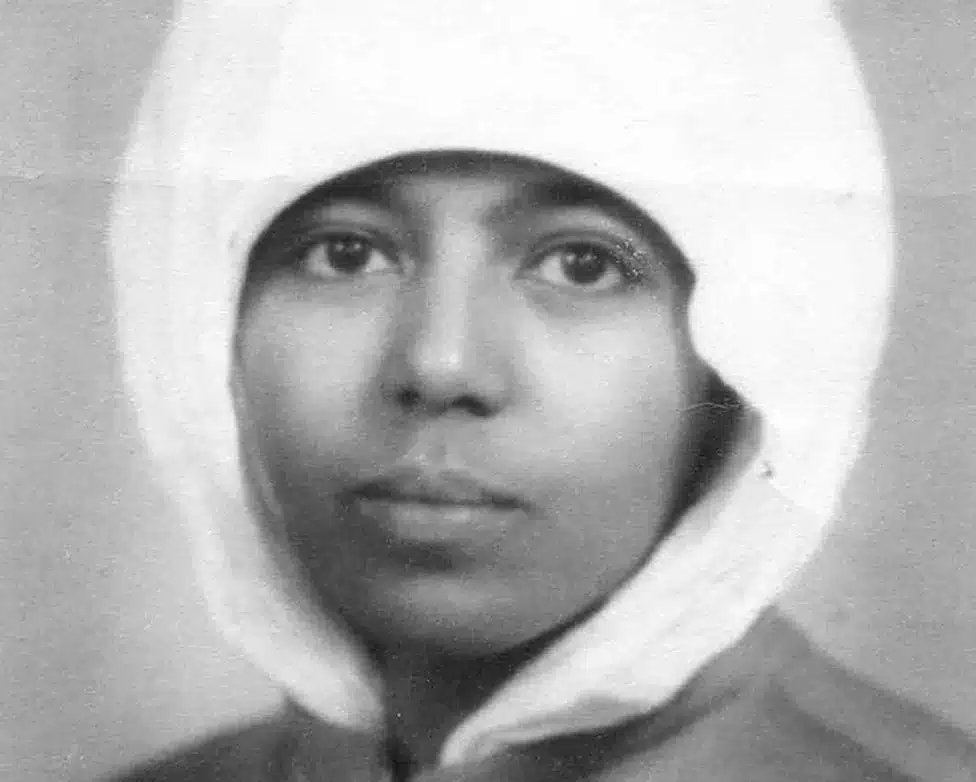
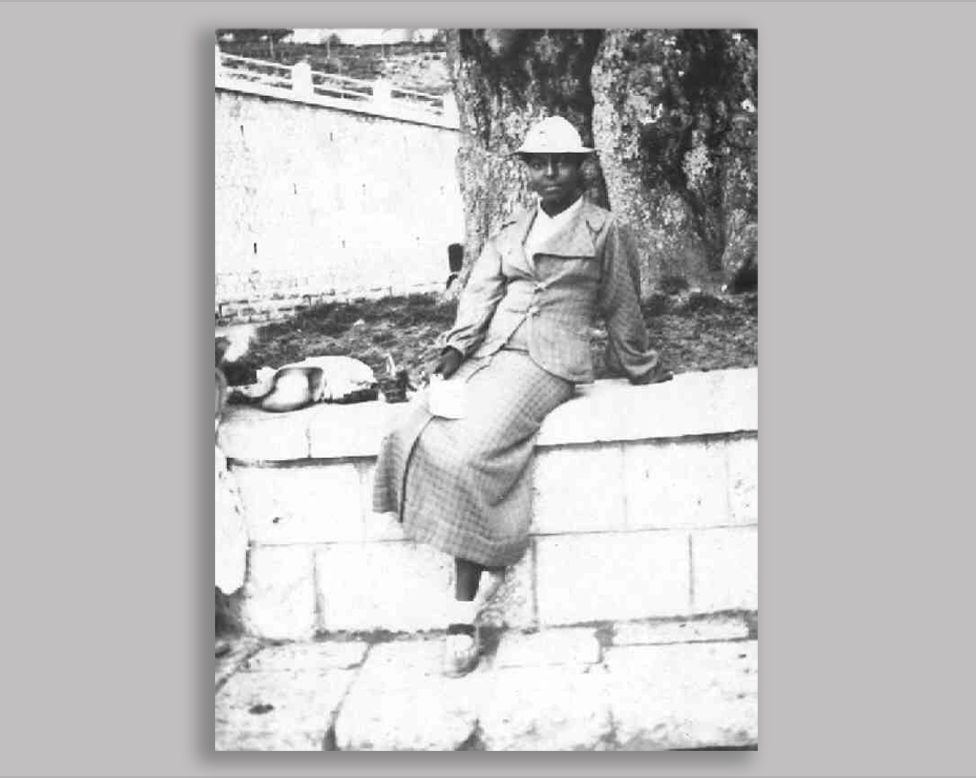
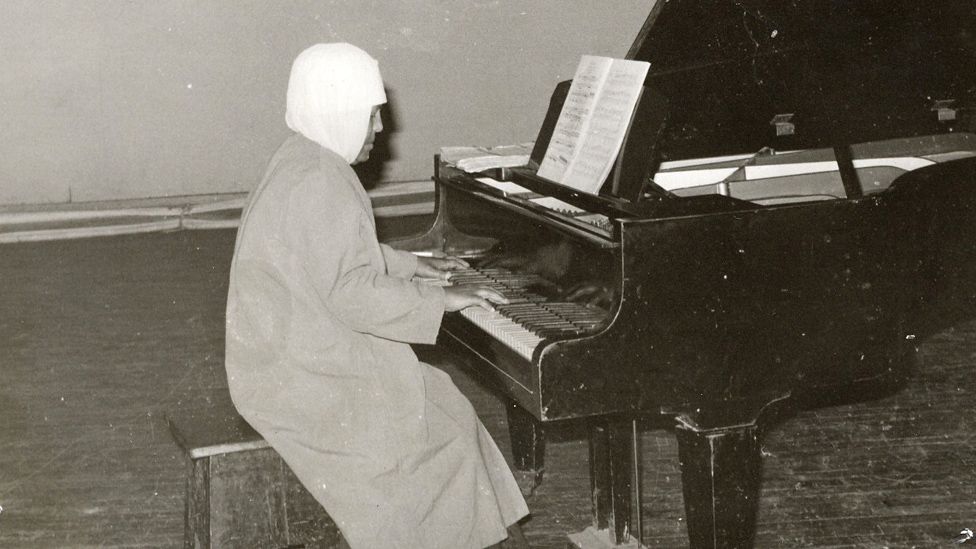
Emahoy Tsegué-Maryam Guèbrou, the composer and piano-playing nun who died this week at the age of 99, had an extraordinary life, which included being a trailblazer for women’s equality and walking barefoot for a decade in the isolated mountains of northern Ethiopia.
Listening to one of her works can be disconcerting.
It sometimes feels like being tossed around in a small boat at sea, constantly off balance, with little to hold on to. The time signature appears to shift and the scale drifts in and out of familiarity.
The sound of the pioneering pianist reflected the way her life oscillated between parallel worlds.
She was trained in Western classical music but was equally the product of traditional Orthodox Christian chants and tunes.
Her unique musical voice led one critic, Kate Molleson, to argue that Emahoy should be included alongside more familiar names when considering great 20th Century composers.
Listen to Emahoy playing The Homeless Wanderer
As a young person, Emahoy was a free-spirited modern woman but she spent much of her later life as a reclusive.
She became a devout nun who lived a humble life in a monastery in a remote part of her country. But in an earlier time she had moved in the high society of the capital, Addis Ababa, where she performed in the court of the country’s last Emperor, Haileselassie I.
Most of her important musical works – recognisable in their complexity and apparent effortlessness – came in the 1960s and 1970s.
This was during a time when her contemporaries in Addis Ababa were blending Western beats with the Ethiopian pentatonic – or five-note – scale to create a unique fusion of sounds and styles that would later be dubbed Ethio-jazz.
The genre is marked by shuffling soul and funky music as well as big-band swing pieces.
But Emahoy’s compositions and style were distinct. They were just her and her piano producing an intimate, meditative – and unsettling – melancholy informed by a fascinating life punctuated by the momentous events her country experienced during the last century.
Image caption,Emahoy, seen in this undated picture, was once part of Addis Ababa’s glamorous high society
She was born in Addis Ababa in December 1923 into a prominent aristocratic family. Her father was a mayor of the historical city of Gondar in the country’s north.
Her given name was Yewubdar – Amharic for “the most beautiful one”- a name she used until she was ordained as a nun at the age of 21.
And with her family came privilege and opportunities.
As a child she was sent to Switzerland with her sister – the first Ethiopian girls to have been sent abroad for education. It was in a Swiss boarding school that she first encountered Western classical music and at the age of eight began playing violin and the piano.
In Europe she felt alienated. “Loneliness grew up with me like a childhood friend,” she said in a book about her father’s life written by her brother, Dawit Gebru.
Music was her consolation.
Upon her return to Ethiopia at the age of 11 she was already an outgoing young girl with an appetite for fashion. But then war and tragedy knocked.
In 1936 Benito Mussolini’s Italy invaded Ethiopia. Three members of her family were killed and she was forced into exile on an island in the Mediterranean. The killing of her relatives left a strong impression on her – later she would compose a song, The Ballad of the Spirits, in their memory.
After five years of occupation, the Italians left Ethiopia and Emahoy returned home where she began work at the ministry of foreign affairs – the first female secretary there. And she drove cars – a rarity for a woman – when the majority of Ethiopians used a horse and cart for travel.
She was determined that her gender would not get in the way.
“Even in my teenage [years] I would say: ‘What is the difference between boys and girls? They are equal,” she told music journalist Molleson for a 2017 BBC documentary about her life.
A few years later she was once again on road.
This time to the Egyptian capital, Cairo, to study music under the Polish violinist Alexander Kontorowicz.
She practised nine hours a day but it was the searing heat that she could not handle. As a consequence, she returned to the cooler climes of Addis Ababa with her teacher, who was appointed the head of the Imperial Guard Band.
While she seemed to enjoy the favours of the emperor for whom she played her music, not all in the aristocratic class were impressed. So when she was given the chance to continue her studies at the Royal Academy of Music in London, she was not permitted to travel – a decision for which her family blame some senior officials.
It changed the trajectory of her life.
Emahoy was heartbroken and sick to the point of being admitted to hospital. Subsequently she took a deep dive into religion. Eventually, she abandoned music – and the city – for a hilltop monastery in a remote part of northern Ethiopia.
She became a nun, shaved her head and stopped wearing shoes.
The death of the monastic community’s archbishop and problems with the soles of her feet led her to return to the capital in her 30s after 10 years of isolation, Molleson says.
She resumed playing music. She continued to shun the spotlight but her compositions took off around this time.
Image caption,After 10 years in a monastery in northern Ethiopia, Emahoy returned to the piano
Her years of solitary musings – and the dramatic episodes of her eventful life – were reflected in her compositions. Titles such as The Homeless Wanderer, Mother’s Love and Homesickness hinted at what was on her mind.
“Sadness was always next to me like a friend,” Emahoy was quoted as saying in her brother’s book.
Ethiopian music commentator Sertse Fresibhat called her early works “deep and thoughtful, [composed] at a young age” that received the adulation they deserved only decades later.
She went on to make recordings in Germany in the 1960s and early 1970s to raise money for homeless charities, but only gained notoriety in the West more recently.
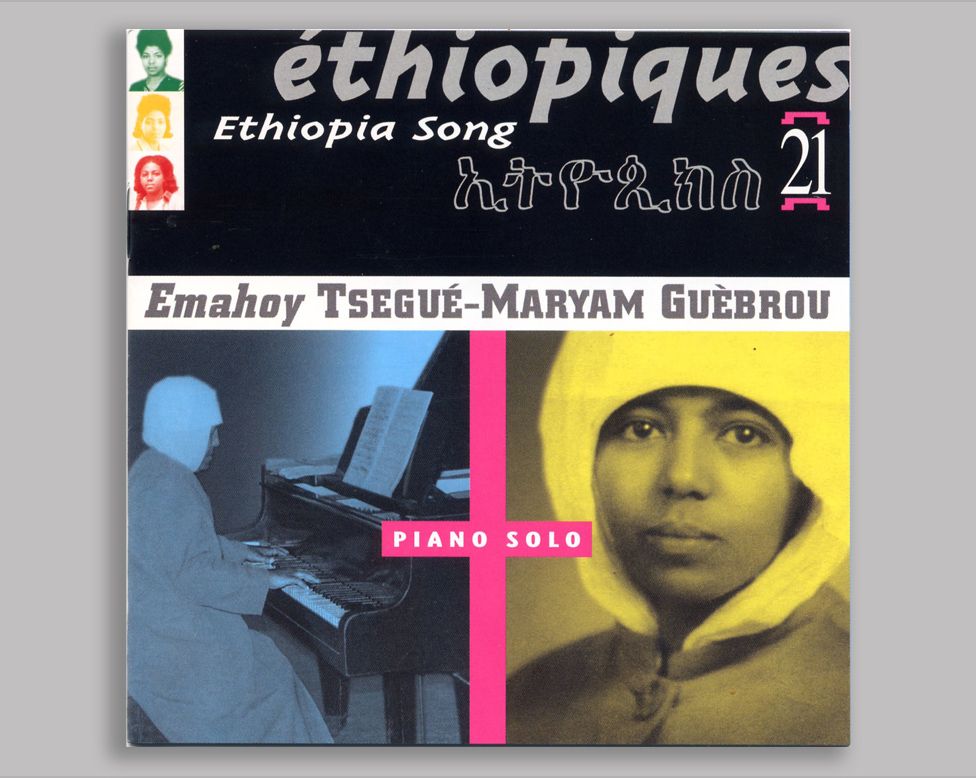
Much like her contemporary Ethio-jazz musicians, she was introduced to the wider audience by French musicologist Francis Falceto. His series of Éthiopiques albums were compilations of archive music from the 1960s and 1970s.
Image caption,Éthiopiques volume 21 gave Emahoy’s music a whole new group of fans
Her collection, released in 2006, gained acclaim and led to her work being used in films and adverts.
But by that time she was living in an Ethiopian Orthodox Church monastery in Jerusalem, Israel.
In 1984, when Ethiopia was in the midst of a civil war and in the grips of a Marxist military regime, she left for the Holy Land and lived the remainder of her life there.
She continued to practise and compose and in her new-found fame welcomed musicologists and critics to discuss her work. She also enlisted Israeli pianist Maya Dunietz to take her manuscripts, and get them published.
In her home country she is often referred as “the Piano Queen”.
Her tunes are everywhere – some are played during periods of national mourning, while others provide background for audio books and radio shows.
But it is possible that many are unaware that they are her compositions.
They have a sense of timelessness that will no doubt continue to find ears and an audience thrilled to learn more about her near-100-year life.
Source: BBC
DISCLAIMER: Independentghana.com will not be liable for any inaccuracies contained in this article. The views expressed in the article are solely those of the author’s, and do not reflect those of The Independent Ghana
The Christian Ecumenical Bodies of Ghana have denied reports that the clergy visited galamsey sites in the Eastern Region last Friday to pray against the illegal menace.
Speaking on The Asaase Breakfast Show on Monday (17 October 2022), the president of the Ghana Pentecostal and Charismatic Council (GPCC) Rev Prof Paul Frimpong Manso, said they went to the sites solely on a fact-finding mission.
The clergy came under severe backlash on social media over a viral video of them praying and singing praises at the sites for the illegal activities to cease.
Reacting to the claims, Rev Prof Manso described such conclusion as irresponsible.
“Some of your colleagues are irresponsible, destructive and they are a disaster to the profession,” he told the host Kwaku Nhyira-Addo. “I have been very angry this weekend to read that the pastors went there to pray.”
“These are the people who are nation wreckers. We can pray in our rooms and our churches and will not mobilise journalists to galamsey sites to go and pray. We are not children… The Bible says ‘you cannot talk about what you have never seen and heard’. We’ve seen a lot of things trending on social media and others. As a church we have fought individually and it’s not working, so we said we want to come as a collective body to ascertain the facts,” Rev Prof Manso said.
Purpose of visit
He said as religious leaders, it was incumbent on them to begin every activity with a prayer, so they decided to commit the day’s activity into the hands of God when they got to the site.
“The purpose was not to go and pray. We mobilised ourselves to the site and when we went there the first thing we did was to pray then followed by other things. But irresponsible journalists and irresponsible politicians who have lost their moral conscience come and be saying ‘this is not what to do’.
“We prayed before we did everything and that is the logic. We went there to ascertain the facts ahead of our press conference [today]. We went there to convey the right message to Ghanaians. And the message is that galamsey is a disaster,” he added.
Among the clergy who visited the sites were the immediate past chairman of the Christian Council of Ghana, Bishop Dr Paul Boafo, and the chairman of the Church of Pentecost, Ghana Apostle Eric Nyamekye.
Although Ghana requires permits to mine on a small scale, it is estimated that about 70% of small-scale miners are unregistered and operate illegally. They are known locally as galamsey, meaning to “gather and sell”.
While illegal mining supports livelihoods, it has caused severe damage to the environment. It is blamed for destruction of farmlands and pollution of water bodies. It also denies the state revenue: an estimated US$2.3 billion in 2016, reports The Conversation.